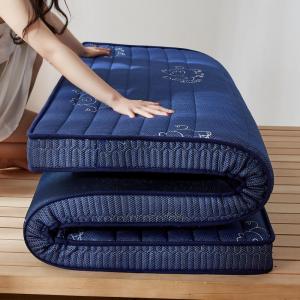
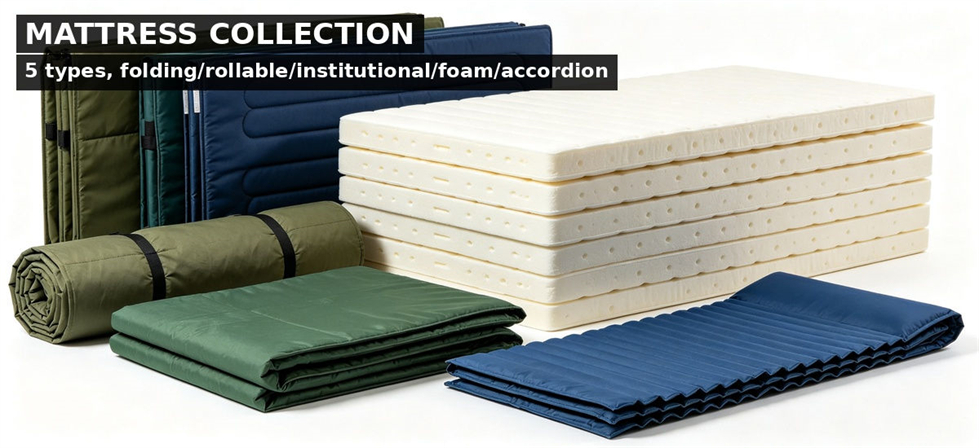
In our 20 years of supplying disaster relief mattresses, the most common mismatch we see is not quality but ordering the wrong size or type for the space. Before ordering, decide where people will sleep: on the floor, on an existing bed frame, or on a folding bed. Then pick the right type: a covered folding mattress, a flat rollable mattress, an institutional covered mattress, a bare foam core, or an accordion-fold ground mat.
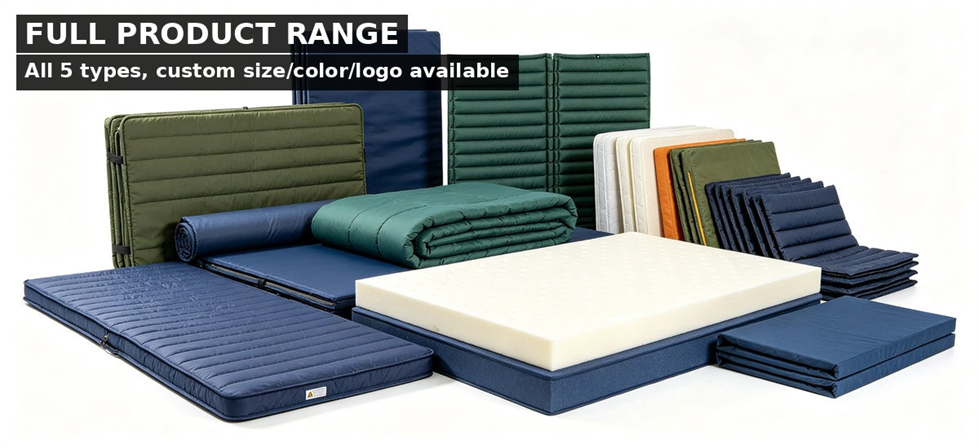
Confirm the finished size, thickness, foam core density, cover material, folding method, and packing against a physical sample. Each type has different dimensions, weight and packing — do not assume one "single mattress" spec covers every type.
This page focuses on non-inflatable foam mattresses.For inflatable mats with valves and pumps, see Emergency Inflatable Mattresses. For raised frame support, see Emergency Folding Beds. Sheets, duvet covers, and pillowcases are ordered separately under Emergency Bedding.
Five Core Mattress Types for Relief Procurement

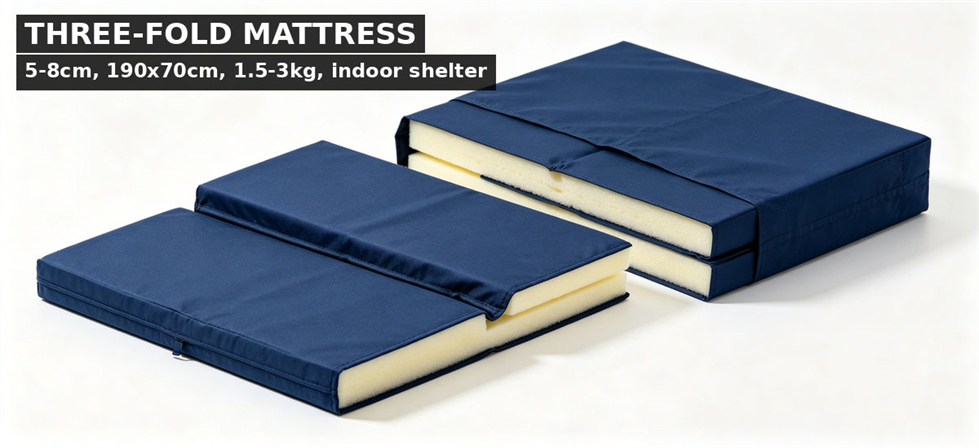
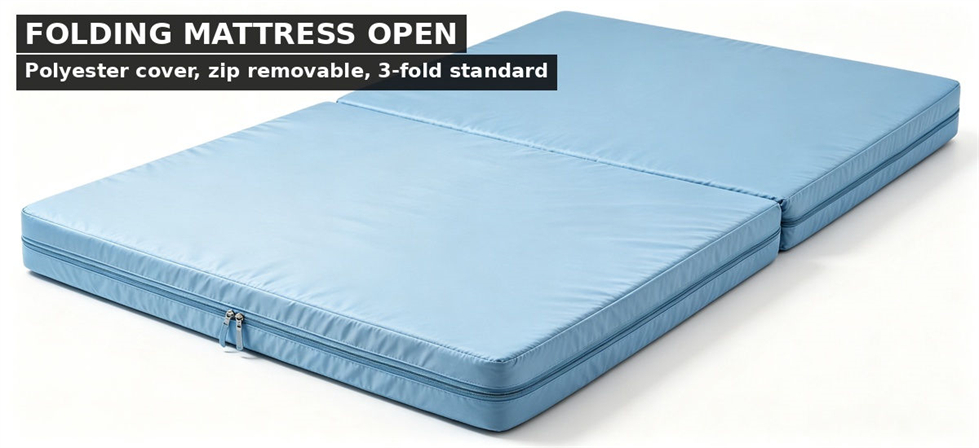
Three-fold or multi-section foam pads with a removable or fixed fabric cover. Common colours: white, light blue, navy, grey, black. Folds flat for daytime storage and transport. This is the most common type of folding foam mattress used in indoor relief shelters.
Typical specs: Open size 190×70-80cm (single), folded size approx. 63×70×15-24cm. Weight 1.5-3kg depending on thickness. The foam core should be one continuous piece with no glue-laminated sections.
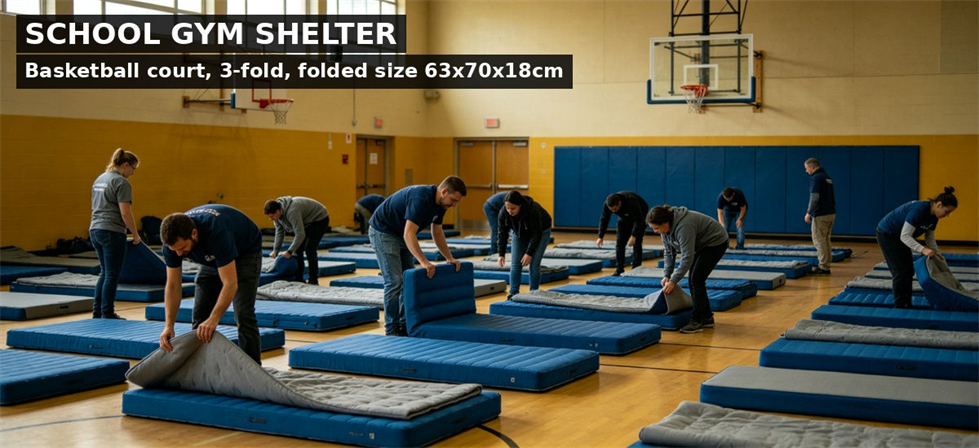
Best for: Indoor shelters, community centres, school gyms, and any site where mattresses must be stored during the day.
Confirm before order: fold count (3-fold is standard), open size, folded size, foam density (we recommend 25-30 kg/m³ for regular use), cover material (polyester 180-220g), zip type (nylon coil zip lasts longer than metal in humid shelter use), whether a carry bag is included.
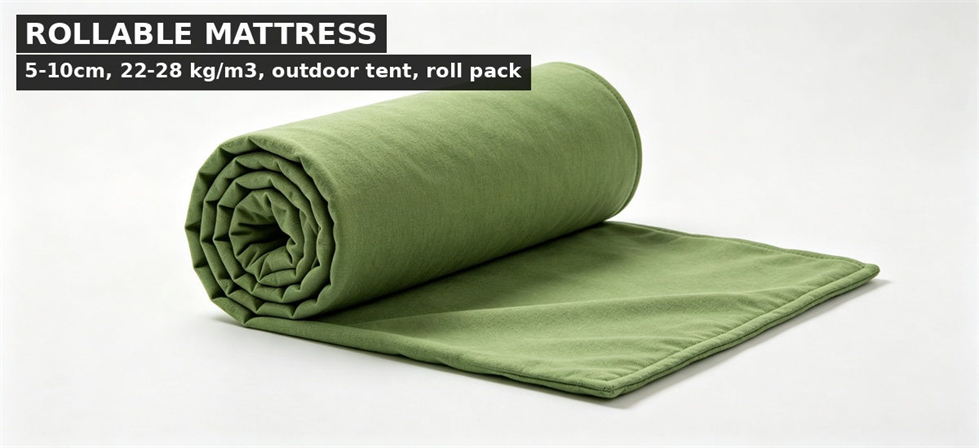
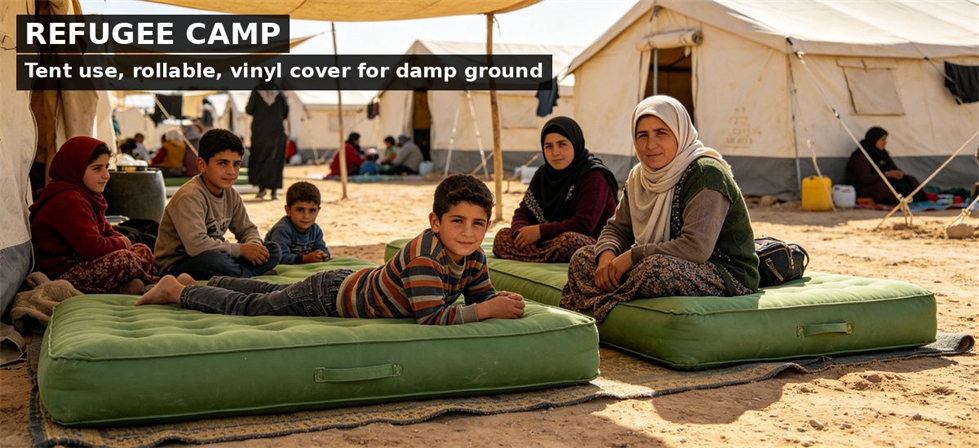
Single-piece foam pads that lie flat or roll up for transport. Often green, blue, or grey. No fold joints, so the sleeping surface is smooth with no pressure ridges.
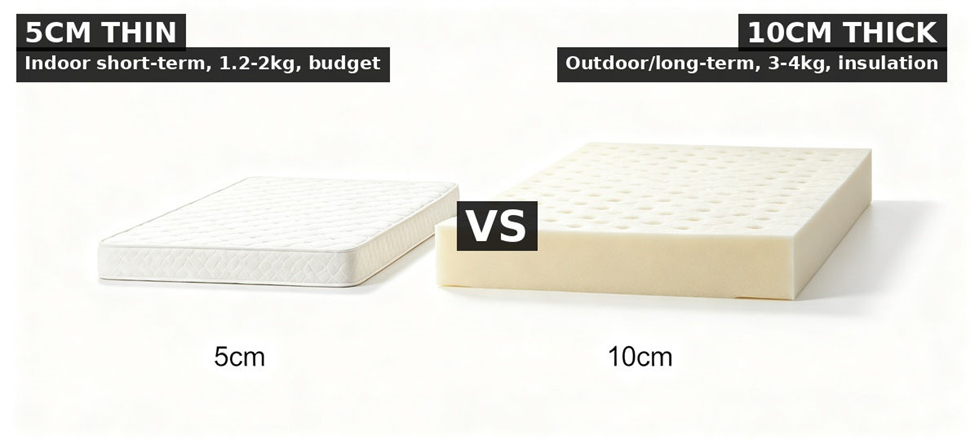
Typical specs: Size 190×70-90cm. Roll diameter approx. 25-35cm for 5cm thickness. Weight 1.2-2.5kg for a 5cm pad; 8-10cm versions weigh 3-5kg.
Best for: Fixed sleeping areas, long-term camps, dormitories, and sites where rolling simplifies collection.
Confirm before order: thickness, foam density (22-28 kg/m³ standard), roll diameter, cover cleaning method, recovery time after unrolling (24-48 hours for full thickness).
Related Sleep System Products
Emergency Inflatable Mattresses
Emergency Bedding (sheets, covers, pillowcases)
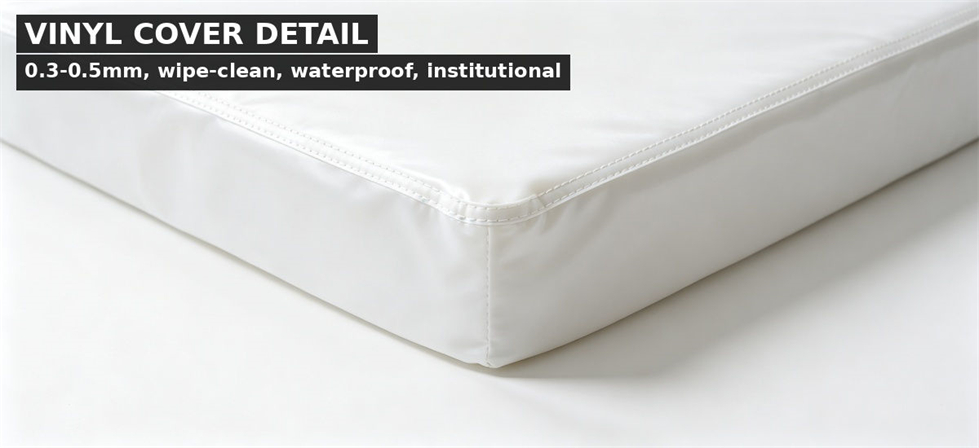
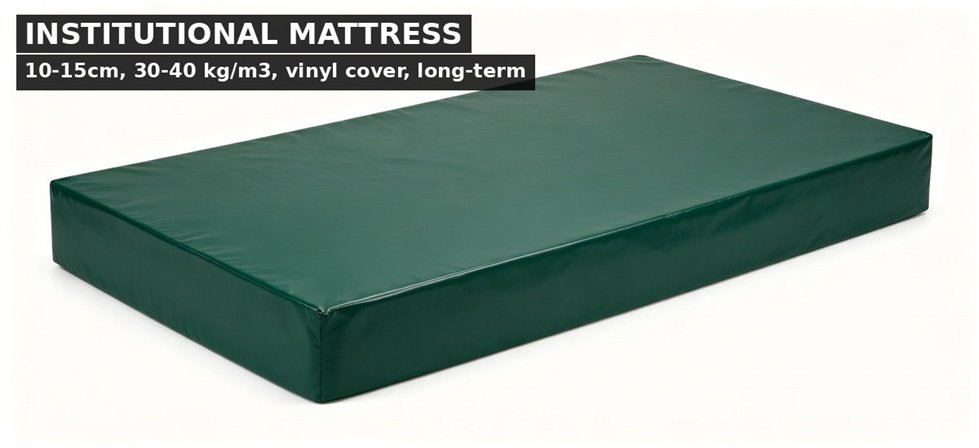
Fixed-size pads designed for single beds, bunk beds, or defined bed frames. Usually navy or green with a durable wipe-clean cover. Built for years of daily use.
Typical specs: Size 190×80-90cm (single), 190×120-140cm (double). Weight 3-6kg for a 10cm standard pad; 15cm heavy-duty pads can reach 7-10kg.
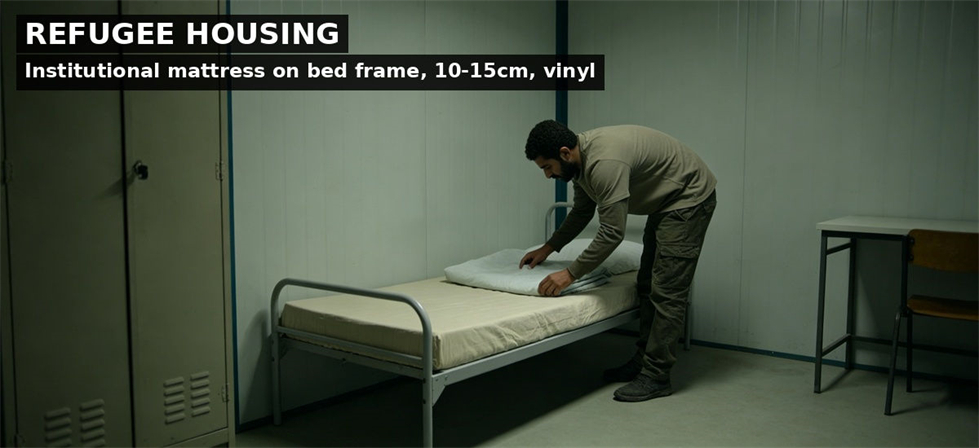
Best for: Long-term shelters, correctional facilities, dormitories, refugee housing with existing bed frames.
Confirm before order: exact bed frame size (measure both length and width), thickness (10-15cm), cover material (vinyl 0.15-0.5mm wipe-clean, with 0.3-0.5mm for heavy institutional use, vs heavy polyester fabric), waterproof rating, edge finish (reinforced edges prevent sagging when sitting
on the side), label placement.
✅ For bulk procurement of emergency frame tents, visit wholesale tent Emergency Frame Tents for Bulk Procurement to compare tent specifications, structural configurations, and deployment needs.
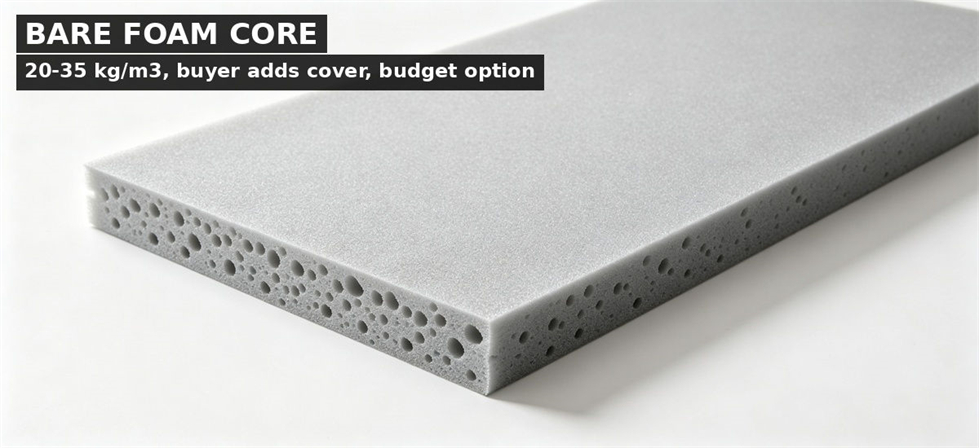
Foam sheets or rolls without a finished cover. The buyer adds their own cover or uses them as replacement cores. Lowest cost option for projects with in-house sewing capacity.
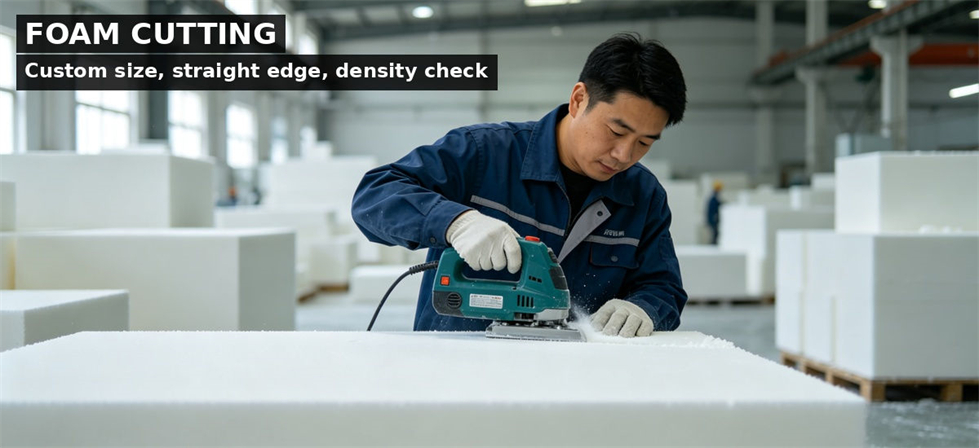
Typical specs: Custom cut to any size. Thickness 5-15cm. Weight by density and size.
Best for: Buyers who manage their own cover sewing, or projects that need custom-cut foam cores.
Confirm before order: foam dimensions, density (20-35 kg/m³ — below 25 kg/m³ not recommended for regular use), thickness measurement method, whether edges are cut straight (uneven edges cause cover fitting problems), whether the foam is one piece rather than glued from offcuts, recovery after compression.
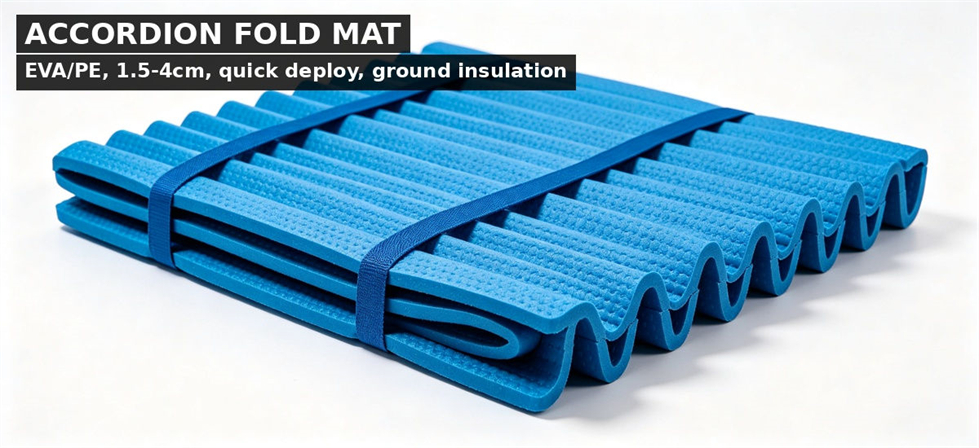
Multi-panel folding foam mats with raised texture surface. Fold into a compact accordion shape, often with carrying straps. Made from EVA or PE foam for water resistance and durability. These are ground mats, not a replacement for a thick mattress.
Typical specs: Open size 180×50-60cm, thickness 1.5-4cm, folded size approx. 30×50×10-15cm. Weight 0.5-1.2kg. EVA density 30-50 kg/m³, PE density 20-30 kg/m³.
Best for: Quick-deployment emergency response, outdoor use, light ground insulation where fast setup matters. Not suitable for cold-weather ground insulation that needs 8-10cm thickness.
Confirm before order: panel count (4-6 panels typical), material (EVA is more durable, PE is lighter), density, fold-cycle test (50+ folds without cracking), packed size, strap inclusion, surface texture purpose (anti-slip or insulation).

Most relief mattresses use flexible polyurethane (PU) foam. Within PU there are three grades you will see quoted: conventional PU foam (the standard for relief pads), high-resilience (HR) foam (springier and more durable, usually higher cost), and memory (viscoelastic) foam (slower recovery, rarely used in bulk relief because it packs poorly and feels hard in cold weather). EVA and PE foams are used only in thin accordion mats, not in full mattresses.
Density (kg/m³) and firmness are not the same thing. Density measures how much foam material is in one cubic metre — it predicts durability. Firmness (measured as ILD or N) measures how soft or hard the foam feels when pressed. A 25 kg/m³ foam can feel firm or soft depending on the chemistry, so do not choose by feel alone. For regular relief use, specify density in writing: 25-30 kg/m³ for folding pads, 30-40 kg/m³ for institutional pads. The IFRC (International Federation of Red Cross) standard calls for medium grade 25-28 kg/m³ and high grade 35 kg/m³, each with a tolerance of ±5%.
Ask whether the foam is virgin or recycled. Virgin PU foam has a uniform open-cell structure, a neutral faint smell that airs out quickly, and consistent colour (white, off-white, or light blue/grey). Foam made from regrind or bonded offcuts often looks greyish or mottled, has a stronger chemical odour, and collapses faster. A simple on-site check: press the foam firmly with your palm and release — good quality foam springs back within 3-5 seconds with almost no fingerprint left. If it stays indented for more than 10 seconds, the density or recovery is poor.
Choose Disaster Relief Mattresses by Use Scenario
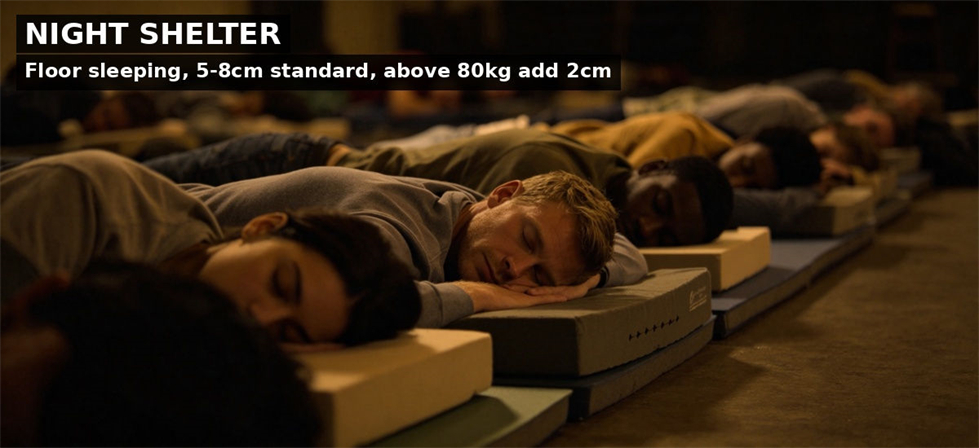
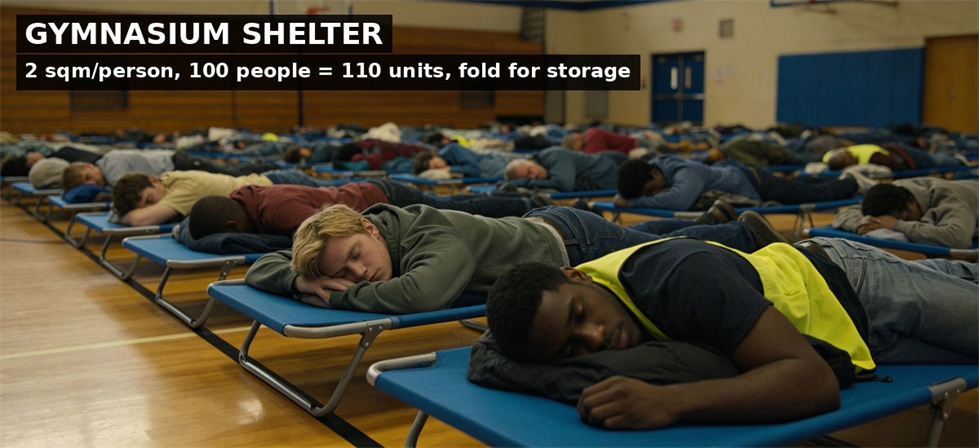
People sleep on the floor at night, mattresses are stored during the day. Pick a covered folding mattress, 5-8cm thick, with a wipe-clean polyester or vinyl cover. Fold count 3 is standard for easy handling. Allow approx. 2 sqm per person including walking space. For 100 people, plan for 100 mattresses plus 10% spare = 110 units. Confirm folded size fits your storage room — a 3-fold 190×70cm mattress folds to approx. 63×70×18cm.
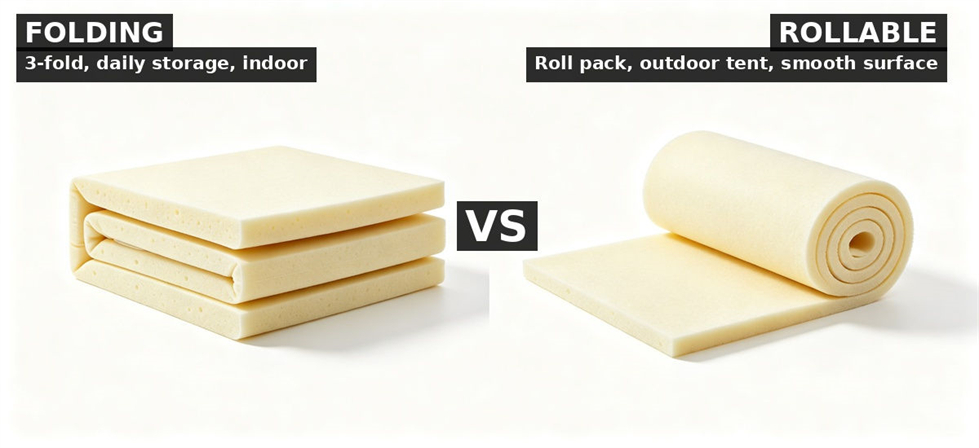
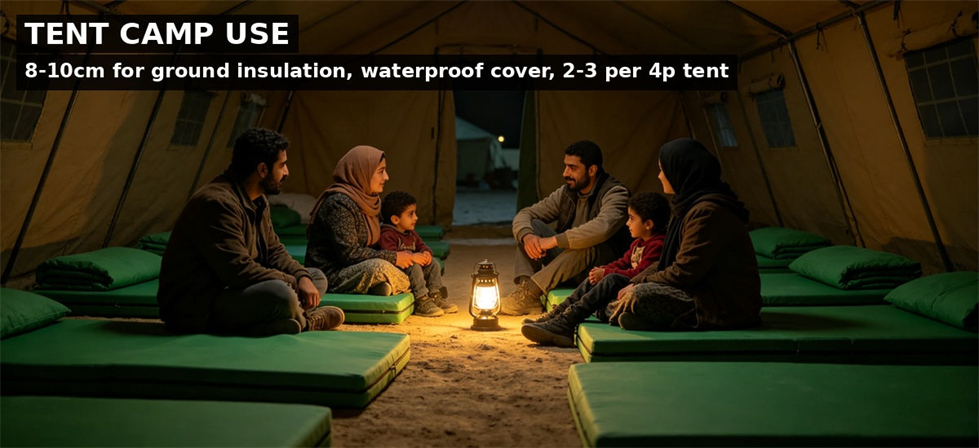
Sleeping on ground inside tents, may have damp conditions. Pick a flat rollable mattress, 8-10cm thick for ground insulation. A waterproof or water-resistant vinyl cover is recommended for tent use. Accordion-fold mats (1.5-4cm) work only for warm weather or short naps; they do not provide enough insulation for cold ground. A standard 4-person tent fits 2-3 rollable mattresses. Confirm the mat recovers after being rolled for weeks — full recovery takes 24-48 hours at room temperature.
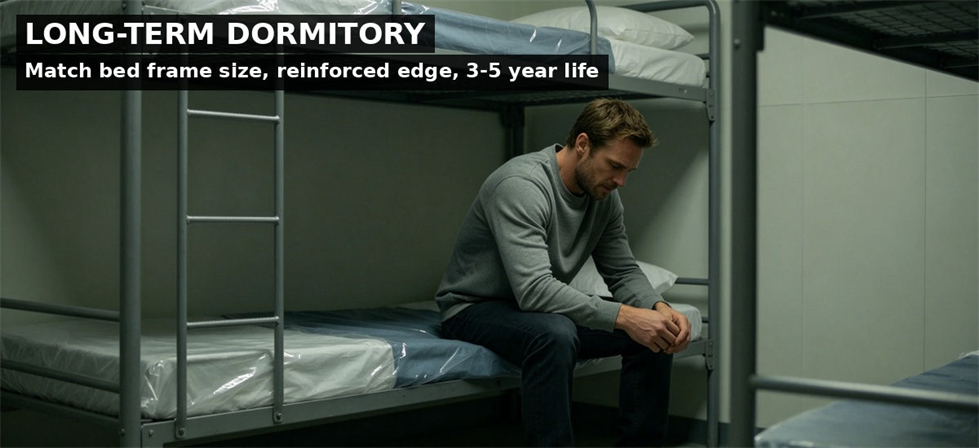
Fixed bed frames, people stay for months or years. Pick an institutional covered mattress matched to the bed frame size, 10-15cm thick, with a durable vinyl or heavy fabric cover that can be wiped clean. For users above 80kg, add 2cm to the recommended thickness or raise density by 5 kg/m³. Confirm edge support (reinforced edges prevent sagging) and cover zipper quality (nylon zips last longer than metal in institutional use). Service life is typically 3-5 years with proper care.

Must be stored compact and deployed fast. Pick a mattress that supports compression packing (this is a packing method, not a separate mattress type) or an accordion-fold mat. Compression packing reduces volume by 50-60% — a 20-foot container holds approx. 1500-2000 compression-packed 5cm mattresses vs 800-1200 non-compressed. Confirm recovery time after unpacking (foam returns to 90% thickness within 6 hours, full thickness within 24-48 hours). Packed volume is approx. 40-60 compression-packed mattresses per cubic metre of carton space. Note that compression packing is only recommended for 25-35 kg/m³ foam; high-density or thick institutional pads may not fully recover.
Parameter Comparison by Mattress Type
| Type | Typical Thickness | Foam Density | Typical Weight | Cover | Folding / Packing | Best Use |
|---|---|---|---|---|---|---|
| Covered Folding | 5-8 cm | 25-30 kg/m³ | 1.5-3 kg | Polyester fabric, removable zip | 3-fold, carry bag optional | Indoor shelters, daily storage |
| Flat Rollable | 5-10 cm | 22-28 kg/m³ | 1.2-2.5 kg (5cm); 3-5 kg (8-10cm) | Fixed fabric or vinyl | Roll, strap or bag | Fixed camps, outdoor tents |
| Institutional | 10-15 cm | 30-40 kg/m³ | 3-6 kg (10cm); 7-10 kg (15cm) | Vinyl / heavy fabric, wipe-clean | Flat, carton packed; vacuum roll optional | Long-term housing, bed frames |
| Bare Foam Core | 5-15 cm | 20-35 kg/m³ | By size | None (buyer adds) | Compression or flat | Custom projects, replacement cores |
| Accordion-Fold Mat | 1.5-4 cm | EVA 30-50 / PE 20-30 kg/m³ | 0.5-1.2 kg | Textured surface, no fabric | Accordion fold, straps | Quick deploy, light ground insulation |
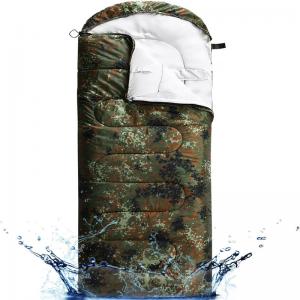
✅ For projects sourcing sleeping bags in volume, explore bulk sleeping bags Emergency Sleeping Bag Selection for Bulk Procurement to compare insulation levels, constructions, and field-use options.
These are typical industry ranges based on wholesale supplier data and institutional procurement standards such as IFRC. Exact values depend on the selected model and must be confirmed against a physical sample. Foam density below 25 kg/m³ will lose shape quickly under regular use — we recommend minimum 25 kg/m³ for folding and institutional types. For users above 80kg, increase thickness by 2cm or density by 5 kg/m³. Density tolerance is normally ±5% (about ±1.5 kg/m³ on a 25-30 kg/m³ core).
Write down: floor or bed use, clear bed-space dimensions, service period (weeks vs years), handling method, storage limits, and cleaning method. This determines thickness, cover type, and packing. For example, a gym shelter needs foldable mattresses that store in a closet, while a long-term dormitory needs thick vinyl-covered mattresses that stay in place.
Separate folding, flat, rollable, bare-foam, and institutional products. Do not use one "mattress" name for all. Each type has different dimensions, foam density, cover, and packing. A folding mattress and an institutional mattress may look similar in a photo but have very different weight, durability and packing.
Test the actual sample: open it, fold it, roll it, carry it, remove the cover, measure it in all states. Record deployed size, folded/rolled size, and unit packing weight. Sit on the edge to test edge support. Fold and unfold 50 times to check joint durability. For rollable types, roll for 72 hours then unroll — full recovery should happen within 24-48 hours.
Tie the agreed sample to the specification sheet, label artwork, packing method, and inspection checklist. Any material or construction change must be reconfirmed with a new sample. This is especially important for repeat orders — a cover supplier switch or foam batch change can alter the finished product even if the model name stays the same.
Sample Review Checklist
✅ For temporary-accommodation projects requiring portable beds, visit camp beds wholesale Emergency Folding Beds for Temporary Accommodation Procurement to review bulk procurement, transport, and rapid-deployment options for folding beds.
When a sample arrives, you can run five fast checks before sending it to a testing lab:
Selection Points to Align Before Ordering
Based on our experience supplying relief projects, here are the key selection points that prevent specification mismatch:
Quality Control and Production Checks
Check foam density using a sample cut and weight calculation: cut a 10×10×10cm cube, weigh it, calculate density = weight(kg) ÷ volume(m³). Standard tolerance is ±5% (about ±1.5 kg/m³ on a 25-30 kg/m³ core), aligned with institutional procurement standards. Inspect for voids, uneven cell structure, and off-odour. The foam core should be one continuous piece — glued or laminated pieces can delaminate (separate into layers) under repeated folding and are not accepted by most institutional buyers. Foam should recover to full thickness within 24-48 hours after compression release. If recovery takes longer, the foam density may be too low or the compression period too long.
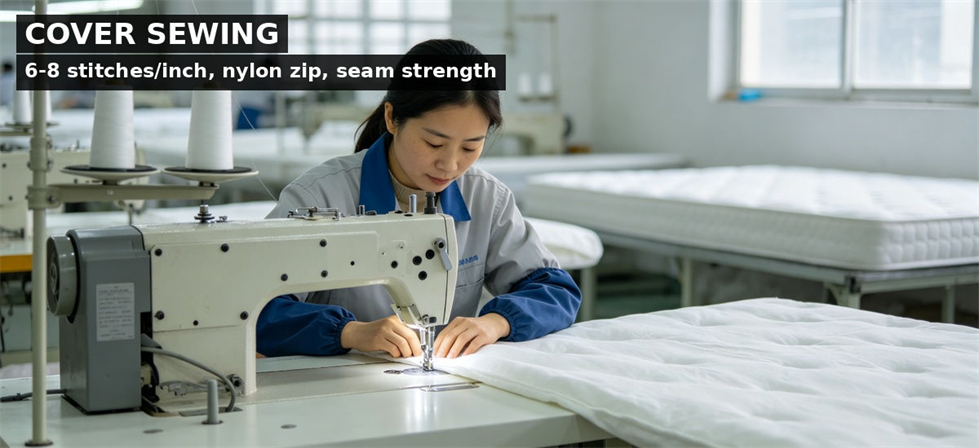
For fabric covers: check stitch density (6-8 stitches per inch is the minimum functional range; for heavy institutional use we recommend 8-10 stitches per inch for longer seam life), zip smoothness (open and close 10 times), and seam strength (pull test at 5kg). For vinyl covers: check for pinholes, weld seam integrity, and wipe-clean surface (marker should wipe off with damp cloth). Covers must fit the foam core without excessive slack (causes shifting) or over-tension (causes zip breakage).
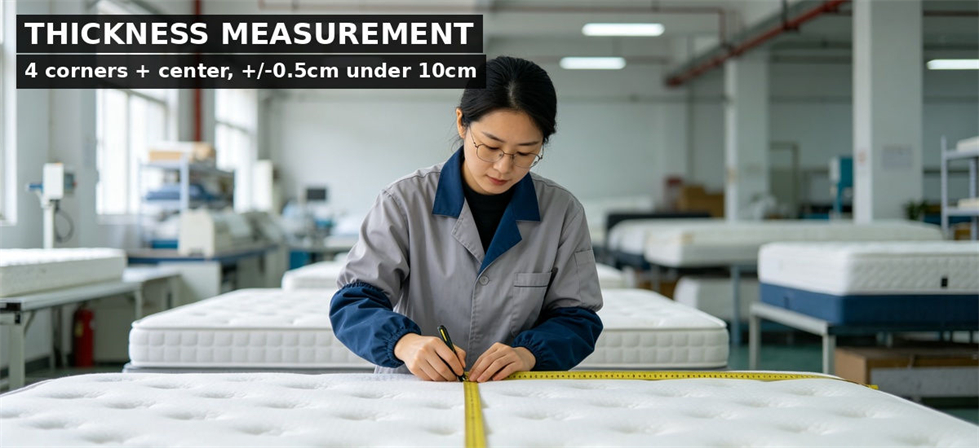
Measure length and width at three points (both ends and middle). Thickness measured at four corners and centre. Standard tolerance: ±1 cm for dimensions, ±0.5 cm for thickness under 10 cm, ±1 cm for thickness 10 cm and above. A mattress that is 1cm too wide may not fit a standard bed frame.
Fold and unfold the mattress 50 times. Check that fold joints do not crack, crease permanently, or lose foam at the V-cut. For rollable types, roll for 72 hours then unroll and confirm recovery to full flatness within 24-48 hours. If the mattress stays curled after 48 hours, the foam memory is insufficient for roll packing.
Before shipment, inspect a random sample per AQL 2.5 standard (Acceptance Quality Limit — max 2.5% defective rate). For an order of 500 pieces, inspect 50 samples. Check dimensions, cover quality, stitching, labels, and packing. Reject lots with more than the allowed defect count (3 major defects for 50-piece sample).
Fire-retardant requirements depend on where the mattresses will be used. Ask the end buyer which standard applies before production, because the chemical treatment and foam formulation differ:
We can help arrange third-party test reports to the required standard. The buyer selects the standard and laboratory based on destination market requirements, and the testing cost is covered by the buyer. Test reports are normally valid for one year; a report from a different factory or a different foam batch does not cover your order.
Packing and Warehouse Storage
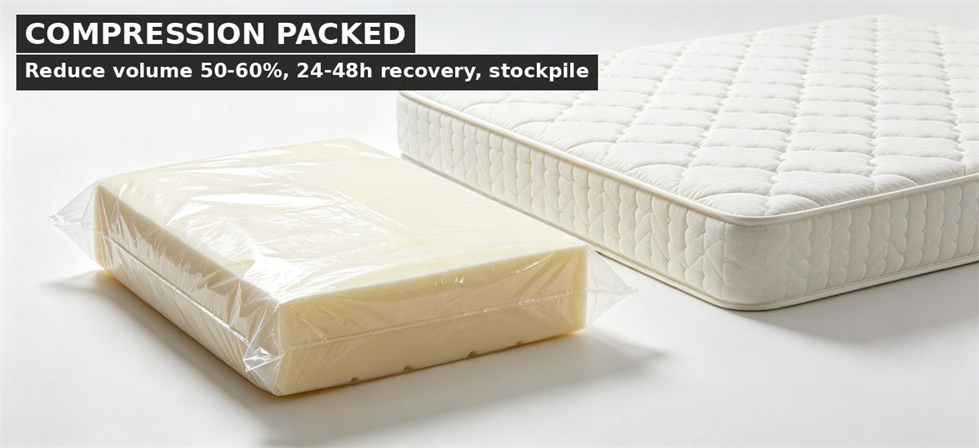
Each mattress goes into a PE bag (0.04-0.06mm) for dust and moisture protection. Folding mattresses may include a carry bag if specified. Bare foam cores use compression packing to reduce volume by 50-60% — note that compression packing is only recommended for foam density 25-35 kg/m³; higher density foam may not fully recover.
Use 5-layer corrugated export cartons (5-layer = double wall, for heavier items; 3-layer single wall is only for very light accordion mats). Typical carton quantities: thin folding mats 10-15 pcs/carton, thick institutional mattresses 2-4 pcs/carton. Carton gross weight should not exceed 25 kg for manual handling. Print carton marks with model, quantity, gross/net weight, and dimensions in English.
Cartons stacked on standard pallets (120×100 cm or 110×110 cm), wrapped with stretch film 3 times. 20-foot container loading by thickness: 5cm folding mattresses approx. 1000-1200 pcs, 8cm folding approx. 800-1000 pcs, 10cm institutional approx. 400-500 pcs if vacuum roll-packed (150-200 pcs if flat carton packed), 15cm institutional approx. 250-300 pcs if compressed (fewer if flat). Compression-packed 5cm mattresses approx. 1500-2000 pcs per 20GP. 40HQ holds approx. 2.0-2.2 times the 20GP quantity.
Store on pallets at least 15 cm above concrete floor (prevents moisture from the ground). Keep warehouse humidity below 60%, temperature 15-25°C. Do not stack pallets higher than 1.5 meters (bottom cartons may crush). Leave 10 cm gaps between pallets for air circulation. Inspect every 6 months for moisture, pests, and foam compression set (permanent indentation that does not recover). Foam stored compressed for more than 6 months may develop permanent deformation.
✅ Equipping field clinics, isolation wards or relief hospitals? The Hospital Waterproof Mattress Medical Infection-Control Mattress is a wipe-clean, fluid-resistant waterproof mattress engineered for infection-control environments. As an experienced mattress supplier for healthcare tenders, we deliver institutional bedding and wholesale bedding at hospital-grade specs. Click for full product details.
For institutional buyers, cleaning method affects which cover to choose:
Sample Policy
Ready-stock samples can be prepared in 3-5 working days. Fully custom samples (custom size, colour, cover material, logo printing, or certification) take 20-35 working days. We provide the specification sheet and quotation free of charge; the physical sample itself is charged based on product type and complexity, and the sample cost can be credited against a confirmed bulk order. Courier costs are paid by the buyer.
Sample approval: All bulk production follows the approved sealed sample. Any deviation must be communicated and re-approved before production starts. We photograph the approved sample from all angles and keep a reference sample at our factory for bulk comparison. For detailed lead times and service terms, please contact our team directly.
Relief Mattress Procurement FAQ
Foam or inflatable: which should we order first?
Choose foam mattresses for indoor shelters and long-term use where setup time does not matter. Foam needs no inflation, has no leakage risk, and requires no pumps or spare parts. Choose inflatable mats only when packed volume is critical and your team can manage pumps, valves, and field repairs. For most government and NGO relief projects, foam is the more reliable first choice. Inflatable mats are covered on a separate page on emergency inflatable mattresses.
Not by default. Measure the actual bed frame or floor space first. A mattress for a standard single bed (90×190 cm) may be too wide for narrow bunk beds (75×190 cm) or dormitory bunks. Floor-use mattresses can be custom sized to fit the room layout — for example, 60×180cm for high-density shelter layouts. Always confirm both deployed and folded/rolled sizes fit your space.
For indoor floor use: 5-8 cm is standard. For outdoor ground use: 8-10 cm for insulation from cold ground. For long-term bed-frame use: 10-15 cm for comfort and durability. Below 5 cm, users will feel the floor through the foam. For users above 80kg, add 2cm to the recommended thickness or increase foam density by 5 kg/m³ to prevent the foam from compressing all the way to the floor.
No. High-density foam (above 35 kg/m³) and thick institutional mattresses (above 12cm) may not recover fully after compression. Only foam rated for compression packing (typically 25-35 kg/m³, 5-10cm thick) should be vacuum-sealed. Always confirm recovery time and test a sample before bulk packing. Foam stored compressed for more than 6 months may develop permanent set, even if rated for compression.
No. Colour is just an appearance choice. Green does not mean military approval, and silver does not on its own mean certified waterproof or insulated. Any performance claim must be backed by a test report or sample verification. We can provide foam density test reports, flammability test reports (16 CFR 1632/1633 for the US market, BS 7177 or BS 5852 for the UK market, EN 597-1/2 for the EU market), and waterproof cover tests on request. The buyer selects the standard based on destination market requirements, and third-party testing costs are covered by the buyer.
No. They are different products with different costs, packing, and acceptance criteria. Bare foam is priced per sheet by density and dimensions. Covered mattresses include cover material, labour, stitching, and finishing. Quote them as separate line items even if shipped in the same container.
Inflatable mats with valves, pumps and air-retention checks are covered on our Emergency Inflatable Mattresses page. This page focuses on non-inflatable foam mattresses only.
Yes. We can help arrange third-party test reports for foam density, flammability (16 CFR 1632/1633 / BS 7177 / EN 597), waterproofing, or dimensional stability. The buyer selects the standard and laboratory based on destination market requirements, and the testing cost is covered by the buyer. Testing can be coordinated as part of the sample approval process.
Lead times depend on the specification, quantity and season. Regular orders normally enter production within 7-15 days; emergency orders for standard models can start within 72 hours. Compression packing adds a few days. Final lead time is confirmed in the contract. Minimum order quantities vary by construction and customisation level — contact us with your quantity and destination for a current schedule.
Sample fees are prepaid and can be credited against a confirmed bulk order. The exact credit terms are confirmed in writing at order placement. Courier costs for sample delivery are not credited.
Not by default. These are optional add-ons listed separately in the quotation. If you need carry bags, pillow sections, or compression straps, specify them in the RFQ. Visible accessories in product photos are not automatically included — always confirm the exact accessory list against the quotation.
Reconfirm: construction type, dimensions, thickness measurement method, foam density, cover material and colour, accessories, label artwork, and packing method. Even a small change (e.g. cover supplier switch, foam batch change) can affect the finished product. We recommend ordering a fresh confirmation sample for any repeat order after 6 months or after any supplier material change.
Yes. Logo printing options include silk-screen print on the cover, a woven label sewn onto the cover, or embossed print on the foam core. Provide your logo in AI or vector format. Custom colour matching is available with a Pantone reference. Minimum quantities and setup costs depend on the printing method and are confirmed at quotation stage.
Foam mattresses generally fall under HS code 9404.21 (foam rubber or plastic mattresses) or 9404.29 (other material mattresses), depending on cover material. Confirm the exact code with your customs broker for your destination country, as tariff rates vary. Foam mattresses are classified as light cargo — freight is charged by volume (CBM), not weight, so compression packing can significantly reduce shipping cost.
Inspect the side edge of the foam core. A one-piece moulded or slab-cut core shows a uniform open-cell structure across the entire cross-section. Glued or laminated pieces show a visible horizontal seam, a denser skin-like line, or slight colour differences between layers. You can also press along the edge — glued joints often feel firmer or show a faint line. Most institutional standards (including IFRC) require one-piece foam with no glue-assembled sections.
Density (kg/m³) measures how much raw material is in the foam and predicts how long it will last. Firmness (measured as ILD or in Newtons) measures how hard or soft the foam feels when you press it. Two foams with the same density can feel very different depending on the chemical mix. For relief procurement, always specify density in writing (25-30 kg/m³ minimum for regular use) rather than asking for "soft" or "firm", which means different things to different suppliers.
Whether you are stocking a shelter, planning a camp, or furnishing institutional housing, sending us your use conditions and dimensions is the fastest way to get the right disaster relief mattresses for bulk procurement.
Send the most urgent structure or
packing question
Review current mattress product
groups
Typical reply within 24 hours on
business days
Sizes, density, cover and packing
options


Copyright © Custom Disaster - Relief Bedding: Tents, Sleeping Bags, Blankets All Rights Reserved
the professional team to service !