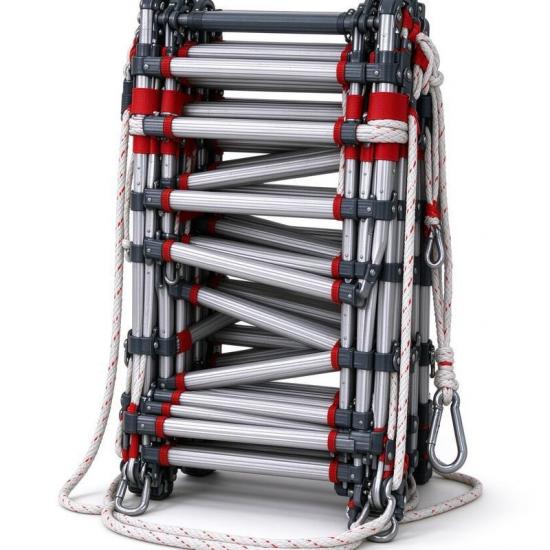
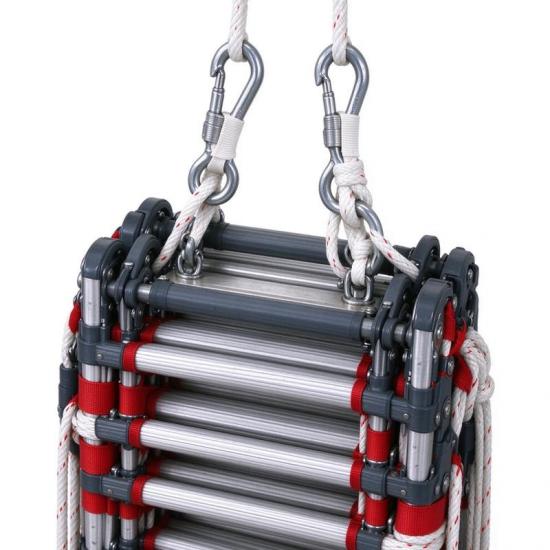
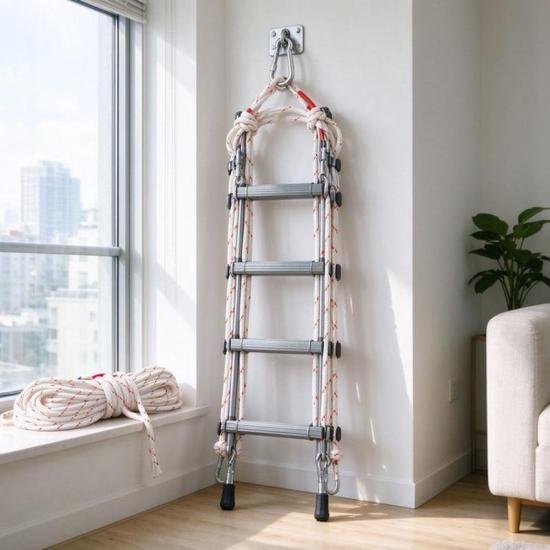
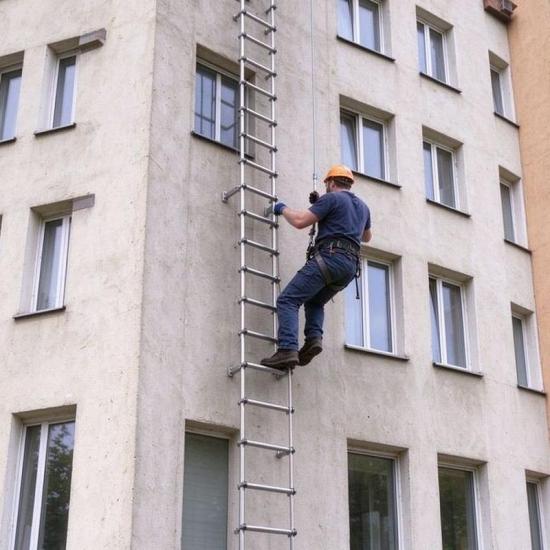


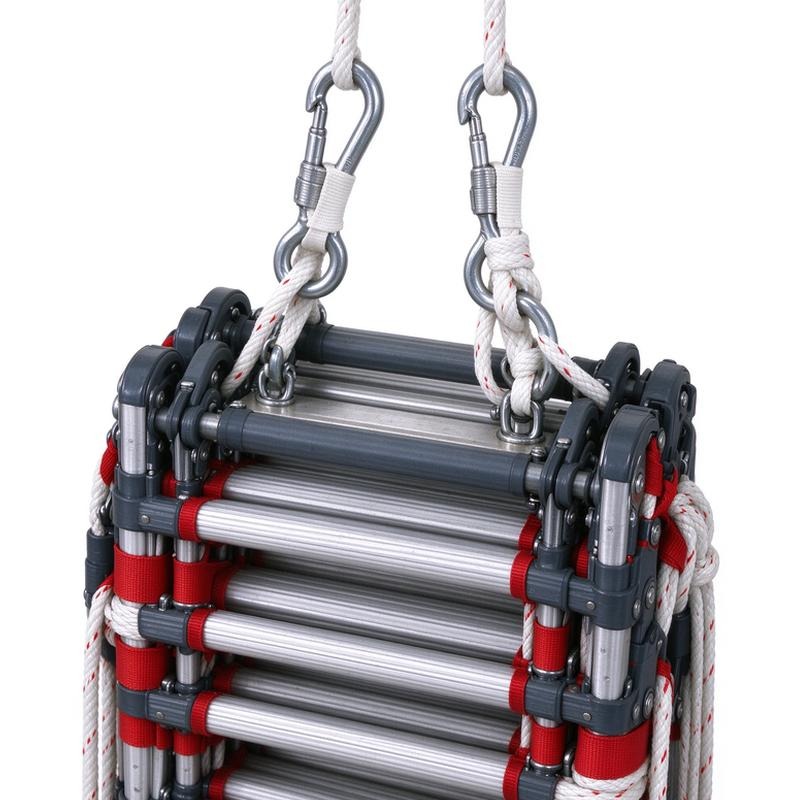
This Foldable Fire Escape Ladder Adopts High-Strength Steel Wire Core And Nylon Sheath. Equipped With Steel Hooks And Carabiners, It Deploys Fast For Window Escape. Suitable For Apartment And Low-Rise Homes, Support Bulk Wholesale For Global Buyers.
Note: Price for reference only. Exact price based on quantity, size, weight and custom details.
model no. :
E-03Brand:
YRFmarket price :
$150.9sale price :
$74.9price range :
11-100/$74.9 100-500/$74.1Color :
Whiteport of dispatch :
Guangdong/GuangzhouPayment :
TT, Paypal, Western Unionmin order :
30original region :
Made in ChinaLead Time :
5-15days
Fire Escape Ladder for Low-Rise Windows for Windows
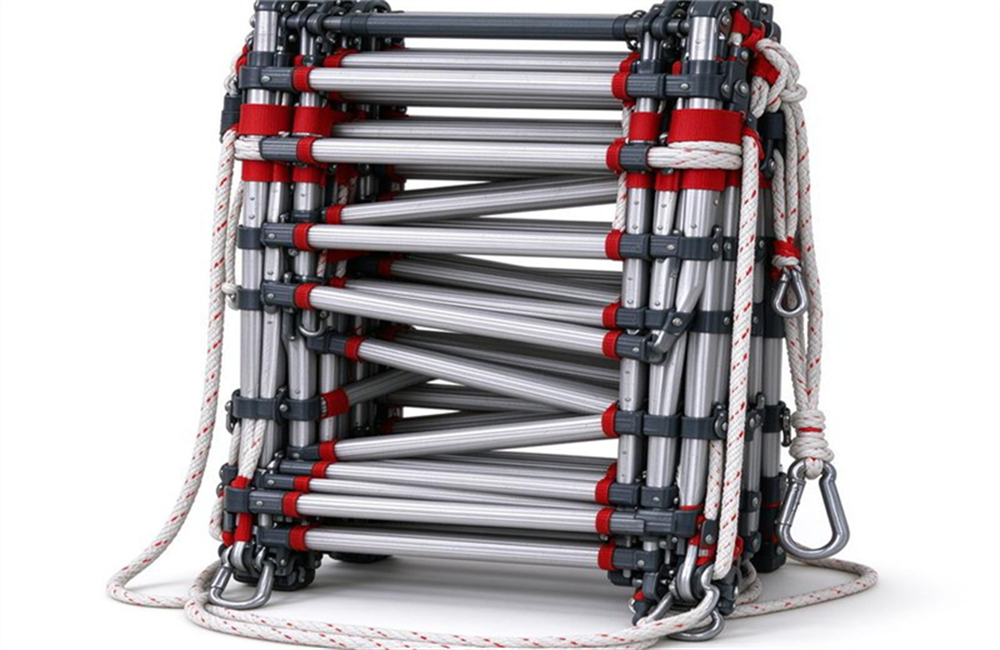


Table of Contents
1. What Is a Nylon Wire Escape Ladder?
9. Key Points to Confirm Before Use
2. Why Stairs and Elevators Fail in a Fire
10. Weather, Temperature, and Storage Life
2b. Why Every Home Above the First Floor Needs One
11. Care and Maintenance
3. Inside the Construction
12. What's in the Box
4. How It Works Step by Step
13. Choosing by Building Type
5. Choosing the Right Fire Escape Ladder Length
14. Fire Safety Standards
5b. Complete Specifications
15. Nighttime Evacuation
6. Anchor Points: What Works, What Fails
16. Window Types
6b. Step-by-Step Installation Guide
16b. Family Fire Drill with Your Fire Escape Ladder
7. Who Needs This Product
17. FAQ
7b. Which Escape Ladder Do You Need?
18. OEM and Distributor
7c. Buying Fire Escape Ladders for Your Building
18b. Export, Packaging, and Lead Time
8. Rope vs Ladder vs Descent Device
19. Ordering and Pricing
20. Related Products
Compare with Our Other Rescue Products
1. What Is a Nylon Wire Escape Ladder?
2. Why Stairs and Elevators Fail in a Fire
Why Every Home Above the First Floor Needs One
Fire moves faster than people expect. Here is what the data shows.
3. Inside the Construction
4. How It Works Step by Step
Find the anchor point. We cover this in detail later.
Test the anchor. Pull hard. It must not move.
Unfold the ladder. Hook the top carabiners to the anchor.
Push the ladder out the window. Let it unroll to the ground.
Check the length. The bottom should reach the ground or the roof below.
Store the folded ladder in its bag, hanging by the window.
Tell everyone in the household where it is and how to use it.
Practice once a year. It takes 5 minutes.
During the emergency:
Multiple people: one at a time
Rule of thumb: When in doubt, go longer. Extra length of a fire escape ladder can be coiled up. Short length cannot be stretched.
Model
Length
Floor Height
Best For
EL-05
5 m
3.5-4 m
2-story house, first floor
EL-09
9 m
7-8 m
3-story building, second floor
Custom
On request
Quote
Special situations
Complete Specifications
Parameter
EL-05 (5 m)
EL-09 (9 m)
Total length
5 m
9 m
Floor height covered
3.5-4 m (2-story)
7-8 m (3-story)
Rung width
25 cm
25 cm
Rung spacing
30 cm
30 cm
Side rope construction
Nylon braid over 4 mm steel wire
Nylon braid over 4 mm steel wire
Rung material
Hard PVC plastic, ribbed surface
Hard PVC plastic, ribbed surface
Breaking strength (tested)
300 kg
300 kg
Carabiners
2 × steel screw-lock
2 × steel screw-lock
Carabiner breaking strength
500 kg
500 kg
Weight
2.8 kg
4.5 kg
Storage bag
30 × 20 cm drawstring
35 × 22 cm drawstring
Shelf life (indoors)
5-10 years
5-10 years
6. Anchor Points: What Works, What Fails
Step-by-Step Installation Guide
7. Who Needs This Product
Which Escape Ladder Do You Need?
Install one fire escape ladder per sleeping room. The window route must be reachable from the bed without crossing the hallway.
Room
Best anchor
Fire escape ladder model
Bedroom, 2nd floor
Steel water pipe
EL-05
Bedroom, 3rd floor
Bolted radiator
EL-09
Living room, ground floor
Wall anchor bolt
EL-05
Factory mezzanine
Steel I-beam
EL-09
Ship cabin
Bulkhead fitting
EL-05
Dormitory room
Wall anchor bolt
EL-09
EL-05 vs EL-09: which to order
Decision factor
Choose EL-05 (5 m)
Choose EL-09 (9 m)
Building height
2-story house
3-story building
Window height
Under 4 m
4-8 m
Budget
Lower cost
Covers more floors
Typical buyer
Homeowners
Factories, dormitories
Buying Fire Escape Ladders for Your Building
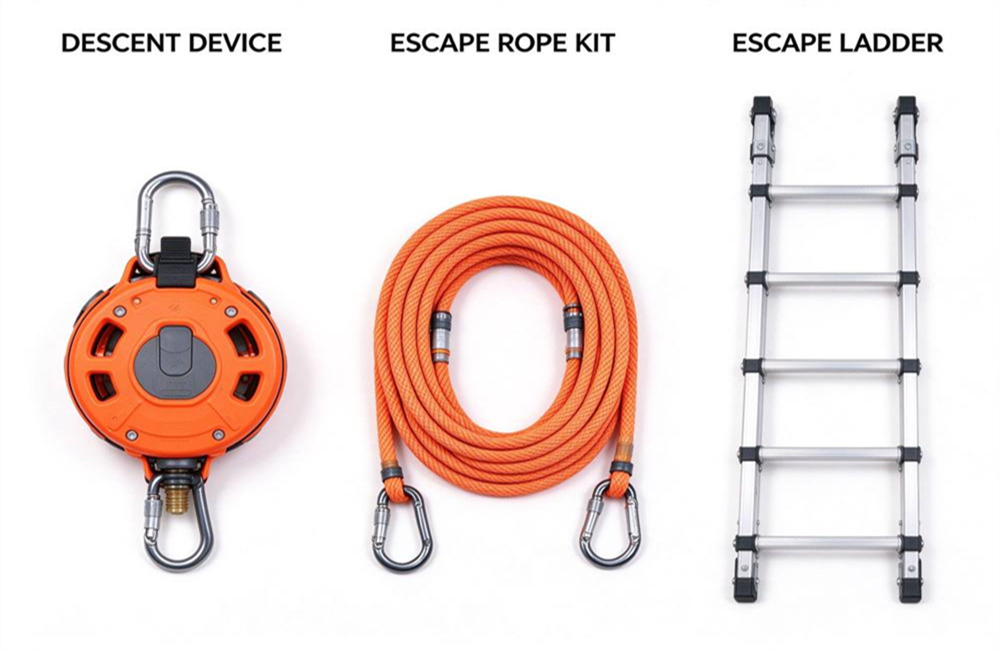
8. Rope vs Ladder vs Descent Device
Bottom line: 2-story house? Get the ladder. Above 5th floor? Get a reciprocating rescue descent device. On a budget for a short drop? Get the rope kit.
Feature
Escape Ladder
Escape Rope Kit
Rescue Descent Device
Price
$6-$18
$5-$20
$25-$85
Floors covered
2-3
2-5
up to 10
Speed control
Self (grip)
Self (grip)
Automatic brake
Physical effort
Medium — climbing
High — hand over hand
Low — sit and ride
Storage size
30 × 20 cm bag
25 × 15 cm bag
30 × 25 cm case
Best for
Low-rise homes, factories
Budget, short drops
High-rise, elderly families
Multiple people
One at a time
One at a time
Auto-reset for next person
9. Key Points to Confirm Before Use
10. Weather, Temperature, and Storage Life
12. What's in the Box
13. Choosing the Right Ladder for Your Building Type
16. Window Types and How to Handle Each
The drill (daytime, first time)
17. FAQ
Export, Packaging, and Lead Time
19. Ordering and Pricing
Shipping: FOB Shanghai or Ningbo. Sample orders shipped by express (DHL, FedEx).
Quantity
EL-05 (5 m)
EL-09 (9 m)
100-499
$8.50
$14.00
500-999
$7.20
$12.00
1000+
$6.00
$10.00
20. Related Products
YRF builds a complete high-rise rescue family. Match the right tool to your building and users.
Reciprocating High-Rise Escape Descent Device – fixed unit for multi-person home escape.
Self-Locking Escape Rope Kit – portable rope kit for backup and travel use.
Special Needs Rescue Harness Kit – padded harness for elderly, children and wheelchair users.
Portable Professional Rescue Descender – reusable unit for fire departments and rescue teams.
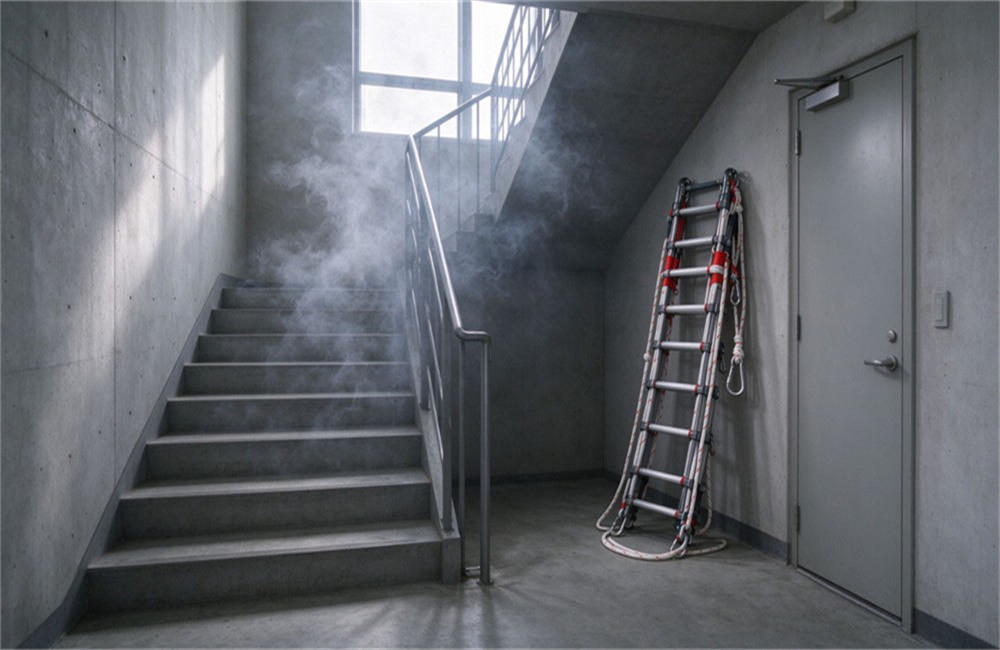
An escape ladder, also called a window escape ladder, is a flexible, rope-based ladder designed for emergency evacuation through a window.
It looks like a rope ladder. But the inside of this fire escape ladder is different.
Regular rope ladders twist and swing. They are hard to climb because the rungs move. A fire escape ladder solves this with a rigid core. The difference between a rope ladder escape and a steel-core ladder is night and day.
This fire escape ladder uses a steel wire core. The sides stay straight. The rungs stay level. You can climb down facing the wall or facing outward.
The steel core also means this escape ladder does not stretch. A regular rope can stretch 1-2 meters under body weight. That bounce makes it hard to control near a burning window. For a reliable rope ladder escape, the core matters.
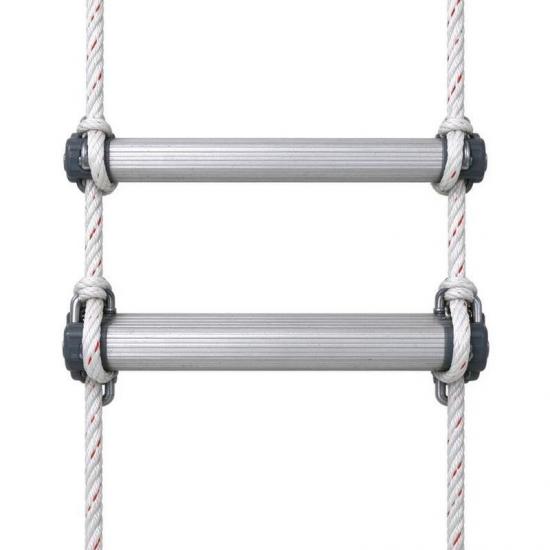
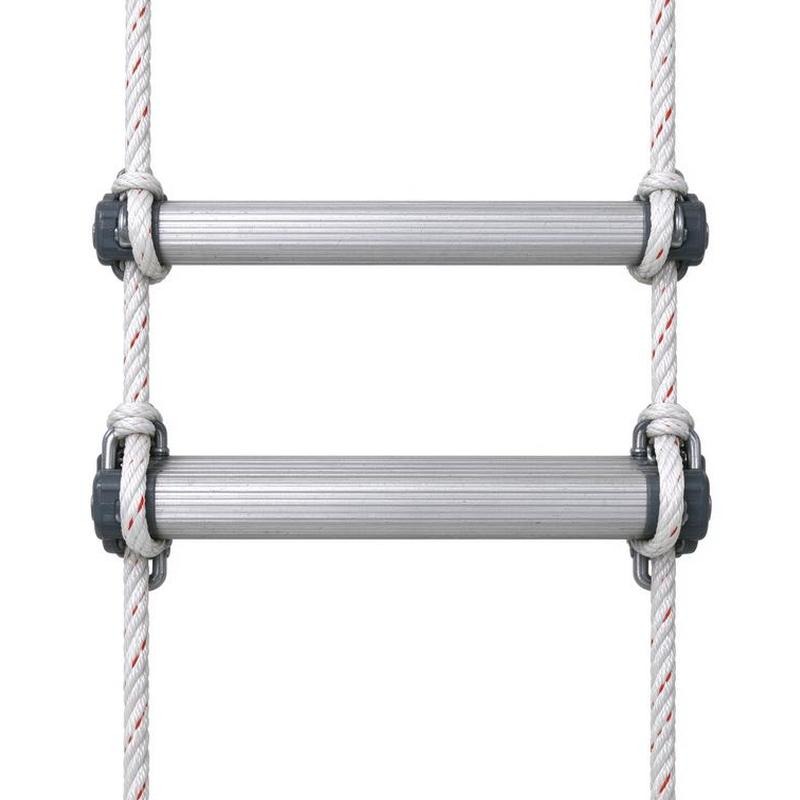
The nylon outer sheath protects hands. It is smooth but grippy. The rungs are flat plastic, 25 cm wide, spaced 30 cm apart — the same as a normal stair step. This is what makes a fire escape ladder feel like a real staircase.
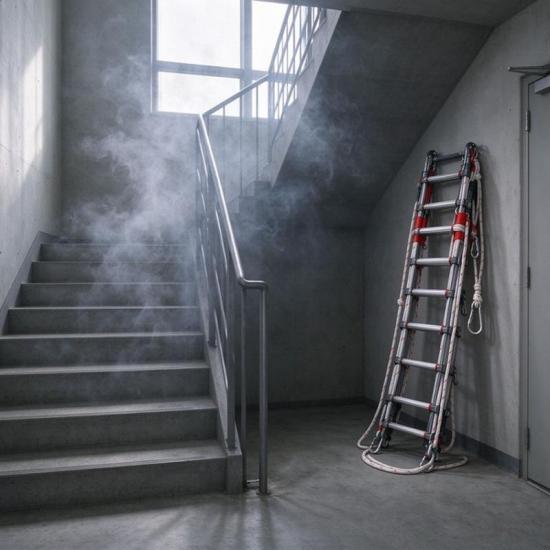
People assume they will walk down the stairs in a fire. Sometimes that works. Often it does not. A fire escape ladder gives you a plan B when the stairwell is blocked.
Why stairs fill with smoke
Stairwells act like chimneys. Hot air and smoke rise through them fast.
Within 3-5 minutes, the stairwell above the fire floor can become unbreathable.
You cannot see. You cannot breathe. Visibility drops to zero in smoke. Your fire escape ladder is the route out.
Many fire injuries happen when people try to use the stairwell and get trapped by smoke.
Why elevators are dangerous
Elevators automatically shut down when fire alarms trigger.
Even if they work, they can open on the fire floor. You do not want that.
Why waiting for firefighters is risky
Firefighters need time to arrive, set up, and search each floor. A fire escape ladder lets your family start evacuating immediately.
In a high-rise, that can be 15-30 minutes.
A self-rescue tool buys you control over your own safety.
How fast a fire spreads
A small flame can grow to a room fire in under 30 seconds.
Smoke fills a hallway in about 2-3 minutes. Flashover, when everything ignites at once, can happen in 5-7 minutes.
Your window escape route must be ready before the fire starts.
Where fires happen at home
Most fatal home fires start in the kitchen or from heating equipment.
They often happen at night, when people are asleep. Smoke alarms give you the first warning.
After the alarm sounds, you have minutes, not hours. A fire escape ladder at the window turns those minutes into a safe route.
What a second exit does for your family
One exit means one chance. Two exits mean options.
If the front door is blocked by fire, the window is your family's second exit.
Fire departments recommend practicing both routes with your household.
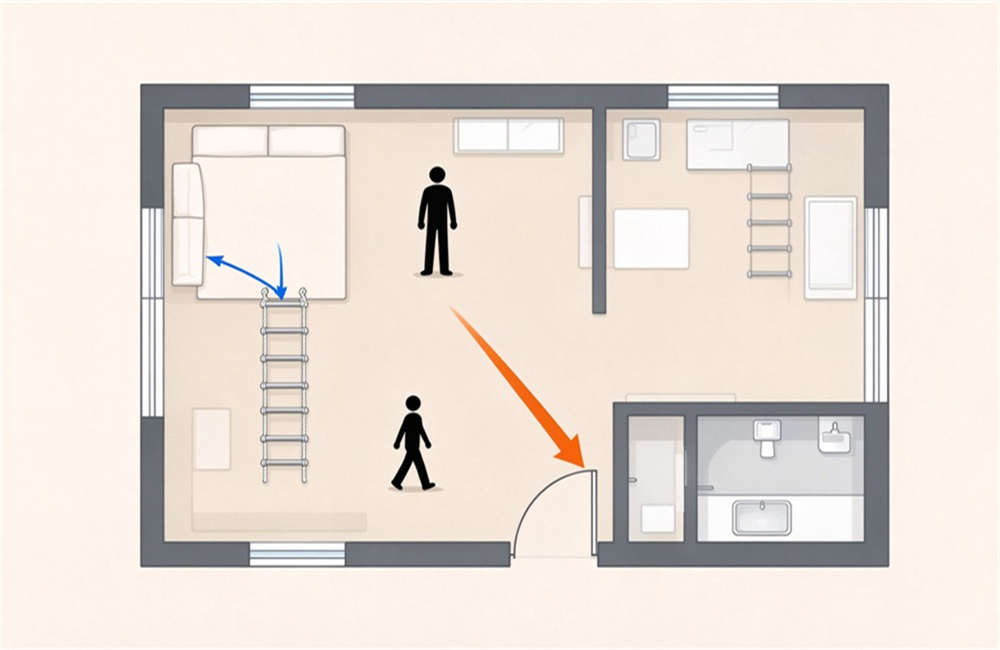
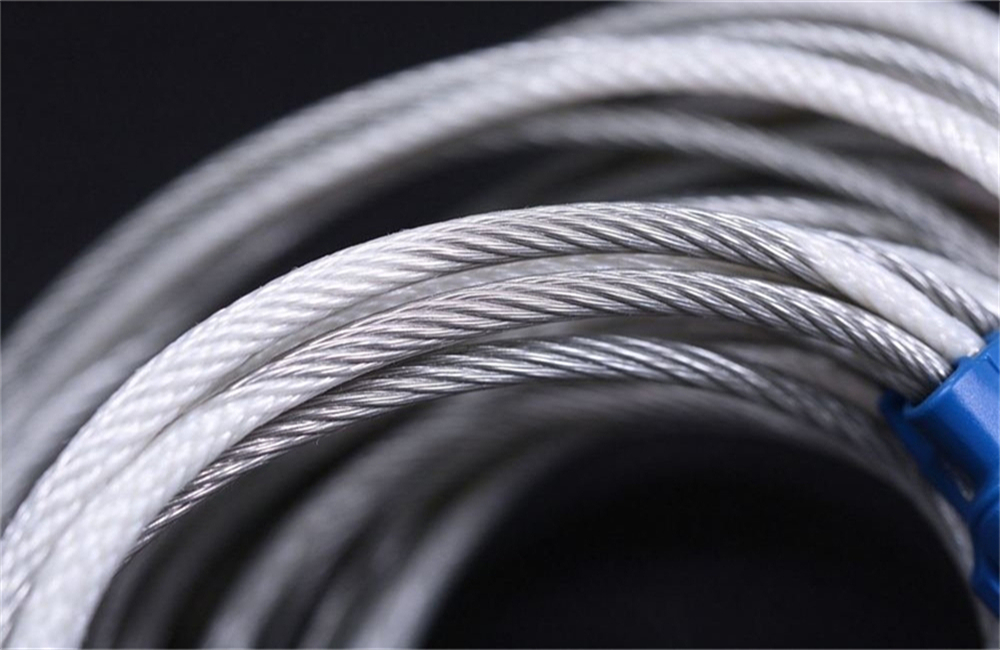
Let's cut the ladder open and look at what is inside.
The outer sheath: nylon braid
The outside is a tight braid of nylon fibers. Nylon is strong, flexible, and resists abrasion.
The braid pattern holds the shape. It does not unravel even if a few threads cut.
The white color with subtle texture makes this fire escape ladder easy to see in dim light.
The core: 4 mm aviation steel wire
Inside the sheath is a 4 mm steel wire. This is the same type used in elevator cables. It is what gives this fire escape ladder its cutting resistance.
The steel core does the heavy work. It prevents stretch. It resists cutting. It does not burn through quickly.
Steel melts at about 1,400°C. A room fire reaches 600-800°C. The core of your fire escape ladder keeps its strength long enough for you to reach the ground.
The rungs: plastic steps
Each rung of the fire escape ladder is a hard plastic bar, 25 cm wide and 2 cm thick.
They are stitched into the side ropes of the escape ladder at 30 cm intervals.
The surface has ridges for grip. Even wearing shoes, your foot will not slip on the fire escape ladder.
Before the emergency (today):
Pick the right window. One that opens fully and has a good anchor nearby.
Put on shoes and long pants. Broken glass and hot surfaces are on the ground.
Feel the door handle. If hot, do not open. The fire is outside.
Go to the prepared window.
Grab the ladder bag. Unhook the carabiners.
Open the window. Remove the screen if present.
Hook the carabiners to the tested anchor. Tighten the screw locks.
Push the ladder out. It should drop straight down.
Sit on the windowsill. Turn around so your back faces the room.
Place your feet on the first rung. Hold both side ropes.
Step down one rung at a time. Look at your feet, not down at the ground.
Bend your knees when you land. Absorb the impact.
Move at least 10 meters away from the building. Call 119.
The fire escape ladder holds one person at a time.
The first person goes to the ground and stands clear.
The next person hooks on and climbs. Repeat.
A family of four takes about 4-6 minutes total.
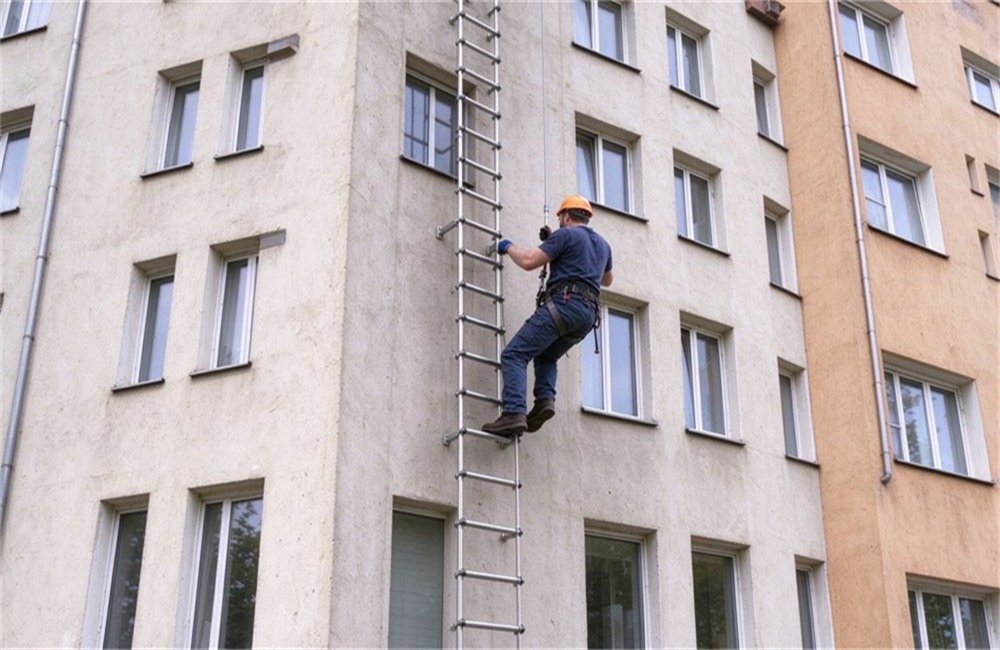
5. Choosing the Right Fire Escape Ladder Length
Too short, and you are hanging above the ground. Too long, and extra rope drags on the ground. Measure carefully before choosing your fire escape ladder length.
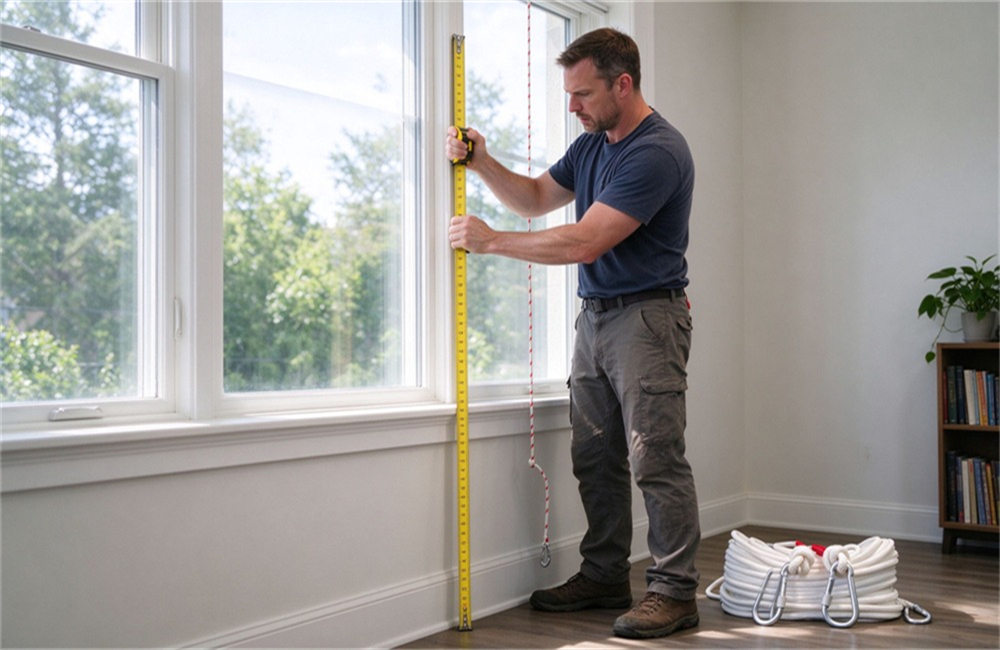
Here is how to measure for your fire escape ladder:
Stand at the window. Drop a tape measure to the ground.
That is your floor height in meters.
Add 1.5 meters for tying at the top.
Add 1 meter for landing and bending knees.
The total is the length you need.
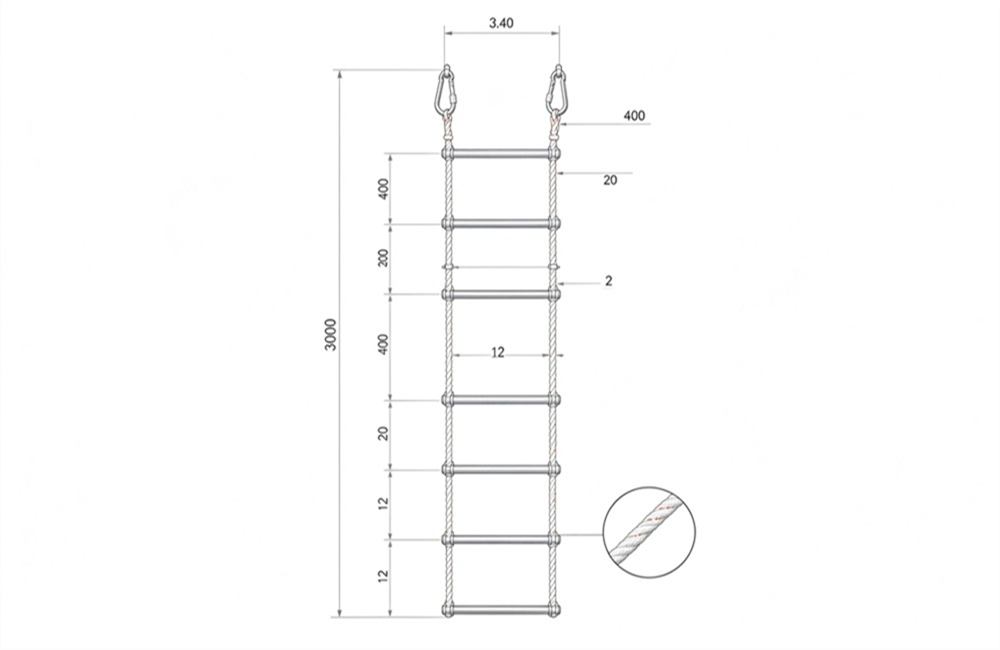
Here are the full technical specifications for both standard models.
All parameters are subject to contract. Custom lengths and colors available for bulk orders.
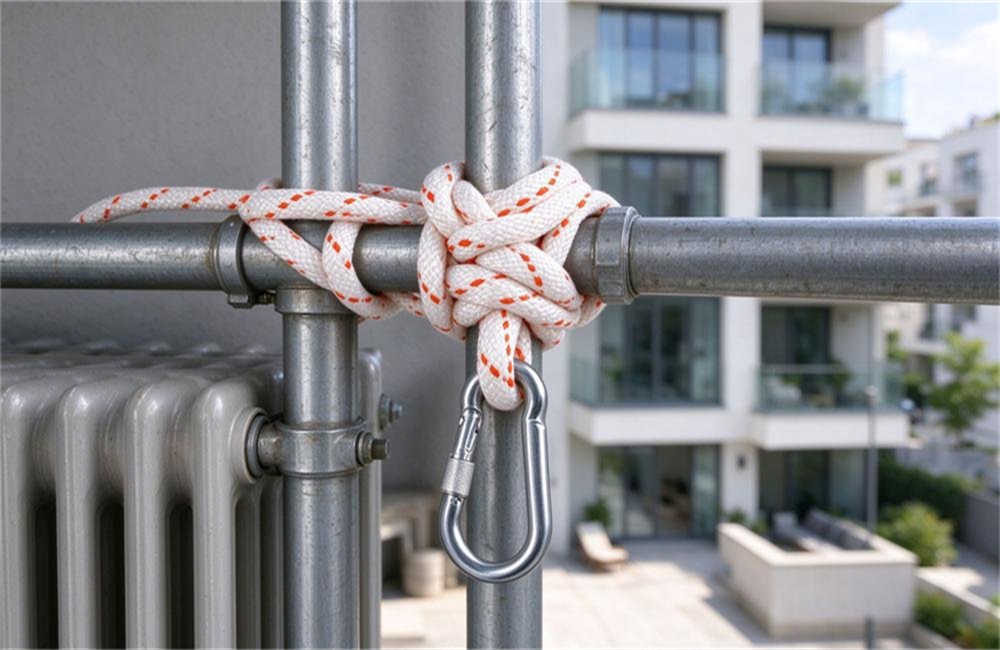
The anchor point is the most critical part of any escape ladder installation. If it pulls out, the ladder comes with you.
Good anchor points:
Heavy steel water pipe running through the wall
Radiator bolted to a solid wall (test it first!)
Wall anchor bolt drilled into concrete
Steel I-beam in a garage or factory
Heavy furniture bolted to the floor
Bathtub pipe (in a bathroom on an exterior wall)
Bad anchor points — do not use:
Window frames (plastic or thin metal pull out)
Door handles (they break)
Curtain rods (they slide off brackets)
Light fixtures (they rip out of ceiling)
Free-standing furniture (it tips over)
Toilet (it cracks)
How to test your anchor:
Hook the carabiner to the point.
Lean back. Put your full weight on it.
Jiggle. Pull up, down, and sideways.
If it moves even a little, find another point.
Mark the tested point with tape. So you know it is ready.
Installation takes 10 minutes. Here is the full process with every detail.
Tools you need
Steel water pipe or radiator (tested anchor)
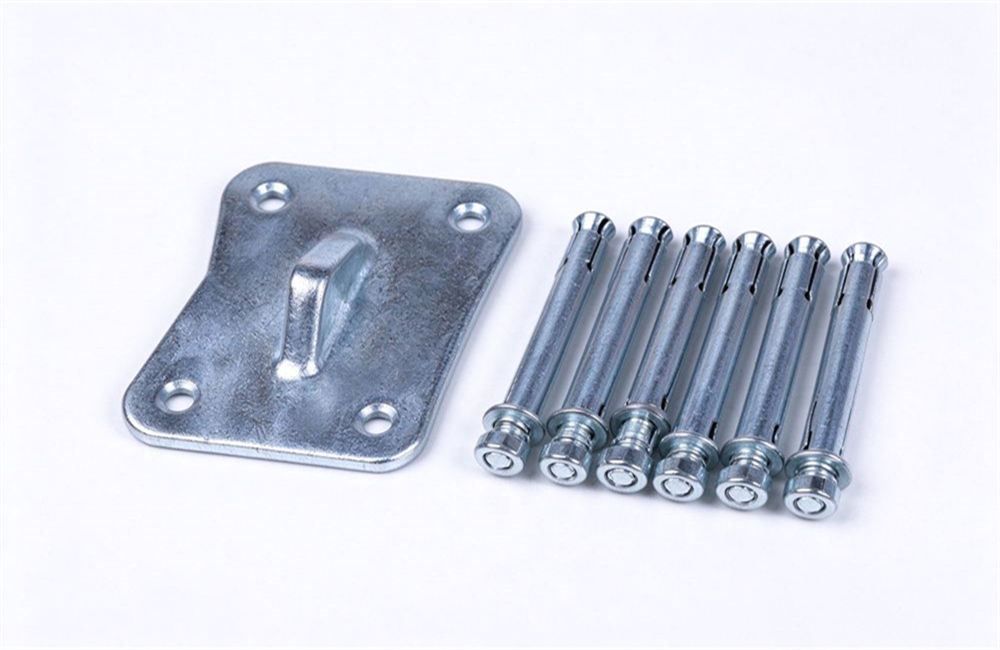
Wall anchor kit (if no pipe or radiator nearby)
Drill with masonry bit (for concrete walls)
Measuring tape
Marker for the tested anchor point
Step 1: Choose the window
Pick a window that opens fully. Check the height from the sill to the ground.
Step 2: Find the anchor
Look for a steel water pipe, a bolted radiator, or a concrete wall.
The anchor must be within arm's reach of the window.
Step 3: Install the wall anchor (if needed)
Drill a 10 mm hole in the concrete wall.
Insert the expansion bolt.
Tighten until the sleeve expands.
Let the resin cure for 24 hours before use.
Step 4: Test the anchor
Hook a carabiner to the anchor. Lean back with full weight.
Jiggle it up, down, and sideways. If it moves, find another point.
Step 5: Mark the tested anchor
Use colored tape to mark the tested point. Everyone in the family should know where it is.
Step 6: Store the ladder ready to go
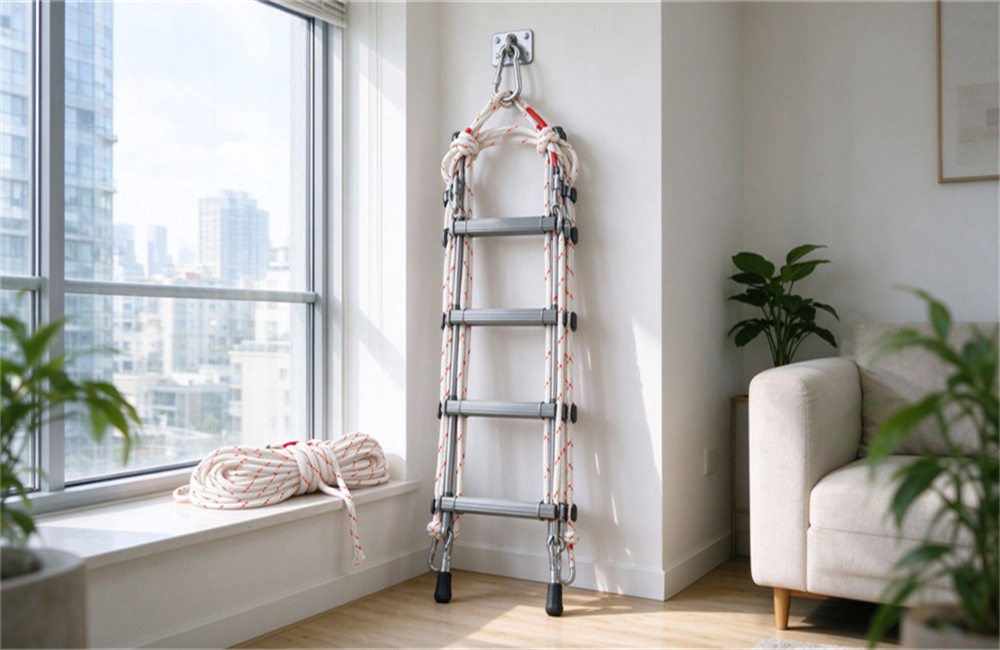
Hang the bag on the hook next to the window. The carabiners stay outside the bag, clipped to the anchor.
Now the fire escape ladder is always ready. In an emergency, you only need to unclip and throw it out.
Residential: 2-story and 3-story homes
Families on the second or third floor need a fire escape ladder. The front door may be blocked. The window is the backup. Keep the ladder in the bedroom, not the closet.
Factories and warehouses
Workers on mezzanine floors. The stairwell fills with smoke from a fire on the ground floor. A fire escape ladder at the mezzanine window is a quick route out.
Ships and boats
Emergency escape from cabin windows. The ladder is salt-water resistant.
Schools and dormitories
Low-rise dormitory buildings. Each room keeps one fire escape ladder by the window.
Budget-conscious buyers
The cheapest emergency escape option. It costs less than a smoke alarm.
Not ideal for: buildings above 4 floors, people with limited mobility, or windows higher than 10 meters.
Answer three questions to pick the right model.
Question 1: How many floors above ground?
2 floors: EL-05 (5 m) covers a typical two-story house.
3 floors: EL-09 (9 m) reaches from the second floor.
4+ floors: Consider a rescue descent device instead. A ladder above 10 meters is hard to control.
Question 2: Who will climb it?
Adults only: Any model works. Practice once a year.
Children under 8: An adult lowers them, or use a rescue harness with a descent device.
Elderly or limited mobility: A descent device with automatic speed control is safer than a ladder.
Question 3: What is your building type?
Wood-frame house: Anchor to wall studs behind the radiator.
Concrete apartment: Anchor to steel water pipes or bolted radiators.
Factory mezzanine: Anchor to steel I-beams. Workers wear hard hats during drills.
Ship cabin: Anchor to deck rails. Rinse with fresh water after use.
Still unsure? Tell us your floor count and window height. We will recommend a fire escape ladder length for your situation.
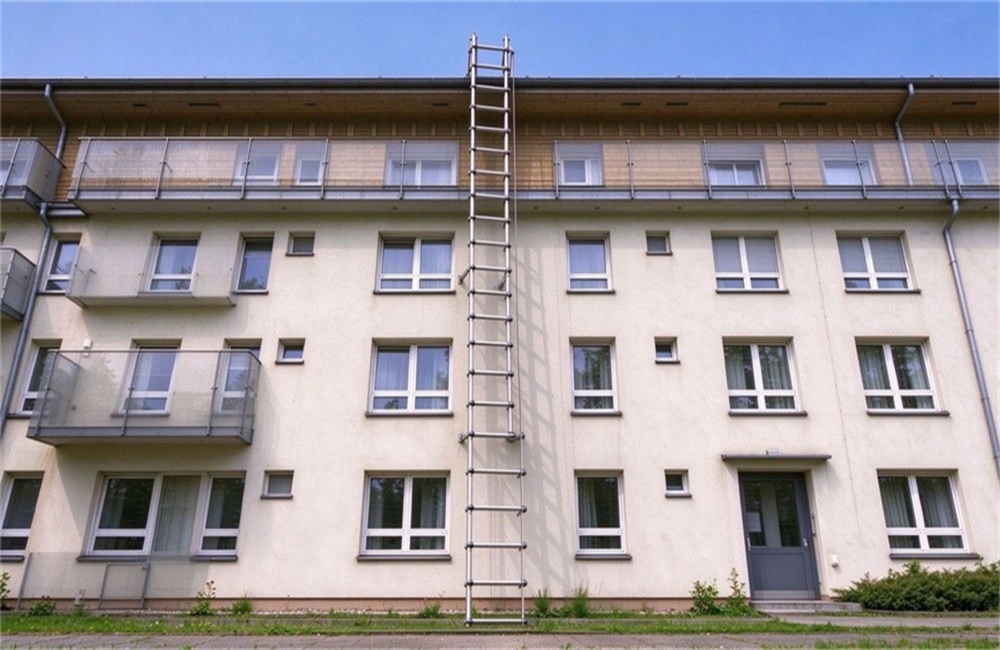
Quick reference: where to install
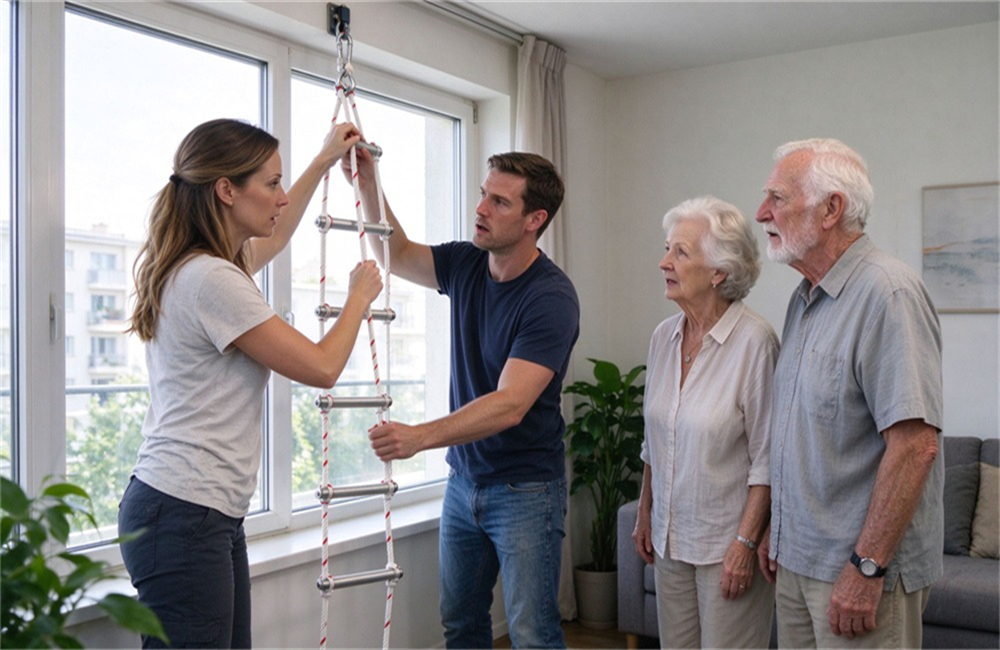
Are you purchasing for an apartment building, school, or factory? Here is the institutional checklist.
How many ladders do you need?
Install one fire escape ladder per sleeping room above the first floor.
A 20-room dormitory needs about 20 ladders. A two-story school with 12 classrooms needs 12.
Order 10% extra as spares. Damaged ladders must be replaced immediately.
What to specify in your purchase order
Model and length: EL-05 or EL-09
Color: white, orange, or red rungs
Instruction language: English, Spanish, or French
Test report: requested for the batch
Delivery terms: FOB, CIF, or DDP
Training for residents or staff
Show each resident where the fire escape ladder is stored.
Run a building-wide drill twice a year. Time each floor's evacuation.
Keep a maintenance log. Inspect every fire escape ladder every 6 months.
Replace any ladder with frayed nylon or rusted carabiners immediately.
Mistake 1: Storing it in a closet
You need to grab it in seconds. If it is across the room, you will not get to it. Hang it by the window.
Mistake 2: Never practicing
People freeze at the window. They do not know which way to turn. Practice once a year. Show your family.
Mistake 3: Trying it for the first time in a real fire
The first time should be a calm day. Not when smoke is filling the room.
Mistake 4: Wearing socks or sandals
The ground has broken glass. Wear shoes. Even in the middle of the night, slip on sneakers by the bed.
Mistake 5: Looking down from the top
Looking down makes people dizzy and they freeze. Look at your feet on the rungs. Keep your body against the wall.
Cold weather
Nylon gets stiff in freezing temperatures. Your fire escape ladder still works, but unroll it slowly. Do not yank it.
The steel core does not get stiff. It stays flexible.
Rain and snow
The fire escape ladder works when wet. Nylon does not absorb much water. After use in rain, hang it to dry before folding it back in the bag.
Heat and sun
Do not leave your fire escape ladder outside in direct sunlight. UV light weakens nylon over months.
Store it indoors, in its bag. A closet by the window is fine.
Shelf life
Indoors, dry, in the bag, a fire escape ladder lasts 5-10 years.
Check every 6 months. If you see fraying, cracks, or rust on the carabiners, replace it.
11. Care and Maintenance
Every 6 months: Unroll the full ladder. Run your hands along the sides. Feel for thin spots or cuts.
Every 6 months: Check the carabiners. Open and close the gate. Screw the lock. It should click firmly.
Every year: Re-test the anchor point.
Cleaning: Wipe with a damp cloth. Mild soap if needed. Do not use bleach or chemicals.
Storage: Dry, cool, in the bag. Not in direct sun. Not near a heater.
After a real emergency use: Replace the ladder. Even if it looks fine, the fibers have been stressed.
Escape ladder (5 m or 9 m, as ordered)
Two steel screw-lock carabiners (pre-attached to the top)
Black drawstring storage bag with loop for hanging
English instruction card with diagrams

Not every building is the same. Here is how to match the ladder to your structure.
Concrete apartment building
Concrete walls are strong. Anchor the fire escape ladder to a steel water pipe or a radiator bolted to the wall. The window frame is aluminum — do not anchor to it. Use the 9 m ladder for the second or third floor.
Wood-frame house
Wood houses burn fast. Anchor the escape ladder to a wall stud behind the radiator. Test the anchor — some radiators are held by thin brackets. The 5 m fire escape ladder works for a two-story wood house.
Factory or warehouse mezzanine
Anchor to a steel I-beam or a bolted-down machine base. The 9 m ladder covers a typical mezzanine height of 6-8 meters. Workers should wear hard hats during drills.
Ship or boat cabin
Anchor to a deck rail or a bulkhead fitting. The nylon sheath resists salt water. Rinse with fresh water after use. The 5 m ladder works for cabin deck to water level.
14. Fire Safety Standards and Building Codes
Escape equipment in buildings follows local fire codes. Here is what you should know about installing a fire escape ladder.
What NFPA says
Residential fire escape planning is also covered by OSHA emergency action plan guidance for workplaces. ISO safety framework for emergency equipment complements NFPA 101 for export orders.
These standards tell you two things. First, every room needs a second way out. Second, escape equipment must be tested and maintained. A fire escape ladder that sits unused for years must still be inspected on schedule.
What NFPA says
The NFPA Life Safety Code (NFPA 101) requires two means of egress from most occupied rooms above the first floor. An escape ladder at a window counts as a second means of egress when the primary exit (door or stairwell) is compromised.
What this means for you
If your building has only one stairwell, you are at risk. A fire escape ladder at each window gives you a backup. For residential buildings, this is a personal choice. For commercial buildings, check with your local fire marshal.
Test reports
Our ladders are tested for breaking strength before shipment. We provide test reports on request for bulk orders. We do not claim certifications we do not have. Ask us what documentation we can provide for your project.
15. Nighttime Evacuation: Waking Up in a Fire
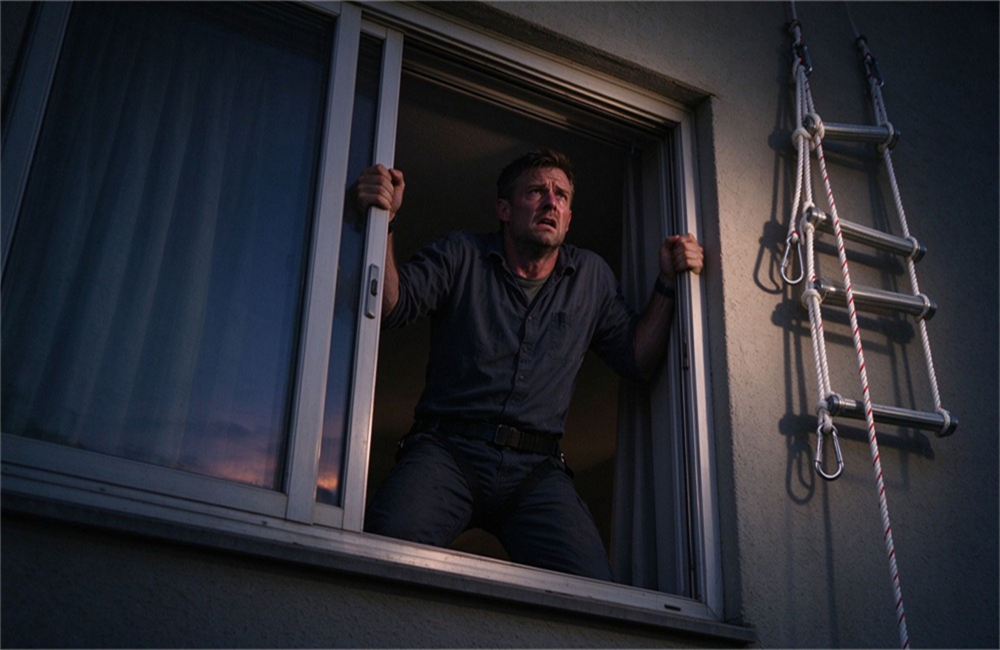
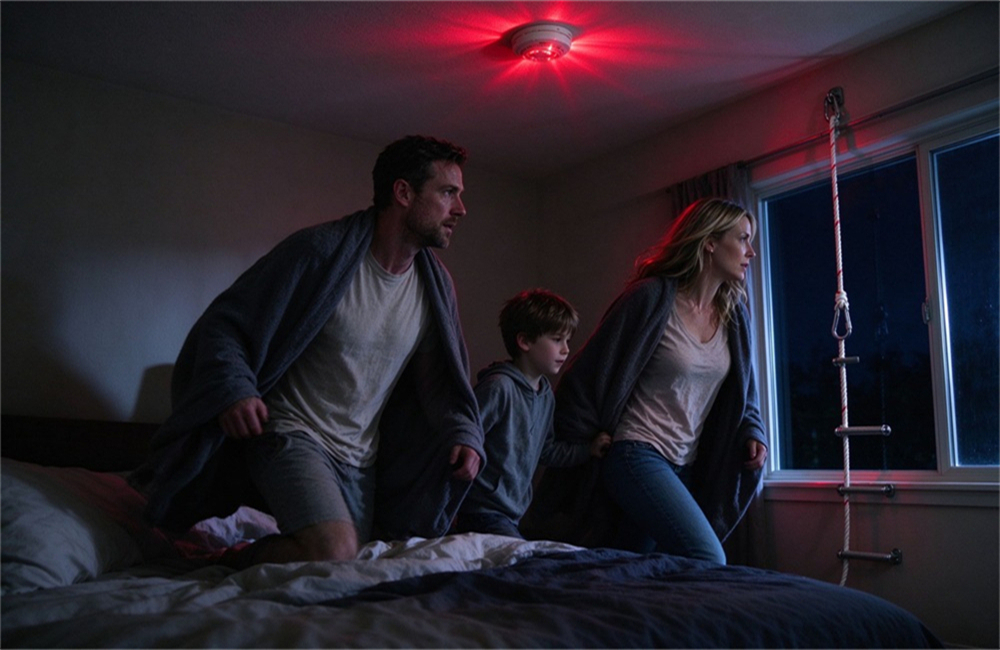
Most fires start at night. You are asleep. The smoke alarm wakes you up. You reach for your fire escape ladder and head to the window.
The first 60 seconds
Sit up. Do not jump out of bed. Orient yourself.
Feel the door. If hot, do not open.
Crawl to the window. Smoke rises — clean air is near the floor.
Grab the ladder bag from its hook.
Put on the shoes you left by the bed.
Why shoes by the bed matter
You do not want to walk on broken glass in socks. Keep a pair of sneakers by the bed. In a real fire, you will not have time to find them.
Waking children
Smoke alarms can be frightening for children. Practice at home so they know the sound means "get up and go to the window." Tell them: "The ladder is by the window. We climb down together.
Not all windows open the same way. Here is how to prepare each window for your fire escape ladder.
Sliding window
Open fully. The screen slides out. Push the ladder through the opening. Make sure the window track does not cut the rope.
Casement window (crank open)
Crank it fully open. The window swings out. The ladder goes through the open sash. Do not let the sash close on the rope.
Awning window (bottom hinges, opens outward)
This type opens at the bottom, tilting outward. It may not open wide enough. Keep a window hammer nearby to break the glass if needed.
Tilt-and-turn window
Open to the fully tilted position (bottom in, top out). This gives enough space to push the ladder through. Test it before you need it.
Fixed sealed window
If the window does not open, you must break the glass. Keep a window hammer mounted by the window. Cover the sill with a towel or blanket before pushing the fire escape ladder out.
Family Fire Drill with Your Fire Escape Ladder
Equipment works best when everyone has practiced. Here is a 15-minute drill you can run tonight.
What you need
Your fire escape ladder, installed and ready
A second adult to spot the climber at the ground
A stopwatch or phone timer
Comfortable shoes for everyone
Gather the family at the window. Show everyone where the ladder is stored.
Have one adult clip the fire escape ladder to the tested anchor.
Throw the ladder out the window. Let it unroll fully.
One adult climbs down slowly. The spotter guides them at the bottom.
Time the descent. Most adults take 30-45 seconds for 9 meters.
Bring the ladder back up. Fold it. Store it in the bag.
Ask each family member to repeat once. Watch their hand placement.
The drill (nighttime, second time)
Repeat the same steps with the lights off and flashlights on.
This simulates a real fire more closely. You will notice how much harder it is in the dark.
What to fix after the drill
If anyone hesitated at the sill, practice again next week.
If the ladder swings, hold the bottom rope tight during use.
If shoes were hard to find, keep a pair by the bed.
Run the full drill once a year. It takes 15 minutes and could save your family.
Q: How much weight can the fire escape ladder hold?
A: Tested to 300 kg. One adult at a time, well within the limit.
Q: Can children use a fire escape ladder safely?
A: Yes, with supervision. Children aged 8+ can climb down. Smaller children should be lowered by an adult using a rescue harness.
Q: What if the window is stuck or sealed?
A: Keep a window hammer nearby. Break the glass. Cover the sill with a towel to cut the sharp edge.
Q: Does the fire escape ladder swing in wind?
A: Slightly. The steel core reduces swing compared to pure rope. Have someone hold the bottom if windy.
Q: Can I leave it permanently clipped to the anchor?
A: Yes, but check monthly. Bring it inside if the window faces direct sun.
Q: How long does it take to climb down 9 meters?
A: About 30-45 seconds at a normal pace.
Q: Does the fire escape ladder make noise while climbing?
A: Very quiet. Nylon and plastic make almost no sound. You can use it at night.
Q: Can mice or rats chew through it?
A: The steel core prevents chew-through. The outer nylon may get marks but the core holds.
Q: What about fire heat? Will it burn?
A: The nylon outer can melt near direct flame. The steel core stays intact. You do not need to touch fire. The ladder runs down the outside wall.
Q: Can I use this on a balcony?
A: Yes. Hook to the balcony rail or a concrete column. Climb down to the next balcony or the ground.
Q: How is the escape ladder tested?
A: Each batch is tested for breaking strength before shipment. Test reports are available for bulk orders. The 300 kg rating comes from actual pull tests on the full ladder, not just the rope.
Q: Can I use the escape ladder as a daily access ladder?
A: No. It is designed for emergency evacuation only. Daily use wears the nylon and the stitching. Use a fixed ladder or stairs for routine access.
Q: My window is on the fourth floor. Does this ladder work?
A: We recommend a rescue descent device for four floors and above. A 12 m ladder is hard to keep stable in wind and takes too long to climb.
Q: Do distributors get special pricing on fire escape ladder bulk orders?
A: Yes. The price table above shows three tiers. Distributors ordering 1,000+ units can request an annual contract with scheduled deliveries.
18. OEM and Distributor
We work with fire safety distributors, property managers, and emergency preparedness brands worldwide.
OEM logo: Print your brand on the bag and instruction card
Custom colors: White, orange, or red rungs available
Custom lengths: 5 m, 9 m, or custom on request
Sample orders: 5 pieces available for quality check
Lead time: Samples 3-5 days. Bulk 15-25 days.
Packaging: Polybag or drawstring bag. Export cartons on pallets.
Buying fire escape ladders in bulk? Here is what you need to know about shipping.
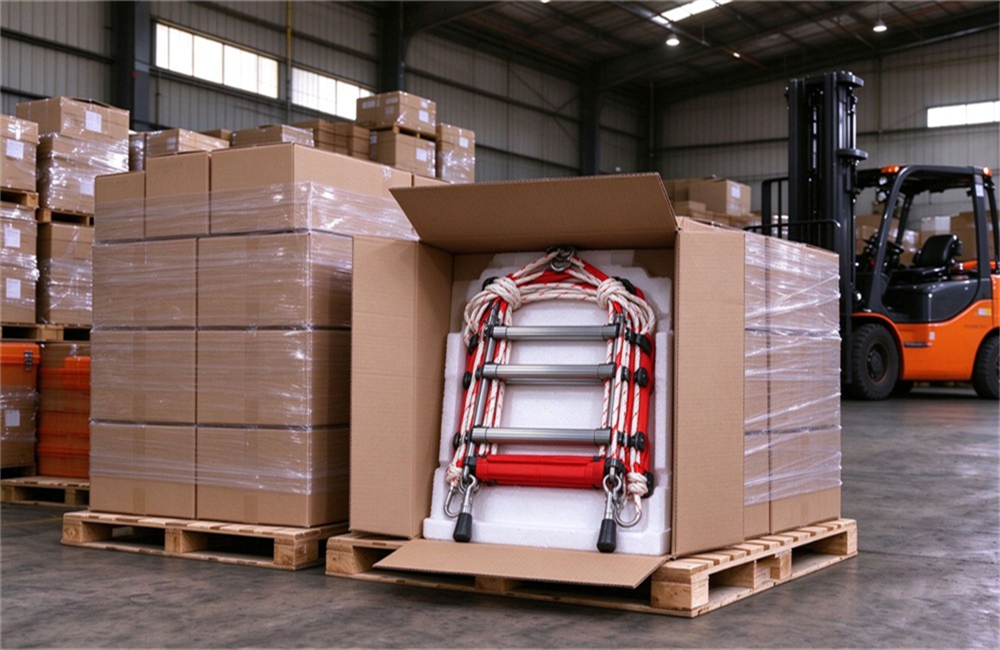
Export packaging
Each fire escape ladder ships in a drawstring bag with an English instruction card.
Bulk orders ship in export cartons. Standard carton: 12 units per carton for the 5 m model, 8 units for the 9 m model.
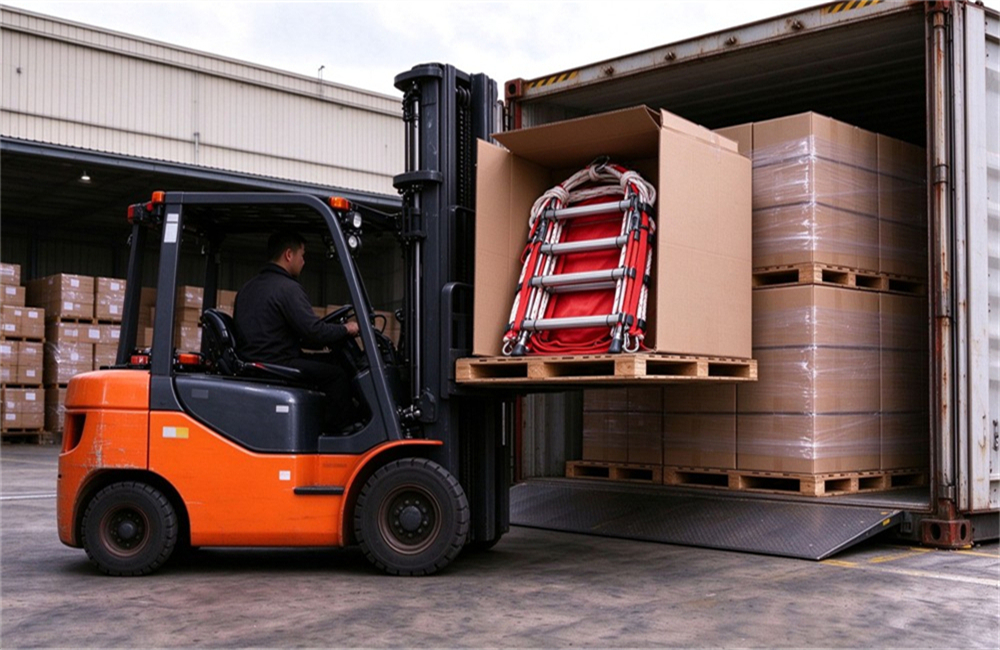
Cartons are palletized and wrapped for ocean freight.
Shipping terms
We quote FOB Shanghai or Ningbo by default. CIF and DDP available on request.
Sample orders ship by DHL or FedEx. Most samples arrive in 3-7 working days.
Lead time
Samples: 3-5 days after payment confirmation
Bulk (100-500): 15-20 days
Bulk (500+): 20-25 days
Custom colors: Add 3-5 days
Documentation for importers
Commercial invoice
Packing list
Bill of lading
Test report for the batch (on request)
Certificate of origin (on request)
All terms are subject to contract. Tell us your port and quantity for a firm quote.
Mixed-length orders ship together. We plan the pallet mix so you pay the least freight.
Prices scale with volume. Ask for the annual contract rate if you reorder regularly.
Stock orders usually ship within 15-20 days after payment confirmation.

Complete your building's fire escape plan with these products:
Rescue Descent Device — for buildings above 5 floors
Self-Locking Escape Rope Kit — budget option for short drops
Special Needs Rescue Harness — for elderly and children
Professional Rescue Desender — for fire departments and premium buildings
Note: This escape ladder is the ladder only. It does not include a descent device or harness. You climb down yourself.
This product is for emergency evacuation. Always follow local fire safety regulations. Practice your escape plan with your family. We work with relief organizations worldwide.
Previous :
Special Needs Rescue Harness Kit for Safe Window EvacuationNext :
Self-Locking Escape Rope Kit for High-Rise Emergency Multi-function Life Saving Rope, 8-20mm Optional, Earthquake Rescue
This high-strength rescue safety rope is made of premium polypropylene material with a load-bearing capacity up to 2741kg. Multi-channel mechanical seaming ensures firmly secured ends without loosening. High-visibility design in orange, yellow, red, and blue allows quick identification in complex rescue environments. The soft rope design is easy to tie and stays secure, available in multiple specifications from 8mm to 20mm, suitable for various rescue scenarios including earthquakes, floods, and fires, providing over 99% safety assurance for rescue personnel.
 High-Reliability Escape Descender Kit for School Safety
This High-Reliability Escape Descender Kit for School Safety features YL104 die-cast aluminum, weighs only 3.5kg, offers IP65 waterproof rating, and includes high-strength steel cables withstanding 500 tons of pressure. With black body and orange markings, it complies with GB8624-2012 national safety standards, operates at heights of 4-80 meters, maintaining stable descent speed of 0.8-1.2 meters/second. Specifically designed for campus fire emergencies with simplified operation, suitable for school buildings, libraries, and dormitories, providing 98% reliable escape assurance for students and faculty.
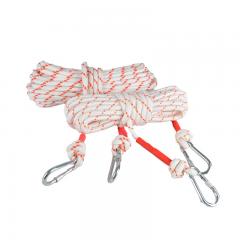 Steel Core Safety Escape Rope, Aviation-Grade, Fire Use
This Steel Core Safety Escape Rope features aviation-grade steel wire core design, 12mm standard diameter, with load capacity up to 500kg. The white body with red marking lines enhances visibility in smoky environments, while dual metal hook system ensures quick and reliable fixing in emergency situations. Heat-resistant treatment maintains functionality at fire scenes, making it essential safety escape equipment for professional fire brigades, high-rise buildings, and industrial facilities, providing reliable protection for over 200 fire departments nationwide.
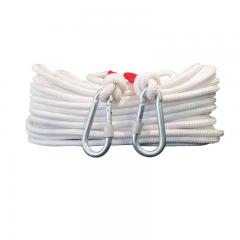 Military Grade Life Rope, Double Safety Hooks, High Altitude Rescue
This white military grade life rope is crafted from specialized tough polyester fibers with internal steel wire core reinforcement, coupled with dual safety hook structure, professionally tested with tensile strength up to 3000 Newtons. The dual safety hooks are made of aviation-grade aluminum alloy, providing secure and reliable locking. The rope surface features special treatment technology for exceptional grip, ensuring stable operation even in extreme weather conditions. Specifically designed for military training, high-altitude rescue, and emergency fire rescue operations, it is the equipment of choice for professional rescue personnel.
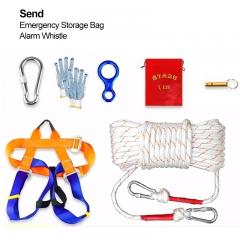 Professional Fire Escape Rope Set, High-strength Hook, 7-piece Kit
This professional fire escape rope set features high-density steel wire core technology with load capacity of 250kg, ideal for high-rise emergency evacuation. White main rope with red marker lines design facilitates quick identification in smoke environments. Equipped with blue figure-8 descent device to control stable and safe descent speed. The complete set includes 7 professional rescue tools, with orange safety belt made of flame-retardant material, and high-strength hook capable of withstanding 3000N pulling force. Suitable for homes, office buildings, schools, and other scenarios, with 10-100 meter multiple specifications, certified by international fire safety standards.
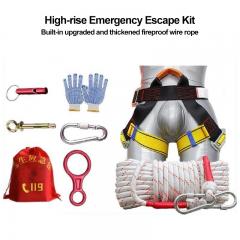 Fire Safety Rope Set, 8pcs, Building Escape Dedicated
This Fire Safety Rope Set is specially designed for building fire escape, featuring high-temperature resistant steel-core nylon structure with a single rope bearing capacity of 800kg, equipped with 8-piece professional escape gear. The set includes main rope, safety harness, descender, speed controller, anti-cutting gloves and other key components to meet emergency evacuation needs in high-rise building fires. The 20-meter rope is suitable for buildings under 8 floors, with all equipment passing national fire equipment testing standards, providing a reliable life passage for residences, office buildings, schools and other venues, making it essential home fire safety equipment.
Copyright © Custom Disaster - Relief Bedding: Tents, Sleeping Bags, Blankets All Rights Reserved
the professional team to service !