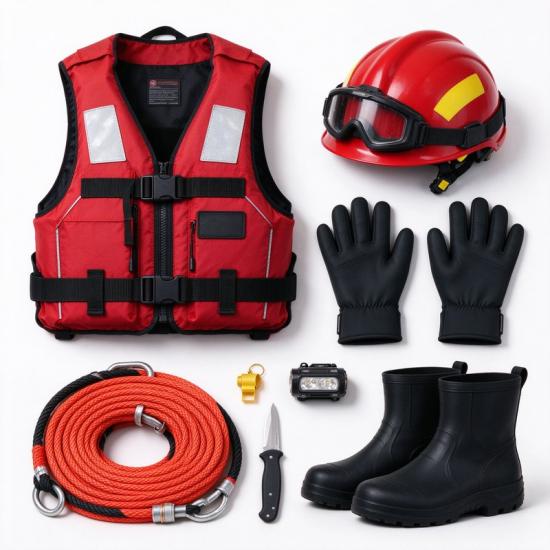
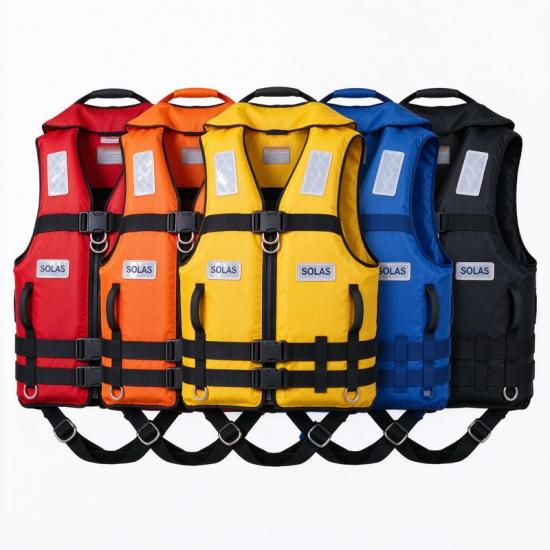
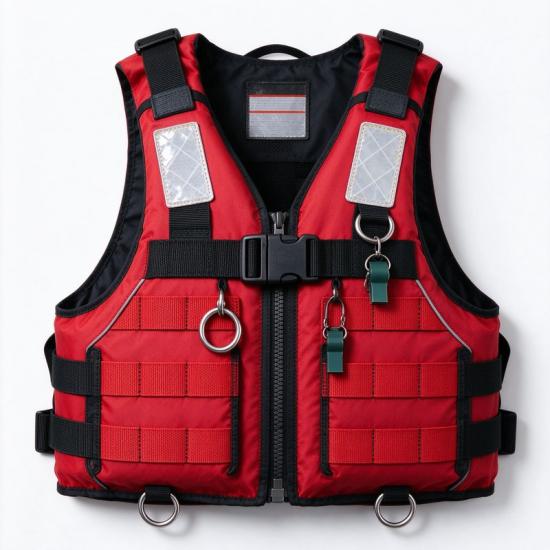
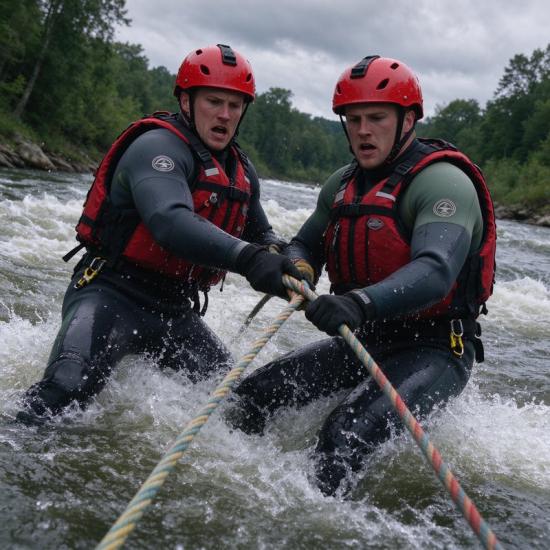
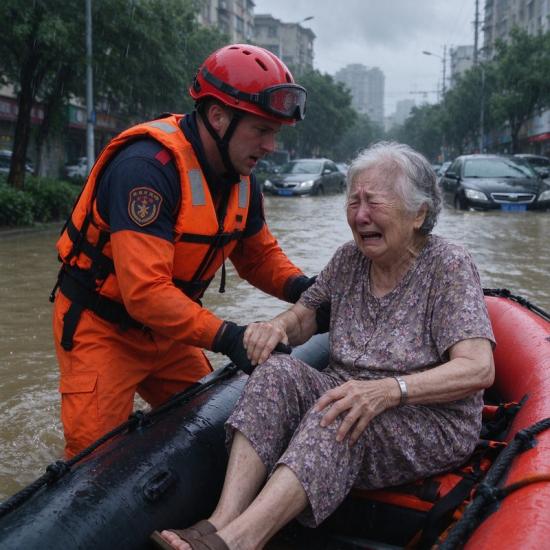
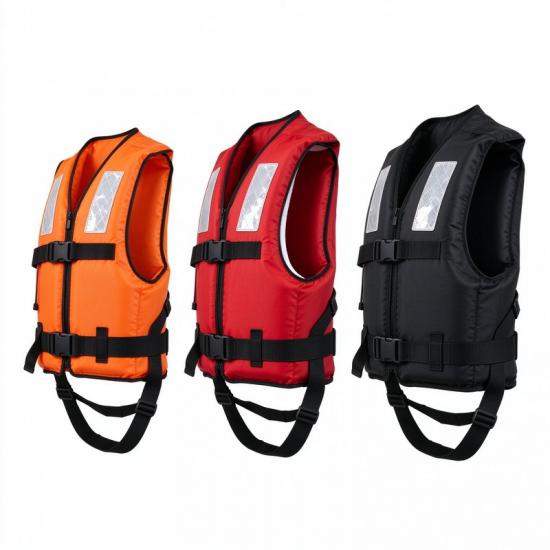
Professional water rescue life jackets available in foam and automatic inflatable types. Multiple buoyancy options from 50N to 275N with SOLAS reflective tape and multi‑point adjustable straps. Meet ISO 12402 standards, suitable for flood swiftwater and cold‑water missions. Support bulk procurement and custom OEM for rescue teams.
Note: Price for reference only. Exact price based on quantity, size, weight and custom details.
model no. :
RLJ-01Brand:
YRFmarket price :
$10.2sale price :
$5price range :
30-500/$5 501-1000/$4Color :
Multiple Colorsport of dispatch :
Guangdong/GuangzhouPayment :
TT, Paypal, Western Unionmin order :
30original region :
Made in ChinaLead Time :
5-15daysSize :
Standard adult size |Wholesale Water Rescue Life Jackets Custom Waterproof Safety Equipment
Flood water doesn't wait for a second attempt — a life jacket's buoyancy rating is the difference between a rescuer who stays afloat and one who becomes another victim. Our water rescue life jackets are specified by buoyancy rating, reflective visibility and donning speed, with foam life jackets for general duty and automatic inflatable life jackets for professionals who need mobility on the water.
 |

|
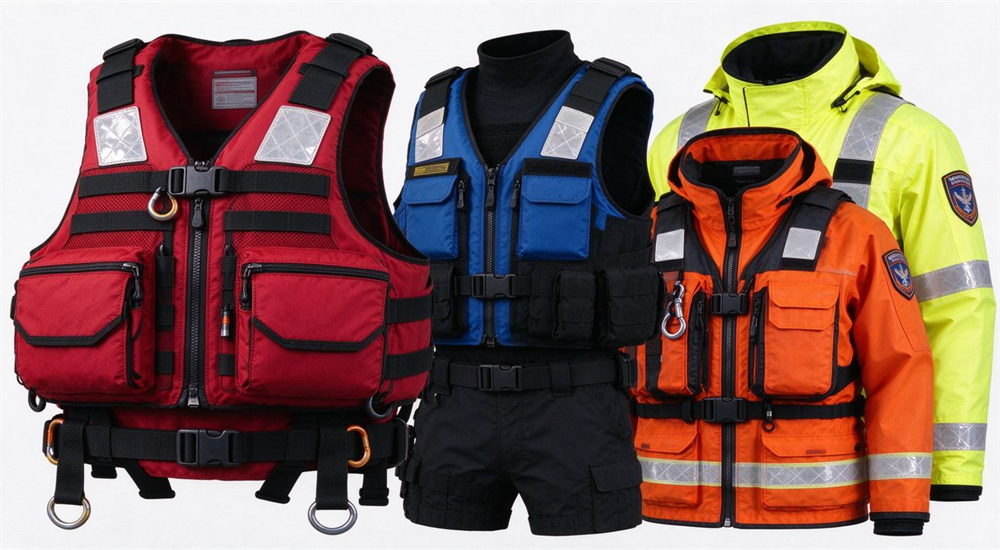
Professional rescue teams choose their life jackets based on operational profile, water conditions, and team role. A swiftwater technician needs a high-buoyancy model with MOLLE attachment points, while a flood evacuation volunteer may use a lighter vest that allows quick movement through shallow water. The right model reduces fatigue during extended operations and improves victim access time.
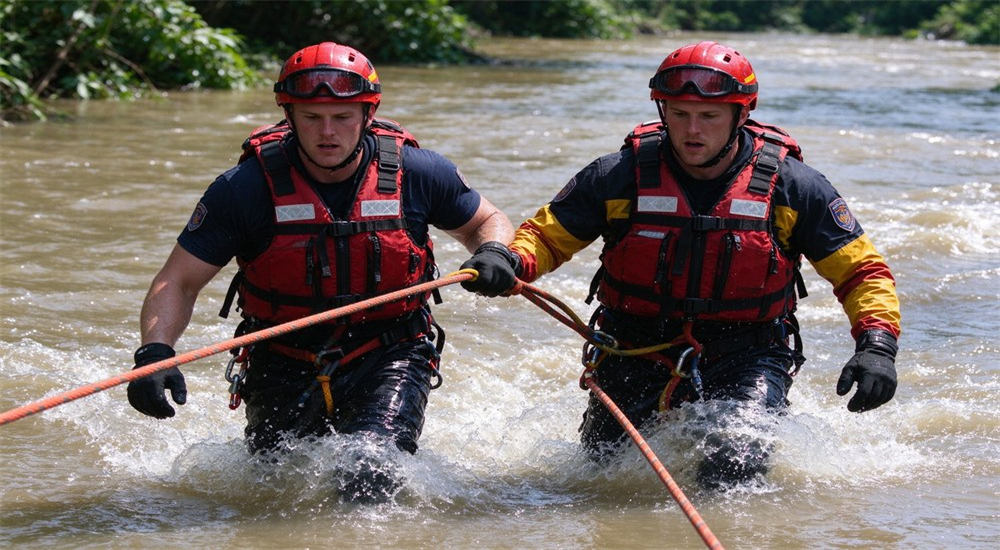
Table of Contents
1. Life Jacket Types & Model Range
2. Buoyancy Ratings Explained
3. Materials & Construction
4. Reflective Visibility & Safety Features
5. Certifications & Standards
6. Selecting the Right Model for Your Team
7. Care, Maintenance & Inspection
8. Bulk Orders, Customization & Procurement
10. Industry Trends & Procurement Advice
11. Frequently Asked Questions
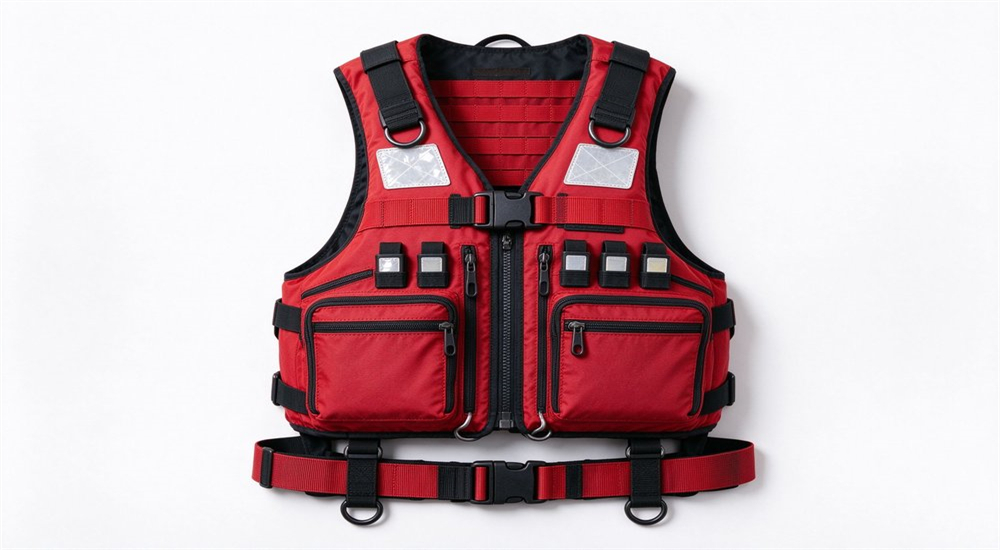
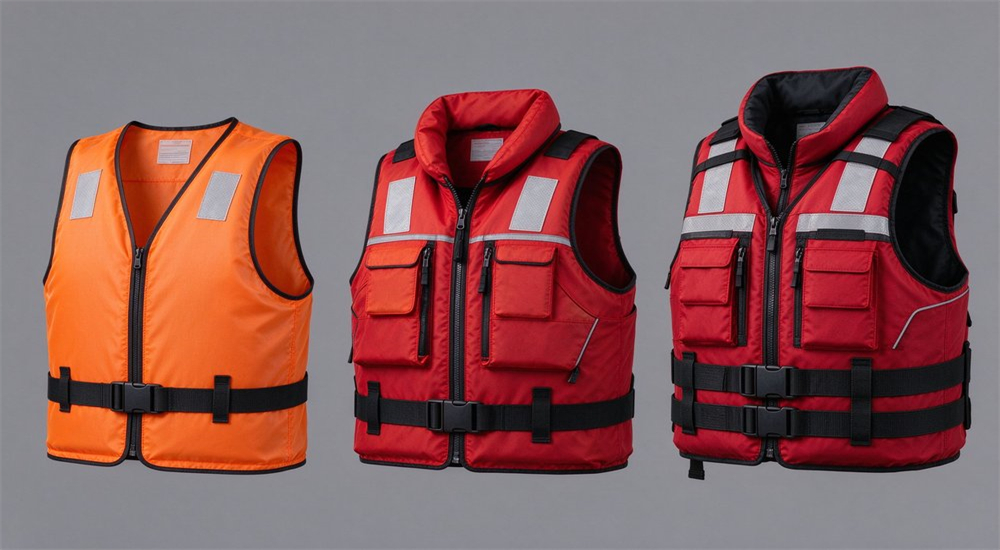
We carry two primary technology platforms across the bulk rescue life jackets range: inherently buoyant foam vests and automatic inflatable life jackets. Each platform serves a different operational profile, and most professional teams maintain a mix of both across their fleet.
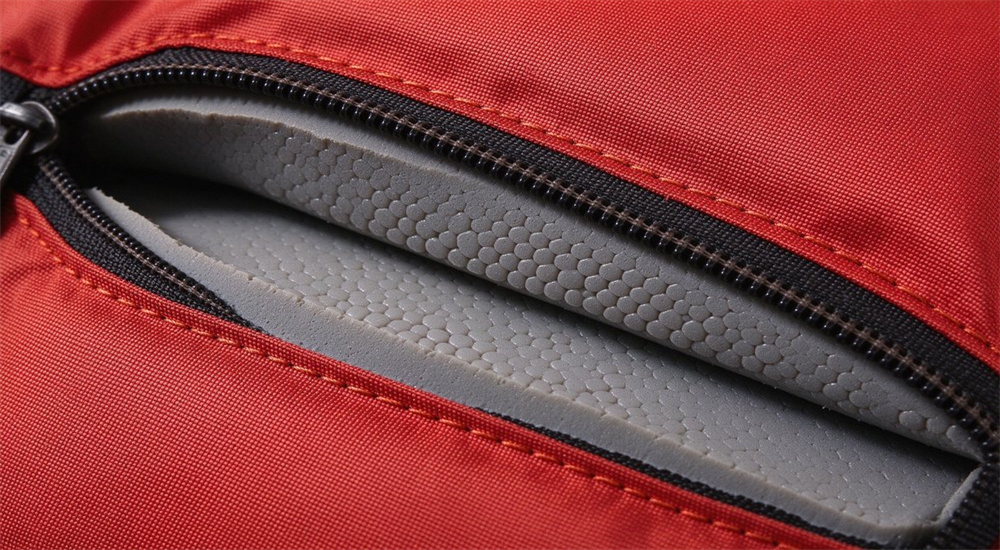
Foam models use closed-cell polyethylene or PVC foam panels that provide constant buoyancy without any mechanical action. They are the standard choice for general flood evacuation, swiftwater support and civilian distribution programs because they require no maintenance beyond visual inspection and will not fail if the wearer falls unconscious.
Foam life jackets are the preferred choice for government stockpile programs because they have no expiration date on buoyancy foam, require no consumable parts, and can be deployed by untrained personnel without reading instructions. The closed-cell foam structure means even a punctured outer shell does not result in loss of buoyancy — a critical advantage in debris-filled flood environments where sharp objects are common.
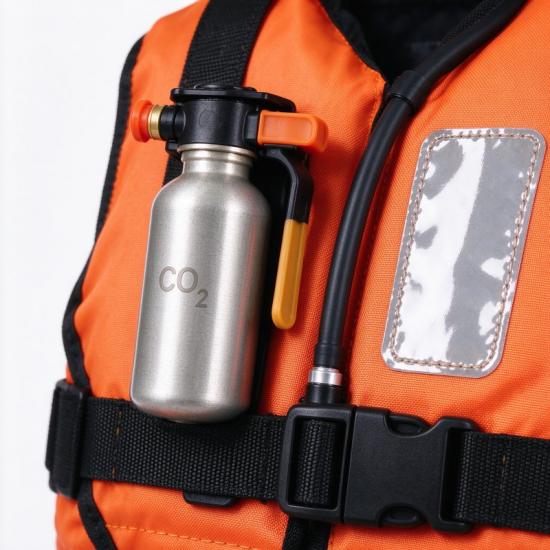
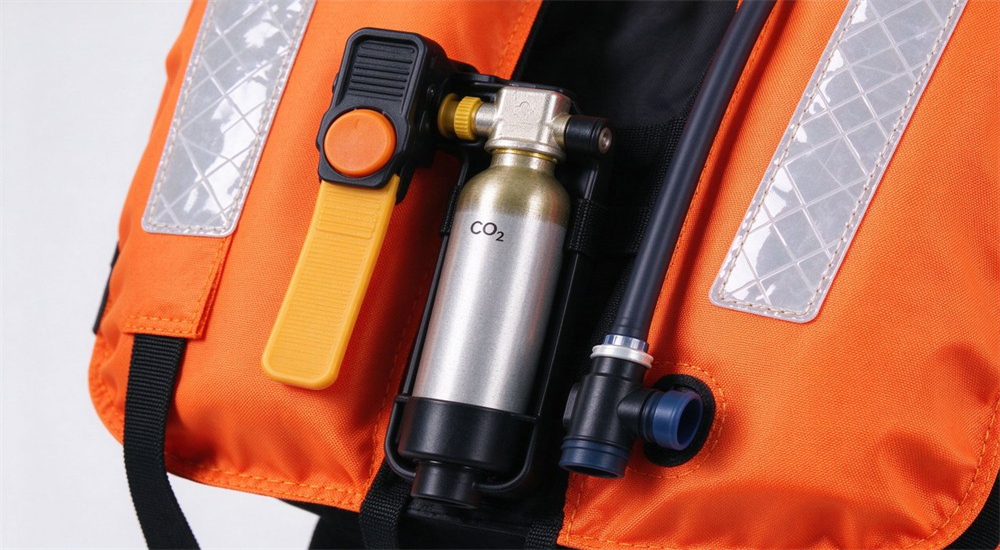
Inflatable models are preferred by professionals who need minimal bulk during movement and maximum buoyancy when deployed. The automatic inflation mechanism triggers on water contact, while a manual pull tab provides backup activation. These models are common among coast guard crews and rescue boat operators where freedom of movement is critical before entering the water.
Inflatable models use a CO2 cylinder to inflate a bladder on water contact or manual pull. They offer far greater mobility and are preferred by boat crews, coast guard personnel and technical rescue specialists who need full range of motion. The trade-off is that they require annual cylinder replacement and oral-inflation backup.
The table below summarizes the two technology platforms by typical use case, buoyancy range and maintenance profile. This helps procurement officers match the right model to each team's operational role without over-specifying or under-specifying.
This comparison table helps procurement teams select the right buoyancy rating based on operational requirements. For general flood and calm water rescue, 100N provides adequate flotation, while swiftwater and cold water operations require 150N or higher. When team members wear heavy turnout gear or dry suits, the additional 50N from a 200N jacket compensates for the negative buoyancy of soaked clothing. Government tenders typically specify 150N as the minimum standard for professional rescue personnel.
Foam models dominate government stockpile tenders because of zero-maintenance reliability; inflatable models are preferred by professional boat-based units where mobility matters more than simplicity.
|
Life Jacket Platform |
Buoyancy Range |
Bulk User Profile |
Maintenance |
|
Foam – General Purpose |
50N–100N |
Civilian distribution, flood evacuation |
Visual inspection only |
|
Foam – Professional Rescue |
100N–150N |
Swiftwater teams, fire departments |
Annual strap & buckle check |
|
Foam – High Buoyancy |
150N–270N |
Heavy-gear rescuers, ice rescue |
Annual foam compression test |
|
Inflatable – 150N Auto |
150N |
Boat crews, coast guard patrol |
Annual CO2 cylinder replacement |
|
Inflatable – 275N Auto |
275N |
Technical rescue, heavy PPE wearers |
Annual service + leak test |
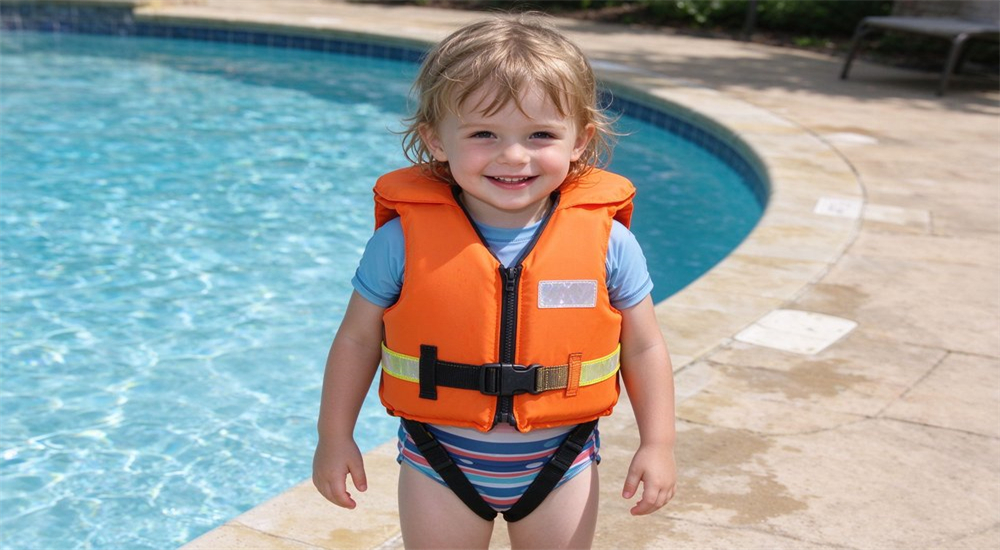
Children's life jackets are designed with smaller buoyancy ratings (30N–50N) and include mandatory crotch straps to prevent the jacket from riding up over the child's head. They feature brighter colors and larger reflective panels for easier spotting in crowded evacuation zones. Special needs models with extended sizing and adjustable closures are available for adolescents and adults with limited mobility.
Rapid-donning life jackets are designed for personnel who need to suit up in under 15 seconds — typically vessel crews and industrial workers near water. They use a single over-the-head design with one waist buckle, eliminating the need for multiple strap adjustments. These models are popular for government facilities located near flood zones and for industrial plants with waterfront operations.
Different user groups have fundamentally different requirements from a life jacket. Fire department swiftwater teams need high buoyancy, quick release and harness compatibility for live-bait rescue techniques. Coast guard vessel crews need inflatable mobility with automatic activation for man-overboard situations. Government flood stockpiles need zero-maintenance foam models that can sit in storage for years and still perform. Humanitarian distribution programs need cost-effective general-purpose models in adult and children's sizes. Understanding your user profile is the first step in selecting the right model — we provide a user profile questionnaire as part of the quotation process to ensure the recommendation matches actual operational needs.
Buoyancy is measured in Newtons (N) and represents the upward force the jacket provides when submerged. Higher numbers mean more flotation, but also more bulk and less mobility. The correct rating depends on the wearer's body weight, clothing and the operational environment.
A 100N jacket provides approximately 10kg of buoyant force. Since the human body is already roughly 95% water, only the head and upper torso need additional flotation to stay above the surface. A 70kg person wearing standard clothing typically needs 50N–75N to keep their airway clear; a rescuer in heavy turnout gear may need 150N or more.
It is important to note that buoyancy ratings are tested in fresh water at 15°C. In salt water, effective buoyancy increases by approximately 2.5% due to higher water density. In cold water below 10°C, the wearer's clothing absorbs additional water and increases effective weight, reducing the margin of safety. For operations in cold salt water, specify one buoyancy tier higher than the freshwater recommendation.
This table maps common operational scenarios to recommended buoyancy ratings. Use it as a starting point for tender specifications — final selection should account for local water conditions and team PPE configuration.
The material comparison table illustrates the trade-offs between durability, comfort, and cost. Nylon Oxford offers the best balance for most rescue applications, while PVC-coated nylon provides superior chemical resistance for contaminated water environments. When evaluating total cost of ownership, consider that higher-grade materials typically extend service life by 2-3 years, reducing replacement frequency for large fleets.
Most government tenders specify a minimum of 100N for professional rescuers and 50N for civilian distribution kits. Always confirm the rating standard (EN 393 / EN 399 / USCG) in the tender documents.
|
Rescue Scenario |
Recommended Buoyancy |
Selection Rationale |
|
Civilian flood evacuation |
50N–75N |
Light clothing, calm water, mass distribution |
|
Inland swiftwater rescue |
100N–150N |
Wetsuit or dry suit, moving water, rescue loads |
|
Coastal / boat patrol |
150N inflatable |
Mobility priority, possible heavy clothing |
|
Ice & cold-water rescue |
150N–270N foam |
Heavy immersion suit, ice entry loads |
|
Technical / heavy PPE |
275N |
Turnout gear + tool belt + self-rescue margin |
Many buyers confuse Newtons (N) with kilograms (kg) when specifying buoyancy. One Newton is approximately 0.1kg of force, so a 100N jacket provides about 10kg of upward force. However, because the human body is already mostly water, only about 5%–10% of body weight needs additional buoyancy to keep the airway above water. This means a 100N jacket can support a 100kg person in calm water, but moving water and heavy clothing reduce effective buoyancy significantly. Always specify Newtons in tender documents — this is the international standard unit.
How buoyancy is distributed in the jacket matters as much as total buoyancy. Jackets with more buoyancy in the collar and chest area rotate an unconscious person face-up in the water — this is a critical safety feature. Jackets with evenly distributed buoyancy keep the wearer vertical but may not rotate an unconscious victim. Professional rescue models are designed with offset buoyancy to ensure face-up rotation. When evaluating tenders, ask for the body position rating (face-up / vertical / face-down) from the manufacturer.
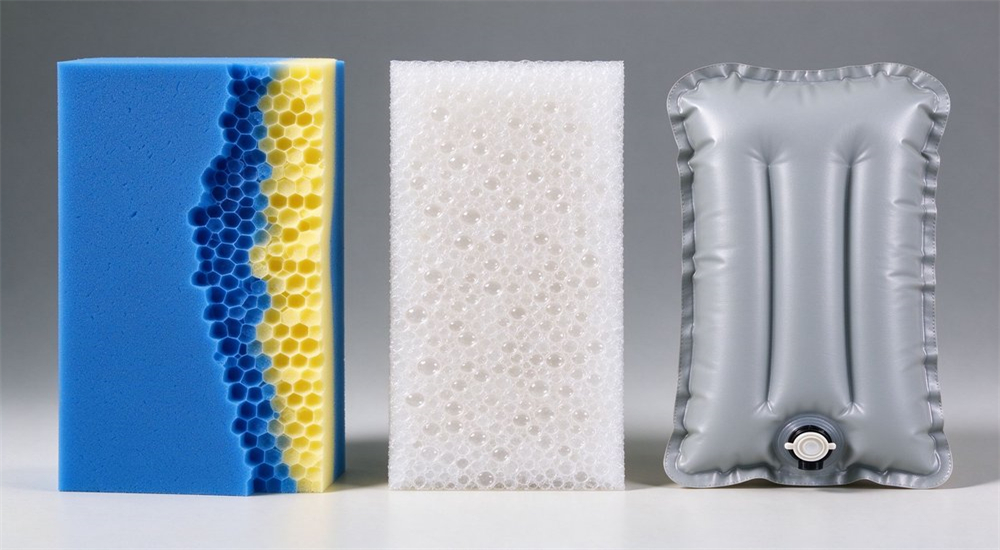
The outer shell of our rescue life jackets uses high-tenacity nylon or polyester oxford fabric with PU or PVC coating for water resistance and abrasion durability. Internal buoyancy foam is closed-cell polyethylene (PE) or polyvinyl chloride (PVC), chosen for its resistance to water absorption and compression set over years of storage.
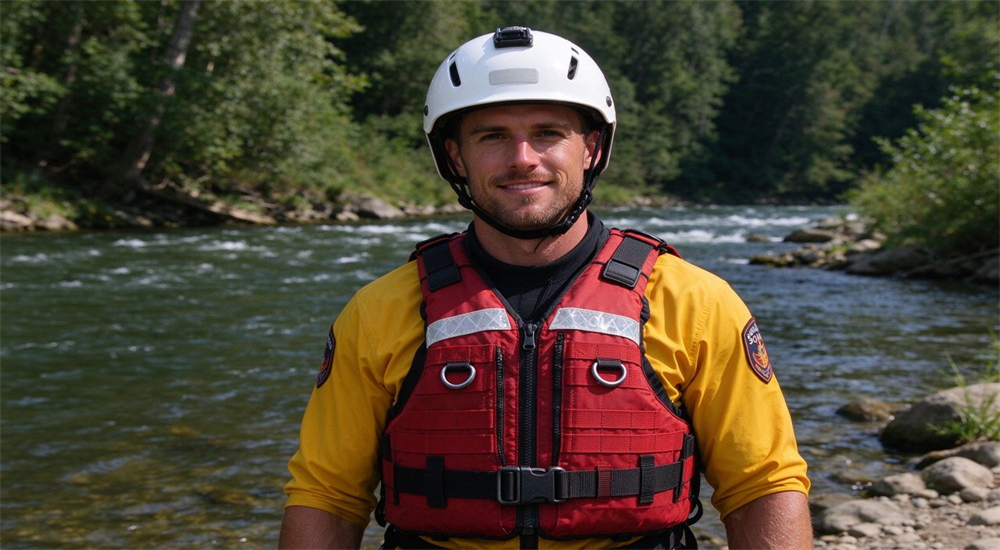
All professional models use ITW Nexus or equivalent side-release buckles, stainless steel D-rings and webbing that meets UV-resistance standards. Zippered models (inflatable) use corrosion-resistant YKK or equivalent zippers with protective storm flaps.
Material specifications vary by model tier. The table below shows the standard configuration for each tier — all materials can be substituted per tender requirements, subject to minimum order quantities.
Size selection is critical for both safety and comfort. A jacket that is too large may ride up over the wearer's face in water, while one that is too small restricts breathing and movement. We recommend ordering sample units for team fitting sessions before finalizing bulk specifications, especially when outfitting teams with diverse body types.
Material substitutions are available for tenders requiring specific standards (e.g., SOLAS-grade reflective tape, flame-retardant shell). Confirm requirements at quotation stage.
Life Jacket Component
Bulk General Purpose
Professional Rescue PFD
High-Buoyancy Performance
Outer shell
Nylon oxford PU
Nylon oxford PU + Cordura
Polyester PVC + Cordura
Buoyancy foam
Closed-cell PE
Laminated PE/EPE
EPE multi-layer
Buckles
Plastic side-release
ITW Nexus plastic
ITW Nexus + metal
D-rings
Plastic (chest only)
Stainless steel (chest + back)
Stainless steel (3 points)
Reflective trim
2 strips
4 strips + logo panel
6 strips + segmented
All stress points (D-ring attachments, carry handles, buckle anchors) use box-X stitching with bartack reinforcement for maximum tear resistance. Seams are double-stitched with bonded polyester thread that resists UV degradation and rot. Professional models include taped or welded seams on high-wear zones. We specify minimum stitch density of 6–8 stitches per centimeter on all load-bearing seams, verified during in-process quality inspection.
Closed-cell foam absorbs less than 3% of its weight in water after 24 hours of immersion, per internal testing. This means the jacket does not become significantly heavier during extended water exposure. Outer shell fabrics are treated with durable water repellent (DWR) to minimize surface wetting. After use, foam jackets typically air-dry within 2–4 hours in normal room conditions. Fast drying is important for teams that conduct multiple operations per day or share equipment across shifts.
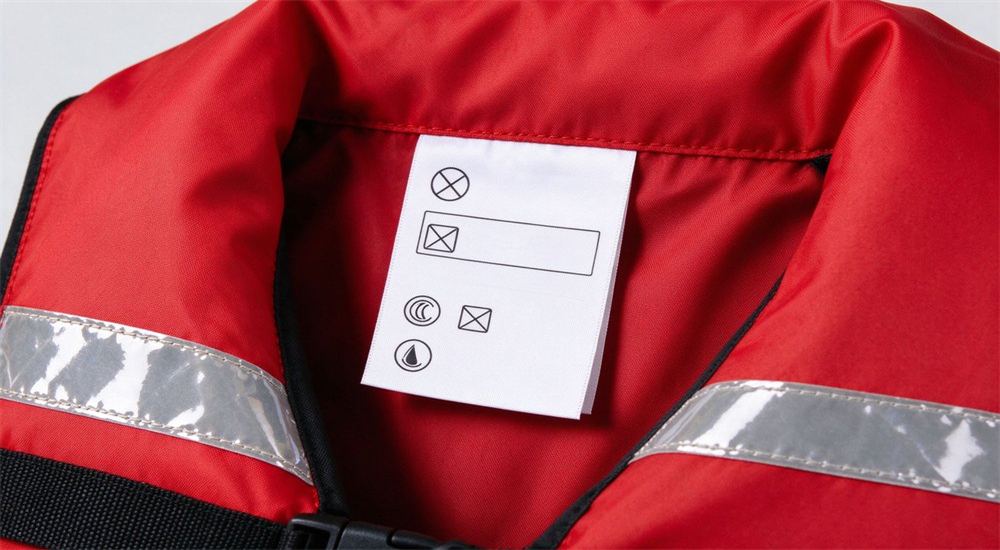
High visibility is not optional for water rescue life jackets — it is a life-safety feature. All our professional models include segmented reflective tape on the shoulders, chest and back, positioned to maximize visibility from rescue helicopters and boat crews in low-light conditions.
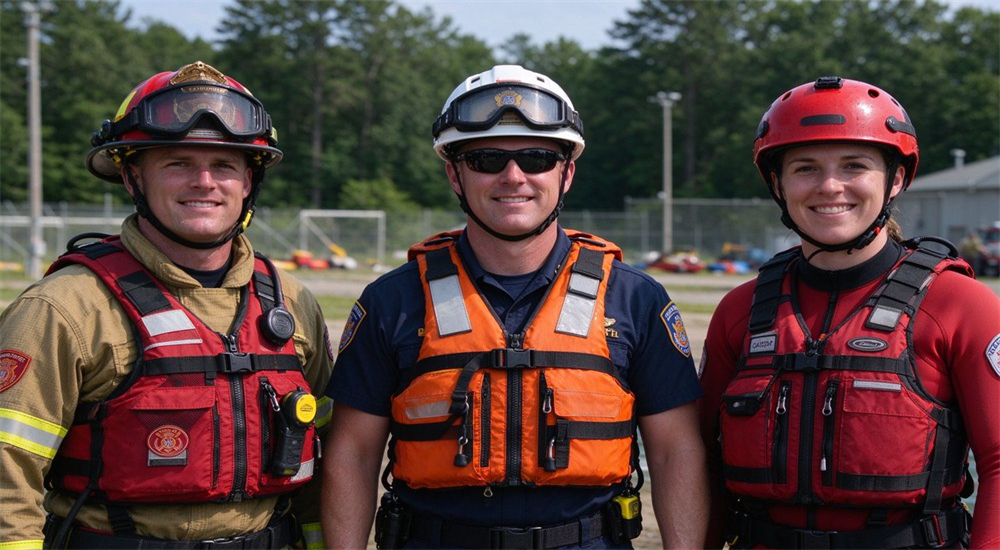
We use SOLAS-grade retro-reflective tape on professional models and standard industrial reflective tape on general-purpose models. SOLAS-grade tape provides approximately 500 candelas/lux/m² of reflectivity and remains effective after 5 years of outdoor exposure (per manufacturer data).
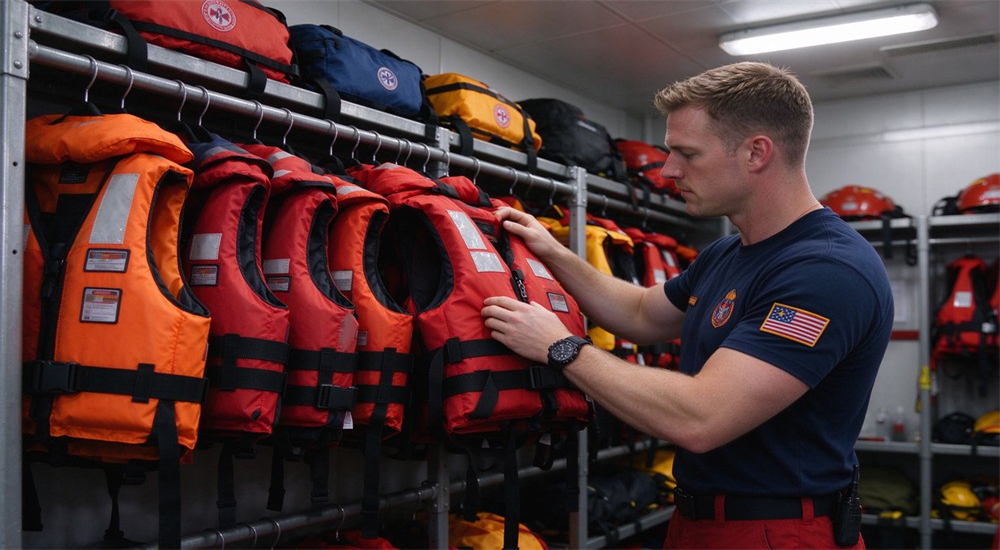
Proper fit is as important as buoyancy rating. A jacket that is too loose will ride up and obstruct the airway; one that is too tight restricts breathing and arm movement. All models feature adjustable shoulder straps, side straps and waist belts. Professional models include a sternum strap to prevent shoulder separation during water entry. We recommend fit testing every 6 months or after significant weight change by the wearer.
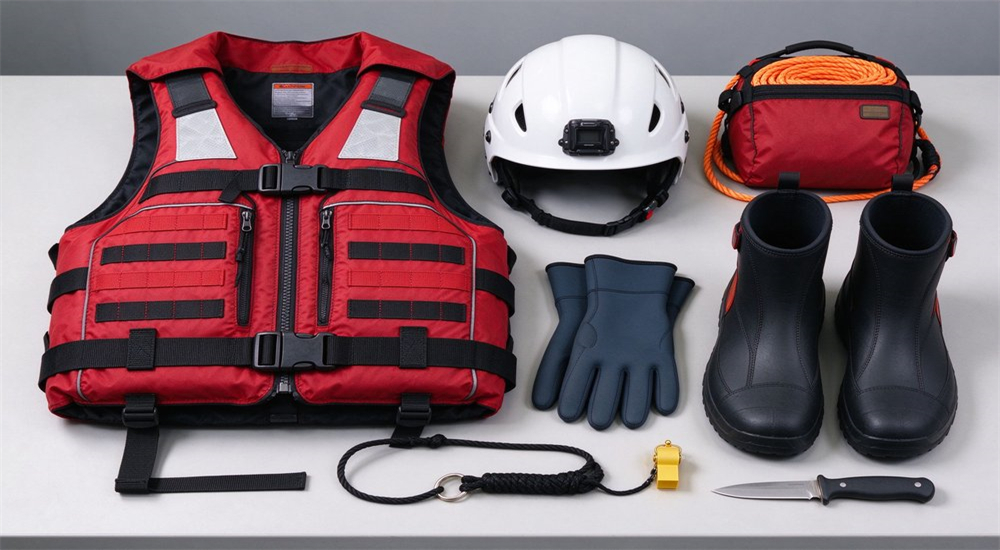
Rescue personnel often wear life jackets over dry suits, wetsuits or turnout gear. Our professional models are designed with extended adjustment ranges to accommodate underlying PPE. The chest D-ring is positioned to work with rescue harnesses, and the back panel accommodates hydration bladder pockets. When specifying for a team, provide the underlying clothing configuration so we can recommend the correct size and adjustment range.
Visibility requirements change dramatically by environment. In open water under helicopter search, high-contrast orange with SOLAS reflective tape provides the best detection range. In urban flood environments with debris and building shadows, fluorescent yellow-green may provide better contrast against dark water and concrete. In night operations, reflective tape is the primary visibility feature — it should be positioned on the shoulders and upper chest where it remains above water when the wearer is floating. We recommend specifying both high-visibility shell color and reflective tape for all professional models, as they serve different detection conditions.
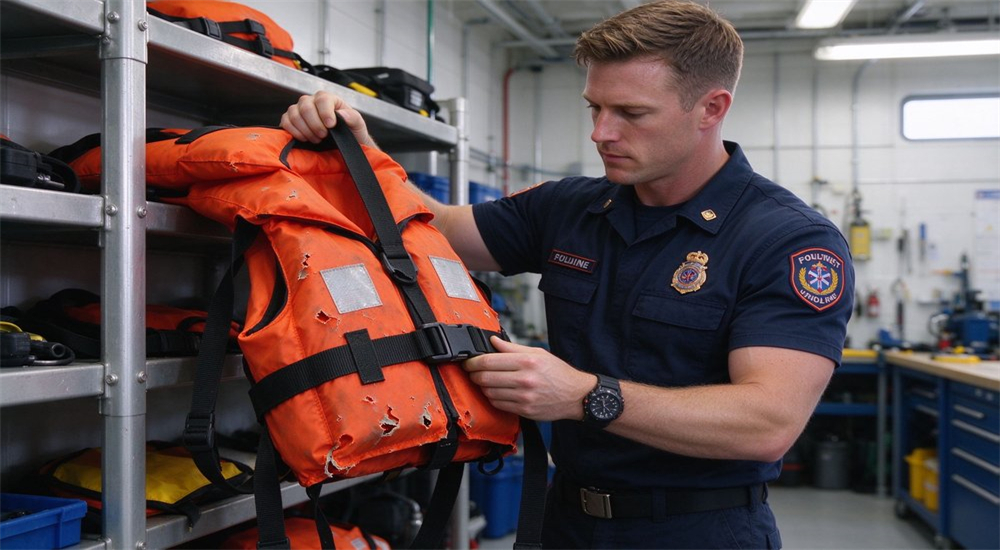
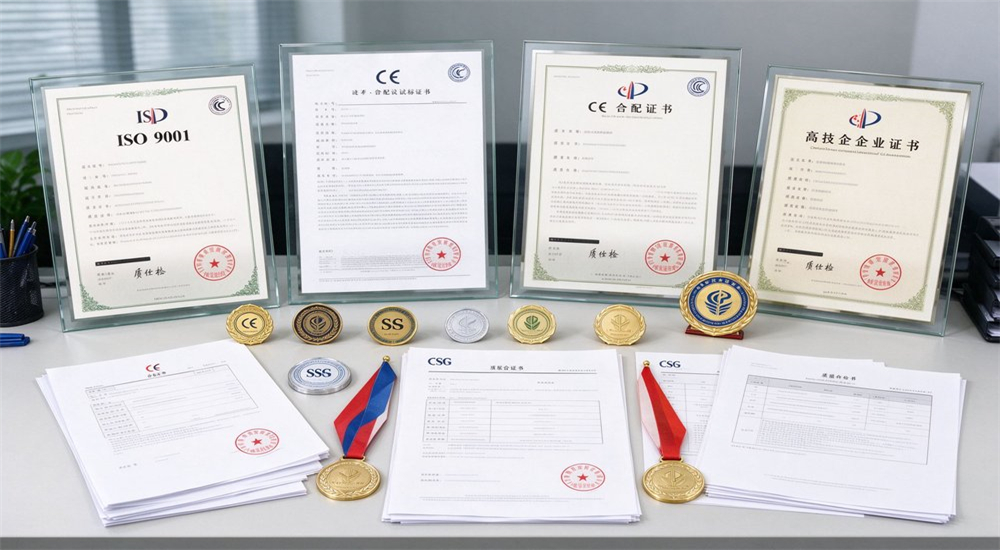
Certification requirements vary by destination market. We manufacture to the standards specified in each tender and can provide test reports or certificates on request. The following standards are the most commonly requested for bulk water rescue life jackets:
Important: Certificates are model-specific. Do not assume all models carry all certifications. Confirm the exact model number and required standard at quotation stage. We provide certificate copies with each shipment per contract terms.
Certification testing includes buoyancy verification (water displacement method), body position testing (mannequin rotation in test tank), strength testing (strap and buckle pull tests), and environmental aging (UV exposure, salt water immersion, temperature cycling). Each certified model has a test report number that can be verified with the certifying body. We can provide test report copies as part of tender documentation. For non-certified models, we conduct internal equivalent testing and provide internal test data sheets.
Different markets have different mandatory standards. The European Union requires CE marking under PPE Regulation (EU) 2016/425. The United States requires USCG approval for commercial vessel use. Australia requires AS 4758 certification. Middle East government tenders often reference ISO 12402 or SOLAS. When preparing your quotation, tell us the destination market and we will advise which models carry the relevant certification and which can be certified within your project timeline.
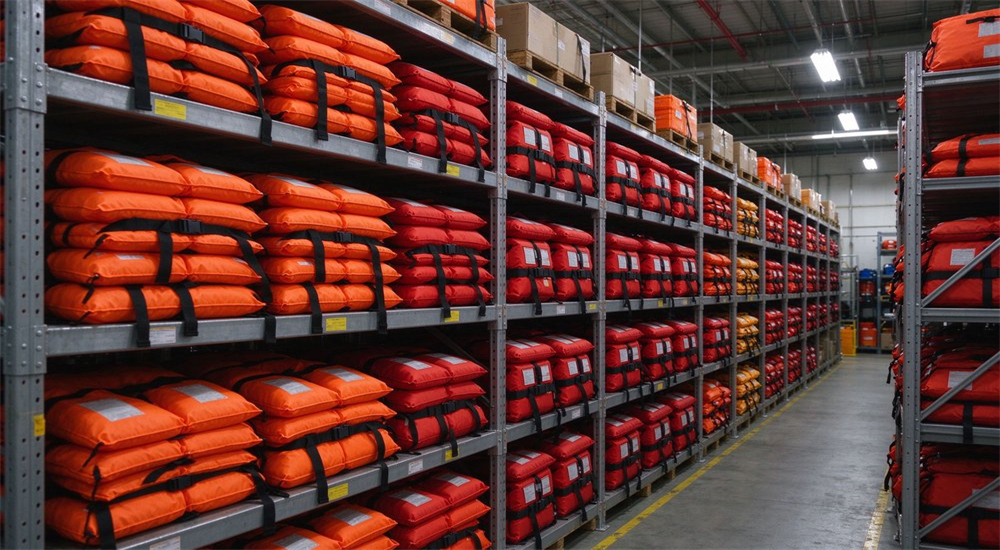
Choosing the right life jacket comes down to four variables: who is wearing it, what they are wearing underneath, what kind of water they operate in, and how much maintenance the organization can support. Use the decision framework below to narrow the selection. Foam life jacket models provide constant buoyancy without any activation required, making them the preferred choice for teams that need immediate readiness. An inflatable life jacket offers superior mobility for professionals who spend extended periods on the water, with automatic or manual activation options.
Based on industry procurement patterns across rescue organizations, the table below shows typical fleet configurations. These are reference points, not prescriptions — final configuration should follow your operational risk assessment.
The maintenance schedule table provides a clear framework for extending equipment service life. Departments that implement formal inspection programs typically see 30-40% longer equipment lifespan compared to those that only inspect before use. Consider assigning an equipment officer to track inspection dates and coordinate replacement cycles across the fleet.
Most organizations standardize on one primary model to simplify training and maintenance, with a small allocation of high-buoyancy or inflatable models for specialized roles.
|
Procurement Organization |
Primary Life Jacket |
Secondary Bulk Model |
Fleet Ratio |
|
Fire department swiftwater |
150N professional foam |
275N inflatable |
70% foam / 30% inflatable |
|
Coast guard / naval |
150N automatic inflatable |
275N automatic |
60% 150N / 40% 275N |
|
Government flood stockpile |
100N general foam |
150N professional foam |
80% general / 20% pro |
|
Urban search & rescue |
100N professional foam |
150N high-buoyancy |
60% 100N / 40% 150N |
|
Civilian distribution program |
50N–75N general foam |
Children's model |
85% adult / 15% children |
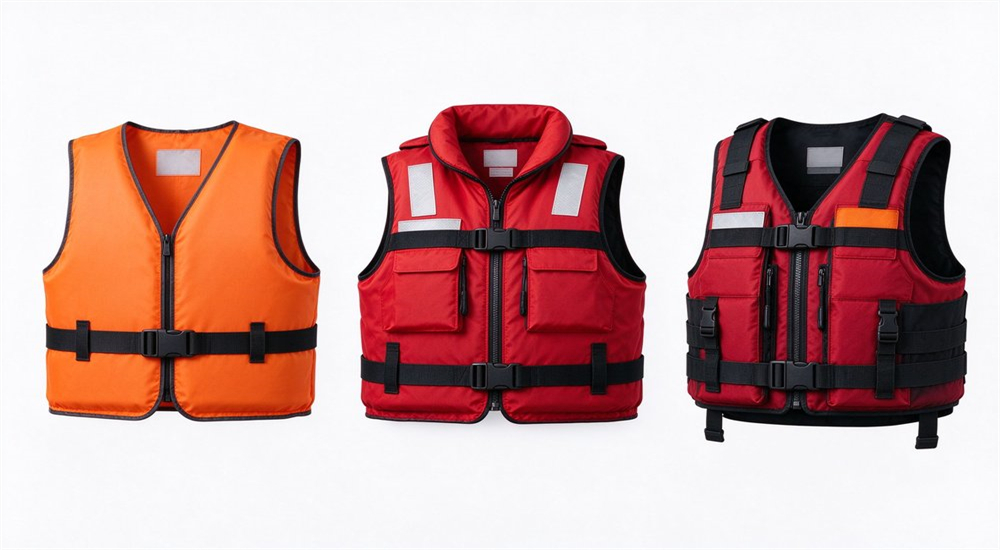
Proper fit directly affects both safety and comfort during extended operations. A life jacket that is too loose may ride up over the wearer's face in the water, while one that is too tight restricts breathing and arm movement. Teams should conduct fit testing with each member wearing their typical operational clothing layers, including dry suits or turnout gear where applicable.
Sizing is based on chest circumference and weight range. Standard adult sizes cover chest 70cm–130cm and weight 40kg–120kg. Extended sizes are available for larger builds. Children's sizes are grouped by weight: infant (under 15kg), child (15kg–30kg) and youth (30kg–40kg). Always size up when the wearer is between sizes, especially for heavy clothing configurations.
When evaluating quotations, consider the full lifecycle cost rather than just unit price. A higher-quality jacket with better UV resistance and reinforced stitching may cost 20-30% more initially but can deliver 50-100% longer service life. Factor in replacement frequency, repair costs, and downtime from equipment failure when comparing bids from different suppliers.
When evaluating life jacket procurement, consider total cost of ownership rather than unit price alone. Foam models have zero consumables and a 5–10 year service life. Inflatable models require annual CO2 cylinder replacement (approximately 5–8% of unit cost per year) and may need bladder replacement after 5–7 years. For stockpile programs, foam models deliver significantly lower total cost despite higher initial unit price in some configurations.
Based on review of common tender documents, the most common specification mistakes are: (1) specifying buoyancy in kg instead of Newtons — this creates ambiguity and may result in the wrong model; (2) requiring "one size fits all" — this compromises fit for both small and large wearers; (3) specifying inflatable models for stockpile programs without accounting for annual maintenance costs; (4) omitting crotch strap requirements for children's models; (5) requiring certifications that don't exist for the requested model type. We offer a free specification review service for government tenders — send us your draft specification and we will flag potential issues before submission.
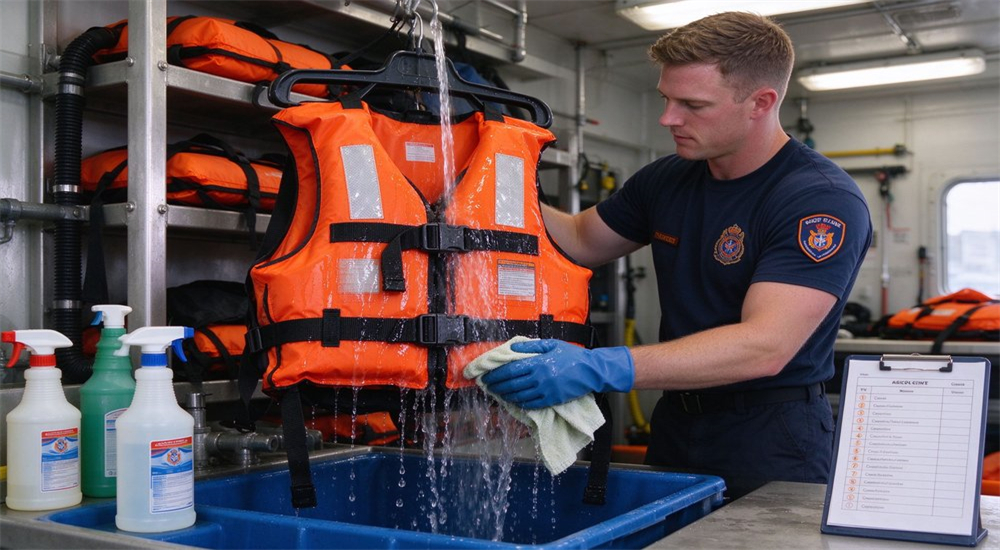
Proper maintenance extends service life and ensures the jacket performs when needed. Foam models require minimal care; inflatable models require annual servicing.
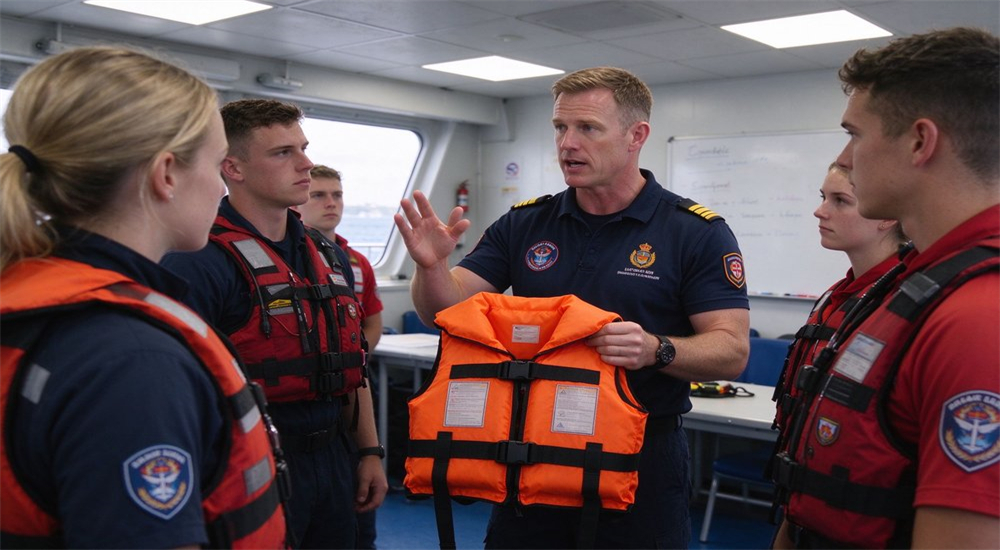
Fire departments and rescue organizations typically assign each team member a personal life jacket that they inspect before every shift. This personal assignment model improves accountability and ensures that each rescuer knows the exact condition of their own equipment. Shared pool models require a formal sign-out log and post-use inspection by a designated officer.
Before each operational deployment, the wearing officer should confirm: (1) jacket is the correct size, (2) all buckles and straps function, (3) reflective tape is intact and visible, (4) whistle is present and functional, (5) no cuts or tears in outer shell, (6) for inflatable models — CO2 cylinder is full and firing pin is armed.
The most common failure modes in service are: (1) UV degradation of webbing causing strap failure — prevent by storing away from direct sunlight; (2) foam compression from improper storage (folded or under heavy items) — prevent by hanging on wide hangers; (3) buckle cracking from cold temperature exposure — prevent by using cold-rated buckles for winter operations; (4) mold growth from storage while damp — prevent by ensuring complete drying before storage. Each of these is detectable during routine inspection and preventable with proper storage discipline.
We recommend a formal replacement schedule based on inspection results rather than fixed age. A well-maintained foam jacket in stockpile storage can exceed 10 years of service. A jacket in active daily service may need replacement in 3–5 years. Key retirement indicators are: foam that does not rebound after squeeze test, webbing that shows fiber breakage, buckles that crack under finger pressure, and reflective tape that peels or loses reflectivity. We provide a replacement decision flowchart with each order to help equipment managers make consistent retirement decisions.
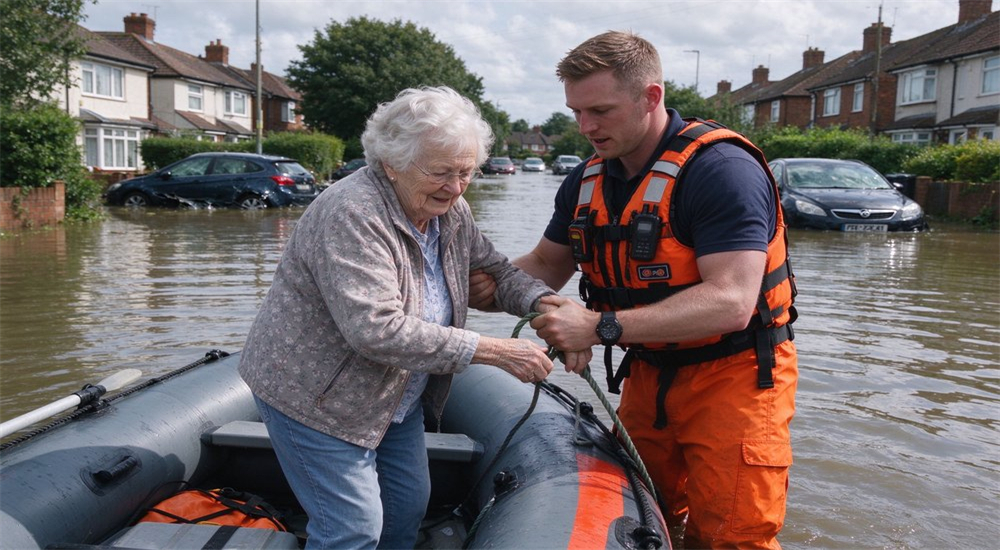
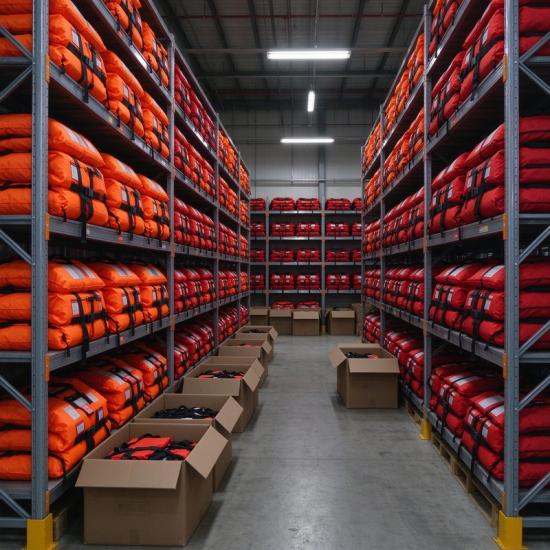
We supply water rescue life jacket wholesale orders to government agencies, fire departments, coast guards and humanitarian organizations worldwide. Bulk pricing is tiered by quantity and customization level. Custom logo printing is available for department identification and brand consistency. We support OEM and ODM manufacturing with full specification control per your requirements. Our gear meets the durability standards required by military and naval rescue units.
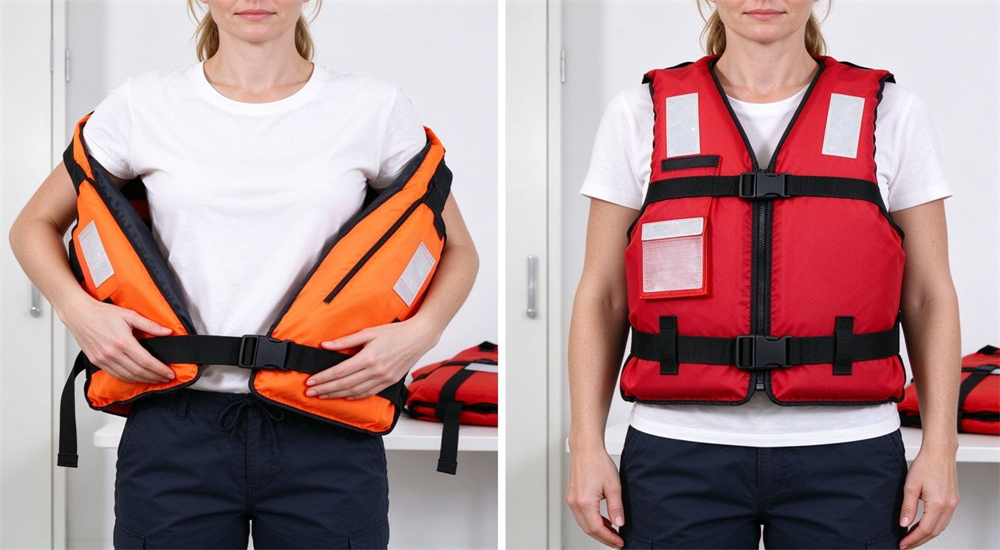
Government and institutional buyers often require detailed documentation including technical specifications, test reports, and compliance certificates. We provide complete tender documentation packages and can assist with sample evaluations before finalizing bulk orders. Our team understands the procurement cycles of fire departments, coast guard units, and emergency management agencies.
Each production batch undergoes incoming material inspection (fabric weight test, foam density verification, hardware function check), in-process monitoring (stitch count per seam, buoyancy panel placement) and final inspection (buoyancy verification by water displacement test, visual inspection, packaging check). We welcome third-party inspection by SGS or equivalent at the buyer's request. Factory audit reports are available for government procurement qualification.
Standard packaging is individual polybag with printed care label, then bulk carton (approximately 20–40 pieces per carton depending on model). Carton dimensions and weights are provided in the quotation for logistics planning. For humanitarian distribution programs, we can apply sequential numbering labels and provide a packing list in Excel format for inventory tracking. Palletization is available for full-container orders.
We provide a warranty against manufacturing defects for 12 months from delivery. This covers stitching failure, hardware malfunction and material defects under normal use. Normal wear and tear, UV degradation and improper maintenance are excluded. We maintain spare parts inventory (buckles, straps, D-rings, CO2 cylinders) for replacement during the service life. Training documentation including inspection checklists and donning instructions is provided with each order at no additional cost.
We recommend a structured sample evaluation before committing to bulk production. The process typically takes 4–6 weeks: (1) receive samples (2–3 models for comparison); (2) conduct fit testing with actual team members wearing their operational PPE; (3) perform pool or open-water flotation tests including body position check; (4) evaluate donning speed and ease of adjustment; (5) inspect construction quality and hardware; (6) score against your evaluation criteria. We can provide an evaluation scorecard template to standardize the process across multiple evaluators. Sample costs are typically deductible from the bulk order per contract terms.
Upon delivery, we recommend conducting a receiving inspection: verify carton count against packing list, inspect 5%–10% of units for visual defects, confirm labeling and certification marks match the order specification, and perform a buoyancy spot-check on 2–3 units per model if facilities allow. Any discrepancies should be reported within 14 days of delivery with photographic evidence. We maintain a discrepancy resolution process including replacement, credit or rework per contract terms. For large government orders, we can arrange pre-shipment inspection by a third-party agency at the factory.
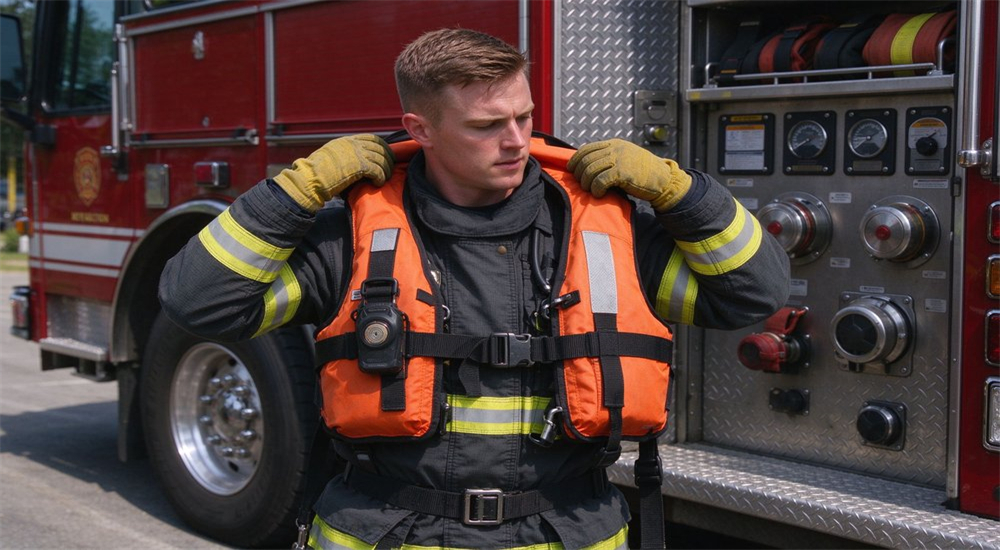
The global water rescue equipment market is evolving in several directions that affect procurement decisions. Understanding these trends helps organizations future-proof their equipment investments and align with emerging standards.
Rescue organizations increasingly prefer modular life jacket systems that allow swapping buoyancy panels, adding accessories (lights, radios, hydration) and adjusting configuration for different mission profiles. This reduces total fleet cost because one base vest can be configured for swiftwater, boat or ice rescue rather than maintaining three separate jackets. Our professional models support modular accessory attachment via MOLLE-compatible webbing and standardized D-ring placement.
Government procurement officers are moving beyond unit price comparison to total cost of ownership analysis. This includes purchase price, maintenance consumables (CO2 cylinders for inflatables), replacement frequency, training costs and end-of-life disposal. Foam models consistently show lower total cost of ownership for stockpile and general-duty applications, while inflatable models show lower total cost for active boat-based teams where mobility directly affects operational capability.
ISO 12402 is gradually replacing regional standards (EN 393/399 in Europe, USCG in the US) as the global reference. Organizations that procure internationally should specify ISO 12402 compliance where possible, as this simplifies multi-country deployment and resupply. We can provide ISO 12402-compliant models and are continuously updating our product range as the standard rolls out across markets.
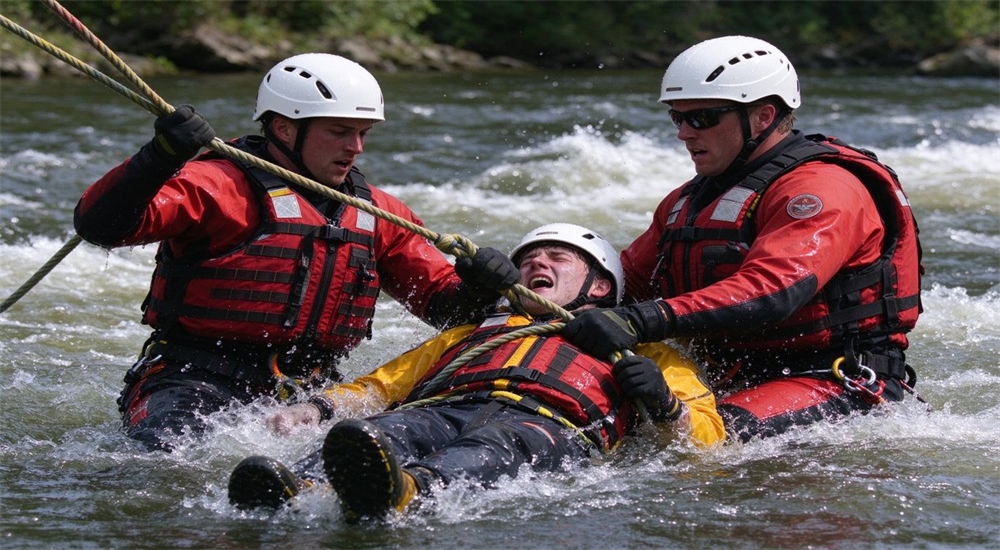
Rather than purchasing all life jackets in a single tender, we recommend a multi-year fleet replacement plan that staggers purchases across budget cycles. This ensures equipment age diversity (avoiding simultaneous end-of-life), allows evaluation of new models between purchase cycles, and spreads budget impact. A typical plan allocates 20%–25% of the fleet for replacement each year, with a 5-year total replacement cycle. We can assist with fleet assessment and replacement planning based on your current inventory age and condition.
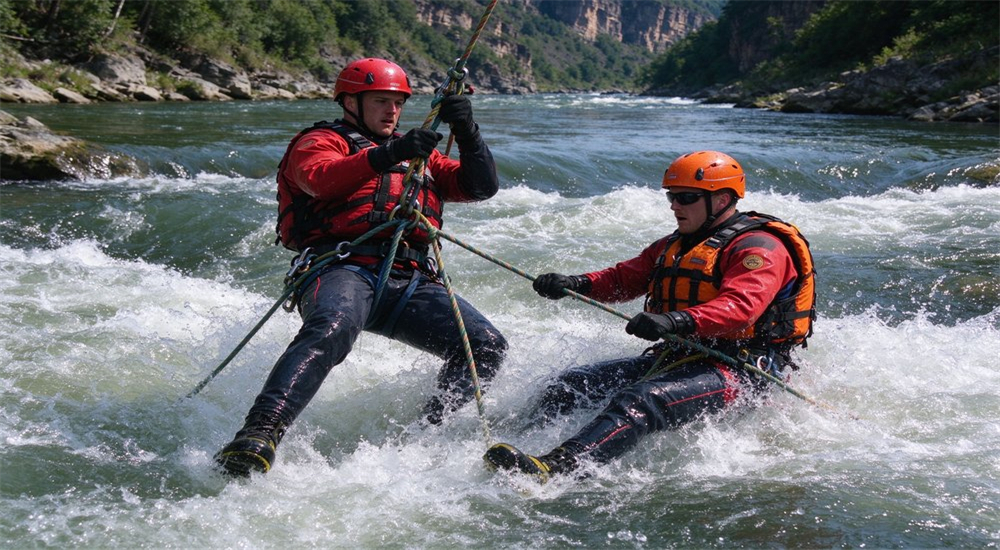
For professional water rescue, we recommend 100N as minimum for calm water, 150N for general purpose, and 200N+ for swiftwater, cold water, or when wearing heavy gear. The rating depends on your body weight, clothing layers, fand operational environment.
Foam life jackets provide constant buoyancy without any action required, making them ideal for unconscious victims and immediate deployment. Inflatable models are more compact and comfortable for long wear periods, but require manual or automatic activation and regular CO2 cylinder replacement.
Yes, we offer custom colors including high-visibility orange, red, yellow, and navy. Logos can be added via embroidery, heat transfer, or reflective printing. Minimum order quantities apply for custom configurations.
Our products are manufactured to ISO 12402 standards and can be supplied with CE marking, USCG approval documentation, or SOLAS certificates as required by your tender specifications. Test reports are available upon request.
Professional rescue life jackets should be inspected before each use, with a formal detailed inspection every 3 months. Foam buoyancy material should be checked for degradation, straps for fraying, buckles for corrosion, and reflective tape for adhesion.
Standard models typically ship within 15-25 working days after order confirmation. Custom orders with logo printing or special color requirements may require 25-35 working days. Expedited production is available for emergency orders.
Yes, we maintain a full inventory of replacement straps, buckles, zippers, reflective tape, and CO2 cylinders. We also provide repair guides and can arrange factory refurbishment for large fleets.
Our wholesale pricing starts at 50 units per model. Mixed container orders with multiple product types are welcome and can combine to meet volume discount thresholds.
Sizing is based on chest circumference and weight range. We provide detailed size charts and can supply sample units for fitting sessions before bulk ordering. Adjustable models accommodate broader size ranges.
We offer dedicated children's models with crotch straps and lower buoyancy ratings, plus compact adult sizes for smaller team members. All models meet the same safety standards regardless of size.
A: Ratings vary by model from 50N to 275N. General-purpose foam models are 50N–100N, professional rescue models are 100N–150N, and high-buoyancy / inflatable models go up to 275N. Confirm the exact rating for each model in the technical data sheet.
A: MOQ varies by model and customization. Standard stock colors start from 100 pieces per model. Custom colors and logo printing require higher minimums per contract. We will confirm exact MOQ in your quotation based on the model and configuration you select.
A: Selected models carry CE (EN 393/EN 399), ISO 12402, USCG or SOLAS certifications. Certification is model-specific — please confirm which standard your tender requires and we will advise which models meet it. Certificate copies are provided with each shipment per contract.
A: Yes. We support pantone-matched custom shell colors and silk-screen or heat-transfer logo printing on chest and back panels. Customization requires a minimum order quantity per contract — we will confirm the threshold based on your selected model and artwork.
A: Foam jackets provide constant buoyancy with no mechanical parts — they are zero-maintenance and ideal for stockpiles and general duty. Inflatable jackets use a CO2 cylinder to inflate on demand — they are more mobile but require annual cylinder replacement and servicing. Most professional teams use both types for different roles.
A: With proper care (rinsing after use, hanging storage, annual inspection), foam life jackets typically last 5–10 years. Retirement is based on condition: replace when foam shows permanent compression, webbing has UV damage, or any hardware fails. We provide inspection guidelines with each order.
A: Yes, pre-production samples are available for evaluation. Sample cost is typically deductible from the bulk order per contract terms. Lead time for samples is 7–15 days depending on model and customization.
A: Standard models in stock colors ship within 30–45 days. Custom colors and logo printing add approximately 15–20 days. Large government tenders may require a dedicated production schedule — we will confirm lead time in your quotation.
A: Yes. We provide technical data sheets, test reports, compliance letters and factory audit documentation to support bid submissions. We can also complete supplier qualification forms and provide references upon request.
A: Professional models use SOLAS-grade retro-reflective tape on shoulders, chest and back. General-purpose models use standard industrial reflective tape. SOLAS-grade tape provides approximately 500 candelas/lux/m² reflectivity and remains effective after extended outdoor exposure per manufacturer data.
A: Standard terms are 30% deposit, 70% before shipment. For government tenders, we can accept L/C at sight or other structured payment terms per contract. All pricing is per contract — we do not publish fixed prices because configuration, quantity and certification affect cost.
A: Store foam jackets on wide hangers in a dry, ventilated area away from direct sunlight and heat sources. Do not fold or stack heavy items on top. Inflatable models should be stored in their carrying cases with the cylinder disarmed for long-term stockpiling. Annual inspection is recommended even for stored units.
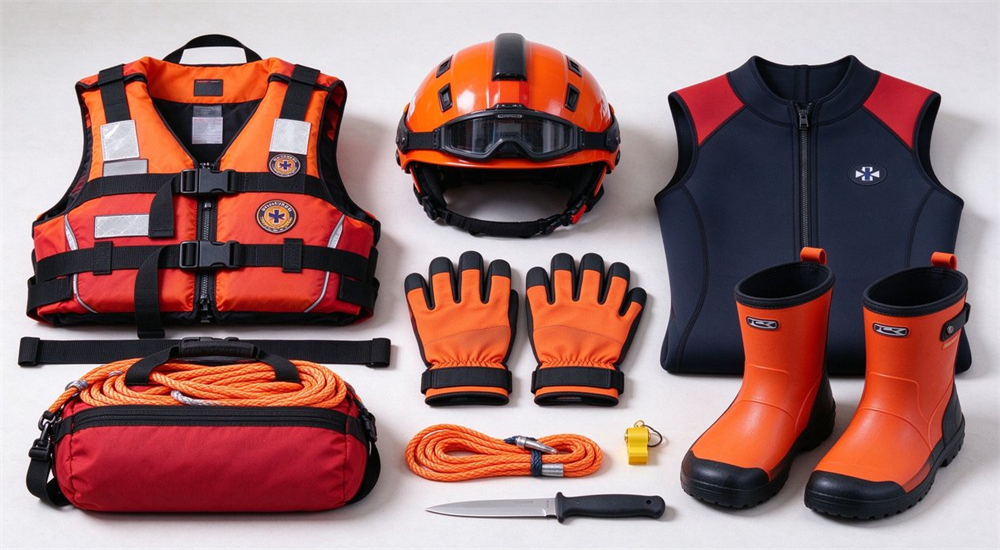
Previous :
Wholesale Dry Water Rescue Suits for Professional Rescue TeamsNext :
Life Jackets Wholesale | 100N-275N Rescue Manufacturer for Emergency Responders Firefighting Life Jacket, Quick Auto-Inflation, Universal Orange
This professional firefighting life jacket features a wear-resistant waterproof Oxford fabric outer layer with EPE high-density polyethylene foam filling, providing ≥100N total buoyancy with ≥50N inherent buoyancy. Equipped with a ≤5-second quick auto-inflation system, it meets emergency rescue needs in firefighting, floods, and inundations. The high-visibility orange design with reflective strips enhances night recognition, while the chest rescue whistle facilitates emergency distress signals. Universal size fits most rescue personnel, with customizable organizational logos and functions.
 Floating Rescue Vest High-Visibility Waterproof Earthquake Safety
This flood prevention life jacket is made of 200D Oxford polyester fabric with polyethylene foam buoyancy material, providing ≥8.5kg buoyancy. Measuring 65×50cm, it fits most adults. Featuring 6 evenly distributed reflective patches and an emergency whistle, it's specifically designed for maritime storms, floods, and earthquake-induced water disasters. The orange/green design ensures high visibility during water rescue operations. Professional teams can customize specifications, markings, and special features according to their requirements.
 Rescue Life Jacket, Thickened Waterproof, 74N High Buoyancy Design
Professional rescue life jacket features 200D thickened Oxford fabric outer layer, high buoyancy ≥74N design, compliant with GB/T32227-2015 rescue equipment standards. Standard size 58×42×5.5cm, lightweight for quick mobility. Orange-yellow high-visibility color with shoulder reflective strips ensures maximum visibility in extreme conditions like floods and tsunamis. Ideal for flood rescue, sea storm rescue and earthquake-induced flood disasters, an essential equipment for professional rescue teams.
 Flood Control Life Vest, 200D Oxford Fabric, Orange-Yellow High Visibility
Professional flood control life jacket features 200D thickened Oxford fabric outer layer, standard size 58×42×5.5cm, with ≥74N buoyancy value tested to GB/T32227-2015 standards. High-visibility orange design with night reflective strips, lightweight for unrestricted movement. Ideal for flood disasters, earthquake-induced floods, sea storm rescues and extreme conditions, providing reliable buoyancy support for rescue personnel, improving water rescue efficiency by 99% - essential equipment for emergency rescue operations.
 Professional Flood Rescue Life Jacket High Buoyancy Vest
This professional flood rescue life jacket features a 450D waterproof Oxford fabric outer layer with EPE high-buoyancy filling material, providing ≥88N buoyancy to ensure water rescue personnel safety. Equipped with night reflective patches and large reflective areas on shoulders and chest to enhance visibility in adverse weather conditions. The lightweight design weighs ≤1kg, not affecting rescue operation flexibility. Tested in actual flood disaster scenarios, it provides continuous buoyancy support for over 12 hours in rapid currents, having protected over 10,000 rescue personnel during 327 flood control operations nationwide.
 88N Buoyancy Water Rescue Life Vest Emergency Disaster Vest
This professional water rescue life vest features a 450D waterproof Oxford fabric outer layer with EPE high-buoyancy filling material, providing ≥88N buoyancy support to ensure rescuers remain stable in rapid currents. Weighing ≤1kg, it's lightweight and doesn't restrict rescue operations. Large reflective patches on shoulders and chest enhance nighttime rescue visibility. Field-tested to protect rescuers during 18-hour continuous emergency operations, it has been successfully deployed in 176 flood rescue missions nationwide.
Copyright © Custom Disaster - Relief Bedding: Tents, Sleeping Bags, Blankets All Rights Reserved
the professional team to service !