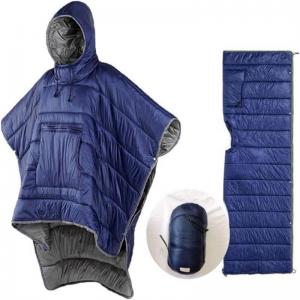
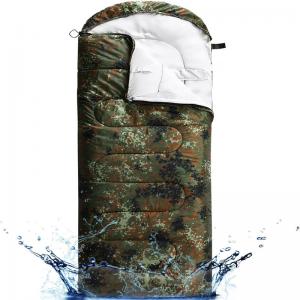
Many person in charge of procurement who have participated in large-scale resettlement tasks have the same experience: one line in the form of "sleeping bags × 5000 pieces" looks clear. When it comes to resettlement sites, a difference in temperature grade or filling material can make a huge difference in effect. The real emergency disaster relief sleeping bags suitable for post-disaster resettlement scenarios need to stably complete the thermal protection task under the conditions of batch distribution, humid high pressure and multi-person turnover, which ordinary household or outdoor camping models cannot reliably undertake.
To understand the overall positioning of emergency disaster relief sleeping bags in the emergency supplies system from a holistic perspective, you may refer to the article Emergency Disaster Sleeping Bags: A Comprehensive Guide | 2026 Selection Standards · Reserve Configuration · Procurement Practical Guide on this website, so as to form a complete knowledge system ranging from basic cognition to selection details.
Section 1: Product Positioning — The Core Difference Between Emergency Rescue Sleeping Bags and Standard Camping Products
The sleeping bags used at post-disaster resettlement sites are fundamentally different from the household or camping products found in retail stores.
A standard camping sleeping bag is designed around the comfort experience of one or two individual users, with a focus on compact packability and lightweight portability. By contrast, an emergency rescue sleeping bag is built around three core requirements: suitability for bulk stockpiling and unified mass distribution; sufficient durability and hygienic safety (low irritant content, disinfection-compatible); and reliable performance even after extended warehouse stacking, repeated transport, and large-scale distribution cycles. These three properties are precisely what most household and camping products cannot consistently deliver.
Different types of procurement clients have different priorities. Government emergency and disaster prevention departments place compliance and the completeness of inspection documentation first, closely by convenience in managing bulk stockpiles and rotation schedules. NGOs and international aid organizations typically prioritize delivery speed, cross-border customs cooperation, and destination-country adaptability. Overseas trading companies and distributors, provided the product meets compliance requirements, are most concerned with price structure, continuous supply capacity, and the breadth of one-stop product bundling. Recognizing these distinct decision priorities helps ensure that the selection process is targeted rather than generic.
Section 2: Materials and Safety Standards — Choosing the Right Fabric is the Foundation of Bulk Emergency Sleeping Bag Distribution
In terms of shell fabrics, the most common options seen in bulk emergency sleeping bag distribution projects are 210T printed polyester (lightweight, easy to manage in unified color schemes) and 190T Oxford fabric (more abrasion-resistant, better suited to high-frequency handling and demanding use environments). For fill materials, hollow-fiber polyester is the most widely used type in large-scale emergency distribution, offering stable moisture-proof and mold-resistant performance, manageable cost, and relatively compact compression volume. Some higher-warmth versions use higher-loft fill options, which increase unit weight and volume accordingly—these tradeoffs need to be assessed against transportation constraints before finalizing selection.
Several safety standards deserve upfront confirmation at the inquiry and contract stage:
(1)Flame Resistance In densely occupied resettlement environments, materials that ignite easily when exposed to open flame or high heat significantly increase safety risk. Suppliers should be required to provide flame-resistance test documentation or relevant inspection reports.
(2)Harmful Substance Safety For resettlement settings with concentrations of children or elderly individuals, whether the product has been tested against textile harmful substance standards—such as OEKO-TEX certification—is worth actively confirming during the inquiry process. Procurement teams should not assume certification exists; valid certificates with certification numbers and expiry dates should be requested and verified.
(3)Compliance with Export Destination Standards For sleeping bags sourced from China for use in international aid projects, it is advisable to verify in advance what quality and safety requirements the destination country imposes on textile imports, and to confirm that the supplier holds Chinese export inspection documentation to support customs clearance and project acceptance procedures.
Section 3: Scene-Specific Functions and Key Details
Question 1: How Do You Choose the Right Emergency Sleeping Bag Temperature Rating Based on the Resettlement Environment?
Temperature rating—the range of comfortable use temperatures—is the most underestimated core variable in emergency rescue sleeping bag procurement, and the most frequent source of arriving goods that either "don't provide enough warmth" or "cost more than necessary."
The recommended selection logic is: first determine the nighttime minimum temperature range at the project location, then account for the shelter type (indoor sports hall vs. outdoor tent). Indoor resettlement environments generally have lower warmth requirements than open-air camps. Low-temperature emergency sleeping bags are appropriate for high-altitude or winter disaster scenarios; lightweight spring-autumn emergency sleeping bags are suited to temperate regions with shorter-term resettlement needs. These two categories should not be interchanged for the same destination.
Temperature rating also has a direct structural effect on unit cost and per-unit logistics cost in bulk orders. Higher warmth ratings require heavier fill weights, which increases both unit price and compressed volume. These factors should be factored into budget and transportation planning at the selection stage—not discovered only after the selection process is complete.
Question 2: Envelope-Type Emergency Sleeping Bags vs. Mummy-Style — Which Should You Choose for Large-Scale Distribution?
This is a shape-selection question that is frequently skipped at procurement but repeatedly raised after field deployment.
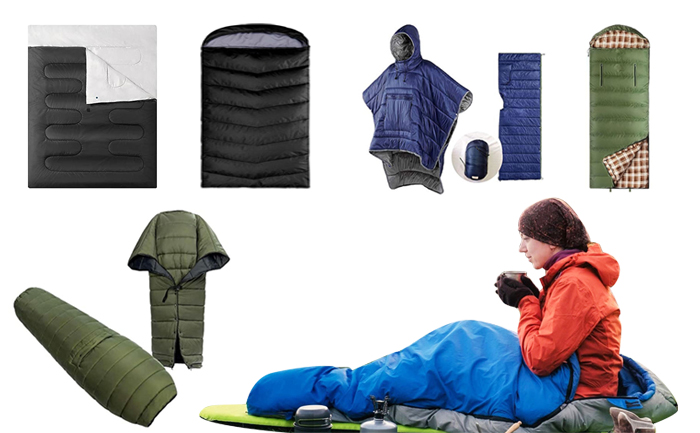
Envelope-type emergency sleeping bags (rectangular) have a wide opening, are easy to enter and exit, and accommodate a broader range of body types—a clear practical advantage in mass post-disaster distribution where the affected population varies significantly in size. They also make use substantially easier for elderly individuals, children, and those with limited mobility. Some envelope-type products allow two units to be zipped together into a shared configuration, adding flexibility for family-oriented resettlement settings.
Mummy-style bags offer superior thermal efficiency but involve more steps to get in and out, making them better suited to specialized professional applications where heat retention efficiency is paramount. For large-scale post-disaster resettlement distribution, envelope-type is generally the recommended choice, unless the project is explicitly located in extreme cold conditions, the resettlement population consists primarily of adults, and trained personnel are available on-site to assist with distribution.
Zipper Configuration: A Functional Detail That Is Easy to Overlook
Zipper design has a direct impact on user adaptability. A two-way zipper allows ventilation adjustment from the foot end, noticeably improving nighttime comfort. A one-way zipper is structurally simpler and lower in cost but limited in function. If the project requires two sleeping bags to zip together into a shared unit, the zipper interlock compatibility specification must be explicitly written into the contract—not discovered at arrival.
Emergency Sleeping Bag Disinfection Compatibility: The Hidden Selection Criterion for Multi-Round Distribution Projects
For projects planning multi-round distribution and reuse, emergency sleeping bag disinfection compatibility is a genuine but frequently overlooked consideration. Different fill materials and shell fabrics have different tolerances for disinfection methods—including liquid disinfectant spray, UV exposure, and hot-water washing. The technical specification document should state the disinfection method the project intends to use, require the supplier to provide written confirmation of the product's tolerance, and retain that documentation in the receiving records at time of inbound warehousing.
Section 4: Size Classification and Selection Guide
Emergency rescue sleeping bagsare typically specified across three dimensions: size, fill weight, and packaging format—each of which directly affects procurement and distribution efficiency.
(1)Size Adult versions are generally designed to accommodate most adult body types; children's versions require separate confirmation. For mass distribution at resettlement camps, standardizing on a single size greatly simplifies warehouse management and distribution operations. It is generally preferable to select one universal size covering the majority of the population rather than distributing multiple sizes—unless the project includes a distinct group of children with a separate dedicated distribution plan.
(2)Fill Weight and Its Relationship to Volume Fill weight directly governs the balance among warmth performance, unit weight, and compressed volume. Higher fill weight provides greater warmth but increases volume, reducing the number of units that fit in a single container and raising per-unit logistics cost. Procurement teams should include a combined calculation of "fill weight × quantity × compressed volume × freight to destination" in the overall cost assessment—not treat logistics as a separate consideration left for the shipping stage.
(3)Packaging Format Compression packing (with a stuff sack or compression strap) reduces storage and transit volume but requires additional handling steps at distribution. Flat folding enables faster distribution but occupies more warehouse space. The appropriate choice depends on a combined assessment of warehousing conditions and distribution efficiency targets—not simply on which option carries a lower price tag.
Section 5: Price and Total Cost of Ownership — Emergency Rescue Sleeping Bag Procurement Cannot Be Based on the Quote Sheet Alone
The Structural Effect of Temperature Rating on Unit Price
For the same product style, a higher warmth-rating version requires a heavier fill weight and more demanding manufacturing specifications, resulting in a unit price that is typically significantly higher than a basic version. Comparing prices across different temperature ratings is meaningless. Procurement teams should first establish the required temperature rating for the project, then compare pricing within that rating band. If the only criterion is the lowest price without a clearly defined temperature requirement, the likely outcome is a product in which fill weight has been reduced to compress the cost.
The Hidden Cost of Emergency Sleeping Bag Fill Weight Underdelivery
Emergency sleeping bag fill weight is the easiest specification to quietly reduce—and the hardest to identify visually. If the contract does not explicitly specify fill weight and the method of verification, underperformance in warmth is a foreseeable risk upon arrival. The contract should state the fill weight and allowable tolerance, and specify that acceptance inspection may include tear-open weighing or third-party testing as random sampling procedures—not relying on tactile assessment alone.
The Relationship Between Volume and Logistics Cost
For the same unit quantity, higher fill weight or loft means greater compressed volume, fewer units per container, and a higher per-unit freight cost. Cross-border aid projects should model "unit product price + compressed volume × destination freight rate" as an integrated total cost at the selection stage, rather than discovering budget overruns only at the point of shipment arrangement.
Service Life and Rotation Cost
In multi-year stockpiling programs, a quality-stable, disinfection-tolerant product—even at a slightly higher unit price—may deliver a lower effective per-cycle cost if it extends the usable stockpile period by one cycle. The trade-off between price compression and shorter service life, and higher-frequency reprocurement costs, is an equation that should be calculated clearly at the selection stage—not deferred.
Section 6: Storage and Maintenance
The warehousing conditions for bulk emergency rescue sleeping bag stockpiles directly determine the actual condition of products when they are called into service.
In terms of basic storage requirements, warehouses must remain dry, ventilated, and cool. Products should be protected from prolonged exposure to moisture, direct sunlight, and chemical contamination. When palletizing, stacking heights should not exceed the load-bearing design of the packaging to prevent prolonged compression from reducing fill loft and impairing warmth performance. Specific humidity control requirements and recommended rotation intervals should be confirmed with the supplier at the contract stage and incorporated into a written warehouse management protocol—standard generic figures should not be applied universally without reference to actual storage conditions.
For batch management and periodic inspection, it is recommended to maintain a clear inventory ledger organized by batch number and inbound date, and to establish a regular sampling inspection schedule. Inspection priorities include visual and packaging integrity, any noticeable reduction in fill loft, and whether functional components such as zippers remain in working order. If a significant proportion of units are found non-conforming, a rotation or reprocurement process should be initiated immediately—not deferred until the point of operational deployment when it is too late.
For disinfection management in multi-round distribution projects, the supplier's written documentation on disinfection method tolerance should be retained at inbound, and the recommended disinfection procedures and precautions should be explicitly noted in warehouse operating procedures. This step is often skipped during emergency activation but consistently leads to avoidable losses when omitted.
Section 7: Supplier Screening Standards and the Six-Step Procurement Process
Question 3: When Sourcing Emergency Rescue Sleeping Bags from China, What Key Capabilities Must a Supplier Demonstrate?
Screening emergency rescue sleeping bag manufacturers, it is recommended to verify each of the following dimensions systematically—rather than relying on a sales representative's self-introduction:
(1)Production Qualifications and Inspection Documentation Confirm whether the supplier holds relevant textile production permits, can provide factory inspection reports and third-party test reports, and can produce valid certification certificates with certificate numbers and expiry dates. For government or international projects, prioritize suppliers who proactively provide complete documentation.
(2)B2B Project Supply Experience Specifically confirm whether the supplier has actual supply experience in B2B contexts such as disaster relief, NGO procurement, or government procurement—not just retail or e-commerce channels. The gap between these two types of clients in terms of quality standards, acceptance requirements, and batch management is significant.
(3)Production Capacity and Surge Order Capability Understand the average monthly production capacity range, whether mid-to-large batch orders can be accommodated, whether the supplier has experience handling urgent project orders, and how much lead time is typically needed for an initial capacity assessment.
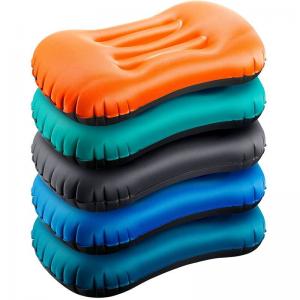
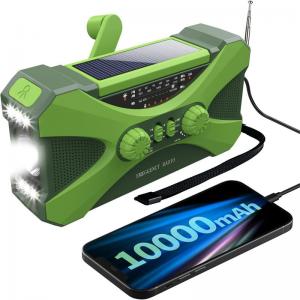
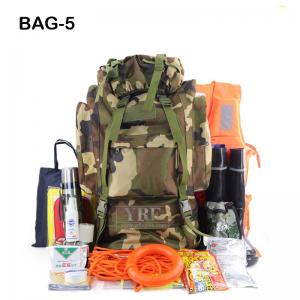
(4)One-Stop Bundling Capability Whether the supplier can simultaneously provide related accessory items—such as emergency tents, moisture-proof sleeping pads, emergency blankets, storage backpacks, emergency lighting equipment, and similar resettlement supplies—to reduce multi-vendor coordination pressure during project execution.
(5)Export Service Capability Including export qualifications, neutral packaging, multilingual labeling experience, and familiarity with customs documentation requirements for common destination countries.
Six-Step Procurement Process Reference:
(1)Prepare a Project Requirements Summary Specify target population size, resettlement environment (indoor/outdoor), destination nighttime minimum temperature, intended use duration, planned disinfection method, and budget range. Produce a concise one-page summary—not just "a certain number of winter sleeping bags."
(2)Draft a Technical Specification Document Based on this article's selection logic, define temperature rating, fill type and fill weight (including allowable tolerance), shell fabric, size, color, and packaging/labeling language requirements, to serve as the technical basis for inquiry or tender.
(3)Shortlist Candidate Suppliers Screen 2–3 China emergency rescue sleeping bag suppliers against the five dimensions above; request qualification documentation, samples, and pricing.
(4)Sample Confirmation and Testing Verify samples against the technical specification document item by item. Key checks include tear-open weighing of fill material, zipper smoothness testing, and dimensional tolerance assessment. If required, submit samples to a third-party testing agency for flame resistance or harmful substance testing.
(5)Lock In Contract Terms The contract should specify technical parameters (including fill weight and allowable tolerance), delivery schedule, inspection method and sampling ratio, non-conforming product handling procedures, liability provisions, and the complete list of customs documents required for the destination country.
(6)Inbound Acceptance and Documentation Archiving Conduct item-by-item inspection against the acceptance checklist, establish a batch inventory ledger, and archive acceptance reports and sampling records to support rotation management and future reprocurement reference.
Inbound Acceptance Checklist:
(1)Appearance and Workmanship Inspect a sampling of units; confirm no damage, visible contamination, loose threads, or significant color deviation
(2)Fill Weight Tear-open and weigh a sample, or submit key batches to third-party testing; confirm within the contractually agreed tolerance
(3)Zipper Function Check whether zippers run smoothly, whether two-way function operates correctly (where contractually specified), and whether zipper pulls present any risk of detachment
(4)Dimensions and Specifications Measure a sample against contractually agreed dimensions; confirm deviations are within acceptable range
(5)Flame Resistance and Disinfection Compatibility Documentation Verify that a flame-resistance test report and a written disinfection method compatibility statement are included in the product documentation
(6)Packaging and Labeling Check packaging integrity, batch labeling, and language marking for conformity with destination country requirements and contract specifications
(7)Quantity Verification Confirm that actual received unit count matches the packing list and contract
Issues identified at the acceptance stage can still be addressed through replacement or additional delivery. Once products have entered the warehouse or been distributed, the cost of pursuing remedies or arranging supplementary procurement multiplies—and the impact on project timelines becomes very difficult to reverse.
If you are currently drafting a tender technical annex or internal procurement standard for emergency rescue sleeping bags and need a starting reference, you can submit a brief project background through the contact form on this site (scenario type, scale, climate zone, budget reference). YRF Emergency Relief Supplies can provide a generalized technical clause example and acceptance checklist template for internal reference and benchmarking purposes only. All final terms are subject to the signed contract between both parties.
Section 8: Common Procurement Pitfalls and Risk Alerts
Pitfall 1: Fill Weight Shortfall — Warmth Performance Below Specification Upon Arrival
Error: Contract states only "warm fill," without specifying fill weight or verification method.
Likely consequence: Supplier substitutes lighter fill for the standard weight. Visually undetectable. Resettlement recipients report inadequate warmth. Problem surfaces only after delivery, at which point the combined cost of investigation and reprocurement has already compounded.
Prevention: Specify fill weight and allowable tolerance in the contract. Stipulate that upon arrival, random samples may be weighed after opening, or key batches may be submitted to third-party testing.
Pitfall 2: Temperature Rating Does Not Match Destination Climate
Error: Order placed using vague labels like "winter version" or "heavy-duty," without verifying nighttime minimum temperatures at the destination or distinguishing between indoor resettlement vs. outdoor tent environments.
Likely consequence: Insufficient temperature rating leads to warmth failure during cold nights for the affected population, or excess rating leads to compounded cost and weight waste—with no practical way to quickly exchange batches after the fact.
Prevention: Include specific climate parameters in the requirements summary. Require the supplier to provide a specification document confirming the corresponding temperature rating, and note this in the contract.
Pitfall 3: Disinfection Method Incompatible with Product — Multi-Round Distribution Plan Undermined
Error: Product's supported disinfection methods are not confirmed at procurement. Routine hot-water washing or chemical disinfection treatment damages fill material, causes fabric discoloration, or destroys zipper function.
Likely consequence: A significant proportion of disinfected units can no longer be reused, substantially reducing actual usable cycles and raising effective total cost.
Prevention: Specify the project's intended disinfection method in the technical document. Require the supplier to provide written confirmation of tolerance. Retain this documentation in inbound warehouse records.
Pitfall 4: Destination Country Import Compliance Not Verified — Shipment Held at Port
Error: Attention focused only on domestic factory qualifications, without prior confirmation of the destination country's textile import requirements regarding sanitary inspection, conformity declarations, or import permits.
Likely consequence: Entire shipment held at port; pursuing additional certification or sanitary processing is time-consuming; in some cases return shipping is required, directly affecting project delivery milestones.
Prevention: Before signing the contract, confirm the complete documentation required for import in the destination country with both the supplier and freight forwarder—including certificate of origin, sanitary safety declaration, fumigation certificate (required by some countries)—and prepare in advance without leaving room for last-minute remediation.
Pitfall 5: Multi-Destination Orders Without Split Packaging Design — Compliance Risk Left to the End
Error: A single-batch order ships to multiple destination countries, with one packaging and labeling language specified in the contract. Upon arrival, units cannot be repacked by destination, creating compounded compliance risk and delay.
Prevention: If the project involves distribution to multiple destination countries, specify each country's labeling language requirement in the technical document. The factory packs by destination country, with packaging specifications and labeling formats confirmed in the contract before production—not resolved at the post-arrival stage.
Why Should Large-Scale Emergency Rescue Sleeping Bag Procurement Prioritize Chinese Suppliers?
(1)A Complete Sleeping Bag-Specific Supply Chain, with Raw Materials and Finished Goods Highly Concentrated
China's sleeping bag manufacturing supply chain—from fill materials (hollow-fiber polyester and others) to shell fabrics (printed polyester, 190T Oxford fabric), zippers, trims, and finished assembly—has comprehensive, well-developed coverage, with industrial cluster geography highly concentrated. This enables rapid coordination of raw materials and production capacity when sudden demand surges occur, reducing supply disruption risk. This characteristic is especially critical for bulk emergency rescue sleeping bag stockpiling projects.
(2)Large-Scale Production Capacity Supporting Mid-to-Large Batch Orders and Reasonable Surge Flexibility
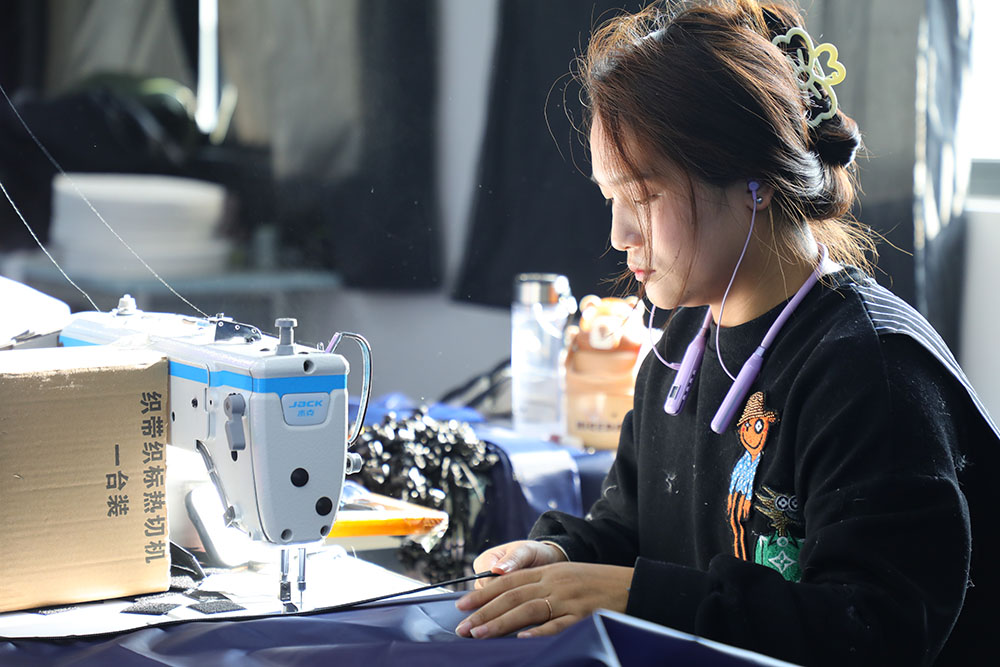
Most established China emergency rescue sleeping bag suppliers have monthly production capacities capable of handling orders in the tens of thousands of units, with further scale-up available through factory coordination within the same industrial cluster. For projects with urgent needs, a joint accelerated delivery plan can be developed following assessment of current capacity, with specific delivery timelines confirmed in the signed contract between both parties.
(3)One-Stop Bundling, Reducing Cross-Supplier Coordination Burden
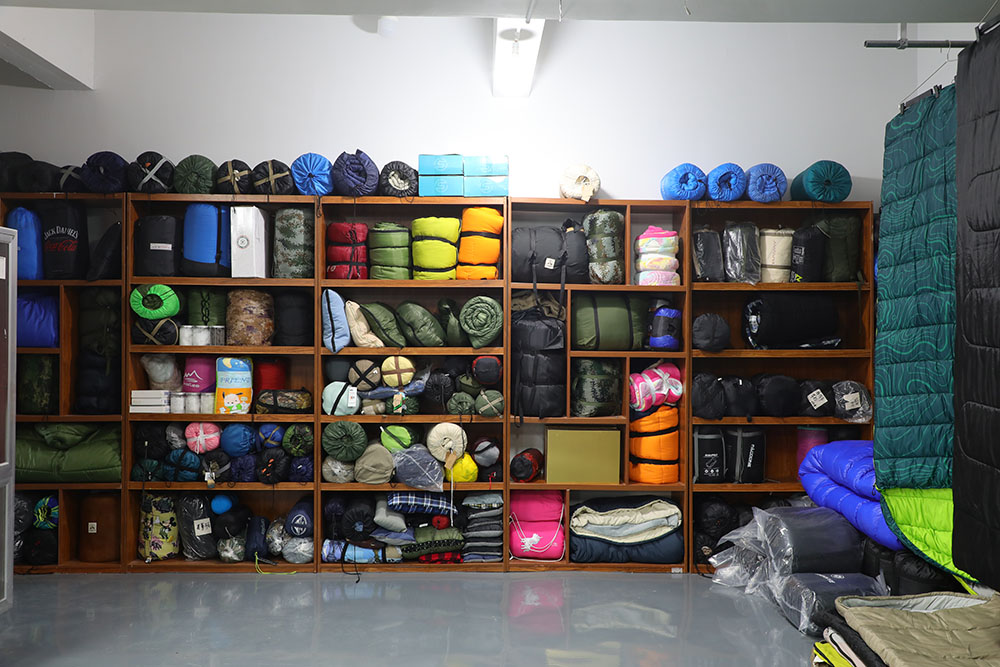
Some comprehensive emergency rescue sleeping bag manufacturers can simultaneously supply emergency tents, moisture-proof sleeping pads, emergency blankets, storage backpacks, emergency lighting equipment, and other resettlement support items—supporting multi-category unified procurement, unified container loading, and unified customs clearance, significantly reducing multi-party coordination costs during project execution.
(4)Mature Export Services Supporting Multi-Country Customs Documentation Preparation
Chinese integrated suppliers with export qualifications can typically assist with preparing invoices, packing lists, certificates of origin, sanitary safety declarations, and other customs documentation. Many have operational familiarity with the import practices and quarantine requirements of key destination countries, helping reduce the trial-and-error cost in document preparation for cross-border projects.
(5)Comprehensive Value for Money — Not Simply the Lowest Price
The core competitive advantage of sourcing waterproof emergency sleeping bags or flame-retardant emergency sleeping bags from China lies in the combined capability of meeting product standards, maintaining stable production capacity, providing complete product bundling, and delivering mature export services. At equivalent quality standards, comprehensive value for money is typically competitive—making China-based suppliers particularly well-suited to large-scale, specification-driven government and NGO procurement programs.
For organizations planning mid-to-large-scale emergency rescue sleeping bag and resettlement supply projects requiring one-stop solution support and technical specification reference, please send a project overview to YRF Emergency Relief Supplies via the site contact form or email. YRF will provide reference-level supply configuration guidance and key considerations—without any commitment to specific contract outcomes—to help reduce the exploratory workload during internal project discussion and tender preparation. All cooperation and supply terms are subject to the formal contract signed by both parties.
Section 11: Conclusion and Next-Step Action Recommendations
Sourcing high-quality emergency rescue sleeping bags is not fundamentally about finding the lowest quote. It is about finding the right balance among compliance, performance specifications, total cost of ownership, and delivery reliability for the specific project at hand. From emergency sleeping bag temperature rating selection and form factor judgment, to the contractual specification and acceptance method for emergency sleeping bag fill weight, to advance confirmation of emergency sleeping bag disinfection compatibility, cross-border customs document preparation, and multi-destination packaging differentiation—every one of these steps can be addressed with modest effort upfront, and every one of them can become an irreversible project risk if left until later.
For a broader perspective on where emergency rescue sleeping bags fit within the emergency supply system and how to approach configuration planning, we recommend reading the companion article on this site: Emergency Disaster Sleeping Bags: A Comprehensive Guide | 2026 Selection Standards · Reserve Configuration · Procurement Practical Guide, which provides a complete knowledge chain from product fundamentals through to procurement and selection.
4 Actions You Can Take Immediately:
(1)Prepare a One-Page Project Requirements Summary Include target population size, resettlement environment (indoor/outdoor), destination nighttime minimum temperature, intended use duration, planned disinfection method, and budget range. Write a specific, concrete summary—not simply "a certain quantity of winter sleeping bags."
(2)Draft a Technical Specification Document Based on the selection logic in this article, document key parameters first: temperature rating, fill type and fill weight with allowable tolerance, shell fabric, dimensions, color, and packaging/labeling language. This forms the initial framework for the technical annex.
(3)Request Samples and Inspection Documents from 2–3 Candidate Suppliers Focus verification on fill weight, zipper function, flame resistance documentation, and export qualifications. Arrange third-party testing where necessary—do not substitute visual assessment for objective verification.
(4)Lock In Key Parameters and Acceptance Procedures in the Contract Before placing a formal order, confirm that the contract includes fill weight tolerance specifications, inbound acceptance sampling method, non-conforming product handling procedures, and liability provisions for breach.
Primary Keyword: Emergency Rescue Sleeping Bag
Long-Tail Keywords: Emergency rescue sleeping bag procurement, emergency rescue sleeping bag manufacturer, China emergency rescue sleeping bag supplier, emergency sleeping bag temperature rating selection, bulk emergency sleeping bag distribution, emergency sleeping bag fill weight, government emergency sleeping bag stockpiling, NGO rescue sleeping bag procurement, post-disaster resettlement sleeping bag configuration, waterproof emergency sleeping bag, flame-retardant emergency sleeping bag, low-temperature emergency sleeping bag, lightweight spring-autumn emergency sleeping bag, envelope-type emergency sleeping bag, bulk emergency rescue sleeping bag stockpiling, emergency sleeping bag disinfection compatibility, moisture-proof and mold-resistant performance
Friendly Links :
Copyright © Custom Disaster - Relief Bedding: Tents, Sleeping Bags, Blankets All Rights Reserved
the professional team to service !