Categories
latest blog
A blanket supplier description starts a conversation. A specification appendix lets procurement, production and receiving teams confirm the same selected item.
Material wording can make a bulk blankets RFQ comparable or leave key decisions open. This guide separates fibre description, construction, size, GSM, finished weight, edge finish, colour, labels and packing. Each field should point to a written record, an approved sample or a defined check.
Note: Full business rules (sample fees, test cost, lead time, payment terms) are listed in the bulk selection guide.

A material name for wholesale blankets is only a starting point. It does not by itself define the visible surface, reverse side, finished dimensions or receiving method. Replace broad phrases such as “soft” or “heavy” with fields that a buyer can observe or measure.
Ask every supplier the same questions: what is the fibre description, what is the face construction, what is the reverse construction, and what finishing is part of the selected item? This gives the buyer one comparison basis even when suppliers use different trade names.
Keep the explanation practical for bulk blankets. Mark each field as fixed, proposed or open. The selected sample should show the visible construction, while the written appendix records the values, label wording and packing requirements that a photo cannot prove.
▶ To determine whether product photos can truly verify a blanket's material, GSM and quality before a bulk order, check out our article *Can Product Photos Prove Blanket Material, GSM, and Quality Before Bulk Orders?* — it helps you clarify the limits of visual verification and what supplementary testing you need.
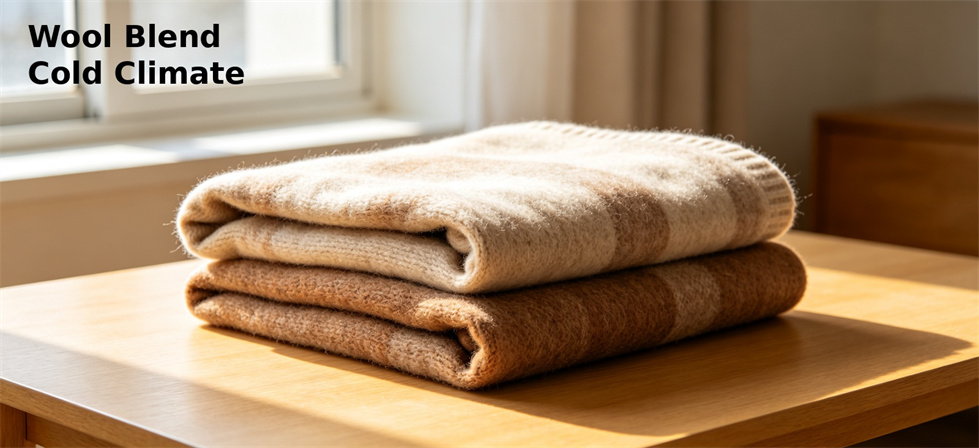
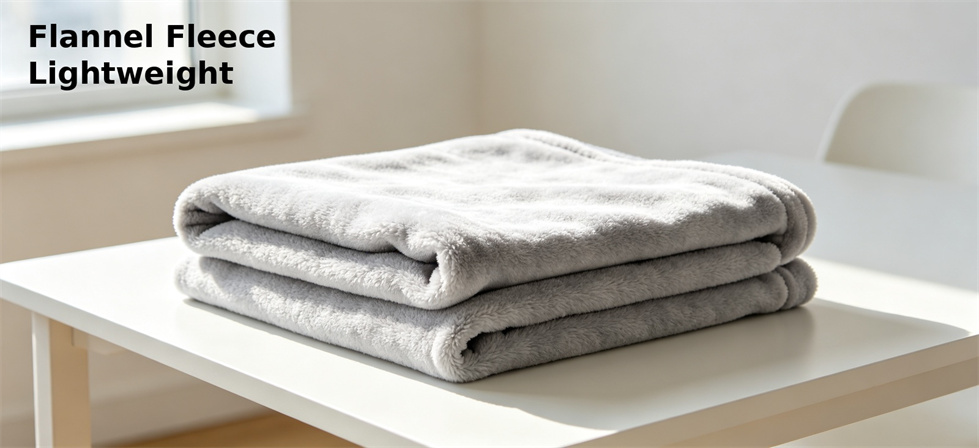
For institutional blankets relief orders, these are the standard material options used in the industry, with typical use cases:
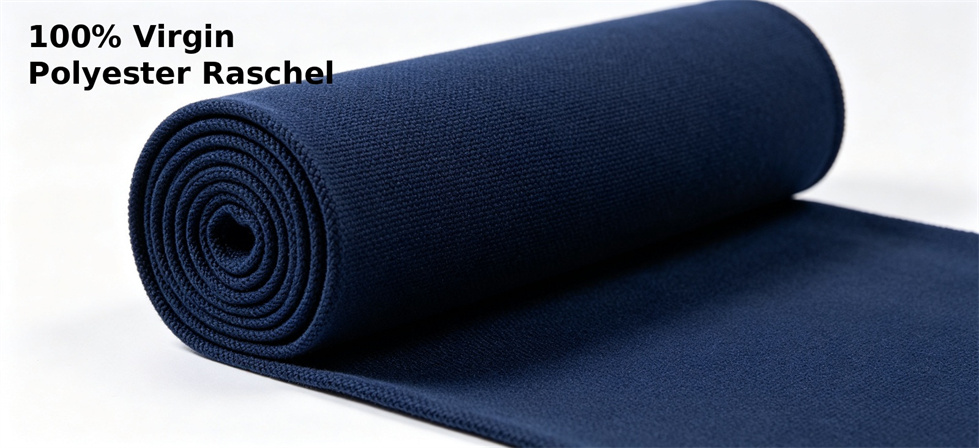
Standard quality check for bulk blankets: Reverse side construction matches face construction for consistent performance. All production is checked for loose fiber release during final inspection.
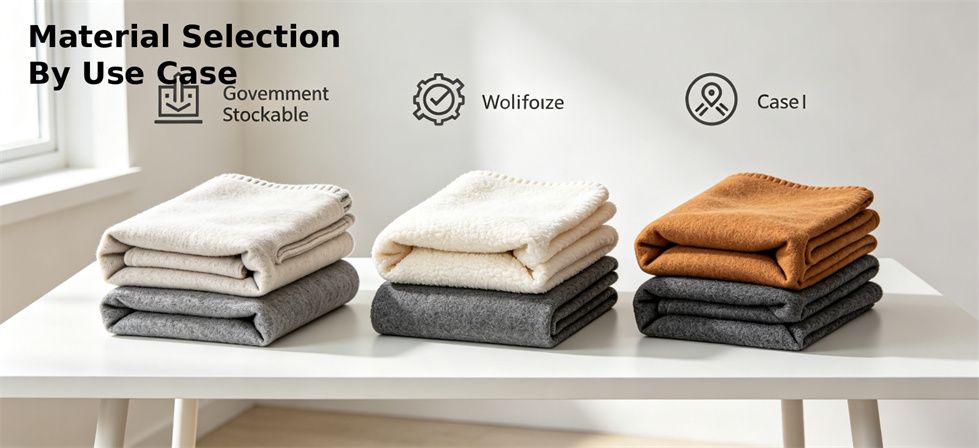
Material selection by use case for bulk blankets:
• Government stockpile: 100% virgin raschel for 5+ year storage stability
• Emergency response: rPET or standard virgin polyester for cost efficiency
• Wholesale distribution: Mid-weight virgin polyester for repeated use and wash durability
State GSM as an area-based fabric measure and state finished-piece weight separately when it matters for blanket procurement. Add the finished size and measurement method so a buyer does not compare unrelated values.
GSM and finished item weight for bulk blankets answer different questions. GSM is the weight of the fabric per square metre; finished item weight relates to the completed blanket after its selected size, construction and finishing are considered. A buyer who sees only one number may not know whether it describes the textile or the finished piece, which makes quotations and receiving checks difficult to compare.
Write both fields separately where they matter for institutional blankets, then record how each will be checked. The value does not need to become an unsupported tolerance claim. The useful requirement is a clear basis: which sample or production item is measured, what dimensions are used for calculation, and which approved reference governs a disagreement.
On a quotation from your blanket supplier, show fabric GSM and finished-piece weight in separate fields, with the finished size beside them. If either field is unknown, leave it open rather than estimating the missing figure. This prevents a buyer from approving a unit-weight expectation using only an area-based fabric value.
For consistent quality control, GSM is measured under standard atmospheric conditions per industry practice:
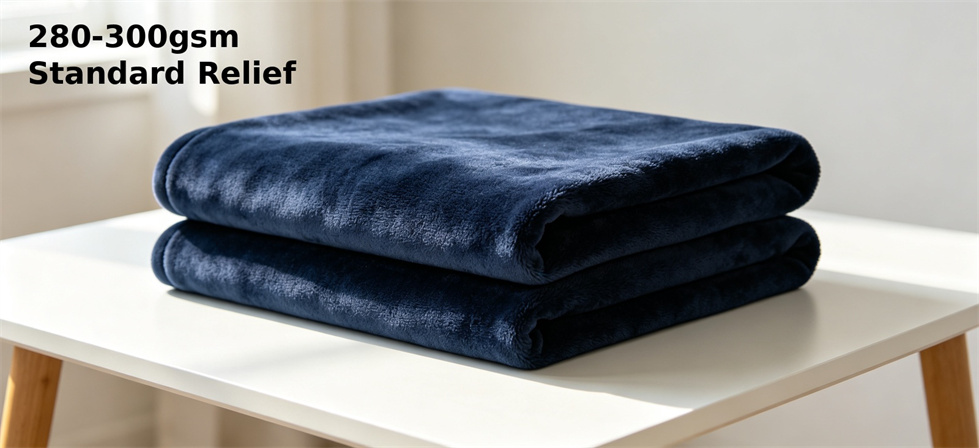
Production note for wholesale blankets: For tender orders requiring tighter tolerance, this can be specified in the contract and controlled during production.
Standard GSM by application:
Production note for wholesale blankets: For tender orders requiring tighter tolerance, this can be specified in the contract and controlled during production.
The table below lists standard material options for bulk blankets, helping buyers align fibre construction with use case before requesting samples. Use it as a reference when building your specification appendix.
|
Buyer control |
Question to close |
Useful record |
|
Project brief |
What is the actual use and destination? |
Current requirement sheet |
|
Configuration |
Which physical fields are fixed? |
Written specification |
|
Confirmation |
What is covered by a sample or document? |
Scope note |
|
Receipt |
How will differences be handled? |
Receiving record |
▶ 90% Wool Emergency Survival Wool Blanket‑Super Cheap. Click the title link to view material composition data, weight selections, sample terms and competitive bulk rates for emergency survival supply projects.
Confirm finished dimensions, tolerance method and whether the stated size is before or after edge finishing for wholesale blankets. A size on a catalogue image is not an acceptance method.
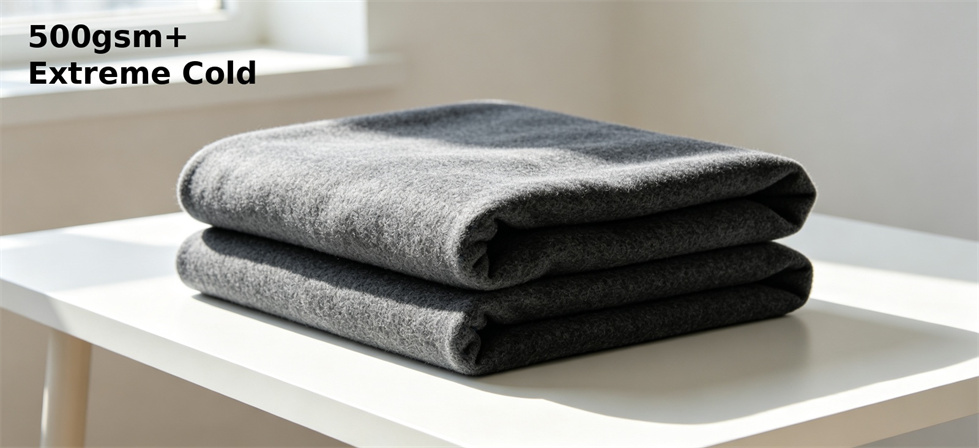
Usable size for institutional blankets is more than a number written on a quotation. State the finished measurement points, whether the edge finish is included in the stated size, and whether the item is measured laid flat or after a particular preparation. A size field becomes actionable only when the buyer, supplier and receiving team can apply the same method to the approved sample and to the delivered item.
Standard production sizes and tolerances for wholesale blankets:
Standard measurement method for wholesale blankets: Lay blanket flat on a hard surface without tension, measure width at top, middle and bottom, take average. All size measurements include edge binding unless otherwise specified.
For government tenders requiring exact dimensional tolerance, tighter controls can be implemented with adjusted production planning.
Size consistency by buyer type:
• Government: Exact size with sealed reference sample
• NGO: Standard tolerance acceptable for field distribution
• Wholesale: Consistent sizing across production batches for retail and repackaging

Use a clear edge-finish description, a sample reference and a visual inspection point for relief blanket procurement. Avoid vague wording such as “good binding” because it cannot be checked consistently.
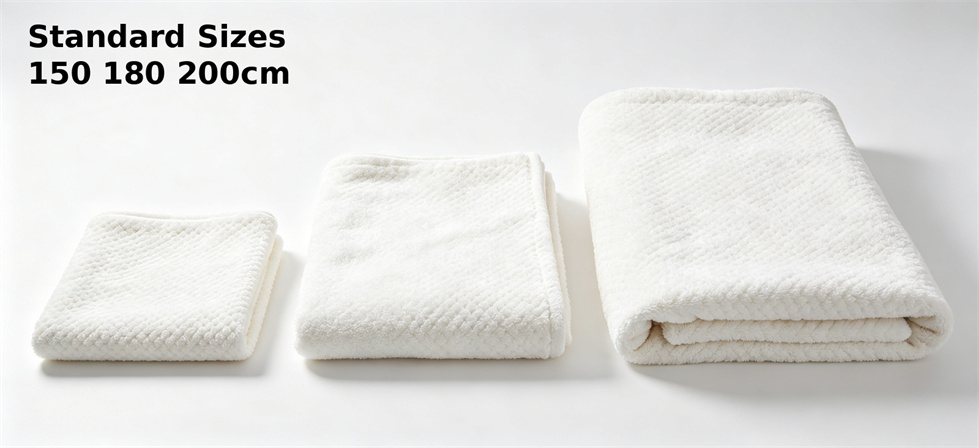
Describe the edge finish by what can be seen and reviewed: the coverage of the edge, the corner treatment, the thread or binding appearance where relevant, and the part of the approved sample used as reference. An edge finish method should not be reduced to a vague quality label. It is a construction field that helps a buyer identify the selected version and compare visible workmanship at receipt.
Edge integrity for bulk blankets is critical for field durability. Standard production specification for relief blankets:

Quality control for institutional blankets: All edges are pull-tested during in-line inspection to confirm stitching integrity.
Use a physical colour reference where colour matters, and approve label or mark text before production for bulk blanket sourcing. Screen display and informal file names are not acceptance references.
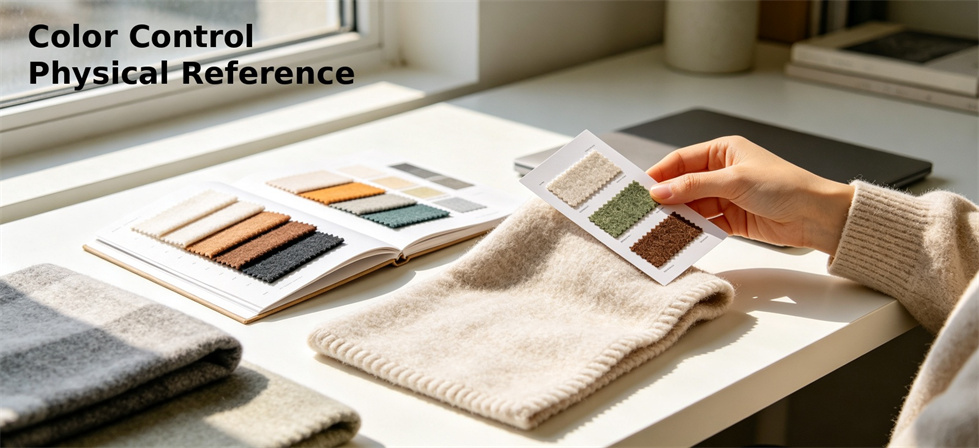
Colour and label wording for institutional blanket procurement need separate approval because they solve different problems. Colour helps product recognition and allocation; label wording carries information that may need to match a programme, market or receiving record. Keep the approved colour reference, label proof and any carton wording together, but do not assume that a visual colour approval also approves every printed statement.
For stockpile orders with multi-year warehouse storage:

Folding and packing of wholesale blankets affect apparent volume and handling. Confirm packing only for the selected material, size and finish; do not borrow carton data from another option.

Packing must describe the selected bulk blankets, not a generic product category. The folding method, unit presentation, outer identification and any destination split can all affect the final packing reference. If the construction or dimensions change, the buyer should ask whether the previous packing description still applies. This creates a practical connection between a specification appendix and the logistics handoff.
▶ The core of institutional bulk purchasing lies in strict implementation of technical standards and Continuation stable supply capacity. We provide large-volume wholesale supply of emergency relief blankets for government material stockpiles, prison accommodation, military camps and other scenarios, following project technical standards throughout the entire process. For a systematic understanding of institutional bulk purchasing key points, please refer to our article *Emergency Disaster Relief Blankets | For Government Stockpiles, Correctional Facility Blankets & Military Camps – Bulk Wholesale Supply*.
Put all confirmed fields, sample references, documents and test needs in a single appendix for blanket procurement. This avoids an RFQ, a label file and a receiving sheet each describing the product differently.
For a working appendix, arrange the fields in the order a buyer will use them: product identity, construction, dimensions and weight basis, visible edge finish, colour and label wording, then packing and document scope. Beside each field, add a status such as fixed, proposed or open. This gives a supplier a precise response format and gives the buyer a way to see whether a quotation, sample and packing instruction still describe one version of the same blanket.
A good appendix for institutional blankets functions as a shared version record. Use one revision identifier, date it, connect it to the approved sample, and list the fields that are still awaiting confirmation. The buyer can then send the same record to procurement, technical review, warehouse and supplier contacts. Each party sees the same configuration instead of rebuilding the requirement from emails and images.
For every field in the appendix, a buyer should be able to identify who confirms it, which approved sample or document supports it, and what has to be reopened if that field changes. A field remains open until those three points are clear. This turns the appendix into a working control record rather than a list of product adjectives.
This is the standard specification sheet we use for our own production and quality control:
This specification sheet summarises the standard production values for institutional blankets, including GSM, dimensions and tolerances. Confirm each field with your blanket supplier before finalising the order.
|
Field |
Specification |
Verification method |
|
Material |
Fiber content, face/reverse construction |
Sample review / material test report |
|
GSM |
Finished GSM, ±5% standard tolerance |
10x10cm swatch, conditioned weight |
|
Size |
Finished dimensions, binding included |
Flat 3-point measurement |
|
Edge finish |
8-10 stitches per inch, lock stitched corners |
Visual count, pull test |
|
Color |
Physical standard, grade 4 fastness |
Daylight match, test report |
|
Labels |
Approved wording, language, placement |
Written artwork approval |
|
Packing |
Fold method, unit pack, carton marks |
Pre-production packing sample |
|
Revision |
Version number, date, change record |
Same version across all teams |
A number without a method is difficult to receive consistently for wholesale blankets. Put the finished state, measuring position and the relevant sample reference beside each size or weight field that will be used for acceptance.

When a measurement creates a disagreement, return to the agreed method before discussing whether the product is acceptable. Check the current configuration version, the sample or written reference, the measurement point and the stated condition of the item. This keeps a dimensional or weight question factual. It also stops teams from comparing figures produced from different methods as if they were competing claims about quality.
Keep a short measurement note beside any value that will influence acceptance. It can state the viewing position, measuring point, sample reference or calculation basis without publishing unsupported tolerance numbers. This is especially useful when a buyer expects different teams to inspect the goods at different stages. The note turns a number into a repeatable check rather than a source of interpretation.
A description used inside the specification for bulk blankets may not be the wording required on a label, carton mark or commercial document. Control each text field separately so a marketing phrase is not accidentally turned into a production or delivery instruction.
Product wording and label wording for relief blanket procurement should be reviewed by different questions. Product wording identifies the physical construction; label wording controls information printed for the project. A buyer may approve one without approving the other. Keeping them separate also helps a supplier identify whether a requested wording change affects only artwork or requires the configuration record, sample or packing discussion to be reopened.
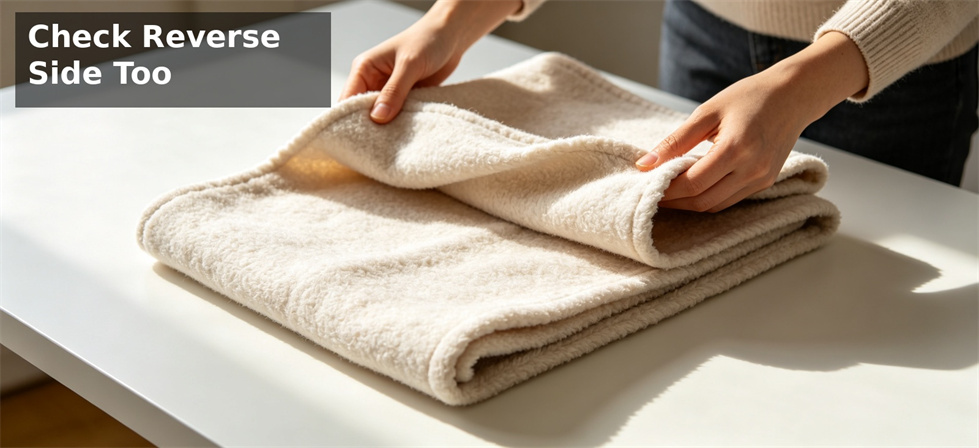
For fabrics with a distinct face and reverse construction from your blanket manufacturer, require the sample review to identify both sides. This avoids a receiving dispute where two teams use the same material name but expect different visible construction.
The reverse side should be reviewed whenever it is part of the construction or affects visible use. A front-only photo or description may conceal a relevant difference in surface, backing or finishing. Include the reverse-side observation in the sample checklist and record how it is described in the specification. That small step helps prevent a buyer from approving only the most visible part of the product.
Consistent construction on both face and reverse is part of standard quality control:
Every change to material wording, dimensions, label text or packing for institutional blanket procurement should receive a revision reference. It becomes possible to see whether a sample, quotation and receiving sheet belong to the same version without rewriting the full document each time.
A revision identifier for bulk blanket sourcing is most valuable when a project changes. If the buyer adjusts material wording, dimensions, label content, edge finish or packing, issue a new version and identify which earlier sample or quotation reference has been replaced. This is not administrative overhead. It prevents a production or receiving team from using an older attachment after the purchasing decision has moved on.
What does a material name prove?
It identifies a starting point for the discussion, not a complete purchasing specification. Add the construction, visible face and reverse side, dimensions, GSM, finished weight where needed, edge finish, colour, labels and packing. State whether each field is checked by measurement, sample review or written confirmation.
Why state both GSM and finished weight?
They answer different questions. GSM is fabric weight per square metre. Finished weight is the weight of the completed item in its selected size and construction. Show them in separate fields with their own measurement basis. Do not compare one supplier's GSM with another supplier's finished-item weight.
How is finished size checked?
State the measuring points, whether edge finishing is included, and the condition in which the item is measured. Link the method to the approved sample or written record so the supplier and receiving team use the same basis.
What should an edge-finish description include?
Describe what the receiver can see: edge coverage, corner treatment and the approved sample area used as reference. Avoid broad quality words. The receiving team should be able to compare the stated edge finish with the selected sample and record a visible difference.
Can screen colour be accepted?
No. A screen can help select a discussion reference, but it is not an acceptance reference. Use a physical or otherwise agreed colour reference, and approve label and carton wording separately. A colour reference does not approve printed text or marks by itself.
What belongs on the label?
Confirm the exact wording, language, placement and any required project or carton reference before production. Keep label approval separate from the physical product specification. If label text changes, record whether the current proof, sample reference or packing record also needs revision.
How should a buyer compare two materials?
Compare the same fields for both options: fibre description, face and reverse construction, finished size, GSM, finished weight where relevant, edge finish, colour, labels and packing. Do not choose between materials only by a trade name, a photo or one isolated number.

Can one document cover all options?
Usually no. A document can support only the specific construction, option or batch it identifies. Keep the selected configuration, document scope and open points together. A different material, size, finish or packing option should be checked separately before the buyer treats it as covered.
When is packing final?
Finalize packing only after the selected construction, finished size, folding method, unit presentation and destination split have been confirmed. Keep the final packing description with the current specification version. Do not reuse carton data from another option without checking that the selected item is the same.
What closes the specification review?
Close the review when one current version identifies the selected configuration, approved sample reference, document scope, packing record and remaining open points. Procurement, supplier and receiving owners should work from that same version before production and receipt.
How is GSM verified during inspection?
Per standard textile testing practice, three 10x10cm swatches are taken from different units in the batch, conditioned for 24 hours in standard atmosphere, weighed on calibrated scale, and averaged. Results are compared to specified finished GSM, with ±5% considered standard production tolerance.
Is higher GSM always better?
GSM should be matched to application. 280-300gsm is suitable for most general relief use. Higher GSM provides more warmth for cold environments but adds weight and shipping cost. For tropical or single-use applications, lower GSM is more practical and cost effective.
What stitch count is standard for relief blankets?
8-10 stitches per inch is standard for relief use, balancing strength and flexibility. Stitch count is verified during in-line inspection, with pull testing to confirm seam integrity.
Why is reverse side inspection important?
Consistent construction on both sides ensures uniform durability. Reverse side inspection confirms yarn quality, stitch tension and trimming, which are not visible from the face but affect long term performance.
What is a blanket specification checklist for procurement?
It should cover fibre composition, face and reverse construction, GSM, finished dimensions with tolerance method, edge finish type, colour reference, label wording, packing unit and carton identification. Use this checklist to compare manufacturer offers on the same basis before sample approval.
How to use a blanket material selection guide for different use cases?
A blanket material selection guide matches fibre construction to the operating route: raschel knit for long-term stockpile stability, fleece for rapid issue comfort, and wool blend for cold-climate institutional use. Confirm the selected material with a physical sample before committing to bulk orders.
What should a blanket sample checklist include?
A blanket sample checklist should record fibre composition, GSM, finished size, edge finish, label placement, folding presentation and packing unit. Keep the approved sample with the specification appendix so receiving teams can compare production against the same reference for wholesale blankets orders.
How to perform a blanket inspection checklist on arrival?
A blanket inspection checklist on arrival should verify carton identity, count units per carton, measure finished dimensions against the approved method, check edge finish and label wording, and inspect for staining or packaging damage. Record results against the approved sample from your blanket supplier.
How buyers can verify recycled content before ordering blankets?
Verify recycled content by requesting material composition statements, test reports showing fibre percentages, and batch traceability records from the blanket manufacturer. A supplier that can provide clear composition details for institutional blankets reduces the risk of mislabeled recycled content.
How to control blanket specification changes on repeat orders?
Control specification changes by maintaining a signed appendix with revision identifiers, requiring written confirmation for any GSM, size, label or packing alteration, and requesting updated samples when changes affect product identity. This prevents silent substitutions in repeat relief blanket procurement orders.
✅ Factory video link (YouTube): https://x.c1ns.cn/zVNIU
✅ Facebook homepage: https://a.c1ns.cn/SjJla
|
Access our full product document |
Quick real‑time chat for urgent project questions |
 |
 |
|
Get full‑range product specs & package solutions in PDF |
Connect with us for instant project support |
Copyright © Custom Disaster - Relief Bedding: Tents, Sleeping Bags, Blankets All Rights Reserved
the professional team to service !