Categories
latest blog
Annual Blanket Procurement Plan: Mix, Data & Reorder for NGOs
Annual blanket purchasing should not start with one total quantity. This annual blanket procurement plan separates demand groups, calculates each quantity from four visible inputs, and sets reorder triggers so stock never drops to zero. Built for NGO buyers, relief agencies and procurement officers, it turns a yearly blanket order into a clear, defensible specification.

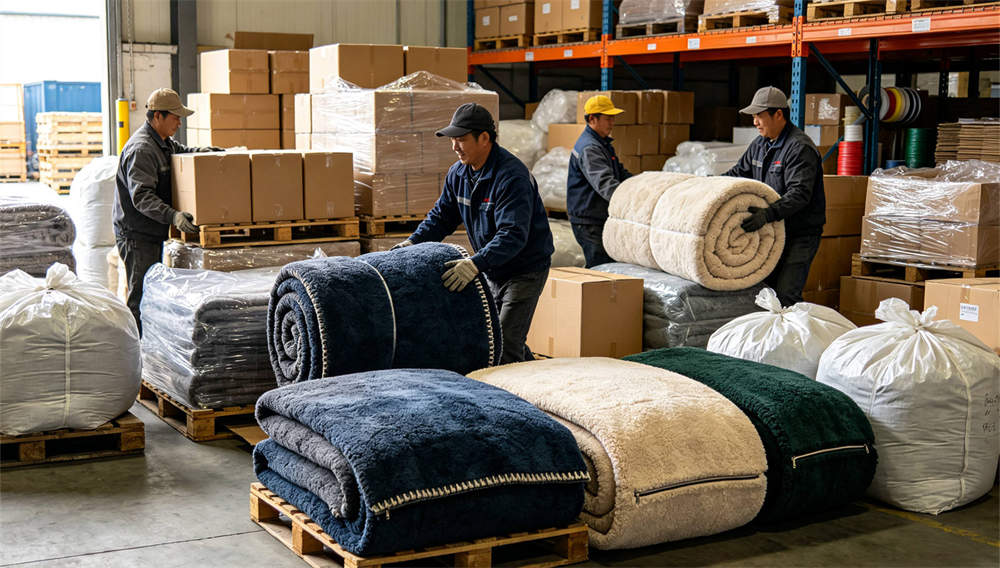
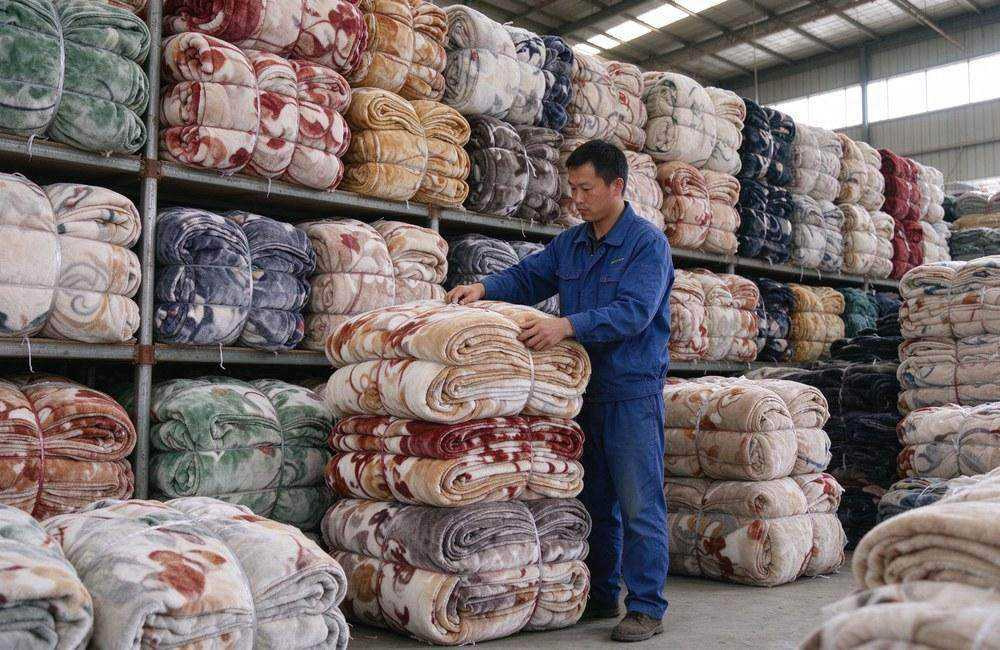
Warehouse shelves with annual blanket stock ready for dispatch.
Wholesale blanket orders from NGOs and relief agencies usually begin with beneficiary numbers, climate zones and distribution timelines. A dependable emergency blanket supplier keeps stable weaving capacity, reserved fabric stock and a clear production schedule, so bulk blanket orders move from sample approval to full production without delay. In practice, buyers also confirm packing specifications, carton dimensions and shipping marks at this stage, which prevents costly misunderstandings when large volumes arrive at ports or field warehouses. In practice, buyers also confirm packing specifications, carton dimensions and shipping marks at this stage, which prevents costly misunderstandings when large volumes arrive at ports or field warehouses.

Warehouse capacity matters as much as weaving speed. Bulk blanket orders need reserved floor space, organized pallets and quick loading lanes, so goods can be inspected, packed and dispatched in batches without mixing batches or delaying delivery. Many relief agencies now require photo or video evidence of stock before approving shipment, so a clean, well-lit warehouse and clear batch labeling become part of the supplier evaluation itself. Many relief agencies now require photo or video evidence of stock before approving shipment, so a clean, well-lit warehouse and clear batch labeling become part of the supplier evaluation itself.
Beyond unit price, NGOs compare payment terms, inspection reports and repeat-order stability. A transparent annual blanket procurement plan covers quantities, delivery windows and quality benchmarks, helping both sides build a long-term relief supply relationship. When the same supplier can keep consistent quality across seasons, procurement teams save the time and cost of re-qualifying new vendors, which is often the deciding factor in annual tenders. When the same supplier can keep consistent quality across seasons, procurement teams save the time and cost of re-qualifying new vendors, which is often the deciding factor in annual tenders.
A blanket procurement plan is complete only when every line traces back to a demand group, quantity inputs, configuration, delivery method and reorder trigger. Start from the four planning decisions, separate the demand groups, calculate with the four visible inputs, and compress the mix to the smallest set that covers everyone. Let each configuration pass through a physical sample before it enters the mix, and record the sample result next to the line it validates.
When the budget changes, the plan already shows which lines are core and which get cut first. That is the difference between repeating a number and defending a plan. The same structure works for shelters, dormitories, hotels and wholesale stock: the groups change, the method does not.
A habit worth building: keep last year's plan file even after the new plan is approved. It records the reasoning behind past decisions and makes the annual review faster, because the earlier assumptions are already written down. Archive it with the sample records and the whole planning history sits in one place.
When presenting the annual plan to a finance committee or board, start from the demand groups and the four inputs, not from the total. The total is a result, not a reason. A plan that explains groups, inputs and triggers wins trust in minutes, and it is the same plan you defend again next year.
If needed, start small: one demand group, one configuration, one reorder trigger. One line covered correctly beats a table that covers everything vaguely. Once the first line works, the rest of the plan table grows by itself. Do the plan once, review it twice a year, and let the table remember.

Three blanket configurations compared side by side.
The product mix is the first decision. Three configurations usually cover a program: a washable basic line, a heavier cold-weather line and a reserve line. Compare them side by side on one sheet so the differences stay visible, and name each line by the task it serves rather than by a supplier model number.
For internationally recognised textile references, see ISO textile standards and Sphere standards.
Distribution reality shapes the same mix. Blankets that reach families in a shelter move through a different path than stock held for a future season: one needs cartons split by site, the other needs compressed packing for storage. The annual plan records both paths in the packing decision row.
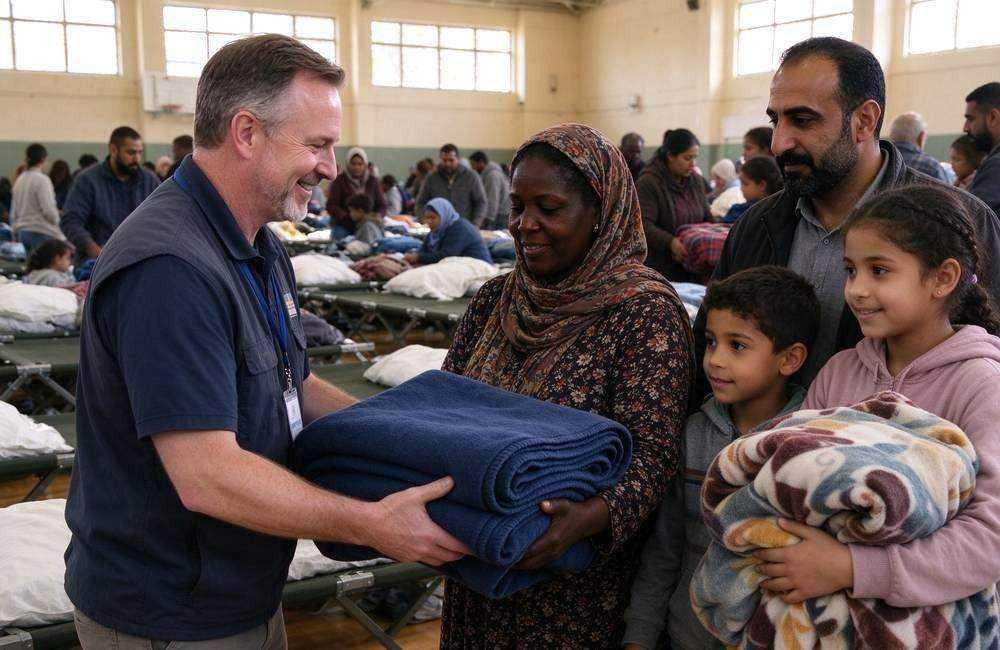
Relief staff distributing blankets to shelter families.
The planning meeting is where numbers become decisions. One person brings usage records, another brings inspection results, a third brings supplier quotes, and the four input columns turn those inputs into a quantity that can be defended in front of a board or a donor.

Procurement team reviewing quotes and the annual plan.
Four user groups keep the plan honest: basic accommodation, cold-weather duty, frequent institutional use and long-term reserve. Each group changes at least one specification, and each group gets its own row in the annual blanket procurement plan.
The stock plan and delivery lots shown in this photo are the operating side of the annual procurement plan. Records kept at each delivery make the next year easier to plan, because the quantity actually delivered, the configuration accepted and the timing of each lot are the real inputs for the next order cycle.
Worked end to end, the method produces a plan that supports budgeting, supplier comparison and delivery scheduling, and it starts with the users, not with last year’s total.
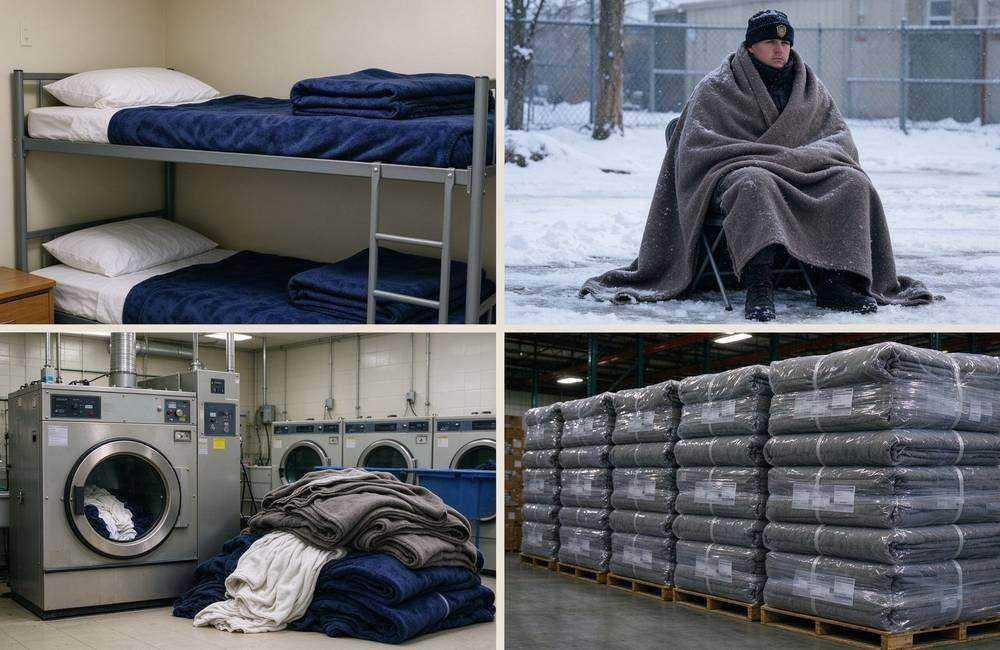
Four user group scenarios that shape the product mix.
An annual blanket procurement plan must answer four questions before any quantity is written down. Who will use the blankets, how often, in what conditions, and for how long? Public and NGO programs usually protect basic coverage first, then add configurations for colder locations or more demanding duties. Starting from last year’s total hides all of these differences behind one number.
Agencies that run annual purchasing cycles can cross-check their assumptions against the preparedness planning guidance published by Ready.gov and FEMA, which describe how coverage, stockpiles and rotation are treated in public preparedness programs.
Why does a single total fail? Because the number mixes groups with different replacement rates, different seasons and different packing needs. A dormitory line is washed every week, a reserve line sits untouched for months, and a cold-weather line is used only a few weeks a year. Each group behaves differently, so each group needs its own quantity.

Annual planning sheet with sample and measuring tape.
Start your planning sheet with four decision columns: demand, quantity, product mix and timing. When a fact changes, a new site opens, a season shifts or a budget is cut, you update one row instead of redoing the whole order. The sheet stays small enough to review in one meeting and detailed enough to brief any supplier.
|
Planning decision |
What it covers |
Common mistake |
|
Demand |
User groups, seasons, locations, intended period of use |
One total number for everyone |
|
Quantity |
Recorded stock vs usable stock, safety allowance, expected replacement |
Counting every stored piece as usable |
|
Product mix |
Material, GSM, dimensions, finished weight, care, packing compared together |
Choosing from a catalogue instead of from needs |
|
Timing |
Delivery method and the event that triggers the next purchase |
No defined trigger, reorder only when stock hits zero |
The four decisions protect the plan from a common failure mode: buying by supplier availability instead of by need. When a supplier offers a good price on one blanket type, it is tempting to standardise on it for every group. The four columns force the plan to say which groups that blanket type actually serves.
The same structure works at different scales. A shelter program with 200 cots and a wholesale operation moving 20,000 pieces both start from user groups. What changes is the number of rows, not the method. This is why a single blanket procurement plan template can serve an entire procurement office.
Keep one working sheet, one row per demand group. The plan should support budgeting, supplier comparison and delivery scheduling; it should not read like a general blanket catalogue. Every row produces a number or a rule that can be checked, corrected and handed to the next buyer.
Takeaway: an annual plan starts from user groups and four decision columns, never from last year’s single total.

Reviewing the stock plan and delivery lots.
Basic temporary one blanket type either ather duty, repeated institutional use and long-term reserve storage create different specifications. Blending them into one blanket type either over-specifies the basic line or under-specifies the cold-weather line. Each group changes at least one of four things: material, GSM, dimensions or packing.
Main decision: people covered, period of use, rotation and storage space. The likely mismatch is selecting extra weight when a lighter, washable blanket would serve. A 180-250 GSM washable blanket with reinforced hems usually covers this group without overpaying for warmth it does not need.
Record bed or cot dimensions in the plan next to this group. Dimensions change less often than quantities but cause most fit complaints: a blanket that is 10 cm short on the long edge looks wrong even when the GSM is perfect. Write the finished size, not the nominal size, because shrinkage moves the finished number.

Dormitory beds made up for high-frequency use.
Main decision: season, material ratio, GSM, dimensions and sample performance. The likely mismatch is treating GSM as a warmth rating on its own. GSM is weight per square metre; warmth also depends on weave density, nap and how the blanket is used. Two blankets at the same GSM can feel very different.
Dimension checks belong with the sample: measure the finished size after one wash, because shrinkage moves the blanket outside the cot fit. The plan records the measured size in the specification row and treats the nominal size as a reference only.
The plan also records the layering decision: a base blanket at 250 GSM plus a lighter top layer at 180 GSM often covers a wider temperature range than one 400 GSM blanket. Write both lines and the rule for combining them, so field staff know which blanket to issue in which condition.
Record sample results in the plan: which sample kept its structure, which felt warmer at the same thickness, which dried fastest. Plan for layering as well as blanket weight; a base blanket plus a lighter top layer often serves better than one heavy blanket that is too warm for indoor use and too slow to dry outdoors.

Cold-weather duty in an outdoor blanket configuration.
Main decision: care method, use frequency, carton split and delivery locations. The likely mismatch is ignoring replacement rates and washing damage. A line that is washed fifty times a year needs a higher replacement allowance than a line used twice a season, and the plan must state that difference.
Multi-site use also changes carton splitting. If three sites share one delivery, the plan should state the per-site carton breakdown on the packing list, otherwise the first site takes what it needs and the others run short before the next lot arrives.
Main decision: usable stock, packing condition, inspection findings and rotation timing. The likely mismatch is counting every stored piece as usable. A reserve that looks full on paper can fail inspection after a humid season, so the plan treats reserve stock as a number that must be verified, not assumed.
Reserve lines need a rotation rule, first-in-first-out by inspection date, so the oldest inspected pieces are used first. This is where an {kw("emergency blanket reserve")} keeps its value across seasons: it exists to be used before it expires, not to sit until a crisis makes it unusable.
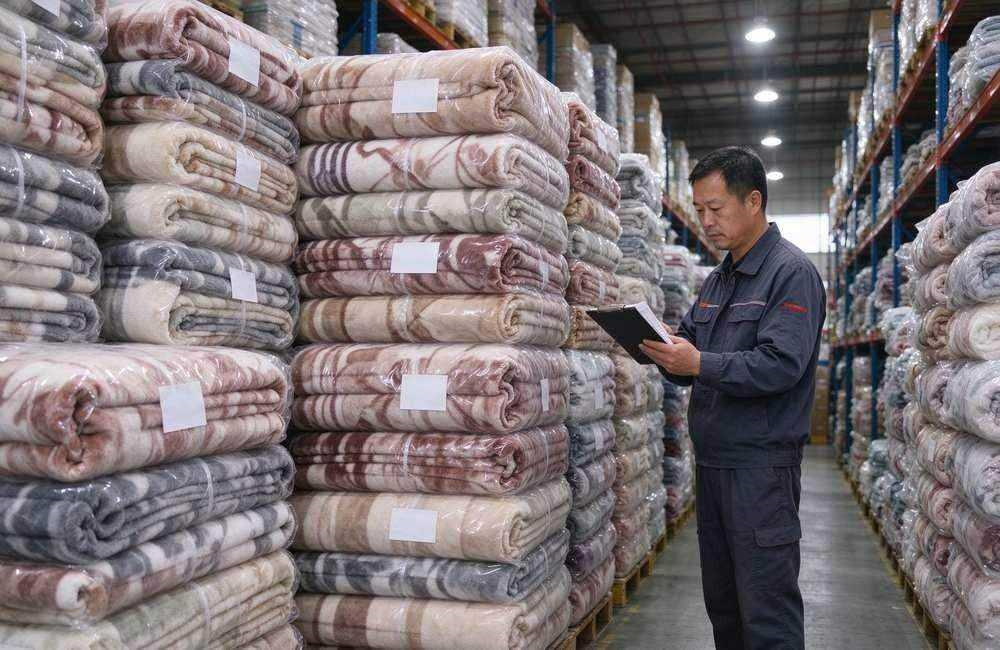
Counting reserve stacks to confirm usable stock.
annual mixl mix is not a list of every blanket a supplier offers. It is the smallest set of configurations that covers every demand group with the fewest SKUs. Each extra configuration adds samples, storage lines, inspection points and supplier negotiation time, so the mix should earn every line it contains.
For each configuration, write the purchase task it serves: which group it covers, how many pieces, when it must arrive and what specification locks it. If two configurations serve the same task with no measurable difference, merge them. If one configuration tries to serve two groups with different needs, split it.
A written product specification sheet should sit beside the plan: one page per configuration listing material, GSM, dimensions, finished weight, care and packing. This keeps the {kw("blanket product mix")} simple and gives every supplier the same commercial brief, so quotes can be compared line by line.
The register also records the packing variant per configuration, because the same blanket may ship compressed for reserve and in cartons for distribution. Two packing variants of one configuration are cheaper than two configurations, and the register keeps that distinction explicit.
Keep a one-page configuration register in the plan: each line lists the task name, the specification and the sample reference. The register is the single source of truth when a new buyer joins the team or when a supplier asks which specification applies.
Name the configurations by task, not by supplier catalogue. "Basic accommodation line", "cold-weather duty line" and "long-term reserve line" tell every reader what the blanket is for. A supplier’s model number says nothing about the user group, so the plan keeps task names as the common language.
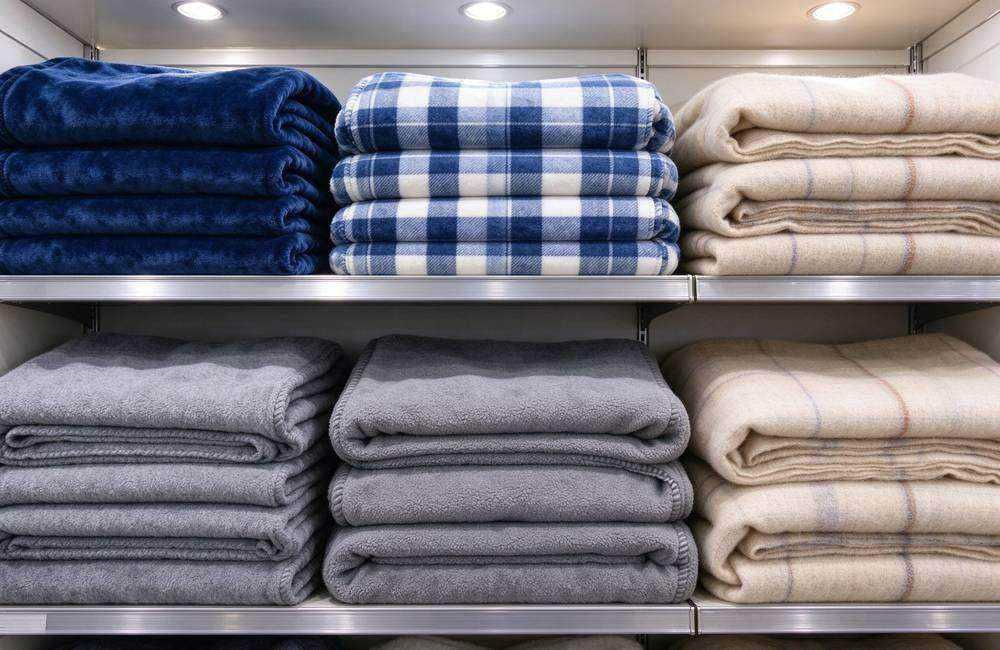
Multiple configurations on warehouse shelves.
Each demand group’s annual quantity comes from four inputs: expected demand, usable stock on hand, safety allowance and expected replacement. Missing one input produces either a stock-out or a warehouse full of blankets that never move. The four inputs are visible, so any reviewer can check where a number came from.
|
Input |
Where the number comes from |
Example (shelter program) |
|
Expected demand |
Number of users × period of use × rotation |
200 cots × 1 blanket each = 200 |
|
Usable stock on hand |
Physical inspection, not warehouse records |
45 inspected and usable |
|
Safety allowance |
Seasonal spike or delivery lead time |
+15% buffer |
|
Expected replacement |
Wash cycles, damage rate, planned rotation |
10% per year for frequent use |
Where a program needs a baseline for coverage assumptions, the Sphere handbook for shelter and settlement (spherestandards.org) provides minimum standards used by relief agencies, and the plan can record which baseline each demand row follows.
Expected demand starts with users, not with a percentage of last year. Count the people or cots, multiply by the period of use and add rotation where a bed needs more than one blanket per cycle. Write the arithmetic in the row so it can be audited.
Usable stock is the input that separates serious buyers from casual ones. A record may show 300 blankets while inspection finds 180 usable after stains, tears and compression damage. Base the quantity on the inspected number, not the record, and keep the inspection date next to the figure.
Safety allowance covers seasonal spikes, delivery delays and late site openings. Fifteen percent is a common start that should move with data: a two-week delivery needs less buffer than a six-week freight lead time.
Expected replacement converts wear into quantity. Wash cycles, damage rates and planned rotation all shorten the usable life of a blanket. A frequent-use line at ten percent replacement per year needs twenty blankets per two hundred in service, and that number belongs in the row, not in a manager’s memory.
The four inputs apply to every group and to the whole bulk blanket purchasing plan: when a fact changes, update the relevant input row and recalculate. This makes the annual quantity auditable, not guessed, and defends the budget in front of a board or donor.

Verifying blanket cartons against records.
Each user group gets one configuration with a locked spec: material, GSM, dimensions, finished weight and packing. Compare configurations side by side on one sheet so differences stay visible and nothing is duplicated. A configuration earns its place only when it serves a group that nothing else covers.

QC weighing a sample to verify GSM.
|
User group |
Typical configuration |
Key specification points |
|
Basic accommodation |
Washable flannel or fleece blanket, 150×200 cm |
GSM 180-250, machine washable, hem reinforced |
|
Cold-weather duty |
Heavier blanket, 180×220 cm, denser weave |
GSM 300-400, layered or single heavy option |
|
Frequent institutional use |
Durable line with replacement budget |
Wash cycles ≥50, stock rotation recorded |
|
Long-term reserve |
Compressed or vacuum-packed, low moisture |
Storage life, pallet storage, inspection schedule |
The basic accommodation line is usually the largest row in the plan. Keep it deliberately simple: a washable fabric, a standard size that fits the cots in service, and packing that splits easily by site. Every extra feature on this line multiplies across thousands of pieces, so simplicity is a cost decision, not a style choice.
The cold-weather line earns its specification from the sample: compare three at the target GSM, record which felt warmer, and lock the winner. Because duty is seasonal, the plan also records how the line is stored between seasons.
The institutional line is justified by washing data. If the care procedure is industrial washing at high temperature, the blanket must survive it, and the replacement allowance must reflect real damage rates. Record wash-test results in the plan so the line is defended by evidence.
The reserve line is packed for storage life first. Compressed or vacuum-packed low-moisture packing protects the stock, but the plan still schedules inspection and rotation. A reserve that is never inspected is not a reserve; it is a warehouse risk waiting for a crisis.
The sample approval step belongs in this section: order one sample per configuration and confirm finished size, finished weight and shrinkage. Reconfirm the same three numbers on the production sample before packing. A configuration that has never been sampled should not appear in the annual quantity.

GSM swatches compared for the product mix.
Record the comparisons in the plan so the decision survives staff changes. The same four groups work for shelters, camps, government programs and wholesale buyers, which is why a single blanket product mix template can serve an entire procurement office. Change the numbers, keep the columns.

Measuring blanket size in the workshop.
Delivery method decides how much cash sits in the warehouse and how much space the program must hold. One-time delivery suits a single season, scheduled lots suit predictable year-round use, and rolling replenishment suits shifting demand.
|
Delivery method |
Best for |
Risk to manage |
|
One-time delivery |
Single season, one peak, fixed site count |
Storage space and cash locked in stock |
|
Scheduled lots |
Year-round program with predictable use |
Forecast drift between lots |
|
Rolling replenishment |
Shifting demand, multi-site programs |
Overlap with existing usable stock |
One-time delivery is the simplest to negotiate and the hardest to store. The full quantity arrives once, so the program needs space for the whole order and cash to pay for it before use. It works when the season is short and the site count is fixed, for example a winter shelter program with a known opening date.
Scheduled lots split the annual quantity into two to four deliveries with fixed dates. Each lot is negotiated once, so the supplier can plan production, and the program only stores what it needs until the next delivery. The risk is forecast drift: if usage runs ahead of the plan, the next lot arrives late unless a trigger moves it earlier.
Cash flow example: a one-time order of 1,000 pieces locks the budget on arrival, while four lots of 250 spread the same cost across the year. State the cash position so the choice is a budget decision, not a habit.
Scheduled lots and rolling replenishment both depend on the same discipline: a reorder trigger tied to usable stock, not to the calendar alone. The delivery method appears in every supplier brief, because it changes packing, carton split and freight terms in the bulk blanket purchasing contract.

Loading scheduled delivery lots onto trucks.
A reorder trigger is the event that starts the next purchase: usable stock falling below a set level, a season change, a site opening, or a usage rate climbing past the plan. Without a trigger, reordering only happens when stock hits zero, which is exactly when lead time hurts most.
Set the trigger as a number. For example, reorder when usable stock drops below 60 percent of the group demand, or when monthly usage exceeds 15 percent of the plan two months running. A written number turns the decision into a check that any staff member can perform.
Protect essential demand first. Basic accommodation and cold-weather lines should trigger before optional lines, because a stock-out in these groups fails the program’s core promise. The plan lists which groups trigger immediately and which can wait for the next review.
A trigger that never fires is still useful information: it says the program is holding more stock than the risk level justifies, and the next review can lower the level and release cash. A trigger that fires every month says the opposite.
Keep a trigger log next to the plan: date, group, trigger met, action taken. Three entries are enough to show whether the triggers are set too high or too low, and the log feeds directly into the mid-year review sheet.
The trigger belongs in the plan, not in a manager’s head. With blanket reorder strategy written down, any staff member can check the same number and the next purchase starts on time, with the same specification and the same supplier brief.

Replenishment trolley after a reorder trigger.
Give every supplier the same brief and ask for the same output: a line-item plan listing configuration, quantity, unit price, GSM, finished weight, packing, carton split, lead time and validity. When every quote uses the same columns, comparison becomes arithmetic instead of judgement.
The brief itself is part of the comparison. Send the same specification sheet to every supplier, including the sample requirements and the packing list template. A supplier who questions the brief is not a problem; a supplier who silently substitutes a different specification is.

Supplier quotes compared on a spreadsheet.
Ask for three extra documents where relevant: a sample approval record, a production schedule and a packing list template. Cross-check the finished weight on samples against the stated GSM, because this is the fastest way to catch specification drift before the bulk order is packed.
The same note records agreed changes to the specification, because a negotiation that accepted a different GSM without recording it leaves the warehouse with a product no one ordered. The plan treats the agreed specification as the contract between buyer and supplier.
A short negotiation note belongs in the plan: what was accepted, what was rejected and why. The note protects the specification during negotiation, because a buyer who can quote the plan row has no reason to accept a silent substitution.
Compare on price per usable blanket, not per piece. A cheaper piece that fails inspection or arrives in damaged packing costs more than a slightly higher unit price. This is the practical heart of bulk blanket purchasing: a comparable, auditable supplier plan that survives negotiation without losing the specification.

Reviewing supplier plans line by line.
Packing choice balances freight, handling and shelf life. Compressed bales cut ocean freight and suit reserve lines that will not be opened soon. Cartons suit frequent distribution because they are easier to split by site and re-pack after inspection. The plan records which packing each line uses and why.
|
Packing type |
Best for |
Watch for |
|
Compressed bales |
Reserve lines, ocean freight, long storage |
Re-expansion time before use, moisture |
|
Cartons |
Frequent distribution, multi-site splitting |
Per-site breakdown on packing list |
|
Vacuum or low-moisture |
Long-term reserve, humidity-controlled storage |
Inspection schedule still required |
Compressed bales save freight and storage space, but they need re-expansion time before use and they hide moisture damage. The plan schedules a re-expansion window and an inspection after arrival. Reserve lines packed this way still follow the rotation rule by inspection date.

Compressed roll packing for freight efficiency.
Cartons protect the blanket during handling and make distribution simple. The packing list must show the per-site breakdown, and the plan records how many cartons each site receives per lot. This is a small line on the sheet that prevents the most common multi-site complaint.
Care procedures drive replacement rates. State the wash temperature, drying method and acceptable shrinkage in the plan, because institutional washing damages blankets that were never designed for it. A 60-degree industrial wash changes the specification, and the replacement input must reflect it.
Reserve lines stored on pallets with aisle labels and inspection dates are easier to rotate and easier to audit. The plan records the storage layout once, and the review confirms the layout still matches the stock on the floor.
The storage plan also names the person or team responsible for inspection and rotation. A reserve line with no named owner drifts out of condition quietly, and the annual review only discovers the damage when it is too late to fix.
Storage decisions follow the same logic: pallets, humidity below 60 percent and first-in-first-out rotation. Together, packing, care and storage turn a purchase into a managed emergency blanket reserve that survives multiple seasons and arrives at the crisis in usable condition.
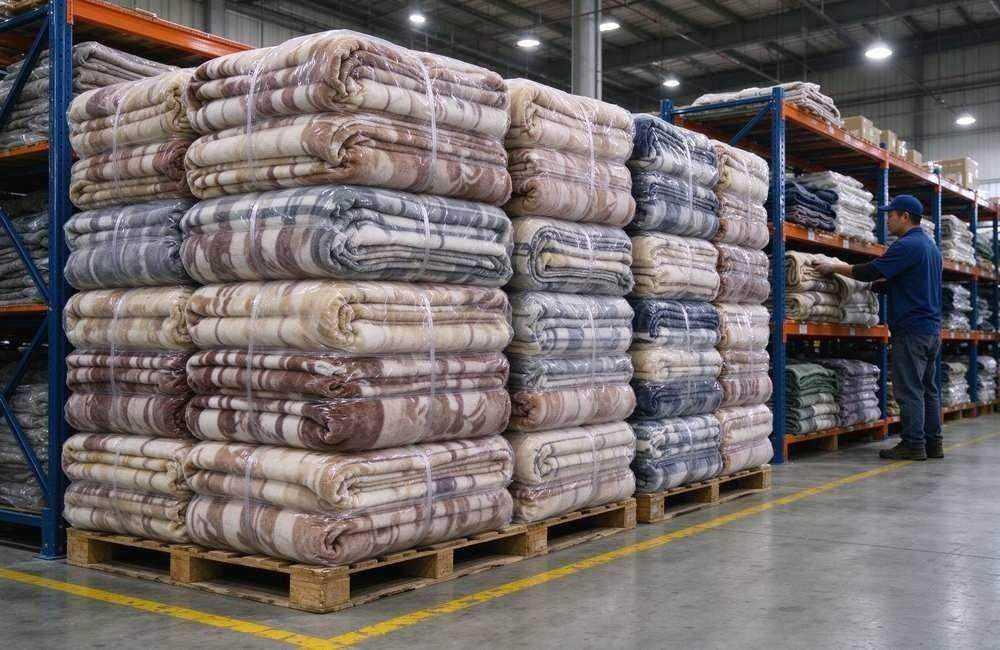
Reserve storage on pallets with records.
Review the plan at fixed points: after the first delivery, at mid-year, and before the next order. Compare planned versus actual usage, recorded versus usable stock, and delivery timing versus real need. Every mismatch becomes a correction to the relevant input row.
The review is not a formality. It is the moment when the four inputs meet reality: expected demand against actual distribution, safety allowance against real delays, replacement allowance against observed damage. Each correction makes the next annual plan cheaper and more reliable.
Keep a short review sheet with three columns: what the plan assumed, what actually happened, and what changes next year. This sheet is the memory of the program and the cheapest insurance against repeating the same purchasing mistake twice.
Close the review with a date for the next check, because a review without a next date becomes a single event instead of a cycle. The plan’s power comes from repetition: same columns, same questions, better numbers each time.
End the review with one decision: what changes in the next order. Even a small change, such as moving one lot earlier or adding two percent to the safety allowance, keeps the plan alive and proves the review produced action rather than minutes. Write the decision on the same page as the review sheet, with the owner and the date, so the next review starts by checking whether last year's decision was executed. A review that produces a written decision is a control; one that produces only discussion is a meeting.
An annual plan that is never reviewed is a spreadsheet, not a plan. The review turns the blanket reorder strategy into a learning loop: each cycle starts from inspected stock, real usage and corrected specifications. The program gets better every year instead of repeating last year’s assumptions.

Annual plan review against real usage.

Reviewing the stock plan and delivery lots.
The stock plan and delivery lots shown in this photo are the operating side of the annual procurement plan. Records kept at each delivery make the next year easier to plan, because the quantity actually delivered, the configuration accepted and the timing of each lot are the real inputs for the next order cycle.
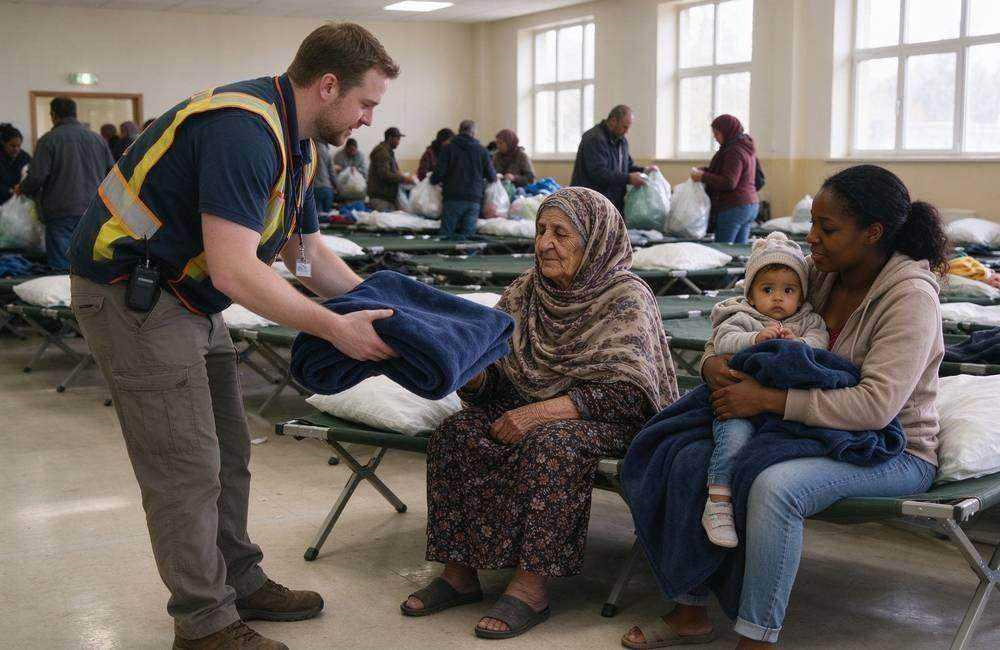
Blankets reaching families in temporary shelter.
Three usuallylly cover most programs: a washable basic line, a heavier cold-weather line and a reserve line. Add an institutional line only when care and replacement data justify a fourth SKU. Each configuration must serve a demand group that nothing else covers.
Recorded stock is what the warehouse system shows. Usable stock is what inspection confirms is clean, undamaged and fit for distribution. Base every annual quantity on usable stock and write the inspection date next to the figure, because records alone overstate what you can actually use.
No. GSM describes weight per square metre, not warmth alone. Compare samples at the same GSM to see weave, density and finish differences, then record which sample felt warmer and which dried faster. Warmth depends on construction and use, not on one number.
A common starting point is 15 percent. Adjust the buffer with real usage data at the mid-year review rather than keeping a fixed number forever. A program with reliable two-week delivery needs less buffer than one importing by ocean freight.
Inspect at least twice a year and after any humidity event. Rotation by inspection date keeps the oldest pieces usable and prevents a reserve that looks full on paper but fails in a real emergency. Storage condition, not the warehouse record, decides what counts as usable.
Measured finished size, finished weight per piece and shrinkage after one institutional wash. These three numbers verify the specification before any bulk commitment. Reconfirm the same three numbers on every new order, not only the first one.

Archived plan documents and rotation records.
The stock plan and delivery lots shown in this photo are the operating side of the annual procurement plan. Records kept at each delivery make the next year easier to plan, because the quantity actually delivered, the configuration accepted and the timing of each lot are the real inputs for the next order cycle.

Supplier samples compared for fabric and finish.
The stock plan and delivery lots shown in this photo are the operating side of the annual procurement plan. Records kept at each delivery make the next year easier to plan, because the quantity actually delivered, the configuration accepted and the timing of each lot are the real inputs for the next order cycle.

Condition inspection during stock rotation.
Basic temporaryone blanket type eitherather duty, repeated institutional use and long-term reserve storage create different specifications. Blending them into one blanket type either over-specifies or under-specifies every group, so separate the groups before any quantity is written.
One-time delivery suits a single season, scheduled lots suit predictable year-round use, and rolling replenishment suits programs with reorder triggers. The delivery method decides how much cash sits in the warehouse and how much space the program must hold.
A reorder trigger is the event that starts the next purchase: usable stock falling below a set level, a season change, a site opening, or a usage rate climbing past the plan. Without triggers, essential sizes run out first while less-used sizes stay overstocked.
Compressed bales cut ocean freight and suit reserve lines that will not be opened soon; cartons suit frequent distribution. Ask every supplier for packed unit weight, pieces per carton, carton dimensions and stack height so the storage plan matches reality.
Give every supplier the same brief and compare configuration, quantity, unit price, GSM, finished weight, packing, carton split and lead time on one sheet. A line-item plan exposes differences that a single total price hides.
Annual blanket procurement usually starts 90 to 120 days before the delivery window so that specs, samples and production slots are confirmed in time. Institutions that order institutional blankets on a fixed calendar avoid peak-season price swings and capacity competition from bulk buyers.
Split the annual blanket budget by demand group, not by a single total. Emergency reserve, routine dormitory use, cold-weather duty and replacement stock each need a separate line so that the quantity and GSM are protected when one group grows.

An annual blanket procurement plan turns scattered orders into one predictable pipeline: quantities by season, configurations by user group, and one review date before the peak. The plan on the table is the reference every reorder in the year points back to, so a new request is checked against the plan before it becomes an order.
 |

|
Previous :
Wholesale Flannel Blankets for Temporary Shelters: GSM, Fabric, Size, Unit Weight and Bulk Ordering and Buying Checklist for Emergency Stockpile and Global Relief Procurement TeamsNext :
Raschel Blanket Wholesale for NGOs and Relief Agencies: Thick-Plush Specification, GSM Repeatability, Pallet Packing, QC Checks and Sampling Protocol Before Your Next Bulk OrderCopyright © Custom Disaster - Relief Bedding: Tents, Sleeping Bags, Blankets All Rights Reserved
the professional team to service !