Categories
latest blog
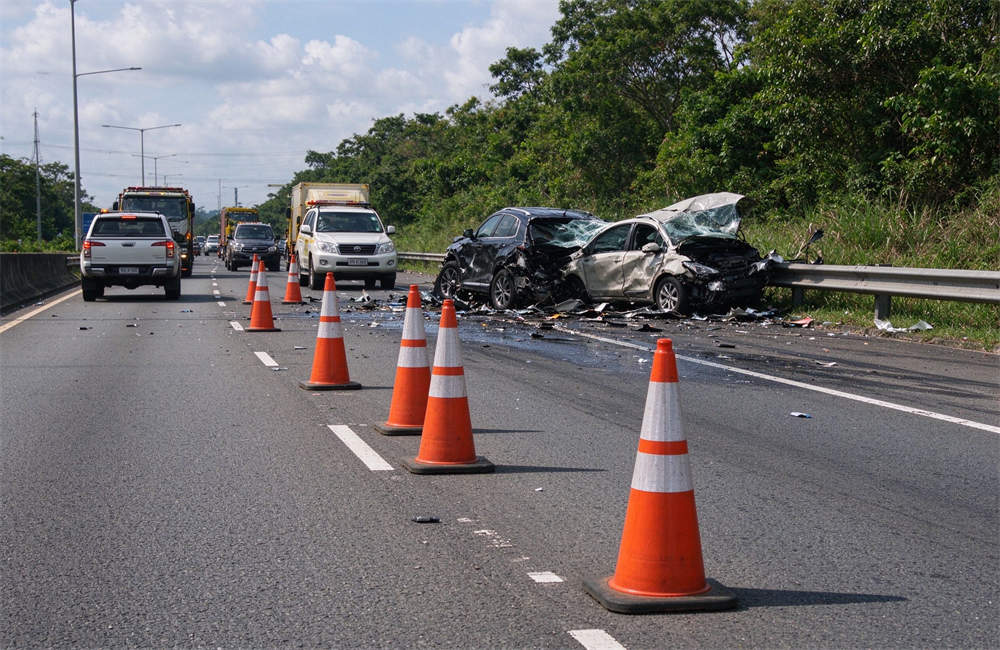
Highway crashes are the most common mass-casualty incident first responders face. A multi-vehicle pileup on the interstate blocks lanes, traps occupants, and creates a hazardous scene within minutes. Fire departments and rescue squads staging highway crash emergency supplies — extrication tools, PPE, scene lighting, and patient care gear — can cut response time and reduce fatalities. This guide covers what frontline responders actually need, what to stock in bulk, and how to prepare for the next major highway incident.
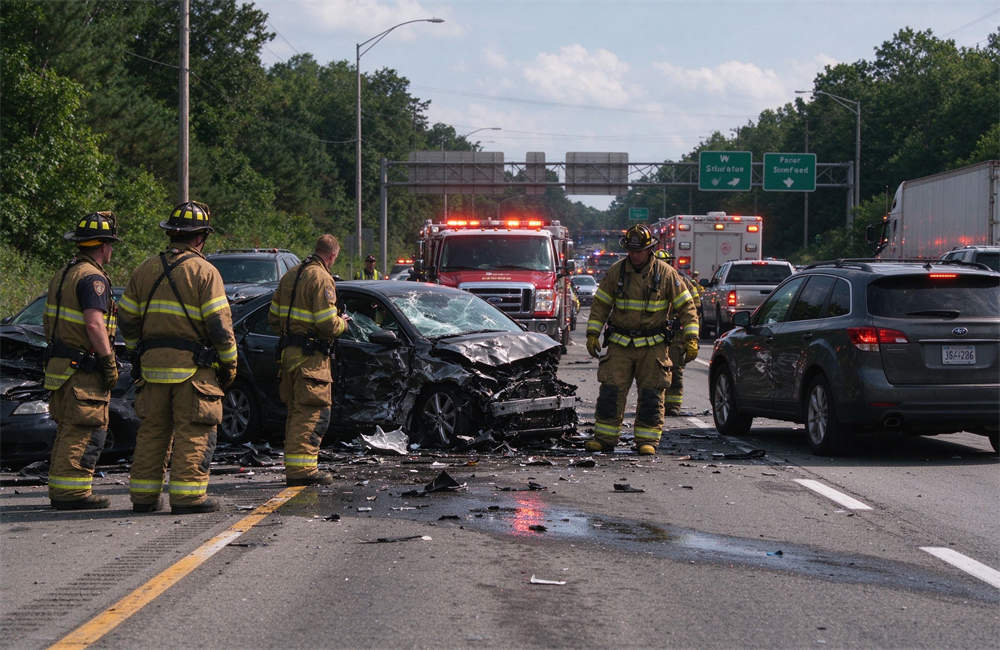
Daytime highway crash scene with rescue teams.
The NHTSA reports more than 40,000 Americans die in highway crashes every year, and millions more are injured. Most crashes are single-car events, but the multi-vehicle pileups that happen in fog, ice, or heavy traffic strain every agency on the scene. The first 10 minutes matter most — that's when trapped occupants are extricated, patients are triaged, and the scene is made safe.
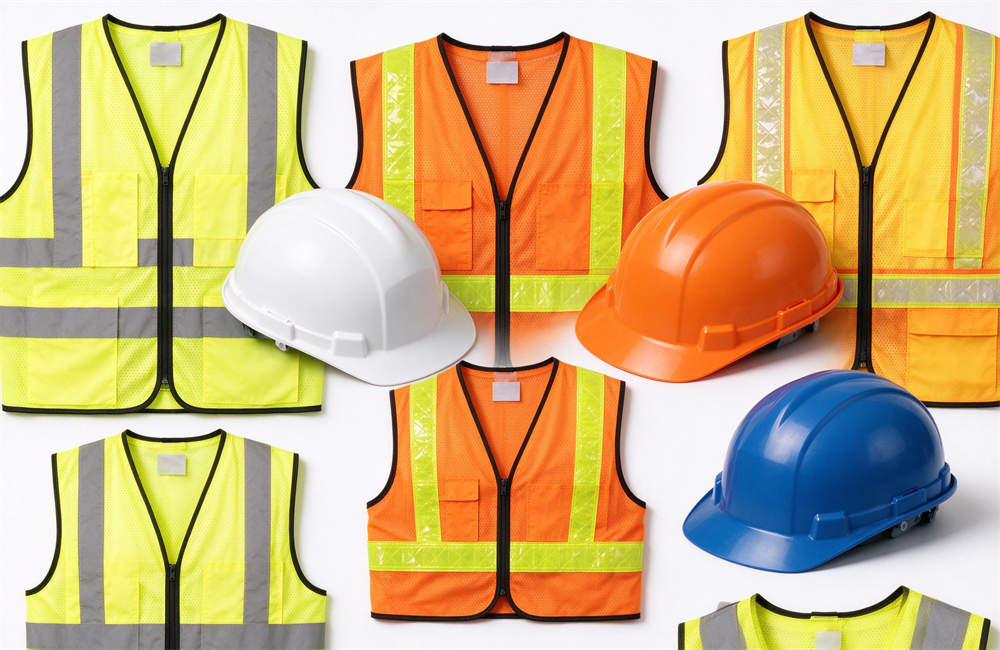
Reflective vests and hard hats PPE family.
For fire departments and rescue squads, highway response is different from structural firefighting. You're working at night on a high-speed roadway, with traffic coming at you, in weather that ranges from blizzard to heat. The gear has to work in the dark, in the cold, in the rain, and it has to be on the truck before the call comes in. There's no time to run back to the station for the right tool.
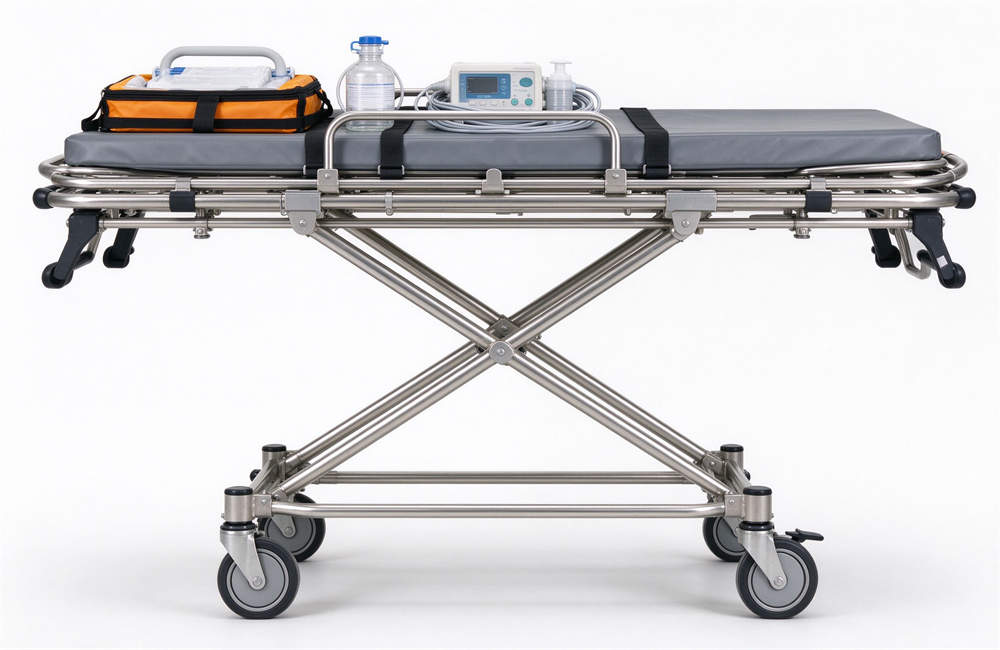
Stainless steel folding rescue stretcher trolley.
On this page
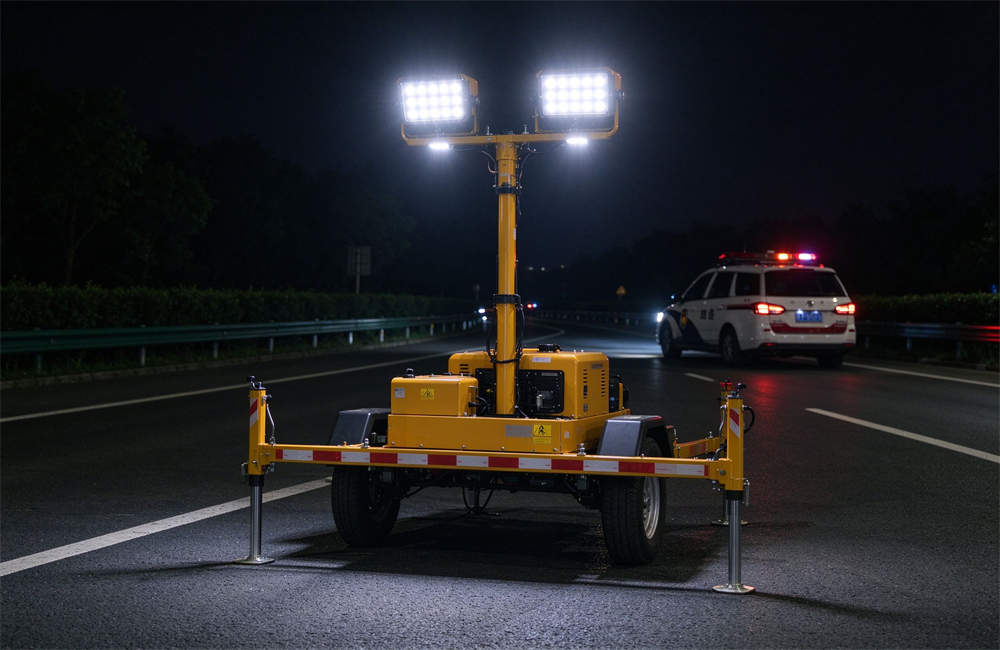
Yellow mobile light tower on highway at dusk.
Highway crash scenes are dangerous for responders. The OSHA reports that roadway incidents are one of the most dangerous work environments for first responders — struck-by incidents are a leading cause of firefighter and law enforcement fatalities on scene. That changes the gear list: visibility and scene protection come before everything else.
The second difference is speed. A structural fire gives you time to gear up, size up, and set up a defensive perimeter. A highway crash happens at 60 mph, and the next car could be coming around the curve at any second. Every second you spend on scene is a second you're exposed to traffic. The gear has to be fast to deploy, fast to set up, and fast to strike.
The third difference is patient population. Highway crash victims range from walking wounded to trapped criticals. You need triage gear, extrication tools, and patient care supplies all on the same truck. You don't know what you're going to need until you get there.
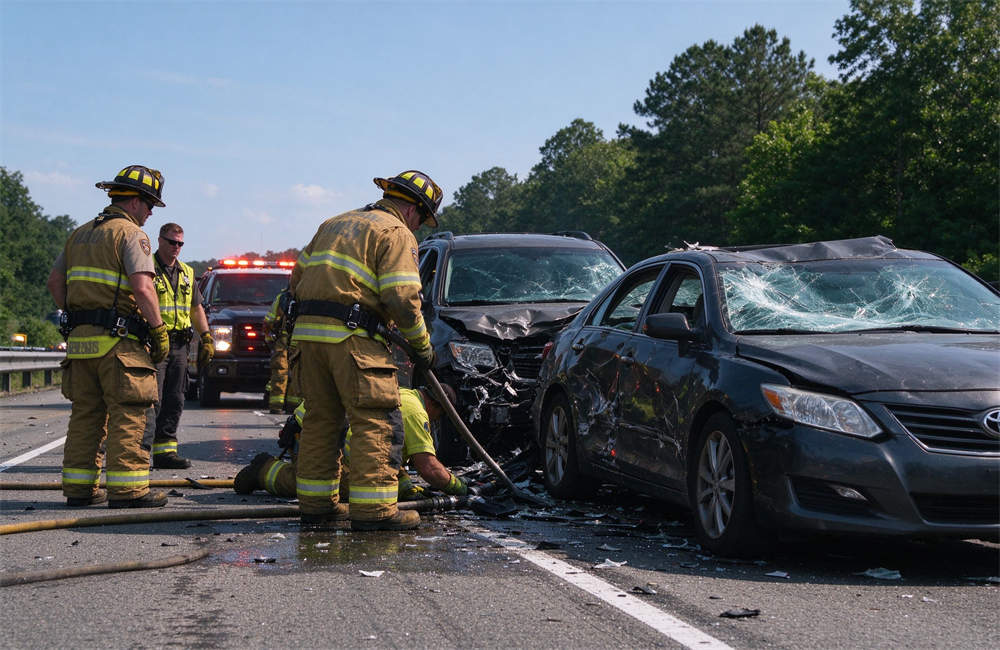
Orange traffic cones lined up along highway.
The first job on any highway crash scene is scene safety for first responders — for responders, for patients, and for approaching traffic. Without a safe scene, nothing else matters. The OSHA highway work zone standards and NFPA 1500 outline the minimum safety requirements for responders working on roadways.
What every rescue truck should carry for highway traffic control equipment:
Traffic cones. 28-inch orange cones with reflective bands. 10 cones per truck, set up in a taper that guides traffic away from the work area. The MUTCD guidelines specify taper lengths based on speed limit — 1 cone per 10 feet on a 55 mph road.
Road flares and LED warning lights. Battery-powered LED flares replace the old propane ones — no open flame on a highway where gas leaks are possible. A box of 12 LED flares per truck.
Barrier tape and sign stands. "DO NOT CROSS" tape on stands, not just strung between trees. Stands hold the tape up where drivers can see it.
Upstream warning signs. "CRASH AHEAD — LANE CLOSED" signs on A-frame stands, set up a quarter-mile upstream so drivers have time to merge.
How far upstream you place the first warning sign depends on the speed limit. Set it too close and drivers don't have time to react:
|
Speed Limit |
First Sign Distance |
Cone Taper Length |
|
35 mph (56 km/h) |
200 ft (60 m) |
100 ft (30 m) |
|
55 mph (89 km/h) |
500 ft (150 m) |
250 ft (75 m) |
|
65 mph (105 km/h) |
800 ft (240 m) |
400 ft (120 m) |
|
70+ mph (113+ km/h) |
1,000 ft+ (300 m+) |
500 ft (150 m) |
At night or in bad weather, double these distances. The driver who hits your scene at 65 mph because they saw the cones too late is the worst case. When in doubt, set it further back, not closer. We supply highway crash emergency supplies including traffic cones and high-visibility vests in bulk for department-wide resupply.
Never stand between the crash and oncoming traffic. Position responders on the downstream (far) side of the crash, working from the shoulder inward. If a car hits the scene, it hits the cones and the flares — not your team. The upstream side is where traffic control goes; the downstream side is where patient care and extrication happen.
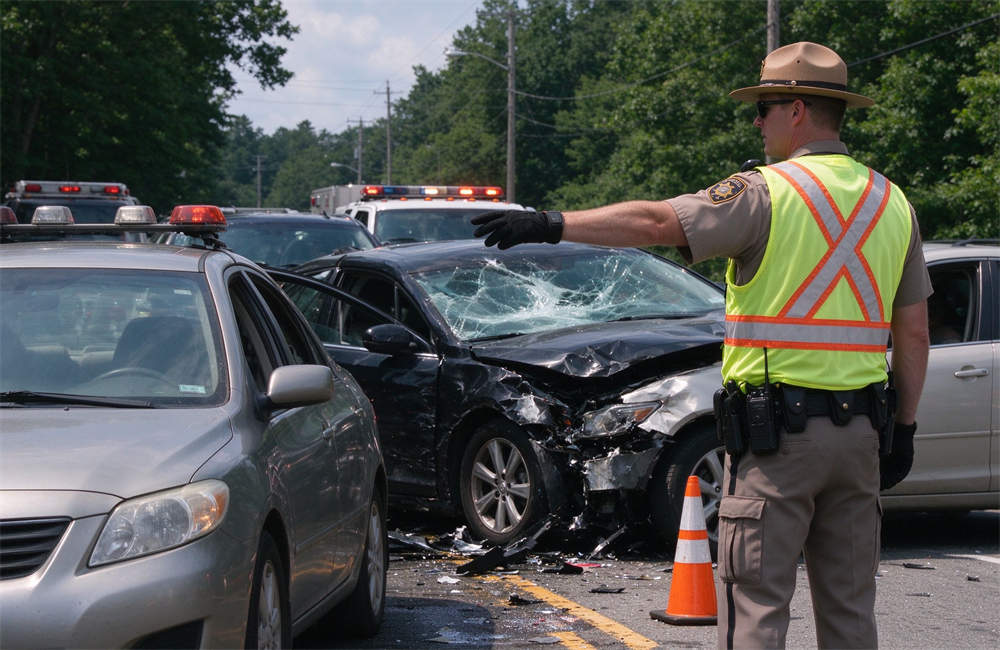
Police officer directing traffic at scene.
On a highway, visibility is survival. The ANSI/ISEA 107 standard for high-visibility PPE is the baseline — Class 2 or Class 3 vests, depending on the speed limit and ambient light. This is the foundation of any rescue truck equipment list.
The PPE baseline is straightforward. A high-visibility vest meeting ANSI/ISEA 107 Class 3 is essential — a driver sees you from 500+ feet at night. Firefighter turnout gear meeting NFPA 1971 protects from fire, sharp metal, and weather. Structural firefighting gloves meeting NFPA 1971 provide puncture and cut resistance for extrication. A helmet with visor meeting EN397 or NFPA 1971 protects the head from flying debris. Steel-toe boots meeting ASTM F2413 protect feet from dropped tools and metal.
We stock ANSI Class 3 high-visibility vests in lime and orange, with pockets for radio and gloves. The EN397 hard hats we supply are the same ones used on wildland and highway scenes — multi-colored for role identification, impact-rated, and with the suspension system that actually works on a long shift.
The most overlooked PPE on highway scenes: eye protection. Flying glass from shattered windshields is the most common responder injury. Safety glasses that meet ANSI Z87.1 go under the helmet visor, not instead of it.
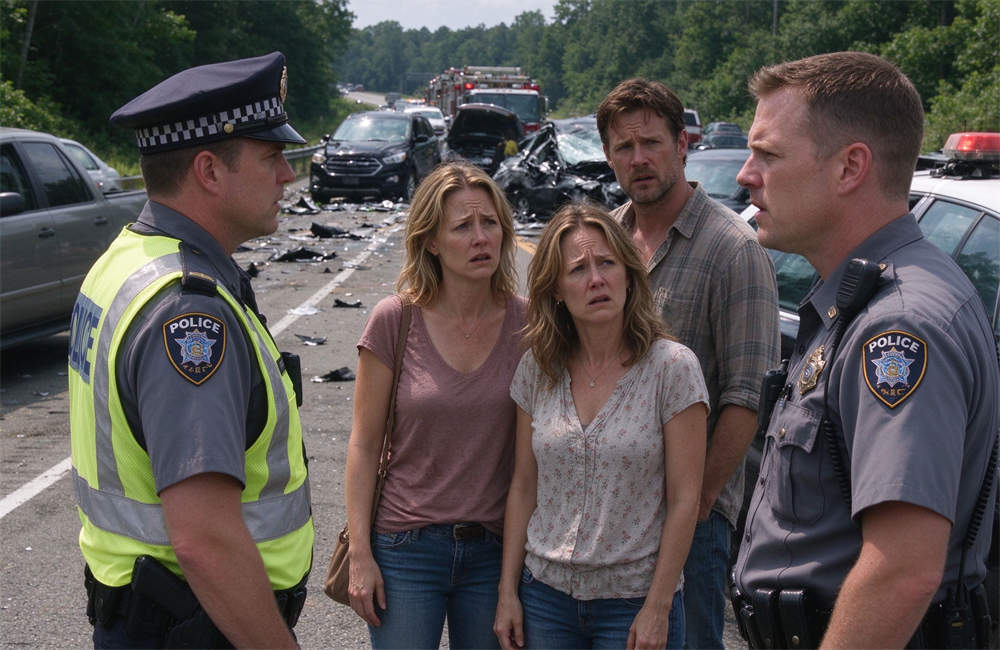
Family member talking to police officer.
Getting people out of wrecked cars is the core mission of highway rescue. The tools have to work when you need them, in the weather you're in, on the car that's there.
We supply the hand-tool side of extrication, not the big hydraulic equipment (that's specialized and truck-mounted):
Hand tools. Halligan bars, pry bars, glass breakers, and wire cutters — for quick work when the big tools aren't needed.
Glass removal gear. Window punch tools, duct tape for covering shattered glass, and heavy gloves for handling broken glass. Side-window removal is the fastest access to a patient.
Cribbing and stabilization. Wood and plastic cribbing blocks to stabilize a vehicle that's on its side or on a slope. An unstable car crushes the patient and the responder under it.
Seatbelt cutters. Every responder carries one. A seatbelt cutter on a retractable lanyard, accessible with one hand.
When someone is trapped in a vehicle, extrication follows a standard sequence. Skip steps and people get hurt.
Step 1: Stabilize the vehicle. Chock the wheels, set the parking brake, and deflate the tires slightly so the car can't roll. You need wheel chocks and a tire deflator. Never skip this step — a shifting car kills.
Step 2: Access the patient. Try the easiest door first, then the window, then the roof, then the A-pillar. You need a center punch, pry bar, and axe. Try the least invasive method first — you can always go bigger, but you can't put a roof back on.
Step 3: Package and remove. Apply a C-collar, put the patient on a long backboard, and remove them through the largest opening. You need a C-collar, long board, and stretcher. Slow is smooth, smooth is fast.
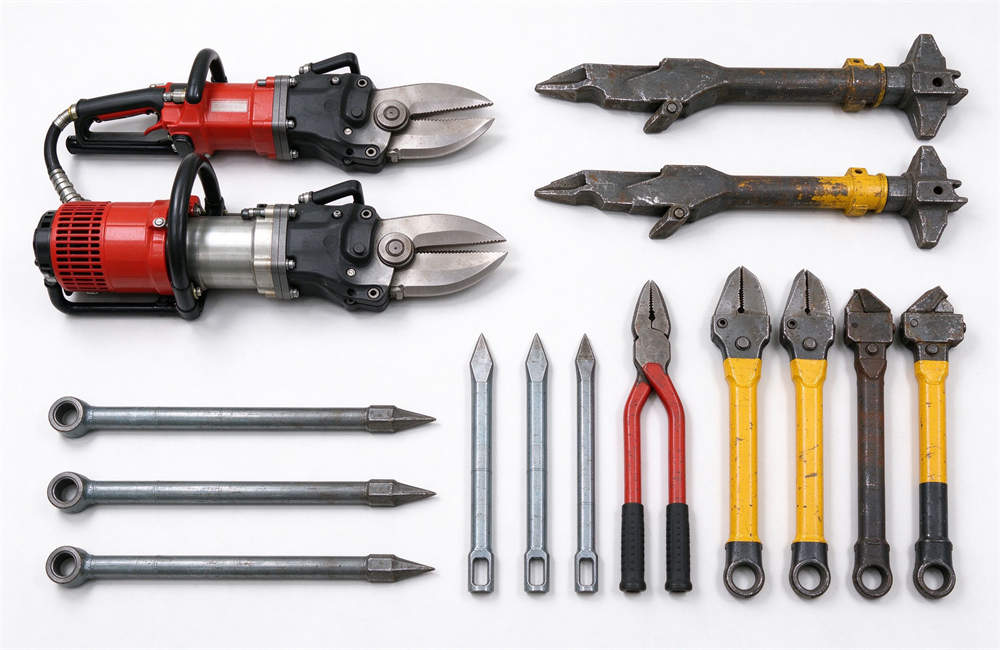
Extrication tools: hydraulic cutters, pry bars, wrenches.
Most serious highway crashes happen at night. Without emergency scene lighting, responders are working in the dark with headlights and flashlights — which is how people get hurt. A proper scene lighting setup changes everything.
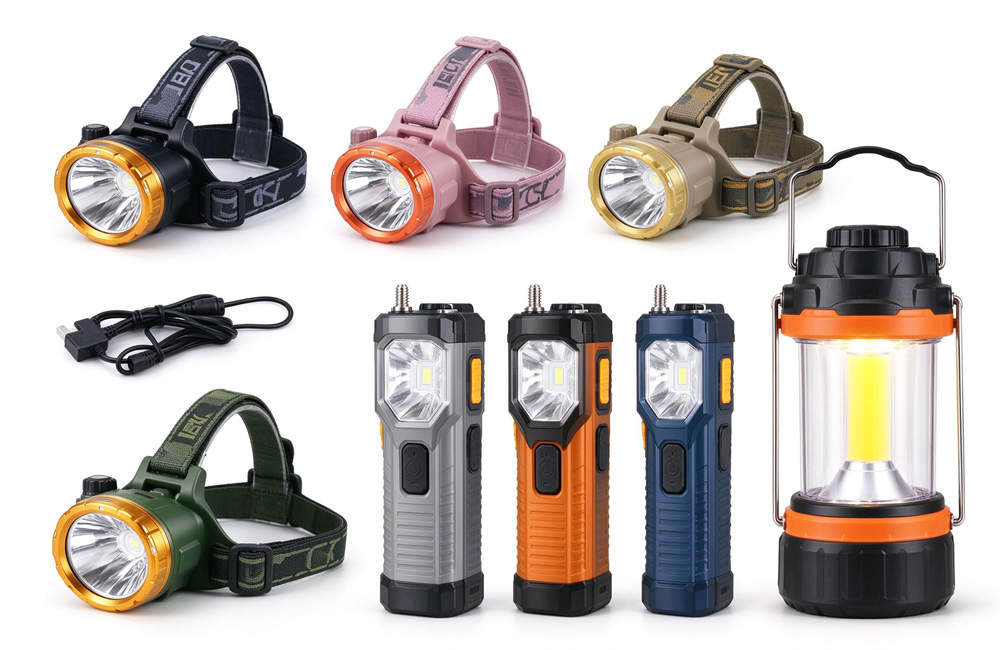
LED headlamps and work lights family.
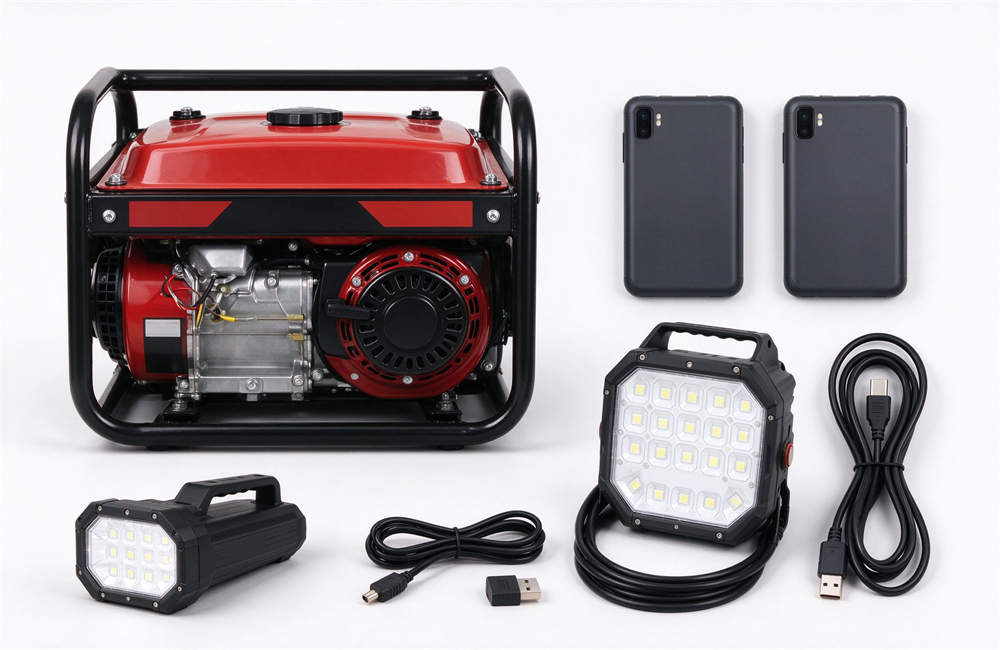
For departments that don't have a truck-mounted light tower, portable options:
Portable light towers. Towable or trailer-mounted LED towers that run on a small generator. 360° coverage, 10+ feet tall, runs all night on a tank of gas.
Scene work lights. Rechargeable LED work lights on stands, 5000+ lumens each. Set up 4-6 around the scene for shadow-free lighting.
Helmet and hand lights. Every responder has a helmet-mounted LED light and a handheld flashlight. The headlamp leaves your hands free for extrication.
We supply portable emergency lighting — work lights, headlamps, and hand lights — in bulk for department resupply. The big light towers we can source through partners, but the personal lighting we stock on the shelf.
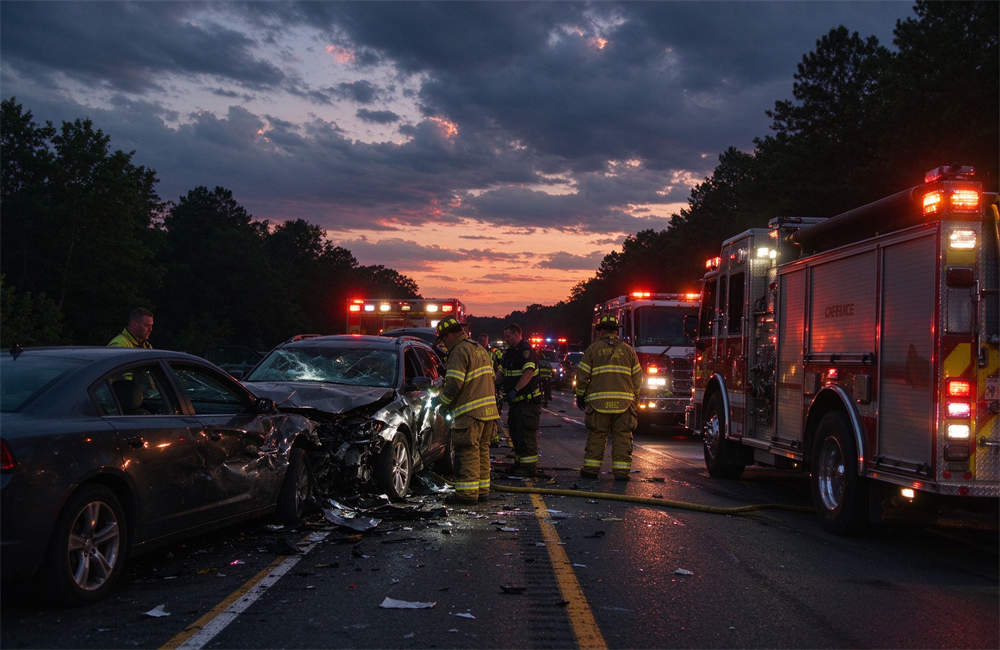
Dusk crash scene with fire truck lights flashing.
Set up work lights at four points around the scene for shadow-free illumination:
Point 1: Upstream (traffic control side). Lights the cone taper and oncoming traffic approach.
Point 2: Downstream (patient care side). Lights the patient loading area and ambulance.
Point 3: Left shoulder. Lights the extrication side of the vehicle.
Point 4: Right shoulder. Lights the driver's side and command post.
Four lights at 5000+ lumens each eliminate shadows in the vehicle cabin — which is where extrication happens. One light from one direction creates deep shadows. Cross-lighting from all four corners puts light everywhere it's needed.
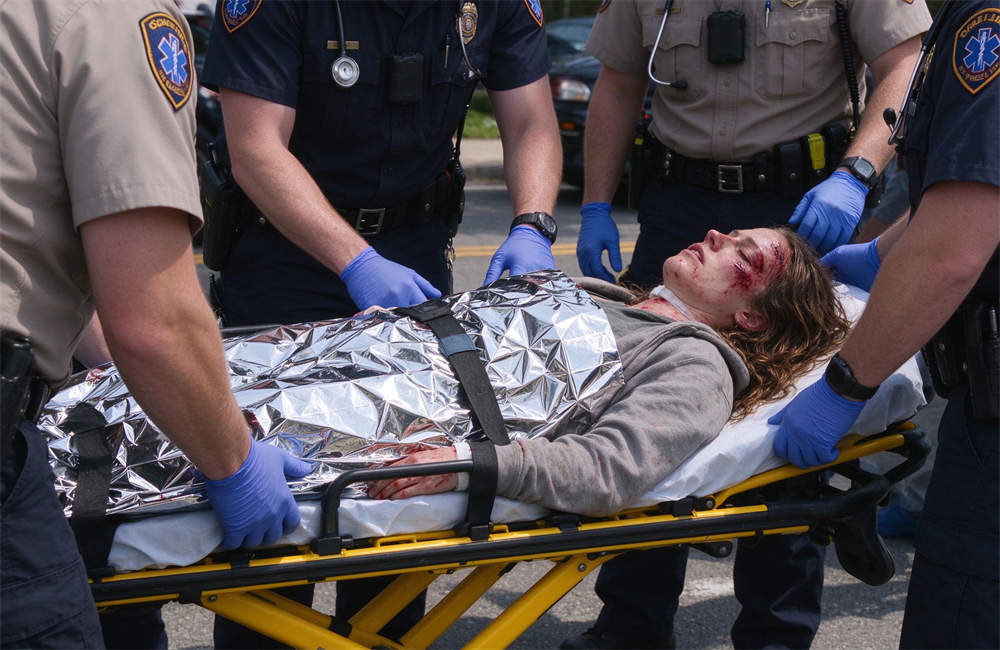
Victim covered with emergency blanket on stretcher.
On a multi-vehicle crash, patients come in all conditions. Triage happens fast, on the side of the road, with limited gear. Every rescue truck should carry basic patient care supplies: triage tags for color-coded sorting, trauma dressings and hemostatic gauze for major bleeding (the #1 preventable death in trauma), airway adjuncts like oral airways and bag-valve masks, cervical collars for spinal immobilization, and blankets for warmth and shock patients.
We supply the trauma dressing and blanket side of patient care. The emergency first aid kit we build for rescue squads includes hemostatic gauze, trauma dressings, and the basic supplies that go on every truck. Airway and spinal equipment is medical-grade and purchased through medical suppliers — we focus on the trauma and warmth side.
On a multi-patient crash, the START triage method (Simple Triage and Rapid Treatment) sorts patients in under 60 seconds each. Every responder should know this by heart.
|
Step |
Question |
If YES |
If NO |
|
1 |
Can they walk? |
GREEN (minor) |
Go to step 2 |
|
2 |
Are they breathing? |
Go to step 3 |
Open airway → still not breathing = BLACK (expectant) |
|
3 |
Breathing rate over 30/min? |
RED (immediate) |
Go to step 4 |
|
4 |
Radial pulse present + alert? |
YELLOW (delayed) |
RED (immediate) |
We supply START triage tags (red/yellow/green/black) in bulk boxes of 50, along with folding rescue stretchers and trauma dressings for complete extrication kits.
Once a patient is triaged, they need to get from the car to the ambulance. We supply folding rescue stretchers for extrication and patient transport in four configurations. An aluminum folding stretcher (185×50cm, 600D PVC, folds in half or quarters) is the workhorse for flat ground and standard extrication, with a 159 kg weight rating. A stair rescue stretcher with tracks lets one person go downstairs and two go upstairs, for stairs, embankments, and overpasses. A motorized stair stretcher with a 300W motor and lithium battery handles heavy patients and long stair evacuations. A flexible pole stretcher collapses into narrow spaces for confined-space work.
For highway responses, the folding stretcher is the workhorse — it goes on every truck, gets used on every call, and folds up small when not needed. We stock these in carton quantities for department resupply.
Shock patients get cold fast. They're sitting on the pavement, in their seatbelt, possibly injured, possibly in shock. A wool blanket over the shoulders does more than keep them warm — it covers the mess, gives them privacy, and reduces anxiety.
For highway response, we recommend wool blankets for trauma patients over mylar — mylar is crinkly, loud, and makes anxious patients more anxious. A 3.5lb wool blanket is warm, quiet, and doubles as a ground cover if someone needs to be laid down. We supply these in carton quantities for truck resupply.
In summer, the same logic flips — crash victims in hot cars overheat fast. Cooling towels and bottled water go on every truck, right next to the blankets. You need both on the same truck because you don't know the weather when the call comes.
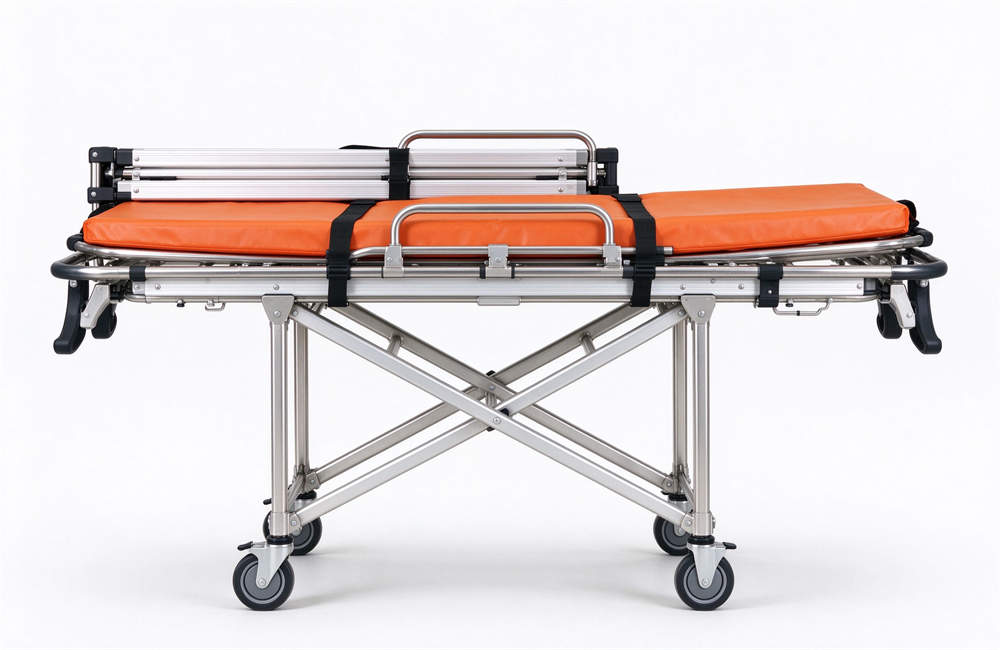
Rescue stretcher with orange mattress.
On a highway scene, things happen fast and people get spread out. Every responder needs a radio, and every scene needs accountability — who's on scene, where they are, and when they went in.
We supply the hand crank emergency radio side of communications — portable, battery-free, works when the power is out. For full incident command radio systems, that's a specialized procurement. But every rescue truck should have at least one battery-free backup radio that works when the primary dies.
Accountability tools: incident command vests (different colors for command, operations, triage), clipboard with accountability roster, and a whiteboard to track who's where. Low-tech, but it works when the radios are overwhelmed.
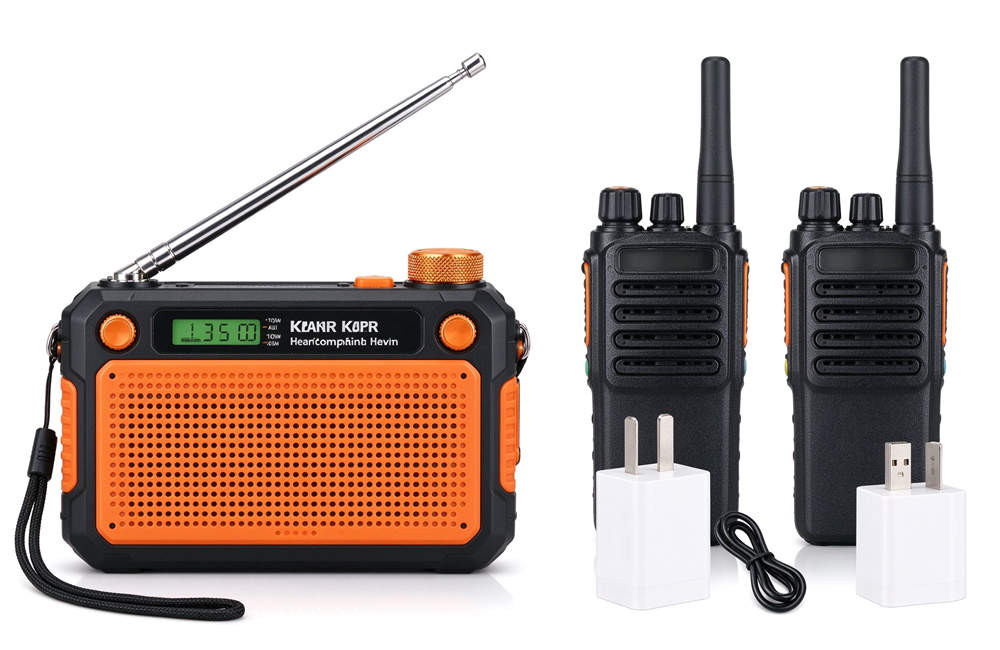
Emergency radio and walkie talkie communication gear.
When a pileup involves 10+ patients, the incident stops being a single-truck response and becomes a mass casualty incident (MCI). Every department should have an MCI bag or cache that's not on a single truck — it's staged at the station and deployed when the call comes.
What's in an MCI cache:
- 50 triage tags (red, yellow, green, black)
- 25 trauma dressings and hemostatic gauze
- 20 wool blankets
- 10 cervical collars
- Incident command vests (5 colors)
- Scene tape and traffic cones (10 cones)
- Portable lights (4 work lights)
We build custom MCI caches to your department's size. A small volunteer squad needs one cache. A highway department in a mountain pass might need three, staged at different response points.
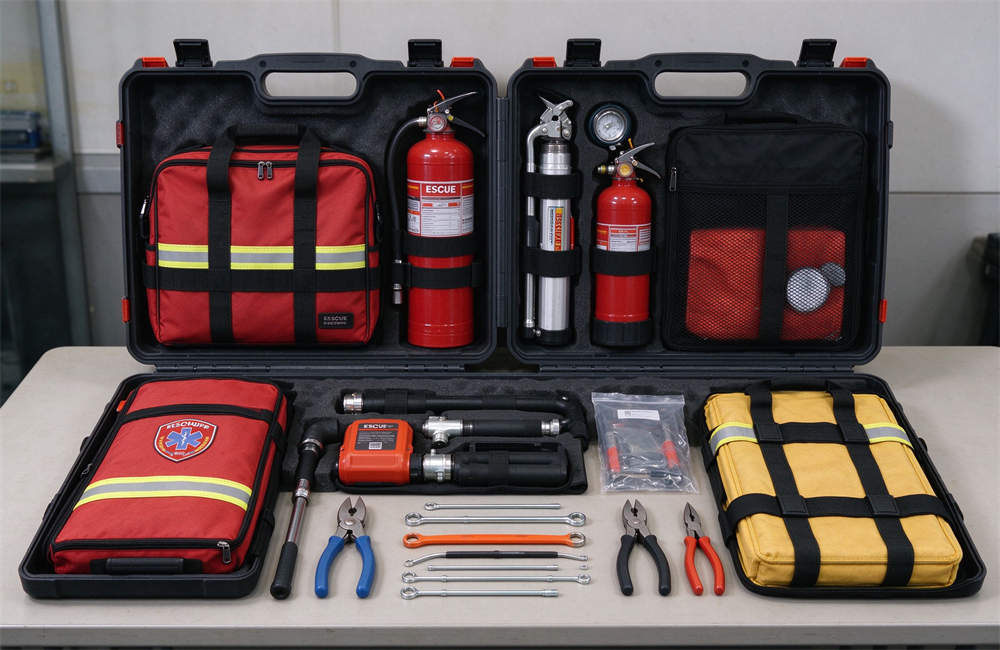
Open rescue equipment case with tools and supplies.
Outfitting a rescue truck for highway response is a real investment, but the life-safety return is enormous. Here's a rough starting point for a single rescue truck:
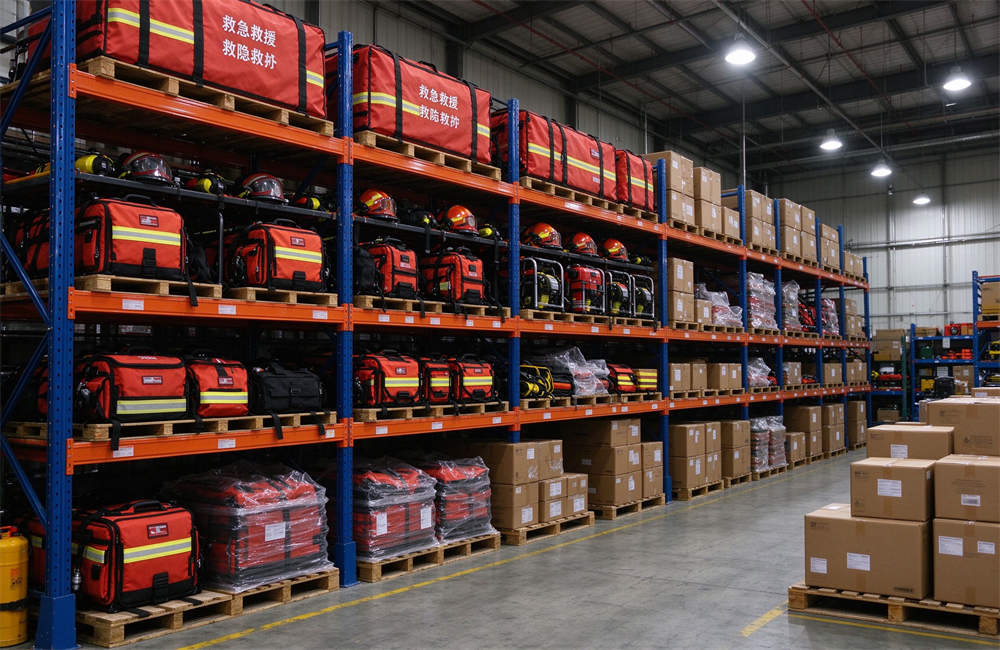
Warehouse: rescue equipment on organized shelves.
|
Category |
Quantity |
Estimated Cost |
|
High-visibility vests (Class 3) |
6 |
$300 |
|
Traffic cones (28") |
10 |
$200 |
|
LED road flares |
12 |
$360 |
|
Hand extrication tools |
1 set |
$500 |
|
Wool blankets |
12 |
$140 |
|
Trauma dressings / first aid kit |
1 |
$400 |
|
Portable work lights |
4 |
$600 |
|
Hand crank backup radio |
2 |
$100 |
Total: around $2,600 per truck for basic rescue equipment wholesale. Compare that to the cost of a single responder injury on scene, and this is the cheapest insurance a department can buy.
As a manufacturer supplying fire departments and rescue teams worldwide, here's what you can expect when you work with us:
First-responder grade gear. The gear on a rescue truck has to work when you need it. We supply equipment built for first responders — vests, helmets, stretchers, lights — tested for real emergency conditions.
Certified PPE, full documentation. All our PPE meets ANSI, NFPA, EN397 standards, with the certification document included with every order. We set up annual resupply contracts so your procurement team has everything they need for inspections and audits.
Department-level resupply pricing. Departments resupply every year. We ship in case and pallet quantities at department pricing, with annual contracts that make budgeting easy.
Fast shipping for core items. We stock core items — vests, blankets, cones, headlamps — and ship within 48 hours. Specialized equipment (motorized stretchers, light towers) has a 2-3 week lead time, and we'll tell you that upfront.
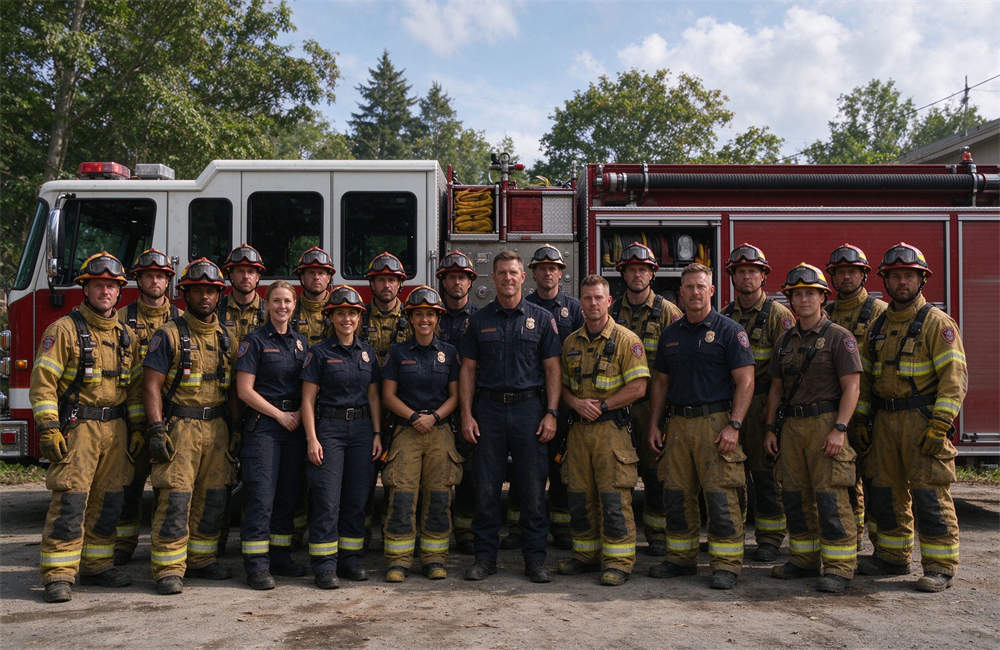
Rescue team group photo in front of fire truck.
Tip 1: Plan traffic control properly. For highway response, we recommend minimum 10 cones per truck, set up in a proper taper at the correct distance for your speed limit. We supply traffic cones and high-visibility vests in bulk for department-wide resupply.
Tip 2: Have backup lighting. Flashlights die. We recommend at least one portable light setup per station, plus LED headlamps for every crew member. We supply a full range of emergency lighting equipment.
Tip 3: Don't forget patient comfort. Trauma patients get cold. We recommend keeping wool blankets on every truck — they're warm, quiet, and double as ground cover. We supply these in carton quantities for truck resupply.
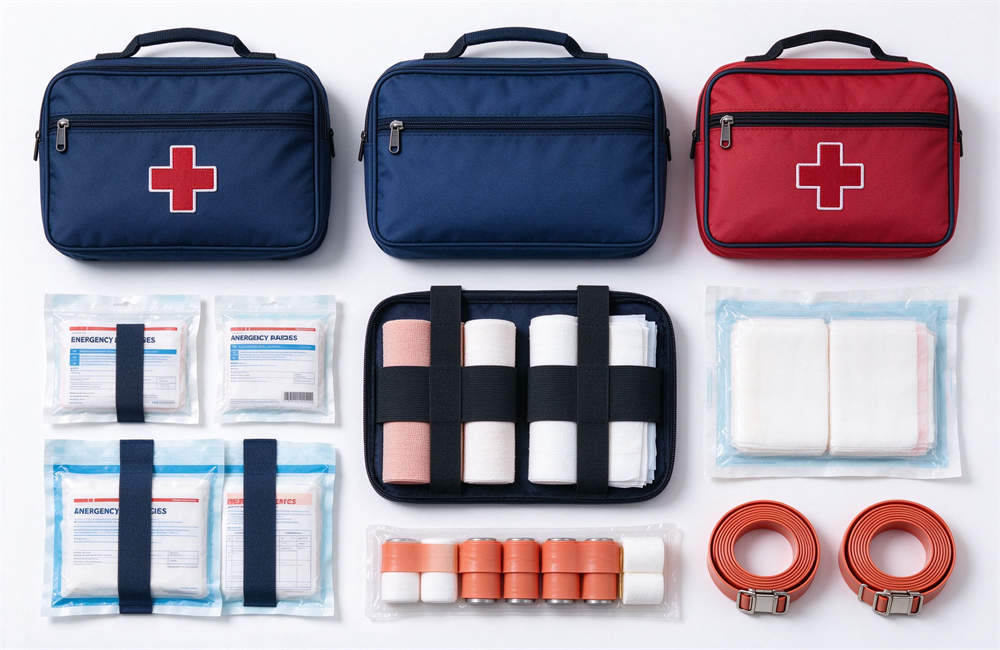
First aid kits in multiple sizes with trauma supplies.
Minimum 10, for a proper taper at highway speed. At 55 mph, the taper needs to be about 250 feet long — that's 1 cone every 25 feet. If you only carry 4, you're not protecting anyone.
Class 3 has more reflective material and longer coverage (long sleeves or a vest with belt) for higher speeds and lower light. Highway work at 55+ mph at night is Class 3 territory. Class 2 is for parking lots and construction zones.
That's a truck and budget decision beyond our scope. We supply the hand tools and PPE that go with the hydraulic equipment. If you're a small volunteer squad, vehicle rescue tools and glass breakers cover 80% of crashes.
Check expiration dates every 6 months. Hemostatic gauze has a 3-year shelf life. Rotate stock on a regular schedule. This is standard emergency rescue supplies maintenance for any department.
Yes. We ship in pallet quantities for department-wide resupply — vests, blankets, cones, lights, and first aid supplies for the whole fleet. Volume discounts available for multi-year contracts.
Four types: aluminum folding stretchers (flat ground), stair rescue stretchers (tracked, for stairs), motorized stair stretchers (heavy patients), and flexible pole stretchers (confined space). All fold for truck storage, 159 kg weight rating.
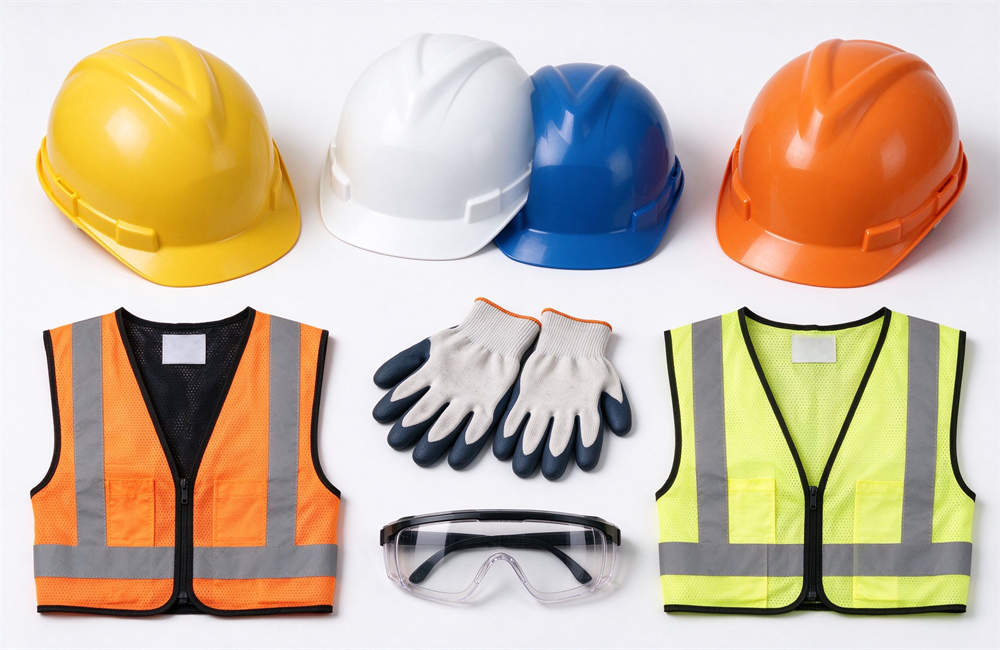
Safety gear family: hard hats, gloves, goggles, vests.
Stocking up on highway crash emergency supplies for your department?
We work with fire departments, rescue squads, and highway patrol worldwide.
 |

|
Bulk highway rescue and emergency supplies from a China-based manufacturer. ANSI / NFPA / EN397 certified. Shipping worldwide.
Copyright © Custom Disaster - Relief Bedding: Tents, Sleeping Bags, Blankets All Rights Reserved
the professional team to service !