Categories
latest blog
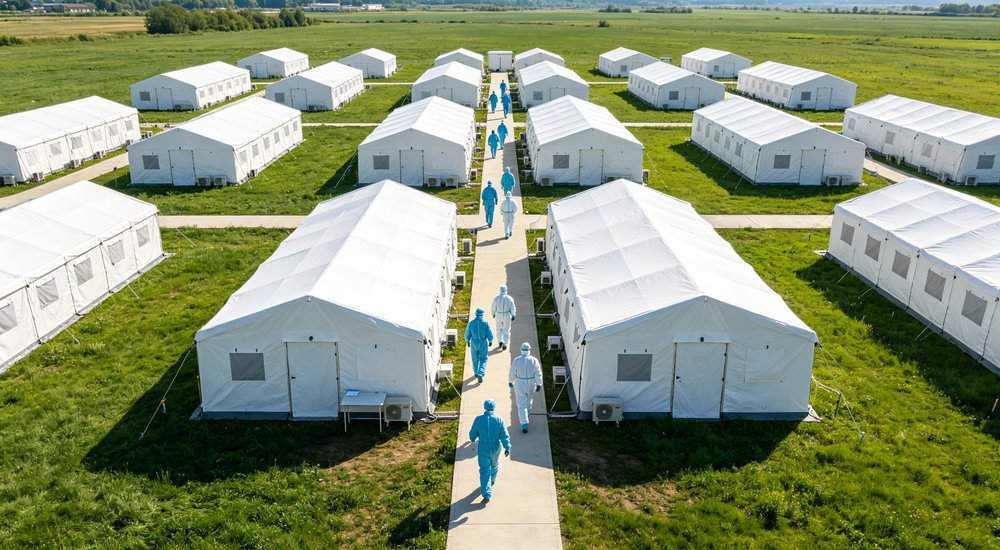
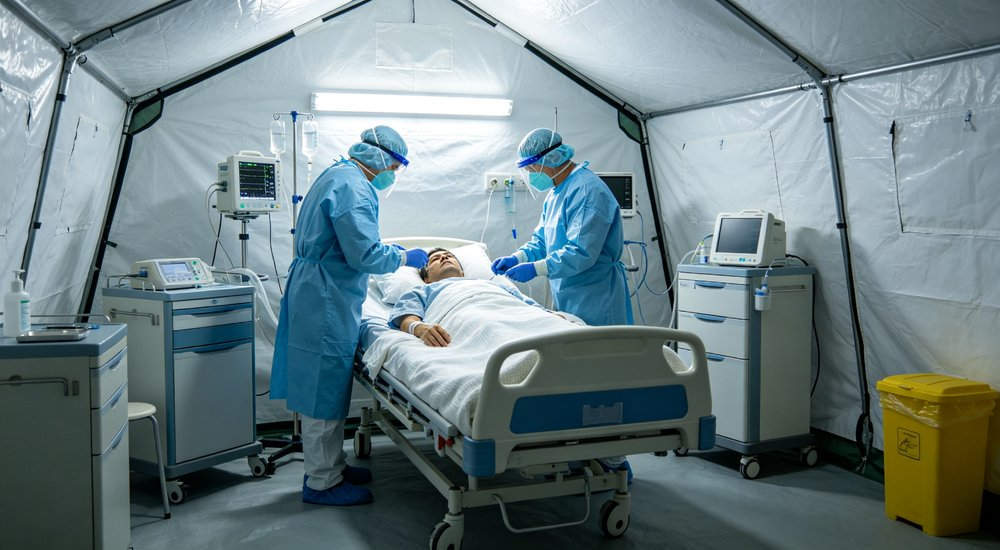
A general emergency tent creates temporary covered space. An inflatable isolation tent must support a defined environmental-control system — airflow, pressure, filtration, monitoring, alarms, power. The difference is NOT a sealed-looking cover or an added fan. As a direct isolation tent manufacturer, with 20 years of experience we supply these for medical quarantine, infection control, and field hospitals.
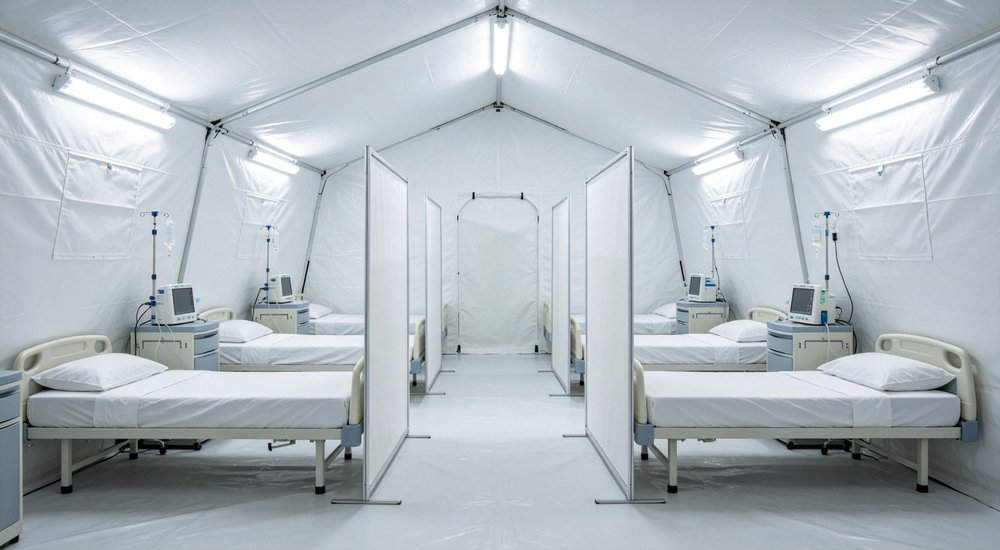
Isolation units maintain 5-15 Pa pressure differential, with HEPA filtration at 99.97% efficiency (0.3μm) and 12-20 air changes per hour.
Short answer: Choose a general emergency tent for shelter, accommodation, work, or basic medical support. Consider an isolation direction ONLY when you can define airflow, pressure differential, air changes, filtration, monitoring, alarms, power, and validation for the complete configuration. Isolation tent prices: $1,500 basic shell to $6,000+ complete negative pressure system.
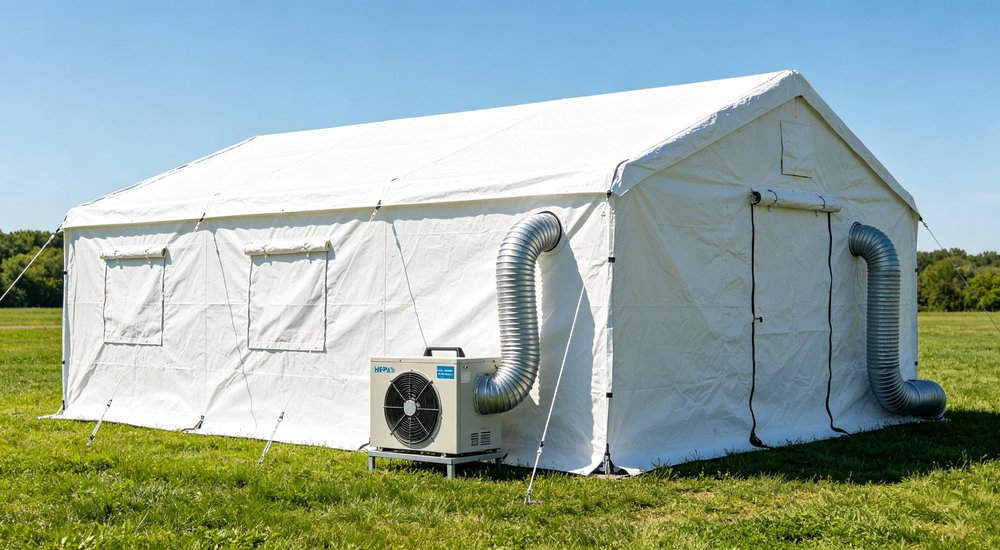
Negative pressure isolation tents require 12-15 air changes per hour (ACH) for patient rooms. HEPA H13 filtration removes 99.97% of 0.3μm particles. Pressure differential should be -15 to -25 Pa relative to adjacent areas. Confirm these specs with the manufacturer for your intended use.
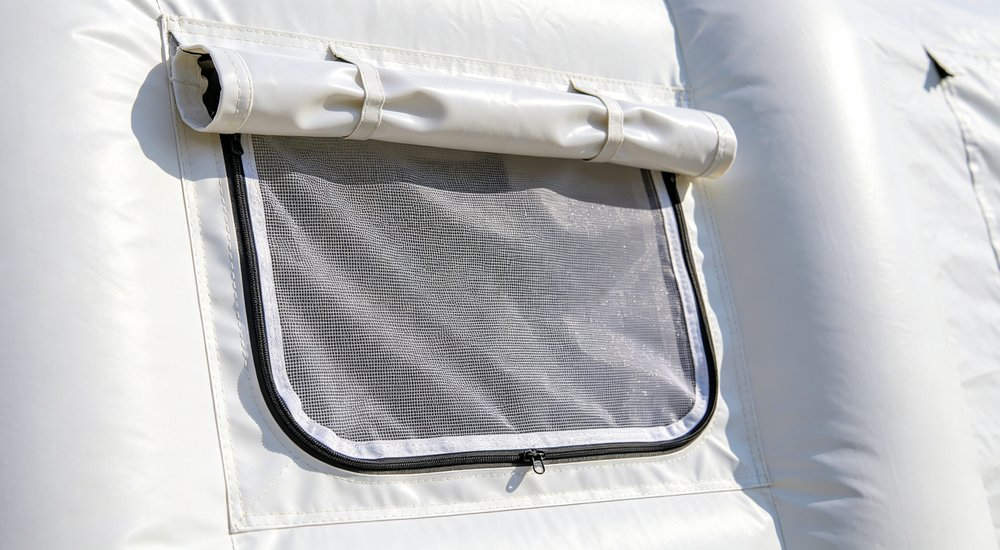
Isolation tents typically feature an airlock entry with two doors (staff entry and patient entry) that cannot be opened simultaneously. Pass-through windows (30×40cm) allow supplies to be transferred without breaking containment. Some models include built-in glove ports for external monitoring.
HEPA H13 filters typically last 6-12 months under normal use, or 3-6 months in high-particulate environments. Filter replacement should be done by trained staff wearing appropriate PPE. Confirm filter availability, replacement cost, and whether the unit has filter change indicators.
Isolation tents require uninterrupted power for ventilation — a backup generator or UPS is essential. Pressure alarms alert staff if negative pressure is lost. Some systems include battery backup for alarms. Confirm power consumption (typically 1-3 kW) and runtime for backup systems.
Technical details: seam sealing uses HF-welded seams with additional tape for airtight integrity. Staff PPE entry follows a defined donning sequence in the airlock. Patient monitoring ports allow vital sign checks without entry. Waste disposal uses sealed biohazard bags removed through a dedicated pass-through.
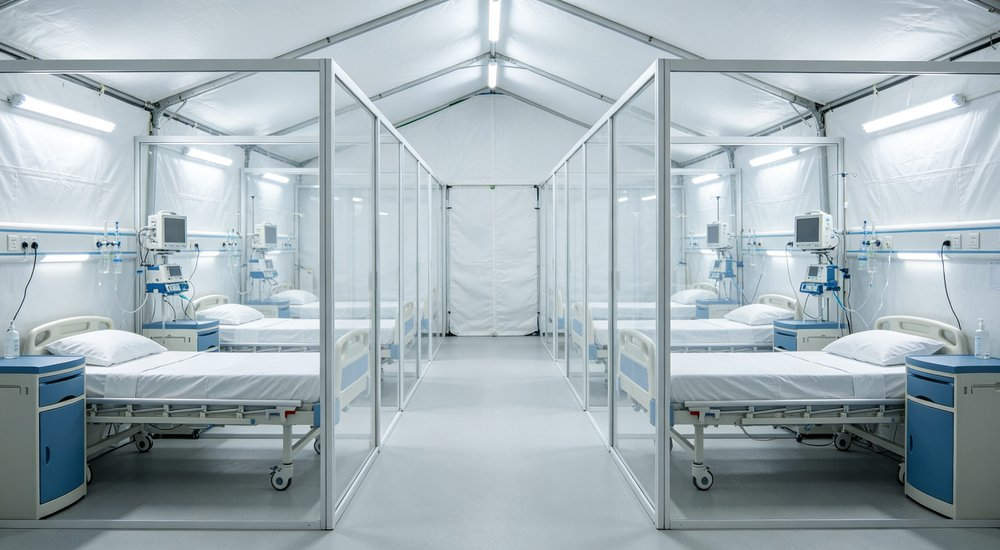
Additional search terms buyers use: pandemic isolation tent. These terms help match your specific operational requirements with the right product configuration.
Buyers often search for these related terms: inflatable isolation shelter. Understanding these variations helps you match the right product to your operational requirements.
|
Feature |
General Emergency Tent |
Isolation Support Tent |
|
Primary purpose |
Temporary covered space |
Controlled space + environmental system |
|
Air movement |
Natural / basic ventilation |
Defined airflow + pressure control |
|
Pressure |
None (ambient) |
5-15 Pa positive or negative |
|
Filtration |
Optional / none |
HEPA H13/H14 (99.97%+) |
|
Air changes |
4-6 ACH (comfort) |
12-20 ACH (contaminated zone) |
|
Monitoring |
None |
Pressure gauge + alarms |
|
Power needed |
Lighting only (optional) |
1.5-3kW continuous + backup |
|
Typical size |
12-30m² |
12-20m² + 2-4m² anteroom |
|
Capacity |
6-20 people |
2-4 beds |
|
Price range |
$800-$3,500 |
$1,500-$6,000+ |
|
Setup time |
15-30 min |
30-60 min (with system) |
|
Validation |
Shelter docs only |
Complete system commissioning |
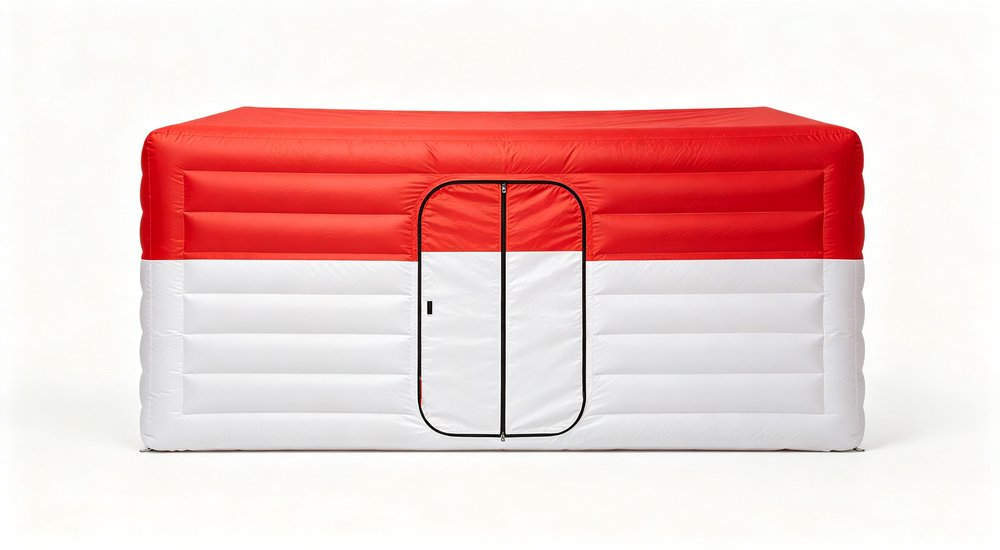
The inflatable shell provides air-beam support, walls, openings, floor, and interfaces. It creates the physical boundary where the system operates. It does NOT create isolation by itself.
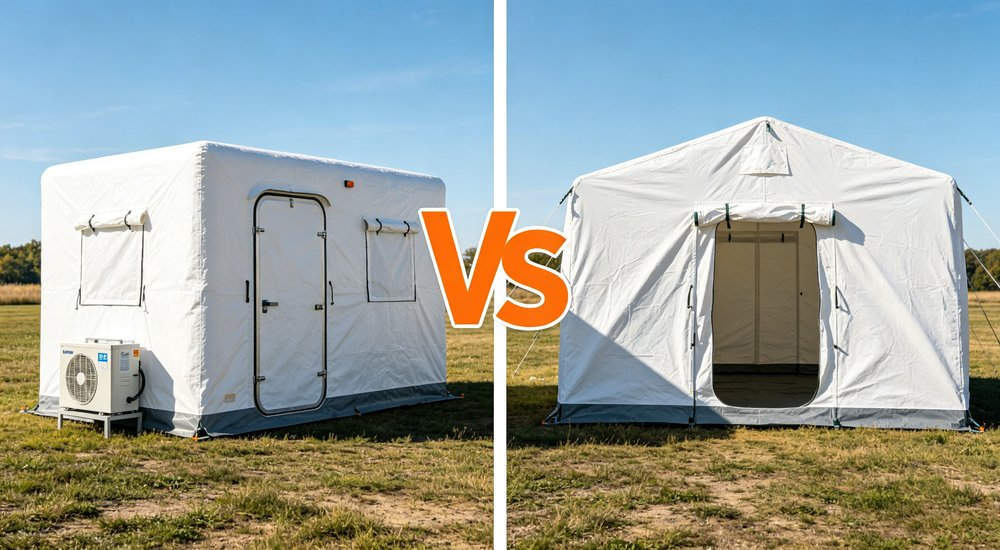
The isolation tent system includes: air supply or extraction, HEPA filters, ducts, dampers, pressure sensors, displays, alarms, controls, power, and backup. Exact components depend on your project target.
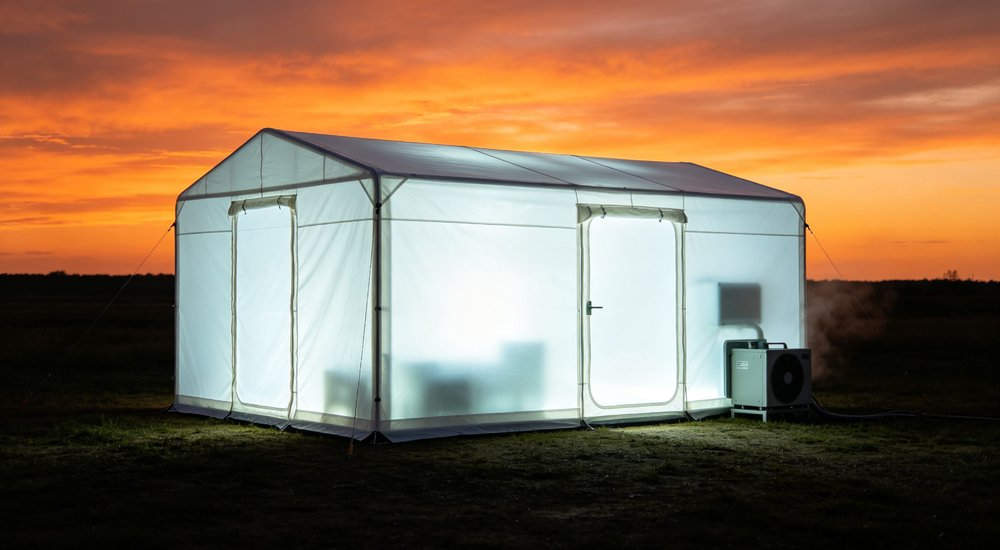
A 12-20m² portable isolation tent typically accommodates 2-4 beds, with a 2-4m² anteroom for donning/doffing PPE.
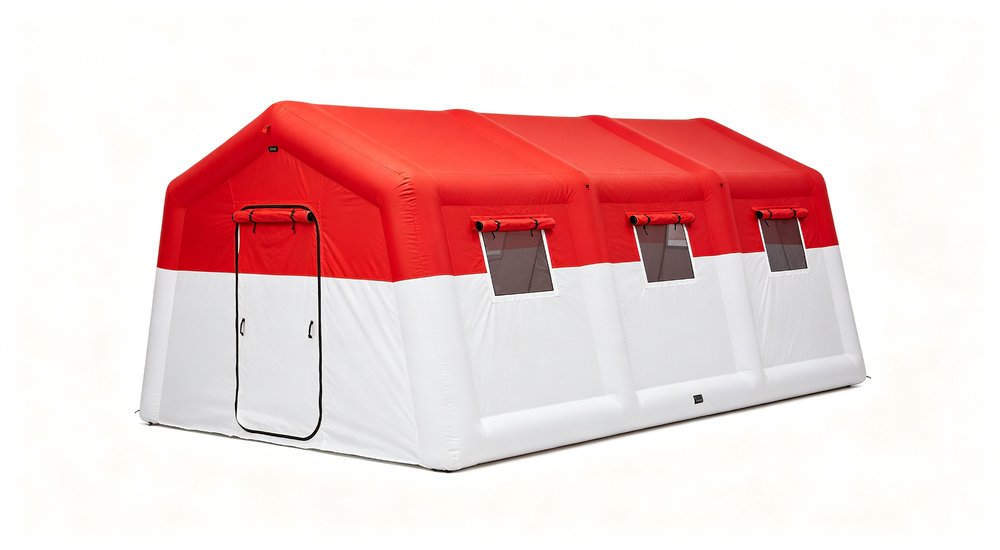
Check the number, position, size, and closure method of duct interfaces. A correctly sized shelter may still fail when interfaces are insufficient, blocked by equipment, or incompatible.
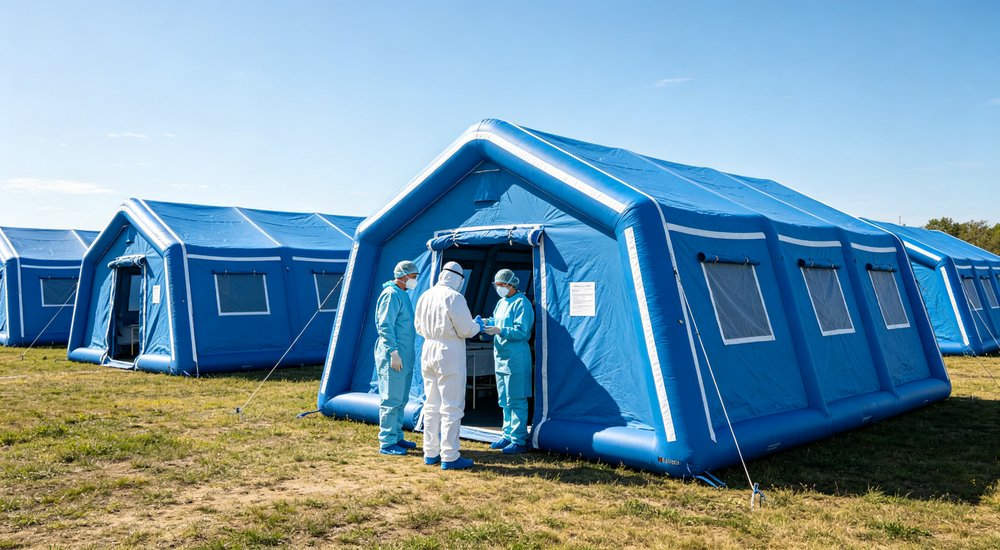
Ask the supplier to list: shell, standard accessories, environmental-control equipment, optional items, site-supplied work — separately. "Complete isolation tent" on one line is not enough.
General emergency space may use ordinary ventilation for comfort. Isolation support needs a stated airflow direction serving the intended room function.
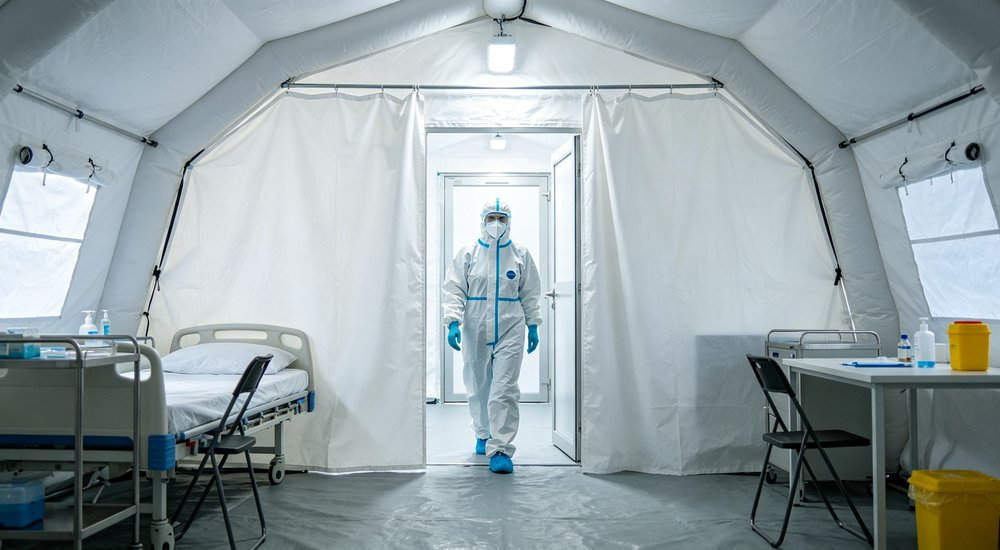
Doors, staff access, patient movement, equipment, ducts, and exhaust position can disturb that direction. A fan added without a layout may move air the wrong way. Power requirements: 1.5-3kW for ventilation and filtration, plus backup for continuous operation.
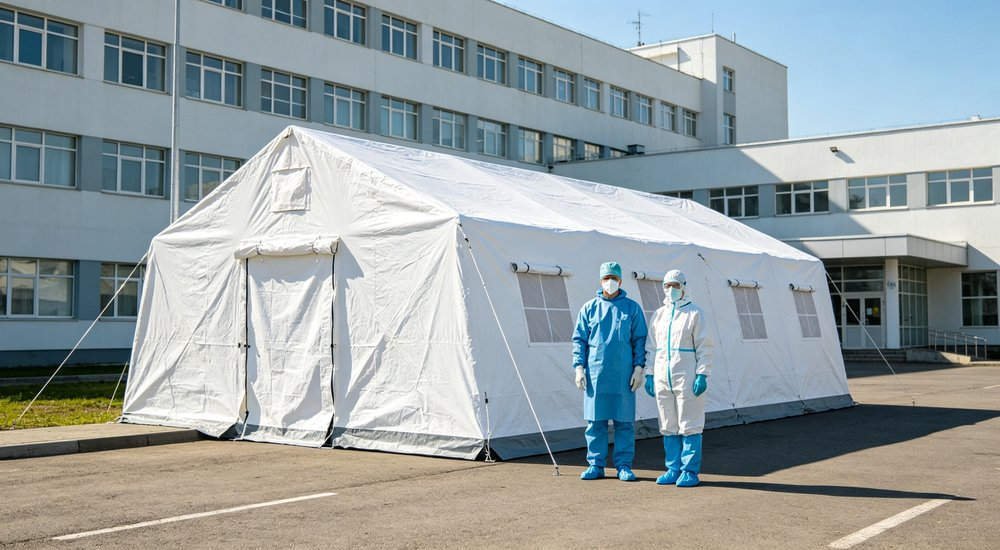
Request a drawing showing: controlled zone, adjacent area, air entry, air exit, doors, routes, major equipment. The airflow plan and shelter plan must describe the same configuration.
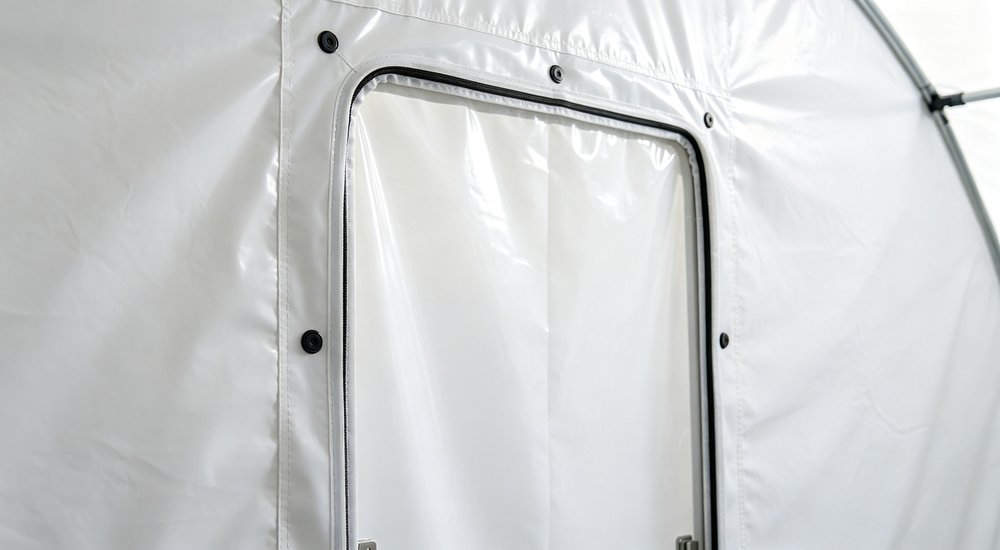
Pressure differential is a measured relationship between the controlled space and a reference area. It is NOT proven by tight fabric, closed doors, or visible wall movement.
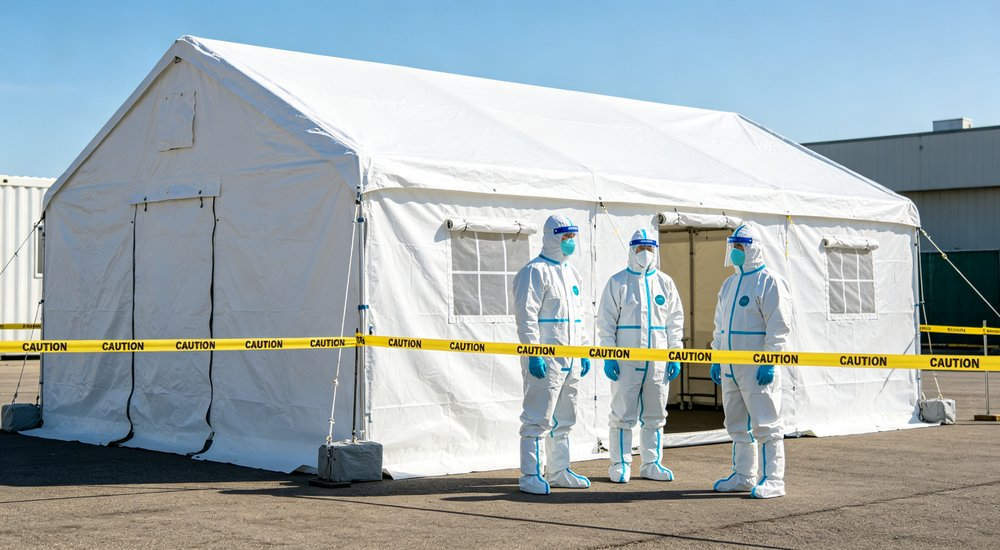
State the intended room function and applicable pressure target (typically 5-15 Pa for negative pressure isolation). The system must balance airflow, leakage, entrance use, filter resistance, and equipment conditions.
The supplier should identify: where pressure is measured, how the reference point is chosen, what happens when the reading leaves range. Do not accept an unsupported universal value.
Air changes describe how the system replaces or removes air from the controlled volume over time. The required rate depends on room function and project criteria.
Contaminated zones: 12-20 ACH. General areas: 6-12 ACH. Internal volume, occupancy, entrance opening, duct losses, filter resistance, temperature, and equipment condition all affect the result.
A fan rating alone does not prove performance inside the erected shelter. Compare clear shelter volume, duct path, filter, and fan as one operating arrangement.
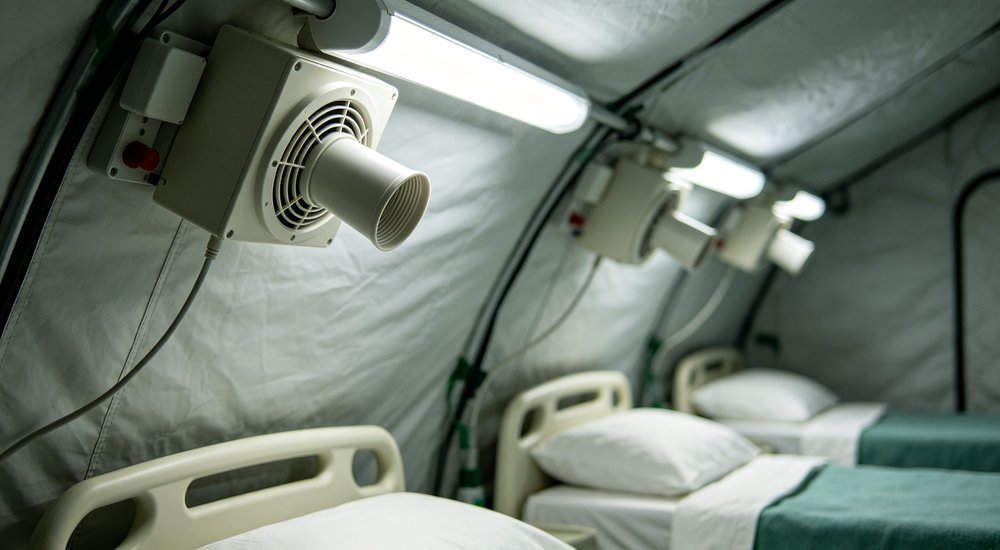
Ask for the calculation basis and complete operating condition. The response should show which shelter volume, filter state, duct arrangement, and equipment setting support the proposal.
Separate modules may support entry, changing, controlled space, staff work, equipment, or transition functions. Connections improve zoning when each module has a clear responsibility. See when modular systems make sense.
Corridors, connector kits, partitions, end walls, doors, ducts, floors, and controls must remain compatible. Connection does NOT prove every module shares the same pressure or airflow condition.

Request the complete layout and operating relationship between modules. There is no universal maximum arrangement.
Filtration may be required for supply air, extracted air, or both. The project must define what the filter is expected to address.
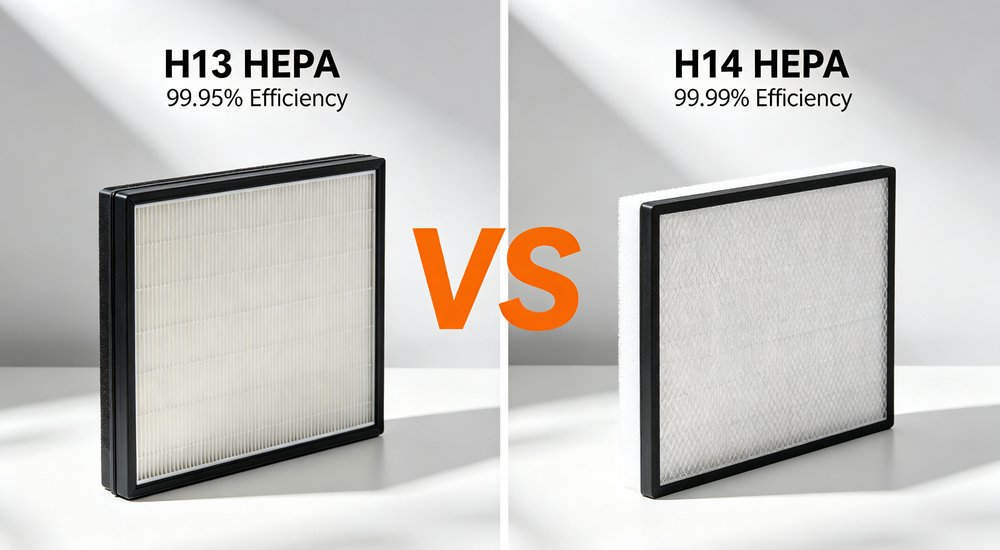
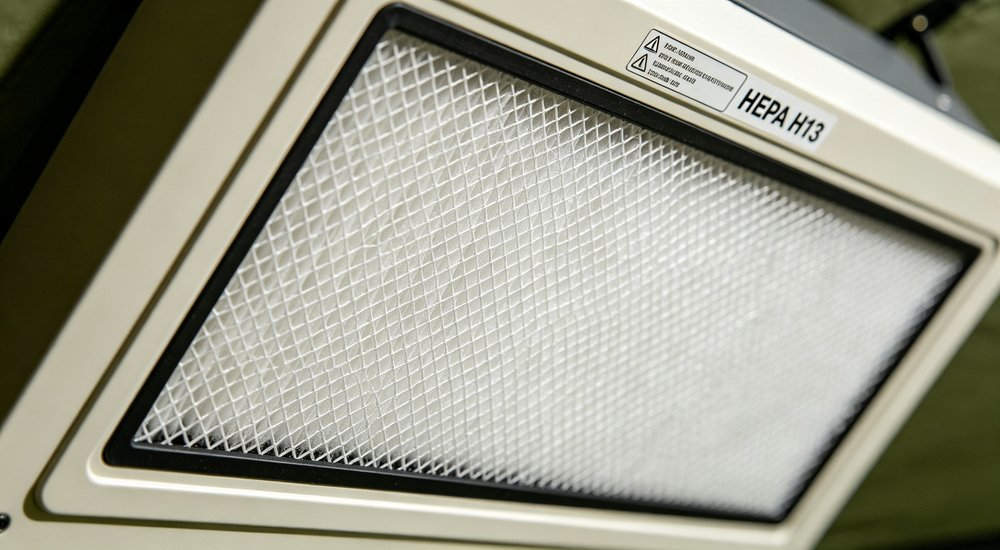
HEPA H13: 99.95% efficiency at 0.3μm. HEPA H14: 99.995%. Filter type, installation, sealing, airflow, pressure loss, replacement, handling, and disposal all matter.
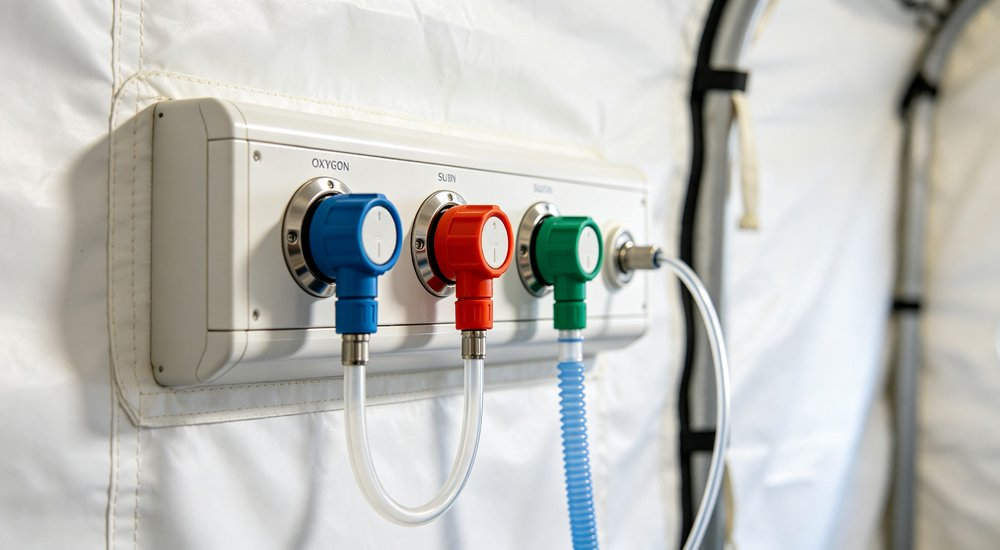
A loose filter name or image does not show how it performs in the complete path. Request configuration-specific filter information and replacement scope. Do not convert a filter spec into a medical or infection-control claim.
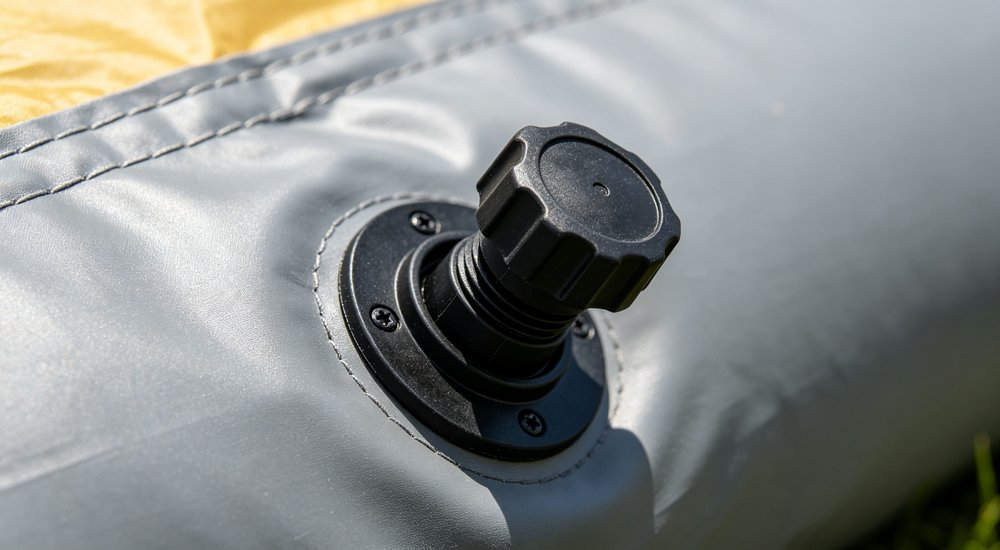
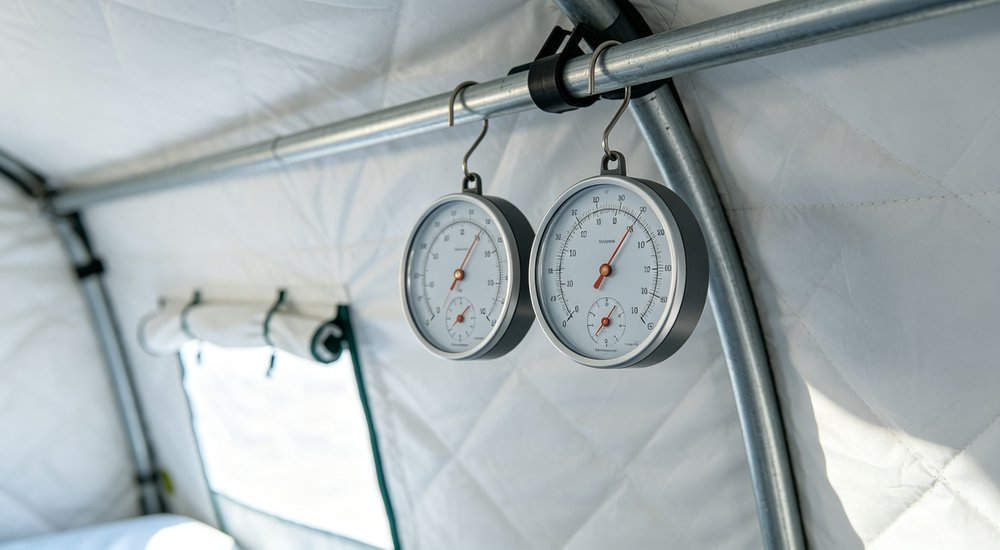
A controlled system needs a way to show its operating condition. Pressure display, airflow indication, filter status, or other monitoring may be relevant.
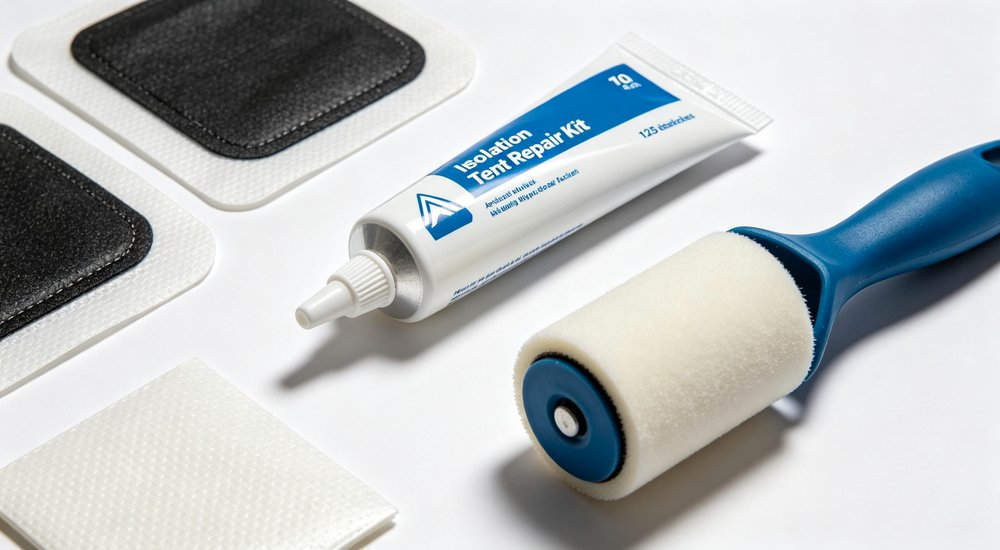
Define: what must be monitored, where displayed, who responds, which condition triggers an alarm. An alarm without a response method does not protect the process.
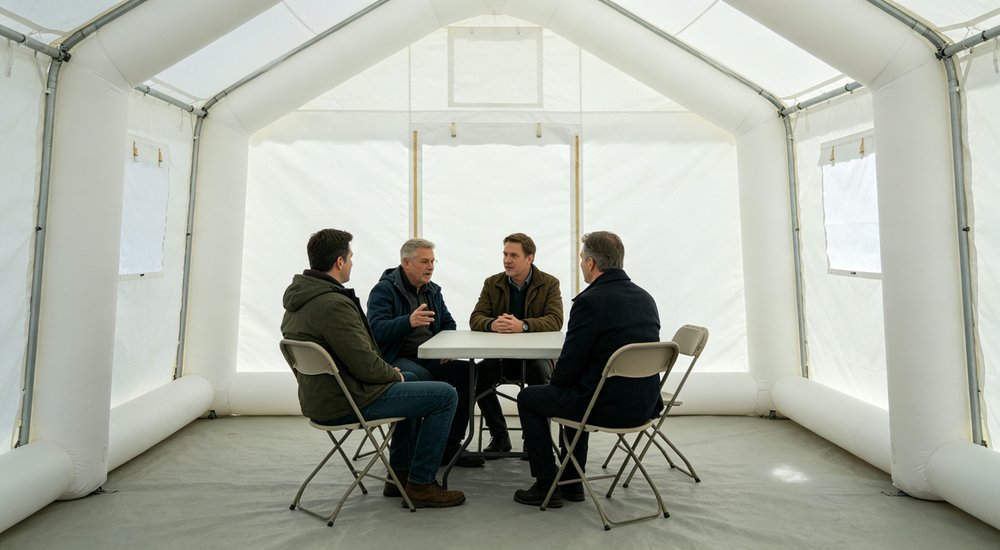
The supplier should state: sensor positions, display range, alarm conditions, power need, available records. These must belong to the offered system.
A general tent remains a shelter during a power outage. An isolation system may lose airflow, pressure control, monitoring, or alarms when powered equipment stops.
List every powered component and its role. State: voltage/source, cable route, distribution, protection, expected duration, backup direction.
If a generator is the only backup, also check: start time, which functions stop during transfer, fuel replenishment, connection method. Backup power must match critical loads, required duration, and site operating steps.
The response should explain what remains functional during an interruption and what action users must take. Do not claim continuous isolation without a verified complete power plan.
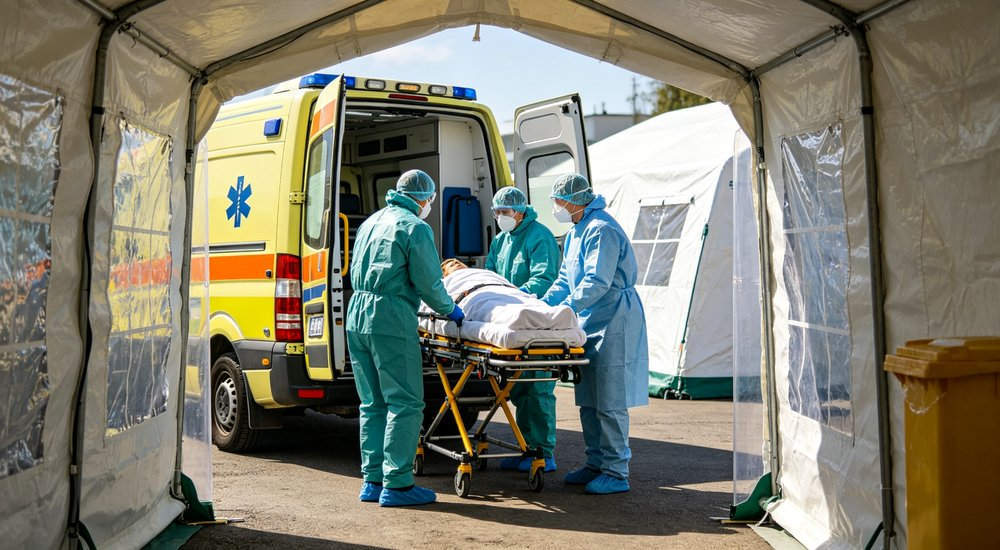
Every door opening changes the relationship between the controlled space and surroundings. Frequent movement, large equipment, stretchers, and simultaneous doors alter system behavior.
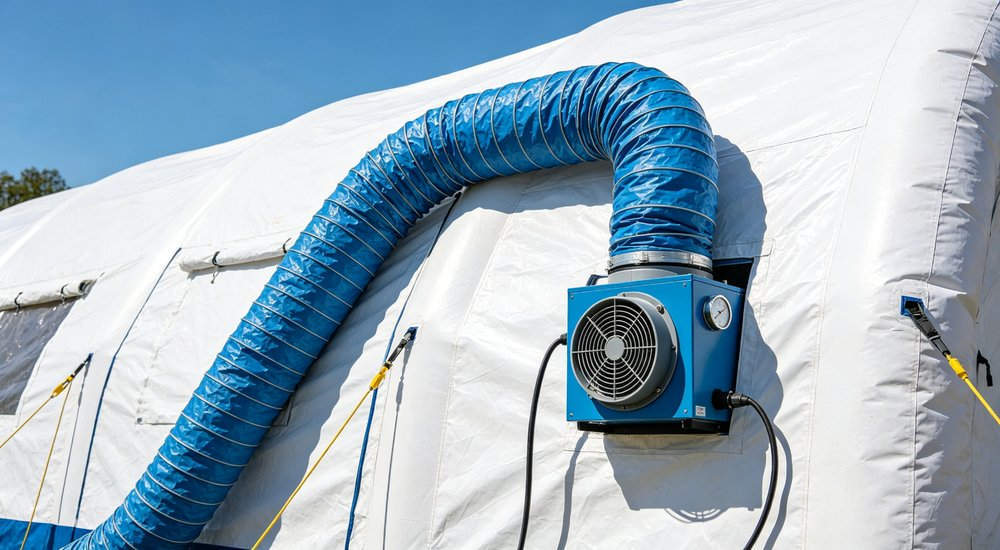
Define entry and exit, staff access, equipment movement, waiting, and next zone. Consider whether an additional transition space (anteroom) is required.
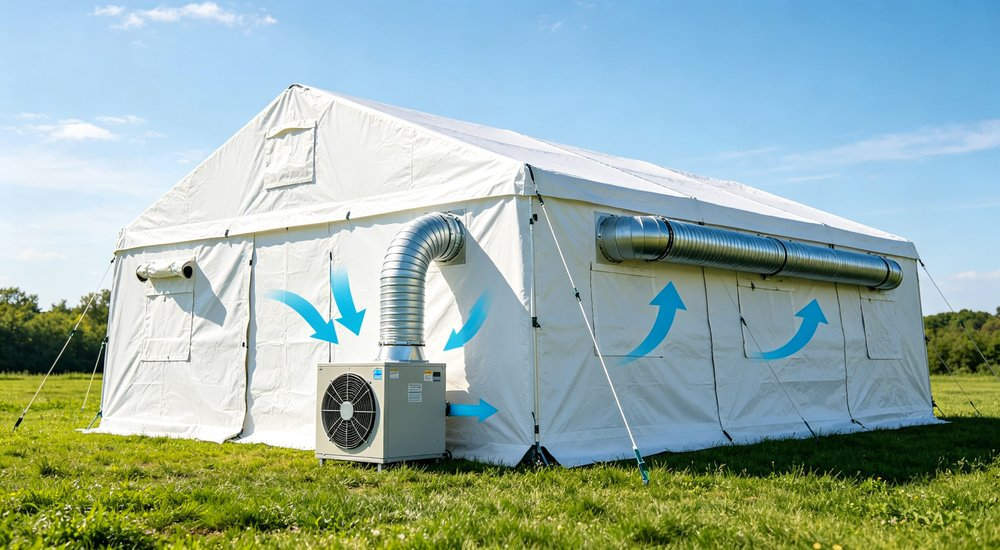
A door may be wide enough for a stretcher but leave too little turning space inside. Users may then keep it open longer than expected. Check clear width, door position, internal route, and equipment turning space together.

Choose a general tent when the task is: weather protection, accommodation, staff support, ordinary waiting, equipment cover, or medical-support space WITHOUT controlled isolation requirements. Start with emergency tent basics.
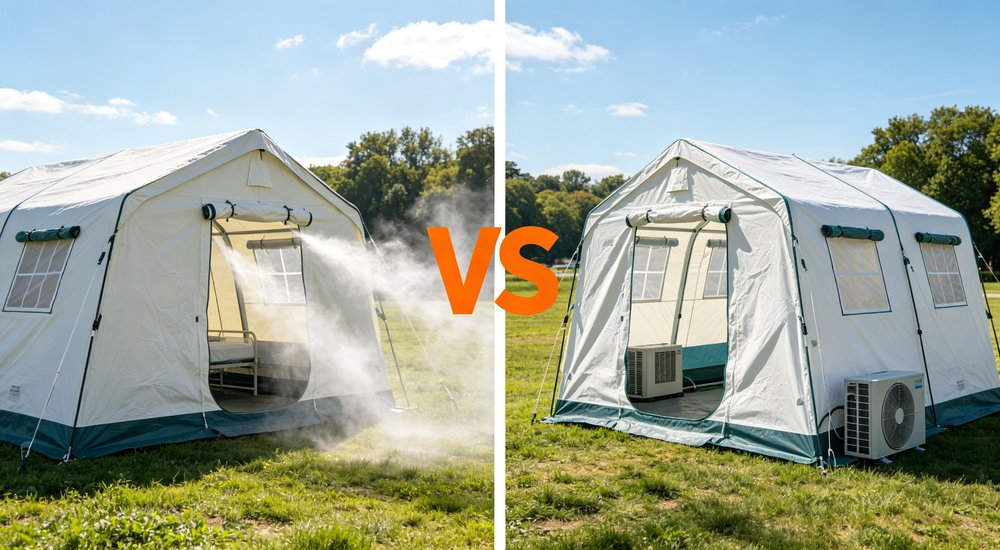
This reduces unnecessary system complexity, utilities, monitoring, maintenance, and training. It also keeps product claims aligned with the actual task.
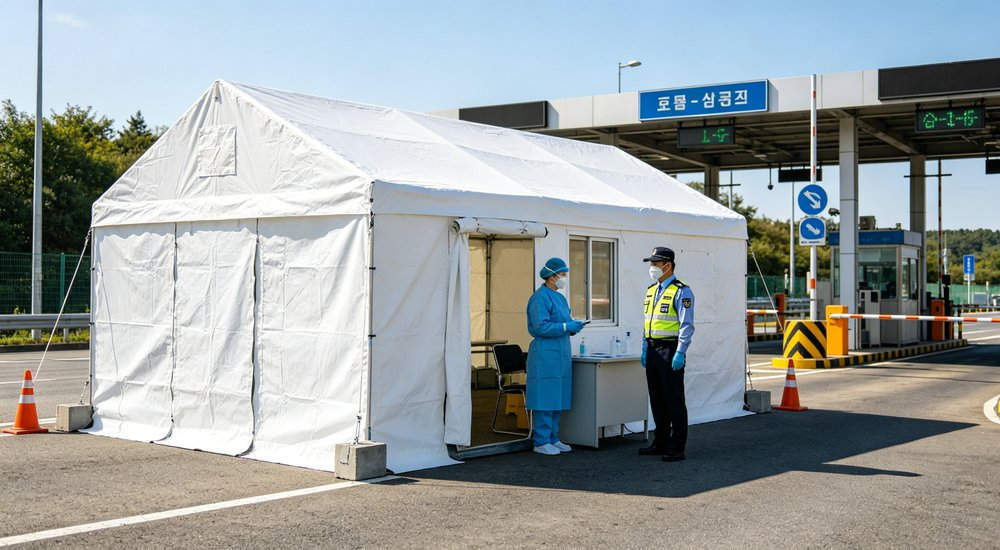
Do not add isolation language merely to make the offer sound more advanced. A simpler configuration is better when it fully solves your defined problem.
When isolation makes sense: defined controlled-room function, airflow/pressure criteria, filtration scope, monitoring, alarms, power, operating method, validation requirement, and staff who can run the system.
Send: room function, occupants, movement, adjacent areas, airflow direction, pressure and ACH criteria, filtration, monitoring, alarms, power, backup, site, weather, duration, documents.
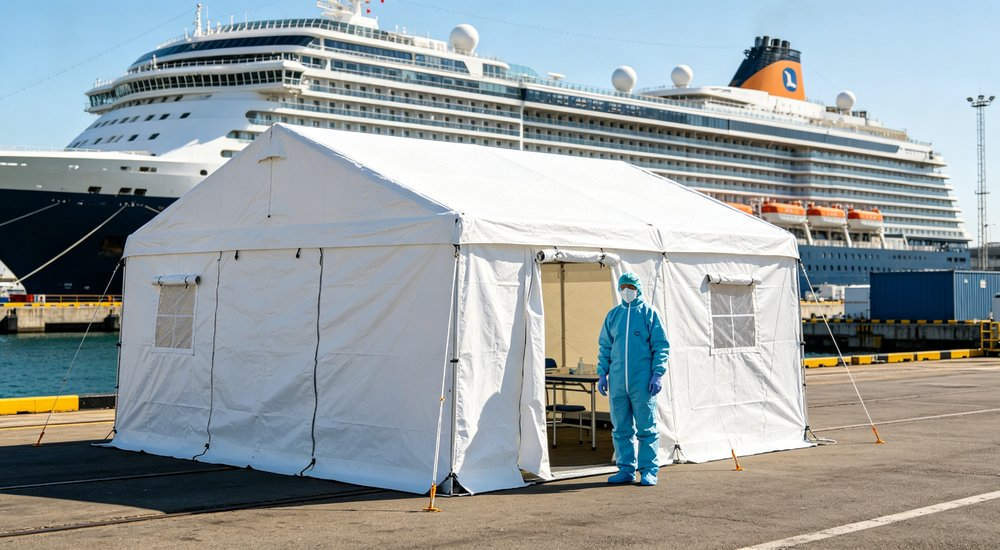
Request: shelter layout, clear volume, air beams, doors, zones, ducts, airflow equipment, filters, sensors, controls, alarms, power, floor, anchoring, packing, maintenance, validation scope. Confirm accessory scope.
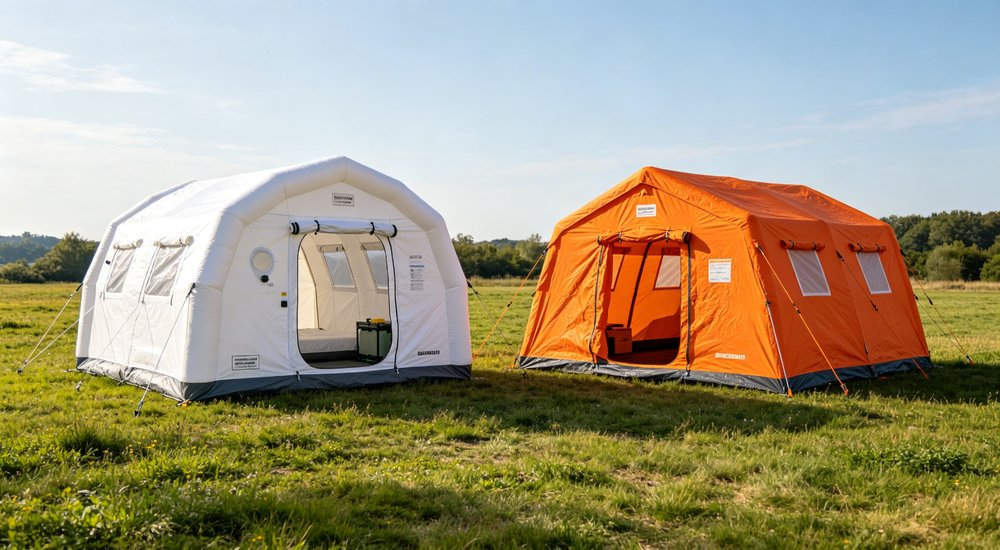
MOQ & lead time: Standard shell: MOQ 1-10 units, 15-30 days. Complete isolation system: MOQ 5+, 30-45 days. Certifications: CE, ISO 9001, CPAI-84, NFPA 701. HEPA filters: EN 1822 / IEST RP-CC001.

Practical test: If the supplier cannot show pressure measurement points, airflow direction, and what happens when the door opens — it is not an isolation system, it is a tent with a fan.
See standard medical tent applications. including pandemic response, infection control, quarantine facility, negative pressure room, and epidemic shelter use cases.
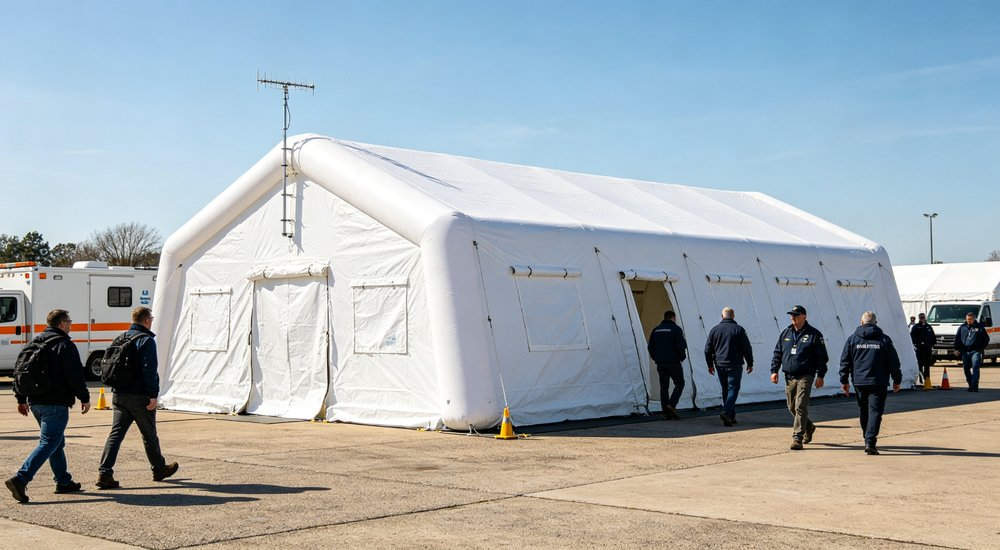
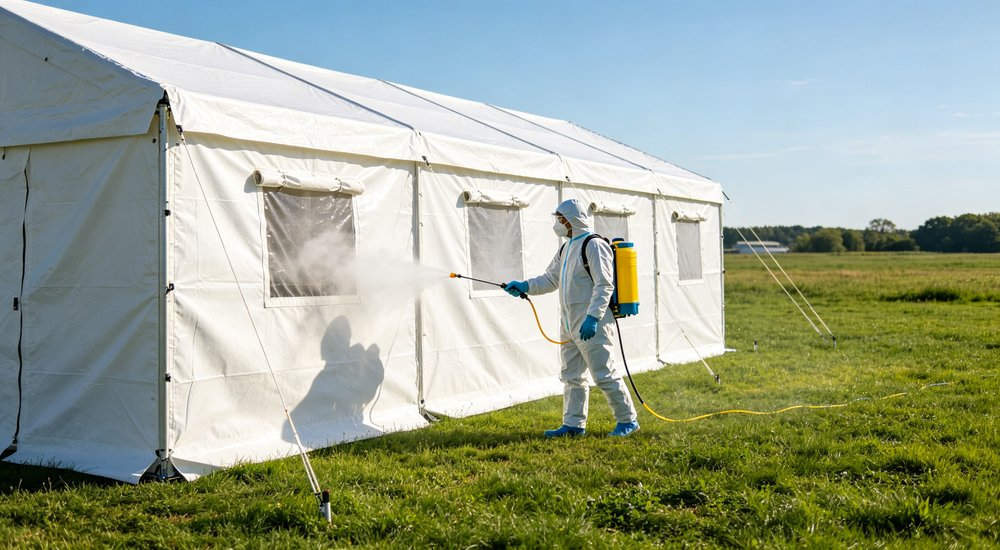
isolation tent for sale: Isolation tent for sale inquiries typically specify room count and filtration grade. negative pressure tent manufacturer: As a negative pressure tent manufacturer, we control every seam and seal. quarantine tent: A quarantine tent requires controlled air exchange and sealed entry. HEPA filtration tent: HEPA filtration tent systems remove 99.97% of airborne particles. infection control tent: Infection control tent design prioritizes air direction and staff safety.
Isolation tent prices range from $1,500 for a basic shell to $6,000+ for a complete negative pressure isolation tent with HEPA filtration, monitoring, alarms, and backup power. Always compare the complete system, not just the tent. CE certified factory price units include HEPA H13 filtration meeting EN 1822 standards.
No. An enclosed shell provides temporary space, but medical isolation tent requires defined airflow, pressure differential, air changes, filtration, monitoring, alarms, power, and an operating method. Doors, leakage, ducts, and equipment condition all affect the result.
Not by itself. A fan may influence airflow, but negative pressure is a measured relationship under defined conditions. Shelter volume, leakage, doors, ducts, filters, fan setting, and reference area all matter. One fan rating cannot prove system-level performance.
There is no universal answer. The project must define whether filtration applies to supply air, extracted air, or another path. HEPA H13 = 99.95% at 0.3μm; H14 = 99.995%. Filter type, sealing, airflow, pressure loss, replacement, and disposal all matter. A filter name alone is not proof.
Only if the verified design supports required functions without powered equipment — which should not be assumed. Most active airflow, monitoring, alarms, and controls depend on power. List every powered component, supply, cable route, protection, duration, and backup.
Only when the exact shell, interfaces, systems, cleaning, operating method, and validation allow the change. Removing or adding a fan does not automatically change the product role. Define both use cases and ask which components, settings, checks, and documents apply to each.
It depends on room function, movement, clothing change, equipment transfer, pressure concept, and project criteria. A transition module may help separate routes or support pressure, but it also adds space, doors, connections, utilities, and operating steps. Map entry and exit before selecting it.
The project needs a defined response, not just an audible warning. This may include checking doors, power, filters, ducts, fan operation, sensors, and user movement. It may also require restricting entry, moving occupants, activating backup, or repeating checks. Identify who receives the alarm and what record is required.
Some systems use connectors, corridors, or modules, but connection is not universal. Each module changes volume, doors, leakage, airflow, sensing, controls, utilities, and responsibility. Ask for one system drawing and the control relationship between spaces.
Standard shell: MOQ 1-10 units, 15-30 days. Complete isolation system with custom configuration: MOQ 5+ units, 30-45 days. Confirm with the supplier before ordering.
 |

|
Copyright © Custom Disaster - Relief Bedding: Tents, Sleeping Bags, Blankets All Rights Reserved
the professional team to service !