Categories
latest blog
Last updated: October 30, 2026 · YRF Emergency Preparedness Team
Buying wholesale flannel blankets for relief stock raises the same questions every season: minimums, samples, certification, delivery and price per blanket. This FAQ answers the common ones in plain terms, so a procurement team can send one clean RFQ and get back usable quotes. Bulk buyers also compare GSM, packaging and lead time before committing to a supplier.
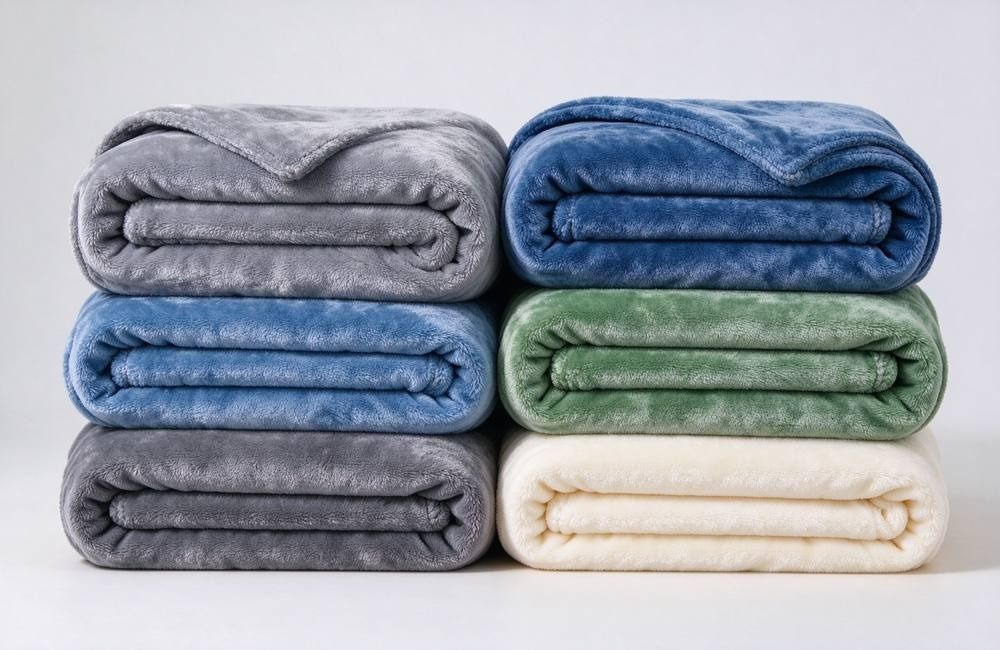
Six folded flannel blankets in grey, blue, green and cream arranged in two neat columns on a light background, soft brushed pile visible on every fold.
Keywords: flannel blanket wholesale, flannel blanket supplier, emergency flannel blankets, flannel blanket GSM, flannel blanket care
Relief procurement is different from retail buying. Orders are usually urgent, specs are set by a budget line and the buyer may never see the goods before they ship. That is why the questions below keep coming back in every tender: how much flannel blanket MOQ is realistic, what GSM holds warmth without blowing the budget, how samples are approved and what the price per blanket actually includes. Each answer below is built for a buyer who needs a defensible decision, not a sales pitch.
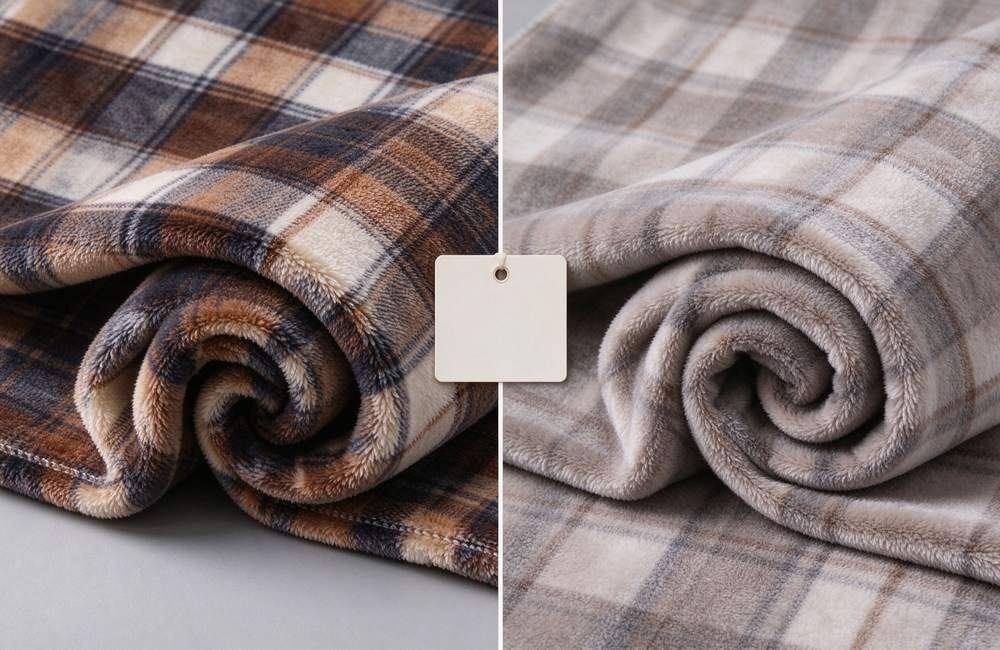
Two folded flannel blanket samples side by side, a brushed plaid flannel and a plain grey flannel with a blank label card between them for spec comparison.
A relief order has a deadline, and the deadline decides everything else. The team that asks for a sample in week one, approves it in week two and books production in week three has a different experience from the team that discovers the fabric is wrong after the cartons land. The fastest way to cut the risk is to answer the questions in this FAQ before signing anything, starting with the material itself.
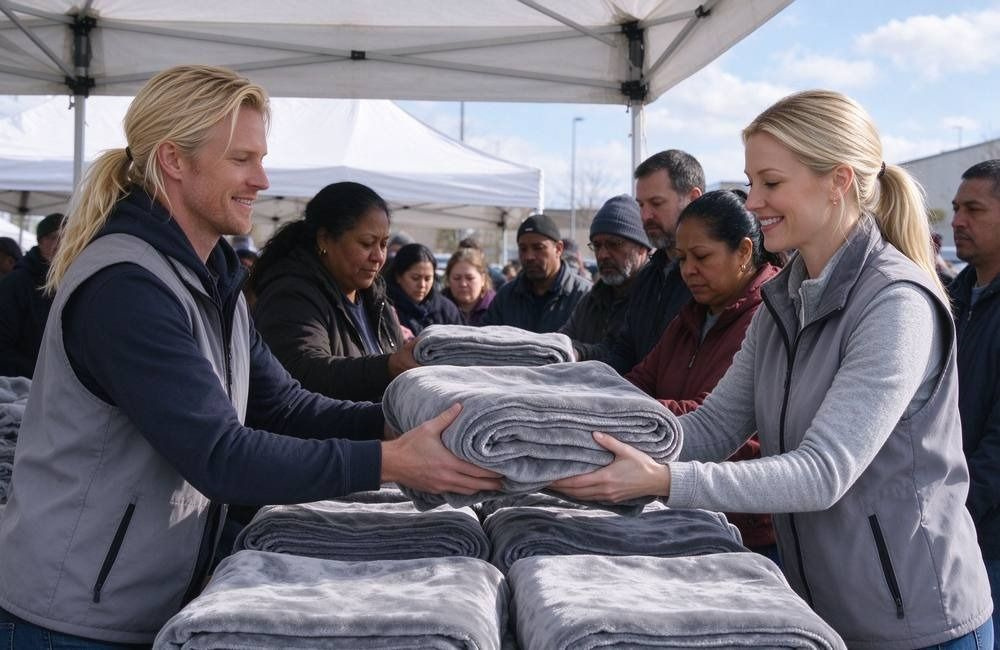
Blonde European volunteers handing folded grey flannel blankets to waiting families at an outdoor relief distribution point under a white tent.
Flannel is a brushed fabric, not a miracle blanket. The weave is brushed on one or both sides to raise a soft pile, which traps air close to the body. A flannel blanket supplier can tell you the fibre mix, the GSM and the brush type; what matters for relief stock is that the spec is written down, tested and repeatable for the next order.
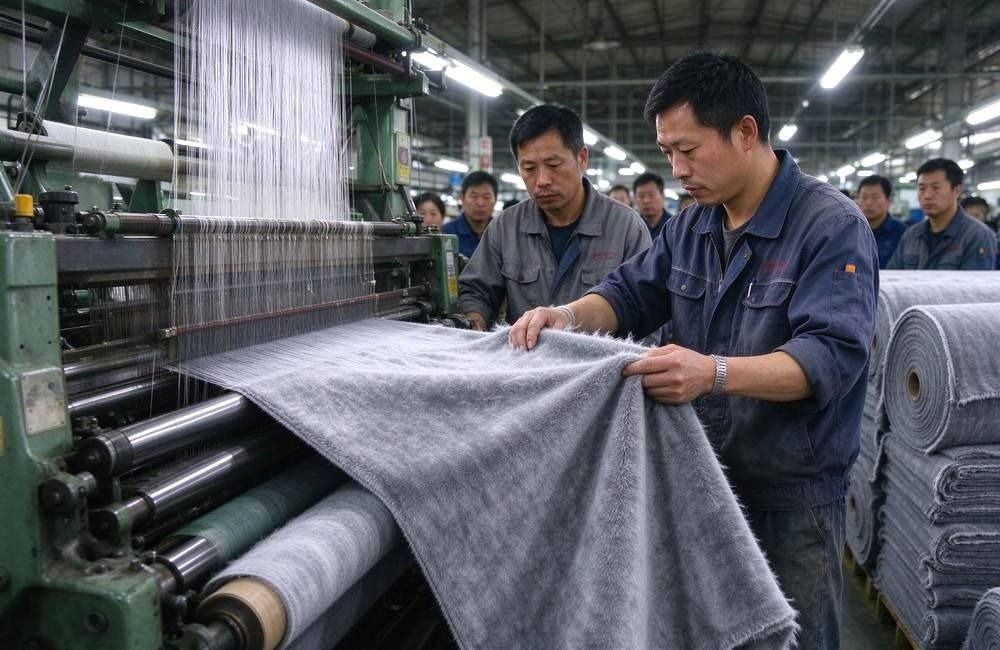
Asian weaving workshop with a large loom producing grey flannel fabric while two workers check the brushed surface beside the loom.
Warmth is a function of GSM and density, not of brand. Two blankets with the same label weight can behave differently when the weave is loose. For shelter beds and field cots, the practical range sits between 300 and 400 GSM, with lighter lines used for warm-climate programs and heavier lines for cold-weather shelter. Ask for the tested numbers, and keep one sample folded next to the spec sheet.
The same fabric question comes up in every tender, which is why buyers ask it early: is this flannel or fleece? Both are soft, but they are different materials with different costs. Flannel is a brushed woven fabric; fleece is a knitted pile fabric. For bulk orders the choice changes the price per blanket, the wash behaviour and the feel in the field, so the comparison deserves a clear answer rather than a guess.
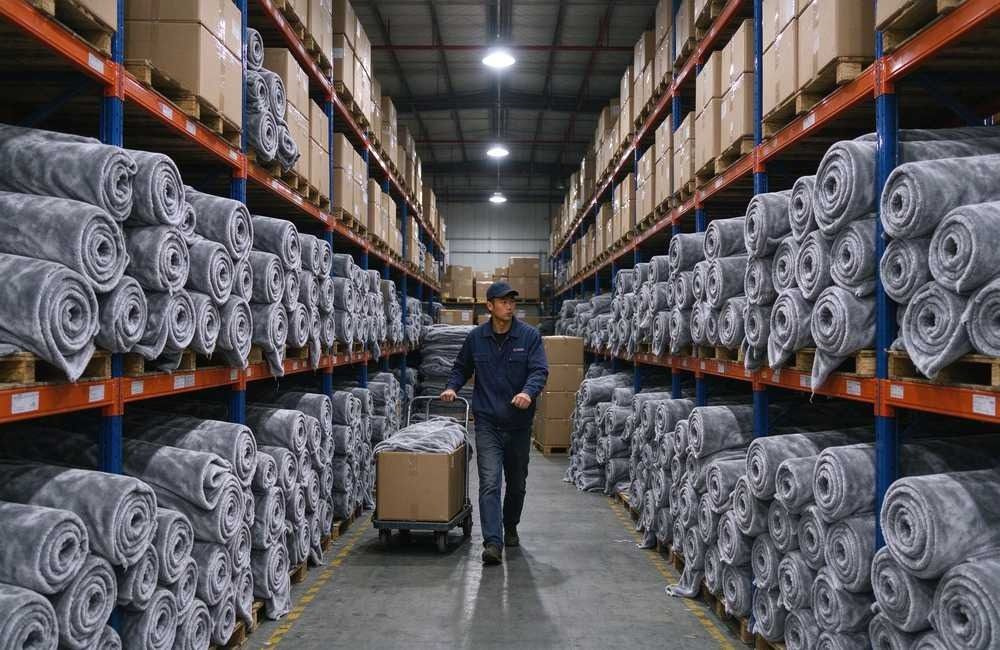
Asian warehouse worker pushing a cart between tall shelves stacked with grey flannel fabric rolls and cartons in a dense stock room.
The first question in almost every inquiry is the same: can you supply flannel blankets for shelters at this volume and this price? Behind that question sit four smaller ones that decide whether the deal works: the realistic minimum order, the GSM and density of the fabric, the sample path and the delivery window. A supplier who answers all four in the first reply is easier to work with than one who only confirms the price.
The second question is repeatability. Relief programs restock the same spec each year, so buyers ask whether the next batch will match the last one. The answer sits in the spec sheet: fibre blend, GSM, weave density, shrinkage and colour fastness. When those numbers are fixed and tested, reorder is a formality, not a renegotiation.
The third question is timing. Relief blanket procurement runs on grant calendars and storm seasons, so the buyer wants to know how long a bulk order takes from approval to delivery. That number, not the price, usually decides the order, and the delivery section later in this FAQ walks through the realistic timeline. Climate outlooks from NOAA help relief agencies time these restocks to storm seasons, so the request usually arrives with a fixed deadline.
Most buyers also ask what they can change. Custom sizes, colours and labels matter for programs that hand out branded blankets, and the supplier's flexibility shows up in the sample stage. The order flow below shows how a wholesale flannel order moves from inquiry to delivery.
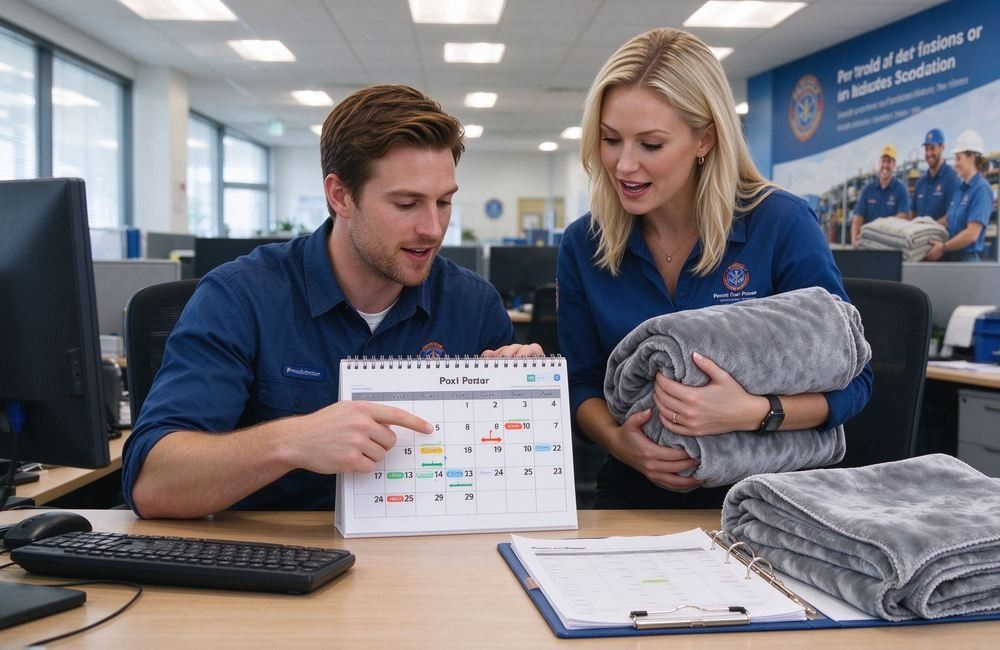
Order timeline review before sizing the tier
The flannel blanket MOQ depends on how the fabric is produced. Flannel is woven in long runs, and a small order has to share the cost of setting up the loom, dyeing the yarn and finishing the fabric. That is why wholesale flannel blanket quotes usually start at a few hundred pieces for a standard size, with lower minimums for repeat orders of a fixed spec.
For relief tenders, state the volume you need and ask the price at that volume. A supplier quotes differently at 500, 2,000 and 10,000 pieces, and the gap shows where production cost flattens. Ask for a three-tier quote, then size the order to the tier that fits the budget.
|
Order tier |
Typical volume |
What it changes |
|
Trial order |
100-500 pieces |
Sample quality, colour confirmation, one or two sizes |
|
Program order |
1,000-5,000 pieces |
Fabric sourcing, full GSM spec, carton packing |
|
Tender volume |
5,000+ pieces |
Dedicated production run, price breaks, longer lead time |
The tiers above are planning ranges, not fixed rules. The point is that order size drives spec choices: a trial order confirms fabric and colour, a program order locks the production spec, and a tender volume buys economies of scale.
Sample-first ordering protects both sides. The buyer sees the real fabric before committing a budget line, and the supplier confirms the spec before committing production capacity. For relief stock, the sample is the cheapest insurance available, and the next section explains what flannel actually is before we talk about approving it.
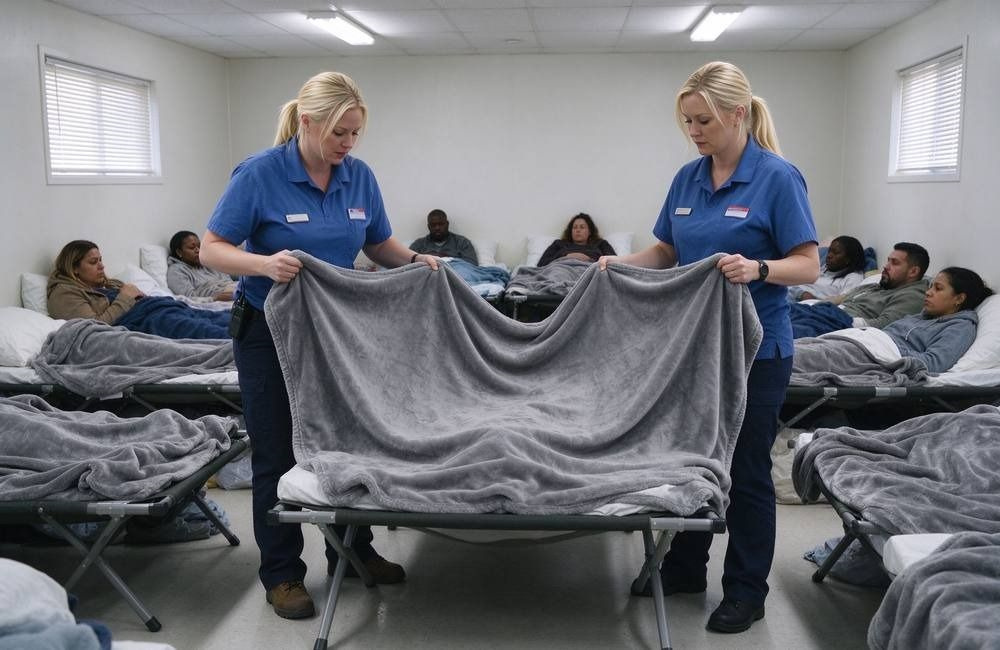
Blonde European staff spreading a grey flannel blanket over a folding camp bed in a bright temporary shelter dormitory room.
Flannel is a woven fabric with a brushed finish. The yarn is woven first, then brushed to raise a fine pile, making the fabric soft and warm. The fibre can be cotton, polyester or a blend, and the blend decides the cost, weight and wash behaviour.
For wholesale relief blankets, polyester and poly-cotton blends dominate because they are durable, dry quickly and hold their colour through repeated washing. Cotton flannel is softer against the skin but heavier when wet and more expensive per piece. The choice is a budget decision, and the sample tells you which one the quote really describes.
The photo below shows the weaving step. Flannel is woven first and brushed afterwards, and the density of that weave decides how long the blanket keeps its warmth. A supplier who can show the weaving line usually controls the wholesale price per blanket better than one who only trades finished goods.
Density matters as much as fibre. A dense flannel weave holds its shape, resists pilling and keeps warmth; a loose weave flattens quickly and loses the pile after a few washes. Ask the supplier for the weave density and the tested shrinkage, then compare the sample against the spec sheet rather than trusting the photo.
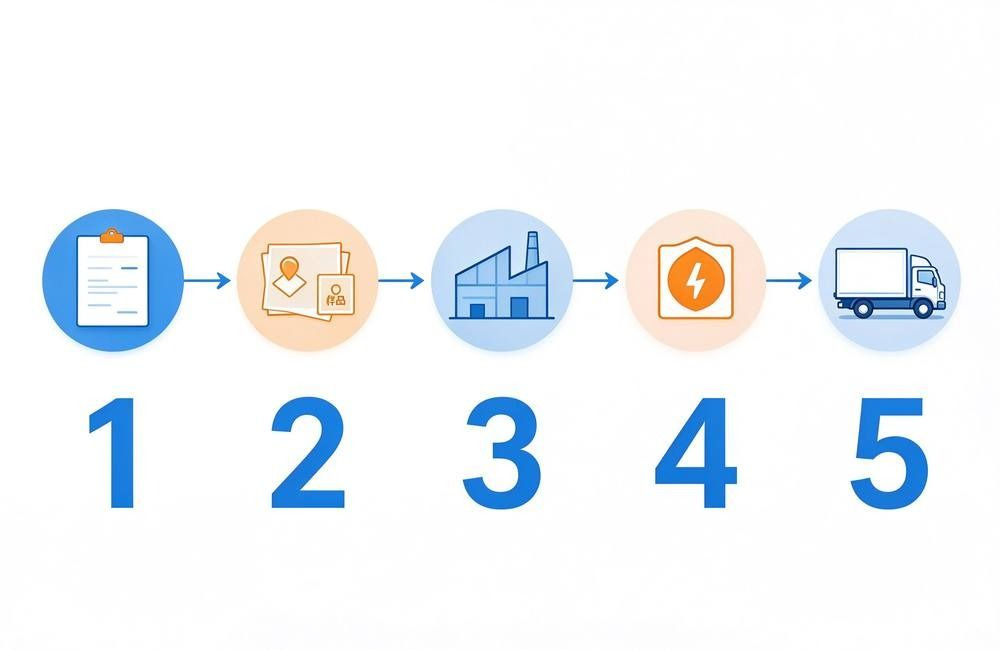
Clean five-step wholesale order process infographic with flat icons for quotes, samples, production, inspection and shipping, numbered 1 to 5 with blue arrows.
GSM, or grams per square metre, is the honest measure of how much fabric is in a blanket. Higher GSM usually means more warmth and a higher price per piece, but only if the weave is dense enough to hold the fibre. A 400 GSM blanket with a loose weave can feel thinner than a 300 GSM blanket with a tight weave, which is why the tested number matters.
|
GSM range |
Typical use |
Trade-off |
|
250-300 GSM |
Warm-climate shelters, summer programs |
Lighter cost, less warmth, thinner pile |
|
300-400 GSM |
Standard shelter beds, field cots |
Balanced warmth and cost, most common choice |
|
400-500 GSM |
Cold-weather shelters, winter relief kits |
Highest warmth, heavier freight, higher unit price |
The band that fits most relief budgets is 300 to 400 GSM. It holds warmth on a camp bed, survives industrial washing and keeps the unit price inside a tender range. For cold-weather programs, step up to 400 to 500 GSM and check the shrinkage number, because a heavier blanket that shrinks in the first wash can be a sizing problem for the next order.
Warmth in the field also depends on how the blanket is used. A shelter bed with a mattress cover and a top blanket needs less GSM than a single blanket handed out in a tent, because layering adds warmth. Tell the supplier how the blanket will be used, and let the GSM follow the use case rather than picking a number out of a catalogue.
The micro-close-up photo above shows the brushed pile that makes flannel warm. When the pile is dense and even, the blanket traps more air; when it is patchy, the blanket looks soft but delivers less warmth. That is a quality point the sample check can catch before the bulk order runs.
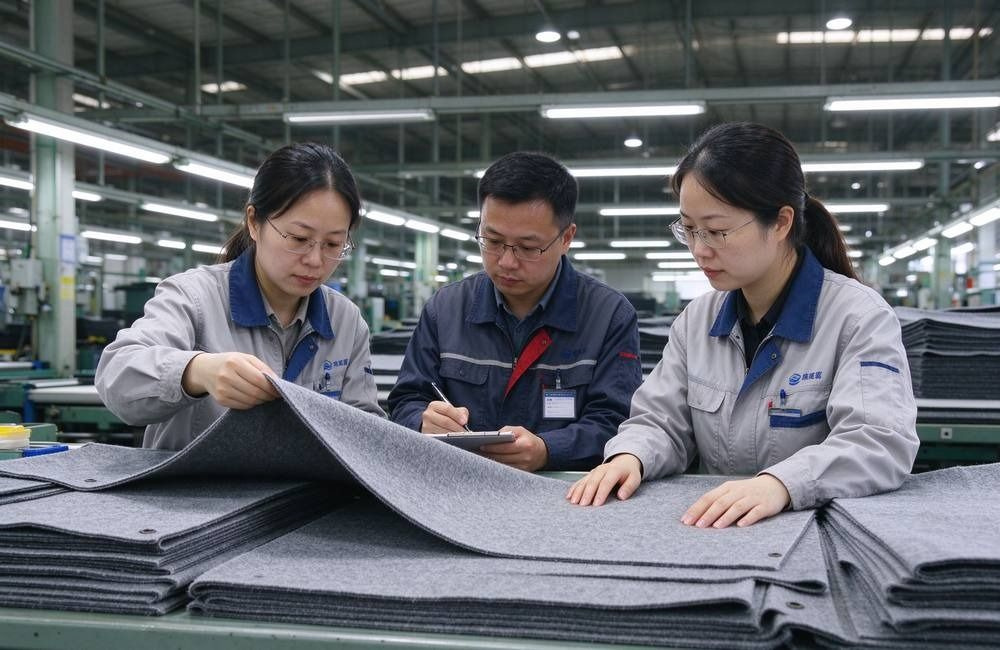
Three Asian quality inspectors checking grey flannel fabric at a bright factory table, one pulling the brushed edge and one recording the check.
The sample stage is where most relief orders succeed or fail. A written spec can look right on paper and feel wrong in the hand, so the sample is the buyer's only chance to verify the fabric before production. The standard path is to request a sample after the first quote, check it against the spec sheet, then approve it in writing before production starts.
Ask for the sample to be cut from the actual production fabric, not from a display piece. Production fabric carries the same finish, weight and colour as the bulk order; a display piece can look better than the goods. For relief stock, the difference shows up when the first carton opens in the field, and that is the wrong moment to discover it.
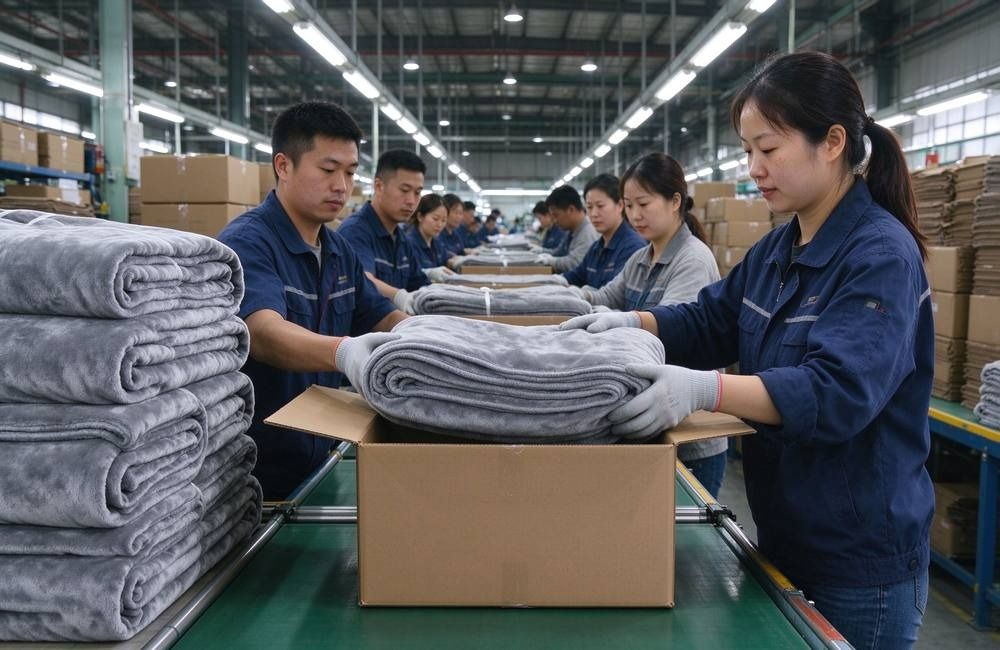
Asian packing line workers placing folded grey flannel blankets into cartons on a conveyor with stacks of blankets waiting beside them.
Colour approval works best against a physical reference. If the program uses a Pantone number or a colour chip, send it with the order, and approve the sample under daylight rather than under a phone screen. Colour fastness matters for shelter blankets that are washed in shared laundry facilities, so ask for the tested fastness grade alongside the colour match.
Keep the approved sample sealed and dated. When the reorder comes a season later, the sealed sample is the reference for the new batch, and the supplier matches against it rather than against a fading memory. Programs that skip this step end up re-negotiating the colour every year.

Colour cards matched under daylight
Relief buyers ask about certification because they answer to funders and inspection bodies. The certifications that matter for flannel blanket suppliers are the ones that prove the product is safe, non-toxic and consistent: product safety standards for textiles, and fire-safety standards where the program requires them. Ask which standards apply to your market, and ask for the test reports, not just the certificates.
Quality standards for textiles are set by recognised bodies, and the test reports are the evidence. A supplier who keeps current test reports can send them with the quote; a supplier who only claims compliance should be asked to prove it. For relief goods that cross borders, the relevant standards depend on the destination country, so the compliance check belongs at the start of the order, not at customs.
|
Check |
What to ask for |
Why it matters |
|
Product safety |
Current test report |
Proves the fabric is safe for skin contact |
|
Fire safety |
Standard-specific report |
Required where shelter rules mandate it |
|
Dye and finish |
Fastness and chemical report |
Confirms colours hold and finishes are safe |
Ask for a certificate copy before ordering samples.
Industry quality frameworks, such as the International Organization for Standardization textile testing standards, give both sides a common language for what "quality" means. When a quote and a test report use the same standard, the buyer can compare suppliers on the same basis instead of on marketing claims.
Documentation is part of the order, not an afterthought. Ask at the quote stage for the documents that will ship with the goods: test reports, packing lists and the certificates required by the destination. Getting the document list confirmed early avoids the customs delay that turns a timely relief order into a late one.
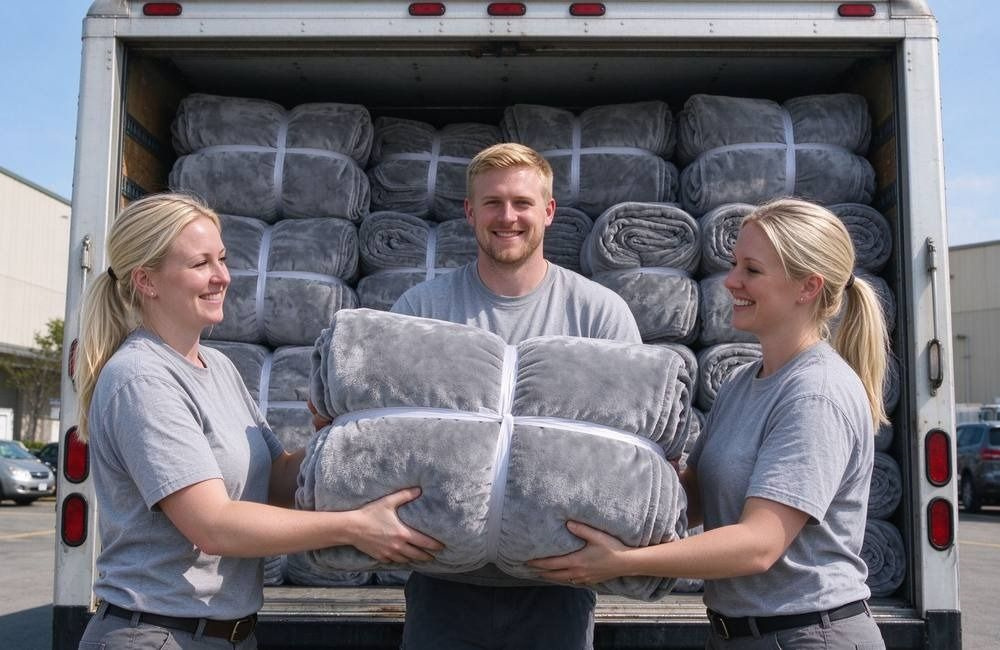
Three European staff in plain grey workwear lifting bales of grey flannel blankets into a truck at a bright outdoor loading point.
Packaging protects the blanket between the factory and the field. Folding, bagging and cartoning decisions affect how much stock fits in a container, how it survives storage and how fast volunteers can distribute it. For flannel blankets for shelters, the practical standard is flat-folded, poly-bagged and cartoned with the spec printed on the carton.
Compressed or vacuum bales are an option for large tender volumes, because they cut freight and storage space dramatically. The trade-off is unpacking effort at the distribution point and a longer recovery time for the pile after compression. If volunteers hand the blankets out immediately, flat-folded cartons are faster; if the stock sits in a warehouse first, compressed bales save money.
Label the cartons with the spec, quantity and production date. Relief warehouses are shared spaces, and an unlabelled carton is useless to a team that needs the right size in the right shelter on the same day. The same discipline applies to poly bags: the blanket inside should be identifiable without opening the bag.
The packing line photo above shows cartons leaving the factory in a steady flow. The routine is simple: fold, bag, cart, label. When that routine is for every carton, the receiving team knows exactly what each box contains, and the distribution plan can be built from the packing list.
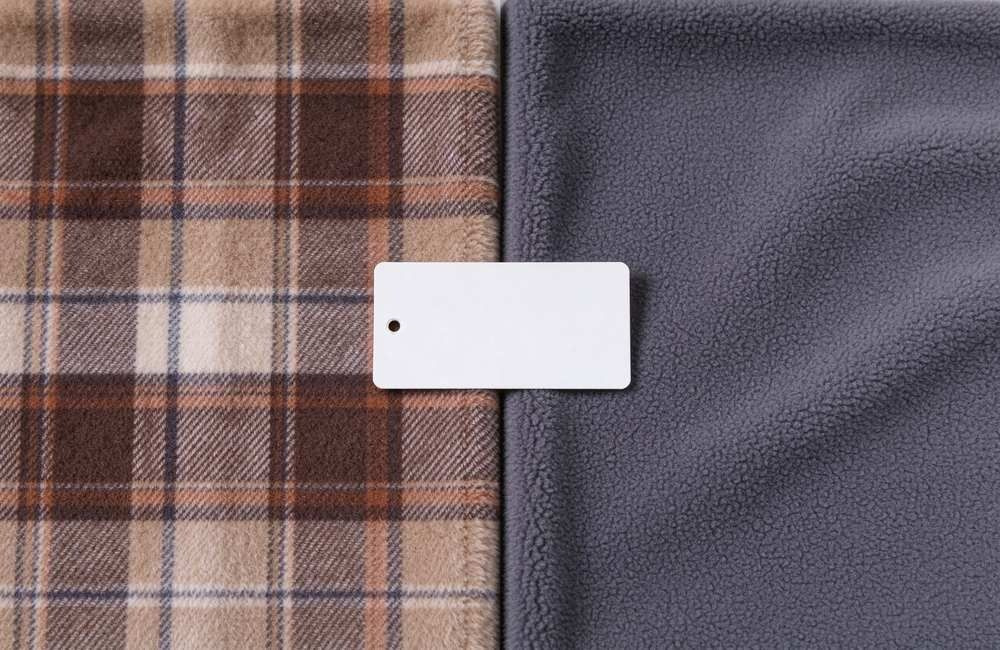
Two fabric samples side by side, brushed flannel on the left and fleece on the right with a blank label card showing the texture difference.
The realistic lead time for a wholesale flannel blanket order runs from sample approval to the ship date, and it is the number that decides most tenders. A standard program order needs production time after the sample is approved, and the buyer should plan for the calendar to absorb delays rather than assume the earliest possible date.
Ask for the lead time in two parts: production time after approval and freight time to destination. The supplier can confirm the first number from the production calendar, and the freight forwarder confirms the second from the shipping schedule. Adding a buffer on top of both is standard practice for relief procurement, because storm seasons and grant deadlines do not move.
Seasonal demand changes the calendar. Bulk flannel blankets ordered in the peak buying window share capacity with every other buyer, so the lead time stretches. Ordering early, before the peak window, keeps the production slot and usually improves the freight options as well. For relief stock that must land before a known date, early is always cheaper than expedited.
The loading photo above shows bales leaving the dock in daylight. Once the goods are on the truck, the remaining steps are documentation and customs, which is why the document list should be confirmed at the quote stage. A relief order that arrives on time but with missing paperwork still misses the distribution date.
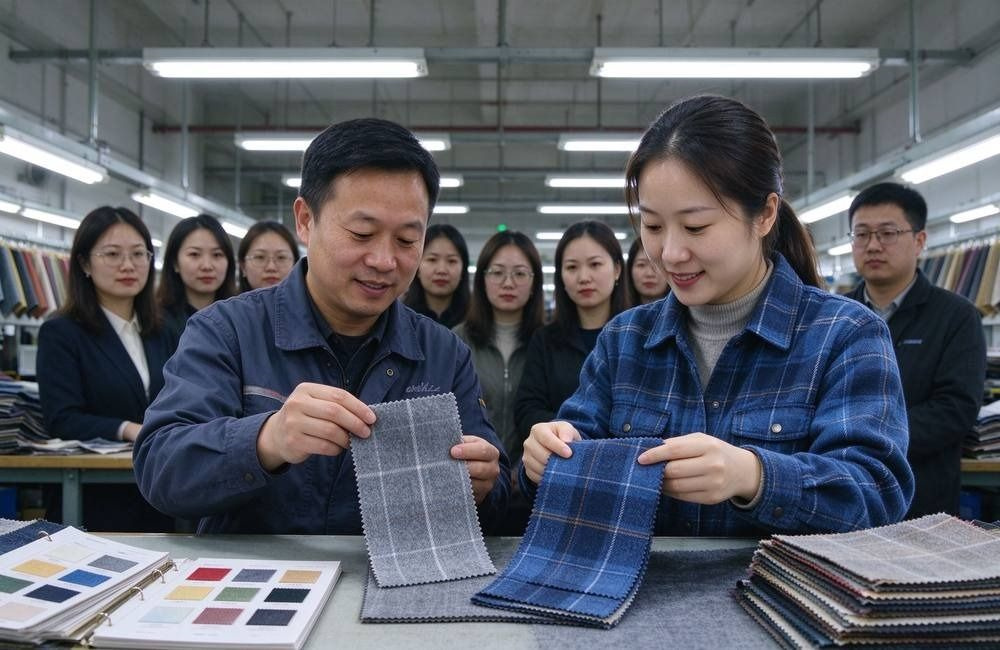
Two Asian staff comparing grey and blue flannel samples at a sample-room table with colour cards and fabric swatches spread out.
The wholesale price per blanket is built from four components: fabric, making, packing and freight. The fabric cost follows the fibre blend and GSM, the making cost follows the order volume and the finishing work, and freight follows the destination and the packing density. A quote that lists these components is easier to compare than a single number.
The fabric is the biggest line. Polyester and poly-cotton blends cost less than cotton, higher GSM costs more, and custom colours add a dyeing charge on top. When a quote seems far below the market range, check which component is missing: a low fabric spec, a long lead time or a freight estimate that does not reach the door.
Volume changes the unit price more than anything else. The same blanket at 1,000 pieces and 10,000 pieces carries a different share of setup and overhead, which is why the three-tier quote in the MOQ section is worth asking for. Once the volume is fixed, the price per piece is easier to hold across the program.
Total cost goes beyond the unit price. The blanket total cost of ownership guide shows how freight, storage and replacement add to the sticker price over the life of a relief program, and that full picture is the number that fits the budget line.
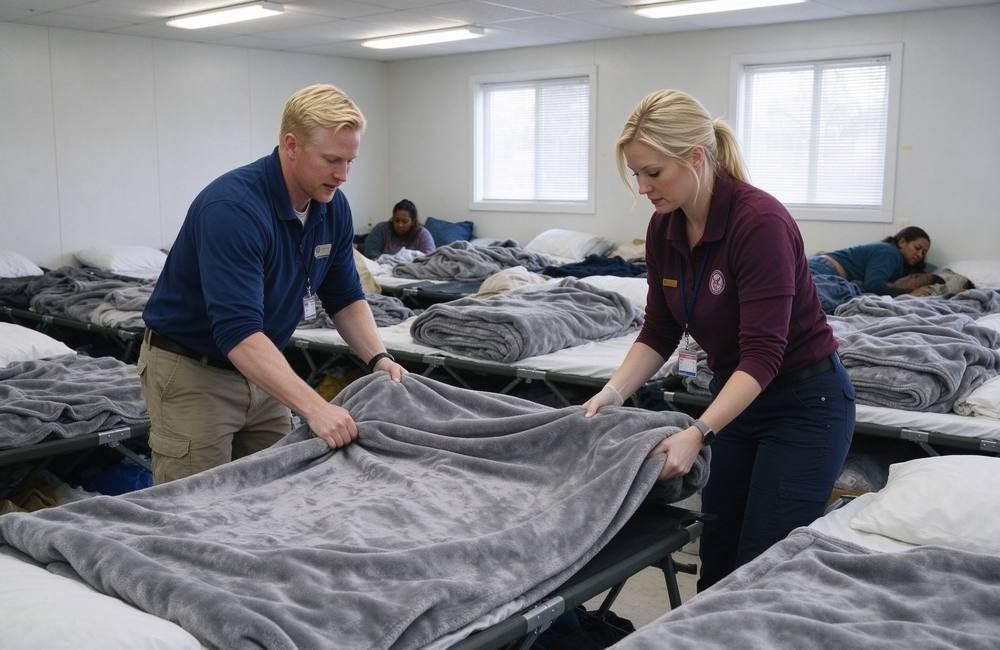
Bright temporary shelter dormitory with grey flannel blankets laid on folding beds while European staff tidy one blanket corner neatly.
A wholesale flannel order is checked before it ships, and the buyer should know what the checks cover. The standard pre-shipment inspection looks at the fabric weight, the weave density, the colour match against the approved sample, the stitching and the packing count. Each check has a pass line that should be agreed before production, not discovered at the inspection.
Two inspection options exist for relief buyers. The first is the supplier's own internal quality control, which runs during production and catches defects early. The second is a third-party pre-shipment inspection, which verifies the finished goods against the approved sample before the cartons close. For tender volumes, the third-party check is worth the cost, because the buyer cannot return a field-distributed batch.
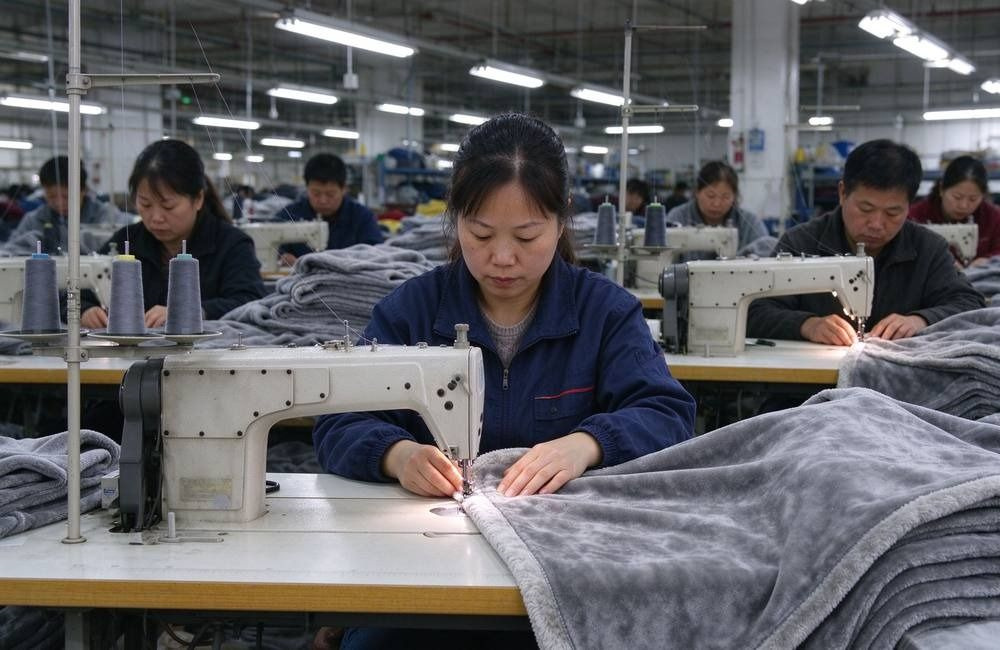
In an Asian sewing workshop, workers stitch grey flannel blanket edges at rows of sewing machines under bright factory lights.
Ask for the inspection report with the shipment. The report lists the sampled cartons, the measured values and the pass or fail line for each check, and it becomes the record that answers funder questions later. A supplier who inspects without documenting the result is Rotation is the part of flannel blanket storage that gets skipped, yet it decides whether relief stock stays usable. Store bales off the floor on pallets, keep them away from damp walls, and check on a fixed schedule so the oldest stock ships first. A simple label with the arrival month on each pallet turns a full warehouse into a first-in, first-out system with no extra paperwork. hard to audit, and relief programs are always audited eventually.
For repeat orders, the inspection history builds a track record. When a supplier's batches pass consistently, the buyer can sample fewer cartons on the next order; when a batch fails, the record shows which step to fix. The inspection data is a management tool, not just a shipping formality.
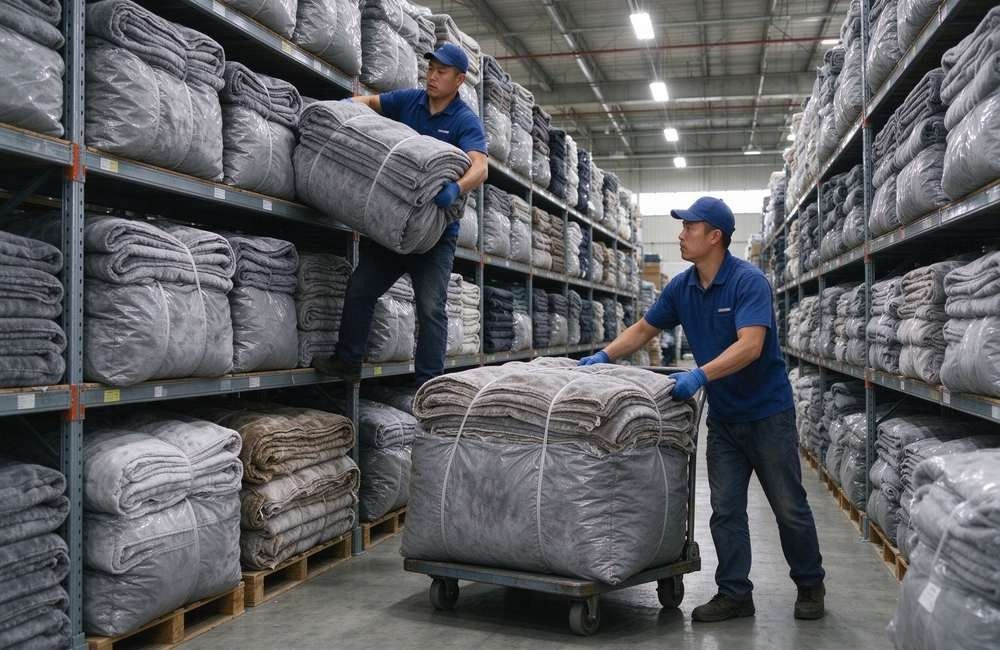
Warehouse stock rotated on a schedule
Relief stock often sits in a warehouse for months before it is distributed, and storage conditions decide whether it is still usable on the day it is needed. Flannel blankets should be stored dry, ventilated and off the floor, with the oldest stock issued first. A warehouse that follows that routine keeps the stock fresh through a full season.
Moisture is the main enemy. Damp storage causes the musty smell that cannot be removed in the field, and it can stain the fabric before the carton opens. The storage area should be dry and above the floor, and the stock should be checked on a schedule that catches a roof leak or a humid week before it ruins a pallet.
Rotation keeps the stock even. When every carton is labelled with its production date, the team issues the oldest first and keeps the reserve within a single season of age. For programs that buy the same spec each year, rotation is what keeps the newest blankets for the worst months and the oldest ones for the quiet months.
Shelter beds put the rotation to work. The photo above shows a temporary shelter where blankets are laid on beds and replaced as families arrive and leave. A reserve that is rotated and counted stays ready for that daily turnover, and the count at the end of each week tells the team what to reorder next season.
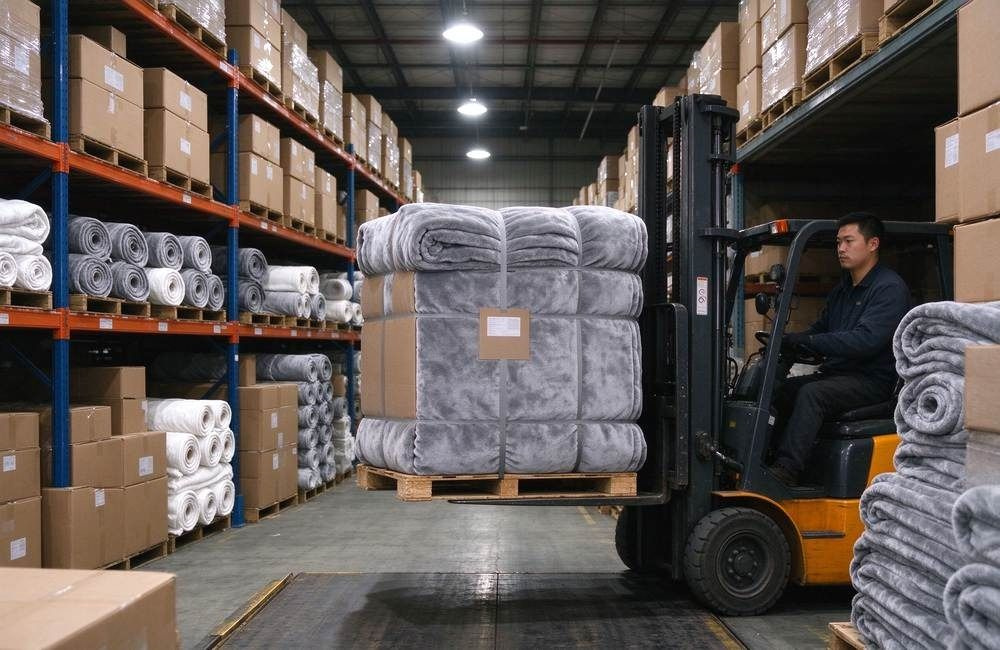
Asian warehouse forklift lifting cartons of grey flannel blankets toward a truck while the tall shelves behind stay stacked full.
The fastest way to a clean quote is a complete RFQ. The checklist below is built for relief procurement, and it covers the information a supplier needs to quote accurately: volume, size, GSM, colour, packaging, destination and the deadline. Send the list once, and the supplier can answer everything in one reply.
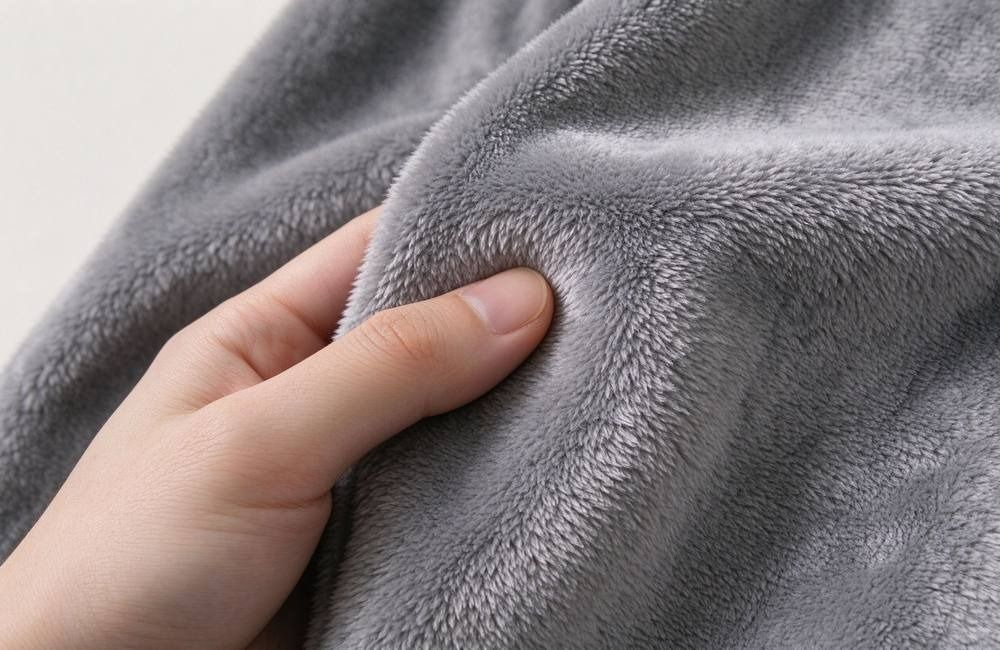
Close-up of a hand brushing the surface of grey flannel fabric, fine brushed pile clearly visible, soft and dense to the touch.
State the use case in the RFQ. A blanket for a cold-weather shelter bed is a different product from a blanket for a warm-climate distribution kit, and the supplier's spec recommendation depends on that answer. The use case also sets the GSM band, the packaging choice and the freight expectation, so write it down before sending the inquiry.
Ask for the three things every buyer needs: a three-tier price, a confirmed lead time and the document list. The three-tier price shows the volume effect, the lead time shows the calendar risk and the document list shows what will ship with the goods. A supplier who answers all three in the first reply is worth shortlisting.
For the full picture of what an institutional buyer should send, the institutional blanket inventory calculation guide covers the demand-side numbers, and the wholesale flannel blanket buying checklist walks through the purchase side from inquiry to handover.
Acceptance is the final step. When the goods arrive, check the cartons against the packing list, open a sample from each batch and compare it with the sealed sample approved at the start. The acceptance check closes the loop on the order, and the record of what was received becomes the baseline for the next season's reorder.
The questions below are the ones that come back in every relief tender. Each answer is written for a buyer who needs a defensible spec and a clean quote, and the answers connect to the sections above for the full reasoning.

European procurement manager in a bright office feeling a grey flannel sample between her hands with colour cards on the desk.
The minimum order for wholesale flannel blankets usually starts at a few hundred pieces for a standard size, because the loom setup, dyeing and finishing are shared across the run. Trial orders of 100 to 500 pieces confirm fabric and colour, program orders of 1,000 to 5,000 pieces lock the production spec, and tender volumes above 5,000 pieces get the price breaks. State your volume in the RFQ and ask for a three-tier quote, because the unit price at each tier shows where the cost flattens. From there, a buyer can negotiate a trial order before committing to the full volume.

MOQ and quote negotiated before ordering
The practical band for flannel blankets for shelters is 300 to 400 GSM, which balances warmth, cost and durability through industrial washing. Warm-climate programs can step down to 250 to 300 GSM, and cold-weather shelters can step up to 400 to 500 GSM for extra warmth. Ask for the tested GSM and weave density, because two blankets at the same GSM can differ in warmth when the weave is loose. So compare tested GSM, not the label number.
Yes, most flannel blanket suppliers run custom sizes and colours as part of the wholesale order. Custom sizing changes the fabric cutting plan and the price per piece, and custom colours add a dyeing charge, so both should be confirmed in the RFQ. Send the exact dimensions, the colour reference and the quantity, and approve the sample under daylight before production starts.
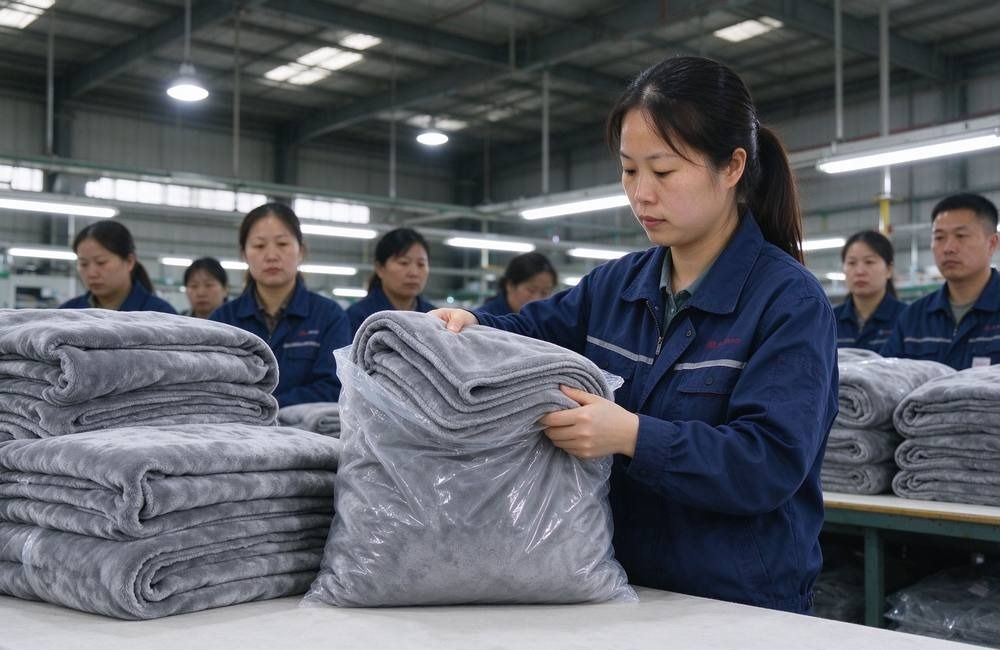
An Asian packing quality checker places folded grey flannel blankets into transparent bags beside a tall stack of finished blankets.
The standard path is to request a sample after the first quote, check it against the spec sheet and approve it in writing before production. Ask for the sample to be cut from the actual production fabric, not from a display piece, and keep the approved sample sealed and dated. The sealed sample becomes the reference for the bulk order and for every reorder that follows.
The certifications that matter for flannel blanket suppliers are product safety standards for textiles and any fire-safety standard required by the destination market. Ask for the current test reports, not just the certificates, and confirm which standards apply to your market at the quote stage. Industry quality frameworks such as ISO textile testing standards give both sides a common language for what quality means.
The standard is flat-folded, poly-bagged and cartoned with the spec, quantity and production date printed on the carton. Large tender volumes can use compressed or vacuum bales to cut freight and storage space, at the cost of extra unpacking effort at the distribution point. Label every carton, because an unlabelled carton is useless to a team that needs the right size at the right shelter on the same day.
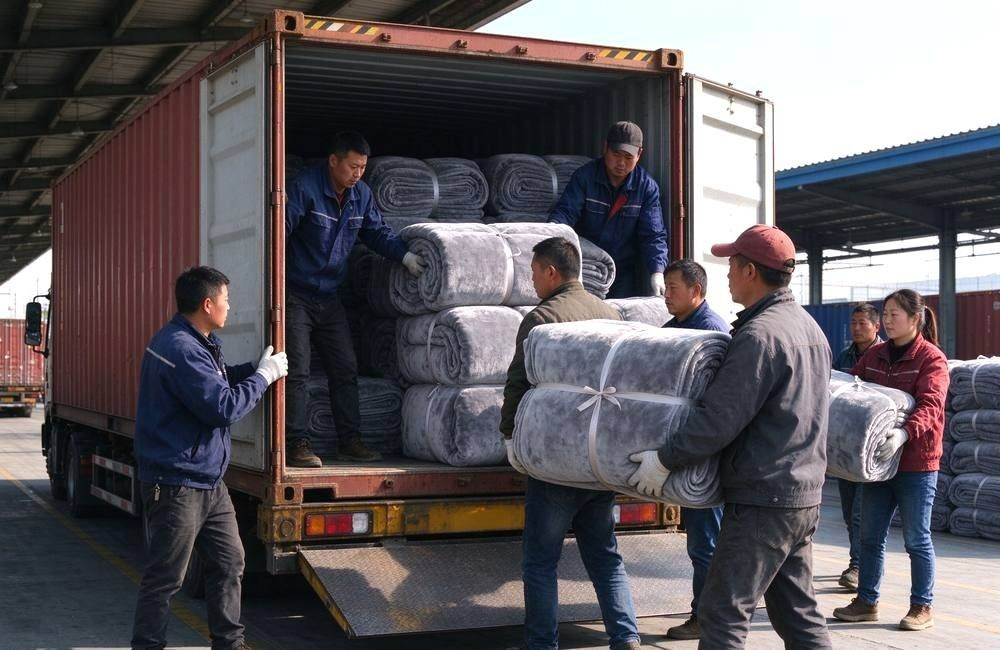
Workers at an Asian loading dock move wrapped grey flannel bales into an open shipping container in bright daylight for export.
Plan for production time after sample approval plus freight time to destination, with a buffer on top of both. A standard program order needs several weeks of production after approval, and the freight window depends on the destination and the season. Ordering before the peak buying window keeps the production slot and usually improves the freight options, and for a known distribution date early is always cheaper than expedited.
The wholesale price per blanket is built from fabric, making, packing and freight. The fabric cost follows the fibre blend and GSM, the making cost follows the volume and finishing work, and freight follows the destination and packing density. Volume changes the unit price more than anything else, so ask for a three-tier quote and compare suppliers on the same components rather than on a single number.
Standard pre-shipment inspection covers fabric weight, weave density, colour match against the approved sample, stitching and packing count. The supplier's internal quality control runs during production, and a third-party pre-shipment inspection verifies the finished goods before the cartons close. Ask for the inspection report with the shipment, because it becomes the record that answers funder questions later.
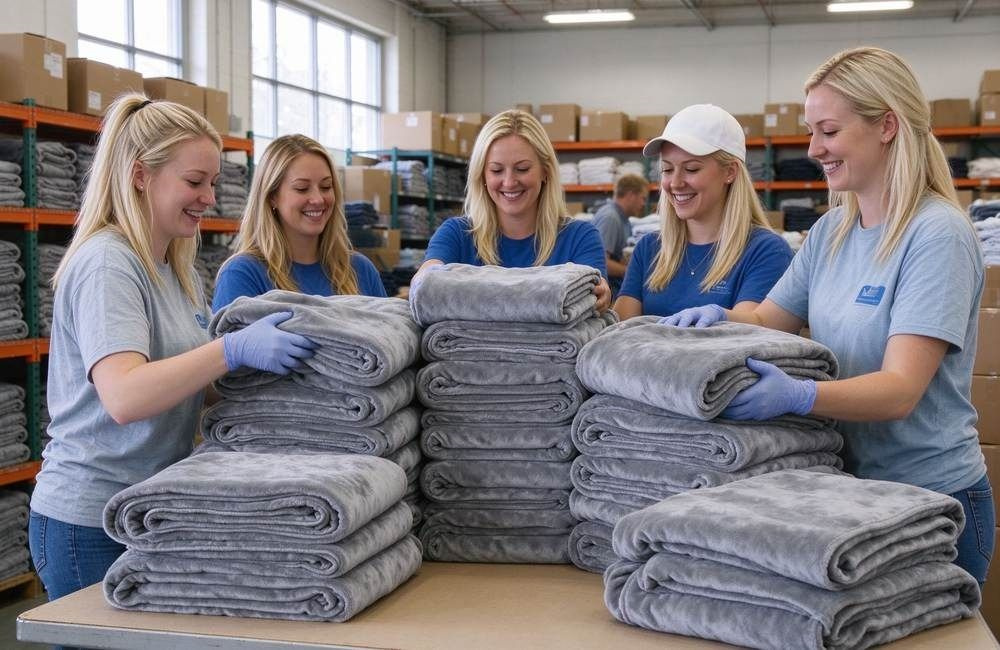
Five blonde European volunteers at a long table in a bright warehouse folding grey flannel blankets into tall neat stacks.
Store flannel blankets dry, ventilated and off the floor, with the oldest stock issued first. Moisture is the main enemy, so the storage area needs a schedule that catches a roof leak or a humid week before it ruins a pallet. Label every carton with the production date, count the reserve on a schedule, and rotate the stock so the newest blankets serve the worst months. Layering the pallets with a breathable sheet keeps the pile tidy, and checking one bale per pallet on each visit is enough to catch damp or pests early.
Yes, reorders of a fixed spec are faster than first orders, because the spec sheet and the sealed sample are already on file. The fibre blend, GSM, weave density, shrinkage and colour fastness are fixed and tested, so the reorder is a formality rather than a renegotiation. Confirm the spec has not changed when the quote comes back, and match the new batch against the sealed sample before production.
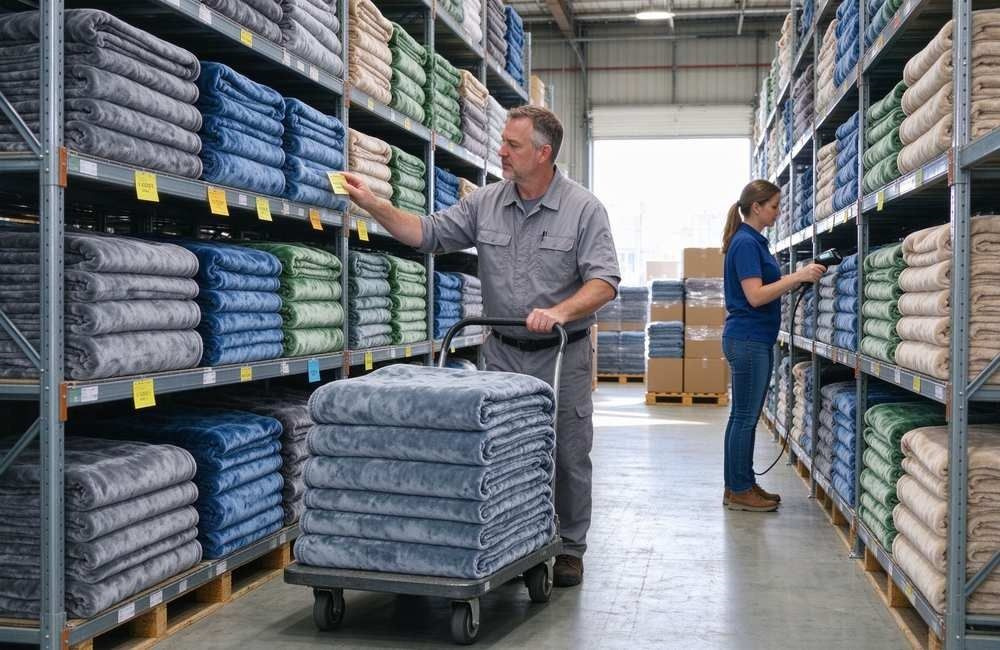
Warehouse stock rotated by batch label
Flannel is a woven fabric that is brushed to raise a soft pile, while fleece is a knitted fabric with a raised pile. The two differ in weave, weight, cost and wash behaviour: flannel is denser and drapes differently, fleece is lighter and loftier. For bulk flannel blankets the material choice changes the price per piece and the field performance, so compare samples of both before locking the spec. Flannel wins when the priority is cost per unit and easy washing; fleece wins when the program wants maximum loft per kilogram.
Yes, custom labels and printed branding are available on wholesale flannel blanket orders. Branding can be a woven label, a printed label or carton printing, and the choice affects the making cost and the lead time. Send the artwork with the RFQ, confirm the label spec on the sample and keep the approved artwork on file for reorders.
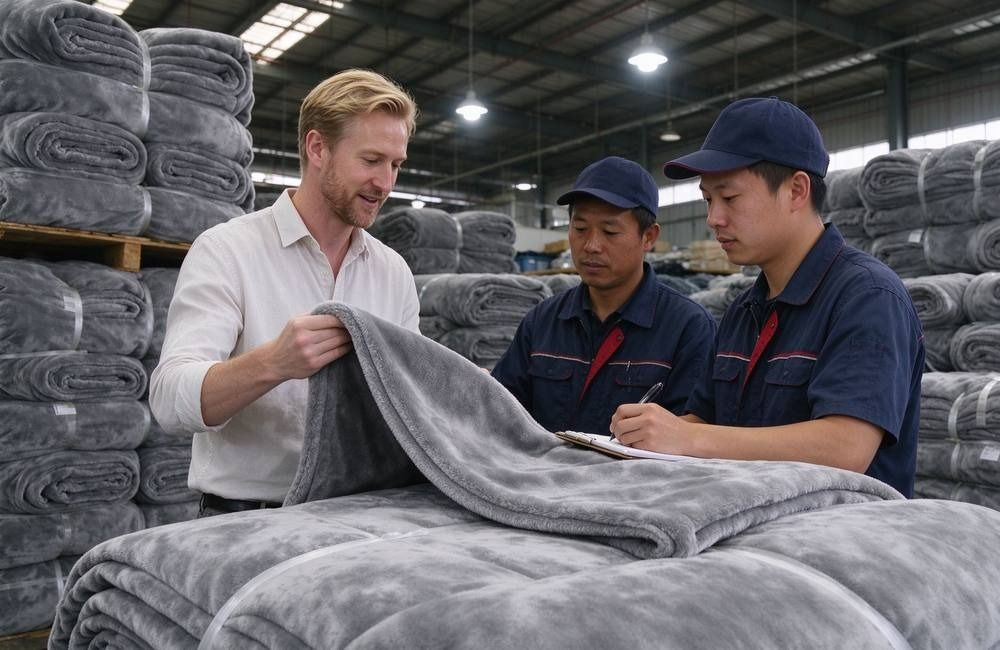
Blonde European buyer with two Asian factory staff checking grey flannel blanket bales at warehouse acceptance, one recording the count.
Common terms for wholesale flannel blanket orders are a deposit at order confirmation and the balance against the shipping documents, with the exact split agreed in writing. Shipping terms are confirmed with the freight forwarder for the destination, and the document list that will ship with the goods should be fixed at the quote stage. Confirm both in the RFQ so there are no surprises at customs.
The count depends on the blanket size, GSM and packing method. Flat-folded blankets in cartons pack efficiently, and compressed bales fit considerably more. Ask the supplier for the carton count per container at your spec and size, because that number decides the freight cost per blanket and the shipping plan. The packing density is part of the quote, not an extra.
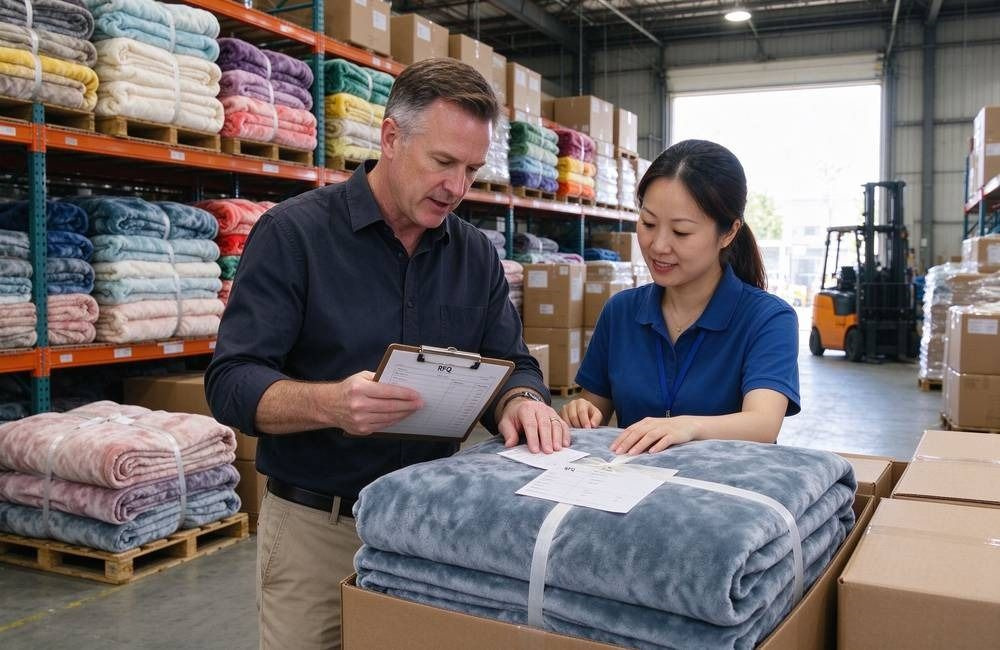
Final batch checked against the RFQ
Send the volume, size, GSM, colour reference, packaging preference, destination and the required delivery date, plus the use case so the supplier can recommend the right spec. Ask for a three-tier price, a confirmed lead time and the document list in the first reply. A complete RFQ gets a complete quote, and a supplier who answers all three is worth shortlisting.
Use this FAQ as the working document for the next tender: set the GSM band to the use case, request a production-fabric sample before any commitment and confirm the documents that will ship with the goods. The answers above are written to turn a flannel blanket wholesale decision into a spec sheet, a sealed sample and a dated delivery plan, which is all a relief program needs to buy with confidence.
Start the order the way every serious buyer does: ask for the sample first, then the three-tier price, then the lead time. The sample proves the fabric, the three-tier price shows the volume effect and the lead time shows the calendar risk, and a supplier who answers all three on one page is easy to audit and easy to reorder from next season.
For buyers who manage several relief programs, the same questions apply across products: what is the minimum, what spec fits the use case, how are samples approved and when does the stock arrive. The disciplines in this FAQ are product-neutral, so the checklist that works for flannel also works for the next blanket line on the programme list.
 |

|
Previous :
Hotel Blanket Backup Stock: How Hotels Plan Peak-Season Backup Counts Per Room, Storage Space, GSM Weight, Laundry Life and Ordering Timelines with a Wholesale Blanket SupplierNext :
Field Cold Weather Blankets for Winter Operations: Volume, Lead Time, GSM, Transport Weight, Scheduled Lots and Bulk Buying Decisions for Emergency and Relief Procurement TeamsCopyright © Custom Disaster - Relief Bedding: Tents, Sleeping Bags, Blankets All Rights Reserved
the professional team to service !