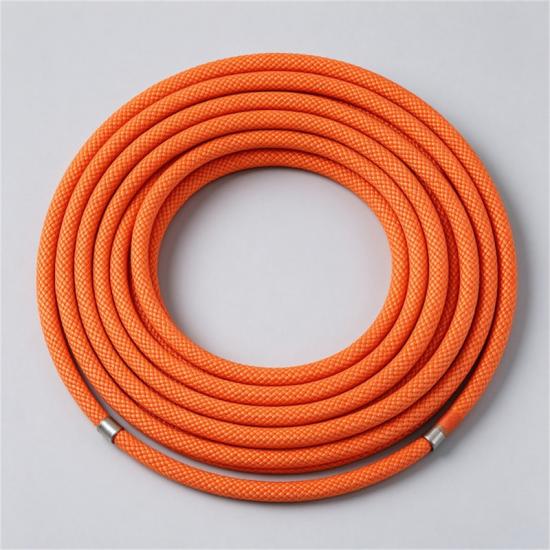
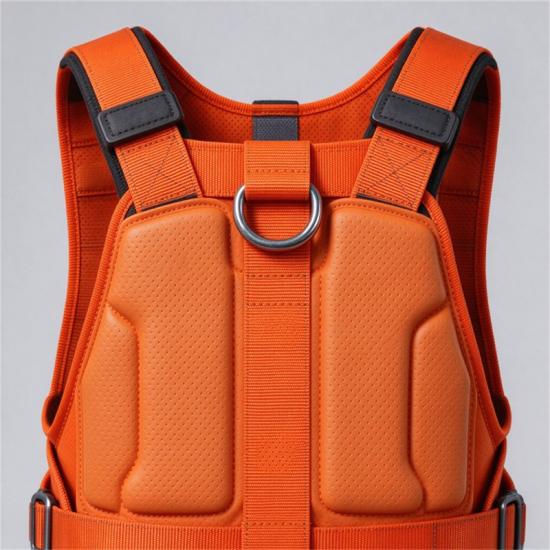
For hospitality buyers, a escape system for hotel guest room safety kits must meet local fire codes and withstand regular inspection cycles.
Note: Price for reference only. Exact price based on quantity, size, weight and custom details.
model no. :
SQ-05Brand:
YRFmarket price :
$10.9sale price :
$5.9price range :
30-100/$5.9Color :
Multiple Colorsport of dispatch :
Guangdong/GuangzhouPayment :
TT, Paypal, Western Unionmin order :
30original region :
Made in ChinaLead Time :
5-15daysSize :
Universal size |
A escape system and safety harness kit is a complete emergency evacuation system that lets one person leave a burning high-rise window under controlled friction. Each kit pairs a woven kernmantle rope with a padded full body harness, a descender and locking carabiner, all tested to EN 361 and EN 1891 for schools, hotels and relief buyers.
 |

|
Below is a quick map of every section on this page, so buyers can jump straight to rope specs, harness sizing or certification codes.
1. Product Overview
2. Rope Technology
3. Full Body Harness
4. Descender & Connectors
5. Anchor & Rigging
6. How to Use
7. Rope Length Guide
8. Certification Standards
9. Inspection & Maintenance
10. Scenarios: Home Hotel School
11. Role Clarity
12. Custom Options
13. Misconceptions
14. Cost of Ownership
15. Wholesale & Tender
16. FAQ
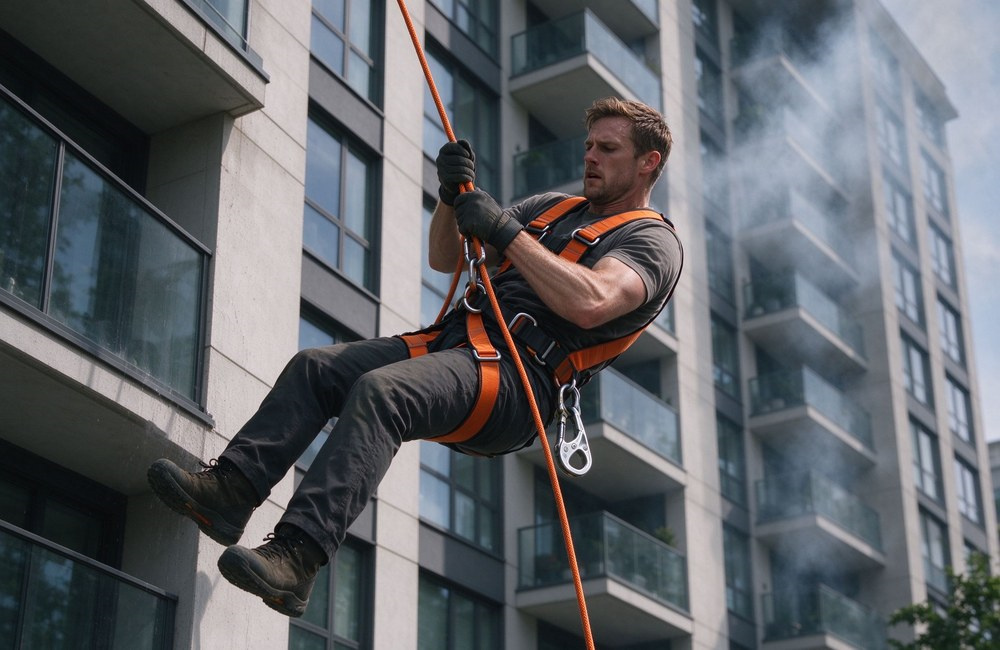
When a stairwell fills with smoke, a escape system becomes the only exit left. A well-built emergency escape system needs no power or charged cylinder. This page walks buyers through every component of a full body harness wholesale order: the static rope, the fall arrest harness, the descender and connectors, plus the EN standards each part is tested to.
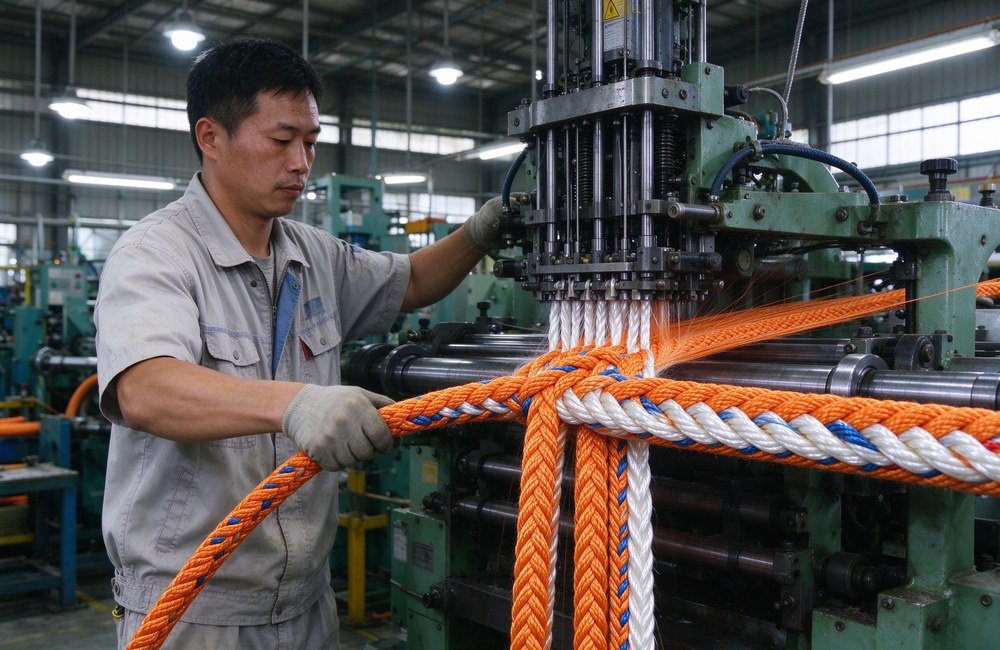
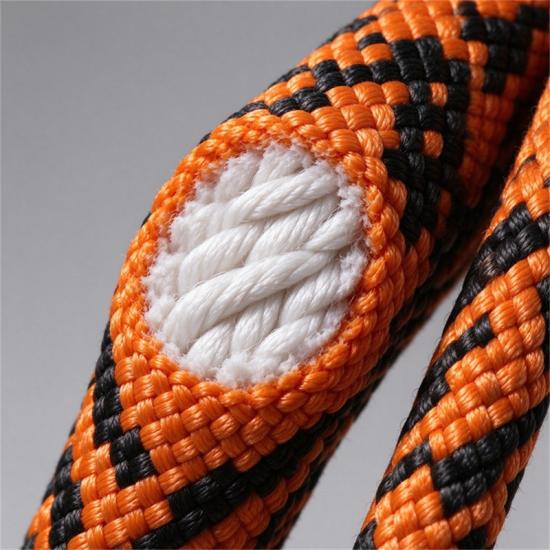
Every kernmantle rope we ship begins as high-tenacity polyester and nylon yarn on braiding machines. The inner core carries the load; the outer sheath protects it from abrasion and UV. This split is why a fire evacuation rope coils in a bag yet holds an adult through a controlled rappel.
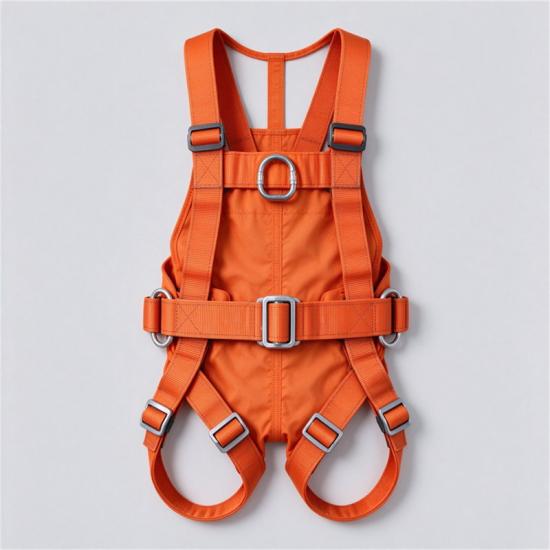
The safety harness side is just as engineered. A modern full body harness spreads stopping force across shoulders, legs and a padded waist belt, with a chest D-ring for escape and a back D-ring for fall arrest. Quick-connect buckles let a stressed user gear up in under a minute.
Read on to compare static and dynamic rope, pick a diameter, size a harness, choose a descender, and map rope length to floor height. The tables and FAQ turn these choices into a spec for your team.
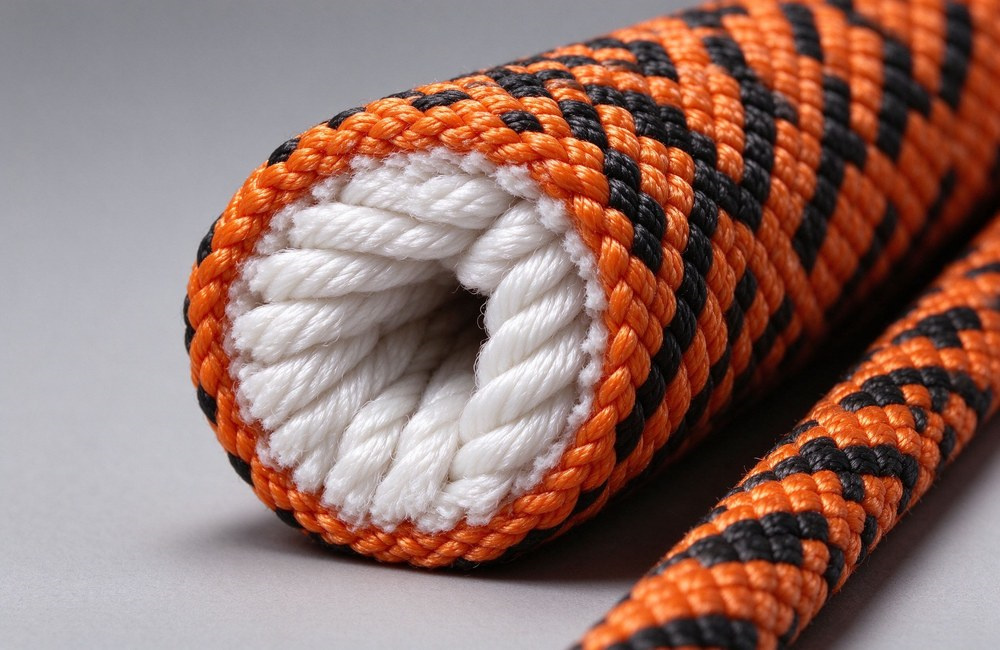
A complete escape system with harness kit is a small system of six parts working in series. This high rise fire escape kit pairs a kernmantle descent line with a padded body harness, so the whole emergency escape system requires attention on the day one part is missing.
Buyers should confirm every line below appears on the packing list before shipment.
The kit centers on a 10mm to 12mm static rope cut to your building height, with a padded full body harness in M-L or XL-XXL. A friction descender, a locking steel or aluminium carabiner, an optional energy absorber on a 2m lanyard, and a reinforced carry bag finish the set.
Each part is chosen so the system works for a 70kg user under EN 361 harness and EN 1891 rope test conditions.
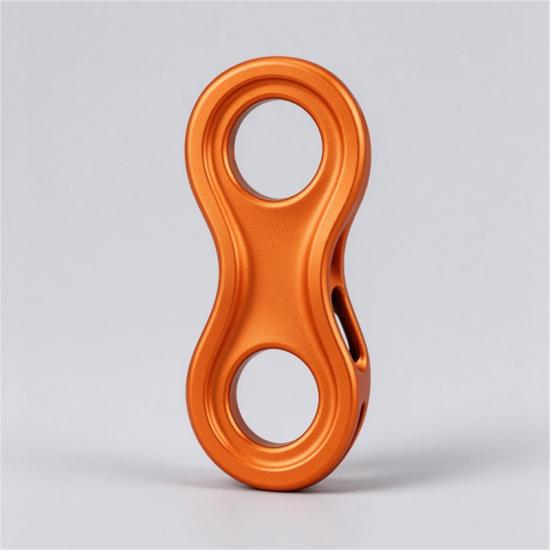
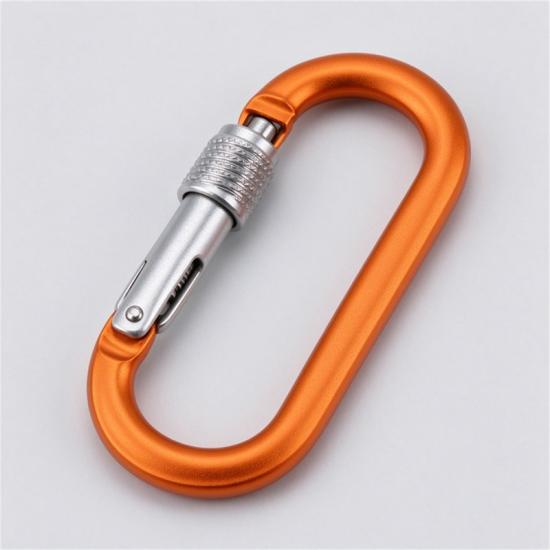
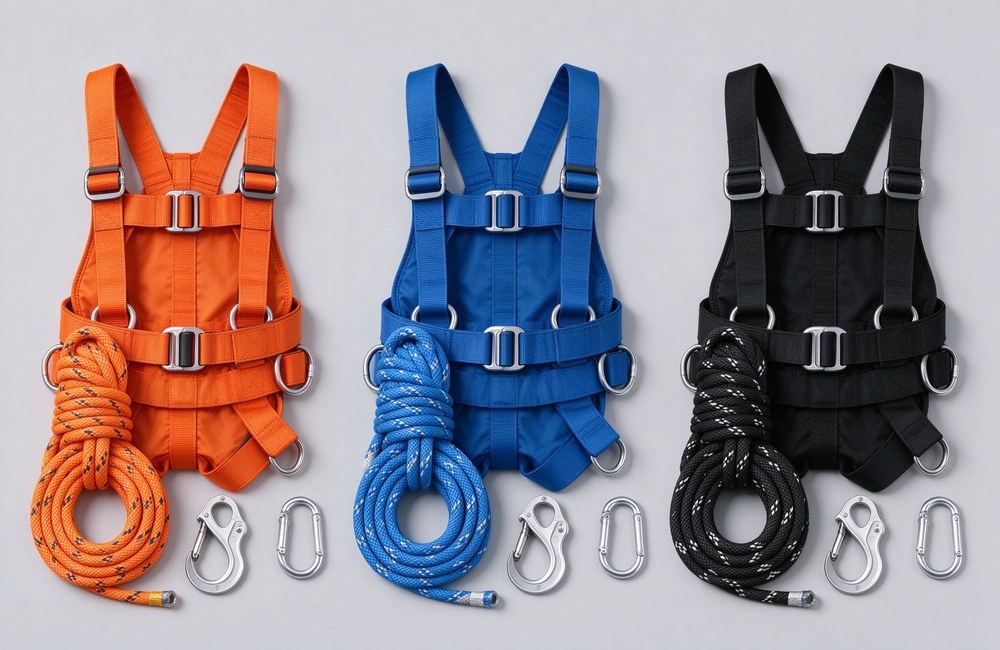
The default export config ships with an orange kernmantle escape system, an orange-and-black EN 361 harness, a 7075 aluminium figure 8 descender, an O-shaped steel locking carabiner, and a 2m lanyard. This is the configuration most schools and mid-rise hotels order.
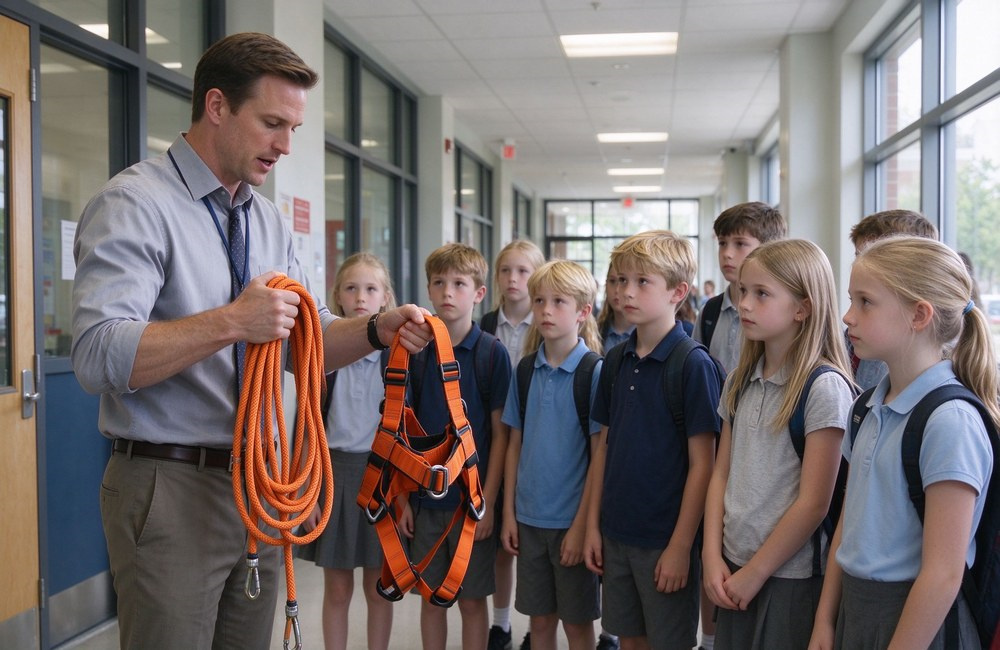
Schools place a escape system for school drills per corridor, hotels store one for guest rooms, and relief agencies pack kits into shelter shipments. Fire brigades use the same hardware for training towers. The same spec adapts with only rope length changing.
Table T1: Escape Rope & Harness Kit Components
|
Component |
Specification |
Material |
Standard |
Role in the Kit |
|
Kernmantle escape rope |
10mm / 10.5mm / 11mm / 12mm |
Polyester + nylon core |
EN 1891 |
Load-bearing descent line |
|
Full body safety harness |
M-L or XL-XXL, 5 D-rings |
Polyester webbing + EVA pad |
EN 361 / EN 358 / EN 813 |
Distributes fall and hang force |
|
Figure 8 descender |
8mm to 13mm rope, 30kN |
7075 aluminium |
EN 15151-2 |
Controls rappel speed by friction |
|
Steel O carabiner |
20mm gate opening, 25kN |
Zinc-plated steel |
EN 362-B |
Connects descender to chest D-ring |
|
Energy absorber lanyard |
Up to 2m, tear webbing |
Polyester tape |
EN 354 / EN 355 |
Reduces peak fall force |
Most buyers start with the default 10.5mm orange escape system and M-L harness, then adjust only when the user group is outside range. Smaller adults step down to 10mm rope; large rescue operators move to XL-XXL and 11mm or 12mm rope.
Stairwells are the designed exit, but a escape system for high rise building evacuation exists for when that exit is blocked. Why a building fire escape system belongs in hotel wardrobes starts with a burning upper floor.
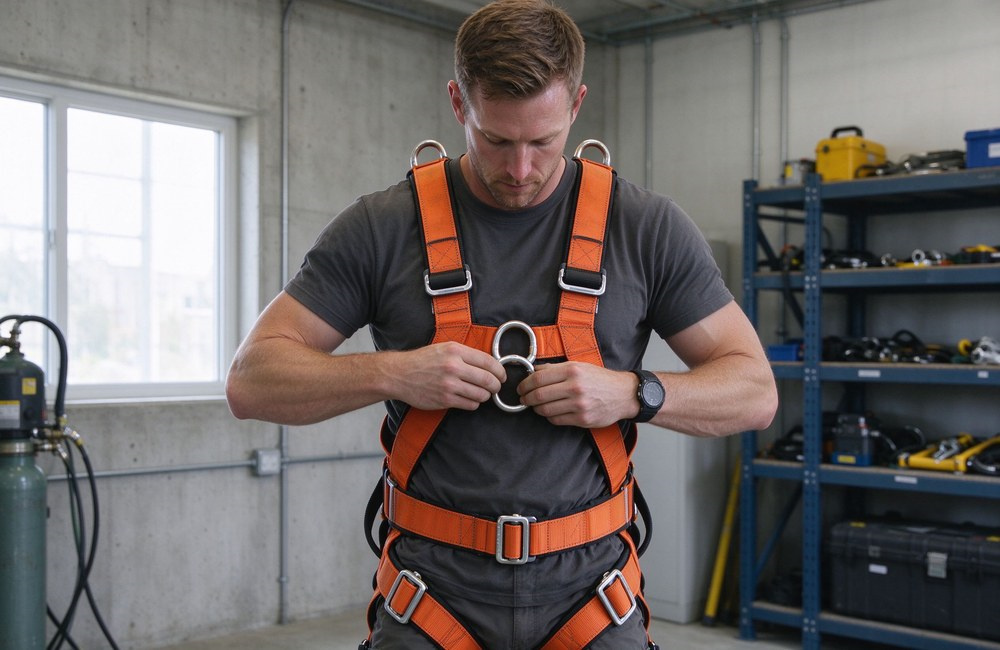
Smoke spreads faster than people walk. On an upper floor, a closed door buys minutes. When the corridor fills with smoke, the window becomes the remaining exit. A escape system stored inside turns that window into a planned second route, which is why fire codes encourage rope kits above the fourth floor.
Most people have never hung from a rope outside a window, so a padded full body harness matters. A bare chest harness digs into the ribcage within minutes, but an EN 361 harness with EVA padding lets users wait in suspension. Drill turns panic into controlled descent.
Buyers should match the escape system kit to the building's real risk, not to a generic catalogue. A mid-rise office with wide stairways needs a lighter escape system, while a narrow tower with a single stairwell needs a heavier safety harness kit with longer rope and a horn descender resisting overheating during evacuation.
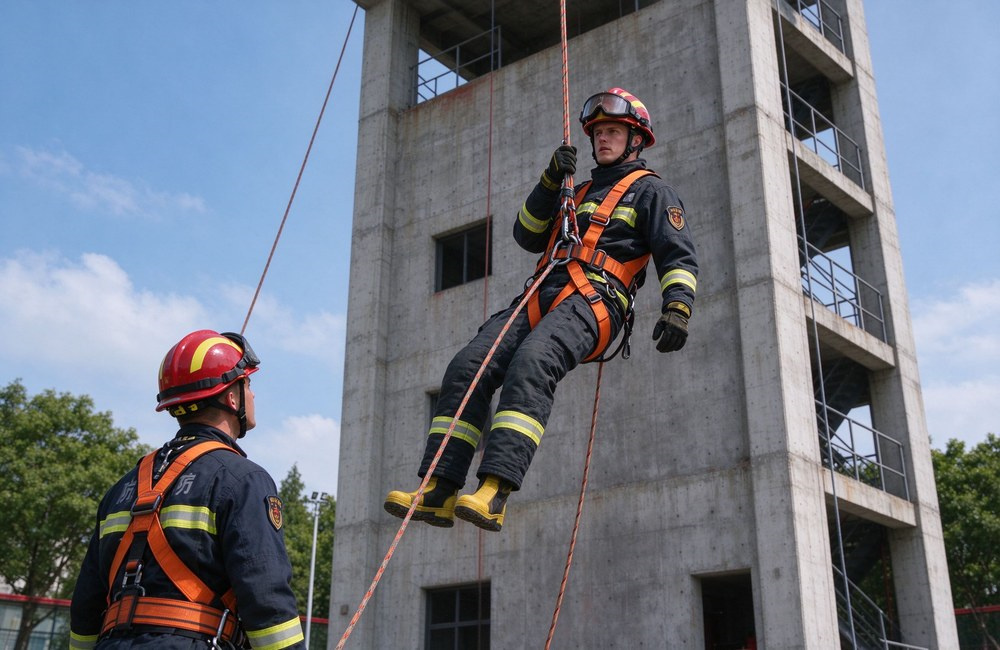
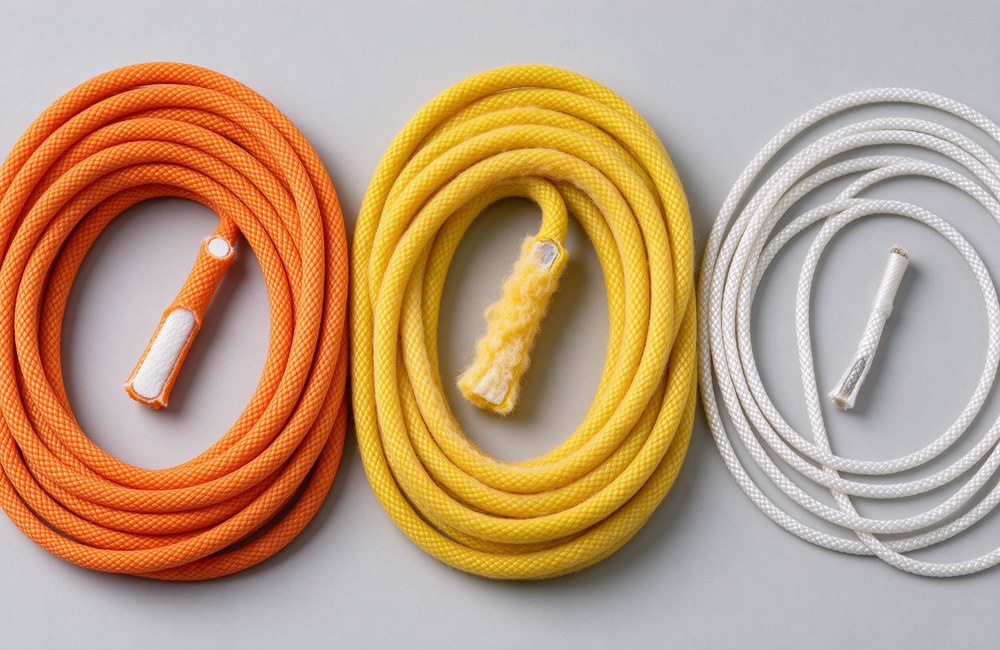
The kernmantle rope is the heart of any escape system kit. The word means core-plus-sheath, and that structure separates a real static escape line from a dynamic climbing rope or a budget tow rope. Dynamic rope suits sport climbing, but escape system must always be static.
A static rope stretches very little under load, ideal for controlled lowering, rescue hauling and rappelling. A dynamic rope stretches up to a third of its length to absorb a lead fall, so dynamic rope is never used for window exit.
For a fire evacuation rope, low stretch is a feature: the user descends smoothly without the bouncing rebound a dynamic line creates.
Inside the sheath, the core is braided from thousands of high-tenacity polyester and nylon multifilament strands. The outer sheath is a diamond braid that sheds dirt, water and UV. This construction lets a 10.5mm escape system weighs under 70g per metre yet breaks above 22kN, equivalent to hanging two family cars from a 10mm cord.
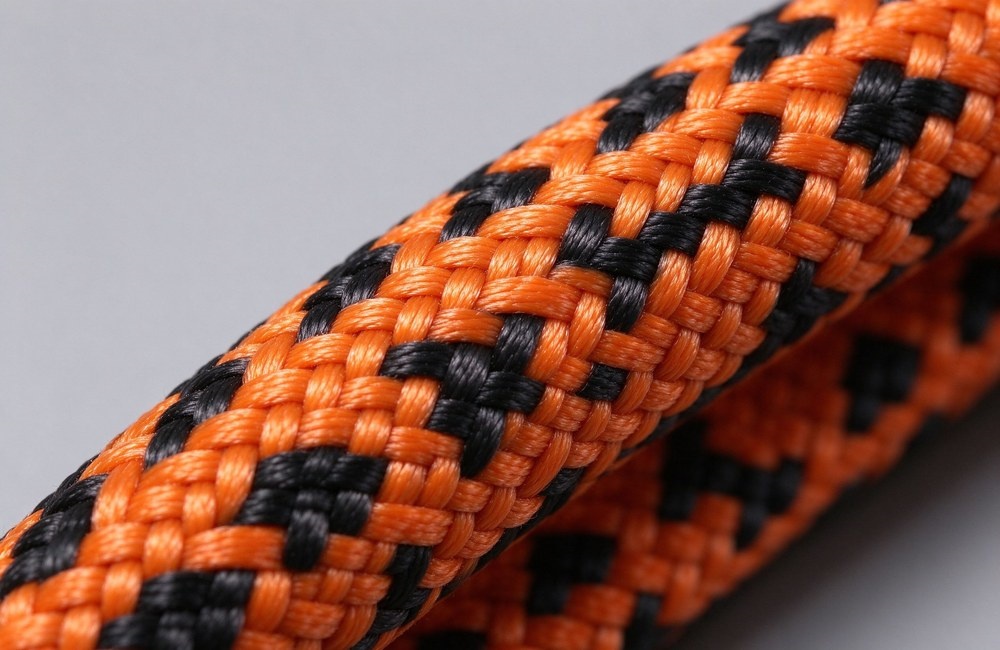
Thinner 8mm to 10mm rope is light but heats up faster through a descender. Thicker 12mm to 16mm rope is durable for rescue teams but tiring to feed one-handed. The sweet spot for a hotel or school escape system is 10mm to 12mm.
Table T2: Static vs Dynamic vs Accessory Rope
|
Feature |
Static Rope |
Dynamic Rope |
Accessory Cord |
|
Stretch under load |
Very low, near zero |
High, up to 30% |
Low |
|
Typical diameter |
10mm to 16mm |
9.8mm to 11mm |
4mm to 8mm |
|
Main use |
Escape, rescue, rappel |
Lead climbing |
Prusik loops, tie-offs |
|
Standard |
EN 1891 |
EN 892 |
EN 564 |
|
Fit for fire escape |
Primary descent line |
Not recommended |
Backup tie-off only |
The table makes the choice clear: a escape system should always be a static kernmantle line, never a dynamic climbing rope. Dynamic rope stretches too much for a controlled window exit, and dynamic rope rebound can slam a user against the wall. Accessory cord stays in the kit only as a short tie-off.
A full body harness is personal protective equipment fire safety programs depend on. The full body harness touches the body directly: get the fit mismatched and the wearer slips out of the leg loops. Get it right and the same full body safety harness holds a suspended user comfortably.
This is why an industrial fall protection system specifies a full body harness for every fall arrest and rescue situation.
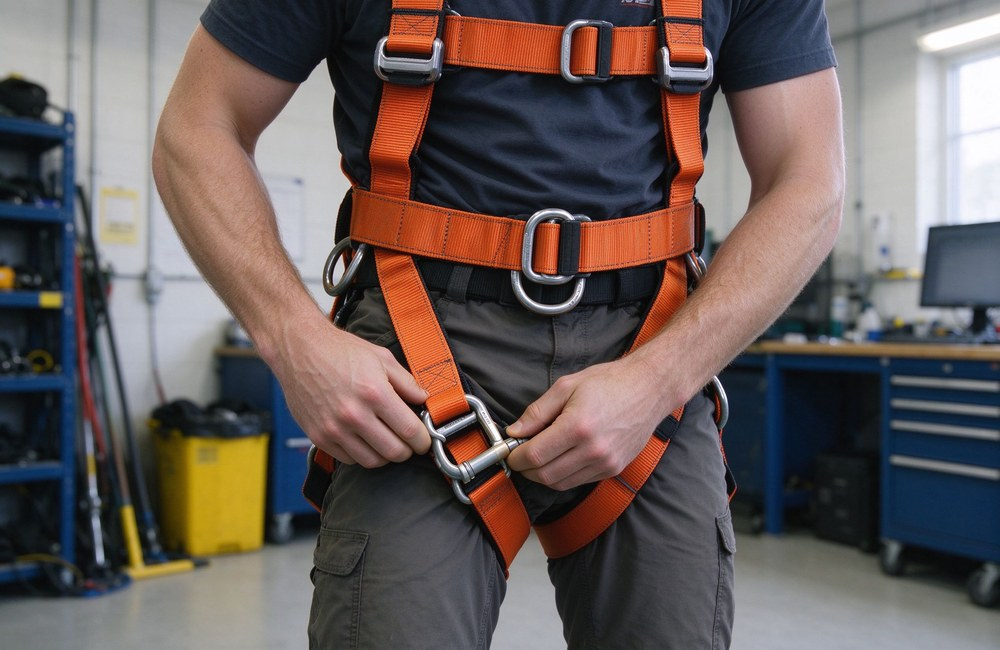
A modern full body harness tested to EN 361 harness standards carries five welded D-ring points: chest D-ring for escape descent, back D-ring for normal fall arrest, two side D-rings for work positioning, and seat D-ring for suspended access.
The fall arrest back D-ring clips the daily lanyard; the chest D-ring clips the descender.
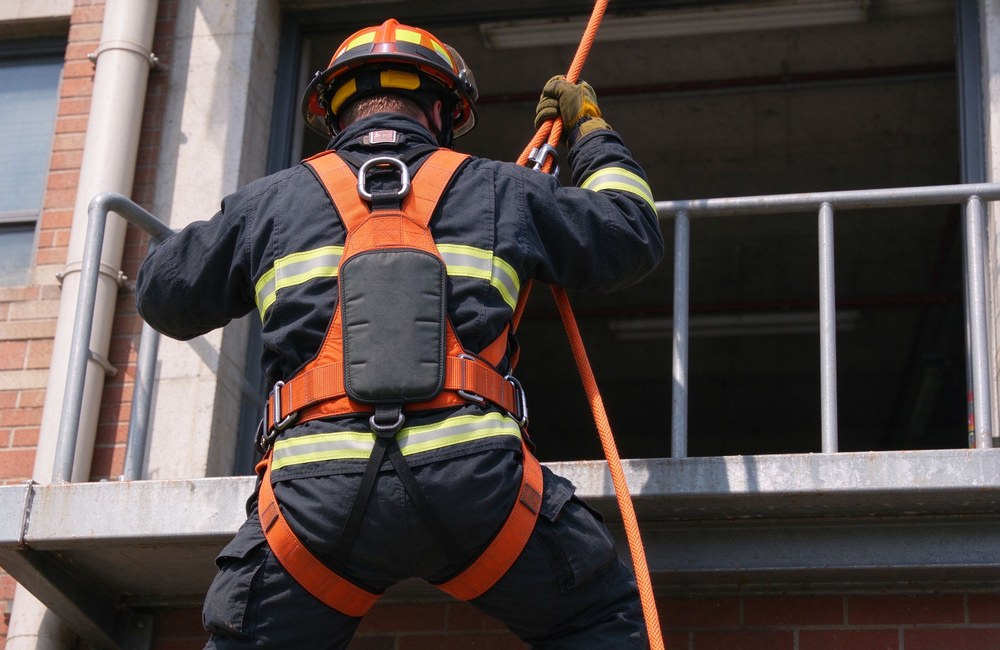
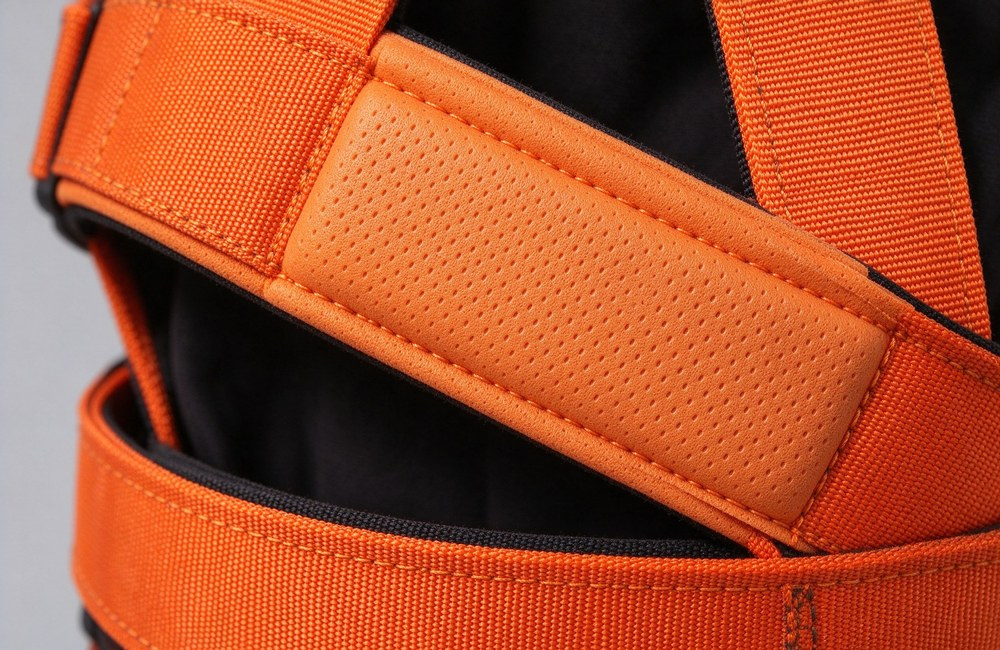
Shoulder straps, the waist belt and both leg loops are lined with open-cell EVA foam that breathes and spreads pressure. A padded safety harness can be worn over a shirt in warm weather. The webbing is high-tenacity polyester that resists UV and does not shrink when wet.
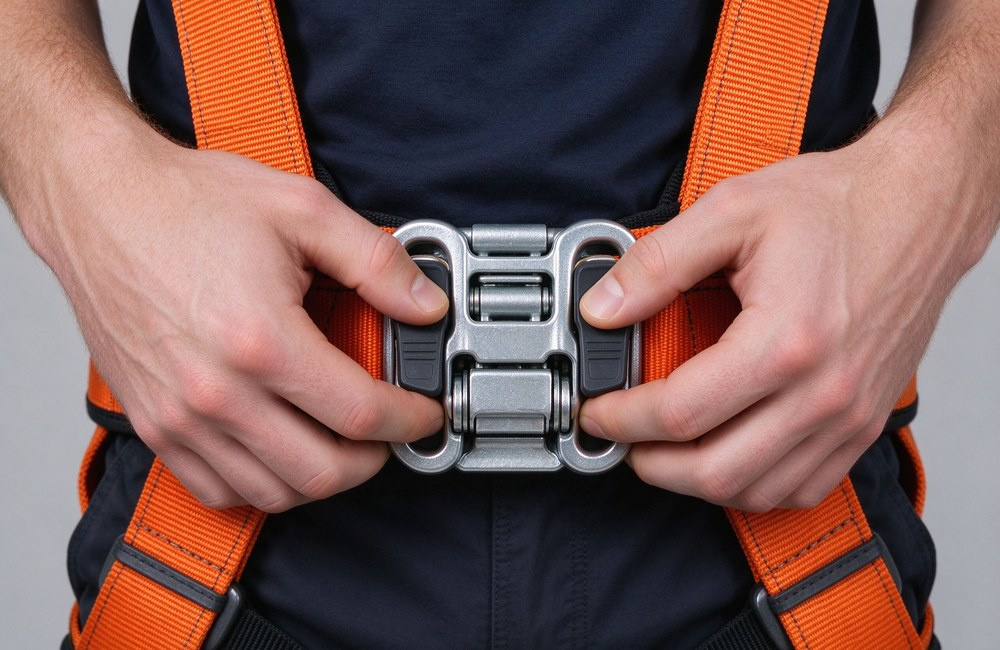
The M-L size fits waist 70cm to 110cm and thigh 45cm to 65cm, covering most adults 170cm to 185cm tall. The XL-XXL covers waist 80cm to 130cm and thigh 60cm to 75cm for users 180cm to 195cm. Nine steel adjustable buckles fine-tune every strap, and the double-lock quick-connect buckle needs two releases at once.
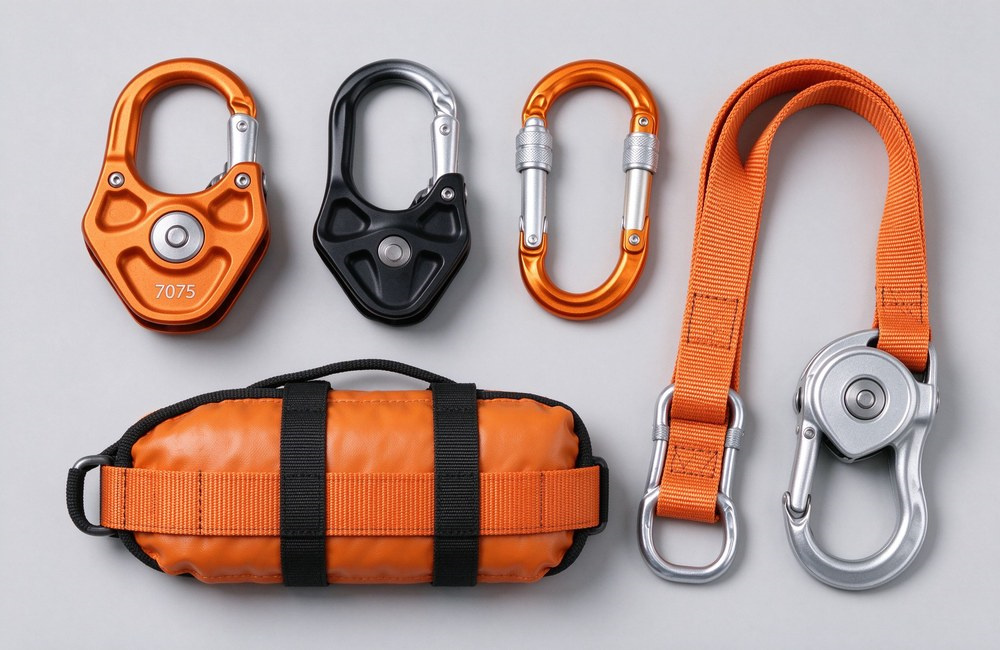
The descender and carabiner are the two metal parts that decide whether a escape system exit is smooth or jerky. They carry the entire weight of the wearer, so their material rating and gate design matter more than their price tag.
The figure 8 descender is light and familiar to every rescue trainee, working on 8mm to 13mm rope with a 30kN breaking strength. The horn descender adds a second friction bar, reaching 40kN, for heavy users and long-load evacuations without overheating.
For hotel drill use the figure 8 is enough; for a fire brigade kit we recommend the horn model.
An O-shaped steel carabiner opens 20mm and breaks at 25kN along the major axis, the workhorse carabiner for connecting a descender to the chest D-ring. A D-shaped aluminium carabiner opens 26mm and reaches 35kN, a lighter carabiner for rescue operators who clip and unclip all day.
Every carabiner must be locking, because a screw-gate gate stops the carabiner and rope from sliding out under a swaying load.
When a worker walks on a high platform, an energy absorber sewn into a 2m lanyard clips the back D-ring of the safety harness to an anchor line. If the worker slips, the tear webbing opens layer by layer, capping peak force below 6kN.
The lanyard is tested to EN 354 and the absorber to EN 355, making the same harness double as a daily fall arrest system.
Even the best escape system and safety harness are only as strong as the point they are tied to. A rope anchored to a curtain rod does not meet rated load before reaching its rated load, so rigging technique decides whether a kit works in a real evacuation.
A real anchor point should be a structural element: a thick steel heater pipe, a load-bearing concrete beam, a built-in wall eye bolt tested to EN 795, or a wrapped column of solid masonry. Furniture legs, window frames, radiators and glass are not anchors.
For fixed building kits, we recommend drilling a four-hole aluminium anchor plate into a structural wall, rated to 36kN, so tenants never have to improvise a escape system anchor.
Tie a figure 8 follow-through around the chosen anchor, then load the knot by pulling hard on both strands. Drop the free end of the static rope out of the window and confirm it reaches the ground.
Thread the live strand through the descender on the safety harness, clip the carabiner into the chest D-ring, lock the gate, and give a final pull before stepping onto the escape system.
Where two people descend from one window, split the load across two anchors rather than tying both to a single pipe. A rescue pulley rated to 24kN can redirect the rope so a ground operator can haul a stretcher or lower a heavy user.
Twin-point rigging is the safer default for a school or hotel floor where several users may exit in sequence.
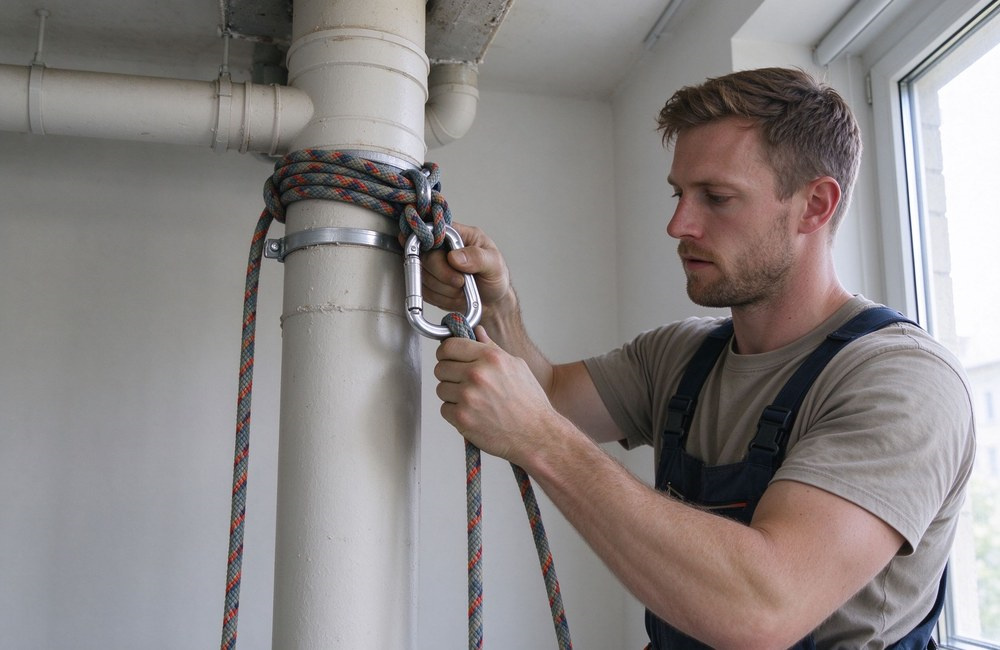
Learning how to use escape system is the core evacuation drill. A kit is useless if the user freezes at the window. The steps below match fire brigade training drills, simplified for a civilian after one drill session.
Close the door to slow the fire, then move to the chosen anchor point. Tie the kernmantle static rope to the structural element with a figure 8 follow-through, and test it by leaning back on the rope with both hands.
The anchor should not shift, creak or slide even under your full body weight plus the weight of the safety harness.
Step into the full body safety harness like trousers, fasten the leg loops first, then the chest buckle, then tighten the shoulder straps so the chest D-ring sits at sternum level. The waist belt sits above the hips. A ten-second partner check catches most fit mismatches.
Thread the free escape system through the figure 8 descender, clip the locking carabiner into the chest D-ring, and spin the carabiner gate closed. Tug the carabiner to test, then confirm the gate clicks locked. Sit back so the webbing takes your weight, place your brake hand low on the rope, and feed slowly.
The carabiner carries full body weight, so double-check the gate is locked.
Watch the ground approach, bend your knees as your feet touch down, and roll forward to absorb the impact. Unclip the carabiner from the safety harness, inspect the carabiner gate for damage, step out of the harness, and move away from the wall so the next landing zone stays clear. Leave the anchor tied for rescue use.
Ordering a escape system for high rise building use too short strands a user on a ledge. Ordering one too long means metres of rope dragging through broken glass. The table below matches floor height to the high rise fire escape kit length most hotels and tower blocks choose.
Each floor adds roughly three metres of drop. Add five metres of safety margin for the anchor knot, the descender friction and a soft landing, and you arrive at the recommended escape system kit length.
A 15m rope covers floors two to three, 20m covers floors four to five, 30m covers floors six to eight, 40m covers floors nine to ten, and 50m or custom length covers anything above ten.
Never cut the escape system to the exact measured drop. The margin lets the wearer tie a proper anchor knot, seat the descender, and leave a few metres on the ground for a clean landing. A safety harness kit ordered without margin is the most common procurement point to confirm.
Rope is cut to order in one-metre steps from 10m to 100m. For buildings above ten floors, split the descent into two stages with an intermediate anchor rather than shipping a single heavy 60m line. Custom lengths ship pre-coiled with the cut end heat-sealed.
Table T3: Rope Length by Floor Height
|
Floor Range |
Approx. Drop |
Recommended Rope Length |
Safety Margin |
Typical Use Case |
|
2nd to 3rd floor |
6m to 10m |
15m |
+5m anchor tail |
Low-rise hotel, school wing |
|
4th to 5th floor |
12m to 16m |
20m |
+5m anchor tail |
Mid-rise office, clinic |
|
6th to 8th floor |
18m to 25m |
30m |
+5m anchor tail |
Apartment block, hotel tower |
|
9th to 10th floor |
27m to 32m |
40m |
+5m anchor tail |
High-rise residential |
|
Above 10th floor |
30m and up |
50m or custom |
Multi-stage rig |
Tower, rescue training |
Use the right-hand column as a checklist: adjust the escape system length rather than the diameter. A third-floor classroom block does not need a 40m kit, and a tenth-floor guest does not need a 15m one. The margin column is why we always ship a few extra metres.
Reference the public standards directly: browse NFPA fire protection standards for general fire safety guidance, and check USFA evacuation resources before you finalize a training drill.
European standards are the language international buyers use to compare a escape system and safety harness kit. Every part is tested to a specific EN number, and the table below maps each standard to the product it governs for your tender checklist.
EN 361 covers full body fall arrest harness construction, and any fall arrest system must use a harness that passes this fall arrest standard. EN 358 covers work-positioning belts, EN 813 covers seat harnesses. EN 1891 governs static kernmantle escape system, EN 892 governs dynamic climbing rope.
EN 362 covers connectors, EN 15151-2 covers descenders, EN 795 covers anchors, and EN 354 plus EN 355 cover lanyards and energy absorbers.
An EN 361 harness must hold an 80kg dummy drop without webbing performance concern. A static rope tested to EN 1891 must pass tensile and sheath-slip abrasion tests. A carabiner tested to EN 362-B must hold 22kN on the major axis.
Bulk orders ship with a test report per family, a batch traceability record, and a packing list tying each carton to the production lot. This matches tender requirements.
Table T4: EN Standards for Escape Rope & Harness
|
Standard |
Product It Governs |
Core Requirement |
Key Test Point |
|
EN 361 |
Full body safety harness |
Fall arrest body support |
80kg dummy drop, D-ring integrity |
|
EN 1891 |
Static kernmantle rope |
Low-stretch escape line |
Tensile strength, sheath slip, abrasion |
|
EN 354 |
Lanyard |
Connector line up to 2m |
Breaking load on webbing |
|
EN 355 |
Energy absorber |
Peak fall force below 6kN |
Tear-webbing deployment test |
|
EN 362-B |
Carabiner |
Connector strength |
22kN major axis, gate closed |
|
EN 15151-2 |
Descender |
Controlled descent device |
Rope friction, heat, hold force |
When you review a tender, match each specification line to the EN number in the left column. If your spec lists EN 361 safety harness, EN 1891 escape system and EN 355 absorber, our standard kit covers all three. Extra standards such as EN 795 anchor plates are quoted separately.

A escape system kit hangs in a wardrobe for years until one day it is needed. That long idle period is why inspection matters: the webbing and sheath degrade slowly, and only a regular check catches the damage before use.
Before every drill, check the kernmantle sheath for soft spots, burns or white core. Open and close each carabiner gate, flex D-ring welds for cracks, and test the quick-connect buckle twice. Failed parts are retired immediately.
Once a year, a competent person lays the whole system on a bench, measures harness webbing at load points, checks absorber seams and inspects the descender sheave. We supply a checklist that doubles as your audit record.
Store the escape system and safety harness in a cool, dry room out of direct sunlight. A harness or rope exposed to a real fall, heat or acid must be retired on the spot.
The general service life for a full body harness and kernmantle rope is five years from manufacture, after which the webbing loses its rated breaking strength margin.
The same wholesale spec ships to different buyers, each using the kit for a slightly different job. Understanding these scenarios helps you order the right length and size.
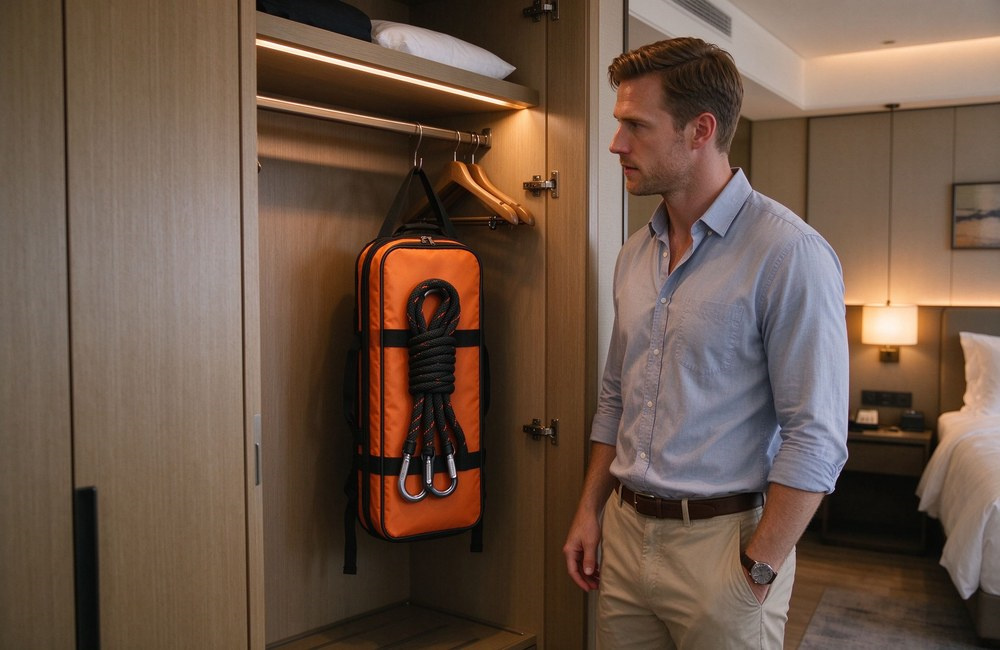
Apartment towers and dormitories store one escape system for home use per unit or per floor. Residents need the escape system for home use light enough to reach in a panic, simple enough after a five-minute video, and discreet enough for a wardrobe.
This is why the orange carry bag is our most requested residential pack, and why a home fire escape rope should be checked annually.
Factories and building sites keep the same escape system for factory use hardware on elevated platforms.
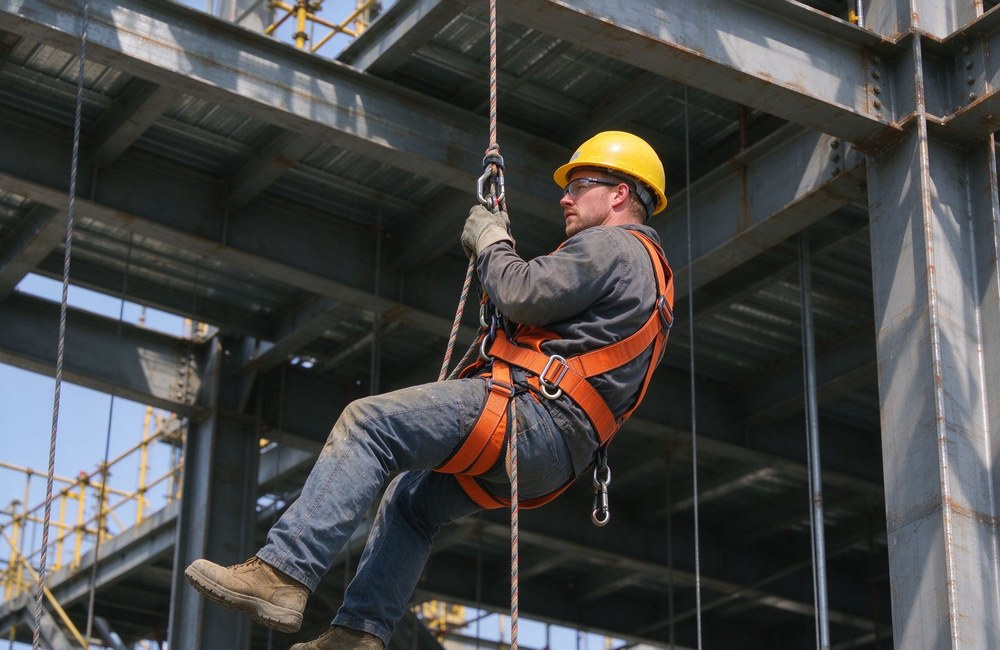
Here the safety harness doubles as a daily fall arrest harness inside an industrial fall protection system: workers wear the full body harness on shift, clip the EN 354 lanyard to a rail, and the same static rope becomes the emergency evacuation rope if the stairs fill with smoke.
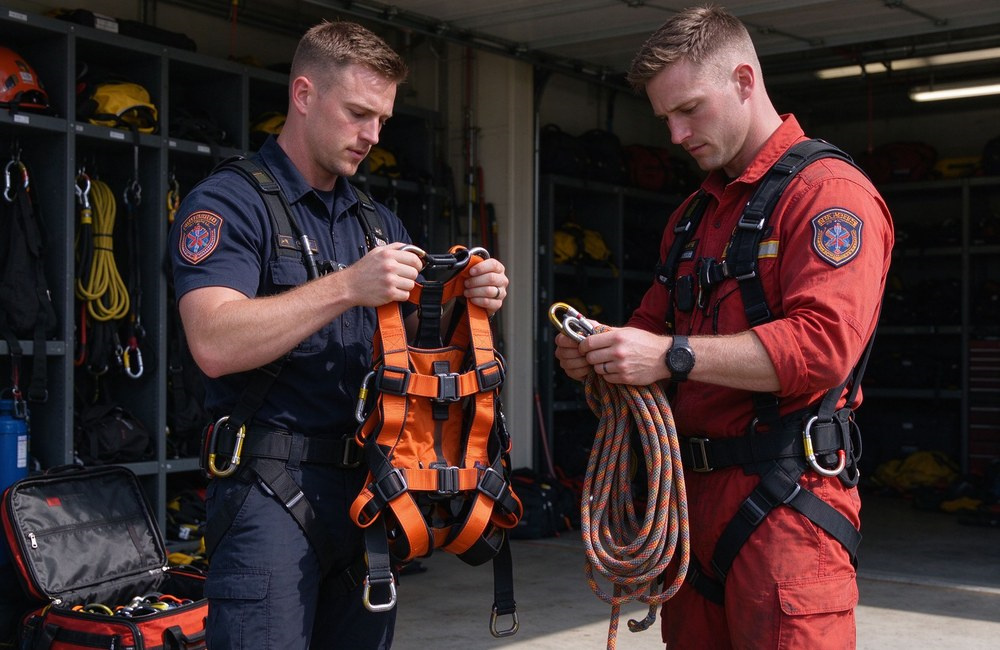
Fire brigades and civil defense academies buy more horn descenders and 12mm rescue rope, because training towers repeat the same descent dozens of times daily. Training safety harness kits take more abuse than hotel kits, which is why we ship them with heavier stitching on the harness leg loops and a spare carabiner in the carry bag.
A escape system, a fire extinguisher and a breathing apparatus sit in the same budget but solve three different challenges. Mixing them up is a common procurement point to confirm, so this section draws the line clearly.
A fire extinguisher fights a small fire at its source. An SCBA lets a trained firefighter walk through smoke. Understanding escape system vs safety harness is key: the rope is the descent line, the safety harness carries the user, and together they form a building fire escape system.
The extinguisher stops fire, the SCBA protects the rescuer, and the escape system gets the user out.
If the fire is small and contained, an extinguisher is the right tool. If the corridor is filling with smoke and the user is not trained in breathing gear, the extinguisher should be abandoned and the emergency escape system deployed.
SCBA stays with professional firefighters, because it requires training, air cylinder pressure checks and face-fit testing that a hotel guest wearing a safety harness does not have.
Well-run hotels keep all three: extinguishers on the wall, escape system kits in the rooms, and SCBA at the fire station. The rope safety harness kit is the only piece a civilian can operate without training, which is why it belongs in guest rooms and dormitories.
Buyers ordering in volume rarely want a one-size catalogue kit. The custom options below are the most common changes to a standard safety harness wholesale order, and none changes the underlying EN-tested construction.
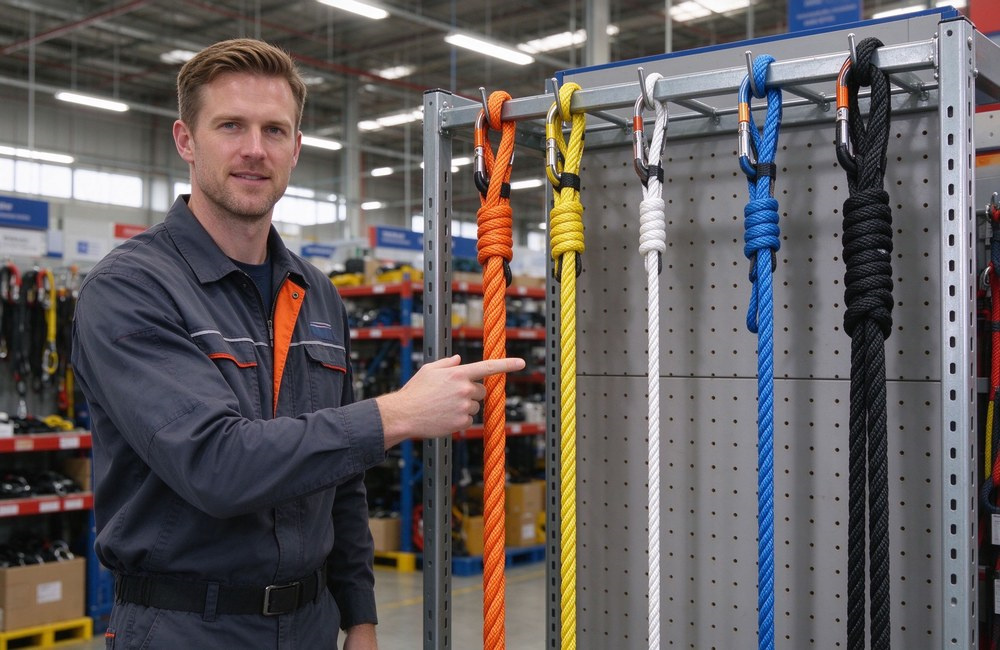
The escape system is cut to your exact floor height in one-metre increments from 10m to 100m. The cut end is heat-sealed and tagged with length and batch. The sheath comes in orange, yellow, blue, black and red.
The full body safety harness webbing comes in five colors to code teams by risk level. Orange is the universal rescue color, blue and yellow separate drill teams from working crews, and black stays discreet in industrial plants. Every color passes the same tensile test.
Your organization LOGO can be woven into a sewn chest label on the safety harness, heat-printed onto the escape system carry bag, or embroidered as a patch on the shoulder strap. Woven labels are the most durable, heat transfer is the most cost effective, and embroidery sits between the two.
Artwork in vector format is prepared to your approval before production starts.
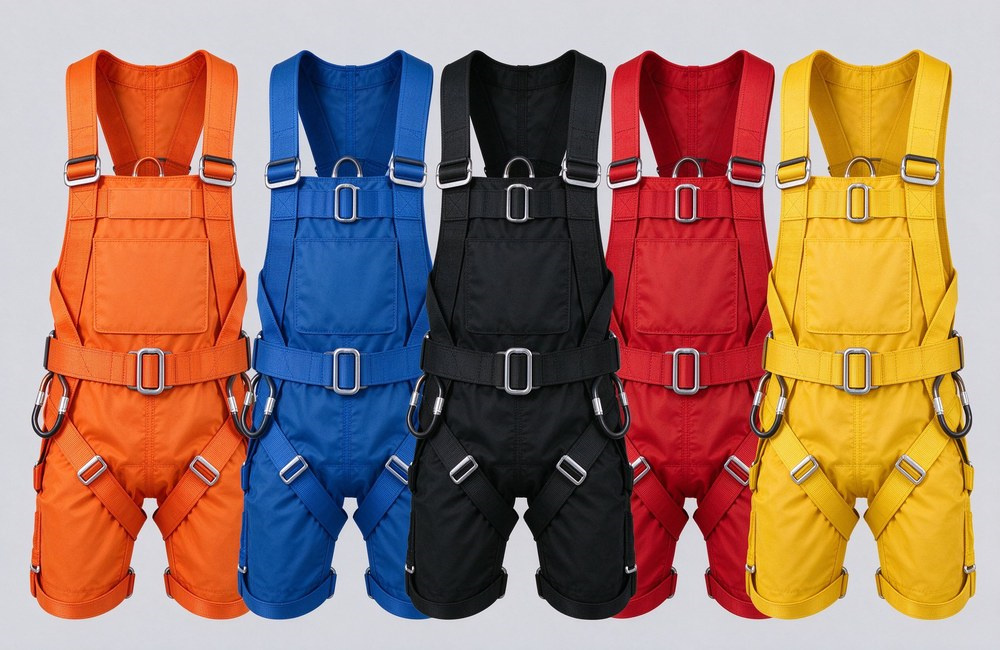
After years of supplying escape system and safety harness kits, we hear the same misunderstandings repeat. Clearing them up saves buyers from ordering a mismatched spec or skipping the drill practice that makes a kit work.
Misconception one: any strong rope works for escape. A tow rope lacks the kernmantle core, UV-resistant sheath and tested breaking strength of a real static rope. Under sudden load, an untested escape system snaps where an EN 1891 line holds.
Misconception two: a safety harness is one-size-fits-all. A harness that fits a 90kg male will not hold a 50kg teenager safely, and a harness sized for a slim adult will pinch a large user's thighs.
The sizing ranges on our M-L and XL-XXL EN 361 harness exist for a reason, and drill uniforms should be checked against them before purchase.
Misconception three: once bought, the kit lasts forever. Webbing and kernmantle sheath age in storage, exposed to light, heat and humidity.
A escape system safety harness that has never been used still reaches the end of its five-year service life, and any kit that has seen a real fall must be retired on the spot, even if it looks fine.
Misconception four: you need SCBA before you need a rope. Breathing gear is for trained firefighters. A guest or student cannot don an SCBA in a panic, but almost anyone can anchor a fire evacuation rope, clip a carabiner and step into a safety harness after a five-minute drill.
Misconception five: a descender is optional. Lowering hand-over-hand on a bare rope burns palms within seconds with no speed control. A 7075 aluminium descender turns a panic slide into a controlled descent, which is why it is in every kit.

The sticker price is the smallest part of what a kit costs over five years. Buyers comparing only unit price miss the replacement cycle and drill time a real emergency plan requires.
A basic escape system kit with a 20m static rope, an M-L safety harness, a figure 8 descender, a steel carabiner and a carry bag is priced per kit in volume. The escape system price varies by length and configuration, so we quote each project rather than a fixed list price.
The EN-tested hardware is the main cost driver; buying direct from the factory removes one margin layer.
Harness webbing and escape system retire on a five-year replacement cycle, but metal hardware lasts longer if it passes annual inspection. Budget the original price every five years for textile parts; replace metal hardware only after a fall event.
Over five years, the true cost is close to two times the sticker price: one kit, one mid-cycle refresh, plus a small annual drill budget. A budget untested rope may halve the price but doubles liability if it requires attention, so tenders specify EN 361 and EN 1891.
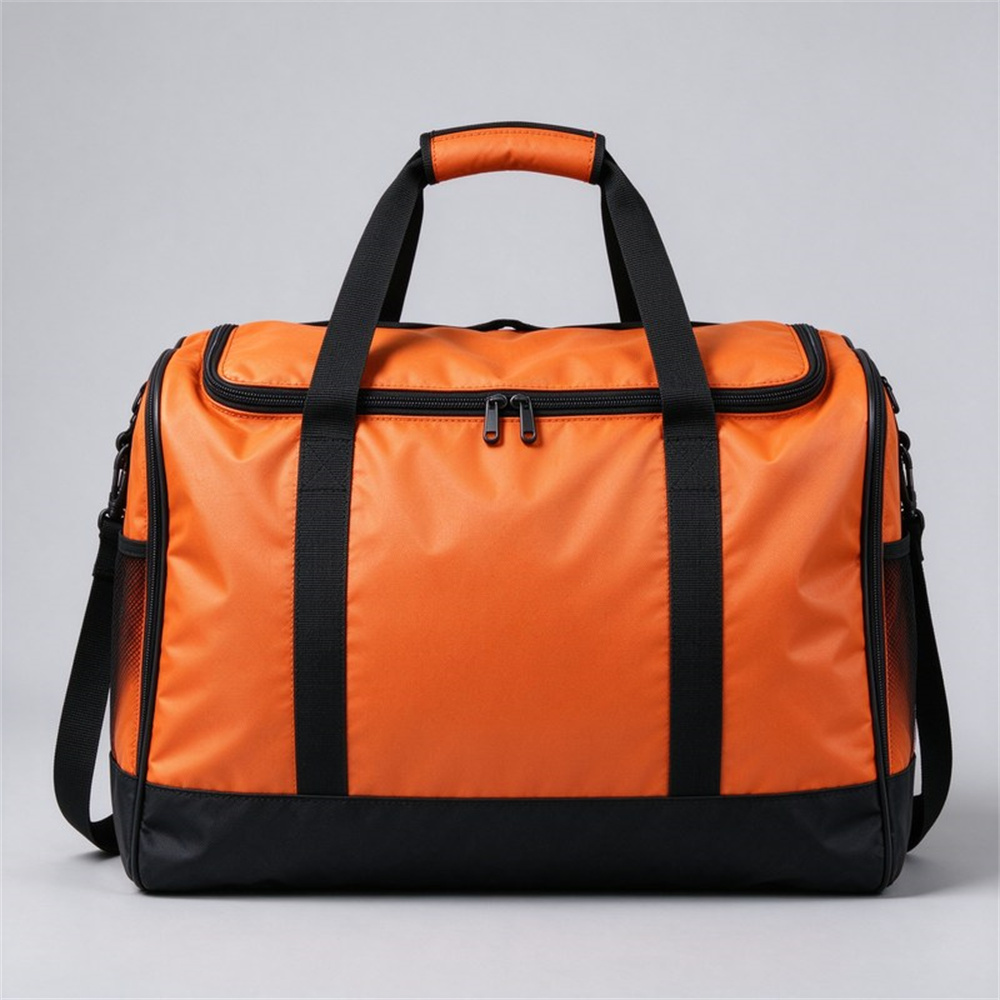
Most orders ship in this packed form: folded rope, harness and hardware in one waterproof drawstring bag, labeled by floor length. Warehouse staff count each bag against the picking list before it goes on the pallet, so a fifty-bag tender never arrives short one descender or carabiner.
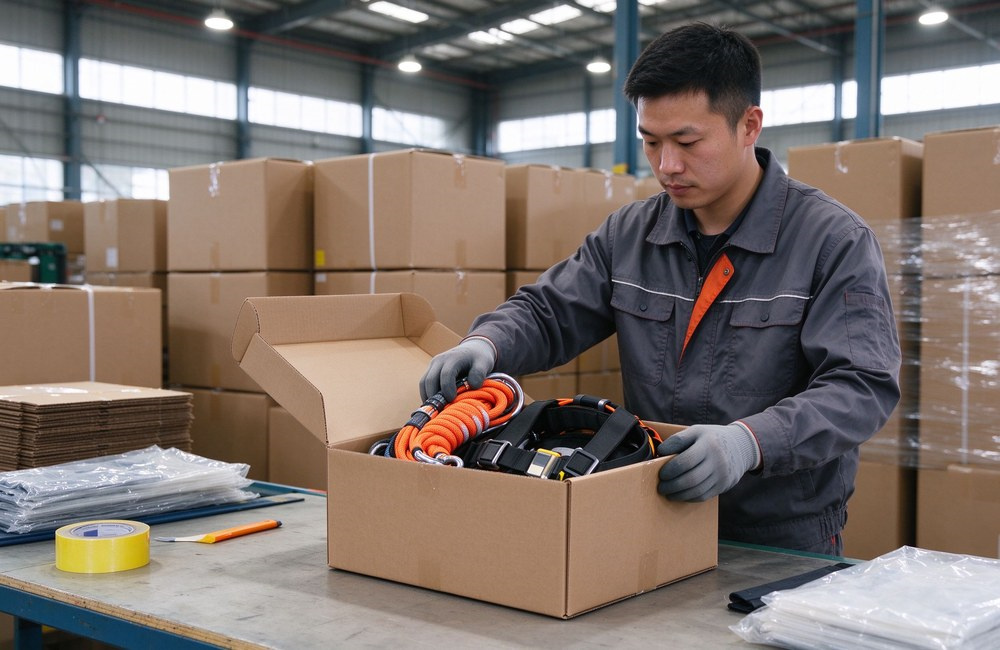
Orders for schools, hotel chains, relief agencies and government tenders share the same fire safety equipment wholesale questions: minimum quantity, packing lead time, and paperwork. We also handle fire department equipment supply for training towers. This section answers them in plain terms.
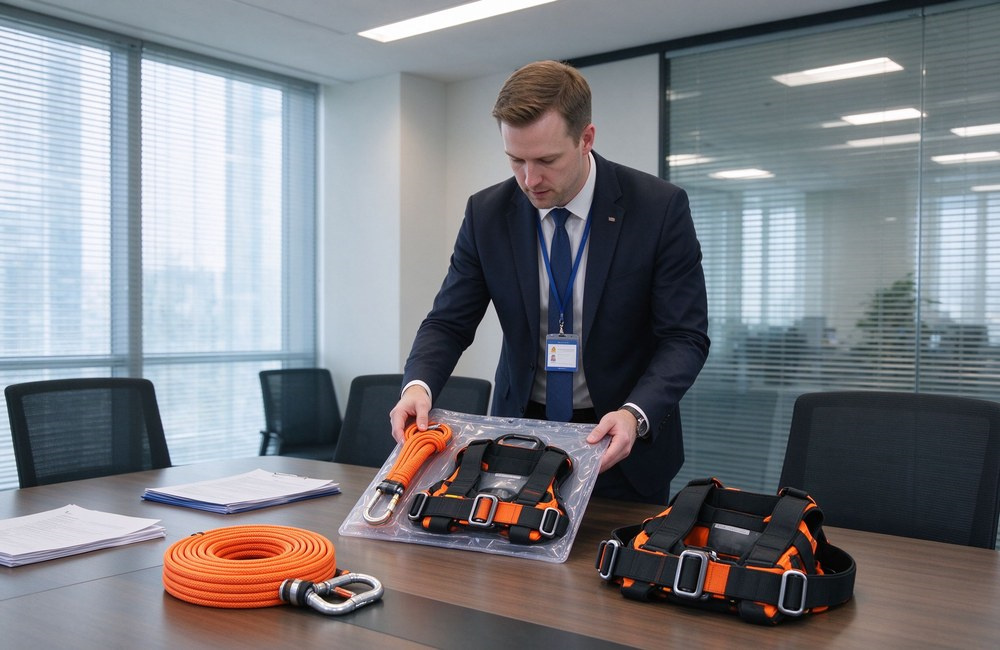
Custom escape system lengths, safety harness colors and LOGO printing have a minimum order quantity confirmed in the quotation, while the standard orange kit ships in smaller trial quantities. Volume buyers receive per-kit pricing that drops as the order grows from a single school to a multi-site chain. Mixed container orders are welcomed.
Each kit goes into a woven carry bag with sewn instructions, then into an export carton marked with model, length and batch number. Cartons are palletized; lead time is confirmed in writing.
Government buyers receive a documentation pack aligned with public tender requirements for fire safety equipment wholesale: EN test reports, batch traceability, packing list and spec sheet. Our fire department equipment supply program provides the same paperwork for municipal orders. Every listed EN number is report-covered.
Buyers comparing safety harness wholesale suppliers ask what separates one fire rescue rope supplier quote from another. When a escape system review mentions trust, it usually refers to the verifiable documentation we provide. The points below are claims in writing, backed by test reports.
Weave kernmantle rope in-house, sew harness webbing on our own line, and run a tensile test on sampled rope each batch. Every rope leaves tagged with batch number matching the test report.
The same workshop produces webbing, sewn harnesses and assembled kits, so buyers place one order. Custom lengths, colors or LOGO labels are scheduled into the line.
We avoid unverifiable claims like decades of experience, as personal protective equipment fire safety procurement demands. What we offer is checkable: test reports for every EN number, production photos of the weaving floor, and sample units shipped before bulk production. We work as a fire department equipment supply partner and fire rescue rope supplier for relief organizations worldwide.
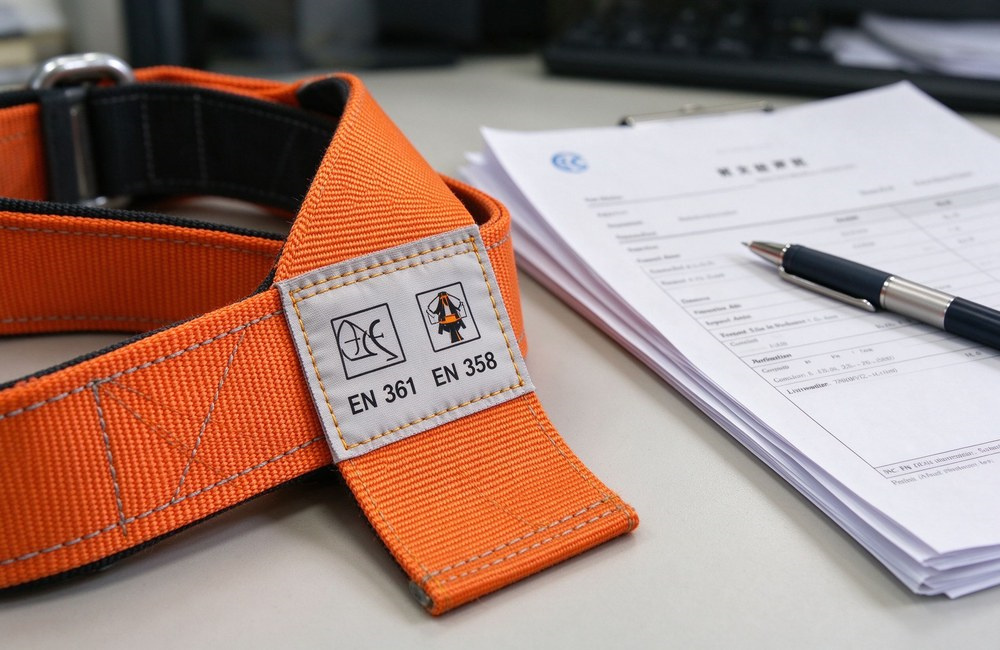
Below are the questions procurement managers ask most about the escape system and safety harness kit. Each answer covers material, sizing, deployment and ordering. If your question is not listed, the component and certification tables cover the detail.
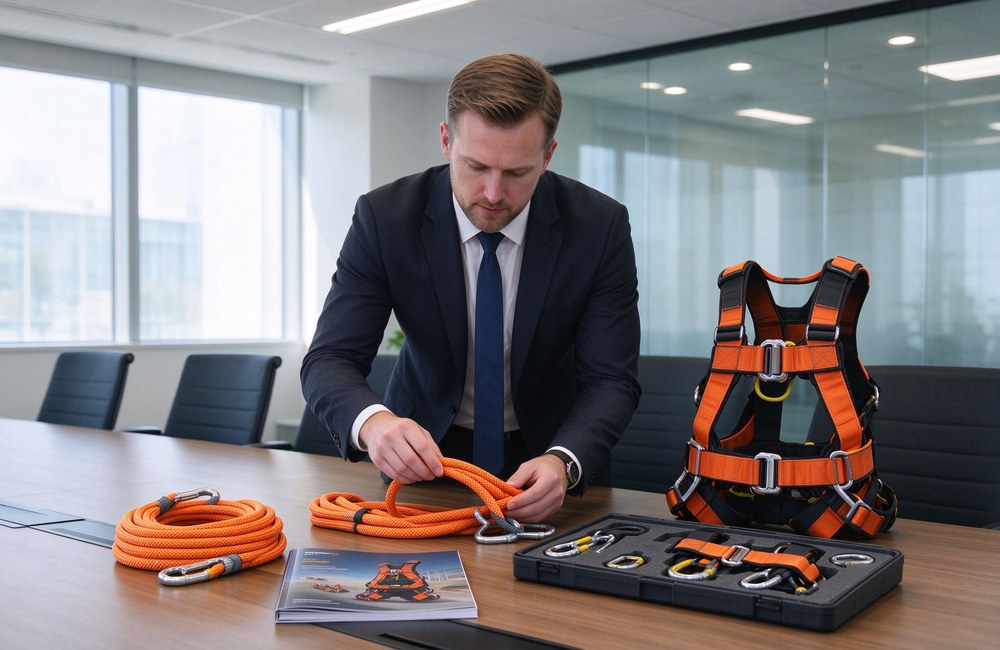
A kernmantle rope has a load-bearing inner core and a woven protective sheath. This gives a 10mm to 12mm escape system high breaking strength while staying flexible, making it standard for safety harness kits.
A static rope stretches very little, ideal for controlled rappelling. A dynamic rope stretches up to a third of its length to absorb a lead fall, and that bounce is unsafe against a wall. For a escape system, low stretch is the goal, so static kernmantle is always correct, never dynamic climbing rope.
For most hotel and school escape system kits, 10mm to 12mm static rope is standard. Thinner 8mm to 10mm rope suits light access but heats faster through the descender. Thicker 12mm to 16mm rope suits rescue teams; never use dynamic rope for training drops.
A full body harness has shoulder straps, leg loops, padded waist belt, chest D-ring, back D-ring, two side D-rings and a seat D-ring. This distributes fall force across the whole body rather than the chest alone, making it standard for any escape system or fall arrest system.
Every strap has a steel buckle and EVA padding, with a double-lock chest buckle.
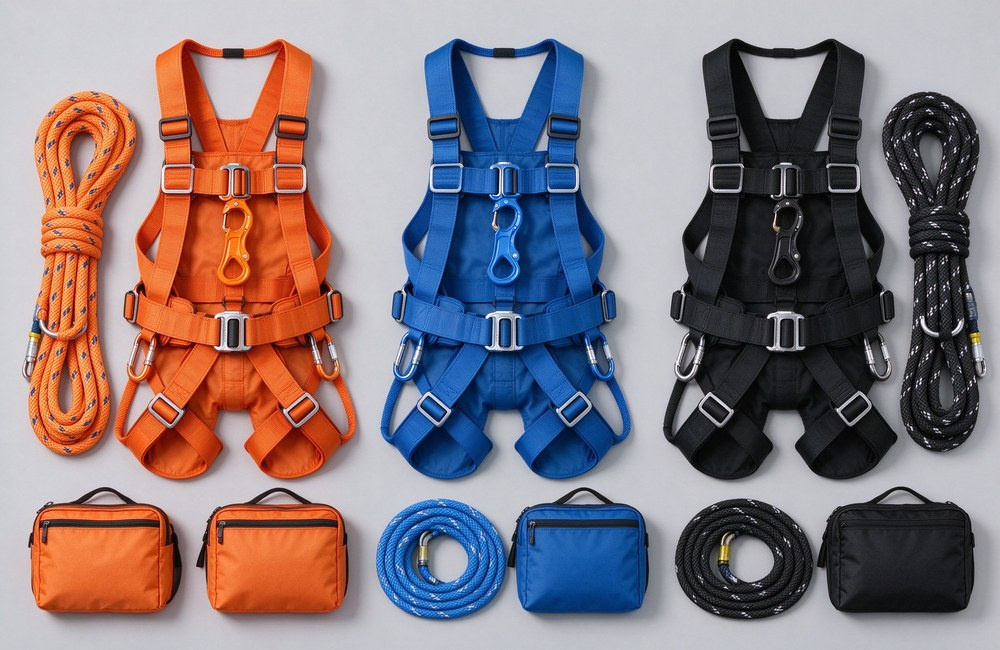
How to use escape system is simple: anchor the kernmantle rope to a structural point, thread the descender, clip the carabiner to the chest D-ring, then lean back and feed rope slowly. Five minutes of drill suffices for most adults.
Measure the window drop, then add five metres of safety margin. A 15m kit covers floors two to three, 20m covers four to five, 30m covers six to eight, 40m covers nine to ten, and 50m or custom covers above ten.
With a properly fitted safety harness and drill practice, teenagers and adults can operate the descender on their own. Young children and elderly users with limited upper body strength should be lowered by an escort rather than self-descending. The harness must be sized to the wearer.
Check the kernmantle sheath for soft spots or exposed core, cycle carabiner gates, inspect D-ring welds, and test quick-connect buckles.
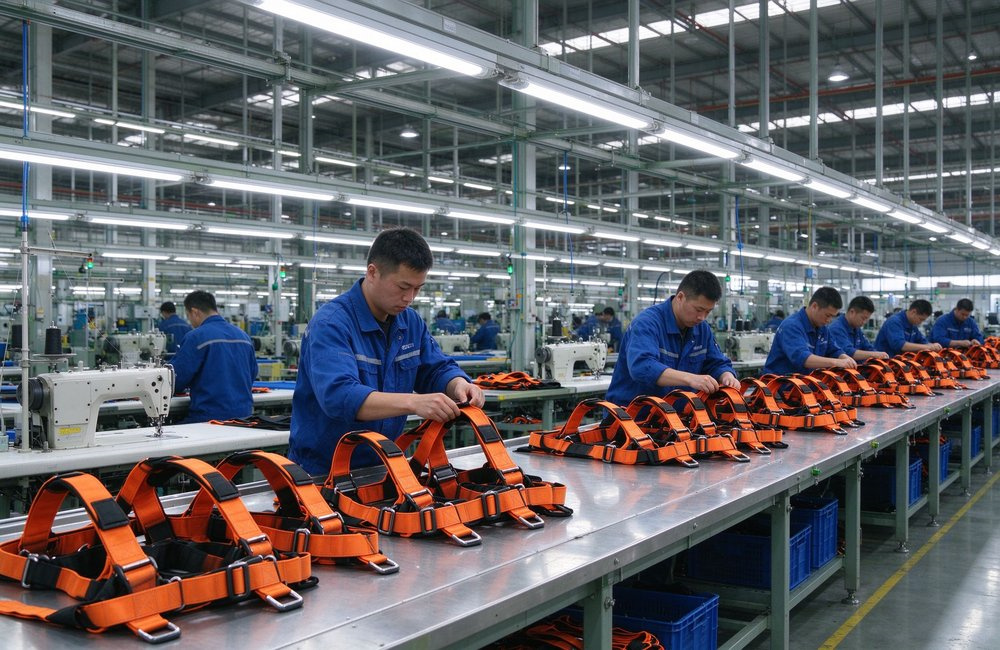
Our full body safety harness is tested to EN 361, EN 358 and EN 813, and our static kernmantle escape system is tested to EN 1891. Lanyards are tested to EN 354 and the energy absorber to EN 355. Test reports match every EN number listed on the product tag.
A 10mm to 12mm kernmantle static escape system typically breaks above 22kN to 30kN. A steel O-shaped carabiner reaches 25kN and an aluminium D-shaped carabiner reaches 35kN along the major axis, and every carabiner in the kit is inspected for gate spring before shipment. A figure 8 descender is rated to 30kN and a horn descender to 40kN.
Safety harness webbing and kernmantle escape system are retired after five years, or immediately after any real fall arrest event, heat exposure or chemical contact. Metal descenders and carabiners stay in service longer if they pass annual inspection. Cool dry storage out of sunlight extends service life.
Yes. If you search for escape system near me, we supply worldwide and can connect you with regional distributors. Rope is cut to order in one-metre steps from 10m to 100m, and harness webbing comes in orange, blue, black, red and yellow. Accessory colors match your visual identity.
Yes. We offer woven label sewing on the safety harness chest strap, heat transfer printing on the carry bag, and embroidered patches on request. The escape system price varies with LOGO complexity, rope length and order volume, so each quotation is prepared to your spec rather than a fixed price list.
Minimum order quantities apply and are confirmed in the quotation.
Yes. We supply EN test reports, batch traceability records, packing lists and invoices aligned with public tender requirements. We support procurement teams from schools, hotels and government agencies. Every EN number listed is one the report covers.
 Multi-function Life Saving Rope, 8-20mm Optional, Earthquake Rescue
This high-strength rescue safety rope is made of premium polypropylene material with a load-bearing capacity up to 2741kg. Multi-channel mechanical seaming ensures firmly secured ends without loosening. High-visibility design in orange, yellow, red, and blue allows quick identification in complex rescue environments. The soft rope design is easy to tie and stays secure, available in multiple specifications from 8mm to 20mm, suitable for various rescue scenarios including earthquakes, floods, and fires, providing over 99% safety assurance for rescue personnel.
 High-Reliability Escape Descender Kit for School Safety
This High-Reliability Escape Descender Kit for School Safety features YL104 die-cast aluminum, weighs only 3.5kg, offers IP65 waterproof rating, and includes high-strength steel cables withstanding 500 tons of pressure. With black body and orange markings, it complies with GB8624-2012 national safety standards, operates at heights of 4-80 meters, maintaining stable descent speed of 0.8-1.2 meters/second. Specifically designed for campus fire emergencies with simplified operation, suitable for school buildings, libraries, and dormitories, providing 98% reliable escape assurance for students and faculty.
 Steel Core Safety Escape Rope, Aviation-Grade, Fire Use
This Steel Core Safety Escape Rope features aviation-grade steel wire core design, 12mm standard diameter, with load capacity up to 500kg. The white body with red marking lines enhances visibility in smoky environments, while dual metal hook system ensures quick and reliable fixing in emergency situations. Heat-resistant treatment maintains functionality at fire scenes, making it essential safety escape equipment for professional fire brigades, high-rise buildings, and industrial facilities, providing reliable protection for over 200 fire departments nationwide.
 Military Grade Life Rope, Double Safety Hooks, High Altitude Rescue
This white military grade life rope is crafted from specialized tough polyester fibers with internal steel wire core reinforcement, coupled with dual safety hook structure, professionally tested with tensile strength up to 3000 Newtons. The dual safety hooks are made of aviation-grade aluminum alloy, providing secure and reliable locking. The rope surface features special treatment technology for exceptional grip, ensuring stable operation even in extreme weather conditions. Specifically designed for military training, high-altitude rescue, and emergency fire rescue operations, it is the equipment of choice for professional rescue personnel.
 Professional Fire Escape Rope Set, High-strength Hook, 7-piece Kit
This professional fire escape rope set features high-density steel wire core technology with load capacity of 250kg, ideal for high-rise emergency evacuation. White main rope with red marker lines design facilitates quick identification in smoke environments. Equipped with blue figure-8 descent device to control stable and safe descent speed. The complete set includes 7 professional rescue tools, with orange safety belt made of flame-retardant material, and high-strength hook capable of withstanding 3000N pulling force. Suitable for homes, office buildings, schools, and other scenarios, with 10-100 meter multiple specifications, certified by international fire safety standards.
 Fire Safety Rope Set, 8pcs, Building Escape Dedicated
This Fire Safety Rope Set is specially designed for building fire escape, featuring high-temperature resistant steel-core nylon structure with a single rope bearing capacity of 800kg, equipped with 8-piece professional escape gear. The set includes main rope, safety harness, descender, speed controller, anti-cutting gloves and other key components to meet emergency evacuation needs in high-rise building fires. The 20-meter rope is suitable for buildings under 8 floors, with all equipment passing national fire equipment testing standards, providing a reliable life passage for residences, office buildings, schools and other venues, making it essential home fire safety equipment.
Copyright © Custom Disaster - Relief Bedding: Tents, Sleeping Bags, Blankets All Rights Reserved
the professional team to service !