Explosion Proof Lighting for Petrochemical Hazardous
Areas
Petrochemical sites live with flammable gas and hot surfaces. Ordinary light is not allowed here, because a switch spark can become the ignition source. Certified explosion proof lighting for hazardous areas is engineered so its enclosure and heat path cannot trigger the atmosphere.

A refinery combines distillation columns, tank farms and pipe racks, each with its own Zone and lighting pattern. The plan layers fixed lamps for circulation and portable lamps for inspection and shutdown, and it is exactly this mix that defines explosion proof lighting for hazardous areas: sealed fittings on columns, pole floodlights on roadsides and hand lamps for tank entry where vapour can be continuous.
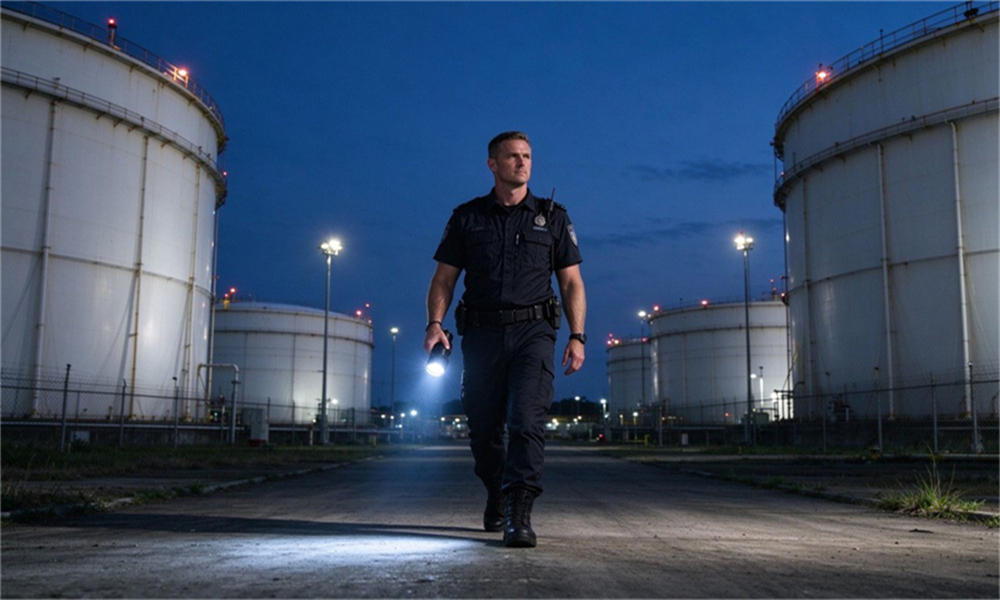
The tank farm and dike rely on pole-mounted floodlights for driving and walking routes, while tank entry needs an Ex ib hand lamp because the vapor inside a tank can be continuous.
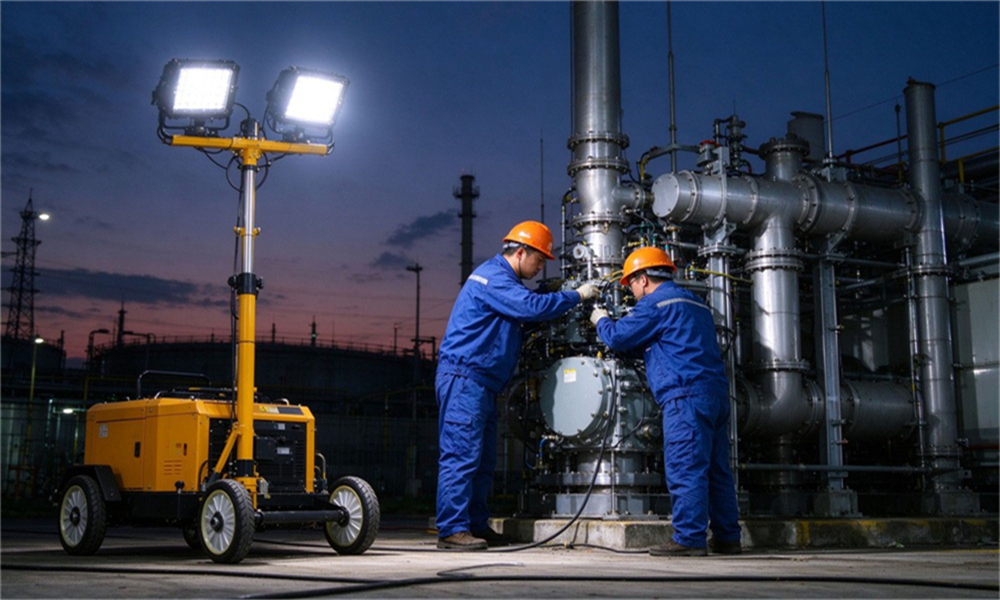
A turnaround differs from routine patrol. A wheeled mobile tower floods the whole work zone at night, and approved torches are set down at each repair point with the right scale of light.
An oil and gas station looks simple above ground, but the filling island, the submerged tank and the vapor recovery line each carry a classified atmosphere that the lighting must not disturb.
Contents
Special Risks Petrochemical Sites Create for Light Fixtures
Coal Mine Scenario: Heading, Working Face and Haulage
Reading Ex Certification and Matching It to Hazard Zones
Whole-Plant Lighting Retrofit: Assessment to Acceptance
Refinery Scenario: Distillation, Tank Farm and Pipe Rack
Common Lighting Hazards, Rectification and Maintenance
Chemical Plant Scenario: Reactor, Workshop and Warehouse
Petrochemical Explosion Proof Lighting FAQ
Oil and Gas Station Scenario: Fueling, Tank and Patrol
Sourcing Explosion Proof Lighting from China
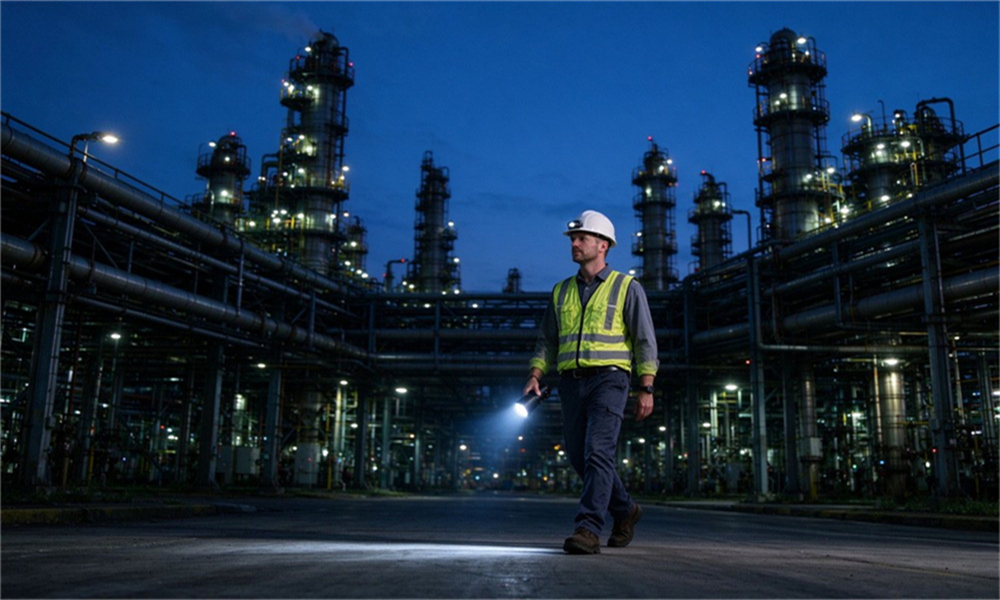
A petrochemical site stores, pumps or reacts hydrocarbons that can form a flammable mixture with air. If a light fixture sparks or runs hot, that mixture can ignite. This is why every fixed and portable luminaire in a classified area must be certified explosion proof lighting, not a standard factory LED.
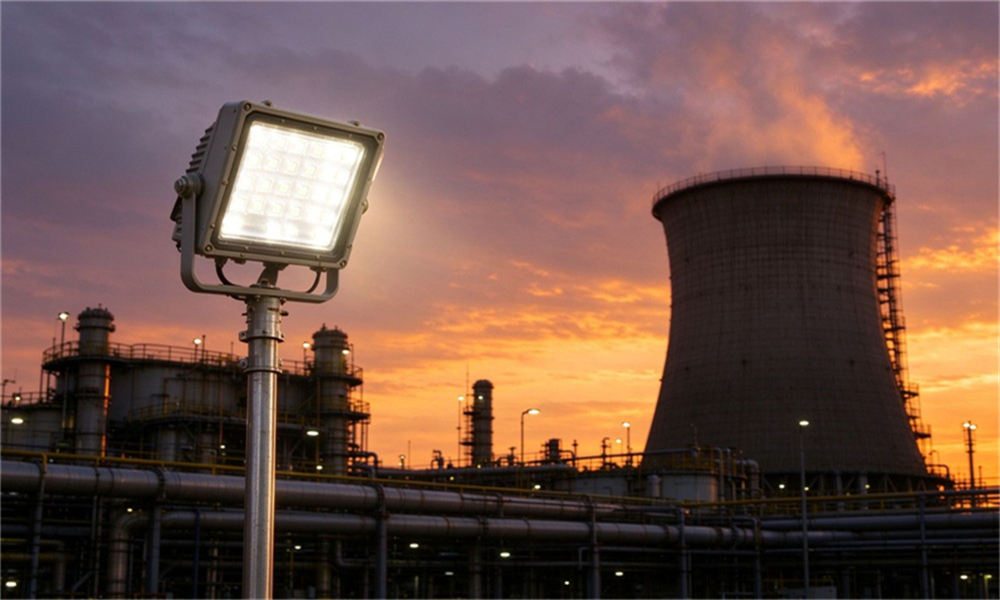
Refineries handle methane, propane, butane, ethylene and a long list of intermediate streams. Chemical plants release solvents such as toluene, methanol and ketones. Oil and gas stations sit on gasoline vapor heavier than air. Any of these can reach its lower explosive limit around valves, flanges, pumps and loading arms.
A normal light turns on or off with an electric contact that can spark. In that atmosphere the spark is enough. Certified hazardous area lighting either seals the spark inside a flameproof enclosure or limits the circuit energy so a spark cannot happen at all.
Beyond gas, coal, grain, sugar, plastic powder and catalyst fines form explosive dust clouds. Dust is slower to ignite than gas, but once a layer builds on a hot lens, the surface temperature can set it off. Dust-rated industrial explosion proof light fixtures carry a Db protection level and a dust temperature class, which a gas-only certificate does not cover.
Distillation units, furnace platforms and reactor blocks run hot even before the light switches on. A fixture that already warms the surrounding surface on a cold day can push past the auto-ignition temperature in summer. The T class on the marking caps the outer surface, and that cap must sit below the ignition temperature of the gas present.
A cheap LED downlight from a general catalog has no flame path, no energy limit and no tested assembly. It may run fine in a warehouse, but inside a classified unit it is an unapproved ignition source. The safety officer classifies the area first, then chooses explosion proof lighting whose rating matches that exact classification.
The risk points in a fixture are the switch, the driver electronics and the LED junction. When you flip a cheap torch, the contact can arc. When the driver fails, components can overheat. When the lens covers a dust layer, the surface can bake hot.
Certified explosion proof lighting removes each path: switches sit in sealed enclosures, drivers are potted, and the housing acts as a heat sink to hold the surface below the T class.
This is why a fixture cannot be upgraded in the field. A brighter LED module stuffed into an old housing raises surface temperature and breaks the tested assembly.
Every change, from the LED to the switch, is part of the certified design. The whole point of approved hazardous area lighting is that the result is predictable under test, not improvised on site.
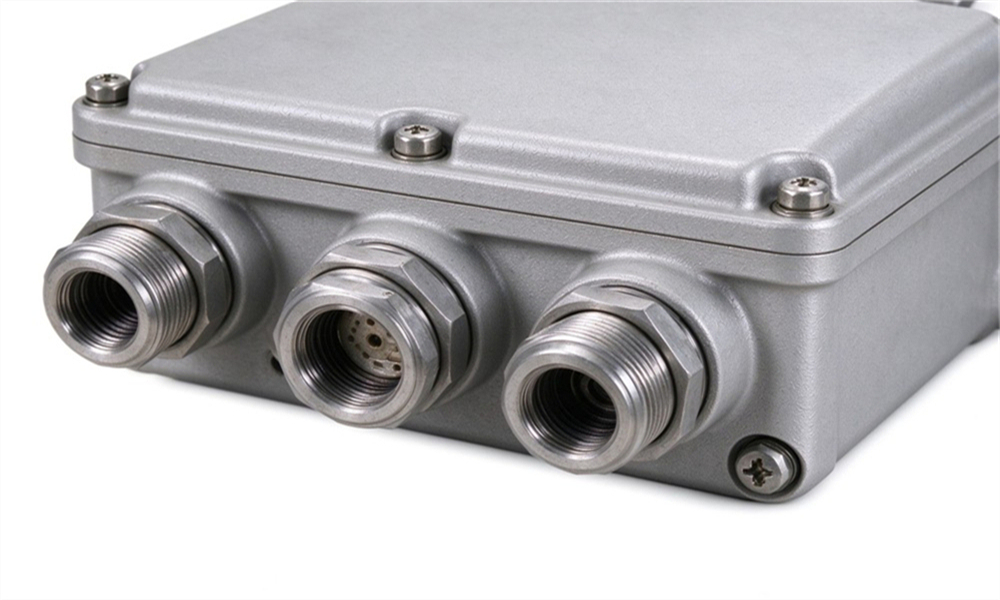
Every certified luminaire carries an Ex marking that reads like a code. Breaking that code into blocks tells you exactly where the fixture may go. Buyers should read the whole nameplate, not just the brand sticker, before approving a fixture for site.
Mark block
Example
Meaning
What it tells the buyer
Protection concept
Ex d
Flameproof enclosure
Heavy housing contains an internal explosion; common for Zone 1 and Zone 2 fixed and portable lamps
Protection concept
Ex ib
Intrinsic safety
Current and power limited so no spark or hot surface can form; the only choice for Zone 0 entry
Gas group
IIC
Hydrogen and acetylene
Highest demand group; an IIC fixture automatically covers IIA and IIB gases
Temperature class
T4
Max surface 135 C
Typical for refinery and chemical plant; T5/T6 chosen for low-ignition solvents
Equipment level
Gb
Zone 1 and Zone 2
High protection level for areas where gas may be released in normal operation
Dust scope
Db
Combustible dust
Required for coal, grain, sugar and powder sites; gas-only certificate does not cover dust
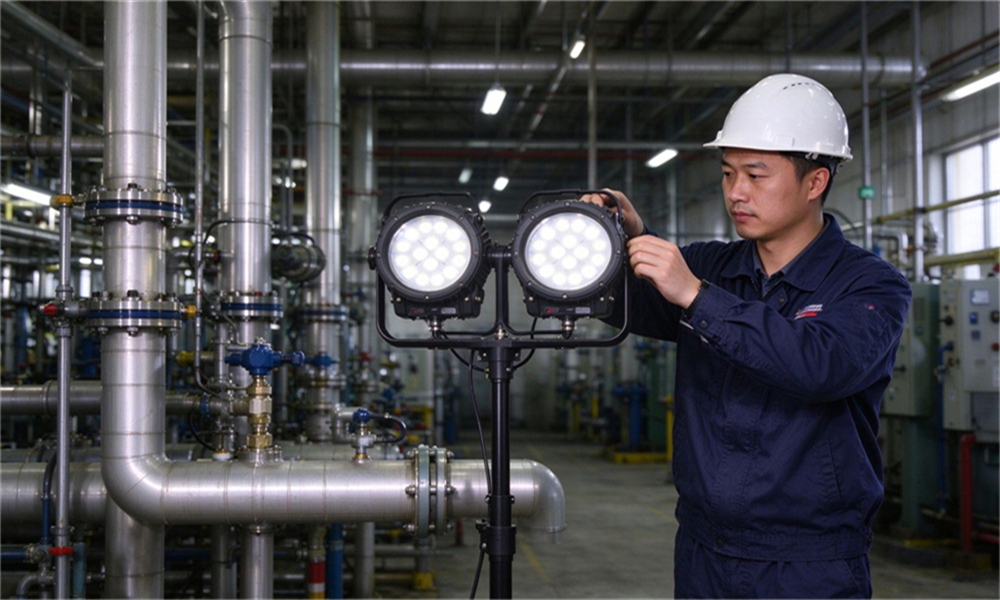
Ex d is a flameproof enclosure. Heavy cast aluminum holds an internal explosion and cools the escaping flame along machined flame paths. This is the common choice for fixed fixtures and torches in Zone 1 and Zone 2.
Ex ib is intrinsic safety: the circuit is current- and power-limited so it cannot spark or heat up. An intrinsically safe light is accepted in Zone 0 where gas is present continuously.
Ex e is increased safety, used on junction boxes and terminal blocks rather than handheld lamps. Portable explosion proof lighting commonly relies on Ex d for robustness and Ex ib for the highly volatile entry points. The two concepts solve the same risk from opposite directions: contain the spark, or prevent the spark.
IIA covers propane and natural gas utilities. IIB covers ethylene and typical refinery streams. IIC covers hydrogen and acetylene, the highest-demand group. A fixture rated IIC automatically suits IIA and IIB, so one specification covers a large share of petrochemical units. Group I is for methane in coal mines and cannot be swapped with group II without separate certification.
The T class caps the maximum surface temperature. T1 allows 450 C, while T6 caps the housing at 85 C. For hydrogen and carbon disulfide, which ignite at low temperatures, a T5 or T6 fixture is the safe choice. The outer surface must stay below the ignition temperature of the specific gas on site.
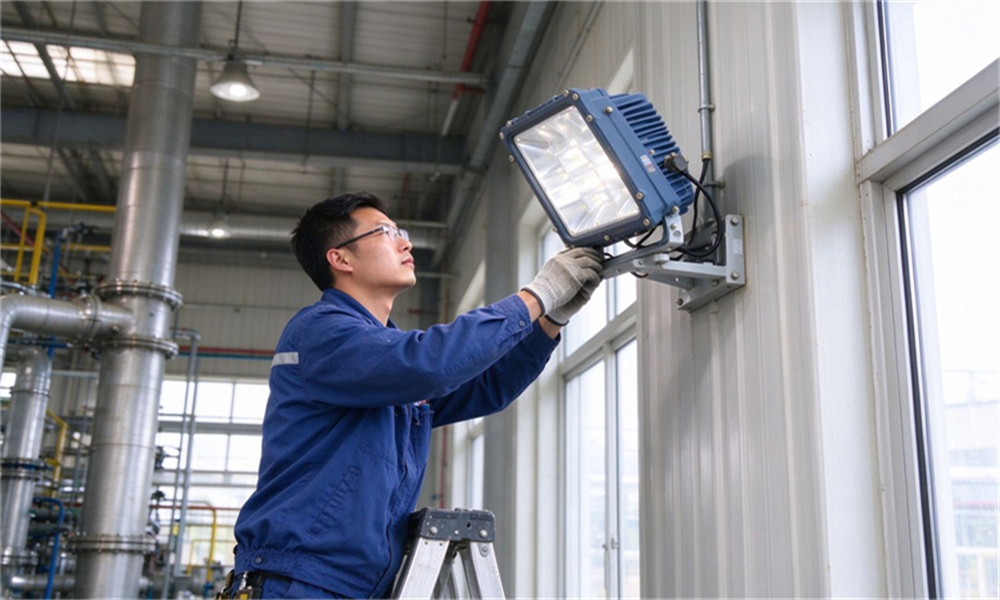
Zone 0 has gas continuously or for long periods. Only Ex ib intrinsically safe devices enter. Zone 1 may release gas during normal operation, so Ex d or Ex ib devices are required. Zone 2 sees gas only under abnormal conditions, so Gc-rated devices are allowed, though many plants stock everything to the higher Zone 1 rating to avoid confusion.
For global buyers, ATEX light follow-up applies inside the EU, while hazardous area lighting for wider export often carries IECEx. Both systems use the same Ex d and Ex ib logic.
A lamp certified to one does not automatically carry the other; confirm the mark the project requires. The zone system itself is defined in the IECEx certification scheme and harmonized with EU ATEX rules. More detail on the marks is in the dedicated explosion proof certification guide.
|
Zone |
Gas presence |
Required protection |
Typical YRF lighting |
|
Zone 0 |
Continuous / long |
Ex ib intrinsic safety |
YRF-EX02 hand lamp |
|
Zone 1 |
Normal operation possible |
Ex d or Ex ib |
YRF-EX01/03/05/10/20 |
|
Zone 2 |
Abnormal only |
Ex d Gc |
YRF-EX01/10/30 |
Below the Ex line, the nameplate lists an ingress code. IP66 means dust-tight and resistant to powerful water jets, which matters for outdoor night work and washdown after a spill.
An IK08 or IK10 impact rating means the lens and housing survive a drop onto concrete or steel. These ratings are separate from explosion protection, but they decide whether the industrial explosion proof light lasts a full shift in a rough plant.
Combustible dust sites such as coal handling, grain, sugar and powder coating use Zone 21 and Zone 22 rather than gas zones. A dust-rated fixture carries a Db protection level and a dust temperature class.
A gas-only torch is not automatically approved for dust, so buyers in powder or bulk facilities must request the dust scope on the certificate. The surface temperature limit for dust is lower than for gas, so the T class still matters.
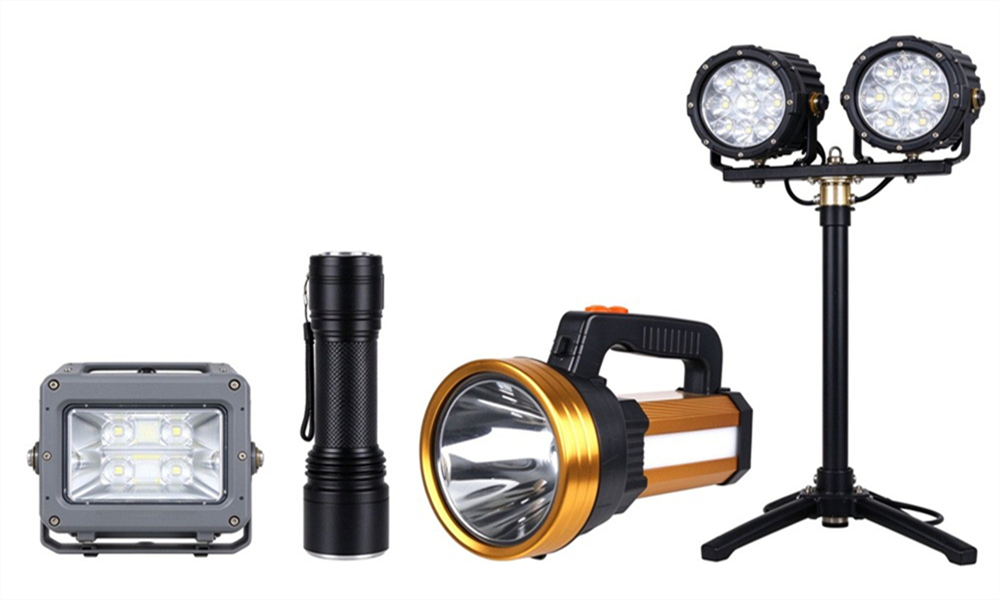
A refinery combines tall columns, sprawling storage and miles of pipe rack. Each sub-area carries its own risk and its own lighting pattern. The YRF approach layers fixed explosion proof lighting for circulation with portable lamps for inspection and shutdown.
The distillation column runs continuously, with operators climbing platforms to read gauges and sample. Risk is Zone 1 around the tower base and side draws. Fixed wallpack floodlights on the structure give baseline industrial explosion proof light coverage on each platform, while operators carry a compact Ex d torch for close reading of nameplates and valves.
During catalyst change or tray work, the unit is isolated but still classified. A tripod-mounted searchlight and a hands-free work light set the task zone, so two technicians can work without one person holding a lamp. Surface temperature matters here because the column stays warm long after shutdown.
Storage tanks sit in a diked open area. Fixed poles along the berm provide the main zone 1 lighting for driving and walking routes. The risk is highest near the tank roof, the outlet valves and the filling connection, which can be Zone 0 or Zone 1 during transfer.
For tank entry and gauge reading, a worker uses an Ex ib intrinsically safe hand lamp, because the atmosphere inside a tank can be continuous. The fixed floodlights never replace the approved portable lamp for the actual entry task.
The elevated pipe rack carries process lines between units. Operators patrol the catwalk every shift. Wallpack LED fixtures spaced along the rack give even walkway illumination, preventing slips and letting crews see valves above head height.
Maintenance points on the rack, such as a leaking flange, get a magnetic work light stuck to the steel nearby. This layered plan means the site never relies on a single light source, and every approved lamp stays on the permit list.
Fixed flood lenses in the refinery collect dust and salt, so they are wiped on the same turnaround as the instruments. The dike area lighting is checked after any rain, because a pooled leak can sit under a pole.
Hand lamps used on the rack are logged each shift, and any lamp that takes a hard knock is quarantined until the Ex engineer inspects it. Keep a spare intrinsically safe lamp for the tank crew, because entry work cannot stop while one unit charges.
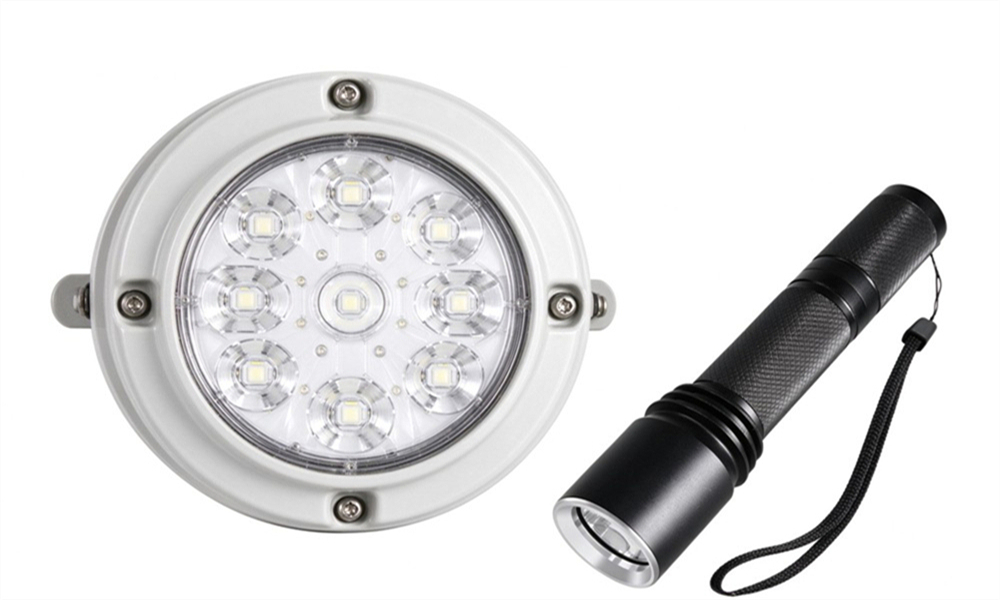
A chemical plant is denser than a refinery: reactors, mixers, dryers and packed storage sit close together. The lighting plan has to serve batch processing, maintenance and raw-material handling under one classification scheme.
The reactor block is the heart of the plant. Vessel, agitator seals and valve stations are Zone 1, and solvent vapors can linger after a batch. Fixed lighting over the block keeps walkways safe, while a magnetic work lamp fixed to the vessel housing illuminates the gauge and flange for the technician.
Because exothermic reactions raise surface temperature, the fixture T class is checked against both ambient and process heat. A T4 rating is typical; for low-ignition solvents, T5 or T6 is selected.
The workshop where pumps and agitators are serviced is usually Zone 2 when isolated and ventilated. Here explosion proof lighting on drops or pendants gives broad bench-level light. Technicians still carry an approved torch into any attached unit, because the boundary between workshop and process can shift during upset conditions.
A warehouse storing sealed drums of flammable solvent is not the same as a general store. Aisle lighting must be dust- and vapor-rated where drums can vent. A portable telescopic work lamp stands in the aisle during stocktaking, giving bright, shadow-free light between racks.
Palletizing and drum filling points are the highest-risk spots. Fixed fixtures there follow Zone 1 or Zone 2 rules, while the rest of the storage shed may be declassified. The site classification drawing, not the operator, decides the rating.
Because solvents attack some plastics, the work lamp housings are chosen for chemical resistance and wiped down after each batch. The reactor area lamps are checked for solvent streaks on the lens, which cut beam output.
Aisle lamps in the warehouse are inspected for dust buildup on top, where a layer can raise the surface temperature over a year of use. Keep magnetic bases free of iron dust, or they lose their hold on the vessel.
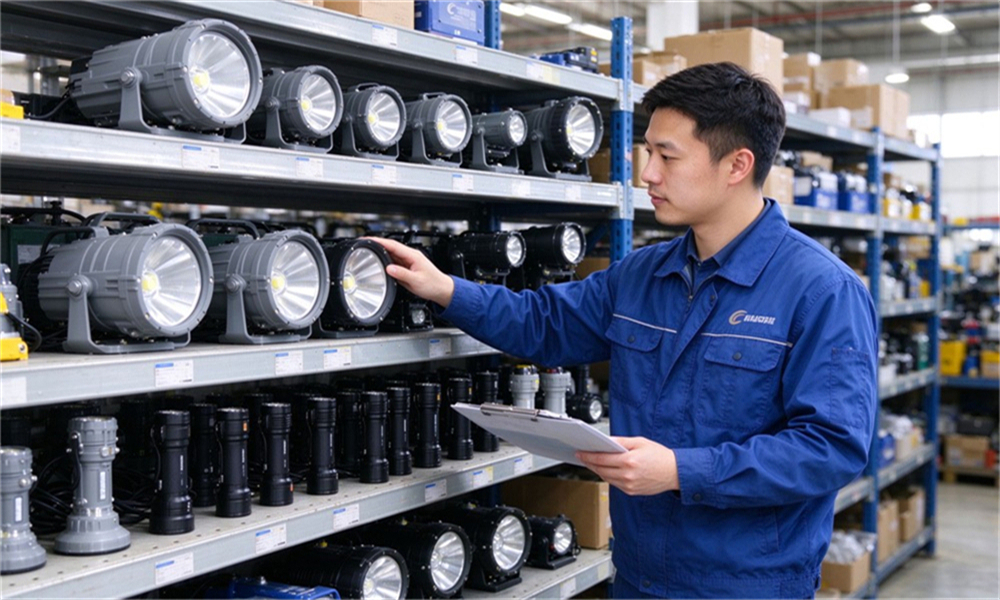
An oil and gas station looks simple above ground, but the filling point, the submerged tank and the vapor recovery line each carry a flammable atmosphere. Lighting has to serve customers, cashiers and maintenance crews without becoming a risk itself.
The canopy over the pumps is Zone 1 or Zone 2 around the island. The canopy light fittings must be vapor-tight and certified explosion proof lighting, because gasoline vapor pools at ground level. Standard retail downlights are not permitted under the pump canopy in typical codes.
The underground tank chamber and sump are high-risk enclosed spaces. Entry requires a gas test and an approved Ex ib hand lamp. A general inspection torch is forbidden here, even briefly. The YRF intrinsically safe cylinder lamp is the tool for chamber gauge reading and leak checks.
Natural gas compressor stations and metering skids sit in open yards. Routine patrol walks a loop of valves, filters and pressure instruments. The operator carries a high-output torch to read gauges in low light and a signal torch for loading coordination.
Where a station needs a broader flood for night deliveries, a wheeled mobile tower is brought in, rather than stringing up temporary non-rated light. This keeps every temporary setup on the same certified hazardous area lighting basis as the fixed install.
Canopy fixtures are checked for lens yellowing from exhaust and weather, which dims the island over time. The intrinsically safe chamber lamp is inspected before every sump entry, and the gas test is recorded with the lamp serial number.
Because customers walk the island, the walkway level is kept bright and even; the rating ensures the bright light never becomes an ignition path. The mobile tower is stored outside the fueling area and only deployed under permit.
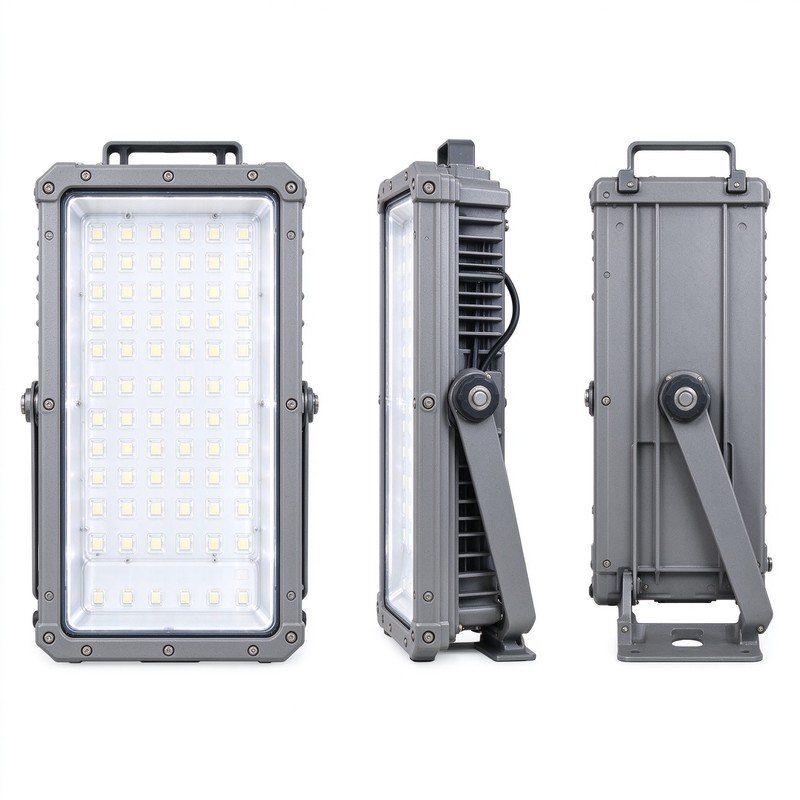
Underground coal mines carry methane and coal dust together. Mine-approved lighting carries Group I approval, separate from the Group II rating used above ground. Every lamp, battery and charger is tested as one assembly.
The development heading is where the coal face advances. Methane can off-gas from fresh cut rock, so the roadway is a Zone 1 or Zone 2 gassy environment. Miners carry an intrinsically safe cap lamp plus a secondary approved hand lamp for close-up inspection of roof bolts and ventilation.
The working face with shearer and roof supports is a high-traffic underground spot. A portable explosion proof lighting tower on the coal floor floods the face so the shearer operator and the support crew can see each other. Dust keeps the air opaque, so wide, even light beats a narrow beam here.
The long conveyor and rail haulage tunnel recedes into darkness. Belt patrol walks the line checking idlers and transfers. The patrol lamp cuts through dust and shows the belt condition ahead, while fixed roadway luminaires mark the walking side.
Above-ground mine workshops and lamp rooms use the same Ex logic but may rely on Zone 2 rated fixtures. Buyers should confirm the national mine approval alongside any ATEX or IECEx mark, because country-specific coal mining rules often apply.
Underground, dust coats every lens within a shift, so the face tower and hand lamps are wiped at every shift change. Battery packs are swapped at the lamp room, never in the heading, because charging off-gases. The cap lamp backup is tested daily.
Because methane can appear without warning, any lamp that flickers or runs warm is left up on the surface and exchanged, rather than nursed through a shift underground.
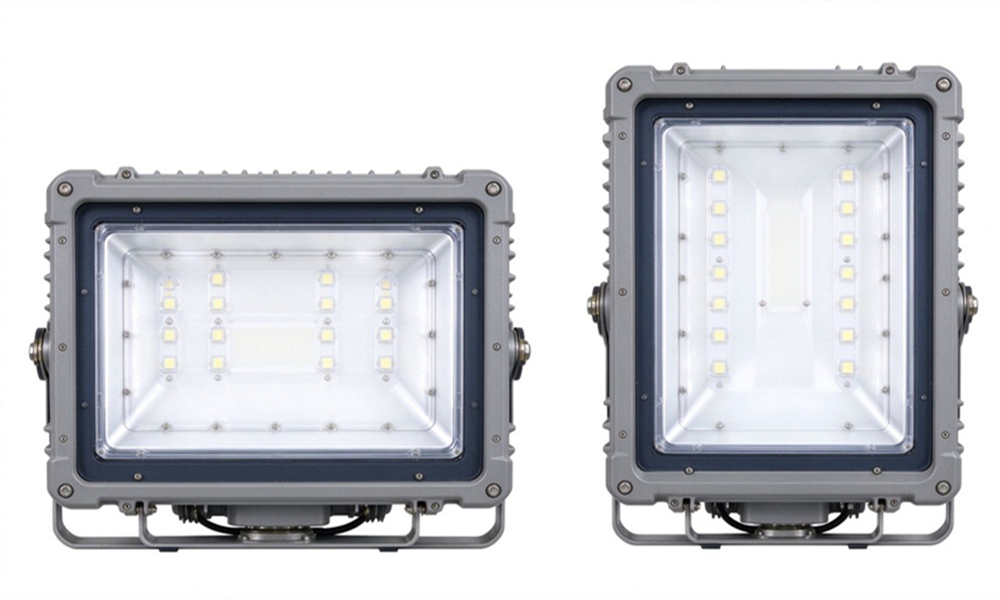
Upgrading an old plant is not about swapping bulbs one for one. A structured retrofit keeps production running while moving every classified fixture onto a certified basis. The work follows four stages.
The first stage maps every unit against the site classification drawing. Engineers walk each area, note where gas or dust can release, and tag the Zone, gas group and T class required. This list becomes the technical basis; no fixture is ordered before it is signed off.
The walkthrough also notes where the old lighting is inadequate: dark corners under pipe racks, glare on control panels, and spots where crews now bring unapproved temporary lamps. Each gap becomes a line item in the scope.
The goal is a single, consistent zone 1 lighting standard across the classified parts of the site, rather than a patchwork of old and new fittings.
Fixed flood and wallpack fixtures cover circulation. Portable torches cover close inspection. A mobile tower covers shutdown and turnaround. Matching each task to the right YRF product avoids over-buying and leaves the right scale of light at every point.
For process units, the selected industrial explosion proof light fittings carry the highest rating the site needs, so one spare part number serves Zone 1 and Zone 2 alike. The intrinsically safe hand lamps are stocked separately for Zone 0 entry, because they cannot be substituted by a standard Ex d torch on the spur of the moment.
Install work happens under permit, with the area isolated and gas-tested. Cables enter fixtures through certified glands, and Ex markings are never painted over. Battery charging always happens outside the classified area in a dedicated charging room.
The retrofit is phased so production never goes dark for the whole plant at once. One unit is upgraded at a time, while portable lamps cover the transition. Each phase is handed over before the next starts.
This staged approach keeps the site always on a working, certified lighting basis. It reduces both risk and downtime, and it keeps the permit-to-work system valid throughout the project.
At acceptance, every fixture nameplate is checked against the certificate, the model matches the label, and the battery pack is the certified type. A test record of beam output and surface temperature closes the job. The plant then carries the lighting into its permit-to-work register.
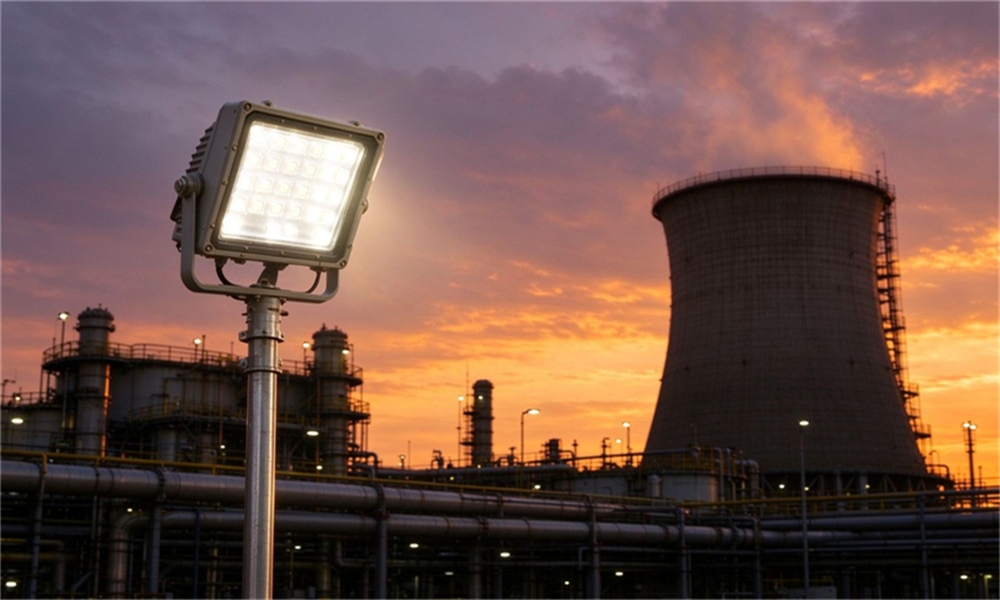
Even certified fixtures become unsafe if they are used wrong. Site findings are often not about the product but about how it is deployed and maintained.
Finding: an Ex d torch carried into a Zone 0 tank. Rectification: only Ex ib intrinsically safe lamps enter continuous-gas areas. Update the permit list and retrain the entry crew. A single Ex d lamp in Zone 0 is a serious finding, not a minor one.
Finding: a temporary rechargeable work light from a general catalog used during a night repair. Rectification: remove it and substitute a certified industrial explosion proof light. Temporary lighting must follow the same classification as permanent lighting.
A cracked lens or a dented housing can break the flame path. Finding: chipped enclosure after a drop. Rectification: isolate the lamp, tag it out and send it for Ex service. Never open or repair a flameproof housing on site.
A certificate covers a specific battery and charger as an assembly. Finding: a third-party battery pack fitted to save cost. Rectification: replace with the certified pack. Mixing packs voids the Ex approval and removes the energy limit.
Clean fixtures with a damp cloth, never solvent that attacks the anodized housing. Do not paint over the Ex nameplate. After a drop or immersion, quarantine the lamp until an Ex engineer inspects it, because internal damage may be invisible.
Not every finding is an ignition issue. Over-bright flood aimed into control panel windows causes glare, while a fixture too low on a catwalk leaves the walking surface in shadow. Rectification means re-aiming the beam rather than adding more wattage.
Well-placed certified lighting puts light on the task, not in the eyes. A site walkthrough after dark catches these spots, because daytime inspections miss how the plant actually looks at night.
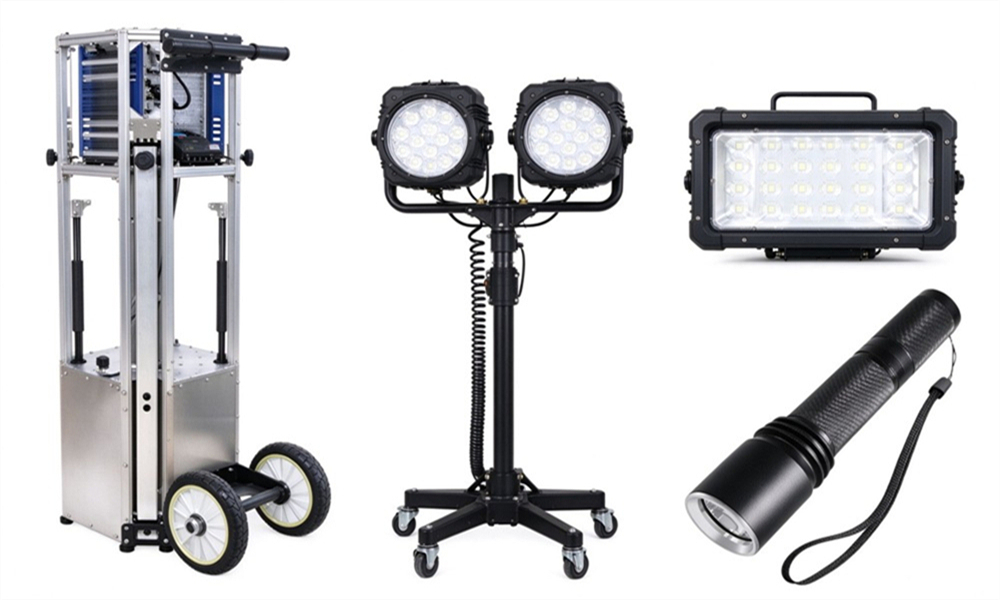
A lighting BOM for a petrochemical site is built bottom-up. First you read the area classification drawing. Then you pick the lux level per zone. Finally you divide by fixture lumen output to count lamps.
The recommended lux levels below follow API RP 500 hazardous area guidance and IES RP-7-30 industrial lighting practice. They are starting points, not a substitute for DIALux calculation on your geometry.
Site area
Zone
Target lux
Typical fixture
Why this level
Inside process tank / drum
Zone 0
No permanent light
Portable Ex ia hand lamp only
Gas present continuously; only intrinsically safe equipment may enter
Distillation column platform
Zone 1
150-200 lux
Ex d IIC T6 pendant 50 W
Operators read gauges, walk stairs, isolate valves
Reactor and pump area
Zone 1
150 lux
Ex d IIC T6 wallpack 40 W
Dense piping, frequent manual intervention
Pipe rack and walkway
Zone 2
50-100 lux
Ex e linear 36 W or Ex d bulkhead 30 W
Passive circulation, no continuous operation
Tank farm road
Zone 2
30-50 lux
Ex d post-top lantern 60 W every 25 m
Vehicle and foot patrol only
Control room / lab
Non-hazardous
300-500 lux
Ordinary LED panel 600x600
No Ex marking required; standard office-grade fixture
Assume 150 lux target, 0.6 utilization factor, 0.8 maintenance factor. Required luminous flux is area times lux divided by factors: 5,000 m2 x 150 lux / (0.6 x 0.8) = 1,562,500 lm.
A 50 W Ex d pendant delivers 6,500 lm. Divide total flux by per-fixture output: 1,562,500 / 6,500 = 240 fixtures. Round to a 6 x 4 grid of 25 m spacing, giving 24 pendants plus two spare for turnaround.
For the tank farm road at 50 lux, post-top lanterns at 25 m spacing are cheaper than a continuous line. The DIALux model confirms the spacing before you cut steel. For the underlying zone logic, see our IEC 60079-10-1 zone classification reference.
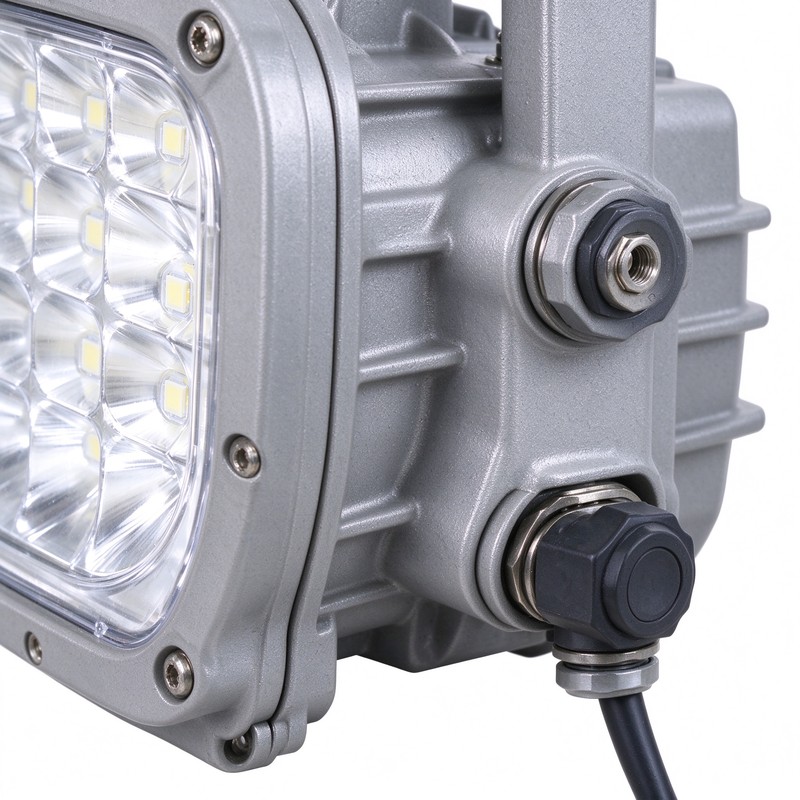
A whole-plant change-out of explosion proof lighting for hazardous areas runs on a fixed 12-week clock. The site stays live during most of it. Below is the schedule our project managers use for a 120,000 bpd refinery change-out of about 450 fixtures.
Week
Phase
Key activities
Exit deliverable
1-2
Hazardous area survey
Walk every unit, confirm zone drawing, tag each existing fixture, flag wrong-rating installs
Updated zone drawing + fixture inventory list
3-4
Lighting design
DIALux model per unit, select lux level, count lamps, draft fixture layout
Approved lighting layout drawings and BOM
5-6
Procurement and cert check
Issue PO, verify each model against IECEX database, confirm nameplate matches certificate
Certification pack archived per fixture line
7-10
Installation
Hot work permits, cable pull, gland sealing, isolation barrier install, fixture hang
Mechanical and electrical installation complete
11
Commissioning
Insulation resistance, insulation continuity, lux measurement on grid
Commissioning report with lux readings
12
Acceptance
As-built drawing, certificate reconciliation, EHS walkdown, handover
Handover pack and punch list closed
First, never skip the week 1-2 survey. A drawing from 1998 is not the same plant. Second, freeze the BOM by week 6. Late substitutions trigger a new cert review. Third, schedule the week 11 lux measurement before EHS walkdown.
Installation work must follow IEC 60079-14 design and erection rules. North American sites also follow NFPA 70 NEC Article 500. Expect a typical project to cut plant energy use by 25-35% versus legacy HPS fittings.
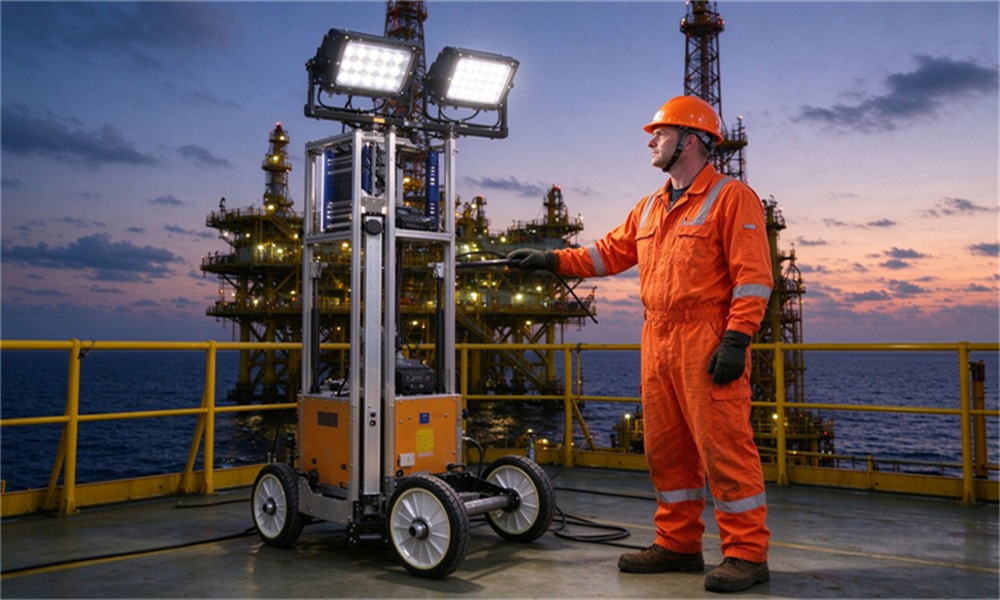
The luminaire gets the attention. The cable gland gets the failure. In Zone 1, a wrong gland turns a certified lamp into an uncertified install. Two gland families matter on site: Ex d and Ex e.
An Ex d gland carries a machined flamepath. It must mate with an Ex d enclosure. The gland material and thread size are specified on the Ex d lamp certificate. Do not substitute a cheap brass gland. It breaks the flamepath chain and voids the certification.
Typical refinery use: M20 Ex d gland for 3-12 mm OD cable, M25 Ex d gland for 13-18 mm OD cable. Armored XLPE cable is the default. The armor bond must land on the gland armouring ring.
An Ex e gland has no flamepath. It uses a compression seal to maintain the enclosure's increased-safety rating. It mates with Ex e enclosures and junction boxes. It is lighter and cheaper than Ex d, but it must never be used on an Ex d housing.
At the Zone 1 to non-hazardous boundary, install a sealed box with epoxy compound. This stops gas propagation along the cable run. Cable choice stays simple: XLPE insulation, galvanised steel wire armour, oil-resistant PVC outer sheath.
Sealing rules follow IEC 60079-14 installation practice. Increased safety glands themselves are covered by IEC 60079-7. Keep a few spare glands and sealing kits on site; a stripped thread on a Friday night delays a startup.
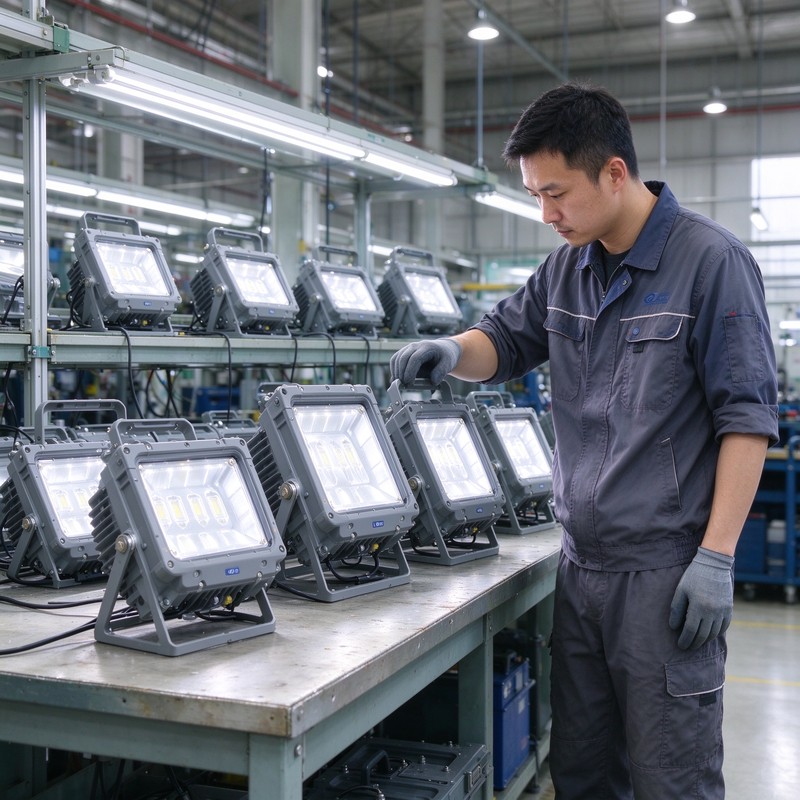
Commissioning closes the loop between the lighting design and the as-built. The field engineer brings a calibrated lux meter and the approved layout drawing. Every fixture position gets a reading on the floor below.
For Zone 1 distillation platforms, the target is 150 lux minimum at stair treads and valve stands. Walk the stairway at knee height. If a reading drops below 120 lux, flag it. The usual cause is a mis-aimed pendant.
For Zone 2 pipe racks, 50 lux at walking level is the acceptance threshold. The engineer checks every 25 m post-top lantern. Shadows between lanterns are acceptable. Total darkness between them is not.
Control rooms sit outside the zone. They still get 300 lux at the desk. A wrong-rated panel here does not trigger Ex risk, but it triggers operator complaints. Ordinary LED panels solve it cleanly.
The signed lux record becomes part of the handover pack. Future audits ask for this sheet. Without it, the whole explosion proof lighting for hazardous areas upgrade loses its paper trail.
Every refinery keeps a small cabinet of spare Ex d pendants and Ex e linear tubes. We recommend a 5% spares ratio on the fixture count. That means 12 spare lamps for a 240-lamp Zone 1 unit.
Spare drivers, gaskets and cable glands also go on the shelf. A failed driver on a Friday night delays a startup. Explosion proof lighting for hazardous areas is only as reliable as its spare-parts cabinet.
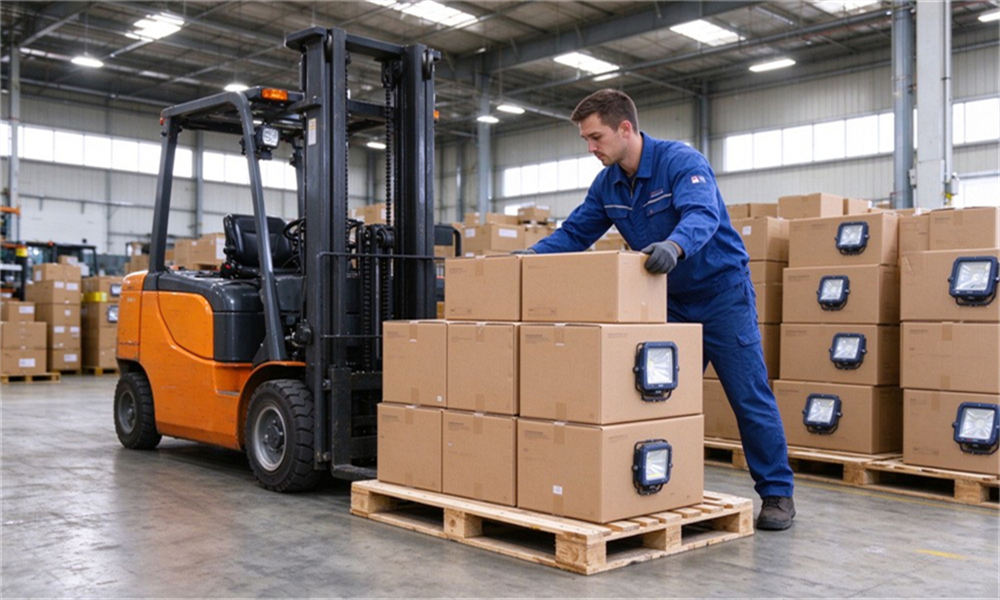
Order spares with the main PO. Freight on a 40HQ marginal cost is near zero. Ordering them later by courier costs more than the parts themselves.
For Middle East refineries, dust and heat add two more constraints. Sand ingress fouls ordinary enclosures within months. Explosion proof lighting for hazardous areas in the Gulf therefore carries IP66 as a minimum, not IP65. High ambient temperatures up to 55 C also force driver derating. Spec the T5 or T6 class even on IIB gas service, to keep margins against summer heat.
For Southeast Asian refineries, humidity and salt air dominate. Coastal sites ask for epoxy-coated housings and stainless steel fasteners. The same Ex d lamp that survives a desert winter will corrode in a Singapore waterfront plot unless the finish is specified on the drawing.
Specify explosion proof lighting for hazardous areas as Ex db IIC T4 Gb for fixed units. Use Ex ib hand lamps for tank entry. Match the lux level to EN 1838 and NFPA 70 route lighting. List every explosion proof lighting for hazardous areas unit on the permit.
Aim for 50 to 100 lux on a pipe rack walkway. Explosion proof lighting for hazardous areas uses sealed LED flood heads. Avoid glare into control room windows at night. This fixture counts as explosion proof lighting for hazardous areas service.
Yes where mains is absent. Explosion proof lighting for hazardous areas pairs with an Ex-certified solar battery box. Keep the panel outside the classified zone. Confirm the thermal shutdown settings. The Ex db enclosure defines this as explosion proof lighting for hazardous areas.
Inspect explosion proof lighting for hazardous areas once per shift and formally every six months. Check the Ex marking, cable gland and gasket. Replace any cracked lens before the next job. Keep zone drawings alongside explosion proof lighting for hazardous areas.
Ordinary light has no sealed flame path and no energy limit, so its switch or hot surface can ignite flammable gas. Explosion proof lighting either contains an internal explosion in a heavy enclosure or limits circuit energy so no spark or hot surface forms. Audit each explosion proof lighting for hazardous areas fitting yearly. In short, treat every fixture here as explosion proof lighting for hazardous areas on the hot work permit.
No. A general torch is not approved for any classified area, including Zone 2. Zone 2 allows certified Gc-rated fixtures, but an unmarked consumer torch is not one of them. Always use a certified hazardous area lighting product. This hand lamp is explosion proof lighting for hazardous areas in Zone 1. In short, treat every fixture here as explosion proof lighting for hazardous areas on the hot work permit.
Only an intrinsically safe Ex ib lamp may enter Zone 0, where gas is present continuously. The YRF-EX02 intrinsically safe cylinder is the typical choice for tank entry and confined space work. Seal cable glands on explosion proof lighting for hazardous areas runs. In short, treat every fixture here as explosion proof lighting for hazardous areas on the hot work permit.
Ex d is flameproof enclosure, IIC covers hydrogen and acetylene, T4 caps the surface at 135 C, and Gb is the equipment protection level for Zone 1 and Zone 2. Read each block against the site gas group and temperature class. Plan lux levels for explosion proof lighting for hazardous areas on pipe racks. In short, treat every fixture here as explosion proof lighting for hazardous areas on the hot work permit.
Both build on the same Ex d flameproof and Ex ib energy-limit concepts, but ATEX is tied to the EU directive for EU sites while IECEx is the international IEC 60079 scheme. The marking required depends on the project and destination country. This floodlight is explosion proof lighting for hazardous areas columns. In short, treat every fixture here as explosion proof lighting for hazardous areas on the hot work permit.
Deploy a wheeled mobile lighting tower at the center of the work area, then add hands-free work lights and approved torches at each specific task point. Every temporary lamp must be certified for the zone. Tag each explosion proof lighting for hazardous areas unit before energizing. In short, treat every fixture here as explosion proof lighting for hazardous areas on the hot work permit.
An IIC-rated Gb fixture covers Zone 1 and Zone 2 for IIA, IIB and IIC gases. Many plants standardize on that higher rating to avoid two inventories, but Zone 0 still needs a separate intrinsically safe lamp. The maintenance log covers explosion proof lighting for hazardous areas. In short, treat every fixture here as explosion proof lighting for hazardous areas on the hot work permit.
Zone 1 lighting is certified lighting for areas where flammable gas may be released during normal operation. It uses Ex d or Ex ib protection and is the typical rating across process units. Replace cracked lenses on explosion proof lighting for hazardous areas quickly. In short, treat every fixture here as explosion proof lighting for hazardous areas on the hot work permit.
Hand lamps use certified rechargeable battery packs tested with the lamp as one assembly. Fixed fixtures connect through certified glands. Charging always happens outside the classified area in a dedicated battery room. This pallet holds explosion proof lighting for hazardous areas spares. In short, treat every fixture here as explosion proof lighting for hazardous areas on the hot work permit.
Brightness is set by the task: walkways need even low-level light, inspection points need a focused beam, and shutdown work needs wide flood coverage. The rating and beam shape are chosen together, not brightness alone. Commission each explosion proof lighting for hazardous areas with a walkthrough. In short, treat every fixture here as explosion proof lighting for hazardous areas on the hot work permit.
For a Zone 2 pipe rack used for walking and periodic valve operation, 50-100 lux is the standard range. Below 50 lux, trips and missed leak inspections rise. Above 100 lux, you pay extra for light nobody uses. Run a DIALux model before final fixture count. Off-grid power works for explosion proof lighting for hazardous areas units. In short, treat every fixture here as explosion proof lighting for hazardous areas on the hot work permit.
Yes. The protection concept is chosen per fixture based on function. Zone 1 pump areas often use Ex d pendant fittings, while Zone 2 walkways use Ex e linear fittings. The cable gland must match each fixture's protection concept. This is the reference for explosion proof lighting for hazardous areas specs. In short, treat every fixture here as explosion proof lighting for hazardous areas on the hot work permit.
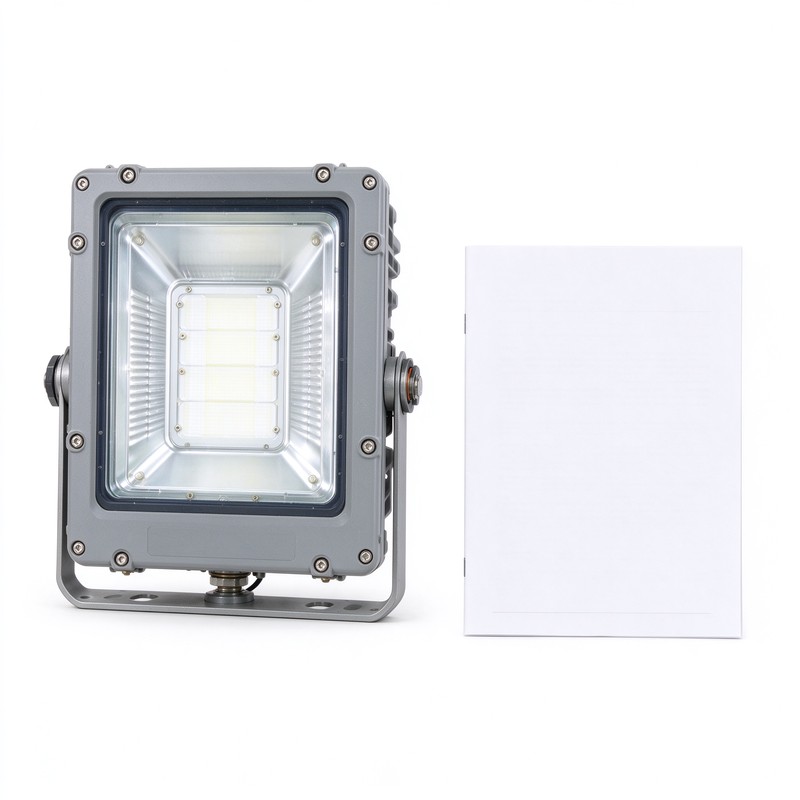
YRF supplies a complete range of certified hazardous area lighting: handheld torches, intrinsically safe lamps, searchlights, hands-free work lights and mobile towers for refineries, chemical plants, gas stations and coal mines. Buyers start from the site Zone, gas group and required mark, then match the product to each task.
The same logic applies whether the site is a coastal refinery, a solvent plant, a remote compressor station or an underground mine: classify first, rate second, select the task scale third. Skipping the classification step is how non-rated light ends up in a Zone 1 unit.
The YRF range is specified so that one supplier can cover fixed hazardous area lighting, portable inspection lamps and the mobile towers that a turnaround requires.
A typical shortlist begins with a daily patrol torch and an intrinsically safe lamp for Zone 0 entry, then adds searchlights and work lights for night maintenance. Wider site lighting pairs the handheld range with a mobile tower.
Compare the families on the lighting overview, including the explosion proof light product range, the mobile light tower for turnaround work, and the ATEX IECEx certification guide. For handheld and battery-backed inspection work, browse the bulk flashlights and torches range and the replacement battery packs and accessories.
All technical values, beam output, runtime and certification scopes are confirmed on the datasheet and in the final order, subject to contract. Request the Ex certificate for each target model, and match it to the site gas group and zone.
Run sample approval before a site-wide rollout. Whether the task is routine patrol, night unit repair or a multi-day turnaround, the right certified lamp keeps work visible without adding a new ignition risk.
Treat lighting as part of the safety system, not as a utilities afterthought. The right certified lighting plan protects people, equipment and production, and it pays back the first time a nighttime job finishes safely instead of being called off for darkness. Start from the zone and gas group, then choose the task scale.
YRF supplies ATEX / IECEx rated explosion proof lighting for hazardous areas, intrinsically safe lamps and mobile towers for oil, gas and petrochemical industries in the Middle East, Asia and Europe. 110V/220V dual-voltage options available. Specifications and certification scope are confirmed per order.
For a plant-wide rollout, standardize every zone on explosion proof lighting for hazardous areas under one Ex certificate family. This approach to explosion proof lighting for hazardous areas shortens the audit and keeps spare parts common across units.
When you specify explosion proof lighting for hazardous areas, keep the Ex certificate, gas group and lux level in one table. This single source of truth for explosion proof lighting for hazardous areas speeds up both the safety audit and the maintenance plan.
Copyright © Custom Disaster - Relief Bedding: Tents, Sleeping Bags, Blankets All Rights Reserved
the professional team to service !