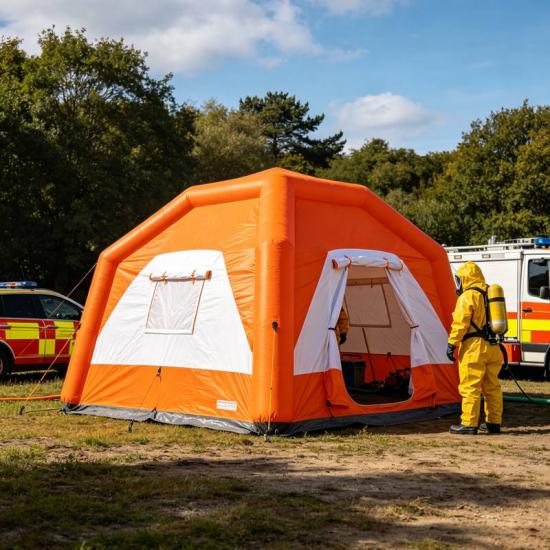
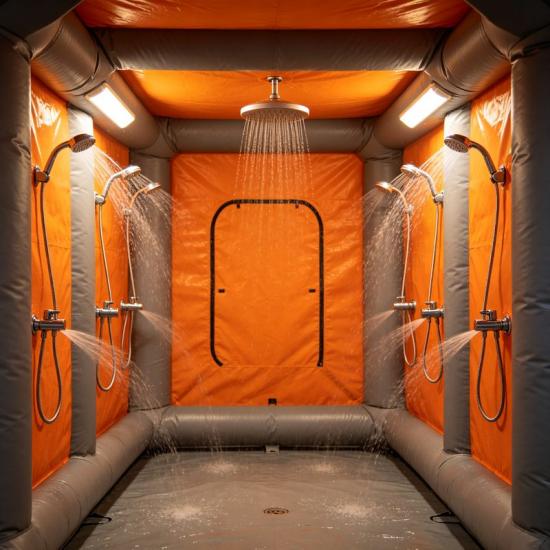
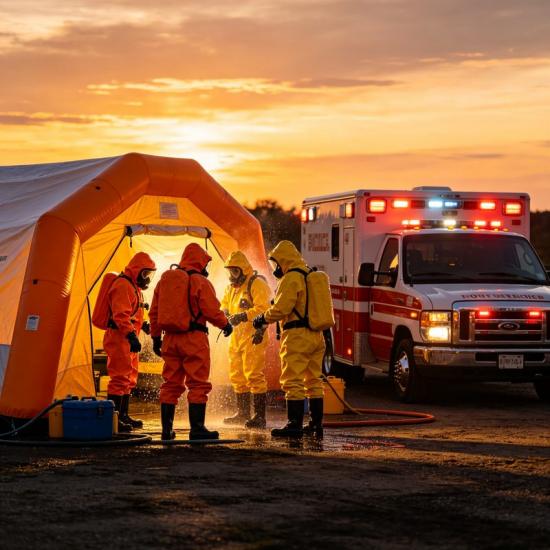
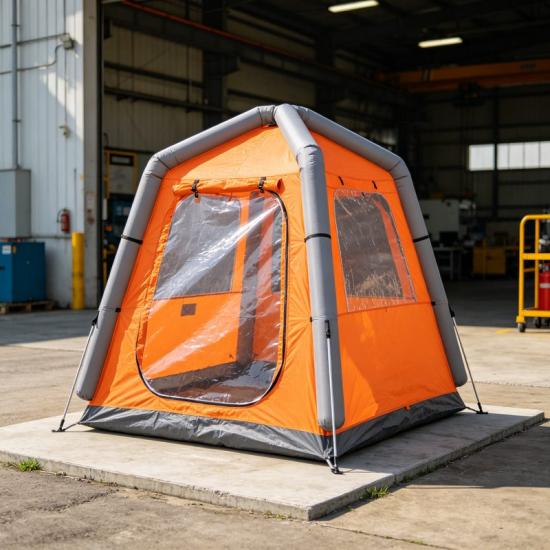
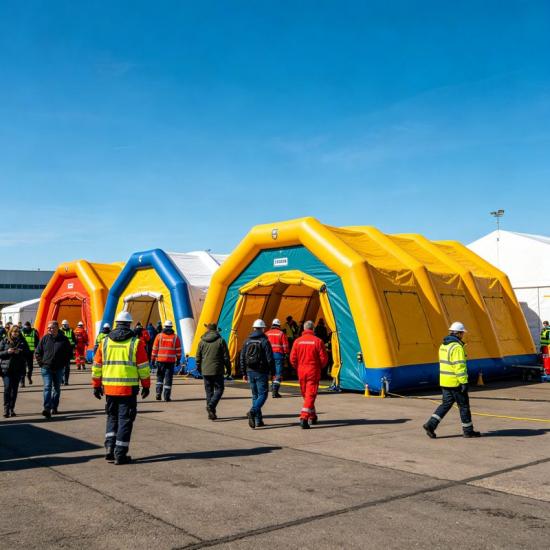
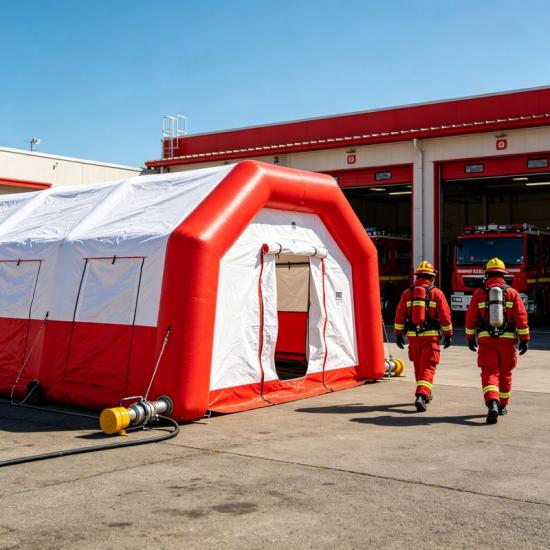
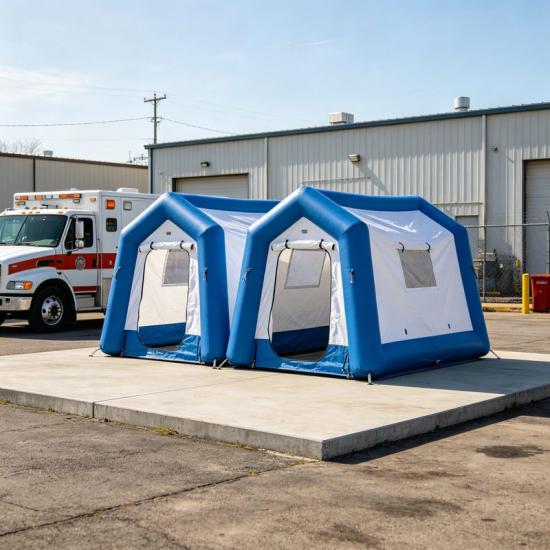
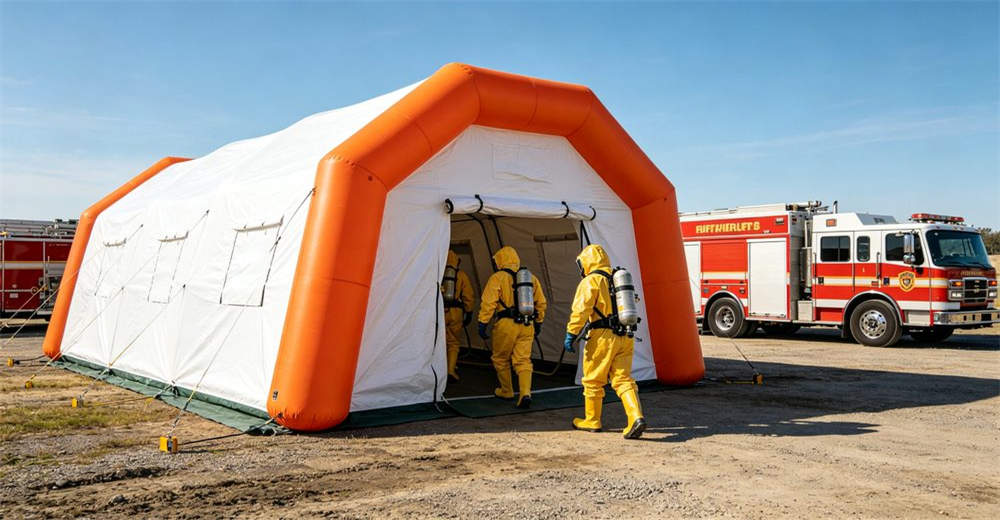
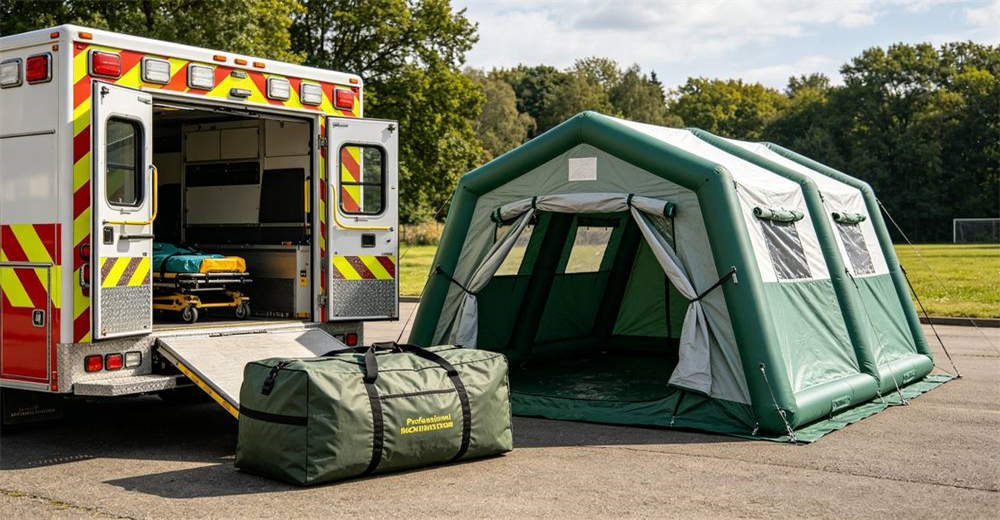
Durable inflatable emergency hazmat decontamination tent engineered for firefighting, chemical spill and mass‑casualty response. Heavy‑duty PVC build with drainage system and LED lighting. Fast inflation setup, modular connection, multi‑lane layout. Reliable for fire sites, industrial zones and cold‑weather field emergency operations.
Note: Price for reference only. Exact price based on quantity, size, weight and custom details.
model no. :
IT-9-BBrand:
YRFmarket price :
$933.8sale price :
$466.9price range :
5-100/$466.9Color :
Multiple Colorsport of dispatch :
Guangdong/GuangzhouPayment :
TT, Paypal, Western Unionmin order :
1original region :
Made in ChinaLead Time :
5-15days
Complete firefighting decontamination inflatable tent systems — professional inflatable tent and decontamination tent solutions for HAZMAT response, decon showers, firefighter rehabilitation, and emergency medical shelter. Rapid deployment in minutes, supplier-direct pricing, and 20+ years of manufacturing expertise.
|
Need a Custom Decontamination Tent Configuration? |
|
|
Get expert guidance on tent sizing, layout planning, and complete decontamination system configuration for your fire department or HAZMAT team. |
|
 |

|
|
1. Planning Decontamination Capability |
2. 30-Second Overview |
|
3. Firefighting Scenarios & Challenges |
4. Site Layout Planning |
|
5. Equipment & Supply Checklist |
6. Staffing & Operational Procedures |
|
7. Best Practices & Lessons Learned |
8. Supplier Capability & Quality |
|
9. Frequently Asked Questions |
10. Build Your Decontamination Capability |
Get supplier-direct pricing on complete decontamination tent systems, emergency response configurations, and firefighting deployment support. The firefighting decontamination tent is critical equipment for emergency response teams, HAZMAT units, and industrial safety programs that require rapid, reliable contamination control in the field.
This guide covers everything fire departments, HAZMAT response teams, industrial emergency response teams, and civil defense organizations need to know about deploying inflatable firefighting and decontamination tents: recommended tent configurations for different emergency scenarios, decontamination site layout planning, rapid deployment timelines, equipment and supply checklists including specialized decontamination gear, staffing and operational procedures, and real-world best practices from firefighting and emergency response operations worldwide.
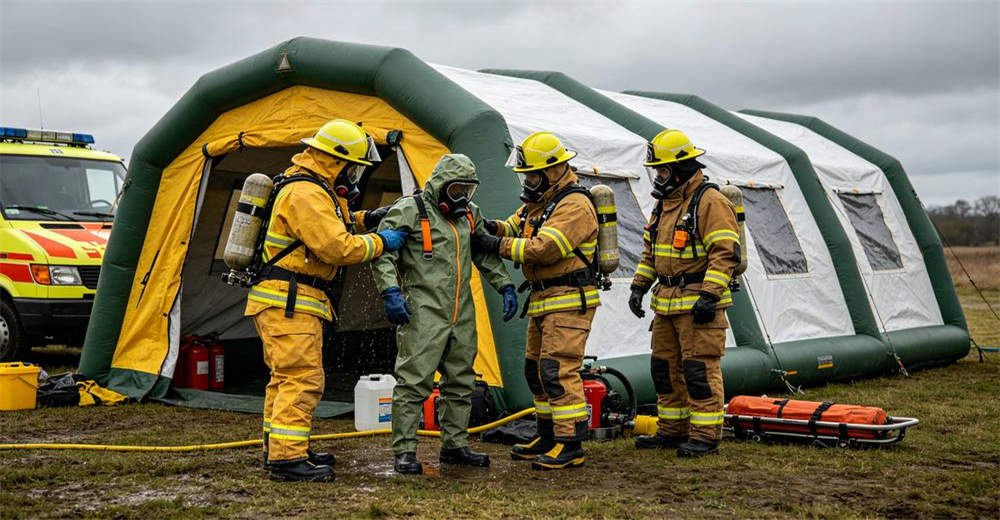
Hazardous materials (HAZMAT) operations require specialized, rapidly deployable shelter solutions that support decontamination, emergency medical treatment, firefighter rehabilitation, command operations, and equipment staging in dangerous environments. Firefighting inflatable tents and decontamination tent systems provide decontamination showers, emergency medical shelters, command posts, rehabilitation areas, and equipment storage — all deployable by small teams in minutes, even in active emergency scenes.
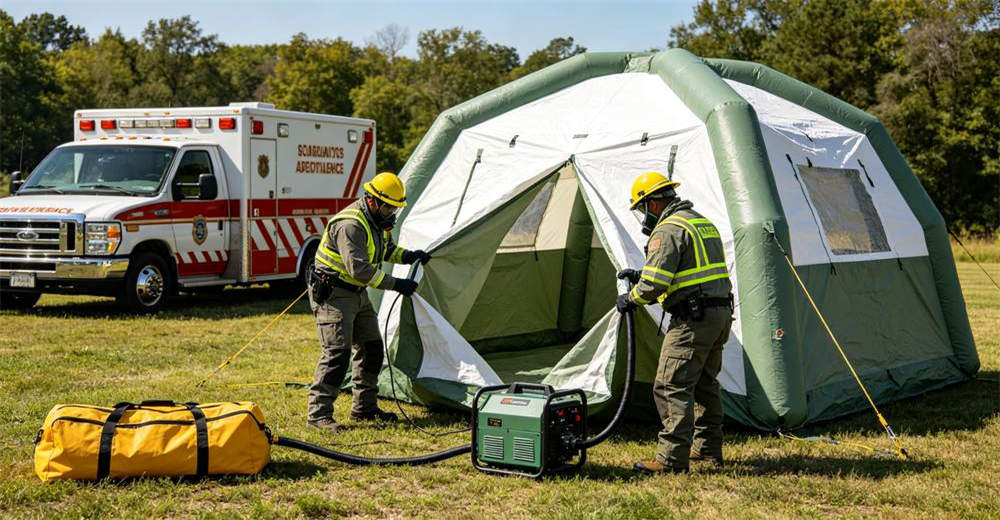
Key advantages of inflatable decontamination tents include rapid setup (typically 5-15 minutes), compact transport footprint, integrated water collection and drainage systems, compatibility with standard decontamination equipment, and durability in harsh field conditions. These tents are designed to support 3-zone decontamination flow, provide privacy for disrobing, and withstand exposure to decontamination chemicals and water.
Quick Deployment Facts: Most inflatable tent decontamination systems can be fully deployed by 2-4 personnel in under 15 minutes. Integrated air blowers maintain constant pressure, and quick-connect water lines enable immediate decontamination operations.
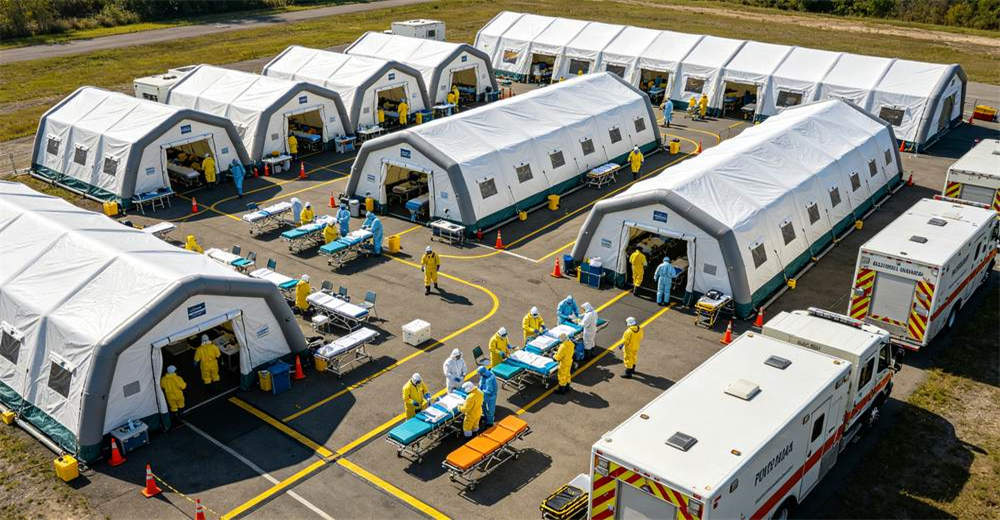
Trusted by fire departments, HAZMAT response teams, and emergency management agencies across 30+ countries. Our decontamination tents have been deployed in major chemical incidents, industrial emergencies, and mass casualty events worldwide, with over 2,000 units in active service globally.
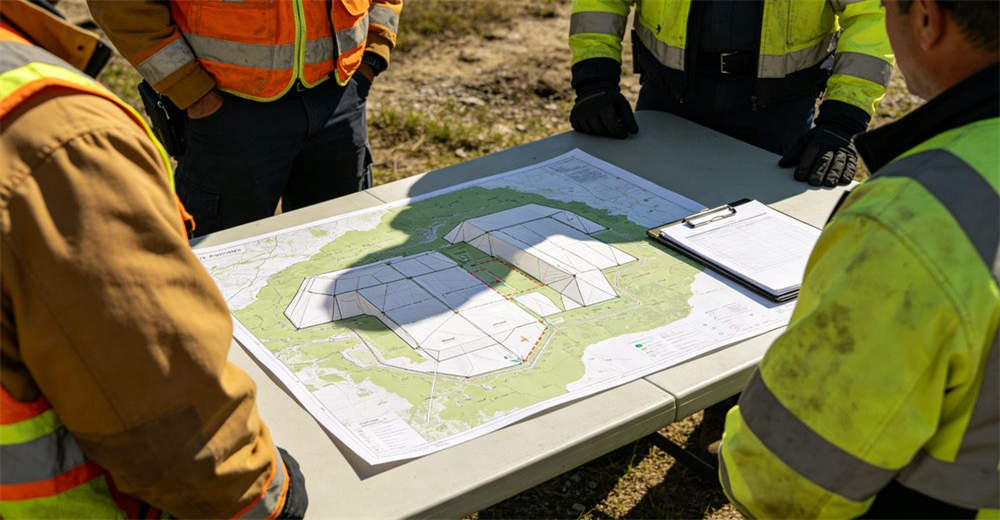
Different emergency scenarios deliver different shelter requirements. Understanding each scenario's specific requirements is essential for selecting the correct tent configuration and deployment strategy.
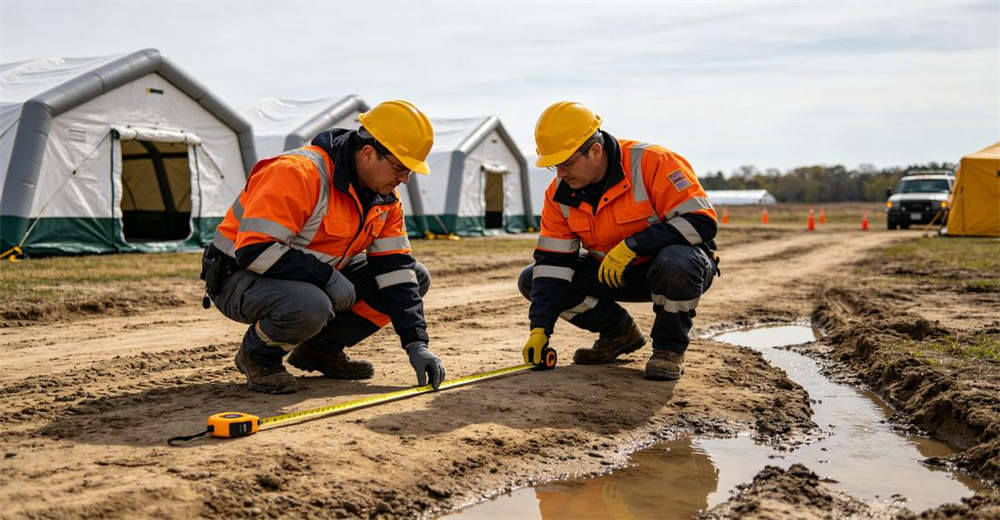
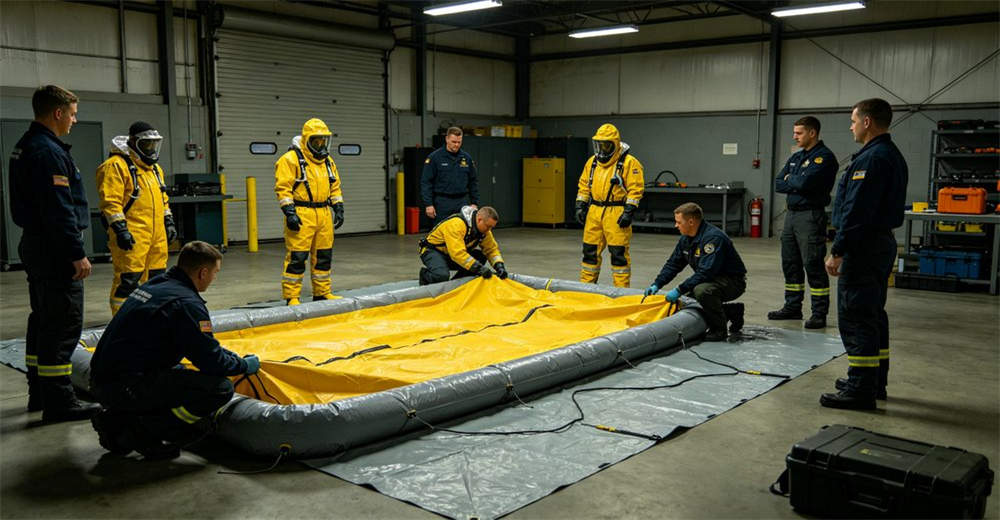
HAZMAT incidents involving chemical spills, leaks, or releases require specialized chemical decontamination capabilities to protect responders and prevent contamination spread. An inflatable decontamination tent provides a controlled environment where contaminated personnel can be safely processed.
Key challenges include contamination control (establishing hot, warm, and cold zones with controlled access), decontamination operations (gross decon, technical decon, mass casualty decon), and responder protection (PPE donning/doffing, decon of personnel and equipment).
Additional challenges include environmental protection (containment of contaminated water, prevention of runoff), medical monitoring (responder health monitoring, treatment of exposure victims), and command and control (incident command, communications, documentation).
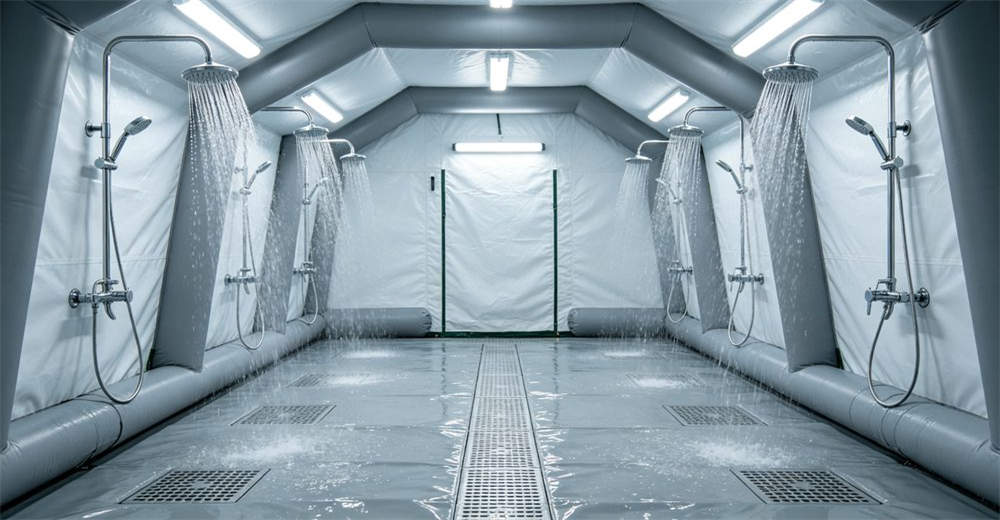
Firefighting decontamination tent systems must support three-zone decontamination flow, integrate water collection and drainage, provide privacy for disrobing, and withstand exposure to decontamination chemicals and water. The portable shelter design allows rapid deployment in under 10 minutes with minimal personnel.
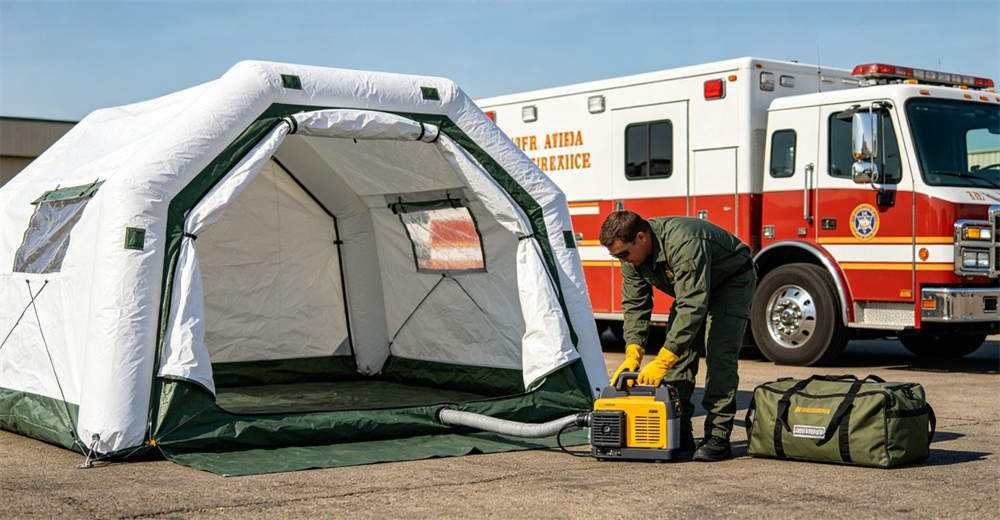
Structural firefighting operations require shelter for firefighter rehabilitation, medical monitoring, and decontamination after exposure to smoke, soot, and carcinogenic particles. An emergency response tent positioned near the incident scene provides a dedicated space for firefighters to remove contaminated gear.
The rehabilitation tent should be located in the cold zone, away from the smoke plume but close enough for rapid access. For extended operations, the tent can serve as a rest area with cooling stations, hydration, and vital signs monitoring.
Fire departments increasingly recognize the importance of on-scene decontamination to reduce firefighters' long-term cancer risk. A portable shelter with decontamination shower capabilities allows immediate gross decontamination before firefighters leave the scene, reducing contaminants carried back to the station or home.
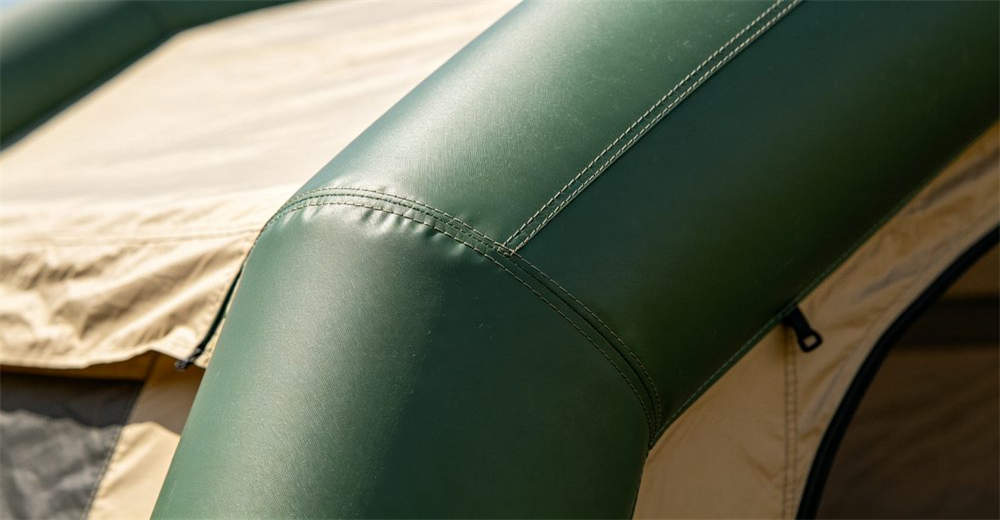
Incidents involving large numbers of contaminated casualties (chemical attacks, industrial accidents, transportation spills) require mass decontamination capabilities that can process dozens or hundreds of people quickly. Multiple inflatable tents can be connected to create a large-scale decontamination facility.
The facility should include triage, initial decontamination, secondary decontamination, and medical treatment areas with separate lanes for ambulatory and non-ambulatory casualties. For mass casualty events, throughput is the primary metric—how many people can be processed per hour.
A well-designed decontamination corridor with multiple shower lanes can process 50-100 people per hour. The tents should be arranged to maintain one-way flow, preventing cross-contamination between clean and dirty areas. Pre-incident planning should identify potential mass casualty scenarios and pre-position equipment accordingly.
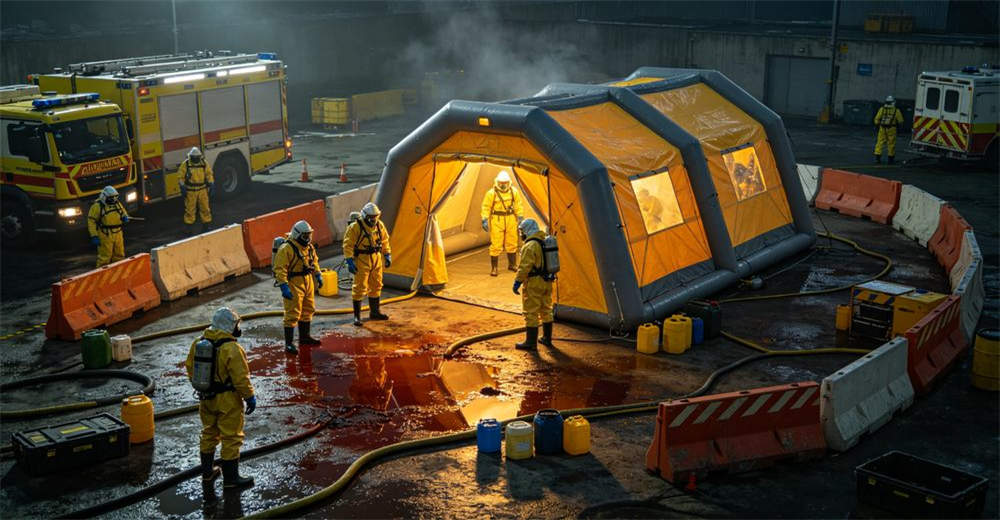
For industrial facilities (chemical plants, refineries, manufacturing, warehouses) often have their own emergency response teams that require decontamination capabilities for on-site incidents. An inflatable decontamination tent can be stored on-site and deployed rapidly when needed.
Industrial facilities may face unique hazards including corrosive chemicals, high-temperature materials, and complex process environments. The decontamination tent should be compatible with the facility's specific chemical inventory and emergency response plan.
Regular training with decontamination equipment benefits industrial emergency response teams from regular training with their decontamination equipment to maintain proficiency. The portable shelter can also serve as a command post or medical treatment area during non-decontamination emergencies. Facilities with limited space may prefer compact single-person decontamination units.
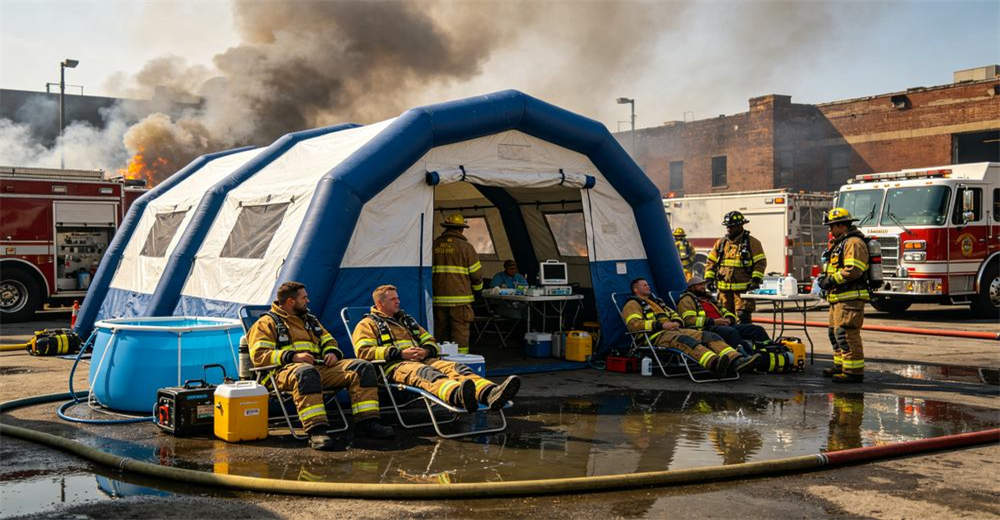
Proper decontamination site layout is essential for contamination control, responder safety, efficient operations, and environmental protection. A well-planned decontamination tent layout prevents cross-contamination, protects clean zones, ensures unidirectional casualty flow, and supports efficient decontamination operations. The following table outlines the standard 3-zone decontamination layout and key considerations for each zone.
Table 1 below outlines the standard three-zone chemical decontamination site layout, showing the hot zone, warm zone, and cold zone configuration with key facilities, personnel flow, and operational considerations for effective emergency response tent management.
|
Zone |
Location |
Facilities |
Key Notes |
|
Hot Zone (Contamination) |
Incident area, controlled access within 0-10m of source |
Entry point, contamination source, rescue operations |
Only authorized personnel in appropriate PPE; limited access; constant air monitoring |
|
Warm Zone (Decon) |
Between hot and cold, upwind |
Decon shower tents, gross decon, technical decon, PPE doffing |
Controlled access, unidirectional flow, water containment, gender separation where possible |
|
Cold Zone (Clean) |
Upwind, uphill from warm zone |
Medical treatment, triage, command post, rehab, equipment staging |
No contaminated personnel or equipment; clean support area; transport staging |
|
Decon Corridor |
Connecting hot to warm |
Gross decon line, high-pressure spray, initial rinse |
First point of contamination reduction; protects warm zone from heavy contamination |
|
Technical Decon Area |
Within warm zone |
Secondary decon, PPE removal, personal decon |
Systematic PPE doffing; thorough cleaning; privacy for disrobing |
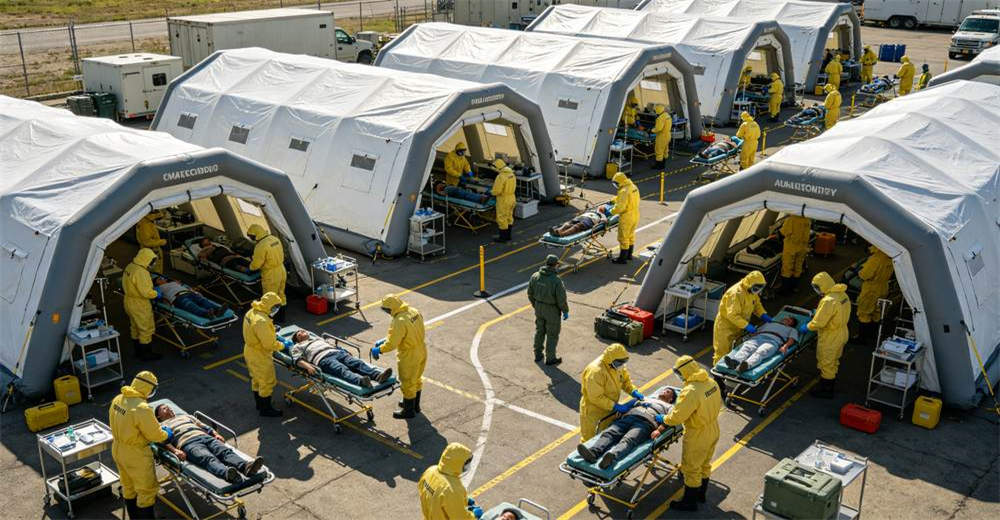
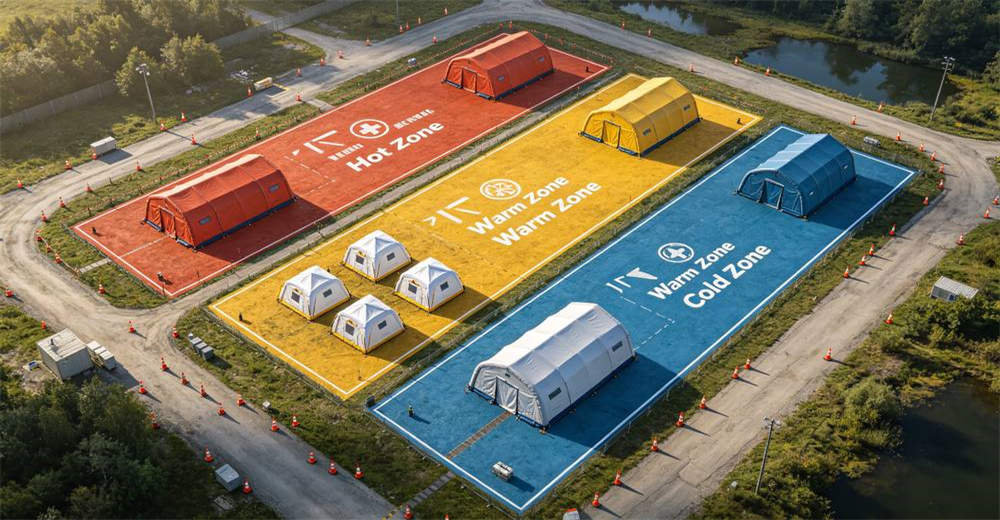
As outlined in the site layout section above, proper equipment placement is essential for effective decontamination flow. A comprehensive equipment and supply checklist for your firefighting decontamination tent ensures that all necessary items are available for effective decontamination operations. The following checklist covers tent systems, decontamination equipment, PPE, medical supplies, and support equipment needed for a complete firefighting decontamination tent deployment.
Table 2 provides a comprehensive checklist of essential decontamination equipment and supplies, organized by category with quantity guidelines and notes. This checklist ensures your inflatable decontamination tent operation has all necessary personal protective equipment, water systems, and support gear ready for deployment.
|
Category |
Essential Items |
Quantity Guideline |
Notes |
|
Tent Systems |
Decon shower tent, gross decon tent, medical tent, command tent |
1-4 tents depending on operation size |
Inflatable type preferred for rapid deployment; ensure compatible blowers |
|
Decon Equipment |
High-pressure sprayers, decon solution applicators, scrub brushes, water collection pools |
2-4 sprayers, 4-8 brushes |
Include both high-pressure and low-pressure options; ensure chemical compatibility |
|
Water Supply |
Water bladders, hoses, pumps, fittings, water heaters |
500-2000 gal capacity |
Plan for 20-50 gallons per person decontaminated; heated water preferred |
|
PPE |
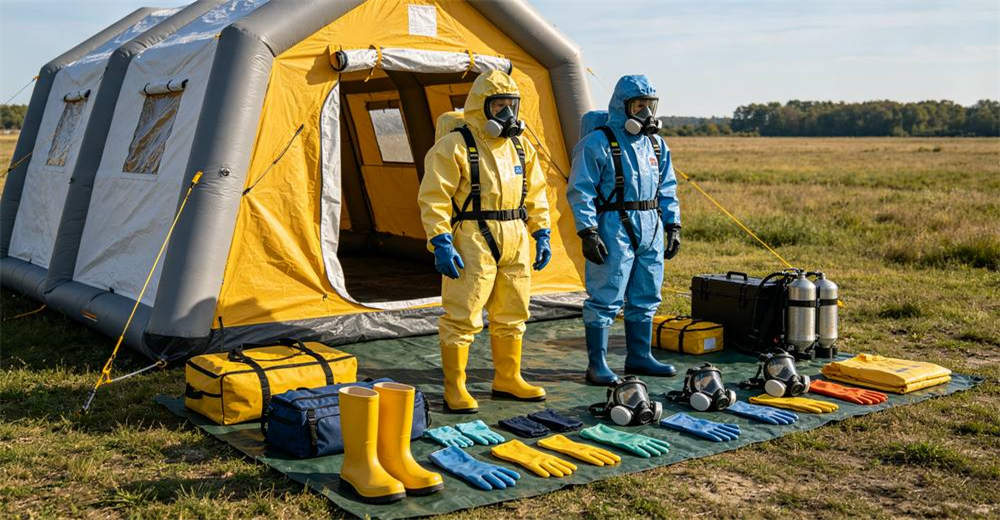
Level A/B/C suits, gloves, boots, respirators, SCBA |
Based on team size + 50% spare |
Include multiple sizes; ensure proper training and fit testing |
|
Medical Supplies |
First aid kits, oxygen, AED, trauma supplies, monitoring equipment |
2-3 complete kits |
Include chemical exposure antidotes where applicable; follow local protocols |
|
Support Equipment |
Generators, lighting, communication radios, signage, tarps |
1-2 generators, 4-8 lights |
Ensure fuel supply for extended operations; test all equipment before deployment |
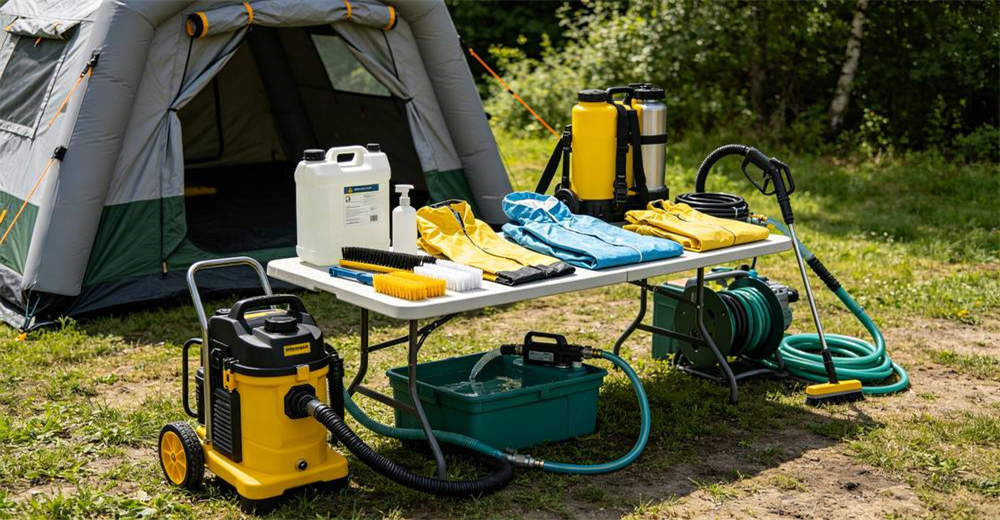
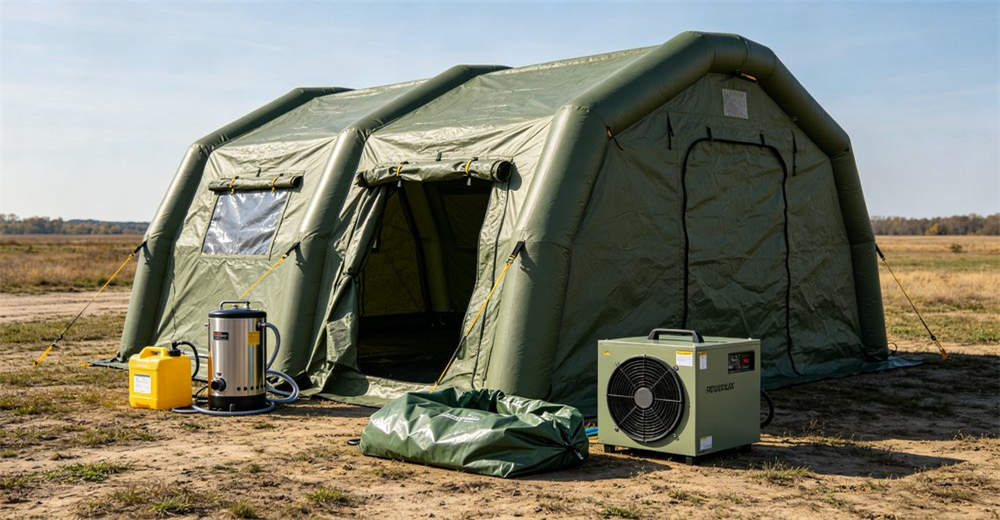
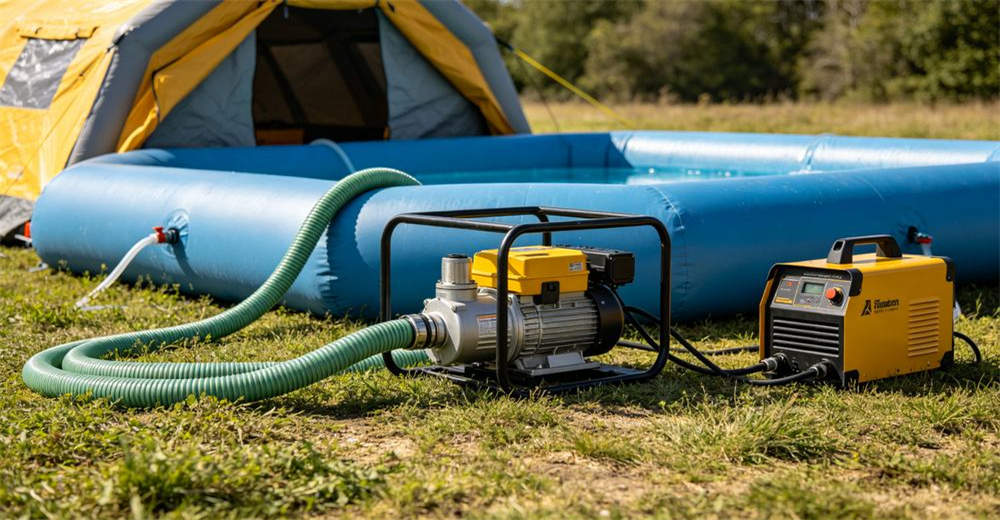
Effective decontamination tent operations require proper staffing, clear roles and responsibilities, and well-defined operational procedures. The following outlines recommended staffing levels, key roles, and standard operating procedures for firefighting decontamination tent deployments.
Table 3 details the recommended staffing positions and roles for effective decontamination operations, including minimum staffing levels and key responsibilities. Proper staffing ensures your emergency response tent operates safely and efficiently, with clear roles for decontamination line personnel, medical staff, and supervisors.
|
Position |
Key Responsibilities |
Minimum Staffing |
Notes |
|
Decon Officer |
Overall decon operations management, safety monitoring, resource coordination |
1 per shift |
Reports to Incident Commander; must have HAZMAT training |
|
Tent Deployment Team |
Tent setup, inflation, anchoring, water line connection, equipment staging |
2-4 personnel |
Trained on specific tent systems; can deploy in under 15 minutes |
|
Decon Line Workers |
Gross decon spraying, technical decon assistance, PPE doffing support |
4-8 personnel |
Positioned at key decon stations; rotate every 30-45 minutes |
|
Medical Monitor |
Responder health monitoring, casualty triage, medical treatment coordination |
1-2 personnel |
EMS or medically trained; monitors vital signs and heat stress |
|
Water Management |
Water supply management, contaminated water collection, disposal coordination |
1-2 personnel |
Monitors water levels; ensures containment; coordinates disposal |
|
Documentation Officer |
Casualty tracking, exposure documentation, equipment logs, chain of custody |
1 personnel |
Critical for legal and medical follow-up; uses standardized forms |
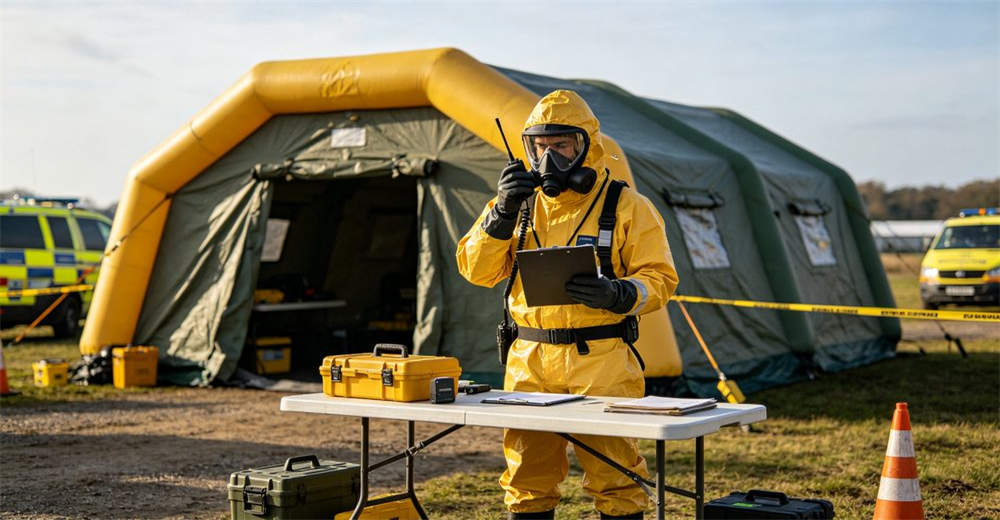
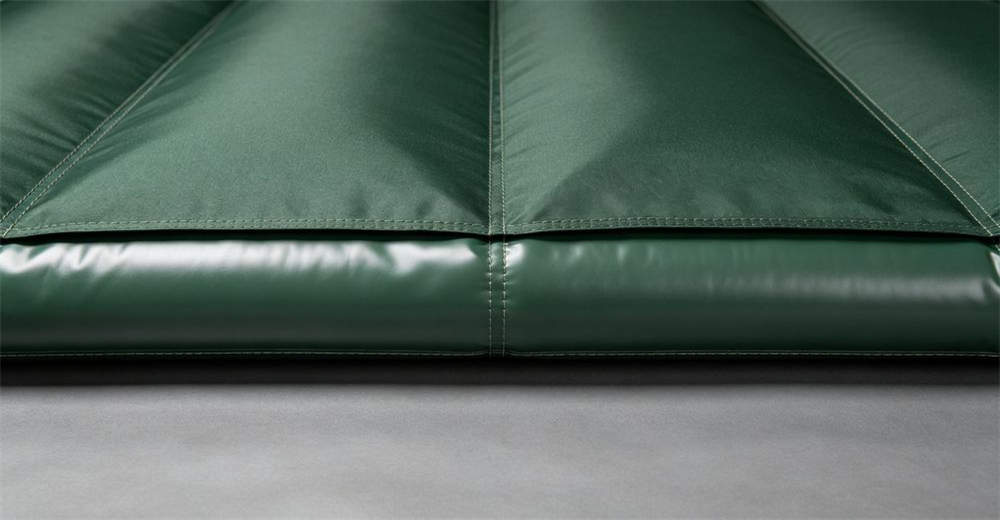
Building on the staffing guidelines discussed earlier, the following best practices ensure your decontamination operations run smoothly. Real-world firefighting decontamination tent operations have identified key best practices and common pitfalls that can significantly impact operational effectiveness. The following best practices are derived from fire department, HAZMAT team, and industrial emergency response experiences worldwide.
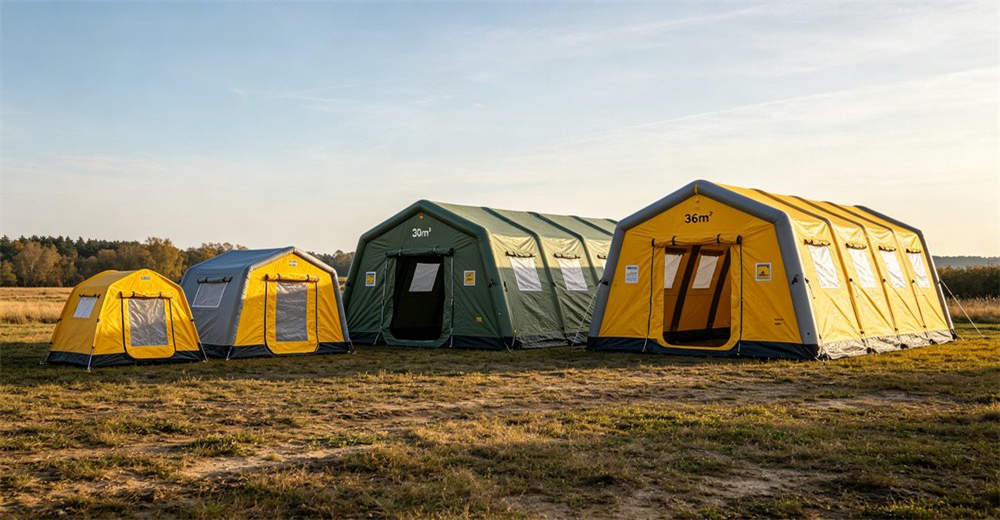
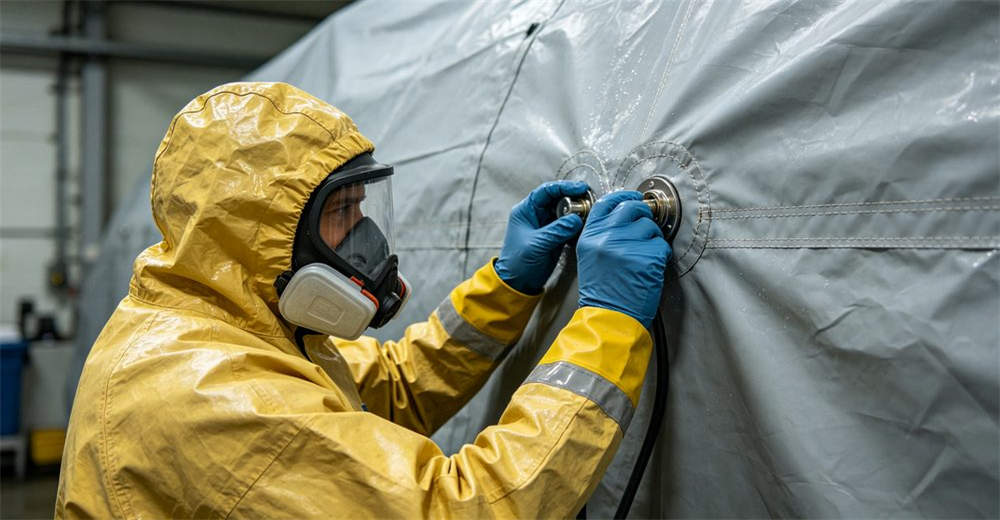
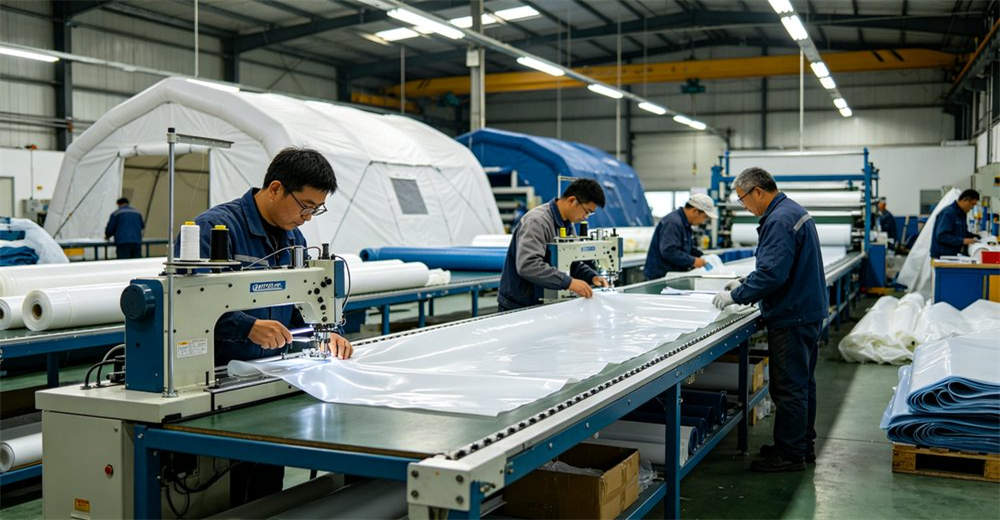
As a professional supplier and provider of firefighting decontamination inflatable tent systems and inflatable decontamination tents with over 20 years of manufacturing experience, we provide comprehensive capabilities from design and prototyping to mass production and quality assurance. Our facilities are equipped to handle custom configurations, large orders, and rapid turnaround times while maintaining strict quality standards.
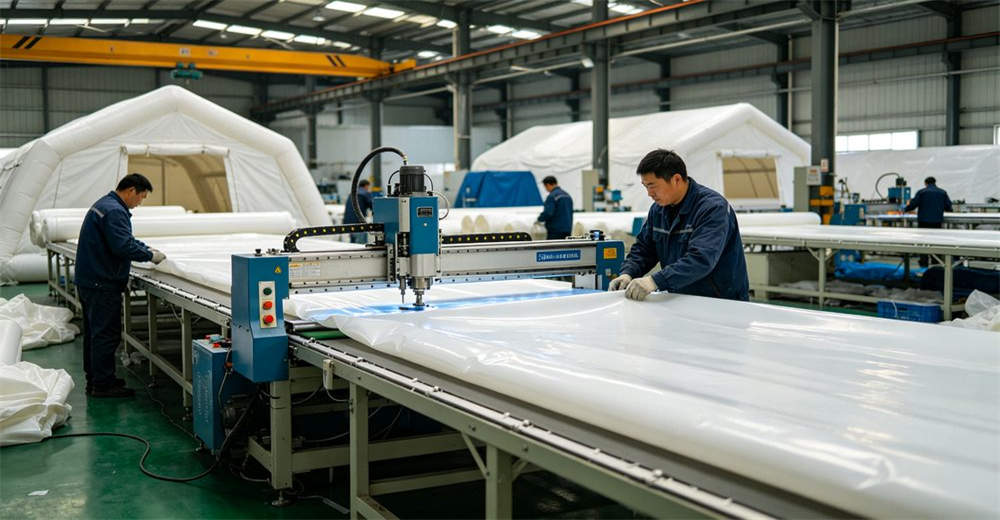
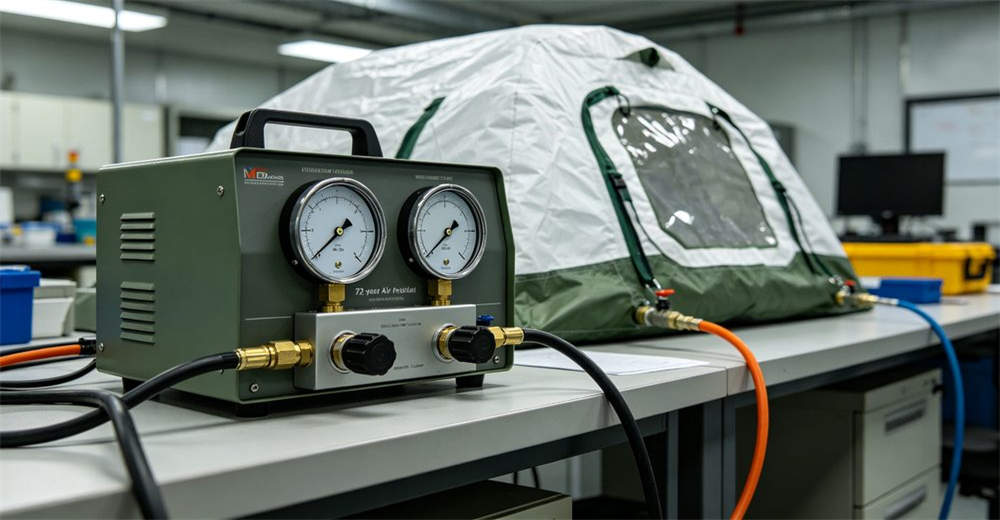
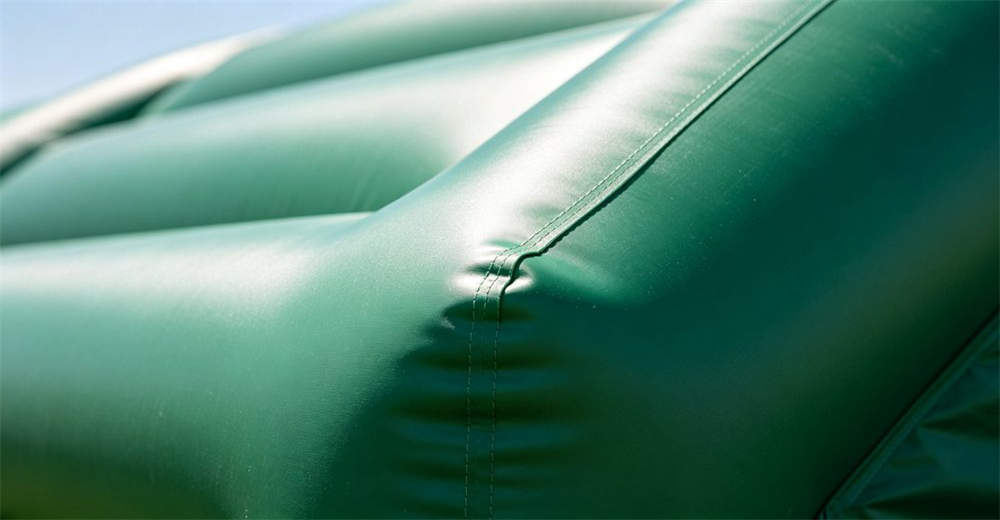
Our dedicated inflatable tent manufacturing facility delivers over 500 decontamination tents annually, with capacity to scale up for large emergency response contracts. Each unit undergoes rigorous quality control including pressure testing (72-hour air retention verification), material strength testing (1000D PVC tensile strength), and waterproof certification before shipment.
We maintain ISO 9001 quality management certification and CE marking for all inflatable products. Our quality control team inspects every weld seam, valve fitting, and structural component. Batch testing includes -30°C cold resistance and +70°C heat resistance verification to ensure performance in extreme environments.
|
Material |
Fabric Weight |
Warranty |
Deployment Time |
|
PVC-coated polyester |
600-900 g/m² |
2-5 years |
5-15 minutes |
|
|
|
|
|
|
|
Temperature Range |
Water Resistance |
|
|
|
-30°C to +60°C |
100% waterproof |
|
A: Most inflatable tent decontamination systems can be fully deployed by 2-4 trained personnel in 5-15 minutes. Deployment time varies based on tent size, configuration complexity, and operator experience. Regular setup drills are recommended to maintain rapid deployment capability.
A: Tent size depends on your operational requirements. For small teams or initial response, a 10-20 m² tent may suffice. For larger operations or mass casualty decontamination, 30-60 m² tents or multi-tent configurations are recommended. Our team can help you select the appropriate size based on your staffing, expected casualties, and operational scenarios.
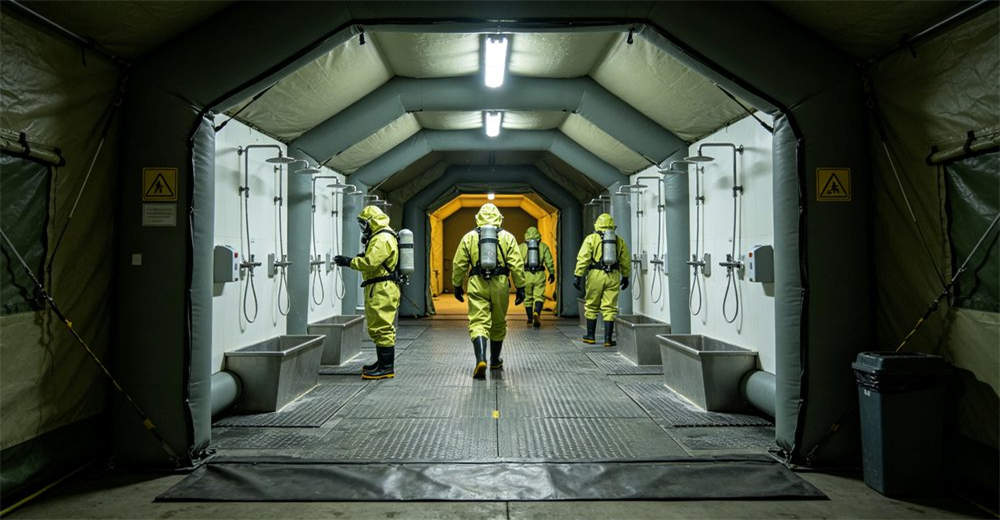
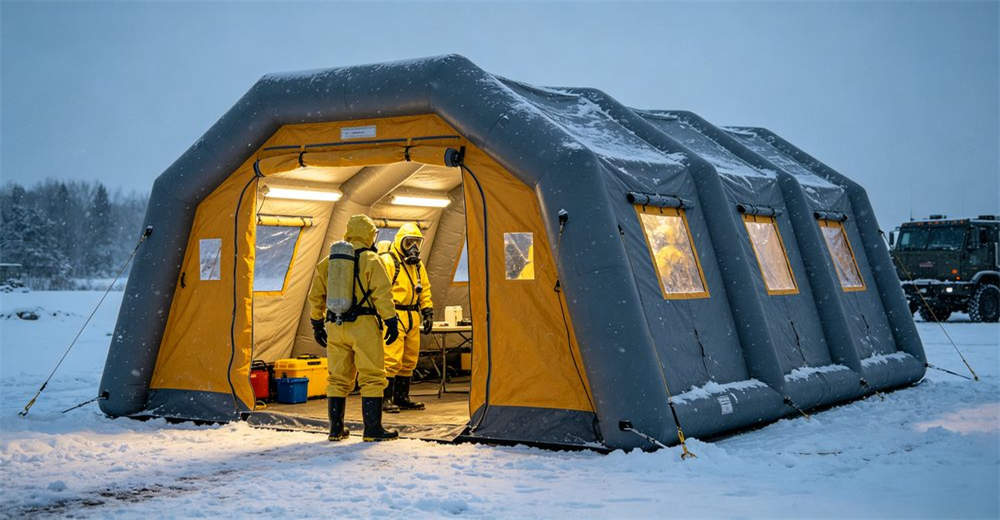
A: Yes, inflatable tent decontamination systems are designed for use in a wide temperature range, typically from -30°C to +60°C. For cold weather operations, we recommend using heated water systems, insulation liners, and appropriate winterization procedures. Our technical team can provide guidance on cold weather deployment and operation.
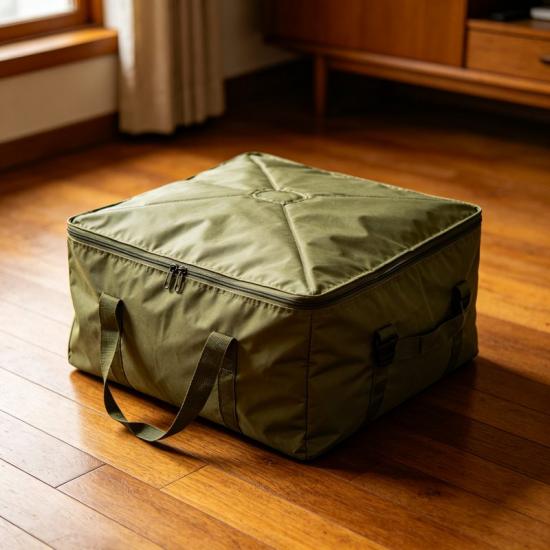
A: Proper maintenance and storage extend tent lifespan significantly. After each use, clean the tent thoroughly with mild soap and water, ensure complete drying before packing, inspect for damage or wear, and store in a cool, dry location away from direct sunlight. Regular inspection and maintenance are recommended, especially for tents used frequently or stored for extended periods.
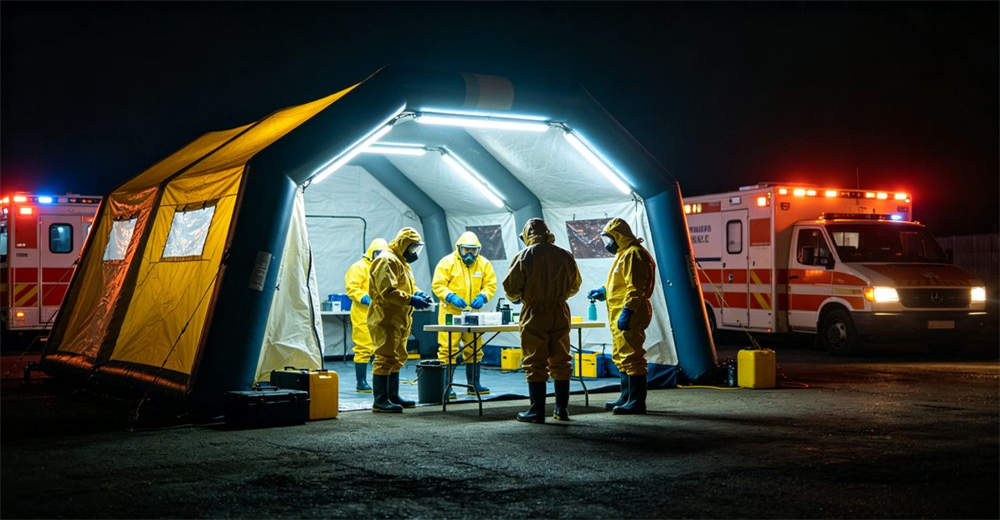
A: Yes, we offer extensive customization options including tent size, layout configuration, color, number of rooms/shower stations, water system integration, window and door placement, and branding. Our design team works closely with clients to create tent systems that meet their specific operational requirements. Contact us to discuss your customization needs.
A: Standard tent models are often available from stock for immediate shipment. Custom configurations typically require 2-4 weeks for production, depending on complexity and order quantity. Large orders may require additional production time. We recommend contacting us early to discuss your timeline and ensure timely delivery.
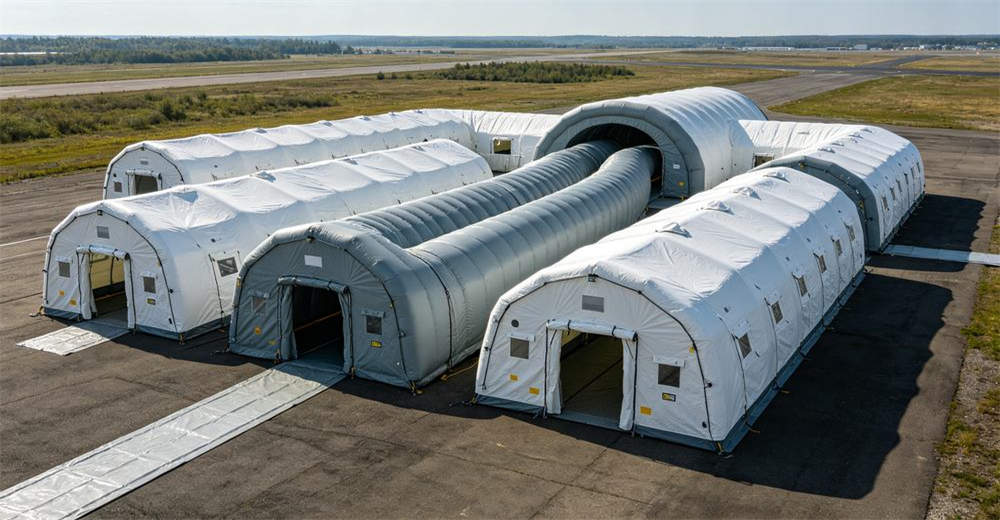
A: Yes, we offer comprehensive training programs covering tent deployment, operation, maintenance, troubleshooting, and decontamination procedures. Training can be conducted at our facility or on-site at your location. We also provide detailed operation manuals and video tutorials for ongoing reference. Contact us to discuss training options for your team.
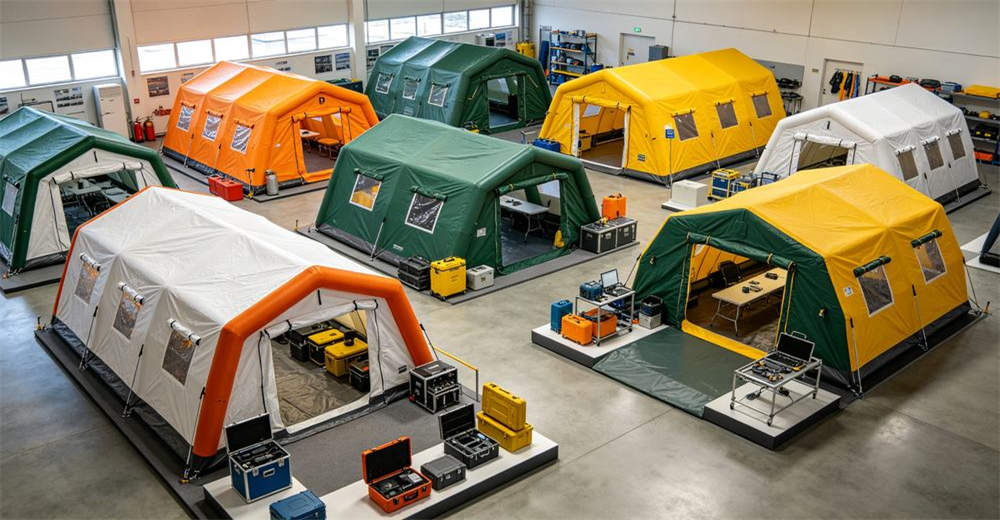
For individual or small team decontamination (1-2 persons at a time), the single-person tent (3m³/4m³/5m³) is ideal with its compact footprint and rapid 3-minute deployment. For multi-person operations, mass casualty incidents, or facilities requiring higher throughput, the public 30m³ tent (5m×6m×2.8m) supports multiple shower stations and includes changing, decontamination, and drying zones. For large-scale emergency response, multiple tents can be connected. We recommend assessing your maximum expected casualty volume and available deployment space when selecting a configuration.
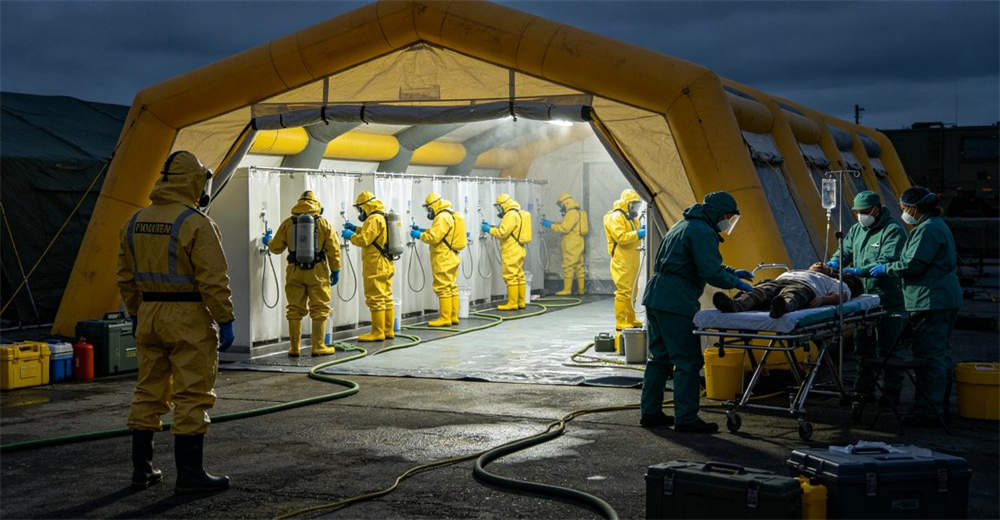
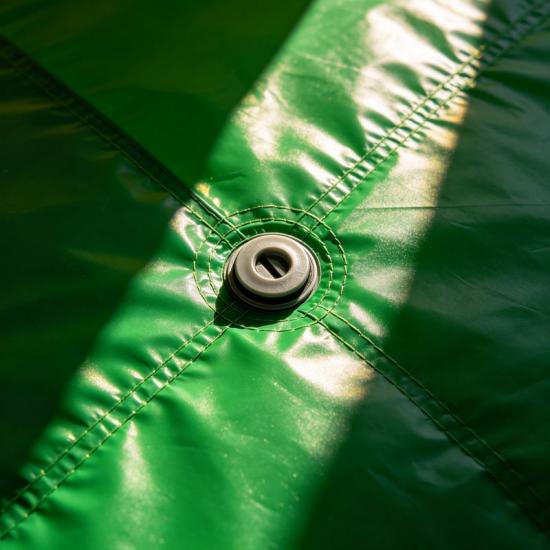
Our firefighting decontamination tent systems use three primary materials: (1) Outer canopy: 600D Oxford cloth with 0.4mm waterproof coating, available in orange, blue, red-blue two-tone, or camouflage; (2) Inflatable columns: 1000D airtight mesh fabric with 0.7/0.9mm PVC flame-retardant coating, 250mm diameter, 72-hour pressure retention; (3) Floor: 0.4mm knife-scraped PVC fabric for high strength and abrasion resistance. All materials are UV-resistant, flame-retardant, and suitable for -30°C to +70°C operating temperatures.
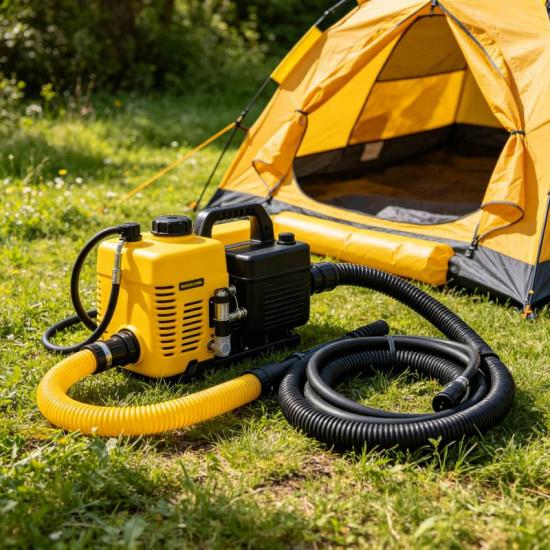
Complete decontamination systems can be configured with: electric inflation/deflation pumps (600W or 1900W) or manual pumps, self-rising water storage bags (mobile water bladders), decontamination waste collection bags, lightweight diesel heaters with constant temperature control, integrated heating and water supply units with touchscreen control, high-pressure decontamination pumps, decontamination mixing tanks, annular/inflatable shower systems, toxic substance sealed barrels, chemical-resistant gloves (XF770-2008 certified), waterproof decontamination stretchers, and decontamination reverse beds. All equipment is designed for rapid field deployment and easy transport.
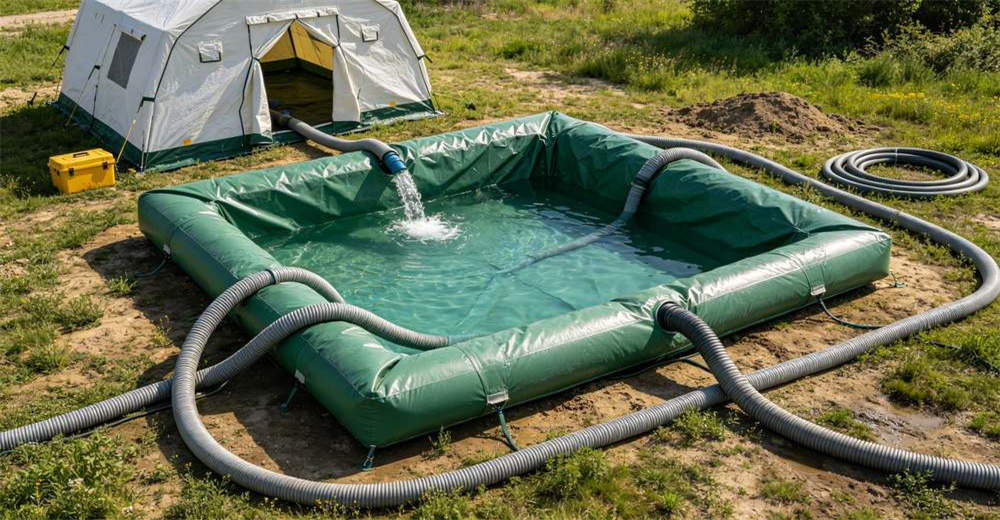
Yes, all decontamination tent systems are fully customizable. Options include: custom sizes beyond standard 3m³/4m³/5m³/30m³ configurations, custom colors and patterns (including department-specific color schemes), custom printing/logos (unit insignia, "Fire / Rescue / Decontamination" markings), modified internal layouts, additional shower stations, specialized door configurations, and integration with existing department equipment. Contact our technical team with your specific requirements for a customized solution and quotation.
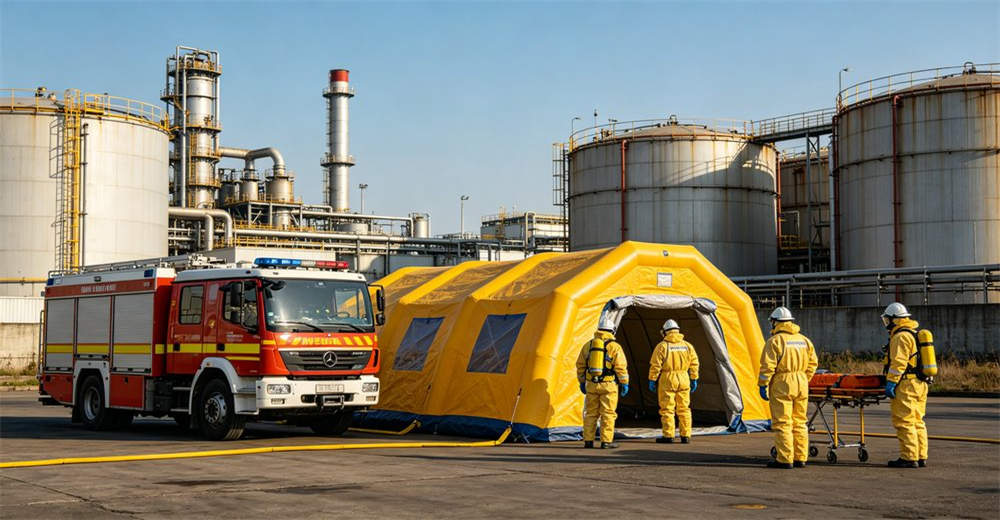
Drawing on the best practices and supplier capabilities discussed above, here are answers to the most common questions we receive. Whether you are equipping a fire department, HAZMAT team, industrial emergency response program, or civil defense organization, our firefighting decontamination inflatable tents and complete decontamination tent systems provide reliable, rapid-deployment contamination control solutions. With over 20 years of manufacturing experience, supplier-direct pricing, and comprehensive support from design through deployment, we are your trusted provider of emergency response shelter systems.
Contact us today for a free consultation on your firefighting decontamination tent needs and receive a custom quotation. Our team will help you select the right tent configuration, plan your decontamination site layout, and ensure you have all the equipment and supplies needed for effective operations.
Copyright © Custom Disaster - Relief Bedding: Tents, Sleeping Bags, Blankets All Rights Reserved
the professional team to service !