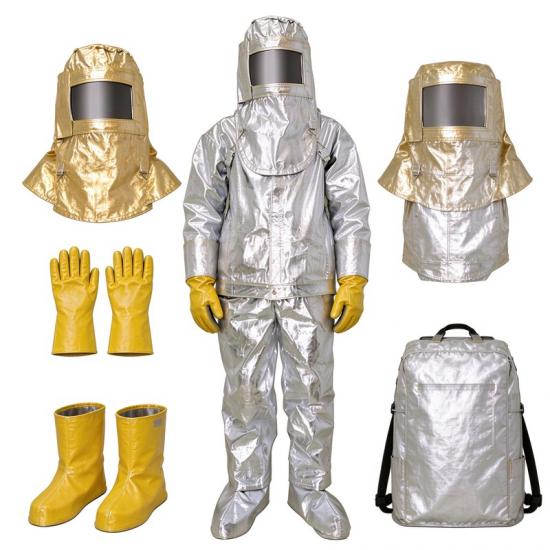
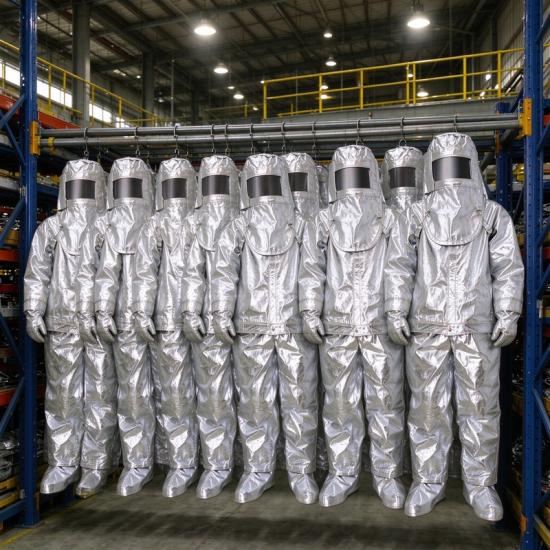
Our imported fabric aluminized heat resistant suit adopts premium multi-layer Costmir aramid fabric with 800°C thermal protection. It reaches over 90% radiant heat reflectivity, lightweight for long hot shifts. Ideal for ceramic kiln, aluminum smelter and cement plant. Full kit includes suit, hood, gloves and boot covers. Bulk supply available with EN 407 certification and custom branding.
Note: Price for reference only. Exact price based on quantity, size, weight and custom details.
model no. :
XFF-02Brand:
YRFmarket price :
$119.8sale price :
$59.9price range :
30-100/$59.9Color :
Multiple Colorsport of dispatch :
Guangdong/GuangzhouPayment :
TT, Paypal, Western Unionmin order :
30original region :
Made in ChinaLead Time :
5-15daysImported Fabric Aluminized Suit | 800°C Lightweight
Protection
Most ceramic kiln workers get burned loading at 800°C because their heat suit is too thin for long shifts. An imported fabric aluminized heat suit with para-aramid multi-layer construction blocks radiant heat and withstands prolonged exposure near kiln openings. Here's the full specification, sizing chart, certification info, and wholesale pricing for industrial safety buyers.
 |

|
Contents
1. Why Fabric Quality Decides Suit Lifespan
2. Aluminized Fabric Layers: Weight & Reflectivity
3. Lightweight & Comfortable for Long Shifts
4. Where Imported-Fabric Suits Fit Best
5. Imported Aluminized Suit Procurement Guide
6. FAQ – Imported Fabric Aluminized Heat Suit
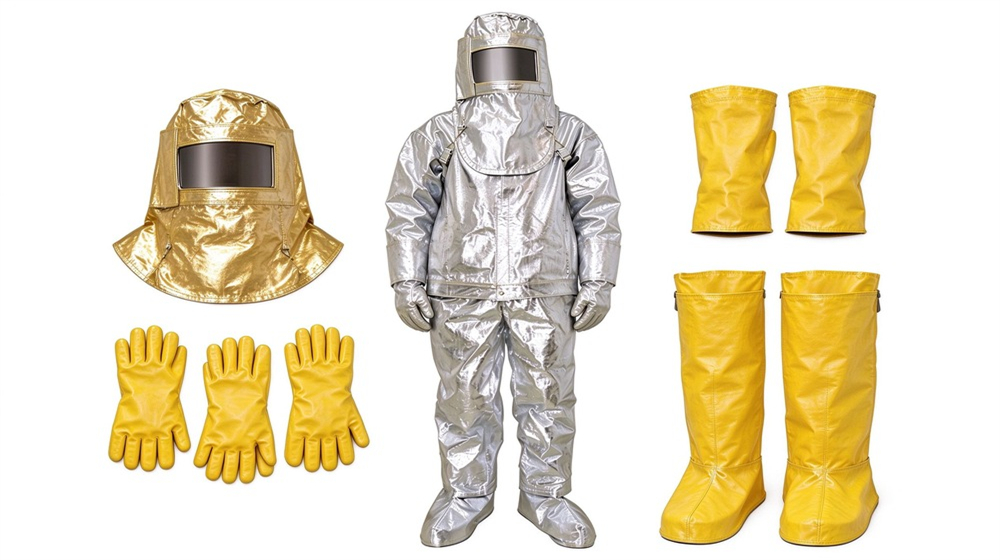
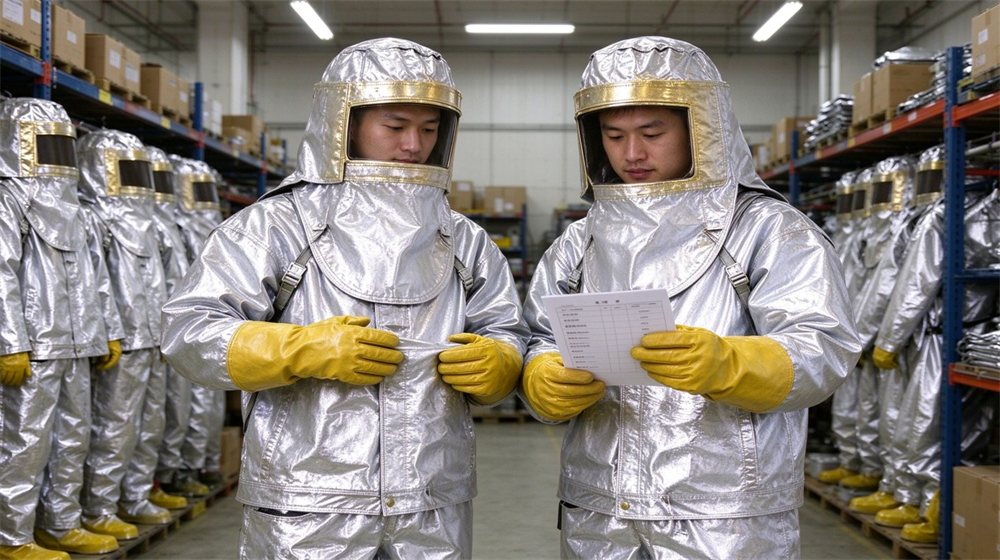
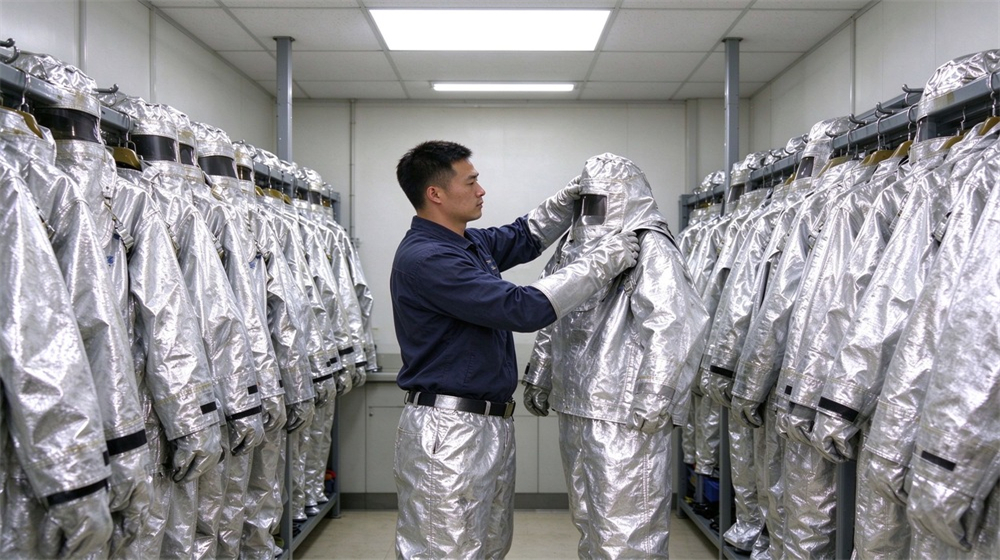
A protective suit is only half of the system. Heat-resistant gloves protect the hands near hot surfaces, boot covers stop molten splash on the feet, and the hood guards the face and neck. When the whole kit comes from one supplier with matched materials, the protection level stays consistent across every part.
Imported fabric changes how the suit is cut and sewn. A lighter laminate allows cleaner seams, smaller folded packs, and an overall shape that moves with the worker instead of fighting him, which is why buyers of Costmir aluminized fabric report noticeably better acceptance from their teams.
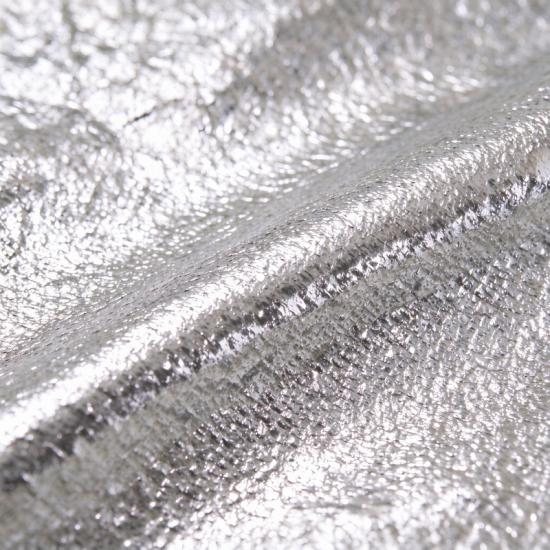
Put imported fabric next to ordinary fabric under the same lamp and the difference is visible immediately: the imported side throws a clean mirror reflection, the ordinary side turns grey. That reflectivity gap is the same reason one suit cools down faster between tasks.
The silver layer you see here is not paint. It is a bonded aluminized membrane laminated onto aramid base cloth under controlled tension, so the reflective aluminized heat suit keeps its mirror finish through repeated folding, storage and hot-work use.
The most common reason a heat suit gets retired early is not the seam or the zipper. It is the fabric. In radiant heat environments, the aluminized surface does the actual protection work, so the grade of that surface and the base cloth underneath it decide both the imported fabric heat suit lifespan and the safety margin your crew gets every single shift.
The practical way to read a fabric grade is to separate what you can see from what you cannot. The visible part is the silver surface and how evenly it reflects light. The invisible part is the base cloth: whether it holds its structure when the reflective layer heats up, whether the seams stay strong after folding, and how the whole laminate behaves after months of real shifts. A grade that scores high on all of these is what a wholesale buyer should look for, because the difference shows up in replacement frequency and in the crew's confidence near the heat source.
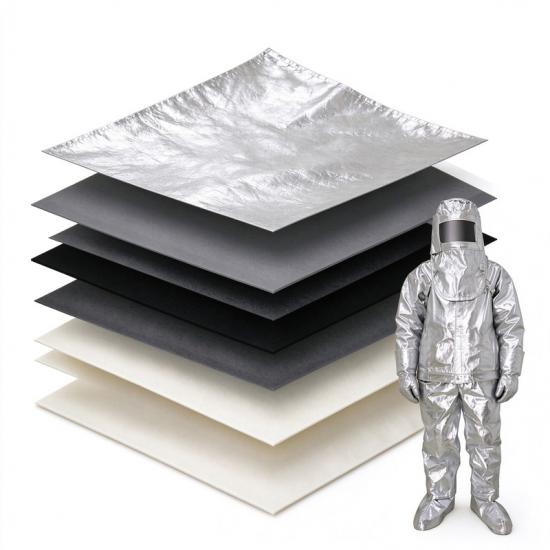
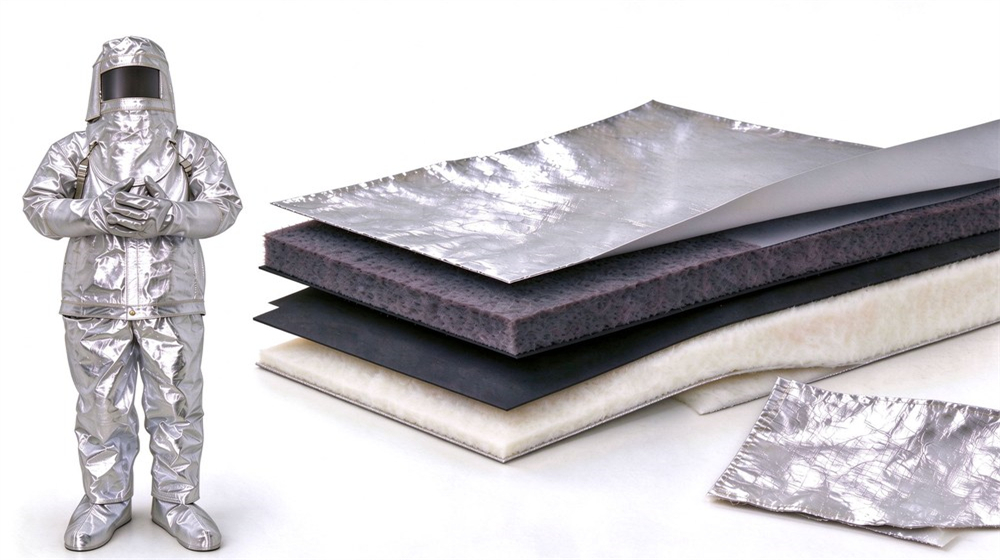
When you open the layers of this Costmir aluminized fabric construction, you see why it behaves differently: the reflective outer membrane, the aramid insulation body, and the comfortable inner lining are bonded as one engineered system, not three loose materials sewn together.
Reliability also depends on batch consistency: ask how the supplier validates each production batch, because a fabric grade is only useful if the next shipment matches the sample. The usual checks are a reflectivity spot test and a weight check on the finished fabric roll, and both should be part of the pre-shipment inspection.
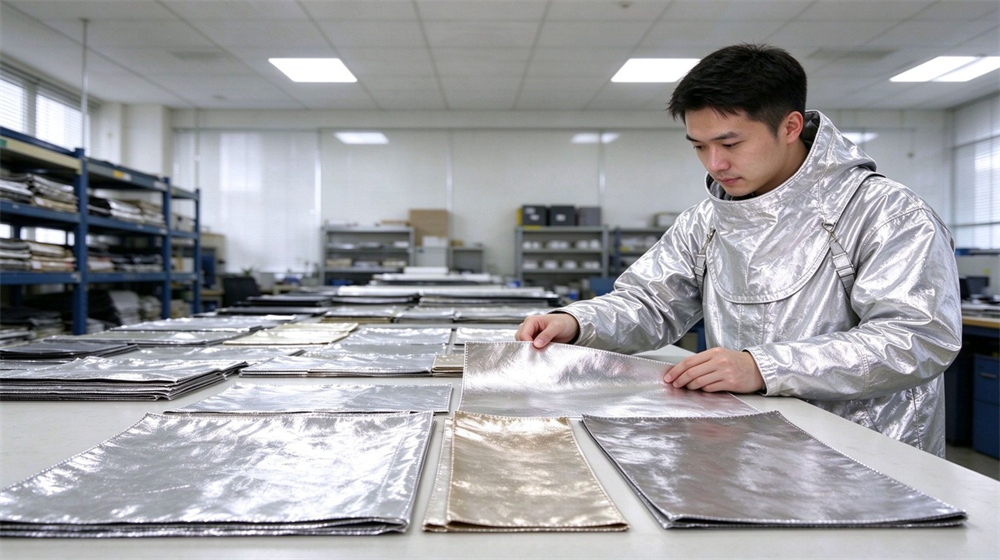
Sample evaluation is part of the buying process: request a fabric swatch with the quotation, because the swatch shows the hand feel and reflectivity better than any photo. A reliable supplier sends swatches first and confirms the grade on the order sheet before production starts.
When buyers compare quotes, they often see the words "imported" and "domestic" without a clear definition. For heat protective clothing, the practical difference is aramid base cloth and the aluminizing process. Aramid fibers keep their structure at high temperature, and imported processing applies the aluminum layer with a more uniform bond, which is why an imported aluminized suit supplier can offer a thinner laminate that still holds its reflectivity rating.
Low-grade aluminized fabric shows visible wear early: the coating flakes at fold points, and once the reflective layer goes, hot spots appear directly on the wearer. Higher-grade imported fabric is engineered to resist exactly this degradation.
It is worth checking how the fabric behaves after folding, after washing, and after months of hanging in a hot changing room. Those are the conditions that separate a durable aluminized fabric coverall from a cheap one that only looks good on the sales photo. A reliable supplier should be able to show you the construction layers and explain the coating process rather than just quoting a price.
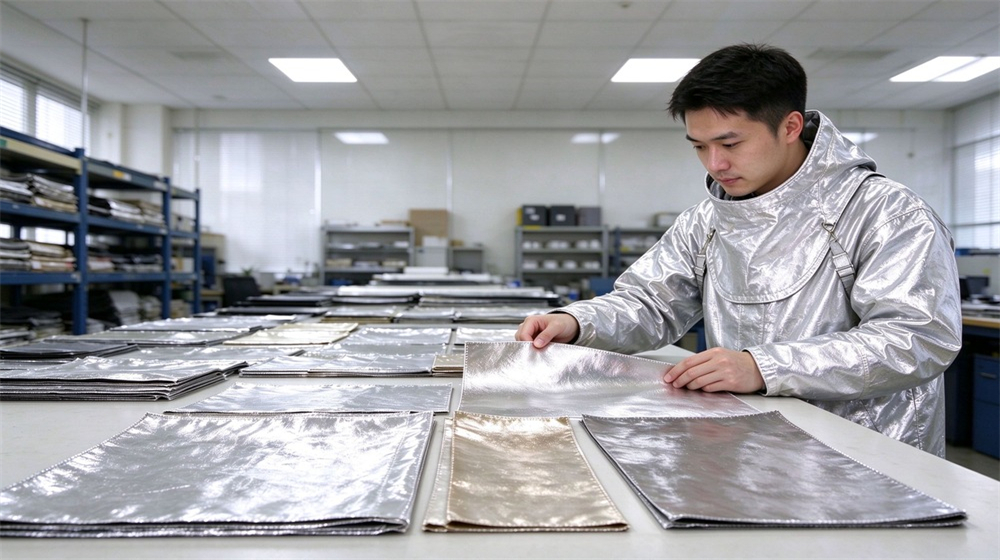
Comparing fabric samples under the same light, and checking how each one folds and drapes, is the practical first step when a wholesale buyer starts comparing suppliers for an imported aluminized suit supplier selection.
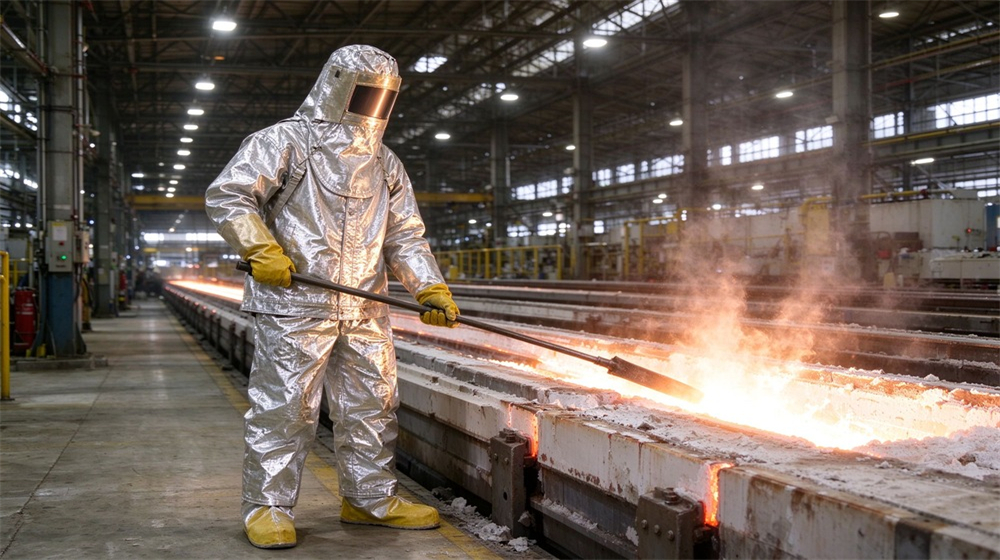
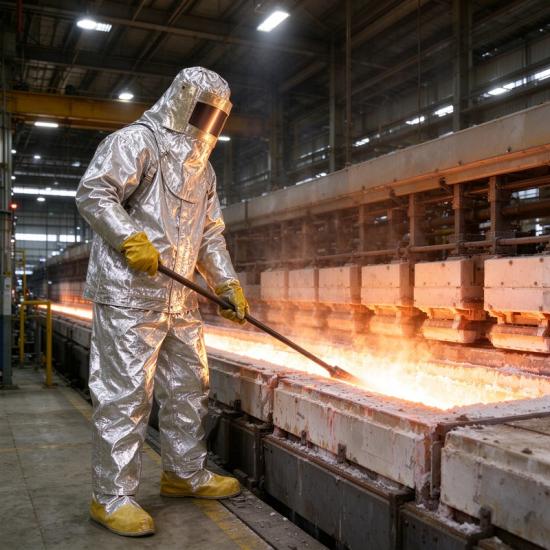
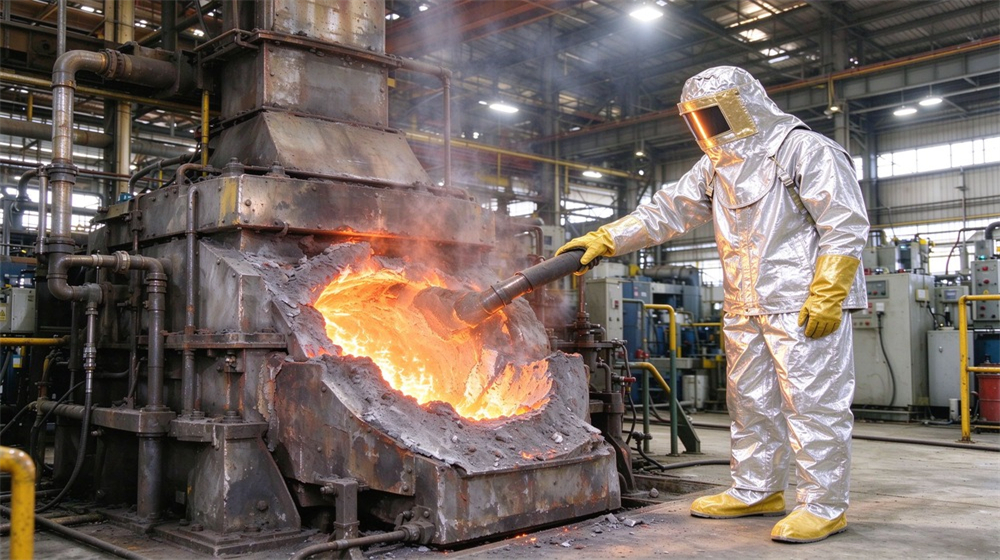
Radiant heat is not uniform across a plant. An aluminum smelter potroom radiates from the bath and the anode area, a ceramic kiln radiates from the opened door, and a cement rotary kiln radiates from the glowing shell. Each position asks the same question: can the suit reflect the incoming radiation faster than the fabric absorbs it?
For short-duration tasks like tapping and casting, the suit provides a window of protected time: the silver surface bounces the radiant energy off, and the aramid base holds the small amount of heat that does transfer. This is why potroom and kiln crews rely on reflective clothing rather than thick insulation alone.
The temperature range matters more than the peak number. Working near a smelter cell or a kiln opening usually means exposure to 1000-1300°C radiant heat for short intervals, with cool-down periods in between. The suit is designed for that cycle: strong reflection during the hot phase, and a lightweight build that lets the body cool fast during the break.
Working near a smelter cell means short radiant exposure with frequent movement, exactly the profile this lightweight aluminized suit is built for.
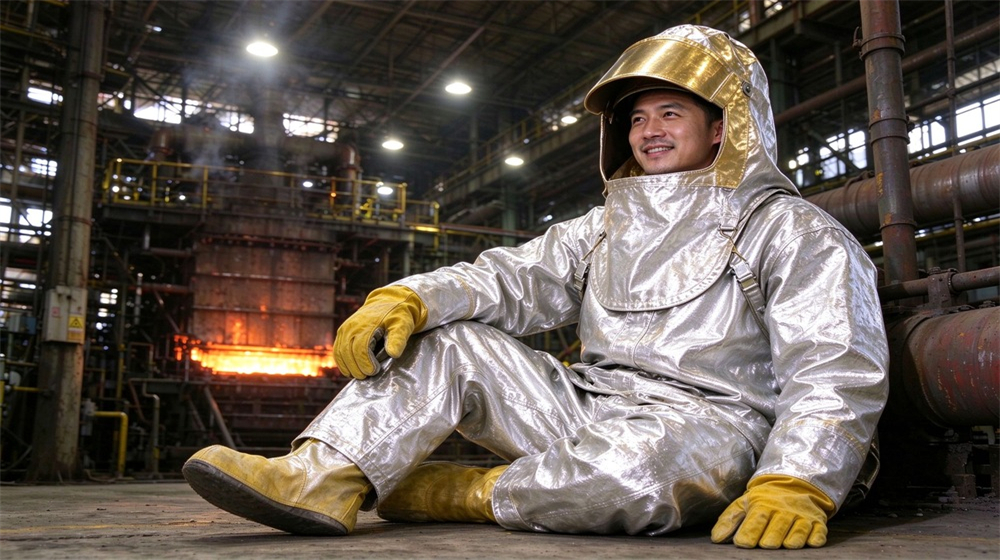
The Costmir process starts with aramid filament yarn, which does not melt or drip under heat. The aluminized layer stays bonded to the base cloth under flexing, and the suit is stitched with aramid fire-resistant thread, so the seams never become the weak point.
Long-term resistance is the sum of reflectivity, insulation depth and stitching strength. A flame retardant aluminized coverall that gets all three right still looks nearly new at month six, while a suit that saves on any one shows visible wear in the first season.
|
Fabric Grade |
Weight g/m² |
Aluminized Layers |
Reflectivity Rating |
Typical Lifespan in Hot-Work Shifts |
|
Imported Costmir aramid aluminized |
200-300 |
Single bonded membrane |
High (≈90%+) |
Long, stable reflectivity |
|
Standard domestic aluminized |
Heavier build |
Coated surface |
Medium |
Shortens after thermal cycling |
|
Low-grade laminate |
Varies |
Thin coating |
Low, uneven |
Flakes at edges over time |
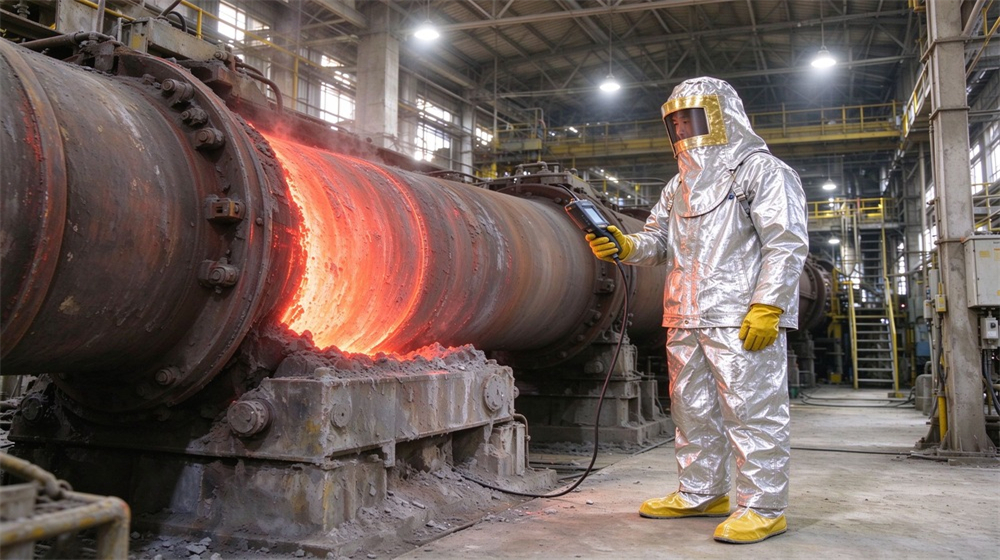
The construction of an imported aluminized fabric suit is described by weight per square meter, number of layers, and reflectivity rating. Each number answers a different question about how the suit will behave.
Weight and reflectivity data should always come with the test method behind them. A supplier quoting imported aluminized suit fabric grade should be ready to explain how the reflectivity rating was measured and which batch it applies to.
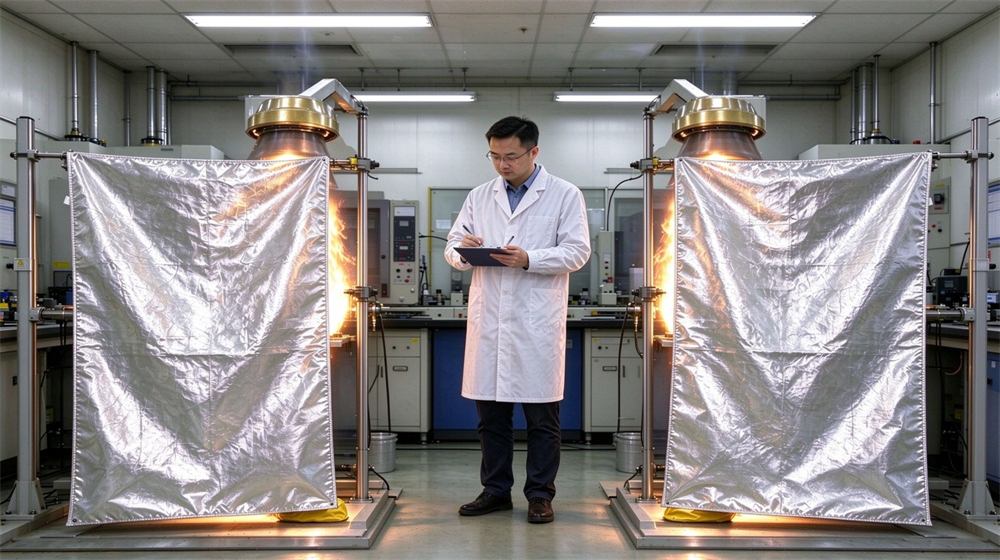
Layer one is the outer aluminized mirror that reflects radiant heat away before it reaches the insulation. Layer two is the aramid insulation body that slows the heat that does pass the surface. Layer three is the inner lining that the wearer feels through hours of wear.
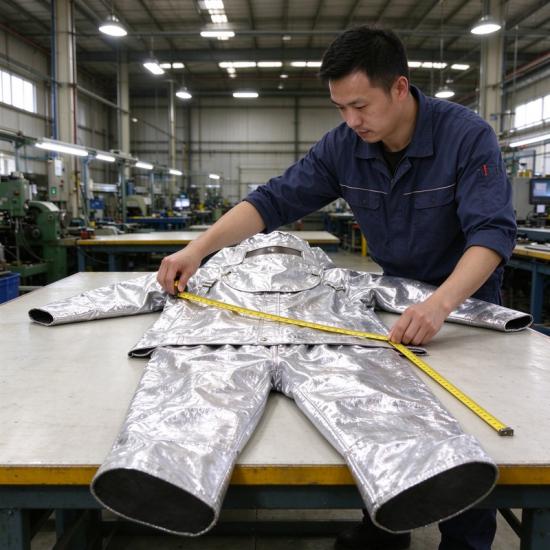
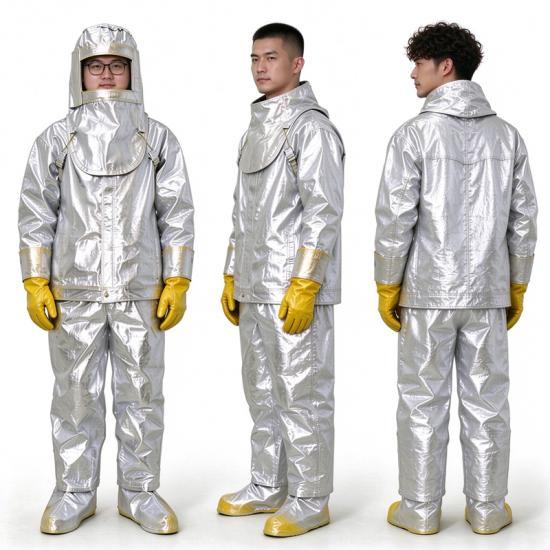
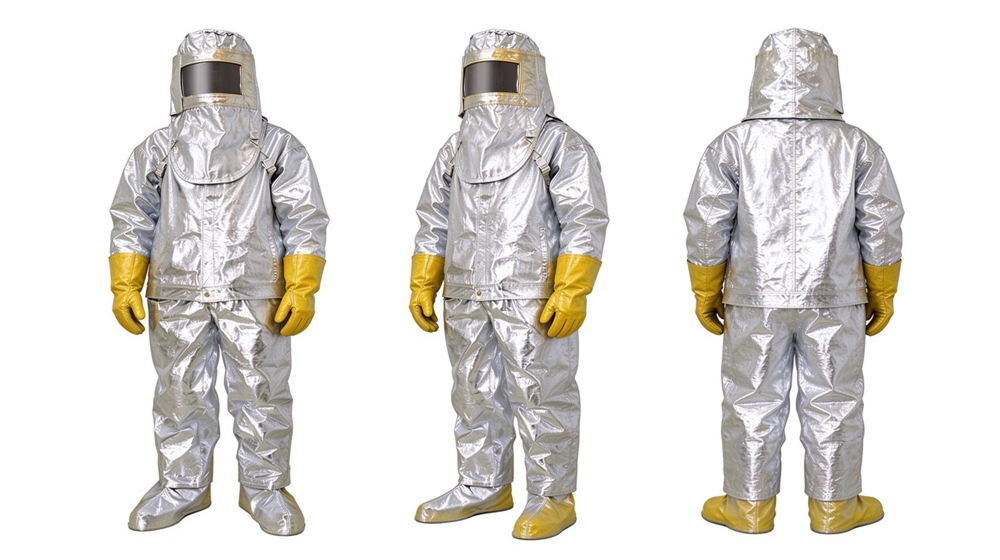
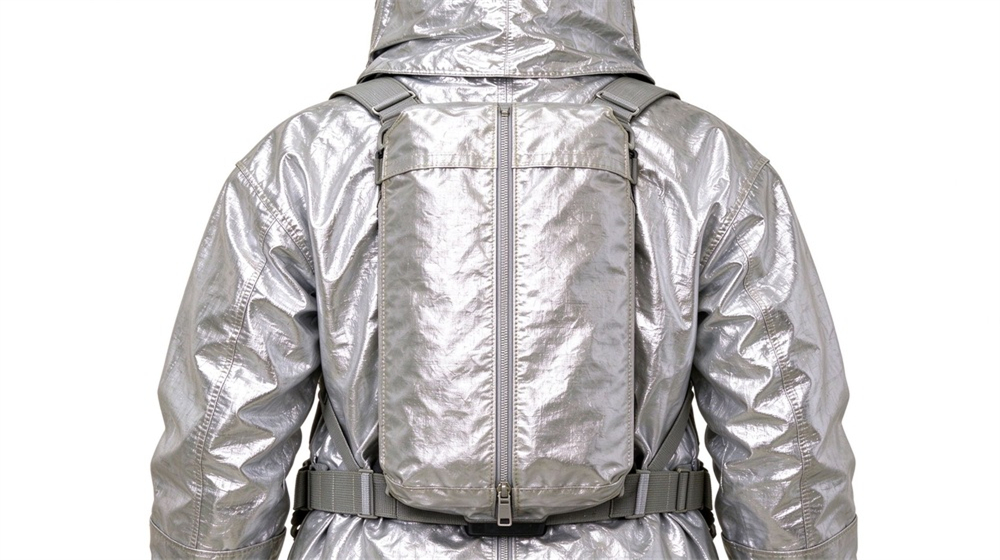
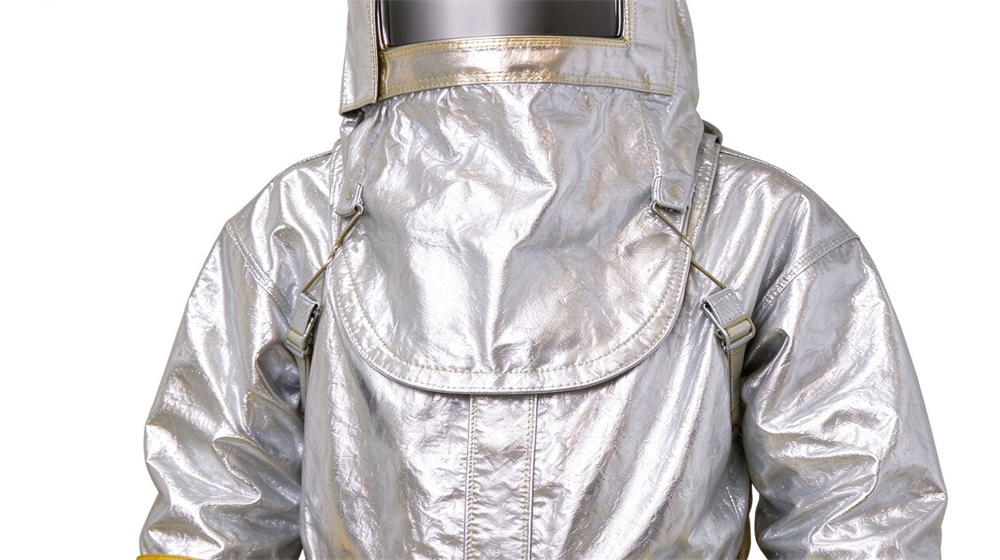
Full coverage matters because radiant heat arrives from every direction near a kiln or a cell. The back and hood of this aluminized fabric coverall are built to keep the reflective surface continuous across the body.
These three layers work as a system. If the outer layer is reflective but the middle layer is thin, the suit reflects well for a few minutes and then transfers heat quickly. If the middle layer is thick but the outer layer is dull, the suit blocks less radiation at the source. A balanced construction delivers the reflectivity you need without turning the suit into a furnace inside.
When you evaluate aluminized fabric weight and layers, ask the supplier to show the actual cross section: what each layer is made of and how tightly it is bonded. A bonded membrane resists peeling far better than a coating that sits on the surface.
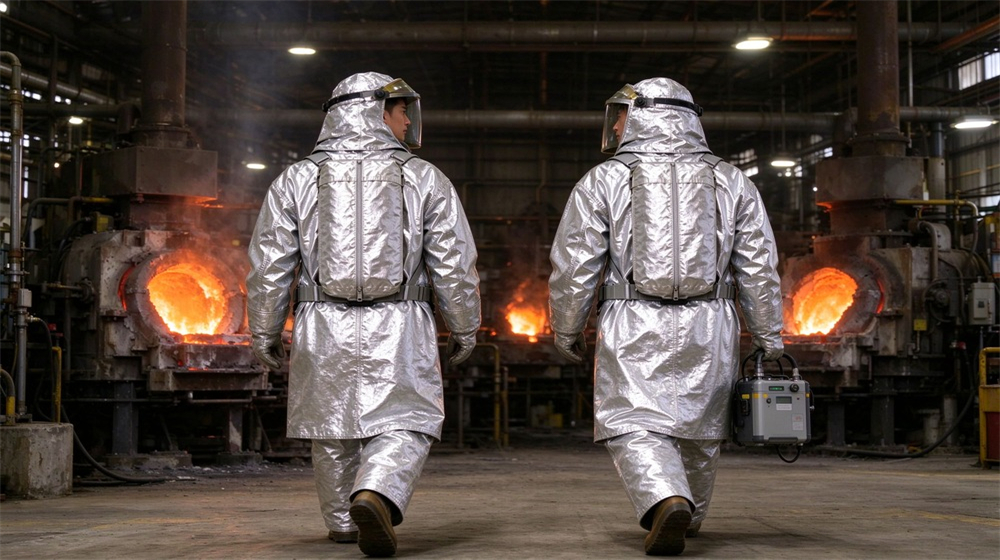
Weight is part of the comfort equation: a worker carrying extra weight for eight hours moves slower, tires faster and sweats more in hot environments. That is why the imported approach focuses on a thin, highly reflective membrane on a light aramid base.
This balance makes an imported aluminized suit fabric grade attractive: strong reflectivity from the membrane, while the light aramid base keeps weight manageable. The result is protection the crew actually wants to wear, the biggest factor in whether a program works.
Reflectivity is measurable: under a lamp, a high-reflectivity surface acts like a mirror. That property bounces radiant heat away before it reaches the insulation layer, and it is why two suits of the same thickness can perform very differently in front of the same furnace.
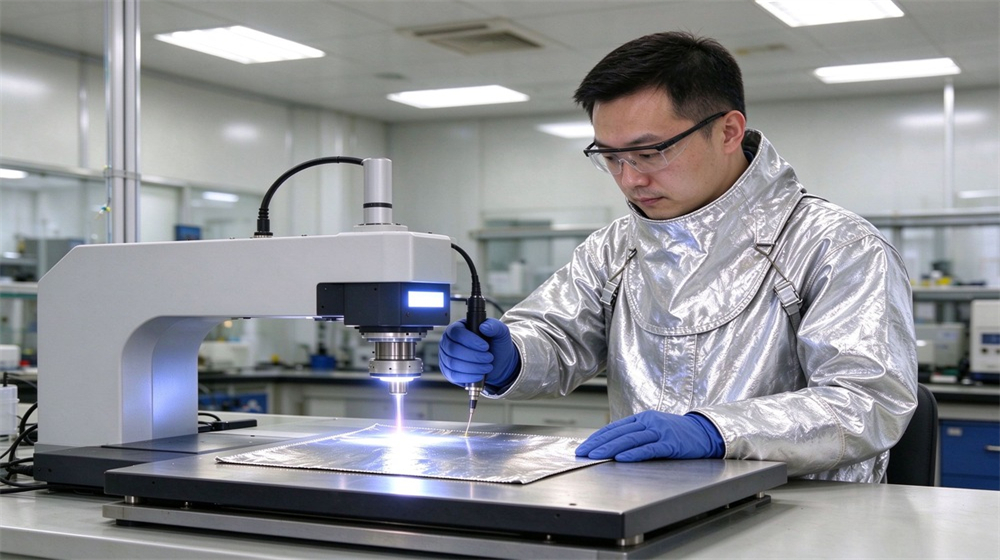
Reputable suppliers test reflectivity and heat resistance in the lab before shipment; ask for numbers tied to a specific fabric grade and batch.
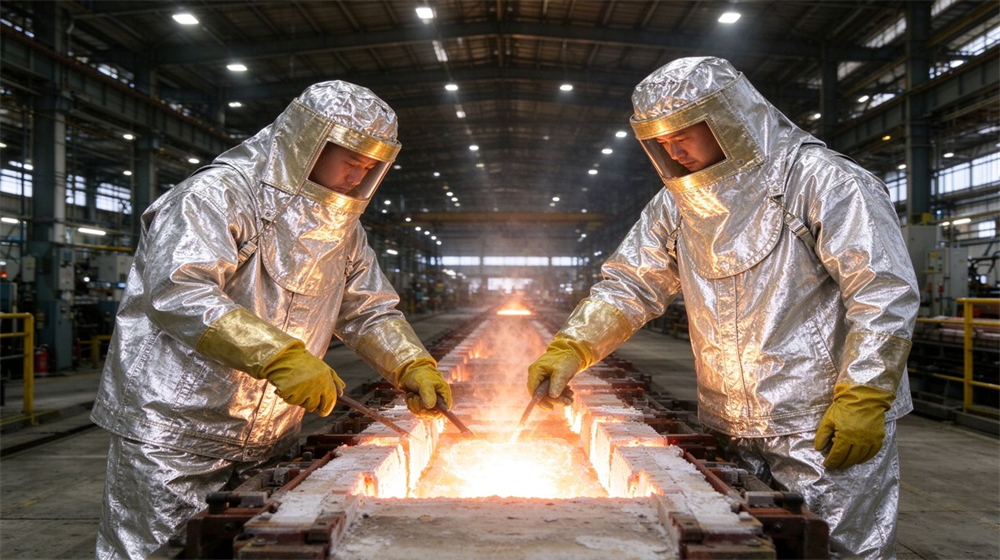
Protection that nobody wants to wear protects nobody. A lightweight aluminized coverall comfortable enough for a full shift beats a heavier suit that gets unzipped when the supervisor walks away.
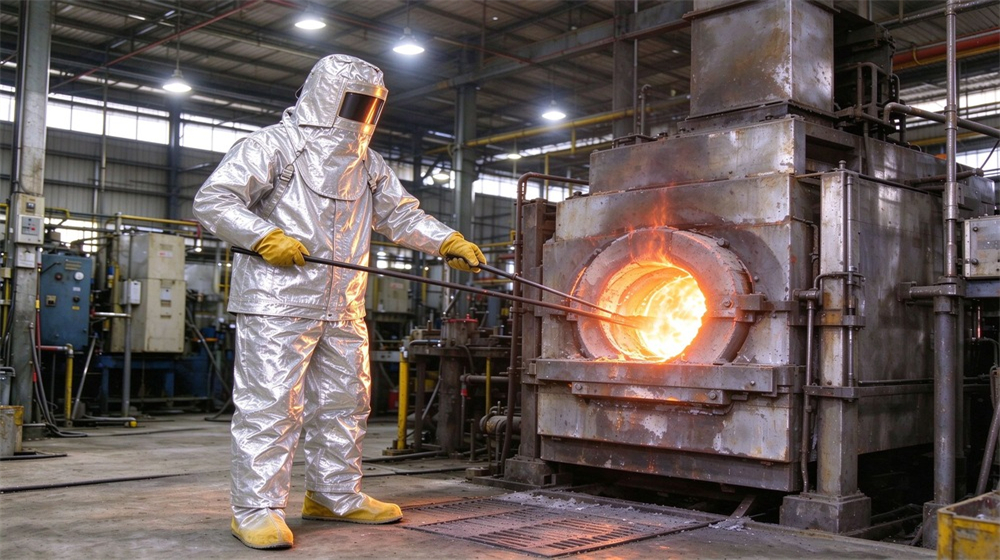
Weight is best understood by carrying it: a 200-300 g/m² grade feels like a working jacket, arms lift easily, and the material does not drag at the shoulders.
For buyers the effect is measurable: crews stay in the suit longer between breaks, which matters when schedules depend on process windows like kiln cycles.
Compare this with a heavy suit in a warm plant: the body heats up, sweat builds, and the worker looks for the earliest exit from the hot zone.
Between tasks, the lightweight build lets heat and moisture escape, so the worker returns to the hot zone from a cooler baseline.
Heat stress is a real concern in hot plants; OSHA heat stress guidance for industrial workers underlines work-rest cycles and breathable clothing.
The inner lining is the part of the suit nobody sees but everybody feels. A breathable lining moves air and moisture away from the skin, which keeps the wearer drier during long shifts and during rapid task-to-task movement in a hot plant.
Imported fabric constructions pair the reflective membrane with a comfortable inner layer, and the two are bonded with the shell so the liner keeps its soft feel against the skin. That softness is what workers notice first when they try it.
Worker comfort feedback is a quality signal: if the crew complains about heat or weight in the first week, the suit will not be worn by month two.
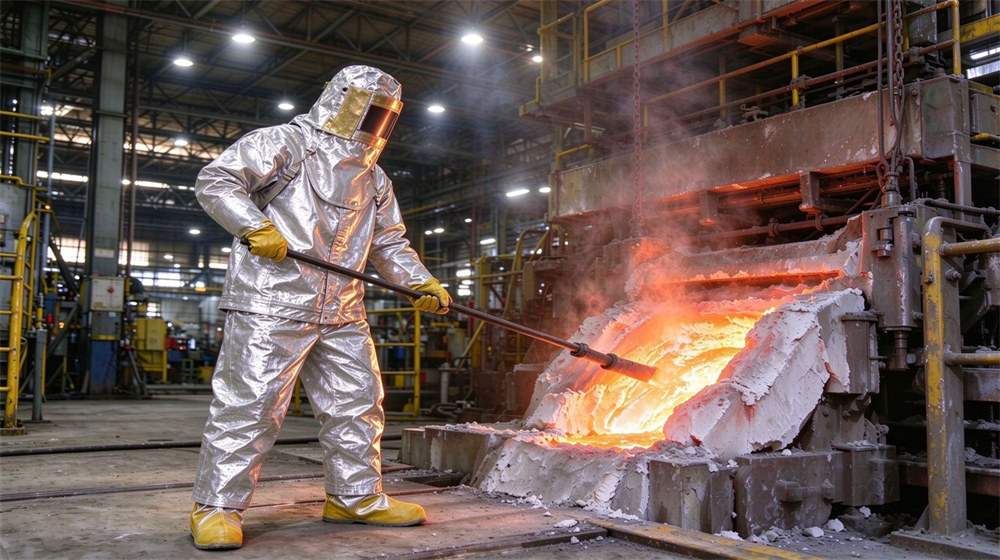
Consider the task cycle: how long the worker stands in the hot zone, how far he moves, and how long he rests. Short hot phases with constant movement favor a reflective, breathable build; beyond a point, adding insulation creates more heat stress than it prevents.
An aluminized suit with removable liner gives plants flexibility to adjust between seasons and tasks. The same shell works with a lighter liner for warm-season work and a thicker liner for cooler conditions or longer exposures, which is a practical way to keep one protective system across a whole year.
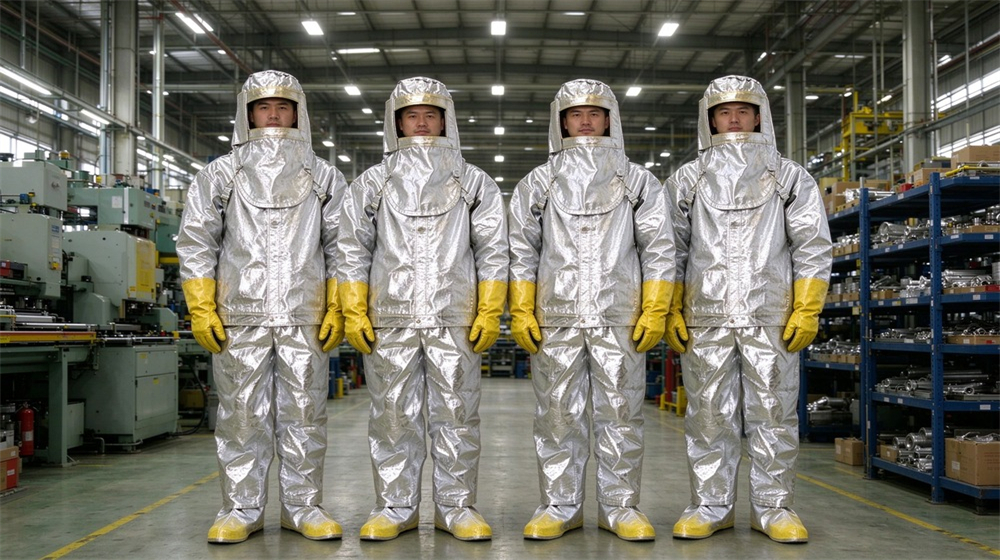
For short hot-work intervals, the reflective surface does most of the work, so the middle layer stays light; for longer stationary exposure, insulation matters more. This is why a high reflectivity aluminized clothing program works.
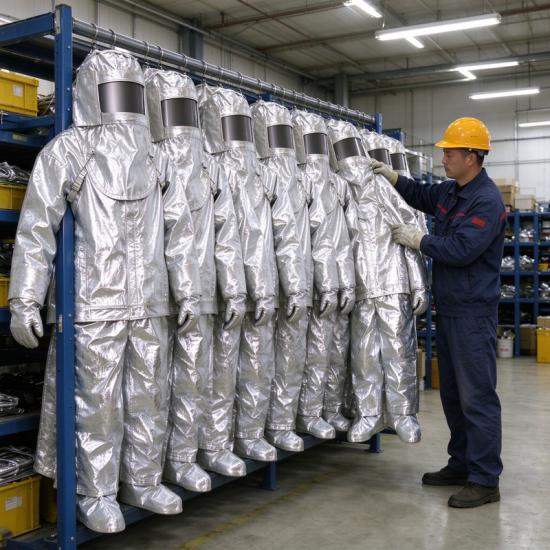
Care decides how long a suit stays protective: hang it on wide hangers, store it away from direct heat, and check the surface at elbows, knees and cuffs before each use. A flaking or grey patch on the coating is the first sign the suit is approaching retirement, so make that check part of the shift routine rather than an occasional task.
Cleaning follows the supplier's instructions, avoiding harsh washing that strips the reflective layer. A removable liner cleans separately while the shell keeps its reflectivity, which is useful in hot climates where the liner absorbs sweat and needs more frequent washing than the shell itself.
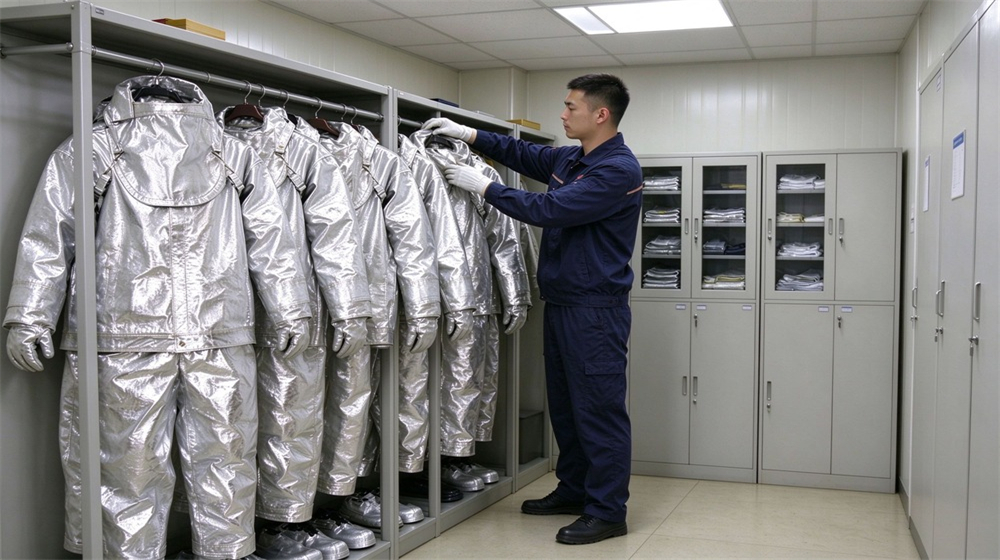
Storage matters as much as cleaning: keep the suit hanging rather than folded, because repeated folding wears the aluminized membrane faster than normal hot-work use. Folded transport is fine for shipping; hanging is better for long-term storage.
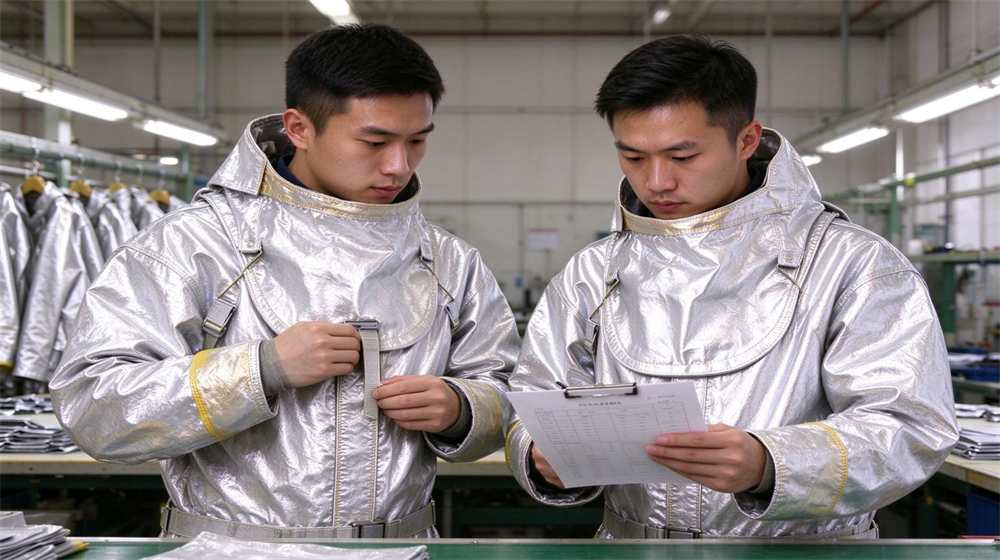
At the factory, each suit passes a seam and closure check before packing; agreeing on inspection points keeps acceptance criteria clear for wholesale orders.
|
Task |
Frequency |
Method |
|
Surface inspection |
Before each use |
Check elbows, knees, cuffs for flaking coating |
|
Cleaning |
Per supplier instruction |
Follow recommended wash method |
|
Storage |
Ongoing |
Hang on wide hangers, away from heat |
|
Retirement check |
Seasonal |
Replace when reflectivity drops or seams weaken |
Keep a per-suit record: service start, shifts seen, last inspection. That turns condition data into replacement decisions instead of guesswork. Share this table with your safety team so the maintenance habit is standard across the plant.
Routine care keeps a maintained suit performing close to new. Compared with a suit left in a heap by the furnace, the difference in reflectivity is visible within one season.
Sizing should be checked against the crew's actual build, because a suit that fits well protects well. The suit is offered from L to XXXL, and custom sizing is available for larger programs; the chart below is a planning reference rather than a fixed specification.
|
Size |
Chest cm |
Height cm |
Recommended Body Weight kg |
|
L |
104-110 |
170-178 |
60-75 |
|
XL |
110-118 |
175-183 |
70-85 |
|
XXL |
118-126 |
180-188 |
80-95 |
|
XXXL |
126-134 |
185-193 |
90-105 |
When ordering for a team, take measurements against real workers rather than assuming standard sizes. A lightweight aluminized coverall that fits correctly keeps the hood, cuffs and boot covers in the right position, which is where the actual protection is delivered.
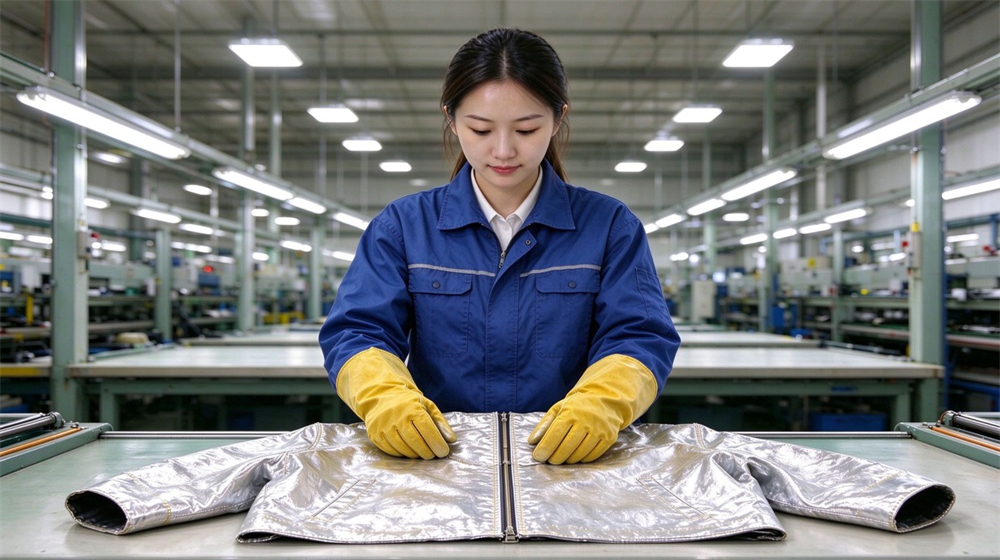
This suit is built for positions where radiant heat and movement combine: ceramic kilns, aluminum smelter potrooms, and cement and smelting operations. These are the roles buyers most often specify for imported fabric heat suit programs.
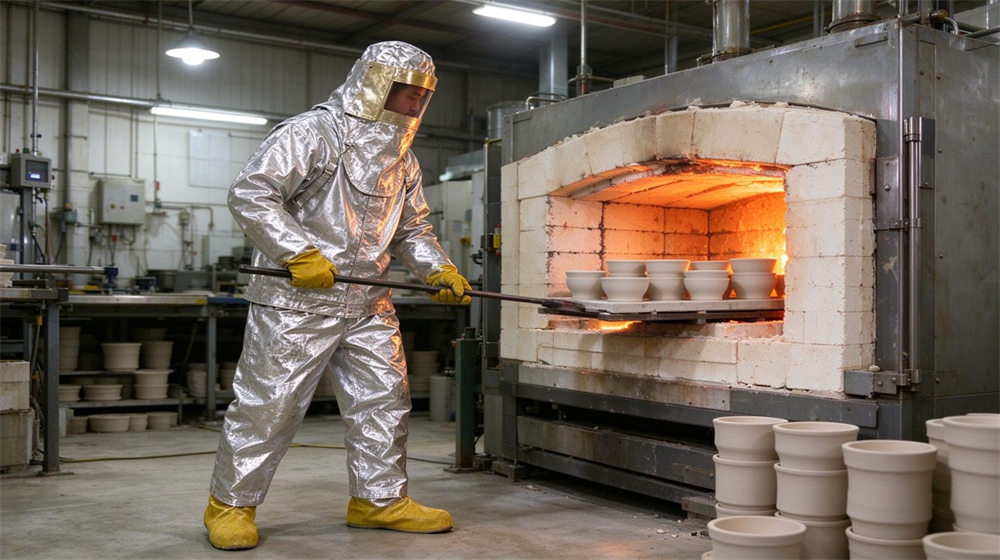
Kiln loading and unloading put workers directly in front of radiant heat every cycle: the opening glows, the ware radiates as it comes out, and the worker stands between product and door. A suit that reflects this radiation while staying light enough for repeated handling is the practical tool.
For ceramic plants, the ceramic kiln aluminized suit is specified for the kiln crew, the maintenance team that services burners, and the inspectors who check ware temperature near the door. The lightweight build keeps the crew efficient across the frequent load-and-unload cycles that a production kiln demands.
The same suit also covers the finishers who handle freshly fired ware, because the stored heat in the ware itself is a radiant source. Reflective protection in these positions reduces the burn risk from both the kiln and the product, with the comfort profile that keeps the crew in the garment.
For kiln operators, the practical test is the door-opening cycle: the door lifts, the radiant pulse hits, and the worker steps in and out repeatedly. A suit that reflects that pulse while staying light on the arms keeps the crew to schedule instead of slowing near the hottest part of the process, so programs usually start with one trial suit for the lead operator before a full crew order.
Kiln crews rotate between loading and finishing positions, so the same suit must cover radiant bursts and steady heat alike.
A smelter potroom radiates heat from the bath, the crust breakers, and the anode handling areas. Tending crews walk the pot line, break crust, tap metal and check cell conditions, all while the cells throw radiant heat from every open surface. Protection here has to move with the worker, which favors a lightweight aluminized coverall with a strong reflective surface.
Potroom work is short-exposure and frequent-movement by nature, so the suit's balance of reflectivity and light weight matches the job. The crew needs to reach, bend and walk continuously; a heavy garment turns the work into a burden and increases heat stress over the shift.
Some smelting operations also expose workers to molten metal splash risk during tapping. For those positions, the suit is worn with the full accessory set, and the reflective surface plus the aramid construction provides a practical combination of radiant heat reflection and splash resistance for short exposure windows.
In the potroom, the protection window the suit provides is what lets the crew finish the task, protected by reflectivity.
A cement rotary kiln shell runs hot across most of its length; the exposure is mostly radiant, making full reflective coverage valuable. Inspection rounds, burner service and maintenance near the kiln are the classic positions for a cement kiln reflective suit.
Crews value a cement kiln reflective suit light enough for ladders and walkways; a heavy suit makes inspection exhausting. Shell inspection exposure is shorter than at a burner pipe, so the suit needs a strong reflective surface plus breathable lining rather than deep insulation, covered by the EN 407 heat protection standard.
|
Fabric Grade |
Reflectivity |
Weight g/m² |
Best Use |
|
Imported Costmir membrane |
High (≈90%+) |
200-300 |
Kiln, smelter, cement inspection |
|
Standard reflective coating |
Medium |
Similar |
Lower-exposure areas |
|
Multi-layer heavy build |
High |
Heavier |
Longer exposure, lower mobility |
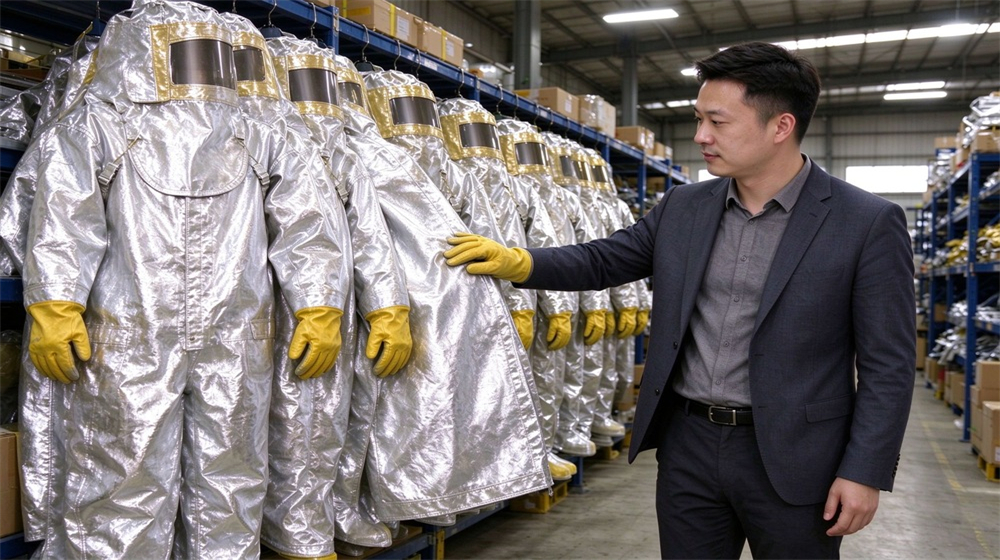
Walking the kiln shell line is one of the most common inspection jobs for this suit. The worker needs reflectivity from all directions plus the freedom to climb and walk, which the lightweight build delivers.
Glass plants use the same reflective suit around furnace openings and forehearths. The exposure pattern is radiant and short-window, and the crew values the same lightweight comfort.
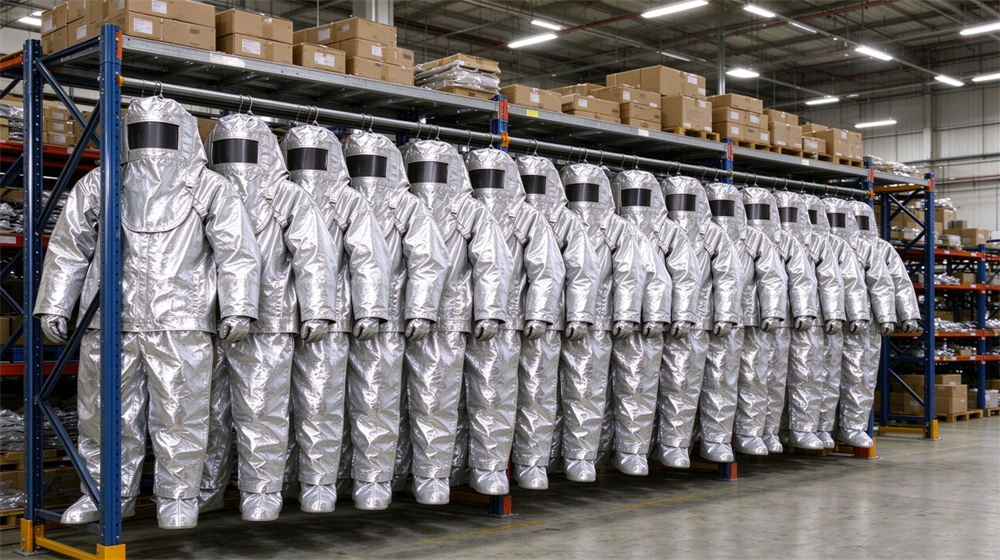
The procurement process walks through the decisions that matter: fabric grade, sizing and customization, and the commercial terms that keep the process clean. A clear specification protects both the buyer and the supplier.
Start with the task profile: the heat source, the distance, the exposure duration, and the movement pattern. That profile tells you whether a lightweight reflective build is enough or whether you need extra insulation. For most kiln, smelter and cement positions, the imported membrane construction in the 200-300 g/m² range is the practical choice.
Compare samples from at least two suppliers side by side under a lamp, check the fold behavior and the reflectivity under the same light. The supplier should answer these questions without hesitation, because the fabric is the core of the product.
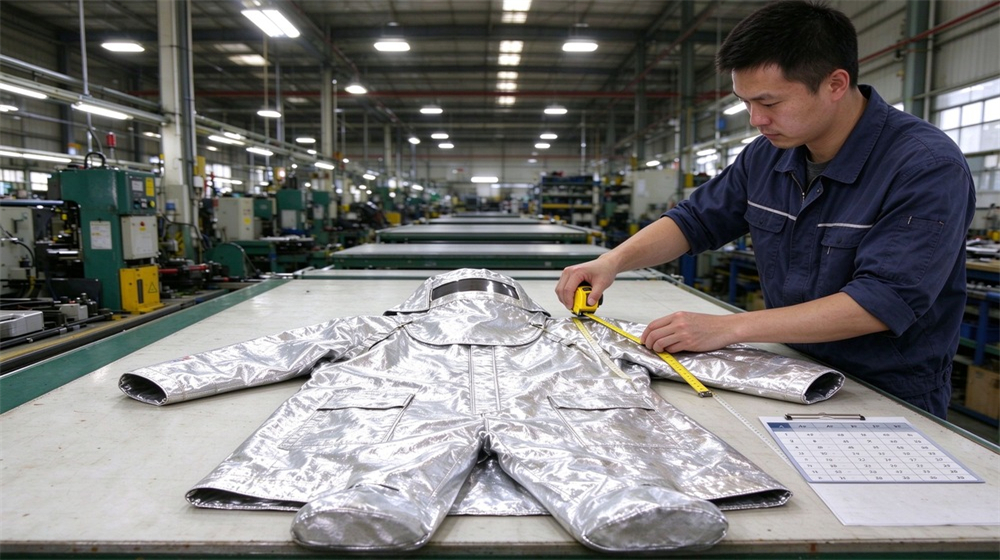
Write the specification down. Suit model, fabric grade, reflectivity expectation, temperature rating, size range, accessory set and inspection points. A written spec prevents the classic mismatch where the delivered goods look different from the sample and nobody can point to the exact requirement.
Measure real workers before ordering and compare with the size chart. The suit runs L to XXXL, and for larger programs custom sizing can be arranged. When sizing, remember that the suit is worn over normal work clothing, so chest and height measurements should include that extra layer.
Custom branding is available, and this is where the aluminized fabric protective clothing OEM route handles it in production. Agree on the logo position and color before production starts.
The accessory set should be part of the order decision, not an afterthought. A complete kit with hood, aluminized gloves, boot covers and carry bag gives the safety team a single set to audit.
Commercial terms vary with the order, and the reliable approach is to confirm them with the supplier for your specific quantity and specification. MOQ, lead time and pricing are set per contract; regular models tend to be more flexible than heavily customized orders. This keeps expectations aligned on both sides.
When requesting a quote, include the quantity, sizes, branding needs and delivery destination. The more complete the enquiry, the more accurate the quotation, and the faster the supplier can confirm the schedule. A clear enquiry also reduces the risk of surprises in the final order.
For teams that have never purchased this category before, a small trial batch first is a sensible step: test the suit with the crew, check fit and comfort, and only then scale to full program quantities. Keep the trial short, with a simple checklist for the crew, so the decision to scale becomes a data point instead of an opinion. Most wholesale programs in this category start small, confirm the profile, then repeat the order for the full team. This is standard practice for reflective aluminized coverall wholesale programs.
Once the trial is confirmed, keep the specification stable for the repeat order: same model, same fabric grade, same branding. Changing variables between orders makes it hard to compare results, so fix the spec, run the program, and adjust only when the data says so.
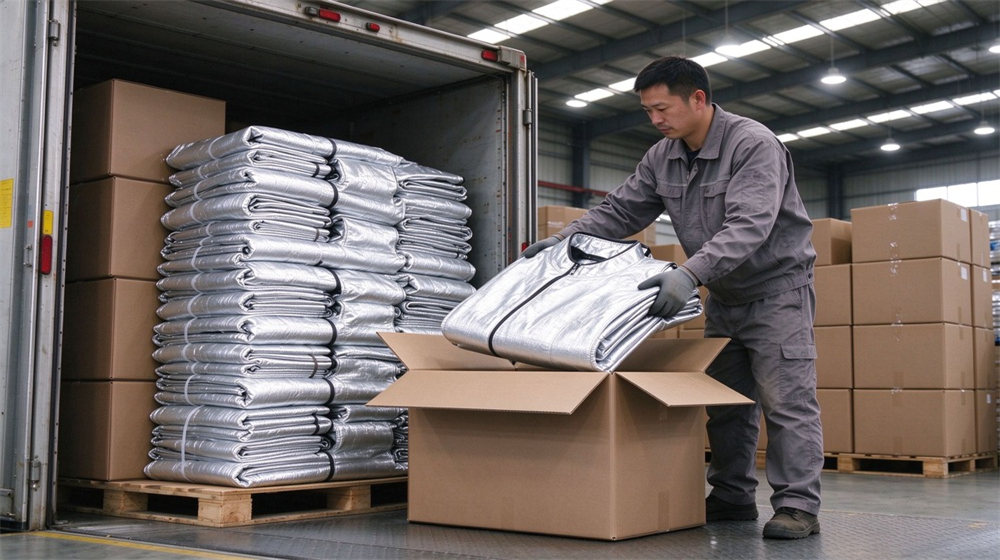
For export orders, packing is planned so the suits arrive clean and ready to use. Confirm the packing standard with the supplier when you place the order.
Touching the fabric, checking the seams and trying the fit in person is still the fastest way to build confidence before a program order.
What is the difference between an imported fabric aluminized heat suit and standard work clothing?
Standard work clothing does not reflect radiant heat, so near a kiln opening or smelter the heat reaches the skin almost unchanged. An imported aluminized heat suit adds a reflective membrane over aramid base cloth, bouncing radiant heat away before it transfers to the body. It is not a substitute for fire entry gear or chemical protection suits.
What temperature rating does the imported fabric aluminized heat suit offer?
The suit is designed for radiant heat exposure in the 1000-1300°C range during short tasks such as kiln loading, potroom tending and cement kiln inspection. The rating describes the radiant heat source the suit reflects, not a contact temperature rating, and actual protection depends on exposure time and distance. Confirm the rating for your ordered model with the supplier.
Is the imported fabric aluminized heat suit reusable after exposure?
Yes, it is reusable protective clothing for repeated hot-work shifts. Service life depends on exposure intensity and care: surface inspections before each use catch flaking coating early, correct cleaning keeps the reflective layer intact, and proper storage preserves the membrane. Plants that keep a per-suit service record retire suits on condition rather than on a fixed date.
What standards or certifications apply to the imported fabric aluminized heat suit?
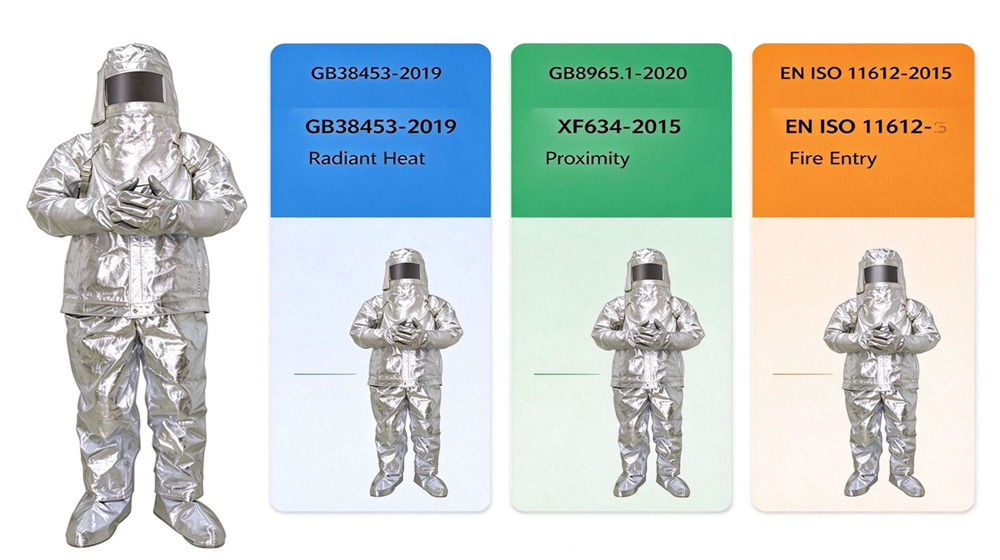
Different markets reference different standards, such as GB38453-2019, XF634-2015 and GB8965.1-2020 in some regions, and EN or NFPA frameworks in others. Because frameworks differ, state your target market and ask the supplier which test reports and certificate numbers apply to the exact model you order.
Inspect the suit between uses: check the reflective surface, seams and closures, and keep a per-suit record so retirement decisions are based on condition rather than guesswork.
Why is imported Costmir aluminized fabric lighter than domestic fabric?
The Costmir process bonds the reflective membrane onto a light aramid base at a controlled temperature, so the laminate stays thin with high reflectivity; domestic laminates often use a heavier coating for a similar look. That weight difference shows up over a full shift: shoulders carry less, folding is easier, and the suit is more likely to be worn correctly.
How do I choose the right size of the imported aluminized heat suit for my team?
Measure real workers and compare with the size chart, which runs from L to XXXL. Include the normal workwear layer in the measurements, because the suit goes over existing clothing; a suit sized without that layer fits tight and reduces mobility. When in doubt between two sizes, choose the larger one for movement.
Can we order the imported aluminized heat suit with custom branding?
Yes, custom branding and colorways can be applied during production through the OEM route. Agree on logo position, size and embroidery or printing method with your supplier first, so the branding does not interfere with the reflective surface; chest, sleeve and back placements are the usual options. Minimums for custom branding are confirmed with the order.
What is the minimum order quantity for the imported aluminized heat suit?
MOQ depends on the model and customization level: regular models are more flexible, while customized orders carry higher minimums because of the production setup. Price, lead time and MOQ are confirmed per order and stated in the contract, so send your quantity for a current quotation.
How should the imported aluminized heat suit be stored and maintained?
Hang the suit on wide hangers, keep it away from direct heat and strong sunlight, and follow the supplier's cleaning instructions to avoid stripping the reflective layer. In hot or humid climates, store it in a dry ventilated room and air it after use; folding is possible for transport but hanging is better for long-term storage.
Can I order the imported aluminized heat suit with matching gloves and boots as a complete kit?
Yes, the suit is available with matching hood, aluminized gloves, boot covers and a carry bag as a complete kit, so every part protects to the same level. MOQ, pricing and lead time are confirmed per order and stated in the contract.
How long does the reflective coating last and when should the imported aluminized heat suit be replaced?
The reflective layer uses a high-vacuum aluminized coating on aramid base fabric. Under normal use and proper storage, the surface stays intact through repeated hot-zone exposures. Replace the suit when you see large-area peeling, dull oxidation, loose stitching, or after any severe heat event that damaged the fabric. Every imported fabric aluminized heat suit is inspected piece by piece before shipment.
Does the imported fabric aluminized heat suit protect against molten metal splash?
Yes. The aluminized surface reflects radiant heat and helps shed molten metal droplets and small particles during short-term work near furnaces, pots and kilns. It is rated for radiant heat protection of 1000-1300°C and is a short-exposure proximity suit, not designed for prolonged immersion or full liquid-metal contact. For heavier splash duty, tell your supplier the task and they will confirm the right configuration in the contract.
What is included in the imported aluminized heat suit kit?
The standard kit includes a jacket, bib pants, hood, gloves, shoe covers and a carry bag, with a 3 mm anti-fog polycarbonate visor on the hood. Sizes run from L to XXXL. The suit is built with imported Costmir aluminized aramid fabric and aramid fire-resistant thread. Kit contents can be adjusted per order and confirmed in the contract.
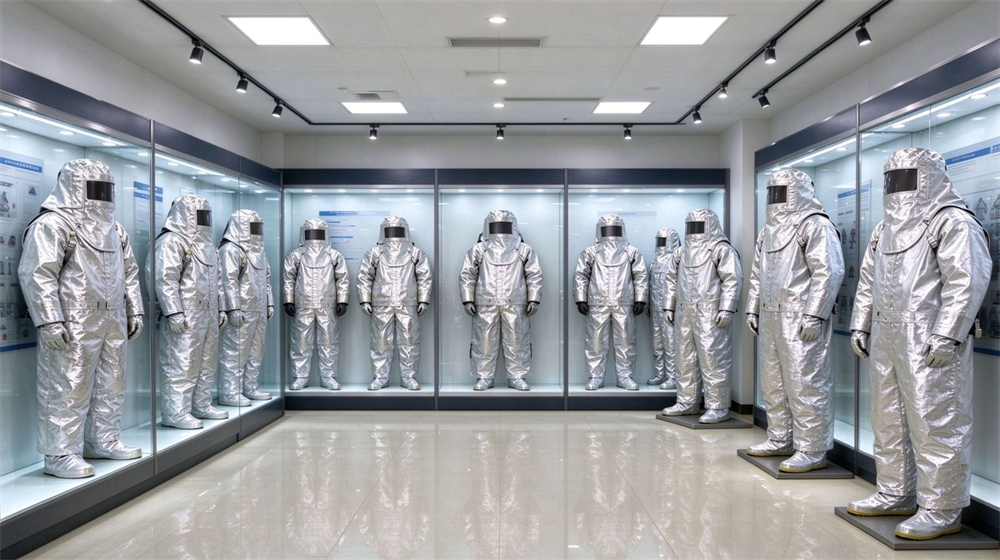
Related: Explore imported-fabric aluminized suits – view the full heat suit range for kiln, smelter and cement plants
Email us for samples and current quotations
Previous :
Firefighter Turnout Gear | 3-Layer TPP 35.8 NFPA 1971 WholesaleNext :
Aluminized Heat Suit | 1000°C Radiant Protection for Steel Mills Deep Blue Firefighting Suit Set, Forest Fire Fighting Specialized, Full-body Protection
This Deep Blue firefighting suit set is specially designed for forest fire fighting, using special flame-retardant fabric that can withstand 700°C open flames in the wild, with a thermal protection value (TPP) of 25CAL/AM2. The vivid Deep Blue color combined with enhanced reflective strips enables identification from 500 meters away in forest smoke. The lightweight design of only 4.5KG does not affect mountain action speed, with a waterproof rating >40KPA, adapting to camping fire fighting and long-term field operations. The anti-plant puncture design increases wear resistance by 50%, making it professional equipment for forest firefighting, mountain rescue, and outdoor fire fighting actions, providing all-around body protection for forest firefighters.
 High-temperature Resistant Firefighting Suit Set, Emergency Rescue, Quick-wear
This high-temperature resistant firefighting suit set is made of professional-grade flame-retardant materials, capable of withstanding extreme temperatures up to 750°C, with a thermal protection value (TPP) of 26CAL/AM2, providing reliable protection for emergency rescue. The innovative quick-wear design allows complete dressing in 40 seconds during emergencies, with hydrostatic pressure resistance >45KPA and excellent breathability. Designed according to ergonomic principles, weighing only 4.8KG, it effectively reduces the burden on rescue personnel and is suitable for high-risk scenarios such as building fires, tunnel rescues, and industrial firefighting, making it an ideal equipment choice for professional firefighting teams.
 Professional Firefighting Suit Set, Flame-retardant Protection, Rescue Essential, 14-3C Certified
This professional firefighting suit set is made of high-grade flame-retardant cotton fabric, 14-3C certified, capable of withstanding extreme temperatures up to 800°C, with a thermal protection TPP value of not less than 28CAL/AM2. The three-layer composite protection structure, with waterproof static pressure resistance >50KPA and breathability >5000G/M²·24H, ensures comprehensive safety for rescue personnel in complex environments such as building fires, forest fires, and special chemical plant fires. Available in three models: 97/02/14, meeting different rescue scenario requirements.
 02 Firefighting Suit Multi-layer Composite Material Rescue Protection
This Type 02 firefighting suit is made of professional flame-retardant materials with excellent heat resistance, fire protection grade meeting international rescue standards, and waterproof puncture resistance rate of 98%. The deep blue body is equipped with eye-catching yellow reflective strips, increasing night visibility by 85%. The complete six-piece configuration provides comprehensive protection for firefighting, forest firefighting, earthquake rescue, and other scenarios, providing reliable protection for 300+ professional rescue teams.
 Forest Fire Rescue Service with Heat-Resistant Design
This professional forest fire rescue service uses flame-retardant heat-resistant material, achieving GB8624-A2 fire rating standard with heat resistance up to 800°C, and features high-visibility reflective strips visible from 300 meters away. It's suitable for emergency rescue scenarios such as forest fires, mountain rescues, and industrial disasters, providing comprehensive personal safety protection. Each set has undergone 10,000 abrasion tests and proven its reliability and safety in over 1,500 rescue operations nationwide.
 Fire Rescue Cap, Aramid Flame-Resistant Material, Forest Fire Emergency
This professional-grade forest firefighting vest and hat set is made of polyester/cotton blended flame-retardant fabric, with reflective visibility up to 300 meters, capable of resisting short-term flame contact, improving protection efficiency by 85%. The bright orange design with double-layer reflective strips complies with international rescue standards, ensuring 360° visibility in smoke and low light environments. Suitable for forest fire fighting, wilderness emergency rescue, post-earthquake sites, and other emergency disaster relief scenarios, providing comprehensive protection for rescue personnel.
Copyright © Custom Disaster - Relief Bedding: Tents, Sleeping Bags, Blankets All Rights Reserved
the professional team to service !