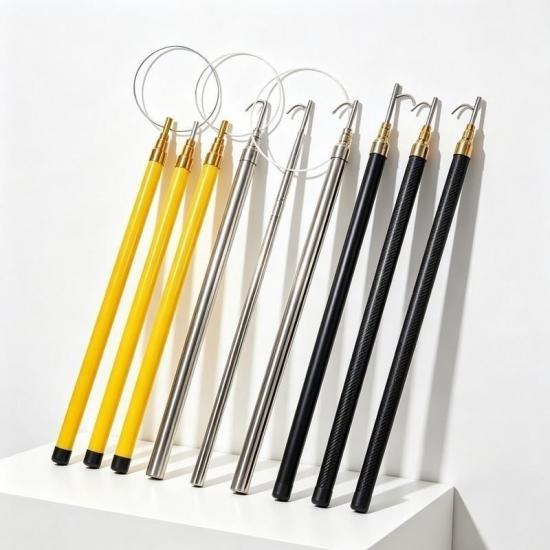
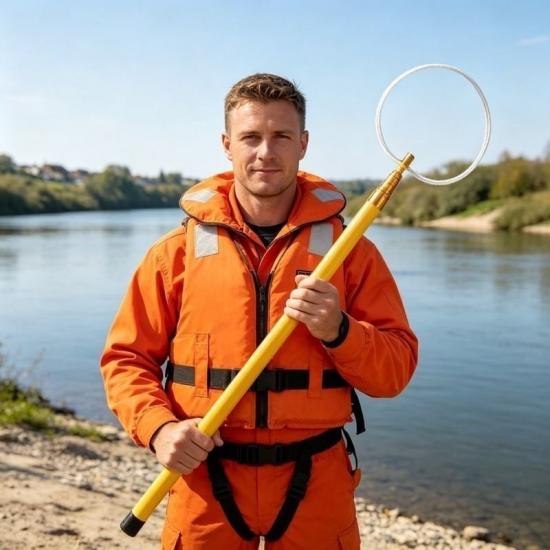
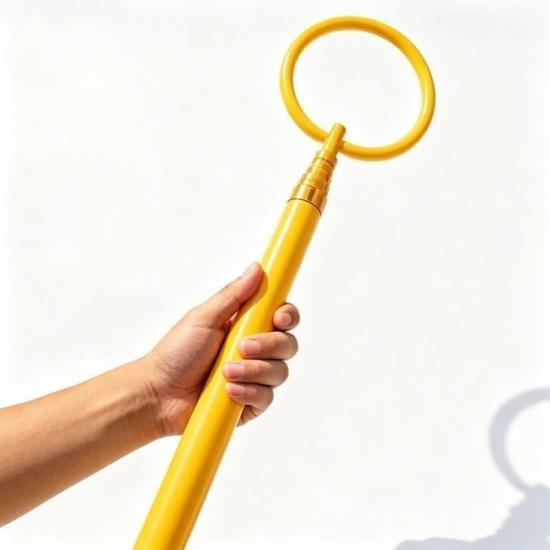
Telescopic water rescue pole made of FRP,304 stainless steel and carbon‑fiber,range 4.5m‑18m. Equipped with swappable hooks,loops and buoy accessories. Lightweight for one‑hand operation,collapsible for storage. Fit river,pool,flood,ice,offshore rescue and support bulk institutional orders.
Note: Price for reference only. Exact price based on quantity, size, weight and custom details.
model no. :
SAA-14-ABrand:
YRFmarket price :
$61.9sale price :
$30.9price range :
30-100/$29.9Color :
Yellowport of dispatch :
Guangdong/GuangzhouPayment :
TT, Paypal, Western Unionmin order :
30original region :
Made in ChinaLead Time :
5-15daysA water rescue pole is the simplest, fastest and safest reach tool you can keep on a pool deck, a riverbank, a boat or a fire truck. When someone falls in, a strong person can only throw a rope about 10 to 15 meters, and by the time they pull off shoes and prepare to swim, the current has already carried the person away. A telescopic rescue pole closes that gap in two seconds: pull it out, lock the sections, reach the victim, and pull them to safety without ever stepping into the water.
 |

|
Our range covers six models from a light 4.5 meter FRP rescue pole for pools and narrow rivers up to an 18 meter ultra-light carbon fiber rescue pole for wide rivers and long-distance reach. Whether you need a pool rescue pole for a lifeguard, a rescue hook pole for swift-water work, or a full set of flood rescue equipment for a government emergency program, there is a pole sized to the job. These are the life saving pole tools that lifeguards, fire crews, schools and municipal teams reach for the moment someone is in the water.
We are a water rescue pole supplier based in China with over 20 years of experience in emergency rescue pole equipment. We work with distributors, fire departments, hospitals, schools, hotels and government procurement programs. Our rescue hook pole and telescopic rescue pole range gives you dependable water rescue gear when every second matters and you cannot afford to lose the victim.
Here is what buyers usually ask us. Will the pole reach across a wide river or a flooded street? Is it light enough for one lifeguard to carry? Should I buy FRP, stainless or carbon fiber? Do I want a hook or a loop at the tip? These are real questions, and the right water rescue pole answers all of them. The wrong one either falls short, sinks, or breaks on the first real call.
Why buyers choose YRF Textile: China-based supplier | 20+ years of industry experience | OEM and ODM customization | Bulk wholesale pricing | 6 rescue pole models from 4.5m to 18m | FRP, 304 stainless and carbon fiber options | Export to 50+ countries
In plain words, why buy from us: we have done this for 20+ years, so we will not sell you a flimsy pole that bends on the first real rescue. We keep flexible order quantities (no giant forced order just to start), every unit carries a 1-year warranty, and we have real experience supplying fire, school and government procurement where the paperwork matters. Tell us your water width in one sentence and we will guide you — no jargon, no pressure.
|
Why You Need a Water Rescue Pole |
Six Models, One Rescue Pole Range |
|
How to Choose the Right Pole |
What Is a Water Rescue Pole & How It Works |
|
FRP vs 304 Stainless vs Carbon Fiber |
Hook & Ring: Interchangeable Heads |
|
How to Extend & Use Step by Step |
Application Scenarios: Where Poles Are Used |
|
Why Buy From Us: 20+ Years Supplier |
Product Detail Gallery |
|
Frequently Asked Questions |
Get Your Quote: Buy Water Rescue Pole |
The first rule of water rescue is "reach, throw, go". Reach means you stay dry and extend something to the victim. Throw means you send a ring or a rope. Go, swimming out, is the last option and the most dangerous. A water rescue pole is pure "reach": it turns an arm that is one meter long into an arm that is five, ten or even eighteen meters long, so you can help someone without ever putting yourself in the water.
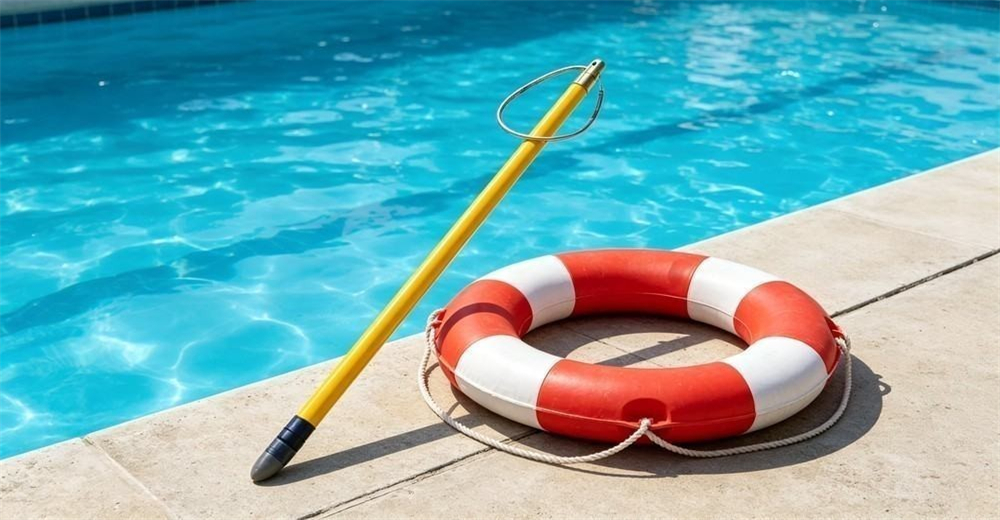
Think about a typical pool or riverbank. A swimmer gets into trouble, and the lifeguard is maybe six meters away across the water. If the lifeguard jumps in, that is two swimmers to rescue if the current is strong. If the lifeguard throws a ring, the ring often falls short or the victim cannot reach it in time. A pool rescue pole solves both: the lifeguard stays on the deck, reaches out, and the victim grabs the loop or the hook within seconds. This is why every serious pool, beach and riverside post keeps a pole within arm's reach.
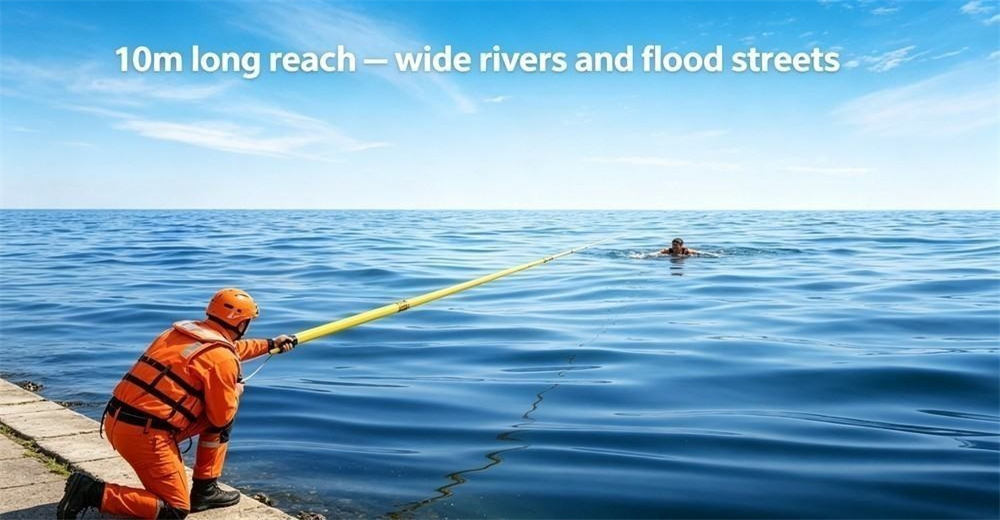
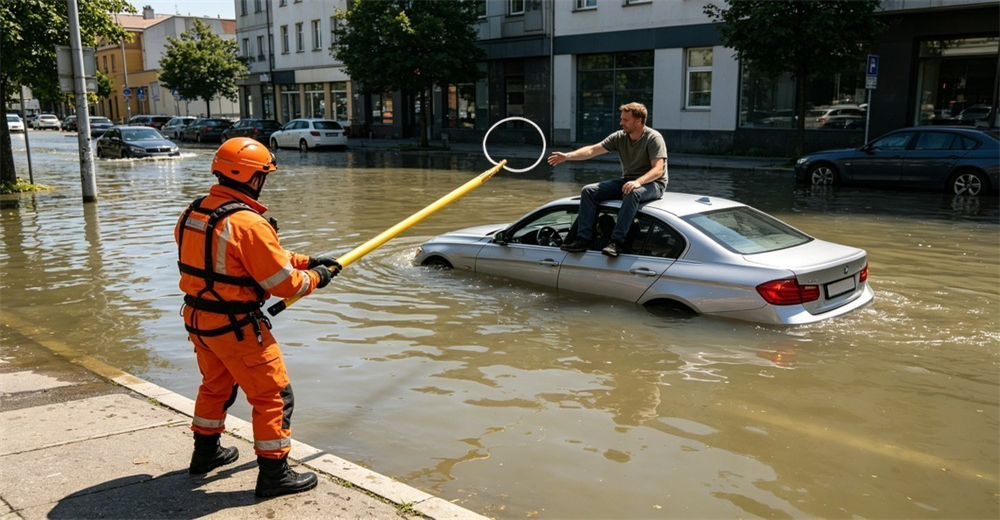
For flood rescue equipment, the logic is the same but the water is worse. In a flooded street, a victim is on a car roof and the water between you is 30 meters of fast, dirty, unseen water full of hidden obstacles. A telescopic rescue pole lets a rescuer on the curb extend a loop out to grab the victim, or to pull a life ring across, before anyone steps into the current. It is the difference between a reachable victim and one who drifts away.
A life saving pole is also cheap insurance compared with almost any other rescue gear. It has no gas cylinder, no electronics, no batteries and nothing to charge. It sits on a wall for months, and the moment you pull it out it works. That reliability is exactly why it is the first tool every rescue professional reaches for before anything else.
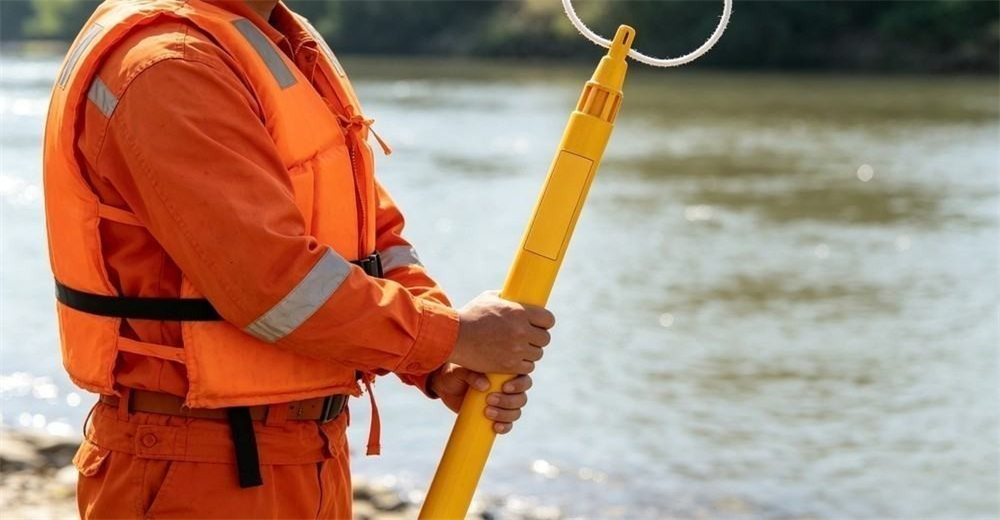
Our range is built around six models that cover every common reach job. Each one is tuned to a different length, material and head so you can match the pole to where you actually work, rather than over-buying a pole that is too long and heavy, or under-buying one that falls short. Here is the short version of each model, so you can see which one fits your team before you read the detail.
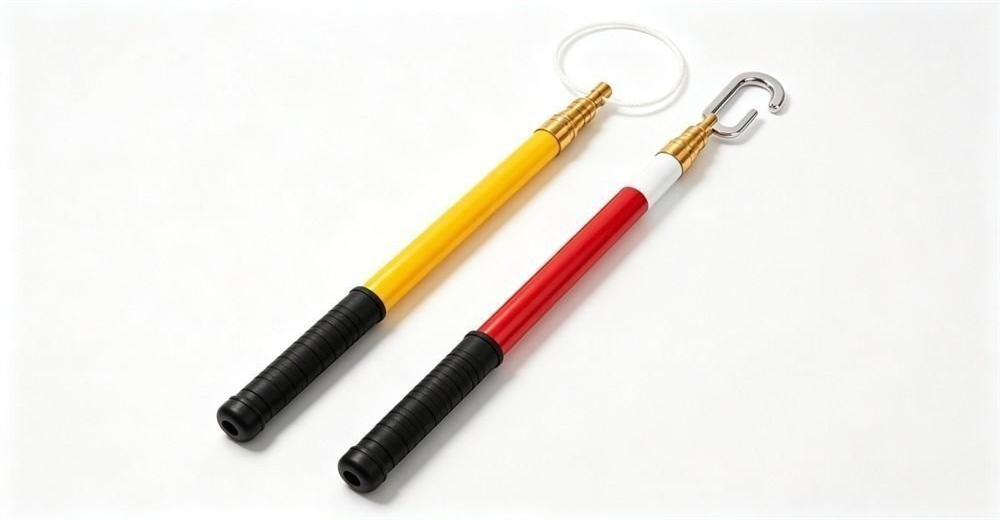
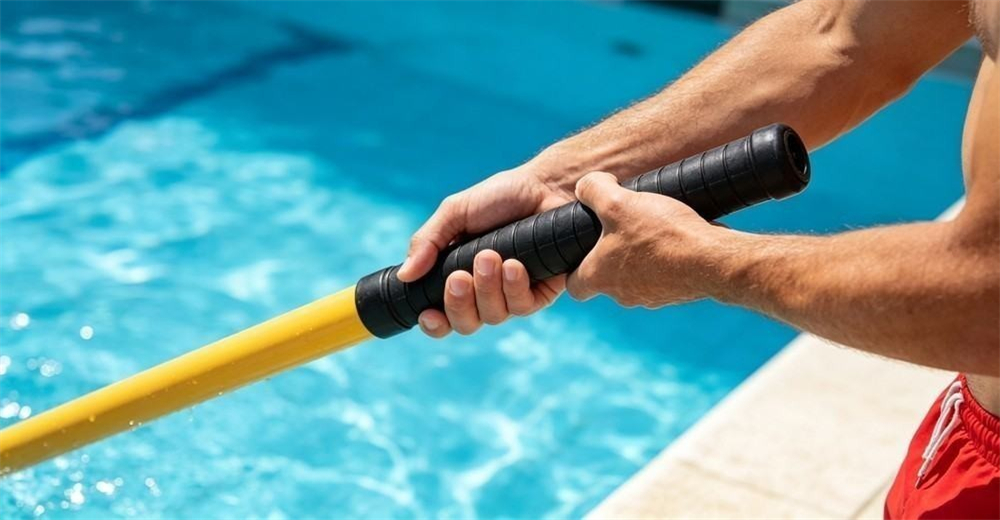
Once you see the six models side by side, the choice usually becomes obvious. The 4.5 meter lightweight SY-JSG03 is your pool and tight-spot pole. The 5.5 meter SY-JSG01 and the multi-length HB-SY-JSGG cover normal river and bank work. The 10 meter SY-JSG02 is for wider water. The 304 stainless SY-JSG04 is for saltwater and heavy-duty use, and the 18 meter SY-SY3GY18 carbon fiber pole is the long-distance specialist.
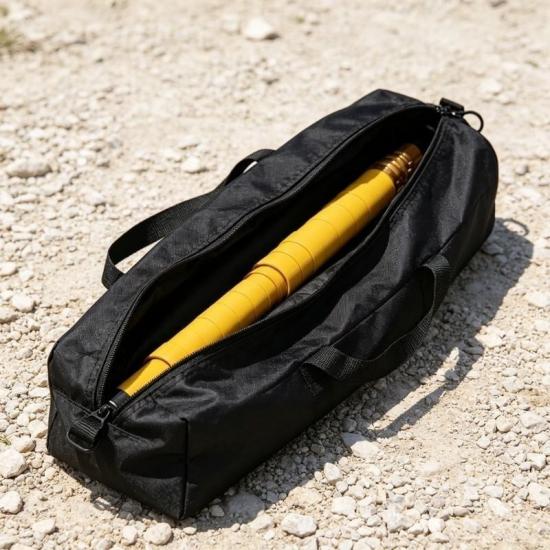
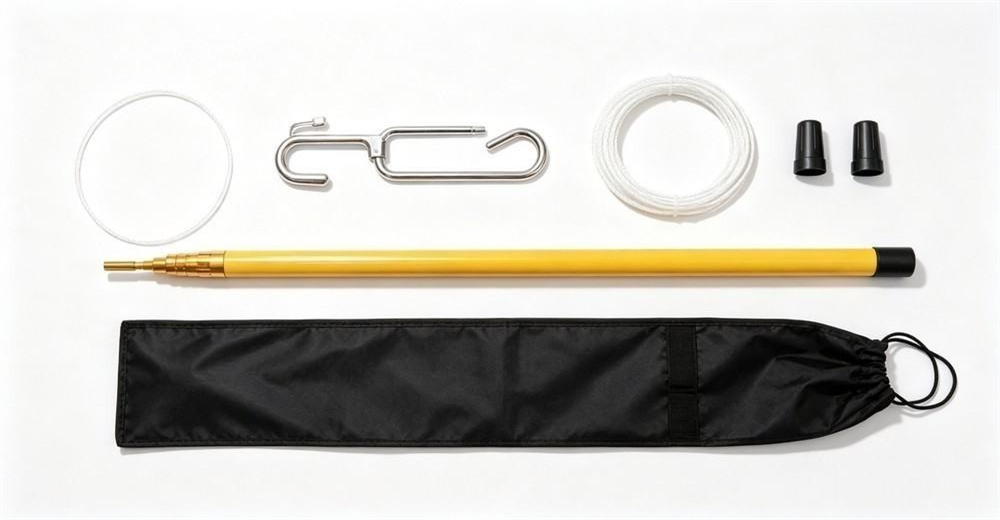
The SY-SY3GY18 is not sold as a bare pole. It ships as a complete multi-function rescue kit in a black carry bag, so one set covers several kinds of rescue without buying separate tools. The idea is simple: once a rescuer spots someone in the water, they stay on the bank or on the boat, extend the carbon pole, and swap the head for the job in hand - a float ball for buoyancy, a life ring for flotation, a hook to grab clothing or a wrist, or a large curved hook to reach a face-up victim. Every accessory stores in the same bag, so a team can carry one light kit and be ready for different situations. The table below lays out what is in the set and what each piece does, so buyers can quote a complete kit rather than a single pole.
|
Accessory |
Key Spec |
What It Does |
|
Carbon fiber rescue pole |
Buoyant carbon fiber; over 18m extended; under 2.6m collapsed; whole kit under 4.5kg |
The light, long-reach base. It floats so it stays on the water and the 9 sections collapse into a short carry length. |
|
Yellow float ball |
Under 540g; buoyancy at least 7kg |
Adds buoyancy to the rescue line and can be used as a small throwable flotation aid. |
|
Yellow life ring |
Ring diameter over 520mm; under 540g; buoyancy at least 7kg |
Handed out on the pole to give a conscious victim something solid to hold onto. |
|
Single hook |
Hook opening up to 110mm; length at least 315mm; under 230g |
Hooks clothing or gear so the rescuer can pull the victim from a safe distance. |
|
J-hook (grappling hook) |
Hook radius at least 115mm; length over 325mm; about 570g |
Reaches a wrist or grabs an object for controlled retrieval. |
|
Curved hook |
Under 580g; length up to 700mm; width up to 540mm |
Large curved head to reach a face-up or hard-to-reach victim under the arms. |
In real use this means one SY-SY3GY18 kit can act as a flood rescue equipment set for a municipal team, a life saving pole with flotation for a school waterfront, or a long-reach rescue hook pole with the right head fitted. The rescuers never need to enter the fast water themselves - the pole does the reaching.
Picking the right water rescue pole is not about grabbing the longest one. It is about matching the length, material and head to the water you actually work on. A pole that is too long bends and whips, and is tiring to hold. A pole that is too short simply cannot reach the victim. The table below gives you a fast side-by-side start so you can narrow the choice before you dig into the detail.
|
Model |
Material |
Extended Length |
Head |
Best For |
|
HB-SY-JSGG |
FRP |
4.5 / 5.5 / 6.5m |
Hook or ring, interchangeable |
Pools, rivers, general multi-use |
|
SY-JSG01 |
FRP |
5.5m |
Fixed rescue hook |
Normal river and bank rescue |
|
SY-JSG02 |
FRP |
10m |
Rescue hook |
Wide rivers, long-distance reach |
|
SY-JSG03 |
FRP |
4.5m |
Light, flexible pole |
Pools, tight spots, one-hand carry |
|
SY-JSG04 |
304 stainless |
4.5m / 6m |
Rescue hook |
Saltwater, heavy-duty, corrosion resistance |
|
SY-SY3GY18 |
Carbon fiber |
over 18m (under 2.6m collapsed) |
Interchangeable accessories |
Very wide water, longest reach |
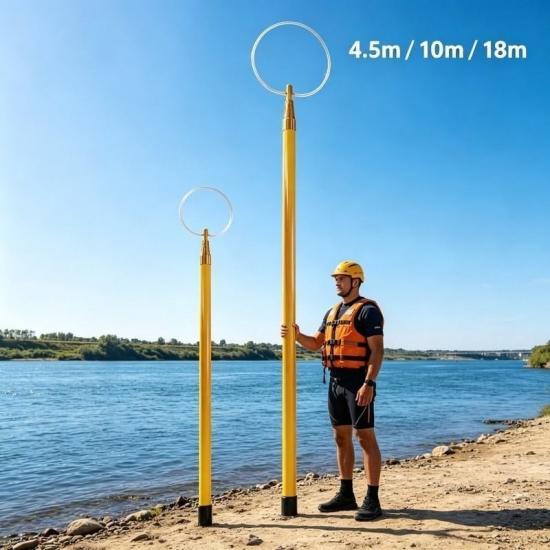
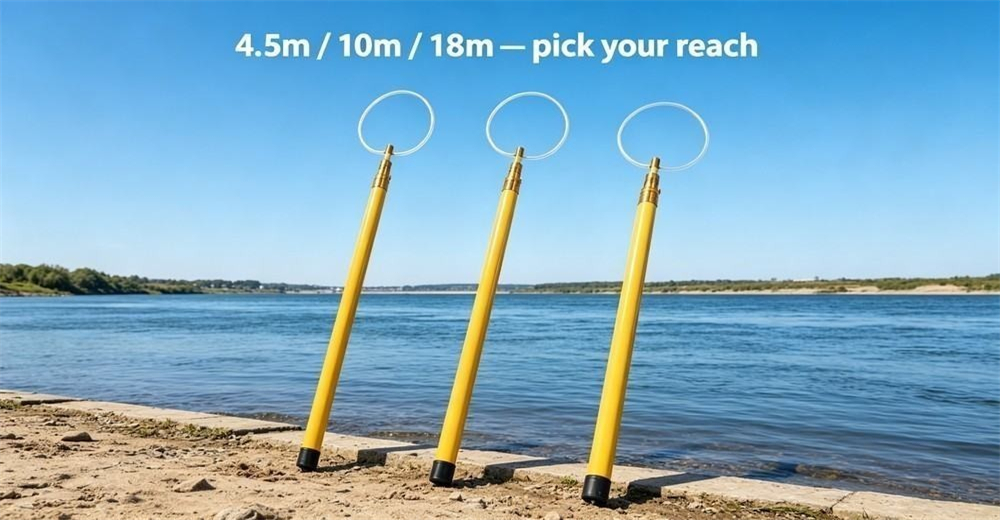
For a swimming pool or a narrow riverbank, a 4.5 meter pole is more than enough and keeps the pole light. For a normal river or a flooded street 5 to 8 meters wide, a 5.5 to 6.5 meter FRP pole gives you a safe stand-off distance. For a wide river or a broad canal, the 10 meter SY-JSG02 is the right class. For very wide water where even 10 meters is not enough, step up to the 18 meter SY-SY3GY18 carbon fiber pole.
Fresh water, pools and rivers are best served by FRP fiberglass. It floats, it is light, and it does not conduct electricity, which matters near overhead lines in flood scenes. Saltwater, harbors and coastal work are better served by the 304 stainless pole, which resists corrosion from salt. For the longest reach without extra weight, the carbon fiber 18 meter pole is the specialist choice because carbon is stiff and light at the same time.
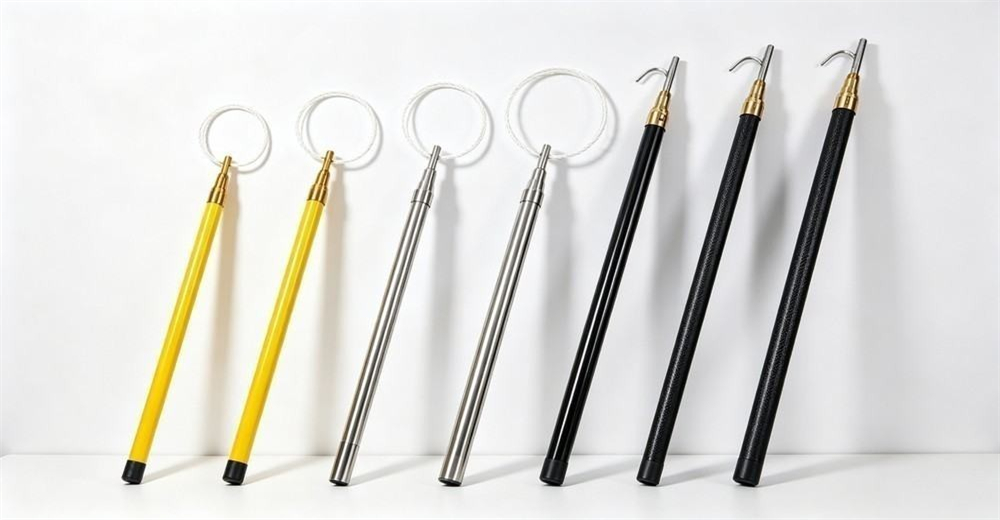
A J-hook lets you reach a person's arm, life jacket strap or a piece of debris. A wire loop lets you slip a circle over a life ring or a victim's body. If your work varies, choose a pole with an interchangeable head like the HB-SY-JSGG or the SY-SY3GY18, so you carry one shaft and change the tip to the job. If you know you always need a hook, the dedicated hook poles keep things simple.
Most teams end up with two poles, not one. They keep a light 4.5 or 5.5 meter FRP pole on the poolside or truck for fast calls, and a longer 10 meter or 18 meter pole for wide rivers. Mixing two in one order covers more of the scenarios your team actually faces. If you are not sure where to start, tell us your typical water width, your team size and whether you work in fresh or salt water. We will suggest a starting point.
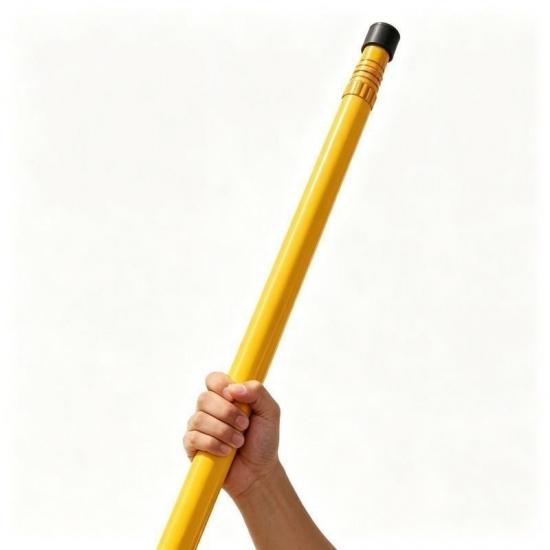
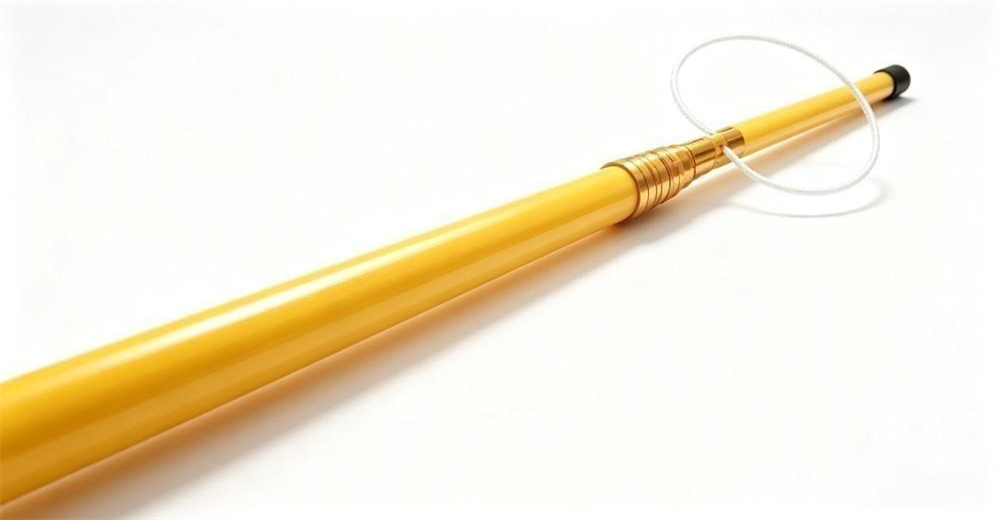
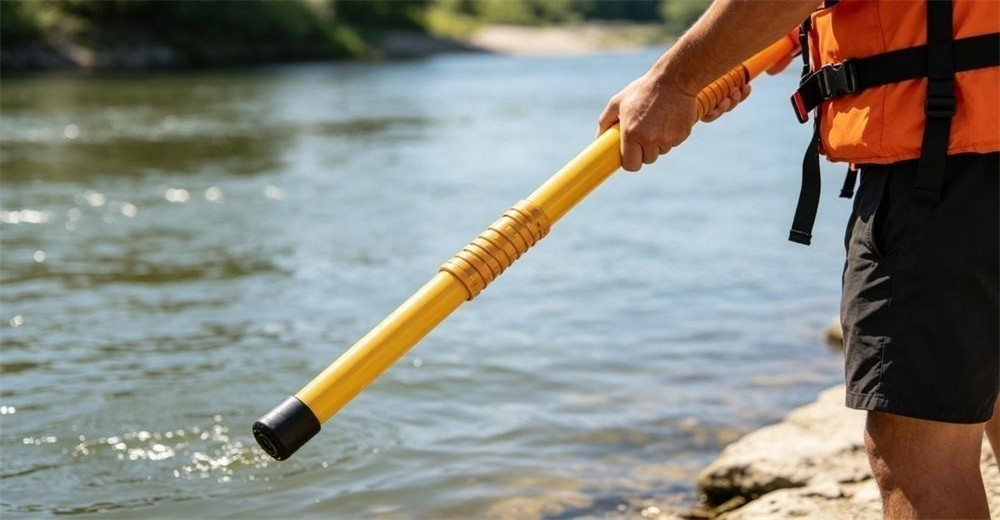
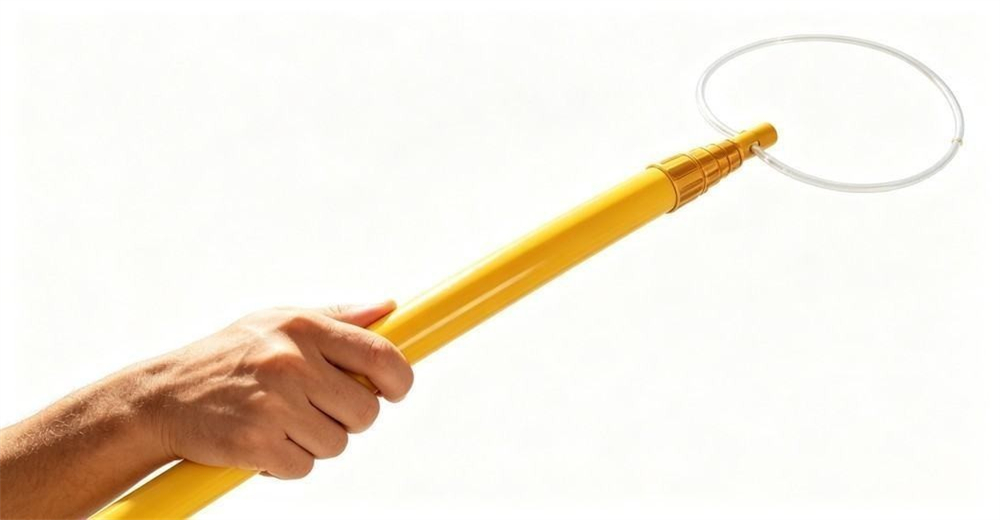
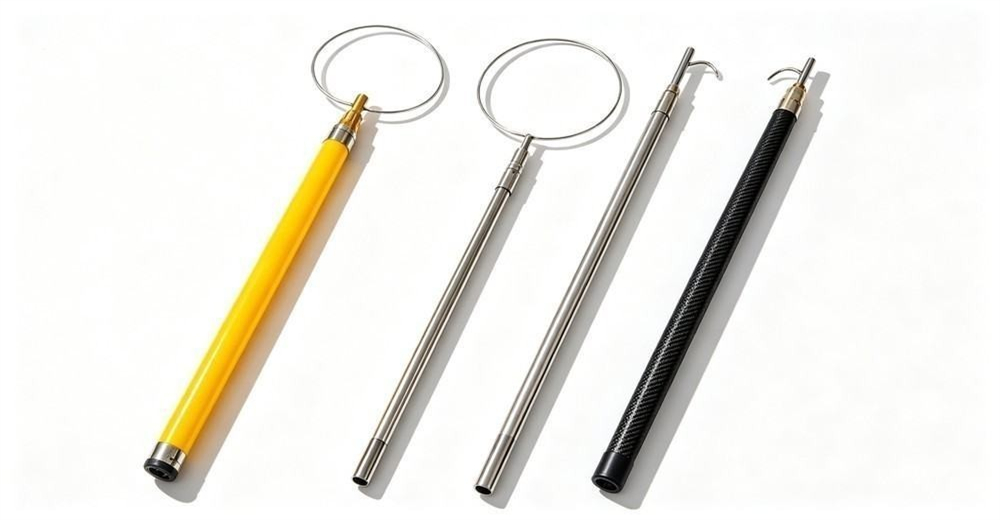
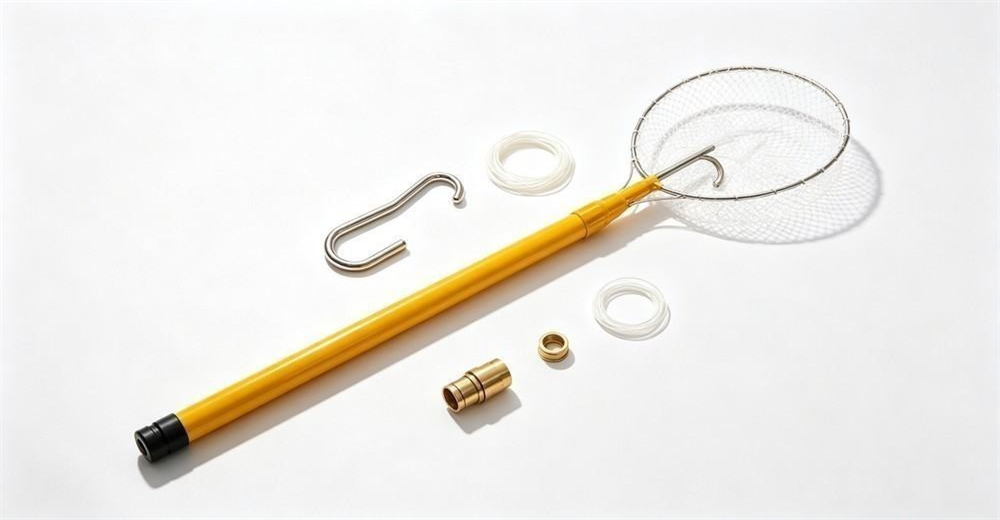
A water rescue pole is a long, lightweight, multi-section telescopic pole designed to extend a rescuer's reach out over the water. At the tip is a gold-colored fitting that carries either a polished J-shaped rescue hook or a thin stainless wire loop. At the bottom is a non-slip grip and a rubber end cap. The sections slide inside one another, so the collapsed pole is short and easy to carry, and the extended pole reaches out many meters.
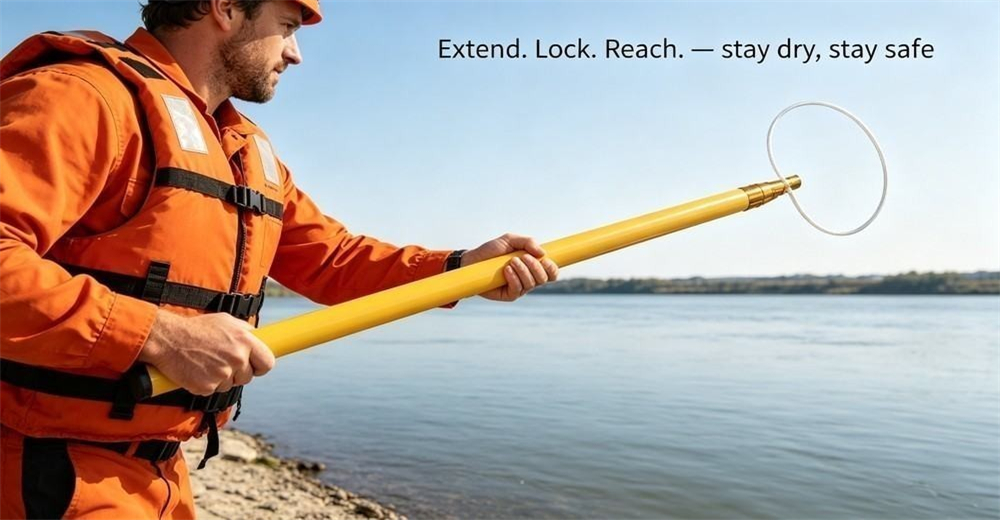
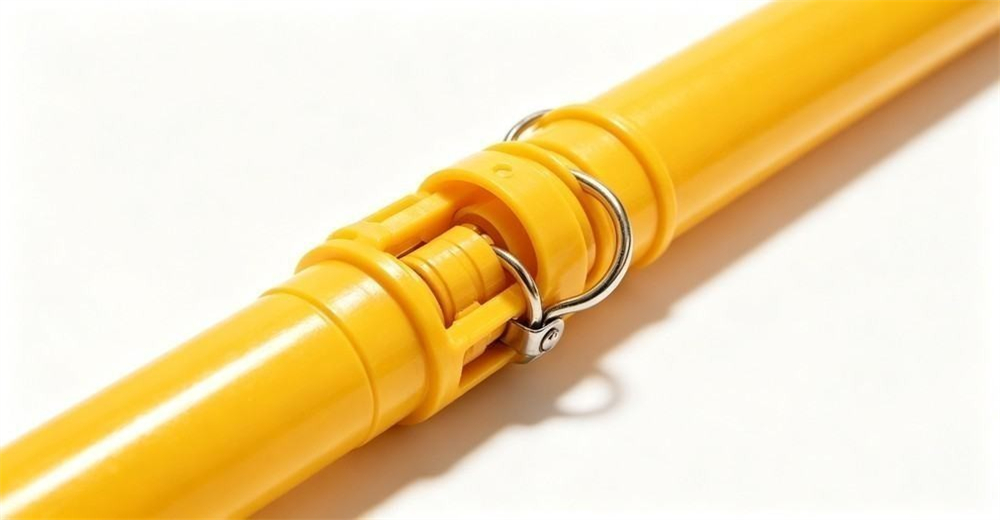
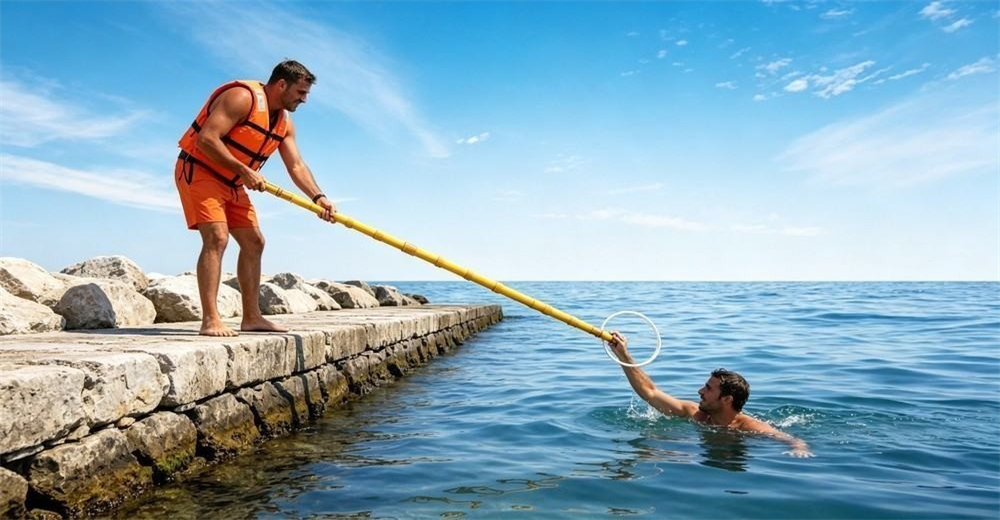
The working process is simple. First, the rescuer takes the collapsed pole from the wall or the carry bag. Second, they pull each telescopic section out, from the thickest to the thinnest, until each one clicks into its locking collar. Third, they aim the hook or the loop toward the victim, reach out over the water, and guide the loop over the victim or the life ring, or hook the victim's arm or strap. Fourth, the rescuer pulls steadily and walks backward, bringing the victim to the bank or the poolside without entering the water.
This is why a rescue hook pole beats reaching by hand or throwing a ring. Your arm is only about a meter long. A thrown ring lands wherever it lands, and a tired victim may not reach it in time. A telescopic pole puts the hook or the loop right in front of the victim, and the rescuer stays on solid ground the whole time. That is the "reach" that comes before "throw", and it is the fastest, safest option whenever it works.
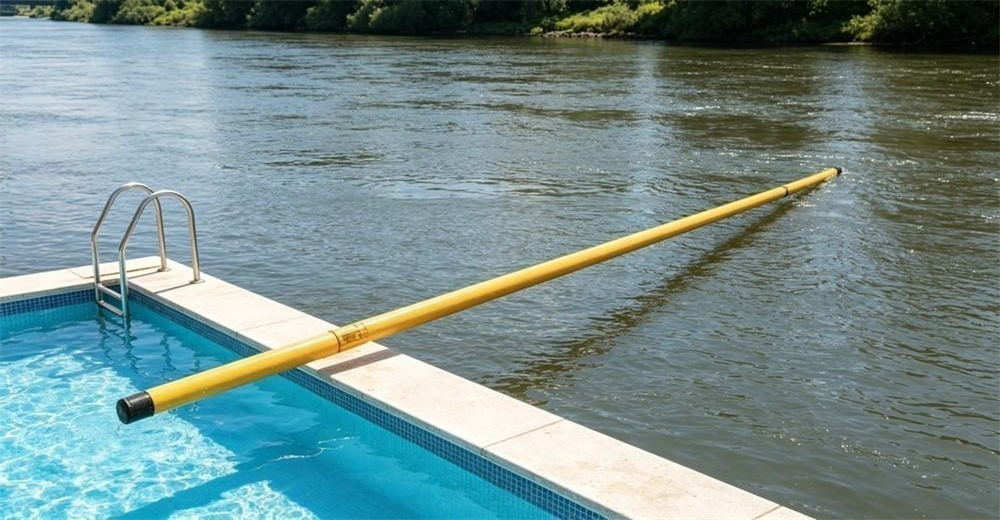
Because the FRP poles float, they can also be left resting on the water between you and the victim, turning the pole itself into a handhold. The bright yellow-black or red-white color makes the pole easy to see on the water and in low light, so the victim knows exactly where to reach. This combination of reach, float and high visibility is what makes the life saving pole a standard piece of flood rescue equipment and poolside safety around the world.
The material decides how the pole feels, where it works best and how long it lasts. We offer three materials across the range: FRP fiberglass, 304 stainless steel and carbon fiber. They are not interchangeable for every job, so it pays to understand the difference before you compare prices. The table below maps the three materials side by side so you can see the trade-off at a glance.
|
Material |
Feel |
Floats? |
Best Water |
Typical Length |
|
FRP fiberglass |
Light, smooth, flexible, non-conductive |
Yes |
Pools, rivers, fresh water |
4.5 / 5.5 / 6.5 / 10m |
|
304 stainless steel |
Stiff, strong, brushed silver |
No |
Saltwater, heavy-duty |
4.5 / 6m |
|
Carbon fiber |
Ultra-light, very stiff, matte black |
No |
Very wide water, long reach |
18m (9 sections) |
FRP, or fiberglass reinforced plastic, is the most common pool and river rescue pole material. It is light enough to hold one-handed, it floats, and it does not conduct electricity, which is a real safety point near power lines during floods. The glossy yellow-black or red-white finish is highly visible. This is why our HB-SY-JSGG, SY-JSG01, SY-JSG02 and SY-JSG03 models are all FRP.
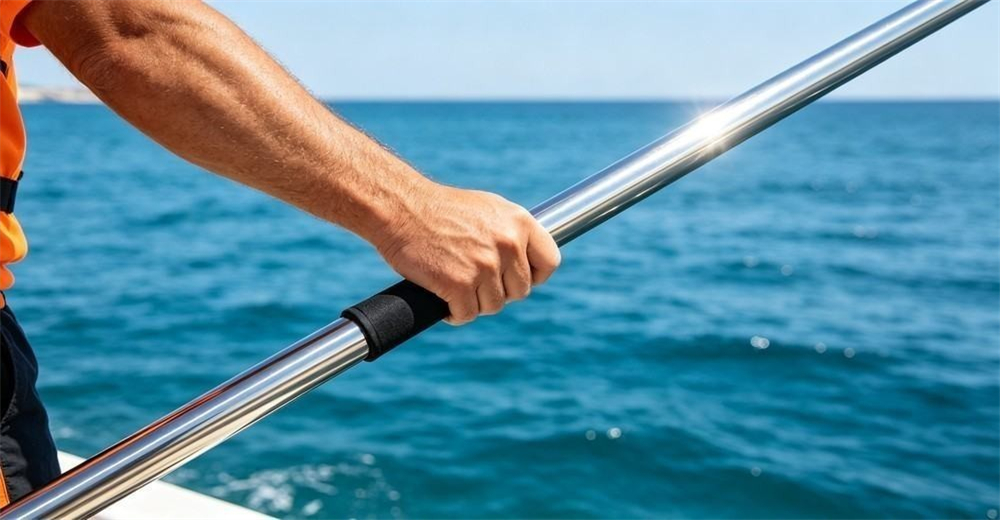
The SY-JSG04 uses 304 stainless steel, a corrosion-resistant metal that stands up to saltwater, harbors and heavy daily use. It is stiffer and stronger than FRP, and it looks clean and professional. Because metal is heavier and does not float, it is best for teams that work near the sea or need a tough pole that takes knocks. The brushed silver finish and black grip make it easy to identify on the equipment rack.
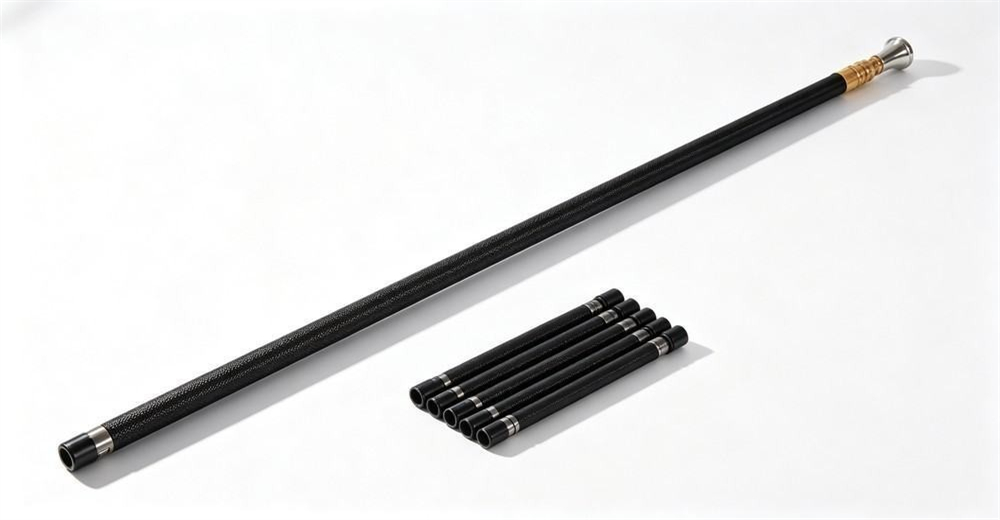
The SY-SY3GY18 uses ultra-light carbon fiber. Carbon fiber is special because it is both extremely light and very stiff, which is the only way to build an 18 meter pole that a single rescuer can actually handle. Nine telescopic sections collapse down to under 2.6 meters, and the matte black tube stays rigid even at full extension. This is the material you choose when the water is very wide and reach is everything, but you still need one person to carry it.
The head is the business end of every rescue hook pole. It determines whether you can actually make contact with the victim. We offer two standard heads, plus interchangeable options on the multi-function poles. Choosing the right head matters as much as choosing the pole length, because the best pole in the world is useless if the tip cannot grab what it needs to.
The polished chrome J-hook is the workhorse for reaching a person. You hook it under the victim's arm, onto a life jacket strap, or onto a piece of debris the victim is holding. The curved tip catches cleanly and does not slip off when you pull. This is the head you want for active river rescue and for reaching a conscious victim who can grab toward you.
The thin stainless wire loop forms a circle hanging from the gold fitting. You slip this loop over a life ring, over a floating buoy, or around a victim's torso, and then pull. The loop is softer and less likely to catch or injure, and it is the classic pool rescue head because it lets you guide a life ring out to a swimmer who is treading water.
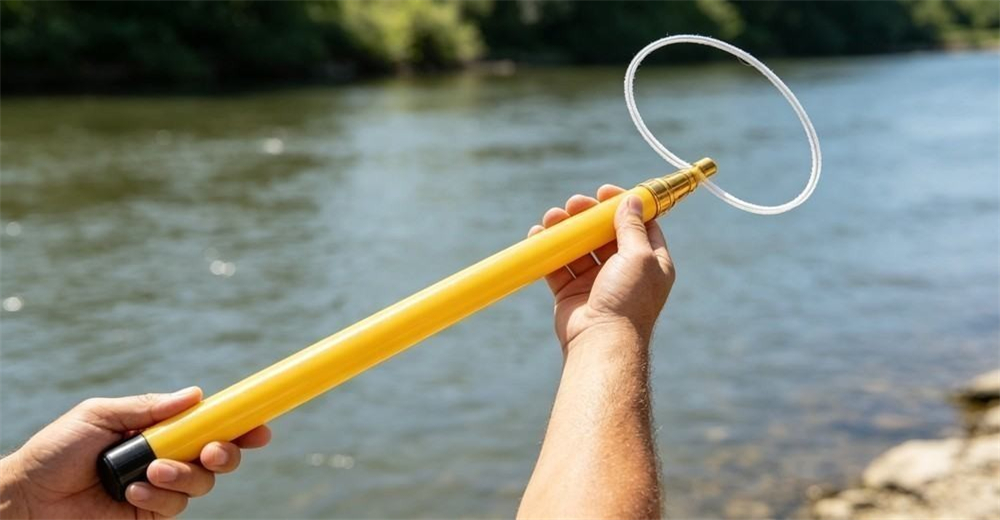
On the HB-SY-JSGG and the SY-SY3GY18, the head is interchangeable. You can swap between a hook, a loop and other accessories using the gold fitting at the tip. This means one shaft covers several jobs: hook for a conscious victim, loop for a life ring, and other heads for specialized reach. For a team that never knows which kind of water emergency is coming, interchangeable heads save carrying several separate poles.
Here is how the two heads compare at a glance. Send a hook to a life ring and you will fumble to catch it; send a stiff loop to a panicked victim who is reaching out and the hook grabs faster. Match the head to what you are reaching, and you will make the contact in seconds instead of wasting the critical first minute.
|
Feature |
J-Hook Head |
Wire Loop Head |
|
Best target |
Victim's arm, strap, debris |
Life ring, buoy, victim's body |
|
Feel |
Firm grab, does not slip |
Soft loop, less likely to injure |
|
Typical use |
Active river and swift-water rescue |
Pool and life-ring rescue |
|
Interchangeable |
Yes on HB-SY-JSGG and SY-SY3GY18 |
Yes on HB-SY-JSGG and SY-SY3GY18 |
A telescopic rescue pole only works if it is extended and locked correctly. A section that is not locked can slide closed under load, and a pole that is whipped too hard can bend. The good news is that the correct technique is simple and safe once you have practiced it a few times. If you are learning how to use a rescue pole for the first time, this is the routine to drill. Follow these steps every time, and you will make a solid reach without risking yourself.
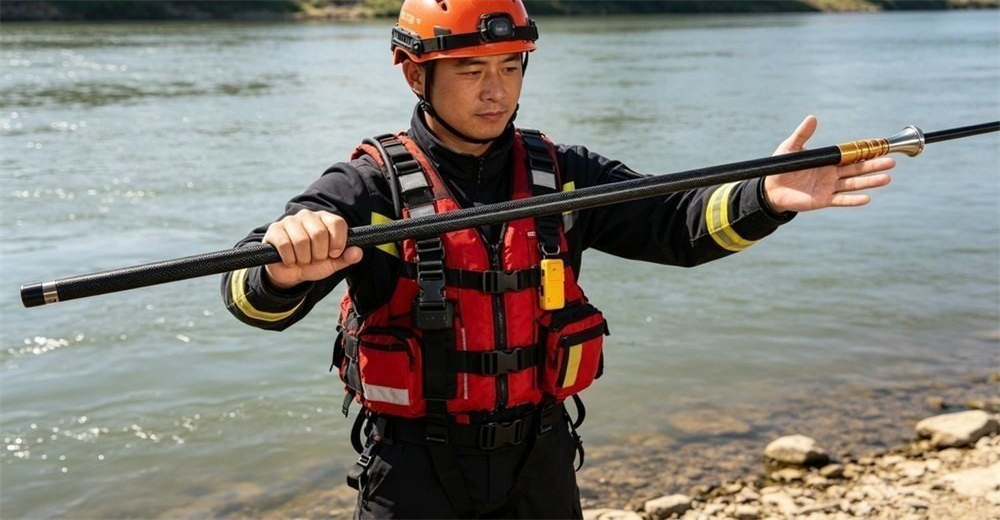
Take the collapsed pole off the wall or out of the carry bag. Check that the hook or loop is secure and that the sections move freely. Grip the bottom handle firmly. Make sure your feet are on dry, solid ground and you have room to step backward.
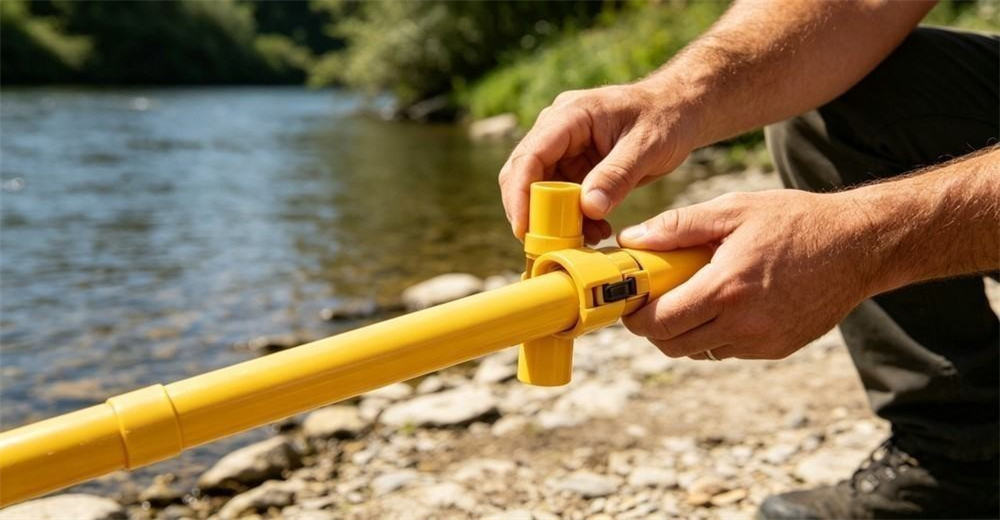
Pull each telescopic section out starting from the thickest, lowest section and working up to the thinnest tip. Stop when each section clicks or locks into its collar. Do not over-extend. A fully locked pole is rigid and safe; a half-locked pole can slide shut and surprise you at the worst moment.
Extend the pole out over the water toward the victim. Keep the tip steady and low, and guide the loop over the victim or the life ring, or hook the victim's arm or strap. Call out to the victim to grab the pole and hold on. Stay on dry ground — do not step into the water to reach further.
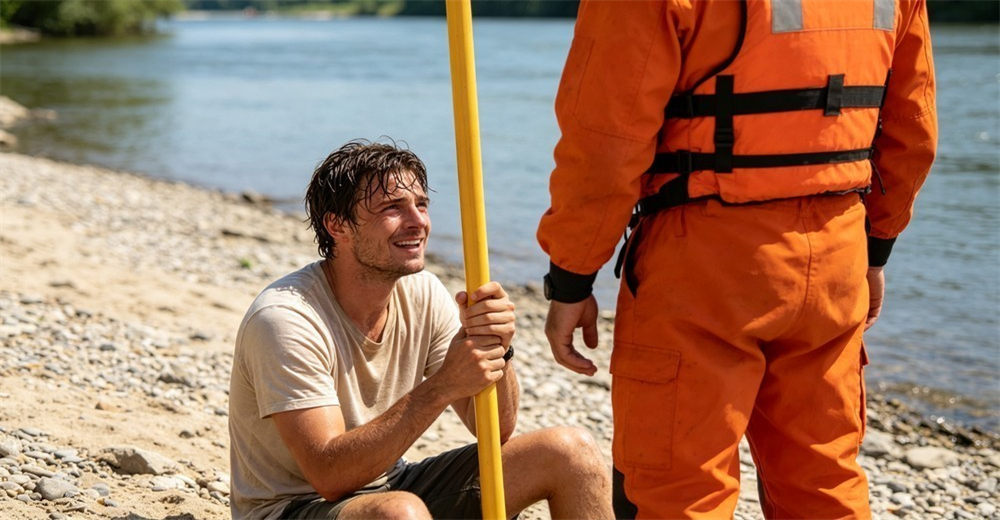
Once the victim has the loop or the hook, pull steadily and walk backward toward solid ground. Keep the pole under control, do not jerk it, and let the victim float toward you. When they reach the bank or poolside, other rescuers can help them out. Afterward, rinse the pole with fresh water, dry it, unlock the collars and collapse it back in reverse order for storage.
A single water rescue pole rarely fits every job, which is why we offer six models. The sections below walk through the situations buyers most often ask us about. For each one we describe what happens in the field, how the pole is used, and which model or head makes the difference. Read the ones that match your own work and shortlist a pole from there.
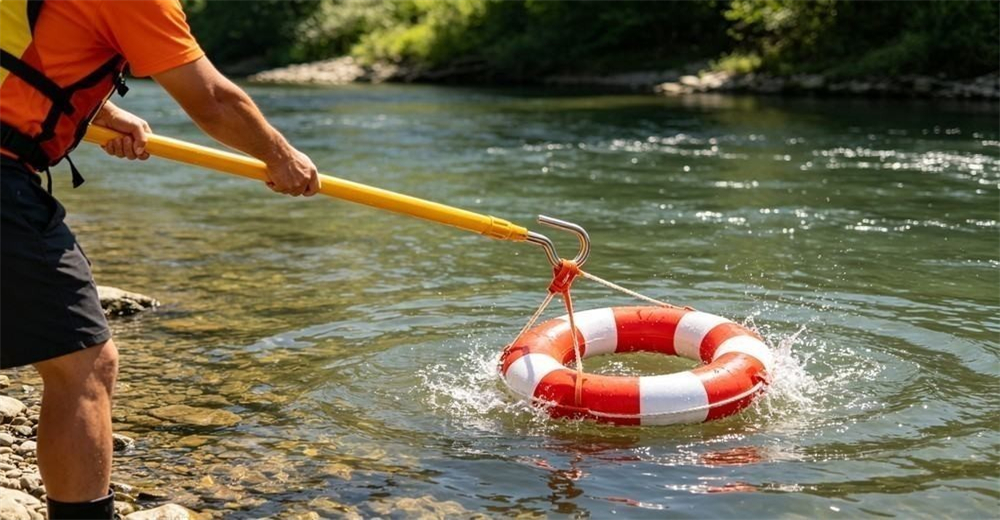
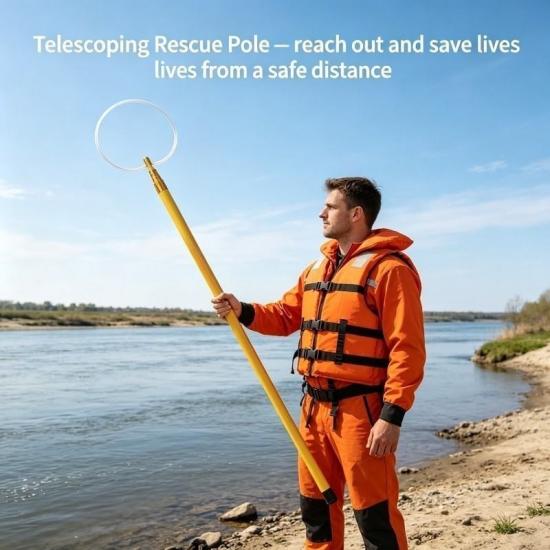
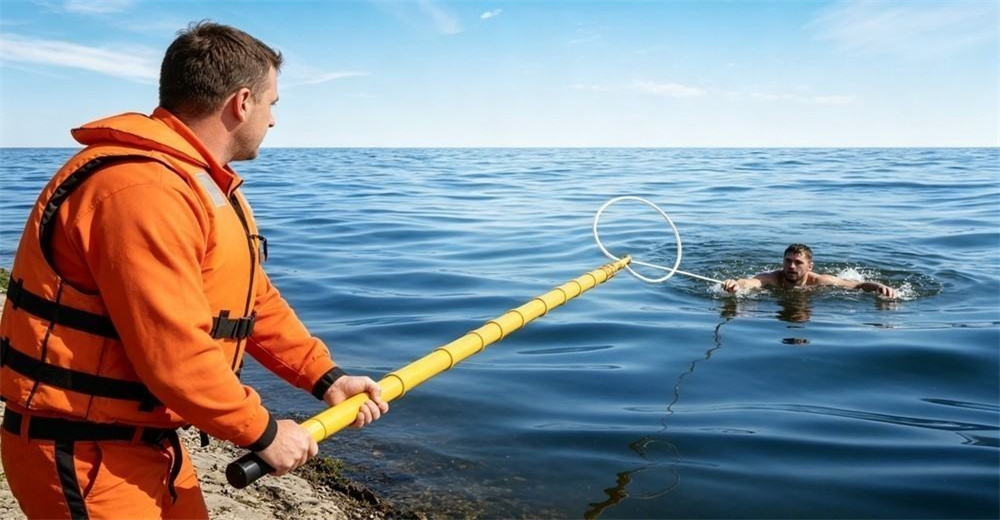
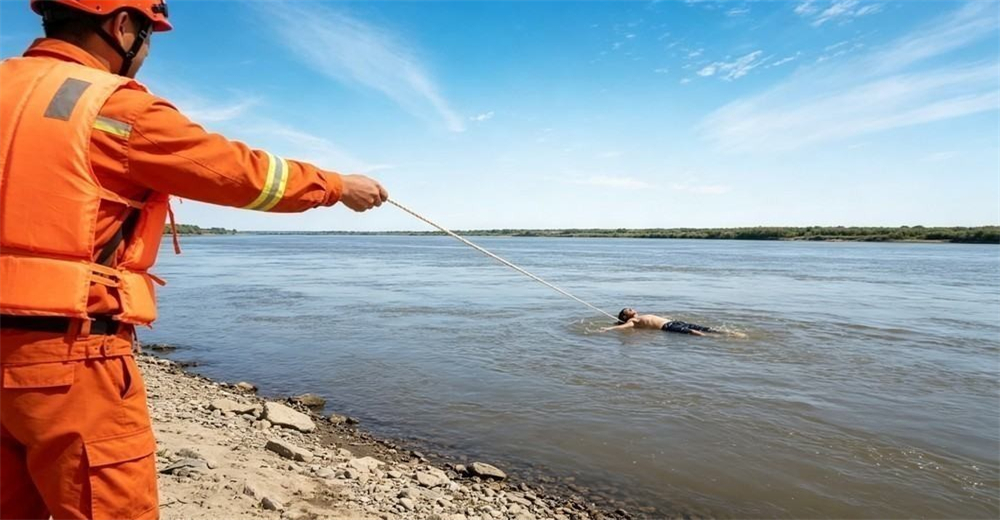
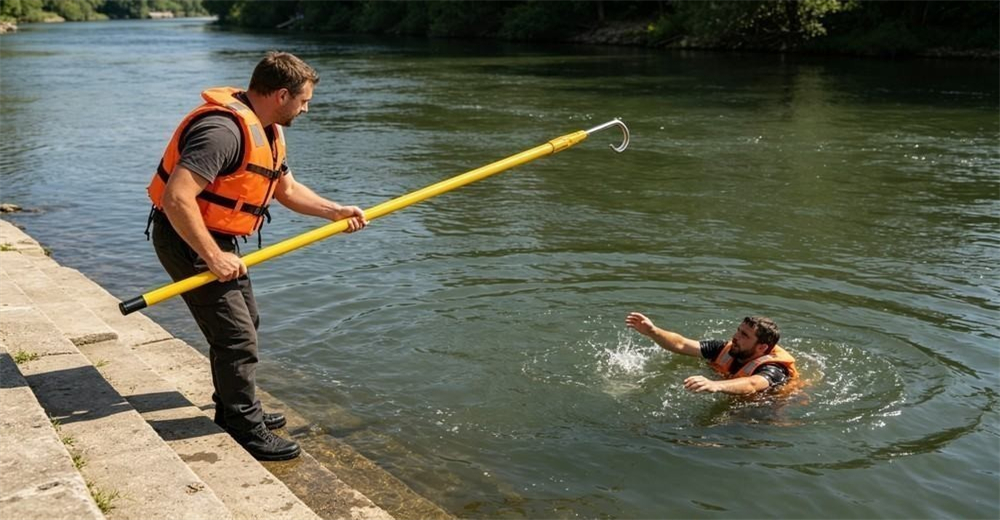
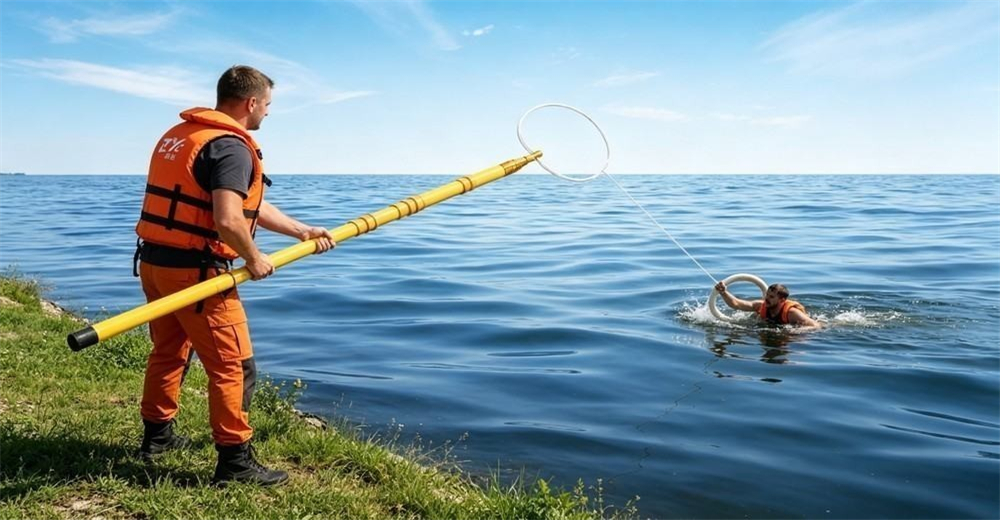
On a calm riverbank, a swimmer gets into trouble 5 to 8 meters out. A lifeguard or rescuer in an orange life vest grabs a 5.5 meter FRP pole, extends it, and slips the loop over the victim without entering the water. The floating yellow pole stays on the surface as a handhold, and the high-visibility color guides the victim to it. The SY-JSG01 or the HB-SY-JSGG is the standard choice here.
When a storm turns a city street into brown fast water, a victim may be on a car roof across 20 to 30 meters of unseen water. A rescuer on the curb extends a 10 meter pole and reaches the victim, or pulls a life ring across. The non-conductive FRP is a safety point near power lines in flood scenes. The SY-JSG02 10 meter pole is built for this longer stand-off.
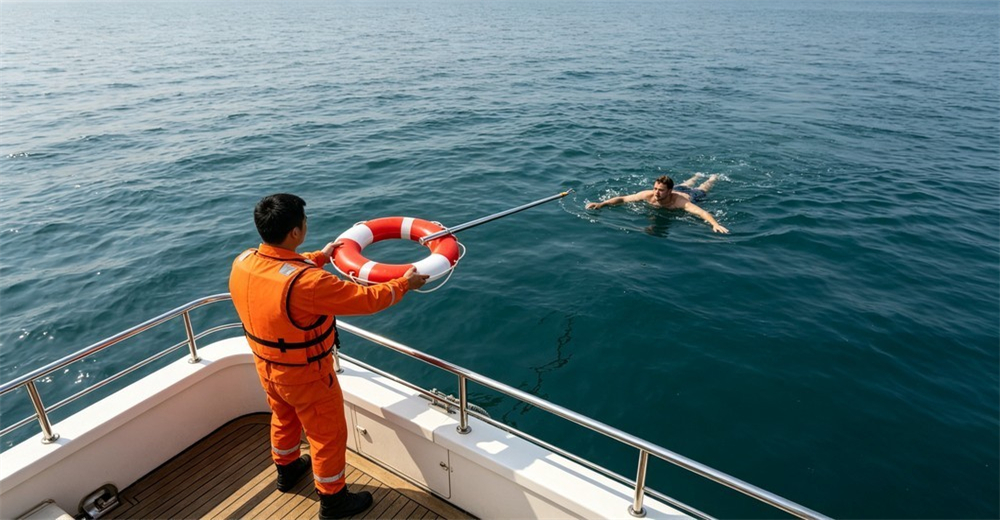
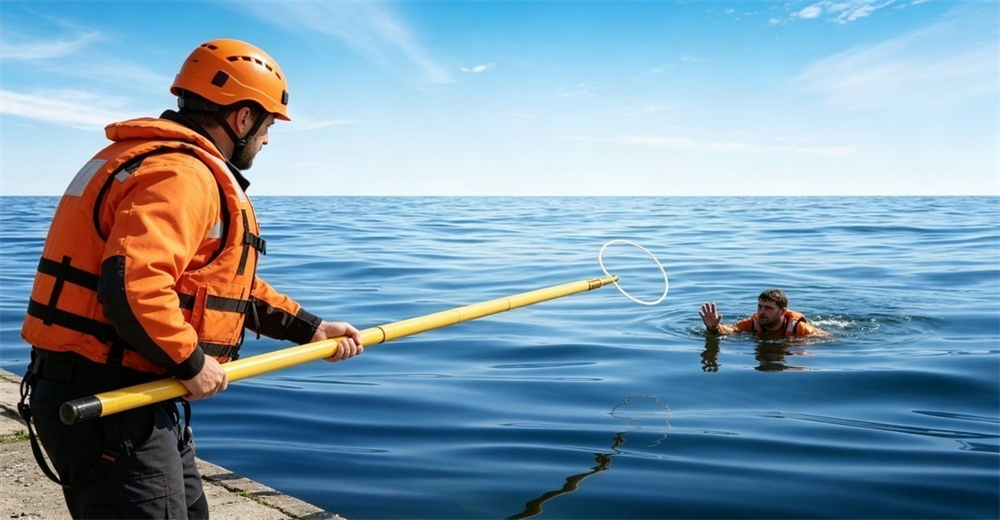
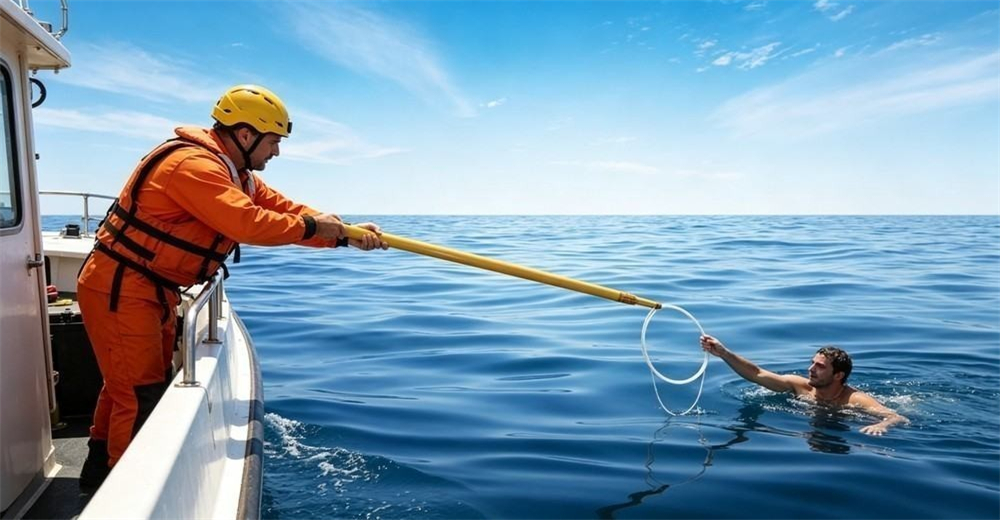
When a person falls overboard from a small boat, the crew cannot always pull alongside in time. A rescuer on deck extends a long pole and reaches the person in the blue water beside the vessel. The stiff pole keeps the victim from drifting into the hull. For coastal and harbor work where salt corrosion is a concern, the 304 stainless SY-JSG04 is the better long-term choice.
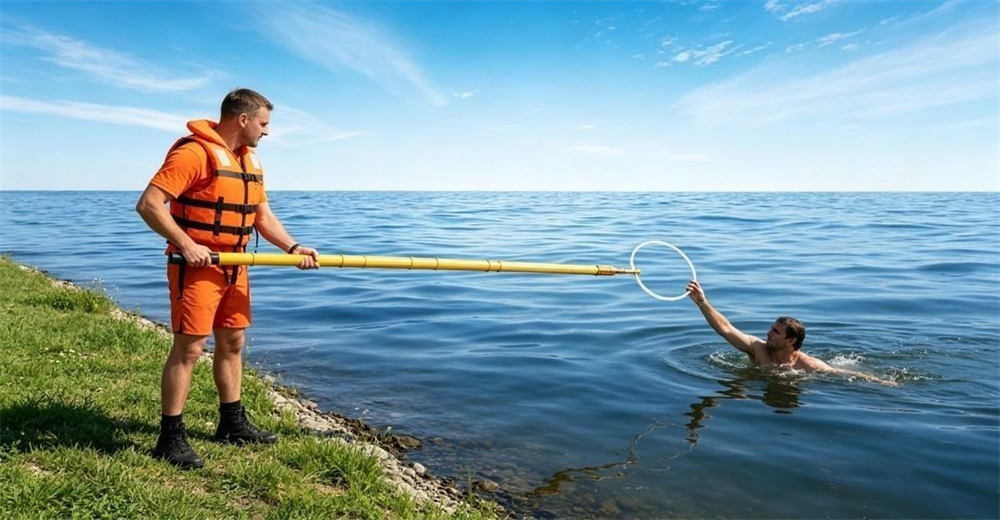
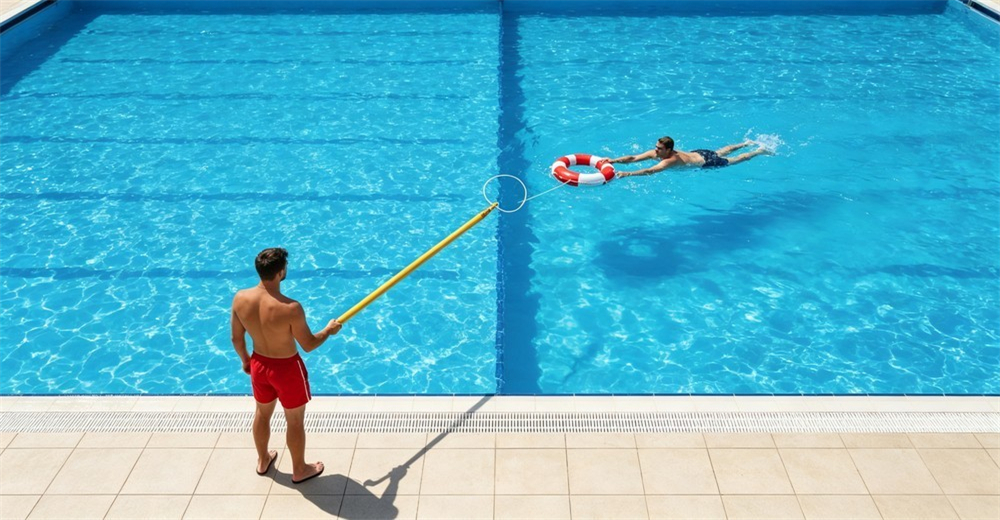
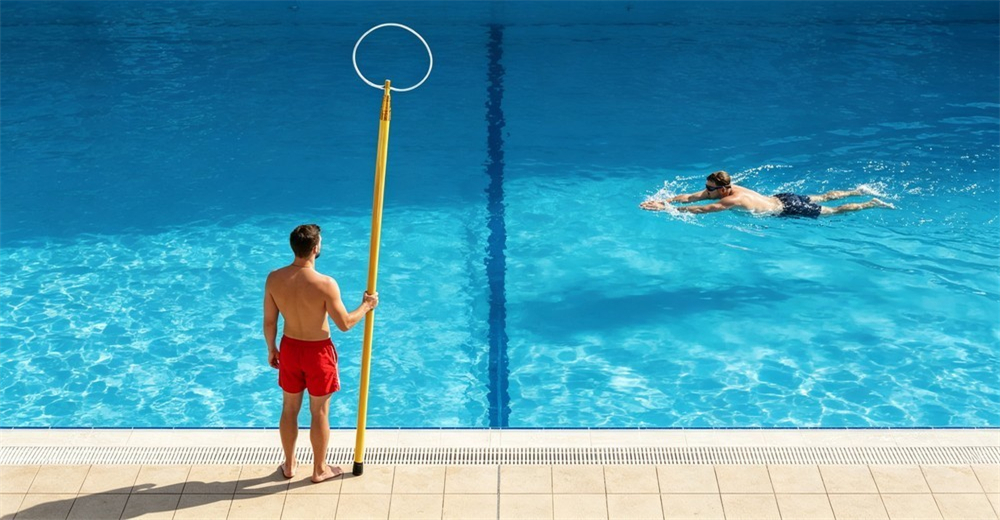
A pool rescue pole is the lifeguard's first tool. A swimmer in trouble across the blue water can be reached from the deck in seconds with a short 4.5 meter FRP pole and a wire loop. The pole floats, the bright yellow color is visible on the blue water, and the lifeguard never has to jump in unless the victim cannot hold on. This is the classic pool rescue pole job, the pool lifeguard rescue pole you see on deck at every training pool.
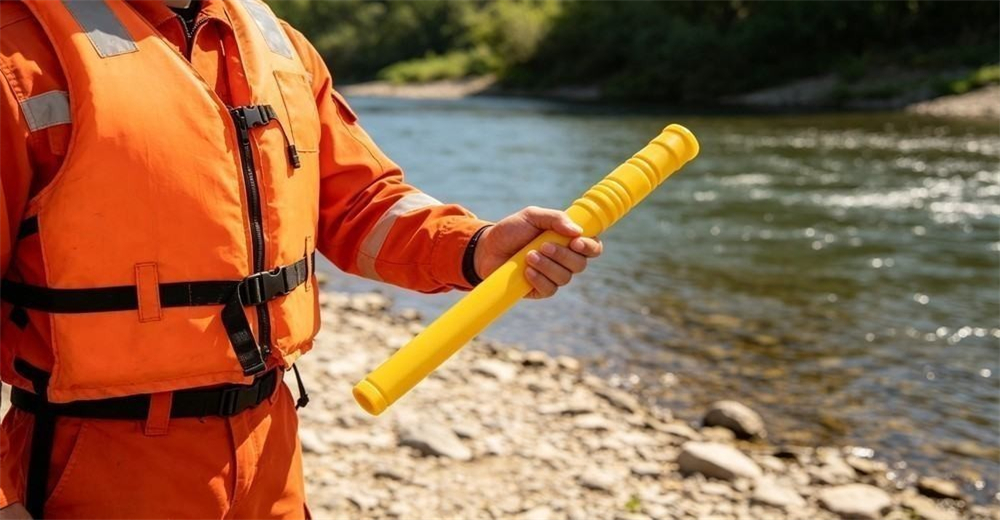
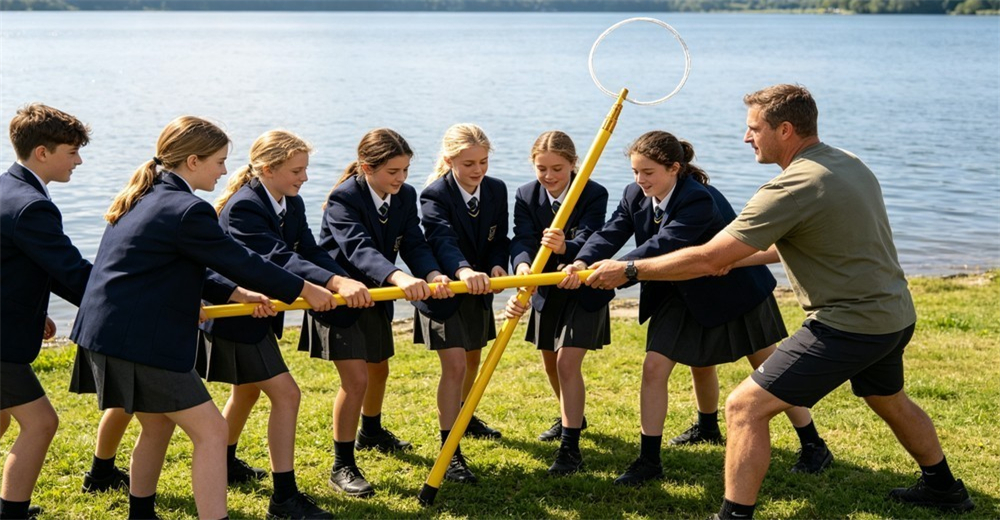
Schools and training centers run classes of 20 to 30 students who need safe, simple gear to learn "reach and throw". The lightweight FRP pole is easy for students to extend and practice with, and the non-conductive, no-gas design means there is nothing dangerous to handle. Instructors teach reach, throw and go safely on the grassy lakeside under supervision.
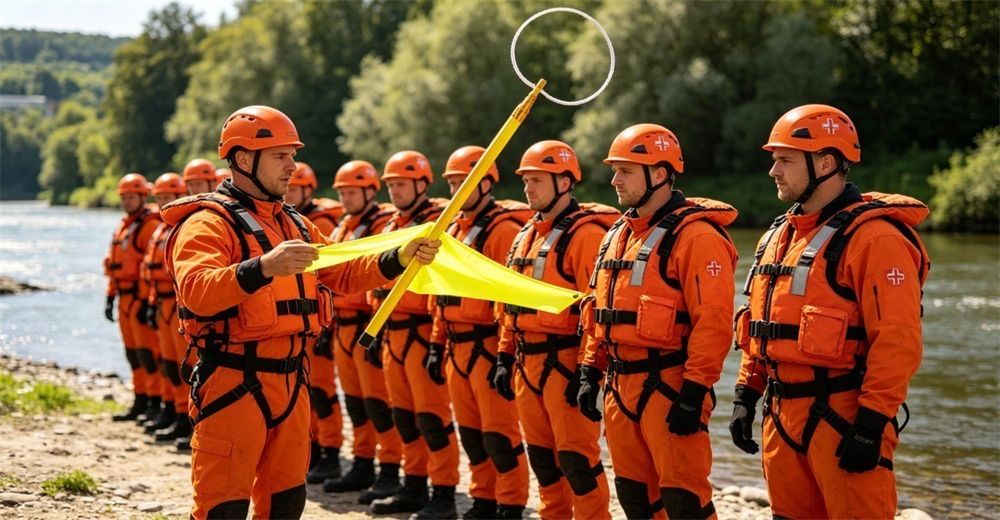
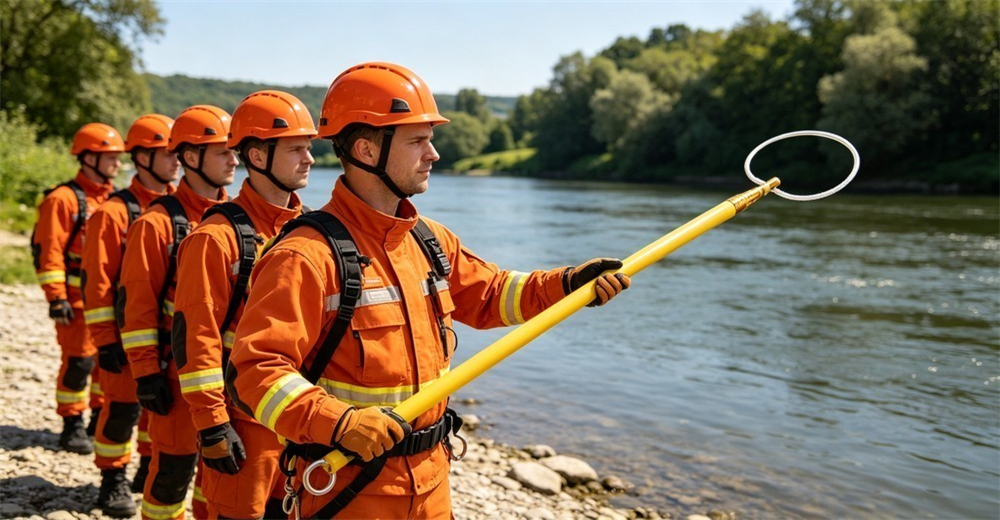
Fire crews and municipal water teams keep poles on the truck and at city ponds and reservoirs for fast calls. A team in turnout gear extends a long pole in formation drills, and a municipal rescuer at a city pond can reach a fallen worker from the edge in under a minute. Having a pole ready means any trained staff member can respond before the formal water rescue team arrives. This is why we supply complete flood rescue equipment for government and municipal procurement programs.
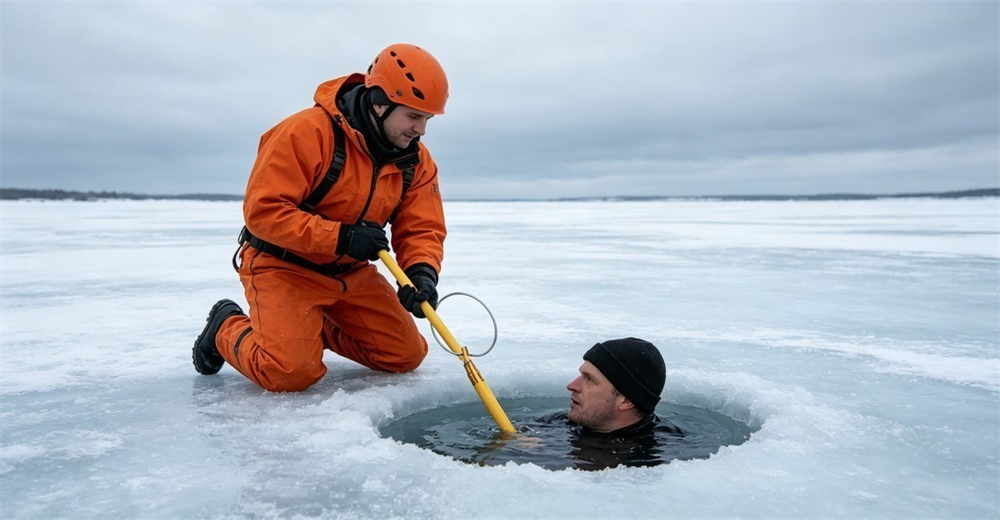
When someone falls through thin ice, stepping out onto the ice is the last thing a rescuer should do. From solid ice or the firm bank, a rescuer extends a long pole out to the broken edge and reaches the victim, keeping their own weight on safe ice. Working from a stand-off distance is the whole point of the "reach" rule in cold-water rescue.
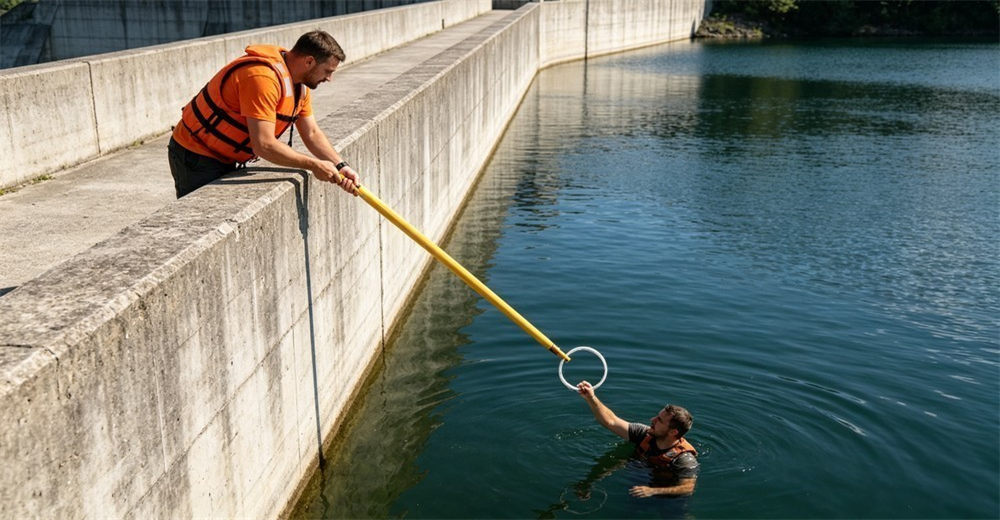
Reservoirs, dam walls and wooden piers have deep water right at the edge, so a long pole lets staff reach down over a concrete wall or out over the water from the pier without climbing down. The 10 meter and 18 meter poles give the reach you need when the drop or the gap is large, and the high-visibility color stands out on overcast grey days.
YRF Textile is a water rescue pole supplier based in China, with over 20 years of experience in emergency rescue pole and water rescue equipment. We work with distributors, fire departments, hospitals, schools, hotels and government procurement programs across 50+ countries. Our product range spans rescue poles, life rings, throw ropes and related water rescue gear, so buyers can source a coordinated reach-and-float kit from one experienced partner.
We focus on practical, field-proven equipment that holds up under repeated use. Our team understands the scenarios you work in — pools, rivers, flooded streets, harbors and ice edges — because we have been supplying gear into these programs for two decades. When you source from us, you get straightforward communication, honest specification, and a supplier that stands behind the products it ships.
A few reasons buyers return to us. Every unit carries a 1-year warranty against workmanship defects. We have real government procurement experience, supplying fire, school and municipal programs where documentation and consistency matter as much as price. We offer OEM branding, such as a silk-screened logo panel on the pole shaft, so your department or brand mark is on the gear. And we are used to scaling from a single school kit to a multi-station program order, so whether your next purchase is one pole or a few hundred, the quality and support stay the same.
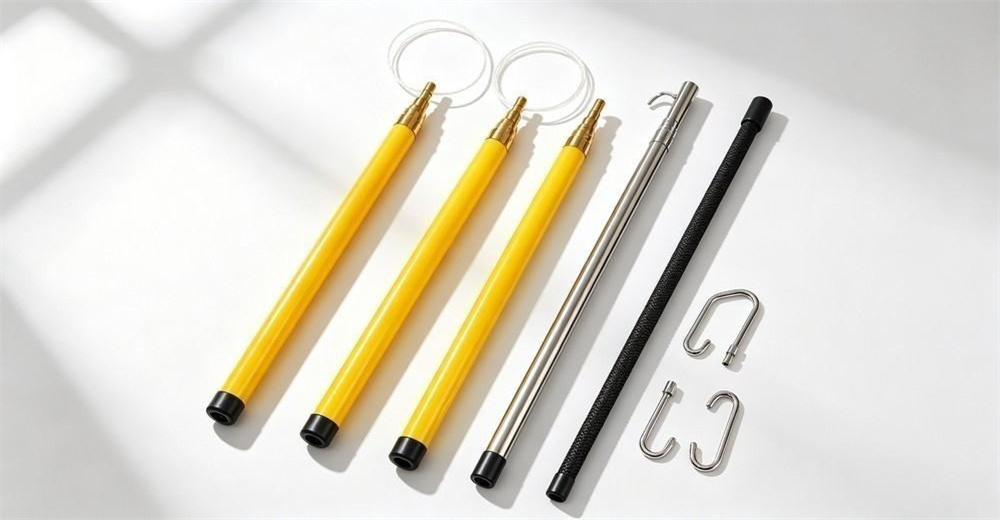
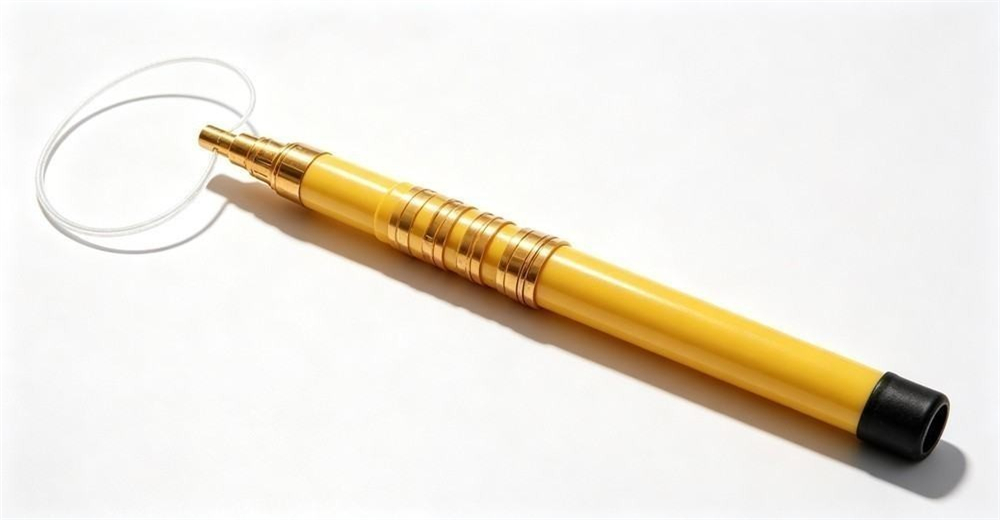
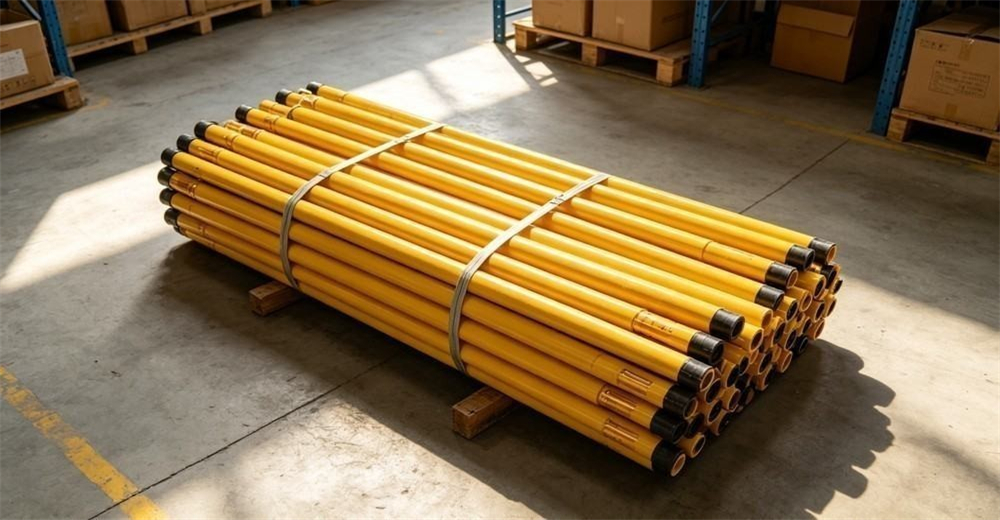
Zoom in on every part. These are the standard components we have selected and refined over more than 20 years in the field: the gold brass top fitting, the thin white wire loop, the polished chrome J-hook, the telescopic locking collar, the glossy FRP tube, the black rubber end cap and the non-slip grip. Each one was chosen because it survives repeated wet, muddy and cold use without letting you down on the first real call.
In this gallery you will see the pole from several angles, the hook and the loop close up, the telescopic joint that locks each section, the black end cap at the bottom, and the complete kit laid out with the carry bag and accessories. Seeing the parts up close helps you judge build quality before you ask for a sample.
A water rescue pole is a long, telescopic reach tool used to extend a rescuer's arm out to a person in the water without stepping in. It usually has a hook or a loop at the tip to grab a victim, a life ring or debris. It is the first "reach" tool in the reach-throw-go rescue method.
Our models range from 4.5 meters up to 18 meters extended. Most pool and river rescue work is covered by the 4.5 to 6.5 meter FRP poles, while the 10 meter and 18 meter units are for wide rivers and long-distance reach. The 18 meter carbon pole collapses to under 2.6 meters for carry.
FRP fiberglass is light, non-conductive and floats, and it is the most common pool and river pole. 304 stainless is stiffer, stronger and corrosion-resistant for saltwater and heavy use. Carbon fiber is the lightest and stiffest, used for the ultra-long 18 meter pole that one person can still handle.
A J-hook is best for reaching a person's arm, life jacket strap or debris. A wire loop is best for slipping over a life ring or a victim's body. Many of our poles, the HB-SY-JSGG and the SY-SY3GY18, let you swap the head, so you carry one pole and change the tip to the job.
Pull each telescopic section out from the thickest to the thinnest until it clicks into the locking collar. To collapse, release the collar and push the sections back in reverse order. Always fully extend and lock before reaching out, and rinse and dry the pole after saltwater or muddy use.
Yes. A short 4.5 meter FRP pool rescue pole is the standard lifeguard reach tool. It floats, it is light, and it lets a lifeguard reach a swimmer in trouble from the poolside without jumping in. The bright yellow color is highly visible on blue pool water.
The FRP fiberglass poles are buoyant and float on water, which is why they are the first choice for pool and river rescue. The stainless and carbon fiber poles are stiffer for reach but are not designed to float. Confirm the material for your scenario when you order.
Our FRP rescue poles come in high-visibility yellow-black or red-white, so they are easy to see on the water and in low light. The 304 stainless pole is brushed silver, and the carbon fiber pole is matte black. The high-visibility colors help victims locate the reach tool fast.
Yes. We supply water rescue poles to distributors, fire departments, schools, hospitals, hotels and government emergency procurement programs. Bulk options depend on your project requirements and are confirmed by contract, including specification support for your submission.
Yes. We offer OEM branding such as a silk-screened logo panel on the pole shaft, so your department or brand mark is on the gear. Customization details and order quantities are subject to contract. Contact us with your design requirements and we will scope the options.
Order quantities are subject to contract and depend on the model, head type and customization. We support both small team purchases and large program tenders. Contact us for bulk pricing and availability for your specific mix.
Rinse with fresh water after saltwater or muddy use and dry before storage. Check the locking collars and the hook or loop for damage before each use. Store collapsed in the carry bag away from direct sunlight. With proper care these poles stay in service for years.
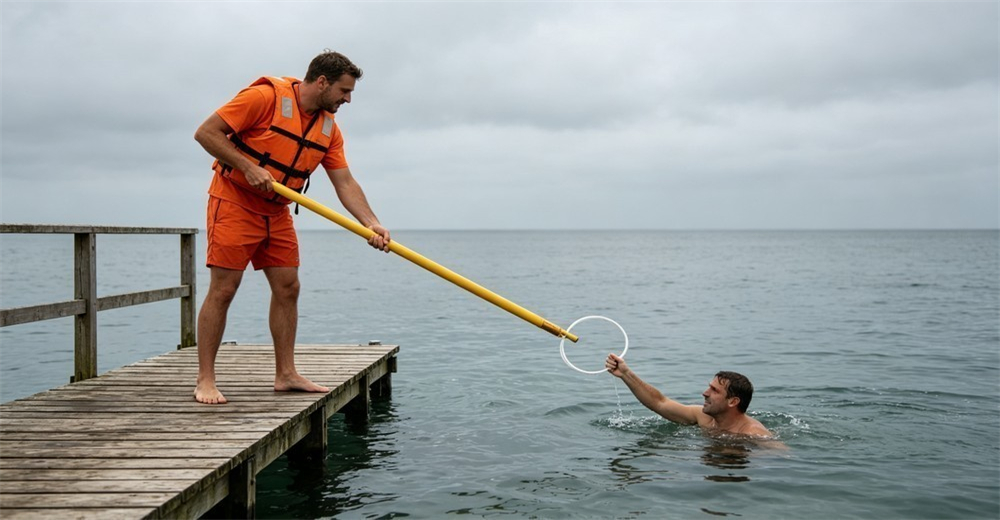
The FRP poles are the lightest and easiest to carry. The 4.5 meter lightweight SY-JSG03 is easy to hold in one hand. The 10 meter SY-JSG02 is heavier because of its length, and the 18 meter SY-SY3GY18 carbon fiber pole keeps weight down despite its length, so one person can carry it to a wide river.
Yes. The HB-SY-JSGG and the SY-SY3GY18 multi-function poles are designed for interchangeable heads, so you can fit a hook, a loop or other accessories to suit the rescue. The dedicated hook poles, such as the SY-JSG01 and SY-JSG02, come with the hook fixed.
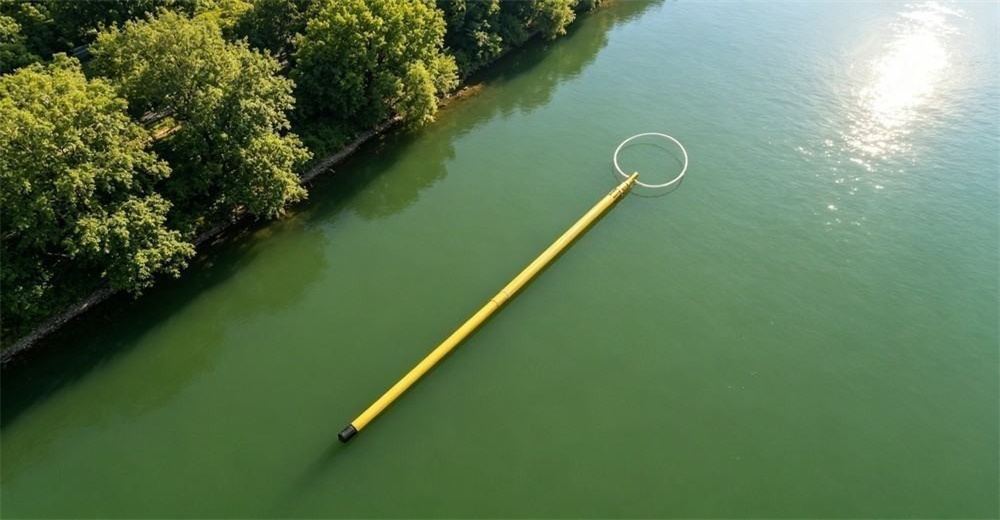
For a normal riverbank, a 5.5 to 6.5 meter pole is enough. For a wide river, a 10 meter pole gives you a safe stand-off. For very wide water, the 18 meter carbon fiber pole is the long-distance choice. Match the length to the widest water you ever have to reach across.
Ready to equip your team and buy a water rescue pole that actually reaches? Send us your requirements and we will put together a matched proposal with competitive wholesale pricing. Tell us your main water width, the models or lengths you need, and any branding or customization you have in mind. We will get back to you with a clear quotation.
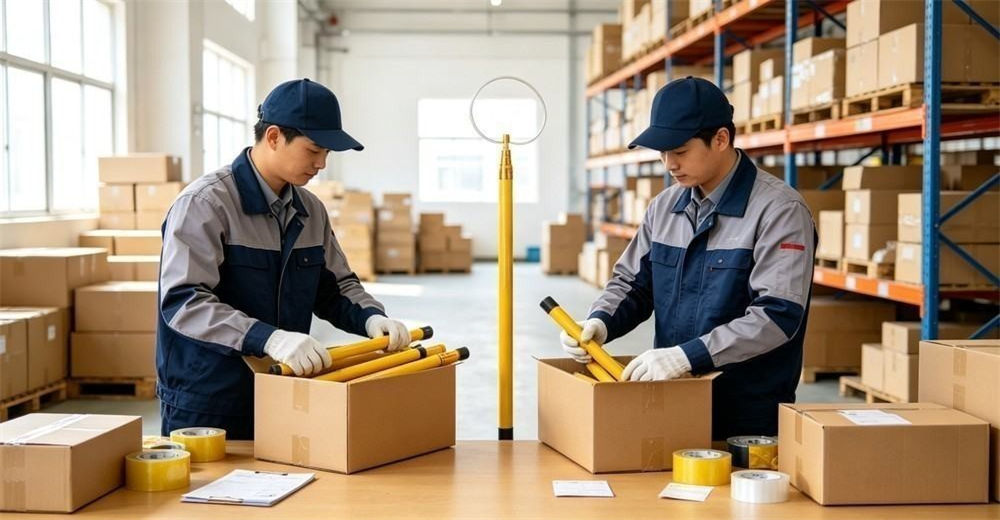
You can also ask us to suggest a complete reach-and-float package. Many buyers start with a message like: "We cover pools and a narrow river. We need a mix of light FRP poles and one long 10 meter pole, plus life rings." From there we build a recommended package with the right model mix, spare heads and accessories for your specific situation.
We do not require you to know every specification before reaching out. If you are not sure which pole fits your river width or pool, just tell us what water or location you work in and how your team operates. We will guide you through the options. There is no pressure to buy. Whether you need a single pole for a school kit or a large program order, we handle both ends of the scale. Email us at info@yrftextile.com today.
 Stainless Steel Life-Saving Pole Multifunctional Head Water Rescue
Professional flood rescue pole made of 304 stainless steel/carbon fiber/fiberglass, with telescopic length of 4.5-12.5 meters, suitable for various water rescue scenarios. Carbon fiber version weighs only 0.8kg, fiberglass version is lighter at 0.65kg, ensuring efficient operation by rescue personnel. Multifunctional head design allows quick replacement, non-slip grip ensures 99% grip stability. Has provided equipment support for 2000+ rescue teams nationwide, successfully participated in 50+ major flood disaster rescue operations.
 High Strength Fiberglass Rescue Rod, Three-Section, Flood Relief
Professional telescopic rescue rod made of high-strength fiberglass/stainless steel, with adjustable length from 2-9.5 meters and 30cm rescue ring diameter design, offering strong weight-bearing capacity. Three-section buckle limiting technology ensures 99% stability, suitable for flood relief, water rescue, and drowning victim retrieval. Fire departments, maritime rescue teams, and emergency response units record over 5,000 successful rescues annually, extending rescue range and improving success rates.
 Three-Point Life Buoy Bracket Rust-Proof Steel Water Rescue
This three-point life buoy bracket is made of professional-grade rust-proof materials, measuring 65×50cm and weighing 1.6kg. Tests show 98% stability under load. The three-point balanced design prevents life buoy deformation, with options of iron, 201 stainless steel, or 304 stainless steel to suit various water rescue environments. Particularly suitable for flood control, water disaster rescue, and temporary rescue point setup, it helps rescue teams improve equipment deployment efficiency, reducing response time by over 30%.
 Blue Rescue Raincoat, Secure Side Buckle Design, Emergency Use
Blue Rescue Raincoat made of EVA eco-friendly material, size 145×130cm, specially designed for emergency rescue. Unique secure side buckle design ensures stability during high-intensity rescue activities, with dual side drawstrings for adjustable fit. Lightweight and portable with excellent waterproof performance, particularly suitable for flood prevention, disaster area assistance, and other emergency situations. Available in white, yellow, blue, pink, and purple to meet various rescue needs.
 Full 11 Inch Mattress Latex Apartment Innerspring Medium Firm
Foldable design Velvet blended fabric Breathable Latex durable mattress Protect spine has good shock absorption and resilience, can effectively absorb the noise and vibration caused by turbulence. Do not wake up by the noise, do not disturb the companions, effectively reduce your turn time. Have a good sleep!
Copyright © Custom Disaster - Relief Bedding: Tents, Sleeping Bags, Blankets All Rights Reserved
the professional team to service !