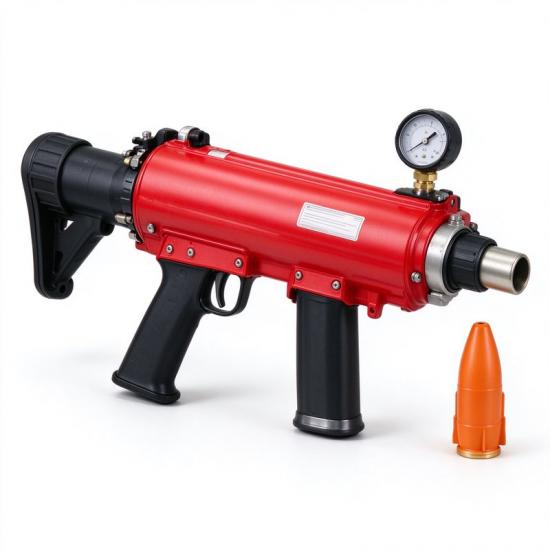
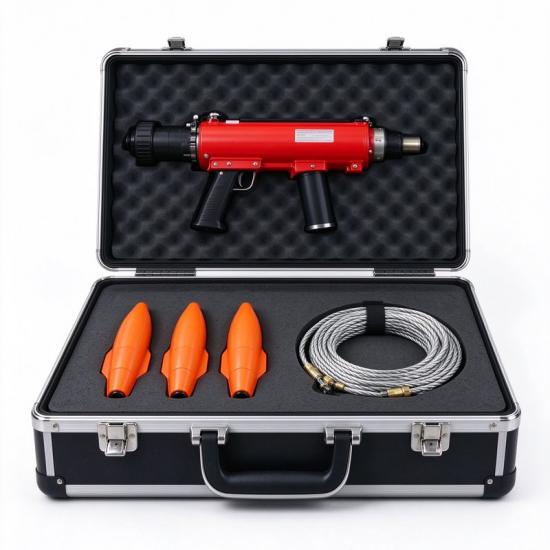
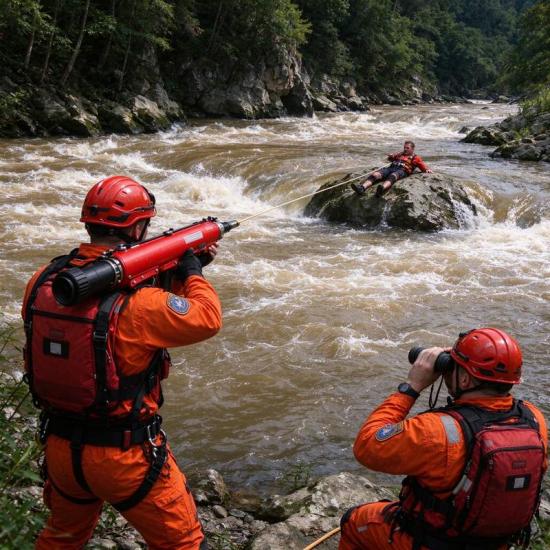
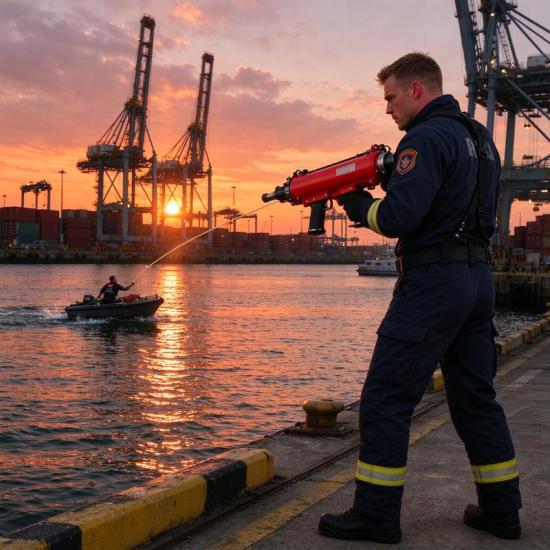
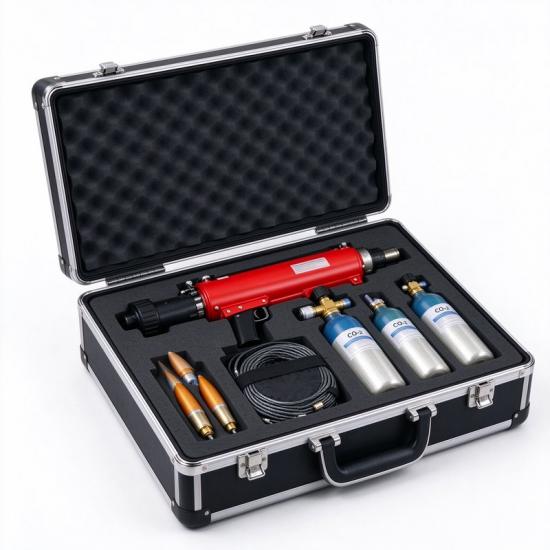
Korean Style Pneumatic Rescue Thrower PTQ20-Y100S70, 20 MPa shoulder-fired launcher. ≥100m land range and ≥70m water range, equipped with auto inflating lifebuoy head and 2000N high tensile rope. Complies with GB/T 27906-2011. Complete aluminum hard case kit. Support bulk wholesale, OEM custom logo for fire, coast guard and flood rescue teams.
Note: Price for reference only. Exact price based on quantity, size, weight and custom details.
model no. :
DP1-ABrand:
YRFmarket price :
$300sale price :
$158.9price range :
30-100/$158.9 100-500/$158.5Color :
Multiple Colorsport of dispatch :
Guangdong/GuangzhouPayment :
TT, Paypal, Western Unionmin order :
30original region :
Made in ChinaLead Time :
5-15days
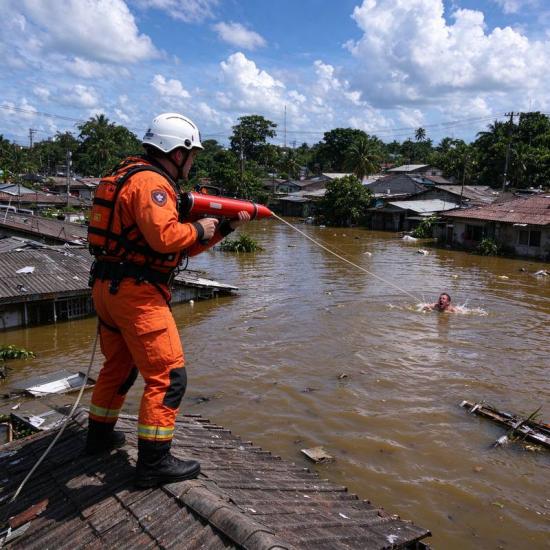
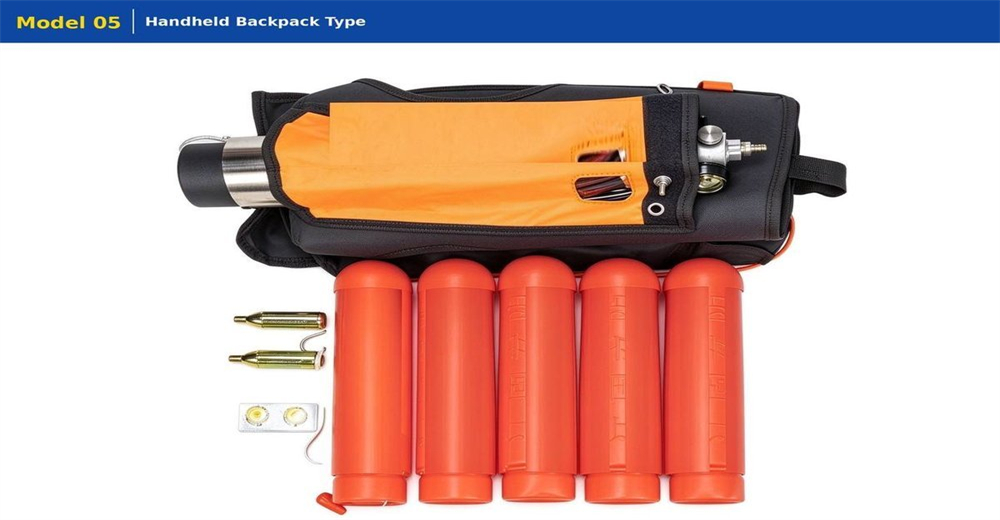
The Korean-style pneumatic rescue thrower is a compact, shoulder-fired water rescue line thrower that delivers a floating projectile 100-120 metres over land and 70-80 metres across water at 20 MPa working pressure. Weighing under 3.5 kg with a 4 mm high-tensile rope rated at 2000 N, this portable rescue thrower bridges the gap where hand-thrown throw bags fall short and rescue boats cannot launch in time.
 |

|
Designed for fire departments, coast guard units, and flood rescue teams that need a reliable, instantly deployable remote rescue buoy for fast-moving water and wide flood channels.
It fires a line or an auto-inflating life ring across the gap in under five seconds. The shoulder-fired layout means no boat, no wade-in, and no open flame. This page explains what it is, how its three firing methods work, and which small team should buy one.
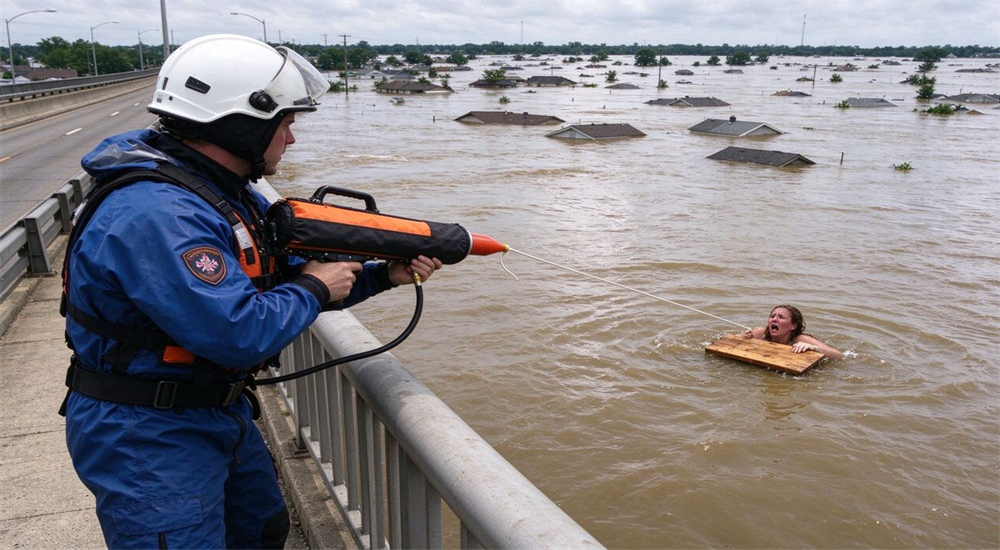
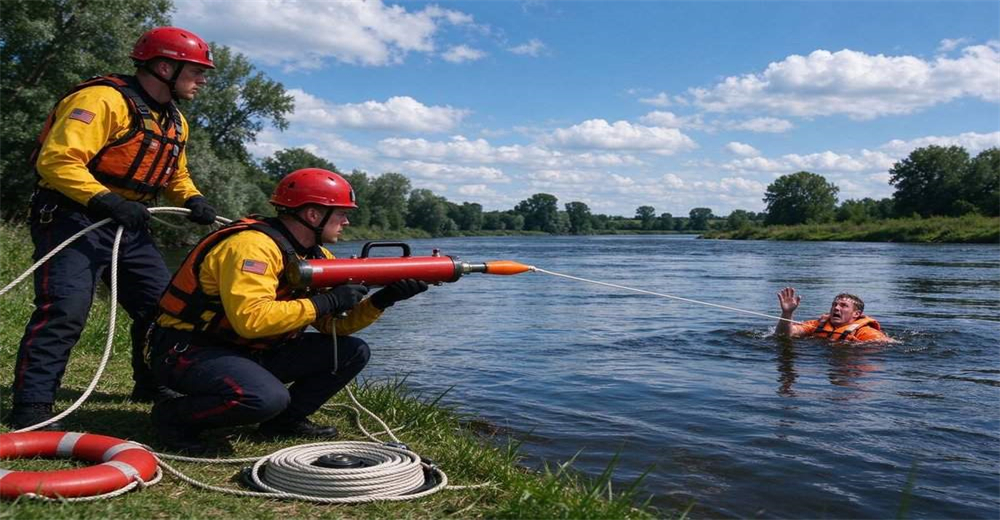
A hand-thrown throw bag reaches about 15 metres on a good day, while a Korean style pneumatic rescue thrower pushes a line or an auto-inflating lifebuoy out to at least 100 metres on land and at least 70 metres on water, more than six times the reach.
We supply Korean-style rescue throwers to fire departments, coast guard units, and flood rescue teams worldwide. Bulk orders ship with custom logo printing, private-label packaging, and OEM configuration support. Reach out for wholesale pricing, a full product catalog, and a quote tailored to your team fleet size.
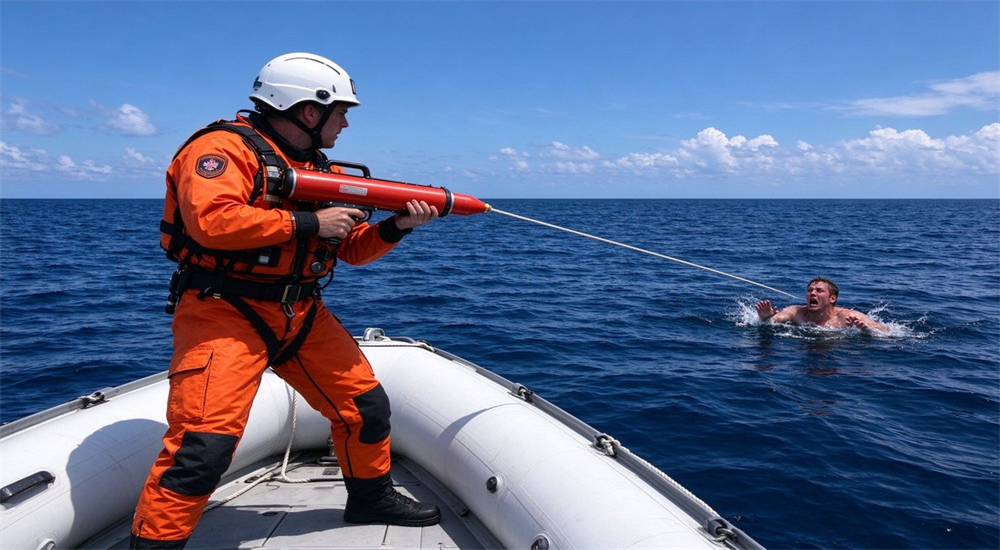
Table of Contents
|
Product Introduction |
Safety Guidelines |
|
Key Specifications |
Maintenance and Care |
|
What's in the Box |
Troubleshooting |
|
Model Comparison |
Rescue Thrower FAQ |
|
How It Works |
Wholesale and OEM |
|
Applications |
About Us: Supplier |
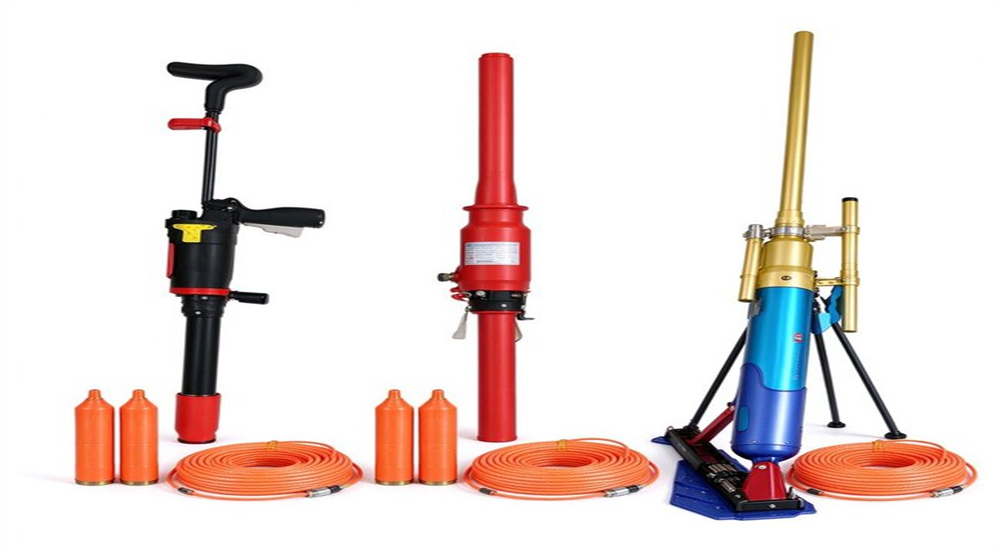
A hand-thrown throw bag reaches about 15 metres on a good day, while a Korean style pneumatic rescue thrower pushes a line or an auto-inflating lifebuoy out to at least 100 metres on land and at least 70 metres on water, more than six times the reach.
The pneumatic launcher runs at 20 MPa (about 200 bar), uses a lightweight shoulder-fired body, and swaps its high-pressure external cylinder in seconds without tools.
It exists for the crews a heavy frame-mounted system leaves behind: a small fire station with a two-person water detail, a township rescue boat, or a marina patrol cart working narrow gaps on a real budget.
Where a throw bag falls short and a heavy anchor-hook class would be overkill, this pneumatic rescue thrower covers the gap. Read on for the three firing methods, the kit contents, and how to deploy by your measured water width.
The high-pressure bottle screws onto the outside of the pneumatic body. When the bottle runs low, you uncouple it, drop in a fresh filled cylinder, and keep shooting.
This is a shoulder-fired tool, not a tripod tool. You brace the stock against your shoulder, sight along the barrel, and pull the trigger.
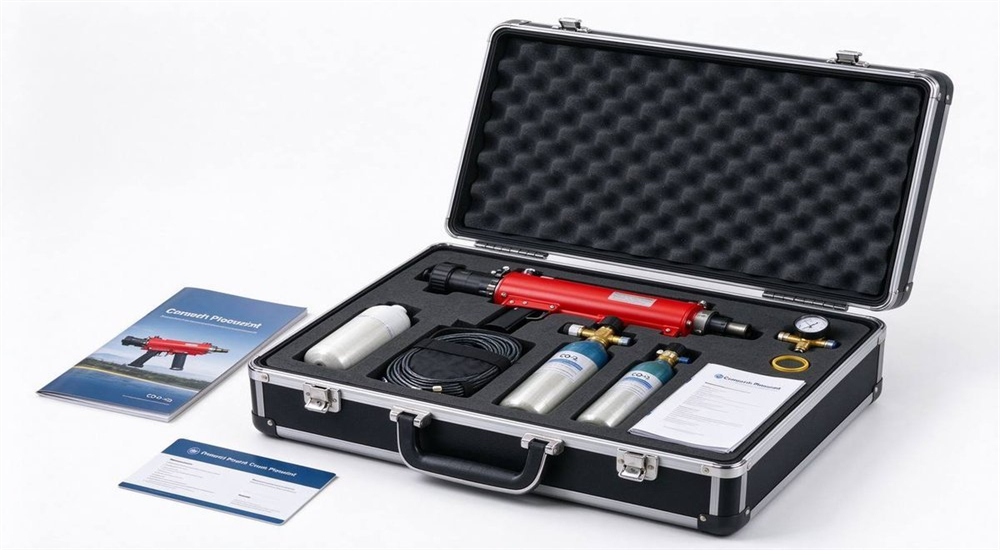
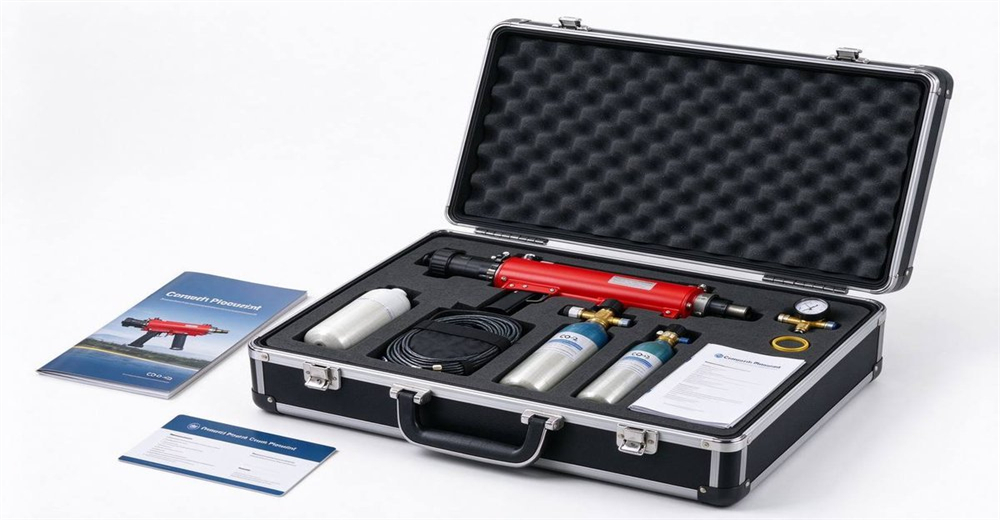
Each Korean style unit ships as a ready-to-use kit rather than a bare gun, so you can drill with it the day the aluminum hard case arrives. The full part list, quantity, and notes are laid out in the What's in the Box section below; check it against your own roll-call before you order.
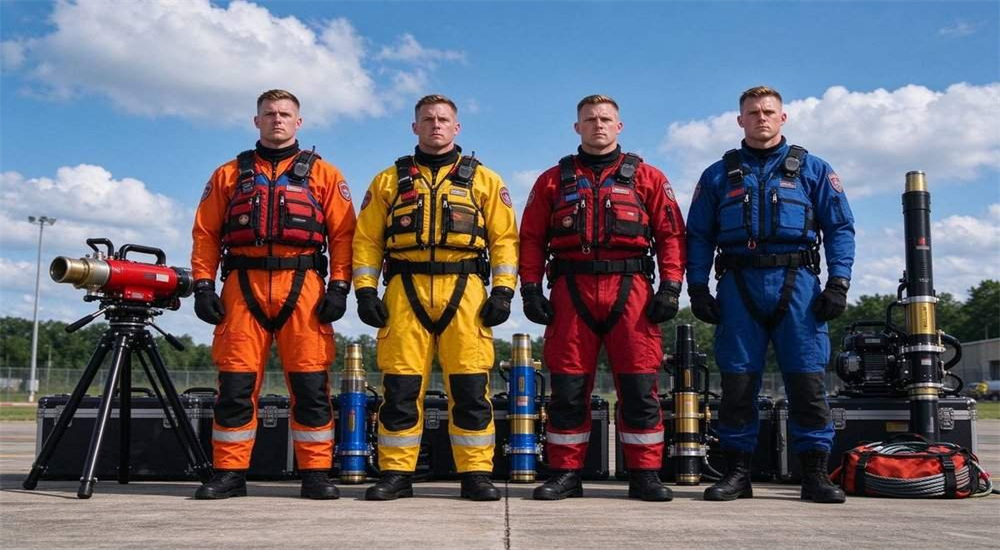
Spec sheets look like a wall of numbers. Below we turn them into decisions: what 20 MPa buys you on this Korean style rescue thrower, why water range is shorter than land range, and which rope goes on which job. The quick-reference table lists the core numbers of the PTQ20-Y100S70 before you read on.
|
Parameter |
Value |
What It Means |
|
Model |
PTQ20-Y100S70 |
The single Korean style model in this family |
|
Compliant standard |
GB/T 27906-2011 |
National standard for rescue throwers (pressure, line pull, inflation time) |
|
Working pressure |
≥200 bar (about 20 MPa) |
High pressure in a compact bottle keeps the body light |
|
Launcher weight |
Lightweight shoulder-fired design |
One firefighter can carry and shoulder-fire it alone |
|
Land range |
≥100 m |
Thin 4 mm rope, low drag in flight |
|
Water range |
≥70 m |
Life ring drag reduces range vs land shots |
|
Working temperature |
-10°C to 45°C |
Never exceed 60°C internal truck temperature |
|
Storage temperature |
-20°C to 55°C |
Spare bottles stored in a cool, dry spot |
The PTQ20-Y100S70 runs at a working pressure of at least 200 bar, about 20 MPa. That high working pressure packs a lot of air into a small bottle, which is exactly how the pneumatic body stays light.
On every shot, water range is shorter than land range. The PTQ20-Y100S70 reaches at least 100 m on land and at least 70 m on water.
The Korean platform ships with a single rescue rope, not two. It is 4 mm in diameter, 120 m long, and rated at least 2000 N, and the same line does both jobs: you swap the head, not the rope. A solid land head rides it to dry ground, and an auto-inflating lifebuoy head rides it across open water.
There is no separate water-only rope on this class. Water range is shorter than land range not because a heavier line is used, but because the buoyant life ring opens in flight and drags like a brake. The table below lists the one universal line by diameter, rated strength, and length.
|
Rope |
Diameter |
Rated Strength |
Use |
|
Universal rescue line |
About 4 mm |
≥2000 N |
120 m; dry ground, bridge decks, flooded streets, and open water |
The water projectile ends its flight as an auto-inflating lifebuoy. On impact with the surface, a water-activated plunger opens the CO2 valve inside the head.
Every Korean style rescue thrower ships as a complete, ready-to-use pneumatic kit in a foam-cut aluminum hard case. This rescue thrower package never arrives as a bare gun. The table below lists the standard configuration so you know exactly what arrives on your dock, and you can cross-check it against your own departmental kit list before you place the order. This makes it ideal for coast guard rescue operations, fire department water rescue teams, and professional water rescue units that need reliable performance in swift water rescue scenarios and flood rescue equipment deployments.
|
Standard Item |
Qty |
What It Does |
|
Launcher body (shoulder-fired, 20 MPa) |
1 |
The lightweight pneumatic shoulder-fired frame |
|
External high-pressure cylinder |
1 |
Scuba-style connector, shipped empty for local fill |
|
Universal rescue rope (4 mm × 120 m, ≥2000 N) |
1 |
One line for both land and water shots; swap the head, not the rope |
|
Auto-inflating life ring head |
1 |
Inflates on water impact in about 5 s |
|
Land projectile head (orange HDPE) |
1 |
Reusable solid head for line shots |
|
Pressure gauge, filling adapter, cleaning rod |
1 set |
Pre-use checks and basic maintenance |
|
Aluminum hard case with foam insert |
1 |
Every part has a cut-out home |
|
English operation manual |
1 |
Safety and servicing steps written out |
Most teams add a few spares with the first order, because a dead spare on scene is worse than no spare at all.
Wear Parts and Reference Replacement Cycle
Some parts on your pneumatic rescue thrower are designed to wear out before the body does, and a worn seal or a stale CO2 cartridge fails on the first real call rather than on the bench. The table below sets a reference replacement rhythm for each consumable.
Treat these intervals as a starting point: crews that train hard run O-rings and ropes sooner, so shorten the cycle when your shot count climbs.
|
Wear Part |
Reference Cycle |
Why |
|
Main O-ring set |
About 12 months or 50 shots |
Pressure seal degrades with age and use |
|
Rope (land or water) |
Retire immediately after a hard shock load; otherwise inspect yearly |
Broken fibers hide under the jacket |
|
Life-ring CO2 cartridge |
Check the date monthly; replace past expiry |
A stale cartridge is the top cause of a dead ring on call |
|
Life-ring bladder |
Per visible damage or annual bench test |
UV and folds slowly eat the material |
|
HDPE projectile head |
Retire on cracks or bent fins |
Cracks change flight and break the seal |
The thrower rides in a foam-cut aluminum flight case, about carry-on size. Outer carton dimensions and gross weight are reference values, confirmed on the order sheet.
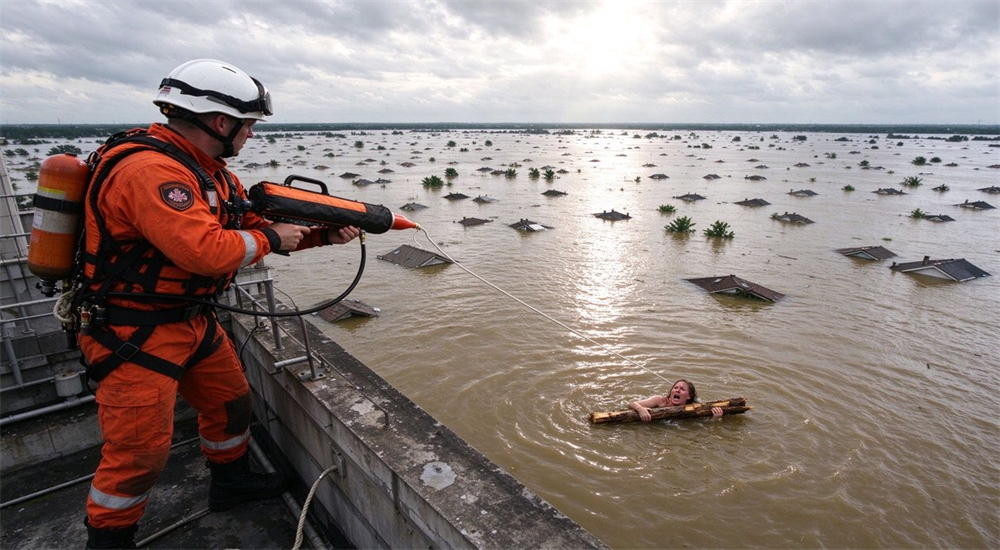
The Korean style family is built around a single model, the PTQ20-Y100S70. It runs on one 20 MPa (about 200 bar) compressed-air platform, uses a lightweight shoulder-fired body, and complies with GB/T 27906-2011. What changes on scene is not the gun, but the firing method you select for the job. The catalog defines three firing methods for this model: land rope throwing, water life-ring throwing, and other general-purpose line work. The table below lines them up so you can match the head to the gap you actually face.
|
Firing Method |
Payload / Head |
Rated Range |
Typical Scene |
|
Land rope throwing |
Solid HDPE land head on a 4 mm line |
≥100 m on land |
Dry ground, bridge decks, flooded streets, boat-to-boat line transfer |
|
Water life-ring throwing |
Auto-inflating life ring head |
≥70 m on water |
Man overboard, open-water rescue, dockside and lake pickup |
|
Other line throwing |
General-purpose line head / optional short hook head |
≥100 m on land |
Low balconies, pier rails, concrete lips, general rope transfer |
A few notes on the table: the water life-ring method is the one man-overboard teams reach for first, because the ring opens on impact and gives the victim something bright to grab; the land rope method is for pulling a working line across a dry gap or a flooded street; the other line-throwing method, with the optional short hook head, is for crews that also need to catch a low ledge rather than drop a ring in the water.
Buyers often ask how this class compares to the American frame-mounted system. The trade-off is straightforward:
Measure the widest water you actually cover, add 30% for wind and current, then pick the head for that gap. You do not buy three different guns; you buy one PTQ20-Y100S70 and swap the head in under a minute once the crew has drilled it.
All three firing methods share the same PTQ20-Y100S70 shoulder-fired body and the same external 20 MPa cylinder. Out of the case, the only thing you swap is the head, not a bigger gun.
Work through these four questions in order and the answer falls out. Buy by your measured gap, not by the headline range on the box.
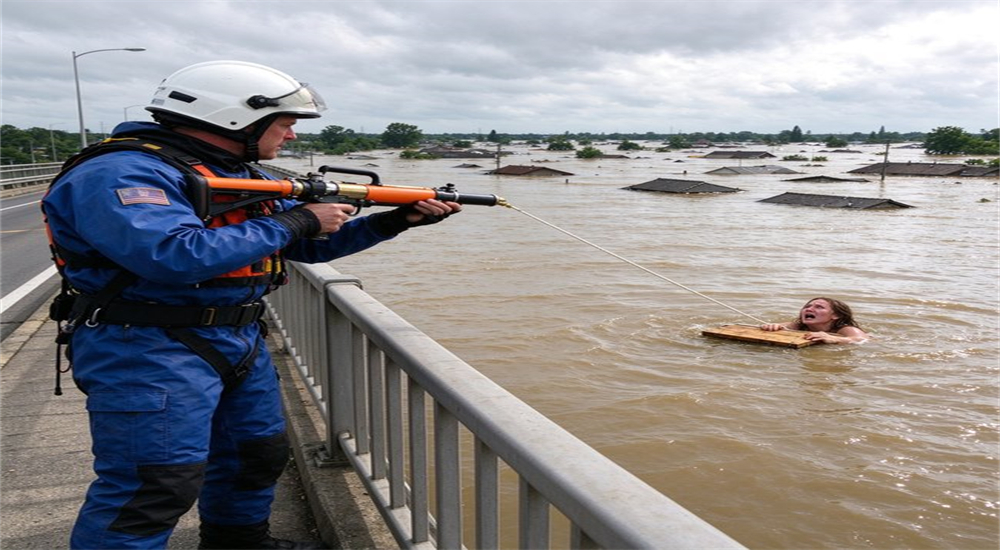
You do not need to be an engineer to operate this pneumatic thrower. In plain words, it is a controlled air blast: stored gas in the external cylinder, a fast-acting pneumatic valve, a copper barrel, and a flying head. No gunpowder, no explosion. The speed of the pneumatic valve is what separates a reliable unit from a cheap one.
The cycle is simple, and most misses come from a tangled rope, not bad aim.
The Korean style rescue thrower is shoulder-fired, and a consistent stance is what turns a nervous first shot into a repeatable one. Below is the drill crews practice on the range before they ever load it on a scene.
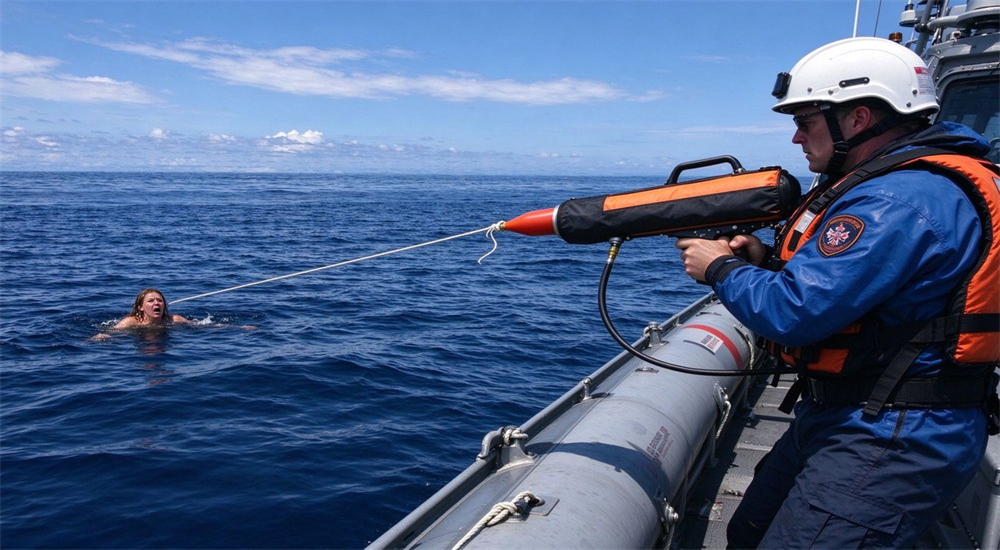
Shoulder stance and aiming. A firm shoulder brace keeps the shot flat; a loose one lets recoil lift the muzzle.
Loading: safety, projectile, and line. Load in the right order so the line pays cleanly on the shot.
Firing and recoil control. A smooth squeeze beats a jerk; lean into the recoil and keep the muzzle down range.
After the shot: rope and projectile recovery. Once the line crosses, the rope handler takes over and pulls the working rope through.
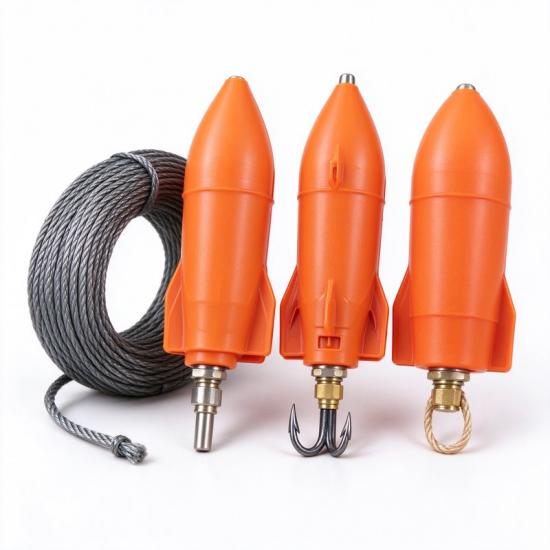
The land projectile is a solid rocket head for dry ground, bridge decks, rooftops, and parking garages, riding the same thin 4 mm line rated at least 2000 N that the water head uses.
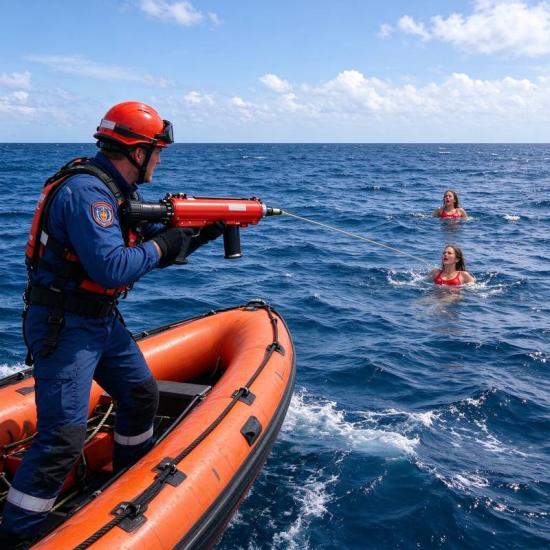
The water projectile fires the flat orange head across the water. On impact, the water-activated plunger opens the CO2 valve and the lifebuoy blooms open in about five seconds.
The short anchor-hook head can be ordered as an optional extra for low edges. It is a compact shaped hook, not a heavy high-strength claw of the kind you find on the American class.
One rescue thrower body, three heads. Payload swaps are the main reason small teams pick this platform, and the whole change takes under a minute once the crew has drilled it.
The most common setup slip is a tangled or under-laid line, not a wrong rope: the 4 mm line stays on for every head, so lay it out in loose figure-eights and confirm the chosen head is seated before you call clear.
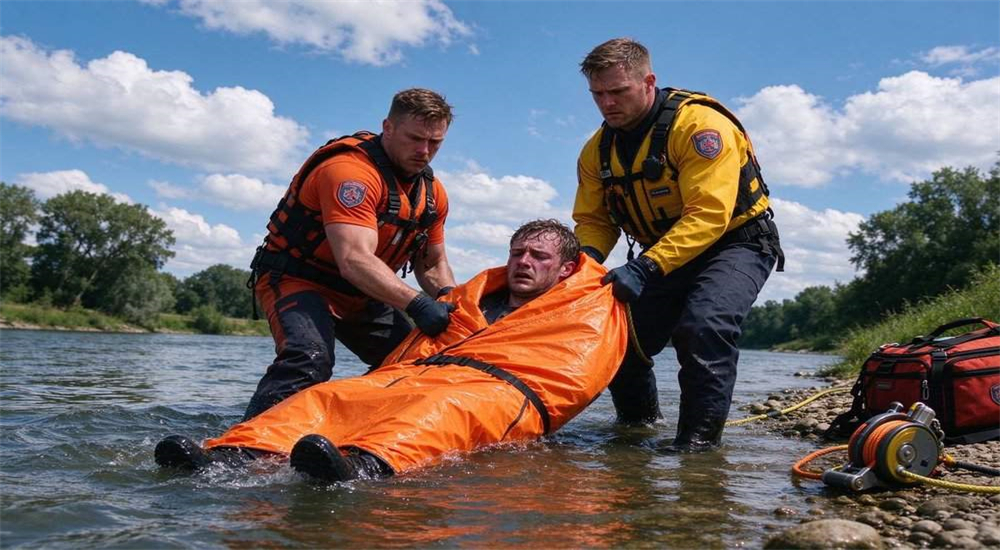
The shoulder-fired Korean unit is built for short gaps and tight budgets, where a heavy frame-mounted system would never leave the storage closet. As a budget-class pneumatic rescue thrower, it targets the teams in the table below that order it most often.
Read the gap column first: it shows the typical water distance each crew works, and that number, not the price tag, should decide whether this rescue thrower fits your call list.
|
Scenario |
Typical Gap |
Recommended Model |
Why It Fits |
|
Narrow river, dock rescue |
Under 70 m water |
PTQ20-Y100S70 |
Lightweight, simple, water ring head |
|
Urban river, mixed calls |
70-100 m gap |
PTQ20-Y100S70 |
Covers mixed land and water shots |
|
Wide flood channel |
Up to 100 m land |
PTQ20-Y100S70 |
≥100 m land range for line transfer |
|
Marina man overboard |
50-80 m from dock |
PTQ20-Y100S70 |
Buoyant life ring, no open flame on deck |
|
Training and drills |
Various |
PTQ20-Y100S70 |
Reusable HDPE heads keep cost down |
A small station with a two-person rescue detail does not need a 120m system. It needs a light tool on the truck for a narrow river or a flooded underpass.
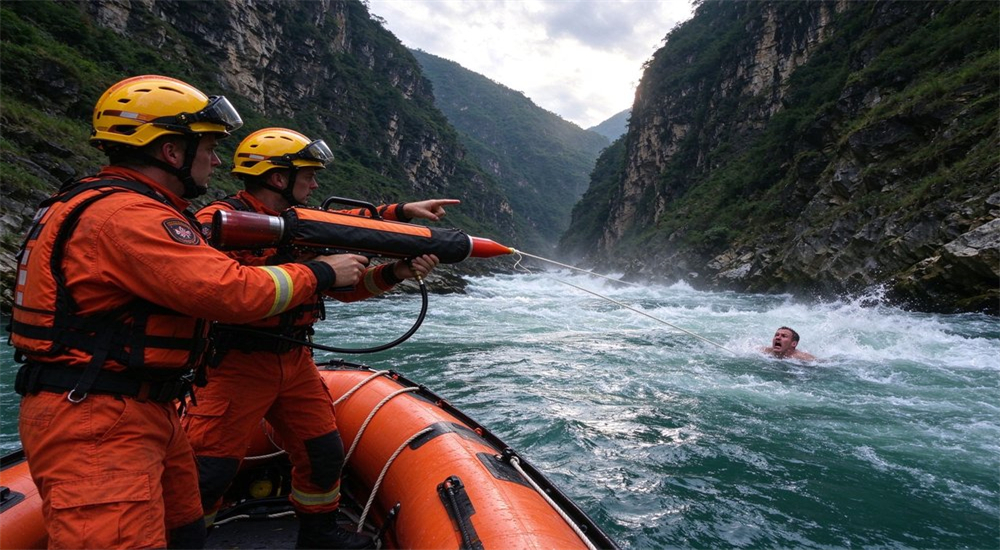
Township brigades cover rivers no one else patrols: shallow near the bank, deeper in the middle, with the victim drifting fast after a summer storm.
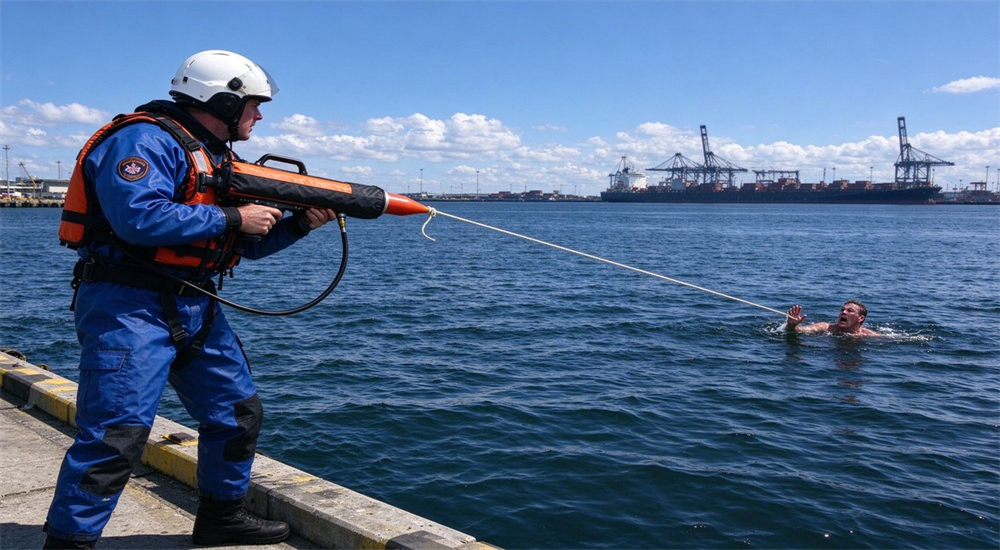
Man overboard usually happens within 50 m of the dock, not out at sea. A hand-thrown heaving line reaches 20 m at best.
A newly formed team does not need a fleet. It needs one reliable tool, trained on by every volunteer, that survives repeated drills. For flood and water-safety planning, teams also review NOAA flood safety guidance and water-safety materials from international relief organisations before the season starts.
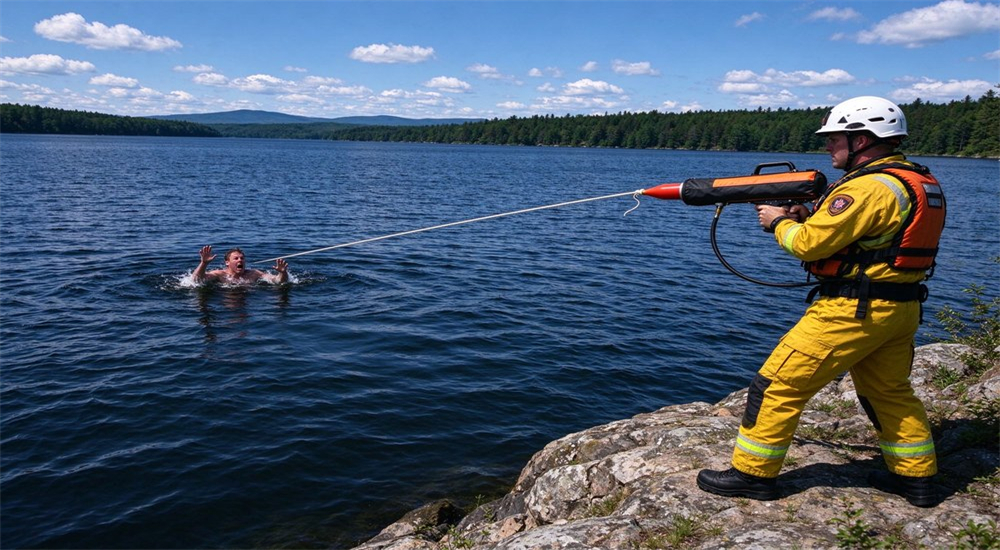
Picture a summer afternoon: a swimmer drifts past the swim buoys, and the nearest bank is about 75 m away. The truck stops, one firefighter shoulders the lightweight unit, the other lays the 4 mm line in loose figure-eights.
The water head goes across, the lifebuoy inflates within five seconds of hitting the surface, and the victim grabs it while the boat finishes launching. That is the call this pneumatic tool is sized for.
Beyond the Korean style rescue thrower, our catalogue covers a full range of water rescue equipment and lifesaving equipment for professional teams. This includes swiftwater rescue gear, emergency rescue equipment, marine rescue equipment, and search and rescue equipment used by first responder equipment procurement teams worldwide. As a wholesale rescue equipment supplier, we offer OEM and bulk pricing for distributors, government agencies, and relief organizations sourcing water safety equipment and CO2 powered rescue thrower systems.
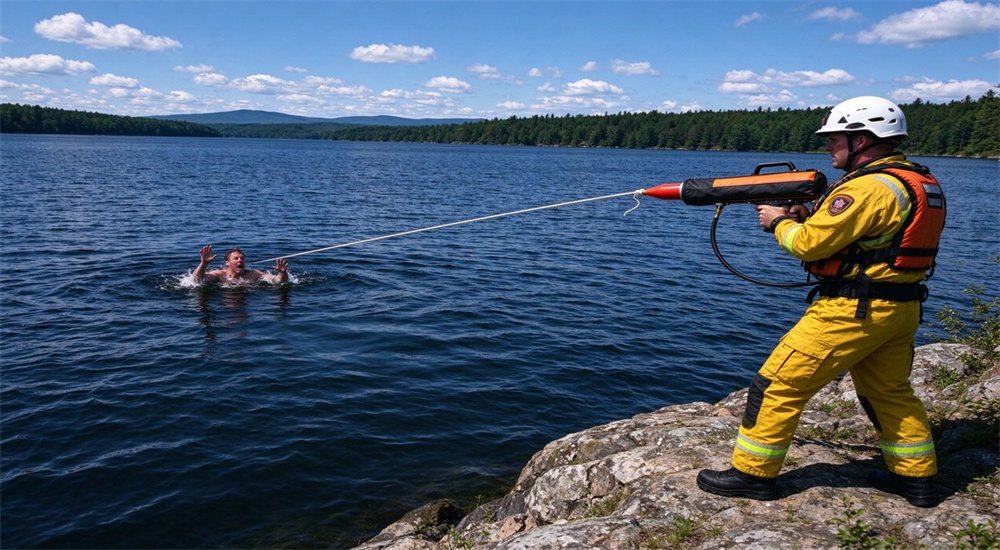
A rescue thrower stores 20 MPa (about 200 bar) of compressed air behind the launching head. It is safe when the drill is , and unforgiving when it is not.
The rules below are the ones every crew member repeats before every shift, and they apply to every pneumatic rescue thrower on the truck, charged or not. They follow standard occupational rescue practice; for workplace rescue setups, see OSHA's guidance on rescue operations.
A full 20 MPa shot from this rescue thrower kicks, but it is manageable when the body is set right.
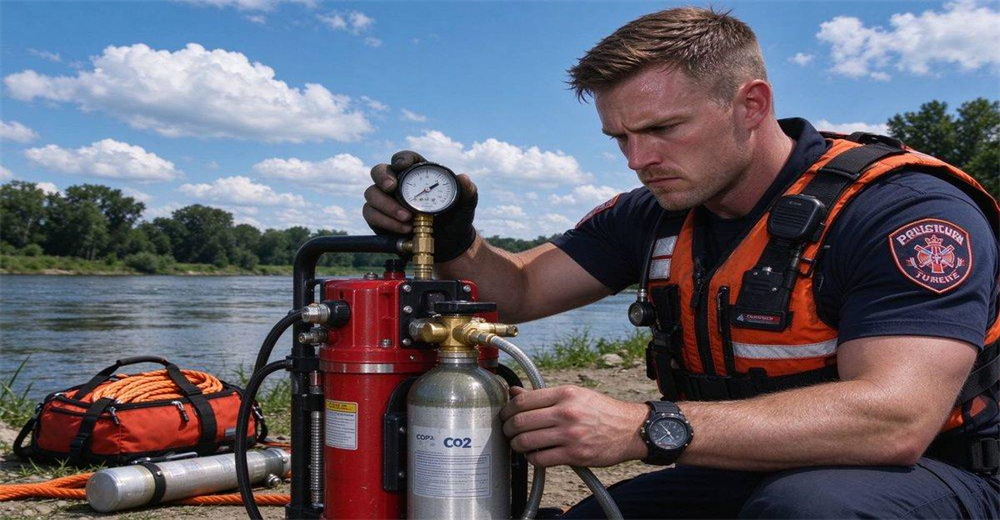
A Korean style pneumatic rescue thrower is a pressure device. Treat this pneumatic tool like an extinguisher, not like a toolbox. The checklists below keep the unit ready, keep the crew safe, and extend the service life of every part.
Run these before every shot; it is the best habit your team can build.
Pressure is the life of the thrower. Read the gauge before every operation, and keep at least two filled spares on the truck.
Rope is the weakest link. Run your gloved hand along the full length after every use, looking for fuzzing, flat kinks, or UV discoloration.
A 90-second pre-use check catches the obvious failures; the monthly and annual lists below catch slow leaks and aged seals on this pneumatic tool. Run the monthly items on the first of every shift month, and book the annual bench test the way you would an extinguisher service.
|
When |
Checks to Run |
|
Monthly |
Gauge reads correctly; O-rings pliable; life-ring CO2 cartridge in date; rope end-for-end inspection; firing pin action tested manually |
|
Quarterly |
Trigger travel smooth; barrel free of grit; case latches and hinges tight; rope coiled figure-eight in a clean dry spot |
|
Annually |
Replace main O-ring set; bench pressure test; replace life-ring bladder per damage; re-grease seals; log everything in the service book |
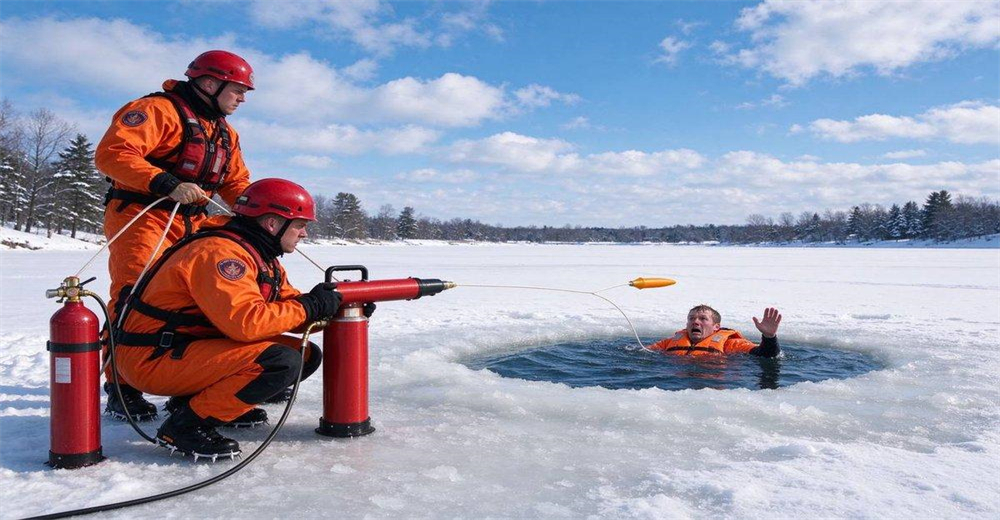
Most field problems on a pneumatic rescue thrower are not mysterious. A short shot, a slow leak, or a stuck trigger almost always traces to one of a handful of causes. The table below maps the symptom to the likely cause and the fix, in plain steps, so your rescue thrower is back in service in minutes.
|
Symptom |
Likely Cause |
What to Do |
|
Range noticeably short |
Low cylinder pressure; tangled rope; wrong angle; strong crosswind |
Top up to 20 MPa; re-coil the rope in loose figure-eights; open the angle slightly; subtract wind from your expected reach |
|
Cylinder will not take air |
Dirty seal; wrong adapter; valve only half open |
Clean the scuba fitting and O-ring; confirm the adapter matches the fill station; open the cylinder valve fully, not halfway |
|
Trigger feels stuck |
Dirt or grit in the mechanism; dried grease; bent firing pin |
Field-strip the trigger per the manual; wipe clean; re-lube with silicone grease; if the pin is bent, bench it and do not force the trigger |
|
Rope tangles on every shot |
Tight coil; kinked rope; handler pulling back |
Re-coil in loose figure-eights; cut out the kink or retire the rope; tell the handler to pay out, not hold |
|
Air leaks from the head or valve |
O-ring hardened or pinched; seal not seated |
Depressurize, inspect the O-ring, replace if cracked, re-seat with silicone grease only |
|
Gauge reads oddly or pegs |
Gauge knocked out of calibration; water in the line |
Replace the gauge; flush the line; never fire off an unknown reading |
|
Projectile comes loose in flight |
Head not clicked home; worn muzzle socket |
Reseat until you hear the click; if the socket is worn, retire the head and bench the launcher |
A shot that lands short is the most common field complaint, and it almost never means the gun is broken.
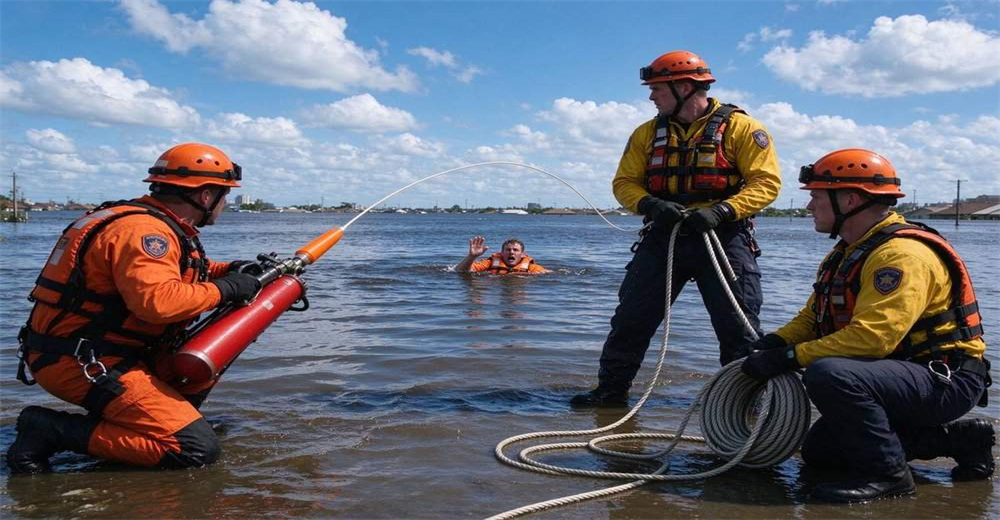
Below are the questions small teams ask us most about the Korean style pneumatic rescue thrower. Every answer is written out in full. If your question is not here, send it through the contact form and we will reply within one business day.
Mostly the name. A rescue thrower is the umbrella term for a compressed-air device that fires a line across a gap; line thrower and rope thrower are the same hardware described by what it sends. On a spec sheet or tender, search all three phrases so you do not miss comparable models.
It is a compressed-air pneumatic device that fires a launching head across a gap on a thin 4 mm line, ending in either a solid land head or an auto-inflating lifebuoy.
Rated range is measured in ideal conditions on a calm day. In field use, expect somewhat less than the rated number once you add wind, current, and a cold cylinder.
Most small teams start with the water payload, because man-overboard is the call they fear most. The land head costs little extra and covers flooded streets and boat-to-boat lines. The short anchor-hook head is available as an optional add-on, not fitted in the standard tray. Buy the water head first, add the land head on your next order.
Yes. The water head uses a water-activated plunger that opens the CO2 valve on impact. The lifebuoy inflates fully in about five seconds and provides enough buoyancy to support an adult in the water. Test the trigger manually during monthly inspection, because a stale cartridge is the number one reason a lifebuoy fails to inflate on call.
Yes. On this external-cylinder pneumatic unit, keep firing until the cylinder pressure drops, then swap a fresh filled bottle. A full 20 MPa pneumatic cylinder supports multiple shots before the gauge falls out of the green. As a rule, run at least two topped-up bottles aboard each truck.
Higher pressure means more energy, so the safety rules are real. The Korean unit needs a firm shoulder brace and a clear 5 m safety zone behind the shooter.
The model is the PTQ20-Y100S70. It covers narrow rivers, flooded underpasses, and dock pickups at least 100 m on land and at least 70 m on water.
Minimum three people to operate safely. A two-person team can manage in a pinch, but a solo operator should not fire a pressure thrower on a rescue scene.
The cylinder fills through a standard scuba-style connector at a local diving shop or gas supplier. We recommend shipping the pneumatic thrower empty and filling locally, because charged high-pressure bottles are dangerous goods. If you need bottles pre-charged, share the destination country when you send the RFQ and we will work through the approved shipping lanes with you.
The PTQ20-Y100S70 complies with GB/T 27906-2011 requirements for pressure, line pull, and inflation time. Test reports can be provided on request. If your tender references GB/T 27906, tell us the model you want to bid and we will share the relevant report pages before you quote.
Operate between -10°C and 45°C. Store between -20°C and 55°C. Never leave a charged cylinder in a closed vehicle in summer, because the interior can exceed 60°C. For winter work, the external-cylinder design holds pressure more steadily than a CO2 cartridge unit.
Quick inspection after every use. Gauge and O-ring check monthly. Full rope and trigger check every quarter. Annual O-ring replacement and bench service. The main body has a long rated service life, while projectiles and life-ring bladders are treated as scheduled consumables. Log every check in the service book.
Replace the rope if you see fuzzing, broken outer fibers, flat kinks, or UV discoloration.
Yes, projectiles are reusable. The orange HDPE land head floats and is easy to retrieve, which lowers cost for training teams.
Exact MOQ and lead time depend on the order size and configuration, so they are written into the contract rather than quoted as a fixed number here; trial orders start small for first-time buyers.
The Wholesale section below covers sample policy, lead time, payment terms, and regional protection in full, or send us your target SKU and deployment date for a direct quote.
Yes. OEM branding is available on the aluminum hard case, the carry bag, and the body. Logo options include laser engraving on the metal parts, which is permanent, and pad printing on plastic end caps, which is cost-effective for bulk. Private-label packaging is supported on mid-to-bulk orders. Tooling and artwork fees are contact us for details.
No, training is not hard. Basic operation is simple: load the projectile, check the gauge, aim, and fire. A new volunteer can be comfortable in half a day of practice.
The Korean PTQ20-Y100S70 is external-cylinder, shoulder-fired, and lightweight, reaching at least 100 m on land and at least 70 m on water. The American body is frame-mounted, adds a folding support rod plus a recoil buffer, and pairs with a high-strength anchor claw for high-rise and cliff work. Pick by job, not by price tag.
This equipment is also called a line throwing device, line throwing apparatus, or rescue line gun in different regions. In marine safety contexts, it may be referred to as a pneumatic line launcher or rescue buoy launcher. All these terms describe the same core function: firing a floating rope to a person in distress from a safe distance.
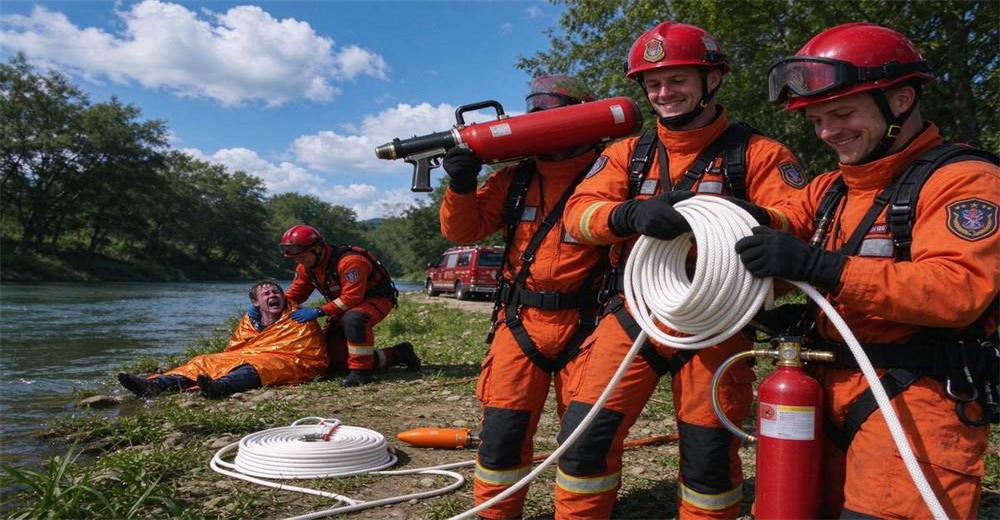
Whether you are a distributor stocking a regional catalog or a fire bureau outfitting several stations, the procurement path for a wholesale pneumatic rescue thrower order looks the same. Exact MOQ and lead time are subject to contract.
Most buyers want to touch the rescue thrower before they commit to a station-level order. We support a sample route so you can run your own drill before pricing the fleet.
OEM and ODM mean we build and brand the unit under your label rather than sticking a sticker on after. On this pneumatic thrower, that branding runs through the frame, the case, and the manual.
Packaging, Shipping, and Regional Protection
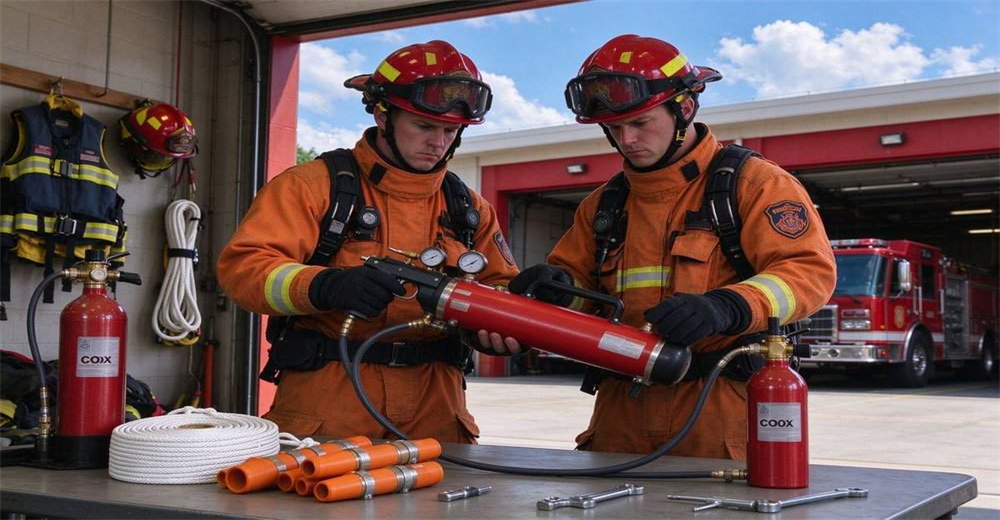
About Us: Your Korean Style Rescue Thrower Supplier
We are a Korean style pneumatic rescue thrower supplier and wholesaler based in China, not a factory you have to chase through a trading office. We stock the shoulder-fired 20 MPa pneumatic platform, external-cylinder spares, and auto-inflating lifebuoy kits that small fire stations, township brigades, and marina patrol carts reorder year after year.
One contact covers the whole buy: the launcher body, filled-cylinder logistics, replacement CO2 charges, ropes, and private-label branding. You do not juggle three suppliers for one kit.
Our range spans pneumatic rescue throwers, floating rescue ropes, throw bags, and auto-inflating lifebuoy kits, serving distributors, fire departments, maritime teams, and training centers. Tell us your measured gap and scenario, and we will come back with a shortlist and an honest price range — no pushy sales talk.
Previous :
American Style Anchor Hook Rescue Thrower | PTQ20-Y125S100 & PTQ7-Y150S110Q55Next :
Wholesale Pneumatic Line Thrower: 100m–640m Rescue Rope Launcher Professional Rescue Launcher, Aluminum Alloy, Fire Fighting Essential
This orange-yellow professional rescue launcher is made of aviation-grade aluminum alloy, with maximum working pressure of 200bar, throwing distance of 150-230 meters on land and 80-210 meters on water. Certified by the National Fire Equipment Quality Standard, it reaches maximum initial velocity of 60m/s. It provides efficient solutions for fire teams, flood control, and water rescue operations, saving lives in critical moments as essential equipment for all rescue teams.
 Customized Life-saving Thrower, High Strength, Long-range Rescue
This professional life-saving thrower is made of high-strength composite materials, with a throwing distance of 50 meters and a load-bearing capacity of 150kg, achieving a 99% rescue success rate. Its orange-yellow design ensures high visibility on water, equipped with non-slip handle and high-strength rescue rope. Specifically designed for flood control, water rescue and emergency disaster relief, it is essential equipment for fire departments, maritime rescue units, water rescue teams and flood control forces, participating in over 200 flood rescue missions annually.
 High-Pressure Pneumatic Rope Launcher, Rescue Special, 120m Range
This high-pressure pneumatic rope launcher uses compressed air as power source, with projection distance ≥80 meters on water and ≥110 meters on land, equipped with 120-meter high-strength rescue rope. The main body weighs less than 3.5kg, offers simple and quick operation, and features a spark-free design ensuring safe use in flammable environments. The accompanying auto-inflating life ring inflates within 5 seconds with buoyancy >8kg. Ideal for flood disaster relief, water rescue, maritime rescue and other complex scenarios, it's essential equipment for emergency rescue departments.
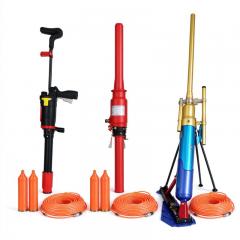 Wholesale Pneumatic Line Thrower: 100m–640m Rescue Rope Launcher
This pneumatic line thrower delivers reliable long‑distance rope deployment for swift‑water, flood, maritime and ice rescue scenarios. Multiple configurations cover short, long and ultra‑long throwing distances. Complete kits include launcher, projectiles, rescue ropes, CO2 cylinders and protective carry case. Quick setup, simple operation for fire, coast guard and emergency rescue teams worldwide. Note: Price for reference only. Exact price based on quantity, size, weight and custom details.
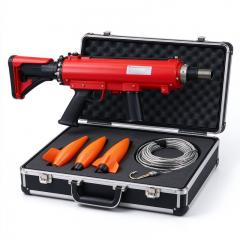 American Style Anchor Hook Rescue Thrower | PTQ20-Y125S100 & PTQ7-Y150S110Q55
American Style Anchor Hook Pneumatic Rescue Thrower, frame-mounted design with recoil buffer. Equipped with heavy-duty anchor claw for high-rise, cliff and maritime rescue. Delivers long-distance rope deployment for swiftwater, urban flood and offshore emergency rescue. Complete kit with launcher, projectiles, rope and protective case. Support bulk wholesale and OEM customization for fire and coast guard teams. Note: Price for reference only. Exact price based on quantity, size, weight and custom details.
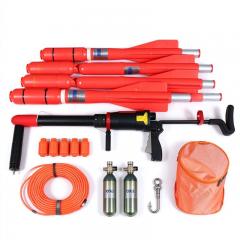 Portable Rescue Thrower | Folding Stock Pneumatic Line Thrower for Flood and Swift Water
Portable folding stock pneumatic rescue thrower with lightweight titanium alloy body, working pressure 6.5MPa. It reaches ≥185m on land and ≥125m on water, equipped with 3 interchangeable projectile heads. Two variants BM06 and BM07 for selection. Single-person operation, ideal for mountain, urban flood and swiftwater rescue. Support bulk wholesale and OEM customization for emergency response teams. Note: Price for reference only. Exact price based on quantity, size, weight and custom details.
Copyright © Custom Disaster - Relief Bedding: Tents, Sleeping Bags, Blankets All Rights Reserved
the professional team to service !