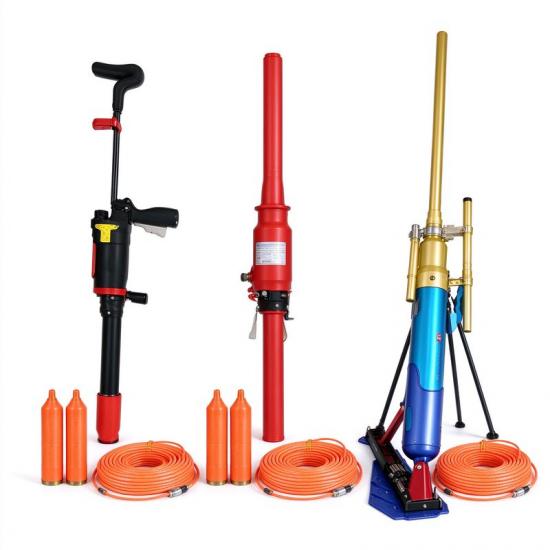
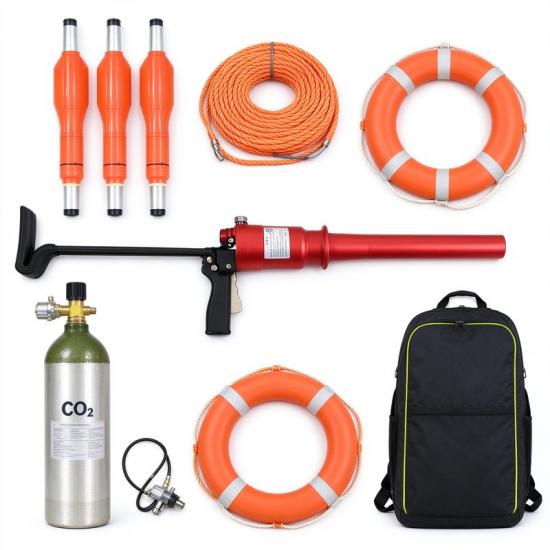
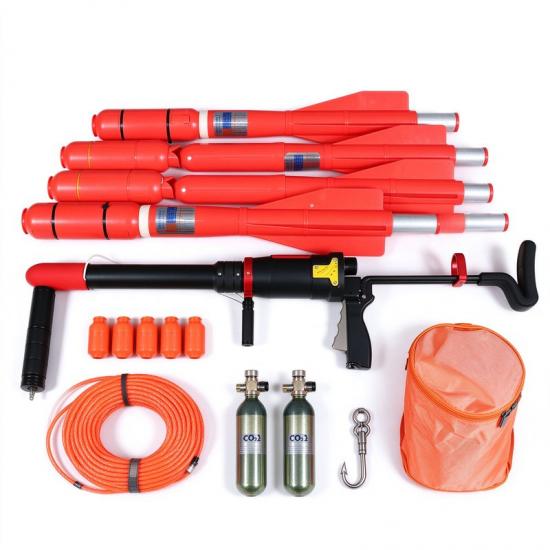
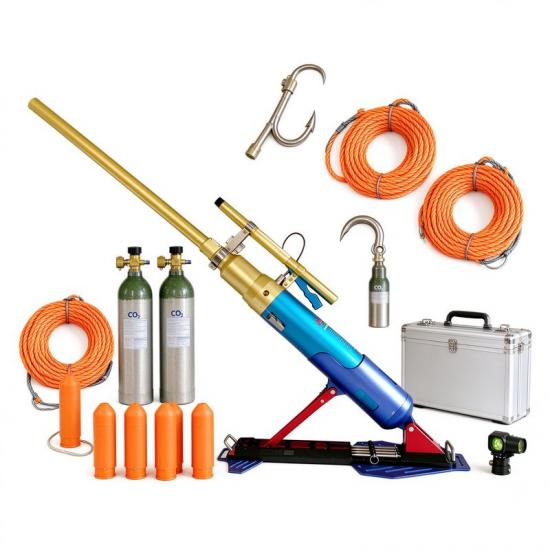
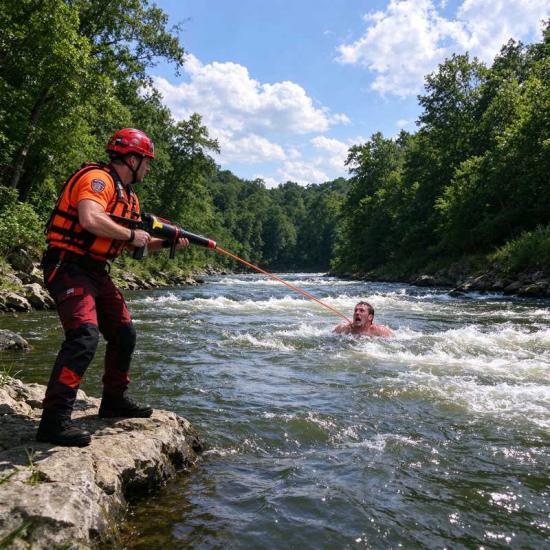
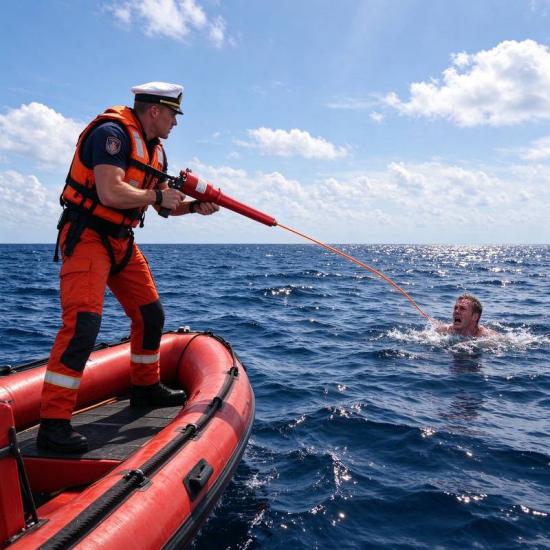
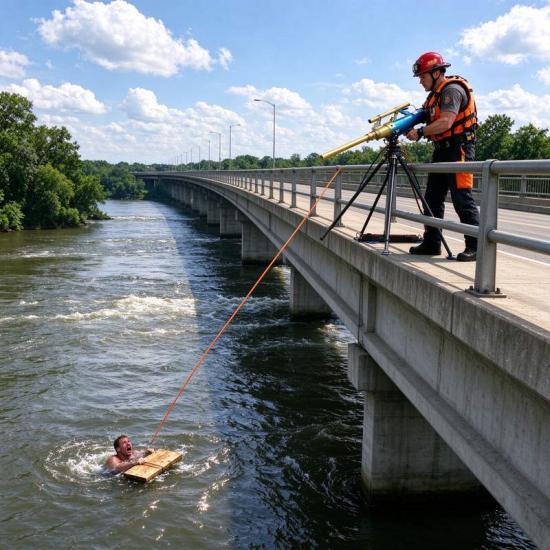
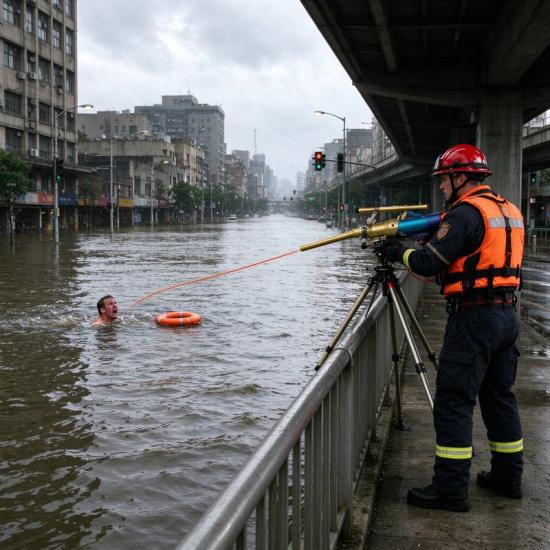
This pneumatic line thrower delivers reliable long‑distance rope deployment for swift‑water, flood, maritime and ice rescue scenarios. Multiple configurations cover short, long and ultra‑long throwing distances. Complete kits include launcher, projectiles, rescue ropes, CO2 cylinders and protective carry case. Quick setup, simple operation for fire, coast guard and emergency rescue teams worldwide.
Note: Price for reference only. Exact price based on quantity, size, weight and custom details.
model no. :
SAA-4-02Brand:
YRFmarket price :
$150.9sale price :
$112.9price range :
30-100/$112.9Color :
Orangeport of dispatch :
Guangdong/GuangzhouPayment :
TT, Paypal, Western Unionmin order :
30original region :
Made in ChinaLead Time :
5-15days
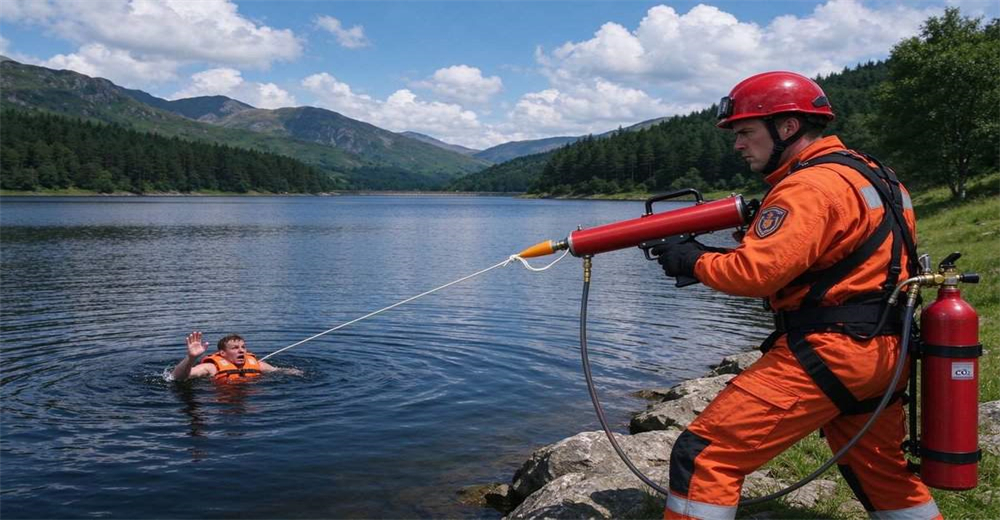
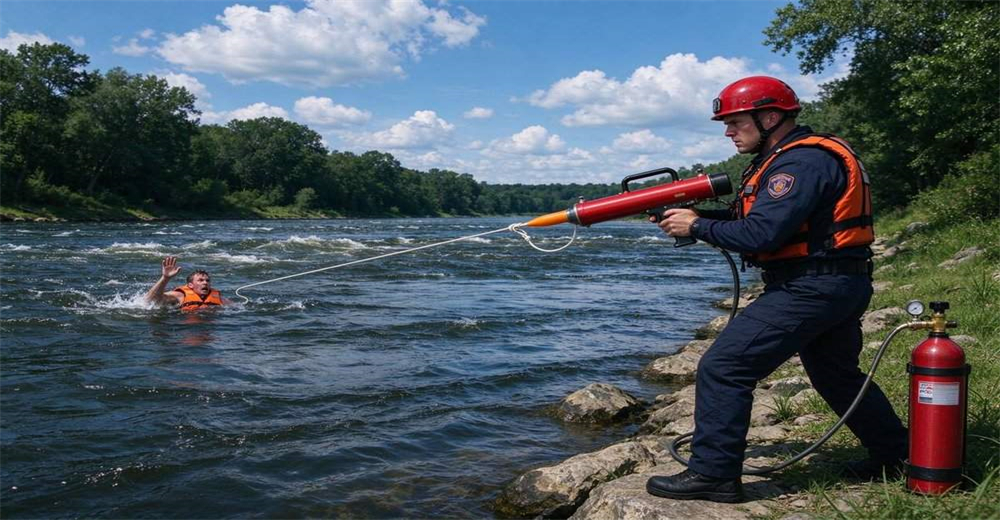
A pneumatic line thrower — a compressed air line thrower and life rescue thrower in one — launches a rope or auto-inflating life ring across water in 3–5 seconds using compressed air or CO2, so rescuers never have to enter the current.
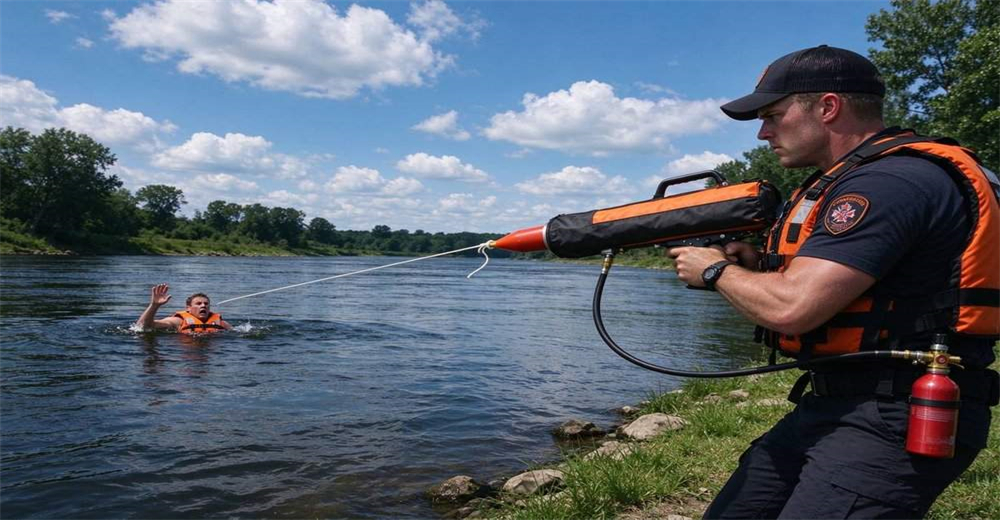


We wholesale 30+ pneumatic line thrower models, from a compact 100m line thrower to a 600m line thrower ultra system, covering five product families: the lightweight Korean style (100–150 m), the American style with titanium anchor hook, the portable folding-stock CO2 unit, the long range pneumatic line thrower class (200–400 m), and the ultra long-range system with.
These rescue rope launchers serve fire departments, coast guard units, emergency bureaus, ports, vessels and government procurement teams worldwide — for river rescue, offshore operations, urban flooding, high-rise access and ship-to-ship line transfer. As a pneumatic line thrower supplier, and as a wholesale supplier of pneumatic line thrower equipment based in China, we match the right class to your actual gap distance, team size and duty scenario, with OEM branding and full accessory kits available on every order.
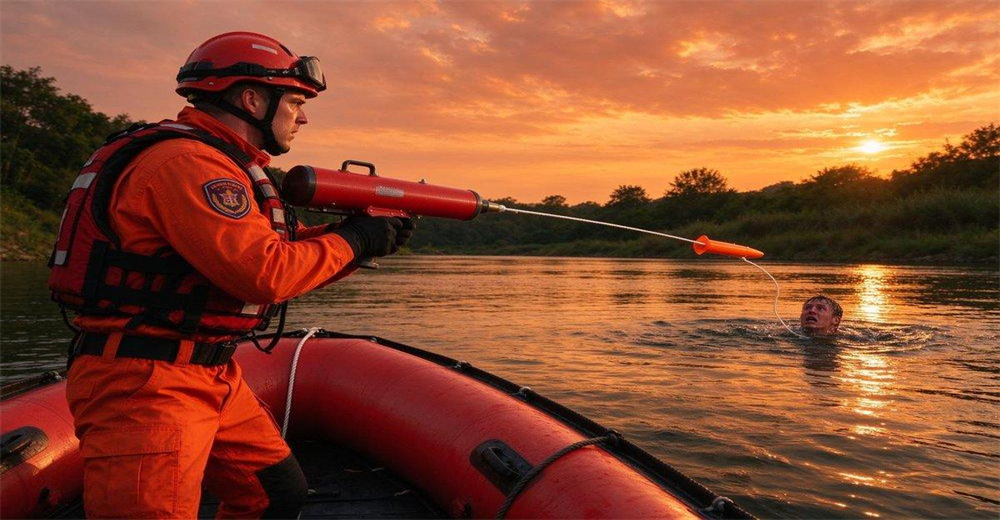
Hand-thrown rope bags reach only 25–35m. A compressed-air system extends that to 100m on the budget Korean series and up to 640m on the ultra class. The rescuer never steps into the current. One operator aims and fires; a rope handler manages the line. This is why every serious water rescue program starts with compressed air rather than muscle power. No open flame, no pyrotechnic storage rules on the truck. If your team bridges gaps over 30m, a pneumatic line thrower is the standard first tool, not a luxury.
Five Product Families for Every Rescue Range
Five product families cover every gap. The Korean style starts at 100–150m for shore-based rescue. The American style adds a 330kg titanium anchor hook for high-rise and ship to ship line transfer work. The folding stock thrower series weighs 3–3.2kg and runs on a 33g CO2 cartridge for solo rapid response. For wider gaps, the long-range thrower bolts onto a 5-angle base, and the 600m ultra long thrower adds a folding level base and precision angle gauge for long shots.
How to Choose the Right Thrower Model
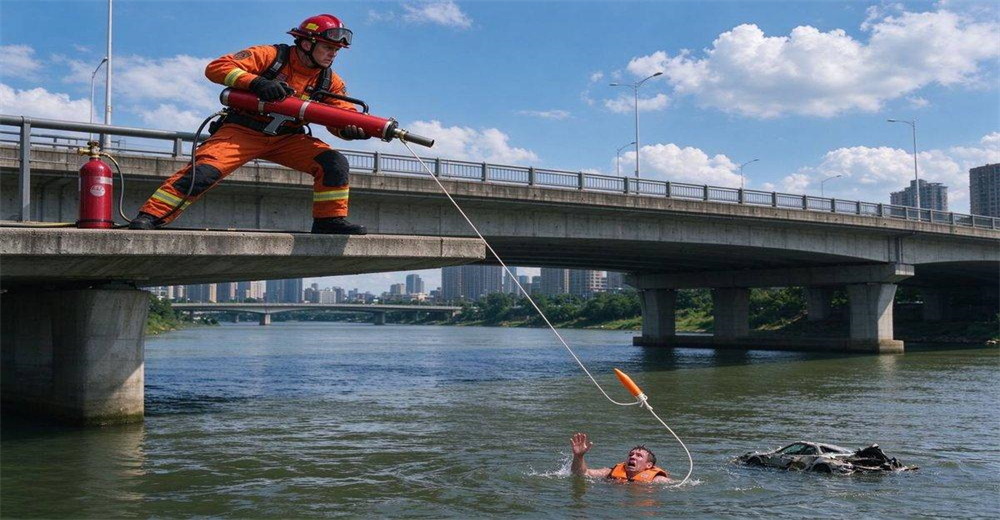
Choosing the right unit comes down to four questions: how far is the gap, how many people are on your crew, what scenarios do you face, and what is your budget. A volunteer river team does not need a 640m system. A coast guard equipment unit cannot rely on a 100m handheld. We help you match the class to your actual duty — also called a marine line thrower — so you spend budget on capability you use. We also supply water rescue life jacket and PFD gear as part of a complete rescue kit.
Wholesale Supply for Government & Global Buyers
We supply bulk wholesale units to distributors, government procurement offices and relief organizations worldwide. OEM options include laser-engraved logo, color-matched carry case and private-label packaging. Certain models carry GB/T 27906-2011 type test reports. We also ship flood emergency kit components alongside launchers for complete disaster-response packages. Tell us your gap distance and team size — we will spec the right package.
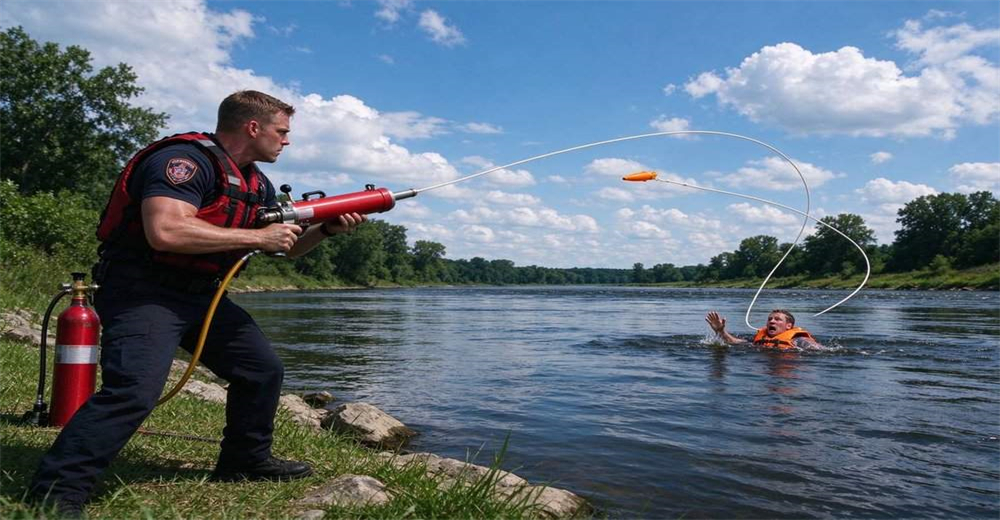
Why Choose a Pneumatic Line Thrower?
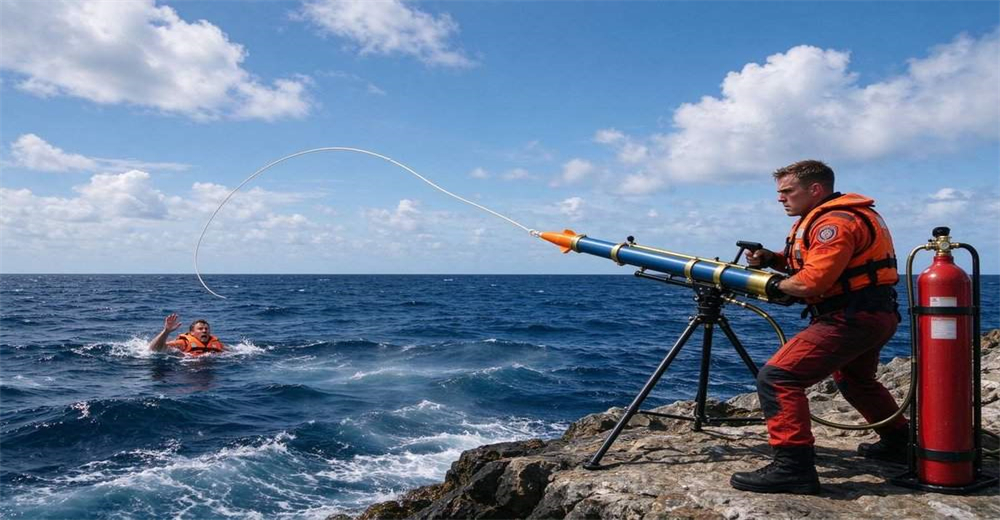
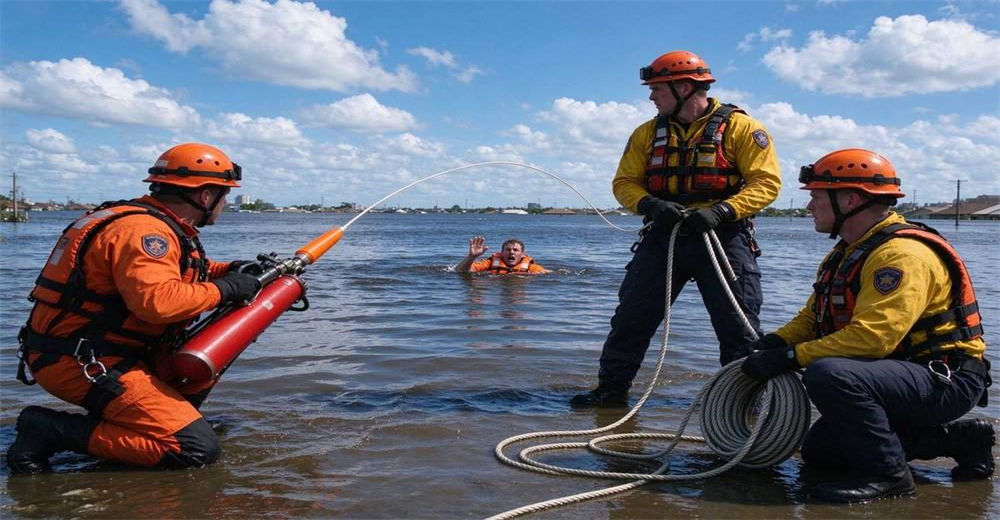
When someone is drowning 50 meters from the bank, a hand-thrown rope bag rarely reaches them. A compressed-air launcher solves this gap. A pneumatic line thrower — also called a water rescue line throwing device — fires a rope or life ring out with compressed air.
It turns a desperate 30-meter hand throw into a reliable 100-meter shot. Fire department rescue crews, coast guard teams and flood response units rely on this emergency flood rescue equipment every day. As a supplier of flood disaster relief products, we see teams choose this rescue thrower because it keeps rescuers out of moving water. This section walks through how the system compares with other rescue tools and why the safety case is so strong.
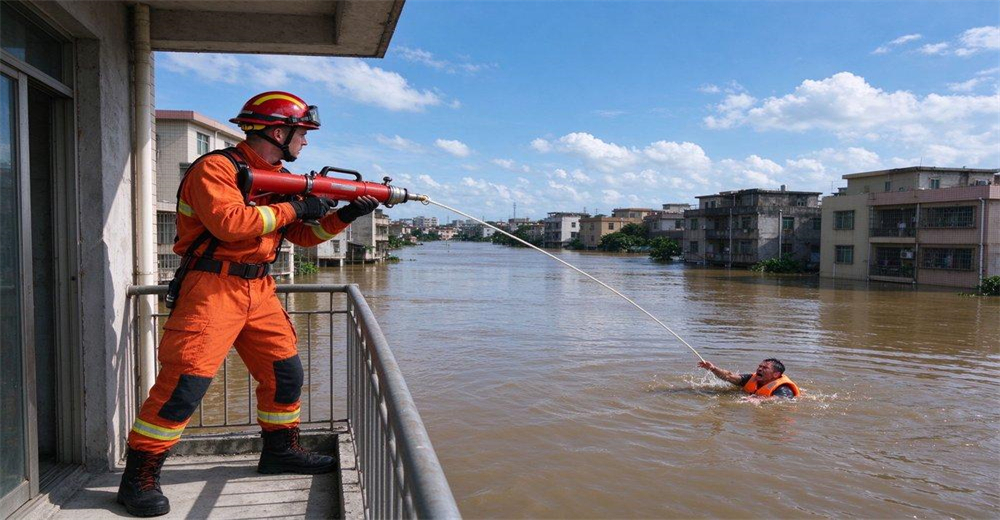
Pneumatic Line Thrower vs Rope Bag: Hand-Thrown Rope Distance, Accuracy and Safety
A strong rescuer can throw a rescue throw rope bag about 25 to 30 meters — far short of what a compressed-air system delivers. That sounds okay on paper. But on a windy day, in dark water, or when the victim is panicking, that distance shrinks fast — while the launcher holds its range.
A hand rope thrower has no real aim beyond 20 m, and this comparison shows why compressed air wins. Throw bag rescue drills work for narrow channels under 20 m, but a hand-thrown rope also lands wherever gravity decides — no comparison to a system that aims from cover. This is why water rescue throw bags are a complement, not a replacement, for a pneumatic line thrower — the compressed-air system that serious teams depend on.
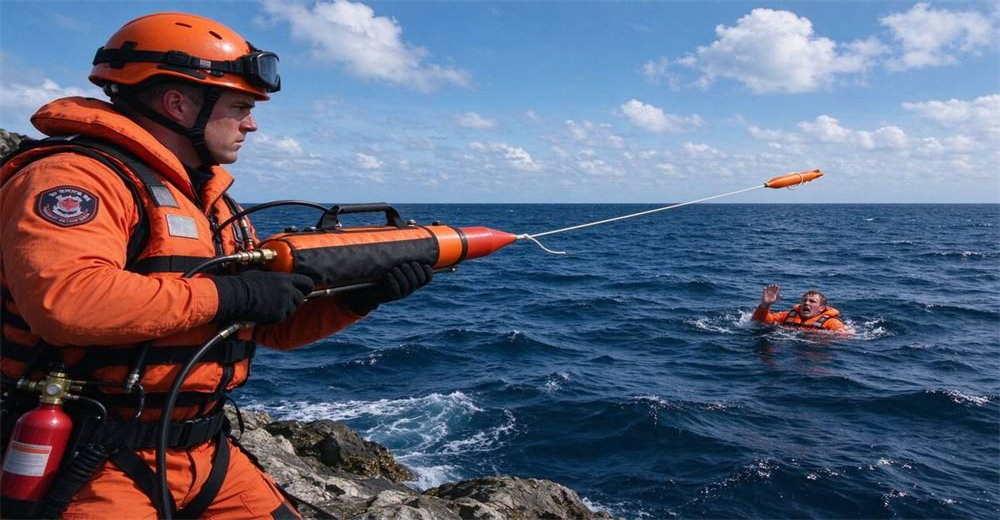
Pneumatic Rope Thrower vs Remote Control Lifebuoy: When to Use Which
A remote control lifebuoy looks impressive on video, but a compressed-air launcher works in more conditions. It drives itself to the victim like a small boat, while the line thrower fires a rope in seconds. But it needs open water, good signal, and calm enough waves to steer. Battery life is also limited, unlike a system that runs on disposable gas.
The compressed-air system does not need a signal or battery on the target end. It fires an auto-inflating ring that hits the water and inflates in about five seconds. The ring gives 8 kg of buoyancy and loses less than 5% buoyancy over 24 hours.
Use the RC buoy if the victim is visible in open water and the weather is calm. Use a shore-based rescue launcher if the gap is wide, the current is fast, or you only have seconds. Many teams keep both, but the pneumatic system is the first tool out in a flood scenario. We also supply remote control lifebuoy units for teams that want both options.
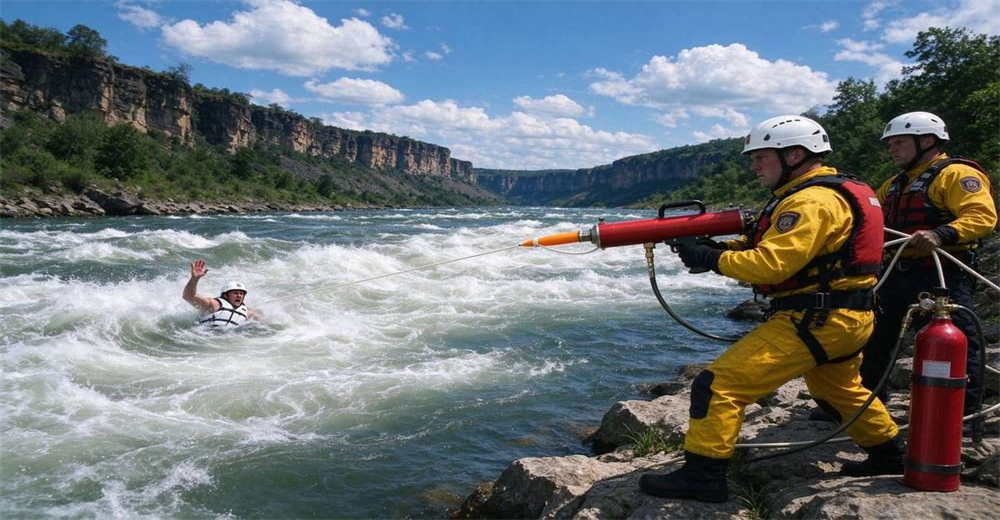
Line Thrower vs Rescue Drone: Cost, Weather and Payload
Drones grab headlines. They do real work in wide floods, but a compressed-air launcher is the reliable daily tool. A rescue drone needs a trained pilot, spare batteries, and a day with light wind — unlike a shore-based thrower. Rain, sustained crosswinds above 10 m/s, or night operations without illumination reduce accuracy significantly. Dropping a rope from 30 meters up also means the victim has to catch it mid-air — a problem the pneumatic system avoids by landing at their feet.
This rescue rope thrower costs a fraction of a drone. One operator can run it. It works in rain, wind and dark. The payload flies in a straight line and lands at the victim's feet. Per USCG small-boat guidance, this rope thrower line transfer tool is still the first call when two hulls meet at sea. Drones are a bonus, not a replacement for a launcher that fires in any weather.
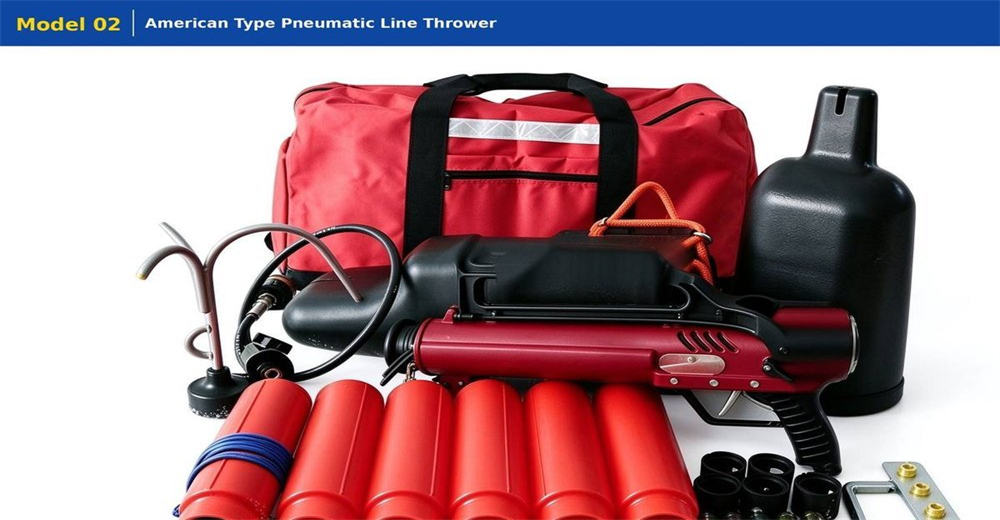
Three Launch Modes: Land Rope / Water Life Ring / Anchor Hook
Most modern throwers are not single-task tools. The same launcher body can swap payloads in under a minute.
Land rope mode fires a 3 mm line rated at 2000 to 3000 N. You use it to get a line across a gorge, between two ships, or up to a balcony. Water life ring mode fires an auto-inflating ring with a 4 to 5 mm floating line rated at 6000–7000 N. The ring inflates on water contact. Anchor hook mode fires a titanium hook that bites into concrete, rock or roof edges. One tool, three rescue jobs.
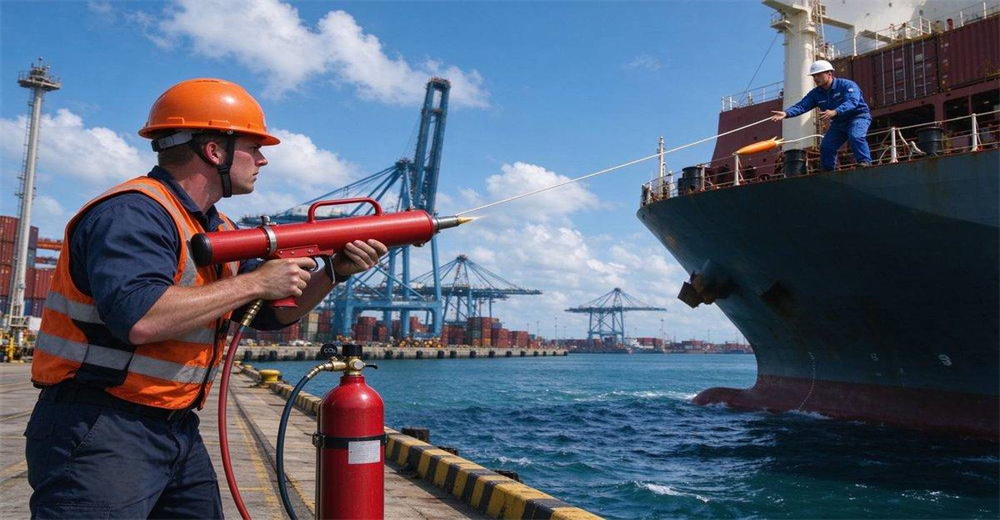
No Open Flame, No Rescuer in Water: Core Safety Advantages
Some older line-throwing gear uses gunpowder or pyrotechnic charges. Those have a flame, a loud report, and a storage headache. A pneumatic line thrower uses compressed air or CO2 instead. No open flame. No explosive handling rules on the truck.
The bigger win is human. With a shore-based system, the rescuer stays on shore, on deck, or on a ladder. The projectile crosses the danger zone. The victim pulls themselves to safety along the line, or waits on the inflated ring until the boat arrives. Per NFPA search-and-rescue guidance, keeping rescuers out of moving water is the first tactic this approach enables.
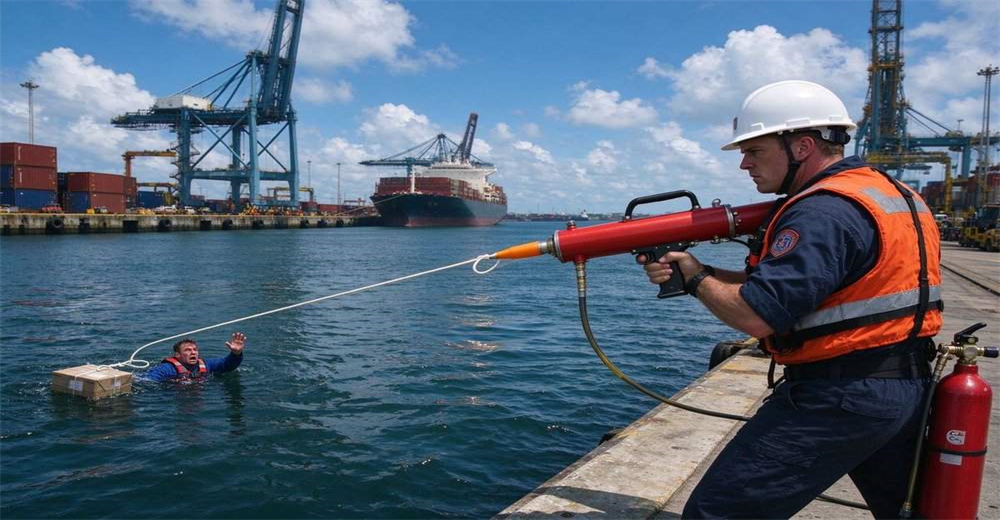
Korean-Style Pneumatic Line Throwers (100–150m)
The Korean style thrower is the entry point for most teams buying their first pneumatic line thrower. It is light, simple, and priced for budget departments. At 2.9 kg, the lightweight T6 model functions as a portable thrower for teams that need a 70m rescue thrower that one firefighter can carry. If you are comparing a korean style pneumatic line thrower with other options on the market, this is the section to start with.
Korean-Style Design: External Cylinder, 2.9–3.5kg Ultra-Light Body
Pick up a Korean-style unit and the first thing you notice is the weight. The launcher body weighs 2.9 to 3.5 kg depending on the model — the lightweight T6 model comes in at 2.9 kg, while standard 20MPa models sit around 3.5 kg. That is less than half of the American-style unit.
The air cylinder mounts on the outside of the pneumatic line thrower gun body. This external-cylinder design sounds like a small detail. It means you can swap an empty cylinder for a full one in seconds on the bank. No tools. No waiting. The external layout also keeps the valve away from the hot barrel, which helps reliability in summer heat. A single-cylinder training teaching rescue thrower benefits from this launcher's field-replaceable design.
Korean Tech Specs: 7–20MPa, 100–150m Land, 70–120m Water
Working pressure varies by model. The lightweight T6 model runs at 7 MPa (70 bar), while standard 20MPa models operate at 20 MPa (200 bar). The lightweight T6 model at 150 m land range suits poolside and dock work. The line-up looks like this, and specs vary by model.
The PTQ20-Y100S70 is the entry-level 100m line thrower: it reaches 100 m on land and 70 m over water at 20 MPa. PTQ20-Y110S70 steps up to 110 m land with the same 70 m water shot.
PTQ-Y125S80Q50 pushes land to 125 m and water to 80 m, and adds an anchor-hook option. The lightweight T6 model runs at 7 MPa and reaches up to 150 m on land and 120 m over water, weighing just 2.9 kg — this is the 150m line thrower that punches above its weight class. Per GB/T 27906-2011, every compressed-air launcher is classed by nominal working pressure.
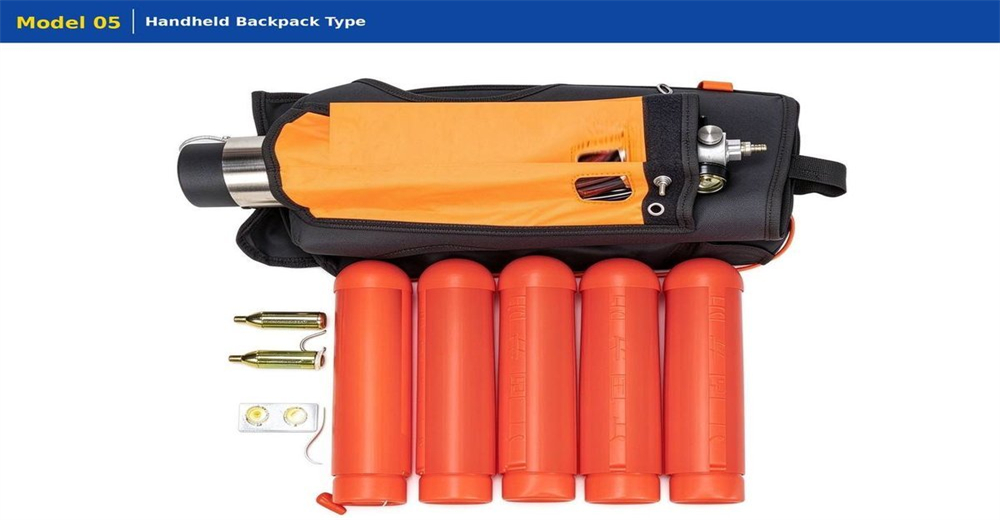
Standard Korean Kit: Launcher, Cylinder, Ropes, Life Ring, Hard Case
Each Korean-style unit ships as a ready-to-use water rescue equipment kit, not a bare gun. You get the launcher body, one external high-pressure cylinder, the land rope, the floating water line, and an inflating life ring. This flood rescue kit bundles everything a shore team needs for a first response.
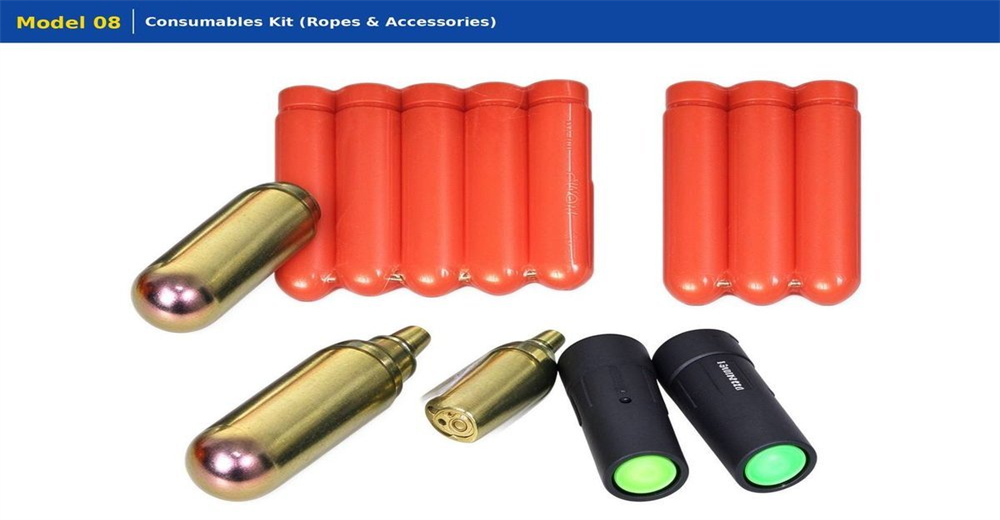
The hard case holds it all. Inside you also find a pressure gauge, a filling adapter, a cleaning rod, and a manual. The included auto-inflating life ring gives 8 kg of buoyancy, so the kit ships as a real flotation aid, not a toy. Spare cylinders are the main consumable. We suggest keeping at least two filled spares on the truck.
Korean vs American: 7 Key Structural Differences
Teams often ask why the American version costs more. The two designs solve slightly different jobs. Here are the seven differences we point out on every call.
One, body weight: the Korean unit is 2.9–3.5 kg depending on model, the American unit is about 13 kg. Two, cylinder: external on Korean, built into a reinforced frame on American. Three, support: Korean has a simple two-point rest, American adds a folding support rod. Four, recoil: American uses a recoil reduction buffer for heavy shots.
Five, range: Korean reaches 100–150 m land depending on model, American reaches 140 m land and 90 to 110 m water. Six, payload: American ships with a titanium anchor hook rated to 330 kg. Seven, use case: Korean is shore and boat-to-boat; American is high-rise, cliff and ship line transfer. Pick the right model by job, not by price tag.
Best for: Budget-Conscious Teams, Short-Range Shore Rescue
Who should buy the Korean style? Small fire stations, township water brigades, marina operators, and new flood response teams. You do not need a 140 m shot if your river is 60 m wide.
The Korean unit reaches 100 to 150 m land and 70 to 120 m water depending on the model, which covers most urban rivers, lakes and poolside rescue drills. At 2.9–3.5 kg, one firefighter can operate it while another holds the line — a lightweight training kit for academy drills. It is also the easiest wholesale SKU for stocking distributors, because it fits 80% of first-time buyers. If your budget is tight and your rescue gaps are short, the Korean style is the right first purchase.
American-Style Titanium Anchor Hook Thrower
The American style is the heavy hitter of the compressed-air family. It trades portability for range, payload and a titanium anchor hook that bites into concrete and rock. This is the tool for ship-to-ship line transfer, high-rise rescue and mountain cliff work. When you need a titanium anchor hook thrower, this family is what you will land on as a coast guard equipment buyer.
American Design: Folding Support Rod, Recoil Reduction, 13kg Frame
Pick up the American-style unit and you feel the difference immediately. At 13 kg, it is not a one-hand tool. The design gives back that weight in control.
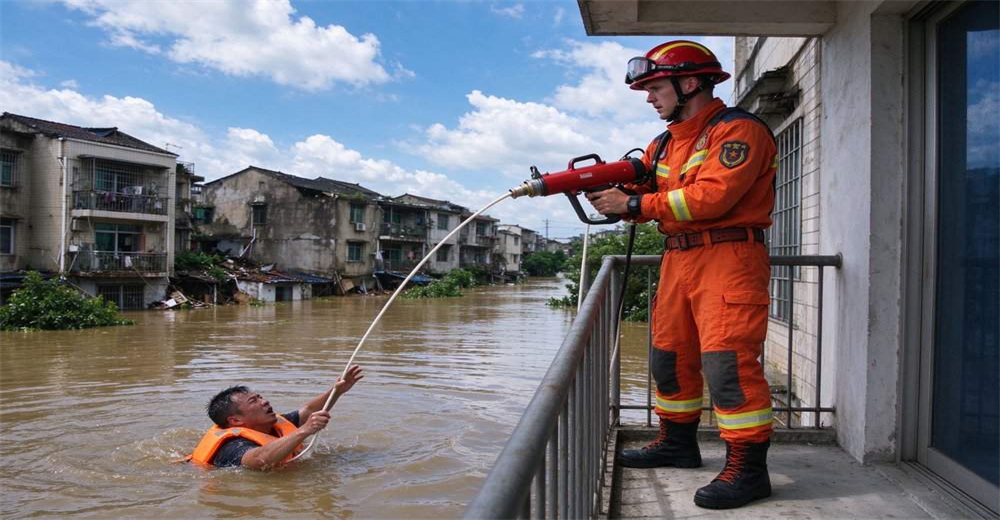
A folding support rod flips down to rest on the ground, a rail or a hull deck. The operator leans into the stock and aims from a stable position. A recoil reduction buffer absorbs the kick of firing a heavy 1.8 kg payload. That matters at 140 m, where a flinch at the trigger drops the shot ten meters short. Per SOLAS, line-throwing appliances on ships must hold a predictable range under load, and this stable layout is how the American-style unit meets that expectation in the field.
Titanium Anchor Hook: 330kg Load, High-Rise and Mountain Climbing
The headline feature is the titanium anchor hook. It is not a steel nail. It is a shaped titanium claw that catches on concrete edges, rock cracks, window sills and roof lips.
Rated load is 330 kg. That means a full-size rescuer on a rope, plus the victim, can hang off it without a second thought. Shoot this launcher up to a fifth-floor balcony and you have a fixed high point in about four seconds of flight. This is the reason an American style titanium anchor hook thrower shows up on cliff rescue teams and urban high-rise units. The same hook also works as a ship-to-ship anchor line in tight harbors. A double explosion-proof alloy tube marine thrower variant handles hazardous deck environments.
American Tech Specs: 20MPa, 125–140m Land, 90–110m Water, Anchor 155m
The American line-up shares a 20 MPa working pressure, same as the Korean family, but pushes the numbers further. PTQ20-Y125S100 reaches 125 m land and 100 m water. PTQ20-Y140S90 steps up to 140 m land with a 90 m water shot.
PTQ-Y135S120Q85 is the full-spec model: 135 m land, 120 m water, and an 85 to 155 m anchor-hook shot depending on the angle. Flight time stays in the 3 to 5 second window. The land rope is 3 mm at 2000 to 3000 N. The water line is 4 to 5 mm, floating, rated 6000–7000 N. This is the coast guard rescue thrower class for open-water work.
Three Use Cases: Rope Launch / Life Ring / Anchor Hook
Like the Korean unit, the American body swaps payloads. But the heavier frame opens up longer shots. Rope launch mode gets a line across a 120 m shipping channel. This is the classic marine line thrower move when two vessels cannot get a gangway across.
Life ring mode fires the auto-inflating ring payload with the 8 kg buoyancy, good to 90 to 110 m over open water. Anchor hook mode fires the titanium claw up to 155 m on a high-angle trajectory, turning the tool into a belay anchor on a cliff or building. Most American-style buyers order all three payloads up front, because half the value is the swap-in seconds.
Standard American Kit and Accessories
An American-style kit ships in a reinforced aluminum case sized for two operators to carry. Inside you get the launcher body, the folding support rod, the high-pressure cylinder, three payloads (land rope, inflating ring, titanium anchor hook), a pressure gauge, filling adapter, and the manual.
Spare life rings are the consumable to stock. Distributors ordering in volume often bundle American-style bodies with spare rings and anchor hooks, which is how most wholesale pneumatic thrower deals close. We also suggest a backup anchor hook, since the claw can bend if it hits a rock edge at the wrong angle.
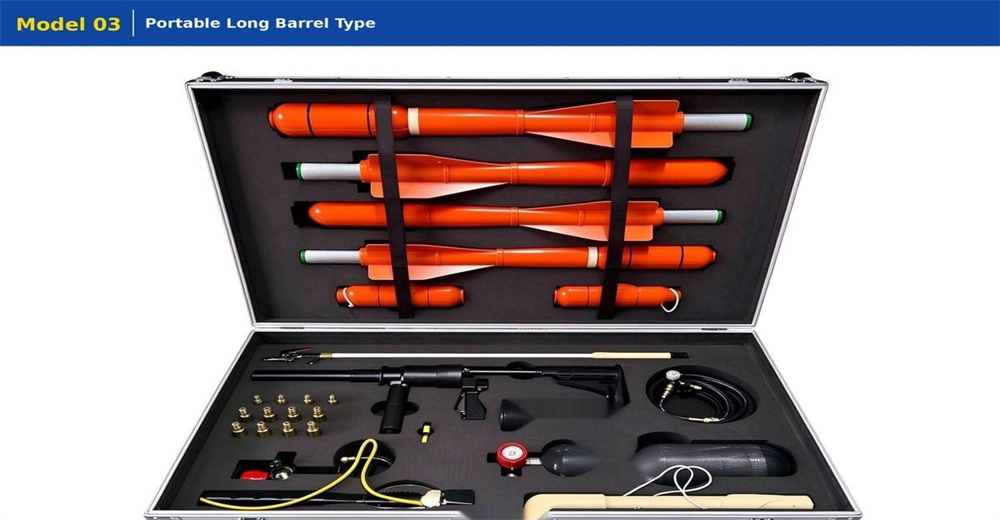
Portable Folding Stock Thrower (CO2 / Air)
The portable folding-stock family is built for the operator who runs alone. Folding stock, 3–3.2 kg body, and a choice between an external cylinder or a 33 g CO2 cartridge. Range goes further than you would expect from this compact form factor. It is the portable thrower that rapid-response teams ask for by name. At 3 kg, it hikes in where a 13 kg frame cannot go.
Portable Design: Folding Stock, 3–3.2kg Body, Single-Person Carry
Where the American unit weighs 13 kg, the portable series sits at about 3–3.2 kg. The stock folds forward over the barrel, so the whole tool slips into a backpack or a side pouch on a rescue vest. This handheld water rescue line thrower and portable single person throwing equipment is the go-to for solo water rescue calls. At 3 kg, it qualifies as a mini gas cylinder handheld thrower kit for river patrol teams.
One operator can hike this unit to a riverbank, a flooded rooftop, or a cliff edge and be ready to fire in under 30 seconds. No crew needed to carry the case. This is the folding stock thrower pneumatic line thrower that wildland fire crews and swift-water teams carry on foot. Trade-off: the lighter body means recoil feels sharper, so proper shouldering matters. Range and accuracy, though, stay impressive.
Two Power Sources: External Cylinder vs 33g CO2 Cartridge
Portable buyers have a choice. Pick an external high-pressure cylinder, or use a disposable 33 g CO2 cartridge. The external cylinder route gives you a true compressed-air feel, with adjustable pressure and full power on every shot. It is the better choice if you have a filling station at base.
The CO2 route is the CO2 powered thrower option: screw in a 33 g cartridge, fire, swap. No filling gear needed on site. Cartridges are cheap to ship and store — a 4 projectile large capacity handheld rescue thrower kit ships well this way. We usually tell teams near a base to go external, and teams that hike in, deploy from boats, or run drills in remote areas to keep CO2 spares in the pack.
Portable Tech Specs: 6.5–7MPa, 150–185m Land, 100–125m Water
Here is the surprise. As a portable pneumatic line thrower that runs on either external air or a disposable 33g CO2 cartridge, this co2 pneumatic line thrower series out-ranges the 20 MPa Korean units on land at only 6.5–7 MPa and 3–3.2 kg. PTQ7-Y150S100 reaches 150 m land and 100 m water. PTQ6.5-Y180S120Q50 pushes to 180 m land, 120 m water, and adds a 50 m anchor-hook shot.
How does this 6.5–7 MPa portable beat a 20 MPa gun on range? Longer barrel, lighter projectile tuning, and a more efficient nozzle. Water shots hold 100 to 125 m, which beats most Korean units and approaches the American class. This 150m line thrower punches above its weight as a 90m single-person variant. It is also the choice when speed beats raw power. We pair these units with rescue helmet and gloves for a complete solo-operator kit. Every serious water rescue program starts with one of these on the truck, and it fits in a standard rescue backpack.
Continuous Firing: 6+ Shots per CO2 Cartridge
One of the quiet advantages of the CO2 portable is rate of fire. A single 33 g CO2 cartridge supports six or more shots before pressure drops. That means one operator can take six attempts at a moving target without walking back to refill.
In a flood, the first shot can miss. The current carries the line. You reset, reload the payload, and shoot again. The CO2 cartridge is why the portable series is a favorite for flood rescue teams working a long night on a levee — a river torrent drowning rescue pneumatic line thrower for fast-current calls. It is also the reason this model shows up in nearly every fire department rescue thrower tender list we see.
Quick Rope Recovery System and Common Use Cases
Firing the rope is half the job. Getting it back fast is the other half. Portable units ship with a hand-crank rope recovery spool. After a shot, the operator reels the 3 mm land line or the 4 to 5 mm floating water line back in without tangles.
Who buys the portable series? Wildland fire crews hike in with it on a pack. Swift-water rescue teams keep one on the RIB beside the rope bag. Mountain rescue units use the 180 m land shot to reach a stranded hiker across a gully — an inland lake isolated island single trapped person handheld rescue thrower scenario. At 3–3.2 kg and folding, this compact unit does not replace the Korean or American models on a fixed station. It is the tool you take when the fixed station cannot get there.
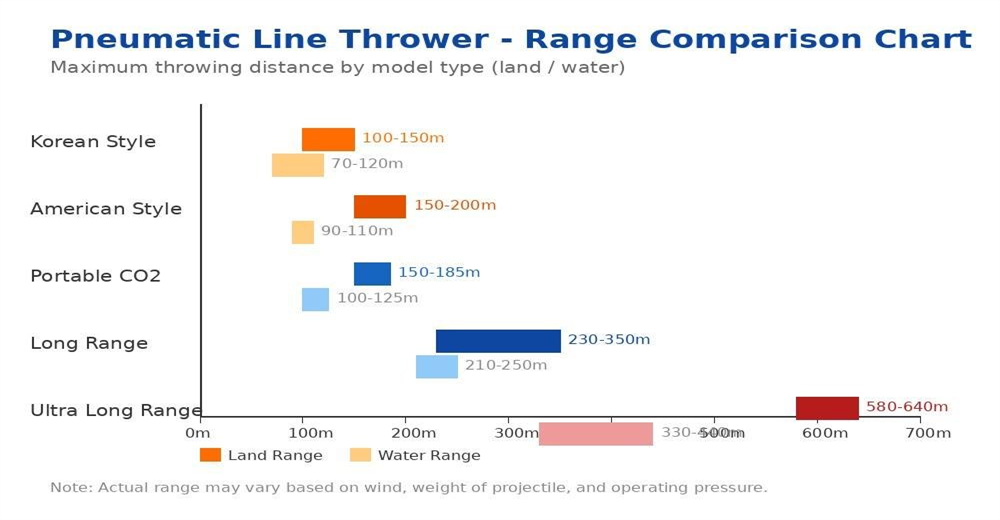
Compare all six families at a glance — pressure, weight, land and water range, and the standout feature of each. Teams under 80m start with Korean or portable thrower; ship-to-ship teams step up to the American anchor-hook unit.
This side-by-side comparison shows how six pneumatic line thrower families trade off pressure, weight, range and deployment style. Match the column to your most common rescue gap, team size and carry method before comparing individual model prices.
Type
Working Pressure
Weight
Land Range
Water Range
Key Feature
Korean-style (PTQ20-Y100S70 / Y110S70 / Y125S80Q50 / Lightweight T6)
7–20 MPa (model-dependent)
2.9–3.5 kg
100–150 m
70–120 m
External cylinder, ultra-light entry point, budget shore rescue
American-style (PTQ20-Y125S100 / Y140S90 / Y135S120Q85)
20 MPa
13 kg
125-140 m
90-110 m
Folding support rod, recoil reduction, titanium anchor hook to 155 m
Anchor-hook thrower (PTQ7-Y150S110Q55)
7 MPa
Lightweight L-stock
150-165 m
110 m
Three-in-one (rope / ring / hook), L recoil stock, aluminum case
Portable folding-stock (PTQ7-Y150S100 / PTQ7.0-Y150S100 / PTQ6.5-Y180S120Q50)
6.5–7 MPa
3–3.2 kg
150-185 m
100-125 m
Folding stock, CO2 or external cylinder, 6+ shots per cartridge
Long-range thrower (PTQ8.5-Y300S210 / Y230S210 / Y350S250Q80)
8.5 MPa
7.5–8.5 kg (net)
250–350 m
210–250 m
Tripod base with angle gauge, pressure gauge, rope recovery spool
Ultra long-range thrower (PTQ13-Y640S440Q180 / Y580S330Q150)
12-13 MPa
9.5-17 kg
580-640 m
330-440 m
, 100 m/s muzzle velocity, metal base
A few notes on the table. Pressure is not the whole story: the 6.5–7 MPa portable series out-ranges the 20 MPa Korean units on land thanks to barrel tuning. Weight trades directly against range and payload. For gaps over 250 m, move to the long range line thrower and 600m ultra long thrower families covered next.
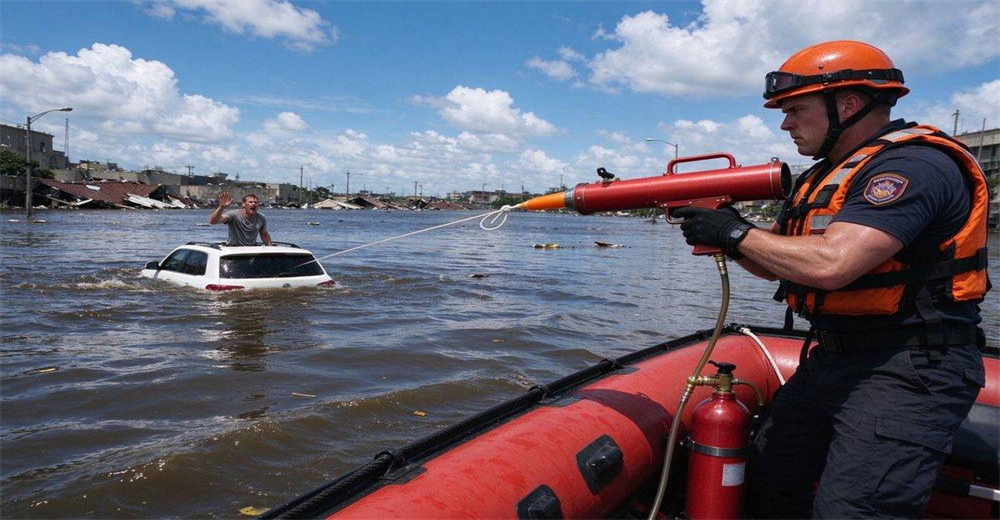
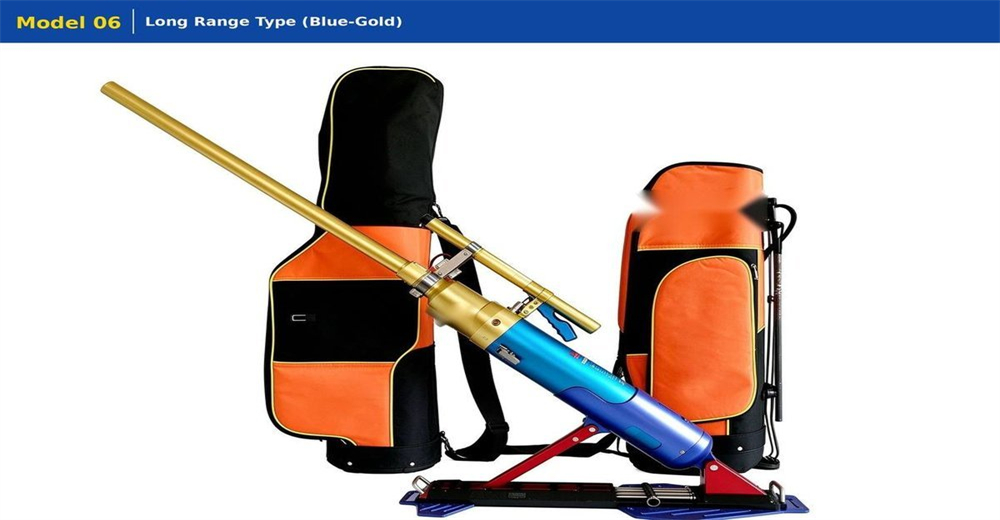
Long Range Pneumatic Line Thrower (250–350m)
When a 100-metre shot is not enough, you need a long-range thrower that reaches across a flooded street, a wide river, or a ship-to-ship gap. This section covers the 250–350 m class — a shore-based rescue thrower and high pressure pneumatic thrower built for fixed emplacements.
These pneumatic line thrower units run at 8.5 MPa, the main unit weighs 7.5–8.5 kg net (a full kit is about 25 kg), and they sit on a fixed base instead of firing from the shoulder. For teams needing a 120m long distance marine pneumatic line thrower across a harbour channel, this rescue thrower class is the one to spec.
Long-Range Design: Base with Angle Indicator, Inline Pressure Gauge
A 300m long range thrower is not a handheld cannon you point by eye. As a fixed base life thrower, it bolts onto a rigid tripod-style base that holds the tube at a fixed angle while you load, pressurise, and fire. On the side of the tube sits an inline pressure gauge. It shows the real chamber pressure at a glance, so you know before you pull the trigger whether the shot will reach the target or fall short.
Why does this matter? The system loses range when the cylinder is half empty. With a gauge in line, the operator sees the drop and swaps the cylinder before the rescue fails. The base also absorbs recoil: firing at 8.5 MPa from your shoulder on a pitching deck would knock you off balance.
Multi-Angle Base: 30/45/55/65/75 Degree, 2 Steel Pins
The base locks into five preset angles: 30, 45, 55, 65 and 75 degrees. You do not guess. You pull out two steel pins, swing the tube to the notch you want, and drop the pins back in. Each click is a locked position. The bottom of the base has anti-slip rubber pads that bite onto wet rock, a ship's deck, or the muddy bank of a flooded road.
Why five angles and not just one? Because the best angle changes with the target. A low, fast trajectory at 30 degrees cuts through wind. A high lob at 75 degrees drops the life ring straight down into a narrow gap between buildings during flood rescue. Two steel pins mean the angle cannot shift mid-shot under the kick of a full 8.5 MPa discharge.
Long-Range Tech Specs: 8.5MPa, 250–350m Land, 210–250m Water
The long range pneumatic line thrower models run at 8.5 MPa, between the 6.5–7 MPa portable class and the 12–13 MPa ultra class. On dry ground, land range reaches 250–350 m — this class covers the 200m line thrower buyer who needs more than a portable unit, up to the 400m line thrower boundary. Over water, where the floating ring drags, that drops to 210–250 m.
Several models cover the spread. The PTQ8.5-Y300S210 is the workhorse: 300 m land, 210 m water. PTQ8.5-Y230S210 trades a little land range for the same water reach. PTQ8.5-Y350S250Q80 delivers 350 m land and 250 m water, and adds an 80 m anchor hook. This long distance life line thrower covers wide water gaps during high water. If you need a marine line thrower for ship to ship line transfer work, the long-range class is the model to spec.
Cylinder Rope Winder and Safety Valve
After a shot, you have to reset fast. The long range unit ships with a rope winder built into the cylinder cradle. You wind the spent rope back onto the drum, reload the projectile, and swap the empty carbon cylinder for a full one through the G5/8 connector. One operator can cycle between shots in under a minute.
Every long range unit carries two pressure-control parts: an automatic safety valve that vents excess pressure if the cylinder overheats in the sun, and a manual pressure release screw you open by hand after a mission, before you break any fitting. A dual cylinder long-duration water rescue thrower kit configuration extends mission time without resupply. You never loosen a live coupling.
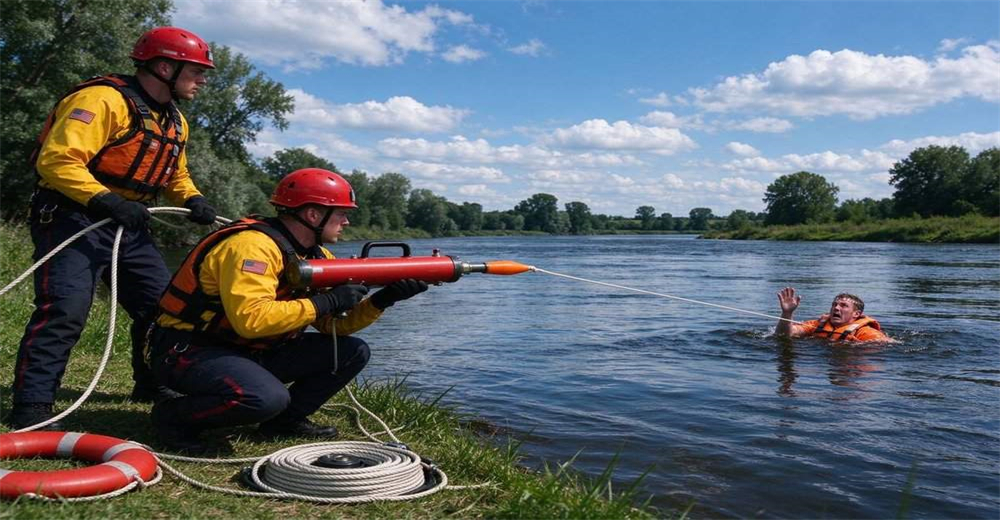
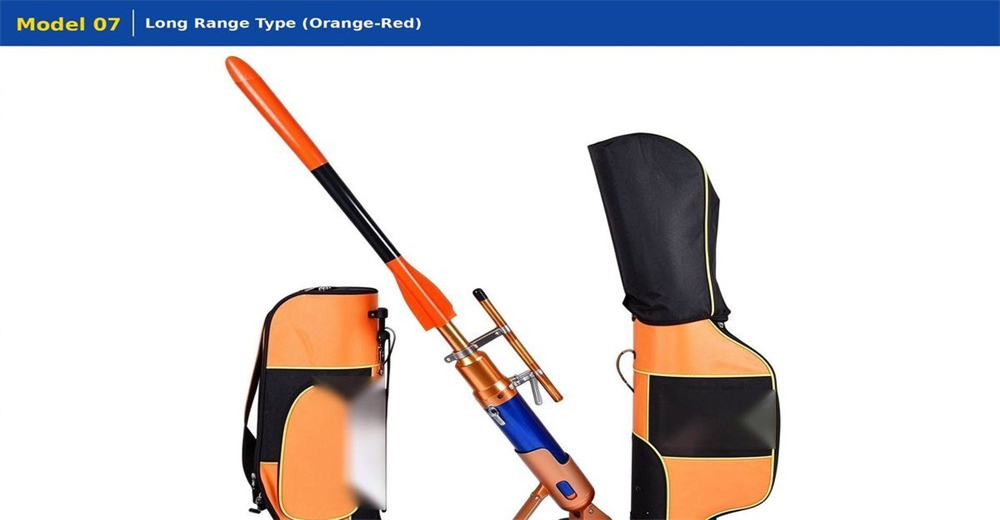
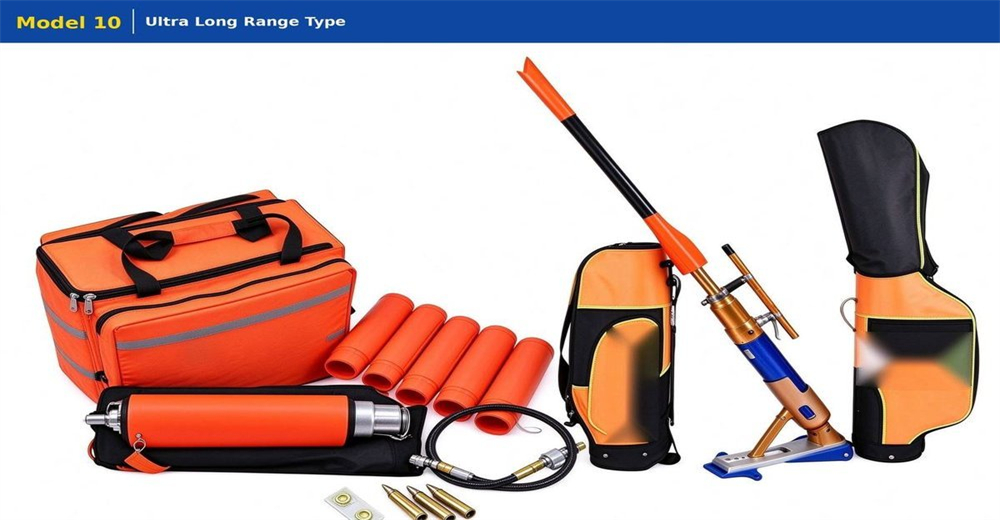
600m Ultra Long Range Pneumatic Line Thrower
Above 500 metres, the physics changes. You are no longer lobbing a line across a river. You are launching a 1.5 kg projectile across an open harbour, a wide shipping channel, or a gap between two ships at anchor. The long-range thrower class above 500 m is built for that job — it is the longest-range unit in our catalog. It is heavier, more pressurised, and fitted with instruments the smaller models do not need.
Ultra Design: 100 m/s Initial Velocity, 216 cm Body
The ultra-class unit leaves the barrel at roughly 100 metres per second — about 360 km/h at the muzzle. To get there, the tube is long, 216 cm from breech to muzzle. The extra barrel length gives the expanding air more time to push on the projectile, so more of the stored energy turns into speed instead of noise.
The two flagship models are PTQ13-Y640S440Q180 and PTQ-Y580S330Q150. The first reaches 640 m on land and 440 m on water, with an 180 m anchor hook. The second is the lighter, lower-pressure sibling at 580 m land and 330 m water, with a 150 m hook. For a professional fire department rescue thrower facing a wide-gap rescue, one of these is the ceiling of what compressed air can do today — an emergency rescue line throwing unit for coast guard and wide-river bureaus. No other unit in this catalog reaches 600 m, and this class sets the range benchmark.
Ultra Tech Specs: 12–13MPa, 9.5–17kg, 580–640m Land, 330–440m Water
Working pressure on the 600m line thrower ultra-class unit jumps to 12–13 MPa. Weight climbs too: the family spans 9.5 kg for the lighter build up to 17 kg for the full-spec unit with all instruments and the folding base. Land range runs 580–640 m. Water range, where the auto-inflating ring drags hard, falls to 330–440 m.
The jump from 8.5 MPa to 13 MPa is not a small step. It means a sturdier breech, a thicker carbon cylinder wall, and tighter sealing. The trade-off is weight and cost. You pay for the pressure when you need 600 m — a vessel long range line thrower for open ocean work. If your usual gaps are under 300 m, the 8.5 MPa long range class does the same job at half the carry weight.
Folding Metal Base, Quick Connect and Service Life
The ultra unit sits on a folding metal base with a spirit level and a 0 to 4 degree correction scale. Before you fire, you adjust the legs until the bubble sits in the mark. At 600 m, a 2 degree tilt pulls the shot several metres sideways by the time the rope lands. The level indicator removes that error before it starts. A field isolated island trapped person long throw unit relies on this stable mount.
The high-pressure quick connect is rated to 35 MPa maximum, well above the 13 MPa working pressure for a safety margin. Inside the fitting is a check valve: when you disconnect the cylinder, the valve seals the hose so residual air does not vent out. The body is rated for a six-year service life; projectiles are a two-year consumable. This is the coast guard rescue thrower tier for open-water maritime work.
Technology Deep Dive: Aerodynamics, Materials and Pneumatics
You do not need to be an engineer to choose the right pneumatic line thrower, but a few ideas from physics will save you from picking the wrong rescue thrower model. This section walks through how the projectile actually flies, what the rope is made of, and how compressed air turns into motion inside the launcher. No equations — just the rules of thumb that drive every spec number on this page.
Flight Physics: Why 45 Degrees Isn't Always Best
In a textbook vacuum, a projectile flies farthest at 45 degrees. In the real air, that is almost never the right rescue thrower angle. Why? Because the projectile and the rope trail pull against the wind the whole way. Drag grows with the square of speed, so the fast initial part of the flight wastes a lot of energy fighting air instead of climbing.
That is why the long range base offers 30 degrees as a serious option, not an afterthought — especially in flood rescue scenarios where a flat trajectory cuts across fast-moving water. A flatter, faster trajectory spends less time in the air, so drag has less time to bleed off distance. A polar cold zone low temp anti-freeze corrosion resistant line thrower benefits from flatter trajectories in dense cold air. According to GB/T 27906-2011 range-test guidance, measured range is always reported at the tested angle, not the theoretical 45 degree maximum.
Pneumatic Line Thrower Rope Type: Nylon vs Aramid vs UHMWPE Comparison
The rope on the launcher is the part that actually reaches the victim. Three rope materials dominate. Nylon is cheap, tough, and stretches under load, which cushions a sudden pull but also stores energy that can snap back. Aramid (often sold as Kevlar) is heat-resistant and very strong for its thickness, but it cuts easily and hates UV. UHMWPE (sold as Dyneema or Spectra) is the lightest and strongest of the three, floats on water, and slides through rocks without cutting.
For water rescue with this system, UHMWPE is the usual rope choice because it floats. A floating rope means the line lies on the surface where the victim can grab it, instead of sinking and dragging the ring under. This is the rope type every water head ships with. For land work, nylon or a blended core is common because it absorbs the shock of a hanging load without snapping. The choice of rope directly affects every rope thrower's effective range.
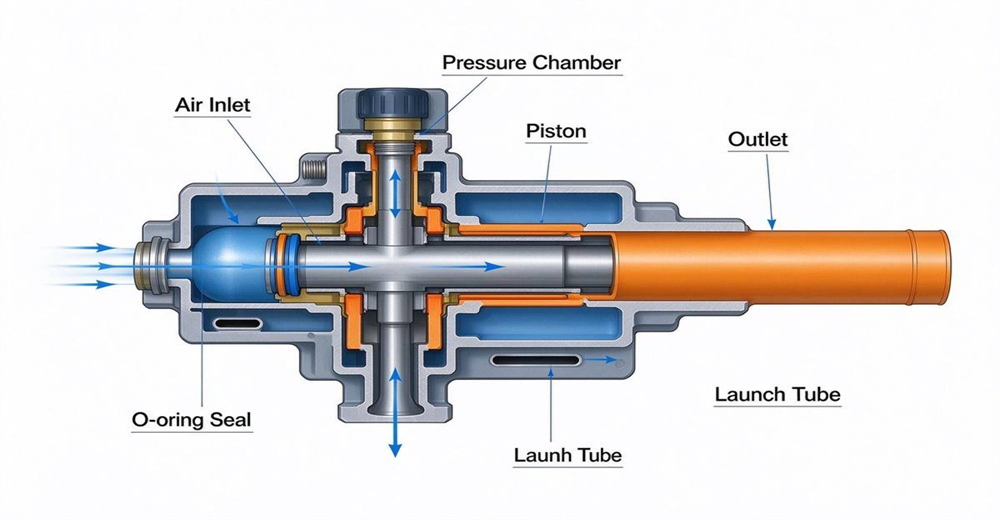
Pneumatic System: Chamber → Valve → Nozzle
Here is the whole mechanism in three steps. First, the cylinder holds compressed air at 6.5 to 13 MPa. Second, when you pull the trigger, a fast-acting valve opens and lets that air rush into the chamber behind the projectile. Third, the expanding air pushes down the barrel and out the nozzle, accelerating the 1.5 kg head to 60–100 m/s in less than a metre of travel.
That is the entire mechanism. There is no gunpowder, no explosion, no rocket motor. A pneumatic life line thrower is essentially a controlled air blast. The speed of the valve is what separates a good unit from a cheap one. If the valve opens slowly, air leaks out gradually and the projectile leaves slow. If it snaps open fast, full pressure hits the projectile at once and range jumps.
Key Components and Material Durability
Five parts decide whether this compressed-air system works in the field: the cylinder stores the air, the valve releases it on command, the pressure gauge tells you how much air is left, the quick connector lets you swap cylinders in seconds, and the check valve stops air from bleeding out when you disconnect.
This equipment gets used in conditions nobody designed a plastic gadget for. The working temperature range is –10°C to +45°C. Corrosion matters just as much. Coast guard and harbour units live near salt water — a pneumatic shore line throwing cannon needs stainless fittings. Exposed fittings on the ultra class are plated or stainless, and the cylinder is carbon fibre rather than steel. The rubber components — seals, O-rings, the inflator gasket — are the first things to degrade in salt air on any rope thrower.
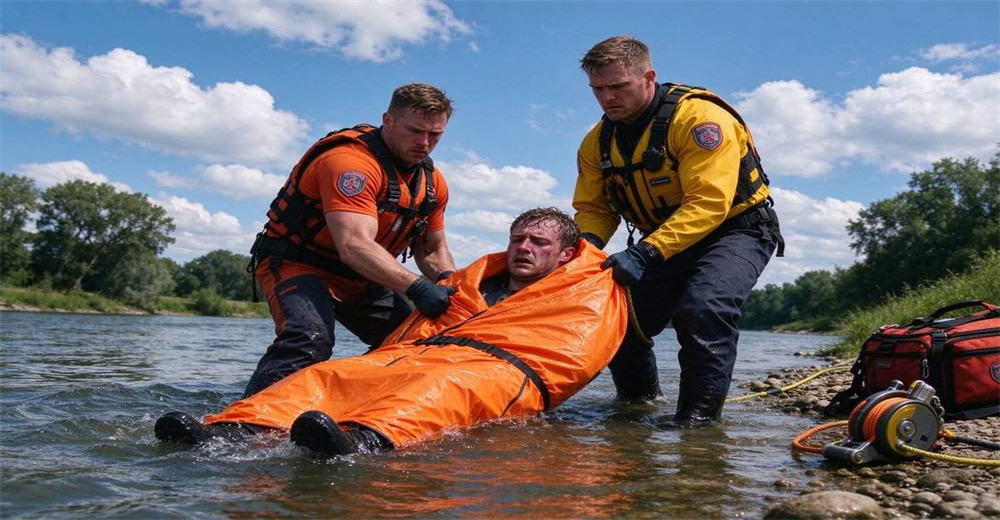
Pneumatic Line Thrower Specifications: Key Physical Limits
Spec sheets read like a wall of numbers. This section turns those numbers into decisions for anyone sourcing a pneumatic line thrower. Why is water range shorter than land range? What does the pressure rating actually buy you? How close is too close to fire? Read this before you spec a unit.
Pneumatic Line Thrower Pressure: Working Pressure Explained — 6.5 / 7 / 8.5 / 12 / 13 / 20 MPa
You will see six pressure ratings across the catalog for every model. Each rescue thrower class uses a different pressure band. 6.5–7 MPa powers the portable and anchor-hook class: light cylinders, easy to handle, 150–180 m land. 8.5 MPa powers the long range class: 250–350 m land, manageable weight. 12–13 MPa is the ultra class: 580–640 m land, heavy base, instruments required. 20 MPa powers the Korean and American handheld units: compact bottles that pack a lot of air in a small space, with the recoil to match.
More pressure is not always better. Higher pressure means thicker-walled cylinders, heavier breeches, stricter test intervals, and more training to operate safely. Match the pressure to the gap you actually have to cross, not to the biggest number on the page.
Why Water Range is Shorter: Life Ring Air Resistance
Look at any model: water range is always well below land range. On the ultra unit, land is 640 m but water is 440 m. Why the gap? On a land shot, the projectile drags a thin Ø3 mm rope behind it — almost invisible to the air. On a water shot, the same projectile pulls an auto-inflating life ring, which opens up into a half-metre-wide parachute of fabric and buoyancy chamber the moment it hits the water.
That big, light object catches air and water drag like a brake. It also floats, so it rides on the surface instead of cutting through it. When you read a spec sheet, do not compare the land number to a water target. Compare water to water. Lake reservoir rescue line thrower units are rated specifically for this drag profile. If your job is open-water rescue, spec the water range, not the land range.
Pneumatic Line Thrower Life Ring: Auto-Inflating Life Ring Launcher, 5s Inflation, 8 kg Buoyancy
The water projectile ends its flight as an auto-inflating life ring head. On impact, a water-activated plunger opens the CO2 valve. The ring inflates in about five seconds. Once full, it provides roughly 8 kg of buoyancy — enough to support an adult in a life jacket.
The spec buyers should care about is the buoyancy-loss number: no more than 5% in 24 hours. That means a properly inflated life thrower ring still holds 95% of its lift a full day later. Every life thrower ships with this auto-inflating ring head.
Why does that matter? Because a rescued person may be in the water for hours waiting for the boat to reach them. For island salt fog corrosion resistant rescue thrower applications, the life thrower ring and exposed fittings should be rinsed with fresh water after every coastal operation. It ties back to SOLAS lifejacket-performance expectations for marine equipment.
Flight Time, Velocity and Projectile Deviation
Across the whole range, projectiles fly for 3 to 5 seconds before they land. Initial speed runs 60–100 m/s depending on class. At 100 m, a deviation of 0.4–1 degree puts the projectile 0.7–1.7 m off line. At 600 m, the same angle multiplies to a 4–10 m miss.
This is exactly why the ultra class bolts onto a level base instead of being shoulder-fired. The base, the level bubble, the : all exist to remove human wobble. If your life thrower needs precision at distance, the split base throwing equipment is not optional. For a reservoir dam emergency fixed base thrower, the mount is permanent.
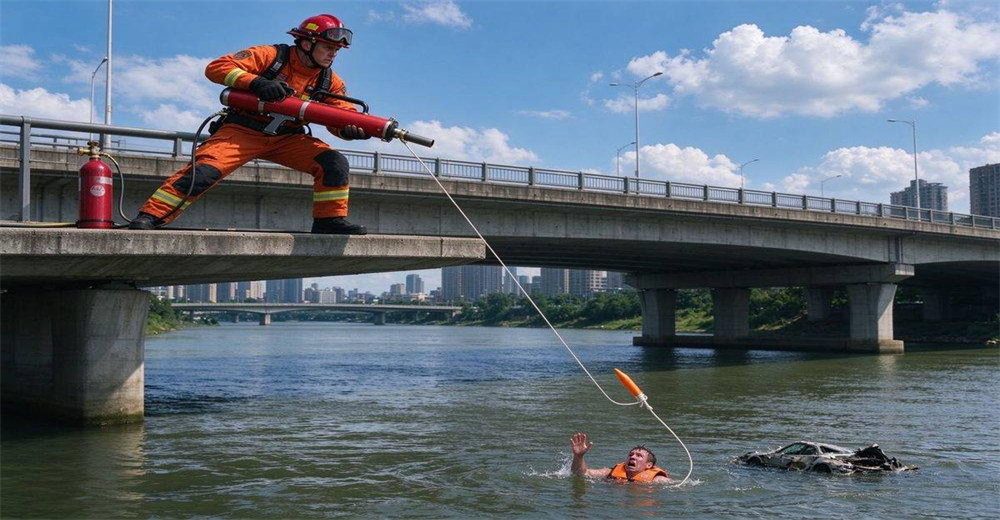
Physical Limits: Min Safe Distance, Max Wind, Temp Range
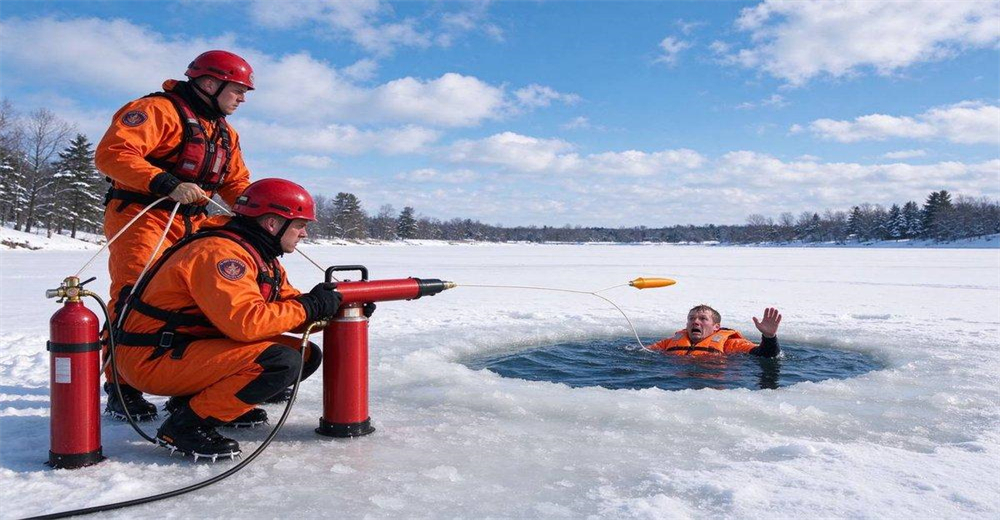
Every launcher has a floor as well as a ceiling. The minimum safe distance is roughly 20–30 m — below that, the projectile is still travelling too fast when it lands. Crosswinds above roughly 10 m/s start pushing light projectiles meaningfully off line, especially on the ultra class. The rated working band is –10°C to +45°C. For ice lake rescue throwing equipment in colder climates, teams should spec external-cylinder units rather than CO2 models, since CO2 pressure drops sharply below freezing. According to NFPA guidance on remote fire operations, environmental limits should be checked before every deployment.
Here is how each model lines up: pressure, range, weight and rope load, from the 70m portable thrower unit to the 640m ultra long-range model. Always add 30% to your measured gap for wind and current margin.
Fourteen core models span 7 to 20 MPa and 70 to 640 metres of land range. Prioritise three columns when shortlisting: working pressure (gas supply cost), land range (deployment radius) and rope breaking strength (victim payload). Contact us for specs marked with a dash.
Model
Type
Working Pressure
Land Range
Water Range
Weight
Rope Strength
Cert Note
PTQ20-Y100S70
Korean-style
20 MPa
100 m
70 m
~3.5 kg
2000–3000 N class
—
PTQ20-Y110S70
Korean-style
20 MPa
110 m
70 m
~3.5 kg
2000–3000 N class
—
PTQ-Y125S80Q50
Korean-style + hook
20 MPa
125 m
80 m
~3.5 kg
2000–3000 N class
—
Lightweight T6
Korean-style (lightweight)
7 MPa
150 m
120 m
~2.9 kg
2000–3000 N class
—
PTQ20-Y125S100
American-style
20 MPa
125 m
100 m
~13 kg
2000–3000 N class
—
PTQ20-Y140S90
American-style
20 MPa
140 m
90 m
~13 kg
2000–3000 N class
—
PTQ-Y135S120Q85
American-style + hook
20 MPa
135 m
120 m
~13 kg
2000–3000 N class
—
PTQ7-Y150S110Q55
Anchor-hook 3-in-1
7 MPa
150–165 m
110 m
~3 kg
2000–3000 N class
—
PTQ7-Y150S100
Portable
7 MPa
150 m
100 m
~3 kg
2000–3000 N class
—
PTQ6.5-Y180S120Q50
Portable + hook
6.5 MPa
180–185 m
120–125 m
~3.2 kg
2000–3000 N class
—
PTQ8.5-Y300S210
Long-range
8.5 MPa
300 m
210 m
7.5–8.5 kg net (≈25 kg full kit)
6000–7000 N (water)
—
PTQ8.5-Y350S250Q80
Long-range + hook
8.5 MPa
350 m
250 m
7.5–8.5 kg net (≈25 kg full kit)
6000–7000 N (water)
—
PTQ-Y580S330Q150
Ultra long-range
12 MPa
580 m
330 m
9.5–17 kg
6000–7000 N (water)
—
PTQ13-Y640S440Q180
Ultra long-range
13 MPa
640 m
440 m
9.5–17 kg
6000–7000 N (water)
—
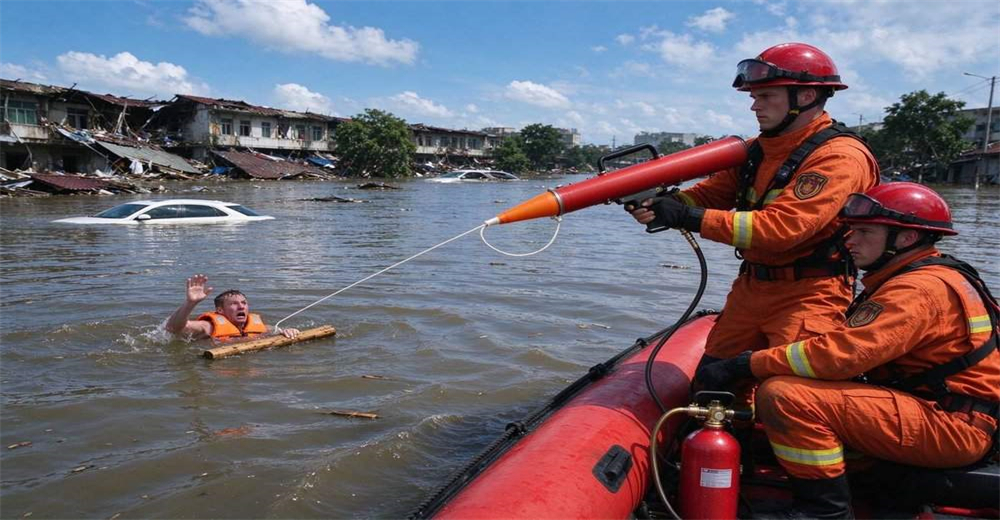
Once you know the gap, picking the right class becomes a range match. Match your gap to the right tier below, with safety margin built in. Choose the next class up if your gap sits near a model's max.
Match your typical rescue gap to the right thrower class using this quick selection guide. Teams crossing under 80 metres need the lightest handheld unit; gaps over 500 metres require a fixed-base ultra long-range pneumatic rescue system with trained operators.
Rescue Gap (typical)
Recommended Class
Example Models
Why This Class
Up to 80 m
Korean-style (7–20 MPa handheld)
PTQ20-Y100S70, PTQ20-Y110S70, Lightweight T6
Lightest carry (2.9–3.5 kg), fastest deployment, suited for pool, dock, narrow flood streets
80–120 m, with anchor hook
American-style (20 MPa, titanium hook)
PTQ20-Y125S100, PTQ-Y135S120Q85
Folding support pole, 330 kg hook load, ship-to-shore line work
100–180 m, single-operator
Portable / anchor-hook (6.5–7 MPa)
PTQ7-Y150S100, PTQ6.5-Y180S120Q50
~3–3.2 kg carry, folding stock, CO2 option, rapid re-shot
250–300 m, rivers / wide floods
8.5 MPa
PTQ8.5-Y300S210, PTQ8.5-Y230S210
Fixed angle base, inline gauge, 5-angle preset for wind lob or flat shot
300–400 m, ship-to-ship / harbours
8.5 MPa
PTQ8.5-Y350S250Q80, PTQ-Y350S250Q130
350 m land, 250 m water, 80 m anchor hook for mooring lines
500 m+, open water / coast guard
Ultra long-range (12–13 MPa)
PTQ-Y580S330Q150, PTQ13-Y640S440Q180
100 m/s muzzle, + , folding level base
The rope is the link between your launcher and the victim. Compare the three ropes below: the thin land line, the thick floating water line, and the heavy anchor-hook line. Mixing them up adds drag and costs you range.
Three rope types cover land line, water rescue and anchor-hook missions. Land rope stays thin and light for maximum range; floating water rescue rope uses UHMWPE braid to keep the line on the surface; anchor-hook rope adds abrasion cover for concrete and steel contact.
Rope Type
Diameter
Breaking Strength
Common Material
Floats?
Best Used For
Land rescue rope
~3 mm
~2000–3000 N
Nylon braid / blended core
No
Land shots, high-rise line throws, anchor-line deployment on solid ground
Water rescue rope
~4–5 mm
~6000–7000 N
UHMWPE (Dyneema) floating braid
Yes
Open-water rescue, attached to auto-inflating ring, stays on surface for the victim
Anchor-hook rope
~4–5 mm
~550–6000 N (model-dependent)
High-strength braid, abrasion cover
No
Throwing titanium anchor hook to a railing, vehicle or mooring bollard
How to Choose the Right Life Rescue Thrower for Your Team
There are six pneumatic line thrower families in our range, and they do not all do the same life thrower job. A fire department rescue truck in a flooded city needs something very different from a coast guard equipment boat crossing a harbour. The biggest mistake buyers make when choosing a pneumatic rescue line thrower is picking by price alone. We will walk you through range, team size, scenario, power source, certification, and budget so you choose the right long-range thrower or portable unit for your duty.
Common duty-cycle references from our buyer base include: a port operation bulk purchase long-duration dual cylinder thrower kit for harbour master offices; a border river patrol individual long-duration 4 projectile handheld thrower kit for frontier patrol teams; a township coastal flood control lightweight backpack thrower kit for small coastal communes; a humanitarian relief stockpile long distance pneumatic thrower for humanitarian stockpiles; and an emergency filing marine line throwing rescue gear package for ship safety officers. Each of these maps to one of the six families below.
Choose by Range: Match the Throw to the Water You Actually Face
If you only ever rescue from a riverbank 30 metres from the victim, a 600-metre thrower is overkill. It weighs 17 kg, needs a mount, and slows you down on every call. Range should be the first filter you use, because it decides the whole class.
Under 100 m coverage suits poolside rescue, narrow canals, and small ponds. A Korean style 70m Lightweight Fire Training Pneumatic Line Thrower at 100–150 m land / 70–120 m water covers this with a light 2.9–3.5 kg body — this portable rescue thrower is the standard entry point.
100–200 m coverage from a compact launcher fits most urban rivers, docks, and flood relief. The anchor-hook thrower at 150–165 m land and the portable unit at 150–185 m land both live here. For township narrow river flood control, a 90m Long Distance Inland Lake Flood Control Handheld Rescue Thrower covers this range well.
200–400 m coverage is for wide rivers, reservoirs, and ship-to-ship transfers — the long-range class reaches 250–350 m as a shore-based system. A 120m Long Distance Reservoir Flood Control Engineering Thrower or a Reservoir Dam Fixed Base 150m Ultra Long Line Throwing Unit fits fixed dam emplacements. 400 m and above is specialist territory, covered by the ultra long-range class with a fixed metal base.
Choose by Team Size: One Person vs a Crew
A one-person water rescue crew has different needs than a six-person department. Solo operators need speed, light weight, and a launcher they can load and fire without help. The portable folding-stock unit fits this profile. It weighs about 3–3.2 kg, runs on a CO2 cartridge, and lets you get a line across before anyone else arrives.
A small team of two to four people can handle the Korean and American style pneumatic line throwers. One person aims, another manages the rope. For a 60m Lightweight Township Fire Training Handheld Throwing Gun, a two-person crew suffices.
A professional team with dedicated rescue divers, boat crews, and command staff can run the long-range and ultra long-range units — a 4 Projectile Large Capacity Single Person Marine Explosion-proof Handheld Thrower Kit suits border river patrol individual long-duration operations. For remote foot deployments, a Cold Border Outpost Backpack Throwing Unit or a Border River Cross-shore Emergency Long-duration Multi-projectile Thrower Gear fits patrol use. If your team has no one trained on rope handling, do not buy a 600 m life thrower system.
Choose by Scenario: Water, Land Rope, or High-Rise Anchor
Most buyers start with water rescue in mind, but the life thrower does more than float a ring. This system covers three payload types. For water rescue, this launcher needs the floating water rope (Ø4–5 mm, 6000–7000 N) and the auto-inflating life ring head. The ring inflates in about five seconds and gives 8 kg of buoyancy, with less than 5% loss over 24 hours.
For land rope work, you send a thin Ø3 mm line (2000–3000 N) across a gap first, then pull a heavier rope through — a long range rope throwing rescue device for gorge crossing. For high-rise or mountain work, you need the American style titanium anchor hook thrower. The titanium hook holds 330 kg and catches on window sills, balcony edges, or rock ledges.
This life thrower carries the hook as its primary payload. For polar low temperature handheld thrower operations, spec a Minus 40°C Polar Anti-freeze Corrosion Resistant Single Person Handheld Throwing Gear external-cylinder unit rather than CO2. We also supply matching water rescue PFD and dry suit / wetsuit for water rescue as part of a complete life thrower team kit.
Choose by Power Source: External Cylinder vs CO2 Cartridge
Every unit on this page runs on high-pressure gas, but the gas delivery differs. External-cylinder models connect a scuba-style air tank to the launcher via a hose. The Korean and American style throwers use this setup at 20 MPa. They fire consistently shot after shot until the cylinder pressure drops.
CO2 cartridge models use a sealed 33 g canister, like the portable folding stock line. No hose, no bulky tank, just screw in a cartridge and go — a mini gas cylinder handheld thrower kit for rapid deployment.
The trade-off is per-shot consistency: CO2 pressure drops as the gas chills after each shot, so later shots in a six-shot sequence lose range. If your team does repeated training every week, external cylinder is cheaper per shot — a single cylinder low-cost team training teaching thrower works well. If your team needs to pack light and be ready in seconds, CO2 wins on portability as a backpack portable line thrower.
Choose by Certification and Budget
Certification matters when a government procurement officer opens your bid file. Certain models in our range carry GB/T 27906-2011 certification, tested by a national fire-safety lab with and MA accreditation. These are the units you quote to fire departments, emergency bureaus, and military units that require a type test report on file. Other models suit private contractors, industrial safety teams, and yacht clubs.
Entry-tier units cover the Korean style 100m class and the basic portable CO2 units — a Village Simplified Low-spec Lightweight Reserve Thrower Kit for basic inventory. Mid-range units include the anchor-hook triple-use thrower and the standard long range line thrower — a 90m Long Distance Inland Lake Flood Control Handheld Rescue Thrower for mid-range duty. Professional-tier units are the ultra long-range class — a 150m Shore Dual Cylinder Marine Explosion-proof Long Distance Thrower Kit for coastal operations.
For refinery perimeters, a Chemical Explosion-proof Special 150m Shore Thrower Kit is required. For scenic-area security, a Scenic Lake Security Standard Single Person Handheld Throwing Gun fits patrol boats. Measure your real water width first, then add 30% for wind and current.
Quick Selection Guide: Match Your Scenario to the Right Class
Not sure where to start? Match your most common rescue scenario to the recommended class below. This guide is built for government procurement officers, fire departments, rescue teams, coast guard units, port authorities, vessel operators, water parks and scenic-area safety teams.
Different rescue scenarios demand different thrower configurations. River rescue favours lightweight portable units; ship to ship line transfer work needs the 125 to 350 metre land range of American-style or long-range classes; urban flooding calls for CO2 thrower portable throwers that deploy in seconds.
Scenario
Recommended Class
Key Specs (Range / Weight / Power)
River / stream rescue (gaps under 120 m)
Korean-style or Portable folding-stock
100–185 m land / 2.9–3.2 kg / 7–20 MPa or CO2
Offshore / ship-to-ship / harbour work
American-style or Long-range
125–350 m land / 7.5–13 kg / 20 MPa or 8.5 MPa
Urban flooding / narrow streets / underpasses
Portable folding-stock CO2
150–185 m land / 3–3.2 kg / 6.5–7 MPa CO2
Fire high-rise / cliff / balcony rescue
American-style titanium anchor-hook
125–140 m land, 155 m hook / 13 kg / 20 MPa
Large vessels / open water / coast guard
Ultra long-range (500m+)
580–640 m land / 9.5–17 kg / 12–13 MPa
Manual Rope Throw vs Pneumatic Line Thrower: A Buyer's Comparison
Some teams ask whether a simple hand-thrown rope bag is enough. A rope bag costs almost nothing and needs no training. But it reaches 25–35 m at best, needs a strong arm, and has no accuracy beyond 20 m. The rescuer also has to stand at the edge of the water or current — something a shore-based system never requires.
A pneumatic line thrower costs more upfront but reaches 100–640 m, aims from cover, and works one-handed after training. It also lets the rescuer stay completely out of the water, which is the whole point of this rope thrower.
For a team that covers gaps under 20 m and never faces a swift current, a 2 projectile low-cost grassroots team training teaching handheld rope thrower may suffice. For any team bridging 30 m or more, or working in moving water, this system is the standard. We also pair every pneumatic line thrower with inflatable rescue boat support for full water-response coverage.
Rescue Tactics, Emergency Rescue Gear and Real-World Applications
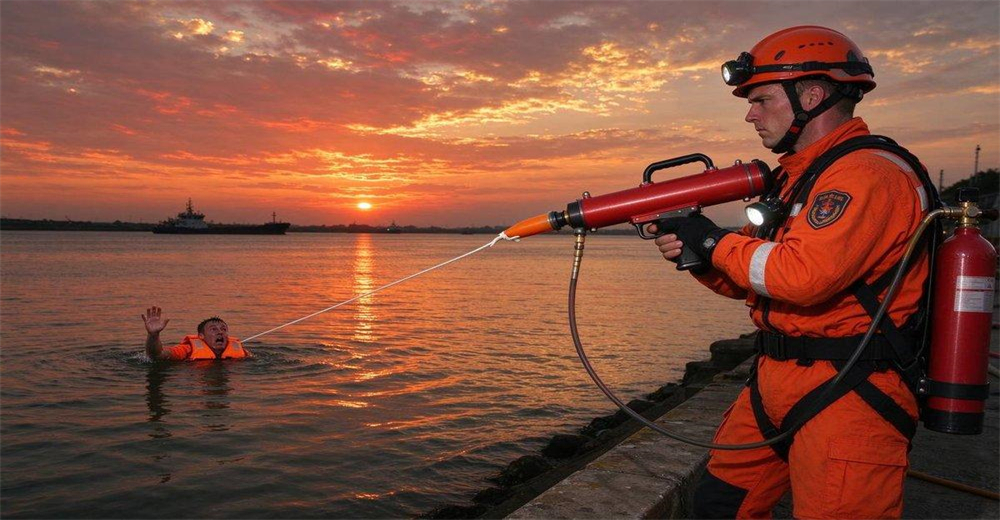
Buying the right pneumatic line thrower is half the job. The other half is knowing how to put a team behind it. As part of any flood control kit, this water rescue throwing equipment is most effective when crewed by trained personnel. Below we cover the standard crew formation, a step-by-step workflow, and how different services deploy it across urban floods, rivers, lakes and harbours.
Standard Rescue Team Formation: Launcher, Safety Officer, Rope Handler
A minimum three-person crew runs this rope thrower pneumatic line thrower safely. This water rescue throwing equipment requires clear roles. The launcher operator aims and fires the system. The safety officer watches the victim, the current, and the bystanders, and calls "stop" if the line path is not clear. The rope handler manages the line on the bank so it does not tangle underfoot or snag on rocks.
On a water rescue call, the rope handler also feeds the floating rope out smoothly. If the rope binds, the projectile drops short and the victim never gets the ring. More pneumatic line thrower shots miss because of a tangled rope than because of bad aim. Add a fourth person as the boat tender or swimmer, and you have a full rescue crew. Never run a thrower with only one person on scene.
How to Use Pneumatic Line Thrower: Step-by-Step Typical Rescue Workflow
The workflow is the same across rivers, harbours, and flooded streets. First, size up the scene: water depth, current speed, victim position, wind direction, and downstream hazards. The safety officer calls the safety zone clear before anyone touches the launcher.
Second, choose the right head. If the victim is in open water, fit the auto-inflating life ring head and the floating rope — a night no-light water high vis throwing rope kit for low-visibility operations. If you need a line to a far bank for a traverse, use the land rope head.
If you need an anchor above a window, swap in the titanium hook. Third, set the pressure and angle, aim slightly upwind of the target, and fire. Fourth, once the line lands, the rope handler pulls the victim toward the bank. Reset the gas supply if pressure is low — a multi-projectile continuous launch large capacity thrower allows rapid follow-up shots.
Pneumatic Line Thrower for Fire Department: Urban Flood, River and Lake
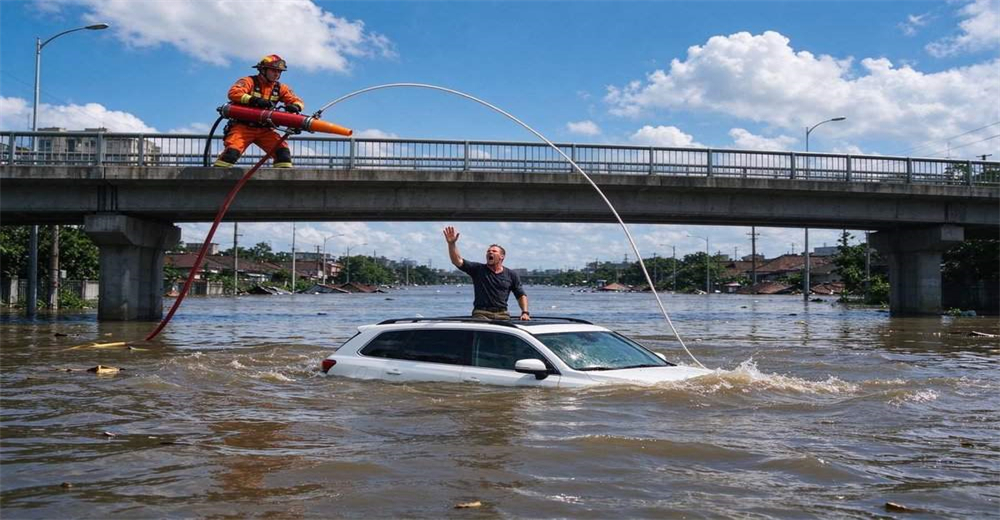
Fire departments are the heaviest users of a fire department rescue thrower. As a pneumatic line thrower for flood rescue and pneumatic line thrower for river rescue, it bridges gaps where boats cannot go. Urban floods throw up scenarios that boats cannot reach: a car stalled under an underpass, a family on a rooftop, a worker trapped on a median in a 1.5 m flow. This urban flood control equipment is standard on modern fire trucks.
A fire truck carries a thrower and a throw bag. The thrower bridges 70–150 m from a dry overpass to the stranded car. As part of a complete flood rescue kit, the throw bag covers the last 15 m once the victim has the main line. A night no-light lake high vis rope handheld throwing gun variant carries reflective rope for low-visibility night calls; a cold zone municipal ice lake single rescue handheld throwing gear kit is rated for winter ice operations.
On rivers and lakes, the same flood rescue equipment does cold-water pickups. The 8 kg buoyant ring keeps the victim afloat while the team sets up the rescue boat. Many fire departments also stock inflatable rescue boat hulls as a complementary asset for when the gap is beyond the throw bag rescue reach or the pneumatic line thrower range.
Pneumatic Line Thrower for Coast Guard: Ship-to-Ship and Ship-to-Shore
At sea, a coast guard rescue thrower — the pneumatic line thrower for ship emergency line-throwing — is standard line-throwing gear. When two vessels are alongside but a metre or two apart, throwing a heaving line by hand is unreliable in wind.
A marine line thrower bridges the gap in three seconds, then the crew pulls the heavier tow line across. As a vessel emergency line thrower, it is also the first tool deployed when a small craft needs a messenger line to a larger ship at anchor. An ocean vessel overboard rescue line thrower deploys quickly when a person goes overboard.
For port operations, a Dual Cylinder Long-duration Marine Explosion-proof Portable Thrower Kit is the standard choice. A Polar Anti-freeze Salt Fog Resistant Ocean Vessel Standard Thrower handles North Atlantic and Baltic duty; an Inland Waterway Shipwreck Search Standard Pneumatic Thrower Kit fits inland river rescue stations. For offshore fishing boats, an Offshore Small Fishing Vessel Single Person Emergency Handheld Line Throwing Gear works as a compact shipboard rescue thrower.
Ship-to-shore work is the same problem in another geometry. A vessel aground on a sandbar needs a line to the beach before a tow can start. Salt air is hard on gear. Rinse the launcher with fresh water after every harbour operation, dry it, and store it in the case. Corrosion on the valve is the most common end-of-life failure on maritime units.
Water Police, Emergency Bureau and Multi-Thrower Coordination
Water police patrol slow-moving water with a compressed-air launcher: reservoirs, lakes, wide urban rivers. A portable folding-stock life thrower fits a patrol boat dashboard better than a 17 kg long-range unit — a small inland river maritime station standard handheld throwing equipment. When a call comes in, the officer clips in a fresh CO2 cartridge and fires across 100–120 m in under a minute. For scenic lake tourist drowning search, this handheld throwing gun reaches trapped swimmers fast. For shore levee flood control, a handheld thrower deploys quickly on the embankment.
Emergency Management Bureaus plan for worst cases: typhoon storm surge, dam release, flash flood. They stock disaster relief special thrower kits in regional depots and standardize on one model year after year so spare parts and training stay consistent. On a wide river, two teams on opposite banks can throw toward each other and meet the lines in mid-air, then tie them together. That is how you set up a hand line across a 300 m gap with two 150 m units.
Wholesale Pneumatic Line Thrower, Bulk OEM and Procurement
Distributors stocking a pneumatic line thrower catalog or a department outfitting a whole province, the procurement path looks the same. As a flood rescue supplier and rescue line thrower supplier, we supply bulk wholesale rescue line throwers — every pneumatic line thrower in our catalog is available for wholesale to government procurement framework agreements and relief organizations — including wholesale flood relief supplies for emergency response stockpiles. We are also a water rescue throw bag supplier supplying throw bag rescue components alongside every pneumatic line thrower system.
Common procurement bundles include a configuration suitable for UN Regional Small-scale Disaster Relief Lightweight Handheld Thrower Kit stockpiles, a Full Container Export Class II Dangerous Goods Compliant Marine Thrower for large orders, and a Full Container Export Small Maritime Compliant Handheld Throwing Gear for handheld export orders. For inland waterway fleets, an Inland Waterway Shipwreck Search Anti-corrosion Alloy Thrower Main Body configuration is available. We cover MOQ, custom branding, packaging, shipping rules, samples, after-sales, and the real total cost of ownership below.
Wholesale MOQ and Pricing Tiers
Our pneumatic line thrower for sale comes with transparent pneumatic line thrower price tiers. The pneumatic line thrower wholesale price breaks into three rescue thrower volume bands for any pneumatic line thrower bulk order. Trial orders start small so you can validate the product with your local fire and police customers before committing. Mid-volume orders price per unit with standard accessories included. Government annual framework bulk procurement thrower agreements price per annual call-off, which suits bureaus that buy in waves over a year. We also handle bulk order flood rescue gear for municipal emergency procurement.
Exact MOQ and lead time are subject to contract, because they depend on the model, the certification status of the SKU, and the shipping lane. As a supplier of flood disaster relief products, we also handle NGO overseas flood relief portable throwing gear orders. Tell us your target volume and timeline, and we will come back with a tiered quote. We protect territories, so the first serious buyer in a region gets first right of refusal on that SKU.
Pneumatic Line Thrower OEM: Logo, Color and Private Label Service
We offer pneumatic line thrower private label and OEM rescue thrower service on the launcher main body, the carry case, and the accessories. As a supplier of custom flood relief equipment, we provide OEM flood rescue supplies with laser-engraved logo on the aluminium body and pad printing on the plastic end caps. A custom logo institutional thrower aluminum case kit is available on mid-to-bulk orders. Laser engraving looks professional and never wears off; pad printing is cheaper for high-volume private label.
Colour customization is available on the carry bag and the hard case. Most customers pick high-visibility orange or tactical black. For military and police customers, we can match standard government colours. Private label packaging — your box art, your manual, your warranty card — is supported on mid-to-bulk orders. Tooling and artwork fees apply on a per-order basis.
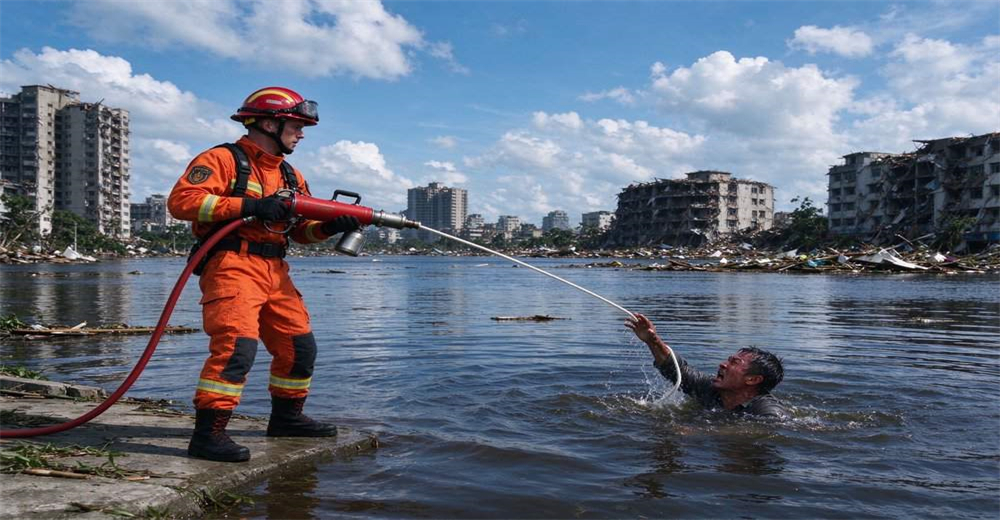
Packaging Options: Aluminum Case, Carry Bag, Export Carton
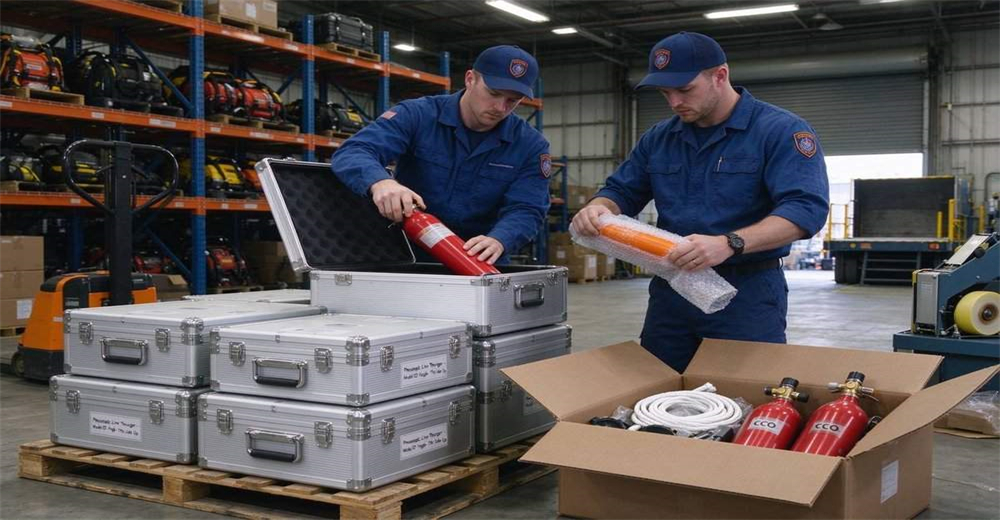
Three packaging levels cover different needs. The hard aluminium flight case is the default for professional units. It protects the valve and gauge in a truck bay or on a ship. The padded carry bag is the budget option for portable units. It fits behind a boat seat and has shoulder straps. The export carton is the outer shipping layer, foam-packed and double-boxed for ocean freight.
Here is what each class ships with as standard, so you can compare kits side by side. Gas supply, projectile count and case type are included for every family, so your procurement team can spec the BOM without guessing.
Each thrower class ships with a standard kit matched to its mission. Korean-style units come in soft carry bags for fast deployment; American-style and long-range units use aluminium flight cases for transport protection; ultra long-range systems ship in wooden export crates with full calibration documentation.
Thrower Class
Launcher Body
Projectile Heads
Rope
Gas Supply
Case
Manual & Kit
Korean style (100–150 m land)
1 unit, 7–20 MPa valve (model-dependent)
Land projectile + water ring head
Ø4–5 mm floating water rope
External cylinder (sold separately)
Soft carry bag
English manual, O-ring kit
American style (125–140 m land)
1 unit, folding support rod
Land + water + titanium anchor hook (330 kg)
Ø3 mm land rope + Ø4–5 mm water rope
External cylinder (sold separately)
Aluminium flight case
English manual, O-ring kit, spanner
Anchor-hook triple-use (150–165 m)
1 unit, L-shape recoil stock
Land + water + anchor hook (55–60 m)
Both rope types
External cylinder (7 MPa)
Aluminium flight case
English manual, O-ring kit
Portable (150–185 m land)
1 unit, folding stock
Land projectile + water ring head
Ø4–5 mm floating water rope
CO2 cartridges (16 g / 33 g)
Padded carry bag
English manual, CO2 key
Long range (250–350 m)
1 unit, base angle gauge (5 positions)
Land + water heads
Ø4–5 mm water rope + land rope
External cylinder (8.5 MPa)
Hard case + rope winch
Manual, gauge, winch handle
Ultra long range (580–640 m)
1 unit, metal base,
Land + water + heavy projectile
Heavy-duty rope set
External cylinder (12–13 MPa)
Wooden export crate
Full manual, calibration cert, tool set
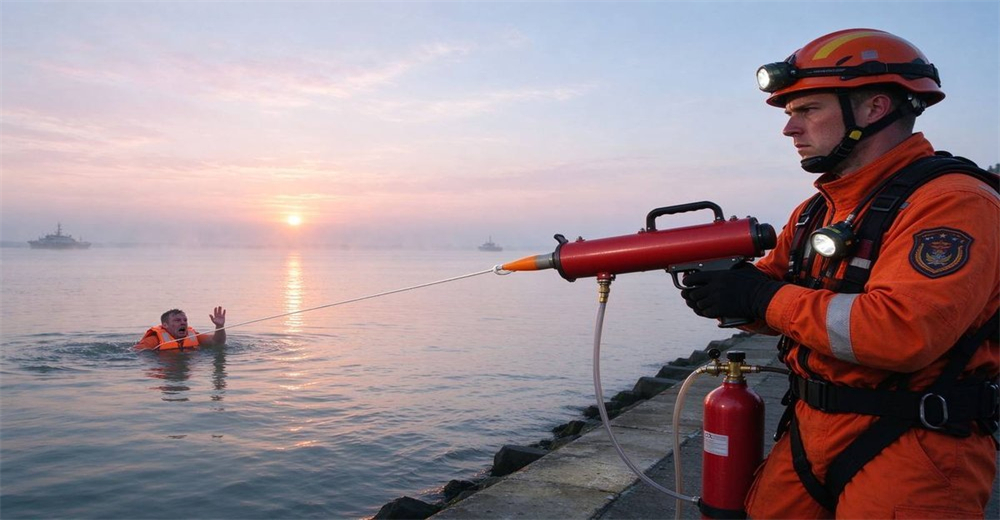
Shipping: High-Pressure Cylinder Rules (UN1013 / IATA / IMDG)
This is the part that catches new buyers off guard. A unit without a gas cylinder ships as normal rescue thrower cargo. Once a high-pressure cylinder is included, the shipment becomes dangerous goods. Liquefied CO2 cartridges are UN1013 — a full container export marine standard thrower ships with full IMDG documentation. For air freight, IATA DGR rules apply. For ocean freight, IMDG applies. For road within Europe, ADR applies.
We routinely ship units with empty cylinders by sea and air, which avoids the dangerous-goods paperwork. You fill the cylinder locally at a scuba shop or gas supplier on arrival. Full container export marine explosion-proof compliant throwers come with complete dangerous-goods paperwork when pre-charged cylinders are required. If you need pre-charged cylinders shipped, tell us the destination country up front, because the lane determines whether it is even legal.
Sample Policy, After-Sales and Total Cost of Ownership
We recommend every distributor starts with a sample order before committing to a bulk contract. A sample lets you field-test the thrower with real customers, check the build quality, and compare it against whatever you currently stock. A government township fire team bulk purchase handheld thrower order typically starts with two samples. For government buyers, we can arrange a demo unit on loan for a scheduled drill.
Every unit ships with an English operation manual. For larger orders we can include a video training link and a remote walk-through session with your lead instructors. Spare parts we stock: O-ring kits, sealing discs, firing pins, CO2 keys, spare ropes, and replacement life rings. Budget for regular consumables — O-ring kits, CO2 cartridges, replacement ropes and life ring heads — which are all available as spare parts. Ask us for a TCO worksheet for your chosen model.
Here is how the kit, the accessories, and the service level scale together across three package tiers. These package tier details help you plan before requesting a formal quote. Exact pricing depends on the model, certification status, and shipping lane.
Three package tiers bundle pneumatic line throwers, spare cylinders, rope sets and training materials for different team sizes. Basic packages suit small fire stations and marina operators; professional and full-spec packages cover multi-unit operations for emergency bureaus and coast guard procurement.
Package
Best For
What's Included
Pricing
Basic Edition
Small team, first purchase, pool / narrow canal
Korean style or portable launcher, 1 land projectile, 1 water ring head, 1 floating rope, soft carry bag, English manual
Contact us for wholesale pricing
Professional Edition
Mid-sized fire / police / water rescue team
Anchor-hook triple-use or long range launcher, all three heads, full rope set, pressure gauge, aluminium flight case, O-ring kit, 1-day remote training
Contact us for wholesale pricing
Full-spec Edition
Coast guard, emergency bureau, bulk fleet
Ultra long range unit, + , full accessory set, spare ropes and O-rings for one year, hard export crate, instructor training, priority spare-parts queue
Contact us for wholesale pricing
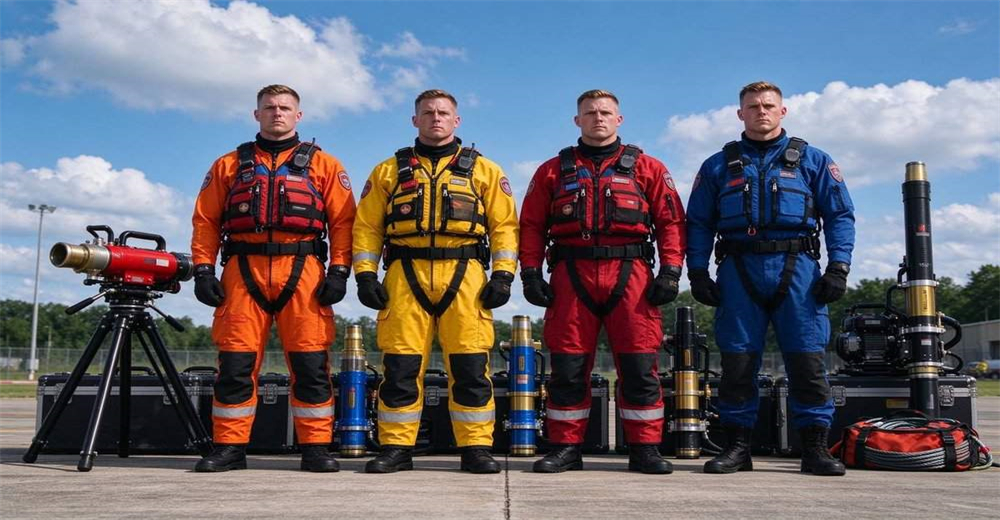
For Government Tenders, Fire Department and Coast Guard Bulk Procurement
We supply pneumatic line thrower units to fire bureaus, emergency management departments, water police and municipal flood control programs. If you are preparing a government procurement tender, framework agreement or emergency stockpile order, this section covers the documents, volume tiers, warranty and delivery terms you need for the bid file.
Technical Compliance and Tender Response
We provide an Excel-format technical response table that maps our model specifications line-by-line to your tender requirements. Send us the tender parameter list and we return the completed response sheet within two business days. Certain models carry GB/T 27906-2011 type test reports from a . We do not claim certification on SKUs that lack valid reports — we tell you honestly which models meet which standards.
Documents We Can Provide
Business license (supplier qualification)
GB/T 27906-2011 type test report (certified models only)
Factory inspection report / outgoing QC certificate per unit
Dangerous goods packing declaration for cylinder shipments (IMDG / IATA / ADR)
Volume Discount Tiers
Pricing is tiered by annual or per-order volume. Discounts are expressed as a percentage off the unit list price and are subject to contract:
1–5 units: trial / sample tier, standard pricing
6–20 units: small department batch, 5–10% volume discount
21–50 units: municipal / regional batch, 10–15% volume discount
50+ units: provincial / framework agreement, tiered 15%+ by negotiation
Exact pricing depends on the model, certification status and shipping lane. Contact us for a formal quotation.
Warranty and Quality Assurance
Every unit ships with a standard one-year warranty covering manufacturing defects. An optional two-year extended warranty is available on bulk orders. Before each unit leaves the warehouse, we run three tests: a pressure test on the cylinder and valve, a range test to confirm rated performance, and a seal test to check for leaks. We provide an outgoing inspection report with each shipment.
Delivery and Lead Time
In-stock models ship within 7–15 days. Bulk orders (20+ units, or orders requiring OEM branding) take 30–45 days. For framework agreements, we support call-off scheduling across the year so you do not have to warehouse thousands of units at once. All lead times are subject to contract and shipping lane confirmation.
People Also Ask
These are the questions government procurement officers and rescue team leaders ask us most often before requesting a quote.
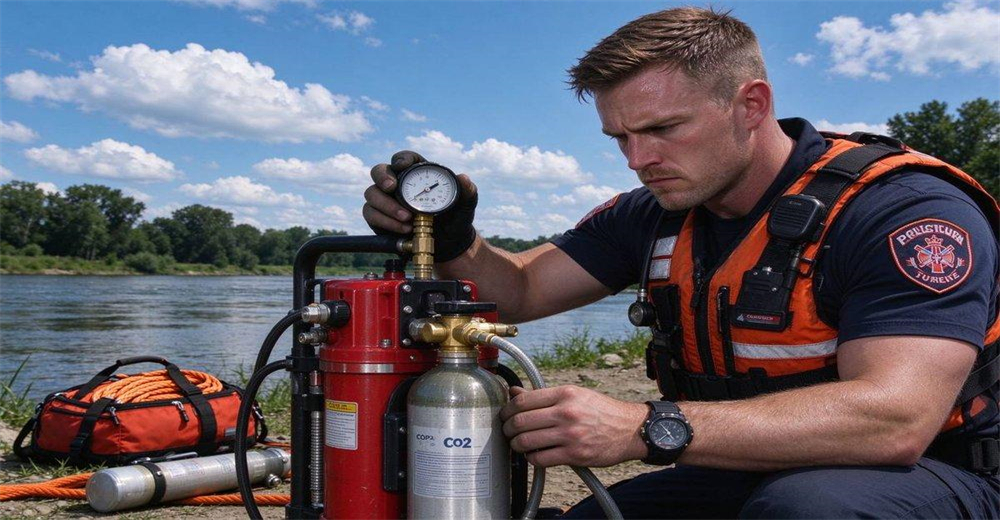
What is the pneumatic line thrower price for bulk orders?
Price depends on the model, range class, certification status and order volume. Entry-level Korean-style units are the most budget-friendly; ultra long-range units with s cost substantially more. We do not publish fixed prices online because they vary by configuration. Contact us with your model and quantity for a wholesale quote.
What pneumatic line thrower certification is required for government procurement?
In China, fire and emergency bureau tenders typically require a GB/T 27906-2011 type test report. Certain models in our catalog carry this report. For marine applications, SOLAS and IMO standards may apply. We provide the exact certificate pages for certified SKUs on request, and we tell you honestly if a model does not carry the report you need.
What are the key pneumatic line thrower specifications by range class?
Korean-style: 2.9–3.5 kg body, 7–20 MPa, 100–150 m land. American-style: 13 kg frame, 20 MPa, 125–140 m land with 330 kg anchor hook. Portable: 3–3.2 kg, 6.5–7 MPa, 150–185 m land. Long-range: 8.5 MPa, 250–350 m land. Ultra: 9.5–17 kg, 12–13 MPa, 580–640 m land. Exact figures per SKU are listed on the spec sheet.
How long is delivery time for bulk orders?
In-stock models typically ship within a few weeks. Bulk orders requiring custom OEM packaging take longer, subject to contract and production schedule. We support scheduled call-off deliveries for annual framework agreements so you can draw on stock throughout the year.
What documents are needed for customs clearance?
Standard export documents include commercial invoice, packing list and bill of lading. If high-pressure gas cylinders are included, additional dangerous-goods declarations apply (IMDG for ocean, IATA DGR for air, ADR for road). We handle this paperwork on our side — just tell us the destination country at the RFQ stage.
Do you offer pneumatic line thrower OEM and private label for government contracts?
Yes. Laser-engraved logo on the aluminium body and pad printing on plastic parts are available on mid-to-bulk orders. We can also private-label the box art, manual and warranty card. Colour customization on carry bags and flight cases is available. Tooling and artwork fees apply per order.
Can you meet tender specification requirements?
Yes. Send us your tender parameter list and we return an Excel-format technical response table mapping each spec to our model's actual performance. If a model does not meet a specific requirement, we tell you upfront and suggest the closest alternative that does. We never overstate certification or performance in bid responses.
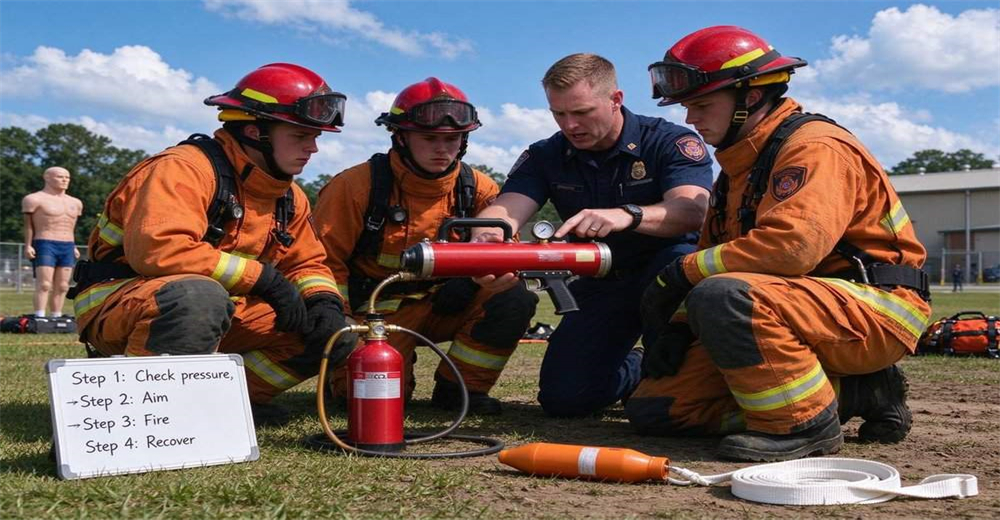
Pneumatic Line Thrower Certification and Global Compliance
Certification is where buyers and sellers most often talk past each other. A "certified" thrower means different things in China, on a ship, and in a US firehouse. Outfitting a vessel emergency launcher for coastal work or sourcing a marine unit for a commercial fleet, the certification requirements differ by flag state. We lay out the standards for every model, the report types, and what we actually hold on file, so you can quote the right thing in your tender.
GB/T 27906-2011: Chinese National Standard for Rescue Throwers
GB/T 27906-2011 is the Chinese national standard for water rescue life-saving apparatus, including pneumatic line throwers. This standard sets out minimum performance: range, buoyancy of the life ring, breaking strength of the rope, pressure resistance of the cylinder, and environmental testing like temperature and salt spray. Government tender flood supplies in China must meet this standard before they enter a municipal emergency procurement catalog.
A certified unit must pass a type test at an accredited lab. The test report lists every measured value: actual land range, actual water range, rope breaking load, ring buoyancy, and pressure cycling. For government tenders in China, this report is the document that lets a bidder qualify. We will share the relevant report pages on request for the SKUs that hold it.
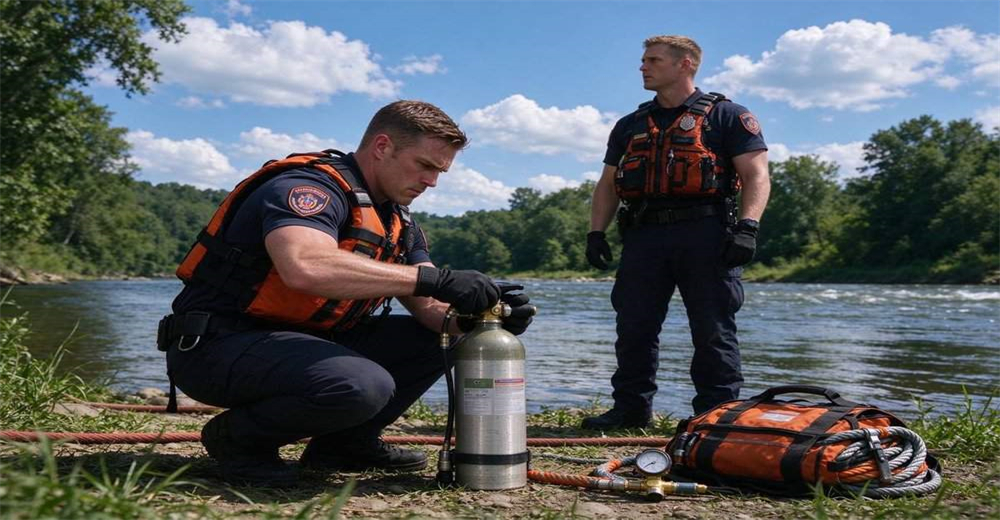
SOLAS and IMO: Shipboard Throwing Appliance Rules
On merchant ships, line-throwing appliances fall under SOLAS Chapter III, Regulation 17, which covers life-saving appliances. The rule sets minimum range (the appliance must be able to throw a line at least 230 m in calm conditions), number of projectiles carried on board, and approval by the flag administration. IMO (International Maritime Organization) sets the broader framework for shipboard safety equipment that SOLAS implements.
If you are outfitting a ship, confirm whether the classification society or flag state accepts a GB/T-tested unit as equivalent. Some do, some require MED or USCG acceptance instead. A marine standard life thrower and coastal flood control throwing cannon both fall under SOLAS scope. We will not tell you a unit is SOLAS-approved when it is not. We will tell you which report we hold and let your classification surveyor make the call.
USCG, NFPA, and IP68 Rating
In the United States, USCG 46 CFR Subchapter Q sets the approval framework for life-saving appliances including line-throwing appliances — verify the specific model’s certification status before tendering. Separately, NFPA standards (notably NFPA 1006 for technician-level rescue professional qualifications) reference rescue rope and thrower performance in training curricula.
On models equipped with electronic gauges, an IP68-rated housing means the electronics are dust-tight and protected against water immersion are dust-tight and protected against continuous immersion in water — relevant for coastal rescue throwing device and vessel emergency line thrower use. A coastal island salt fog vessel emergency throwing gear kit needs this rating. We supply units to European distributors who handle import paperwork on their side if their customers need it.
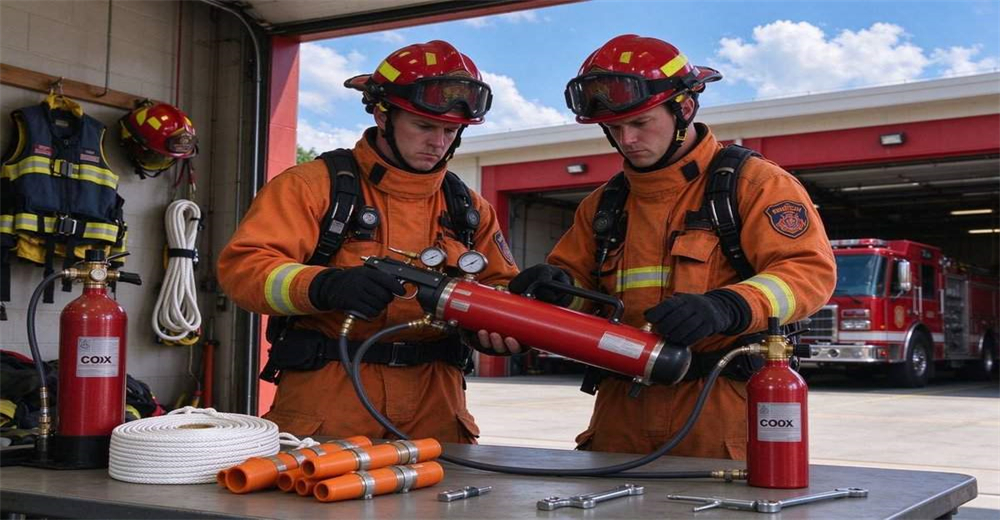
Pneumatic Line Thrower Maintenance, Safety and Troubleshooting
A pneumatic rescue line thrower is a pressure device. Treat this rescue thrower like an extinguisher, not like a toolbox. The checklists below keep the launcher ready, keep the crew safe, and tell you when a fault is field-fixable versus a factory return.
Pre-Launch Inspection Checklist (8 Items)
Run these eight checks on your launcher before every rescue thrower shot, every drill, every call. This life thrower inspection takes 90 seconds, and it is the single best habit your team can build. One — confirm the safety is on while loading. Two — check the cylinder pressure gauge reads in the green zone. Three — inspect the projectile head for cracks or dents. Four — check the rescue rope for tangles, burns, or broken fibers along its full length.
Five — confirm the life ring seal is intact and the trigger is armed correctly. Six — clear the launch path: no bystanders, no overhead wires, no glass behind the target. Seven — confirm the rope handler is ready and the line can run free. Eight — shout a clear warning before the shot. That is the whole checklist.
Cylinder Pressure, Rope and Life Ring Inspection
Pressure is the life of every pneumatic line thrower in the catalog. Read the gauge before every operation. For external-cylinder units, swap to a freshly filled cylinder before a long drill session. The rated storage range is -20°C to 55°C; the operating range is narrower, about -10°C to 45°C. Do not leave a cylinder in a closed truck in direct sun.
Rope is the weakest link in the whole system. Run your gloved hand along the full length after every use. Look for three warning signs: fuzzing on the outer sheath, flat spots where the rope was kinked, and discoloration from chemicals or sun.
If the rope has been under a hard load (a full person hanging on it), retire it even if it looks fine. The high salt fog coastal corrosion resistant thrower main body needs extra rinsing after marine use. The auto-inflating life ring head has three failure modes: expired CO2 cartridge, bent firing pin, and a slow-leaking bladder. Inflate it manually during monthly inspection and leave it overnight to check for leaks.
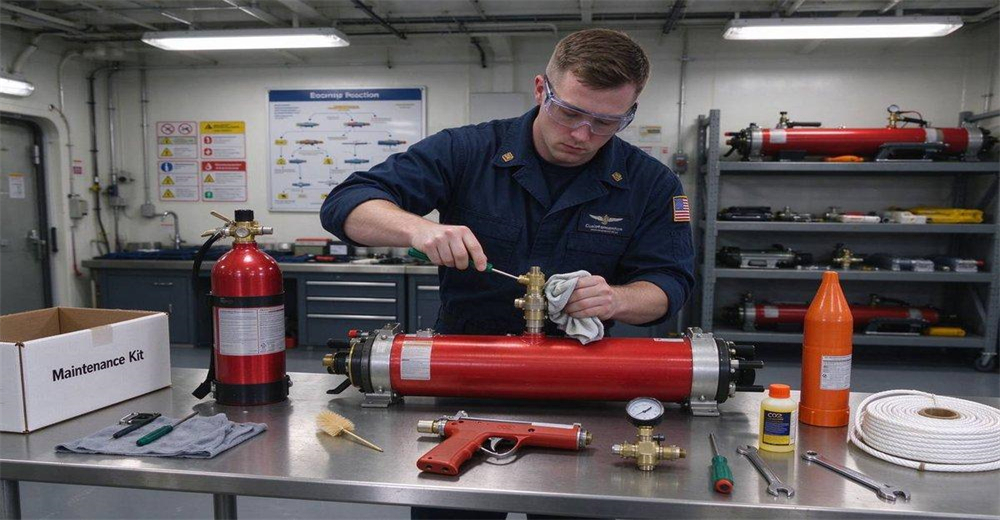
O-Ring and Seal Replacement Schedule
O-rings on your launcher are the cheapest maintenance item and the most common cause of rescue thrower pressure loss. We recommend replacing the main O-ring set every 12 months on a unit in regular service, or after about 50 shots, whichever comes first. Lubricate O-rings with silicone grease only. Never use petroleum jelly — it attacks rubber and will ruin the seal in weeks.
The maintenance schedule below covers every model, from after-use rinsing to annual O-ring replacement and gauge recalibration. For sub-zero units, shorten O-ring intervals in cold storage.
A simple maintenance schedule keeps every pneumatic rescue thrower mission-ready for years. Rinse after every use, check cylinder pressure monthly, inspect full rope length quarterly, and replace O-ring sets annually. Log each inspection in the maintenance record that ships with every unit.
Interval
What to Check / Do
Notes
After every use
Rinse salt/dirt off body; wipe projectile; inspect rope by hand; dry before storing; confirm safety is on; reset to empty-cylinder state
Do not store a wet unit in a closed case for more than a few hours
Monthly
Read cylinder gauge; inspect O-rings visually; check CO2 cartridge date stamps; dry-fire (no projectile) to confirm trigger action; inflate life ring and check for leaks
Log each inspection in the service book that ships with the unit
Every quarter
Full rope length inspection under light; check projectile heads for cracks; test firing pin spring; inspect case latches and foam insert; lubricate moving joints with silicone
For units on a fire truck, do this during the monthly apparatus check
Every year
Replace main O-ring set; replace any rope showing UV damage; recalibrate pressure gauge if equipped; book a factory service if any pressure loss is noticed; verify certification documents are current
This is the annual service that keeps the unit tender-ready
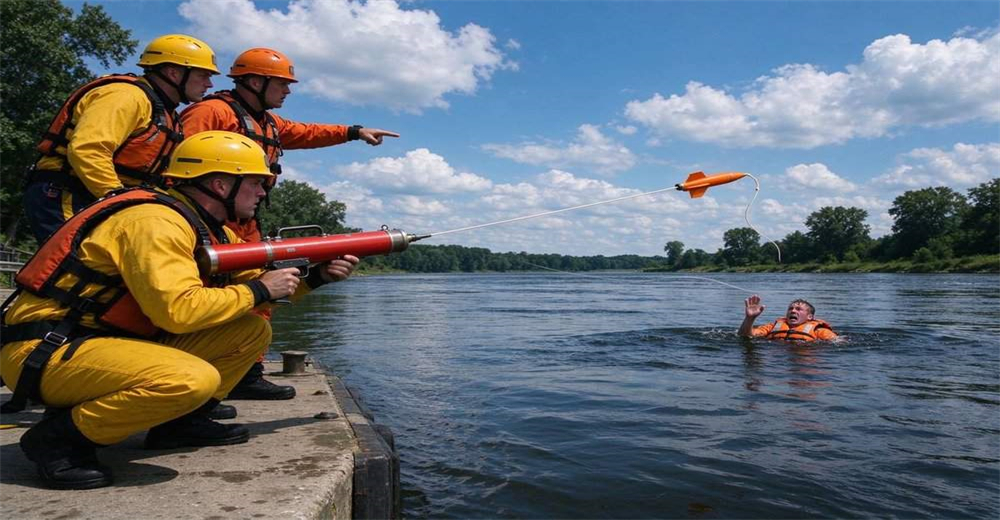
Safe Operation and Common Faults
The launcher is a rope thrower weapon-class pressure device. The safety zone behind this rope thrower is at least 5 metres clear — recoil is real, and bystanders standing behind the shooter can get knocked over. The safety zone in front is the entire launch corridor: no people, no animals, no property in the line of fire. Brace the stock firmly into your shoulder or set it on the ground / tripod.
Common faults are straightforward to diagnose. Pressure fault — gauge reads low or drops fast — is almost always an O-ring, a loose fitting, or an expired CO2 cartridge. Launch fault — the projectile drops short — usually means low pressure, wrong angle, or a fouled barrel.
Rope fault — line tangles or snaps — check the coil and kink at the projectile attachment. Life ring fault — fails to inflate on water contact — check the cartridge date and the firing pin. Field-repairable faults are O-rings, ropes, cartridges, and cleaning. Factory-return faults are pressure-valve failures, cracked projectile bodies, and bent firing mechanisms.
Know the hard physical operating limits before you deploy. The envelope below lists minimum safe distance, recommended launch angles, temperature bands, wind speed limits, altitude derating guidance and maximum projectile mass.
Understanding the physical limits of a pneumatic line thrower prevents unsafe deployment. Minimum safe launch distance is 20 to 30 metres; recommended launch angles are 30, 45, 55, 65 and 75 degrees; operating temperature ranges from -10 to +45 Celsius for CO2 units. Derate expected range by 10–15 percent above 2000 metres altitude, per the operating manual.
Parameter
Limit / Range
Note
Minimum safe launch distance
~20–30 m
Inside this, the projectile has not stabilised; do not fire at a person closer than this
Recommended launch angles
30° / 45° / 55° / 65° / 75°
Five-position base gauge on long-range units; flatter for short shots, higher for max range
Operating temperature
-10°C to +45°C
CO2 units lose range below freezing; use external-cylinder units for cold work
Storage temperature
-20°C to +55°C
Never store a charged cylinder in a closed sun-baked vehicle
Wind speed limit
Avoid sustained wind above ~10 m/s
Side wind drifts the light projectile several metres at long range; aim upwind and shorten the shot
Altitude effect
Expect range to drop at altitude
Derate expected range by ~10–15% above 2000 m and confirm with a test shot
Max projectile mass
1.5–1.8 kg
Heavier heads reduce range; match head to the job
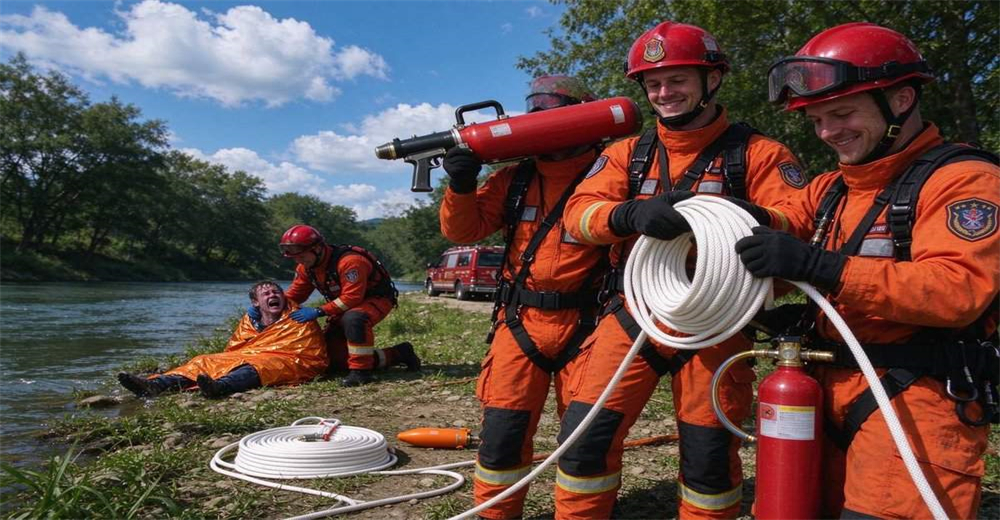
FAQ: Pneumatic Line Thrower Questions Answered
Below are the questions buyers ask us most, grouped by topic. If your question is not here, send it through the contact form and we will reply within one business day.
What exactly is a pneumatic line thrower?
A pneumatic rescue line thrower is a compressed-air rescue device that fires a projectile across a gap — a river, a harbour, a flooded street — trailing a rope or an auto-inflating life ring. The projectile weighs 1.5–1.8 kg and flies 3 to 5 seconds. It replaces hand-thrown heaving lines, which rarely reach beyond 30 m.
What is the pneumatic line thrower range? How far can it shoot?
Korean-style units reach 100–150 m on land and 70–120 m on water. Portable folding-stock units reach 150–185 m on land. Long-range units reach 250–350 m. Ultra long-range units reach 580–640 m on land and 330–440 m on water. Water range is always shorter because the floating rope and ring create drag.
What is the difference between CO2 and external cylinder power?
External-cylinder units plug into a scuba-style tank and fire consistently until the tank runs down. CO2 units use disposable 33 g cartridges — lighter, no hose, but later shots in a burst lose range as the gas chills. Choose external for repeated drills; choose CO2 for fast, light, single-purpose response.
Does the life ring really inflate on its own?
Yes. A water-activated plunger opens the CO2 valve when the head hits the water. It inflates in about 5 seconds and provides 8 kg of buoyancy, losing less than 5% over 24 hours. Test the trigger manually during monthly inspections — a stale cartridge is the top reason a ring fails to inflate on call.
Can one unit cover water, land rope and anchor hook jobs?
Yes — the anchor-hook triple-use thrower is built for exactly that. It fires the land rope head, the water ring head, and the titanium anchor hook. It is the most versatile single unit in the catalog and what most mid-sized teams buy once they cover more than one scenario.
Which pneumatic line thrower for fire department use is best for small teams?
Start with a Korean-style or portable CO2 unit in the 100–180 m land range. It covers the most common calls: narrow rivers, flooded underpasses, dock pickups. It is light, cheap to run, and easy to train on. Step up to the anchor-hook triple-use unit only if your crews also do high-rise or cliff work.
Should I buy a long-range or a 600m ultra long thrower?
Buy the long-range class unless you have a genuine 400+ metre gap to bridge. The 600 m class weighs 9.5–17 kg, needs a stable mount, ships with a folding metal base and calibration tools, and costs several times more. It is the right tool for coast guard and wide-river bureaus — overkill for a city fire truck.
Do I really need GB/T 27906 certification?
If you are bidding into a Chinese government fire, police or emergency bureau tender, yes — the tender will require a type test report. Certain models in our range carry GB/T 27906-2011 certification. If you are buying for a private contractor, yacht club or industrial safety team, you likely do not need it. Ask us which SKUs have valid reports before you quote.
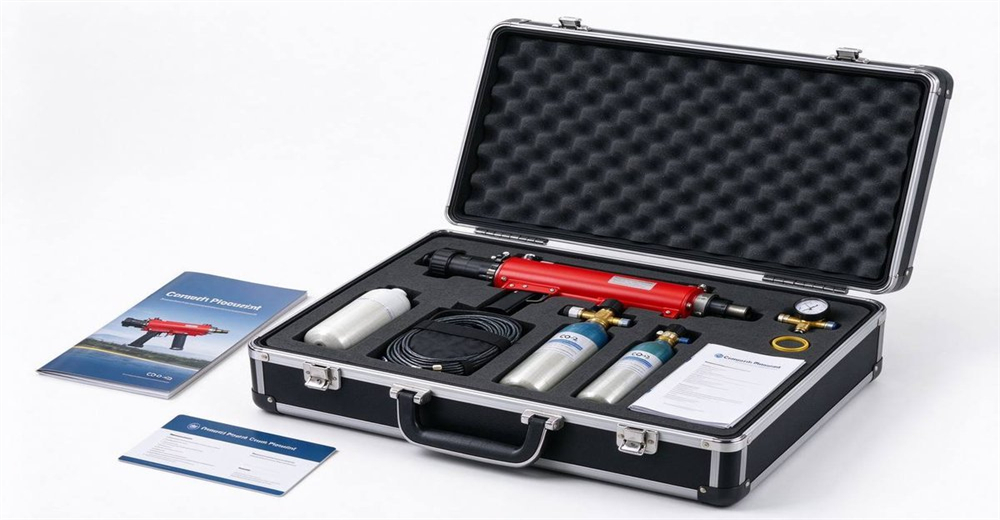
What is the MOQ for a wholesale order?
Trial orders start at a single unit. Mid-volume orders (6–20 units) qualify for a volume discount. Bulk framework agreements are priced by annual call-off. Exact MOQ depends on the model and certification status. Tell us your target volume and timeline for a tiered quote.
How many people does it take to operate safely?
Minimum three: the shooter, the safety officer, and the rope handler. A two-person team can manage in a pinch, but a solo operator should not fire a pressure launcher on a rescue scene. The recoil, rope tangling and downstream safety all need a second pair of eyes.
What pneumatic line thrower maintenance schedule do I follow?
Quick inspection after every use. Gauge and O-ring check monthly. Full rope and trigger check every quarter. Annual O-ring replacement and bench service once a year. Log every check in the service book that ships in the case.
How long does a pneumatic line thrower last?
The main body has a rated service life of about six years in regular service. Projectiles and life-ring bladders are around two years, or sooner if damaged. Retire early if the valve has ever leaked, the body is dented or cracked, or the gauge will not hold calibration.
Will salt water or cold weather damage it?
Coastal units should be rinsed with fresh water after every operation, dried and stored in the flight case. Rubber seals are the first components affected by salt air — replace them annually. In sub-zero conditions, CO2 cartridge pressure drops — specify external-cylinder (compressed air) models for cold-climate duty and confirm range with a test shot before deployment. With basic rinsing and dry storage, corrosion is not a problem.
When do I have to replace the rope?
Replace it if you see fuzzing, broken outer fibers, flat kinks or UV discoloration. Replace immediately after a hard shock load — a full person hanging on the rope — even if it looks fine. Land rope is rated 2000–3000 N; water rope 6000–7000 N. Do not mix them up.
How do you ship the gas cylinders internationally?
We strongly recommend shipping the launcher empty and filling the cylinder locally at a scuba or gas supplier — this avoids dangerous-goods paperwork and cuts freight cost. If you need pre-charged cylinders, we handle IATA DGR (air), IMDG (ocean) and ADR (road) paperwork on approved lanes. Tell us the destination country at RFQ stage.
Do you supply for government framework agreements?
Yes. We supply bulk units under government annual framework agreements for fire bureaus, emergency management departments and municipal flood control programs. We handle call-off scheduling across the year so you do not have to warehouse thousands of units at once. Pricing is tiered by annual volume and we protect regional territories for approved distributors.
Can you bundle a thrower with other rescue equipment?
Yes. We can bundle a compressed-air launcher with throw bags, PFDs, rescue wetsuits and inflatable boats into a single procurement kit. This is popular with small fire departments and township water brigades that want one order covering both compressed-air and hand-thrown capability. Contact us with your team profile and we will quote a tailored kit.
Ready to Equip Your Team?
If you have read this far, you know which class of pneumatic line thrower fits your gap, your team, and your budget. Every unit we supply is tested to the same performance baseline. As a bulk wholesale supplier of emergency flood rescue equipment and flood disaster relief products, we spec every system to your actual duty cycle. Tell us your range requirement, your typical scenario, and whether you need a GB/T 27906-certified SKU for a tender. We will come back with a shortlist, the correct package, and a wholesale quote — no pushy sales talk.
For distributors, we will walk you through the wholesale tiers and OEM options. For bureaus, we will share the type test report pages you need for the bid file. We work with relief organizations worldwide, fire departments, coast guard teams, and industrial safety buyers. Send us your requirement, and let's get your team equipment they can trust on the water. Every unit ships with a complete accessory kit.
Previous :
Korean Style Pneumatic Rescue Thrower PTQ20-Y100S70 | 20 MPa ≥100 m Land / ≥70 m WaterNext :
Professional Rescue Launcher, Aluminum Alloy, Fire Fighting Essential Professional Rescue Launcher, Aluminum Alloy, Fire Fighting Essential
This orange-yellow professional rescue launcher is made of aviation-grade aluminum alloy, with maximum working pressure of 200bar, throwing distance of 150-230 meters on land and 80-210 meters on water. Certified by the National Fire Equipment Quality Standard, it reaches maximum initial velocity of 60m/s. It provides efficient solutions for fire teams, flood control, and water rescue operations, saving lives in critical moments as essential equipment for all rescue teams.
 Customized Life-saving Thrower, High Strength, Long-range Rescue
This professional life-saving thrower is made of high-strength composite materials, with a throwing distance of 50 meters and a load-bearing capacity of 150kg, achieving a 99% rescue success rate. Its orange-yellow design ensures high visibility on water, equipped with non-slip handle and high-strength rescue rope. Specifically designed for flood control, water rescue and emergency disaster relief, it is essential equipment for fire departments, maritime rescue units, water rescue teams and flood control forces, participating in over 200 flood rescue missions annually.
 High-Pressure Pneumatic Rope Launcher, Rescue Special, 120m Range
This high-pressure pneumatic rope launcher uses compressed air as power source, with projection distance ≥80 meters on water and ≥110 meters on land, equipped with 120-meter high-strength rescue rope. The main body weighs less than 3.5kg, offers simple and quick operation, and features a spark-free design ensuring safe use in flammable environments. The accompanying auto-inflating life ring inflates within 5 seconds with buoyancy >8kg. Ideal for flood disaster relief, water rescue, maritime rescue and other complex scenarios, it's essential equipment for emergency rescue departments.
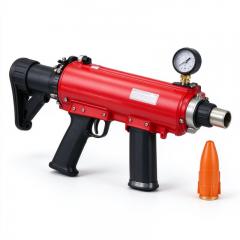 Korean Style Pneumatic Rescue Thrower PTQ20-Y100S70 | 20 MPa ≥100 m Land / ≥70 m Water
Korean Style Pneumatic Rescue Thrower PTQ20-Y100S70, 20 MPa shoulder-fired launcher. ≥100m land range and ≥70m water range, equipped with auto inflating lifebuoy head and 2000N high tensile rope. Complies with GB/T 27906-2011. Complete aluminum hard case kit. Support bulk wholesale, OEM custom logo for fire, coast guard and flood rescue teams. Note: Price for reference only. Exact price based on quantity, size, weight and custom details.
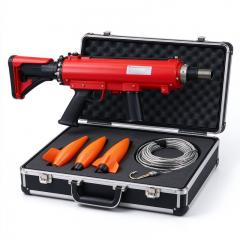 American Style Anchor Hook Rescue Thrower | PTQ20-Y125S100 & PTQ7-Y150S110Q55
American Style Anchor Hook Pneumatic Rescue Thrower, frame-mounted design with recoil buffer. Equipped with heavy-duty anchor claw for high-rise, cliff and maritime rescue. Delivers long-distance rope deployment for swiftwater, urban flood and offshore emergency rescue. Complete kit with launcher, projectiles, rope and protective case. Support bulk wholesale and OEM customization for fire and coast guard teams. Note: Price for reference only. Exact price based on quantity, size, weight and custom details.
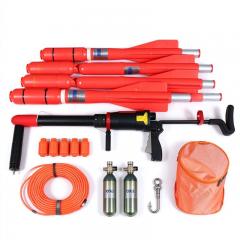 Portable Rescue Thrower | Folding Stock Pneumatic Line Thrower for Flood and Swift Water
Portable folding stock pneumatic rescue thrower with lightweight titanium alloy body, working pressure 6.5MPa. It reaches ≥185m on land and ≥125m on water, equipped with 3 interchangeable projectile heads. Two variants BM06 and BM07 for selection. Single-person operation, ideal for mountain, urban flood and swiftwater rescue. Support bulk wholesale and OEM customization for emergency response teams. Note: Price for reference only. Exact price based on quantity, size, weight and custom details.
Copyright © Custom Disaster - Relief Bedding: Tents, Sleeping Bags, Blankets All Rights Reserved
the professional team to service !