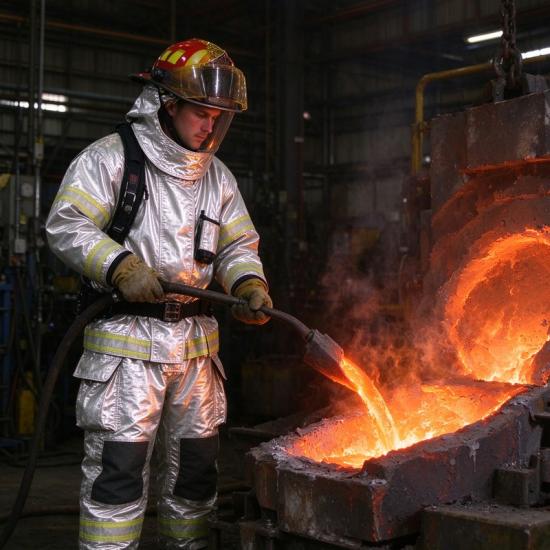
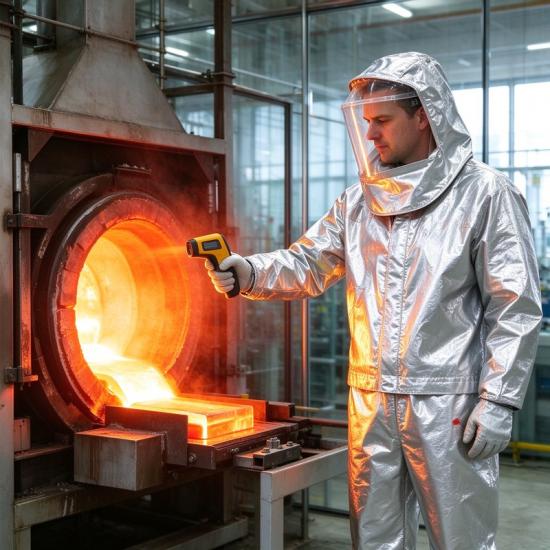
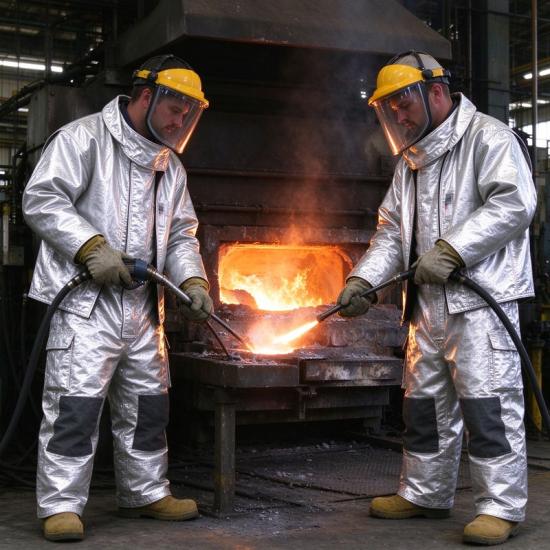
Heavy Duty Aluminized High Temperature Coverall With Reflective Aluminum Foil Outer Layer Blocks Strong Radiant Heat. Multi-Layer Para Aramid Fabric For Foundry, Steel Mill And Molten Metal Work. Available For Wholesale Bulk Procurement For Industrial High Temperature Operation Teams.
Note: Price for reference only. Exact price based on quantity, size, weight and custom details.
model no. :
XFF-13Brand:
YRFmarket price :
$119.8sale price :
$59.9price range :
30-100/$59.9Color :
Multiple Colorsport of dispatch :
Guangdong/GuangzhouPayment :
TT, Paypal, Western Unionmin order :
30original region :
Made in ChinaLead Time :
5-15daysAluminized High Temp Coverall | 500-1000°C Radiant
Heat Foundry
We supply wholesale aluminized heat resistant coveralls from China for foundry, glass plant, and steel mill workers facing radiant heat exposure. 500 to 1000°C radiant heat protection with reflective aluminum foil outer layer, multi-layer insulation, and sealed seams keeps workers safe during long hot shifts. Full specs, sizing charts, certification details, OEM branding, and wholesale factory pricing below.
 |

|
1. Aluminized Coveralls for 500–1000°C Heat
2. Radiation Heat vs Conductive Heat Protection
3. Foundry & Glass Kiln Applications
4. Full-Body Coverall Design & Comfort
5. Selecting Temperature-Rated Suits
6. FAQ
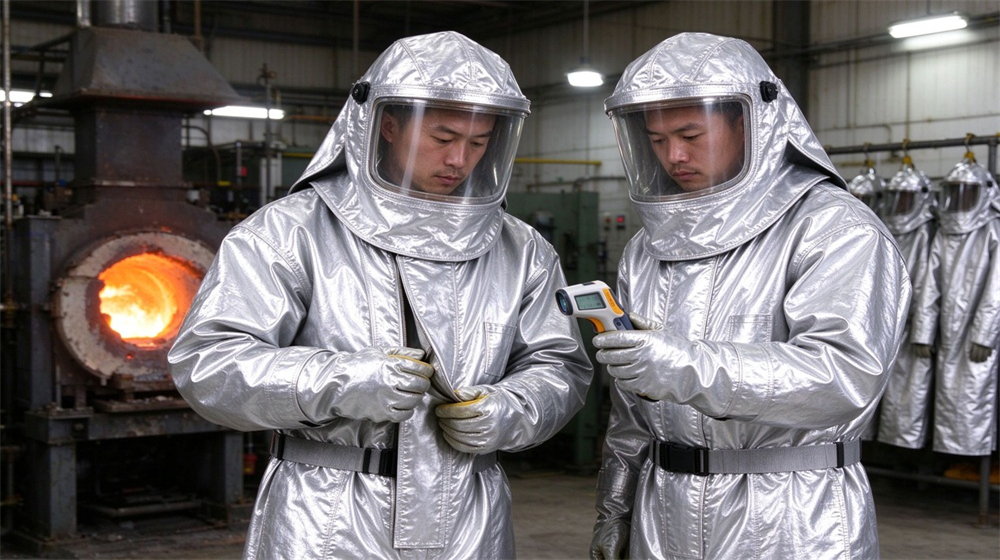
The construction does the work. The aluminum foil facing reflects radiant heat before it reaches the body, the para-aramid twill substrate resists heat and flame, and the inner layers keep the garment wearable through a full work period. This is not a fire proximity suit and it is not ordinary FR workwear; it is a high temperature work coverall engineered for furnace-front operations where radiant heat is the daily hazard.
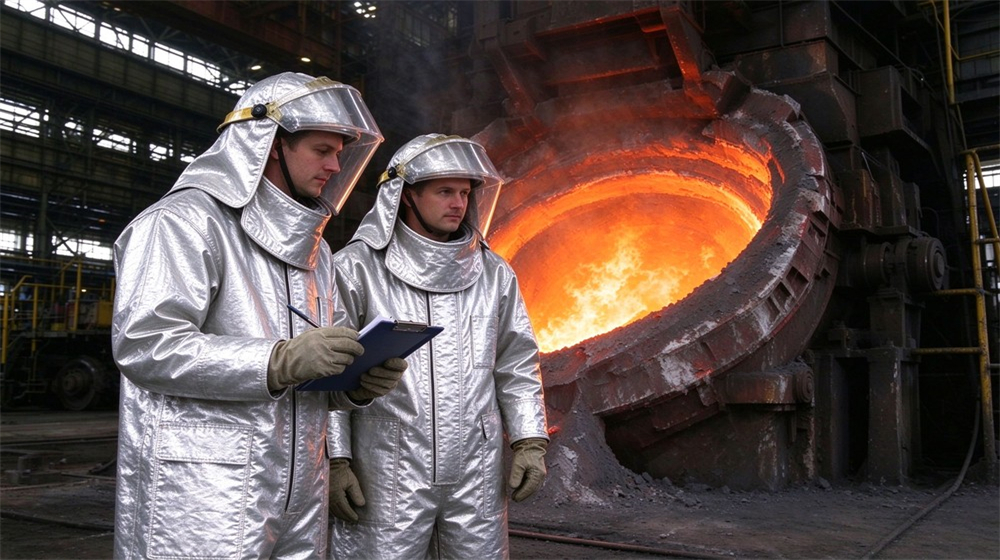
Foundry floors, glass kiln houses and aluminum plants are where this coverall earns its rating. The 500°C contact and 1000°C radiant specification matches the intensity of pouring, ladle work, kiln inspection and smelting tasks that run every shift.
The layering is fixed at the factory, which means every suit in a batch carries the same barrier sequence and the same documented standard. The aluminum coating is applied evenly so reflection is consistent across the whole surface, and the substrate keeps its strength through flexing and cleaning cycles.
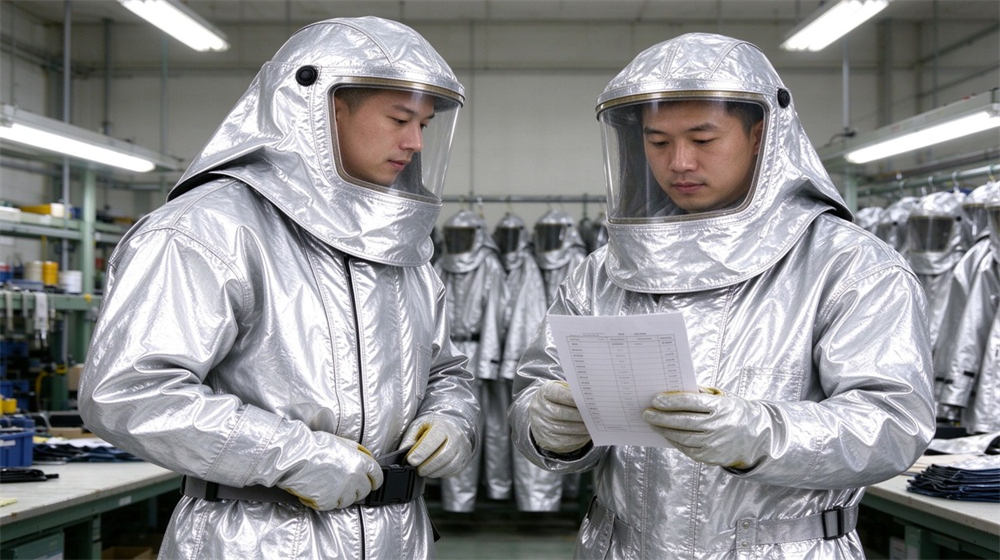
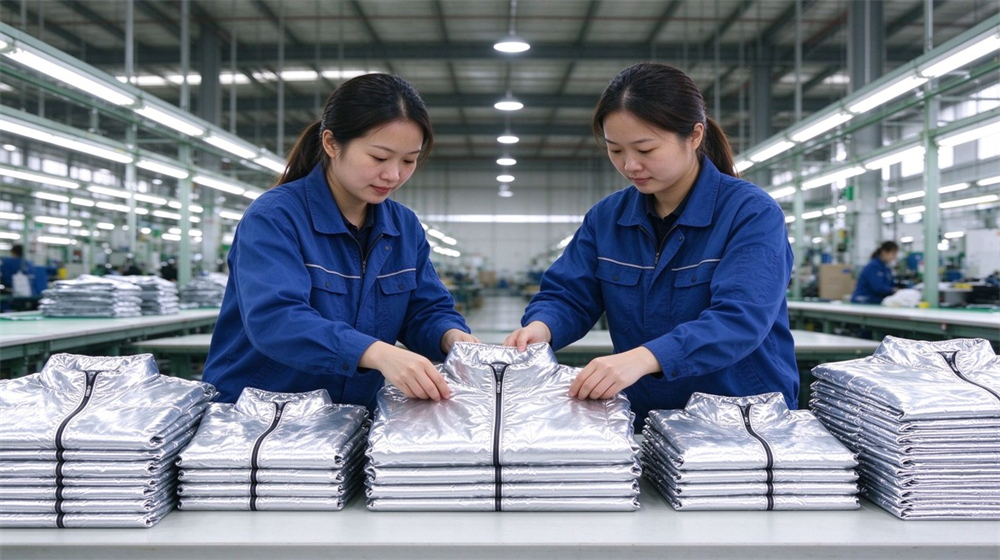
Every suit in the batch is identical because the same fabric roll, the same foil application and the same seam sequence run through the whole order. The factory photograph shows folded coveralls being sorted by size before packing, which is how a bulk order moves from the sewing line to the shipping carton.
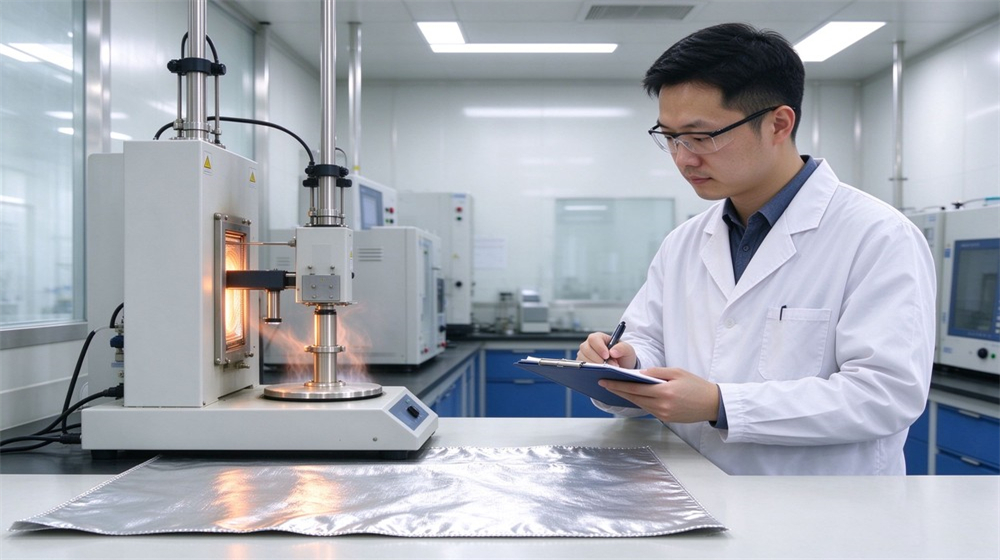
During inspection, the operator checks the coating, the edges and the seams where the layer meets the rest of the garment. That is where reflection can break down, and that is also where the protection is restored or retired.
Foundry floors, glass kiln houses and aluminum plants share one problem: radiant heat far above what ordinary workwear can handle. An aluminized heat resistant coverall answers it with a reflective outer surface and an insulating core, so workers can move close to furnaces, ladles and molten material while the garment keeps its structure.
The rating is the first thing a wholesale buyer checks. This 1000°C coverall foundry specification covers 500°C contact heat and 1000°C radiant heat, which means it is built for the hottest routine tasks in metal processing, not for light heat exposure.
Bulk buyers compare the tested layers before placing aluminized heat resistant coverall orders.
1. Aluminized Coveralls for 500–1000°C Heat
he para-aramid twill base carries the aluminum foil facing that reflects radiant heat before it reaches the insulation. In front of an open furnace or a stream of molten metal, the difference between a reflective suit and a dark workwear is immediate: the reflective surface keeps the garment temperature manageable while a dark fabric absorbs the heat directly.
For buyers who manage foundries, glass plants or aluminum operations, the question is not whether to use heat protection but which rating matches the real task. A coverall rated for 500°C contact and 1000°C radiant heat covers the majority of furnace-front work, from ladle handling to kiln inspection.
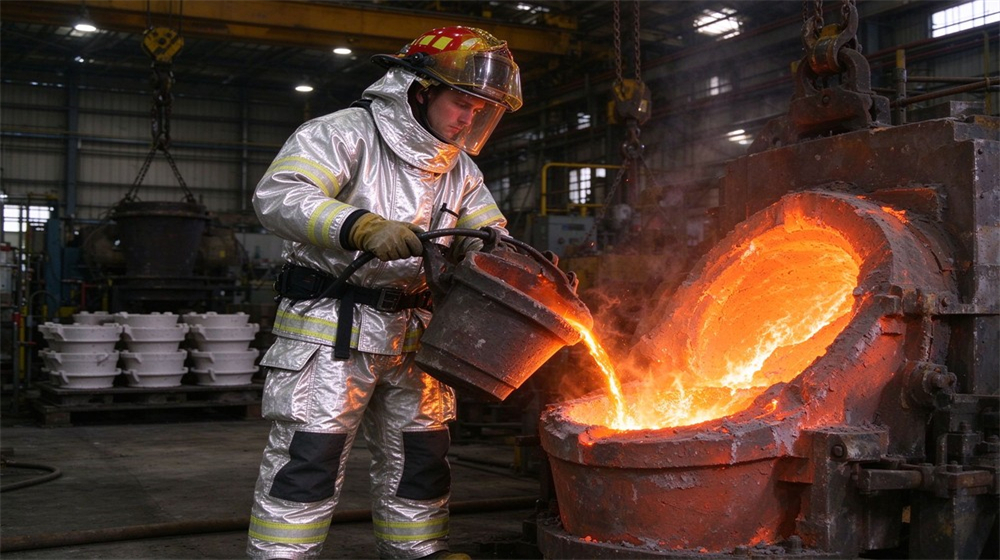
The two numbers describe different exposures. Contact heat is what happens when the garment touches a hot surface; radiant heat is what pours off a furnace opening or a molten stream without any contact at all. A suit that only resists contact heat will still fail in front of an open furnace, because the radiant load arrives first. The 500°C contact and 1000°C radiant combination covers both paths.
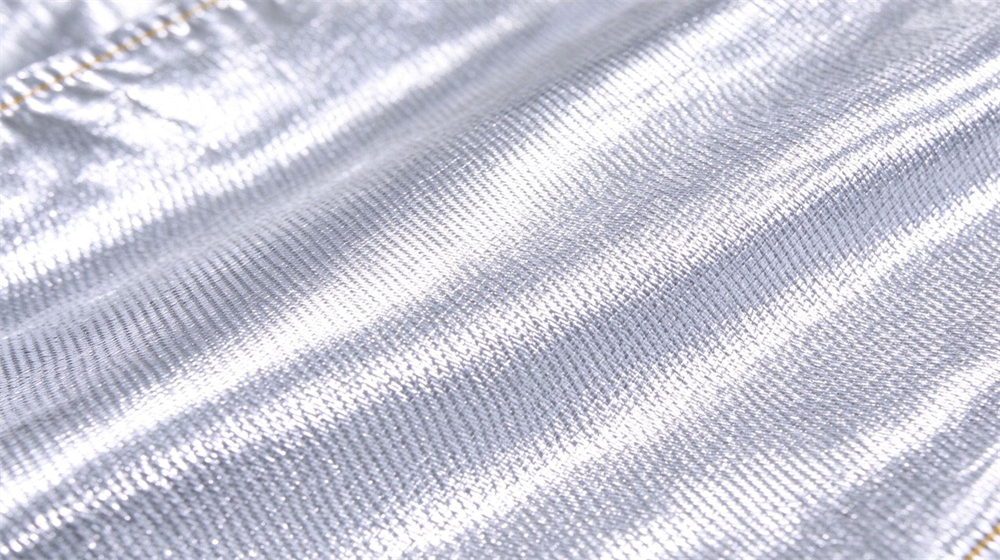
The foil facing is not decorative. It reflects most of the incoming radiant energy, and the layer behind it absorbs what passes through. That two-step defense is what lets a worker stand closer to a molten pour or a kiln opening than any uncoated fabric allows.
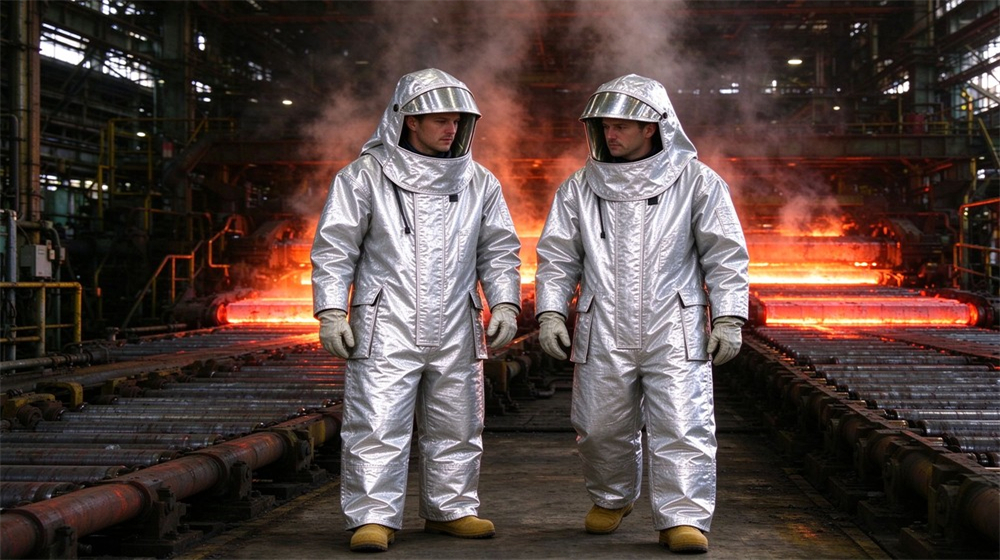
An aluminum foil protective suit works like a mirror for heat. The bright silver surface bounces radiant energy away instead of letting it sink in, which keeps the fabric layers underneath cooler for longer. This is why aluminized garments look bright: the reflectivity is the protection.
The foil is bonded to a para-aramid twill substrate that keeps its strength through bending, kneeling and cleaning cycles. The combination gives a garment that reflects heat on the outside and stays tough on the inside, which is the practical definition of a high temperature work coverall.
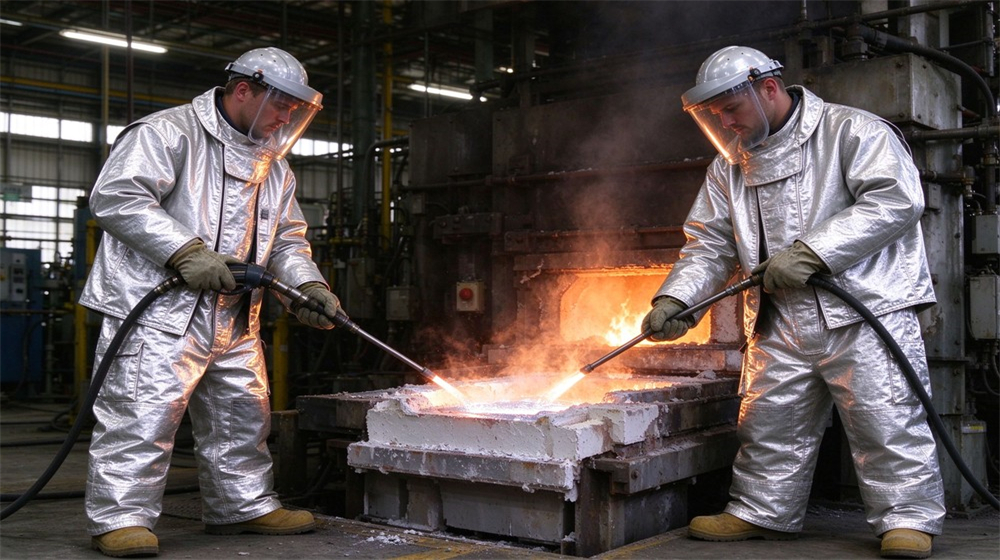
Heat protection garments are often separated by rating bands. Lighter aluminum foil suits cover 200–400°C work such as heat treatment and annealing; this 500–1000°C coverall sits above them for foundry, glass and aluminum operations; and fire proximity suits sit higher still for brief flame-entry work. Choosing the right band is a budget and safety decision at the same time.
Inside each band, buyers also check construction details: foil weight, substrate specification and seam method. Asking for the layer-by-layer specification at quotation separates a rated garment from a rated-looking one.
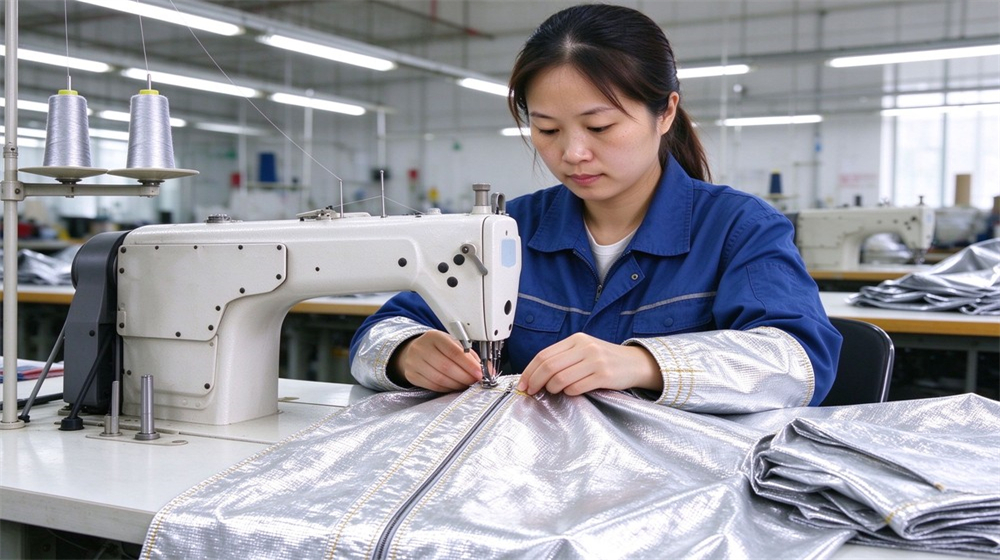
Batch consistency is built into the production line: the same fabric roll, the same foil application and the same seam sequence run through the order, so one suit in the batch performs like the next.
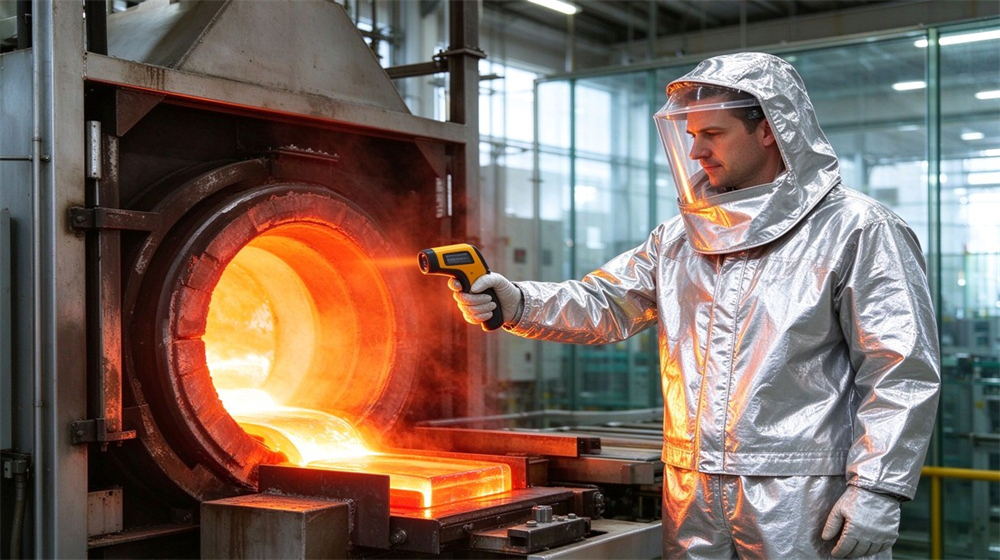
Bulk buyers standardize their teams on one specification, and consistency is what makes that possible. Fabric samples are tested before production runs begin, sealed seams and visor assemblies are checked on the line, and each result is tied to the batch number. The documentation set travels with the order, so the delivered garments are verified against the specification rather than assumed to meet it.
For aluminum foil protective suit orders, buyers receive the same test documentation at the sample stage and with every shipment, which supports tender submissions and safety audits.
Reviewing the documentation before shipment is standard practice for furnace-team buyers.
The table below compares the aluminized bands against typical tasks.
|
Rating Band |
Contact Heat |
Radiant Heat |
Typical Tasks |
|
Aluminized Coverall 500/1000°C (FYBR02) |
Up to 500°C short contact |
Up to 1000°C radiant |
1000°C coverall foundry pouring, ladle work, glass kiln checks, aluminum smelting |
|
Aluminized Coverall 200/400°C (FPCR02) |
Up to 200°C contact |
Up to 400°C radiant |
Heat treatment, annealing, drying furnaces |
|
Standard FR workwear |
Low heat, flame resistant |
Not rated for radiant heat |
General plant work with flame risk |
The rating band decides where a suit is usable. The 500/1000°C aluminized coverall is built for furnace-front tasks; lighter bands are for lower-temperature operations. The task list, not the product name, should drive the selection.
2. Radiation Heat vs Conductive Heat Protection
Buyers often ask whether heat protection means resisting flames or resisting radiated energy. The answer changes what the garment is made of. An aluminized heat resistant coverall is engineered for radiant heat first, with flame resistance as part of the package, because foundry and kiln hazards are mostly radiant before they become contact or flame hazards.
Radiant heat travels through the air; conductive heat transfers by touch. The same garment must manage both, and the different mechanisms decide the fabric requirements.
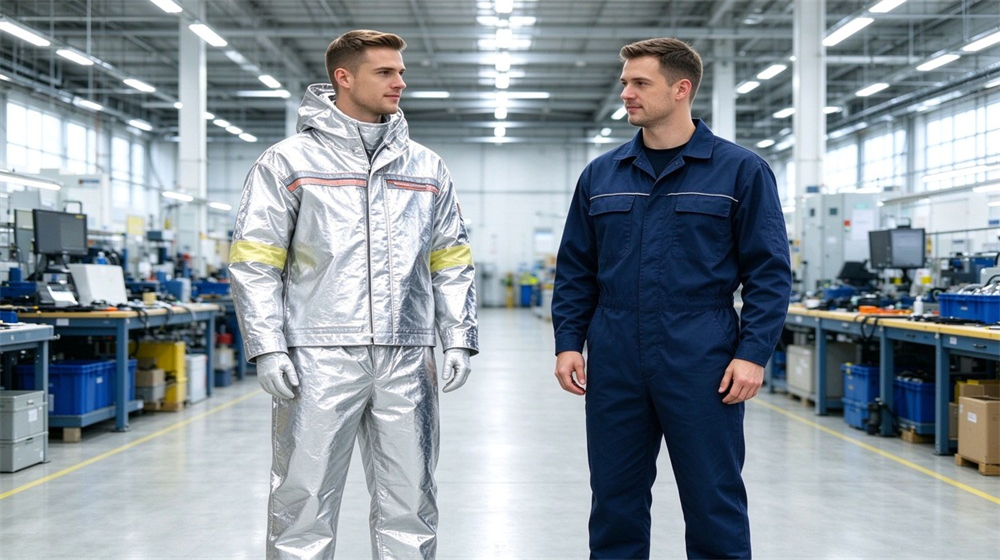
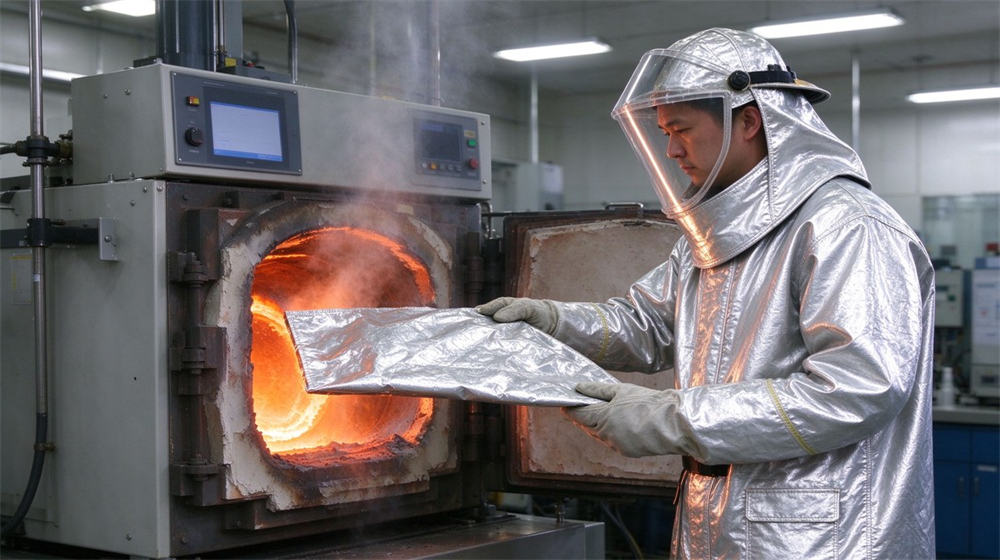
In front of a furnace, a ladle or a molten stream, radiant heat is the dominant load. It does not need contact to burn; it arrives as energy through the air. The aluminum foil facing reflects this energy, which is why aluminized garments are the standard choice for furnace-front work in foundries, glass plants and aluminum plants.
A 1000°C coverall foundry rating tells a buyer the suit can stand in front of the radiant source that a foundry pour produces, for the exposure time stated in the specification. Radiant ratings are about standing close to the source, not touching it.
Contact heat is what happens when a worker leans on a hot rail, lifts a warm part or brushes against a heated surface. The 500°C contact rating covers short contact with hot surfaces, and the insulation slows heat transfer long enough for the worker to react. Contact time is part of every rating, so duration matters as much as temperature.
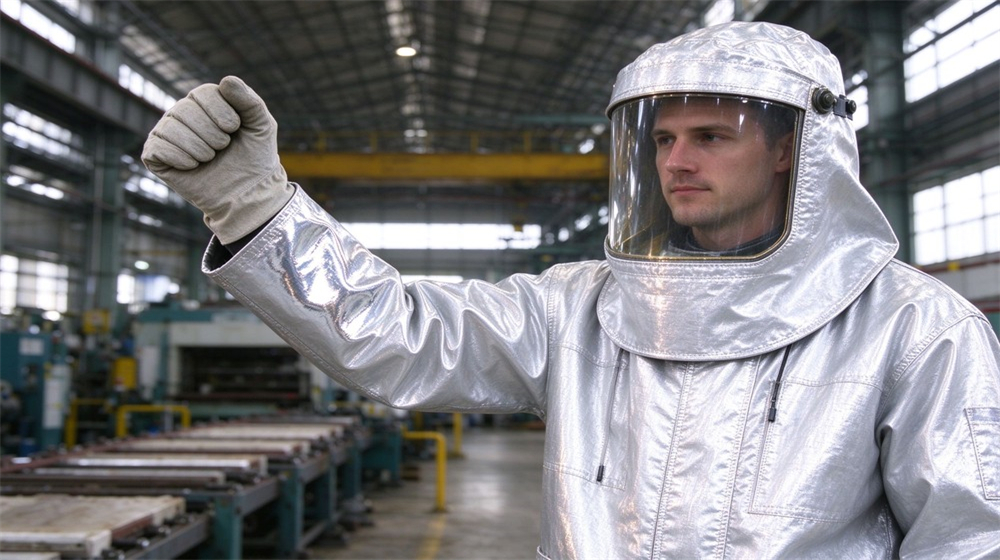
This comparison shows the practical gap between an aluminum foil protective suit and standard workwear. The reflective surface faces the furnace; the dark fabric absorbs heat. For furnace-front work, that difference is the difference between a manageable shift and a hazardous one.
Radiant heat arrives faster than contact heat and carries further, which is why the radiant rating is usually the binding constraint for furnace-front work. The same worker who can touch a hot rail briefly still needs the radiant rating to stand at the furnace opening at all. Both ratings are quoted together so the buyer can specify one garment that covers both exposure paths.
Radiant heat is measured against the exposure time in the specification, and the batch test report verifies the garment under the same conditions. A rating number without a stated duration describes a different protection level from the same number with one.
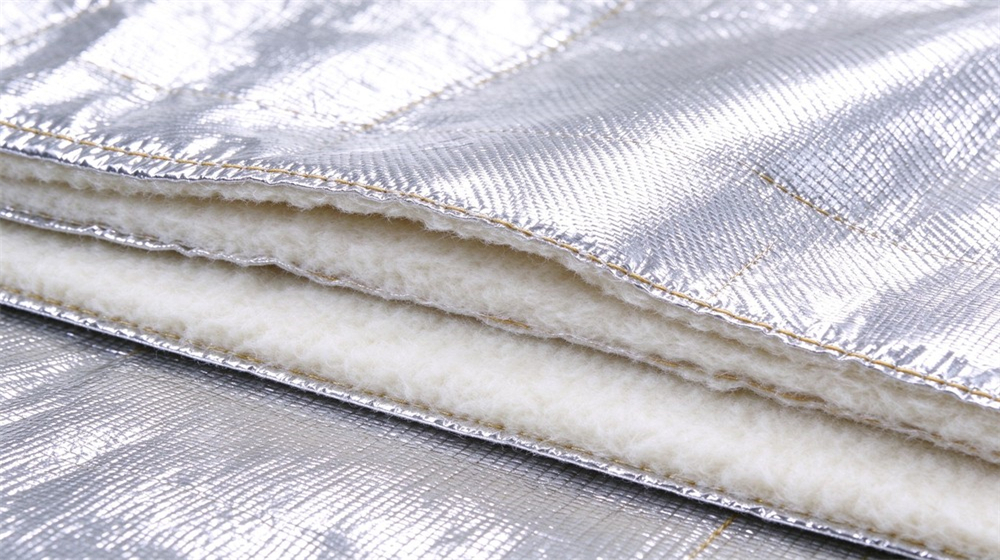
The garment is built in layers. The foil facing reflects radiant energy; the para-aramid substrate resists flame and heat; and the inner construction manages comfort so the suit can be worn for a full work period. Each layer has a job, and the layers are fixed at the factory so every suit in a batch carries the same sequence.
The cross section shows the structure clearly: reflective outer layer, insulating core and comfort layers underneath. Buyers who understand the layering can compare suppliers on what is actually inside the garment instead of relying on the outer appearance alone.
Layer placement also decides how the garment performs over time. The foil is on the outside where it can reflect, not buried under other layers where it would absorb and re-emit heat into the insulation. The substrate sits directly under the foil so a scratch in the coating does not expose the insulation. And the comfort layer faces the body so the suit stays wearable through the whole shift. Buyers who request a layer-by-layer description during quotation get a garment they can audit, not a black box.
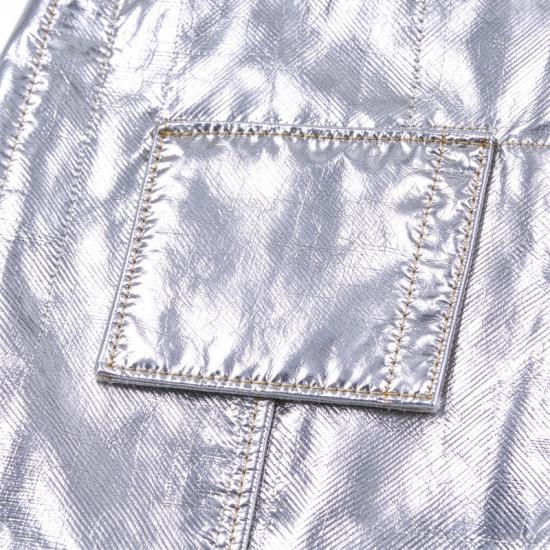
Seam construction is part of the layering story. Double-needle stitching with a heat-resistant thread keeps the foil facing continuous across panels, and the closure placket is reinforced where it gets the most wear. These details are confirmed at the sample stage and locked into the batch specification.
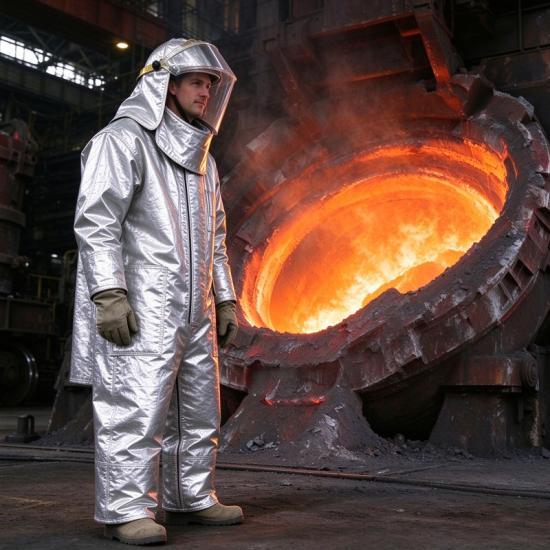
An aluminized heat resistant coverall earns its place in the industries where radiant heat is routine. A 1000°C coverall foundry pattern repeats through every shift: a worker approaches a radiant source, does a task and withdraws, again and again. Foundry pouring, glass kiln inspection and aluminum smelting all follow this rhythm, and the coverall is built for it.
3. Foundry & Glass Kiln Applications
Glass kilns radiate intense heat from the melt, and inspection tasks put a worker close to the furnace opening. The reflective coverall keeps the radiant load off the body while the worker reads temperatures, checks the melt or walks the forming line.
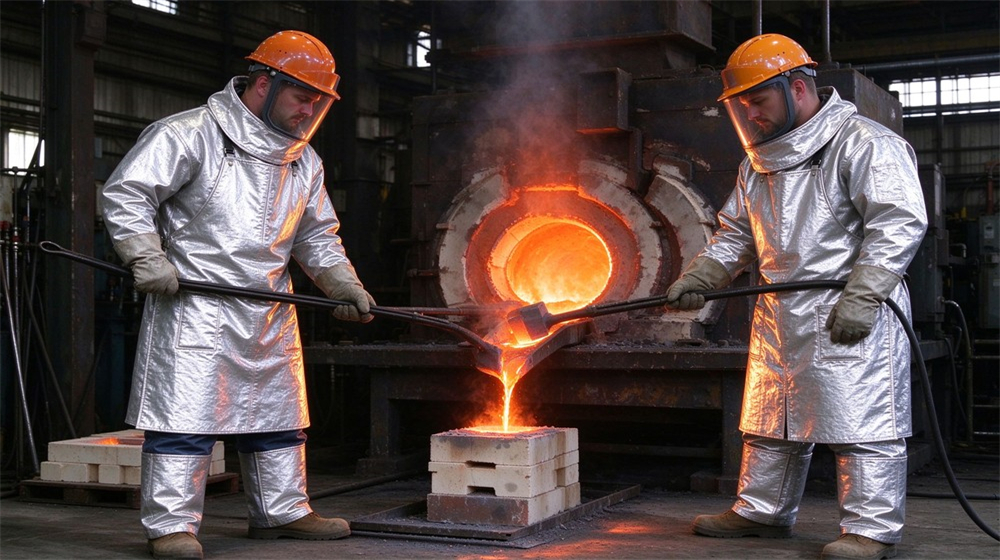
Pouring molten metal is the highest-radiant task on a foundry floor. In 1000°C coverall foundry operations, the worker guides a ladle or a stream of metal close to molds, and the radiant energy from the stream is intense. The 1000°C radiant rating covers this exposure, and the coverall's sealed closures prevent hot sparks from reaching the body.
nduction furnace pouring follows the same pattern. The operator stands near the pour while the melt streams out, and the aluminum foil suit reflects the radiant load while the insulating layers keep the inside of the garment at a workable temperature.
Pouring crews rotate through the task in short cycles, and the coverall is designed for that rhythm: easy to put on, sealed at the wrists and ankles, and shaped so the worker can carry a ladle without restriction. The aluminum foil protective suit specification includes the closures and the cut, not just the temperature numbers.
For 1000°C coverall foundry work, the pair of ratings matters: contact resistance for the times a worker must work close to equipment, and radiant resistance for the open pour itself.
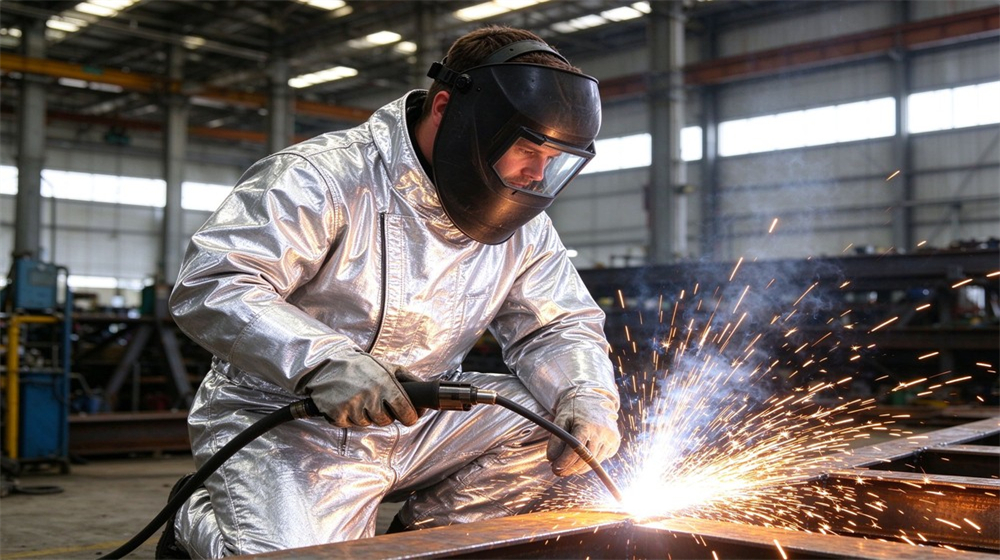
Glass plants keep workers close to kiln openings and forming lines where molten glass flows. Temperature checks, burner adjustments and line inspections all happen near a radiant source. The aluminized coverall gives the worker the same radiant protection that foundry work requires.
Molten glass radiates like molten metal, and the same reflective principle applies. A worker checking the glass forming line in an aluminum foil protective suit can approach the melt, read the condition and step back without the garment absorbing the heat.
Glass forming lines run continuously, so the radiant exposure repeats through the shift. The coverall is worn for the whole station time, which makes comfort and range of motion part of the specification, not an afterthought.
Kiln openings and forming lines sit close to walkways, which is why the coverall is specified with a full cut rather than a tight fit. The worker needs to pass inspection points, climb platform steps and handle tools while the garment stays sealed. Buyers ordering for a whole crew confirm the size mix at quotation so the line is equipped before the first inspection shift.
Aluminum smelting combines radiant heat from the bath with splash risk from molten metal. The coverall covers the body fully, and the high radiant rating matches the intensity of an aluminum furnace. Casting operations add ladle and ingot handling, where contact heat also appears.
Ladle pouring in an aluminum plant is another radiant-front task. The operator handles the ladle within arm's reach of the stream, and the suit must reflect that load for the duration of the pour. The 500–1000°C band is chosen for exactly this work.
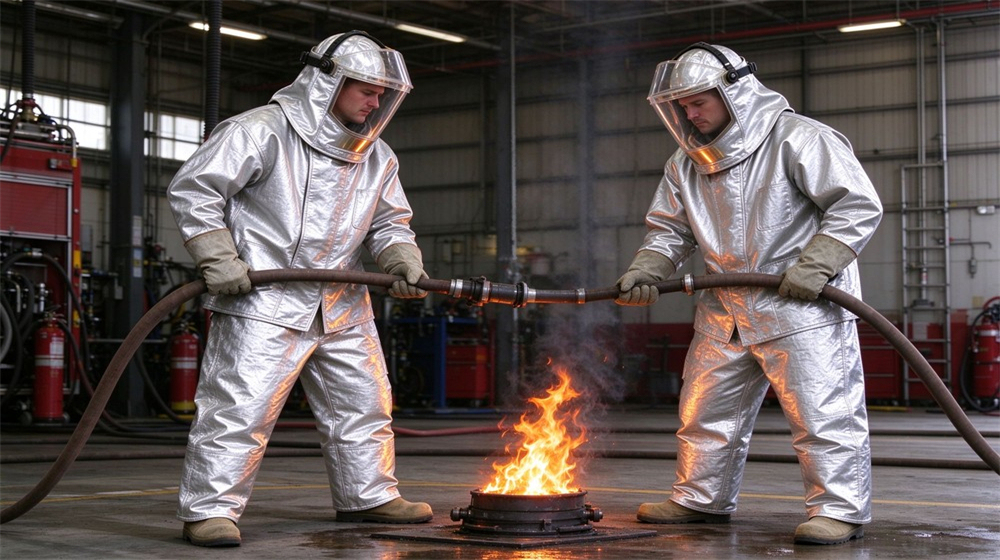
4. Full-Body Coverall Design & Comfort
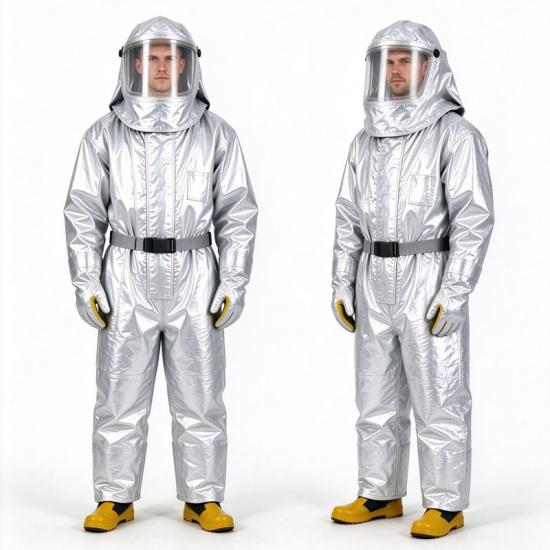
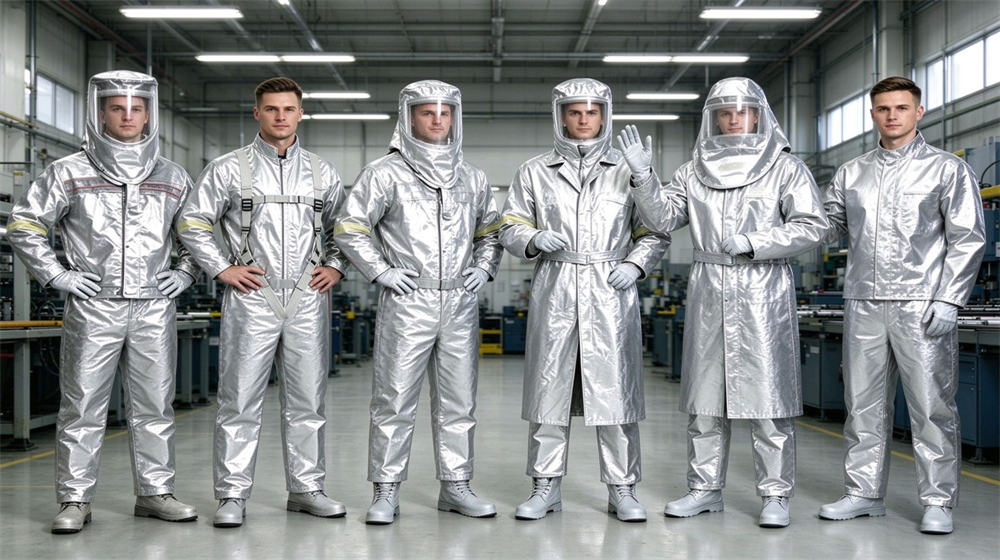
A heat protection garment only works if it is worn correctly and covers the body completely. The coverall design starts with full-body coverage and adds the details that make furnace-front work practical: an integrated hood, sealed closures and a system of paired accessories.
A jacket and trousers leave a waist gap where radiant heat and sparks can reach the body. The one-piece coverall removes that gap, which is why furnace-front tasks specify a coverall cut.
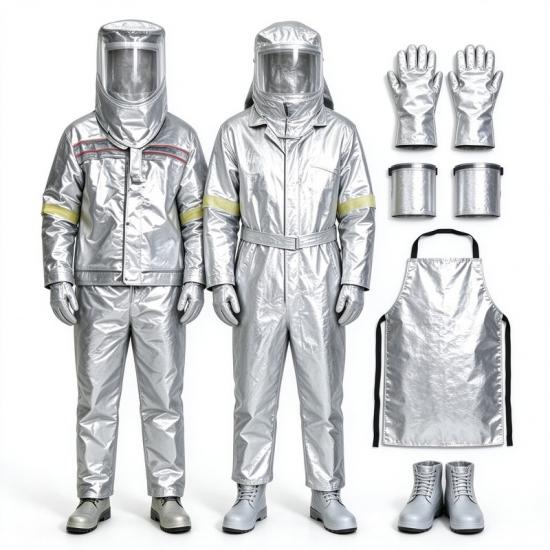
The coverall is the standard for prolonged furnace-front work, while the split layout suits stations where workers move in and out of heat more frequently.
The coverall itself is one piece: body, arms and legs covered in a single garment with no gap at the waist.
The one-piece construction closes the waist gap where radiant heat and sparks can otherwise reach the body. The coverall zips closed under a foil-faced placket that keeps the closure protected from direct heat.
The full-body coverall is the core of the high temperature work coverall system, with gloves, arm sleeves, apron and safety shoes completing the set.
Comfort means the worker can reach, crouch and carry without binding, because restricted movement leads to suits worn incorrectly or left off. The cut is drafted from the factory pattern block for high-temperature garments, and the sample stage is where fit issues surface before the volume run.
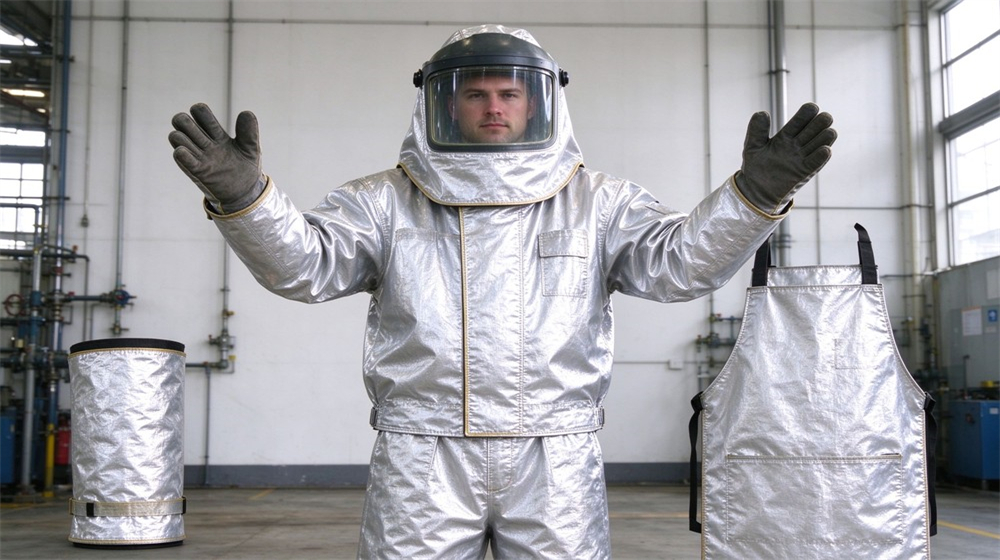
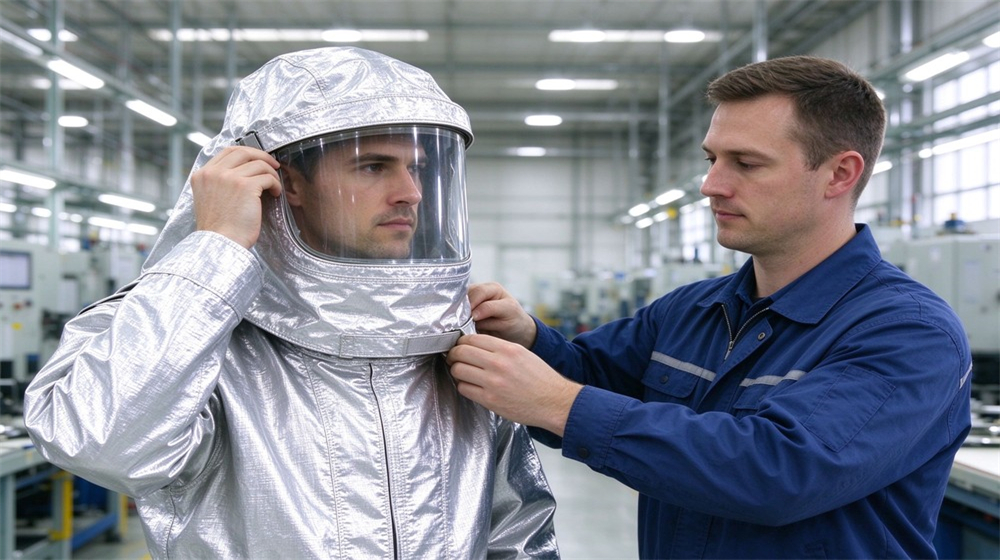
The integrated hood carries a transparent visor so the worker keeps a clear field of view while the head stays protected. The visor seal is adjustable, and the hood fits over the head without leaving the neck exposed.
Adjusting the visor seal is part of the pre-work routine. A worker tightens the closure, checks the fit and confirms the hood sits correctly before approaching the furnace. The routine is simple, and it is what makes the protective system effective in practice.
The hood is part of the coverall rather than a separate item, which removes the gap between hood and collar where radiant heat could otherwise enter. The visor is transparent, so the worker's field of view stays clear for ladle work, kiln checks and line inspections. Sealed closures at the wrists and ankles complete the barrier, and each closure is checked in the pre-work routine.
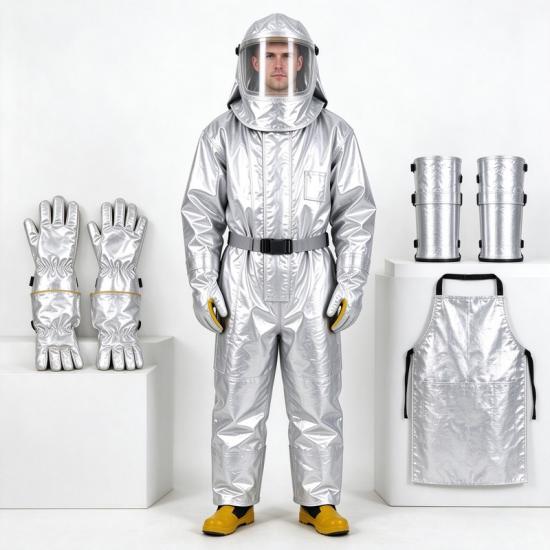
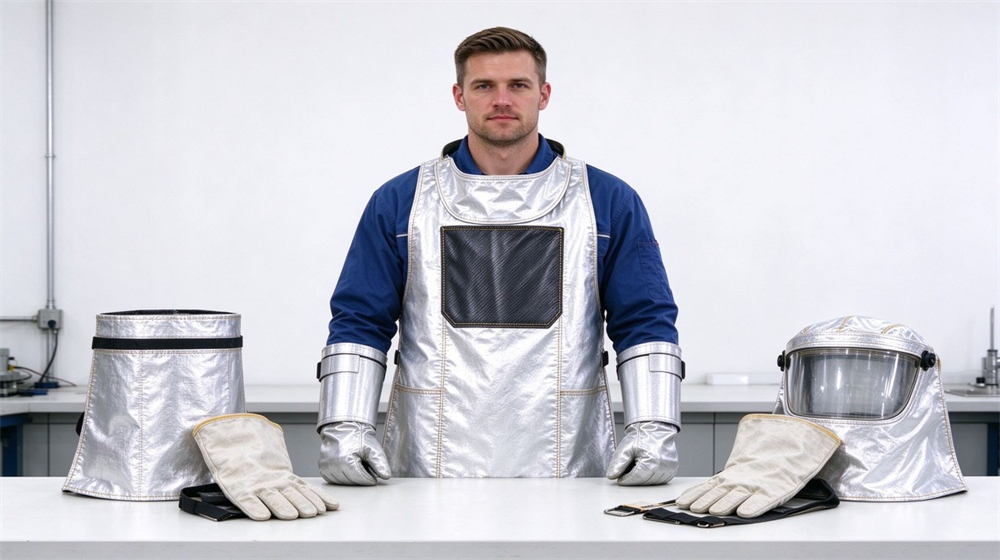
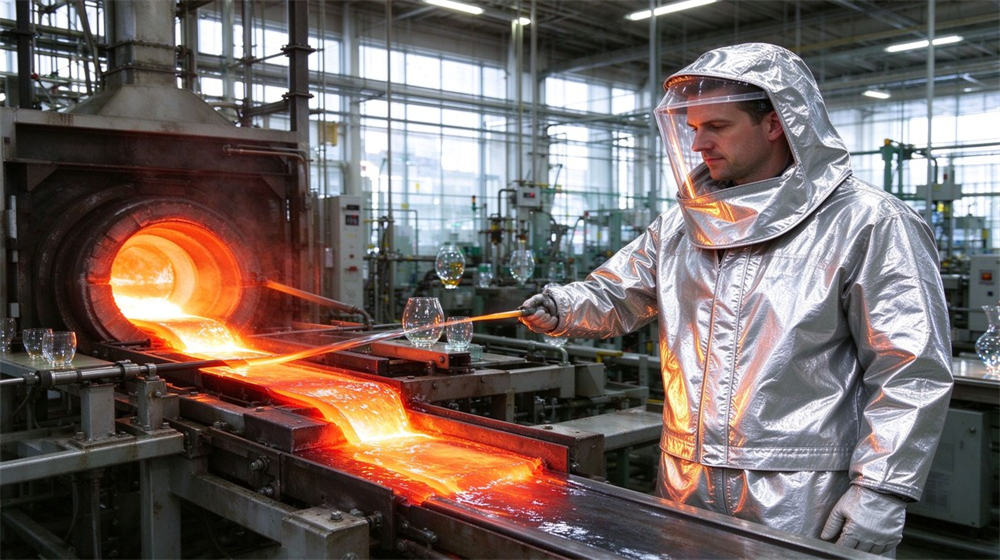
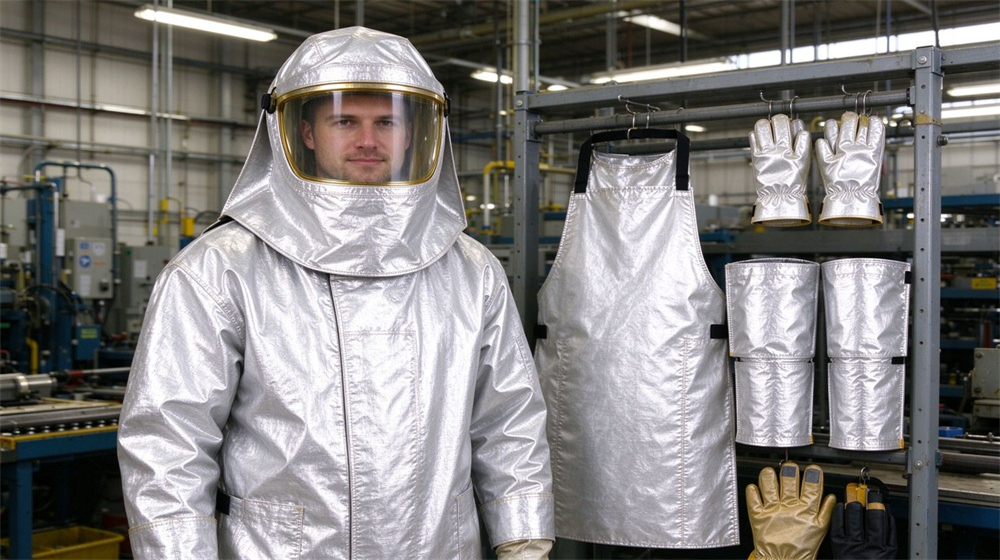
Hands, forearms and feet face heat from every direction during furnace work. The complete system pairs the coverall with heat-resistant five-finger gloves, aluminum foil arm sleeves, an optional apron and steel-toe safety shoes, so the whole body is covered to the same standard.
The accessory kit is shown here as buyers see it: gloves, arm sleeves and apron hanging beside the coverall, ready to be added to an order. Each component is available separately, so a buyer can equip a full crew or replace worn items without buying a whole new set.
The side view shows how the coverall fits the body: the foil surface follows the silhouette, closures sit flat against the fabric, and the garment keeps a workable range of motion. Fit is checked against the factory size chart at quotation, with M, L and XL available as standard.
The table below shows how the full system is configured around the coverall, so buyers can order a complete kit in one line.
|
Component |
Model |
Rating / Specification |
|
Aluminized Heat Resistant Coverall |
FYBR02 |
500°C contact / 1000°C radiant, M/L/XL |
|
Heat-Resistant Five-Finger Gloves |
ABY-5T-34 |
500°C for 30–45 s, CE EN388/EN407 rated |
|
Aluminum Foil Arm Sleeves |
BYBR-A52 |
500°C contact / 1000°C radiant, 52 cm |
|
Aluminum Foil Apron |
MYBR-12070 |
500°C contact / 700°C radiant, 90/105/120 cm |
|
Heat-Resistant Safety Shoes |
WYAD550-M |
550°C, steel toe and steel midsole, sizes 38–45 |
For field teams, the coverall is supplied with matching hoods, gloves and boot covers sized from the same specification, so the complete aluminized ensemble keeps one consistent heat protection level from head to ankle. Confirm the kit configuration at quotation and the batch test report covers the matched set.
The complete system covers every exposed area to a matching standard: hands, forearms, body and feet. Each component is available separately, so buyers can equip a crew or replace worn items without reordering the whole set.
The accessories are supplied as a matched set so every exposed area is covered to the same standard. The apron extends the radiant protection across the torso for ladle and furnace-front stations, the arm sleeves protect the forearms between glove cuff and sleeve, and the heat-resistant gloves complete the hand protection. Buying the system in one order keeps one quality standard and one documentation set.
Choosing a temperature-rated suit is a specification exercise, not a name exercise. The task list, the exposure and the duration decide the rating, and the buyer verifies the garment against the specification with test documentation per batch.
5. Selecting Temperature-Rated Suits
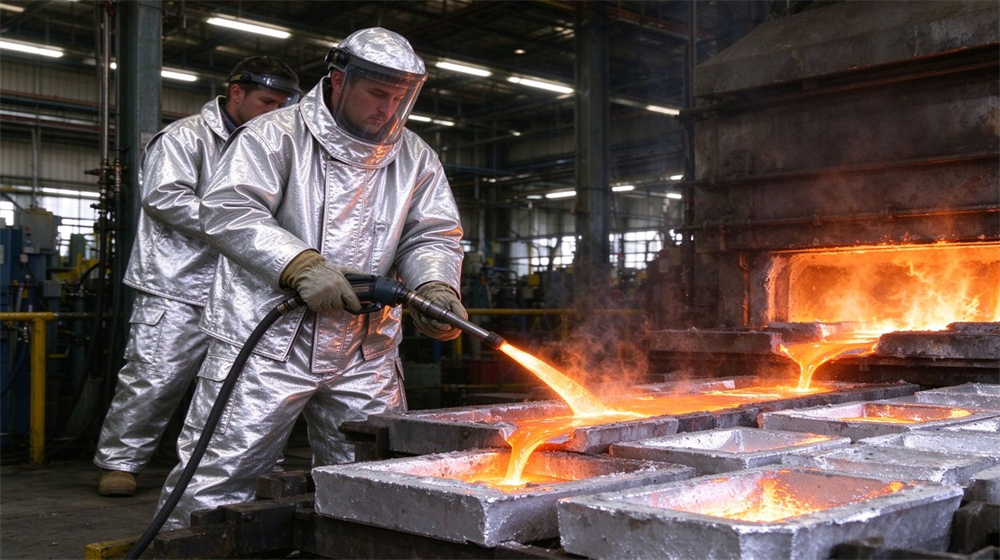
The reflective surface demo shows what buyers should check first: a uniform, bright foil facing across the whole garment. Uneven coating means uneven reflection, and uneven reflection means a weak point in the protection.
A rating like 500°C contact and 1000°C radiant heat is only meaningful with the exposure time attached. The specification states how long the garment can face that load, and the batch test report verifies it against the same conditions. Buyers should compare ratings and the test methods behind them, not just the numbers.
The aluminized heat resistant coverall specification is verified per batch: fabric samples are tested before production runs begin, and the line checks sealed seams and visor assemblies against the batch record.
Exposure time is written into the rating: the 500°C contact rating and the 1000°C radiant rating both state how long the garment can face the load. Buyers should compare the ratings, the exposure times and the test methods behind them rather than comparing the numbers in isolation.
Pouring, ladle work, kiln inspection and furnace maintenance each have their own radiant exposure. The buyer lists the tasks, estimates the time a worker stands at the radiant front, and matches the rating band to the longest exposure. When the task list crosses into brief flame exposure, the buyer steps up to fire proximity equipment instead.
Welding is a different heat profile: concentrated, directional and close range. An aluminized coverall is worn under welding conditions in many plants where radiant heat from nearby furnaces is also present, and the reflective surface adds protection against both directions.
Duration planning is part of selection. The buyer estimates how long a worker stands at the radiant front per task, multiplies by the number of tasks per shift and compares the total against the exposure time in the specification. When the planned exposure stays inside the rated time, the suit is a match; when it exceeds the rating, the buyer steps up a band or rotates workers. Either way the decision is documented, which keeps the safety case auditable.
For mixed crews, the same rating is specified for every station so a suit can be rotated across tasks without re-checking the protection level.
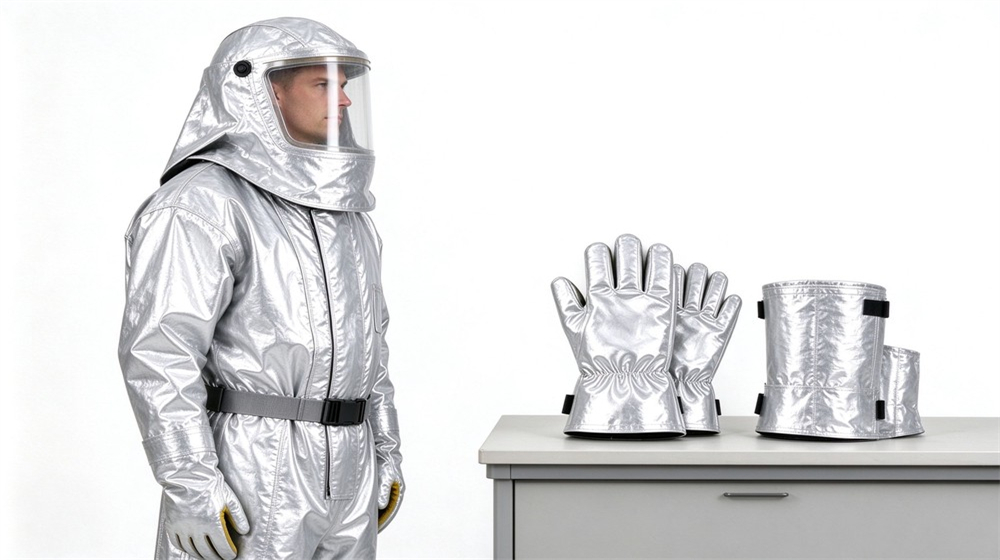
Sizes M, L and XL cover the standard range, and the size chart converts measurements into suit sizes at quotation. A sample aluminized heat resistant coverall validates fit and layering before the volume run, and the approved sample locks the specification for the batch.
Verification continues in the factory: fabric samples are tested for reflective performance, flame resistance and tensile strength before production runs begin. The same discipline continues on the line, where sealed seams and visor assemblies are checked against the batch record. No test is treated as paperwork; each result is tied to the batch it came from.
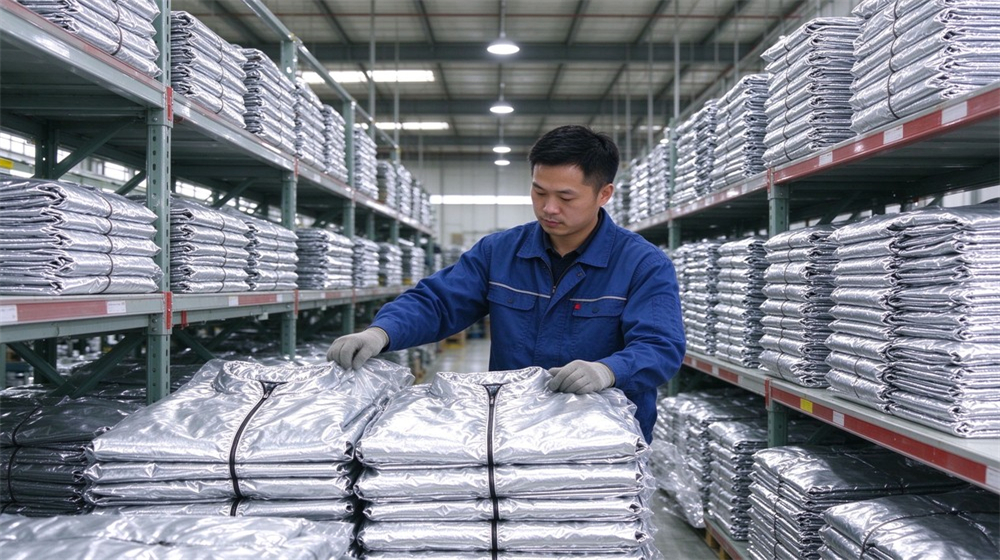
Packed inventory is counted against the order before shipment, and the count matches the packing list. For wholesale buyers, this step confirms that the delivered quantity and the batch documentation line up, so the order can be received and distributed without re-verification at the destination.
Laboratory testing of the fabric happens before production, and the test documentation travels with the order. Buyers see the same documentation at the sample stage and receive it with every shipment, so the delivered garment is checked against the specification rather than assumed to meet it.
High temperature testing verifies the garment against the radiant and contact loads it will face. Each batch result is recorded and tied to the batch number, which gives bulk buyers a traceable quality record for the whole order.
The review of test reports is part of the quality loop. Batch records are checked before shipment, and the documentation set accompanies the order so buyers and their safety teams can verify compliance themselves.
For workers protecting themselves at furnace fronts, radiant heat protection is a matter of high temperature work coverall performance under real conditions.
When buyers shortlist suppliers, the comparison usually comes down to three documents: the fabric specification, the batch test report and the packing list. The fabric specification states the layering and the ratings; the batch test report verifies the delivered garments against those ratings; and the packing list ties the quantity and the documentation to the shipment. A supplier who can produce all three for every order makes the procurement review straightforward.
Furnace teams often standardize on a branded kit for identification and accountability. Custom branding on the coverall is available, and unit marking can be added so each garment is tied to a worker or a station. The artwork and placement are confirmed at quotation before production, and the branding does not change the protective specification of the garment.
Sample orders follow the same terms as bulk: the configuration is confirmed, the sample is produced and the test documentation is shared before production. For teams standardizing across multiple stations, OEM branding creates a uniform, professional look that is easy to identify on scene.
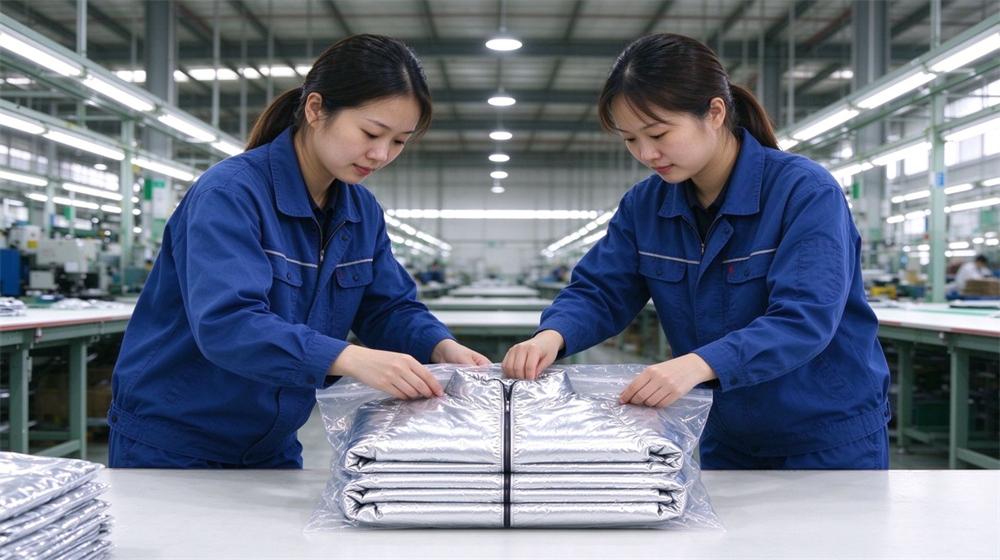
Folding and packing are part of the delivered standard: each coverall is folded to size, grouped by size and carton, and the batch documents travel with the cartons. The shipment arrives ready to issue, which keeps the receiving check short and the protective standard intact.
Aluminized High Temperature Coverall FAQ
Here are the questions buyers ask most often about aluminized heat resistant coveralls and aluminum foil protective suits.

What accessories are available with the Aluminized High Temperature Coverall?
Heat-resistant five-finger gloves, aluminum foil arm sleeves, an optional aluminum foil apron and steel-toe safety shoes can be supplied together as a complete system. Spare components are available to keep the set ready between rotations.
Can this coverall be used for fire proximity work?
No. This coverall is rated for radiant and contact heat, not for flame entry. Brief flame-exposure tasks need fire proximity or fire entry equipment with a higher rating. The task list decides which class fits.
How should the suit be maintained and stored?
Clean per the manufacturer procedure, inspect the foil facing, seams and visor, and store folded in a dry place away from sharp objects. The reflective surface is the protection, so scratches and folds that damage the foil should be checked before each use.
What sizes are available for the Aluminized High Temperature Coverall?
M, L and XL are standard. The size chart converts chest and height measurements into suit sizes at quotation, and a sample coverall can validate fit before the volume run.
What is the minimum order quantity for the Aluminized High Temperature Coverall?
MOQ varies by configuration and is confirmed at quotation. A sample coverall can validate fit and layering first, and sample approval locks the specification for the batch.
Can we add OEM branding?
Yes, custom branding on the coverall is available. The artwork and timeline are confirmed at quotation before production, and unit marking for team identification can be added for accountability.
What test documentation is provided?
Test reports per batch verify the rated performance of the delivered garments. Fabric samples are tested before production, and line checks cover sealed seams and visor assemblies against the batch record.
What is the production timeline for bulk Aluminized High Temperature Coverall orders?
Confirmed per order based on configuration and agreed in writing before production. A sample coverall can be produced first to validate fit and specification before the volume run.
Need Aluminized Heat Resistant Coveralls for Your Furnace Team?
Tell us your tasks, the radiant exposure you face and the configuration you need. We reply with a quotation covering the complete kit, documented test reports and a confirmed timeline. For urgent requirements, message us directly on WhatsApp and we will respond the same working day.
Send us your scene scenarios and team size, and we will match the coverall configuration to your operation.
Previous :
Proximity Fire Coat | 500°C Heat Reflection for Fire Team UseNext :
Flame Resistant CBRN Suit | Chemical Biological Radiological Deep Blue Firefighting Suit Set, Forest Fire Fighting Specialized, Full-body Protection
This Deep Blue firefighting suit set is specially designed for forest fire fighting, using special flame-retardant fabric that can withstand 700°C open flames in the wild, with a thermal protection value (TPP) of 25CAL/AM2. The vivid Deep Blue color combined with enhanced reflective strips enables identification from 500 meters away in forest smoke. The lightweight design of only 4.5KG does not affect mountain action speed, with a waterproof rating >40KPA, adapting to camping fire fighting and long-term field operations. The anti-plant puncture design increases wear resistance by 50%, making it professional equipment for forest firefighting, mountain rescue, and outdoor fire fighting actions, providing all-around body protection for forest firefighters.
 High-temperature Resistant Firefighting Suit Set, Emergency Rescue, Quick-wear
This high-temperature resistant firefighting suit set is made of professional-grade flame-retardant materials, capable of withstanding extreme temperatures up to 750°C, with a thermal protection value (TPP) of 26CAL/AM2, providing reliable protection for emergency rescue. The innovative quick-wear design allows complete dressing in 40 seconds during emergencies, with hydrostatic pressure resistance >45KPA and excellent breathability. Designed according to ergonomic principles, weighing only 4.8KG, it effectively reduces the burden on rescue personnel and is suitable for high-risk scenarios such as building fires, tunnel rescues, and industrial firefighting, making it an ideal equipment choice for professional firefighting teams.
 Professional Firefighting Suit Set, Flame-retardant Protection, Rescue Essential, 14-3C Certified
This professional firefighting suit set is made of high-grade flame-retardant cotton fabric, 14-3C certified, capable of withstanding extreme temperatures up to 800°C, with a thermal protection TPP value of not less than 28CAL/AM2. The three-layer composite protection structure, with waterproof static pressure resistance >50KPA and breathability >5000G/M²·24H, ensures comprehensive safety for rescue personnel in complex environments such as building fires, forest fires, and special chemical plant fires. Available in three models: 97/02/14, meeting different rescue scenario requirements.
 02 Firefighting Suit Multi-layer Composite Material Rescue Protection
This Type 02 firefighting suit is made of professional flame-retardant materials with excellent heat resistance, fire protection grade meeting international rescue standards, and waterproof puncture resistance rate of 98%. The deep blue body is equipped with eye-catching yellow reflective strips, increasing night visibility by 85%. The complete six-piece configuration provides comprehensive protection for firefighting, forest firefighting, earthquake rescue, and other scenarios, providing reliable protection for 300+ professional rescue teams.
 Forest Fire Rescue Service with Heat-Resistant Design
This professional forest fire rescue service uses flame-retardant heat-resistant material, achieving GB8624-A2 fire rating standard with heat resistance up to 800°C, and features high-visibility reflective strips visible from 300 meters away. It's suitable for emergency rescue scenarios such as forest fires, mountain rescues, and industrial disasters, providing comprehensive personal safety protection. Each set has undergone 10,000 abrasion tests and proven its reliability and safety in over 1,500 rescue operations nationwide.
 Fire Rescue Cap, Aramid Flame-Resistant Material, Forest Fire Emergency
This professional-grade forest firefighting vest and hat set is made of polyester/cotton blended flame-retardant fabric, with reflective visibility up to 300 meters, capable of resisting short-term flame contact, improving protection efficiency by 85%. The bright orange design with double-layer reflective strips complies with international rescue standards, ensuring 360° visibility in smoke and low light environments. Suitable for forest fire fighting, wilderness emergency rescue, post-earthquake sites, and other emergency disaster relief scenarios, providing comprehensive protection for rescue personnel.
Copyright © Custom Disaster - Relief Bedding: Tents, Sleeping Bags, Blankets All Rights Reserved
the professional team to service !