
×
enter your keyword
our storage
Categories
Products

Heavy Duty Class A Gas Tight Hazmat Suit
Class A Gas Tight Hazmat Suit | Fully Encapsulated Level A Suit Class A Gas Tight Hazmat Suit | Fully Encapsulated Level A Suit Class A Gas Tight Hazmat Suit | Fully Encapsulated Level A Suit Class A Gas Tight Hazmat Suit | Fully Encapsulated Level A Suit Class A Gas Tight Hazmat Suit | Fully Encapsulated Level A Suit Class A Gas Tight Hazmat Suit | Fully Encapsulated Level A Suit Class A Gas Tight Hazmat Suit | Fully Encapsulated Level A Suit Class A Gas Tight Hazmat Suit | Fully Encapsulated Level A Suit

Class A Gas Tight Hazmat Suit | Fully Encapsulated Level A Suit

Heavy Duty Class A Gas Tight Hazmat Suit, Fully Encapsulated Design With Sealed Visor And Gas-Tight Zipper. Compatible With SCBA, Protects Against Toxic Gas And Liquid Chemicals For Chemical Leak Emergency Response. Available For Wholesale Bulk Procurement For Industrial Safety Teams.


Note: Price for reference only. Exact price based on quantity, size, weight and custom details.

  • model no. :

    XFF-11
  • Brand:

    YRF
  • market price :

    $119.8
  • sale price :

    $59.9
  • price range :

    30-100/$59.9
  • Color :

    Multiple Colors
  • port of dispatch :

    Guangdong/Guangzhou
  • Payment :

    TT, Paypal, Western Union
  • min order :

    30
  • original region :

    Made in China
  • Lead Time :

    5-15days
inquiry now
product description

Class A Gas Tight Hazmat Suit | Fully Encapsulated 


Level A Suit


We supply gas-tight Level A hazmat suits in bulk from China for hazardous material response teams facing toxic gas and vapor exposure. Fully encapsulating protection with SCBA integration, double zip closure, and vapor-tight seams gives maximum barrier protection for chemical emergency response. Test reports, certification details, sizing charts, OEM branding, and wholesale bulk pricing below.
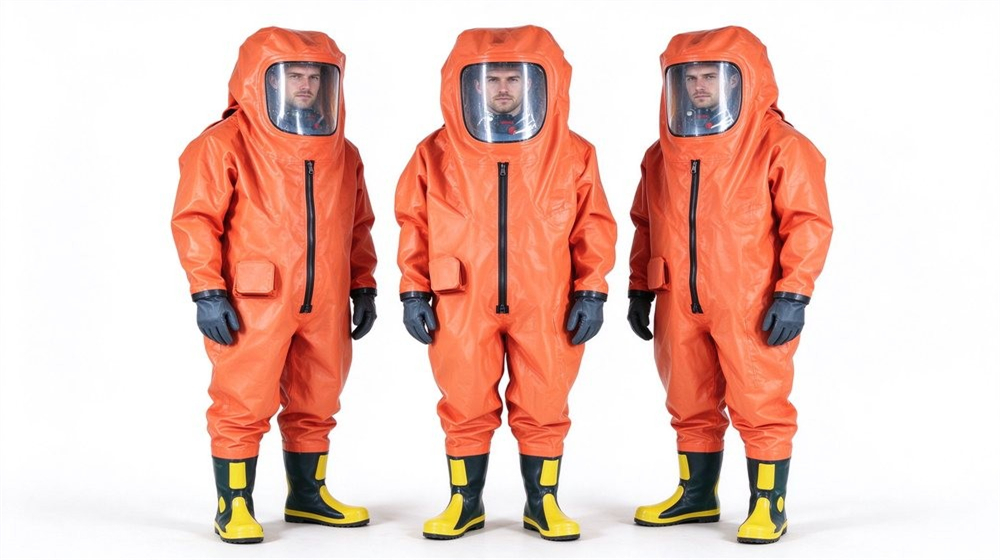


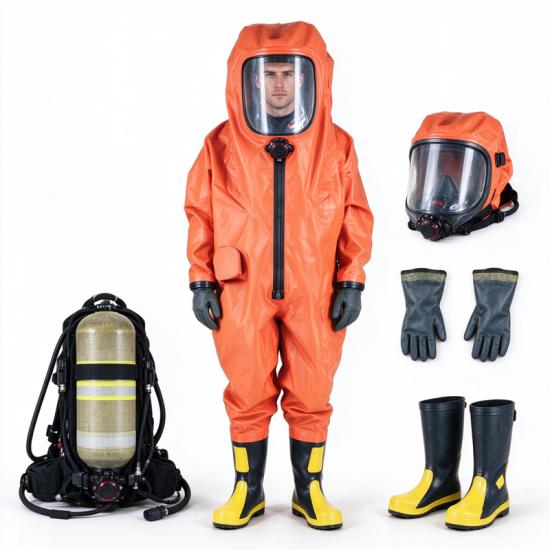
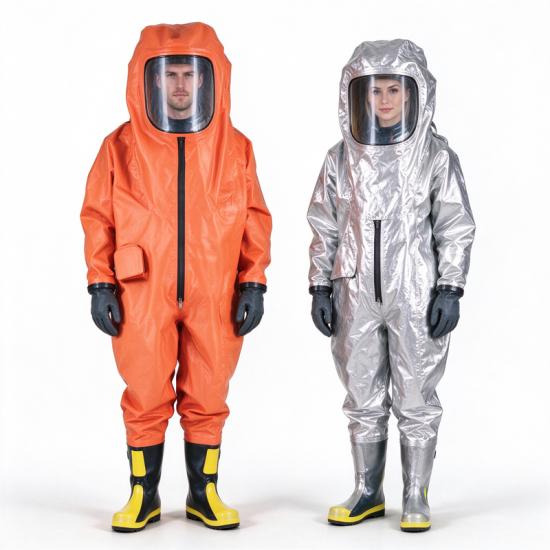
Front view of heavy duty protective class a gas tight hazmat suit, Gas tight Level A hazmat suit front view on white background, three, demonstrating professional product use in industrial safety environment, designed for wholesale bulk supply and industrial safety


Some environments leave no margin for error.

  • Toxic gas, unknown vapors and chemical emergencies create atmospheres where a worker cannot rely on the air itself.
  • That is when protection goes to the highest level.
  • A Level A hazmat suit seals the entire body in a gas-tight envelope, worn with SCBA so the wearer breathes clean air from a tank, not from the surroundings.
  • For response teams, confined-space crews and industrial hazardous-material units, this fully encapsulating garment is the difference between a controlled entry and an unacceptable risk.


The suit is not an accessory to the response plan; it is the physical boundary between the responder and the hazard, engineered to hold that boundary for the whole duration of the task.
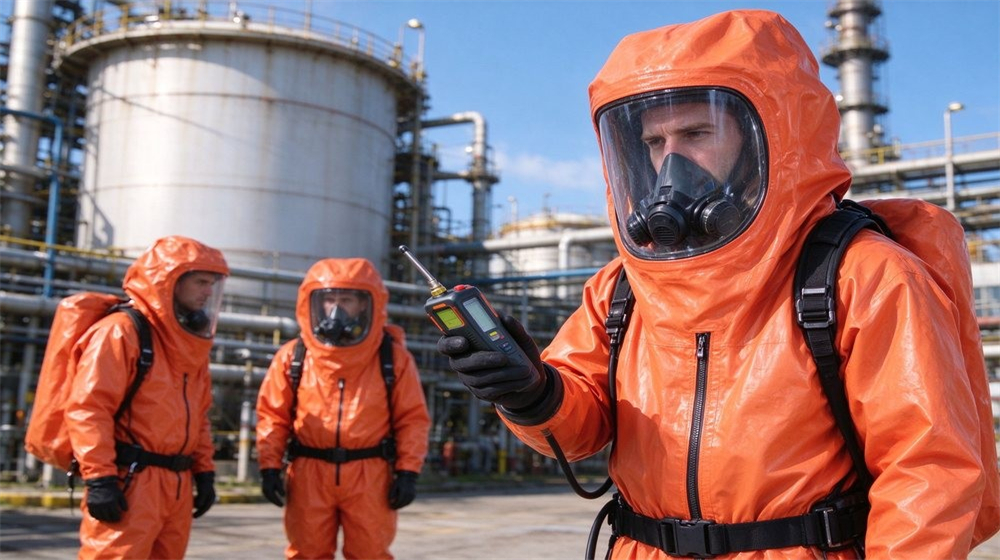
  • Every seam, every seal and every interface is part of that boundary, and each is verified before the suit is accepted into service.


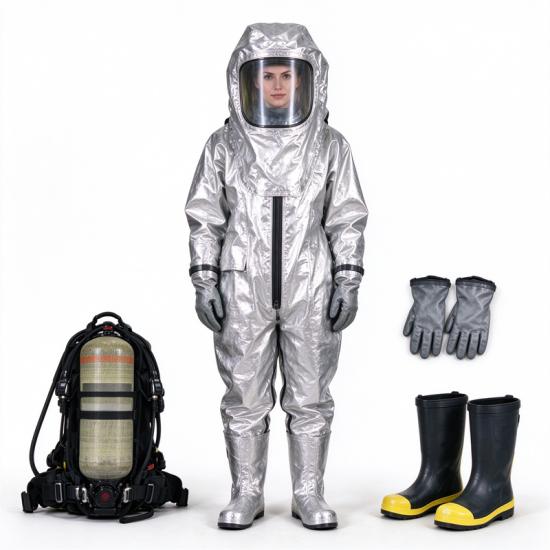
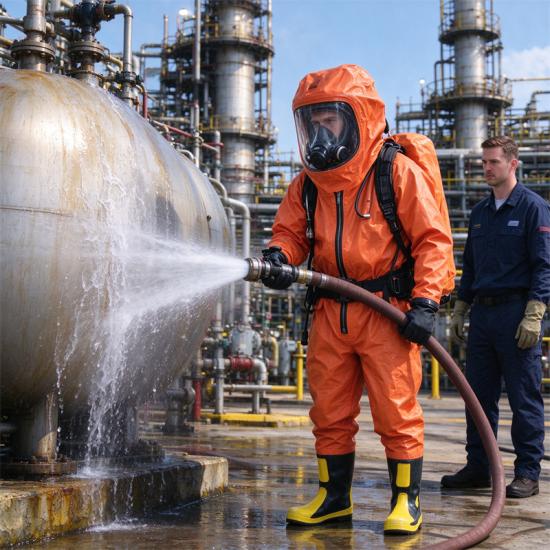
Side angle of heavy duty protective class a gas tight hazmat suit, Response worker in a gas tight Level A hazmat suit near chemical, demonstrating professional application use in industrial safety environment, designed for wholesale bulk supply and industrial safety


The system is what protects, not the garment alone.

  • The gas-tight suit seals the body, the SCBA provides breathing air, and the two connect through a sealed interface.
  • Together they form an SCBA protective suit system that keeps the wearer isolated from the atmosphere for the duration of the entry.
  • Donning is deliberate, checks are systematic, and the team verifies the seals before every use.
  • This is why chemical protective clothing supplier programs train the whole sequence, not just the garment.
  • A suit that fits well but is donned poorly, or an SCBA that is full but connected loosely, still leaves the wearer exposed.
  • The system only performs when every link in the chain is checked, and the check list is part of the equipment itself.

The same check list is printed into the training manual, so the new member learns the sequence in the classroom, confirms it on the drill ground and carries it into the real response as a habit rather than a decision.
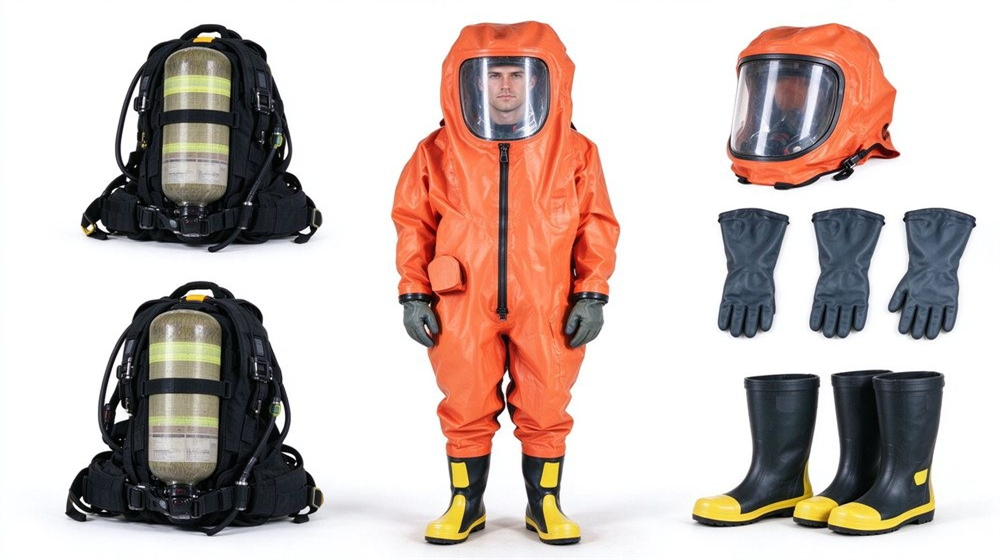
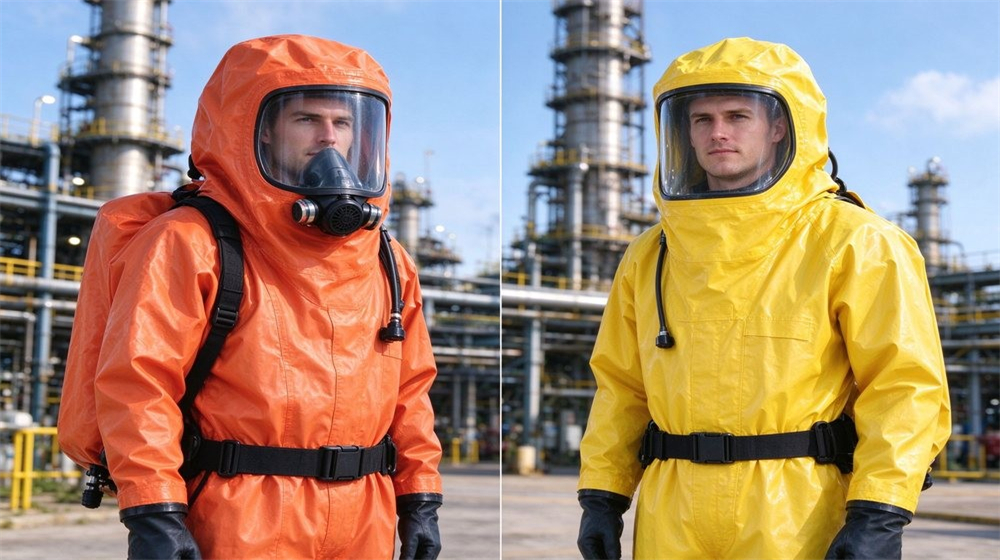
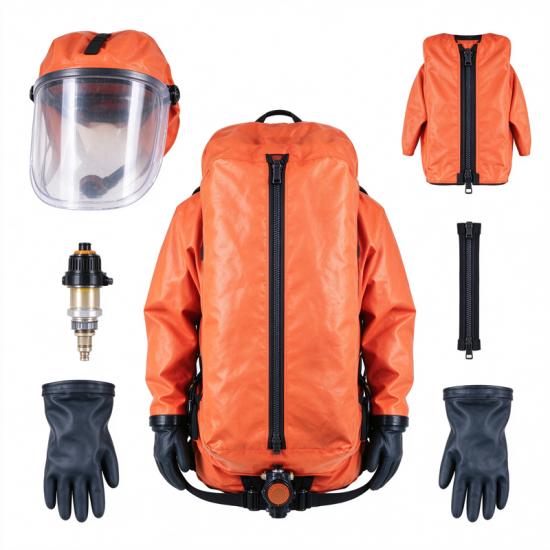
Aerial perspective of heavy duty protective class a gas tight hazmat suit, Complete Level A hazmat suit system with SCBA, sealed visor, heavy duty, demonstrating professional product use in industrial safety environment, designed for wholesale bulk supply and industrial safety


  1. 1. What Level A Gas-Tight Protection Means
  2. 2. How Does the Level A Hazmat Suit Work with SCBA?
  3. 3. Where Gas-Tight Suits Are Used
  4. 4. How Do Teams Prepare for Level A Response?
  5. 5. Where to Source Level A Hazmat Suits Wholesale?
  6. FAQ


Close up detail of heavy duty protective class a gas tight hazmat suit, Comparison of a Level A gas tight hazmat suit and a semi, demonstrating professional comparison use in industrial safety environment, designed for wholesale bulk supply and industrial


The rating tells the story.

  • This garment is a fully encapsulating Level A suit per the GB 24539-2021 Type 1 gas-tight classification, built to keep gases and vapors out while the wearer works inside.
  • The visor gives a wide field of view, the seams are double-sealed, and the construction is engineered for the heavy conditions of chemical response.
  • For teams that face toxic gas emergency response situations, vapor clouds and unknown atmospheres, Level A is the protection tier that matches the threat.
  • The standard is not a marketing label; it is a test result.
  • The garment is verified against the standard before it ships, and the verification record accompanies the batch so the buyer can see exactly what was checked and how it performed.

For teams that buy in volume, the same record becomes the baseline of the incoming inspection: the goods are checked against the factory data before they enter the storage rack, and any deviation is caught at the door instead of in the field.
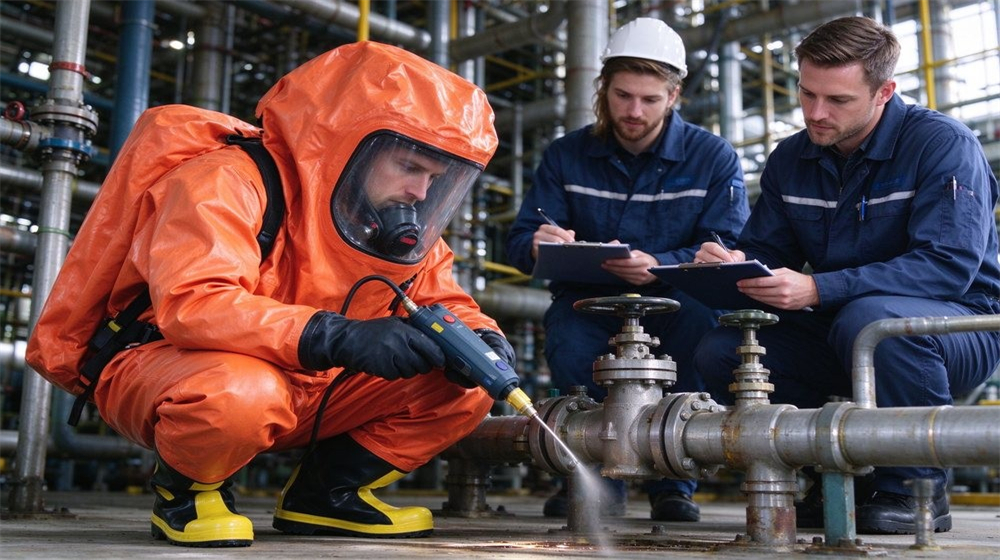


45 degree angle of heavy duty protective class a gas tight hazmat suit, Team member in a Level A hazmat suit assessing a chemical leak, demonstrating professional application use in industrial safety environment, designed for wholesale bulk supply and industrial


Protection levels exist to be matched to the scene.
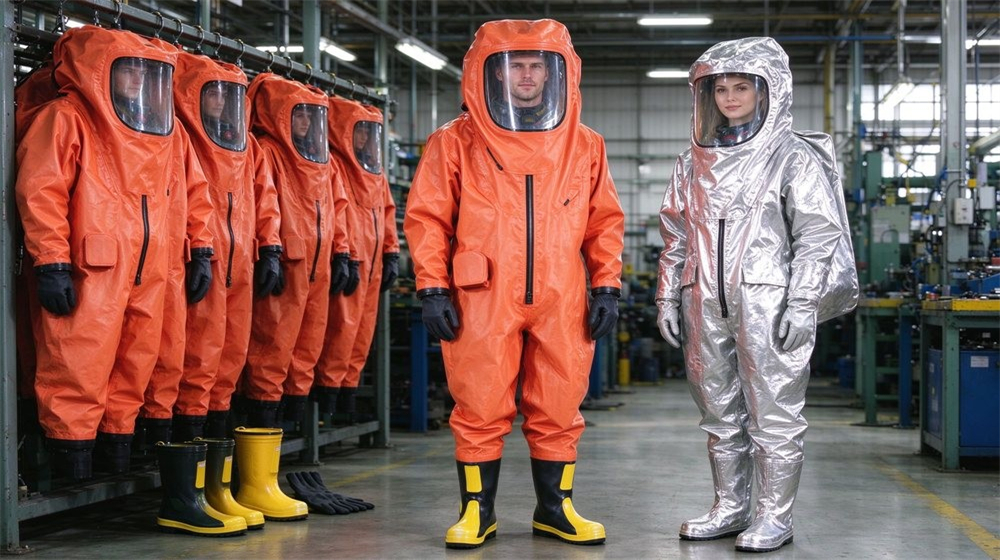
  • Level A seals everything and carries breathing air.
  • Level B provides chemical splash protection with SCBA but a less sealed suit.
  • Lower levels cover particles and light splash only.
  • For toxic gas and unknown atmospheres, the scene demands Level A—the only level that isolates the wearer from the air itself.
  • Teams that plan by level respond correctly under pressure, because the level has already been matched to the risk before the alarm sounds.
  • Choosing a lower level to save money or speed up donning is a decision made before the incident, and it is a decision that cannot be reversed at the scene.
  • The level chart is therefore reviewed at every plan revision, not only when new equipment is ordered.
  • The review is short: confirm the hazards, confirm the assigned levels, confirm the team can still meet the response time.
  • When any of the three changes, the equipment plan changes with it.


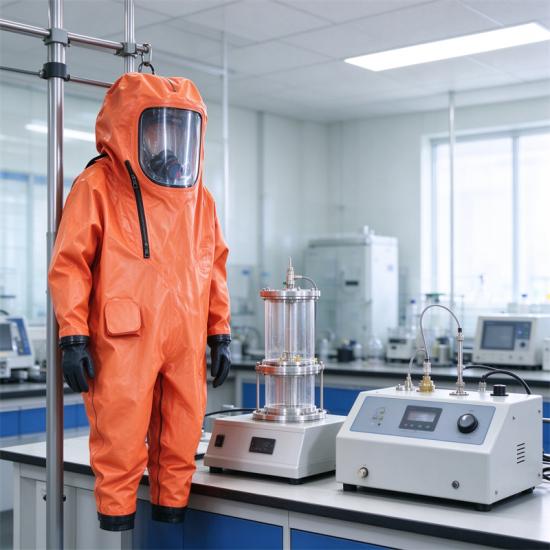
Overhead view of heavy duty protective class a gas tight hazmat suit, Gas tight Level A hazmat suits displayed in a factory showroom, fully, demonstrating professional application use in industrial safety environment, designed for wholesale bulk supply and industrial safety


A complete Level A system includes more than the garment, and buyers who source SCBA protective suit systems keep the accessories on the same specification.
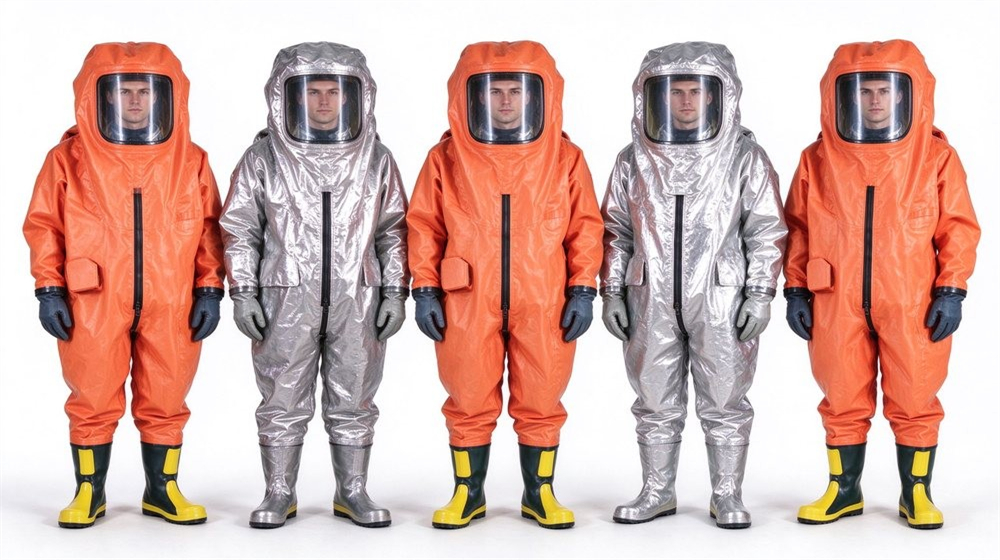
  • The compatible SCBA, the sealed visor, the heavy-duty gloves and boot covers, and the decontamination plan all arrive together.
  • When you order gas tight chemical suit systems for a response team, the full package can be supplied from one source, with one set of documentation and one training reference.
  • That is how response teams build readiness: complete, verified and ready to don.
  • The accessories are not optional extras; they are the components that make the encapsulation actually work, and they are specified against the same standard as the garment itself.
  • A complete quote lists every component by model, so the buyer sees the full scope of the system before committing, and the team receives exactly what the plan calls for.


Wide shot of heavy duty protective class a gas tight hazmat suit, Family range of gas tight Level A hazmat suits, five fully encapsulating, demonstrating professional product use in industrial safety environment, designed for wholesale bulk supply and industrial safety


1. What Level A Gas-Tight Protection Means

Level A is the top of the chemical protection ladder. Understanding exactly what it seals, and why, is the foundation of any emergency response program.
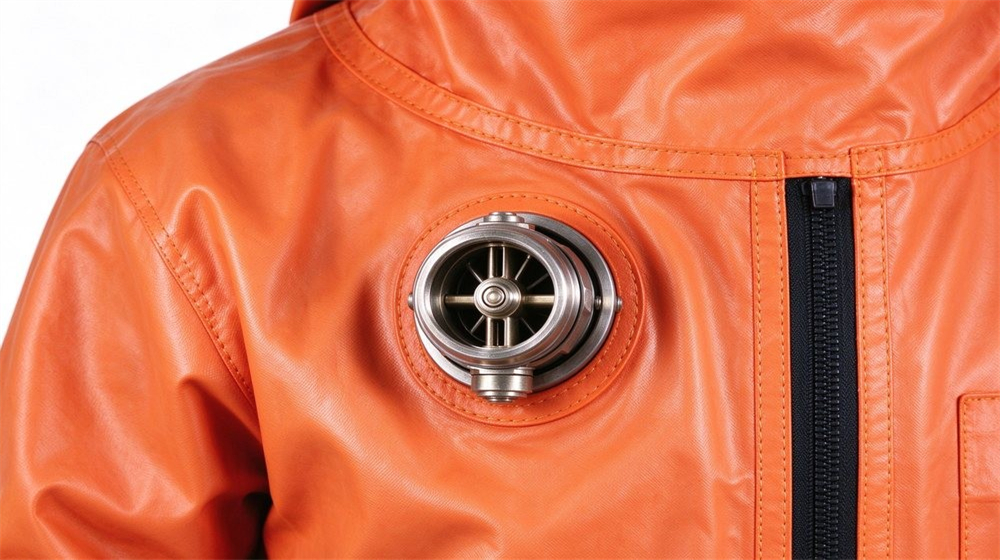


Macro detail of heavy duty protective class a gas tight hazmat suit, Overpressure exhaust valve closeup on a gas tight Level A hazmat suit,, demonstrating professional info use in industrial safety environment, designed for wholesale bulk supply and industrial safety


What a Level A Suit Is and Why It Exists

A Level A hazmat suit is a fully encapsulated garment that isolates the wearer from the environment.

  • The suit seals the body completely, and breathing air comes from a self-contained source.
  • This design exists for one reason: environments where the air itself is the hazard.
  • Toxic gas, vapor clouds and unknown chemical atmospheres cannot be filtered safely, so the worker carries clean air instead.
  • The garment, the visor and the glove and boot interfaces form one continuous barrier, and the barrier is the point.
  • Every component is part of a single system designed to keep the atmosphere out from the moment the zipper closes to the moment the suit is removed.


The definition matters in procurement too: when a buyer specifies Level A, the garment must be fully encapsulating, the breathing source must be independent, and the two must be verified together before the suit is accepted into inventory.

  • This verification step is often the first thing a response team's safety officer looks for in the factory documentation.

It is also the step that separates a genuine Level A program from a label: the documentation shows the test method, the result and the batch identity, and all three are traceable back to the production record.
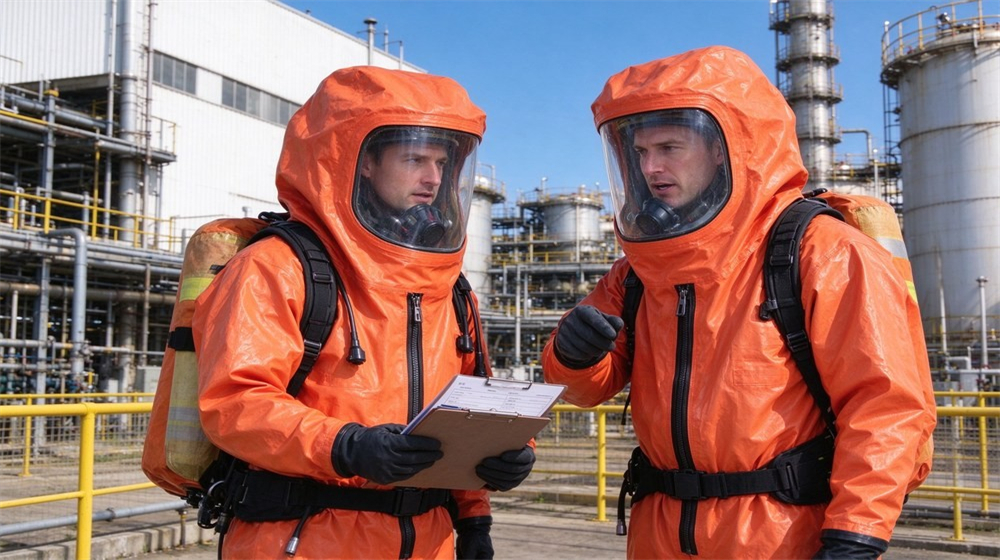


Front view of heavy duty protective class a gas tight hazmat suit, Two response workers in gas tight Level A hazmat suits discussing protection, demonstrating professional application use in industrial safety environment, designed for wholesale bulk supply and industrial safety


What Gas-Tight Construction Actually Means

Gas-tight means what it says: the garment is tested to prevent gas and vapor entry, not just liquid splash.

  • The seams are sealed, the zipper is covered by a gas-tight flap, and the visor seals against the hood.
  • A gas tight chemical suit of this class is verified against the standard before it leaves production, and the test record travels with the batch.
  • For response teams, that verification is the difference between trusting the equipment and hoping the equipment works.
  • The overpressure valve, the sealed interface and the double zipper are all part of a construction that is engineered to be checked, maintained and relied on.


The fabric itself is selected for the chemical families the team expects to meet, and the specification sheet lists the tested performance so the user can confirm the garment matches the hazard assessment.

  • Buyers receive the same data that the quality line works to, which closes the loop between factory and field.

If the user finds a performance question in service, the same data is used to answer it, so the field feedback travels back to the production line instead of disappearing into a complaint file.
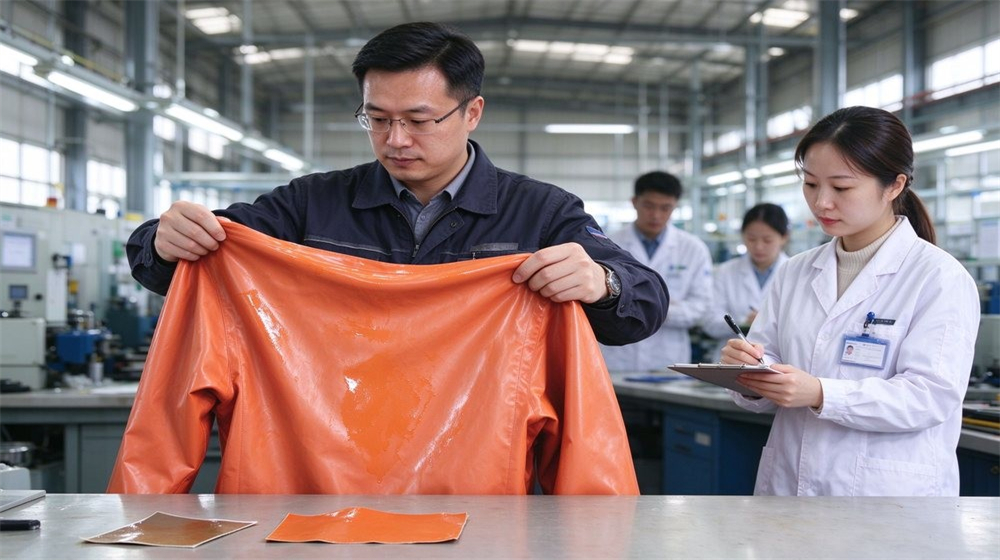


Side angle of heavy duty protective class a gas tight hazmat suit, Factory inspector checking gas tight Level A hazmat suit fabric and sealed, demonstrating professional info use in industrial safety environment, designed for wholesale bulk supply and industrial safety


Wh en Level A Is Required

The trigger for Level A is simple: unknown atmosphere, gas hazard, or vapor exposure that cannot be mitigated. Toxic gas emergency response, confined-space chemical entry and large spills with vapor clouds all fall in this band.

  • When the risk assessment says the air may kill, Level A is the only correct answer.
  • Lower levels protect against liquid; Level A protects against the air itself.
  • Per the Level A chemical protection guidance referenced by OSHA and response standards, the decision to go to Level A is made before entry,
  • and it is documented in the plan.


The documentation includes the hazard inventory, the assigned level, the entry team and the decontamination route, so the decision is visible, reviewable and improvable after every drill and every real response.

  • Written levels also make training simpler: each new member learns the level chart before learning the equipment.
  • The chart gives every responder the same mental model of when each level applies, which keeps the decision consistent no matter who is on watch when the alarm sounds.


Level

Garment

Breathing

When to Use

Level A

Fully encapsulating, gas-tight

SCBA

Toxic gas, unknown atmospheres

Level B

Encapsulating, splash-resistant

SCBA

Known liquids, less gas

Level C

Splash suit, air-purifying

Filtered respirator

Known contaminants

Level D

Work clothes

None

No respiratory hazard


The table compares protection levels side by side, showing how capability changes as the rating drops.

Match the level to the atmosphere and the response becomes correct by design. OSHA PPE guidance.

Key takeaway: Level A is the top of the chemical protection ladder. Understanding exactly what it seals, and why, is the foundation of any emergency response program.
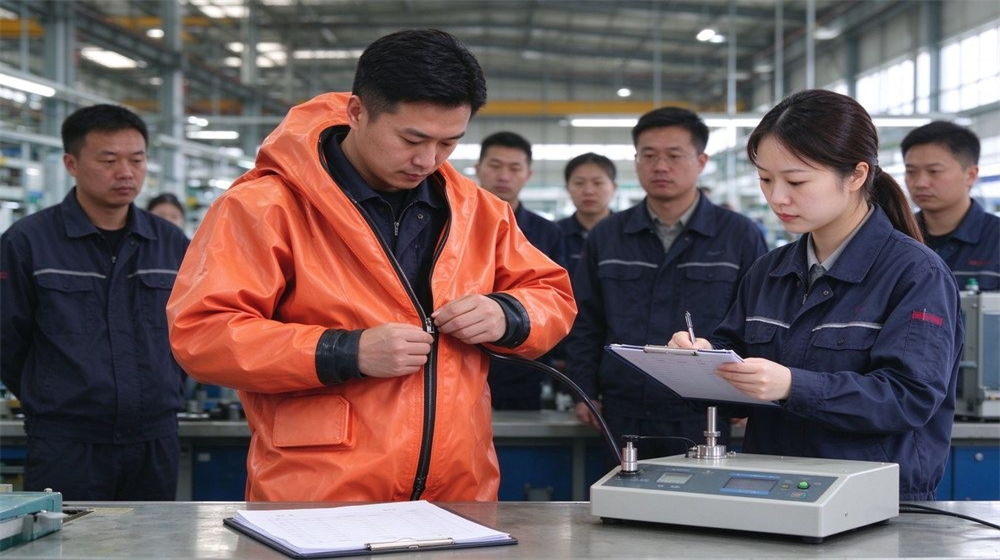


Close up detail of heavy duty protective class a gas tight hazmat suit, Gas tight zipper seal check on a Level A hazmat suit at, demonstrating professional info use in industrial safety environment, designed for wholesale bulk supply and industrial


2. How Does the Level A Hazmat Suit Work with SCBA?

The suit protects the body; the SCBA protects the breath. The two must work as one system, and that integration is a skill.



Aerial perspective of heavy duty protective class a gas tight hazmat suit, Quality inspector testing seal integrity of a gas tight Level A hazmat, demonstrating professional info use in industrial safety environment, designed for wholesale bulk supply and industrial safety


How the Suit and SCBA Form One System

An SCBA protective suit system connects the breathing apparatus to the garment through a sealed interface.

The wearer draws air from the tank, and the suit keeps the rest of the atmosphere out, and the complete assembly is what buyers evaluate when they compare gas tight chemical suit suppliers.

The interface must be checked every donning, and teams that run an SCBA protective suit program treat this check as part of the standard entry sequence: tank pressure, seal condition, visor position, hose routing.

  • Teams that practice the checks build the muscle memory that emergencies rely on.
  • The suit and the SCBA are verified together, and the verification follows the same standard every time, in line with the ISO reference for protective clothing performance.


The interface design matters because a suit that is gas-tight on its own still fails if the breathing connection leaks; the two components are tested as one assembly, and the assembly is the unit the team depends on.

  • Tank capacity, hose length and valve position are all specified together at order stage so the finished system is coherent, not improvised.


The same specification is repeated on the service sheet, so the maintenance team knows exactly which SCBA model belongs to which suit and what pressure the assembly is expected to hold. ISO 13982-1 protective clothing reference.
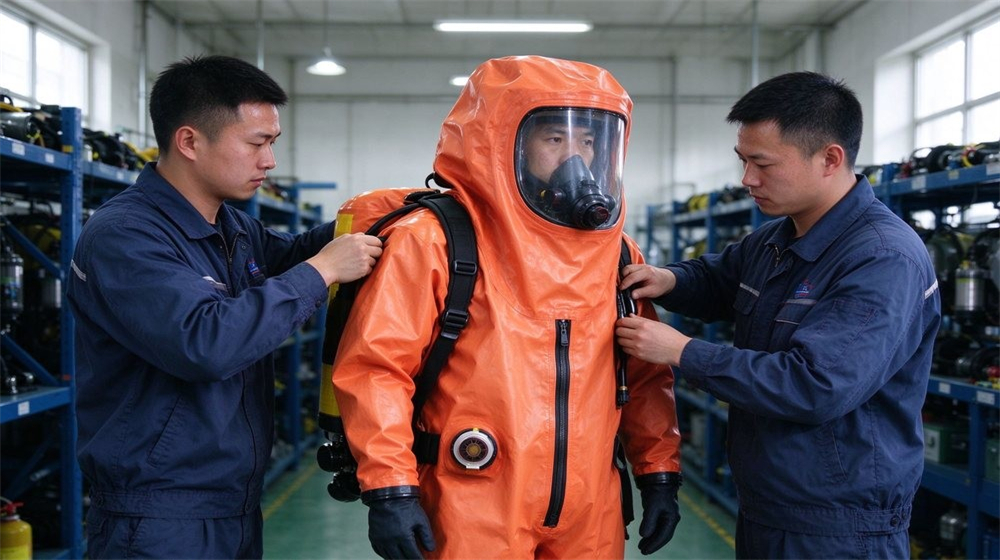


45 degree angle of heavy duty protective class a gas tight hazmat suit, Donning procedure for a Level A hazmat suit with SCBA, two responders, demonstrating professional application use in industrial safety environment, designed for wholesale bulk supply and industrial


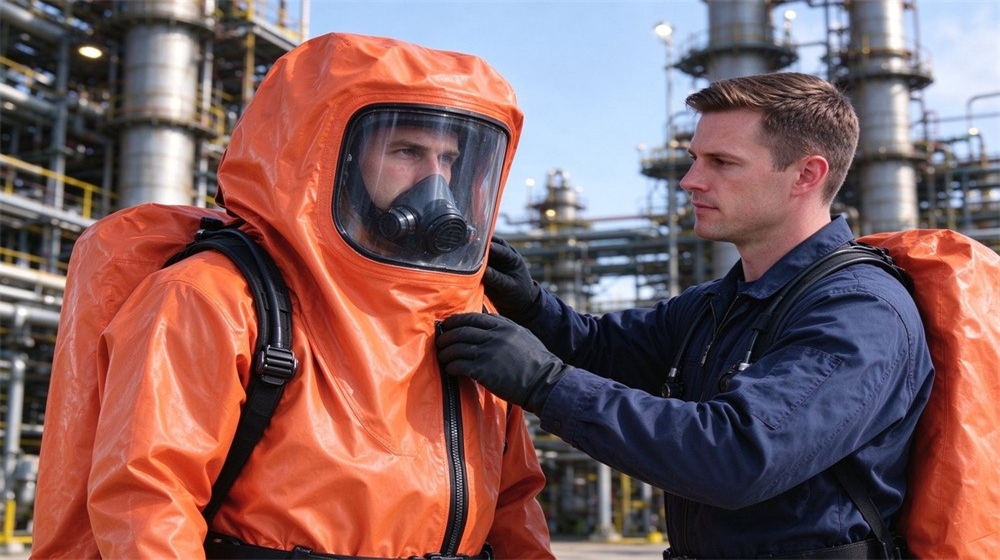
The Donning Sequence and Buddy Check

Donning a Level A system follows a fixed sequence: pre-check the suit, pre-check the SCBA, don the suit, connect the interface, verify the seals, and run the buddy check.

  • The buddy check is not optional—the second person confirms the visor seal, the zipper closure and the air flow before entry.
  • Teams time their donning in training and hold the standard below a set limit.
  • Readiness is a number, and the number is measured on the drill ground, not assumed in the storage room.
  • A hazmat suit with SCBA only performs when the wearing procedure is performed correctly.


The sequence is written down, posted at the storage point and practiced until it is automatic, because in a real alarm there is no time to read the procedure for the first time.
  • Standardized steps also give the incident commander a clear progress check: dressed, sealed, verified, deployed.
  • Each step has a visible signal—the zipper closed, the visor seated, the air flowing—so the commander confirms the state of every entrant without relying on radio reports alone.


Overhead view of heavy duty protective class a gas tight hazmat suit, Buddy check before entry in gas tight Level A hazmat suits, sealed, demonstrating professional application use in industrial safety environment, designed for wholesale bulk supply and industrial safety


Maintenance, Inspection and Training

Emergency equipment must be ready every day, even when it is used rarely.

  • The suit is cleaned, inspected and stored per the manufacturer procedure; the SCBA is maintained and pressure-tested on a schedule; and both are checked monthly.
  • Training keeps the team sharp on donning, communication and decontamination.
  • A Level A program is equipment plus discipline, and discipline is maintained, not assumed.
  • The records are part of the system: each suit has a service history, and each service event is logged against the equipment file.
  • Teams that keep the file current can answer the question that every safety audit asks: is this suit verified, when was it last inspected, and who last used it?
  • The same file feeds the replacement forecast, so the program never discovers an expired suit during an alarm.
  • Replacement planning is a calendar activity: the service record shows which suits approach their rated life, and the order is placed while the current stock still covers the team.

The maintenance list is short but non-negotiable: monthly visual inspection of the shell and seams, quarterly pressure test of the SCBA, replacement of visor and seal spares per the service schedule, and a documented cleaning cycle after every use.
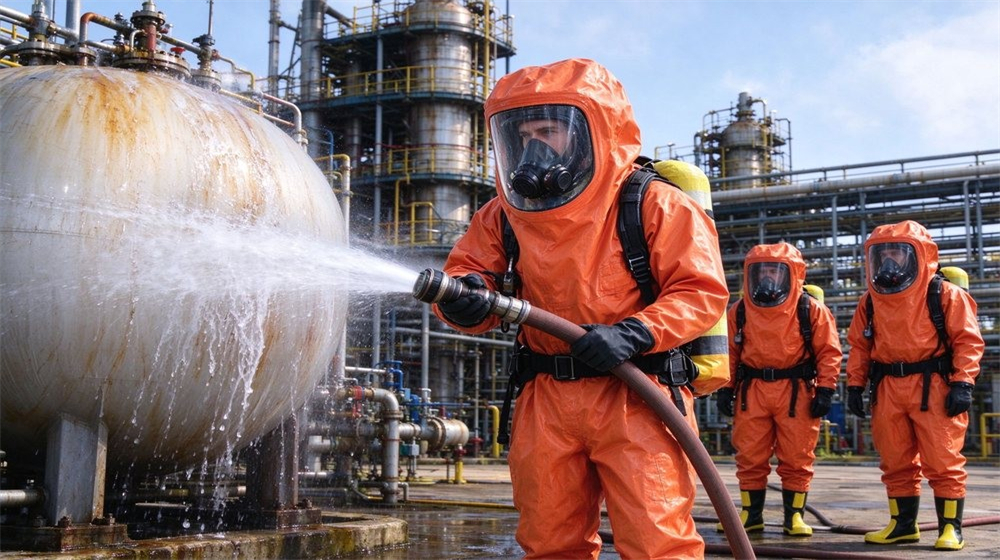
  • Following the list keeps the system within its verified service life and gives the safety officer the evidence trail an audit expects.


Wide shot of heavy duty protective class a gas tight hazmat suit, Response team in Level A hazmat suits cooling a chemical storage tank, demonstrating professional application use in industrial safety environment, designed for wholesale bulk supply and industrial safety


3. Where Gas-Tight Suits Are Used

Level A equipment earns its cost in the scenes where nothing else will do. Three scenarios use it more than any others.


Macro detail of heavy duty protective class a gas tight hazmat suit, Confined space entry preparation with a Level A hazmat suit, fully encapsulated, demonstrating professional application use in industrial safety environment, designed for wholesale bulk supply and industrial safety


Chemical Emergency Response

Chemical emergency response is the primary scene.
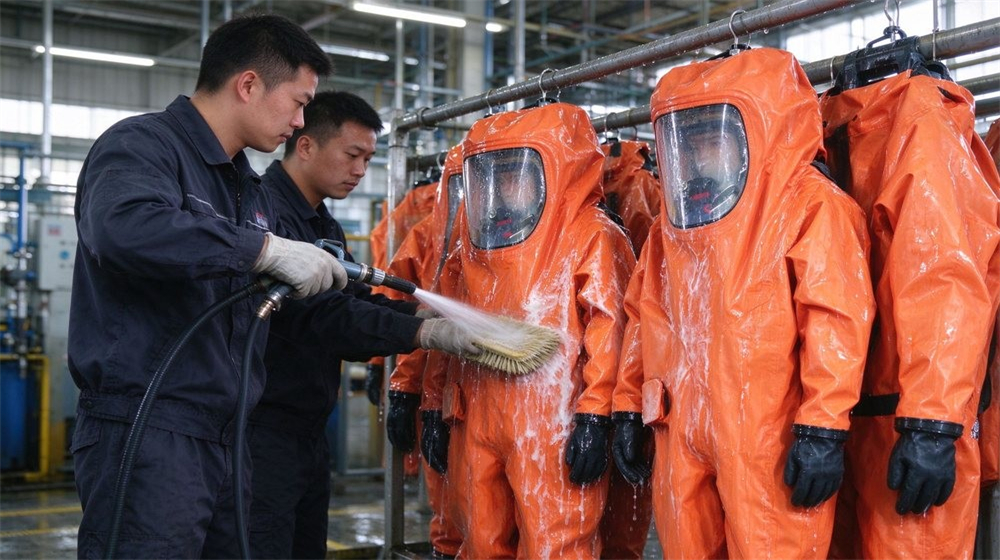
  • A release, a spill, a leaking vessel—the first team in may face an unknown atmosphere.
  • A Level A chemical protection suit lets them approach, assess and contain while breathing clean air.
  • The suit's full encapsulation means the response is not limited by the air around the scene.
  • For municipal and industrial response teams, this is the defining piece of equipment for hazardous-material incidents, and the suit is deployed with the SCBA that completes the isolation.
  • The first team's job is to define the hazard; the Level A suit buys them the time to do that without becoming part of the incident themselves.
  • Once the assessment is made, the incident commander can scale the response, bring in the correct tools and brief the follow-on teams with real information.
  • The first entry is therefore an information mission as much as a rescue mission, and the Level A suit is the tool that makes the information reliable.


Front view of heavy duty protective class a gas tight hazmat suit, Decontamination corridor for gas tight Level A hazmat suits, staged removal after, demonstrating professional application use in industrial safety environment, designed for wholesale bulk supply and industrial safety


Confined-Space Entry

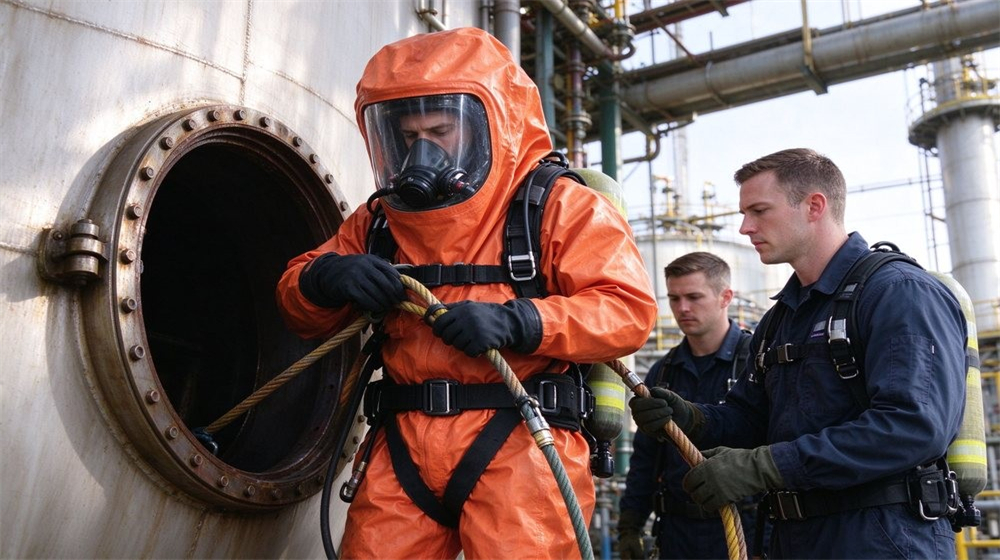
Confined spaces multiply the risk: a tank, a vessel or a pit can hold gas that is invisible and fatal.

  • Entry demands the highest protection plus a disciplined entry plan.
  • A fully encapsulated hazmat suit with SCBA covers the entrant, while a standby team manages the line, the clock and the rescue plan.
  • The suit enables the entry; the procedure makes it safe.
  • Every confined-space program that includes Level A protection documents the entry, the air monitoring and the retrieval plan before the hatch opens.
  • The entrant, the attendant and the rescue team each have defined roles, and the drill repeats those roles until the sequence is stable.
  • Air quality is monitored continuously during the entry, and the results are logged against the entry record.

The log closes the loop after the task: the readings show whether the level assignment was correct, and the next plan revision uses the same data to confirm or adjust the assigned level.
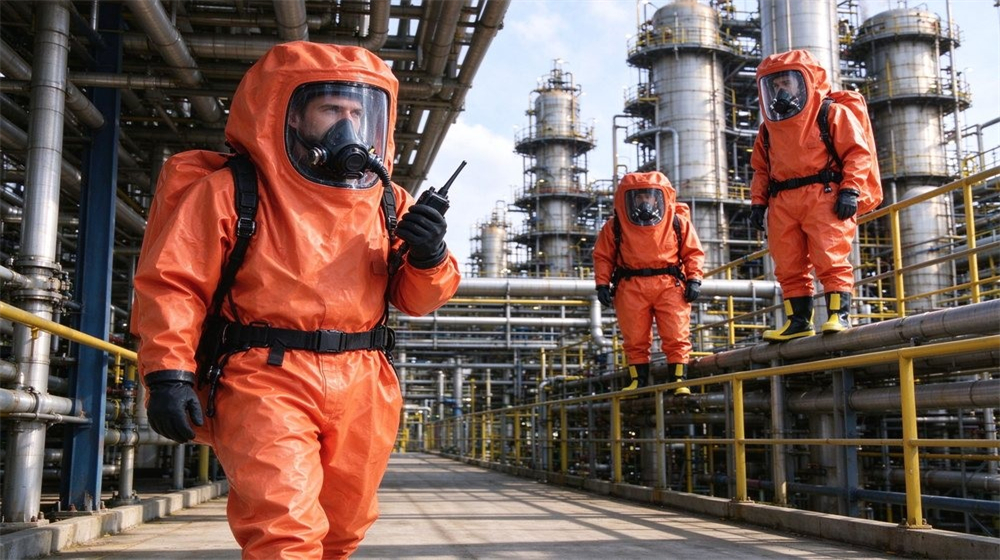


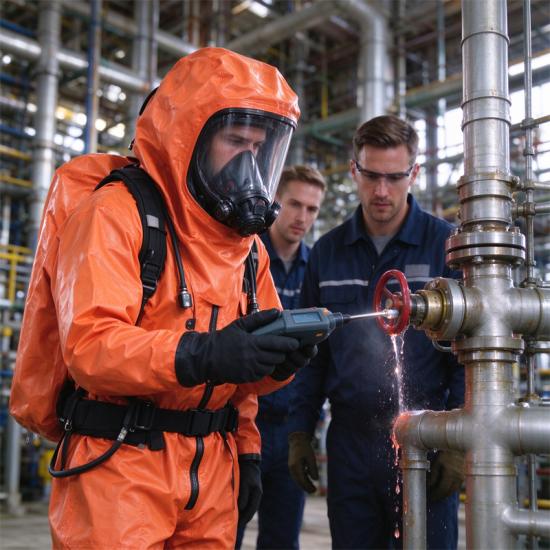
Side angle of heavy duty protective class a gas tight hazmat suit, Chemical plant inspection in a gas tight Level A hazmat suit, toxic, demonstrating professional application use in industrial safety environment, designed for wholesale bulk supply and industrial safety


Toxic Gas Industrial Tasks

Some industrial tasks themselves create toxic gas exposure: reactor cleaning, catalyst change-out, pipeline repair in sour-gas service.

  • Where the task cannot be avoided and the gas cannot be controlled, Level A is the worker's protection.
  • A gas tight chemical suit turns a hazardous job into a controlled procedure, with the worker isolated from the medium until the task is done.
  • NIOSH guidance on chemical hazards supports exactly this logic: when the contaminant cannot be kept out by lesser protection, the highest level of encapsulation is the defensible choice.
  • Industrial users typically keep a small Level A inventory for planned entries, and they treat the suit as a tool that converts a high-risk task into a documented, repeatable procedure.
  • The procedure defines the entry window, the task list and the exit criteria, so the work is measured, not improvised.


For planned industrial entries, the same procedure is reviewed with the operations team before the work order is issued, so the maintenance schedule and the safety plan are aligned from the start. NIOSH chemical hazards guidance.


In all three scenarios the common factor is the same: the atmosphere is the unknown. The Level A garment removes that unknown by sealing the worker inside a controlled breathing envelope. Everything else—the plan, the team, the drills—exists to support that single, simple advantage.


Key takeaway: In all three scenarios the common factor is the same: the atmosphere is the unknown. The Level A garment removes that unknown for the entry team.



Aerial perspective of heavy duty protective class a gas tight hazmat suit, Response leader reviewing a Level A hazmat suit equipment plan and test, demonstrating professional application use in industrial safety environment, designed for wholesale bulk supply and industrial safety


4. How Do Teams Prepare for Level A Response?

Level A protection is delivered by a ready team, not a rack of suits. Planning turns equipment into capability.
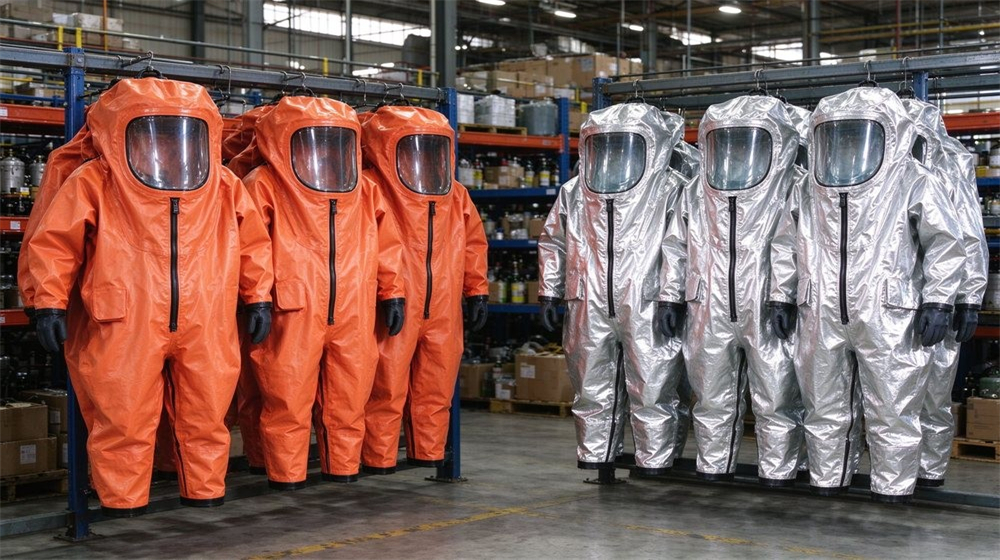


Close up detail of heavy duty protective class a gas tight hazmat suit, Color coded storage of gas tight Level A hazmat suits, orange and, demonstrating professional application use in industrial safety environment, designed for wholesale bulk supply and industrial


Building the Emergency Plan Around Level A

The plan starts before the incident: hazard inventory, response levels, team roles, communication and evacuation routes.

  • The chemical emergency response suit level is assigned by scenario, so every team member knows what to wear for each alarm.
  • Drills test the plan under time pressure, and the results feed back into training.
  • A plan that is written but never drilled is a document; a plan that is drilled becomes a capability.
  • The suit level, the staffing and the response time are all defined in the plan before the first alarm.

Each alarm type has an assigned response: the level, the team size, the entry procedure and the decontamination route are all written down and matched to the hazards the site actually holds.
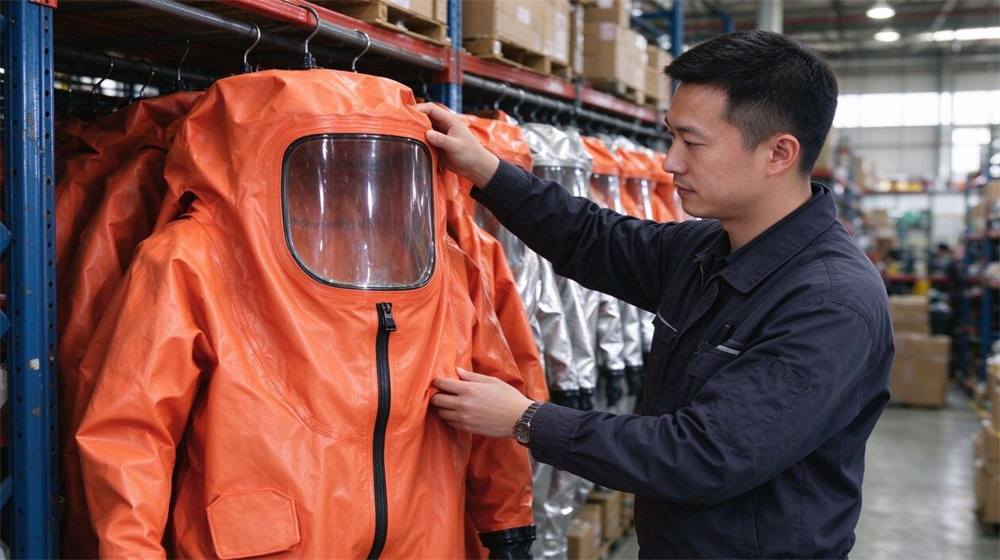
  • When the plan is reviewed, the level assignments are checked against the hazard inventory again, so the document stays alive.
  • The review also re-confirms the team roster, because the response plan is only as good as the people who execute it, and every roster change triggers a training update.


45 degree angle of heavy duty protective class a gas tight hazmat suit, Equipment manager inspecting a gas tight Level A hazmat suit in storage,, demonstrating professional application use in industrial safety environment, designed for wholesale bulk supply and industrial


Equipment Management and Records

Suit rotation, maintenance and inspection follow a calendar, not memory.

  • Each suit has a service record: use history, inspection dates, cleaning cycles.
  • The SCBA has its own test schedule.
  • Spares are stocked for gloves, seals and visors.
  • This bookkeeping sounds administrative, but it is what makes the equipment trustworthy on the day it is needed.
  • Teams that manage the records manage the risk, and teams that manage the risk keep their people safe.


The service record also feeds the replacement plan: when a suit reaches its rated service life or fails an inspection, the record shows it clearly and the replacement is ordered before the gap becomes a field problem.
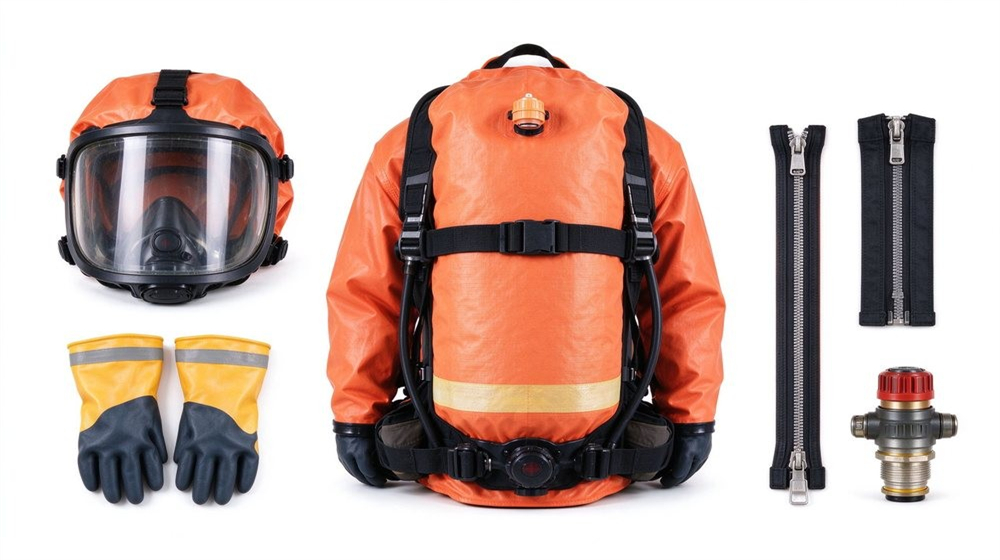
  • The same discipline applies to the accessories, because a spare visor or seal is only useful if it is present, inspected and stored correctly.
  • The accessory stock is checked on the same calendar as the suits, and the counts are part of the monthly equipment report the safety officer reviews.


Overhead view of heavy duty protective class a gas tight hazmat suit, SCBA breathing apparatus and sealed visor for a Level A hazmat suit,, demonstrating professional product use in industrial safety environment, designed for wholesale bulk supply and industrial safety


Drill Standards That Measure Readiness

Drills should measure something: donning time, seal-check completion, communication clarity, decontamination flow.
  • Setting a target and timing the drill turns practice into progress.
  • Quarterly drills keep the team's skills current without burning out the equipment.
  • The standard is simple: the team should be able to be dressed, checked and deployed within its planned response time, every time.
  • Measured drills also expose weak points in the equipment plan, so the correction happens on the drill ground rather than at the incident.
  • The drill log is reviewed with the same seriousness as the incident log, because the drill is where the team learns what the plan missed.
  • A team that debriefs every drill improves faster than one that only debriefs incidents.
  • The debrief is short—what worked, what delayed us, what we change.
  • The changes are written into the plan before the next drill, so the improvement is structural, not personal.
  • Key takeaway: Level A protection is delivered by a ready team, not a rack of suits. Planning turns equipment into capability.


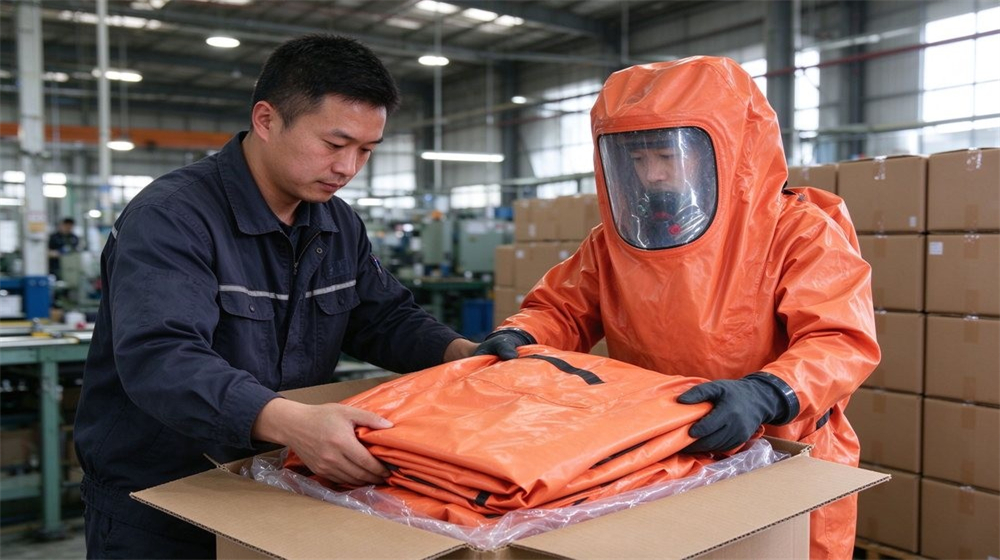
Wide shot of heavy duty protective class a gas tight hazmat suit, Asian factory workers packing gas tight Level A hazmat suits for export,, demonstrating professional application use in industrial safety environment, designed for wholesale bulk supply and industrial safety


5. Where to Source Level A Hazmat Suits Wholesale?

Buying Level A equipment is a procurement decision with safety consequences. This section covers what response teams and industrial buyers need to plan it.
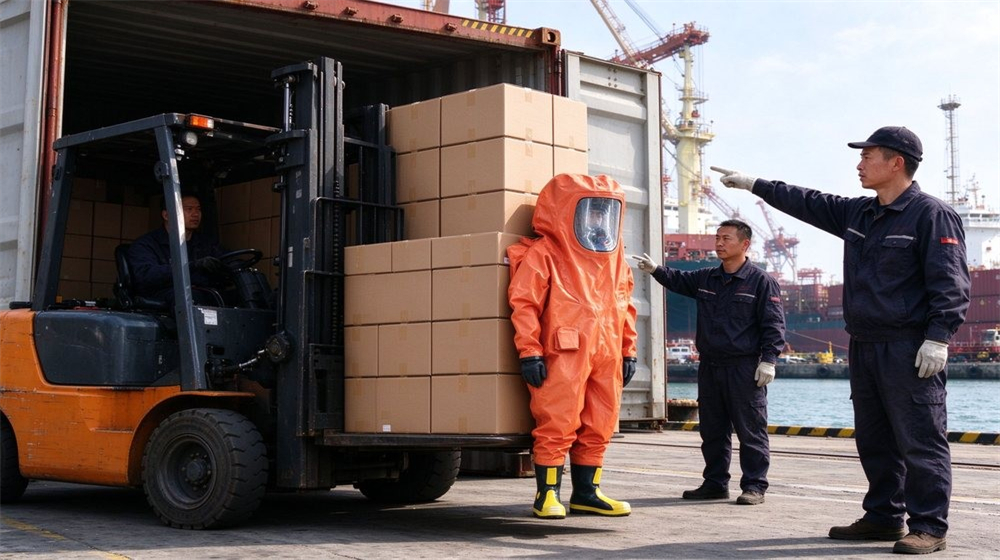


Macro detail of heavy duty protective class a gas tight hazmat suit, Complete Level A hazmat suit system loaded for delivery, gas tight garment, demonstrating professional application use in industrial safety environment, designed for wholesale bulk supply and industrial safety


Ordering the Complete System

Order the system, not the garment alone; a gas tight chemical suit program depends on the whole assembly.

  • A complete package includes the suit, the compatible SCBA, gloves, boot covers and the spare seals and visors that keep the system ready.
  • Buying the full system from one source keeps the interface verified and the documentation unified.


For response teams building or renewing capability, the system approach removes compatibility questions before they become field problems. Bulk chemical PPE sourcing from a single supplier also simplifies training, spare parts and record keeping.

  • The buyer receives one configuration sheet, one set of test records and one service reference, which keeps the internal program consistent from procurement to training to maintenance.
  • The same supplier relationship also makes the spare parts reorder fast, because the model numbers are already in the file.
  • Volume buyers also get a consistent lead-time picture across orders, which makes the multi-year equipment plan easier to budget and schedule.

Ordering a Level A hazmat suit system means configuring garment, SCBA and accessories together. The garment is verified against GB standards: XF 770-2008 gas-tight classification, GB 24539-2021 Type 1 and GB/T 16556-2007 for SCBA integration.
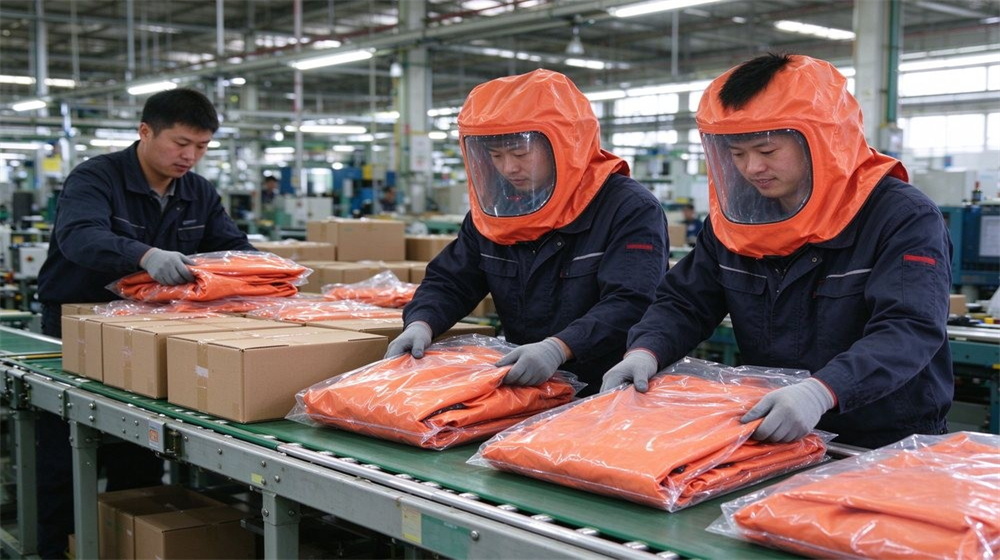


Front view of heavy duty protective class a gas tight hazmat suit, Packing line sealing gas tight Level A hazmat suit cartons, export quality, demonstrating professional application use in industrial safety environment, designed for wholesale bulk supply and industrial safety


Order Item

How to Configure

Notes

Garment

Gas-tight suit per assessment

GB 24539-2021 Type 1

SCBA

Compatible unit, pressure-tested

Interface verified

Accessories

Gloves, boot covers, visor spares

Supplied together

Marking

Unit identification

OEM terms at quotation


The table compares protection levels side by side, showing how capability changes as the rating drops.

Match the level to the atmosphere and the response becomes correct by design.
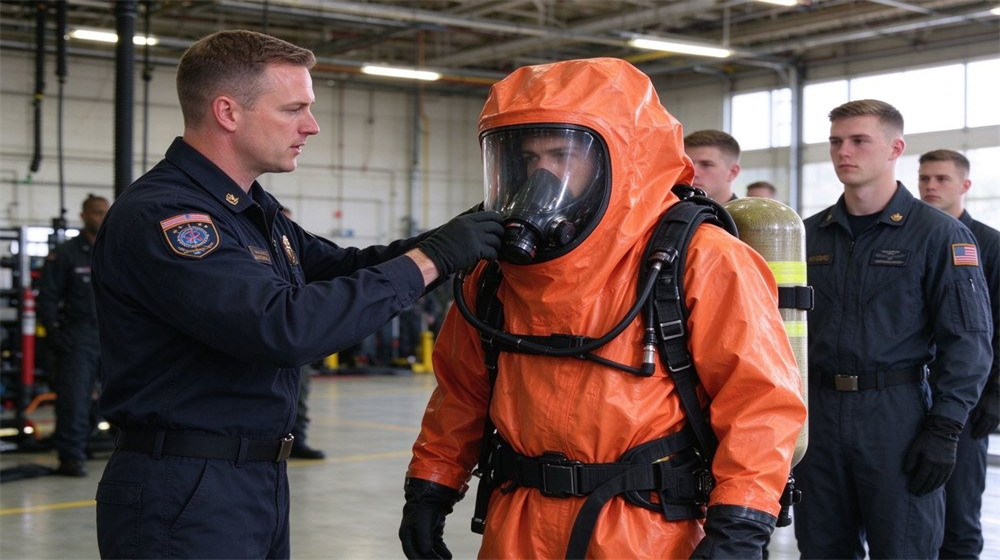


Side angle of heavy duty protective class a gas tight hazmat suit, Response team training in gas tight Level A hazmat suits during a, demonstrating professional application use in industrial safety environment, designed for wholesale bulk supply and industrial safety


Sizing, Configuration and Custom Marking

Sizing follows chest and height against the factory chart at quotation.

  • Team mix is based on the workforce, with spares for rotation.
  • Custom marking—unit identification on the suit—supports accountability and training.
  • OEM terms including artwork and timeline are confirmed at quotation before production.
  • The configuration sheet lists every component, so the team receives exactly the system it planned, and the quotation documents the sizing basis for each garment.


Sizing is not a detail to guess: a suit that is too large leaks at the interfaces, and a suit that is too small restricts the worker and fails the seal.
  • The sizing chart is therefore completed against real measurements, not against a guessed average.
  • The quotation records the chest and height for each size ordered, so the team can verify the mix against its own roster before the order is finalized.


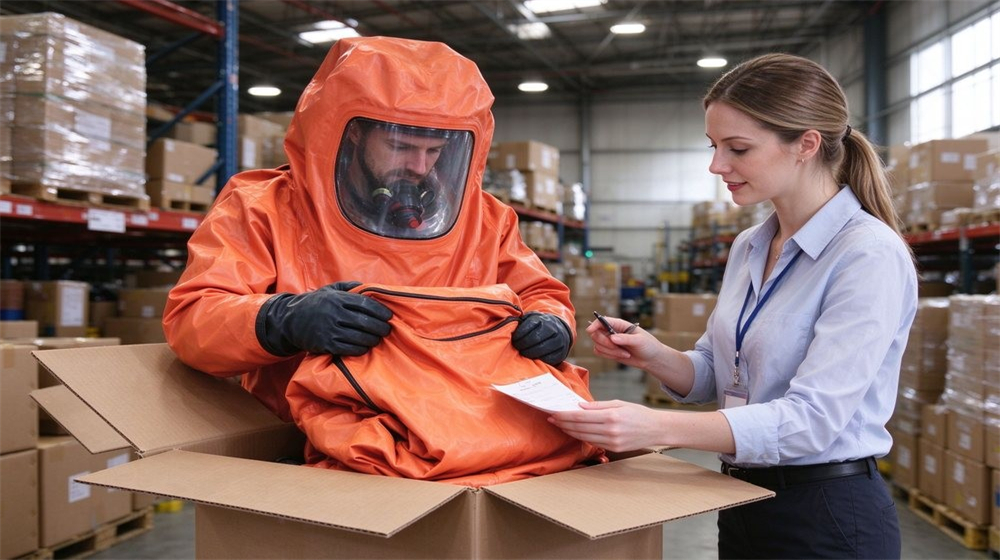
Aerial perspective of heavy duty protective class a gas tight hazmat suit, Buyer inspecting an unpacked gas tight Level A hazmat suit, sealed visor, demonstrating professional application use in industrial safety environment, designed for wholesale bulk supply and industrial safety


Payment, MOQ and Lead Time

MOQ and production timeline are confirmed per order based on configuration and agreed in writing before production.

  • We accept T/T payment; we do not offer L/C terms.
  • For first-time buyers, a sample system validates fit and integration before volume commitment.
  • The sample covers the garment, the SCBA interface and the accessories, so the team can run its own donning drill before the full order is produced.
  • The sample step is cheap insurance: it confirms sizing, familiarizes the team with the equipment and verifies that the system meets the program's own acceptance checklist.
  • Once the sample is approved, the volume order is produced against the same specification, so the delivered batch matches the sample.
  • The sample is kept as the reference for the incoming inspection, and the team's first donning drill on the sample becomes the baseline for the batch acceptance check.

The order confirmation list is short but non-negotiable: monthly visual inspection of the shell and seams, quarterly pressure test of the SCBA, replacement of visor and seal spares per the service schedule, and a documented cleaning cycle after every use.


Following the list keeps the system within its verified service life and gives the safety officer the evidence trail an audit expects.


Key takeaway: Order the system, not the garment alone; a gas tight chemical suit program depends on the whole assembly.
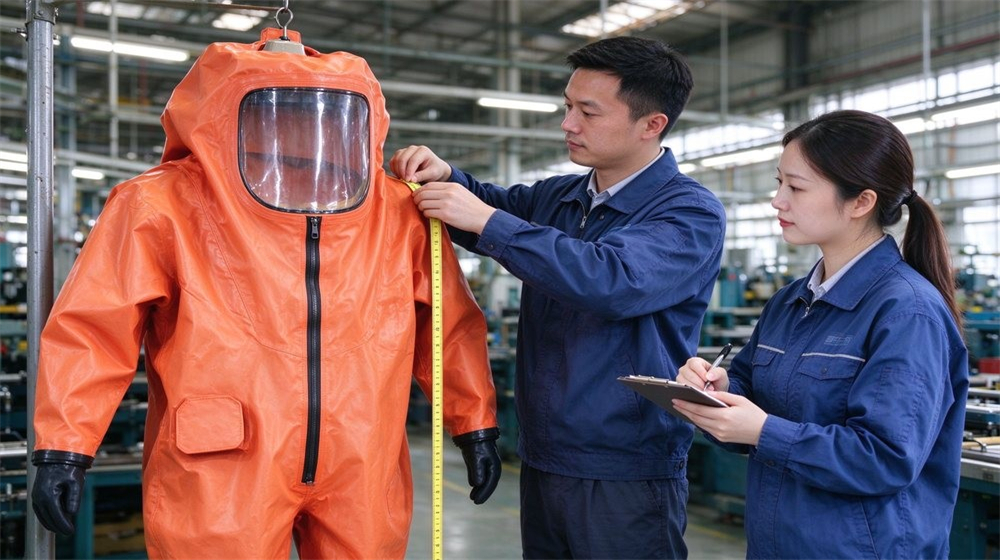


Close up detail of heavy duty protective class a gas tight hazmat suit, Size measurement of a gas tight Level A hazmat suit at the, demonstrating professional info use in industrial safety environment, designed for wholesale bulk supply and industrial


Class A Gas Tight Hazmat Suit FAQ

Here are the questions buyers ask most often about gas tight Level A suits.

Response team training in gas tight Level A suits during drill, sealed system ready for chemical emergency


What is a Level A suit?
A fully encapsulating, gas-tight garment that isolates the wearer from the environment, worn with SCBA so breathing air comes from a tank rather than the atmosphere.
It is the highest tier of chemical protection and is used when the air itself is the hazard.
Teams that carry Level A capability keep the garment, the SCBA and the inspection records together, so the whole system is ready for the alarm.

When is a gas tight chemical suit required?
When the atmosphere is toxic, unknown or vapor-laden—toxic gas response, confined-space entry and large spills with vapor clouds—where lower levels cannot protect the respiratory system and the skin at the same time.

The risk assessment assigns the level before entry.
The same logic applies to industrial maintenance where a reactor or pipeline cannot be purged to a safe level before work starts.


How does the suit work with SCBA?
The breathing apparatus connects to the garment through a sealed interface. The wearer breathes tank air while the suit keeps the outside atmosphere out, and the interface is checked at every donning. The two are verified together as one assembly. The assembly is tested as one unit, and the test record covers both the garment and the breathing connection.

Is Level A the highest protection level?
Yes.
Level A seals the body completely and carries its own breathing air.
Level B protects against splash with SCBA but is less sealed, and Levels C and D cover progressively lower hazards.
Level A is the only level that isolates the wearer from the air itself.
The level chart is posted in the response room so the assignment decision is consistent across every shift.


Is the Class A Gas Tight Hazmat Suit reusable after decontamination?
Yes, within its rated service it can be cleaned, inspected and reused; each use is recorded and seals are verified before every entry. Service life depends on use, decontamination and inspection results, and the service record drives the replacement plan. Reusability makes the Level A program economical for teams that drill regularly, because the same garments serve training and response.

What accessories are available with the Class A Gas Tight Hazmat Suit?
The compatible SCBA interface, heavy-duty gloves, boot covers and spare seals and visors can be supplied together as a complete system, with one set of documentation. The accessories are specified against the same standard as the garment. Spare seals and visors are the parts most likely to wear, and stocking them keeps the system out of downtime.

How should the Class A Gas Tight Hazmat Suit be decontaminated after exposure?
Follow the stated decontamination procedure for chemical protective clothing: staged removal, washing per the manufacturer's instruction, and inspection before storage.
Decontamination is part of the response plan, not an afterthought, and the staged removal keeps the contaminant off the clean side.
The wash water, detergent and drying conditions follow the garment specification, because the wrong wash can shorten the service life.
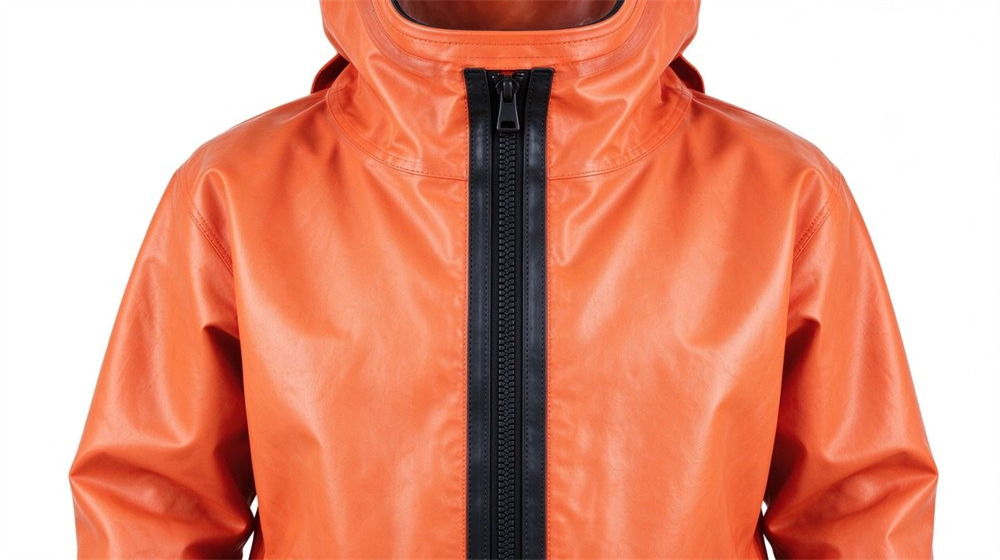


45 degree angle of heavy duty protective class a gas tight hazmat suit, Gas tight double zipper closeup on a Level A hazmat suit, sealed, demonstrating professional info use in industrial safety environment, designed for wholesale bulk supply and industrial


How do I choose the right size?
Sizing is based on chest and height against the factory chart at quotation.
Teams mix sizes according to the workforce and add spares for rotation, and the quotation documents the sizing basis.
A sample garment confirms the fit before volume production.
The chart covers the full working range, and the mixed-size order matches the actual roster rather than a one-size-fits-all assumption.


What is the minimum order quantity for the Class A Gas Tight Hazmat Suit?
MOQ varies by configuration and is confirmed at quotation; a sample system can validate fit and integration first. The quotation states the MOQ for the exact configuration you plan to order. The quotation also states the lead time for the sample, so the validation step is scheduled into the program.

Can we add unit marking or custom logos to the Class A Gas Tight Hazmat Suit?
Yes, custom identification on the suit is available; terms confirmed at quotation. Marking supports accountability, training and equipment tracking inside the team. Marking can include the team number, the suit serial and the inspection date, which simplifies the service record.

Do you export the Class A Gas Tight Hazmat Suit worldwide?
Yes, we export worldwide from China and support bulk orders and tender documentation. Export packing and shipping terms are confirmed at quotation. Shipping, documentation and payment terms are confirmed at quotation so the delivery matches the program schedule.

How do I place an order?
Send your team size and response scenarios; we confirm the system configuration, sizing and pricing, then agree the order in writing before production. The configuration sheet is reviewed together before the order is confirmed. The same message starts the quotation, the sample and the volume order, so the requirement does not change between steps.

What is the production timeline for bulk Class A Gas Tight Hazmat Suit orders?
Confirmed per order based on configuration and agreed in writing before production. The timeline is stated at quotation so the program can plan training and delivery together. The timeline is set from the configuration, so a standard system quotes faster than a fully customized one.

What payment terms apply to wholesale Class A Gas Tight Hazmat Suit orders?
We accept T/T payment; we do not offer L/C payment terms. Payment terms are stated at quotation and confirmed in the order agreement. The payment schedule is written into the order agreement, so both sides share the same expectation.
Summary: Toxic gas and chemical emergencies demand the highest level of protection, and a gas-tight Level A hazmat suit worn with SCBA is the defined answer: full encapsulation, sealed construction and complete system supply. Scroll down for the full breakdown and procurement details.
Before requesting a quotation, confirm the Level A hazmat suit specification against your response requirement. The table below summarizes the gas tight chemical protection system.
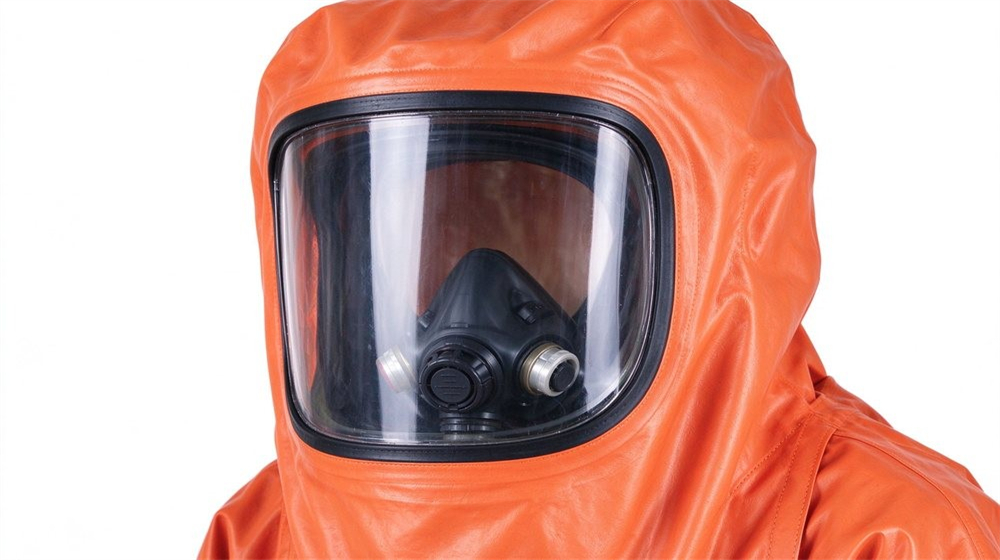


Overhead view of heavy duty protective class a gas tight hazmat suit, Wide sealed visor closeup on a gas tight Level A hazmat suit,, demonstrating professional info use in industrial safety environment, designed for wholesale bulk supply and industrial safety


Specification

Level A Hazmat Suit Detail

Protection class

Gas-tight, fully encapsulating Level A

Standards

XF 770-2008, GB 24539-2021 Type 1, GB/T 16556-2007

SCBA integration

Internal harness compatible with positive-pressure SCBA

Visor

Wide sealed visor, clear field of view

Closure

Gas-tight double zipper with cover flap

Pressure relief

Overpressure exhaust valve

Applications

Chemical emergency response, confined-space entry, toxic gas tasks


The specification above reflects the standard wholesale configuration; custom sizing and accessory options are confirmed at quotation.


Need gas tight Level A hazmat suits for your response team? Send us your team size and response scenarios, and we will confirm the system configuration, sizing and bulk pricing. We accept T/T payment and export worldwide from China.


If you have questions or suggestions,please leave us a message,we will reply you as soon as we can!

Related Product
  • Outdoor Fire Fighting Specialized Firefighting Suit Deep Blue Firefighting Suit Set, Forest Fire Fighting Specialized, Full-body Protection

    This Deep Blue firefighting suit set is specially designed for forest fire fighting, using special flame-retardant fabric that can withstand 700°C open flames in the wild, with a thermal protection value (TPP) of 25CAL/AM2. The vivid Deep Blue color combined with enhanced reflective strips enables identification from 500 meters away in forest smoke. The lightweight design of only 4.5KG does not affect mountain action speed, with a waterproof rating >40KPA, adapting to camping fire fighting and long-term field operations. The anti-plant puncture design increases wear resistance by 50%, making it professional equipment for forest firefighting, mountain rescue, and outdoor fire fighting actions, providing all-around body protection for forest firefighters.

  • High-temperature Resistant Firefighting Suit Set 750°C High-temperature Resistant Firefighting Suit Set, Emergency Rescue, Quick-wear

    This high-temperature resistant firefighting suit set is made of professional-grade flame-retardant materials, capable of withstanding extreme temperatures up to 750°C, with a thermal protection value (TPP) of 26CAL/AM2, providing reliable protection for emergency rescue. The innovative quick-wear design allows complete dressing in 40 seconds during emergencies, with hydrostatic pressure resistance >45KPA and excellent breathability. Designed according to ergonomic principles, weighing only 4.8KG, it effectively reduces the burden on rescue personnel and is suitable for high-risk scenarios such as building fires, tunnel rescues, and industrial firefighting, making it an ideal equipment choice for professional firefighting teams.

  • 800°C High-temperature Protection Firefighting Suit Professional Firefighting Suit Set, Flame-retardant Protection, Rescue Essential, 14-3C Certified

    This professional firefighting suit set is made of high-grade flame-retardant cotton fabric, 14-3C certified, capable of withstanding extreme temperatures up to 800°C, with a thermal protection TPP value of not less than 28CAL/AM2. The three-layer composite protection structure, with waterproof static pressure resistance >50KPA and breathability >5000G/M²·24H, ensures comprehensive safety for rescue personnel in complex environments such as building fires, forest fires, and special chemical plant fires. Available in three models: 97/02/14, meeting different rescue scenario requirements.

  • Flame Retardant Firefighting Suit 02 Firefighting Suit Multi-layer Composite Material Rescue Protection

    This Type 02 firefighting suit is made of professional flame-retardant materials with excellent heat resistance, fire protection grade meeting international rescue standards, and waterproof puncture resistance rate of 98%. The deep blue body is equipped with eye-catching yellow reflective strips, increasing night visibility by 85%. The complete six-piece configuration provides comprehensive protection for firefighting, forest firefighting, earthquake rescue, and other scenarios, providing reliable protection for 300+ professional rescue teams.

  • Forest Fire Rescue Service Flame-Retardant Heat-Resistant Forest Fire Rescue Service with Heat-Resistant Design

    This professional forest fire rescue service uses flame-retardant heat-resistant material, achieving GB8624-A2 fire rating standard with heat resistance up to 800°C, and features high-visibility reflective strips visible from 300 meters away. It's suitable for emergency rescue scenarios such as forest fires, mountain rescues, and industrial disasters, providing comprehensive personal safety protection. Each set has undergone 10,000 abrasion tests and proven its reliability and safety in over 1,500 rescue operations nationwide.

  • Aramid Fire Rescue Cap Fire Rescue Cap, Aramid Flame-Resistant Material, Forest Fire Emergency

    This professional-grade forest firefighting vest and hat set is made of polyester/cotton blended flame-retardant fabric, with reflective visibility up to 300 meters, capable of resisting short-term flame contact, improving protection efficiency by 85%. The bright orange design with double-layer reflective strips complies with international rescue standards, ensuring 360° visibility in smoke and low light environments. Suitable for forest fire fighting, wilderness emergency rescue, post-earthquake sites, and other emergency disaster relief scenarios, providing comprehensive protection for rescue personnel.

Copyright © Custom Disaster - Relief Bedding: Tents, Sleeping Bags, Blankets All Rights Reserved

Leave a message

    If you have questions or suggestions,please leave us a message,we will reply you as soon as we can!


the professional team to service !