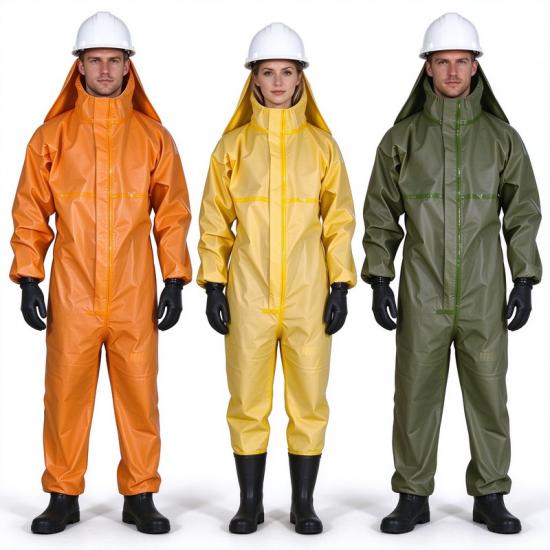
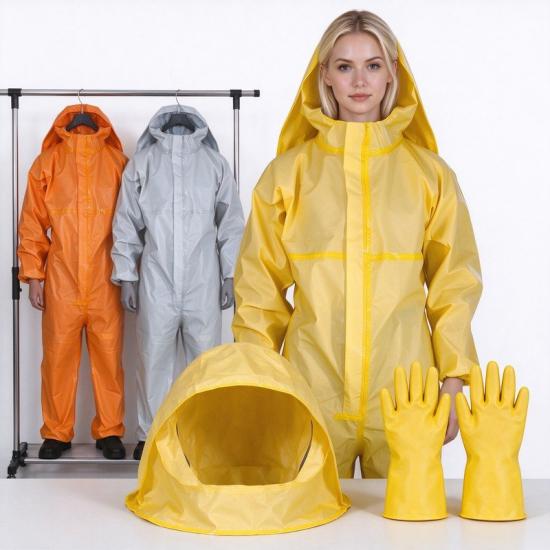
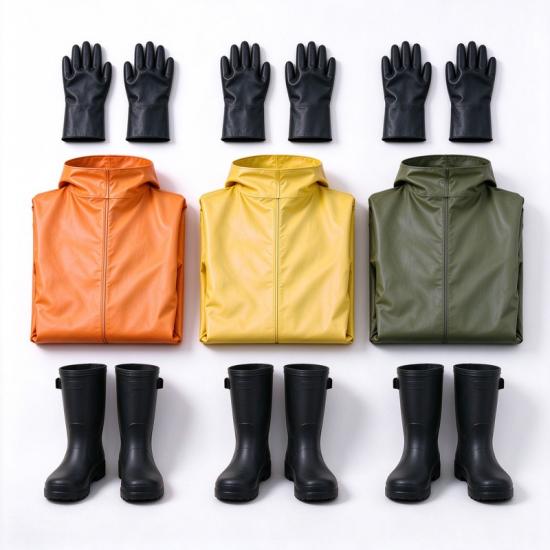
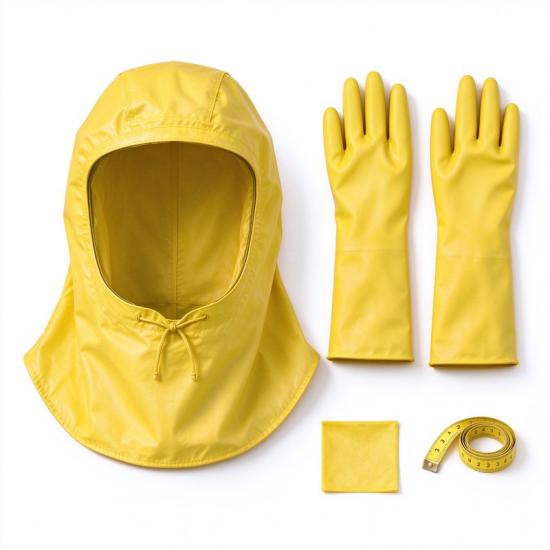
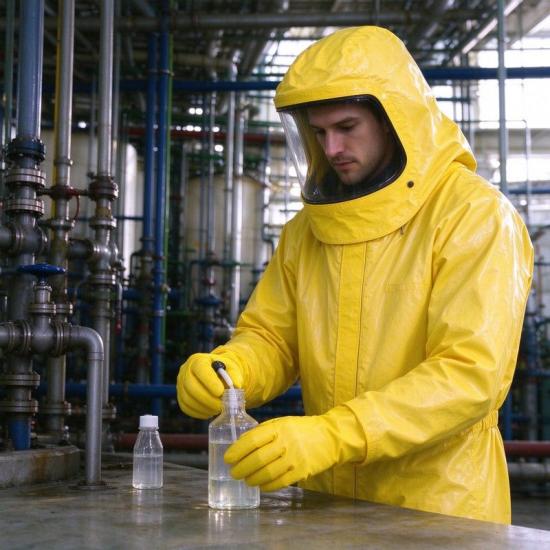
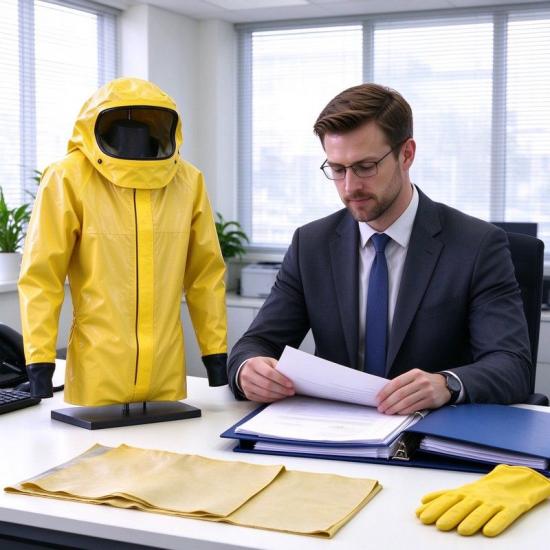
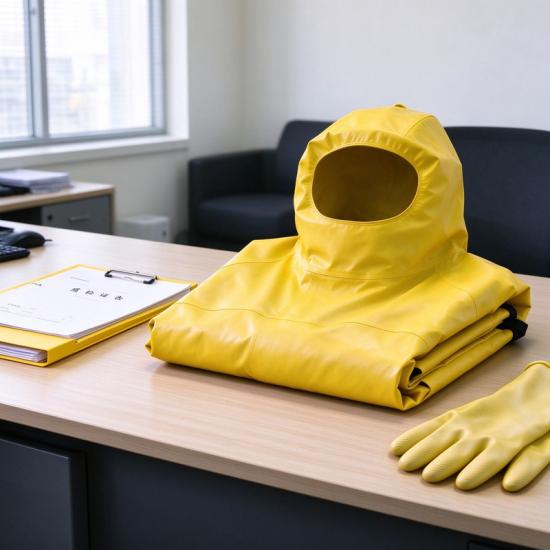
Semi encapsulated chemical protective suit certified Type3 Type4 for medium-risk industrial chemical tasks. Complete set includes attached hood, sealed chemical gloves and boot covers. Open face design ensures clear vision and communication. Reusable, great for plant maintenance, sampling and lab work. OEM custom branding and batch test reports available for bulk wholesale orders.
Note: Price for reference only. Exact price based on quantity, size, weight and custom details.
model no. :
XFF-10Brand:
YRFmarket price :
$119.8sale price :
$59.9price range :
30-100/$59.9Color :
Multiple Colorsport of dispatch :
Guangdong/GuangzhouPayment :
TT, Paypal, Western Unionmin order :
30original region :
Made in ChinaLead Time :
5-15daysSemi Encapsulated Suit | Type 3/4 Medium Risk Liquid
Protection
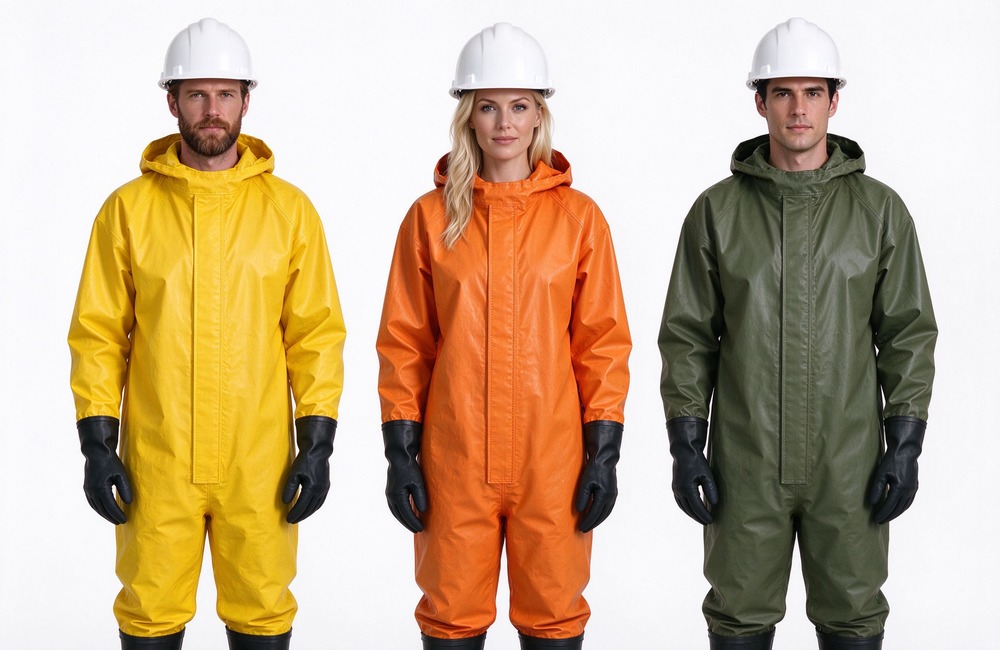
We supply semi-encapsulated chemical protective suits in bulk from China for medium-risk industrial chemical response and plant maintenance. Type 3 and Type 4 certified coverage with attached hood, chemical gloves, and boot covers balances reliable protection with comfortable movement for extended shifts. Test reports per batch, OEM branding, custom sizing, and wholesale factory pricing available below.
 |

|
On This Page
Semi-Encapsulated vs Fully Encapsulated
Where Semi-Encapsulated Suits Fit
Balancing Protection and Mobility
Medium-Risk Applications in Detail
Cost-Effective Procurement
Frequently Asked Questions
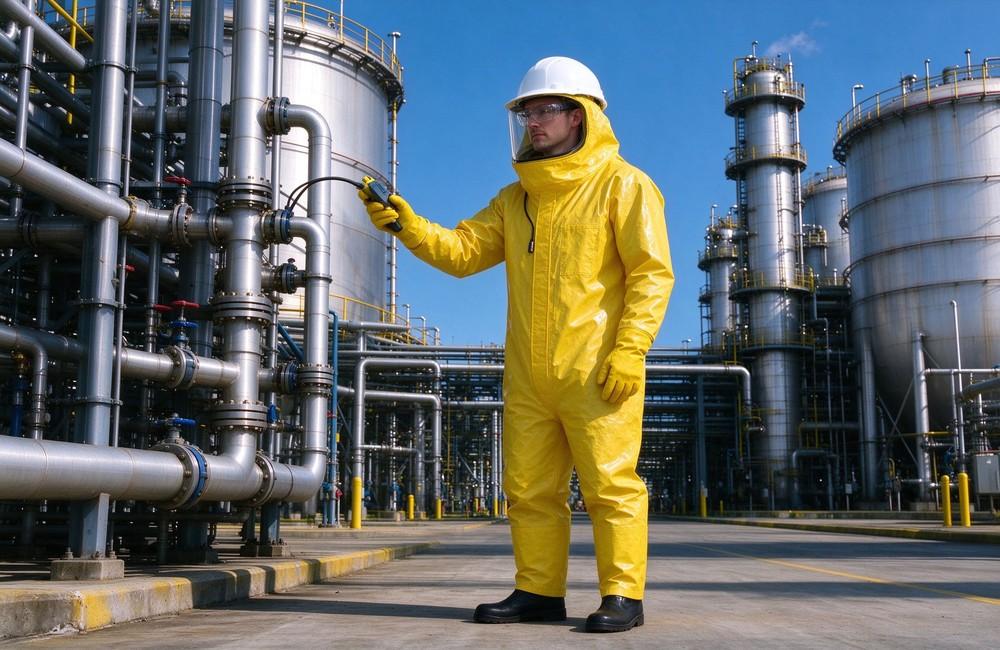
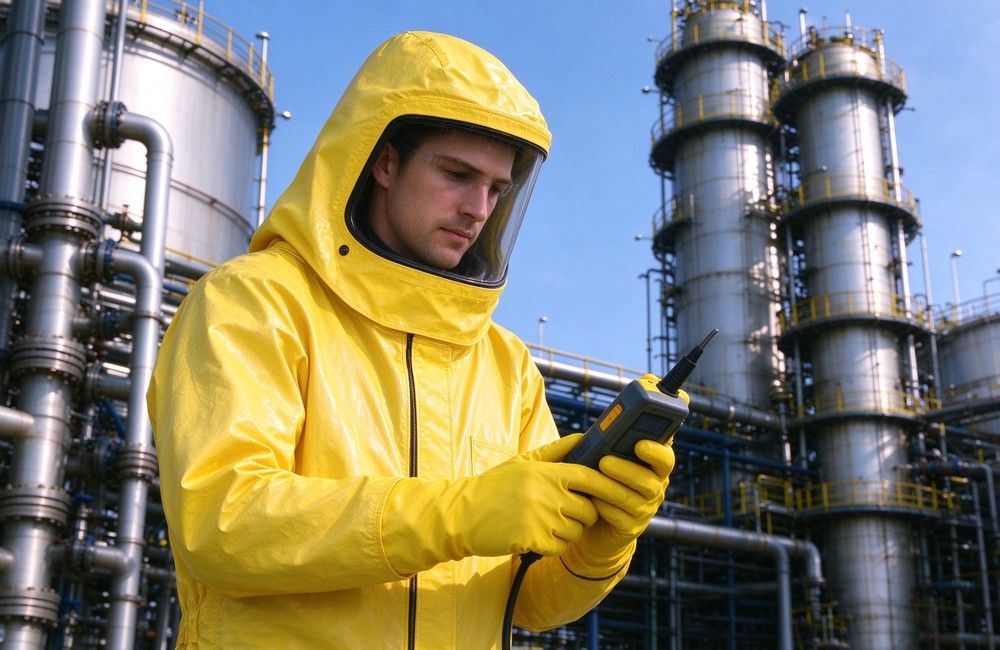
For plant teams, the semi encapsulated chemical suit is built as one connected system. An attached hood covers the head and neck, chemical gloves seal at the wrists, and boot covers close the legs. The face stays open for vision and communication, which is exactly what medium risk chemical protection suit users need for normal plant work. Liquid and particles are kept off skin and clothing while the wearer keeps full situational awareness. For dosing, maintenance, sampling and response support, this balanced design beats both extremes.
Cost follows the design. A semi-encapsulated suit costs a fraction of a fully sealed Level A system, because the engineering is simpler and the wearer does not need SCBA for routine tasks.
The comparison is clear when the levels are laid side by side. Fully encapsulated suits seal everything and carry their own breathing apparatus; light coveralls handle only particles and light splash. The half sealed hazmat suit sits between: sealed body system, open face, reusable, and rated for medium chemical exposure. Teams that match the suit to the task spend less, move faster and stay safer, because the equipment fits the job instead of overshooting or undershooting it.
A complete suit means complete coverage. The hood, the gloves and the boot covers are part of the same system, matched to the garment and supplied together. Ordering the whole set from one source keeps the quality standard consistent and the documentation simple. For buyers building a medium-risk chemical protection program, the semi-encapsulated suit plus its integrated accessories is the practical, repeatable answer.
The sections that follow cover the two-suit comparison, the applications that fit the semi-encapsulated level, the mobility trade-offs, the task-by-task exposure and the procurement terms. Each section closes with the detail a buyer needs at that stage of the decision.
Medium-risk chemical work needs protection that moves with the worker, and a semi encapsulated chemical protective suit is the balanced answer: connected head-to-boot coverage, open face for vision, reusable design and a cost that fits routine plant work. Scroll down for the full breakdown and bulk ordering details.
The first decision in chemical PPE is how much suit. Fully encapsulated systems maximize protection; semi-encapsulated suits maximize the fit between protection and real work.
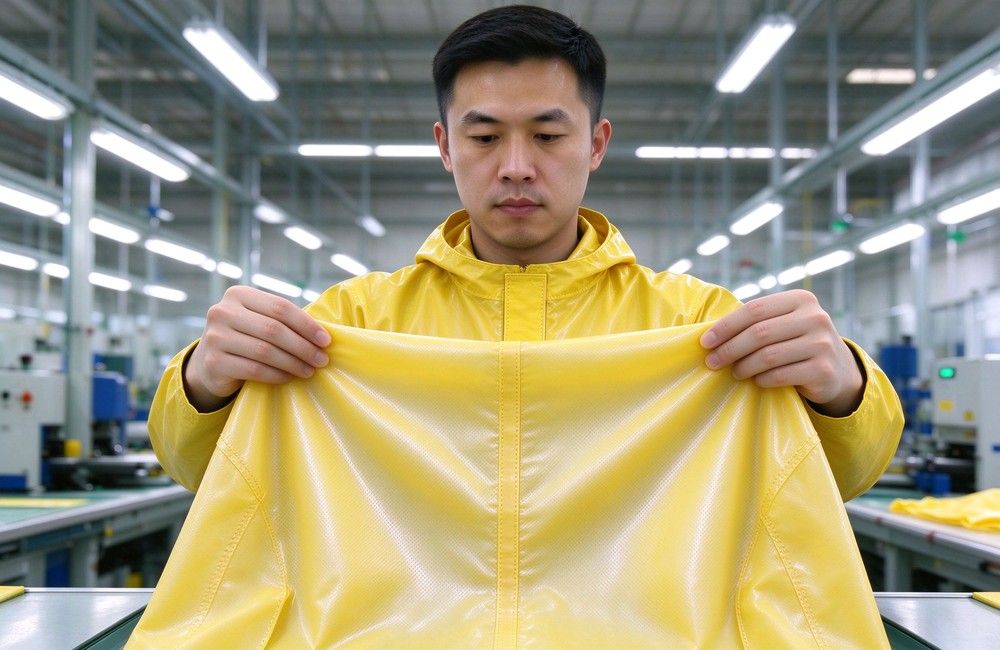
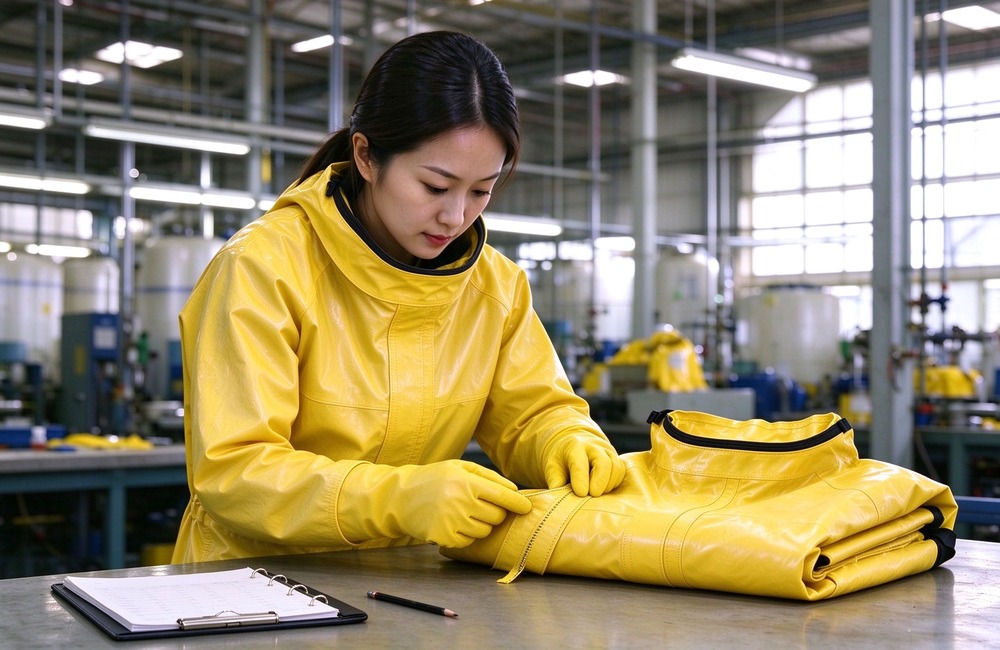
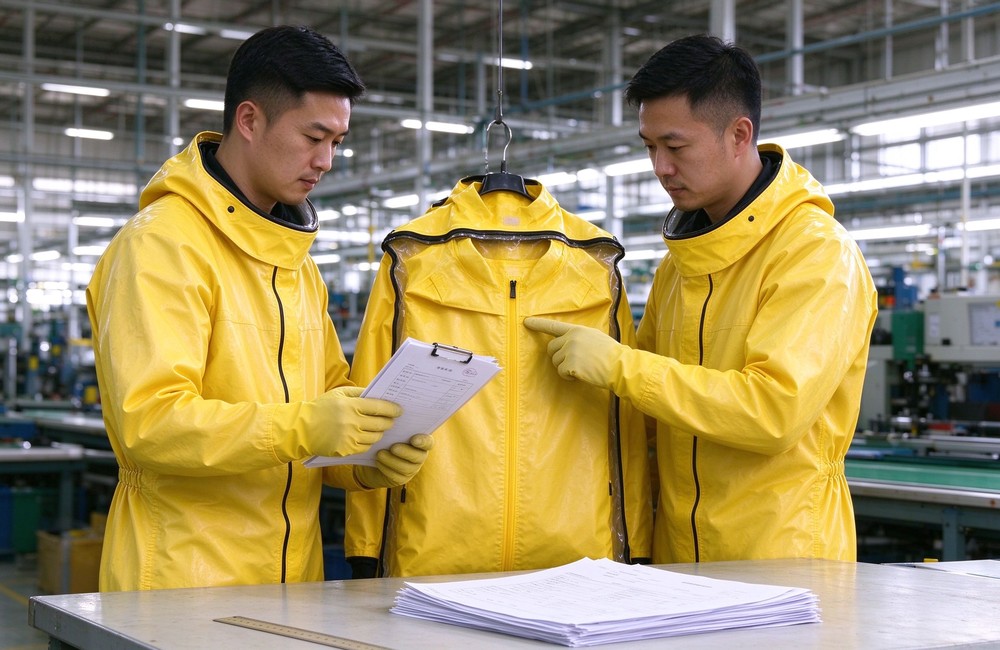
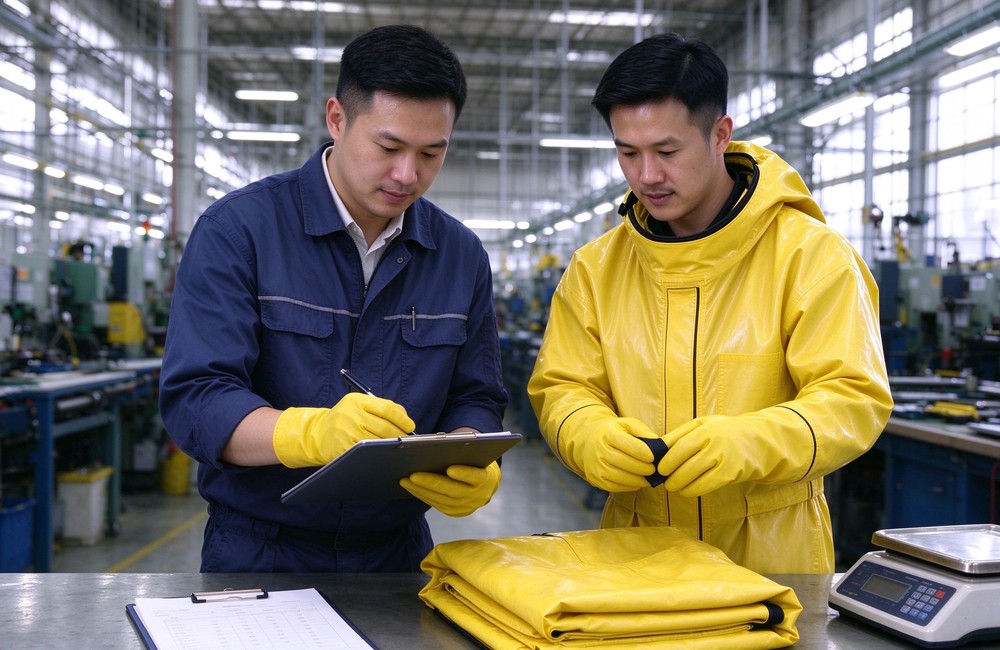
Inspector checking the semi enclosed chemical suit fabric and seal system in the factory. Every seam and closure is verified before the garment moves to packing, so the protection level travels with the batch.
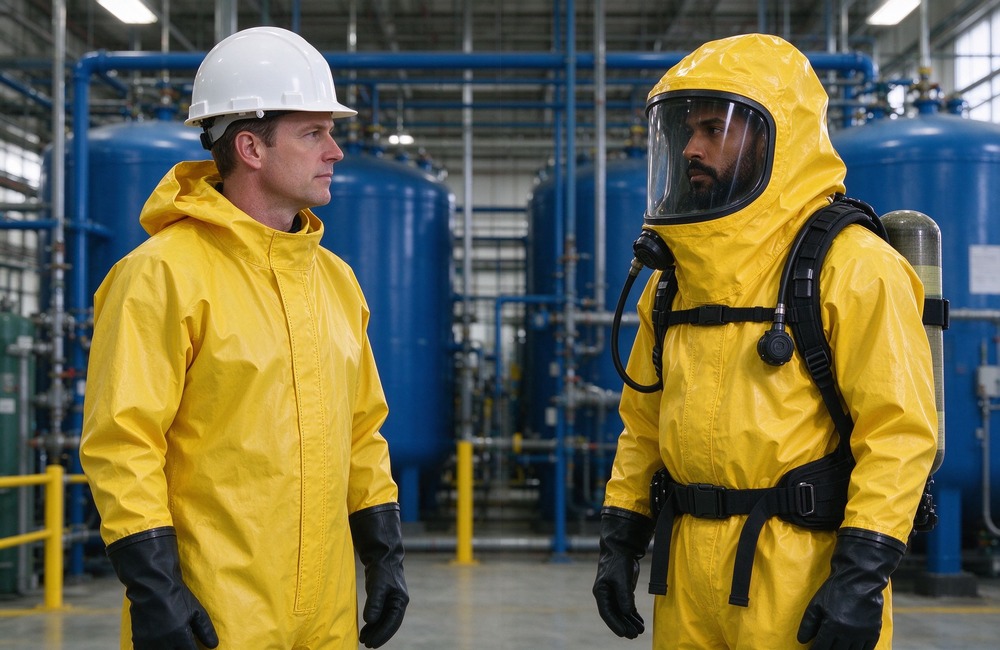
A fully encapsulated suit seals the wearer completely and is worn with its own breathing apparatus, because the environment may contain gases or vapors that cannot be filtered. It is the right tool for emergency response, confined spaces and unknown atmospheres.
A semi encapsulated chemical suit seals the body, head, hands and feet as one connected system, leaving the face open for vision and communication. Because the face is open, the suit works with filtered air or simple respiratory protection in known atmospheres, without the weight of a full SCBA rig. The half sealed hazmat suit is the equipment that most plant tasks actually need: full body coverage without full enclosure. The attached hood seals the neck entry, the gloves seal at the wrists and the boot covers close the legs, so the system is continuous from head to boot.
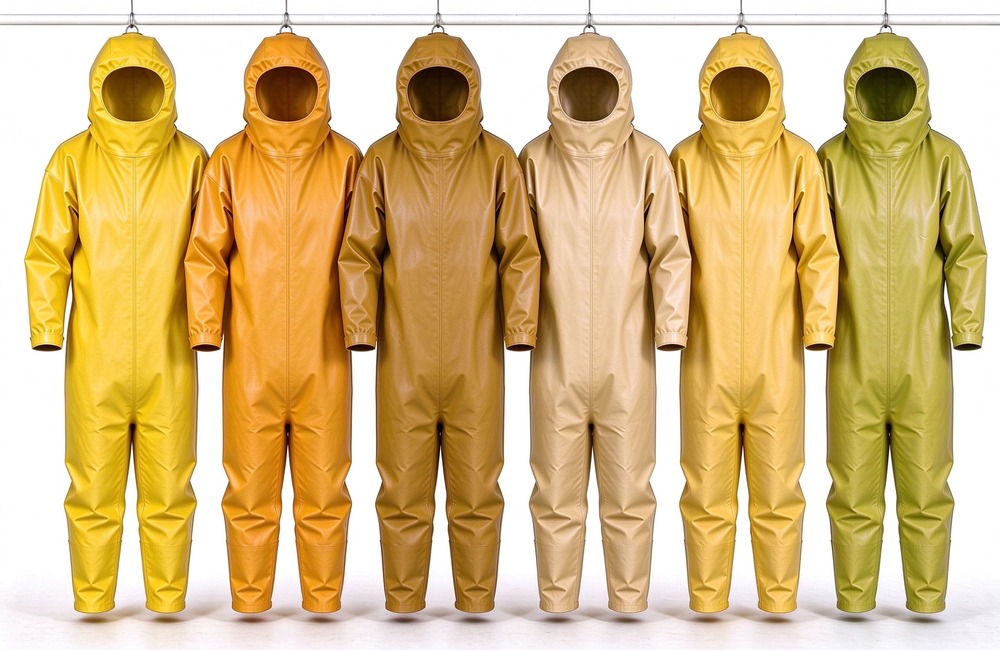
Six color lineup of semi enclosed chemical suits on the rack. The sealed front panel and attached hood carry the same construction across every colorway, so teams can color-code sites without changing the protection level.
The selection rule is simple: match the enclosure to the atmosphere. Known atmosphere, medium exposure — semi-encapsulated. Unknown atmosphere, gas hazard, emergency — fully encapsulated. Buying above the need wastes budget and slows workers; buying below it creates risk. A chemical protective clothing medium risk assessment names which side of the line the task sits on, and the suit choice follows from that document. The OSHA PPE selection guide is the reference plant safety teams use when writing this assessment, and it is the same document buyers cite in tenders.
Feature
Semi-Encapsulated
Fully Encapsulated
Best Fit
Body coverage
Head to boots
Head to boots
Medium-risk tasks
Face
Open
Sealed
Vision and comms
Breathing
Filtered air or simple RPE
Integrated SCBA
Known vs unknown air
Cost
Lower
Highest
Routine vs emergency
For most routine plant work, the semi-encapsulated design is the better fit: it covers the body to the same standard while keeping the face open and the breathing simple, which is exactly what known-atmosphere medium-risk tasks require. The fully encapsulated system stays in reserve for the rare worst case.
Explore semi-encapsulated hazmat suits across the full chemical protective clothing range before you choose a level.
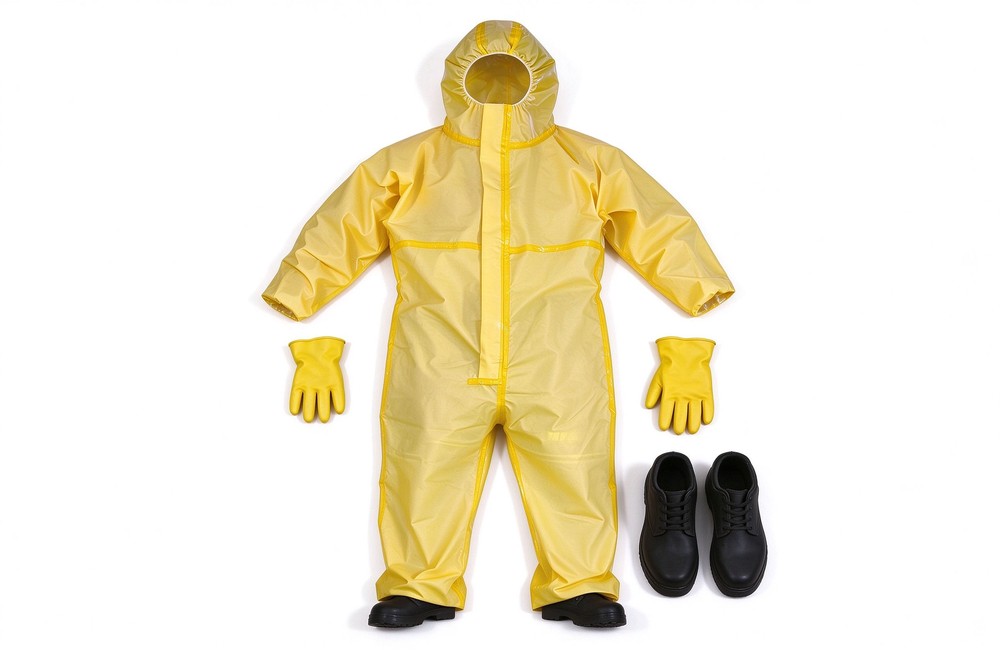
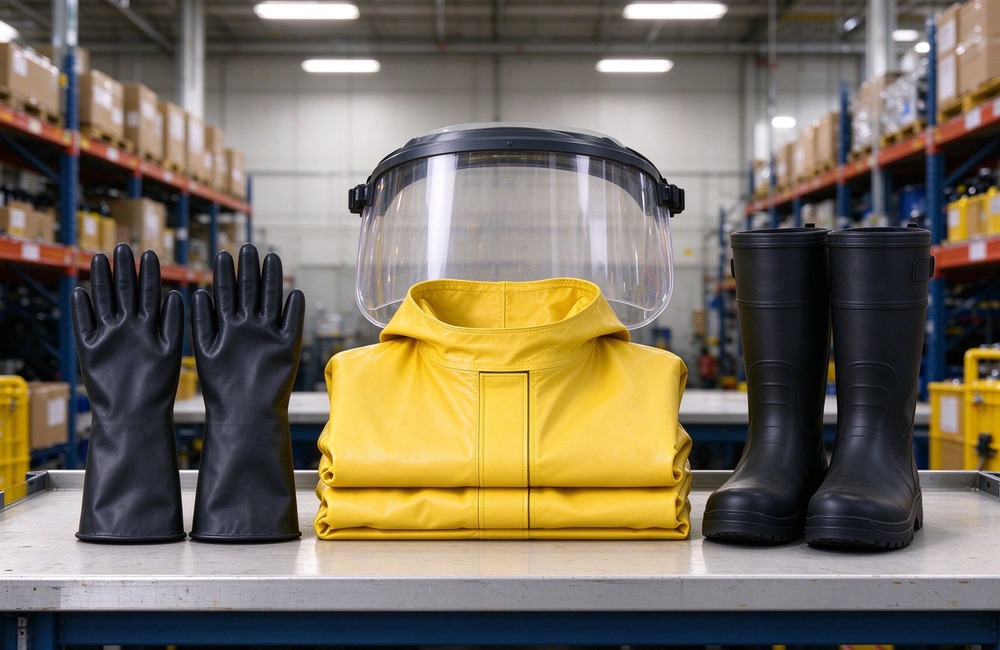
Complete flexible chemical protection coverall system with hood, gloves and boots on the table. The three-part kit closes every entry point from head to boot with one consistent standard, so ordering the kit in one line avoids the common mismatch of suit sizes arriving without matching glove sizes.
The table in the next section lays the two suit types side by side on four features: body coverage, face, breathing and cost. Reading down the rows gives a buyer the whole decision in one pass, and the summary line under the table states which level fits routine plant work.
The level decision is the first cost decision in a PPE program. Teams that match the enclosure to the atmosphere spend less, move faster and stay safer, because the equipment fits the job instead of overshooting or undershooting it. For buyers, the same decision is the first line of the specification: name the exposure, and the suit level follows.
For buyers new to the semi-encapsulated level, the fastest way to confirm the choice is a short walk-through of the task list: name the chemicals, name the exposure type (splash, spray or residual contact) and confirm the atmosphere is known. If those three answers hold, the semi-encapsulated design covers the work at the right cost.
The value of a half sealed hazmat suit shows up in specific working settings. Three use it more than any others, and together they cover the majority of medium-risk chemical work in a plant. For a medium risk chemical protection suit program, these three settings are the workload that justifies the standard.
Attached hood detail of the semi enclosed chemical suit. The integrated head cover seals the neck entry while the adjustable face opening keeps vision and communication natural, which is the design detail that makes the suit wearable through a full shift.
Maintenance work is the first application. Technicians open pumps, service valves, change filters and sample lines, often in atmospheres with residual chemical exposure. The work is physical — bending, reaching, kneeling — so a suit that moves matters. A semi enclosed chemical suit covers the body through these tasks while keeping the hands connected via sealed gloves. Teams doing daily plant maintenance get real protection without losing the speed the job requires, and because the face is open, technicians can read gauges and talk to colleagues normally throughout the task.
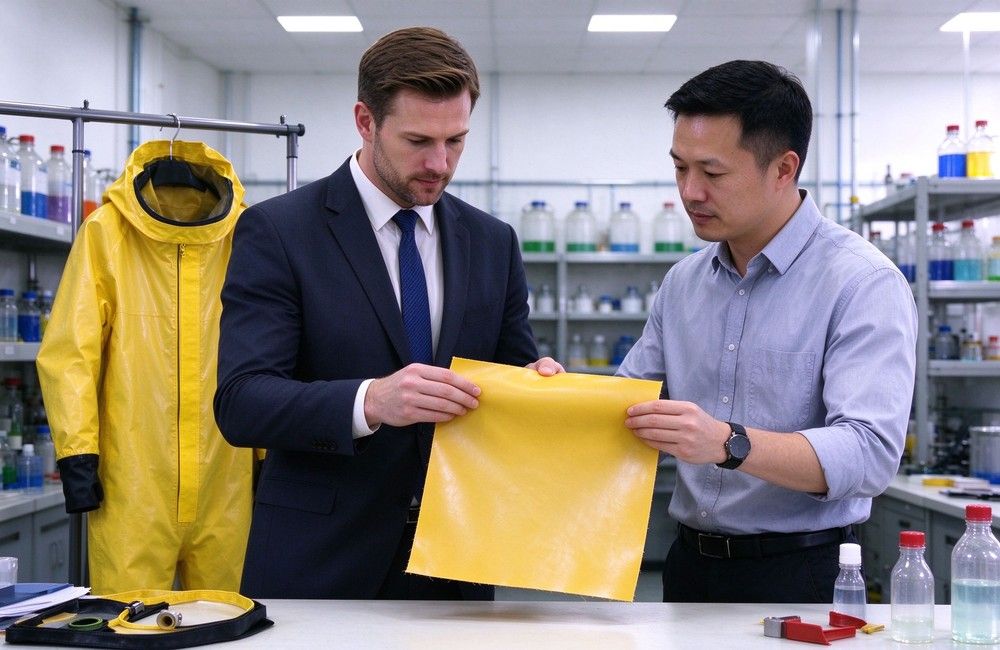
Western buyer reviewing the semi enclosed chemical suit sample with factory staff. The sample stage and the bulk stage run on the same specification, which keeps the order consistent from first piece to final carton and removes the most common source of mismatch in PPE projects.
Emergency response is the second application, in a supporting role. When a spill or leak is reported, the first responders in fully sealed suits handle the hot zone, while support teams manage perimeter tasks: sample collection, area control, equipment staging. For those roles, a half sealed hazmat suit provides dependable coverage with faster donning and better mobility. The two suit types work together as a response system, each in its correct place, and the support team can be dressed and deployed while the hot zone crew is still suiting up.
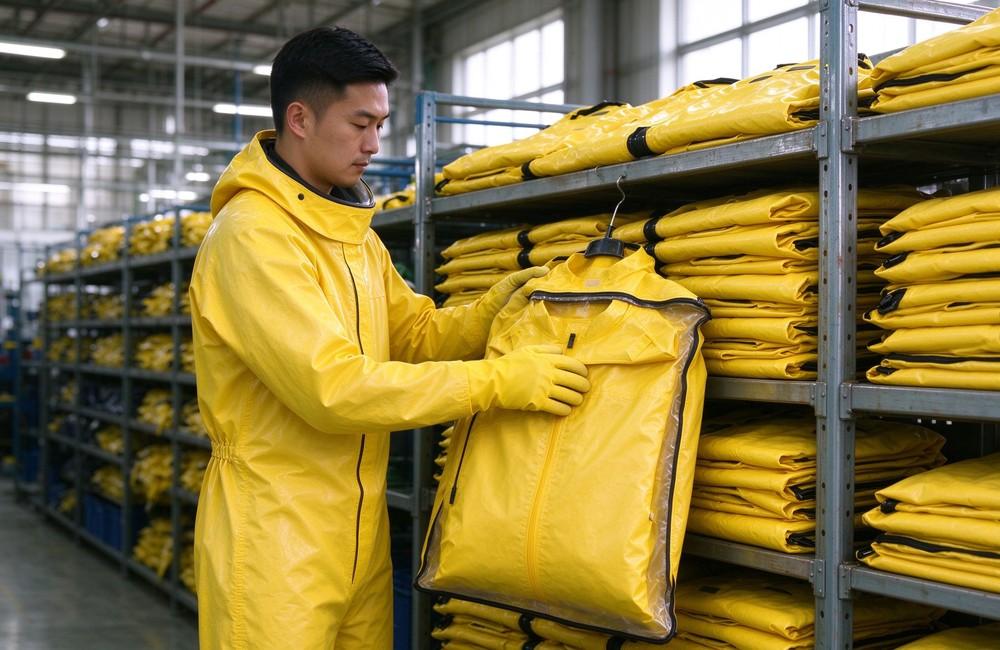
Semi encapsulated chemical suits stored by color in the warehouse. Color-coded storage makes shift handover fast and keeps the right size and colorway within reach, so the PPE room stays organized even under response pressure.

Laboratory-scale work and pilot lines bring medium exposure without full immersion risk. Operators move between benches, reactors and sampling points all day. A flexible chemical protection coverall covers the exposure, and because the face is open, lab communication stays natural. For facilities that run both routine analysis and small-scale chemical work, the semi-encapsulated design is the single practical standard: one suit level for the whole laboratory floor instead of a stack of different garments for different benches.
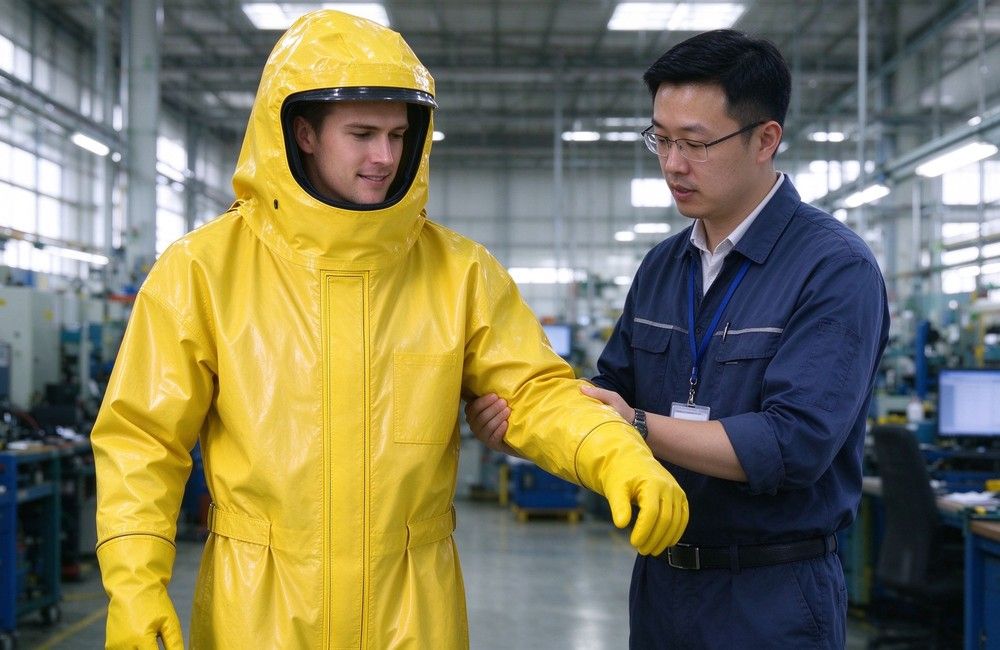
Safety briefing for a team in flexible chemical protection coveralls. Crew training covers donning sequence, doffing and the rinse-and-inspect routine that keeps the fleet within its rated life, and it is the training that makes the equipment effective in practice.
Front flap detail of the semi enclosed chemical suit with sealed panel and no exposed zipper. The closure design removes the entry path that liquid most often exploits, which is the detail that matters when a fitting is opened under pressure.
All three settings share one theme: medium exposure that happens daily, in known atmospheres, with tasks that need movement. That combination is what the semi-encapsulated level is engineered for, and it is why the same model can serve maintenance, response support and laboratory teams in one facility.
Protection that stops you moving is protection you will stop using. The semi-encapsulated design exists because real work requires both — and the balance is engineered, not accidental. A medium risk chemical protection suit earns its place in the PPE room only when crews actually wear it through a full shift.
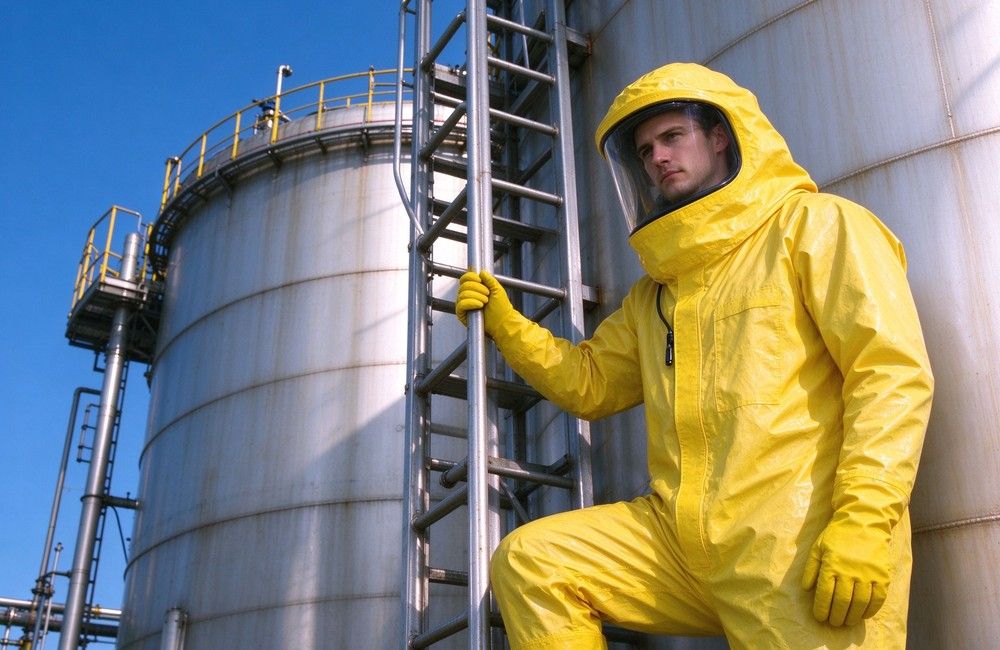
Worker in flexible chemical protection coverall climbing tank inspection stairs. The roomy shoulder cut and articulated knees keep the suit wearable through ladders and catwalks, so the protection stays on through the physical parts of the shift. For a medium risk chemical protection suit, the fit around the shoulder is where comfort is won or lost on inspection rounds.
Plant work is a sequence of physical actions: climb a ladder, open a valve, crouch under a pipe, carry a tool bag. Each action needs the suit to move with the body. The semi encapsulated chemical suit is cut for this range — roomy through the shoulders, articulated at the knees, sealed but not stiff. Workers report faster task times and less fatigue compared with heavier systems, which is a safety benefit as much as a productivity one: a worker who is not fighting the suit is watching the task and the surroundings.
The numbers behind the fit are simple to verify. A crew of ten taking two minutes less to dress and move through a task round saves more than half an hour of paid time a day, and the difference grows on ladders and in confined spaces where a stiff suit slows every movement.
Worker checking mobility in the flexible chemical protection coverall. The fit assessment covers reach, crouch and walk-through before the suit is assigned to a task rotation, so the crew works in a suit that has been verified for the movements the job needs.
Donning speed matters in two moments: the start of the shift and the moment of an incident. A semi-encapsulated suit goes on in a fraction of the time of a fully sealed system, because there is no SCBA integration and no complex seal sequence.
Worker testing arm mobility in the flexible chemical protection coverall. Reaching, carrying and tool handling stay natural, which keeps the suit on the worker rather than in the locker.
An open face keeps vision, voice and hearing natural. Workers read gauges, talk to teammates and watch for hazards without distortion. Comfort follows: the open design breathes better than a sealed hood, and the suit can be worn for full shifts without heat buildup. These everyday qualities decide whether the semi encapsulated suit is actually worn — and a suit that is worn is a suit that protects. For supervisors, the open face also means the wearer is identifiable, which simplifies accountability and shift management.
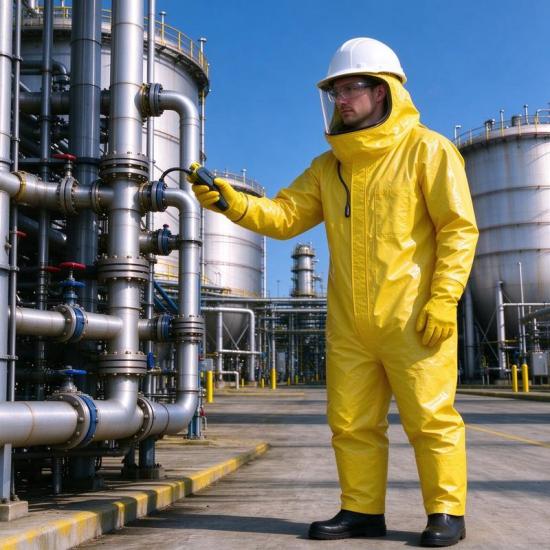
Worker in semi enclosed chemical suit operating a pipeline valve. Medium-risk plant rounds pair the balanced suit design with daily operational tasks, and the open face keeps the operator in clear communication with the control room.
The mobility argument is not a comfort preference; it is a compliance argument. A suit that slows the worker gets left in the locker, and an unworn suit protects nobody. The semi-encapsulated level is worn because it works with the body, and that is the strongest protection of all.

Medium risk is a defined band, not a vague middle. This section walks through the tasks and the exposure each one brings, so the suit specification can be matched to the work the crew actually does.
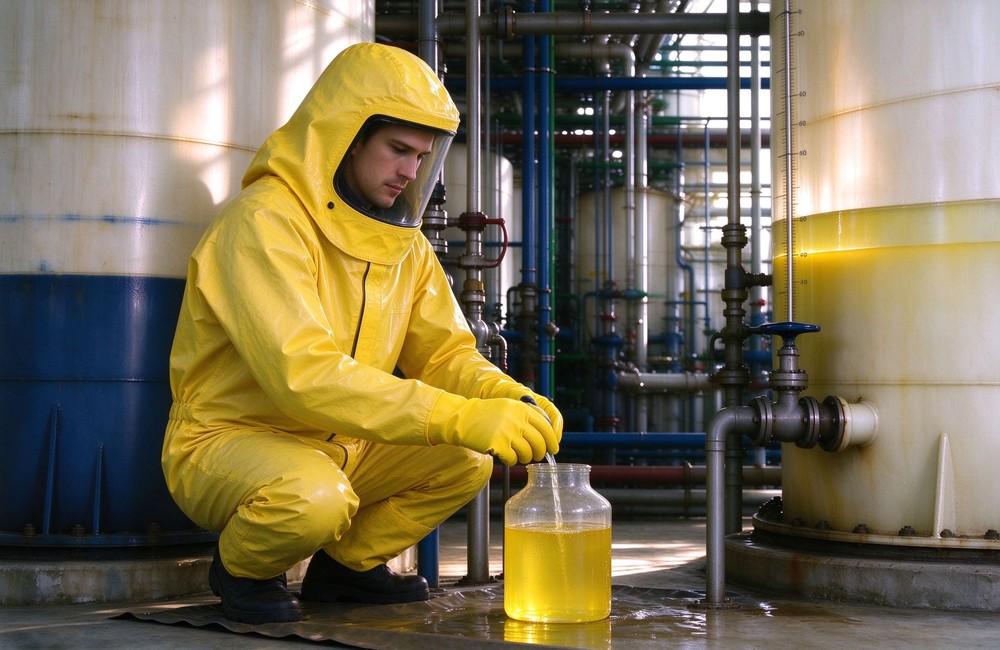
Worker in flexible chemical protection coverall handling acid containers. The sealed gloves protect the hands that open, lift and pour, while the suit body keeps splashes off clothing, and the open face keeps vision clear throughout the task.
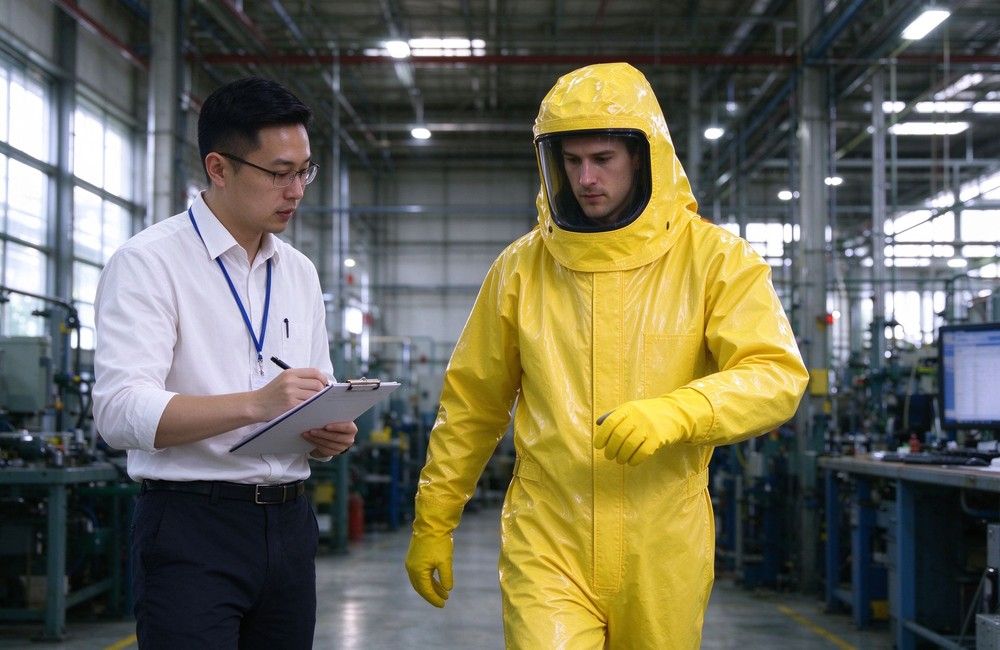
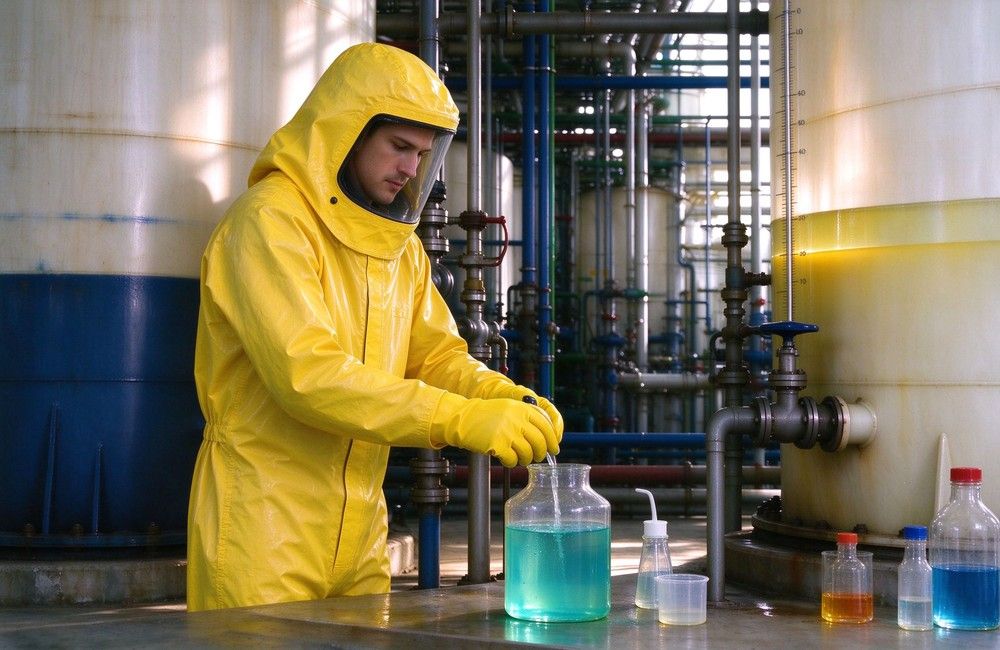
Dosing and mixing put operators in contact with chemicals in measured amounts. Splashes happen at the pour, the stir and the transfer. A hazmat coverall for plant work covers the operator through these moments, and the sealed gloves protect the hands that handle the containers. Because the exposure is known and controlled, the semi-encapsulated level is correct — full protection without full enclosure. Operators can dose, mix and measure through the shift without the weight and heat of a sealed system, and the open face keeps labels and levels readable at every step.
Sampling means reaching into process areas: opening a sample port, drawing a line sample, handling the container. Residual chemical on valves and ports makes contact likely. The half sealed hazmat suit keeps the body covered while the operator works close to the process. The open face keeps vision clear for reading levels and labels, and the suit's reusable design fits the routine frequency of sampling rounds. For exposure planning, the NIOSH chemical safety guidance is the reference safety teams use when matching PPE to the hazard list, and it is the same reference buyers cite in tender documentation.
Worker taking a line sample wearing the half sealed hazmat suit. The open face keeps gauge and label reading clear while the sealed body handles the residual chemical contact, and the sealed gloves protect the hands that hold the sample container.
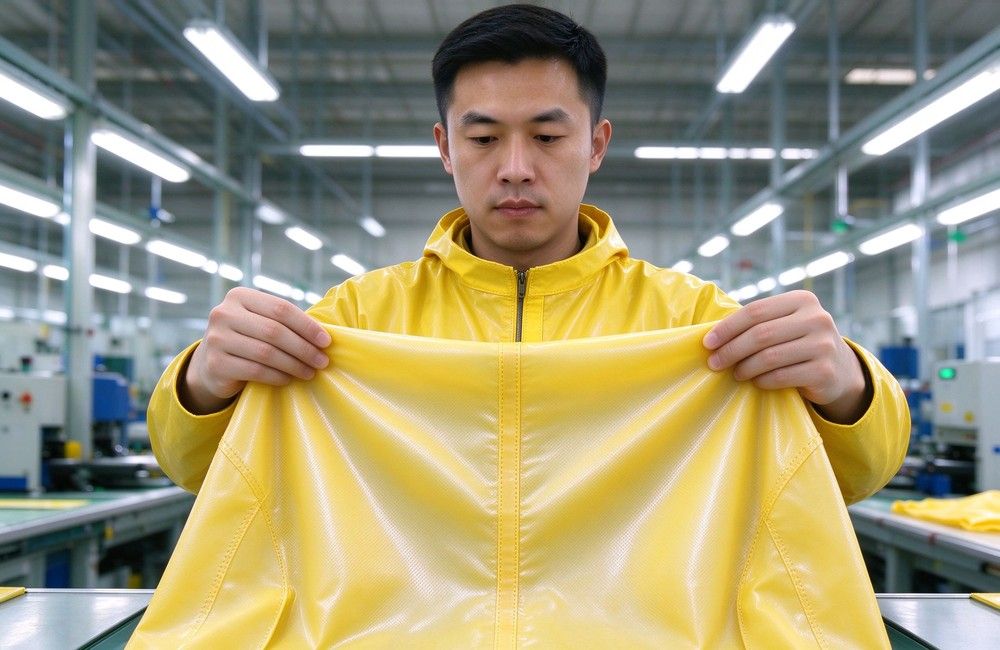
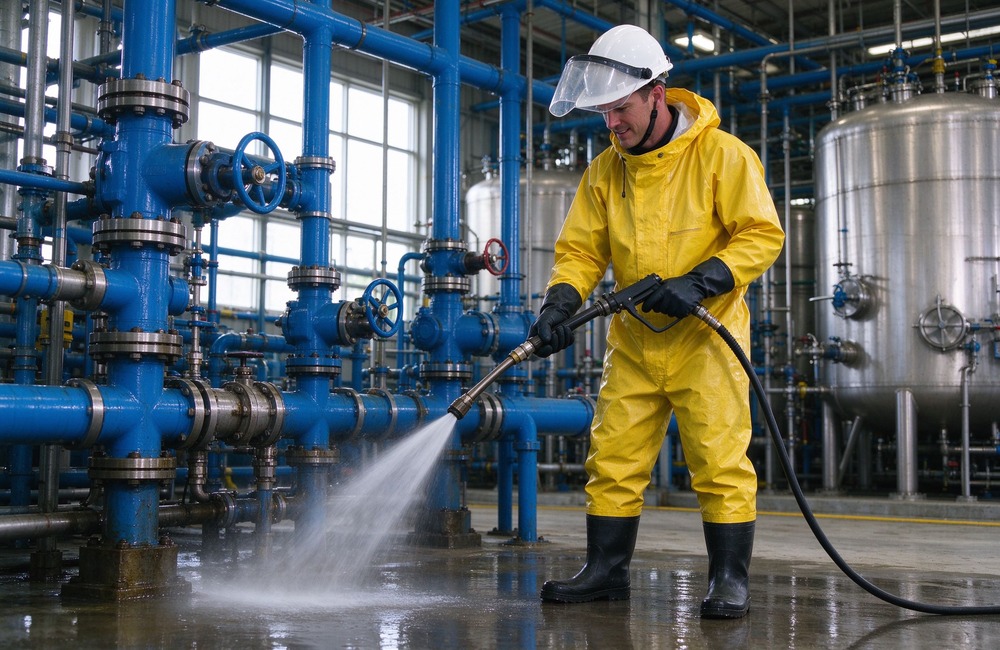
Cleaning and flushing bring chemical residue into play: rinsing tanks, flushing lines, cleaning spills. These tasks are wet and physical. A flexible chemical protection coverall sheds the liquid, keeps the operator dry and seals the hands and feet. For crews that rotate through cleaning duties, the suit's balance of coverage and movement is exactly what the job rewards: the operator stays dry and protected through the wet work, then rinses the suit at the decontamination station before doffing.
Worker rinsing equipment with a water gun in the flexible chemical protection coverall. The coated fabric sheds water and residue while the sealed gloves and boot covers keep the operator dry, and the suit is rinsed again before doffing at the wash station.
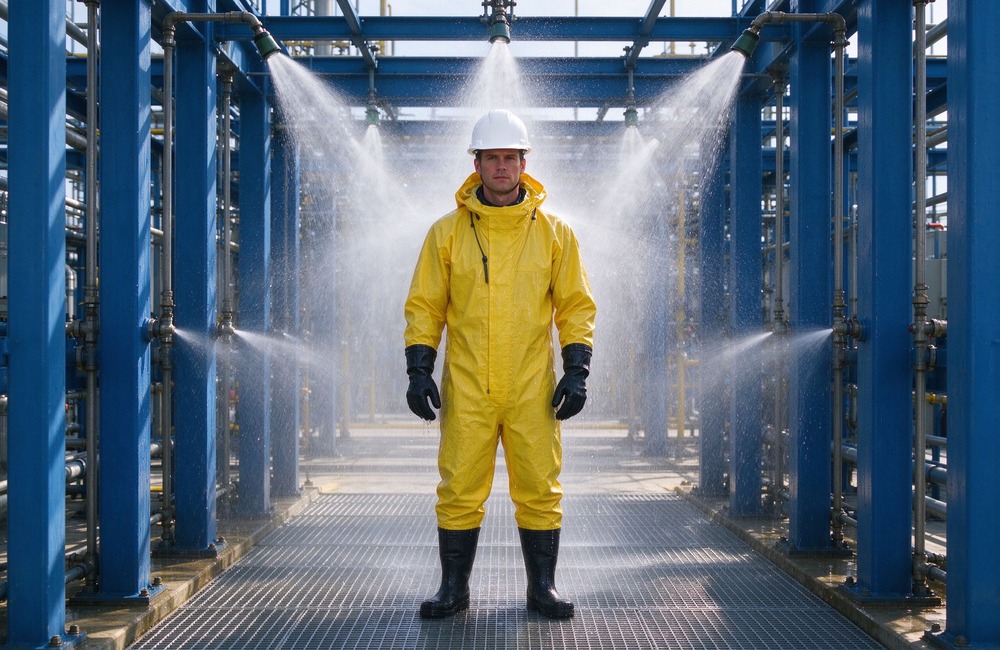
Worker in the decontamination shower station after chemical tasks. Washing the suit before doffing keeps contamination in the work area and extends the garment's service life, which is the routine that keeps a reusable fleet economical.
These tasks share a single exposure profile: known chemicals, controlled amounts, physical work. The medium-risk band covers them all with one suit level, which is why plants can standardize on the semi-encapsulated design across the majority of their workstations — and keep the fully sealed suits in reserve for the rare worst case.
The three applications also show the suit working as a system: the same model, the same accessories and the same training sheet serve maintenance, response support and laboratory teams. That is what makes the semi-encapsulated level a program standard rather than a single purchase.
A medium risk chemical protection suit program balances coverage, volume and terms. This section covers the procurement path for teams and facilities, from the first assessment to the standing order.
Semi encapsulated chemical suits on warehouse pallet ready for export. Bulk orders standardize the model across the team, which simplifies sizing, training and reordering, and the folded stack keeps the carton footprint compact for shipping.
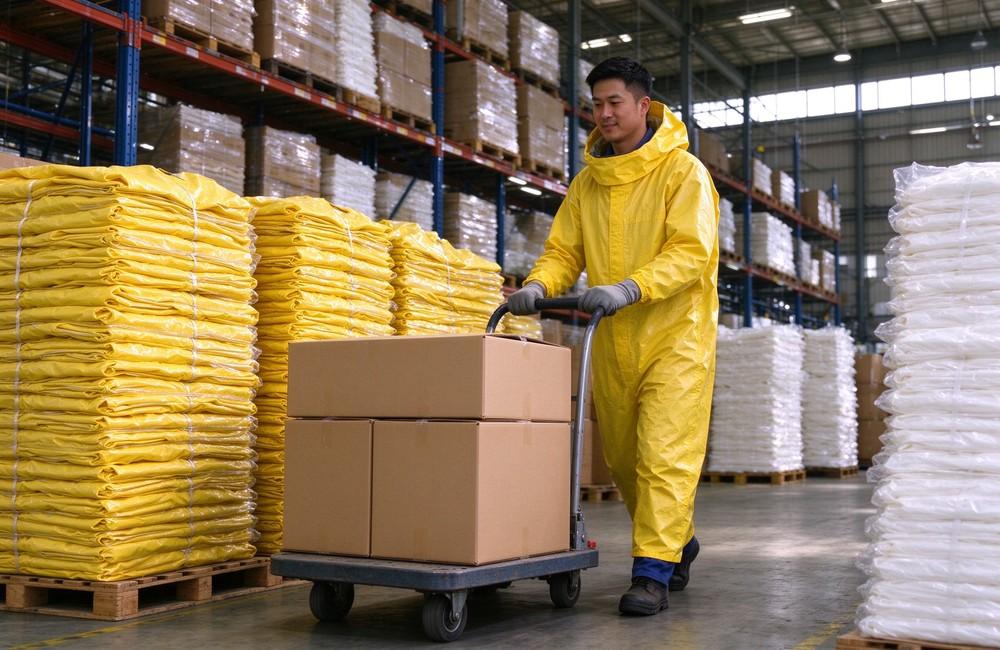
The cost case writes itself. A semi-encapsulated suit costs less than a fully sealed system and protects more than a disposable coverall, and because it is reusable within its rating, the per-use cost stays low. A chemical suit wholesale bulk program supplies the same model across the team, simplifying sizing, training and documentation. For facilities with standing medium-risk work, the annual PPE spend becomes predictable and auditable. The EN ISO 13982-1 standard for chemical protective clothing is a useful audit reference when writing the specification, and buyers cite it alongside OSHA and NIOSH guidance in tenders.
Sizing follows chest and height against the factory chart at quotation, with a team mix based on the workforce. Custom branding — logo and color — marks the suits for site identification and shift management.
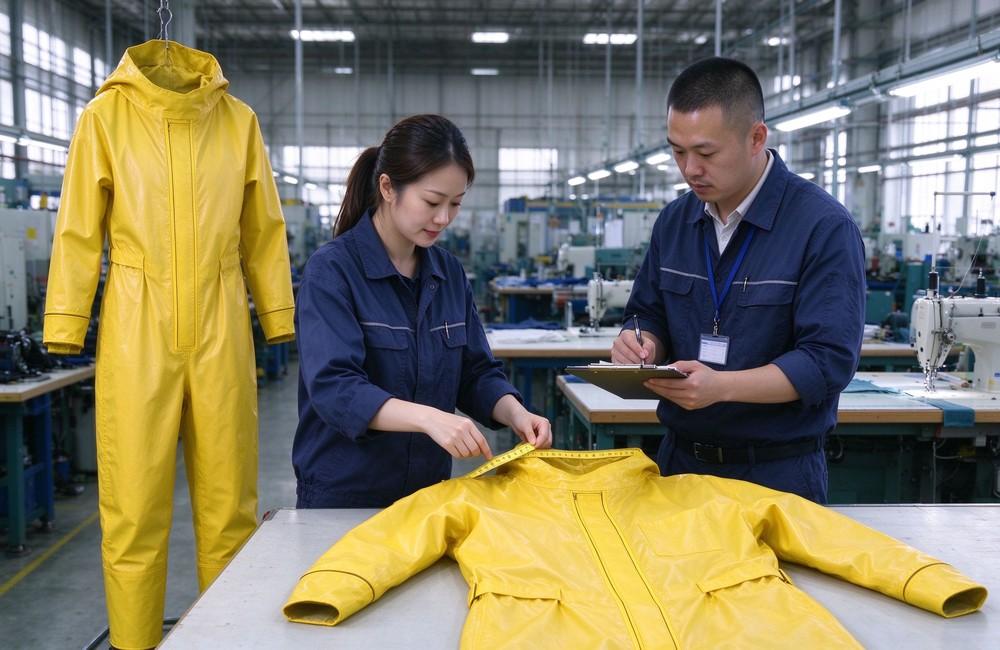
Asian worker measuring the semi enclosed chemical suit in the production workshop. Chest and height are matched against the factory chart so the team mix fits the workforce, and the size spread is confirmed before volume cutting starts.
MOQ and production timeline are confirmed per order based on configuration and agreed in writing before production. We accept T/T payment; we do not offer L/C terms.
|
Order Item |
How to Configure |
Notes |
|
Suit level |
Medium-risk rating from assessment |
Match to tasks |
|
Size selection |
Chest and height vs factory chart |
Chart at quotation |
|
Accessories |
Integrated hood, gloves, boot covers |
Supplied together |
|
Branding |
Logo and color customization |
OEM terms at quotation |
With the program configured, the medium-risk standard is easy to maintain: one suit level, one size method, one accessory kit and one branding file keep the reorder list short and
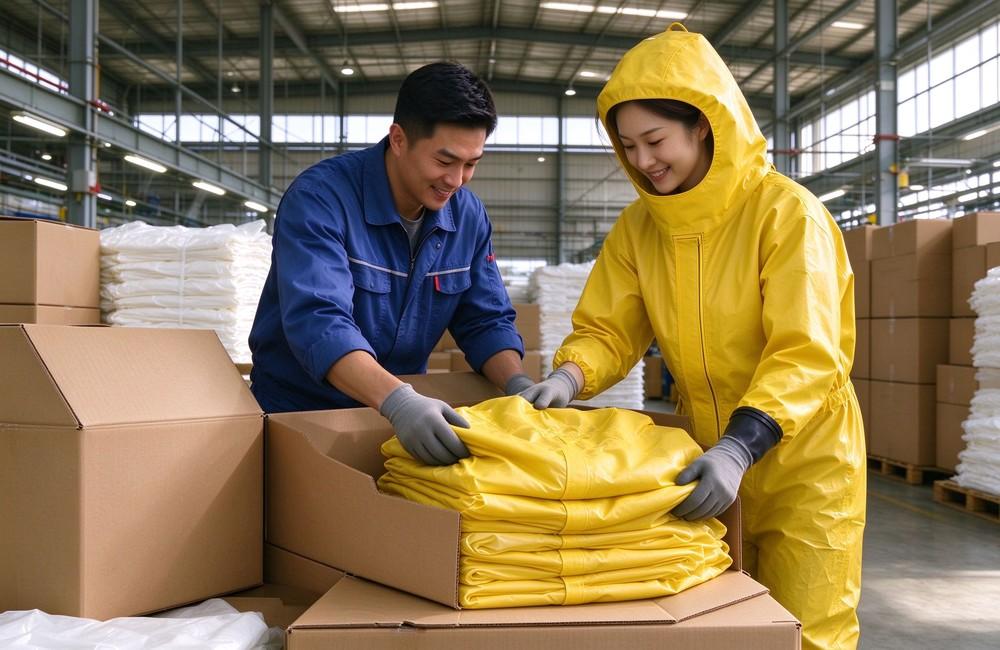
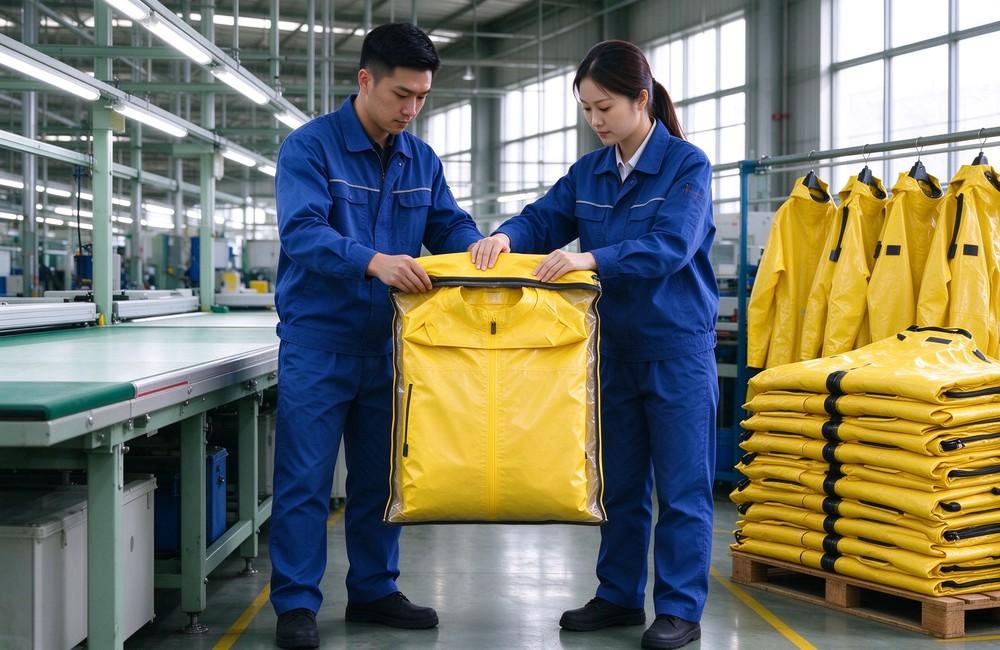
Workers packing semi enclosed chemical suits into cartons for export. The packing line matches the order kit split and carton labels carry model and quantity for receiving, so the delivery can be verified against the packing list without opening every bag
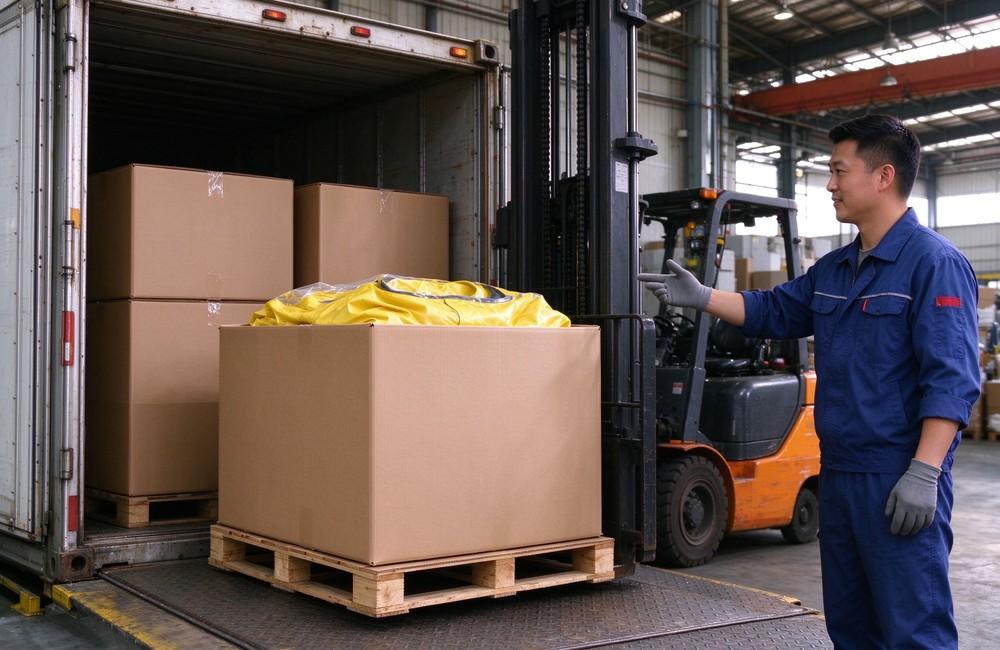
Loading semi enclosed chemical suit cartons for export. Container loading follows the packing list, and batch documents travel with the shipment for audit-ready delivery, so receiving can match the certificate to the goods at the warehouse gate.
Container loading of the semi enclosed chemical suit export order. Cartons sit on pallets in loading order, and the carton labels match the packing list line by line, so the count is verified at the dock without opening the bags.
Bulk buying is where the unit price starts to move. Because the suit is confirmed per batch and the kit split per site, a standing order can be split across deliveries without changing the specification
Semi encapsulated chemical suits on the storage rack. Rotation management keeps one suit per worker position ready, and spares are topped up on the same schedule as the PPE budget, so the fleet is always at full strength.
Sample orders follow the same terms as bulk: configuration, sample production and documentation are confirmed before volume runs. This keeps the sample stage and the bulk stage on the same specification, which is the most common source of mismatches in PPE projects.
The procurement pattern that works best in practice is a one-page spec: chemical list, task types, suit level, kit split, size mix, branding file and document set. When that page is stable, the quotation, the sample and the bulk order all repeat the same content, and the PPE program runs on a short reorder list instead of a new decision every time.
Here are the questions buyers ask most often about semi encapsulated chemical protective suits, answered for procurement teams and safety officers.
What is a semi encapsulated chemical suit?
It seals the body, head, hands and feet as one connected system while leaving the face open for vision and communication. The hood is attached, the gloves seal at the wrists and the boot covers close the legs, so there is no gap between head and boot.
When should a half sealed hazmat suit be used?
For medium-risk chemical tasks in known atmospheres - dosing, maintenance, sampling, cleaning and emergency support - where full enclosure would be over-engineering. If gases are present or the atmosphere is unknown, a fully encapsulated system is required instead.
Two Asian quality inspectors measuring the front opening of a semi encapsulated chemical suit with a tape at a bright factory bench, wholesale chemical protective clothing quality control
The decision starts with the atmosphere assessment: if the hazard is splash, spray or residual contact and the air is known, this level protects without the weight of a fully sealed system. Teams commonly assign the suit to routine plant rounds and keep fully encapsulated suits for gas work.
What is the difference between semi and fully encapsulated suits?
Fully encapsulated suits seal everything and carry integrated breathing apparatus for unknown or gas atmospheres. Semi-encapsulated suits keep the face open and work with filtered air in known conditions.
Is this medium risk chemical protection suit reusable?
Yes, within its rated exposure it can be cleaned and reused. Inspect fabric, seams and closures before each use, wipe or rinse per the medium-risk rules, and retire the suit when damage appears.
Single asian worker sewing the semi enclosed chemical suit at the machine. One operator per station is the line standard, and each seam is checked at the station that made it, so a fault is caught where it happens rather than at final inspection.
What standards or certifications apply?
Each production batch is quality inspected and test reports are provided with the order. Confirm the document set required by your tender at quotation so the files match customs and audit requirements.
What accessories come with the suit?
The hood, chemical gloves and boot covers are integrated with the garment and supplied as a complete system. Ordering the whole set from one source keeps the quality standard consistent and the documentation simple.
Can the suit be used for emergency response?
Yes, in a support role - perimeter tasks, sampling and equipment staging - while fully sealed suits handle the hot zone. The two suit types work together as a response system, each in its correct place.
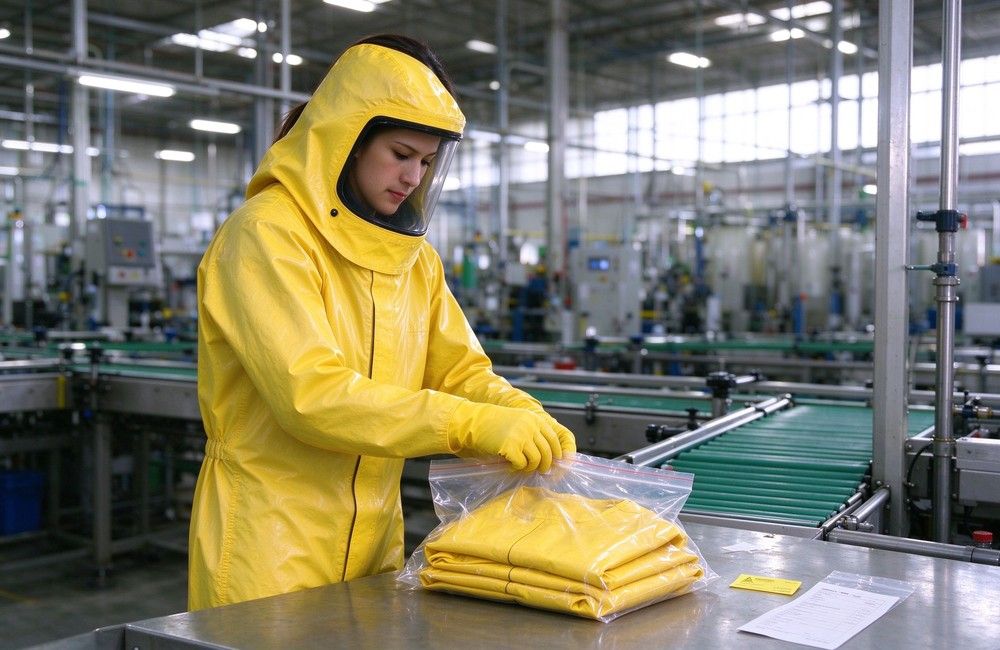
Folding semi enclosed chemical suits at the finishing table. The folding standard keeps the garments compact for carton packing and easy to issue at the receiving end, and each suit is folded to a fixed footprint.
The most frequent question on the semi-encapsulated line is the difference from a fully sealed suit: the semi-encapsulated design keeps the face open and works with filtered air in known atmospheres, which is the right match for the majority of routine plant tasks. The second most common question is the accessory set — hood, gloves and boot covers are integrated with the garment and supplied together.
How should the suit be cleaned and stored?
Wipe or rinse per the medium-risk rules, dry completely, store away from sunlight and chemicals, and inspect before each use. A rotation rack with one suit per worker position keeps the fleet ready.
What is the minimum order quantity?
MOQ varies by configuration and is confirmed at quotation, so first orders can be scaled to validate the program. Sample orders follow the same specification as bulk production.
Can we add custom branding?
Yes, OEM logo and color customization are available. Artwork approval, sample confirmation and packaging specifications are confirmed at quotation before volume production.
Inspector checking the flexible chemical protection coverall fabric roll. Fabric weight and coating are confirmed per batch at quotation, and the factory records the specification in the order documentation so the batch report travels with the shipment.
Do you export worldwide?
Yes, we export worldwide from China and support bulk orders and tender documentation. Packing, documents and shipping terms are confirmed at quotation to match the destination requirements.
How do I choose sizes for my team?
Measure chest and height, match to the factory chart at quotation, and order a mix based on the workforce. A sample order can validate the size spread before volume commitment.
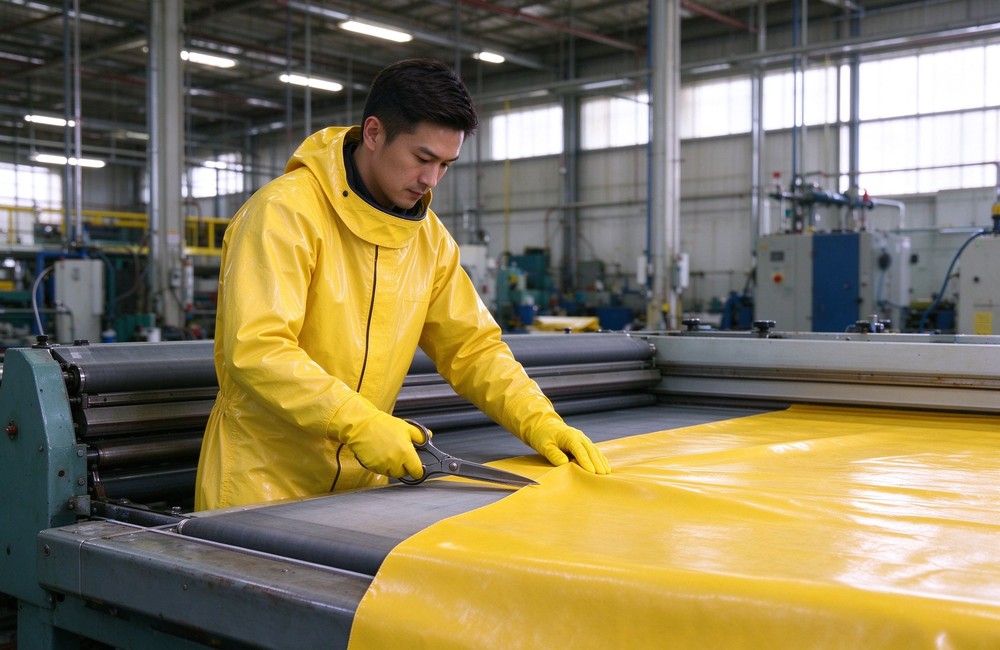
Cutting semi encapsulated chemical suit fabric on the cutting table. The cutting line prepares each batch to the same pattern, and finished garments are sampled before packing, so the protection level is consistent across the whole order.
What is the production timeline?
Confirmed per order based on configuration and agreed in writing before production. Lead time is quoted with the invoice, and packing and documentation are prepared to match the shipping date.
How is payment arranged?
We accept T/T payment; we do not offer L/C payment terms. The payment schedule and required documents are confirmed at quotation so the shipment matches the buyer's banking requirements.
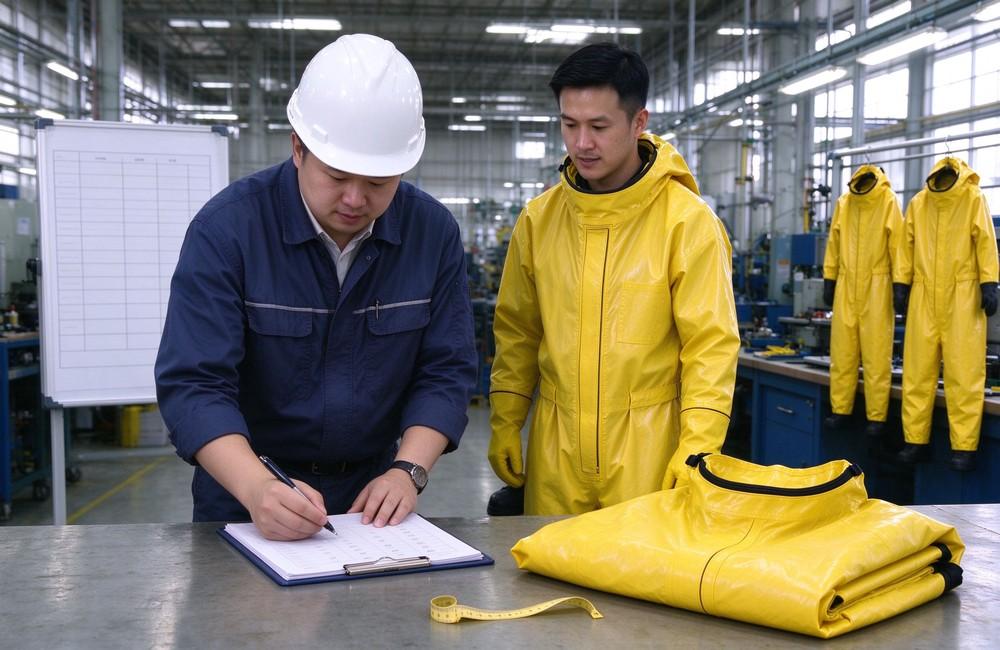
Recording quality and size data for the semi encapsulated chemical suit batch. The inspection record is a working document, not a formality: one number connects the carton to the production record, which makes a customer audit fast.
If your team is standardizing medium-risk chemical protection, the semi-encapsulated suit is the volume workhorse: head-to-boot coverage, open face, reusable design and a cost that fits routine plant work. The fully sealed system stays reserved for the rare worst case.
The practical path is short: confirm the chemical list and task types, match the suit level and kit split at quotation, and keep the batch report with each delivery. That is the whole discipline behind a PPE program that stays consistent across sites and seasons.
The semi-encapsulated suit is one part of a medium-risk PPE program that also includes eye, hand and respiratory protection chosen against the same assessment. Buying the suit from one source and the program from a documented spec keeps the whole protective set consistent across sites.
How long can a semi encapsulated suit be worn continuously?
Continuous wear depends on the job, ambient temperature and the wearer’s exertion level. The suit itself is designed for repeated medium-duration tasks such as tank sampling, valve work and spill cleanup, and crews typically rotate in planned intervals.
Can the semi encapsulated suit be used with a respirator or SCBA?
Yes. The suit is built with an integrated visor and respiratory accommodation so it can be worn with a full-face respirator for lighter tasks or with a backpack SCBA where vapour levels demand supplied air.
Previous :
Class A Gas Tight Hazmat Suit | Fully Encapsulated Level A SuitNext :
Green Acid Alkali Suit | PVC Coated Chemical Protection for Work Deep Blue Firefighting Suit Set, Forest Fire Fighting Specialized, Full-body Protection
This Deep Blue firefighting suit set is specially designed for forest fire fighting, using special flame-retardant fabric that can withstand 700°C open flames in the wild, with a thermal protection value (TPP) of 25CAL/AM2. The vivid Deep Blue color combined with enhanced reflective strips enables identification from 500 meters away in forest smoke. The lightweight design of only 4.5KG does not affect mountain action speed, with a waterproof rating >40KPA, adapting to camping fire fighting and long-term field operations. The anti-plant puncture design increases wear resistance by 50%, making it professional equipment for forest firefighting, mountain rescue, and outdoor fire fighting actions, providing all-around body protection for forest firefighters.
 High-temperature Resistant Firefighting Suit Set, Emergency Rescue, Quick-wear
This high-temperature resistant firefighting suit set is made of professional-grade flame-retardant materials, capable of withstanding extreme temperatures up to 750°C, with a thermal protection value (TPP) of 26CAL/AM2, providing reliable protection for emergency rescue. The innovative quick-wear design allows complete dressing in 40 seconds during emergencies, with hydrostatic pressure resistance >45KPA and excellent breathability. Designed according to ergonomic principles, weighing only 4.8KG, it effectively reduces the burden on rescue personnel and is suitable for high-risk scenarios such as building fires, tunnel rescues, and industrial firefighting, making it an ideal equipment choice for professional firefighting teams.
 Professional Firefighting Suit Set, Flame-retardant Protection, Rescue Essential, 14-3C Certified
This professional firefighting suit set is made of high-grade flame-retardant cotton fabric, 14-3C certified, capable of withstanding extreme temperatures up to 800°C, with a thermal protection TPP value of not less than 28CAL/AM2. The three-layer composite protection structure, with waterproof static pressure resistance >50KPA and breathability >5000G/M²·24H, ensures comprehensive safety for rescue personnel in complex environments such as building fires, forest fires, and special chemical plant fires. Available in three models: 97/02/14, meeting different rescue scenario requirements.
 02 Firefighting Suit Multi-layer Composite Material Rescue Protection
This Type 02 firefighting suit is made of professional flame-retardant materials with excellent heat resistance, fire protection grade meeting international rescue standards, and waterproof puncture resistance rate of 98%. The deep blue body is equipped with eye-catching yellow reflective strips, increasing night visibility by 85%. The complete six-piece configuration provides comprehensive protection for firefighting, forest firefighting, earthquake rescue, and other scenarios, providing reliable protection for 300+ professional rescue teams.
 Forest Fire Rescue Service with Heat-Resistant Design
This professional forest fire rescue service uses flame-retardant heat-resistant material, achieving GB8624-A2 fire rating standard with heat resistance up to 800°C, and features high-visibility reflective strips visible from 300 meters away. It's suitable for emergency rescue scenarios such as forest fires, mountain rescues, and industrial disasters, providing comprehensive personal safety protection. Each set has undergone 10,000 abrasion tests and proven its reliability and safety in over 1,500 rescue operations nationwide.
 Fire Rescue Cap, Aramid Flame-Resistant Material, Forest Fire Emergency
This professional-grade forest firefighting vest and hat set is made of polyester/cotton blended flame-retardant fabric, with reflective visibility up to 300 meters, capable of resisting short-term flame contact, improving protection efficiency by 85%. The bright orange design with double-layer reflective strips complies with international rescue standards, ensuring 360° visibility in smoke and low light environments. Suitable for forest fire fighting, wilderness emergency rescue, post-earthquake sites, and other emergency disaster relief scenarios, providing comprehensive protection for rescue personnel.
Copyright © Custom Disaster - Relief Bedding: Tents, Sleeping Bags, Blankets All Rights Reserved
the professional team to service !