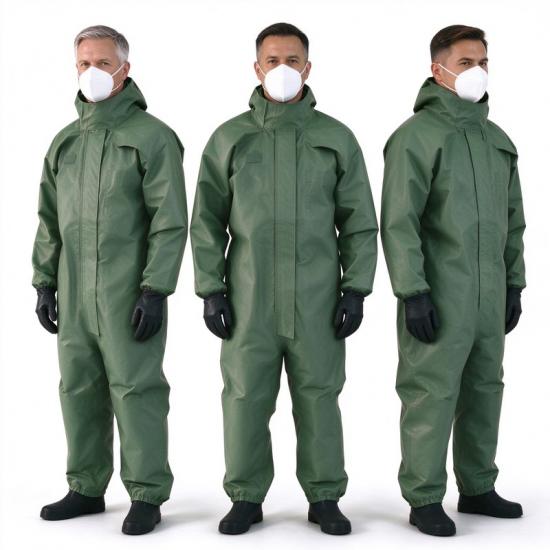
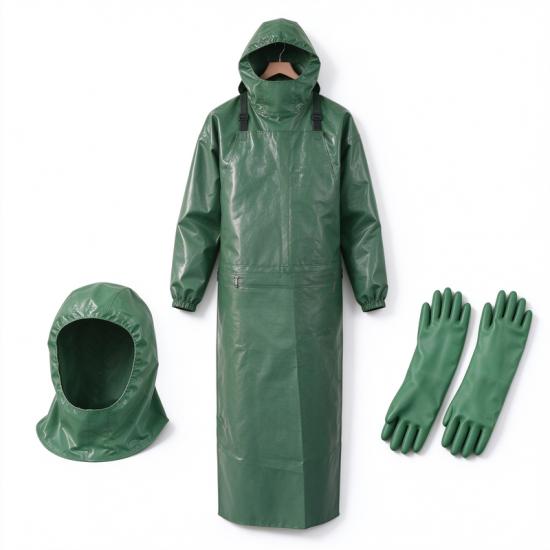
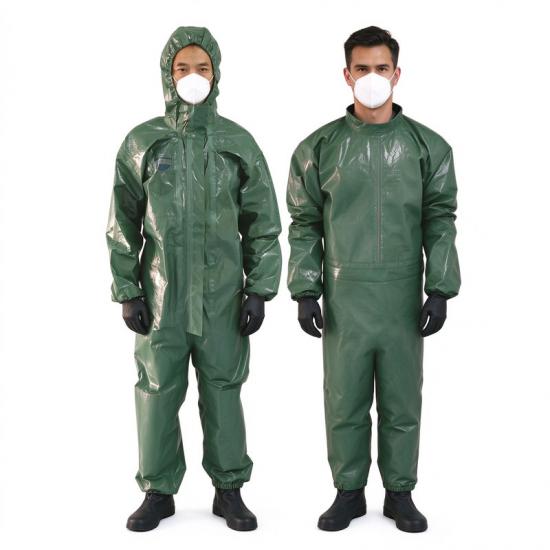

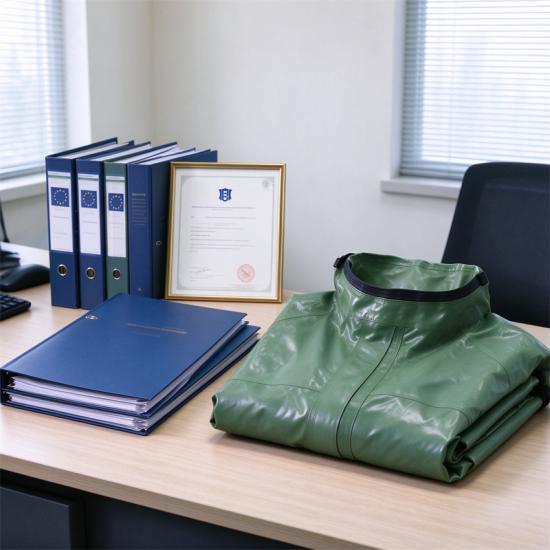
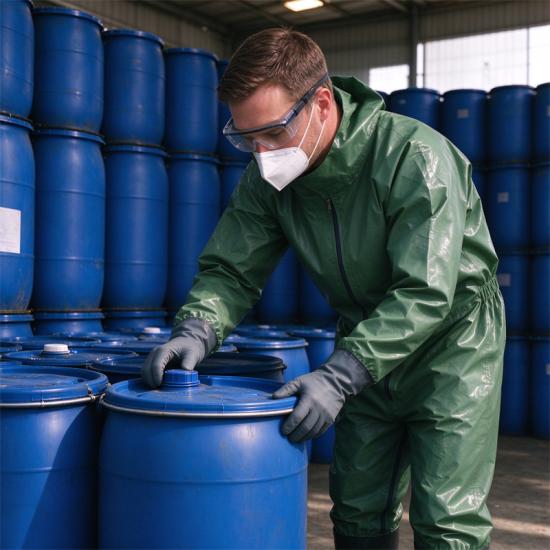
Our green heavy duty acid alkali resistant suit adopts barrier membrane fabric, providing reliable protection against acids, alkalis and corrosive liquid splashes. Sealed seams and reinforced structure fit electroplating workshops and chemical plants. Reusable after proper cleaning. We offer bulk wholesale service, OEM customization and batch test reports for industrial procurement.
Note: Price for reference only. Exact price based on quantity, size, weight and custom details.
model no. :
XFF-09Brand:
YRFmarket price :
$119.8sale price :
$59.9price range :
30-100/$59.9Color :
Multiple Colorsport of dispatch :
Guangdong/GuangzhouPayment :
TT, Paypal, Western Unionmin order :
30original region :
Made in ChinaLead Time :
5-15days
Green Acid Alkali Suit | PVC Coated Chemical
Protection for Work
We supply acid and caustic resistant chemical suits in bulk from China for concentrated acid and caustic soda handling in industrial plants. The special PVC coated polyester barrier membrane fabric blocks strong liquid chemicals and provides full liquid-tight protection for high-risk transfer and cleaning operations. Test reports, OEM branding, custom sizing, and wholesale bulk pricing available below.
 |

|
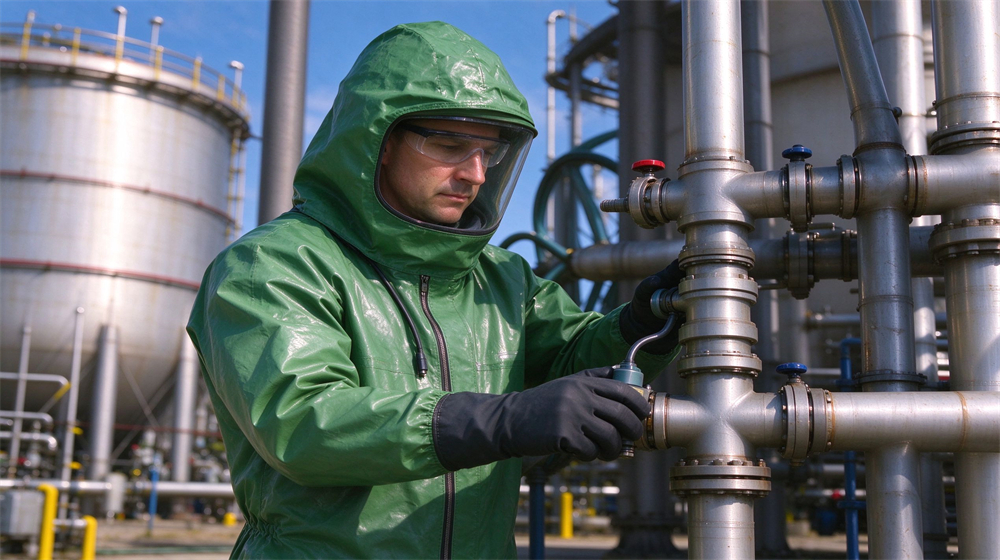
Strong acid and caustic work has one hard rule: the liquid must never reach the skin. Electroplating baths contain sulfuric acid. Water treatment lines handle caustic soda. Cleaning chemical production runs on concentrated alkalis. A splash in any of these zones can cause serious injury within seconds. Ordinary workwear offers no barrier. A green acid resistant suit is built for exactly this exposure. The special barrier membrane fabric stops corrosive liquid on contact. The worker stays dry and safe through a full shift of acid and alkali handling.
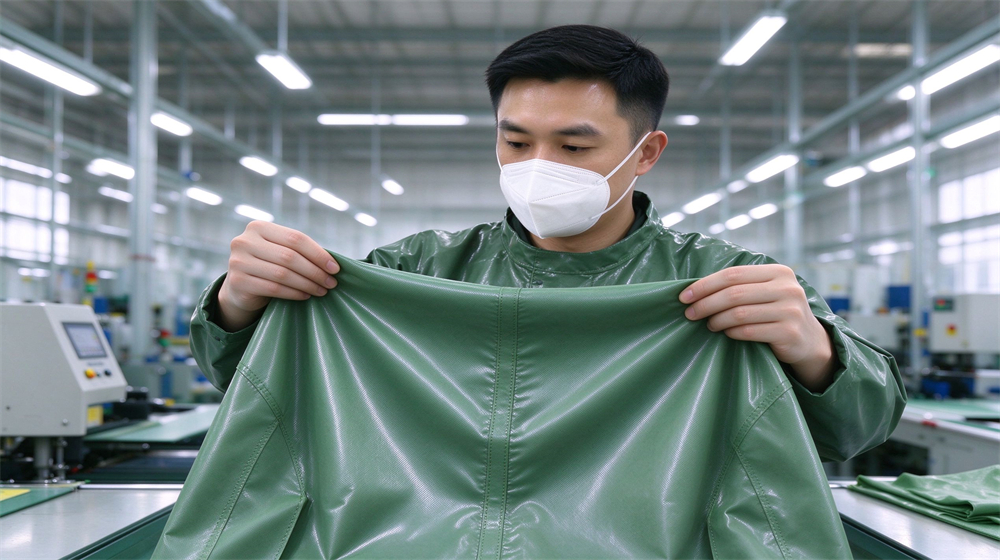
The fabric is the difference between protection and paperwork. A special functional membrane is laminated onto non-woven fabric. The membrane blocks acid and caustic penetration. The non-woven layer gives strength, comfort and breathability. Together they form an acid and caustic resistant chemical suit that holds strong liquids out while staying wearable all day. This is not a coated raincoat. This is a laminated barrier engineered for corrosive exposure, and it is the standard construction for electroplating protective clothing.
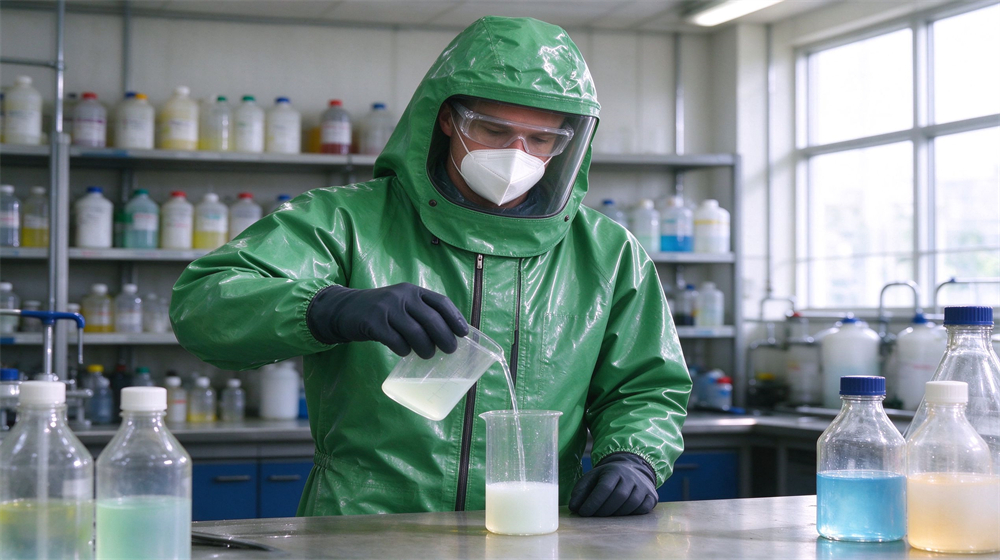
The protection rating tells you the boundaries. Per EN ISO 13982-1 the suit carries Type 5 particle protection. Per EN 14605 it covers Type 3 and Type 4 liquid-tight and spray-tight duties. Type 6 adds light splash coverage. The suit is also tested to EN 14126 for infectious agents. EN 1073-2 covers radioactive contamination. EN 1149-5 adds anti-static properties. The same suit also meets GB 24539-2021 Types 3/4/5/6. In plain terms: this caustic resistant coverall handles pressurised spray, corrosive splash and particles, not just occasional droplets.
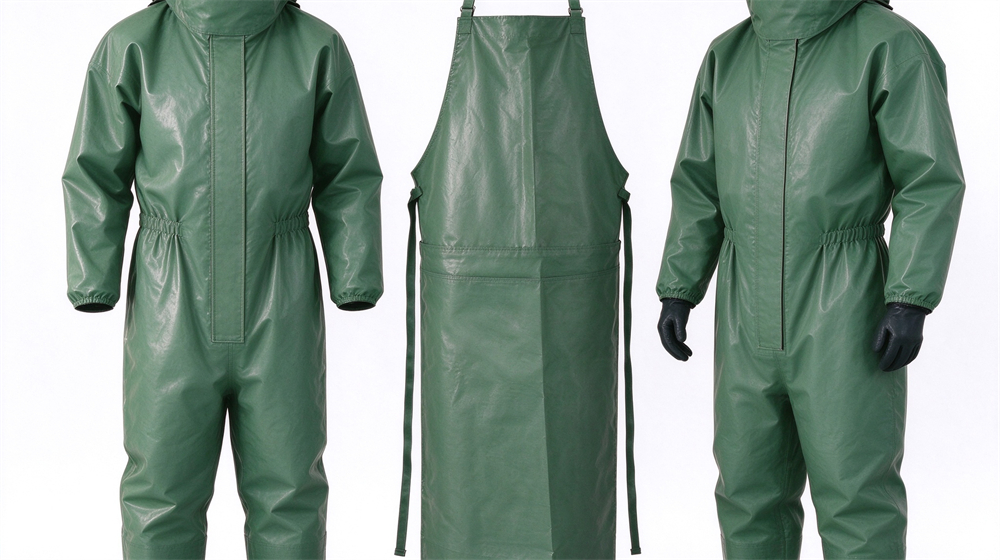
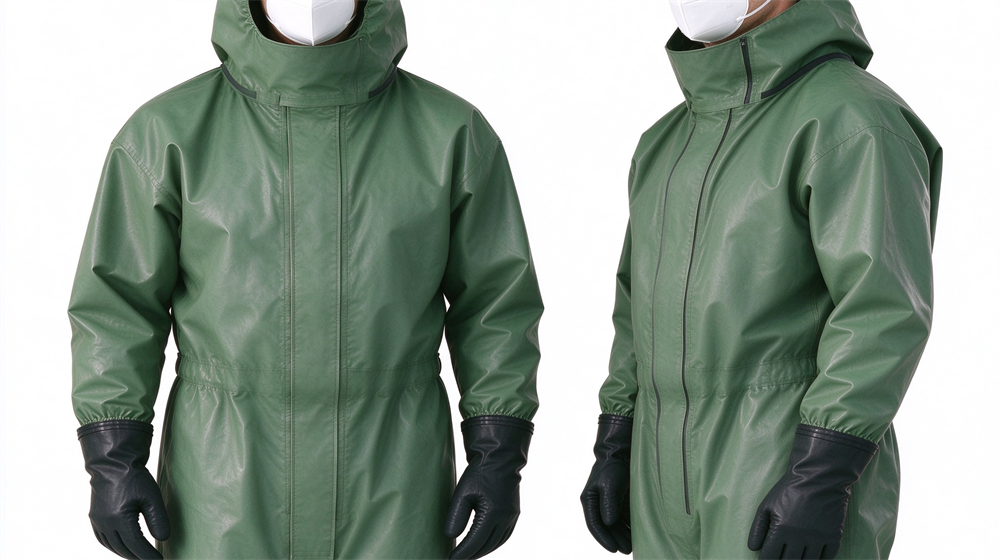
Green is the working color of the acid line. In an electroplating shop or water treatment plant, a green chemical suit is visible at a glance. Supervisors confirm instantly who is in the corrosive zone. Contamination also shows clearly on green. A splash mark is caught before it spreads. The suit is designed for real tasks. The zipper sits behind a protective flap, cuffs and ankles are elastic, and the cut allows bending, reaching and handling without binding. Protection built for moving work, not for standing still.
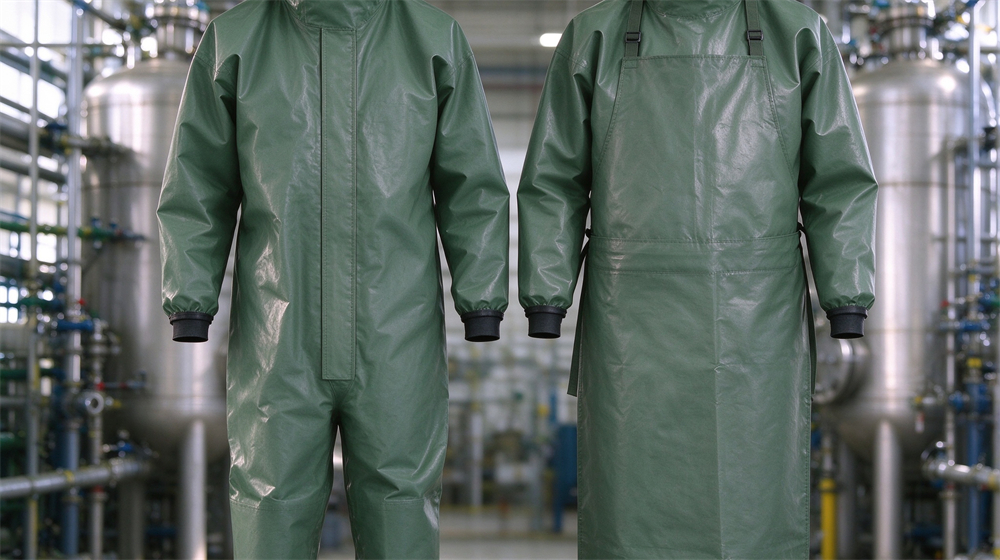
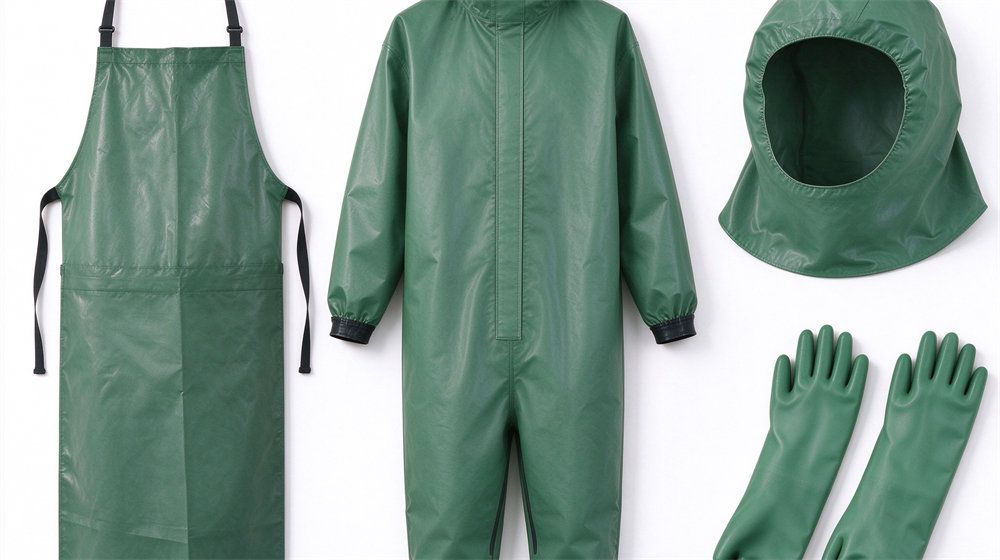
A corrosive protection program works best as a system. The matching green acid apron adds a second layer across the chest and front. Chemical-resistant gloves keep the hands dry during tank and drum work. Boot covers stop liquid pooling at the feet. When you order acid and caustic resistant coveralls for a team, the accessories can be supplied together. Every worker has the same standard of coverage. One order, one quality bar, one set of documentation. That is how industrial teams build a reliable acid and alkali protection program.
Strong acids and caustic liquids need a real barrier. A green acid and caustic resistant chemical suit delivers it. The special barrier membrane fabric carries Type 3/4/5/6 plus EN 14126. The design is made for electroplating and chemical work. Scroll down for the corrosion table, the fabric breakdown, the handling workflow and the questions buyers ask most.
Acid and alkali protection is a specific category of chemical PPE. It covers corrosive liquids that burn, etch or corrode on contact. Knowing what this suit covers, and what it does not, keeps your team safe without over-buying.
Corrosive exposure happens the moment a strong liquid leaves its container. Filling an electroplating bath, dosing caustic soda, cleaning a chemical reactor, draining a process line. Each step has a splash or spray moment. A green acid resistant suit stops corrosive liquid at the fabric surface. The membrane holds the liquid, and the worker underneath stays dry. This is different from gas protection. Gas requires a fully encapsulated suit with air supply. For liquid handling, splash and spray coverage is the correct level, and this suit covers both. An acid resistant suit rated this way is the working choice for corrosive lines.
The corrosive list is longer than most buyers expect. Sulfuric acid in plating baths. Hydrochloric acid in cleaning and pickling. Caustic soda in water treatment. Sodium hydroxide in detergent production. Plus process chemicals, degreasers and cleaning agents at working strength. What this suit is not for: concentrated hydrofluoric acid, strong oxidizers or gas exposure. Those require specialist equipment from a different category. Knowing the boundary is part of buying responsibly. A chemical resistant suit is a precise tool. Using it inside its range keeps workers safe.
The right starting point is a written corrosion risk check. List every liquid handled, its concentration, the way it is handled and how often splashes occur. If the answer is routine acid or caustic handling with occasional spray, splash protection fits. If the liquid is concentrated or the task involves immersion, escalate before the task starts. This assessment takes half a day. It prevents both over-protection and under-protection. NIOSH publishes practical guidance for chemical workplaces. See the NIOSH chemical safety guide.
A common mistake is buying one level above the real hazard. A fully encapsulated suit is heavy, hot and expensive. Most electroplating and water treatment tasks do not need it. The opposite error is buying ordinary workwear and hoping it blocks acid. It does not. Acid burns through untreated fabric fast. A caustic resistant coverall sits between those extremes. It is the level that matches the daily reality of corrosive workplaces. That fit between hazard and equipment is the whole point of a dependable alkali chemical protection program.
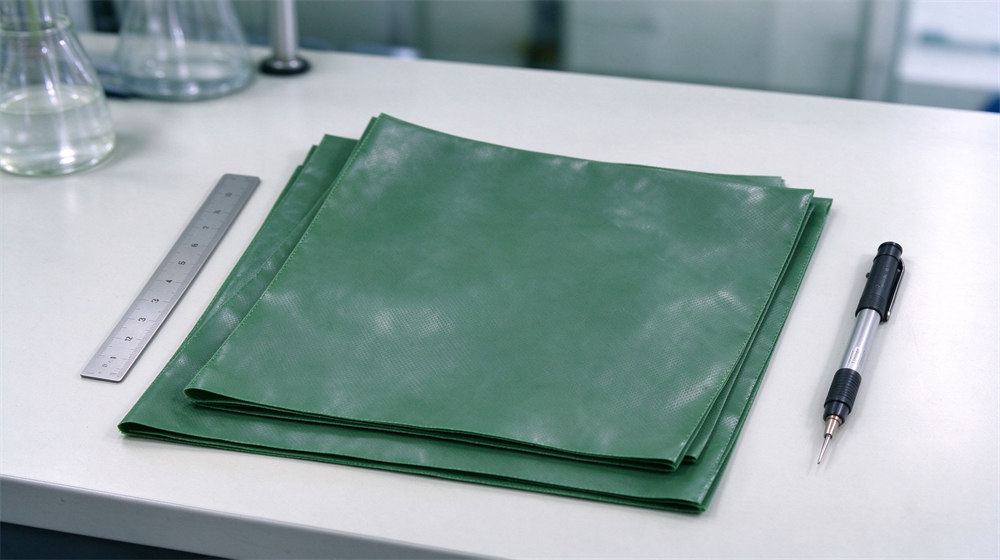
Buyers should verify three things before ordering. First, the fabric construction: special barrier membrane laminated on non-woven fabric with sealed seams. Second, the rating certificate for the Type level claimed, plus the EN 14126 test document. Third, the closure details: flap over the zipper, elastic cuffs and ankles. These three checks filter out products that only look protective. Batch test reports close the loop, so the paperwork matches the suits actually delivered.
The corrosion guide below shows typical corrosive exposures and the protection each one needs. The ratings follow EN 14605 and EN ISO 13982-1 test methods.
For routine acid and caustic handling, Type 3/4/5/6 coverage with a barrier membrane is the cost-effective standard. A caustic resistant coverall rated this way is the practical buy for corrosive plants.
|
Medium |
Typical Site |
Exposure Type |
Protection Needed |
|
Sulfuric acid |
Electroplating baths |
Splash and mist |
Type 3/4 liquid-tight |
|
Caustic soda |
Water treatment dosing |
Spray and droplets |
Type 4 spray-tight |
|
Hydrochloric acid |
Cleaning and pickling |
Splash during transfer |
Type 3/4 plus apron |
|
Sodium hydroxide |
Detergent production |
Line contact and spray |
Type 3/4 plus gloves |
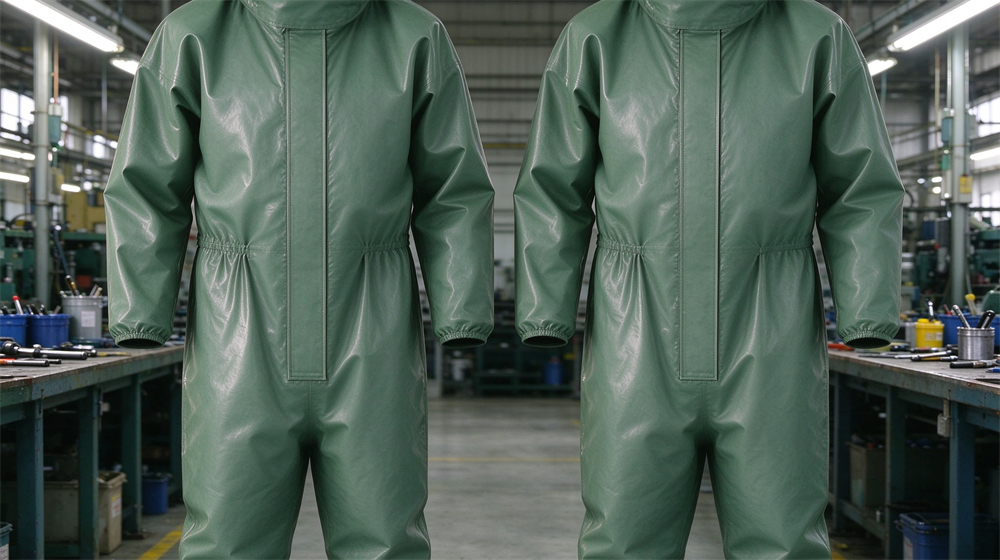
When should a team move up a level? When the liquid is concentrated acid, when the task involves high-pressure washing, or when workers report regular wet-through. When should a team stay at this level? When exposure is routine handling with occasional spray. The upgrade signal is wet or damaged clothing, not fear. Track wet-through incidents for a month. If the suit stays dry and intact, the level is right. If not, the rating, not the worker, is the problem to fix. Document the decision for the next review cycle.
Roll the choice out with a test day. Have two workers wear the suit through a real plating or dosing shift. Check comfort, reach and heat build-up. Then compare against the previous equipment. Teams adopt new protection faster when they try it first. A test day costs nothing but time. Spec sheets cannot answer how the suit feels. Only real work can.
Fabric choice is the difference between a suit that looks protective and one that actually stops corrosion. This section explains how the special barrier membrane works and how to verify it.
Acid and alkali protection levels are not interchangeable. The table below compares the ratings and what each one proves.
Type 3/4 is the working level for strong acid and caustic exposure. Combined with EN 14126, EN 1073-2 and EN 1149-5, the suit covers corrosive, biological, radioactive and static risks in one garment.
Protection Level
What It Covers
Test Basis
Fit for Acid Work
Type 6
Light splashes
EN 14605 light spray
Sampling, short tasks
Type 5
Airborne particles
EN ISO 13982-1
Dust and dry particles
Type 4
Spray-tight
EN 14605 spray
Dosing, line work
Type 3
Liquid-tight
EN 14605 jet
Plating, high-pressure areas
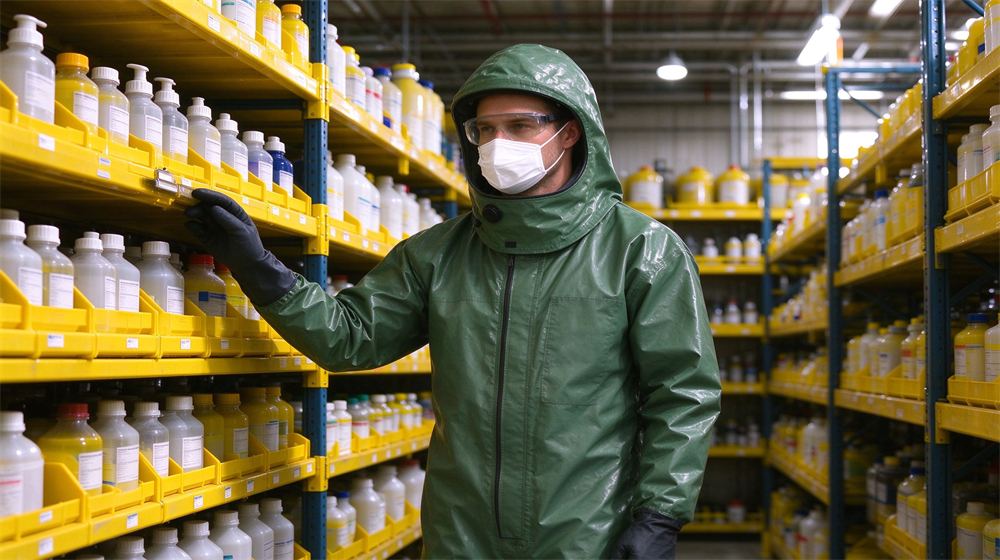
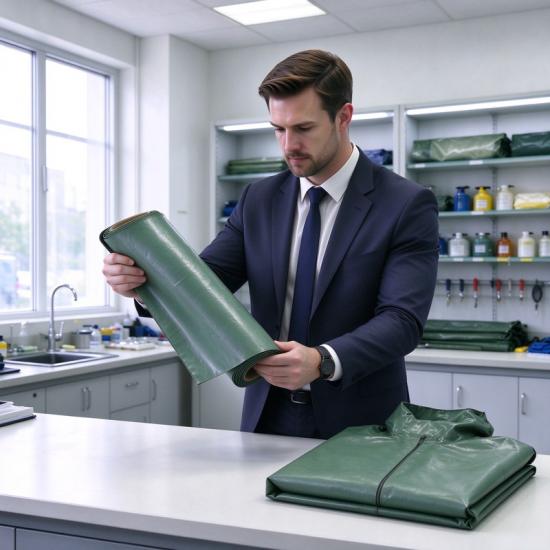
The suit uses a special functional membrane laminated onto non-woven fabric. The membrane is the barrier. Corrosive liquid hits it and is held, then wiped off. The non-woven substrate is the body. It gives the fabric strength, flexibility and a comfortable feel. Together they form an acid and caustic resistant chemical suit that blocks strong liquids while staying wearable for hours. This is the standard construction for electroplating protective clothing. It balances protection, weight and cost, and it delivers dependable alkali chemical protection in plating and dosing work.
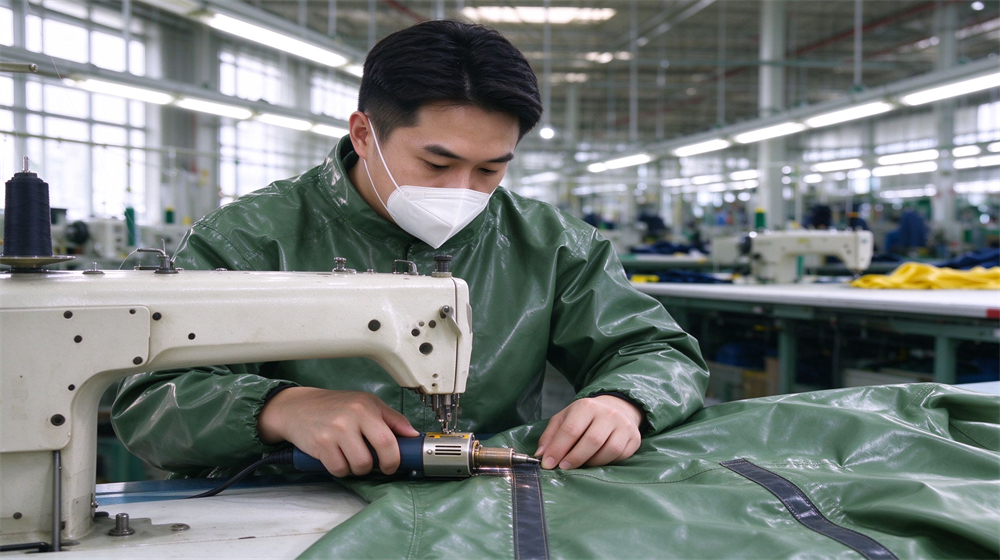
The fabric is only half the story. Corrosive liquid finds every gap. The seams and closures carry real responsibility. The zipper runs behind a protective flap. Cuffs and ankles use elastic closure. Seams are reinforced at stress points, and in sealed versions seam tape is heat-sealed over the stitching. That closes the needle holes. For acid and caustic work, sealed seams with a flap and elastic closures provide dependable protection. When comparing chemical resistant suits, check the seam construction first.
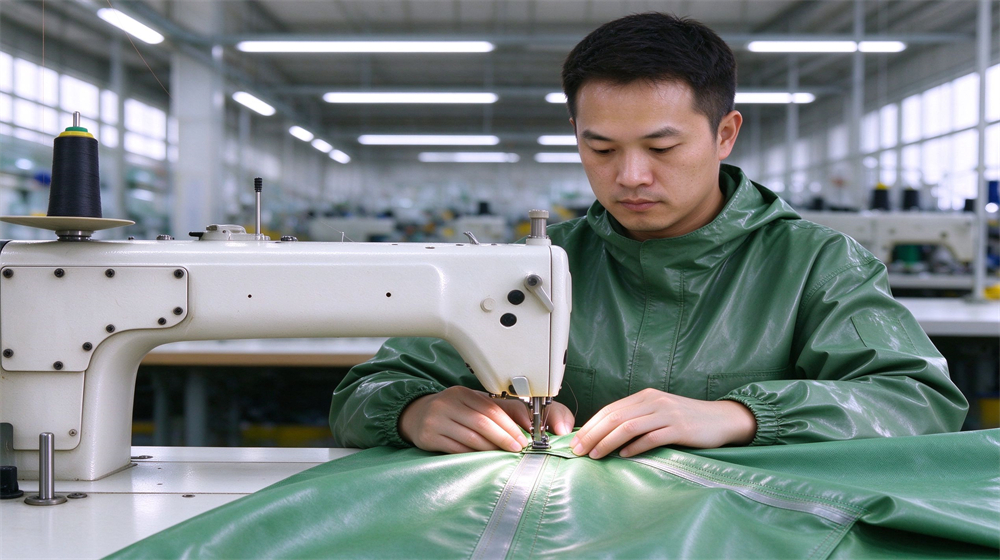
Because the barrier is laminated rather than coated, it resists cracking and peeling through repeated use. The suit can be wiped down and reused within its rated exposure. That is what makes it economical for daily corrosive tasks. Users should still inspect the fabric before each use. Check for tears, worn spots or stiffened membrane. Retire the suit when damage appears. This simple habit keeps the protection level real for every acid resistant coverall on the floor.
Coated fabric is the cheaper cousin of lamination. A coating sits on the surface and can crack, peel or wash off over time. A laminate is bonded at the fiber level, so the barrier survives flexing and wiping. That difference shows up in service life. For a suit that goes through a full work week in a corrosive zone, lamination wins for alkali chemical protection programs. The per-use cost drops, because the suit keeps its barrier longer. Ask your supplier which construction the suit uses before comparing prices.
Care is simple but non-negotiable. Wipe the suit down with clean water after corrosive exposure. Rinse splashes off the membrane before they dry. Let it dry fully before storage. Keep it out of direct sunlight when stored, because UV ages the membrane. Store folded in a dry cabinet, not crumpled under weight. A suit cared for this way holds its rating across many shifts. A suit left wet or in sunlight loses performance silently. The fabric is strong, but the user's storage habits decide how long it stays strong. This applies to every caustic resistant coverall in the rotation.
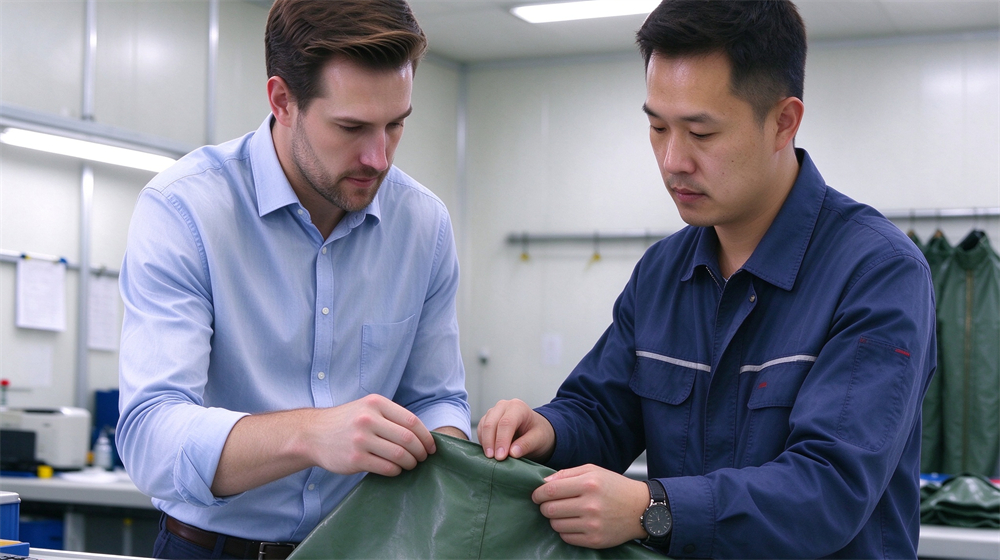
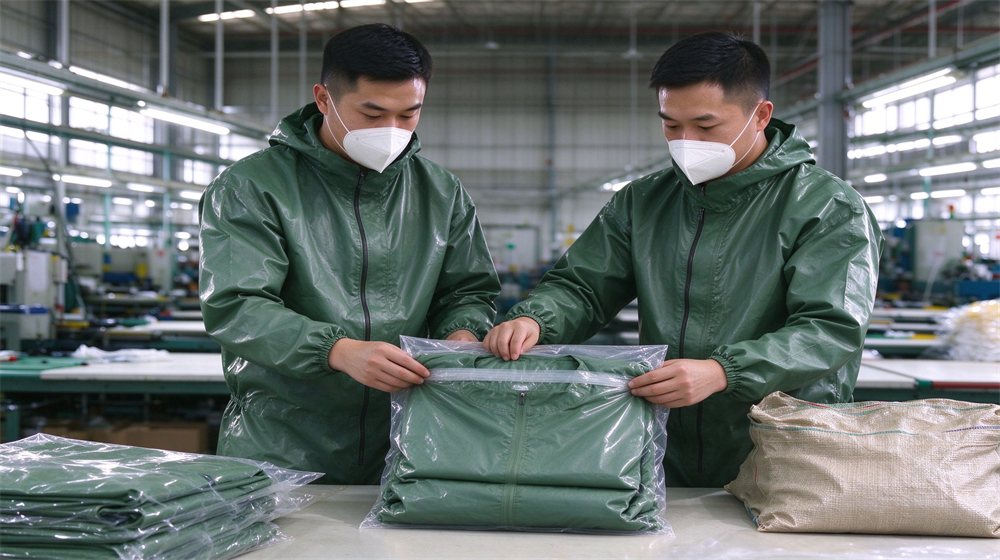
Quality acceptance starts at the sample stage. Ask for a fabric swatch and a finished sample. Check the seam tape coverage, the flap width and the elastic tension. Confirm the test report covers the Type level you are buying. Ask to see the EN 14126 document behind the barrier claim. For large orders, request batch test reports with the shipment. These steps sound basic, but they are the difference between a compliant program and a paper one. Every batch of this suit family ships with its own documentation.
Factory quality control matters as much as the material. Seams are sewn with locked stitching, then heat-sealed in sealed versions. Zippers are checked for smooth travel and flap coverage. Elastic is tension-tested at the cuffs and ankles. Each suit is inspected twice before packing: once flat on the table, once on a fitting mannequin. An acid and caustic resistant chemical suit leaves the line only after both checks pass. Buyers can request photos or video of the inspection step during production. The factory keeps the inspection record per batch, so every shipped carton can be traced back to its production day.
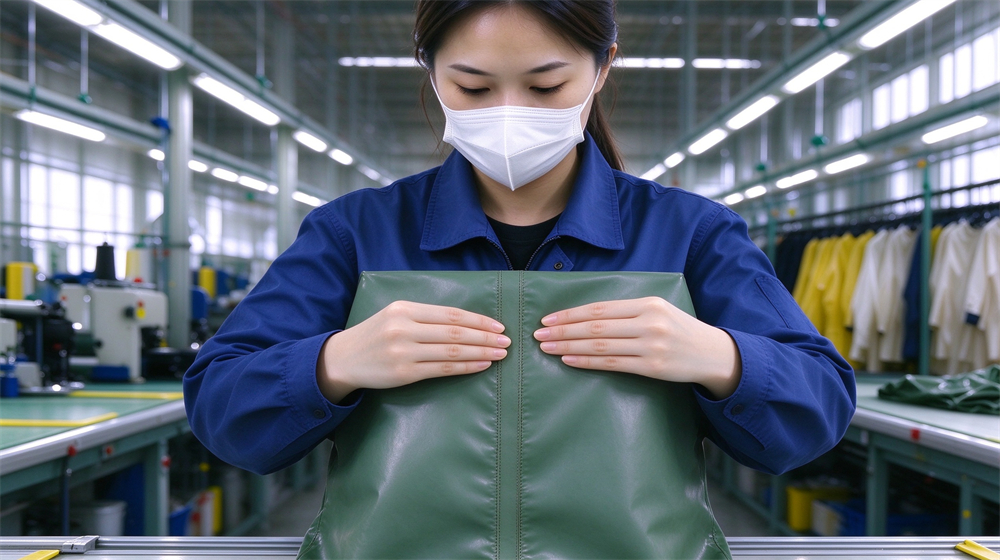
Fabric spec sheets can be read in three numbers. Fabric weight tells you how robust the suit feels. Liquid penetration test results show the pressure the membrane holds before droplets pass. Seam strength tells you how the closures survive pulling. Ask the supplier for these three values with the sample. Numbers are easier to compare across suppliers than marketing descriptions, and they are the same values the test reports carry.
Physical acceptance beats paperwork every time. Spray the finished sample with water and watch the droplets roll off. Pull the sleeve elastic and check the recovery. Open and close the zipper ten times under the flap. Fold the suit and unfold it, looking for membrane cracking. These five checks take five minutes. A sample that passes them will usually pass in the field. A failing sample fails faster in real work. Better to catch it at the sample stage than after a bulk order.
Acid and caustic resistant suits earn their place in specific working environments. Four settings use them more than any others.
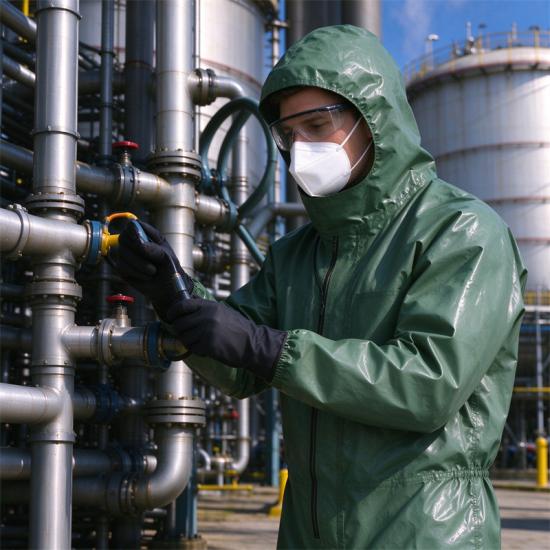
Electroplating is the first and biggest application. Workers load and unload plating racks, top up acid baths, connect rectifiers and handle brightener chemicals all day. Every bath is a splash opportunity. A green acid resistant suit gives these workers dependable spray protection. The bright color lets supervisors see at a glance who is in the plating line. For plating shops handling sulfuric acid and process chemicals, this suit is the daily uniform.
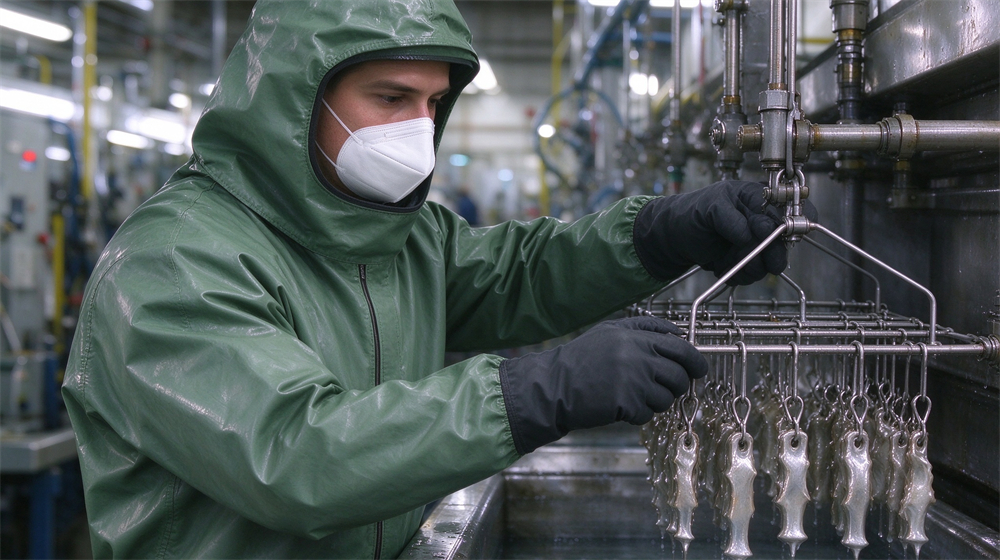
Chemical production covers a wide band. Dosing caustic soda, cleaning reactors, handling raw materials and draining process lines. These tasks involve repeated contact with corrosive liquid, but rarely full immersion. A caustic resistant coverall handles the exposure and stays comfortable through the shift. The balance of protection and mobility is why plants choose it for operators. They are in and out of corrosive areas throughout the day, so the suit has to work as hard as they do.
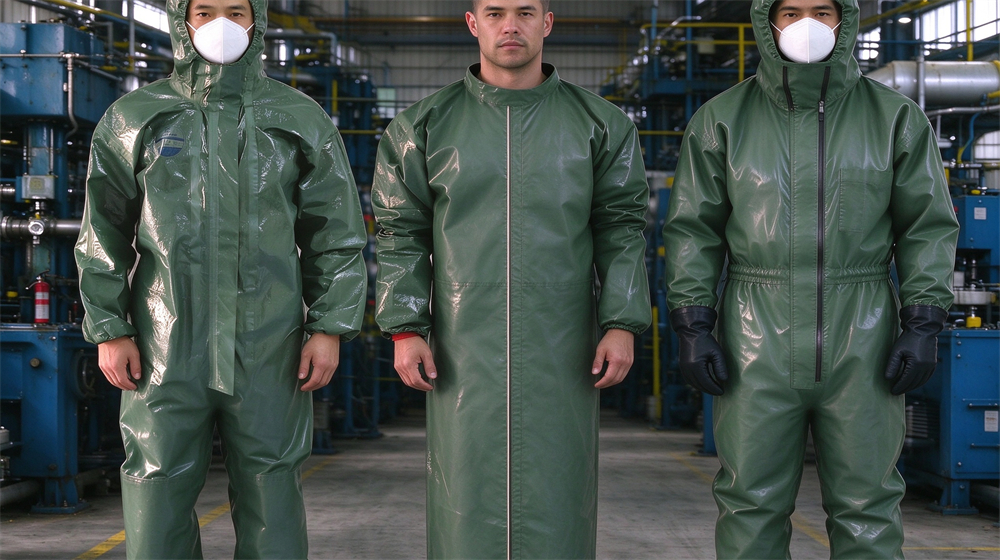
Water treatment adds another layer of use. Operators dose coagulants, handle caustic for pH adjustment, sample tanks and clean dosing rooms. Drips and residue are common there. The green suit keeps clothing dry. It also signals the protective standard to visitors and auditors. Teams rotate between the dosing room, tank yard and lab. A single suit type covering all these zones simplifies PPE management.
Detergent and cleaning chemical production is the fourth setting. Sodium hydroxide and surfactant lines run continuously. Workers bag, drum and transfer finished chemicals. The green chemical suit protects through every step. Browse the wider chemical suit range across our bulk supply program.
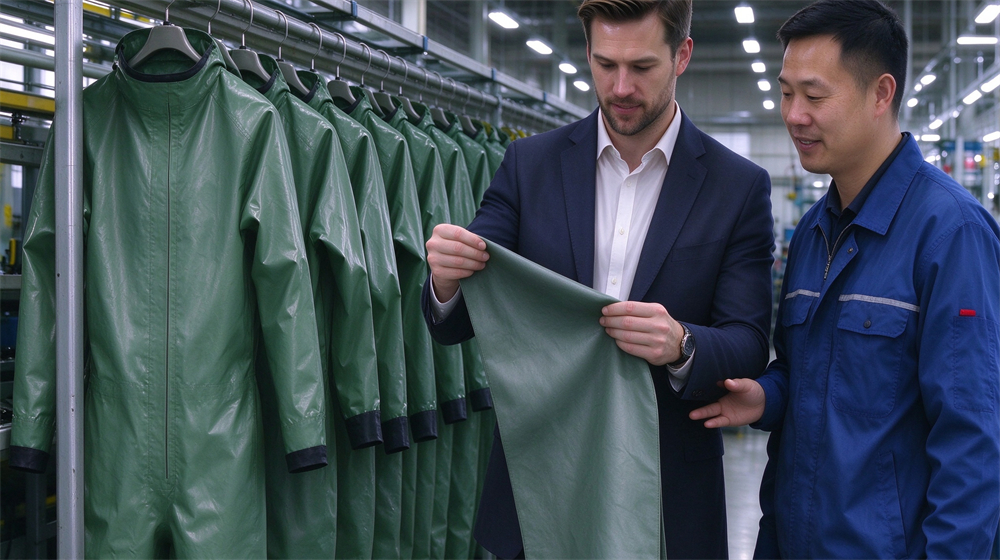
Environment decides the right suit weight. A warm plating shop favors the lighter configurations in the family. A cooler chemical plant can use a heavier membrane without comfort issues. Rain and outdoor work add wind, but the suit still performs because the barrier is inside the laminate. Match the suit to the climate, not just to the chemical list. A comfortable worker keeps the suit on. A worker who removes the suit to cool down loses the protection.
Storage between shifts matters more than most buyers expect. Suits left in the work area collect dust and contamination. Suits stored near heat sources age faster. A simple rotation system solves both. Each worker gets two suits: one in use, one clean and ready. This doubles the useful life and removes the excuse for wearing a dirty suit. Plants that run this system report fewer garment failures and steadier compliance.
Color is part of the safety system, not a styling choice. Green marks the corrosive zone clearly in photos and on the floor. Auditors can verify compliance without entering the area. New workers learn the uniform quickly, because the color is unmistakable. When several teams share one plant, a single suit color for corrosive work prevents confusion. A green chemical suit becomes a visual standard that every shift understands, and it keeps acid and alkali protection routines consistent.
Before you buy, walk the actual work area once. Note where splashes happen, which tasks generate spray, and where the suits will be stored. This walk takes half a day. It answers the real questions: which size mix, how many spares, which accessories. Buyers who walk the floor first order the right quantity the first time. Buyers who guess usually reorder within a month. The walk is the cheapest part of the whole procurement process.
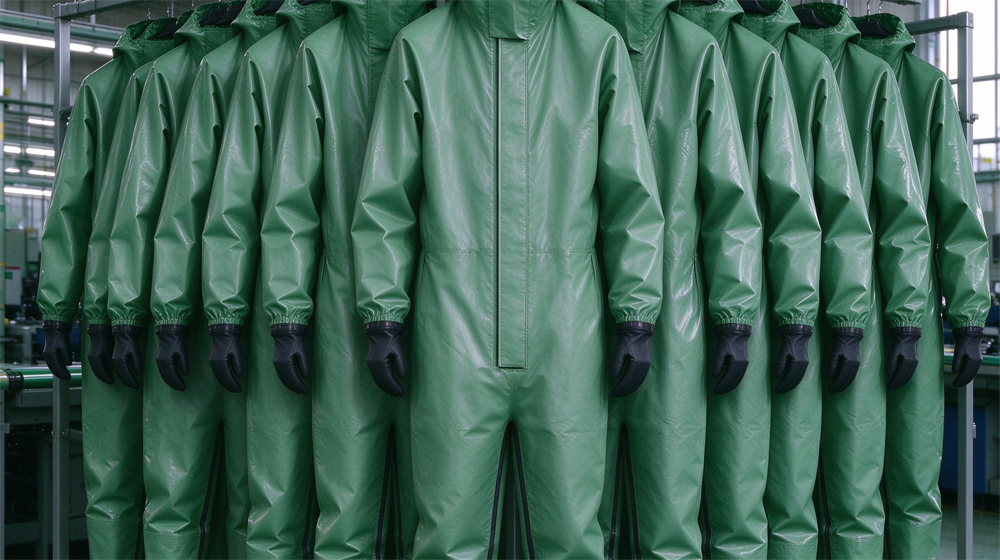
Tank farms and outdoor yards add two conditions: wind and sunlight. Wind pushes spray sideways, so the hood and the flap matter more outdoors. Sunlight ages the barrier membrane, so outdoor suits need the wipe-down and dry-storage routine even more strictly. The suit itself performs the same indoors and out. The management habits just need adjusting. Outdoor teams order a small spare pool. The sun does the wearing, whether the suit is used or not.
Rotation prevents the slow failure that nobody notices. A suit worn every day for a year looks tired long before it fails. Two suits per worker, worn on alternating shifts, spread the exposure and double the useful life. Add a season marker on the inside label, a simple sticker with the issue month. When the season turns, review the pool: retire the stiff ones, reorder the sizes that ran short. This turns suit management into a routine instead of a surprise.
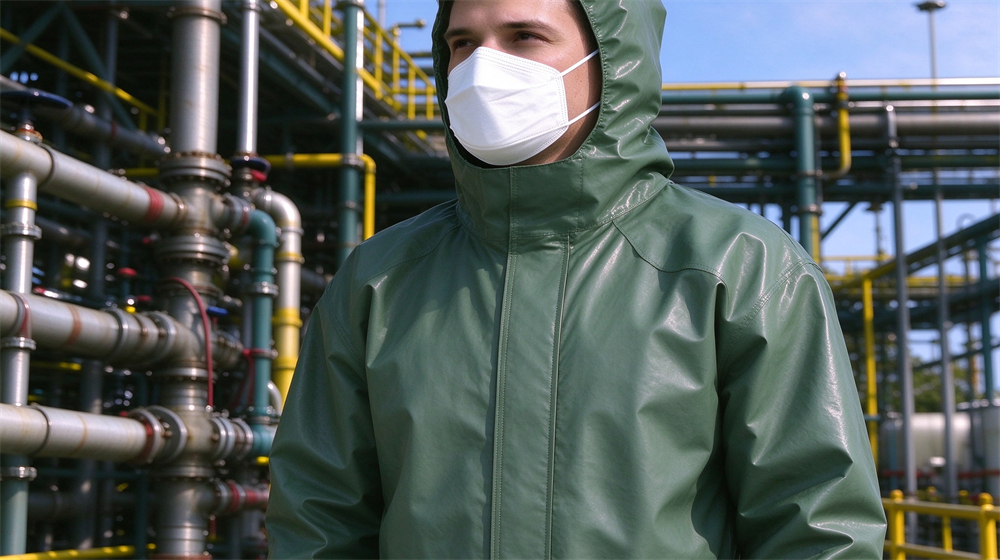
The daily routine of acid and caustic handling is where chemical protection proves itself. Understanding the workflow helps you choose the right suit and the right habits.
The five-step dosing workflow below shows where corrosive protection matters at each moment.
Following the same five steps every shift turns individual judgment into a repeatable routine.
|
Step |
Action |
Protection Point |
|
1. Position |
Place drum and connect line with both hands |
Keep the connection in sight |
|
2. Open |
Open valve slowly, confirm flow direction |
First surge is the spill moment |
|
3. Dose |
Stay beside the connection during dosing |
Barrier membrane plus elastic cuffs |
|
4. Close |
Close valve, drain line, rinse fittings |
The final drip is a splash moment |
|
5. Clean |
Rinse suit before doffing, dry before storage |
Ends the exposure window |
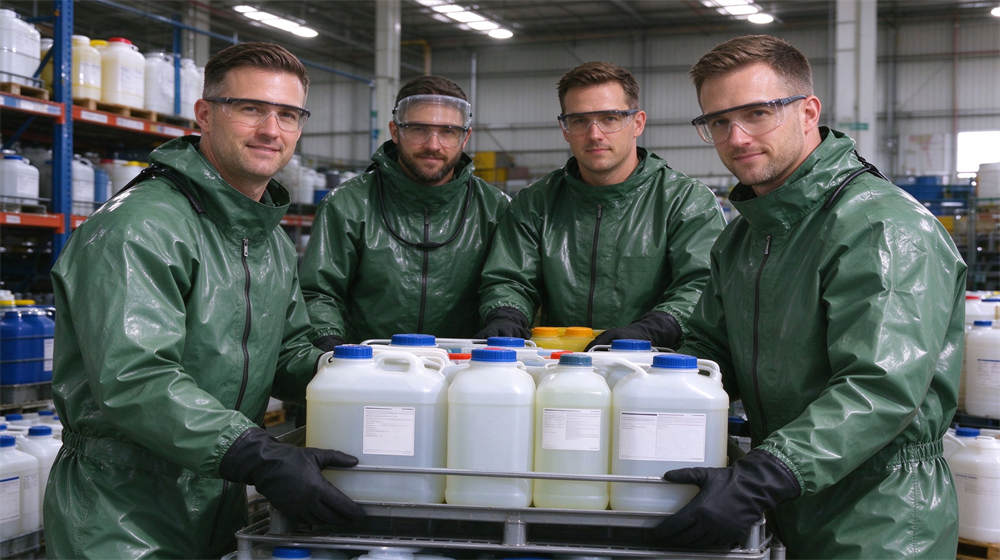
A typical dosing task starts with positioning the drum, connecting the pump and opening the valve. Each step has a splash moment. The first surge of liquid, the connection point, the final drips when the line is pulled. A caustic resistant coverall covers the operator through all of them. The elastic cuffs keep liquid from running up the sleeves. The flap protects the zipper. The barrier sheds corrosive spray on contact. The result is an operator who stays dry and focused on the task.
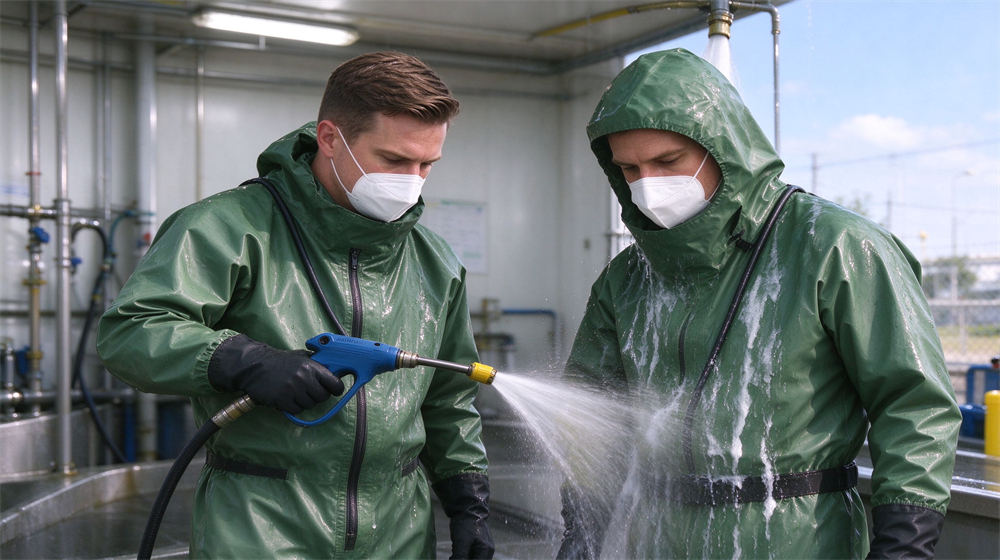
After the task comes the cleanup. Lines are drained, connections wiped and drips rinsed. This is the second exposure window, and it is easy to forget. The same acid and caustic resistant chemical suit that protected the task also protects the cleanup. The membrane sheds residue the same way. Teams should only remove the suit after the whole job, task plus cleanup, is complete. Cutting corners on this habit is how minor splashes become incidents.
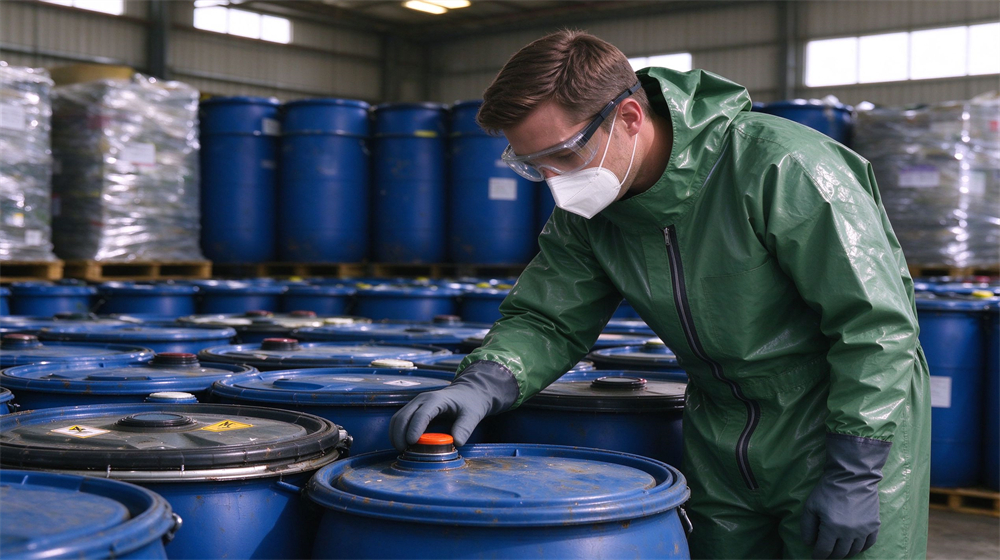
Protection works best when the whole team follows the same routine. Inspect the suit, check the closures, do the task, rinse and store. Written checklists turn these habits into procedure. For supervisors, a green chemical suit also makes compliance visible. Everyone in the zone can confirm at a glance that the standard is being met. Visible standards are easier to maintain than invisible ones for acid and alkali protection teams. OSHA's PPE guidance walks through the same logic for chemical workplaces. See the OSHA personal protective equipment guide.
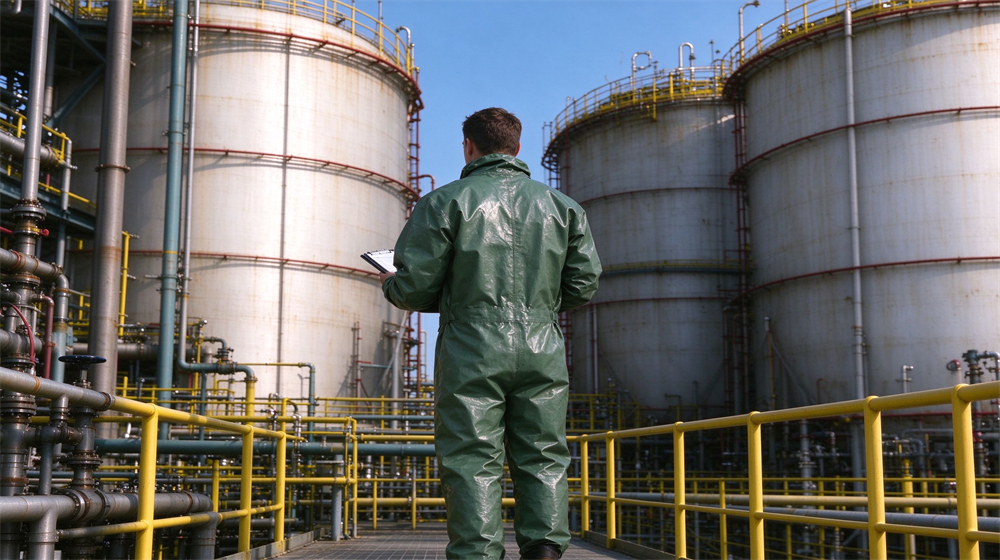
The most common operator error is rushing the connection. A hose fitted loosely sprays under pressure. The second error is reaching across a live line. The suit protects the body, but good positioning prevents most splashes before they start. Train operators to face the connection point and keep the fitting in view. Add a second worker for heavy drum transfers. Two sets of eyes and two sets of gloved hands cut the spill rate sharply.
Weekly checks catch what daily habits miss. Look at the sleeve elastic, the flap stitching and the ankle closures. Run a quick water test on a new batch: spray the fabric and confirm the droplets roll off. These checks take ten minutes per rack of suits. They are the maintenance side of a corrosive protection program. The membrane does the heavy work, but the check routine keeps the program honest. Batch test reports from the factory back up the field checks.
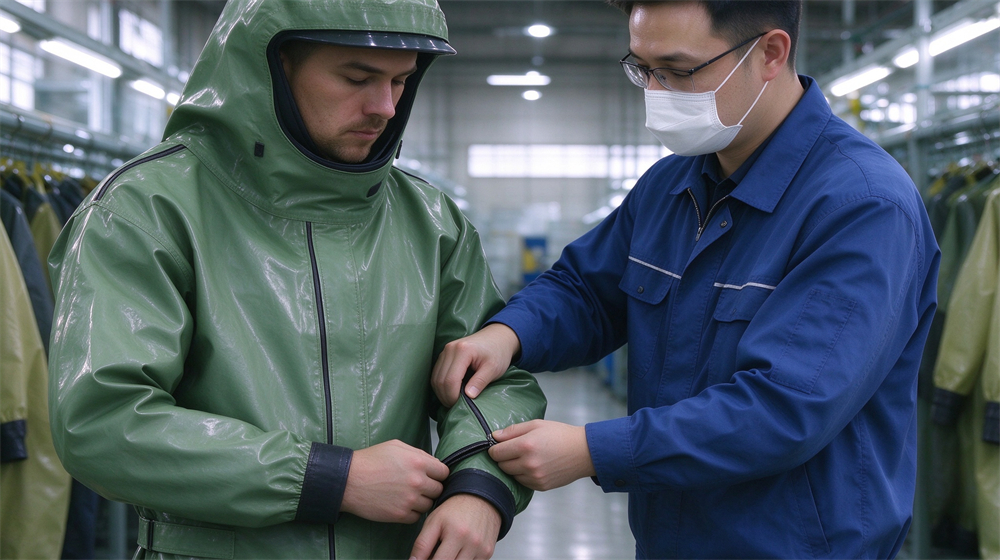
Every team needs a short response drill. If corrosive liquid hits the suit, the worker finishes the task, moves to the rinse station and cleans the suit before removal. If the suit is torn, it is retired on the spot. The drill takes fifteen minutes and is repeated with new hires. An acid resistant suit protects in normal use. The drill covers the moment when use is no longer normal. Teams that drill once a quarter respond calmly when the moment comes.
Training ties the equipment to the task. Show each worker how the flap, cuffs and closures work before the first shift. Walk them through one full dosing task in the suit. Then test the acid and alkali protection habit: keep the suit on until the cleanup is done. This short session converts a good suit into a reliable protection program. Equipment without training is just fabric. Equipment with training becomes a working safety system.
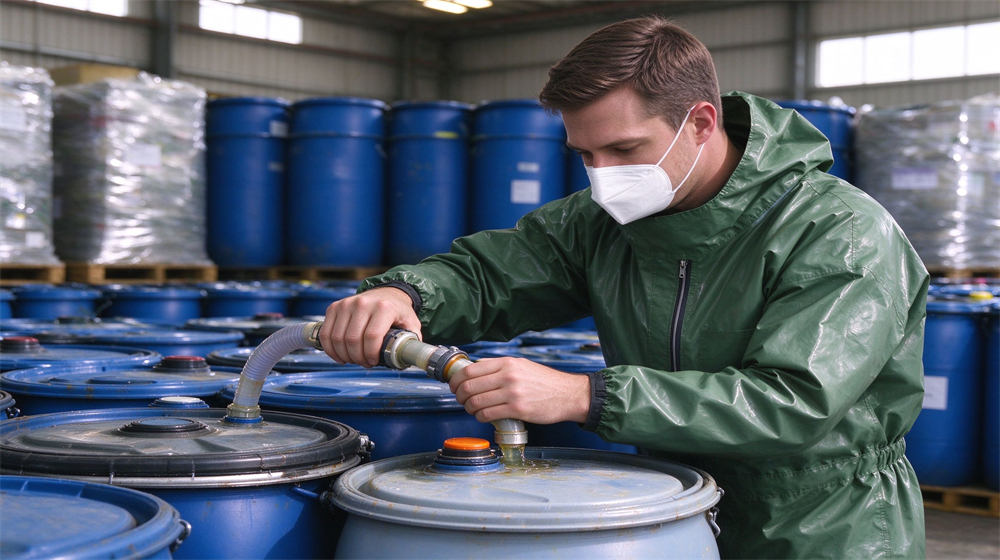
Records make the program auditable. Keep one log per rack: issue date, worker name, inspection results, retirement date. This log takes two minutes per suit per week. When an auditor asks how the team manages corrosive protection, the log answers. When a worker asks for a new suit, the log shows whether the old one earned retirement. Written records also catch the slow problems: elastic losing tension, membrane stiffening, zippers skipping.
Shift handover is where protection programs leak. The outgoing team wipes the suits and racks them; the incoming team checks them before the first task. A five-minute handover checklist closes the gap. Without it, suits end the week dirty, damp or in the wrong rack, and the next shift starts unprotected. Assign the check to one person per shift. A single owner makes the routine stick. The green suits make the check fast, because wear and damage show clearly on the color.
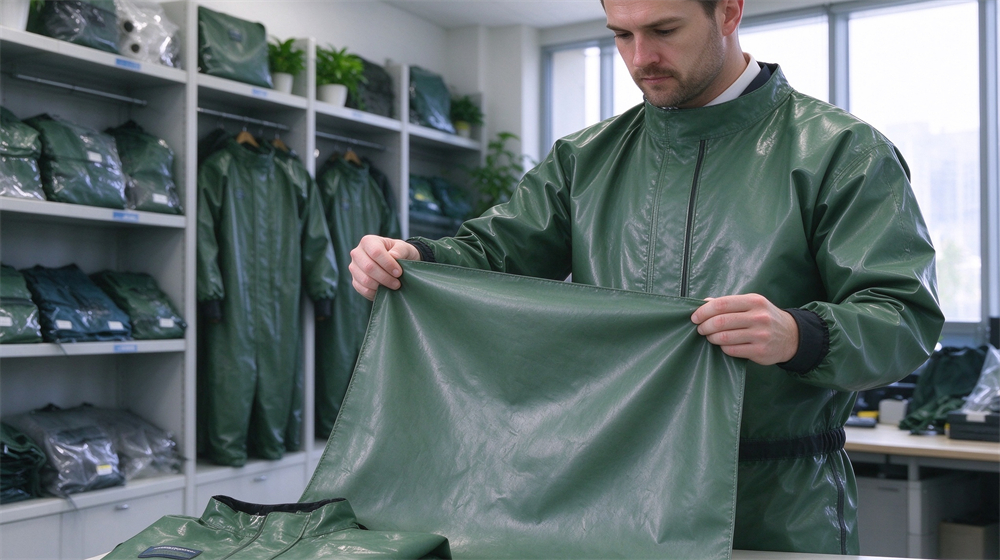
Buying acid and caustic resistant suits for a team follows the same logic as any industrial PPE. Right product, right volume, right terms. This section covers the procurement details.
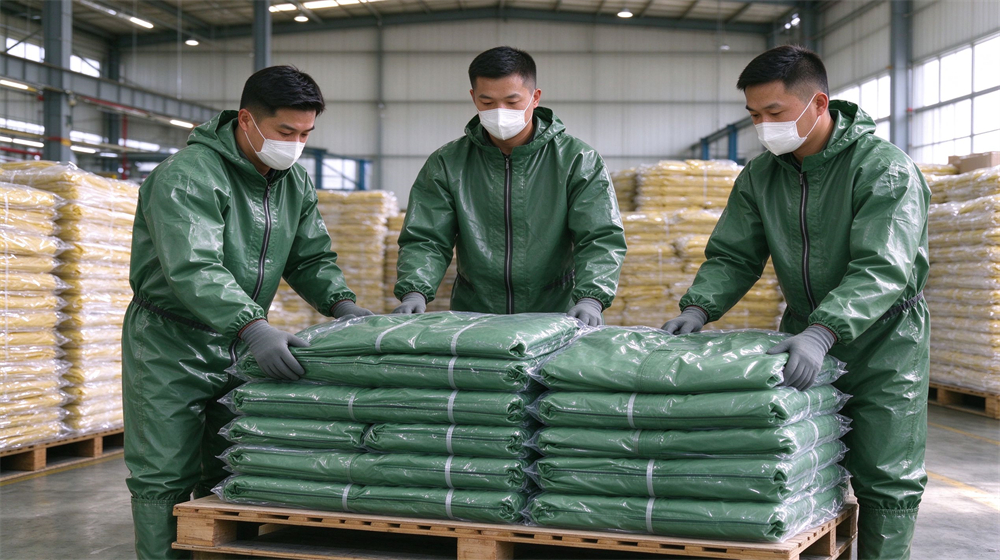
Team programs start with a simple count. Number of workers, tasks per week, suits per worker. Because these suits are reusable within their rating, the volume is lower than a disposable program. Sizes and spares still need planning. Buying chemical resistant suits wholesale from a single supplier brings consistent quality, one documentation set and predictable pricing. Bulk coveralls in one order keep the price stable and the paperwork short. For plants with standing corrosive work, a regular supply arrangement keeps the program stable.
Sizing follows the standard rule, and acid resistant suit sizing starts with the factory chart. This suit family runs in standard sizing, with the size chart provided at quotation. Most teams need a medium and large mix, with extra-large for taller workers. Custom branding, logo on chest or back, turns the suit into a team uniform. It also supports site access rules. OEM terms are confirmed at quotation. The artwork, minimum quantity and timeline are agreed in writing before production.
MOQ and production timeline depend on configuration. The quantity, the sizes, whether branding is included. Both are confirmed at quotation. A first order can be scaled to test the program before committing to volume. We accept T/T payment. All terms are agreed together with the order details, before production starts. This keeps the buying process simple: one quotation, one confirmation, one shipment.
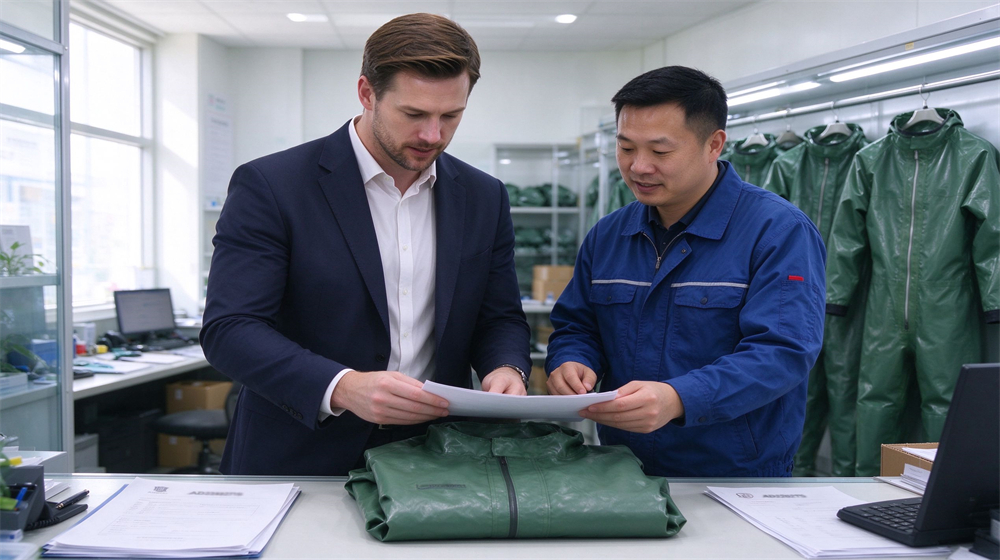
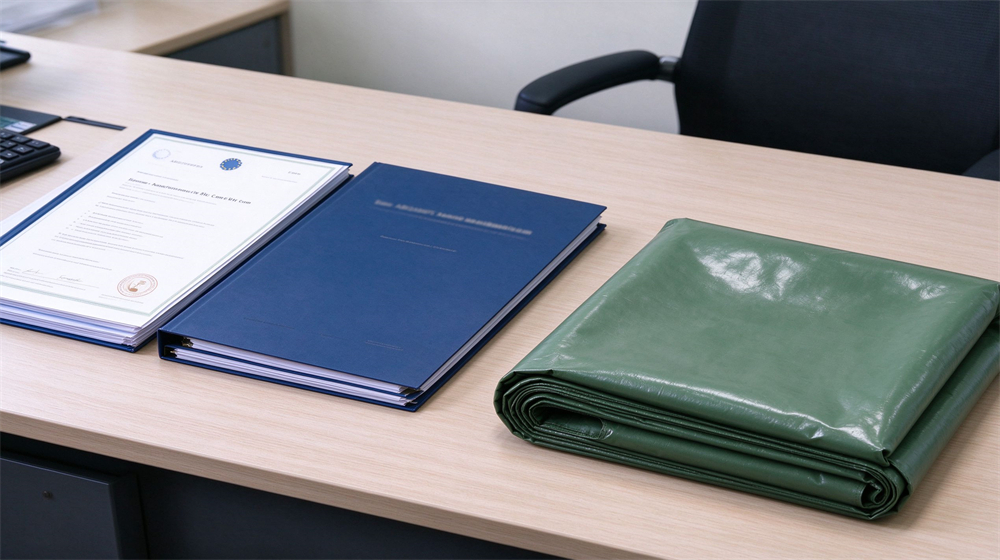
Every bulk order ships with quality documentation. Batch test reports, size breakdown and packing list. Buyers keep one file per order, which makes audits simple. The documentation matches the factory records, so the compliance trail is complete. For tenders, this package is usually enough to support the technical submission. Ask for the document set before placing the order, not after. That way you know exactly what will arrive with the goods.
The table below summarizes how to configure a team order for bulk chemical ppe supply.
With sizing, branding and terms confirmed, the program is ready to run. Every acid and caustic resistant chemical suit order ships with batch test documentation.
A sample order is the safest first step. Order a small quantity across your size mix, run the suits through real shifts, then scale. Most teams confirm the sizing and the closure details in this trial phase. It costs little and removes the risk of a wrong bulk order. The factory supports this approach with consistent pricing on the follow-up volume. This is how a corrosive protection program starts clean and scales safely. The sample feedback also feeds the size mix for the full order.
Order Item
How to Configure
Notes
Size selection
Match to factory chart at quotation
Chart provided with quote
Team mix
Order M/XL mix per workforce
Ratio confirmed with order
Branding
Logo and color customization
OEM terms at quotation
Payment
T/T only
No L/C terms
Lead time planning starts with the configuration. A standard order without branding ships fastest. Branding adds a confirmed artwork round. A large volume adds production and inspection days. Ask for the timeline in two parts: production time and shipping time. Add one week of buffer for port handling. Teams that plan this way schedule the arrival instead of chasing it. The quotation states the timeline clearly, so both sides know the dates before the order starts.
Arrival inspection is the final quality gate. Open a few cartons, compare the suits against the sample, and check the test documents against the batch number. Count the sizes against the packing list. Any mismatch should be raised within the agreed window, with photos and the batch number. This routine takes an hour and protects both sides. The factory keeps records on its side, so a clean inspection today makes the next order even smoother.
Here are the questions buyers ask most often about acid and caustic resistant chemical suits. The answers cover protection levels, fabric, accessories, sizing, branding and payment, so you can complete a bulk order with confidence.
The special barrier membrane laminated onto non-woven fabric stops corrosive liquid at the surface. The membrane is the barrier. The non-woven layer gives strength, so acid and caustic spray rolls off and the worker stays dry. Sealed seams and the zipper flap close the gaps where liquid could pass.
Per EN ISO 13982-1 it meets Type 5 particle protection. Per EN 14605 it covers Type 3 and Type 4 liquid-tight and spray-tight performance, plus Type 6 light splashes. The suit is also tested to EN 14126, EN 1073-2 and EN 1149-5, and meets GB 24539-2021 Types 3/4/5/6.
Sulfuric acid appears in plating baths. Caustic soda serves water treatment. Hydrochloric acid is used in cleaning. Sodium hydroxide runs in detergent production. Plus process chemicals and cleaning agents at working strength. It is not for concentrated hydrofluoric acid, strong oxidizers, gas exposure or immersion. When in doubt, check the liquid against the batch test report before use. That check keeps your acid and alkali protection work honest.
The suit is reusable within its rated exposure. Rinse splashes off after the task and inspect the fabric before each use. Retire the suit when tears, worn spots or stiffened membrane appear. With rinse-down care and dry storage, teams get many shifts from one suit, which keeps the per-use cost low.
The suit family is tested to EN 14126, EN 1073-2 and EN 1149-5, and meets GB 24539-2021. Protection ratings follow EN 14605 and EN ISO 13982-1 test standards. Test reports per batch are provided with the order.
Splash protection stops spray, jets and droplets. Immersion protection is for full submersion and requires a fully encapsulated suit. Most electroplating and dosing tasks only need splash protection. When workers could be submerged in corrosive liquid, move up to a higher rating before the task starts.
The matching green acid apron, chemical-resistant gloves and boot covers are the standard set. They can be supplied together with the suits. Every worker then has the same coverage for full alkali chemical protection work.
Green gives high visibility in the corrosive zone, so supervisors can confirm who is wearing the right equipment. It also shows contamination clearly, so acid marks are caught early. The color doubles as a compliance signal in audits and site photos. It makes an acid resistant suit program easy to verify.
MOQ varies by kit type and configuration. It is confirmed at quotation, so you can scale the first order to test the program. A sample order across your size mix is the recommended starting point.
Yes, OEM logo and color customization are available. Artwork requirements and timeline are confirmed at quotation.
Yes, we export worldwide from China and support bulk orders and tender documentation. Shipping terms and delivery windows are confirmed with each order, so international buyers can plan the arrival in advance.
The suit family runs in standard sizing. Measure chest and height, match to the factory size chart provided at quotation, and order an M/XL mix based on your workforce. Order one spare per ten workers for rotation, and confirm the chart against two workers of different heights on the sample order. That sizing check is the base of any alkali chemical protection program.
Production timeline is confirmed per order based on configuration and agreed together with the order details.
We accept T/T payment. We do not offer L/C payment terms.
Need acid and caustic resistant chemical suits for your plant?
Send us your team size and typical corrosive tasks, and we will confirm sizing, bulk pricing and OEM options for your order. We accept T/T payment and export worldwide from China.
Previous :
Semi Encapsulated Suit | Type 3/4 Medium Risk Liquid ProtectionNext :
Yellow Splash Resistant Suit | HDPE+PP Fabric for Acid Alkali Deep Blue Firefighting Suit Set, Forest Fire Fighting Specialized, Full-body Protection
This Deep Blue firefighting suit set is specially designed for forest fire fighting, using special flame-retardant fabric that can withstand 700°C open flames in the wild, with a thermal protection value (TPP) of 25CAL/AM2. The vivid Deep Blue color combined with enhanced reflective strips enables identification from 500 meters away in forest smoke. The lightweight design of only 4.5KG does not affect mountain action speed, with a waterproof rating >40KPA, adapting to camping fire fighting and long-term field operations. The anti-plant puncture design increases wear resistance by 50%, making it professional equipment for forest firefighting, mountain rescue, and outdoor fire fighting actions, providing all-around body protection for forest firefighters.
 High-temperature Resistant Firefighting Suit Set, Emergency Rescue, Quick-wear
This high-temperature resistant firefighting suit set is made of professional-grade flame-retardant materials, capable of withstanding extreme temperatures up to 750°C, with a thermal protection value (TPP) of 26CAL/AM2, providing reliable protection for emergency rescue. The innovative quick-wear design allows complete dressing in 40 seconds during emergencies, with hydrostatic pressure resistance >45KPA and excellent breathability. Designed according to ergonomic principles, weighing only 4.8KG, it effectively reduces the burden on rescue personnel and is suitable for high-risk scenarios such as building fires, tunnel rescues, and industrial firefighting, making it an ideal equipment choice for professional firefighting teams.
 Professional Firefighting Suit Set, Flame-retardant Protection, Rescue Essential, 14-3C Certified
This professional firefighting suit set is made of high-grade flame-retardant cotton fabric, 14-3C certified, capable of withstanding extreme temperatures up to 800°C, with a thermal protection TPP value of not less than 28CAL/AM2. The three-layer composite protection structure, with waterproof static pressure resistance >50KPA and breathability >5000G/M²·24H, ensures comprehensive safety for rescue personnel in complex environments such as building fires, forest fires, and special chemical plant fires. Available in three models: 97/02/14, meeting different rescue scenario requirements.
 02 Firefighting Suit Multi-layer Composite Material Rescue Protection
This Type 02 firefighting suit is made of professional flame-retardant materials with excellent heat resistance, fire protection grade meeting international rescue standards, and waterproof puncture resistance rate of 98%. The deep blue body is equipped with eye-catching yellow reflective strips, increasing night visibility by 85%. The complete six-piece configuration provides comprehensive protection for firefighting, forest firefighting, earthquake rescue, and other scenarios, providing reliable protection for 300+ professional rescue teams.
 Forest Fire Rescue Service with Heat-Resistant Design
This professional forest fire rescue service uses flame-retardant heat-resistant material, achieving GB8624-A2 fire rating standard with heat resistance up to 800°C, and features high-visibility reflective strips visible from 300 meters away. It's suitable for emergency rescue scenarios such as forest fires, mountain rescues, and industrial disasters, providing comprehensive personal safety protection. Each set has undergone 10,000 abrasion tests and proven its reliability and safety in over 1,500 rescue operations nationwide.
 Fire Rescue Cap, Aramid Flame-Resistant Material, Forest Fire Emergency
This professional-grade forest firefighting vest and hat set is made of polyester/cotton blended flame-retardant fabric, with reflective visibility up to 300 meters, capable of resisting short-term flame contact, improving protection efficiency by 85%. The bright orange design with double-layer reflective strips complies with international rescue standards, ensuring 360° visibility in smoke and low light environments. Suitable for forest fire fighting, wilderness emergency rescue, post-earthquake sites, and other emergency disaster relief scenarios, providing comprehensive protection for rescue personnel.
Copyright © Custom Disaster - Relief Bedding: Tents, Sleeping Bags, Blankets All Rights Reserved
the professional team to service !