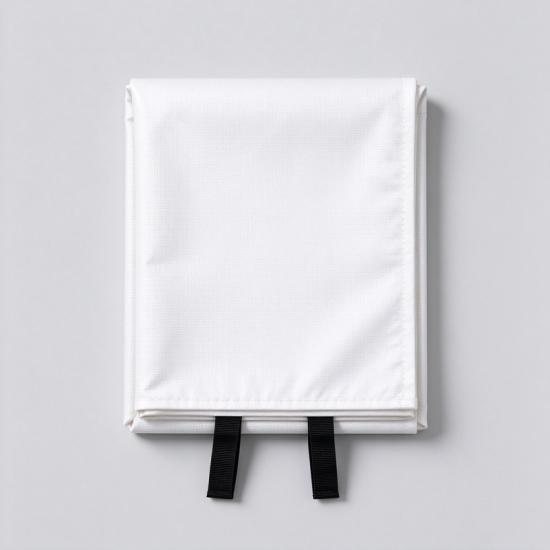
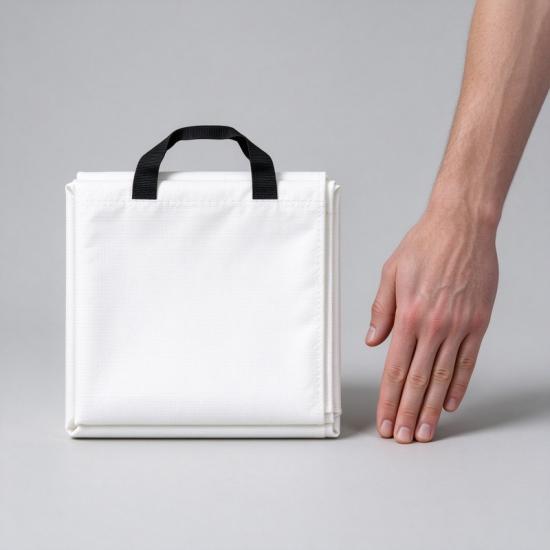
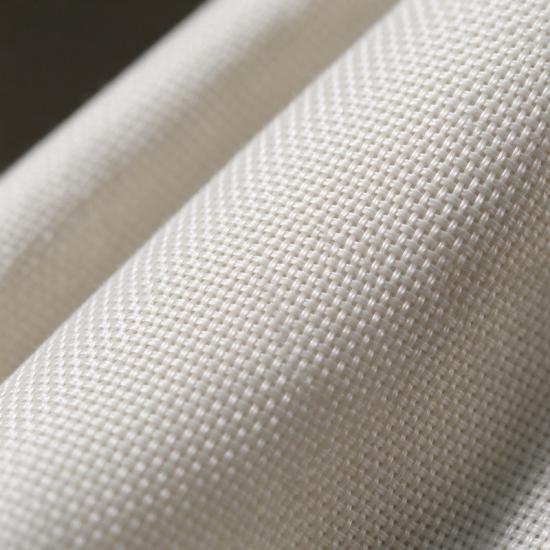
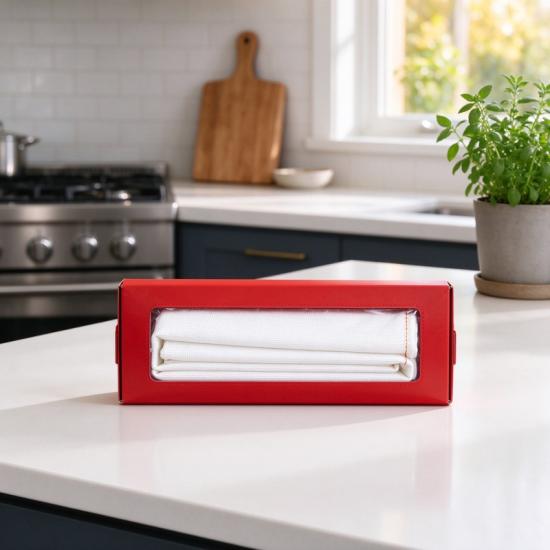
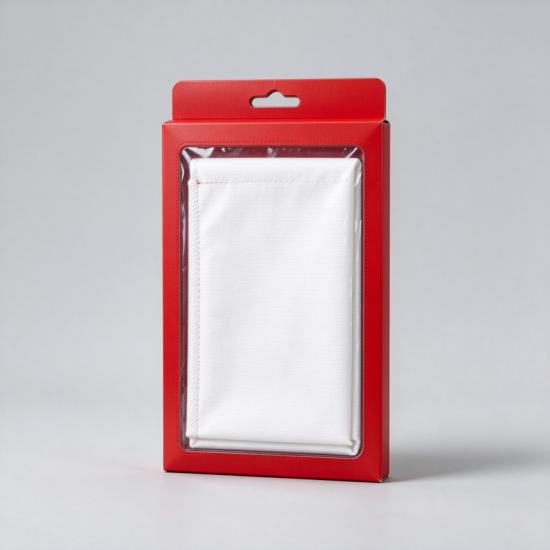

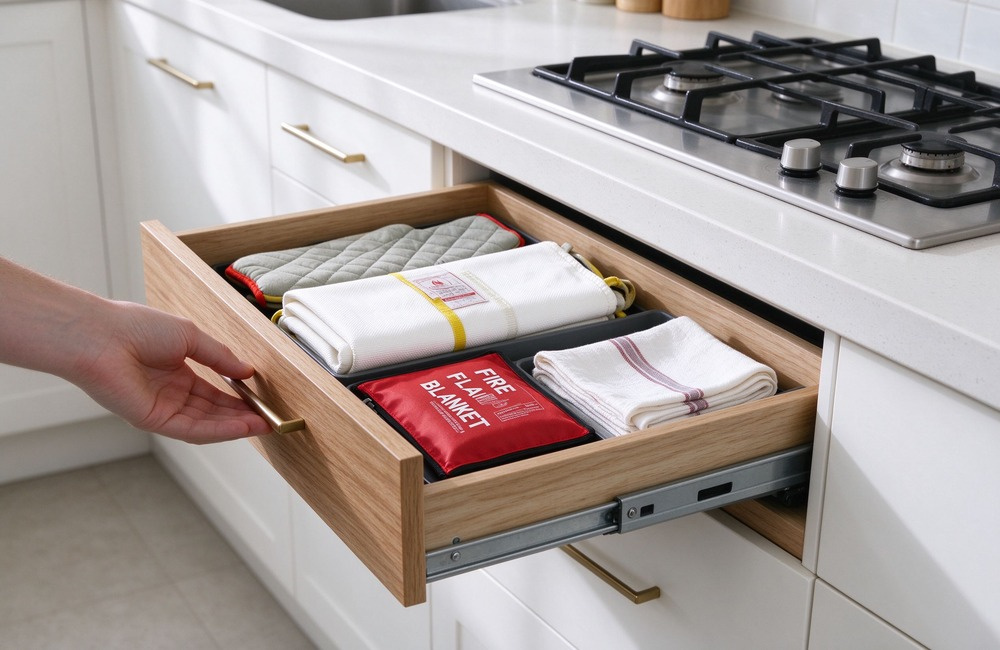
A fire blanket is a simple reusable tool that smothers early-stage fires by cutting off oxygen. Each blanket is woven from heat-resistant fiberglass or silicone-coated fabric, folded into a compact pouch and hung within arm's reach of a kitchen stove.
Note: Price for reference only. Exact price based on quantity, size, weight and custom details.
model no. :
SQ-04Brand:
YRFmarket price :
$3sale price :
$1.49price range :
30-100/$1.49 100-500/$1.39Color :
Multiple Colorport of dispatch :
Guangdong/GuangzhouPayment :
TT, Paypal, Western Unionmin order :
30original region :
Made in ChinaLead Time :
5-15daysSize :
1m x 1m/1.2m x 1.2m/1.5m x 1.5m/1.8m x 1.8m/2m x 2m |
 |

|
Product Overview
How It Works
Material Options
Size Guide
Design Features
Scenarios
vs Extinguisher
Certification
How to Use
Maintenance Packaging
Government Supply
Customization FAQ
A fire blanket needs no pressure, no cartridge and no annual recharge. It works the moment it touches the flame, which makes it suitable for elderly residents, school children and office staff who have never held a fire extinguisher.
There is no powder cleanup and no secondary pollution after use, which is why kitchens, classrooms and relief shelters keep one within arm reach at all times.
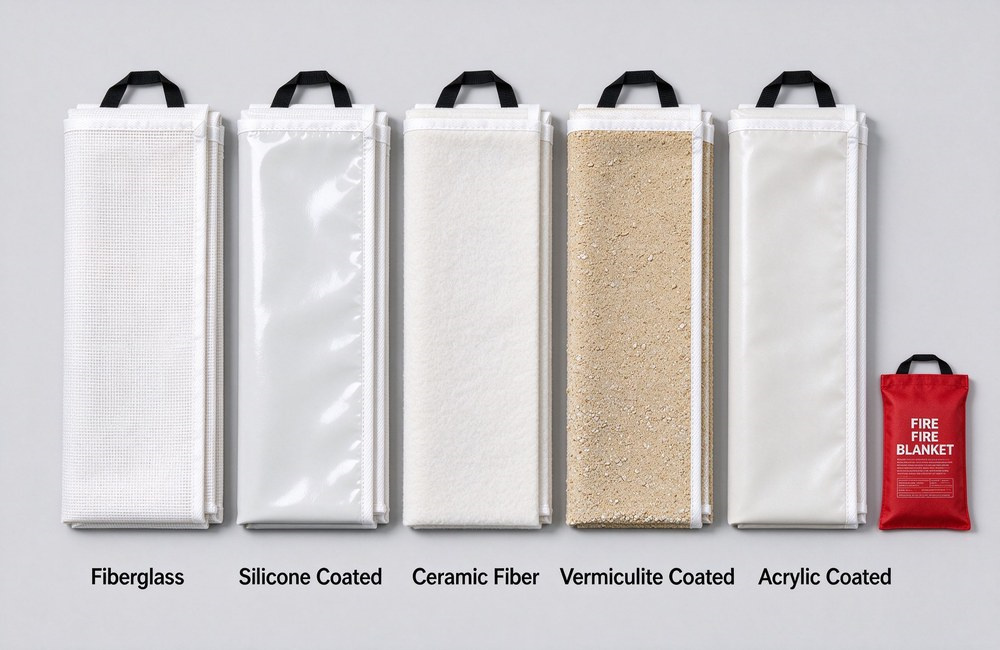
Choosing the right fire blanket material starts with your hottest expected fire. Plain fiberglass handles daily kitchen and office use at the lowest cost. Silicone coated steps up to 1000 C for oil and welding spots.
Ceramic fiber felt reaches 1260 C for foundry duty, vermiculite coating takes molten splash, and acrylic coating stays soft and economical for schools and display rooms.
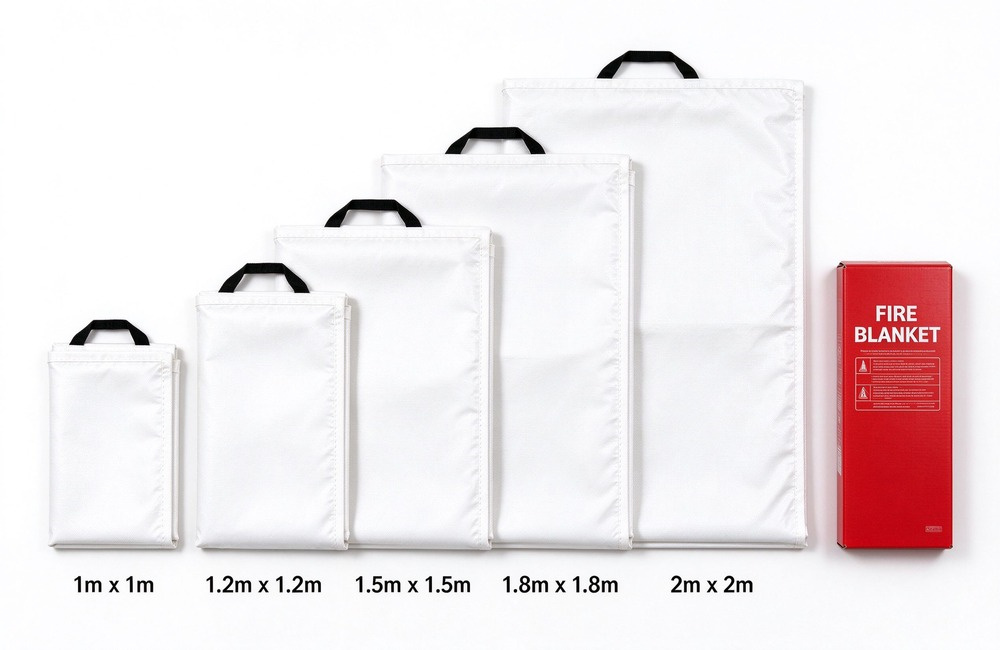
Once the material is decided, pick the fire blanket size that fully covers your likely fire source. A 1m square covers a single pan, while a 2m square wraps a workbench or a person on the floor. Match the blanket to the largest realistic flame, not the smallest unit you can hang on the wall.
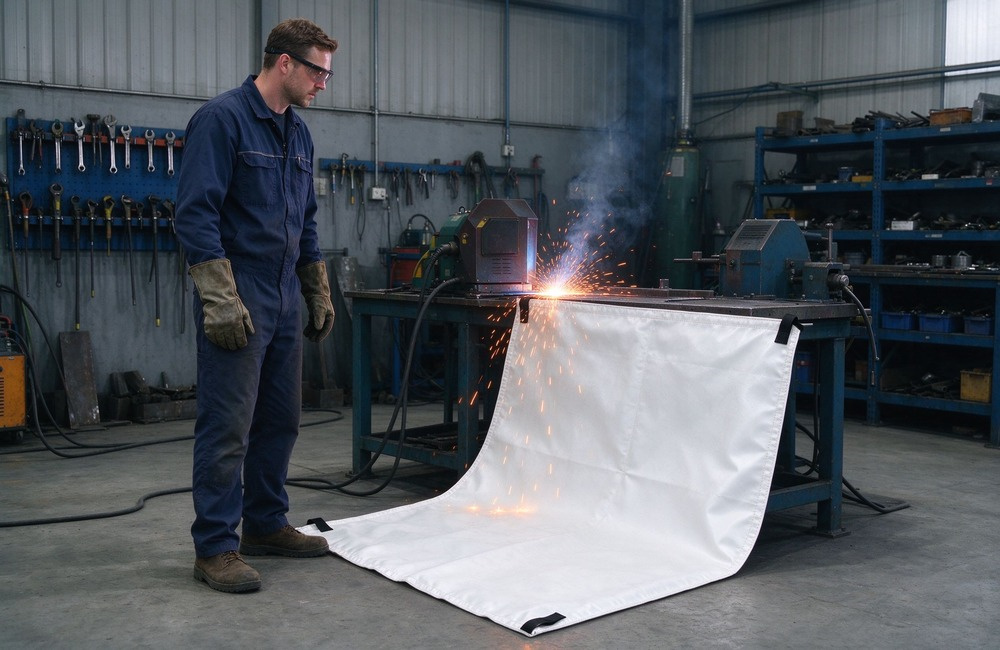
In workshops and fabrication bays, the blanket doubles as a spark curtain. Welding sparks and grinding showers land on the silicone coated surface instead of on the concrete or a flammable box below. This daily protection role is why many factories order the higher temperature coated line alongside their kitchen units.
The pouch color is your first branding touch. Red is the universal fire-safety signal, blue and yellow help code rooms by risk level, and black stays discreet in a server room or vehicle bay. Each pouch opens with a pull tab and prints usage steps in English on the front.
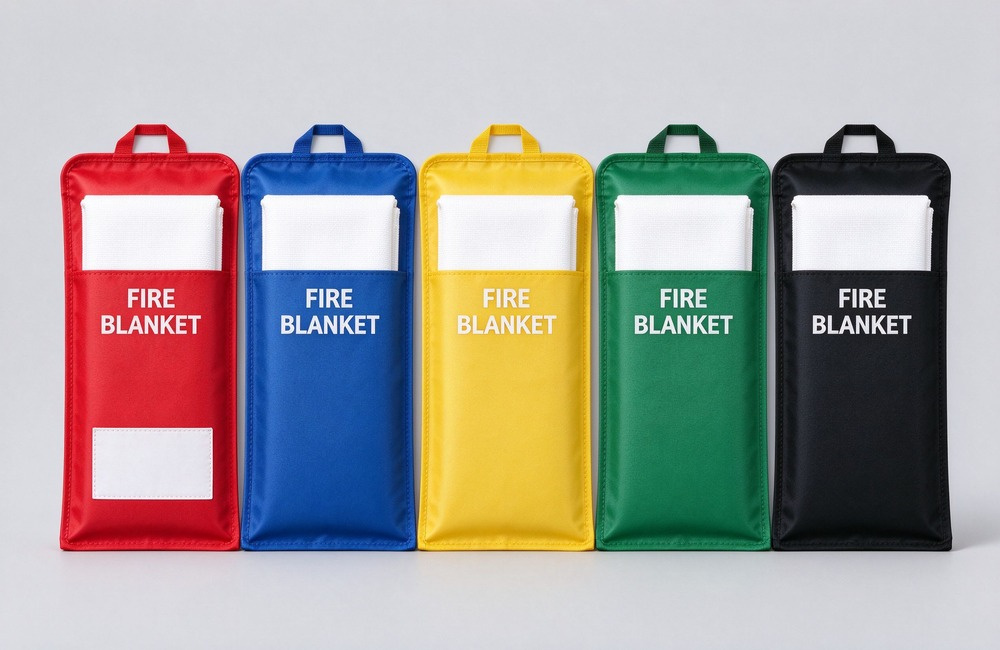
A complete fire suppression blanket program covers six product families, from a basic kitchen pouch to an export-rated silicone coated sheet. Each family shares the same core idea: a woven heat-resistant fabric that you unfold, drape over a fire, and leave in place until the flame dies.
The standard fiberglass fire blanket is the everyday workhorse for homes, offices and schools. The silicone coated line adds a smooth, liquid-resistant surface for workshops and vehicle bays. The export line is tested to EN 1869 and ships in four-color soft pouches or rigid display boxes.
For buyers who need one SKU that covers most rooms, the 1.5m fiberglass pouch in red is the default. For buyers who manage mixed facilities, mixing sizes by risk level gives better coverage than a one-size-fits-all order.
Table T1: Fire Blanket Product Lineup
|
Series |
Base Material |
Standard |
Size Range |
Packaging |
|
Fiberglass basic |
Fine alkali-free fiberglass |
XF1205 |
1m to 2m |
Red pouch / box |
|
Multi-pack |
Fine fiberglass |
XF1205 |
1m to 2m |
Red / orange / black / green box |
|
Silicone coated |
Fiberglass + ceramic silicone rubber |
SGS V-0 |
1m / 1.2m / 1.5m |
Yellow / white / green pouch |
|
Liquid glue coated |
Fine fiberglass + nano coating |
SGS |
1m / 1.5m |
Yellow pouch |
|
Nano enhanced |
Treated fine fiberglass |
XF1205 |
1m / 1.5m |
Soft pouch |
|
Export series |
Fine fiberglass |
EN 1869:2019 |
Full 1m to 2m |
Blue / yellow / red / green bag |
Most buyers start with the fiberglass basic line for everyday kitchens and public areas, then step up to the silicone coated line where oil, grease or welding sparks are present. The export series is the default for overseas orders that require an EN 1869 test report.
Once you know your main fire risk, the model choice narrows quickly: if you only cover stoves, stay with 1m or 1.2m fiberglass; if you also cover workshops, add a 1.5m silicone coated sheet.
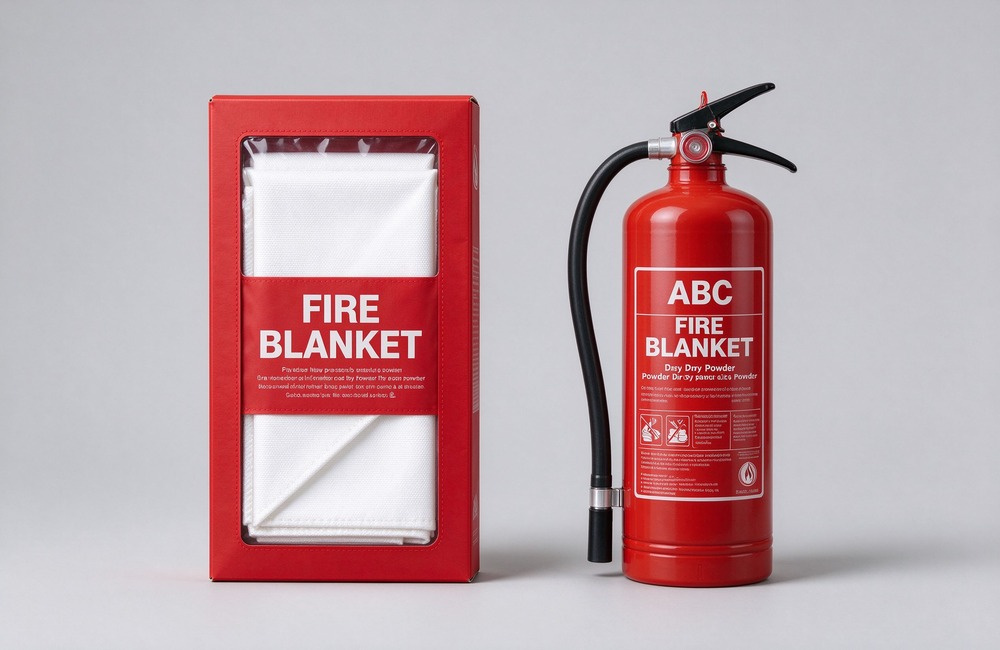
Most small fires start where people are cooking, charging devices or using power tools, not at a municipal fire station. A kitchen fire blanket sits inches from the pan where a flame can grow in seconds, while a fire extinguisher may be locked in a cabinet down the hall. That gap between ignition and response is what the blanket closes.
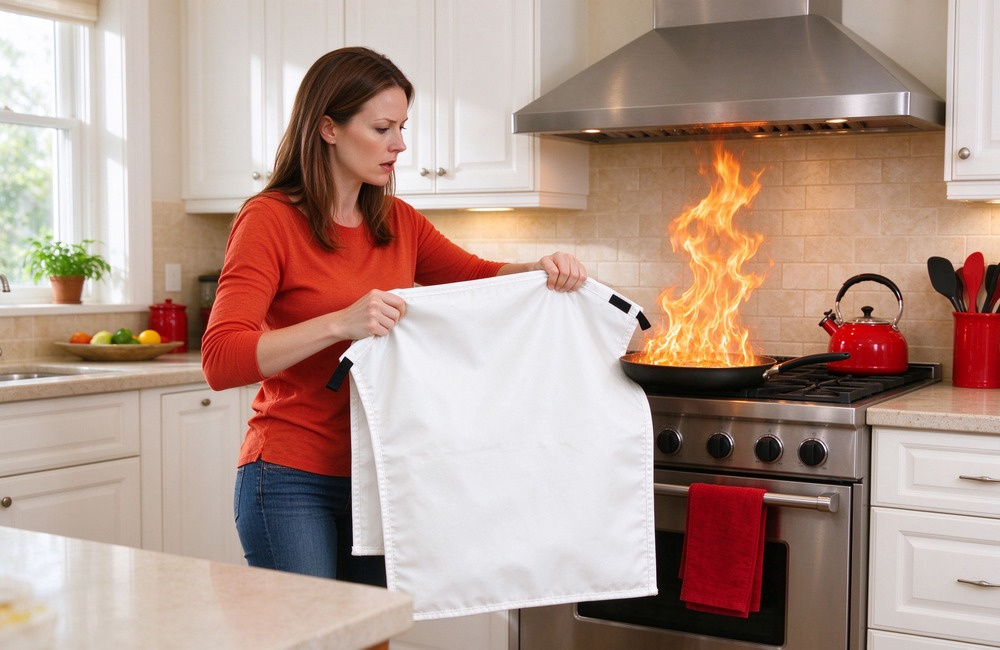
The blanket needs no pressure, no cartridge and no annual recharge. It works the moment it touches the flame. For schools, hotels and care homes where untrained staff may face a first fire, this simplicity is the whole point: a person who panics can still pull two tabs and cover a pan.
It also leaves the fire source intact once it cools, which makes the after-incident investigation cleaner and reduces business interruption.
A modern emergency fire blanket also avoids the messy cleanup of a discharged extinguisher. There is no powder cleanup, no pressure jet that spreads burning oil, and no slippery residue on the floor. It leaves the fire source intact once it cools, which makes the after-incident investigation cleaner and reduces downtime for the business.
For a small restaurant or office, that means the room can be back in service the same day instead of waiting for a cleanup crew.
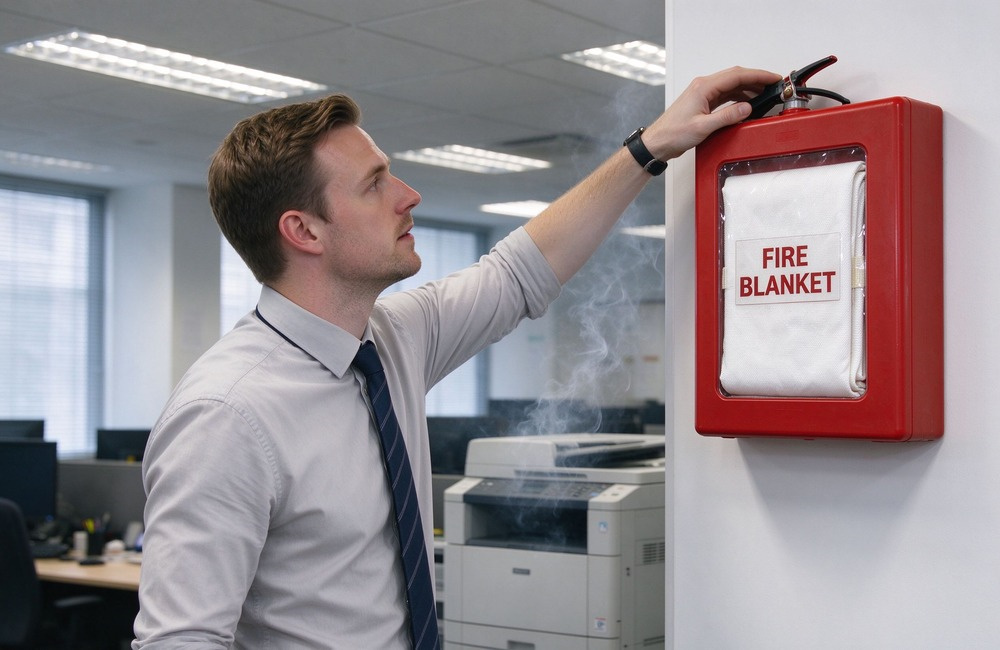
A fire blanket smothering action relies on one physical fact: fire needs oxygen to keep burning. When you drape the blanket fully over a burning pan or equipment, the fabric seals the flame away from fresh air. Within seconds the remaining oxygen under the sheet is consumed and the flame goes out without you spraying anything.
The woven fiberglass or silicone coated fabric also blocks radiant heat. That lets you hold the edges as a shield between your hands and the flame while you lower the sheet into place. The fabric itself does not burn because the glass fiber and coating are rated well above the temperature of a typical kitchen grease fire.
Oxygen depletion is why the blanket must fully cover the fire, not just touch it. A corner draped over a flaming pan leaves a gap where air keeps feeding the flame.
Trainees are taught to open the sheet wide, start at the far edge of the pan and lay it toward themselves, so their hands stay on the dry side.
The fabric also works on irregularly shaped fires, because it is flexible and drapes over a burning laptop, a gas cylinder valve or a pile of paper without needing to fit a fixed nozzle.
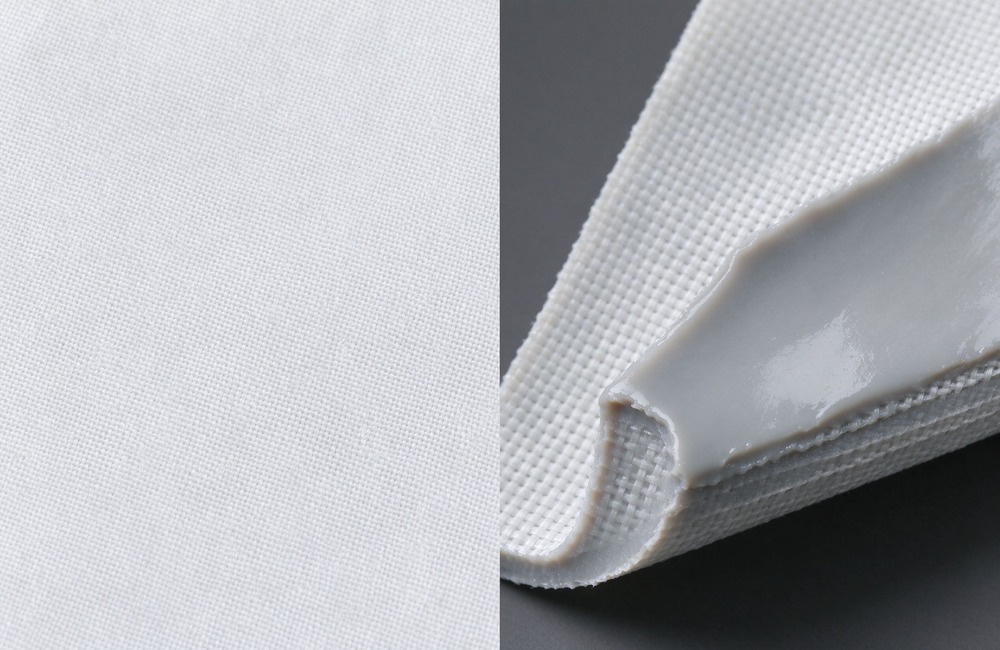
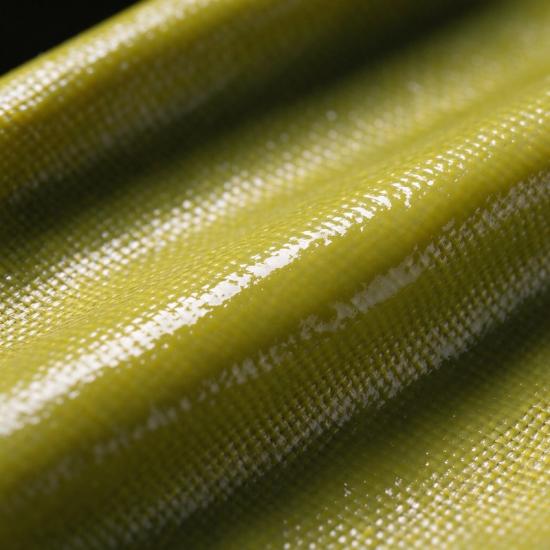
The fabric you choose decides how hot the blanket can get, how clean it stays and what it costs. A basic fiberglass fire blanket is woven from fine alkali-free glass yarn into a satin or twill weave, then heat-set. It handles short exposure around 550 C and weighs very little folded.
The fire blanket temperature rating is the first number buyers check.
A silicone coated fire blanket adds a ceramic silicone rubber layer on the fiberglass cloth. The coating stops loose fibers from rubbing off, repels oil and water, and pushes the short-term heat rating to about 1000 C. It passes vertical burning tests at V-0 level, the highest self-extinguishing class.
For heavier industrial duty, a ceramic fiber fire blanket is the densest, highest temperature option, rated up to 1260 C. It feels like a tight, smooth pressed felt rather than a woven cloth. Vermiculite coated and acrylic coated sheets sit in between, trading heat resistance for flexibility and cost.
In practice, vermiculite sheets sit beside foundry and pouring stations, acrylic coated blankets hang in hotel and school corridors where soft touch matters more than extreme heat.
Table T2: Material Comparison
|
Material |
Short-term Heat |
Surface Feel |
Best Use |
|
Fiberglass plain |
~550 C |
Open woven mesh |
Kitchen, home, office |
|
Silicone coated |
~1000 C |
Smooth, liquid repellent |
Workshop, vehicle, garage |
|
Ceramic fiber |
Up to 1260 C |
Dense smooth felt |
Industrial, welding |
|
Vermiculite coated |
~1000 C |
Rough sandy |
Foundry, molten splash |
|
Acrylic coated |
~550 C |
Soft matte |
School, hotel, display |
For a standard kitchen or classroom install, plain fiberglass is the right balance of cost and performance. Step up to silicone coated where oil, solvents or hot metal are routine. Reserve ceramic fiber and vermiculite sheets for industrial lines, and treat them as specialty items quoted to your heat load.
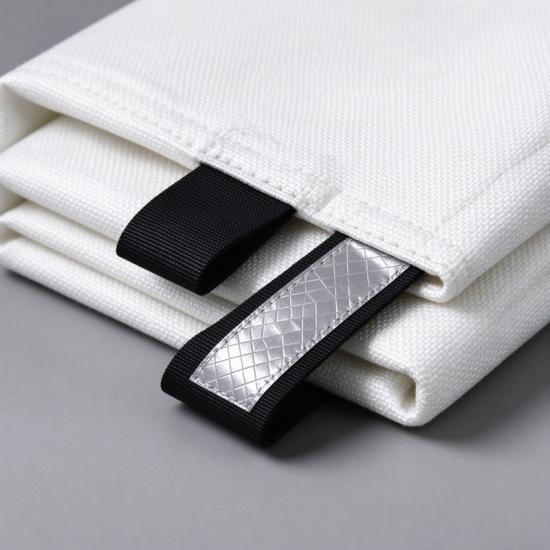
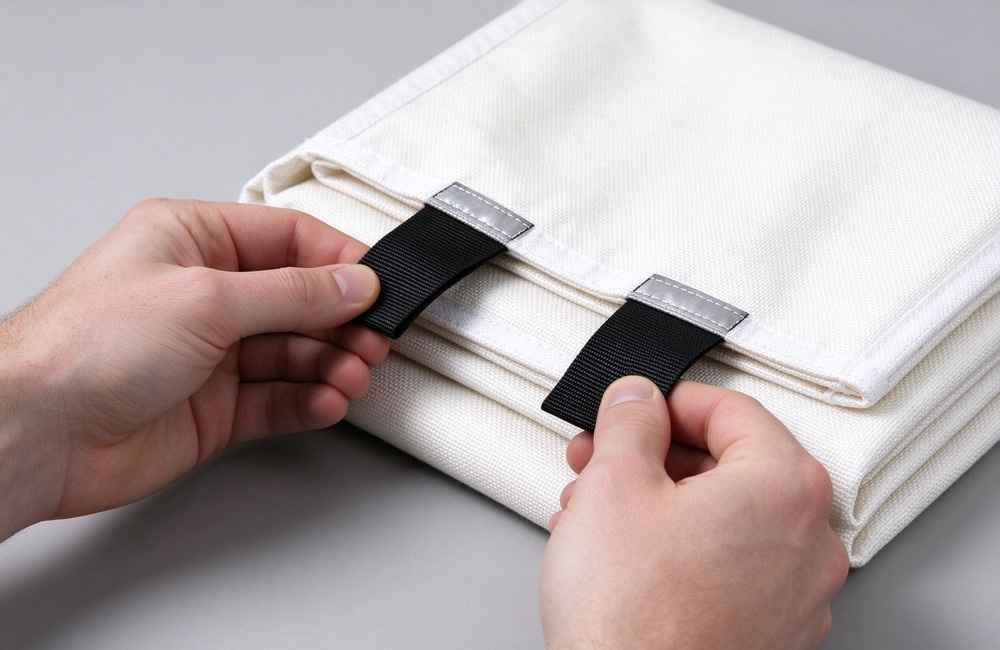
Pull-tab design decides how fast the blanket opens in a real panic. We double-stitch each tab into a reinforced corner so the blanket sheds open with one firm pull, even when the user wears thick gloves. Schools and offices often test this step in drills, and a tab that rips off during a drill means the whole pack gets rejected.
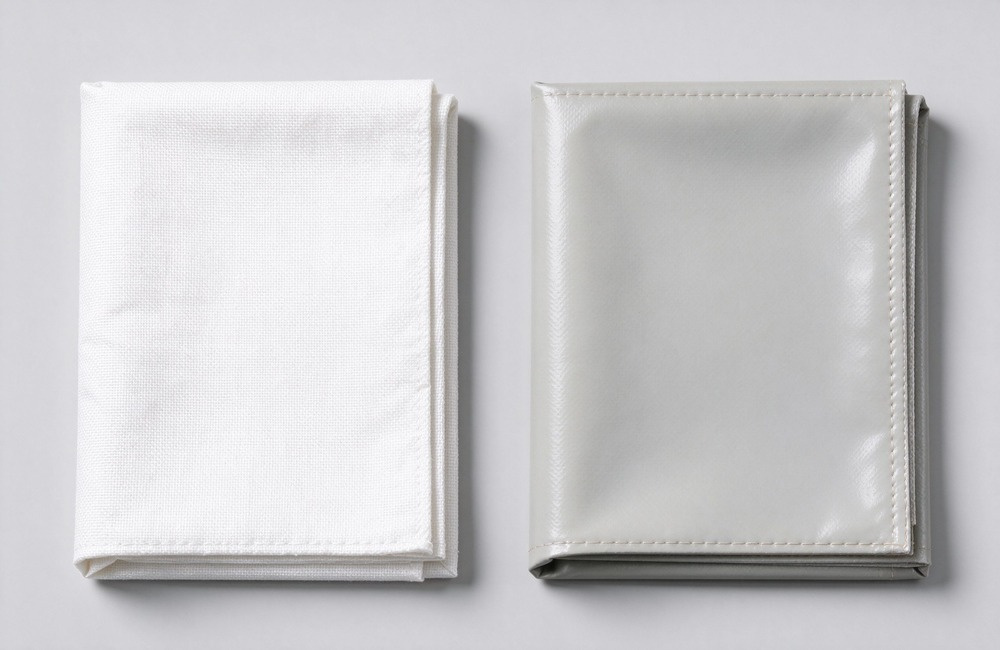
The pull tab is the one part your user touches first, so it must open cleanly every time. Below, the material surface itself shows the difference between treated and untreated fabric.
Pick a blanket that fully covers the likely fire source, with a margin to drape down the sides. A fire blanket size that is too small leaves a corner exposed; one that is too large is awkward to unfold one-handed in a panic.
Folded, a 1m pouch is about the size of a paperback book and slips into a drawer or a wall bracket. Folded, a 2m square packs into a larger box that takes up more wall space, so reserve that size for workshops where the extra coverage matters.
The smallest 1m x 1m pouch fits a kitchen stove or a small office wastebasket. A 1.2m x 1.2m sheet covers a standard frying pan plus the surrounding cooktop. A 1.5m x 1.5m blanket is the most popular all-round size for schools, hotels and small workshops.
The 1.8m and 2m squares cover a car engine bay, a workbench fire or a person wrapped on the floor.
Table T3: Size Selection by Scenario
|
Blanket Size |
Coverage Area |
Typical Scenario |
|
1m x 1m |
~1.0 m2 |
Home kitchen, small office drawer |
|
1.2m x 1.2m |
~1.4 m2 |
Standard stove pan fire |
|
1.5m x 1.5m |
~2.3 m2 |
School lab, hotel kitchen, workshop bench |
|
1.8m x 1.8m |
~3.2 m2 |
Garage, vehicle bay, larger equipment |
|
2m x 2m |
~4.0 m2 |
Industrial station, person roll protection |
Because one size does not cover every room, most facilities order a mix: 1m or 1.2m pouches for each kitchenette, 1.5m sheets for training rooms and workshops, and one 2m sheet near the main vehicle or chemical storage.
This matches each blanket to the fire it is most likely to meet, instead of buying one size for every room and leaving the large fires under-covered.
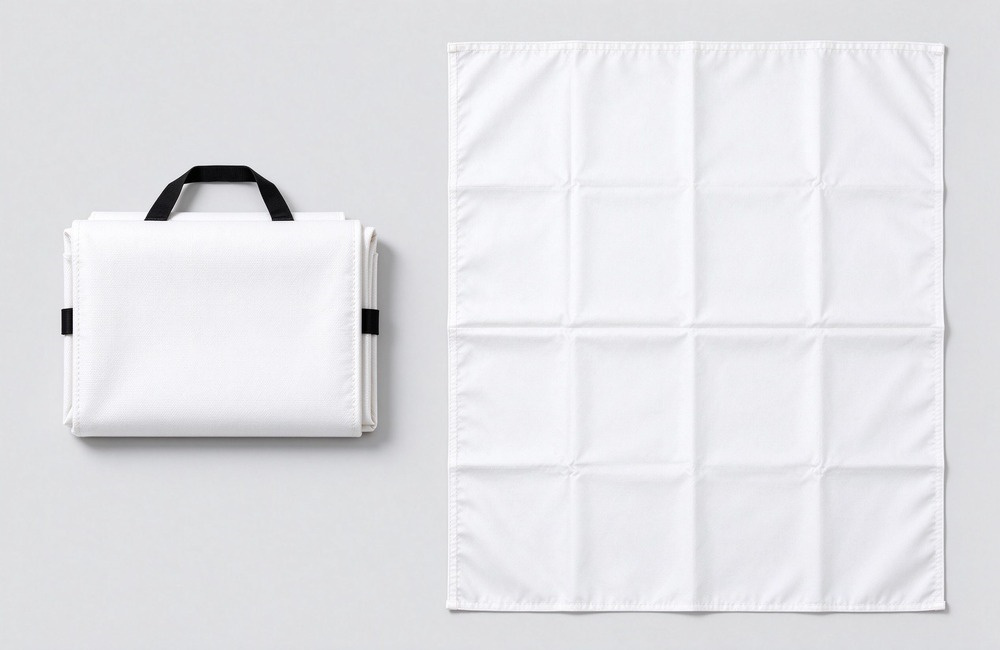
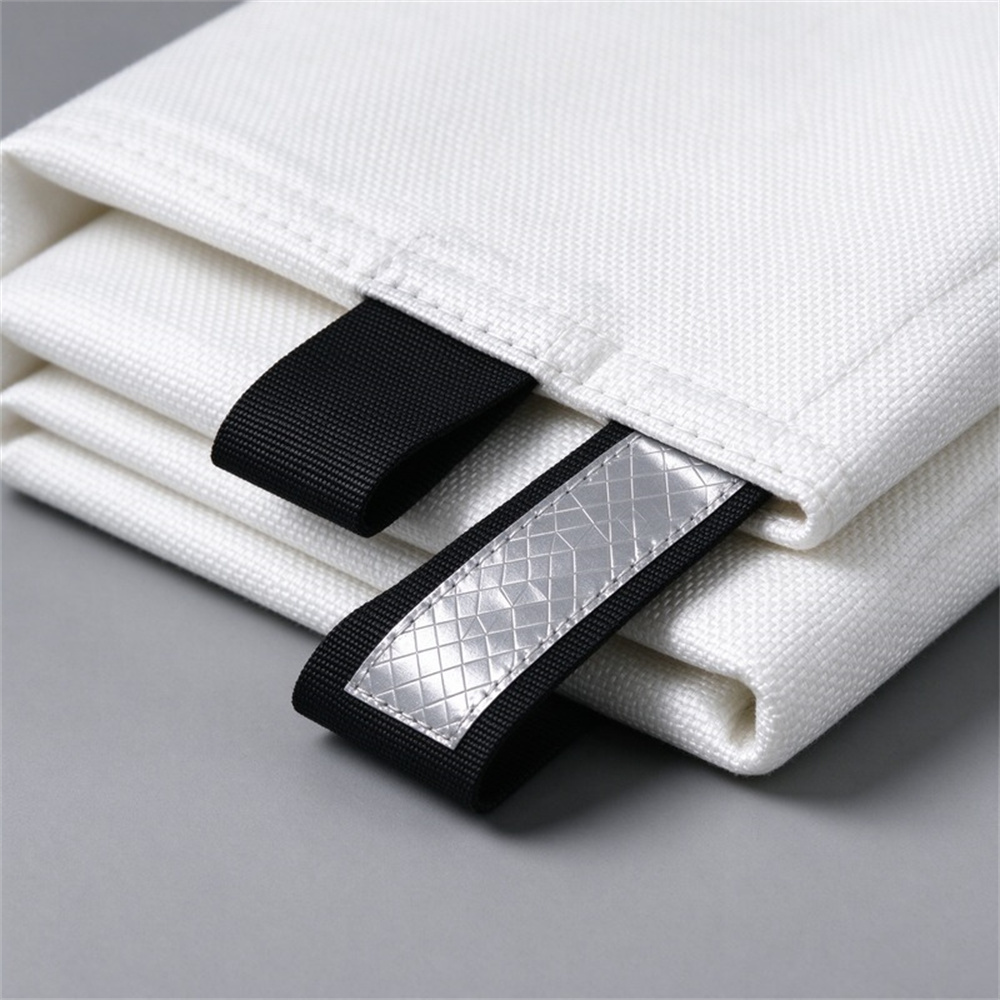
Every useful fire blanket pull tab is stitched through the folded corner of the sheet, not glued. In an emergency you grab the two black tabs and pull outward, which opens the folded blanket in one motion. Cheap copies sew the tabs to the pouch only, so you pull the cover off and leave the blanket folded inside.
The fire blanket edge stitching is a white stitched hem that runs all four sides. It prevents the fiberglass yarn from fraying after repeated unfolding and folding. The stitching uses heat-resistant thread, and the folded corner carries a small hang loop so the pouch sits flat on a wall hook.
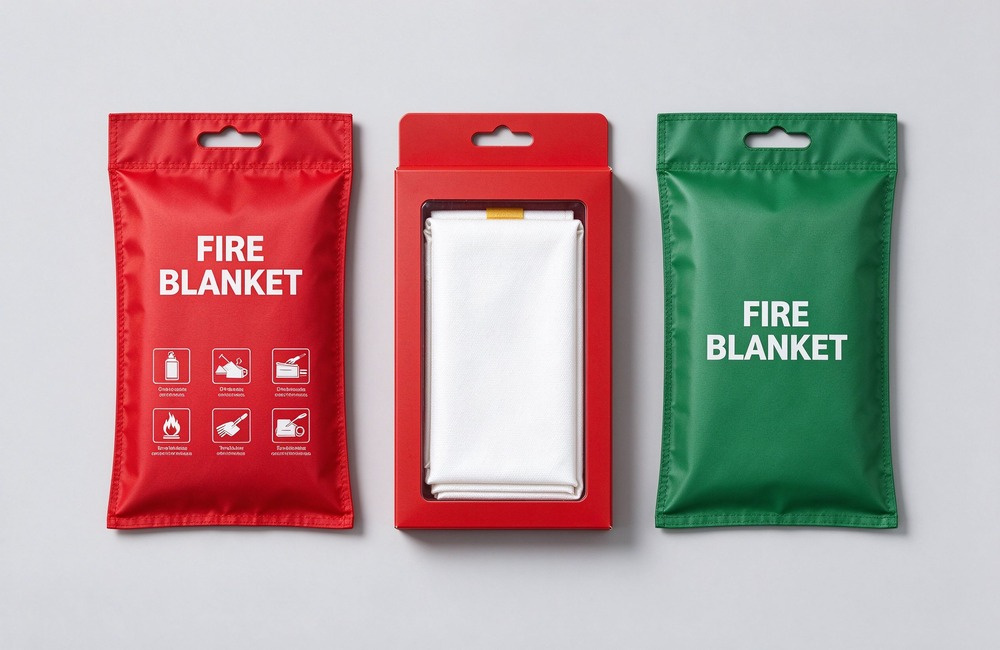
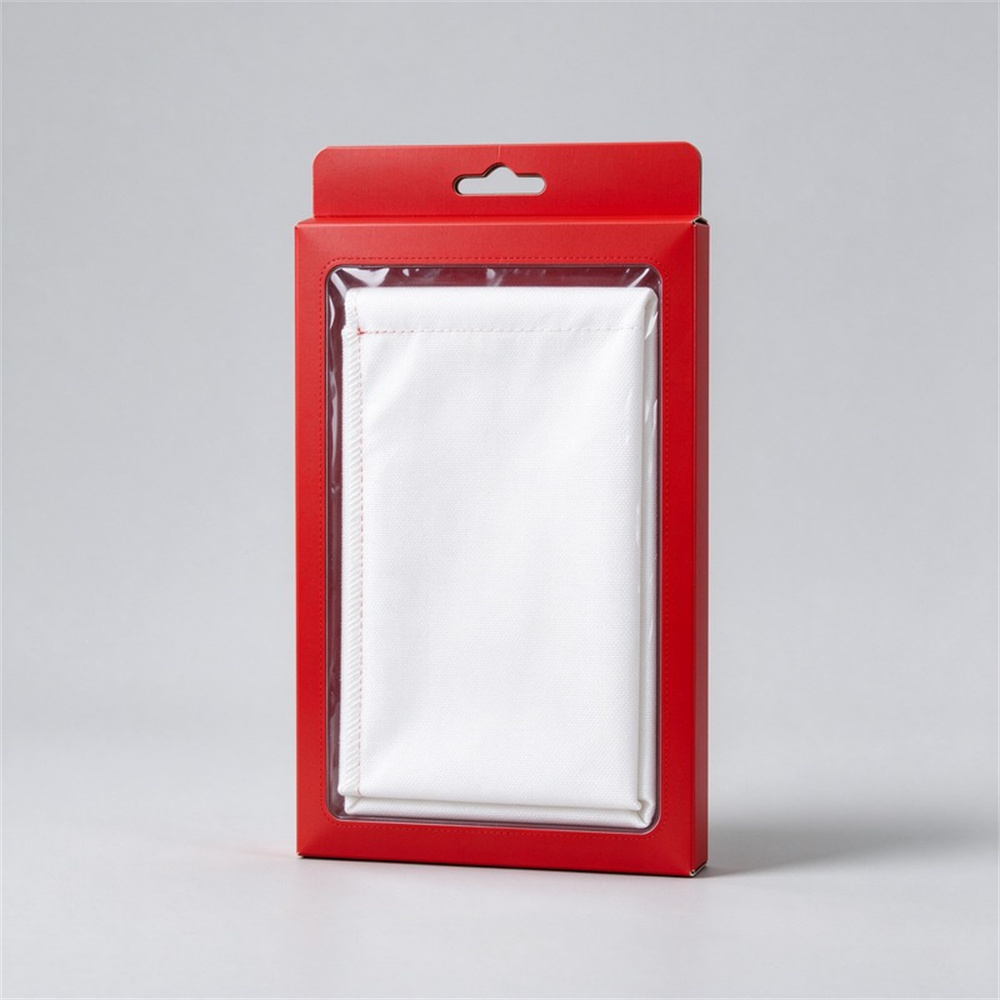
Packaging choices match where the blanket lives. A soft fabric pouch hangs on a wall hook and opens with a tear strip. A rigid cardboard box sits on a shelf or inside a cabinet and shows the usage diagram on the front.
The fire blanket packaging always prints usage steps in English, never in characters that an overseas user cannot read. Some pouches add a reflective strip across the pocket opening, so the pouch is visible in a smoke-filled corridor during a power cut.
The hang loop at the top of the box is sized to fit a standard J-hook, so the unit does not need a custom bracket.
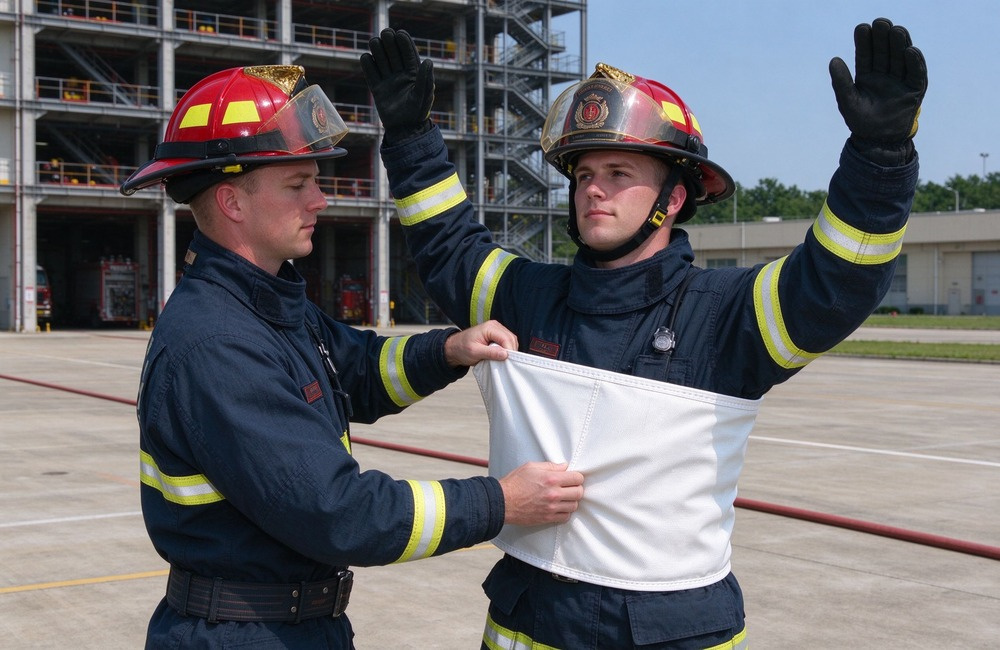
Fire blankets are one layer of everyday PPE; pair them with Nomex IIIA turnout gear for industrial sites, a structural fire helmet for workshop crews, and a positive pressure SCBA for confined-space response.
The kitchen is the number one install point. A pan of overheated oil can reach ignition in under a minute on a modern gas or induction hob. A kitchen fire blanket mounted on the wall beside the stove beats reaching for the sink, because water on burning oil splashes the fire everywhere.
In offices, printers, server cabinets and chargers can smolder before they flame. A wall-mounted pouch near the shared kitchenette and one by the print room covers the two most likely ignition points. In cars, a folded pouch in the boot handles an engine bay smoke that has not yet reached the fuel line.
In schools and hotels, one pouch per classroom or guest floor covers the small cooking and electrical fires that start before the fire brigade arrives. In warehouses and distribution centers, larger silicone coated sheets near packing stations and forklift charging bays cover the battery and packaging fires that can break out during a shift.
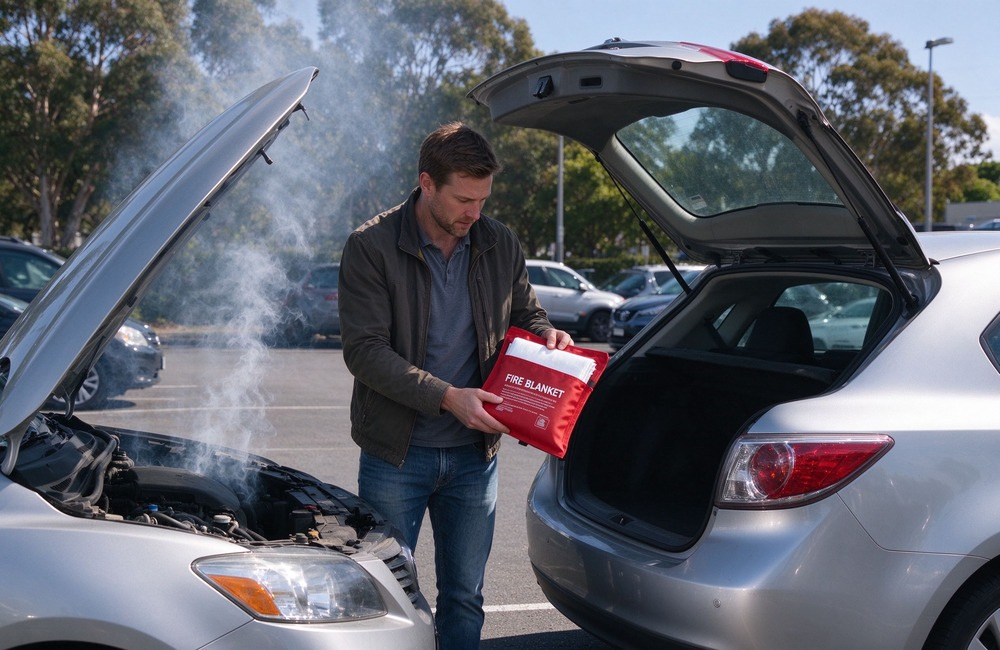
Car owners usually keep one small pouch in the trunk for engine bay spills. A blanket beats a small extinguisher here because it leaves no chemical residue on the engine, and the driver can wrap the same blanket around burning clothing in seconds. It costs less than a service call and never needs inspection paperwork.
Beyond private cars, the same logic extends to schools, where the blanket becomes part of a standing fire drill routine.
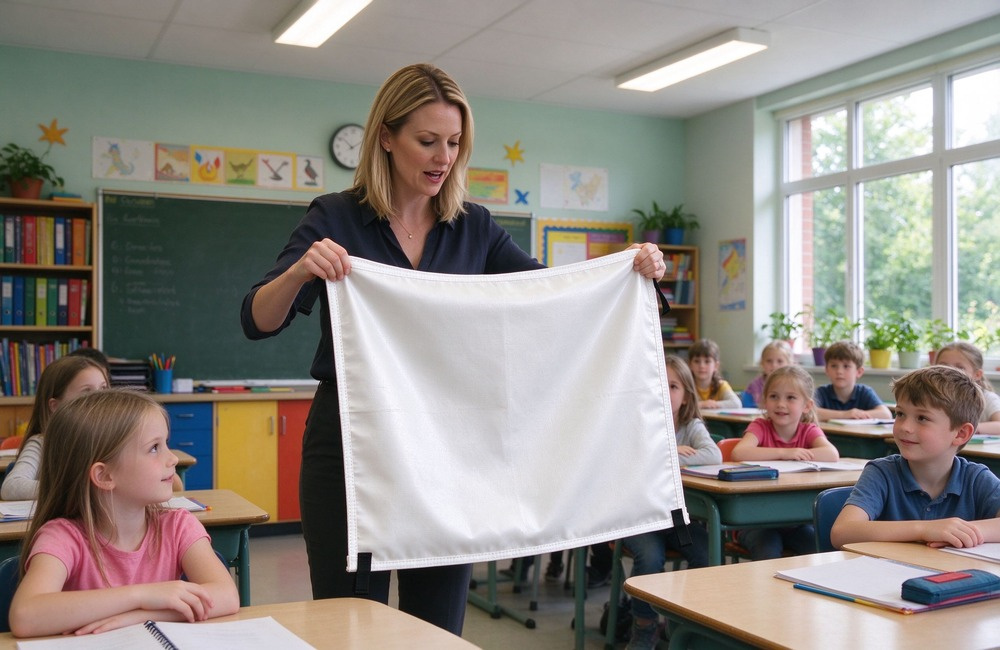
Schools run this drill every term, so the pouch has to live somewhere obvious. Teachers pick the wall hook by the classroom door rather than a locked cabinet, because a blanket nobody can reach in ten seconds might as well stay in the storage room. Staff training takes one morning and covers pull, cover and hold.
Hotels apply the same drill on each guest floor, so staff can react before the brigade arrives.
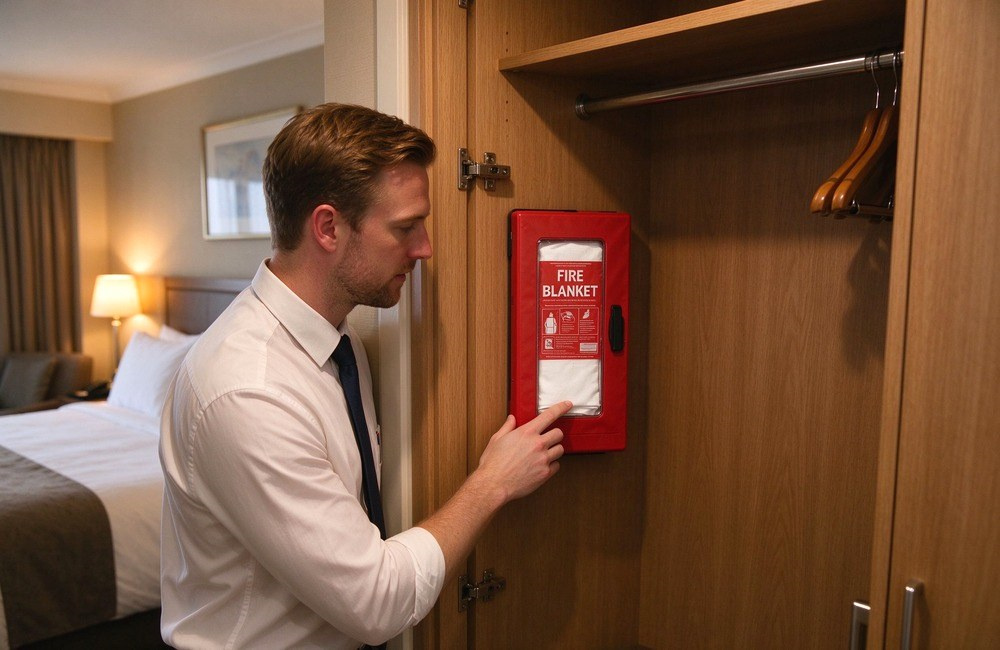
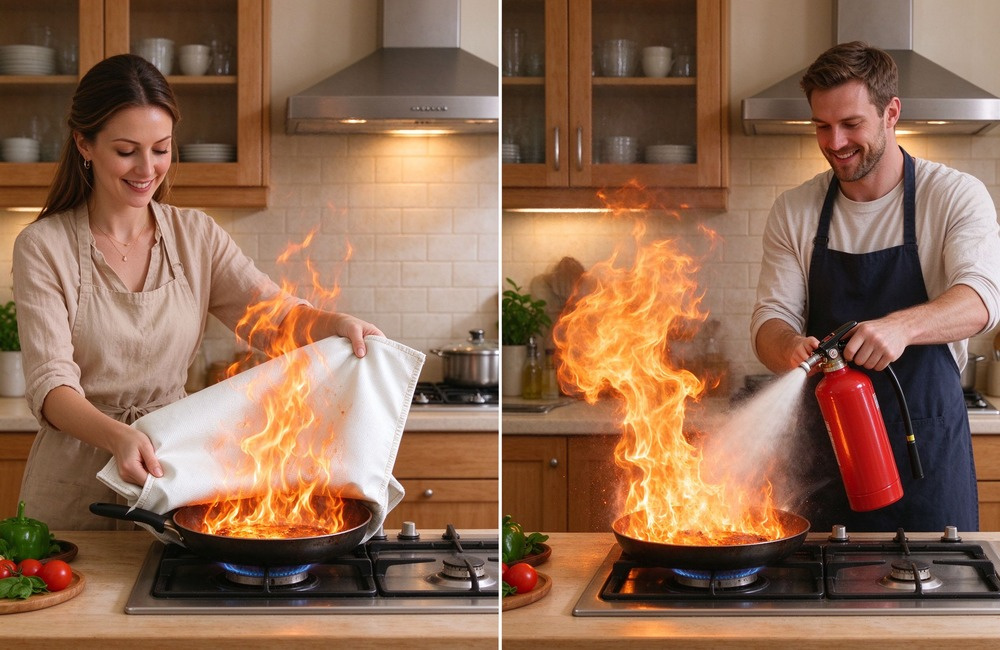
A fire blanket vs extinguisher choice comes down to fire size and class. A blanket wins on small, contained fires where you can reach the source: a pan, a laptop, a smoldering cushion or a person whose sleeve caught fire. It needs no training beyond pull, open, cover.
An extinguisher wins once the flame has left the pan, climbed the curtains or spread across a bench. It delivers a directed jet from a safer distance. The blanket also works on fires where water would be wrong, such as hot oil or live electrical equipment, because the sheet smothers without adding anything to the pan.
An extinguisher wins once the flame has left the pan, climbed the curtains or spread across a bench. It delivers a directed jet from a safer distance.
Best practice in any commercial kitchen is to mount both: the blanket within arm reach of the stove and the extinguisher at the exit, so the staff member chooses based on what the fire is doing right now.
Table T4: Fire Blanket vs Fire Extinguisher
|
Dimension |
Fire Blanket |
Fire Extinguisher |
|
Best fire size |
Small, contained |
Medium to spreading |
|
Deployment time |
Under 4 seconds |
Pull pin, aim, squeeze |
|
Cleanup after use |
Minimal, fold and inspect |
Powder or foam residue |
|
Recharge |
Inspect and reuse if intact |
Must be recharged by service |
|
Electrical safety |
Insulating fabric, 120MΩ |
Depends on extinguisher type |
A blanket never replaces an extinguisher, and an extinguisher never gives you the clean, close-in control that a draped sheet offers on a pan fire. Pairing them at the same wall station is the standard layout for commercial kitchens and workshops worldwide.
Reference standards: NFPA fire protection standards; USFA kitchen fire prevention; NIST heat & materials testing.
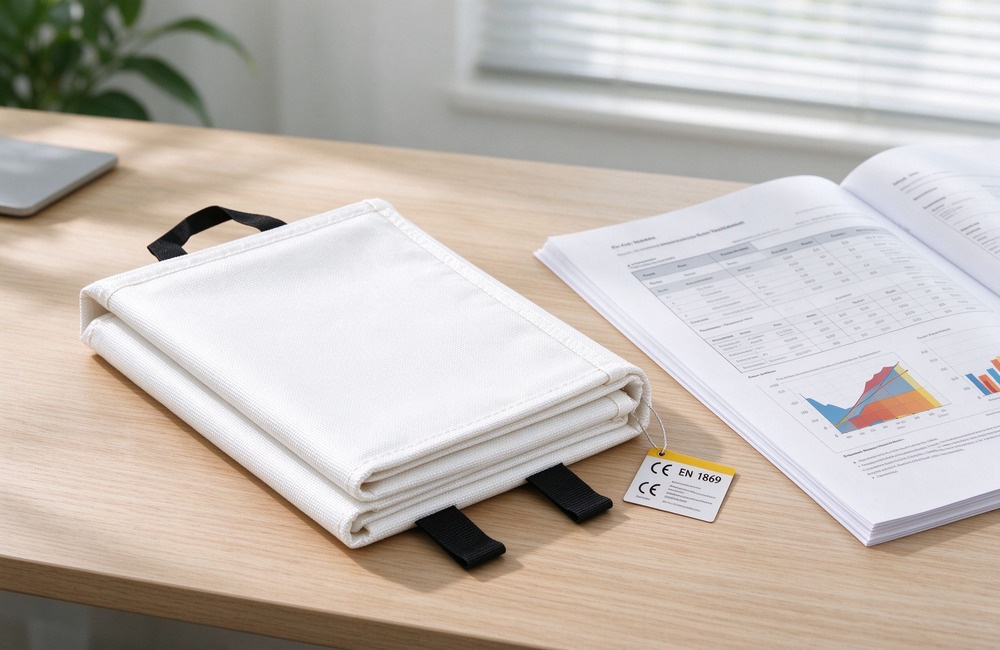
A fire blanket certification is a third-party test record, not a logo you print on a pouch. Our export line is tested to EN 1869:2019, the European standard for fire blankets intended for household and commercial use.
The test checks that the fabric survives a controlled flame exposure, that the pull tabs open in under four seconds, and that the blanket covers a standard fire tray without re-ignition.
The standard also requires the blanket to remain intact after the fire is removed, so it does not crack and release burning fragments onto the tray.
The domestic line is tested to XF1205, the Chinese fire blanket standard administered through the national fire research institute. Silicone coated and liquid glue coated lines carry SGS vertical burn reports at V-0 rating.
We say tested to rather than certified because full notified-body certification involves ongoing factory audit, and we supply the actual test sheet so you can check each number yourself. This transparency helps procurement teams avoid ambiguity in tender evaluation.
Table T5: Test Standard Parameters
|
Standard |
Region |
Scope |
Key Checks |
|
EN 1869:2019 |
Europe / export |
Household and commercial blankets |
Flame exposure, deploy time, coverage |
|
XF1205 |
China |
Domestic fire blankets |
Heat resistance, pull tab, insulation |
|
SGS V-0 |
Third party |
Silicone / liquid glue coated |
Vertical burning, self-extinguishing |
|
Insulation test |
Internal lab |
All series |
≥120 MΩ dielectric resistance |
When a tender asks for documentation, we send the EN 1869 or XF1205 test sheet, the SGS burn report and the insulation reading together. This lets procurement staff cross-check the numbers on the spec sheet against the lab report, rather than relying on a stamp.
A fire blanket deployment drill takes about thirty seconds to teach. This fire blanket use guide covers the three core motions. Step one: pull the two black tabs straight out of the pouch. The blanket unfolds automatically as your arms spread.
Step two: hold the sheet in front of you like a shield, keeping your hands behind the fabric so the edge protects your wrists. Grip the lower corners, not the center, so the sheet stays open and does not bunch in your fist.
Step three: drape the sheet fully over the fire, starting at the far edge and pulling it toward yourself. Leave it in place. Do not lift it to check, because fresh oxygen can reignite the hot oil.
For a person whose clothing is on fire, wrap the blanket around them, have them drop to the ground and roll gently, then call emergency services.
After the event, leave the blanket on the cold source until everything is fully cool. Wear gloves to lift it. Inspect the fabric for holes, brittle spots or char. If the cloth is intact, fold it back into the pouch and mark it as used but serviceable.
If it has burned through, retire it and install a fresh unit. Record the deployment in your facility fire log, including date, time, what burned, and whether the blanket stopped the fire or just slowed it until the brigade arrived.
A fire blanket shelf life is long as long as the pouch stays dry, sealed and out of direct sunlight. Heat, UV light and damp degrade the fiberglass sizing and the stitching over years. A cool, indoor wall mount at arm height is the best storage position.
Every six months, do a visual fire blanket inspection: check the pouch for tears, confirm the pull tabs are stitched on, and pull a sample unit once to verify it unfolds freely. Write the date and your initials on the pouch tag.
If the fabric feels brittle, crumbly or shows white dust on the inside of the pouch, replace the unit.
Store the blanket where people can see it, not behind a cabinet door. The fire blanket insulation reading of at least 120 megaohms stays stable as long as the cloth is clean and dry. Do not wash the blanket in a machine, because the agitating cycle loosens the weave.
If it gets dirty, wipe the surface with a damp cloth and let it air dry before refolding. During inspection, run your hand over the coated side to feel for lifting coating, cracked areas or thin spots where the weave shows through.
When the blanket reaches its service life, fold it, mark it retired, and dispose of it with general industrial waste. Do not burn the retired blanket on site, because fiberglass fumes irritate the lungs.
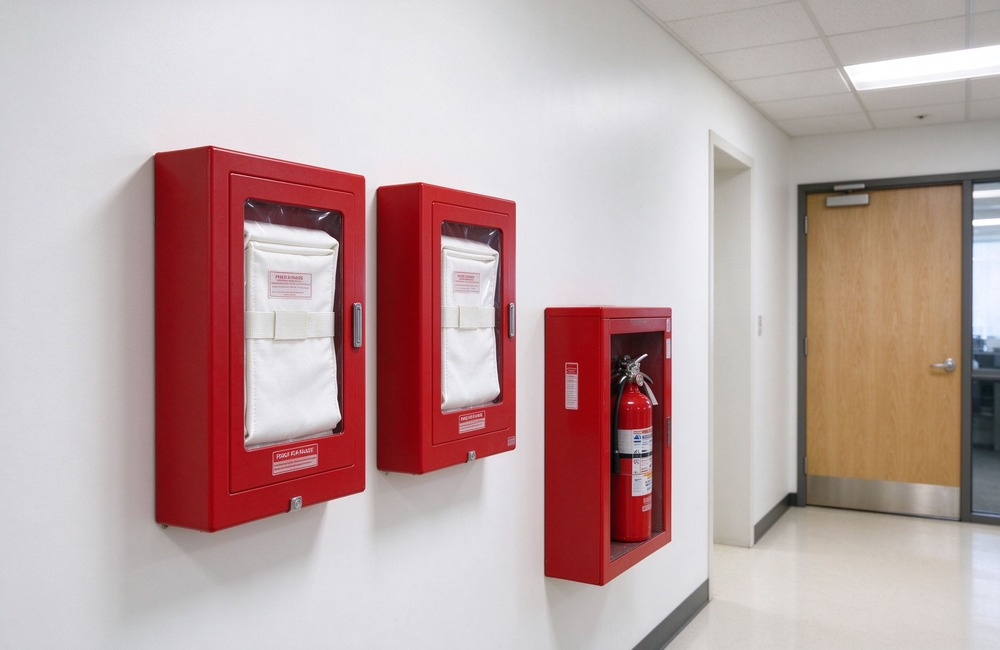
Each blanket folds into its own soft pouch or rigid box, then slips into a clear polybag. We stack the units into a double-wall export carton marked with size, series, quantity and gross weight, so receiving staff can count the carton against the packing list without opening every bag.
We can also consolidate mixed series into one container: red 1m kitchen pouches, silicone 1.5m workshop sheets and custom-printed hotel boxes all ship together on the same pallet, which saves freight versus ordering each line separately.
The fire blanket packaging is printed in English: usage steps, size, standard and a small blank label for your own stock code. We do not print characters on the outer pouch that an end user in an overseas market cannot read. Custom carton marks, shipping labels and consolidated pallet loads are arranged to your freight forwarder.
Stock sizes ship within the standard production window after order confirmation. Custom colors, logo printing and non-standard sizes run longer, and the final lead time is locked in your signed sales contract. Fire blanket bulk supply orders are palletized and strapped so the pouches do not shift during ocean transit.
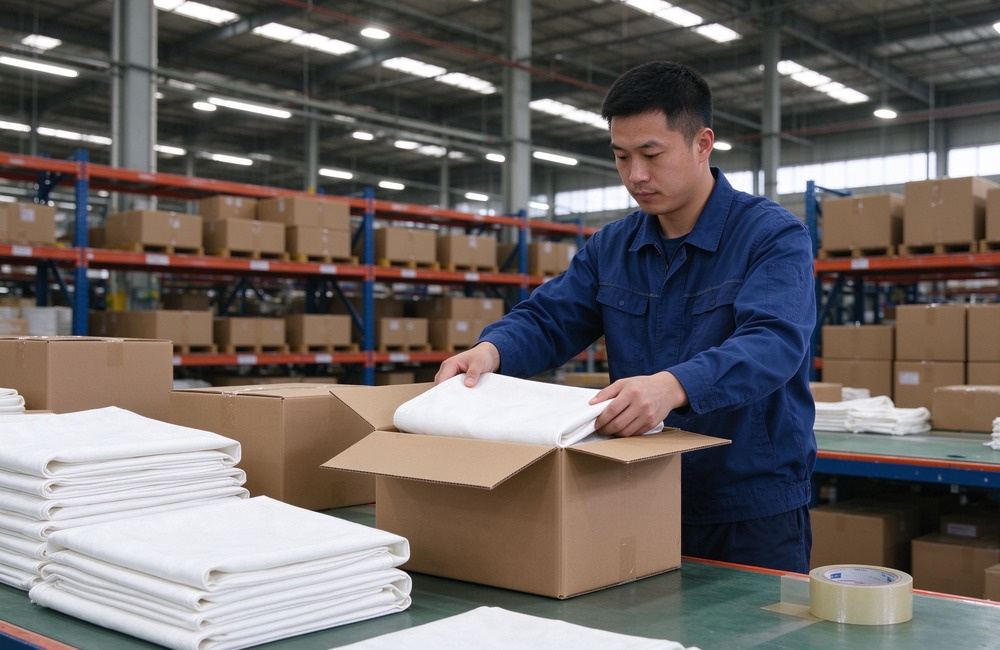
Every roll of fiberglass cloth comes in and is checked on the visual gate before it reaches the sewing line. Operators cut the cloth to size, stitch the white edge binding on industrial lockstitch machines, and sew the black pull tabs through the reinforced corners. The line runs on satin and twill weaves with heat-set finishing.
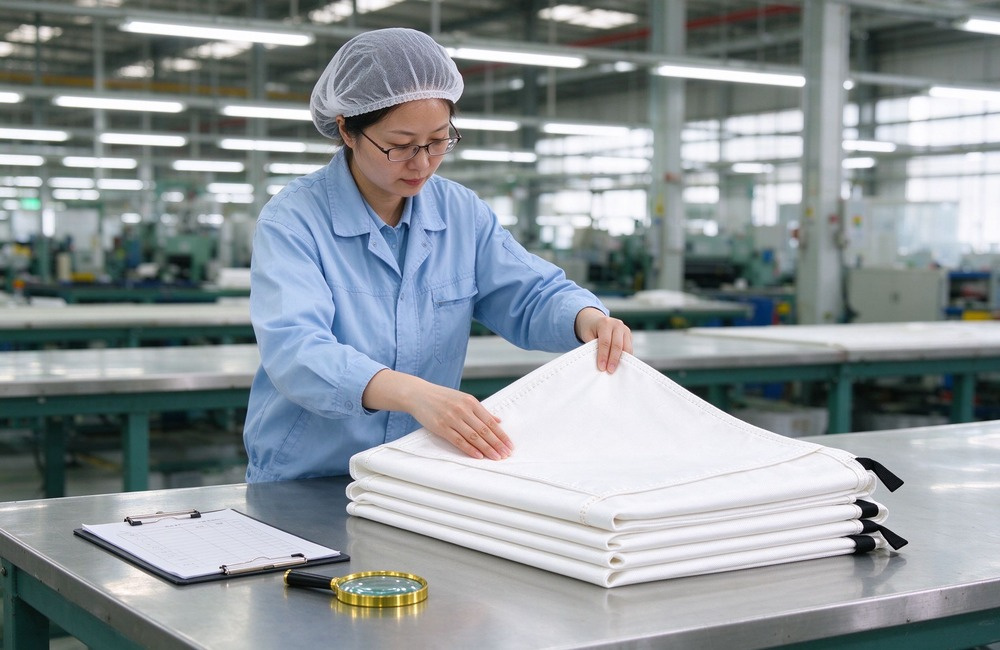
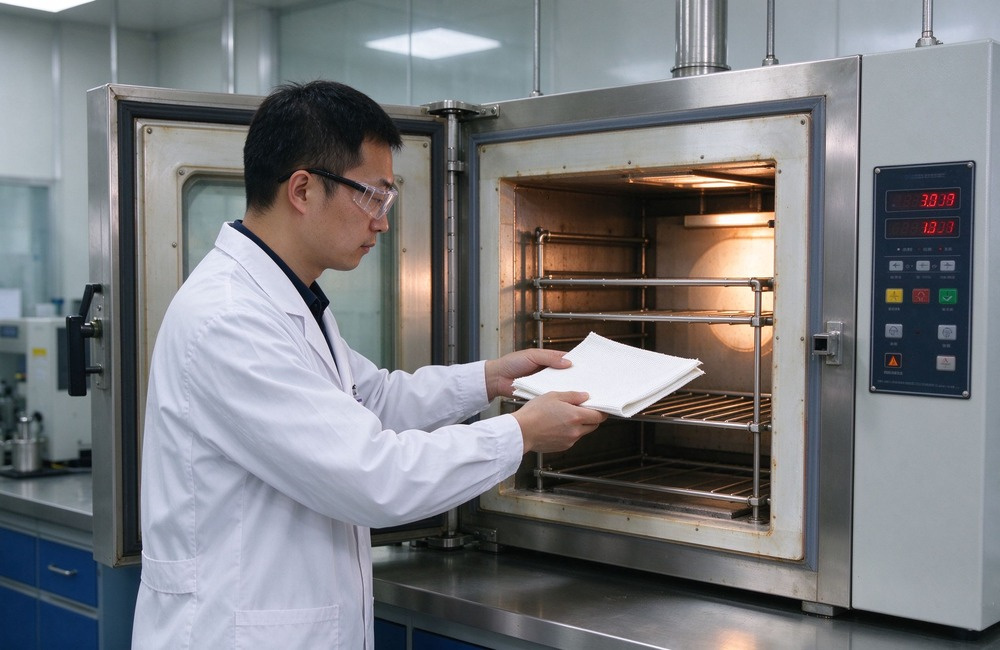
At the QC cell, inspectors check fold count, pull tab strength, stitch density and overall dimension on sampled units. Sampled units go into a high temperature test chamber to confirm the fabric rating, and an insulation meter reads the dielectric resistance. We do not claim zero defects.
What we offer is traceability: every batch has a date code, every test has a reading, every claim has a paper trail.
The fire blanket factory line runs continuous production for the six series, so lead times stay predictable for repeat orders. Sample units are available for fit and fold testing before a bulk order is committed, so your training team can verify the pull and unfold feel.
The weaving line runs satin and twill looms, and the sewing floor uses lockstitch machines that hold a consistent stitch density of eight stitches per inch along the white binding. This consistency matters because a loose hem frays after a few unfolds and a tight hem cracks the fiberglass yarn over time.
Municipal fire departments, schools, hospitals and new hotels buy blankets by the pallet. Tenders need a clean specification: material, size, test standard, packaging and documentation. We prepare the fire blanket government procurement package so it maps line by line onto the tender schedule, with test reports that match the spec numbers.
Typical tender parameters include fabric composition, thread count, folded dimension, deployment time, insulation resistance and packaging type. We can also stage delivery in phased shipments across a fiscal year, so the receiving warehouse does not have to store a year's supply in one go.
We work with fire blanket relief organizations worldwide that stage emergency stock for distribution after natural disasters. A compact folded blanket weighs little, survives long dry storage, and needs no servicing between deployments, which makes it a standard item in relief shelter kits.
Volume orders can be staged to your delivery schedule and shipped to the port or warehouse you name.
For public bids we can provide sample units for evaluation, the third-party test sheets, and a packing list that ties each carton to a delivery note. The goal is paperwork that an auditor can follow from the raw cloth lot to the carton on your shelf.
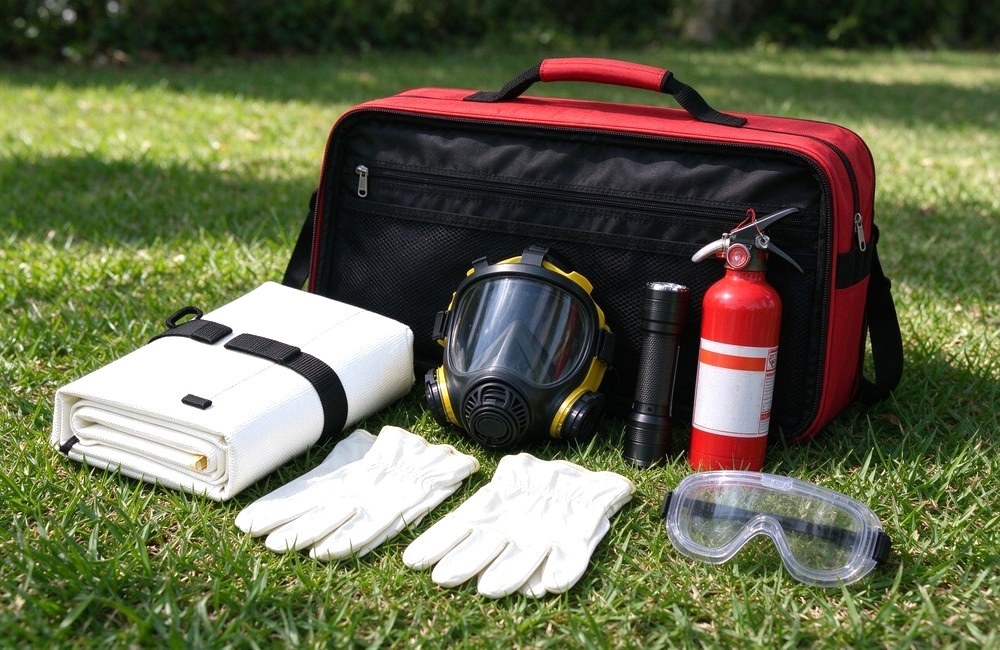
Standard stock covers most installs, but a printed organization name, a specific pouch color or a non-standard size turns a generic blanket into branded safety gear. We silk-screen your logo or name onto the pouch or box in the position you choose, sized so it never covers the usage diagram.
Sample units ship before bulk production so you can check the print color against your brand palette.
Pouch colors run red, blue, yellow, green and black as stock, with custom dye at volume. The fire blanket custom logo print is UV-stable so it does not fade on a wall-mounted pouch over years.
Custom dimensions beyond the standard 1m to 2m range are quoted against the cloth width and sewing time, with a sample produced before bulk cutting.
You can also mix the kit: a red pouch for the kitchen, a blue pouch for the workshop floor, a yellow pouch for the school lab. Color coding helps untrained staff recognize the right blanket at a glance during a drill.
Tell us which options are mandatory and which are optional, and we quote the mandatory baseline first. Custom reflective strips along the pouch edge are available at volume, which helps the pouch stand out in a dim back-of-house corridor or a warehouse aisle.
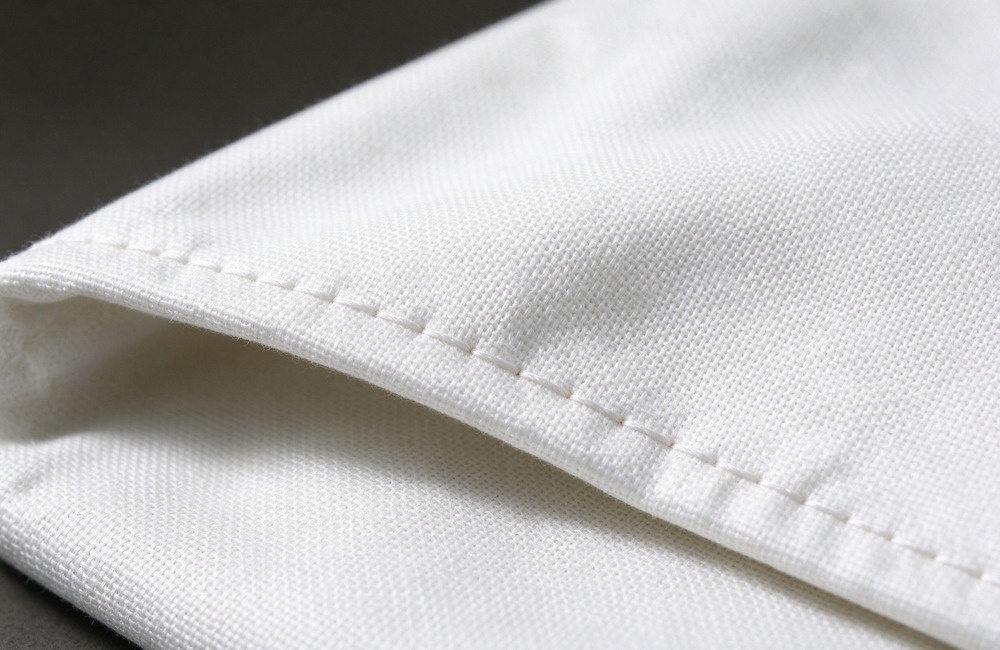
Neat stitching is not cosmetic. Loose edges fray after repeated folding, and a frayed corner lets cold air sneak under the blanket edge. We heat-cut and double-stitch every edge so the blanket keeps its oxygen cut-off performance year after year, even when staff fold and unfold it every drill.
Every custom order starts the same way: a sample batch goes through the lab test chamber before bulk cutting begins.
Below are the questions procurement managers, training officers and wholesale buyers ask most often about fire blankets. Each answer covers material, sizing, deployment, certification and ordering so you can shortlist the right series before requesting a quote.
If your question is not listed here, the product series table and the material comparison table earlier on this page usually cover the detail you need, and the test standard section explains what the EN 1869 and XF1205 reports actually measure.
Most fire blankets are woven from fine alkali-free fiberglass yarn into a satin or twill weave. Higher temperature versions add a silicone, ceramic fiber, vermiculite or acrylic coating on one or both sides.
Every finished blanket has white stitched edge binding and two black woven pull tabs sewn through the reinforced corners, so it opens in one motion when you need it.
Standard fiberglass blankets handle short flame exposure around 550 C, which covers most kitchen grease and small electrical fires. Silicone coated versions reach about 1000 C for welding and garage use. Ceramic fiber blankets are rated up to 1260 C for continuous industrial duty, and vermiculite coated sheets sit near 1000 C for molten metal splash protection.
Common sizes run from 1m x 1m for a single kitchen pan up to 2m x 2m for workshop benches and vehicle bays, with 1.2m, 1.5m and 1.8m steps in between. The 1.5m square is the most popular all-round size for schools, hotels and small factories.
Custom dimensions beyond this range are quoted on request based on your cloth width and sewing time.
Fiberglass is the lightweight, lower cost base fabric that works for everyday kitchens and offices. Silicone coated adds a smooth, non-dusting, liquid-resistant surface that tolerates higher heat to about 1000 C, repels oil and grease, and wipes clean more easily after use. Choose silicone where welding, solvents or hot metal are part of the daily job.
If the fabric has not been scorched, melted or burned through, it can be inspected, wiped with a damp cloth, air dried and folded back into the pouch. If it shows holes, brittle spots, heavy char or coating that has flaked off, retire it immediately and install a fresh unit.
Never reuse a blanket that has touched molten metal or a sustained chemical fire.
An unopened, dry fire blanket carries a long shelf life measured in years. Inspect the pouch, pull tabs and stitching every twelve months. Replace the unit if the fabric feels brittle, crumbly, or shows white fiberglass dust on the inside of the pouch, which means the sizing is breaking down from age, heat or humidity.
Turn off the heat if it is safe to reach the knob. Pull the two black tabs straight out, let the blanket unfold fully, hold it like a shield in front of your body, and start draping from the far edge of the pan toward yourself so your hands stay on the cool side.
Leave it in place until the pan is fully cool. Do not lift it early to check, because fresh oxygen can reignite the hot oil.
Yes. Wrap the blanket around the person from the shoulders down, have them drop to the ground and roll gently while you hold the edges closed, then call emergency services. The insulating fabric cuts oxygen and stops the flame quickly while protecting their skin from direct contact. Never let the person run, because running fans the fire.
Yes. The fiberglass fabric is electrically insulating, tested to at least 120 megaohms dielectric resistance, so it can safely smother small electrical fires after the mains power has been cut and the equipment is confirmed safe to approach. Always cut the power first, even if the fire looks small, because live current can travel through damp fabric.
Use a blanket for small pan, clothing or equipment fires where you can reach the source and smother it cleanly. Use an extinguisher for larger or spreading flames that have left the pan or climbed the curtains. Best facilities mount both together at the same wall station so staff can choose based on what the fire is doing right now.
Our export line is tested to EN 1869:2019, the European standard for fire blankets intended for household and commercial use. We supply the third-party test report with actual readings. Wording is tested to rather than certified, because full notified-body certification involves ongoing factory audit that we describe transparently on the report.
Hang it on a wall bracket near the stove, workbench or exit where it is visible and within arm reach. Keep the storage area dry, between 10 C and 35 C, away from direct sunlight, steam and chemical fumes.
Do not store it inside a closed cabinet, on a high shelf, or where small children can pull it down and play with it.

Yes. We silk-screen or print your organization name, logo and usage instructions on the fabric pouch or cardboard box in the colors you choose. The print size is set so it never covers the usage diagram or the pull tab opening. Minimum print order runs at wholesale volume, and a print proof is sent before bulk production.
We work with relief organizations worldwide and supply test reports, specification sheets, packing lists and batch traceability records that match public tender submission requirements. Each carton links back to the original cloth lot and test date, so an auditor can follow the chain from raw fabric to the unit on your shelf.
YRF Textile – Fire Safety Equipment – China
Contact: info@yrftextile.com
 1000°C Heat-Resistant Fire Cape, Emergency Escape Essential
This orange fire protection cape is made of heat-resistant fiberglass with double-sided silicone coating, withstanding temperatures up to 1000°C, with material thickness ≥0.425mm. Adult size 1.6m×1.2m, children's size 1.2m×1.0m. Back reflective strips design increases visibility by 97% at night or in smoke environments. Full-body protection with drawstring closure effectively isolates high temperatures during fire rescue and escape, providing professional protection for petrochemical plants, high-rise fires, and industrial fire escapes, extending escape time by 3-5 minutes.
 Fire-Resistant Cape, Fiberglass Material, Factory Emergency Rescue
This professional-grade fire-resistant cape uses high-quality fiberglass base material + double-sided silicone coating, offering outstanding heat insulation and flame retardancy that maintains protective function in high-temperature environments. The high-visibility orange design allows rescue personnel to quickly identify wearers, while the full-wrap structure effectively protects the head and respiratory tract. Available in multiple sizes, 1×1m to 2×2m, it's suitable for emergency escape and rescue operations in high-risk environments such as factories, chemical plants, and power plants, providing reliable protection for life safety.
 Custom Fire Blanket, High-Temperature Protection, Quick Fire Extinguishing Rescue Equipment
This customizable fire blanket is manufactured with premium fire-resistant materials, providing exceptional high-temperature protection with temperature resistance up to 1000°C and heat insulation efficiency of 95%. The product offers multiple size options, with thicknesses ranging from 2mm to 5mm, customizable according to different rescue scenario requirements. Special material design increases deployment speed by 30%, allowing rapid fire source coverage within 12 seconds. Proven reliability in 600+ disaster rescue operations with a 92% firefighting rescue success rate, it is the ideal protection and fire extinguishing equipment for various disaster sites.
 Fire Drill Bagged Fire Blanket, Training Guidance Type
This Fire Drill Bagged Fire Blanket is specially designed for disaster relief training and fire safety education, made of professional-grade fiberglass material with excellent flame-retardant and heat-insulation properties. The product includes detailed usage guidance illustrations, facilitating instruction by trainers and practical operation by trainees. The eye-catching red PVC packaging bag is designed for easy identification and quick retrieval, making it an ideal teaching tool for rescue teams, fire stations, community disaster prevention centers, and corporate safety training. Through practical operation training, it effectively enhances the ability of rescue personnel and the public to respond to fires, laying a solid foundation for emergency rescue operations.
 Professional Fire Cloak Kit 1000°C Protection Emergency Escape
This orange fire protection cape is made of heat-resistant fiberglass with double-sided silicone coating, withstanding temperatures up to 1000°C, with material thickness ≥0.425mm. Adult size 1.6m×1.2m, children's size 1.2m×1.0m. Back reflective strips design increases visibility by 97% at night or in smoke environments. Full-body protection with drawstring closure effectively isolates high temperatures during fire rescue and escape, providing professional protection for petrochemical plants, high-rise fires, and industrial fire escapes, extending escape time by 3-5 minutes.
 Professional Fire Escape Cape, 800°C Heat Isolation, Full-Body Protection Rescue Cloak
This professional fire escape cape, made with double-layer silicone-coated fiberglass material, effectively isolates heat sources up to 800°C, providing 30 minutes of critical escape time. The full-body coverage design with reflective warning strips increases visibility by 99% in smoke-filled environments. Available in adult size (1.2m*1.6m) and children's size (1.0m*1.2m), it's suitable for emergency escape from high-rise buildings, factory workshops, and home fires, proven effective in over 500 fire emergency drills.
Copyright © Custom Disaster - Relief Bedding: Tents, Sleeping Bags, Blankets All Rights Reserved
the professional team to service !