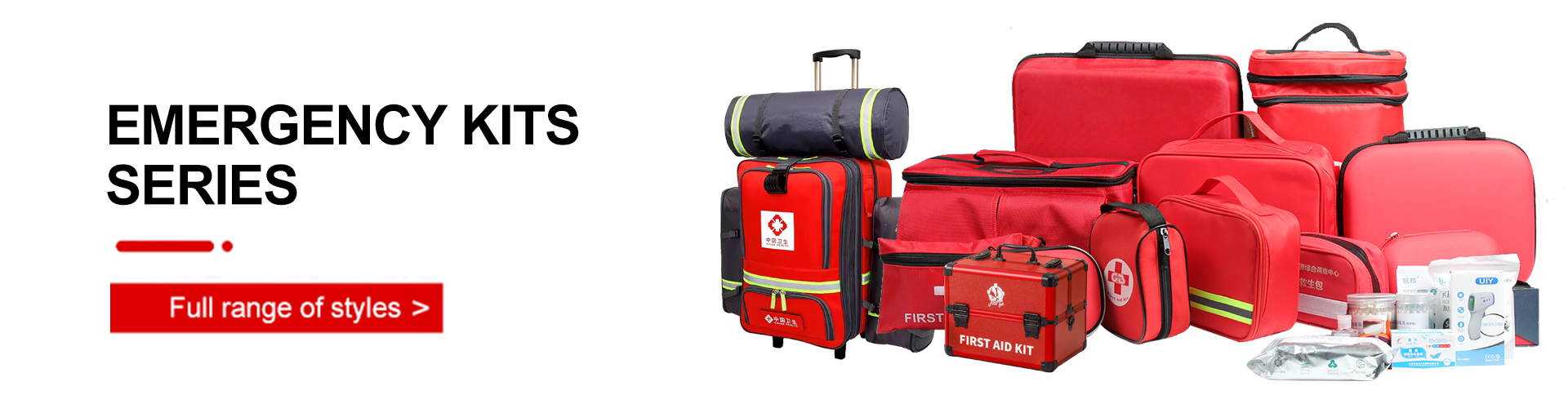
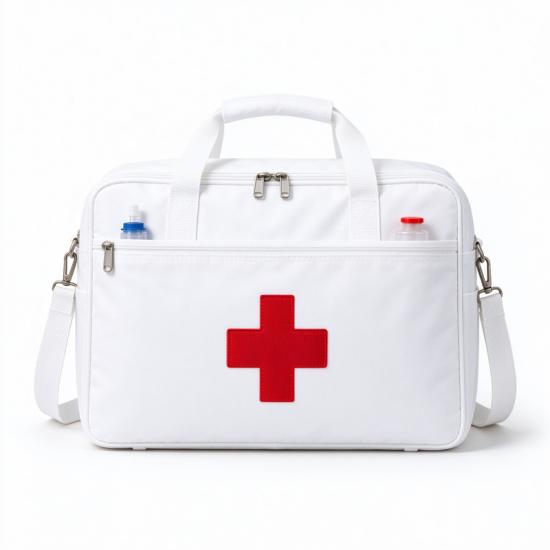
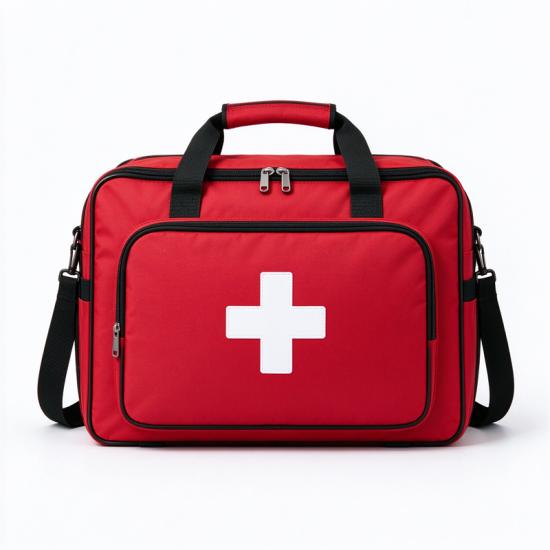
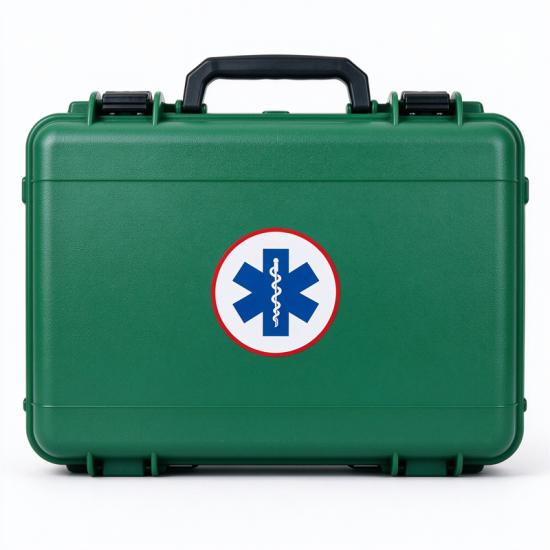
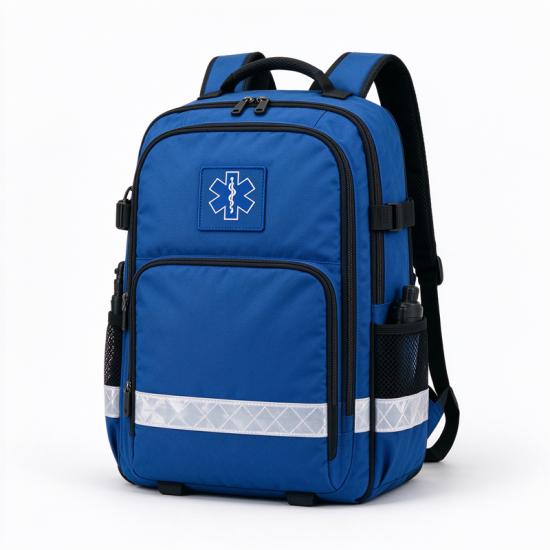
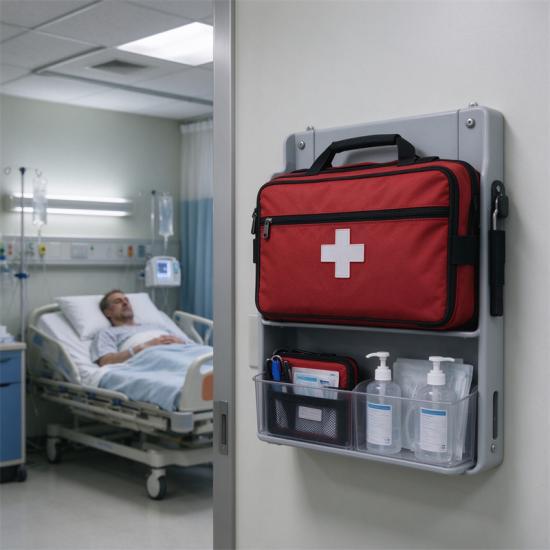
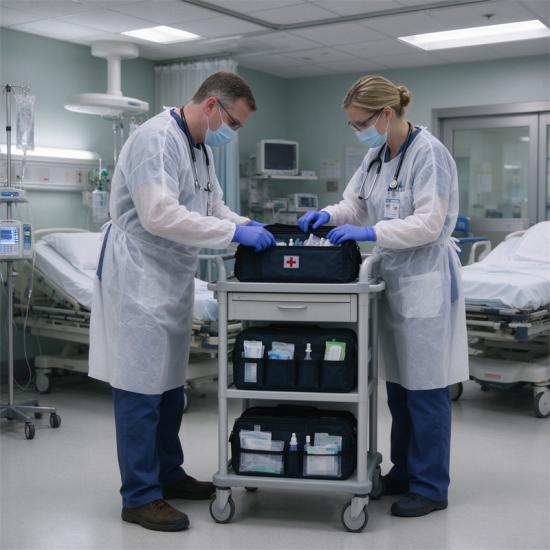
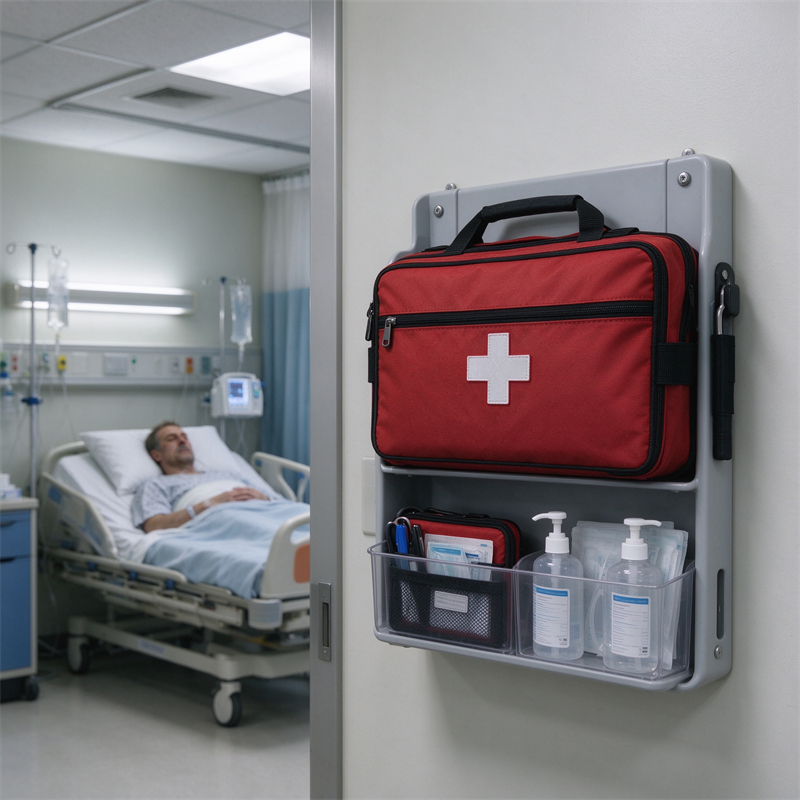
Our Hospital Emergency Kit is designed for wards, clinics and medical triage. Neat divided compartments hold emergency blankets, gloves and clinical supplies. Quick access for medical staff, suitable for hospital bulk procurement, healthcare facility emergency plans and custom branded orders.
Note: Price for reference only. Exact price based on quantity, size, weight and custom details.
model no. :
BB-S2Brand:
YRFmarket price :
$39.8sale price :
$19.9price range :
30-500/$19.9Color :
Multiple Colorsport of dispatch :
Guangdong/GuangzhouPayment :
TT, Paypal, Western Unionmin order :
30original region :
Made in ChinaLead Time :
5-15days
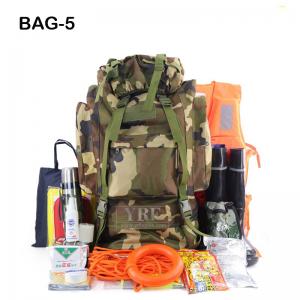
A hospital emergency kit turns a crowded triage bay into an ordered first response for staff and patients alike.Our medical emergency kit pairs a red hard routine case with a slim diagnostic case and a waterproof rescue rucksack.Bulk buyers get the same quality, the same quick restock, and a clear path to a full facility program.
As a verified hospital medical kit supplier and clinical emergency kit, we supply wholesale medical emergency kits for hospitals to distributors, integrators and institutional buyers worldwide, with full traceability on every hospital emergency kit we ship.As a focused clinical medical kit, the layout follows the same dry-contents rule.
A single medical response kit program covers every ward at once.It is the front line of every medical emergency supply plan.This ratio also scales to a hospital safety kit for outpatient wings.The same three-year rule applies to our medical emergency bag spare packs.As your hospital medical kit supplier, we keep one spec across every order.A compact hospital first aid bag sits on every ward shelf.
 |

|

One hospital emergency kit alone cannot cover a whole facility.The smart approach is a clear surge and triage layout that matches the real load of each zone.A ward hospital emergency kit handles daily first aid near the nurse station and anchors the medical emergency kit program.A triage kit handles the first minutes of a sudden influx.Our wholesale hospital emergency supplies support both layers, so a coordinator can stock every point without guessing.Sized by bed count, the contents stay right for staff and the patients they care for.
Surge-ready means the kit stays exactly where a protocol expects it.When a mass-casualty event hits, the nurse guide points to the nearest hospital emergency kit, not a distant store room.Contents sit in clear trays, so a nurse finds a dressing, a glove, and a triage tag within seconds.
Because the same layout repeats across wards, any relief staff knows where everything lives.That consistency is the quiet reason hospital emergency supplies programs work at scale.
Buyers often ask which unit they need first.Our comparison shows the real answer: a red hard routine case for one ward, a slim diagnostic case for consult rooms, and a rescue rucksack for transport.The routine case sits fixed by the nurse station.
The diagnostic case suits exam and intake rooms.The rucksack carries capacity for larger teams and ambulance transfer.The table below maps all three to bed count, so procurement picks the right mix instead of guessing.
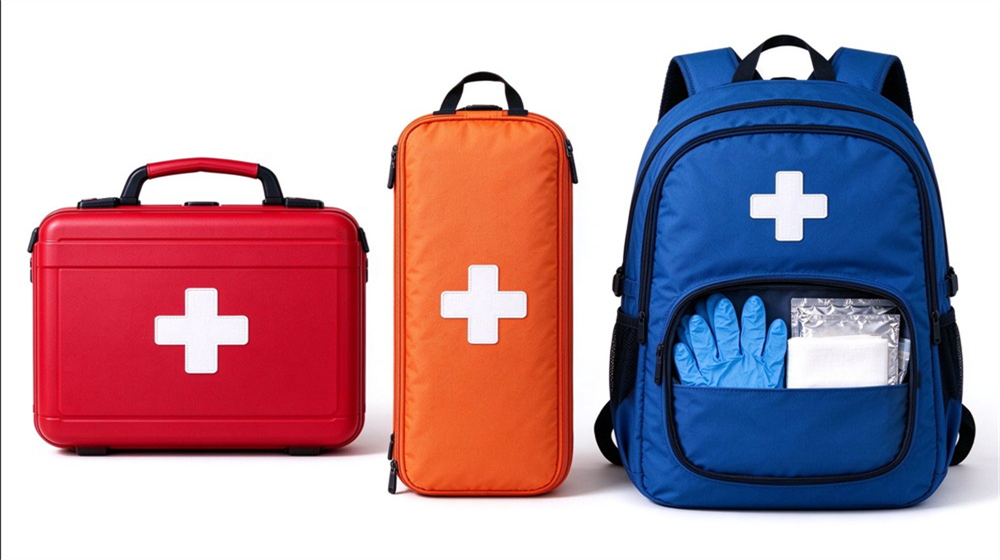
Hospital procurement officers running a wholesale medical emergency kits for hospitals program usually compare three things: spec sheet clarity, certification pack completeness, and delivery window. A capable hospital medical kit supplier publishes all three on the same quote page. As an experienced hospital medical kit supplier, we back every clinical emergency kit rollout with a signed spec sheet, a stamped certification pack, and a confirmed delivery schedule.
For nursing directors evaluating a clinical emergency kit pilot, the same three checks apply. A reliable hospital medical kit supplier aligns the clinical emergency kit spec to your bid document, supports a 50-unit sample order before the full rollout, and signs off on the delivery calendar. Whether you run a small clinical emergency kit pilot or a network-wide award, the same spec sheet applies. As a hospital medical kit supplier focused on wholesale medical emergency kits for hospitals, we bundle spec, certs and delivery into one quote.
One practical tip for first-time buyers: when you shortlist a hospital medical kit supplier, ask for three samples before the full order. Compare the clinical emergency kit packaging, the contents list, and the user guide. A reliable hospital medical kit supplier will send samples free of charge; an unreliable one will not. This step alone filters out most of the noise. We back every clinical emergency kit quote with a free sample, a signed spec sheet, and a delivery calendar your bid team can paste into the file.
On a final note for network-level buyers: a hospital medical kit supplier that owns the export documents also consolidates the booking, aligns carton labels to your customs broker, and coordinates the arrival notice with your warehouse. We back every clinical emergency kit award with a repeat-order dossier and a dedicated contact. Choose a hospital medical kit supplier that treats your spec sheet as a signed contract. As a hospital medical kit supplier focused on wholesale medical emergency kits for hospitals, we bundle spec, certs and delivery into one quote, and we back every clinical emergency kit award with a signed spec.
As a hospital medical kit supplier, we back every clinical emergency kit rollout with a signed spec, a stamped certification pack, and a delivery calendar your bid team can paste into the file. Whether you run a small clinical emergency kit pilot, a ward-wide clinical emergency kit rollout, or a network-wide clinical emergency kit award, the same spec sheet applies. As a hospital medical kit supplier focused on wholesale medical emergency kits for hospitals, we bundle spec, certs and delivery into one quote.

A note on the buying process itself, separate from the product spec. Every bulk order follows the same path: inquiry, sample approval, price confirmation, PI signing, deposit payment, production, final inspection, packing, booking, customs declaration, port clearance, container loading, ocean freight, destination port, customs clearance, truck delivery, warehouse receipt, and buyer sign-off. Each step has its own document trail, and a well-run vendor keeps every document in English PDF, stamped, and time-stamped so the buyer's audit team can trace the order from first inquiry to final receipt.
On the sample step: a 20- to 50-unit sample order is the single most effective filter. It tests packaging, contents, labeling, user-guide clarity, and delivery window all at once. Buyers who skip the sample step usually discover defects at the full-order stage, which means rework, delay, and budget overrun. A vendor who sends samples free of charge is signaling confidence in the product; a vendor who refuses samples or charges exorbitant sample fees is signaling the opposite. Treat sample approval as a gate, not a formality.
On the documentation step: English CE declarations, ISO certificates, packing lists, carton marks, HS codes, commercial invoices, and bills of lading should all arrive before the container ships. Buyers who wait until the container docks to request these documents risk customs delays, port storage fees, and delivery slips. A well-run vendor sends the full documentation pack with the booking confirmation, so the buyer's customs broker has everything ready before the cargo arrives.
On the delivery step: confirm the Incoterm in writing. FOB, CIF, DAP, DDP each shift the cost and risk at a different point, and the buyer who does not pin down the Incoterm in the PI usually discovers extra charges at the destination. Also confirm the carton count, pallet count, gross weight, and CBM before booking, so the container size matches the cargo and there is no last-minute rebooking.
On the inspection step: a pre-shipment inspection report, signed by the vendor and ideally countersigned by a third-party inspector, is the buyer's last line of defense. The report should list carton count, sample size, defect rate, and pass/fail result. Buyers who skip pre-shipment inspection usually find defects after the container is sealed, when rework is expensive or impossible.
On the payment step: 30 percent deposit with the PI, 70 percent balance against the copy of the bill of lading, is the standard structure. Buyers who pay 100 percent up front lose leverage; buyers who pay 100 percent after delivery lose the vendor's attention. The 30/70 split is the industry norm for a reason.
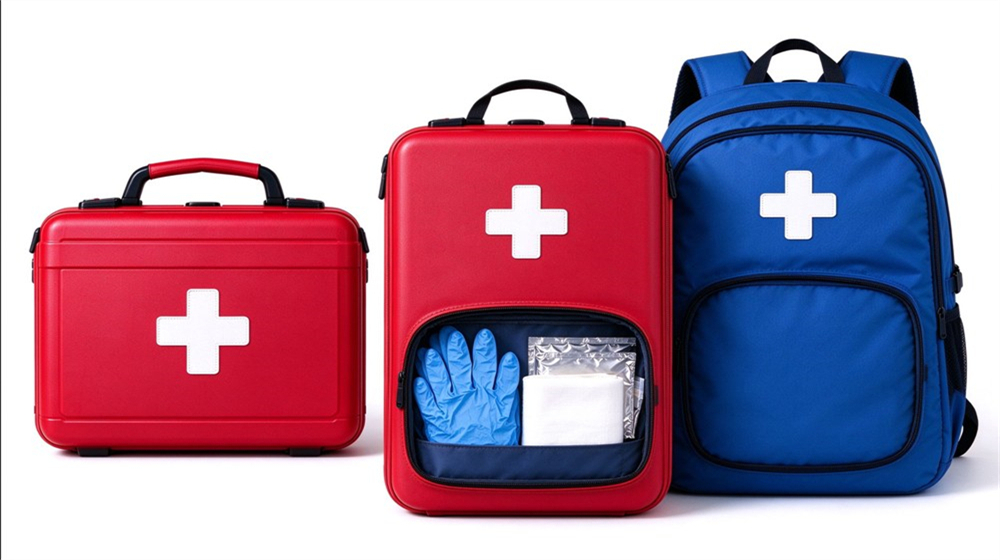
On the restock step: after the first award, set a standing restock calendar. Consumables like dressings, masks, gloves, and flashlights expire on a three-year cycle, and the buyer who waits until the shelf-life date to reorder faces an emergency re-stock at premium pricing. A standing restock contract, with quarterly or semi-annual shipments, smooths the budget and keeps the contents fresh.
On the training step: a well-packed product is only half the story. The user guide should be illustrated, in the local language, and printed inside the pack, not pasted on the outside. Managers should be able to open the pack, read the guide, and walk a staff member through the contents in under five minutes. Vendors who include a printed, illustrated guide in every pack are signaling that they care about the end user; vendors who do not are treating the pack as a warehouse item, not a frontline tool.
On the rotation step: across a multi-site network, the same pack layout should repeat at every site. A manager who transfers from one building to another should open the first-aid cabinet and find the same compartments, the same labels, and the same user guide. Standardization across sites is the single biggest cost saver in a multi-site network, because it removes the need for site-specific training, site-specific restock lists, and site-specific audit files.
On the audit step: every site should keep a logbook, inside the cabinet, with date, contents checked, restocked, and manager signature. The logbook is the auditor's first stop, and a site with a well-kept logbook passes inspection in minutes; a site with a blank logbook usually fails on the spot. Print the logbook pages inside the pack, not as a separate file, so the manager does not lose it.
As a hospital medical kit supplier, we back every clinical emergency kit rollout with a signed spec and a stamped certification pack. Whether you run a ward-wide clinical emergency kit rollout or a network-wide clinical emergency kit award, the same spec sheet applies.
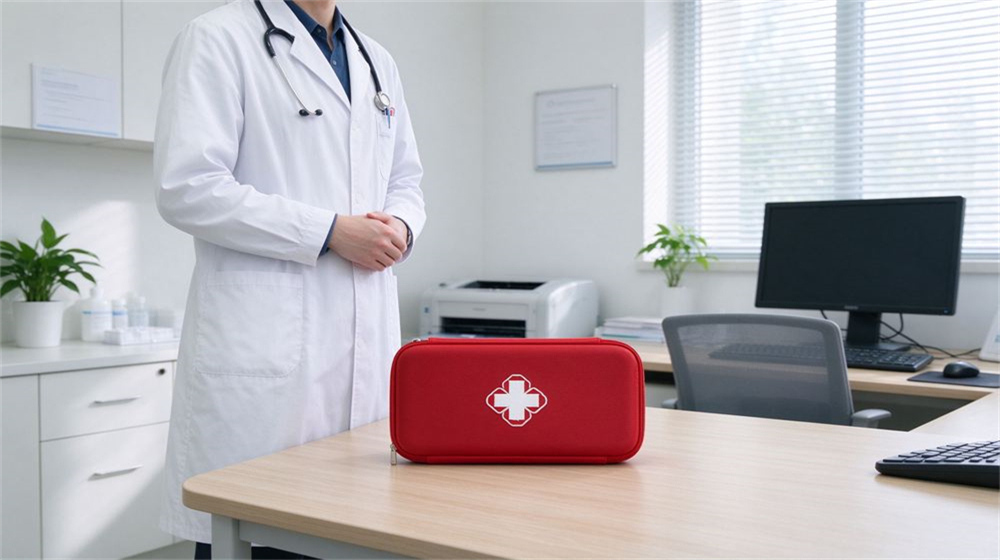
Every hospital faces a sudden surge, from a seasonal wave to a mass-casualty arrival.A hospital emergency kit keeps the first response local and fast.Staff cannot leave a triage bay to fetch help elsewhere.A ready kit gives them the tools on hand, in a known place, within reach.
In this wholesale medical emergency kits for hospitals guide, we cover clinical emergency kit specifications, medical emergency kit sizing, MOQ tiers and export documentation, so procurement teams can shortlist in one afternoon.
The stakes for hospital emergency supplies rise during surge events. A triage kit keeps the intake ordered. Hospital first aid stays the first priority of every admission wave, and a fast medical surge response begins with the right dry supplies at hand. A well-organized clinical first aid kit at intake shortens the wait.
A hospital emergency kit supports a calm, sorted intake instead of a chaotic one. When supplies sit in one known spot, staff spend seconds on action and none on searching. That speed protects both staff and the patients they care for.
Regulations and audit expectations now make kits standard, not optional. For bulk buyers, hospital emergency supplies that follow one hospital emergency kit layout satisfy both inspectors and infection-control teams. A visible triage kit shows staff that surge response is planned.
It also supports compliance with common medical device requirements. For bulk hospital procurement, standardizing one kit across wards makes inspection and restock simple.
The true value appears on a normal day, not just in a crisis. A nurse covers a cut, secures a dressing, or sorts a patient with the right tool nearby. These small wins build trust over a full season. A well-placed hospital emergency kit also reduces trips to the central store and keeps ward flow intact.
Consistency is what a hospital emergency kit really delivers across every ward. When every ward holds the same dry hospital emergency supplies, every staff member can act the same way. Relief staff, travelers, and new hires all read the same layout. This shared layout turns a simple case into a real surge system.
For a coordinator, the benefit is control. A uniform hospital kit, ordered as one medical emergency kit program, means one purchase, one restock routine, and one training script. There is no guesswork about what each point holds. That predictability is why wholesale medical emergency kit programs scale so cleanly.
Think of a hospital emergency kit as insurance that works daily. It costs little, yet it protects the most valuable asset a hospital owns: its people. When a wave arrives or a bay must fill fast, the hospital emergency supplies are already there. That readiness turns a chaotic moment into a managed one.
Hospitals also face quiet risks that kits answer. A sudden allergy, a long corridor wait, or a extended diversion each needs a clear action. A hospital emergency kit with the right dry contents gives staff a real way to respond, and keeps hospital emergency supplies current. Every minute saved by a ready kit is a minute a patient is safer.
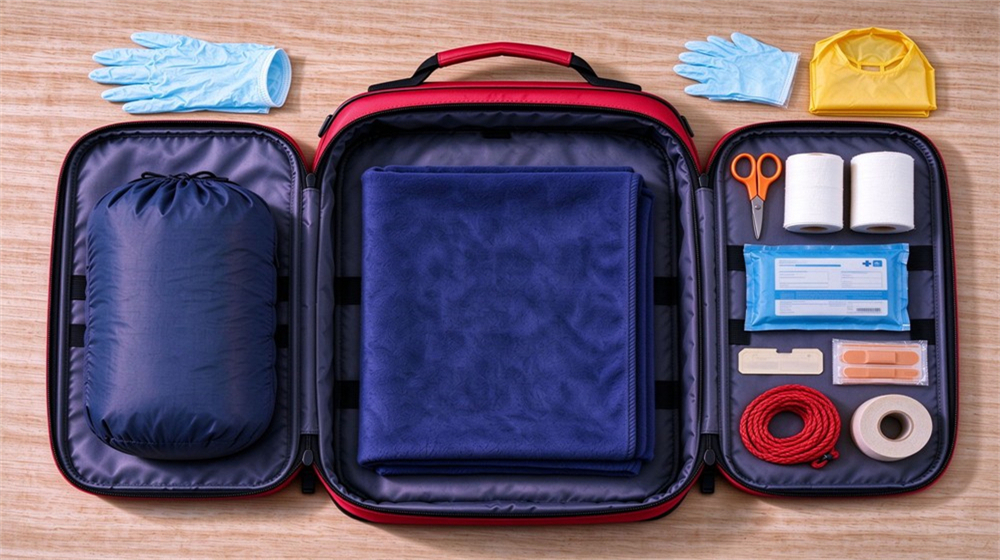
Three formats cover most hospital floors. The routine red case lives by the nurse station, the diagnostic case sits on intake desks, and the rescue rucksack goes wherever staff move. The table below compares them on size, weight and content focus so you can split budget across the three.
Most wards start with one routine red case per nurse station and add a diagnostic case for intake. Emergency departments and ambulance bays should always carry a rescue rucksack per major zone. If your hospital runs a surge plan, add one extra rescue rucksack per 50 beds rather than per floor.
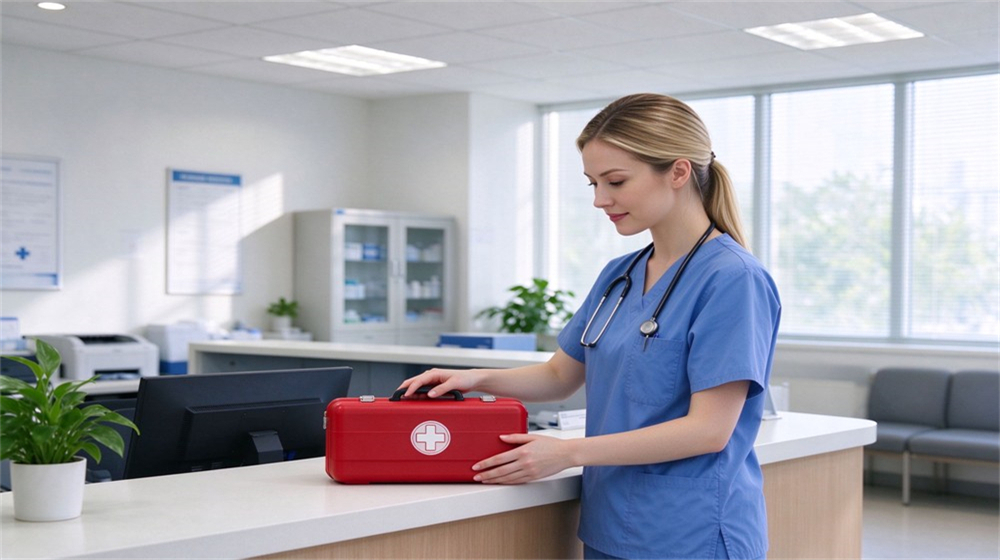
A ward kit serves one floor and one routine. That is why the routine hospital emergency kit, the core of our hospital emergency supplies, stays fixed and its triage kit counterpart stays mobile. It holds the daily essentials for cuts, dressings, and quick sorting. A diagnostic case serves consult and intake rooms. A rescue rucksack serves transport and larger teams.
Ward units should stay organized and easy to reach. A good hospital first aid kit balances a fixed nurse station position with enough surge coverage for nearby bays. Rescue units can be heavier and carry professional-grade items. The right plan keeps all three, because the three solve different problems. One ward is not the same as an ambulance bay.
Placement matters as much as contents. Place each routine case where staff already move, and keep infection control in every placement decision. Mount a ward kit near the nurse station, in clear view. Put a diagnostic case in each exam room. Mark all with a white cross so everyone reads the location instantly.
The contents differ for a reason. A ward box focuses on frequent, small needs: dressings, gauze, gloves, and a clean mask. A diagnostic case adds sorting tools: triage tags, pens, and simple measurement items. A rescue rucksack adds capacity for bigger teams and transfer.
Think of the split as layers in one plan. The ward layer answers the first five minutes. The diagnostic layer answers the next intake. The rescue layer answers transfer and surge. Together they cover both daily life and real surges without overlap or gaps.
A coordinator can start lean and grow. Begin with one routine case per ward. Add one diagnostic case for every two intake rooms. As the facility grows, add rucksacks in a fixed ratio. This modular habit keeps the plan clear and the budget steady.
Choosing the right unit starts with a short walk. Count the wards that see many patients each day. Then count the intake rooms that hold crowds. The first list drives the routine case count. The second drives the diagnostic case count.
Keep one rule in mind: a hospital emergency kit works when it is close to the people who need it. A case that lives far from the ward is a medical emergency kit that stays unused. Place each unit where the routine already moves. That is how the plan stays practical, not just tidy.
Budget follows the same logic. One routine case is the smallest honest start. Add units only where patient flow demands them. This staged approach keeps costs low while coverage grows. It also gives a clear answer when a board asks for the safety budget.
A small audit makes the split obvious. Count the daily incidents in wards versus the big surges in intake. The ward case handles the frequent small wins. The rescue rucksack handles the rare large moments. Together they cover the full range without waste.
Item
Routine Medical Kit
Medical Diagnostic Kit
Professional Rescue Kit
Format
Red hard case
Red slim case
Black/red/orange rucksack
Size
45×28×33 cm / 3.12 kg
43×14×32 cm / 3.32 kg
62×38×30 cm, 1200D waterproof
Best for
One ward, daily first aid
Intake and consult rooms
Transfer, surge, ambulance
Carry
Fixed by nurse station
Fixed on desk
Carried on the move
Content focus
Dressings, gloves, masks
Triage tags, sorting tools
Larger multi-category set
Shelf-life rule
Consumables 3 yr / tools 5 yr
Consumables 3 yr / tools 5 yr
Consumables 3 yr / tools 5 yr

Bed count drives both case size and placement. The table below maps 30, 60 and 100-bed wards to the routine red case, the diagnostic case and the rescue rucksack, plus the wall position your biomedical engineering team should plan around.
Bed count decides the kit mix. Count beds first, then size your hospital emergency kit and triage kit to match the real number. For a 30-bed ward, one red routine case covers daily use and quick surge.
For 60 beds, add a slim diagnostic case for the intake desk. For 100 beds, run one routine case plus one rescue rucksack per major zone.
The math is simple because contents stay modular. A coordinator buys the same routine case and adds units only where numbers grow. This keeps restock easy and cost predictable. It also lets a whole facility scale with one trusted layout.
A 30-bed ward moves fast and stays light. One case near the nurse station is enough for most days. The nurse grabs it on the way and has the essentials in hand.
A 60-bed ward needs a little more reach. A second diagnostic case at intake gives a backup point. That way a busy ward never drains the only supply on site.
A 100-bed ward works best with a shared ratio. One rucksack per major zone keeps every area covered without overstocking. The table below turns these rules into a simple procurement sheet.
Beyond the table, keep spares on hand. Order a few extra routine cases for damaged or expired units. A small buffer stock keeps the program running without a new order mid-year. Most facilities keep one spare per ten wards.
Record the location of every kit. A simple list by ward helps a coordinator audit in minutes. It also shows inspectors that the plan is real. A named location beats a vague promise of coverage on paper.
Revisit the count each quarter. Bed counts shift, and rooms change use. A quick update to the list keeps the kit mix accurate. This ten-minute habit is the cheapest part of a strong hospital surge plan.
The per-ward table is a starting rule, not a cage. A facility with many special rooms can adapt it. An OR bay or a lab may need its own unit. The principle stays the same: match supply to the people who share the space.
Order timing also matters. Buy for the whole year in one batch. This cuts shipping cost and keeps one spec across all wards. A single order of hospital emergency supplies is easier to track, easier to audit, and easier to restock when the year ends.
A final point on stock: keep the count honest. A quick monthly glance at the list shows whether every ward is full. Spares for common items live in one cabinet. That single shelf solves most mid-year needs without a new order.
If you would rather start from your real ward scenario than from a bed count, the decision tree below picks the kit for you. Match your row — daily ward, intake or transfer — and you get the case format and wall position in one line.
Ward Bed Count
Routine Red Case
Diagnostic Case
Rescue Rucksack
Placement
30 beds
1 × red routine case
0
0
Near nurse station
60 beds
1 × red routine case
1 × slim diagnostic case
0
Ward + intake desk
100 beds
1 × red routine case
1 × diagnostic case
1 rucksack per major zone
Ward + intake + transfer
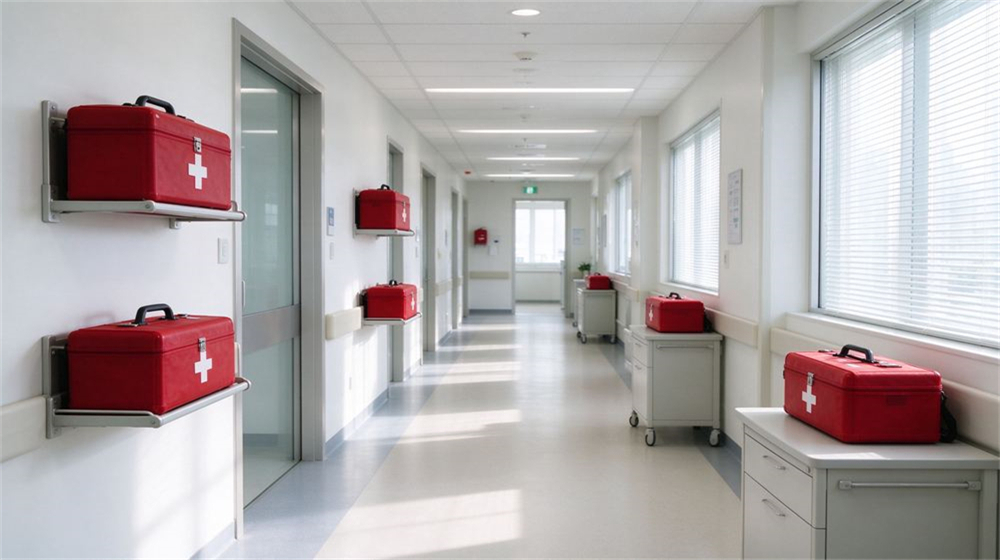
Most buyers land on the routine red case for standard 30-bed wards and add a diagnostic case once intake beds cross 60. Hospitals with an ambulance bay or transfer service should always carry one rescue rucksack per zone rather than borrowing from a ward box.
Your Scenario
How Many Beds
Kit to Choose
Where It Goes
Single ward daily first aid
Up to 30 beds
1 × Routine Medical Kit
Fixed near nurse station
Intake and consult rooms
60 beds
Add 1 × Diagnostic Kit
Fixed on intake desk
Transfer, surge, ambulance
100 beds
Add 1 × Rescue Rucksack per major zone
Carried on the move
The decision tree above skips the detail buyers usually argue about: format, best-for, carry and shelf life. The table below fills those gaps so you can audit the three case types on spec, not just on shape.
Pick the case by where it lives, not by price. A routine red case is the default for fixed wards. A rescue rucksack earns its place wherever staff walk out with the kit — transfer, surge, ambulance. Keep one rescue rucksack per mobile team rather than per ward.
Feature
Routine Medical Kit
Medical Diagnostic Kit
Professional Rescue Kit
Format
Red hard case
Red slim case
Waterproof rucksack
Best for
Daily ward first aid
Intake and consult
Transfer and surge
Carry
Fixed by nurse station
Fixed on desk
Carried on the move
Shelf life
Consumables 3 yr / tools 5 yr
Consumables 3 yr / tools 5 yr
Consumables 3 yr / tools 5 yr
Routine cases stay on wards and cover daily hospital first aid. For general floors, a red routine hospital emergency kit supports staff without a heavy burden. A heavy case is a hassle near a busy nurse station. Keep the routine case compact and its white cross highly visible.
Diagnostic cases can carry sorting and intake tools. A slim medical diagnostic kit with triage tags and simple measurement items suits this group.
These intake rooms sort patients fast during a surge. Clinicians follow the same triage steps with confidence. Match weight and contents to the task for real surge capacity.
Patients read a cross, not a dense label. So the visual is everything for intake rooms. A red case with a clear white cross is easy to spot and easy to teach. Even a relief nurse can point to the triage kit.
Rescue rucksacks can be carried by staff on the move. With a rucksack nearby, a trained responder can hold a dressing or fetch a mask. This builds readiness without replacing clinical care. It also makes surge drills more meaningful for the whole team. This medical rescue bag style also works for patient transfer teams.
The same product line can serve all three with small adjustments. Wards use the fixed routine case. Intake rooms add the slim diagnostic case. Transport adds the rescue rucksack. One supplier, three placements, and one consistent surge standard.
Type also changes what a staff member carries. A routine case stays fixed by the station. A diagnostic case sits on a consult desk. A rescue rucksack moves with the team. That placement rule matches the tool to the real task.
Choose the kit by zone, not by habit. For wards, pick the red routine case. For intake, pick the slim diagnostic case. For transfer and surge, pick the waterproof rescue rucksack. Each zone gets the right tool, not a generic box.
Rescue rucksacks suit transfer and evacuation. A waterproof 1200D rucksack holds dry contents and moves with the team. It supports ambulance transfer and external diversion. That mobility is its whole reason to exist.
Hospital emergency supplies stay constant across types. The white cross, the placement, and the dry contents do not change. Only the carrying format shifts. That consistency gives a whole facility one shared language for surge response, and one trusted source of hospital emergency kit supply.
Auditors notice the difference. A fixed routine case on every ward reassures a quality team. A capable rucksack for transfer reassures a transport team. Matching the kit to the zone shows that surge response is thought through, not generic.
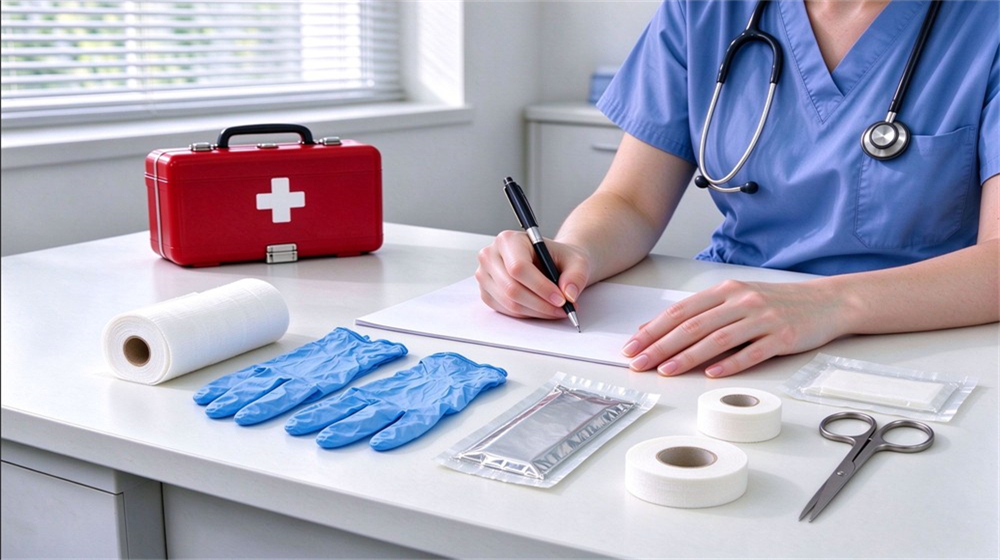
Triage turns a surge into an ordered flow. A ready triage kit becomes the anchor of the whole hospital emergency kit routine at intake. Set up one intake point and one overflow point for each major zone. Use the same triage tags and the same kit position every time. Repetition makes staff move without thinking.
The intake guide should list one job per staff member. One person grabs the triage kit. One person sorts arrivals. One carries the triage tags. Clear roles prevent confusion when the wave arrives.
After each surge drill, restock what was used. Check expiry dates on masks and dressings. Keep a checklist inside the kit so the next drill starts full. A triage kit that is always ready is a drill that never fails. Record the hospital emergency supply count so the next drill starts full.
Triage setup also teaches the location by heart. After a few runs, staff know exactly where the hospital emergency kit lives and what it holds. This familiarity matters most in real events, when voices are loud and time is short.
Practice should be honest but calm. Walk the intake route, sort a mock queue, and return in order. Then debrief as a team. Ask what felt slow and fix that step. Small improvements each quarter build a genuinely faster response.
A hospital that drills well does not need more gear. It needs the same gear, used the same way, every time. That is the real lesson of a surge-ready triage kit program.
Write the triage flow into the daily rhythm. Practice the intake setup at the same time each quarter so it feels normal. Keep the kit on the same shelf through every run. Routine removes panic and builds speed, which is exactly what a real surge needs.
Review each drill with a calm debrief. Ask staff what slowed them down and fix that step. Check that the kit was carried and returned full. These small reviews turn a simple practice into a steadily improving habit.
Communication matters during a surge. One lead gives the order, one sorts the queue, and one carries the tags. Clear roles and a visible kit keep the group calm. That order turns noise into a smooth, fast intake.
A drill also tests the kit itself. Does the case open fast? Does every tray pull one-handed? Does the rucksack strap hold weight? A real run exposes these small frictions. Fix them after the drill so the next one is smoother.
Hospital consumables drive the restock calendar. Dry hospital consumables rely on clear expiry labels inside each hospital emergency kit. Consumables such as dressings, gauze, gloves, and masks carry a three-year shelf life. Durable items such as scissors, tweezers, and the cases themselves carry a five-year service life.
Keep a restock date on every kit. When a dressing is used, replace it the same week. A running list inside the box shows what is missing. That small habit keeps the medical emergency kit honest between restocks. This small clinical emergency supply habit keeps audits calm.
Consumables must stay dry and sealed. Store kits away from moisture and direct heat. A sealed pack survives longer and opens clean. That storage rule protects both the three-year items and the five-year tools.
For larger events, the case steps in with more supply. More gauze, more dressings, and a clear restock list guide the coordinator. A team that has practiced once a quarter will stay composed. Routine checks plus real tools make hospital consumables management both safe and simple.
Battery items, where included such as a torch or radio, use alkaline cells and carry UN38.3 plus MSDS documentation. We never ship loose lithium cells inside a medical kit. That keeps every export shipment compliant and safe.
Keep the routine case stocked after every use. When a mask is opened, replace it the same week. A running list inside the box shows what is due. That habit keeps the ward emergency kit full and current.
A clear flow helps staff act without hesitation. Check the item, note the expiry, restock on time, and sign the log. The hospital emergency kit holds exactly what each step needs. This simple order is easy to teach and easy to follow.
For coordinators who want more, offer a short annual restock refresher. A few minutes of review keeps the system sharp. It also builds confidence with auditors. A trained team is the strongest asset a surge plan can own.
A well-labelled kit also reassures infection-control staff. When a dressing carries a clear date and a clean seal, trust grows. That trust is built one checked pack at a time. A ready hospital emergency kit makes those checks go well far more often.
Store the kit where staff, not patients, reach it first. A fixed position keeps supplies safe while keeping tools close. A clear label and a known spot let any nurse find it fast. Simple placement rules protect both users and dry contents.
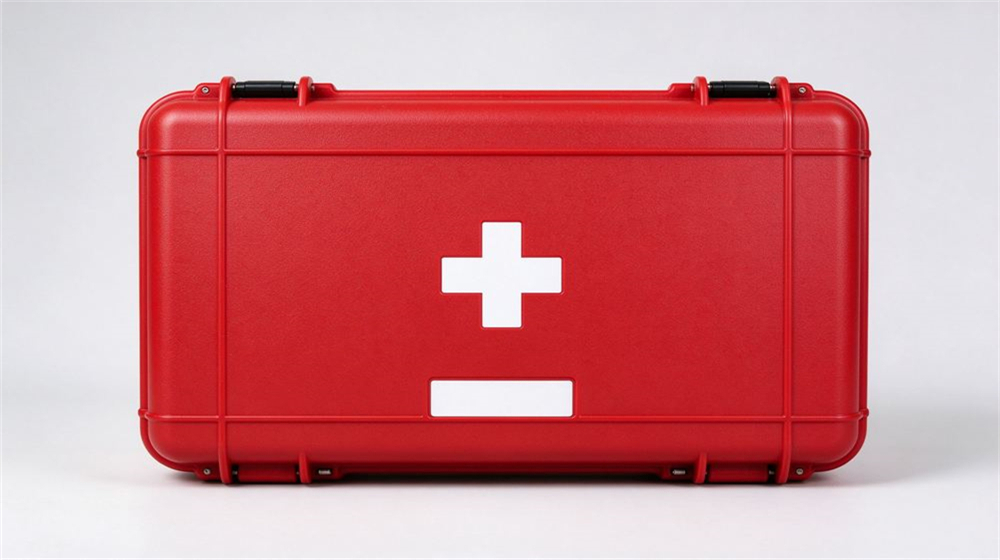
Infection control sets the bar for every hospital emergency kit. Uniform hospital emergency supplies make audit fast and every ward equal. A routine case that follows one layout is easier to audit. Inspectors see the same kit in every ward, and that consistency earns trust.
Contents avoid liquid-based items, aerosols, and glass. We pack dry, sealed consumables and reusable tools. For bulk hospital procurement, a uniform spec makes every ward equal and every inspection simple.
Our kits meet medical device requirements for the categories listed. We align contents with your local audit checklist and destination-market rules. We do not claim specific registration numbers unless your order documents them. That restraint keeps the claim honest.
A standard kit also reduces risk. When every ward holds the same proven dry contents, there is no weak link. Staff, auditors, and infection-control teams all know what to expect. That clarity is a form of protection in itself.
Standards vary by region, so ask about local guidance. Our kits follow common international first aid expectations and avoid hazardous items. We are glad to align contents with your local checklist.
The goal is not the most gear. It is the right dry gear, placed consistently. A triage kit that meets the checklist, and a routine case that matches it, together satisfy most surge readiness standards.
Documentation turns gear into proof. Keep a simple log of each kit, its location, and its last check date. Auditors value a written trail. It turns a safety effort into a verifiable standard.
Train someone to own the program. One coordinator reviews kits, restocks, and updates the log each quarter. A single owner keeps the plan alive. Without an owner, even the best kit slowly falls out of date.
Ask suppliers for the contents list in writing. A clear spec lets a coordinator check every box on arrival. It also protects the facility if a product changes later. Written clarity is the quiet backbone of a compliant program.
Standards also guide restock timing. Set a fixed check date each quarter and mark it on the calendar. A coordinator runs down the list, replaces used consumables, and signs the log. A scheduled check beats a forgotten one and keeps audits calm.
Every hospital emergency kit ships with a short intake guide.The guide makes the triage kit easy to use for any staff member on the floor.It lists where the kit lives, what each tray holds, and what to do in a surge.The guide stays inside the kit, so it is always near the tools.
Pricing for wholesale medical emergency kits for hospitals is tiered by container volume;as a clinical emergency kit, we quote landed costs that include clinical emergency kit consumables, custom packaging and pre-shipment QC.
Relief staff benefit most from this standard. They can read the guide and act without prior briefing. That reliability is a real safety net on any given shift.
The guide is short on purpose. One page covers placement, key items, and three surge steps. A nurse can read it in a minute and act in seconds. Simple text beats a long manual in an emergency.
Keep a second guide at the central supply desk. It lets a coordinator check content and restock without opening every ward case. A quick scan of the list shows what each floor holds. That makes the hospital emergency supplies program easy to manage, ward by ward.
Staff value a tool they understand. When the kit and its guide match the surge script, the whole routine clicks. This is why the guide is part of the kit, not an optional extra.
Make the guide language simple and large. A nurse reads it under stress, so short lines matter. Big type and clear steps beat dense text in a crisis. Keep it to one page and one idea per line.
Show the guide at a staff meeting once a quarter. A two-minute walkthrough refreshes memory and answers questions. It also catches any kit that has drifted from the standard. This keeps the whole program aligned.
Update the guide when contents change. If a new item is added or removed, edit the page the same day. A guide that matches the kit is a guide that works. Stale text quietly weakens every drill that follows.
The guide should name one person as the kit owner. That owner checks the contents, refreshes the list, and reports needs. A named owner beats a shared responsibility that no one claims. It keeps the ward kit honest quarter after quarter.
Keep a copy of the guide online as well. A digital version lets new staff read it before their first shift. It also survives a damaged kit. A PDF on the internal drive is a cheap backup that protects the routine.

Bulk buyers can label the kit with a facility name and unit code. Labelled hospital emergency supplies still keep the same dry safety layout and surge standard. A custom hospital emergency kit looks owned and cared for, which builds trust with staff. We print your text and unit mark on the red case and on the triage tags.
Custom work keeps the same quality and the same safety layout. Only the surface changes. Ask about minimum order and lead time for your facility program. Buyers also ask us to act as a steady hospital medical kit supplier for the whole facility.
Labeling makes the triage kit a visible part of the ward. A case with the unit code sits proudly by the nurse station. Staff see a planned surge system, not a random cabinet. That small detail builds real trust over time.
It also aids recognition. Staff find the kit faster when it carries a familiar mark. The white cross stays the primary symbol, with the unit code as the secondary touch. This balance keeps safety clear and identity strong.
For a whole facility, uniform labeling unifies the program. Every ward shares the same look and the same layout. Restock and audits stay simple because one spec covers all.
Labeling also eases procurement. One approved design covers every ward, so there is no per-ward decision. The board sees one clear line in the budget. Staff see one familiar case at every station.
Choose a mark that reads from a distance. The white cross stays the primary signal, with the facility code as a close second. This order keeps safety clear while building identity. A cluttered case helps no one.
Labeled triage tags complete the set. The facility template, filled by staff, ties each kit to the ward. A full labeled program looks planned, feels owned, and audits cleanly. It is a small detail with a lasting effect.
Keep labeling simple and safe. One clear unit mark plus the white cross reads well from across a corridor. Too many logos dilute the signal. A restrained design looks professional and stays legible in a surge.
Custom printing also supports the facility program. When every case carries the same mark, a stray kit is easy to spot. It belongs, or it does not. This simple cue helps a coordinator keep the plan uniform and complete.
A bulk hospital program starts with a simple plan.Wholesale hospital emergency supplies begin with one routine case per ward.Count wards, count intake rooms, and pick a uniform kit.Then order in one batch so every ward matches and restock stays easy.
For repeat orders, our hospital medical kit supplier account team reorders the same clinical emergency kit configuration, keeping wholesale medical emergency kits for hospitals pricing stable across quarters.
Bulk pricing lowers the per-kit cost and shortens delivery. We pack, label, and ship for an entire facility. A medical emergency kit wholesale order removes the work of piece-by-piece buying, and a bulk medical kit program keeps every ward on one spec.
Planning the order is straightforward. List every ward, then every intake area. Apply the per-ward table to set quantities. Add spares for damaged or expired units. The result is one clean order that covers the whole year.
Bulk also means consistent stock. When one batch arrives, every ward opens the same kit. Training, inspection, and replacement all follow one routine. That uniformity is the quiet strength of a facility-wide program.
For large orders we can label the full run and pack by ward or floor. Delivery can be split across quarters if storage is tight. We adjust the program to your facility, not the other way around.
Plan delivery around the clinical calendar. A quiet-week arrival gives staff time to stock before surge season. A staggered delivery spreads storage and unpacking. We coordinate the schedule to keep your facility running smoothly.
A single contact makes the program simple. One person owns the order, the specs, and the restock cadence. We work with that owner end to end. Clear communication keeps a large order from becoming a headache. Production runs through our manufacturing partner, so every ward batch is built, checked and packed under one quality standard.
Track the program after delivery. A short check at quarter start confirms every hospital emergency kit is full and current. We support the same contact for the full year. This after-sales loop turns a one-time order into a lasting plan.
A clear packing list arrives with every order. It names each kit and its destination, so unpacking is quick. A coordinator can place every unit in minutes. That order saves hours when a whole facility is being stocked at once.
A restock plan prevents surprise gaps. At quarter start, order dressings, gloves, and masks in bulk for all kits at once. One shelf holds the year's supply. That single purchase keeps every ward kit full with minimal effort.
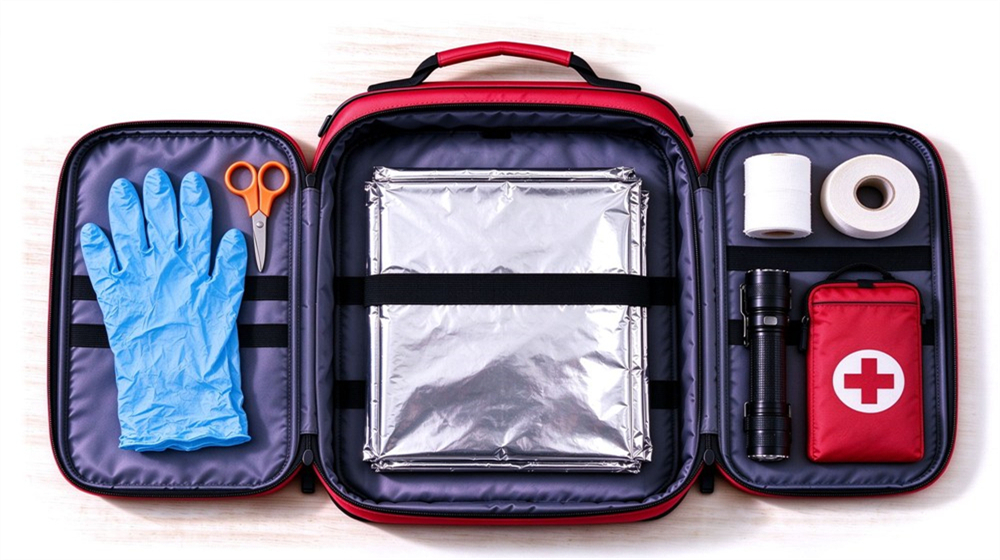
A mid-size hospital with 30 wards moved from mixed supplies to one standard. They mounted a red routine case in every ward and one rescue rucksack in four major zones. Surge drills became uniform, and restock took one order. They also added a small hospital trauma kit for the intake bay.
Within two quarters, staff reported faster intake and simpler audits. Infection-control teams saw a consistent plan. The result is a repeatable model for any facility, small or large.
The hospital started with a simple audit. Some wards had old kits, others had none. One coordinator listed every space and applied the per-ward table. A single order replaced the patchwork in under a month.
Training took one afternoon. Staff learned the one-page guide and ran a first surge drill the next day. Within a quarter, relief staff were acting on their own. The standard layout removed all guesswork from daily response.
Infection-control teams noticed the change. A uniform red case with the unit code appeared in every ward. This visible consistency turned surge readiness into a point of pride. The program now repeats every year with a single restock order.
The audit method carries over to new wings. Once the per-ward table and the one-page guide worked, the same tools spread to new buildings. A proven playbook scales faster than a fresh guess each time.
Staff turnover no longer broke the plan. New hires read the same guide and saw the same kit. The standard removed the need to re-explain from scratch. That resilience made the program self-sustaining.
For other hospitals, the lesson is simple. Start with one routine case per ward, add diagnostic cases for intake, and train in one afternoon. Then repeat each quarter. That small, repeatable loop is the whole secret of a lasting hospital emergency kit program.
Cost stayed predictable because one spec covered all wards. There were no expensive special orders and no half-filled cases. The annual restock was a single line in the budget. That financial clarity made the program easy to defend to the board.
Ask us for a sample first. A hospital that sees the actual kit, guide, and triage tags can decide with confidence. A trial ward proves the fit before a full order. That small step de-risks any bulk hospital program.
A maintenance program keeps every hospital emergency kit ready between surges. It starts with a quarterly check. The coordinator opens each case, scans expiry dates, and notes what was used. Dry hospital consumables at three years are checked first. Durable tools at five years are inspected for wear.
After each check, restock in one bulk order. Order dressings, gloves, and masks together for every ward. One purchase keeps all kits full and cuts shipping. That single shelf of dry consumables solves most mid-year gaps.
Replace damaged cases the same week. A cracked case or a broken strap fails exactly when it is needed. Spare units on hand keep the ward covered while a replacement ships. One spare per ten wards is a safe rule.
Log every action in a shared sheet. The date checked, the items replaced, and the staff who signed. Auditors read this trail in minutes. It turns a quiet maintenance habit into verifiable proof of readiness.
Train the owner once a quarter. A short refresh on the guide, the triage flow, and the restock list keeps the program sharp. New staff join the same session. That shared training is cheap and pays back on the first surge.
Keep a digital backup of every guide. If a case is lost in a transfer, the PDF lives on the internal drive. The program survives a single lost unit. That resilience is the point of a documented system.
Review the mix each year. Surge patterns change, and the kit should change with them. Add a triage tag roll or a second trauma pad if the intake grew. The kit evolves, but one spec still covers every ward.
Maintenance also protects shelf life. Dry items keep longer in a sealed case, away from heat and moisture. Check the seal on every pack. A broken seal means the pack is replaced, not reused. That habit keeps the three-year promise honest.
A clean restock loop also eases budget talks. One annual order of hospital emergency supplies, one expiry calendar, and one owner. The board sees a predictable line, not a string of surprises. Clarity keeps the program funded year after year.
The goal is boring, in the best way. A hospital emergency kit that is always full, always labelled, and always in its place. When a surge finally arrives, staff do not think about supplies. They think about patients. That quiet readiness is the whole point of the program.
For hospitals that want one trusted layout, our Hospital Emergency Kit is the clear starting point. It pairs a red routine medical case with a slim diagnostic case and a waterproof rescue rucksack, sized by ward bed count and built for surge and triage. Bulk buyers get uniform wards, simple restock, and a full facility program of hospital emergency supplies.
Need a full facility program or custom labeling? We supply every ward in one batch, with your unit code on the case and triage tags. Send us your ward count, your bed numbers, and your port. We will quote a complete package for your hospital.
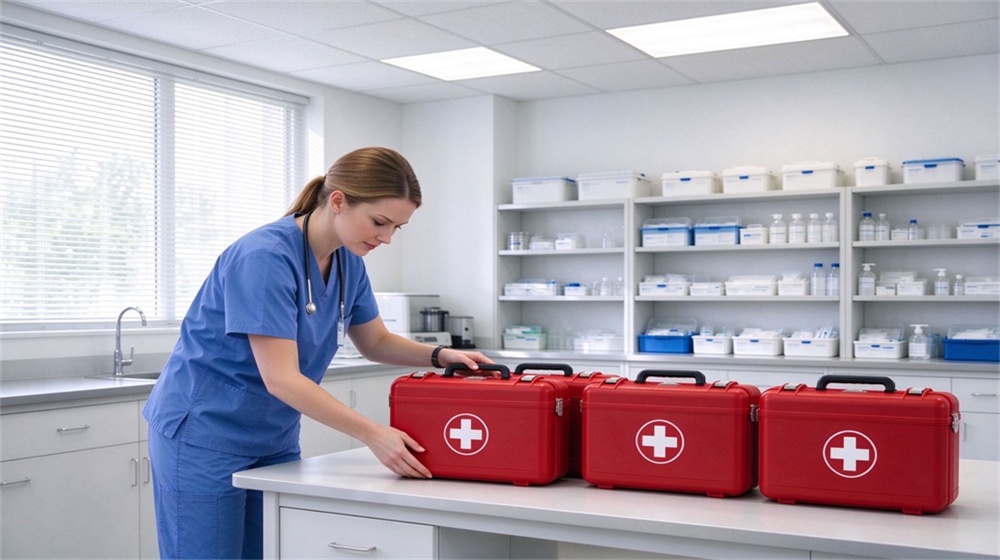
Stop guessing what's inside. Below is the exact parts list, the specification sheet, and the size-decision table our export team uses to quote your order.
You get exactly what you see below. Every item is batch-coded, individually wrapped, and shelf-stable for the period shown. No hidden factory SKUs, no last-second substitutions.
The 28-item list covers ward first aid and intake triage for up to 30 beds. For emergency departments, upgrade trauma shears to a heavier pair and add two hemostatic gauze packs. For pediatric wards, swap adult bandages for junior size and add a bite relief wipe.
#
Item
Qty
Specification
Shelf Life
1
Sterile Gauze Pad
10 pcs
7.5 × 7.5 cm, EO-sterilized
5 years
2
Sterile Gauze Roll
2 rolls
5 cm × 5 m
5 years
3
Conforming Bandage
2 rolls
7.5 cm, latex-free
5 years
4
Hypoallergenic Medical Tape
2 rolls
2.5 cm × 9 m, silk
5 years
5
Adhesive Bandage, assorted sizes
30 pcs
5 sizes, latex-free
3 years
6
Trauma Pad
2 pcs
20 × 20 cm, sterile
5 years
7
Triangle Bandage
2 pcs
96 × 96 × 136 cm
5 years
8
CPR Face Shield, one-way valve
2 pcs
disposable, with filter
5 years
9
Nitrile Exam Gloves, powder-free
6 pairs
M / L, ambidextrous
3 years
10
Antiseptic Wipe, chlorhexidine
20 pcs
2% CHG, sachet
3 years
11
Alcohol Prep Pad, 70%
20 pcs
single-use, sterile
3 years
12
Povidone-Iodine Swab
10 pcs
10% povidone-iodine
3 years
13
Sterile Eye Pad with tape
2 pcs
cotton, adhesive border
5 years
14
Splinter Tweezers, stainless
1 pc
fine tip
permanent
15
Medical Scissors, stainless
1 pc
14 cm, straight
permanent
16
Trauma Shears
1 pc
19 cm, bandage cutter
permanent
17
Hemostatic Gauze
1 roll
7.5 cm × 3.7 m, chitosan-coated
3 years
18
Tourniquet, CAT-style
1 pc
black, plastic buckle
5 years
19
Nasopharyngeal Airway
1 pc
28 Fr, PVC
5 years
20
Portable Pulse Oximeter
1 pc
fingertip, SpO2 / PR
3 years
21
Emergency Thermal Blanket
2 pcs
210 × 160 cm
5 years
22
Hand Sanitizer 75% alcohol
2 bottles
60 ml
2 years
23
Surgical Mask, Type IIR
10 pcs
3-ply, BFE ≥ 98%
5 years
24
N95 Respirator, NIOSH-style
5 pcs
NIOSH N95, head-strap
5 years
25
Eye Wash Solution, sterile
1 bottle
100 ml, buffered saline
2 years
26
First Aid Reference Guide (clinical)
1 pc
24 pages, color
permanent
27
Sealable Biohazard Bag, red
2 pcs
25 × 35 cm, autoclave-safe
permanent
28
Patient Info / Emergency Contact Form
10 pcs
A5, carbonless
permanent
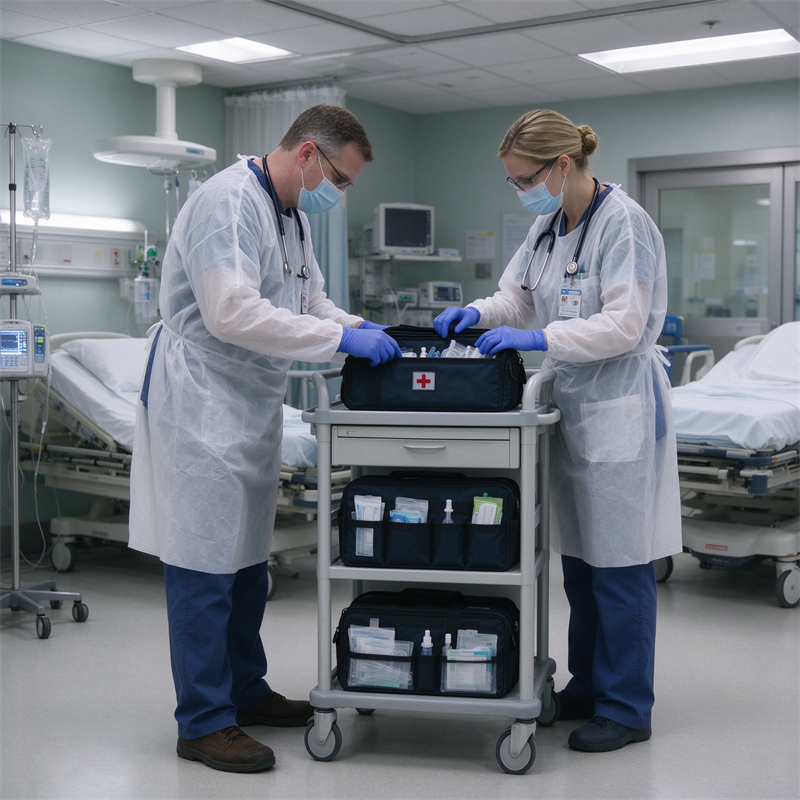
Every unit ships to the same spec sheet. Buyers audit against the rows below at goods-in — especially closed dimensions, working temperature and net weight — so wall brackets and crash-cart shelves fit the first time.
Audit three rows first: closed dimensions, working temperature and net weight. The 35 × 25 × 15 cm red pack fits most ward wall brackets. If your sterile store runs below -10°C in winter transport, confirm the bag fabric stays flexible before a repeat order.
Parameter
Value
Closed dimensions
35 × 25 × 15 cm (fits nurse station counter)
Weight
1.4 kg empty / 3.2 kg loaded
Material
600D Oxford + PVC coating, YKK zipper
Color
Medical White / Deep Navy (custom Pantone on MOQ)
Operating temperature
−20 °C to +50 °C
Water resistance
IPX4
Reflective strip
3M Scotchlite, front panel
Strap
Padded adjustable shoulder strap, 15 kg load
Battery (flashlight)
Hand-crank, no battery; headlamp uses 3 × AAA
Shelf life (consumables)
3 years from production date
Shelf life (gauze / blanket)
5 years from production date
Load-bearing
15 kg
Certifications
MOQ (custom logo)
100–200 units by category
Lead time (200–5,000 units)
15–30 days after artwork approval
Use the decision table below to match your real headcount or room type. Every row is a starting point — we tune the add-ons with you before quote.
Most first-time hospital buyers start with the ED row and tune add-ons before quote. If your program runs on a fixed fiscal year, lock the order 45 days before delivery. Tender buyers should request a pre-production sample for hospital pharmacy records.
Your Situation
Recommended Kit Configuration
Emergency Department
Base kit + extra 1 Trauma Shears + 2 Hemostatic Gauze + 1 Nasopharyngeal Airway.
General Ward
Base kit at each nurse station. Add 1 × 20-ml saline flush pack per 20 beds.
Outpatient Clinic
Base kit + 2 extra CPR face shields + 10 extra alcohol prep pads per treatment room.
Outside Operating Room
Base kit + 1 Tourniquet (CAT) + 1 Pulse Oximeter + 1 Biohazard bag per OR prep area.
Ambulance Transfer
Base kit in hard case + 1 extra Thermal Blanket + 1 Eye Wash per ambulance.
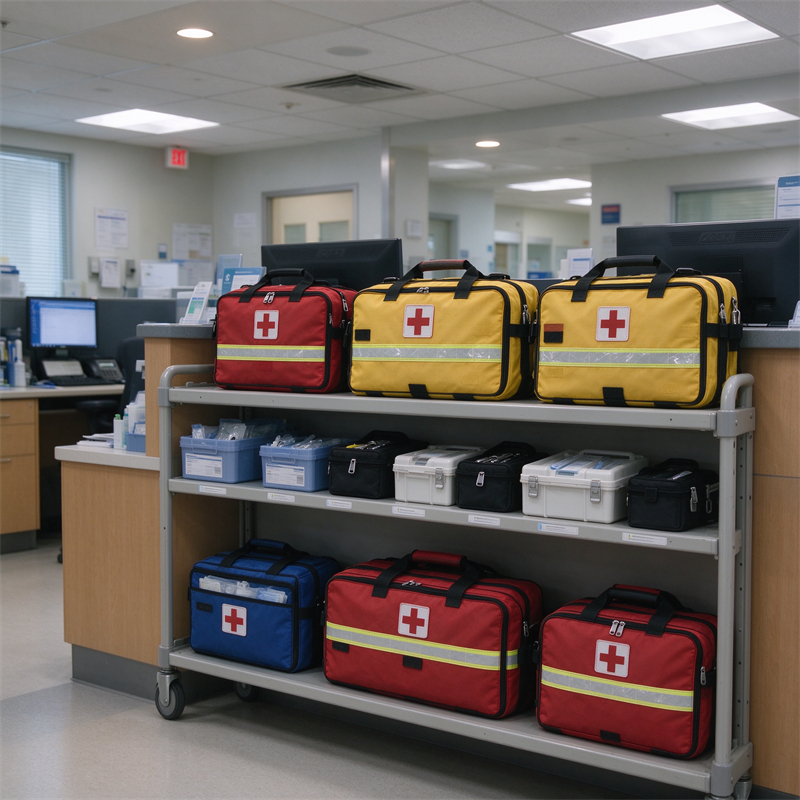
Every Hospital Emergency Kit passes a 25-point factory inspection before it leaves the line. You receive a signed QC report per batch.
We manufacture Hospital Emergency Kit at 100,000 units per month, export to 40+ countries, and have held CE, ISO 9001:2015, BSCI, REACH and FDA-listed component registrations for 8+ years. We provide lifetime technical support from our English-speaking export team.
#
Checkpoint
Standard
1
Fabric thread count
≥ 210T, 600D Oxford
2
PVC coating weight
≥ 0.35 mm, water-drop test
3
Stitching density
8–10 stitches per inch
4
Zipper pull test
5 kg load, 500 cycles, no slip
5
Strap webbing strength
15 kg static load, 10 min
6
Reflective tape adhesion
3M Scotchlite, 24-hr peel test
7
Color fastness
≥ 4 grade, wet rub
8
Label legibility
≥ 5 pt, 30 cm read distance
9
Expiry date stamp
per sachet, batch-coded
10
Net weight check
±3% of spec
11
Contents count
100% vs BOM, 2x scan
12
Sterile wrap integrity
no pinholes, sealed edges
13
Latex-free declaration
per lot, supplier cert
14
REACH / RoHS letter
per shipment
15
Carton drop test
80 cm, 6 faces, no rupture
16
Carton stacking
1.5 m, 24 hr, no deform
17
Barcode scannability
100% read, 20 scans
18
Inner pocket layout
matches photo, 1:1
19
Guide page print
color-matched, no bleed
20
Whistle audio test
≥ 110 dB at 1 m
21
Flashlight output
≥ 50 lumen, hand-crank 30 s
22
Sealable bag seal
water submersion 30 s, no leak
23
Antiseptic sachet leak
pressure 5 kg, 1 min
24
Final pack weight
logged per unit, scanned
25
Carton label & packing list
100% match, dual check
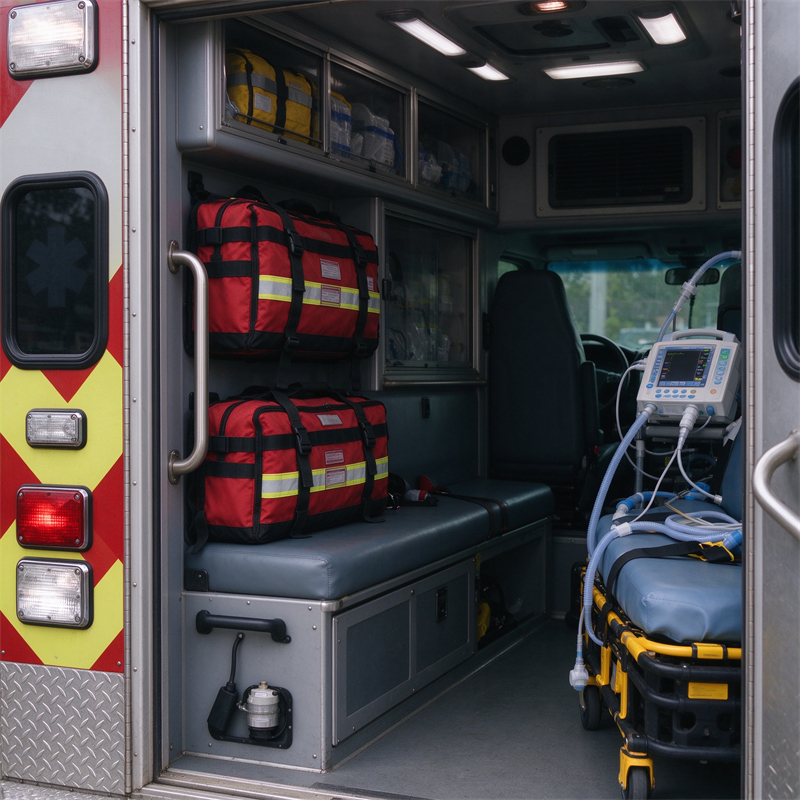
FAQ — Hospital Emergency Kit
Can we use your kits in a JCI-accredited hospital?
Yes. All components are CE-marked, ISO 9001:2015-certified, and the kit ships with a full parts list, batch number and expiry stamp per box. We can also provide FDA-listed component declarations on request for JCI / FDA-inspected facilities.
What is the difference between this kit and a hospital crash cart?
The crash cart carries drugs, defibrillators and IV fluids — for in-hospital resuscitation. Our kit is the bridge: first 3–5 minutes before the crash cart arrives, or for nurse stations, outpatient rooms and transport areas where a full cart is impractical.
Do you provide sterilization-level gauze?
Yes. Gauze pads, trauma pads and eye pads are EO-sterilized and individually wrapped. Nitrile gloves are powder-free and ambidextrous. Surgical masks are Type IIR (BFE ≥ 98%).
How do you handle expired consumables?
Bandages, wipes and cold packs expire at 3 years; gauze and thermal blankets last 5 years. We recommend a monthly ward audit. Every order ships with a a simple consumable rotation process — pull expired units, drop in fresh ones, no extra paperwork
Can we brand the kit with our hospital logo?
Yes. We print the hospital name and logo on the pouch (600D Oxford, navy or white). MOQ for custom branding is 200 units. Inner layout stays clinical-standard so nurses recognize it instantly.
What temperature range can the kit withstand?
Operating range is −20 °C to +50 °C, IPX4 water-resistant. The 600D Oxford + PVC coating pouch handles daily hospital cleaning sprays and spills.
Do you supply hemostatic gauze and tourniquets for ED use?
Yes. The ED configuration adds chitosan-coated hemostatic gauze (7.5 cm × 3.7 m) and a CAT-style tourniquet. Both are single-patient use and individually wrapped.
How quickly can you supply 500 kits for a new hospital wing?
Typical lead time for 500 units is 20–25 days after artwork approval. For urgent openings, we can air-freight 50 kits in 5 working days from our stock.
Does the kit include a pulse oximeter?
Yes. The hospital configuration includes a fingertip pulse oximeter (SpO2 / PR, LCD, AAA batteries included). For pediatric wards we can swap to a pediatric probe on request.
What certifications should we ask for in the tender file?
We provide: CE declaration, ISO 9001:2015 certificate, BSCI audit report, REACH compliance letter, FDA-listed component list (on request), and a 25-point QC inspection report per batch.
YRF Textile Co., Ltd
Bulk emergency kits, fall protection gear and rescue vests for tower, wind and high-rise crews worldwide.
Contact
Email: info@yrftextile.com
Export-ready, OEM and mixed-pallet orders welcome.
Company
About Us · All Emergency Kits
We work with families and communities worldwide. Whether you order a single kit or a container load, our team quotes within 24 hours and ships with FOB, CIF and DDP terms.
Previous :
Office Emergency Kits for Workplace Safety ComplianceNext :
School Emergency Kits for Classroom & Campus Safety Factory Customized Red Cross Disaster relief Med Kit Bag With Multi-purpose compass
GREAT DESIGN - Comfortable design is perfect for all uses and for carrying a wide variety of tools and equipment. You'll find that, whatever you're looking to carry, the YRF Custom Oxford Material Multi Functional Camouflage Tactical Waist Bags is the perfect choice.
 Medical Care Stockpile Metal wire saw Card tool Survival Aid Kit with 16 Pcs Safety Kit
GREAT DESIGN - Comfortable design is perfect for all uses and for carrying a wide variety of tools and equipment. You'll find that, whatever you're looking to carry, the YRF Molle Tactical First Aid Kits Medical Bag Tablets is the perfect choice.
 Outdoor Medical Care Disaster relief First Aid Kit Empty Pouch And Ice Pack Emergency Tool
GREAT DESIGN - Comfortable design is perfect for all uses and for carrying a wide variety of tools and equipment. You'll find that, whatever you're looking to carry, the YRF Mini First Aid Kit Bags And Pouches is the perfect choice.
 High Quality Camping Emergency Face Mask Survival First Aid Kit for Institutional Donation
GREAT DESIGN - Comfortable design is perfect for all uses and for carrying a wide variety of tools and equipment. You'll find that, whatever you're looking to carry, the YRF Outdoor Camping Emergency Kits Tactical First Aid is the perfect choice.
 ICRC Supplies Fluorescent stick first aid medical bags 600d Nylon Emergency Safety Tools Kit
GREAT DESIGN - Comfortable design is perfect for all uses and for carrying a wide variety of tools and equipment. You'll find that, whatever you're looking to carry, the YRF Hunting Survival First Aid Kit Bag Molle Tactical is the perfect choice.
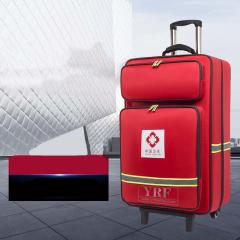 Hot Selling Governmental Institutions List Descender Firefighting Tools Empty Pull Rod First Aid Kit
GREAT DESIGN - Comfortable design is perfect for all uses and for carrying a wide variety of tools and equipment. You'll find that, whatever you're looking to carry, the YRF Tactical Complete First Aid Kit is the perfect choice.
Copyright © Custom Disaster - Relief Bedding: Tents, Sleeping Bags, Blankets All Rights Reserved
the professional team to service !