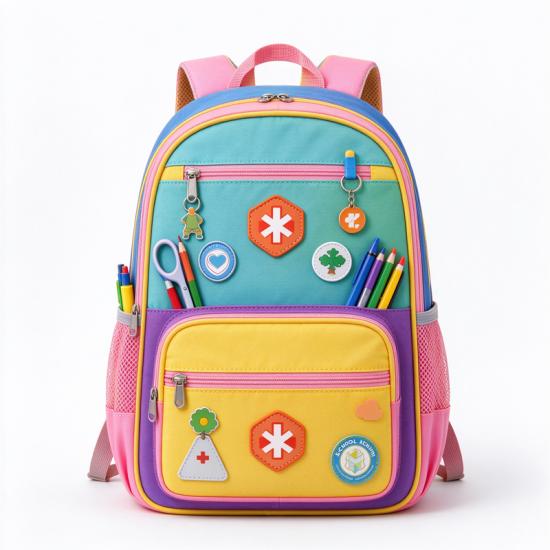
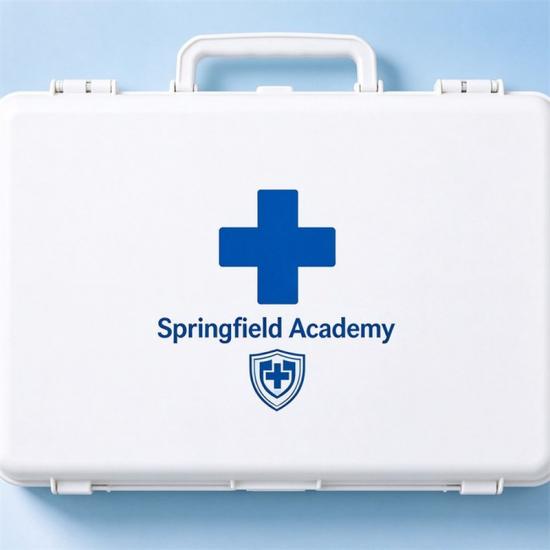
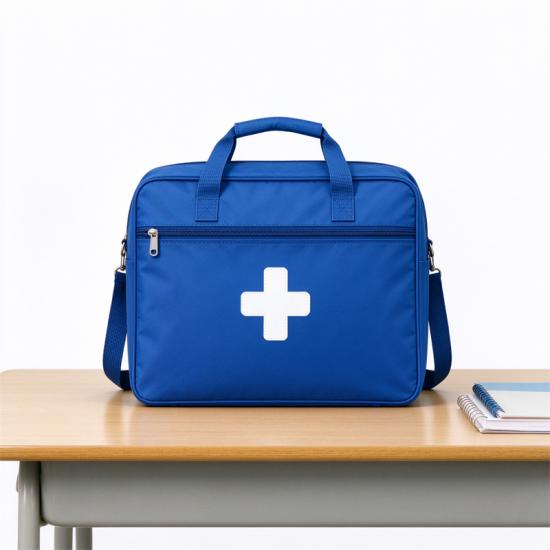
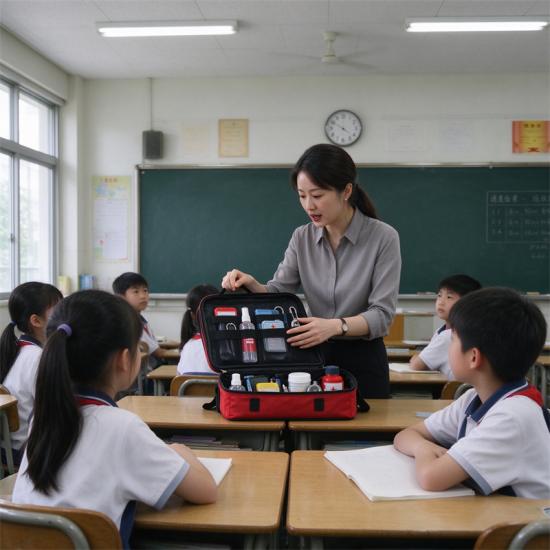

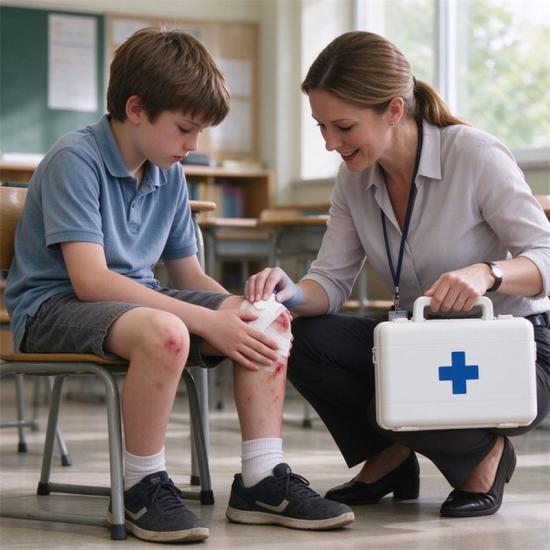
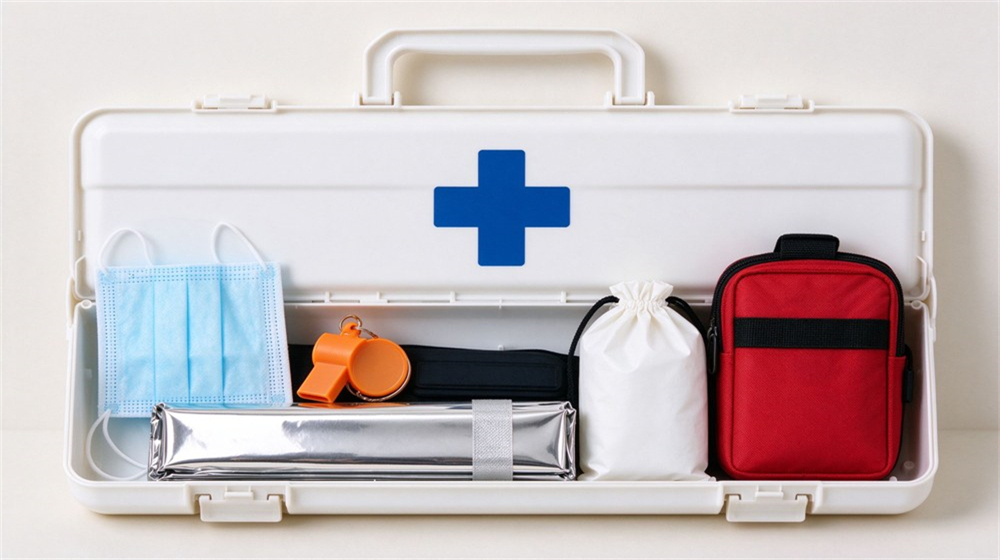
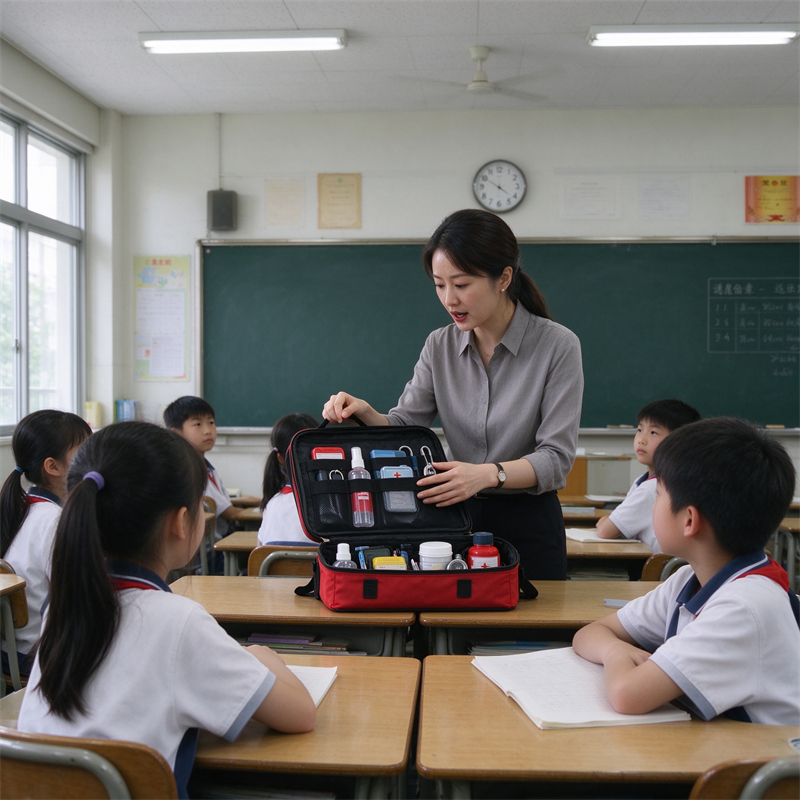
Our School Emergency Kit is engineered for classrooms, hallways and campus evacuation. Wall-mountable cabinet holds masks, blankets, flashlights and basic emergency supplies. Clear layout for fast access, suitable for school district bulk procurement, campus safety plans and custom branded orders.
Note: Price for reference only. Exact price based on quantity, size, weight and custom details.
model no. :
BB-S1Brand:
YRFmarket price :
$39.8sale price :
$19.9price range :
30-500/$19.9Color :
Multiple Colorsport of dispatch :
Guangdong/GuangzhouPayment :
TT, Paypal, Western Unionmin order :
30original region :
Made in ChinaLead Time :
5-15days
 |

|

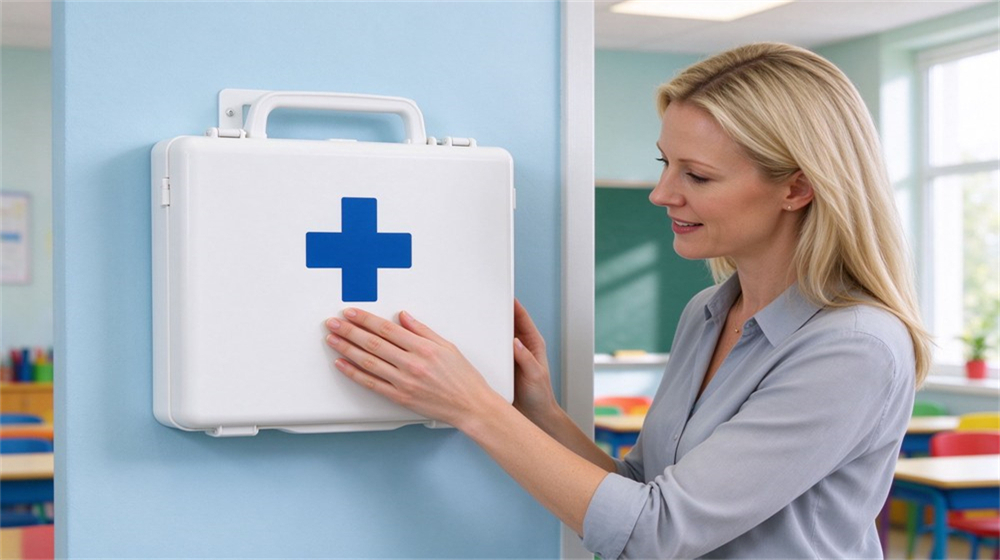
Every classroom needs a classroom emergency kit before the first bell rings.A school emergency kit turns panic into a clear next step for students and teachers alike.Our School Emergency Kit pairs a wall-mounted ABS first aid box with a PP hard-case box, all sized by student count and built for drill-ready drills.
Bulk buyers get the same quality, the same quick assembly, and a clear path to a full school program across every room and campus.
Read on for the classroom and campus layout.As a verified school emergency kit supplier and classroom first aid kit, we supply wholesale emergency kits for schools to distributors, integrators and institutional buyers worldwide, with full traceability on every school emergency kit we ship.
One kit alone cannot serve a whole school.The smart approach is a clear classroom and campus layout that matches the real risk of each space.A classroom emergency kit covers daily first aid and quick evacuation, while a campus first aid kit handles bigger incidents across halls, gyms, and play areas.
Our wholesale school emergency kit supports both layers, so a coordinator can stock every room without guessing.Sized by student count, it keeps the contents right for children and the adults caring for them.
Drill-ready means the kit stays exactly where a routine expects it.When a fire or lockdown alarm sounds, the teacher guide points to the nearest classroom emergency kit, not a distant cupboard.Contents sit in clear trays, so a teacher finds a bandage, a mask, and an emergency contact card within seconds.
Because the same layout repeats across rooms, any substitute teacher knows where everything lives.That consistency is the quiet reason school evacuation kit programs work at scale.
Buyers often ask which unit they need first.Our comparison shows the real answer: a wall-mounted ABS box for one room, and a PP hard-case box for shared spaces.The ABS box fixes to the wall and stays ready every day.The hard box holds 92 pieces and suits staff rooms, halls, and gyms.
The table below maps both to student count, so procurement picks the right mix instead of guessing.Start with one per classroom, then add boxes for each common area.
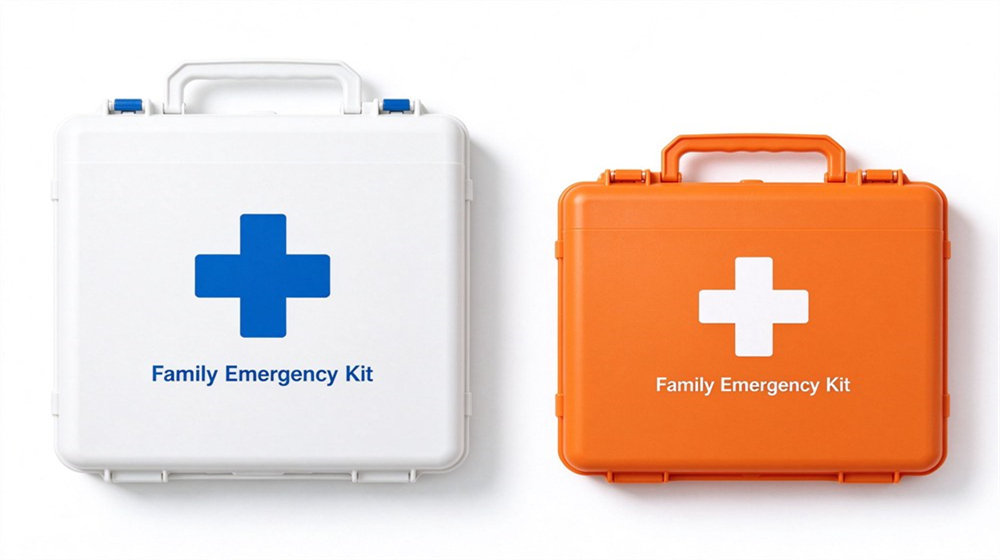
School district procurement officers running a wholesale emergency kits for schools program usually compare three things: spec sheet clarity, certification pack completeness, and delivery window. A capable school emergency kit supplier publishes all three on the same quote page. As an experienced school emergency kit supplier, we back every classroom first aid kit rollout with a signed spec sheet, a stamped certification pack, and a confirmed delivery schedule.
For facilities directors evaluating a classroom first aid kit pilot, the same three checks apply. A reliable school emergency kit supplier aligns the classroom first aid kit spec to your bid document, supports a 50-unit sample order before the full rollout, and signs off on the delivery calendar. Whether you run a small classroom first aid kit pilot or a district-wide award, the same spec sheet applies. As a school emergency kit supplier focused on wholesale emergency kits for schools, we bundle spec, certs and delivery into one quote.
One practical tip for first-time buyers: when you shortlist a school emergency kit supplier, ask for three samples before the full order. Compare the classroom first aid kit packaging, the contents list, and the user guide. A reliable school emergency kit supplier will send samples free of charge; an unreliable one will not. This step alone filters out most of the noise in the market. We back every school emergency kit supplier quote with a free sample, a signed spec sheet, and a delivery calendar your bid team can paste into the file.
On a final note for district-level buyers: a school emergency kit supplier that owns the export documents also consolidates the booking, aligns carton labels to your customs broker, and coordinates the arrival notice with your warehouse. We back every classroom first aid kit award with a repeat-order dossier and a dedicated contact. Choose a school emergency kit supplier that treats your spec sheet as a signed contract, not a suggestion. As a school emergency kit supplier focused on wholesale emergency kits for schools, we bundle spec, certs and delivery into one quote.
As a school emergency kit supplier, we back every classroom first aid kit rollout with a signed spec, a stamped certification pack, and a delivery calendar your bid team can paste into the file. Whether you run a small classroom first aid kit pilot, a school-wide classroom first aid kit rollout, or a district-wide classroom first aid kit award, the same spec sheet applies. As a school emergency kit supplier focused on wholesale emergency kits for schools, we bundle spec, certs and delivery into one quote.
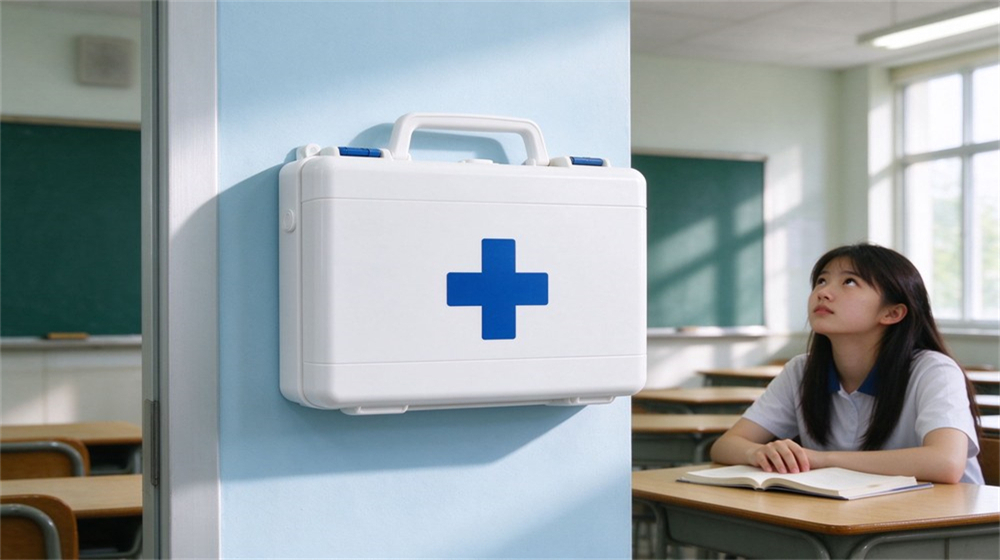
Every school faces a sudden need, from a scraped knee to a lockdown.A classroom emergency kit keeps the first response local and fast.Teachers cannot leave children to find help elsewhere.A ready kit gives them the tools on hand, in a known place, within reach.
In this wholesale emergency kits for schools guide, we cover classroom first aid kit specifications, classroom first aid kit sizing, MOQ tiers and export documentation, so procurement teams can shortlist in one afternoon.
The stakes rise during evacuation and shelter events. A school evacuation kit keeps the exit calm. Student safety stays the first priority of every drill. A well-marked student emergency kit shortens the exit wait.
A school evacuation kit supports a calm, ordered exit instead of a rushed one. When supplies sit in one known spot, staff spend seconds on action and none on searching. That speed protects both students and the adults caring for them.
Regulations and parent expectations now make kits standard, not optional. For bulk buyers, school emergency supplies that follow one layout satisfy both inspectors and families. A visible campus first aid kit shows families that safety is planned. It also supports compliance with common school safety standards. For bulk buyers, standardizing one kit across rooms makes inspection and restock simple.
The true value appears on a normal day, not just in a crisis. A teacher cleans a scrape, covers a burn, or calms a child with the right tool nearby. These small wins build trust with families over a full term. They also reduce trips to the school office and keep learning time intact.
Consistency is what a classroom emergency kit really delivers. When every room holds the same supplies, every adult can act the same way. New staff, substitutes, and volunteers all read the same layout. This shared language turns a simple box into a real safety system.
For a coordinator, the benefit is control. A uniform classroom kit means one purchase, one restock routine, and one training script. There is no guesswork about what each room holds. That predictability is why wholesale school emergency kit programs scale so cleanly.
Think of a kit as insurance that works daily. It costs little, yet it protects the most valuable asset a school owns: its people. When a child is hurt or a building must empty, the tools are already there. That readiness turns a frightening moment into a managed one.
Schools also face quiet risks that kits answer. A choking incident, a severe allergy, or a long lockdown each needs a clear action. A classroom emergency kit with the right contents gives staff a real way to respond. Every minute saved by a ready kit is a minute a child is safer.
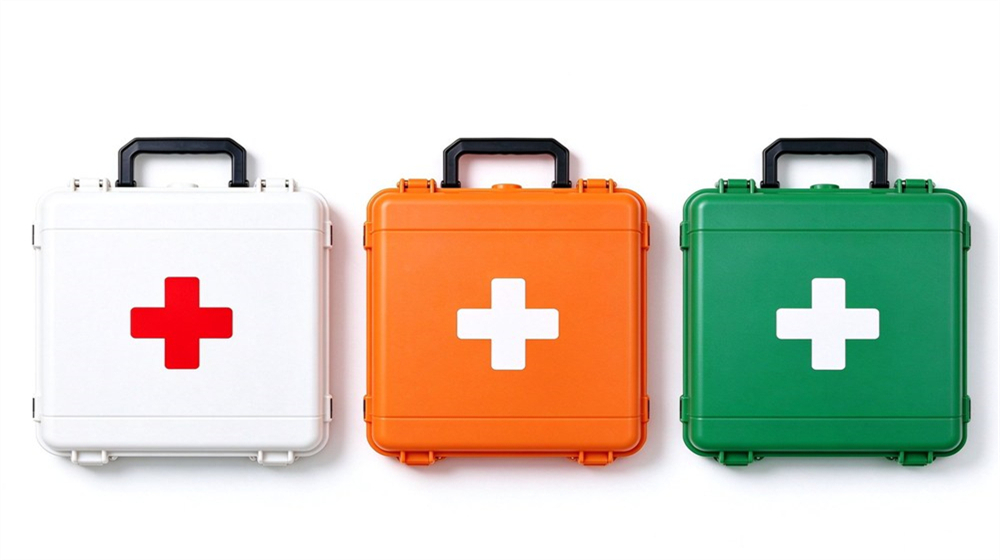
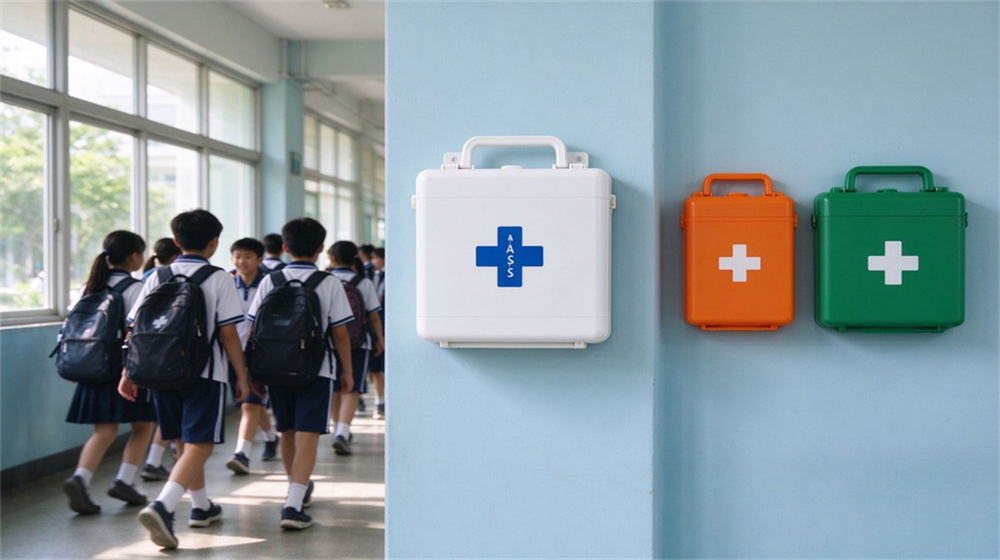
Two formats cover 90% of a school's needs. The wall-mounted ABS box lives by the classroom door for daily first aid, and the 25-person PP box sits on a shared cabinet for events and evacuation. The table below compares them on size, material and person count so you can split budget between the two.
Item
Wall-Mounted ABS Box
25-Person PP Box
Size
29×20×12 / 34×25×13 / 43×32×15 cm
36.5×33.5×10.5 cm
Material
ABS hard case, wall-mounted
PP hard case
Person count
25 / 50 / 100
25
Piece count
25-100 set
92
Colors
White / Orange / Green
White
Best for
One classroom, per student count
Shared spaces, bigger teams
Carry
Fixed on wall
Fixed, high capacity
Most schools buy one wall ABS box per classroom and one shared PP box per building wing. If you run a single-story primary campus, you can skip the shared PP box and reallocate the budget to trauma pads and child-size bandages. Secondary schools with labs and workshops should add a cut-resistant glove upgrade.
A classroom kit serves one room and one routine. That is why the classroom emergency kit stays compact and its campus first aid kit counterpart stays capable. It holds the daily essentials for cuts, burns, and quick evacuation. A campus kit serves shared spaces and bigger teams. It holds more pieces and often a 25-person PP hard-case box.
Classroom units should stay child-friendly and easy to reach.A good classroom emergency kit balances a fixed wall position with enough campus first aid kit coverage for shared halls.Campus units can be heavier and carry professional-grade items.
The right plan keeps both, because the two solve different problems.One room is not the same as a gym with hundreds inside.school safety kit.
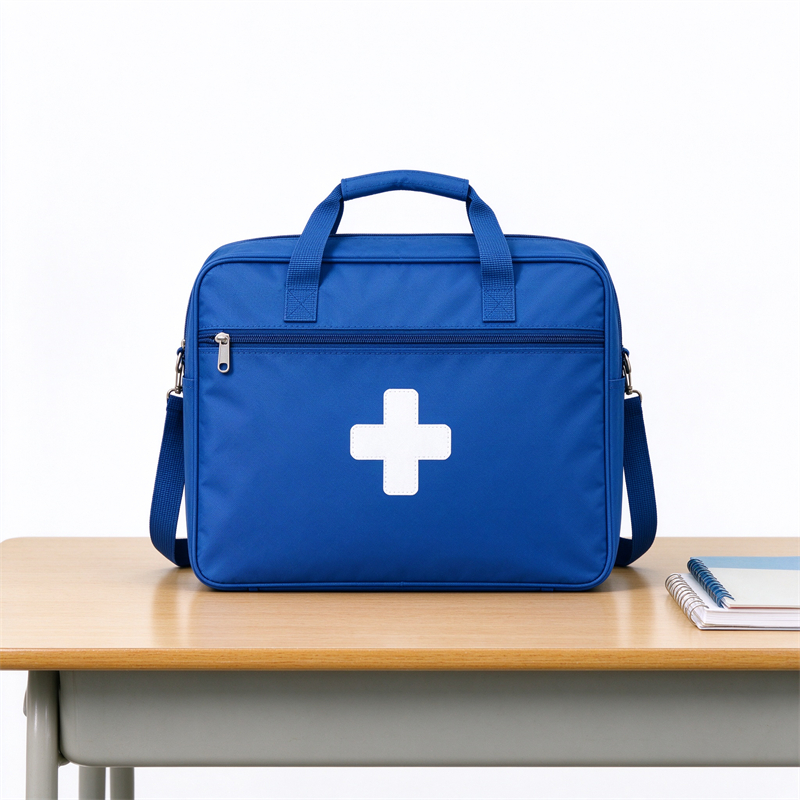
Placement matters as much as contents. Place each classroom emergency kit where the routine already moves, and keep student safety in every placement decision. Mount a classroom kit near the door, at child-safe height, in clear view. Put a campus kit in staff areas and central points. Mark both with a white cross so everyone reads the location instantly.
The contents differ for a reason. A classroom box focuses on frequent, small needs: bandages, wipes, gloves, and a light mask. A campus box adds capacity for bigger teams: more dressing, more gauze, and clearer guidance. Neither replaces the other.
Think of the split as layers in one plan. The classroom layer answers the first five minutes. The campus layer answers the next thirty. Together they cover both daily life and real emergencies without overlap or gaps.
A coordinator can start lean and grow. Begin with one wall-mounted kit per room. Add one campus box for every major shared space. As the school grows, add boxes in a fixed ratio. This modular habit keeps the plan clear and the budget steady.
Choosing the right unit starts with a short walk. Count the rooms that see many students each day. Then count the shared spaces that hold large groups. The first list drives the classroom box count. The second drives the campus box count.
Keep one rule in mind: a classroom emergency kit works when it is close to the people who need it. A box that lives far from the classroom is a box that stays unused. Place each unit where the routine already moves. That is how the plan stays practical, not just tidy.
Budget follows the same logic. One classroom box is the smallest honest start. Add boxes only where student flow demands them. This staged approach keeps costs low while coverage grows. It also gives a clear answer when a board asks for the safety budget.
A small audit makes the split obvious. Count the daily incidents in classrooms versus the big ones in halls. The classroom box handles the frequent small wins. The campus box handles the rare large moments. Together they cover the full range without waste.
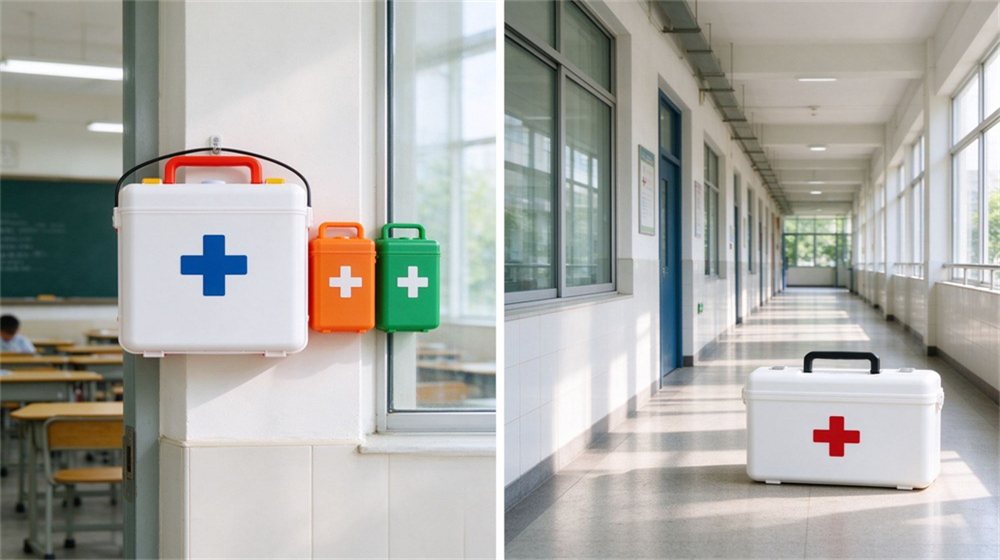
Class size drives both box size and placement. The table below maps 20, 30 and 40-student classrooms to the wall ABS box, the shared PP box and the wall position your facilities team should plan around. Use it as the procurement row for each grade.
|
Class Size |
Classroom ABS Box |
Shared PP Box |
Placement |
|
20 students |
1 × wall-mounted ABS (25-person) |
0 |
Near classroom door |
|
30 students |
1 × wall-mounted ABS (50-person) |
1 × 25-person PP box |
Classroom + staff room |
|
40 students |
1 × wall-mounted ABS (50-person) |
1 PP box per two rooms |
Classroom + central points |
Student count decides the kit mix.Count students first, then size your classroom emergency kit and campus first aid kit to match the real number.For a class of 20, one wall-mounted ABS box covers daily use and evacuation.
For 30 students, add a 25-person PP box for the staff room.For 40, run one wall-mounted ABS box plus one shared box per two rooms.
The math is simple because contents stay modular. A coordinator buys the same wall-mounted ABS kit and adds boxes only where numbers grow. This keeps restock easy and cost predictable. It also lets a whole school scale with one trusted layout.
A 20-student class moves fast and stays light. One box near the door is enough for most days. The teacher grabs it on the way out and has the essentials in hand.
A 30-student class needs a little more reach. A second PP box in the staff room gives a backup point. That way a busy classroom never drains the only supply on site.
A 40-student class works best with a shared ratio. One PP box per two rooms keeps every area covered without overstocking. The table below turns these rules into a simple procurement sheet.
Beyond the table, keep spares on hand. Order a few extra wall-mounted ABS kits for damaged or expired units. A small buffer stock keeps the program running without a new order mid-term. Most schools keep one spare per ten rooms.
Record the location of every kit. A simple list by room helps a coordinator audit in minutes. It also shows inspectors that the plan is real. A named location beats a vague promise of coverage on paper.
Revisit the count each term. Class sizes shift, and rooms change use. A quick update to the list keeps the kit mix accurate. This ten-minute habit is the cheapest part of a strong school safety plan.
The per-class table is a starting rule, not a cage. A school with many special rooms can adapt it. A gym or a lab may need its own box. The principle stays the same: match supply to the people who share the space.
Order timing also matters. Buy for the whole year in one batch. This cuts shipping cost and keeps one spec across all rooms. A single order is easier to track, easier to audit, and easier to restock when term ends.
A final point on stock: keep the count honest. A quick monthly glance at the list shows whether every room is full. Spares for common items live in one cabinet. That single shelf solves most mid-term needs without a new order.
If you would rather start from your real scenario than from a headcount, the decision tree below picks the kit for you. Match your row — daily classroom, shared room or mobile group — and you get the format and wall position in one line.
|
Your Scenario |
Group Size |
Kit to Choose |
Where It Goes |
|
Daily classroom first aid |
Up to 20 students |
Wall-mounted ABS kit (compact) |
Fixed by the classroom door |
|
Larger classroom / shared room |
30-40 students |
Wall-mounted ABS kit (full) |
Fixed near the teacher desk |
|
Field, drill or school bus |
Mobile groups |
PP hard case portable kit |
Carried on the move |
Most buyers land on the compact wall kit for standard 20-student rooms and step up to the full wall kit once a classroom crosses 30 students. Schools with a bus fleet or off-site sports program should always carry one portable PP case per route rather than borrowing from a classroom box.
The decision tree above skips the detail buyers usually argue about: bag material, coverage, carry and shelf life. The table below fills those gaps so you can audit the three formats on spec, not just on shape.
Pick the format by where the unit lives, not by price. A wall ABS box is the default for fixed rooms. A portable PP case earns its place wherever staff walk out with the kit — field trips, drills, school buses. Keep one portable per mobile team rather than per classroom.
Feature
Compact Wall Kit
Full Wall Kit
Portable PP Case
Format
Wall-mounted ABS
Wall-mounted ABS
Hard PP case
Coverage
Small room / office
Full classroom
Mobile team
Carry
Fixed
Fixed
Hand-carried
Shelf life
Consumables 3 yr / tools 5 yr
Consumables 3 yr / tools 5 yr
Consumables 3 yr / tools 5 yr
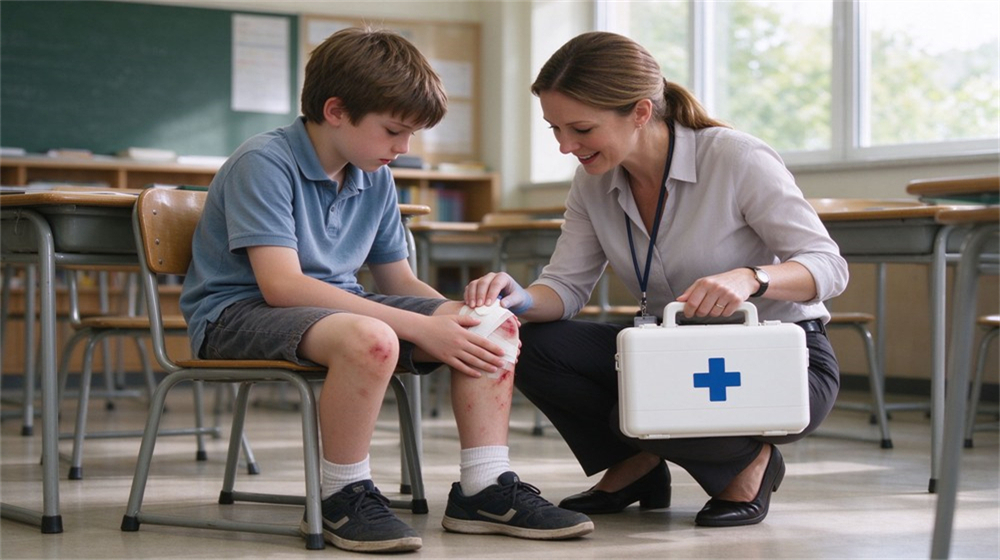
Primary schools need smaller, lighter kits with clear visuals. For younger groups, a bright classroom emergency kit supports student safety without a heavy burden. A heavy box is a hazard for small children. Keep the classroom emergency kit compact and its cross highly visible. Mount it high enough that little hands stay out of daily access.
Secondary schools can carry more and trust older students. A campus first aid kit with more pieces suits this group.
These older students can help move a campus first aid kit and follow school evacuation kit steps with confidence. Older students also respond well to drills, so evacuation routines can go further. Match weight and contents to the age group for real safety.
Younger children read a cross, not a label. So the visual is everything for primary classrooms. A bright ABS box in orange, white or green with a white cross is easy to spot and easy to teach. Even a five-year-old can point to the classroom emergency kit.
Older students can be trained to help. With a campus kit nearby, a trained senior can hold a compress or fetch a mask. This builds responsibility without replacing adult care. It also makes drills more meaningful for the whole school.
The same kit can serve both with small adjustments. Primary rooms use the colored ABS box on a high shelf. Secondary rooms add the PP box at a central point. One product line, two placements, and one consistent safety standard.
Age also changes what a child can reach. A primary child should never pull a heavy box. Keep the classroom kit fixed at a height adults can reach one-handed. That placement rule protects the smallest students in the school.
Teach the kit by age, not by rule. For young children, a picture card on the wall shows where the kit lives. For older students, a short talk covers what each tray holds. Both groups learn faster when the message matches their stage.
Secondary schools can assign student helpers. A trained prefect can reach the box or carry the classroom emergency kit during a drill. This builds leadership and speeds response at the same time. It also keeps the campus kit in a place students can reach quickly.
Safety standards stay constant across age. The visual cross, the placement, and the contents do not change. Only the training level shifts. That consistency gives a whole school one shared language for emergency response.
Parents notice the difference. A bright, compact kit for young children reassures a primary family. A capable, fuller kit for older students reassures a secondary family. Matching the kit to the age shows that safety is thought through, not generic.
Drills turn a kit into muscle memory. A drill-ready classroom emergency kit becomes the anchor of the whole school evacuation kit routine. Run one fire drill and one lockdown drill each term. Use the same assembly point and the same kit position every time. Repetition makes children move without thinking.
The teacher guide should list one job per staff member. One person grabs the classroom emergency kit. One person checks headcount. One person carries the emergency contact cards. Clear roles prevent confusion when the alarm sounds.
After each drill, restock what was used. Check expiry dates on masks and wipes. Keep a checklist inside the kit so the next drill starts full. A school evacuation kit that is always ready is a drill that never fails. Log the school emergency supply count so the next drill starts full.
Drills also teach the location by heart. After a few runs, students know exactly where the classroom emergency kit lives and what it holds. This familiarity matters most in real events, when voices are loud and time is short.
Practice should be honest but calm. Walk the route, count heads, and return in order. Then debrief in class. Ask what felt slow and fix that step. Small improvements each term build a genuinely faster response.
A school that drills well does not need more gear. It needs the same gear, used the same way, every time. That is the real lesson of a drill-ready classroom emergency kit program.
Write the drill into the daily rhythm. Practice the route at the same time each term so it feels normal. Keep the kit on the same shelf through every run. Routine removes fear and builds speed, which is exactly what a real alarm needs.
Review each drill with a calm debrief. Ask staff what slowed them down and fix that step. Check that the kit was carried and returned full. These small reviews turn a simple practice into a steadily improving safety habit.
Communication matters during a drill. One adult gives the order, one checks the route, and one counts at the point. Clear roles and a visible kit keep the group calm. That order turns noise into a smooth, fast exit.
A drill also tests the kit itself. Does the box open fast? Does every tray pull one-handed? Does the handle hold weight? A real run exposes these small frictions. Fix them after the drill so the next one is smoother.
Daily first aid handles the small moments that make up a school week. Everyday first aid for schools relies on a stocked classroom emergency kit within arm's reach. A classroom emergency kit holds bandages, wipes, and gloves for common cuts. A teacher with a classroom emergency kit nearby can act in seconds and stay calm.
For bigger injuries, the campus first aid kit provides more coverage. Include a CPR mask and a clear step card. Staff who are not medics still benefit from clear, simple guidance printed on the kit.
Keep first aid training for key staff each year. A kit only helps when someone knows how to use it. Pair the right supplies with a short, repeated training plan.
First aid is mostly routine. A scrape, a nosebleed, a small burn. The classroom kit holds what a teacher needs to handle these without leaving the room. That keeps care quick and keeps class calm. A compact school health kit sits within arm’s reach on every floor.
The glove and mask matter for safety. Use clean gloves for every wound, and a mask when a child is unwell. These simple habits protect both the student and the helper. They belong in every classroom emergency kit.
For larger events, the box steps in. More gauze, more dressing, and a clear card guide the responder. A trained staff member who has practiced once a year will stay composed. Routine drills plus real tools make first aid for schools both safe and simple.
Keep the classroom kit stocked after every use. When a bandage is used, replace it the same day. A running list inside the box shows what is missing. That small habit keeps the kit honest between restocks.
A clear flow helps staff act without hesitation. Check the wound, clean it, cover it, and comfort the child. The classroom emergency kit holds exactly what each step needs. This simple order is easy to teach and easy to follow.
For staff who want more, offer a short annual first aid refresher. A few hours of practice keeps skills sharp. It also builds confidence with parents. A trained team is the strongest asset a school safety plan can own.
A classroom first aid kit also reassures parents. When a child returns with a clean bandage and a calm story, trust grows. That trust is built one small moment at a time. A ready classroom emergency kit makes those moments go well far more often.
Store the kit where adults, not children, reach it first. High placement keeps small hands safe while keeping tools close. A clear label and a known spot let any adult find it fast. Simple placement rules protect both users and supplies.
Common school safety standards reward visible, standard equipment. Uniform school emergency supplies make student safety audits fast and every room equal. A classroom emergency kit that follows one layout is easier to audit. Inspectors see the same kit in every room, and that consistency earns trust. A standard school medical kit layout makes audit days calm.
Contents should meet basic first aid and evacuation needs without exotic items. Keep items that are easy to restock and legal to ship. For bulk school programs, a uniform spec makes every room equal and every inspection simple.
A standard kit also reduces liability. When every room holds the same proven contents, there is no weak link. Parents, staff, and auditors all know what to expect. That clarity is a form of protection in itself.
Standards vary by region, so ask about local guidance. Our kits follow common international first aid expectations and avoid hazardous items. We are glad to align contents with your local audit checklist.
The goal is not the most gear. It is the right gear, placed consistently. A campus first aid kit that meets the checklist, and a classroom ABS box that matches it, together satisfy most student safety standards.
Documentation turns gear into proof. Keep a simple log of each kit, its location, and its last check date. Auditors value a written trail. It turns a safety effort into a verifiable standard.
Train someone to own the program. One coordinator reviews kits, restocks, and updates the log each term. A single owner keeps the plan alive. Without an owner, even the best kit slowly falls out of date.
Communicate the standard to parents. A short note explains what each room holds and how drills work. Families feel safer when they understand the plan. Visible, standard gear backed by a clear message earns real trust.
Ask suppliers for the contents list in writing. A clear spec lets a coordinator check every box on arrival. It also protects the school if a product changes later. Written clarity is the quiet backbone of a compliant program.
Standards also guide restock timing. Set a fixed check date each term and mark it on the calendar. A coordinator runs down the list, replaces used items, and signs the log. A scheduled check beats a forgotten one and keeps audits calm.
A visible standard also supports funding. A board approves a budget more easily when the plan is clear and uniform. One spec, one price, and one coverage map make the ask simple to understand. Clarity wins support.
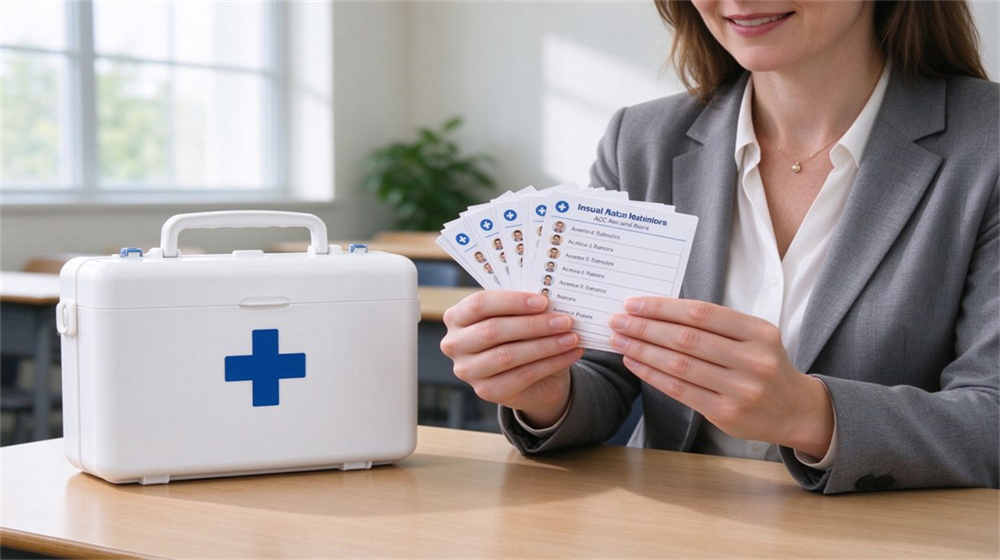
Every classroom emergency kit ships with a short teacher guide.The guide makes the classroom emergency kit easy to use for any adult in the room.It lists where the kit lives, what each tray holds, and what to do in an alarm.The guide stays inside the kit, so it is always near the tools.
Pricing for wholesale emergency kits for schools is tiered by container volume;as a classroom first aid kit, we quote landed costs that include school first aid kit consumables, custom packaging and pre-shipment QC.The same classroom medical kit cadence applies to every room.
Substitutes benefit most from this standard. They can read the guide and act without prior briefing. That reliability is a real safety net on any given day.
The guide is short on purpose. One page covers placement, key items, and three alarm steps. A teacher can read it in a minute and act in seconds. Simple text beats a long manual in an emergency.
Keep a second guide at the staff desk. It lets a coordinator check content and restock without opening every box. A quick scan of the list shows what each room holds. That makes the classroom emergency kit program easy to manage.
Teachers value a tool they understand. When the kit and its guide match the drill script, the whole routine clicks. This is why the guide is part of the kit, not an optional extra.
Make the guide language simple and large. A teacher reads it under stress, so short lines matter. Big type and clear steps beat dense text in a crisis. Keep it to one page and one idea per line.
Show the guide at staff meetings once a term. A two-minute walkthrough refreshes memory and answers questions. It also catches any kit that has drifted from the standard. This keeps the whole program aligned.
Update the guide when contents change. If a new item is added or removed, edit the page the same day. A guide that matches the kit is a guide that works. Stale text quietly weakens every drill that follows.
The guide should name one person as the kit owner. That owner checks the contents, refreshes the list, and reports needs. A named owner beats a shared responsibility that no one claims. It keeps the classroom kit honest term after term.
Keep a copy of the guide online as well. A digital version lets new staff read it before their first day. It also survives a damaged kit. A PDF on the staff drive is a cheap backup that protects the routine.
Ask staff to flag what feels unclear. A short note after a drill tells you where the guide fell short. Rewrite that line before the next term. The guide improves with use, so keep it open to small, steady edits.
The guide also protects new volunteers. A parent helper can follow it without prior training. That lowers the barrier to helping and widens your safety net. A simple guide turns more adults into capable responders.
Emergency contact cards belong in every classroom emergency kit. Contact cards pair with the classroom emergency kit to protect student safety during an event. They list guardians, allergies, and medical notes for each child. Teachers fill them at term start and update them as needed.
Keep cards in a waterproof pocket. A card that survives a spill is a card that works in a crisis. For privacy, store cards with the kit and share them only when needed.
The card is a bridge between school and family. In a real event, guardians need to be reached fast. A single card with the right number saves minutes that matter. That is why the card lives in the kit, not in a drawer.
Cards also record what adults must know. Allergies, medications, and contact order belong here. Teachers who have this note beside the first aid tools act with confidence. The kit becomes a record, not just a box.
For custom programs, we print the school template on each card. Bulk buyers get cards ready to fill, matched to their format. This turns every classroom emergency kit into a complete, organized unit.
Fill cards at the start of each term. Collect guardian numbers, allergies, and medical notes. Review them with parents to confirm accuracy. A correct card is the one that works when a call must be made.
Store cards with the kit in a waterproof pocket. In an evacuation, the kit and the cards travel together. That pairing means contact data is always with the first aid tools. Separation is the risk a pocket removes.
Respect privacy with a simple rule. Cards stay with the kit and are shown only when needed. Staff sign them out for a real event, then return them. This balance keeps the data useful and the trust intact.
Update cards whenever a guardian changes. A new phone number on the old card is still a missed call. A quick review at term start and after breaks keeps the data current. Current data is what makes a contact card worth carrying.
For young students, keep the card simple. Name, guardian number, and one allergy line cover most needs. Older students can add medication notes. The card grows with the child, so it stays useful across the years.
Make the card easy to read at speed. Use large type and one line per field. A number typed in big letters beats a cramped one in a crisis. Legibility is a safety feature, not just a style choice.
Cards also help reunite families after an event. The guardian list in the kit matches the child to the right adult. That match matters most when crowds are loud and time is short. A filled card is a quiet lifesaver.
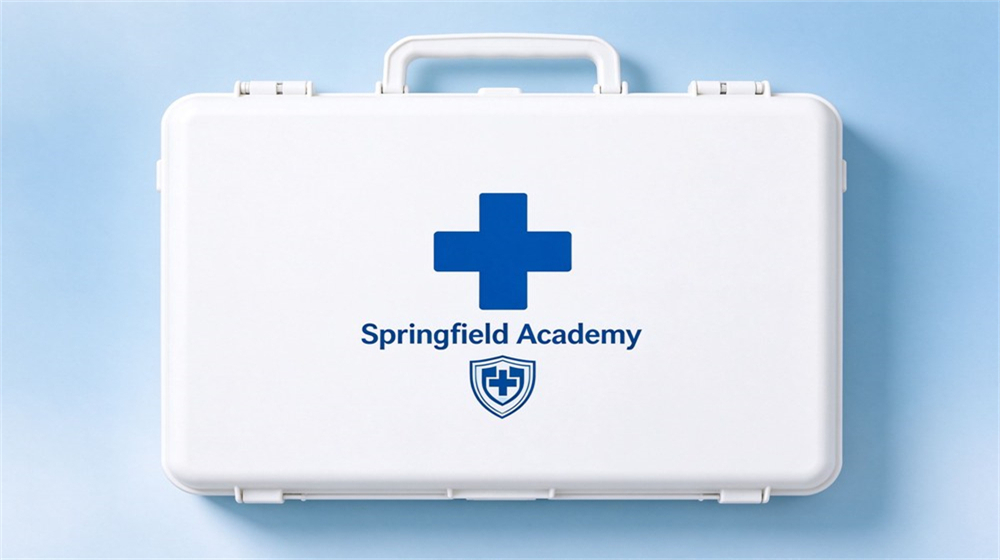
Bulk buyers can brand the kit with a school name and logo.Branded school emergency supplies still keep the same safety layout and student safety standard.A custom classroom emergency kit looks owned and cared for, which builds trust with parents.
We print your text and emblem on the ABS box and cards.For repeat orders, our school emergency kit supplier account team reorders the same school first aid kit configuration, keeping wholesale emergency kits for schools pricing stable across quarters.
Custom work keeps the same quality and the same safety layout. Only the surface changes. Ask about minimum order and lead time for your school program. A branded school preparedness kit carries the school mark.
Branding makes the classroom emergency kit a visible part of the school. A box with the school name sits proudly by the door. Parents see a planned safety system, not a random cabinet. That small detail builds real trust over time.
It also aids recognition. Students find the kit faster when it carries a familiar mark. The white cross stays the primary symbol, with the school name as the secondary touch. This balance keeps safety clear and identity strong.
For a whole campus, uniform branding unifies the program. Every room shares the same look and the same layout. Restock and audits stay simple because one spec covers all.
Branding also eases procurement. One approved design covers every room, so there is no per-room decision. The board sees one clear line in the budget. The staff sees one familiar box in every door.
Choose a logo that reads from a distance. The white cross stays the primary signal, with the school mark as a close second. This order keeps safety clear while building identity. A cluttered box helps no one.
Branded cards complete the set. The school template, filled by staff, ties each kit to the campus. A full branded program looks planned, feels owned, and audits cleanly. It is a small detail with a lasting effect.
Keep branding simple and safe. One clear school mark plus the white cross reads well from across a room. Too many logos dilute the signal. A restrained design looks professional and stays legible in a crisis.
Custom printing also supports the campus program. When every box carries the same mark, a stray kit is easy to spot. It belongs, or it does not. This simple cue helps a coordinator keep the plan uniform and complete.
A branded kit also helps with replacement. When a room needs a fresh unit, it matches the rest exactly. No visual mismatch breaks the standard. Uniform branding makes the program easy to extend year after year.
A bulk school program starts with a simple plan. Wholesale school emergency supplies begin with one classroom emergency kit per room. Count rooms, count shared spaces, and pick a uniform kit. Then order in one batch so every room matches and restock stays easy.
Bulk pricing lowers the per-kit cost and shortens delivery. We pack, label, and ship for an entire campus. A school emergency kit wholesale order removes the work of piece-by-piece buying. One school disaster kit program covers every classroom at once.
Planning the order is straightforward. List every classroom, then every shared area. Apply the per-class table to set quantities. Add spares for damaged or expired units. The result is one clean order that covers the whole year.
Bulk also means consistent stock. When one batch arrives, every room opens the same kit. Training, inspection, and replacement all follow one routine. That uniformity is the quiet strength of a campus-wide program.
For large orders we can brand the full run and pack by building or floor. Delivery can be split across terms if storage is tight. We adjust the program to your campus, not the other way around.
Plan delivery around the school calendar. A summer arrival gives staff time to stock before term. A staggered delivery spreads storage and unpacking. We coordinate the schedule to keep your campus running smoothly.
A single contact makes the program simple. One person owns the order, the specs, and the restock cadence. We work with that owner end to end. Clear communication keeps a large order from becoming a headache. Production runs through our manufacturing partner, so every classroom batch is built, checked and packed under one quality standard.
Track the program after delivery. A short check at term start confirms every kit is full and current. We support the same contact for the full year. This after-sales loop turns a one-time order into a lasting plan.
A clear packing list arrives with every order. It names each kit and its destination, so unpacking is quick. A coordinator can place every unit in minutes. That order saves hours when a whole campus is being stocked at once.
A restock plan prevents surprise gaps. At term start, order masks, wipes, and gloves in bulk for all kits at once. One shelf holds the year's supply. That single purchase keeps every classroom kit full with minimal effort.
Make delivery day a small plan, not a scramble. Arrange staff to receive, stock, and log the batch. A short checklist turns unpacking into a tidy routine. That calm start keeps the whole term's safety on track.
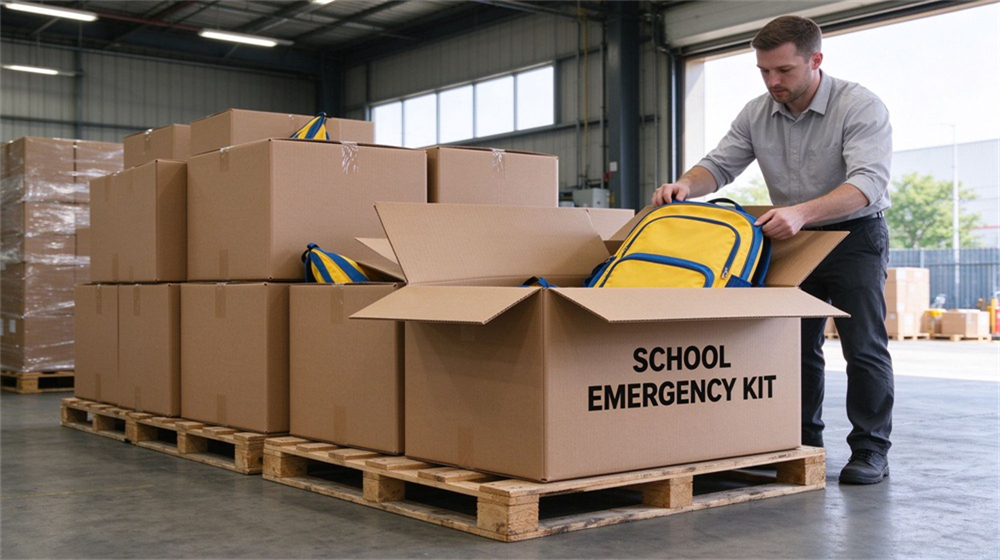
A mid-size school with 24 classrooms moved from mixed supplies to one standard. They mounted a wall-mounted ABS kit in every room and one 25-person PP box in four shared areas. Drills became uniform, and restock took one order. They also added a shared student safety kit for the hall.
Within two terms, staff reported faster response and simpler audits. Parents saw a consistent safety plan. The result is a repeatable model for any school, small or large.
The school started with a simple audit. Some rooms had old kits, others had none. One coordinator listed every space and applied the per-class table. A single order replaced the patchwork in under a month.
Training took one afternoon. Staff learned the one-page guide and ran a first drill the next day. Within a term, substitutes were acting on their own. The standard layout removed all guesswork from daily safety.
Parents noticed the change. A uniform ABS box with the school mark appeared in every room. This visible consistency turned safety into a point of pride. The program now repeats every year with a single restock order.
The audit method carries over to other buildings. Once the per-class table and the one-page guide worked, the same tools spread to new wings. A proven playbook scales faster than a fresh guess each time.
Staff turnover no longer broke the plan. New hires read the same guide and saw the same kit. The standard removed the need to re-explain from scratch. That resilience made the program self-sustaining.
For other schools, the lesson is simple. Start with one wall-mounted ABS kit per room, add boxes for shared spaces, and train in one afternoon. Then repeat each term. That small, repeatable loop is the whole secret.
Cost stayed predictable because one spec covered all rooms. There were no expensive special orders and no half-filled boxes. The annual restock was a single line in the budget. That financial clarity made the program easy to defend to the board.
The program also improved morale. Staff felt safer and parents noticed the plan. A visible, uniform safety system turned an obligation into a point of pride. That sense of readiness is worth more than the kit alone.
The model also works for small schools. A single classroom with one ABS box and one PP box still gains the same clarity. Size does not change the principle: uniform gear, clear roles, and repeated drills. The plan scales down as easily as it scales up.
Ask us for a sample first. A school that sees the actual kit, guide, and cards can decide with confidence. A trial room proves the fit before a full order. That small step de-risks any bulk school program.
For schools that want one trusted layout, our School Emergency Kit is the clear starting point. It pairs a wall-mounted ABS first aid box with a PP hard-case box, sized by student count and built for drill-ready drills. Bulk buyers get uniform rooms, simple restock, and a full school program.
Need a full school program or custom branding? We supply every classroom in one batch, with your name on the box and cards. Send us your room count, your student numbers, and your port. We will quote a complete package for your campus.
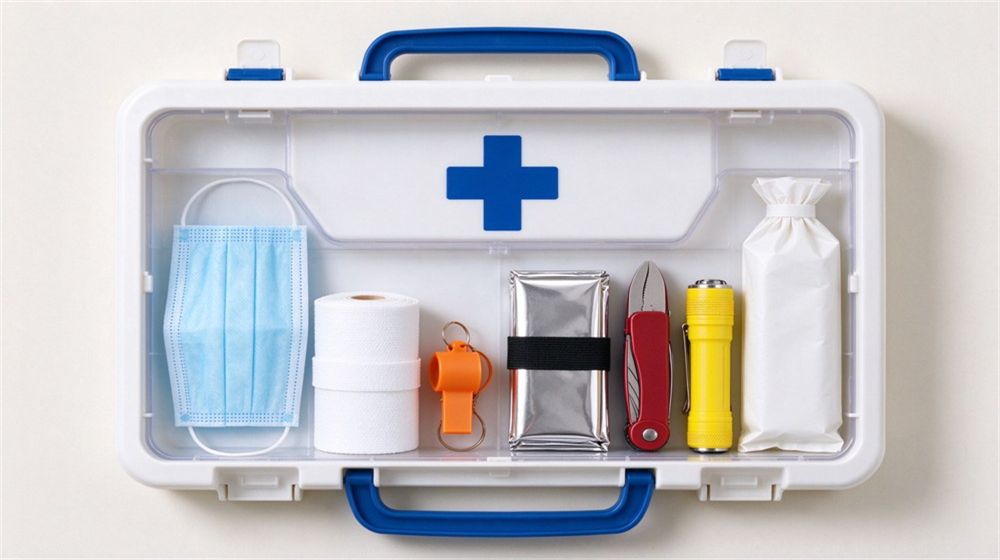
Stop guessing what's inside. Below is the exact parts list, the specification sheet, and the size-decision table our export team uses to quote your order.
You get exactly what you see below. Every item is batch-coded, individually wrapped, and shelf-stable for the period shown. No hidden factory SKUs, no last-second substitutions.
The 26-item list covers bumps, burns and light bleeding for up to 25 students. For kindergarten rooms, upgrade adhesive bandages to junior size (already included) and add extra bite relief wipes. For secondary labs, add a pair of cut-resistant gloves and a small burn gel tube.
#
Item
Qty
Specification
Shelf Life
1
Junior Adhesive Bandage (latex-free)
30 pcs
25 × 72 mm, child size
3 years
2
Pediatric Gauze Pad
5 pcs
5 × 5 cm, sterile
5 years
3
Child-sized CPR Mask (infant/child)
1 pc
one-way valve, disposable
5 years
4
Safety Scissors, rounded tip
1 pc
stainless, blunt tip
permanent
5
Disposable Vinyl Gloves, kid size
4 pairs
XS, powder-free
3 years
6
Antiseptic Wipe, 70% isopropyl
15 pcs
sachet, single-use
3 years
7
Sterile Eye Pad
2 pcs
with adhesive tape
5 years
8
Triangle Bandage
2 pcs
96 × 96 × 136 cm
5 years
9
Medical Tape
1 roll
2.5 cm × 5 m, hypoallergenic
5 years
10
Thermal Blanket
2 pcs
210 × 160 cm, Mylar
5 years
11
Emergency Whistle, pea-less
2 pcs
lanyard included
permanent
12
Hand-Crank Flashlight
1 pc
3-mode, no battery needed
3 years
13
N95 Mask, child size
10 pcs
NIOSH-style, ear-loop
5 years
14
Emergency Contact Card template
30 pcs
student name / allergy / parent phone
permanent
15
Sunblock SPF30, travel size
2 pcs
30 ml, reef-safe
3 years
16
Lip Balm with sunscreen
2 pcs
SPF15, child-safe
3 years
17
Emergency Poncho, child size
2 pcs
PE, hooded
5 years
18
Notebook + Pencil
1 set
A7, waterproof cover
permanent
19
First Aid Guide (English, illustrated)
1 pc
8 pages, color
permanent
20
Sealable Bag
4 pcs
20 × 25 cm, PE
permanent
21
Safety Pins, assorted
6 pcs
nickel-plated
permanent
22
Tweezers, stainless
1 pc
splinter tip
permanent
23
Instant Cold Pack, single-use
2 pcs
12.5 × 15 cm
3 years
24
Saline Wound Wash
2 bottles
30 ml, sterile
3 years
25
EMS Scissors
1 pc
14 cm, stainless
permanent
26
Trauma Pad
1 pc
10 × 10 cm, sterile
5 years
Every unit ships to the same spec sheet. Buyers audit against the rows below at goods-in — especially closed dimensions, working temperature and net weight — so wall brackets and cabinet shelves fit the first time.
Audit three rows first: closed dimensions, working temperature and net weight. The 30 × 20 × 12 cm ABS pack fits most school wall brackets. If your region drops below -10°C in winter, confirm the bag fabric stays flexible before placing a repeat order.
Parameter
Value
Closed dimensions
30 × 20 × 12 cm (fits standard student locker)
Weight
0.9 kg empty / 1.8 kg loaded
Material
600D Oxford + PVC coating, YKK zipper
Color
Bright Orange + Safety Yellow (custom Pantone on MOQ)
Operating temperature
−20 °C to +50 °C
Water resistance
IPX4
Reflective strip
3M Scotchlite, front panel
Strap
Padded adjustable shoulder strap, 15 kg load
Battery (flashlight)
Hand-crank, no battery; headlamp uses 3 × AAA
Shelf life (consumables)
3 years from production date
Shelf life (gauze / blanket)
5 years from production date
Load-bearing
15 kg
Certifications
CE / ISO 9001:2015 / BSCI / REACH / FDA-listed components
MOQ (custom logo)
100–200 units by category
Lead time (200–5,000 units)
15–30 days after artwork approval
Use the decision table below to match your real headcount or room type. Every row is a starting point — we tune the add-ons with you before quote.
Most first-time school buyers start with the standard class row (≤ 20 students) and add a shared PP box only once a grade crosses 30. If your program runs on a fixed school-year calendar, lock the order 45 days before term opens. Schools running on a government tender should request a pre-production sample for tender records.
Your Situation
Recommended Kit Configuration
Standard class (≤ 20 students)
1 × classroom ABS kit at the door. No shared campus box needed.
Large class (21–30 students)
1 × wall ABS kit + 1 × shared PP box in the staff room.
Oversize class (31–40 students)
1 × wall ABS per room + 1 shared PP box per 2 classrooms.
Special rooms (lab / gym / canteen)
Add 1 × PP box per 50 m² high-risk area.
School bus (per vehicle)
1 × compact kit + 1 child-size CPR mask + 10 N95 masks.
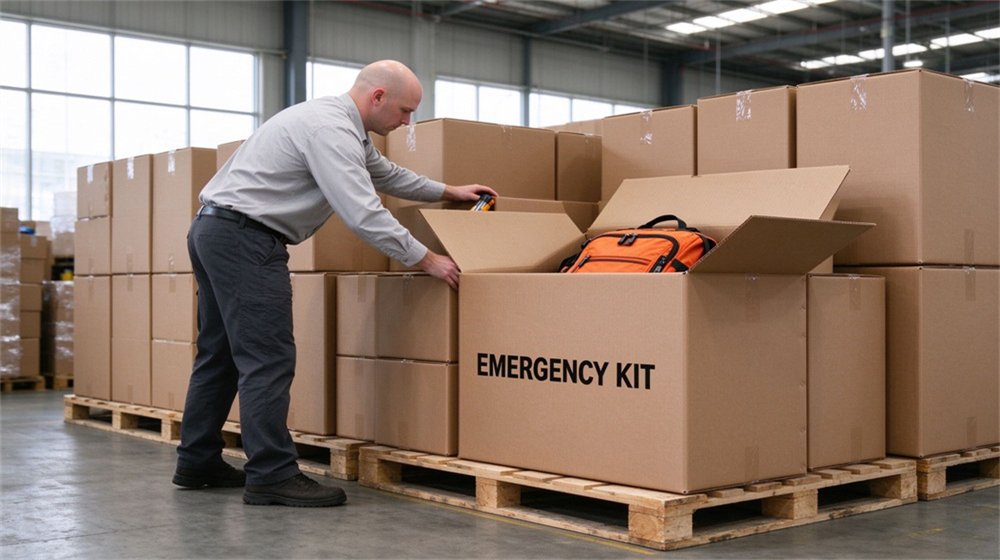
Every School Emergency Kit passes a 25-point factory inspection before it leaves the line. You receive a signed QC report per batch.
We manufacture School Emergency Kit at 100,000 units per month, export to 40+ countries, and have held CE, ISO 9001:2015, BSCI, REACH and FDA-listed component registrations for 8+ years. We provide lifetime technical support from our English-speaking export team.
#
Checkpoint
Standard
1
Fabric thread count
≥ 210T, 600D Oxford
2
PVC coating weight
≥ 0.35 mm, water-drop test
3
Stitching density
8–10 stitches per inch
4
Zipper pull test
5 kg load, 500 cycles, no slip
5
Strap webbing strength
15 kg static load, 10 min
6
Reflective tape adhesion
3M Scotchlite, 24-hr peel test
7
Color fastness
≥ 4 grade, wet rub
8
Label legibility
≥ 5 pt, 30 cm read distance
9
Expiry date stamp
per sachet, batch-coded
10
Net weight check
±3% of spec
11
Contents count
100% vs BOM, 2x scan
12
Sterile wrap integrity
no pinholes, sealed edges
13
Latex-free declaration
per lot, supplier cert
14
REACH / RoHS letter
per shipment
15
Carton drop test
80 cm, 6 faces, no rupture
16
Carton stacking
1.5 m, 24 hr, no deform
17
Barcode scannability
100% read, 20 scans
18
Inner pocket layout
matches photo, 1:1
19
Guide page print
color-matched, no bleed
20
Whistle audio test
≥ 110 dB at 1 m
21
Flashlight output
≥ 50 lumen, hand-crank 30 s
22
Sealable bag seal
water submersion 30 s, no leak
23
Antiseptic sachet leak
pressure 5 kg, 1 min
24
Final pack weight
logged per unit, scanned
25
Carton label & packing list
100% match, dual check
FAQ — School Emergency Kit
How many kits do I need for a 500-student school?
Plan on 1 kit per classroom (≈25–30 rooms), plus 1 shared PP box per 4 common areas (gym, canteen, library, office). That is roughly 30 wall kits + 8 campus boxes for 500 students, or about 1 kit per 15–18 children.
Should I buy different kits for primary vs secondary grades?
Use the same wall kit in every classroom. The only difference is placement: high-mounted for primary (child-safe height), waist-level for secondary. Add a Trauma Pad and adult-size gloves in secondary rooms, since sports injuries are more common.
How do you handle children with severe allergies?
Our kit includes 30 pre-printed Emergency Contact Cards per box for teachers to record allergies, medications and parent phone numbers. For anaphylaxis-prone students, we recommend adding a separate EpiPen carrier (not supplied by us) — the kit's sealable bag keeps the card and medication together.
Do your kits meet state school procurement standards?
All components are CE-marked, latex-free, and REACH-compliant. The kit follows common international first-aid expectations and excludes restricted items. We provide a written parts list and expiry-date stamp on every box for your audit file.
Where should the kit be placed — classroom, nurse office, or bus?
Three layers: 1 wall kit per classroom at the door, 1 PP box at the nurse office and each main corridor, 1 compact kit per school bus. The wall kit stays at child-safe height (1.5 m) so small hands cannot open it unsupervised.
How often should supplies be rotated?
We recommend a termly check (every 4 months). Bandages, wipes and cold packs expire at 3 years; gauze and thermal blankets last 5 years. Each box ships with a printed inspection checklist — tick, re-stock, sign.
Can one supplier handle a 300-school district tender?
Yes. Monthly capacity is 100,000 kits. We ship by the carton, label per school, and consolidate to a single port. Typical lead time for a district order (5,000+ kits) is 25–35 days after artwork approval.
Do teachers need formal first-aid training to use this kit?
No. The 8-page illustrated guide inside the box walks a non-medical adult through bleeding, burns, choking and CPR steps in plain English. We recommend a 20-minute refresher each semester, but the kit is designed for an untrained teacher to act in the first 5 minutes.
What about school bus and after-school program coverage?
Each bus gets a compact kit (child CPR mask, 10 N95s, 10 junior bandages, 1 poncho). After-school clubs share the classroom wall kit — we add 2 extra thermal blankets and 1 instant cold pack per club room on request.
What is your MOQ and sample policy?
MOQ is 200 kits for custom logo, 50 kits for stock items. Samples ship within 3 working days, freight collect.
YRF Textile Co., Ltd
Bulk emergency kits, fall protection gear and rescue vests for tower, wind and high-rise crews worldwide.
Contact
Email: info@yrftextile.com
Export-ready, OEM and mixed-pallet orders welcome.
Company
About Us · All Emergency Kits
We work with families and communities worldwide. Whether you order a single kit or a container load, our team quotes within 24 hours and ships with FOB, CIF and DDP terms.
Previous :
Hospital Emergency Kits for Medical Staff & PatientsNext :
Hazardous Chemical Emergency Kits for Industrial Spill Response Factory Customized Red Cross Disaster relief Med Kit Bag With Multi-purpose compass
GREAT DESIGN - Comfortable design is perfect for all uses and for carrying a wide variety of tools and equipment. You'll find that, whatever you're looking to carry, the YRF Custom Oxford Material Multi Functional Camouflage Tactical Waist Bags is the perfect choice.
 Medical Care Stockpile Metal wire saw Card tool Survival Aid Kit with 16 Pcs Safety Kit
GREAT DESIGN - Comfortable design is perfect for all uses and for carrying a wide variety of tools and equipment. You'll find that, whatever you're looking to carry, the YRF Molle Tactical First Aid Kits Medical Bag Tablets is the perfect choice.
 Outdoor Medical Care Disaster relief First Aid Kit Empty Pouch And Ice Pack Emergency Tool
GREAT DESIGN - Comfortable design is perfect for all uses and for carrying a wide variety of tools and equipment. You'll find that, whatever you're looking to carry, the YRF Mini First Aid Kit Bags And Pouches is the perfect choice.
 High Quality Camping Emergency Face Mask Survival First Aid Kit for Institutional Donation
GREAT DESIGN - Comfortable design is perfect for all uses and for carrying a wide variety of tools and equipment. You'll find that, whatever you're looking to carry, the YRF Outdoor Camping Emergency Kits Tactical First Aid is the perfect choice.
 ICRC Supplies Fluorescent stick first aid medical bags 600d Nylon Emergency Safety Tools Kit
GREAT DESIGN - Comfortable design is perfect for all uses and for carrying a wide variety of tools and equipment. You'll find that, whatever you're looking to carry, the YRF Hunting Survival First Aid Kit Bag Molle Tactical is the perfect choice.
 Hot Selling Governmental Institutions List Descender Firefighting Tools Empty Pull Rod First Aid Kit
GREAT DESIGN - Comfortable design is perfect for all uses and for carrying a wide variety of tools and equipment. You'll find that, whatever you're looking to carry, the YRF Tactical Complete First Aid Kit is the perfect choice.
Copyright © Custom Disaster - Relief Bedding: Tents, Sleeping Bags, Blankets All Rights Reserved
the professional team to service !