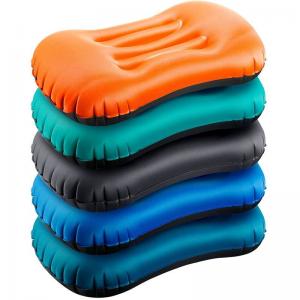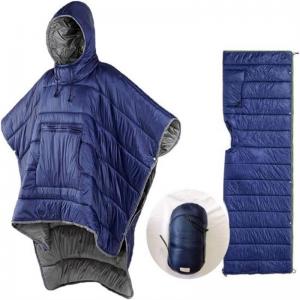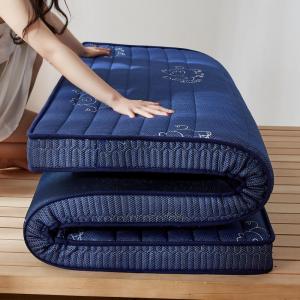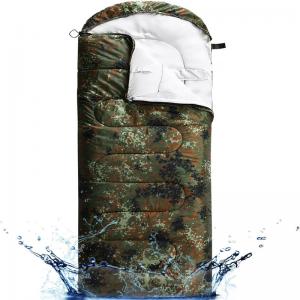
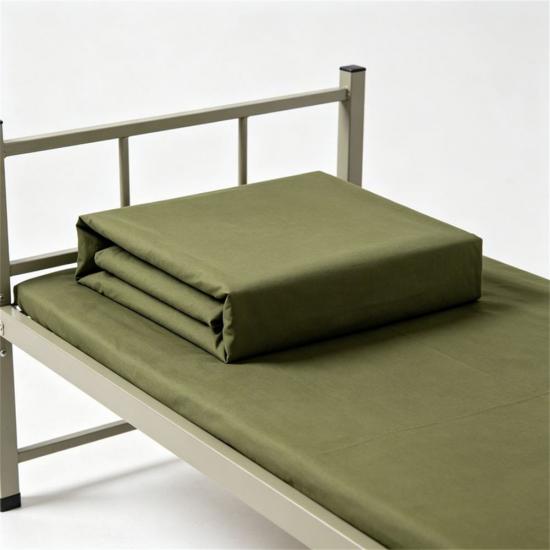

We supply institutional bedding for government procurement, public facilities and staff dormitories. Our durable bedding, with duvets, sheets and pillows, suits heavy wash cycles, shared daily use and ordered colors. Pantone colors are kept and tender sheets provided. We match each room bed size and quote fast for public orders across every new building now.
Note: Price for reference only. Exact price based on quantity, size, weight and custom details.
model no. :
SQ-03market price :
$79.8sale price :
$39.9price range :
30-100/$39.9Color :
Multiple Colorsport of dispatch :
Guangdong/GuangzhouPayment :
TT, Paypal, Western Unionmin order :
30original region :
Made in ChinaLead Time :
5-15daysSize :
180*200CM Or customize |
 |

|
Table of Contents
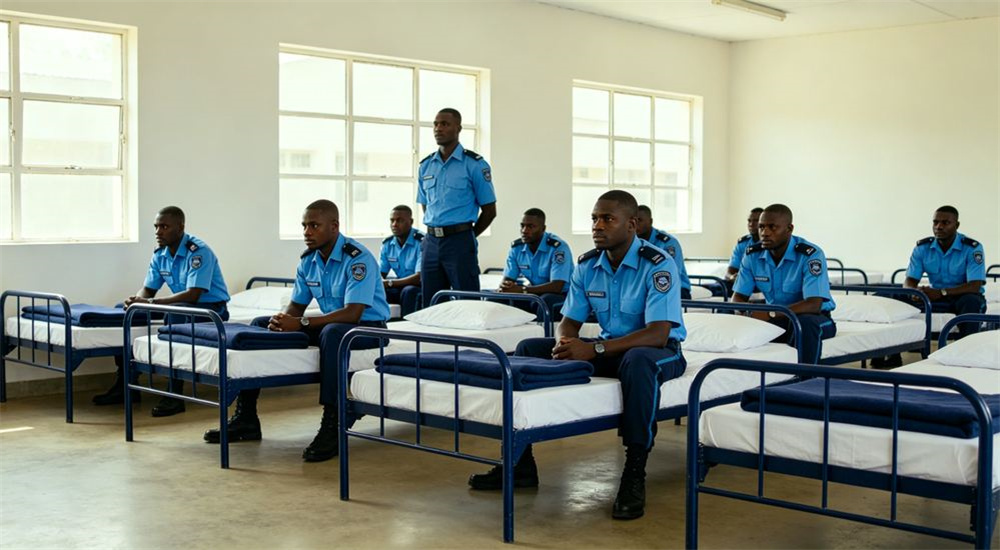
Institutional bedding serves hundreds of people in shared housing, where a single set is washed often and used hard. Comfort still matters, but the real test is longevity: how the linen survives a heavy-duty laundry schedule without thinning, fading or tearing. That is the design target of every piece we supply to public-sector buyers.
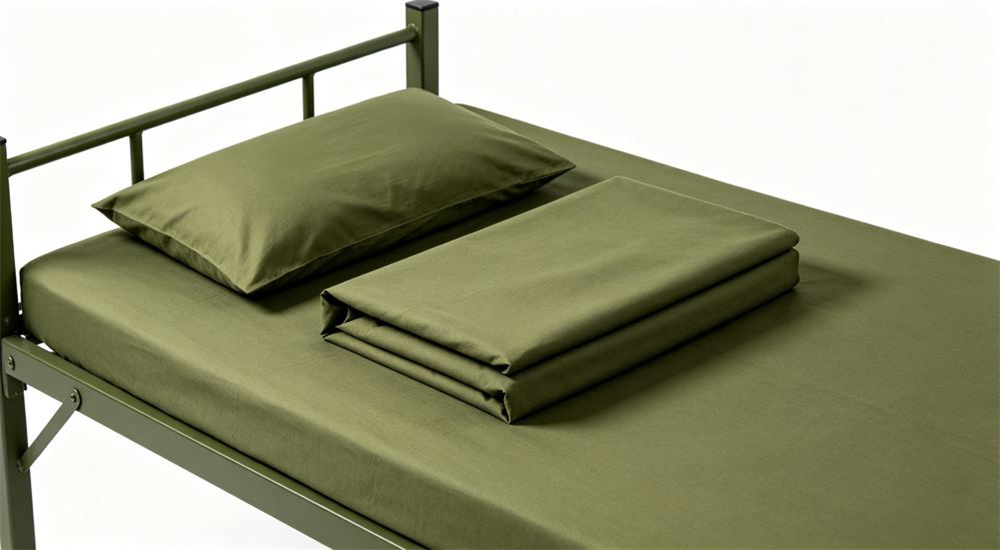
Government and public-sector buyers also need order: matching colors, consistent sizes and paperwork they can file. We produce bedding in coordinated green, navy and gray tones, stage orders to a tender schedule and prepare the documents that institutional procurement requires. Bulk volume is where this model shines.
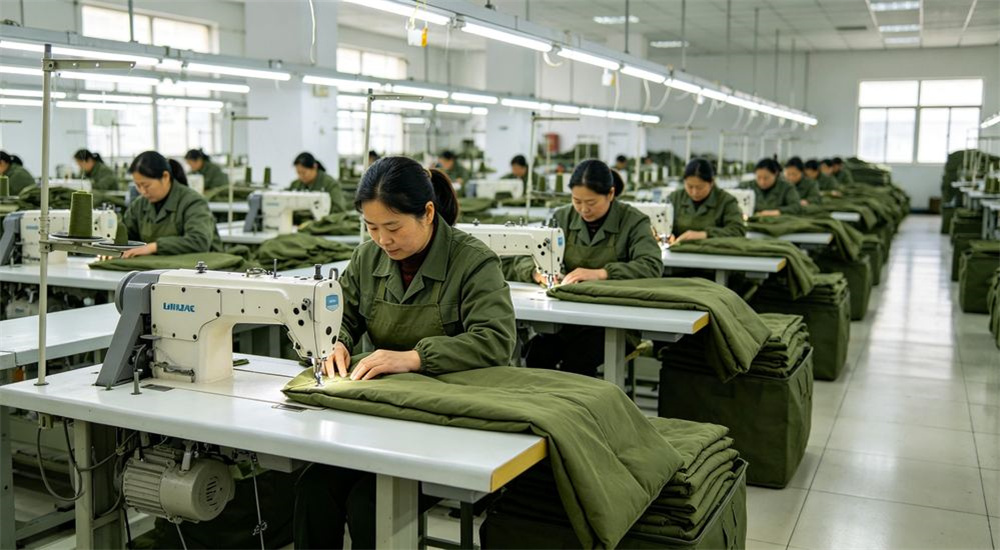
Whether you outfit staff dormitories, residential halls or transitional housing, the brief is the same: bedding that lasts, looks orderly and costs predictably per bed. This guide covers fabrics, colors, tender support and long-run cost, so you can plan a procurement that holds up over years of shared use.
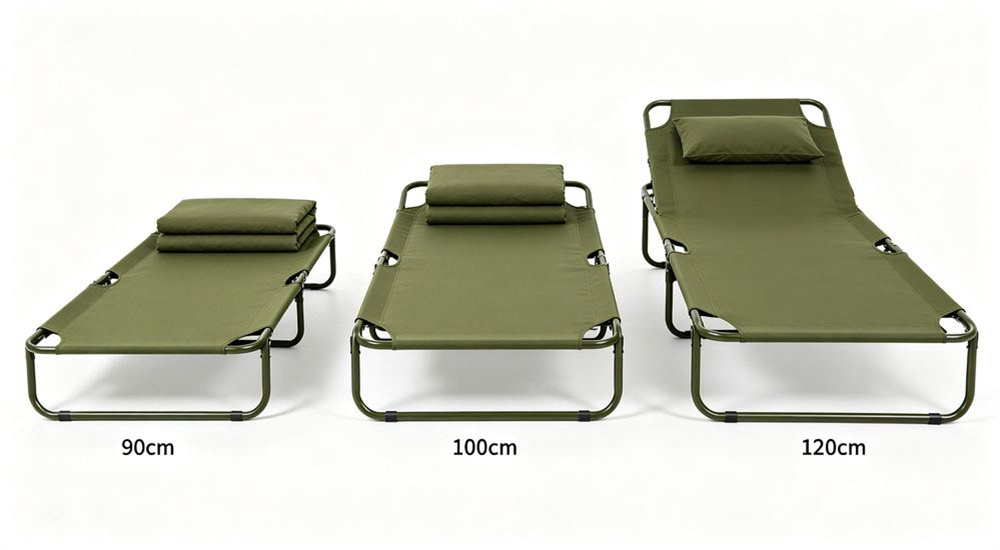
Institutional bedding Institutional bedding is not home decor. It lives in shabeds change occupants, linen goes straight into an industrial wash, and a tidy, consistent look is expected across the whole facility. Three demands shape the product: repeated laundering, rough everyday handling and a uniform, professional appearance.
First, it must survive heavy washing. Institutional linen sees far more cycles than a private bedroom set, so thin fabric wears through fast. Second, it must keep its color. A bed that fades unevenly looks neglected, which matters in a facility judged on order and care. Third, it must hold a neat fold, because staff rooms are often inspected for tidiness.
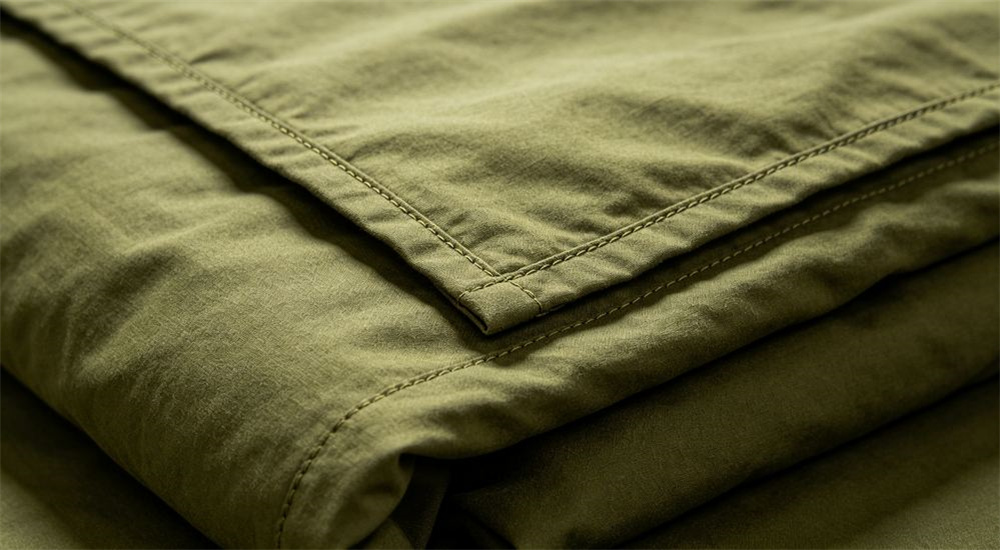
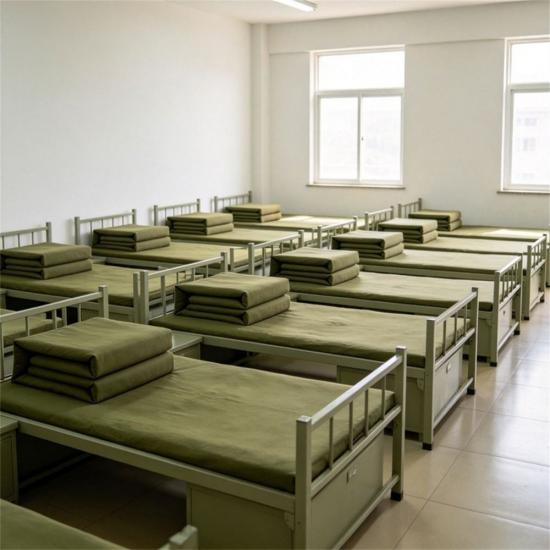
A standard institutional bedroom package combines a duvet or blanket, a sheet set and a pillow. Pieces are chosen for washability and a uniform look across the facility.
The right institutional bedding fabric balances durability, comfort and cost at volume. Shared facilities need a fabric that shrugs off repeated industrial washes while staying comfortable enough for daily sleep. We offer three main families, tuned to the wear level of the facility.
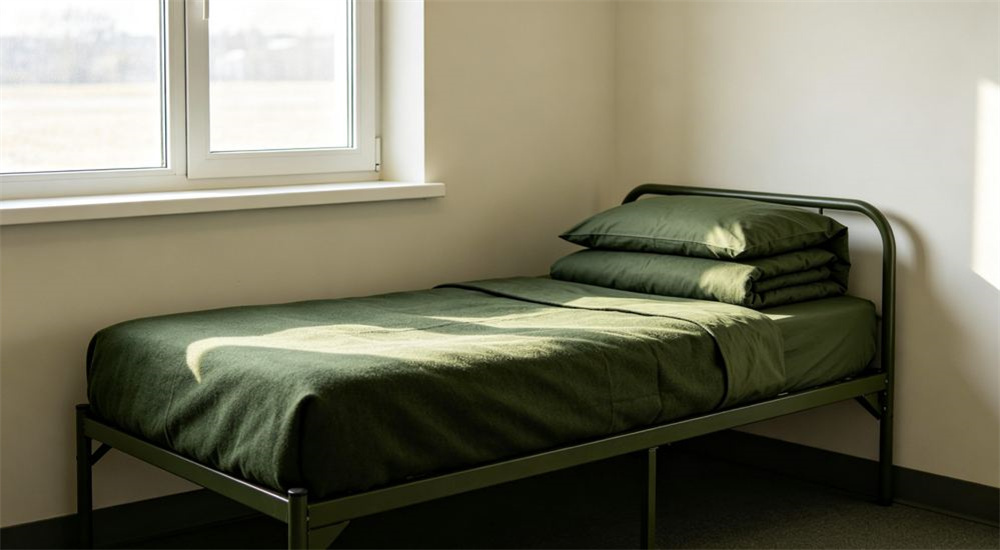
Polyester is the practical workhorse for shared housing. It is wrinkle-resistant, quick-drying and holds color well through many washes. It launders fast, which matters when a facility runs a continuous laundry schedule to turn rooms over. It is the default for high-turnover institutional bedding.
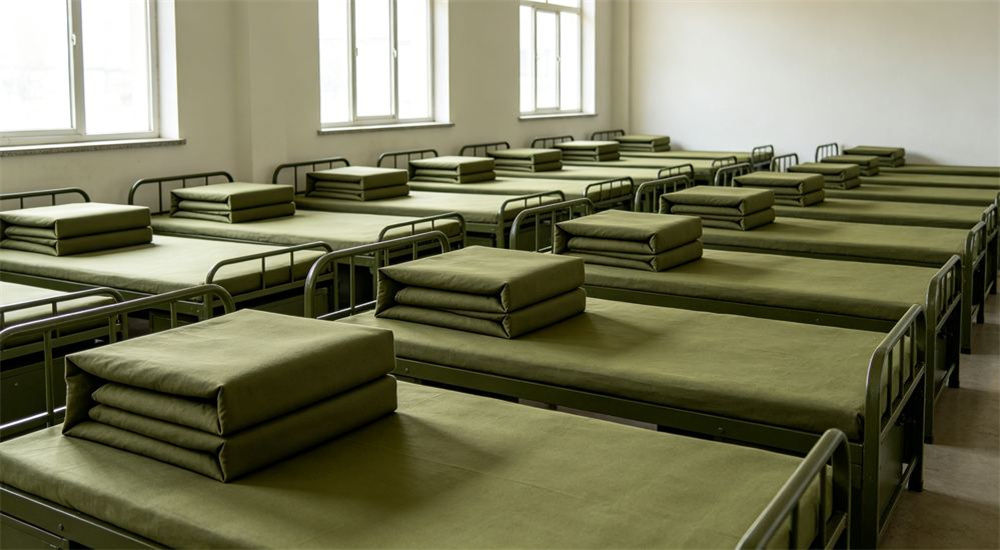
Cotton or cotton-blend linen feels gentler and breathes better, suiting longer stays and comfort-focused housing. It washes well and ages gracefully, though it needs slightly more drying time than pure polyester. For residential halls where people stay for months, the comfort upgrade is worth the extra care.
The table below compares the two main fabric choices for institutional buyers. Most facilities blend them: durable polyester for high-turnover pieces, cotton blends where comfort matters most.
|
Property |
Polyester |
Cotton Blend |
|
Wash durability |
Very high |
High |
|
Wrinkle resistance |
Excellent |
Medium |
|
Comfort feel |
Good |
Excellent |
|
Cost per bed |
Low |
Medium |
|
Best use |
High-turnover dorms |
Long-stay comfort |
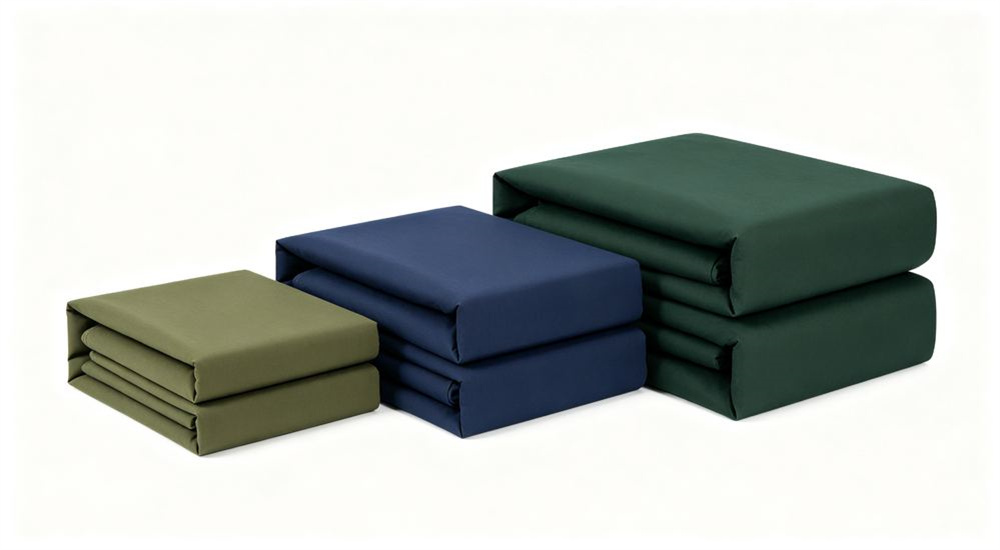
Duvet and blanket weight sets the warmth of government procurement bedding. A lighter duvet suits warm climates and heated buildings; a heavier one suits cooler, less-heated rooms. Public facilities often house people across seasons, so an all-season weight is the most ordered default, with heavier or lighter options by region.
A lighter duvet suits warm climates and well-heated rooms. It launders fast and costs less per bed, fitting facilities in hot regions or shared housing with steady heating.
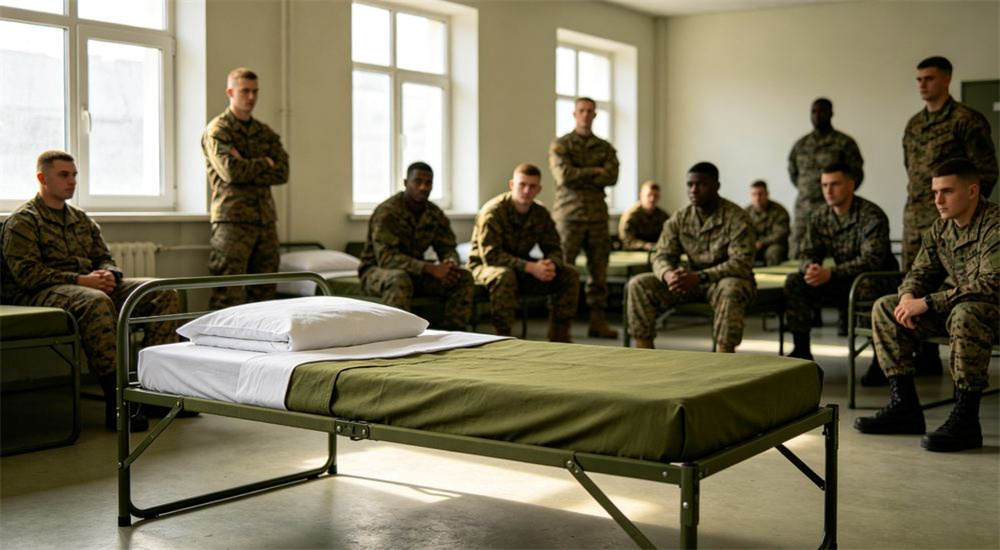
The all-season duvet is the broadest-fit choice, balancing warmth and easy care. It handles cool nights without becoming bulky, which is why it fits the widest range of institutional procurement programs across mixed climates.
|
Grade |
Warmth |
Climate Fit |
Best Room Type |
|
Lightweight |
Basic |
Warm / heated |
High-turnover dorms |
|
All-season |
Medium |
Mixed / general |
Standard staff rooms |
|
Heavy winter |
High |
Cold / unheated |
Long-stay housing |
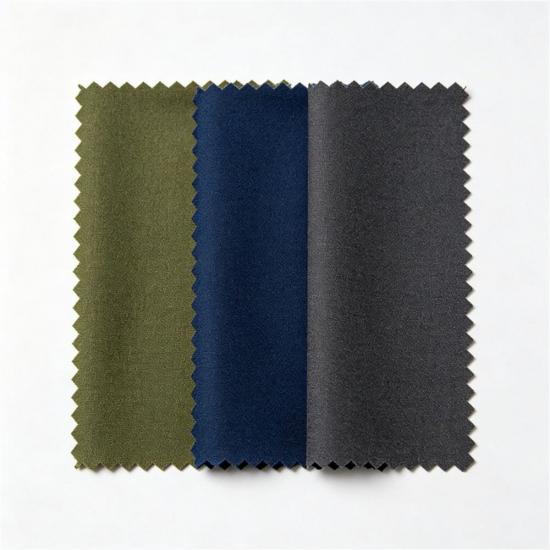
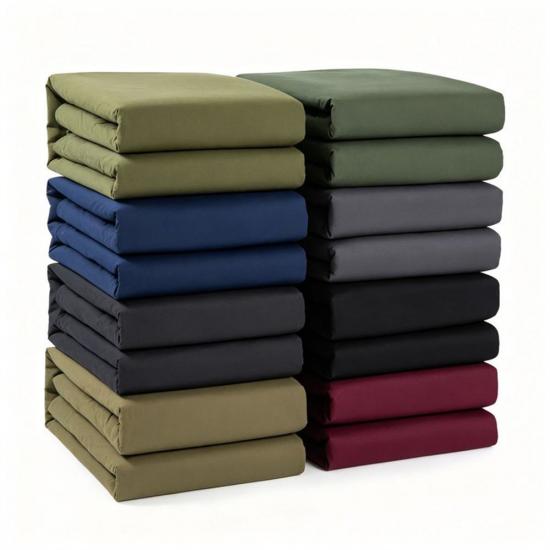
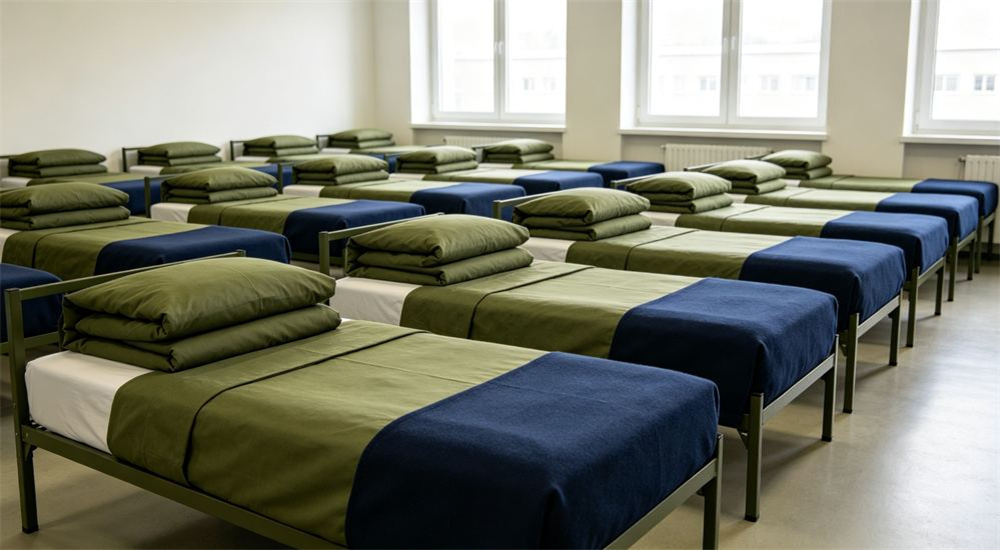
Ordered color is a signature of institutional bedding. Where home buyers choose prints, public facilities choose calm, coordinated solids: olive green, navy blue and gray. These tones look professional, hide light wear and read as orderly across a whole building. Choosing one color system across all rooms keeps the facility consistent and makes laundering simpler, because colors can be washed together without bleeding.
Beyond color, the other signature of institutional linen is how it survives repeated industrial washing. A set that fades, thins or pills after a year of daily laundering looks neglected in a public facility, which is why we match fabric weight and colorfast dye to the turnover level of each department. Durability is not a premium extra; it is the baseline expectation for any public-sector bedding program.
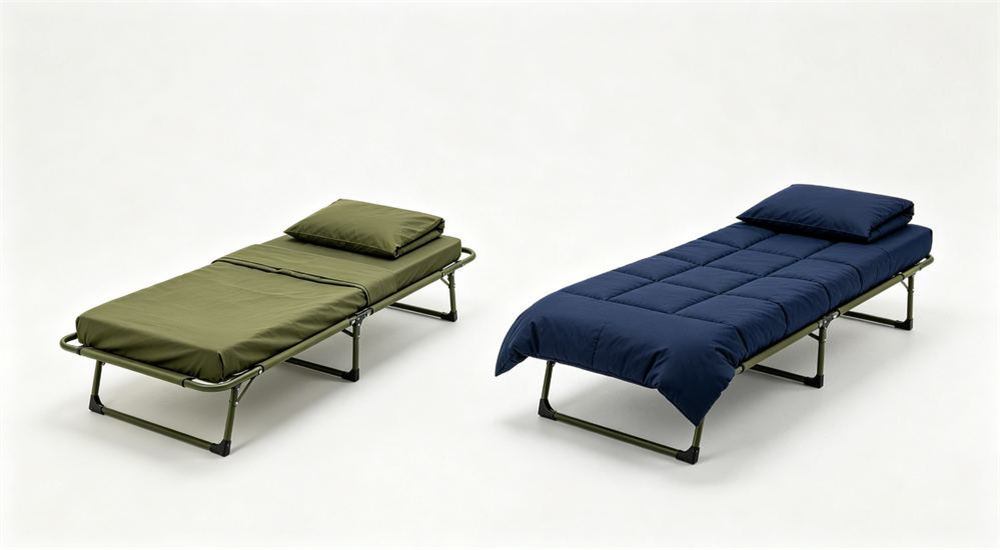
Use this quick guide to match your setting to the right bedding specification. Most facilities combine two or three configurations across departments rather than forcing one spec everywhere.
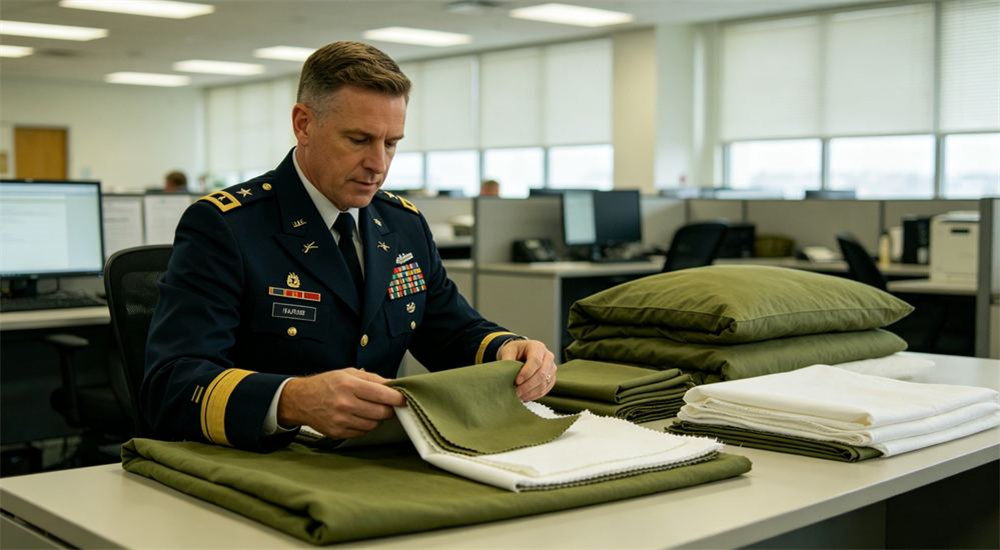
Public-sector buyers run on tenders and specs. Institutional procurement bedding usually means a defined room count, a written specification and a delivery schedule. We support this by matching your spec, staging production to your tender timeline and preparing the documentation a public procurement file needs.
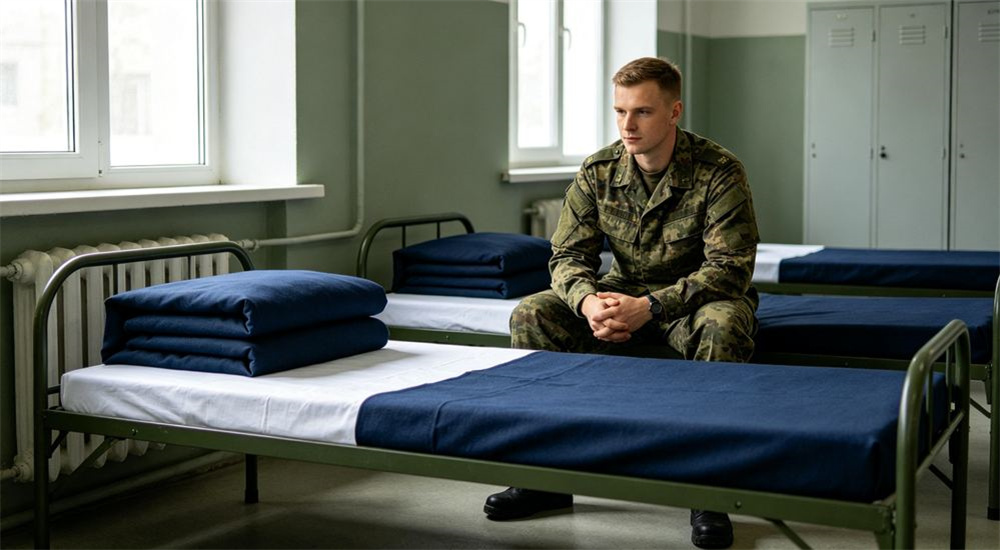
Institutional buyers measure cost per bed over the years of use, not just the purchase price. A slightly more durable set that survives more wash cycles can beat a cheap one that thins after a year, because the replacement cost doubles. Factor in laundry life when you compare quotes, and judge by how many cycles a set is built to withstand.
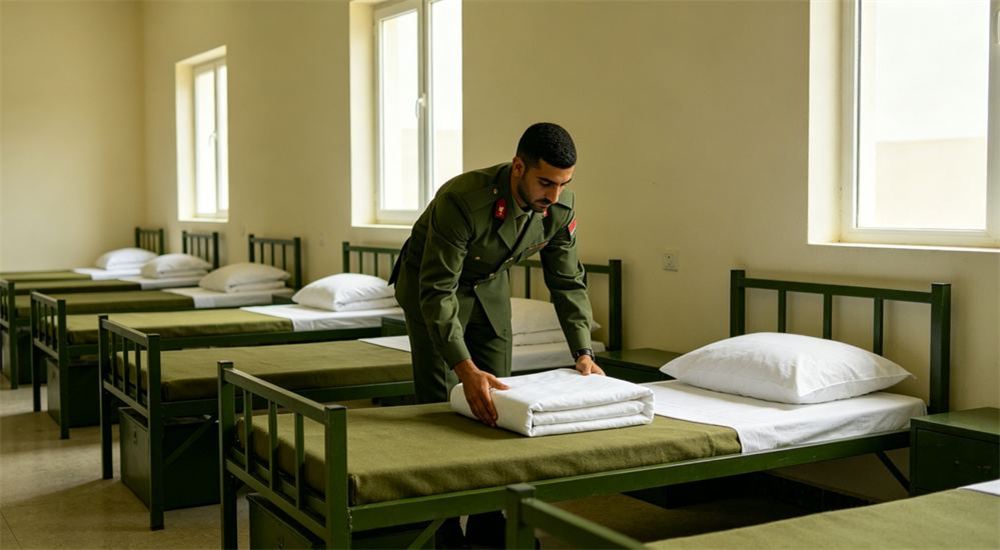
Our durable bedding suits many shared-housing and public settings. Each has a different turnover and comfort expectation.
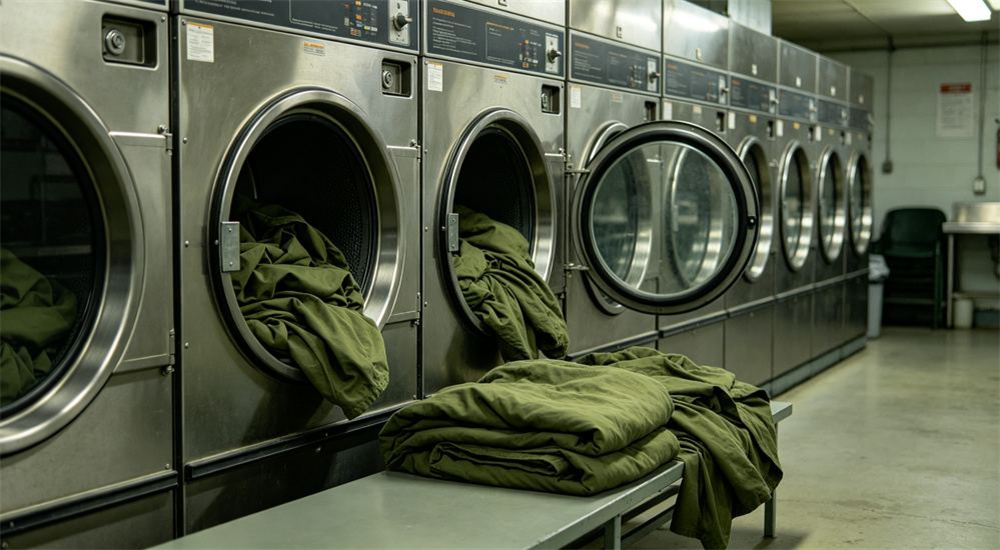
A complete room bundle usually combines a duvet or blanket, a sheet set and a pillow in one coordinated package. Supplying all pieces in the same fabric, weight and color removes the risk of mismatched tones between vendors and simplifies receiving, because every carton arrives against one packing list. For a public facility outfitted in one go, a matched bundle also keeps the whole building visually consistent from the first inspection round.
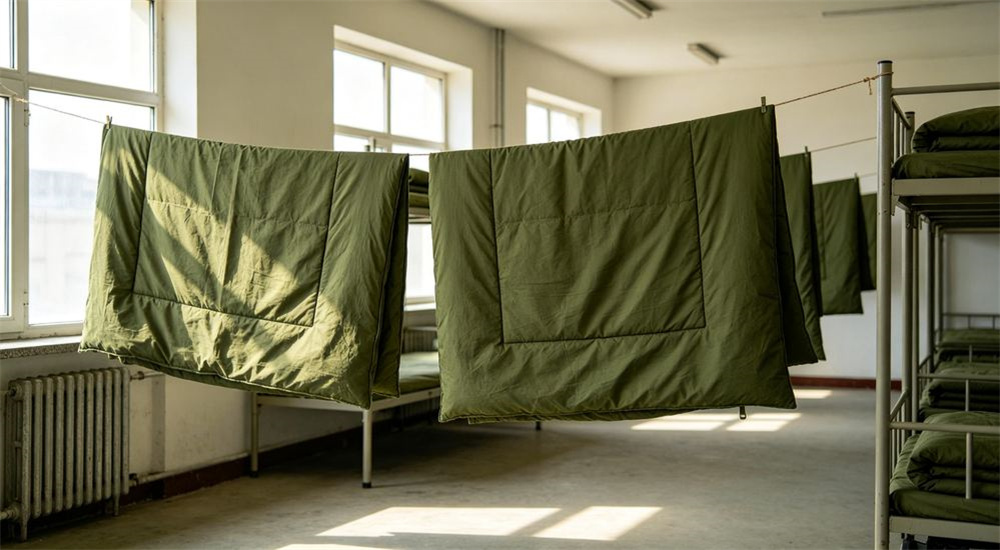
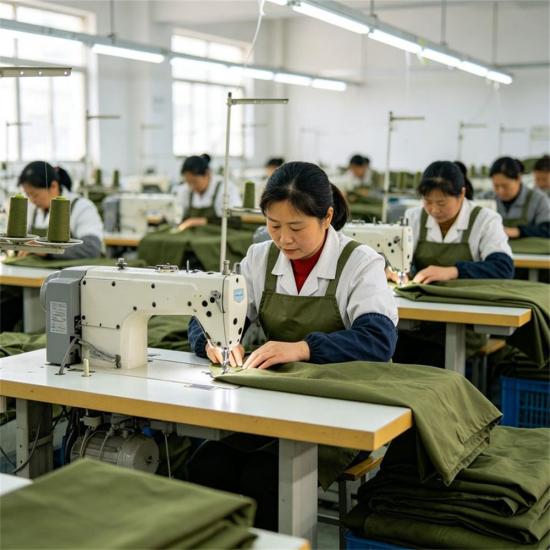
Sourcing institutional bedding from China gives public buyers volume, controlled cost and consistent color across large orders. Direct production means a whole building's worth of matching linen comes off one line, so the green in room 101 matches the green in room 201. Base fabric stock helps large orders start fast when a tender is confirmed.
We also support institutional bulk bedding programs and school dormitory bedding buyers who outfit many rooms at once.
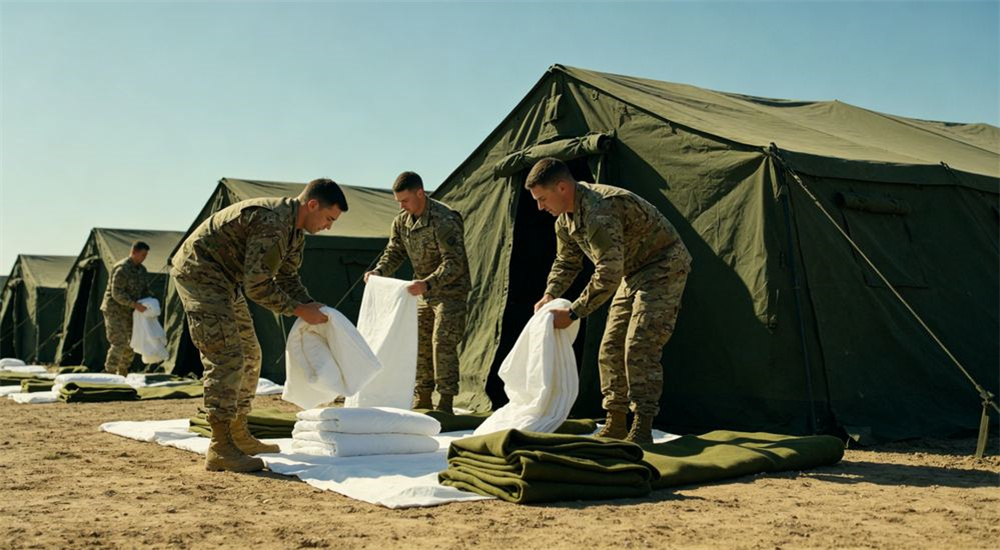
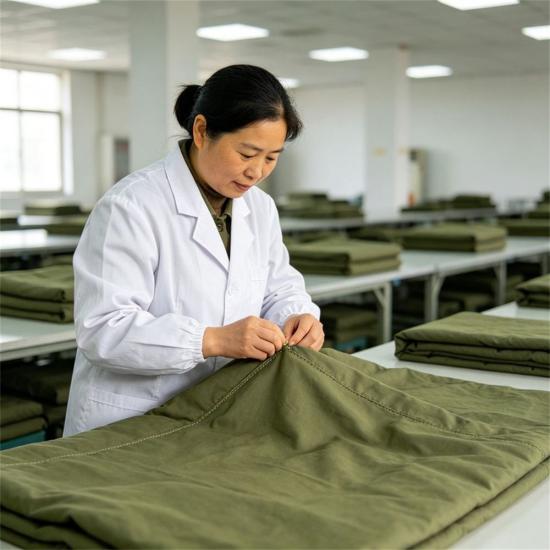
Institutional procurement needs traceable quality and filed documents. We provide product details and packing papers on request, built only on what has actually been tested. Quality checks run from incoming fabric to folded cartons, so a weak lot is caught before it reaches a facility.
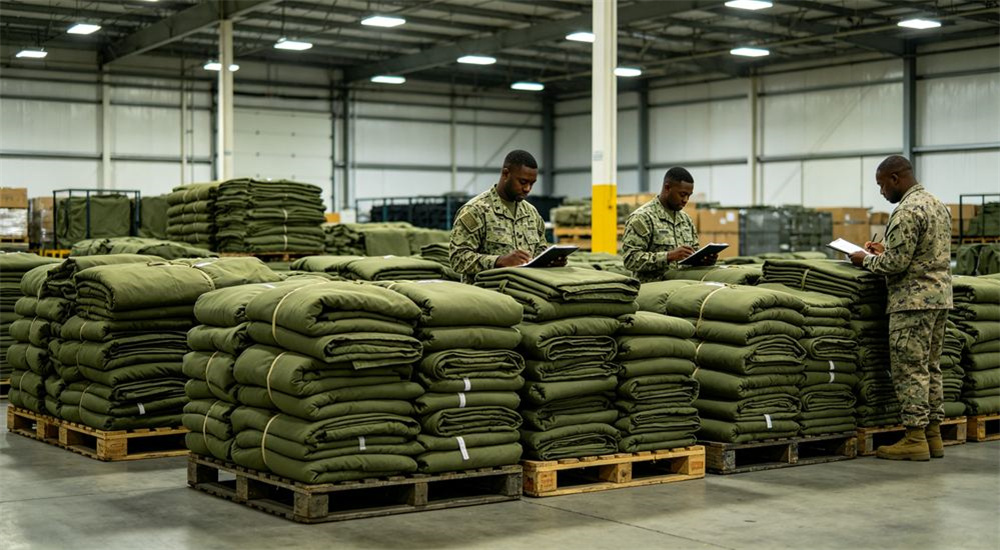
We tailor custom institutional bedding to facility needs: duvet weight, sheet size, pillow fill and color. Program or facility labels can be added for room tracking. Pieces are folded to a uniform standard so they stack neatly and present well on inspection.
The real test of institutional linen is how it looks after a year of industrial washing. Colorfast dye holds the olive, navy or gray true through hundreds of cycles, and reinforced stitching prevents early tearing at stress points. A before-and-after check on a washed swatch is the simplest way to confirm the fabric will present well on inspection rounds, rather than turning up faded in a wing that was outfitted last winter.
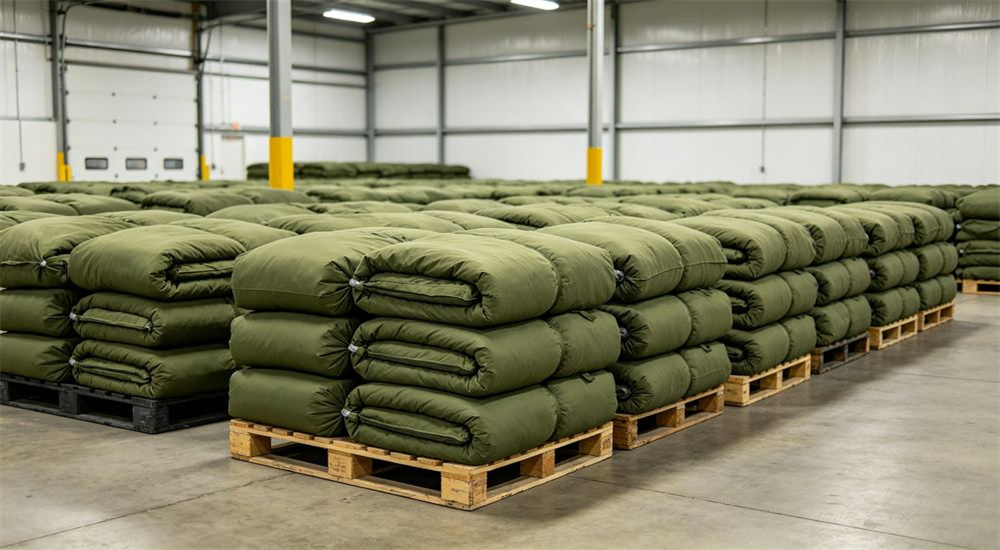
When ordering institutional bedding, before a large order order samples to confirm color, weight and fabric feel. Check how the linen folds and how the color reads under your room lighting, because these details decide the finished look of the whole facility. Lead times and loading quantities are confirmed in your contract, as they depend on volume and customization.
Institutional bedding earns its cost by surviving a busy laundry room. Where a hotel turns over rooms daily, public facilities run a steady cycle of collect, wash, dry, fold and return. Fabric choice drives how smoothly that cycle runs. Polyester microfiber dries fast and resists wrinkles, so it comes off the dryer close to ready, which cuts the folding labor a busy facility depends on. Cotton feels better but needs ironing or more careful drying, so it suits lower-turnover comfort housing rather than a continuous turn-around operation.
When every room shares the same olive green, navy or gray, laundry becomes simple: colors wash together without risk of bleeding, and a returned set can go to any bed in the building. Mixing colors forces staff to sort, and increases the chance a faded pillowcase ends up mismatched. A single coordinated palette is not just about looks; it is an operational decision that makes the whole linen system easier to run and replace.
A facility outfitting needs more than one set per bed. A practical rule is to plan for the set on the bed, a second in the laundry, and a spare in reserve for replacement. That three-set-per-bed planning keeps rooms available while the main set is washed. Ordering only one set per bed means a room goes out of service whenever its linen is in the wash. Talk with us about your laundry cycle, and we will help you size the total quantity for smooth operation.
Sets per Bed
Room Availability
Laundry Flexibility
Best For
One set
Low
None while washing
Very low budget
Two sets
Medium
One in wash
Basic operations
Three sets
High
Spare reserve
Continuous turnover
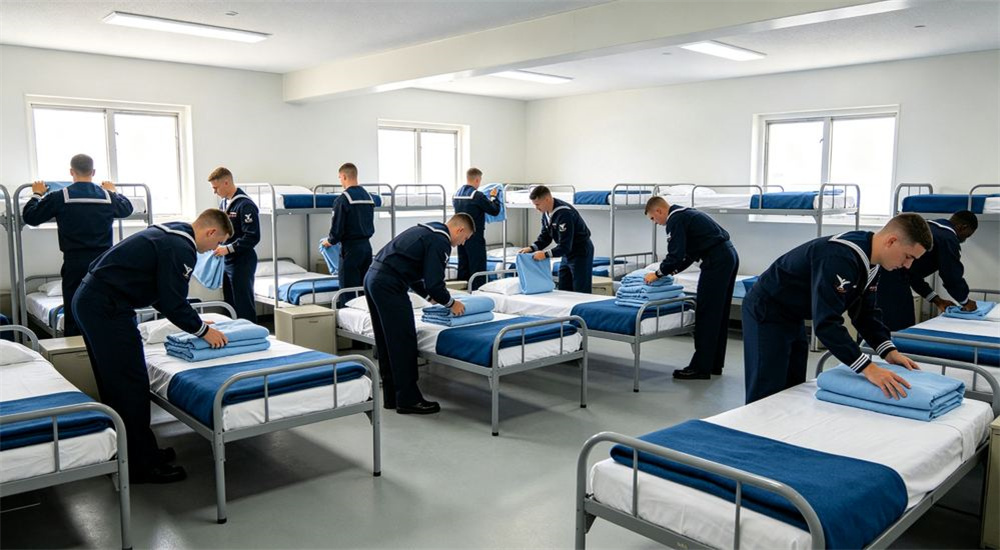
The fill inside a duvet decides warmth and washability. Hollow polyester fill traps air and holds warmth without heavy weight, and it bounces back after industrial washing, which is essential in shared housing where the bedding is laundered often. Cheap fill clumps and flattens, leaving cold patches. When you compare samples, press the duvet and watch how quickly it rebounds. Good fill returns fast; poor fill stays flat. That simple test predicts how the bedding will look and feel after a year of facility laundry.
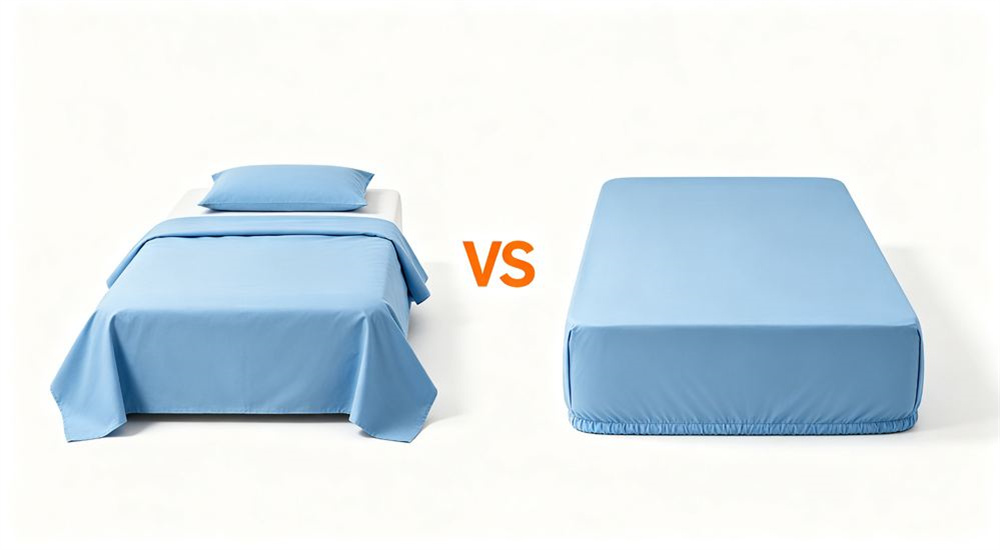
In institutional settings, flat sheets usually beat fitted sheets. They wrap around any bed frame with no elastic corner to fail, and they adapt to the many bed types a facility owns. Fitted sheets need an exact mattress size and lose their elastic after repeated hot washes, which is a real problem when beds vary across a building. Flat sheets fold smaller, launder reliably and fit whatever bed the room has, which is why they are the practical default for public housing.
A pillow either supports the head or flattens into a thin pad. Hollow-fiber, washable pillows hold their loft and survive repeated laundering, which matters in shared housing where bedding goes through industrial cycles. Cheap pillows clump and flatten fast, and they are the piece residents notice most. For an institutional program meant to last, a washable, loft-retaining pillow is worth the modest extra, because it keeps the room feeling cared for rather than worn.
A public tender moves through clear stages. First you send the room count, climate and spec. We recommend a grade and you approve samples. Production runs on a dedicated line, then pieces are folded, color-checked and packed. Finally the cartons are delivered to your receiving point. Each stage is planned around your delivery schedule, and the documentation travels with the shipment. Understanding these stages helps you plan receiving and room assignment dates.
The biggest risk in a large institutional order is inconsistency between deliveries. If the second shipment's green differs from the first, the facility starts to look patchy. We lock the fabric weight, stitching and color after approval, then check each repeat batch against that reference. This keeps a multi-building program visually and physically uniform, which matters when rooms are inspected for tidiness.
Bedding is one part of outfitting a facility. If your program also supplies towels, bath mats or curtains, ordering on a coordinated timeline helps you fit out rooms in one pass. We can align packing and delivery with your wider furnishing plan, so bedding and other linen arrive together rather than in separate, uncoordinated shipments. We also support nursing home bedding and hotel bedding buyers who run larger linen programs.
A retail shopper buys one set for a private bedroom. An institutional buyer specifies linen for hundreds of shared beds in continuous use. That difference flips the priorities: durability, color consistency and easy laundering rise, while decorative prints drop out. The plain olive green or navy set that looks modest in a showroom is exactly right when it must survive thousands of wash cycles and look ordered across a whole building. We design for that bulk reality, not for a display shelf.
The cheapest set on the quote is rarely the cheapest over time. A set that thins after a year of industrial washing must be replaced, doubling the spend. A more durable set that lasts three or four years, laundered hundreds of times, works out cheaper per bed per year. When you compare institutional quotes, ask about expected wash-cycle life and weigh that against the price. Our role is to match the grade to how hard the facility actually uses the linen, so you buy the right durability rather than the lowest sticker price.
|
Grade |
Fabric |
Expected Use |
Best Room Type |
|
Standard |
Polyester |
High turnover |
Short-stay dorms |
|
Enhanced |
Poly-cotton |
Medium turnover |
Standard staff rooms |
|
Premium |
Cotton blend |
Long stay |
Comfort housing |
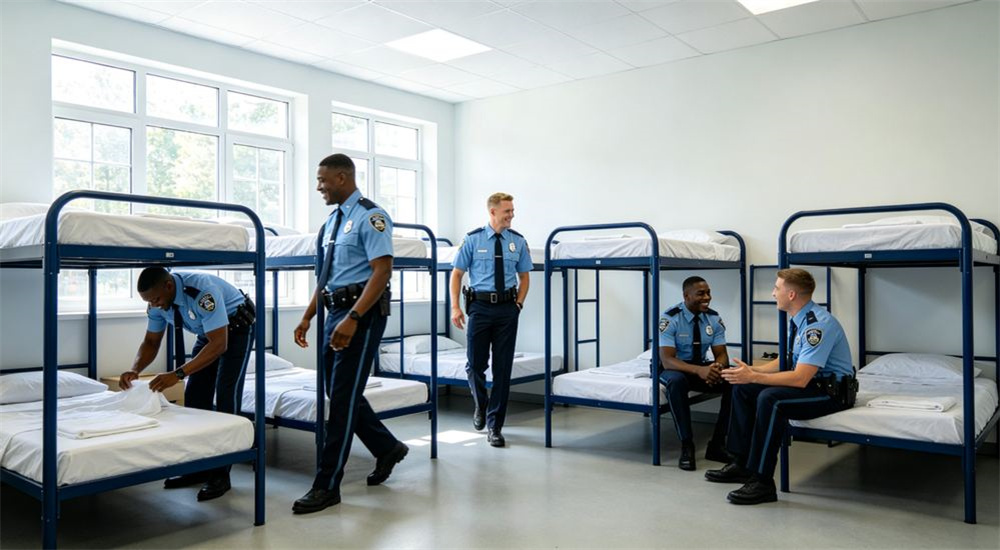
A green duvet that fades to pale gray after six months of hot washing looks neglected, and in a public facility that matters. Colorfast dye holds the olive, navy or gray true through many industrial cycles. When you sample, wash a swatch a few times at your own laundry temperature and compare it to a fresh piece. If the color holds, the order will hold; if it shifts, look elsewhere. This simple on-site test protects a large procurement from a faded surprise a year later.
When the delivery arrives, receive it against the packing list. Check the piece count, the color and the fold standard before you sign off. Because institutional orders are large, a quick spot check on a few cartons catches any short count or color drift while the delivery is still accessible. Good receiving means your outfitting starts on a clean, reconciled inventory, with every room ready to assign on schedule.
Public facilities own many bed types: narrow single cots, standard single frames, bunk beds. Sizing the linen to the actual sleep surface avoids two problems. Too small, and the duvet does not cover a resident. Too large, and excess fabric drags and wears. We can set duvet and sheet dimensions to your bed stock, whether that is a narrow cot or a standard single. Matching size to bed is a small detail that quietly improves every resident's comfort.
Every minute staff spend sorting linen is a minute rooms stay unassigned. Pre-bundling a matched set per room removes sorting entirely. Clear carton coding by piece type also speeds receiving. Label each carton with its contents, and stage the distribution area by piece type so staff move along a simple line rather than digging through mixed boxes. These packing decisions, made before shipment, shape how smoothly outfitting runs on site.
The fastest way to move from planning to deciding is a sample. Send us the room count, climate and your required color, and we recommend a starting grade. Order that as a sample set, check the color under your room lighting, feel the fabric and test how it folds. Once the sample matches your expectation, we scale it to the full institutional order with the spec locked. This sample-first path is how most of our public-sector buyers run a first order, because it de-risks a large commitment cheaply.
An institutional quote can look simple, but a few details change the real cost. Ask whether the price covers the duvet, the sheet and the pillow, or just one piece. Ask how the pieces are packed, because folding standard affects receiving labor. Ask the weight per bed, because heavier cartons cost more to handle. Comparing quotes piece by piece prevents a cheap-looking offer from hiding missing items. We itemize each room package so the comparison is clear, not bundled into one vague number.
A staff dormitory that turns over weekly has different bedding needs than a residential hall where people stay for months. High turnover favors fast-drying, wrinkle-resistant polyester that launders and folds in a hurry. Long stays favor softer cotton blends where comfort matters more than speed. Telling us the expected occupancy pattern lets us match the fabric grade, so you do not buy premium comfort for a fast-turnover room, or a hard cheap set for a resident who stays a year. That match is the difference between a bedding budget that works and one that disappoints.
Dorm rooms vary in ventilation. A well-ventilated room handles any fabric. A damp, poorly aired room rewards fast-drying polyester, because cotton that stays damp feels cold against the skin. Where buildings are older or less ventilated, the practical choice is a polyester or poly-cotton that releases moisture quickly, rather than a dense cotton that holds it. Consider the actual room conditions, not just the showroom feel, when you pick the fabric for a whole building.
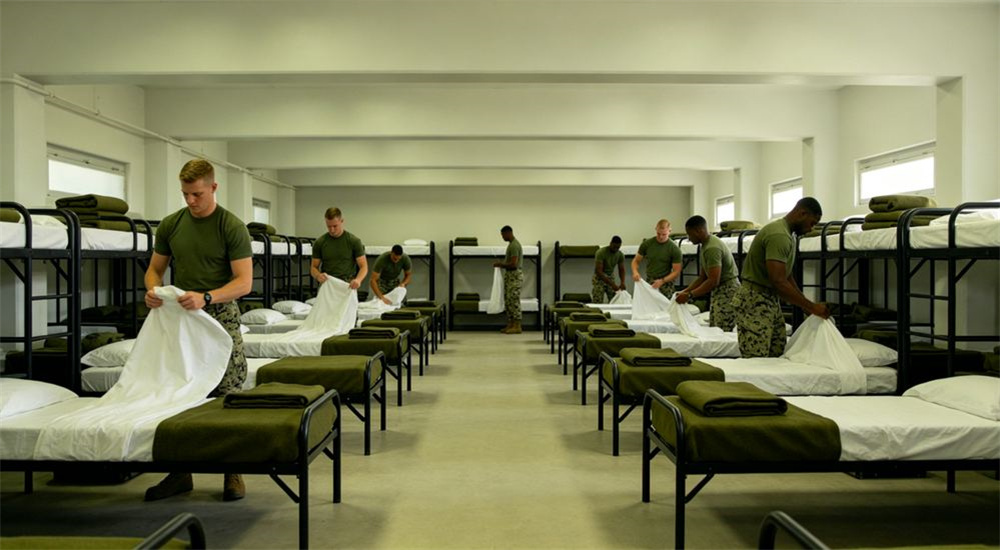
Large public programs span more than one building. When bedding ships to several wings or sites, consistency matters so every building gets the same product. We can stage production against a single spec and split deliveries to different receiving points, keeping the linen identical across locations. This avoids the confusion of buying from different suppliers per building, where color and fabric drift between wings and the facility looks uneven.
Facilities need to track where bedding goes. Clear labels on each set or carton support that: a facility code, a piece count and a room zone. This helps staff account for stock and reduces loss between turns. We can apply woven or printed labels to your coding standard. Thoughtful labeling turns a pile of duvets into a trackable inventory, which both facility managers and auditors value when linen moves through many hands.
The first cold season after outfitting is when the duvet weight proves itself. If residents are warm that winter, the procurement is judged a success. That is why we stress climate matching and adequate fill over marginal cost saving. Ordering a duvet too light for the building's real winter is the most common and most expensive mistake institutional buyers make, because it cannot be fixed after the delivery arrives. Plan for the coldest plausible night the rooms see, and let a sample confirm the warmth before you commit the full building's order.
Public programs increasingly ask about durable and responsible options. Long-lasting linen that survives many wash cycles is itself sustainable, because it is not thrown away after one season. We can discuss recycled-fiber options where they fit the product, choosing materials that balance cost, comfort and reuse. The most sustainable institutional bedding is the tough kind that lasts years of laundering, rather than the thin kind that wears out and needs replacing. Durability and sustainability point to the same choice here.
Public procurement runs to fixed tender dates. When a deadline is tight, the biggest lever is the spec. A standard off-the-shelf grade with base fabric in stock produces fastest, while custom colors, sizes or labels add production time. If time is critical, choose a standard product and minimal custom marking, and add customization to a later phase. Telling us your delivery date up front lets us tell you honestly what is achievable, and stage production to it rather than promising a date we cannot hold.

Once the bedding is delivered, a simple system keeps it running. Wash like colors together, replace worn pieces against the archived spec, and order repeats before stock runs out. Because we keep your color and weight on file, a reorder matches the existing linen seamlessly, so new duvets do not clash with old ones. Running a standing repeat plan for high-wear sheets means worn pieces are refreshed without a whole new tender, which keeps every room looking consistent.
Once a facility is running, certain pieces reorder more often than others. Sheets reorder first, because they wash most often and wear fastest. Pillowcases follow. Duvets last longest and reorder least. Knowing this, many buyers stage a standing repeat for sheets alongside the initial duvet bulk buy, so worn sheets can be refreshed without re-tendering. We keep the spec archived to make those repeat orders simple and visually matched to the original outfitting.
Choosing institutional bedding wholesale comes down to four calls: the fabric for the turnover level, the duvet weight for the climate, the color system for the facility, and the supplier who keeps every repeat order consistent. We are built around those four calls, with base fabric stock, matched production and documented packing. Send us your room count, climate and required color, and we will turn them into a proposed room package you can sample, test and scale to the whole facility. The goal is simple: durable, orderly, easy-care beds that hold up over years of shared use, at a cost per bed you can plan on.
The purchase price is only part of the story. Easy-care institutional bedding lowers the operating cost of running a facility, because it takes less staff time per bed. Wrinkle-resistant polyester comes off the dryer ready to fold, no ironing line. Colorfast linen washes safely in bulk, no careful sorting. A neat fold standard means rooms turn over in minutes rather than hours. When you multiply those small time savings across hundreds of beds and hundreds of turns a year, the labor saving easily outweighs any small difference in the per-bed purchase price. That is why we stress easy-care construction, not just cheap fabric.
In a working laundry, pillowcases and sheets move faster than duvets. They wash more often, and they wear first. Planning the rotation means keeping extra sheet and pillowcase stock on hand, because these are the pieces that need refreshing between resident turns. Duvets wash less often, so they last longer. Many facilities order sheet sets ahead of duvets for exactly this reason. We can price these pieces separately so you build the rotation stock where it is actually needed, rather than buying everything in equal quantities.
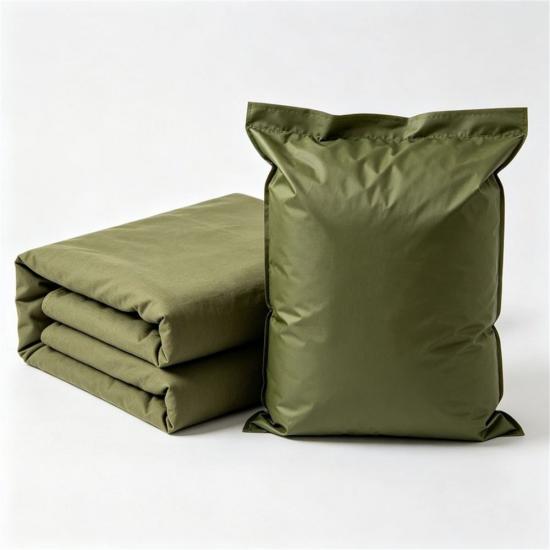
Shared housing is often inspected, and a neat fold reads as well-run. We fold institutional linen to a uniform, presentable standard so stacks look tidy on arrival and after laundering. Consistent folding also means each piece packs the same way, which makes carton counts predictable and receiving easier. A bedding set that stacks neatly is not a cosmetic detail; it is part of how a facility presents itself and how efficiently staff handle the linen day to day.
Facilities can buy from a local distributor or go wholesale direct. Local supply is convenient for small, urgent top-ups, but the price per bed is higher and the range is limited. Wholesale direct wins on large, planned orders: lower per-bed cost, color consistency across the whole building and the ability to spec custom weights and colors. For a new facility outfitted in one go, or a multi-year linen program, wholesale direct usually makes more sense than piecing the order together from a local shelf.
Before you request a proposal, gather a few points. The clearer the brief, the faster and more accurate the reply.
Send these points and we will come back with a recommended grade, color and indicative structure. Final pricing and lead time are confirmed once the spec is locked, because weight, size, color and volume all move the number. This keeps the process focused and avoids a generic quote that does not match your real building. A sample set follows once the direction is agreed, so you can see and feel the product before the full order is committed.
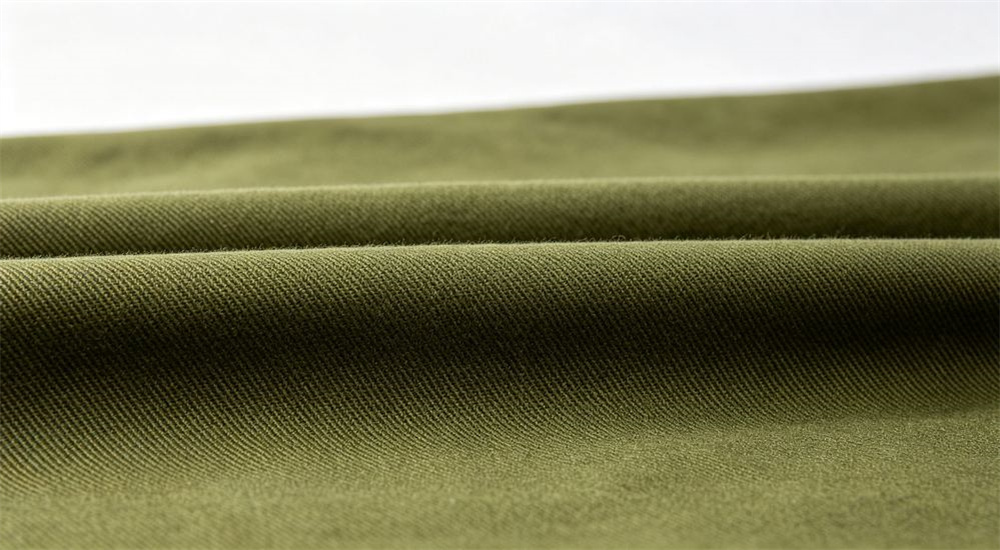
How fast your laundry turns over should shape the bedding order. A facility with a small laundry needs either lighter, faster-drying linen or more sets per bed, so rooms are never stuck waiting on the wash. A large central laundry can handle heavier cotton blends on a longer cycle. Before you order, look at how many beds your laundry can process in a day, and match both the fabric and the set count to that capacity. Buying heavy linen for a small laundry is a quiet operational mistake that shows up as unmade rooms every week.
Public housing does not need five-star softness, but it does need basic, dependable comfort. A duvet that keeps someone warm through the night, a sheet that feels acceptable against skin, and a pillow that holds its shape are enough. Over-specing premium comfort wastes budget on beds that turn over often. Under-specing leaves residents complaining and replacements ordered early. The middle, durable tier that launders well and sleeps decently is the sweet spot for most institutional programs, and it is where we point most buyers unless they tell us otherwise.
Some colors hide wear better than others. Olive green, navy and gray are chosen for a reason: they read as professional and they forgive the small stains and faint marks that appear on shared bedding. Pure white shows every spot and needs bleaching, which speeds aging. Bright colors drift over repeated washing. Calm, deeper solids stay presentable longest, which is the practical reason institutional buyers land on them. Pick a tone that stays tidy after a year of use, not one that looks brightest on day one.
Even the best institutional linen wears out eventually. Rather than waiting for pieces to fail, plan a small replacement reserve from the start. Keeping ten percent spare sets on hand means a torn sheet or a flattened pillow never leaves a bed bare. Because we archive your color and weight, those spare pieces match the existing linen exactly, so replacements blend in rather than standing out. A standing reserve turns end-of-life replacement from a mini-crisis into a routine swap.
Buying institutional bedding for the first time can feel like a lot. We keep it simple: you tell us the room count, the climate and the look you want, and we recommend a grade. You approve samples, we lock the spec, and production runs against that approval. After delivery, repeat orders stay matched. You do not need a textile expert on staff to get this right, because the sampling and matching process is built to do the hard part for you. That guided path is how first-time buyers end up with a consistent, long-lasting outfitting.
A duvet inside a removable cover launders more cleanly, because the cover goes in the wash while the inner fill stays protected. A blanket is one piece, simpler but harder to refresh fully. In high-turnover shared housing, the duvet-with-cover model usually wins for hygiene, because the cover can be washed between every resident while the fill lasts many cycles. Ask us which model suits your room type, because the choice affects how clean each room can be turned over. For shared housing where hygiene matters, the washable cover is the more practical option.
Not every room needs the same duvet weight. Corner rooms exposed to cold may need a heavier grade, while sun-facing rooms need a lighter one. Rather than forcing one weight on every bed, you can match duvet weight to room exposure. This is a small optimization that improves comfort without buying heavier linen than most rooms need. Tell us which rooms are exposed or unheated, and we can quote a split order with two weight levels across the building.
Large institutional deliveries arrive on pallets or in bulk cartons. We pack so receiving is quick: cartons labelled by piece and color, stacked in a way that matches your distribution plan. If you are outfitting wing by wing, we can even stage cartons by wing so your team does not move the same boxes twice. Good packing on our end saves hours on yours, because the delivery goes straight to the right rooms instead of sitting in a corridor waiting to be sorted.
Reliability in institutional supply comes from consistent product and honest documents, not from sales claims. We describe the fabric, the weight and the color as they are, stage production to a real schedule, and provide the packing papers your team needs. The right partner for a public tender is one whose samples match the delivered containers, and whose documents clear receiving without questions. That consistency is what we build every order toward, because a large facility cannot afford a delivery that surprises it.
A clear brief makes the whole process faster. Beyond the room count and climate, it helps to note your bed sizes, your required color, and whether you need duvets with removable covers or simple blankets. If your procurement file requires specific documentation, mention that early so the papers are built to standard. The more the brief covers, the closer the first quote lands to what you actually need, and the fewer rounds of back-and-forth it takes to lock the spec.
Before you commit a large institutional order, three checks pay off. First, approve a sample and wash it at your own laundry temperature to confirm colorfastness and durability. Second, confirm the duvet weight against the coldest room in the building. Third, decide your fold and pack standard so receiving and outfitting run smoothly. Do these three and the rest of the order follows cleanly. We are ready to turn your room count, climate and color into a matched room package you can scale across the whole facility.
Minimum order quantities depend on the product and customization. Standard bedding has lower minimums, while custom colors, sizes or labels may need larger volumes. Exact MOQ is confirmed with your quotation and subject to order confirmation.
Yes. We produce large orders on one line and lock the color after sample approval, so the green, navy or gray matches across every room. Repeat orders are checked against the approved color reference.
For high-turnover shared housing, durable polyester microfiber launders fast, resists wrinkles and holds color through many industrial wash cycles. Cotton blends suit longer stays where comfort is the priority.
We lock the fabric weight, stitching and color after your sample approval, then archive the spec. Each production batch is checked against that reference before packing, so a repeat container matches the first order.
We supply coordinated olive green, navy blue and gray solids, the standard tones for public facilities. We can match a required color if your procurement specifies one, keeping it consistent across the order.
Production timing depends on volume, customization and current schedule. After sample approval and deposit, we stage the order to meet your delivery schedule. Large institutional orders may be staged to your delivery schedule. Final dates are confirmed in your contract.
Yes. We provide product details, packing lists and carton marks to support your procurement and distribution records. Clear documentation helps the order clear receiving and match your file.
Yes. Bundling a duvet, sheet set and pillow into one room package simplifies outfitting, because each room receives a matched set. This also keeps the color system consistent across the facility.
Reinforced stitching, stable fabric and colorfast dye help the bedding survive repeated industrial laundering. Durability depends on fabric weight and wash frequency; we match the grade to expected use so the linen lasts its planned service period.
We produce standard single-bed sizes and can adjust to your room specification. Tell us the duvet, sheet and pillowcase sizes you need, and we match production to that standard.
Yes. Many facilities outfit rooms in phases as buildings open. We keep your spec archived so each later delivery matches the first, and plan production around your phased schedule.
Standard terms are a deposit by bank transfer with balance before shipment. For established public-sector buyers or large orders, alternative terms may be discussed. Final terms are confirmed in your contract.
Previous :
School Dormitory Bedding Wholesale Student Linen for UniversitiesNext :
Refugee Camp Bedding Wholesale: Durable Shelter Bed Linen Sets YRF-Wholesale Vanuatu Extremely absorbent towels,Police Blue blended Wool blanket,Double bed Bedding
Our bedding sets for emergency relief and humanitarian assistance. Military and national defense. Fire department, medical care department. Prison facilities, government agencies and the police. Camping, picnicking and outdoor leisure are proud to provide high-quality bedding solutions. We are committed to bringing innovation and technology to every user to make you have a good dream every day.
 YRF-WholesaleIndonesia High quality Green wash towels,Medical Care Gray Wool blended Blanket,Green Bed Quilt Cover
Our bedding sets for emergency relief and humanitarian assistance. Military and national defense. Fire department, medical care department. Prison facilities, government agencies and the police. Camping, picnicking and outdoor leisure are proud to provide high-quality bedding solutions. We are committed to bringing innovation and technology to every user to make you have a good dream every day.
 YRF-Made in ChinaJordan High quality Green wash towels,Police Blue blended Wool blanket,Maximum comfort Mattress Pad
Our bedding sets for emergency relief and humanitarian assistance. Military and national defense. Fire department, medical care department. Prison facilities, government agencies and the police. Camping, picnicking and outdoor leisure are proud to provide high-quality bedding solutions. We are committed to bringing innovation and technology to every user to make you have a good dream every day.
 YRF-ManufacturerJordan 100% cotton Green hand towels,Police Blue blended Wool blanket,anti-bacterial Quilt
Our bedding sets for emergency relief and humanitarian assistance. Military and national defense. Fire department, medical care department. Prison facilities, government agencies and the police. Camping, picnicking and outdoor leisure are proud to provide high-quality bedding solutions. We are committed to bringing innovation and technology to every user to make you have a good dream every day.
 YRF-Wholesale Georgia Soft cotton Blue Bath towels,Police Blue blended Wool blanket,Cotton Fabric Quilt Cover
Our Military 100% Cotton Bedding Set for emergency relief and humanitarian assistance. Military and national defense. Fire department, medical care department. Prison facilities, government agencies and the police. Camping, picnicking and outdoor leisure are proud to provide high-quality bedding solutions. We are committed to bringing innovation and technology to every user to make you have a good dream every day.
 YRF- Canary Islands Government Agencies blended Wool blanket,Extremely absorbent towels,Beige Quilt,Best Price
Our Encampment 100% Cotton Sets Bedding for emergency relief and humanitarian assistance. Military and national defense. Fire department, medical care department. Prison facilities, government agencies and the police. Camping, picnicking and outdoor leisure are proud to provide high-quality bedding solutions. We are committed to bringing innovation and technology to every user to make you have a good dream every day.
Copyright © Custom Disaster - Relief Bedding: Tents, Sleeping Bags, Blankets All Rights Reserved
the professional team to service !