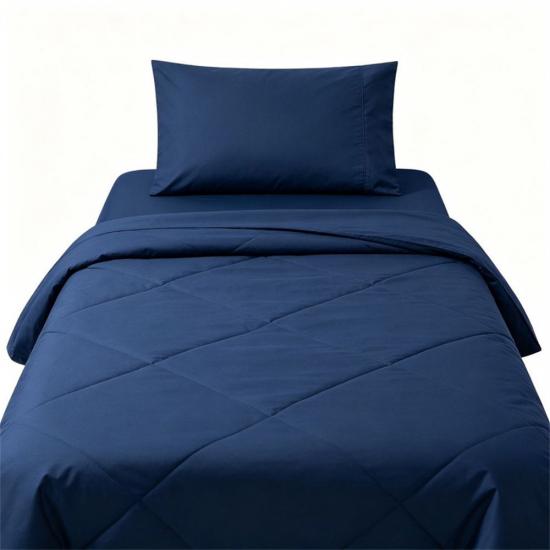

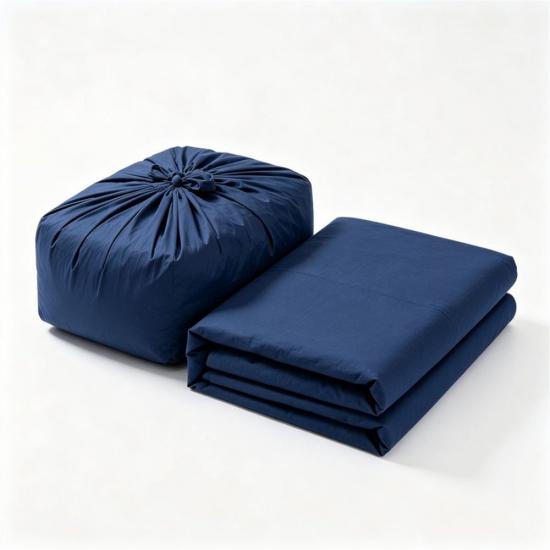

School dormitory bedding has to survive rough student use, weekly institutional washing and local fire codes. We supply durable poly-cotton and cotton dormitory bedding sets to universities, boarding schools and student housing, cut to standard twin and twin XL mattresses, dyed to a consistent school color and produced to one archived approved sample for every repeat order.
Note: Price for reference only. Exact price based on quantity, size, weight and custom details.
model no. :
SQ-04market price :
$79.8sale price :
$39.9price range :
30-100/$39.9Color :
Multiple Colorsport of dispatch :
Guangdong/GuangzhouPayment :
TT, Paypal, Western Unionmin order :
30original region :
Made in ChinaLead Time :
5-15daysSize :
180*200CM Or customize |

 |

|
Table of Contents
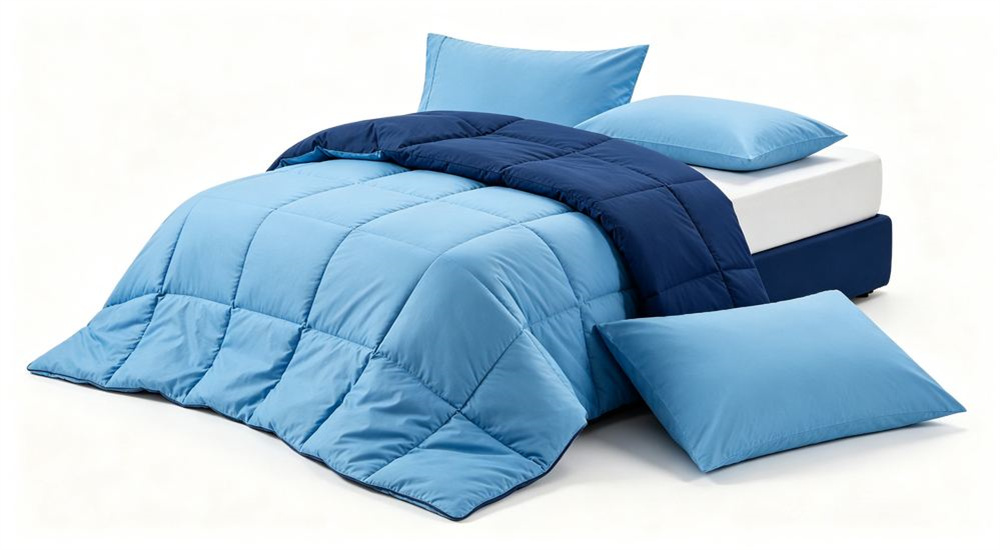
Outfitting a residence hall, boarding school or summer program is different from buying retail linen. Your bulk school dormitory bedding has to fit standard twin and twin XL mattresses, hold its color across hundreds of sets, and survive an institutional laundry cycle week after week. We build each order around those three demands, so rooms look uniform on move-in day and the linen keeps performing through the academic year. Every carton is produced to the same approved sample, not a new interpretation each season.
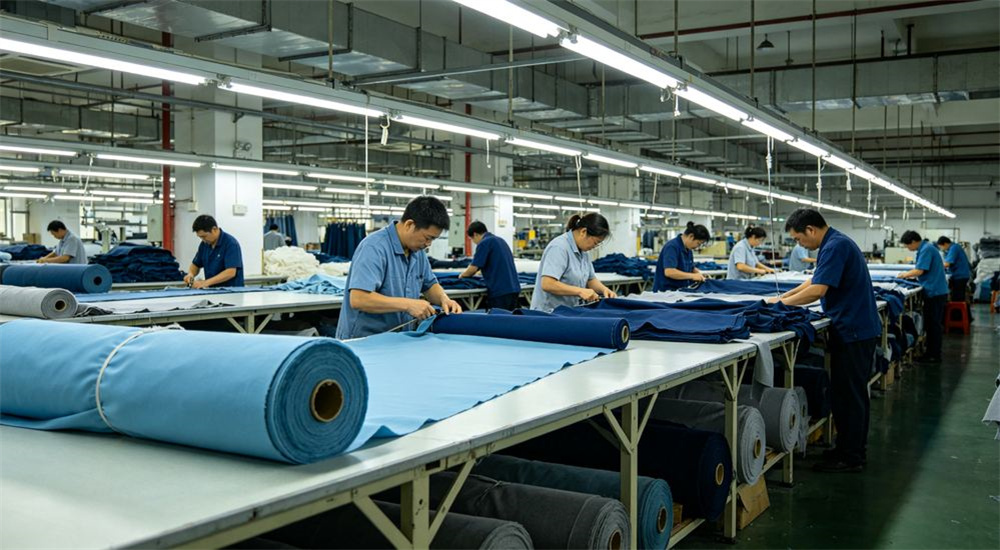
Most institutions start with a fabric decision. Wholesale school dormitory bedding in poly-cotton is the default for standard dorms because it resists wrinkles, washes clean at 60 degrees and needs almost no ironing. Where comfort is the priority, premium student housing moves to 100 percent cotton; where the budget is tight, polyester microfiber keeps cost down while still drying fast between groups. The sections below match each fabric and weight to the kind of building it serves, so you do not over-pay for luxury in a budget dorm or under-buy a fabric in a flagship residence hall.
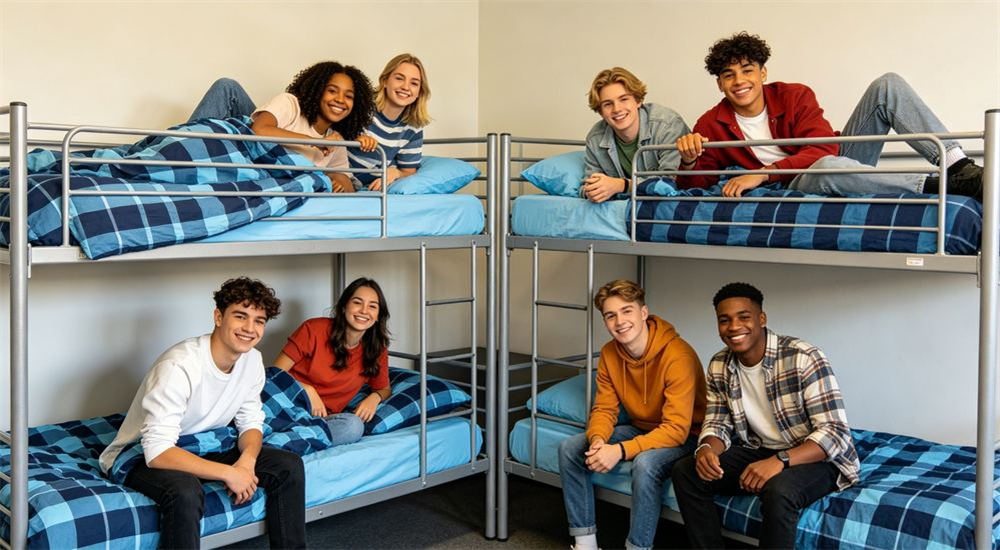
Beyond the fabric itself, school dormitory bedding buyers care about safety and consistency. Flame retardant treatment is available where local fire codes require it, school colors can be matched to an exact Pantone reference, and repeat orders are produced to the same archived standard so a new batch does not look different from last year's. The rest of this page walks through sizing, weight, procurement steps, cost over time, washing, packaging and samples in plain terms that a non-technical facilities manager can act on.
Whether you run a large public university, a K-12 boarding school, a vocational center or a seasonal ESL program ordering school dormitory bedding, the goal is the same: linen that is safe, hard-wearing and easy for your team to manage. The chapters below give you the practical specs and decision points to plan your order with confidence. You can also review our full range of institutional bulk bedding solutions across sectors before you lock the final specification.

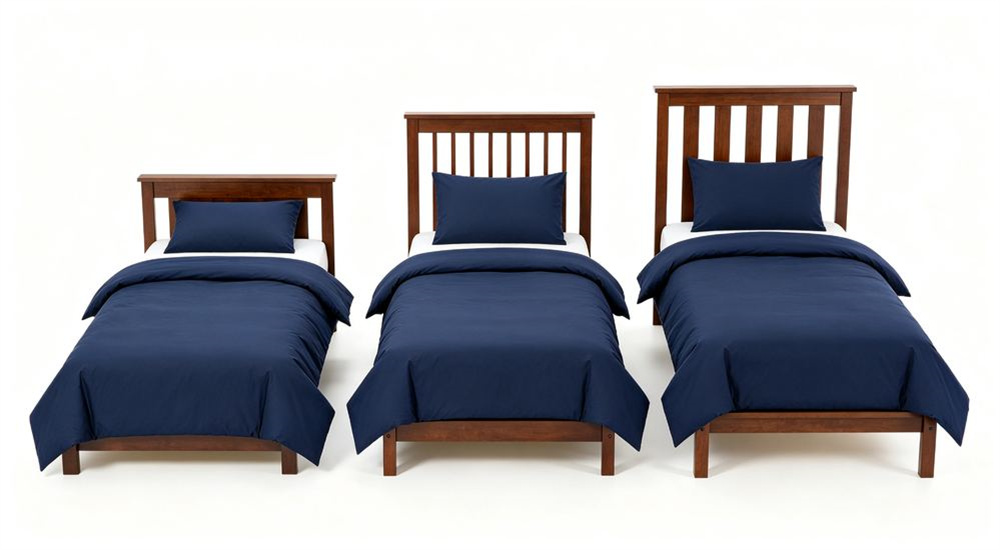
School dormitory bedding has to fit the beds you actually own, and that measurement starts with the mattress rather than the room. Most student housing uses twin XL or standard twin mattresses, and we cut flat sheets, fitted sheets, duvet covers and pillowcases to those exact measurements before semester start. Fitted sheets can be made with deeper pockets for thicker or topper-covered mattresses, which is the detail most often missed when a campus orders from a new supplier. Planning a school dormitory bedding wholesale order starts with measuring every mattress on campus, because twin and twin XL sizes differ between universities and boarding schools.
The table below lists the mattress sizes you will find in common student housing and the sheet sizes we cut to. Confirm your own mattress length, width and height before ordering, because fitted sheets depend entirely on pocket depth and a corner that slips off an upper bunk causes constant complaints from students and housekeeping alike.
The table below summarizes core school dormitory bedding wholesale specifications, so you can match mattress dimensions before you request a quotation.
Bed Type
Mattress (cm)
Sheet (cm)
Typical Use
Twin XL
200 x 90
210 x 120
University dorms
Standard Twin
190 x 90
200 x 115
Boarding schools, bunks
Narrow Single
190 x 80
200 x 105
Budget dorms, hostels
Double Room
190 x 120
200 x 150
Premium housing
Wider Bed
200 x 100
210 x 130
International programs
These are reference sizes for school dormitory bedding rather than fixed rules, because older dormitories often hold odd bed frames that do not match a retail standard. We cut to your measured dimensions, and we recommend measuring a few representative beds rather than trusting a single number. Getting the mattress height right matters most for fitted sheets, since the elastic has to grip a surface that can range from a thin foam to a boxed spring mattress with a topper on top.

For school dormitory bedding, measurements should come from the mattress as it sits on the bed, not from a spec sheet written years ago. Record the length, width and the corner height in centimeters, because fitted sheets are cut to the mattress depth and a guess here means corners that pop off. If your beds carry a protective topper, measure the whole stack, because the fitted sheet has to cover both the mattress and the topper together. Send a small sketch or a photo with the bed dimensions if anything is unusual, and we will confirm the sheet size before production starts rather than cutting it to an assumption.
School dormitory bedding sets ship in the configuration your laundry and move-in process needs. Choose the layout that matches how you distribute linen to students, and remember that reordering loose pieces later costs more in handling than choosing the right set from the start.
In school dormitory bedding, fitted sheets are preferred on bunk beds because they stay put through the night and through the rough way students remake a bed in a hurry. Flat sheets still suit some traditional dormitories, especially where housekeeping staff prefer the tucked-in hotel style, and we can supply either to your standard. Deep-pocket fitted sheets with strong all-round elastic hold up better on upper bunks, where a loose corner tangles and becomes a safety as well as a comfort issue.
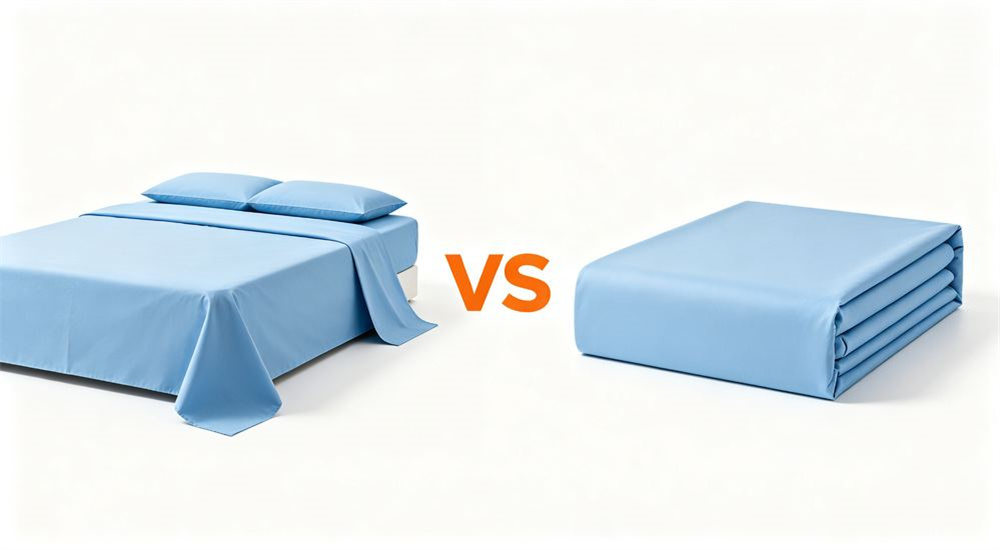
The fabric decides how your school dormitory bedding looks after a year of washes. Poly-cotton, cotton and polyester each suit a different budget and comfort level, and most institutions end up using more than one across their buildings rather than forcing a single material onto every room. The choice shows up in three places: how the room looks after a semester, how much labor the laundry spends ironing, and how long the set survives before it has to be replaced. Choosing the right fabric is the first decision in any school dormitory bedding wholesale program, because the blend determines wash cycle length and replacement frequency.
Poly-cotton blends around 65 percent polyester and 35 percent cotton are the workhorse of school dormitory bedding. They resist wrinkles, hold a neat appearance and take 60 degree washing without coming apart. The polyester side adds durability and shape, while the cotton side keeps the hand feel acceptable for students who sleep under the covers every night.
Poly-cotton is chosen more often than either pure fabric because it averages out the weaknesses of both. Pure cotton wrinkles and needs ironing, while pure polyester feels synthetic and cannot take hot washes. The blend lands in the practical middle: it dries reasonably fast, shrugs off the ordinary spills of student life, and comes out of the dryer looking close to made. For a facilities team running a shared laundry, that balance matters more than any single premium feature.
When you compare poly-cotton to cotton on total cost, the saving shows up in labor rather than in the price tag. A crew that would spend hours pressing cotton rooms flat can instead remake the beds and move on, because the blend releases most wrinkles on its own. That is why standard university housing almost always defaults to poly-cotton, and reserves cotton for the small number of rooms where comfort is marketed as part of the residence experience.
In school dormitory bedding, cotton earns its higher price in premium and international housing, where parents and visiting students judge the room by how it feels. It breathes better in warm weather and takes hot washes with bleach, which makes it useful in infirmaries. The trade-off is maintenance: cotton needs a press for a crisp look, and it shrinks a little on the first wash, so ordering pre-shrunk fabric avoids a surprise a few months in. Plan for this labor if you choose cotton.
Polyester microfiber is the budget and seasonal answer for school dormitory bedding. It is the cheapest fabric, dries in a fraction of the time, and does not wrinkle at all, which suits summer programs that turn over every few weeks. Its limits are real: it cannot tolerate hot washes, it traps heat less well in cold climates, and it feels less breathable on hot nights. Use it where cost and turnover dominate, not where comfort is the selling point.
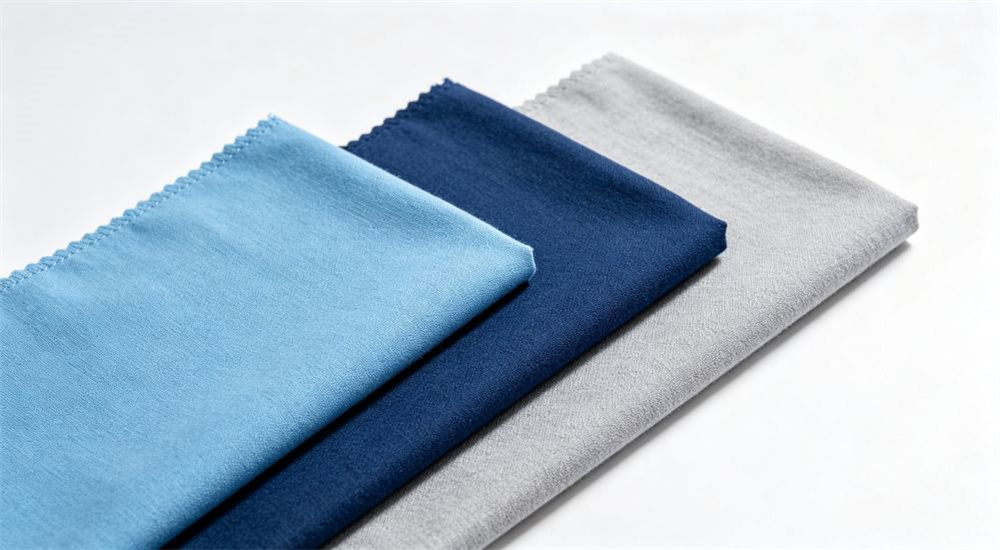
The fabric comparison table below lists school dormitory bedding wholesale options by GSM and blend, helping you choose the right poly-cotton or cotton weight for your campus.
|
Property |
Poly-Cotton |
100% Cotton |
Microfiber |
|
Institutional Wash Cycles |
250-350 |
180-250 |
150-250 |
|
Resident Comfort Survey (1-5) |
3.8 |
4.6 |
3.2 |
|
Wrinkle Recovery Angle (AATCC 128) |
180 |
120 |
260 |
|
Wash Temperature |
Up to 60C |
Up to 90C |
Up to 40C |
|
FR Option |
EN ISO 11612 optional |
EN ISO 11612 optional |
Not available |
|
Relative Cost (Poly-Cotton = 1.0) |
1.0x |
1.4x |
0.7x |
|
Recommended Use |
Standard dorms |
Premium housing |
Budget, seasonal |
Cotton breathes better and feels softer, so it wins in premium and international housing where student satisfaction and parent expectations matter. It does crease, however, and benefits from a press if you want rooms to look crisp at inspection time. Polyester microfiber is the lightest, quickest drying and cheapest option, ideal for summer programs where linen is stored between groups, but it should not be washed hot or ironed, which limits where it works. Most buyers pick poly-cotton for standard dorms and reserve cotton for upgraded rooms, keeping the budget where it counts.
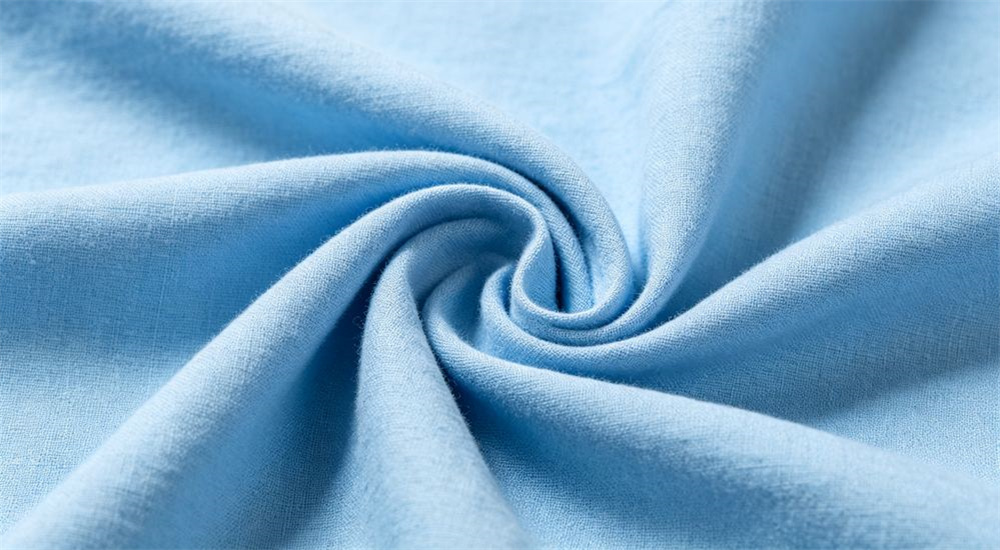
Use the following quick questions to narrow the right fabric, GSM and set composition for your facility before you request a quotation.
GSM means grams per square meter, and it tells you how heavy your school dormitory bedding fabric feels. Higher GSM means thicker, tougher bulk school dormitory bedding that lasts longer, at a higher upfront price. Matching the weight to your building avoids overpaying for thickness you do not need in a seasonal room, or under-buying a thin fabric that pills and tears in a high-occupancy hall. The four common weights below cover nearly every institutional use case. Matching GSM to your laundry cycle is how a school dormitory bedding wholesale order performs in its first semester, not just on arrival day.
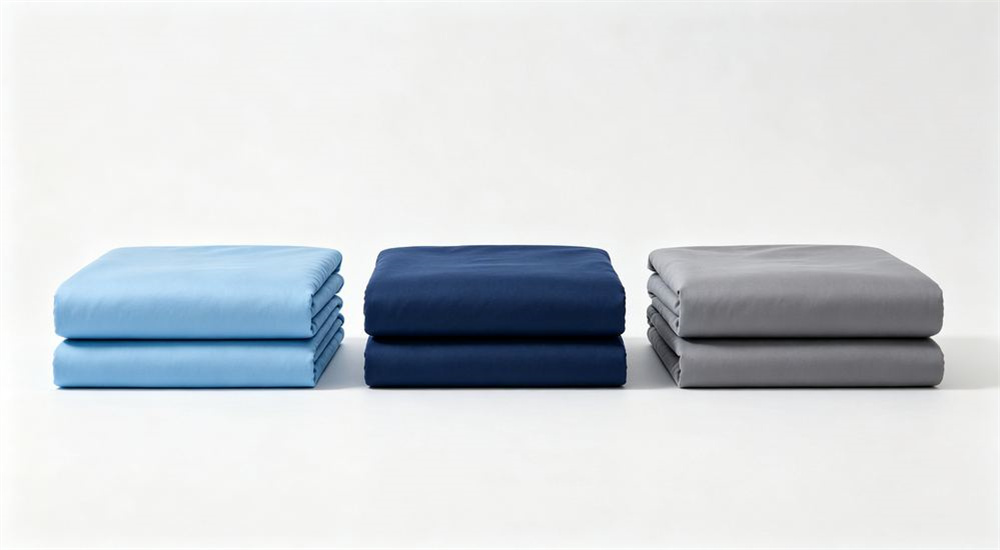
The 140 GSM economy model suits temporary and seasonal housing where cost matters most and the linen will not be in service for many years. The 160 GSM standard is the best all-rounder for regular university dorms, balancing feel against price. The 180 GSM durable model is built for high-occupancy buildings and multi-year contracts, while 200 GSM sits in premium student housing where the bedding is part of the selling point of the residence.
Weight is not just about comfort. A heavier fabric drapes better on the bed, resists pilling from friction in the wash, and keeps its color through more cycles. A lighter fabric is cheaper and feels cooler in summer, but it can feel thin against the hand and may show wrinkles sooner. Read samples before you decide, because two fabrics at the same GSM can feel very different depending on the weave and the finishing process.
Start with 160 GSM for most universities and step up or down based on turnover and budget.
The table below pairs each facility type with a recommended weight and fabric. Use it as a starting point, then adjust to your own laundry budget and how hard students are on linen. A hall with younger boarding school students may benefit from the heavier weight even if the room type suggests the standard, because rougher handling wears lighter fabric out faster.
The GSM guide below maps school dormitory bedding wholesale weights to typical residence hall use, so you can avoid buying too light for weekly institutional laundry.
Facility Type
Recommended GSM
Fabric
Washes per Year
University Dormitory
160
Poly-Cotton
52
Boarding School
160-180
Poly-Cotton
52
Budget / Hostel
140
Microfiber or Blend
100+
Premium Housing
180-200
Cotton or Blend
52
Summer Program
140
Microfiber
150+
International Dorm
180
Cotton or Blend
52
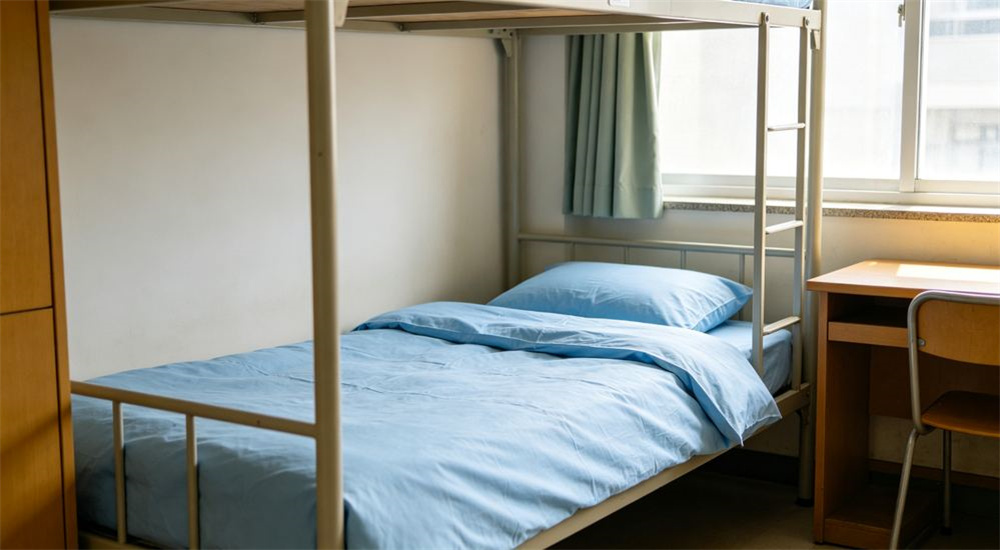
Dormitory linen faces stress that hotel fabric never sees. Students remake beds in a hurry, fitted sheets get yanked on and off bunks, and the laundry room runs every day of the week during term time. Our school dormitory bedding is reinforced where that strain happens, so the first tear does not appear in the first month of the academic year. The wear points below explain why a school dormitory bedding wholesale spec built for student use survives where hotel fabric would not.
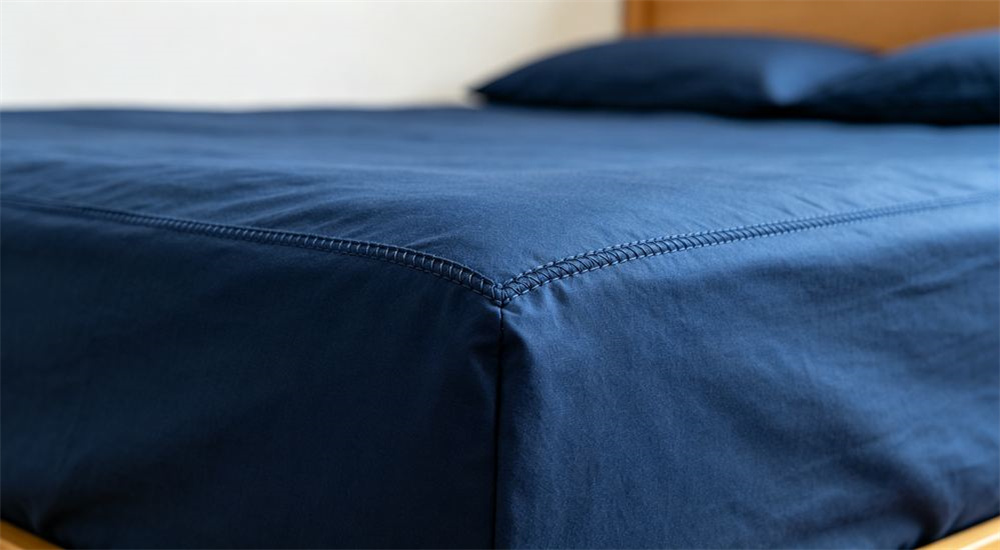
Reinforced seams, bar-tacked corners and strong elastic are not optional extras here. Double-stitched hems resist tearing when a student drags the sheet across the mattress, and closures on duvet covers hold up to daily pulling and opening. Bar-tack reinforcement at stress points means the corners and elastic anchors survive thousands of tugs rather than letting go on the first one.

Fire safety is the most important compliance point for student housing. FR-treated fabric is available across all blends, with test reports for your file, and the treatment keeps working through repeated washes. Check your local dormitory fire code before you order, because some regions mandate FR linen while others leave it to the institution, and getting this incorrect is both a safety and a legal risk.
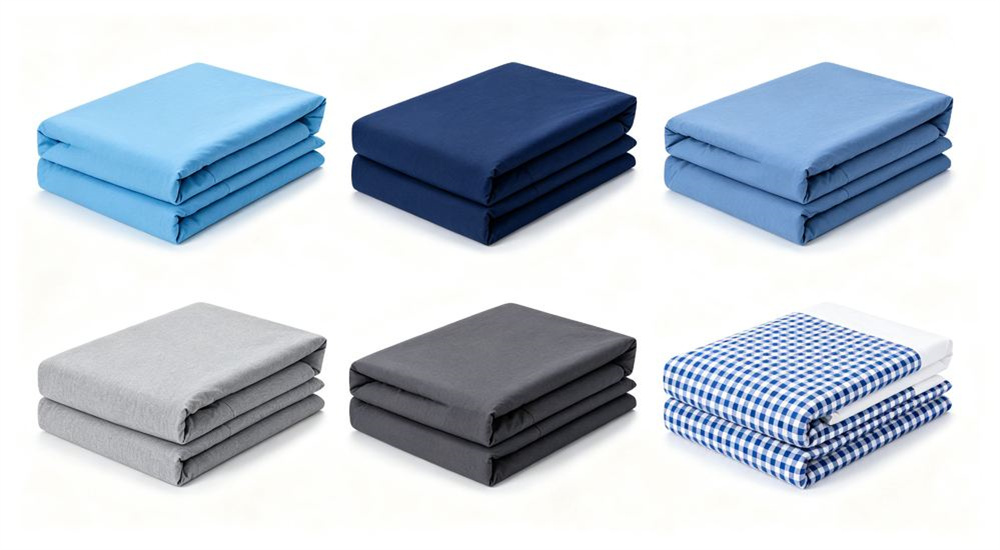
Color choice also protects the room. Navy and grey hide minor marks far better than white, and solid colors wear more evenly than patterns, which show scuffs and are harder to match when you replace single pieces years later. For dorms in humid climates, poly-cotton and microfiber dry faster than pure cotton, which cuts the chance of musty smells when linen is stored over a long break.
Student rooms see spills that a hotel never does, from drinks to art supplies. Poly-cotton and polyester take most ordinary stains out at normal wash temperatures, and darker institutional colors keep the room looking clean between deep cleans. Where humidity is high, choosing a fabric that dries quickly matters as much as the color, because a damp room develops odors fast. Breathable weaves help, and so does storing linen in a dry area over the long summer break, with sets kept in their cartons rather than stacked loose on a floor.
Flame retardant treatment changes how the fabric behaves near a small ignition source, slowing flame spread so people have more time to react. The treatment is applied during finishing, and when it is chosen and maintained correctly it keeps working through repeated washes rather than washing away after a few cycles. We provide the test reports that show the treatment has been verified, and we explain the specific wash conditions the treatment needs, because some laundering practices can shorten its effective life. Always match the treatment to the standard your local fire code names, since different regions reference different test methods, and keep the documentation with the order file for the safety officer.
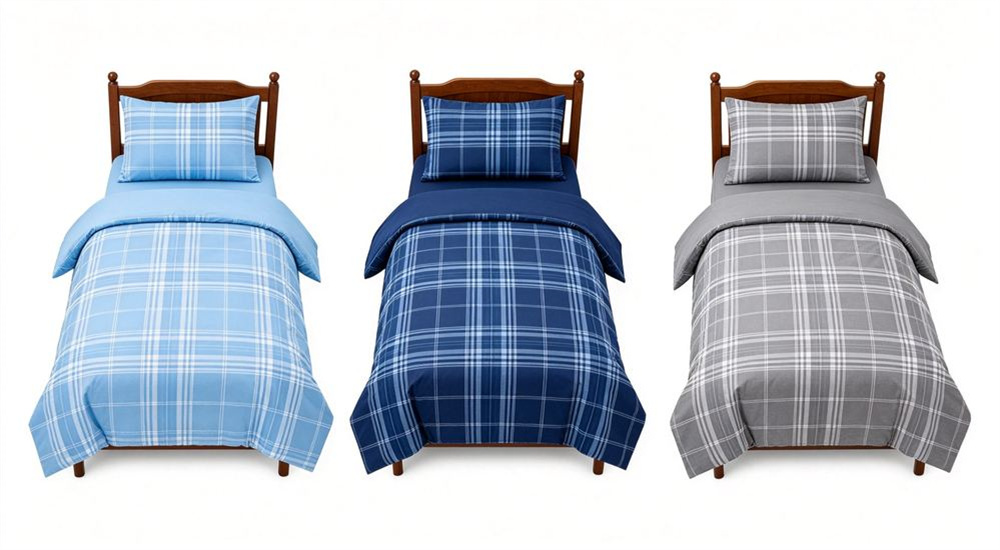
Buying for a campus is a series of practical choices rather than a single product pick. Work through the steps below to narrow the fabric, weight and quantity before you request a quotation for your boarding school bedding order, and bring the answers together so the supplier does not have to chase you for information mid-tender. A school dormitory bedding wholesale purchase usually involves several buildings and a fixed move-in date, so we plan fabric, color and packaging around that deadline.

Two sets per student is the practical norm, because one set is on the bed while the other is in the laundry and a room never goes unslept in. High-turnover premium buildings sometimes run three sets, while short summer programs use one. Adding a spare buffer avoids scrambling when a set tears or stains, and it is far cheaper to carry 5 percent spare than to reorder a partial shipment under time pressure. For multi-campus buyers, note the destination of each building so carton marks and split deliveries are planned before production starts.
A clear first message speeds up the whole process for school dormitory bedding buyers. Tell us the number of beds, the mattress measurements you have taken, whether you need fitted or flat sheets, your preferred fabric and weight, the school color or Pantone reference, whether FR treatment applies, and your delivery deadline. The more of these you include up front, the faster we can return a realistic quotation and sample plan. If you already have a tender document, attach it and we will respond in the format it asks for rather than sending a generic reply.
Because bedding almost always has a hard deadline, plan the schedule backwards from the date students move in. Sample approval takes time, production takes time, and ocean freight takes time on top of that, so the booking date lands well before the term starts. Build in a buffer for any last-minute tender questions or color confirmation, because a rushed order is where mistakes appear. If your deadline is tight, tell us the date up front and we will flag whether the timeline is realistic and whether faster freight is the answer, rather than discovering the shortfall after production has begun.
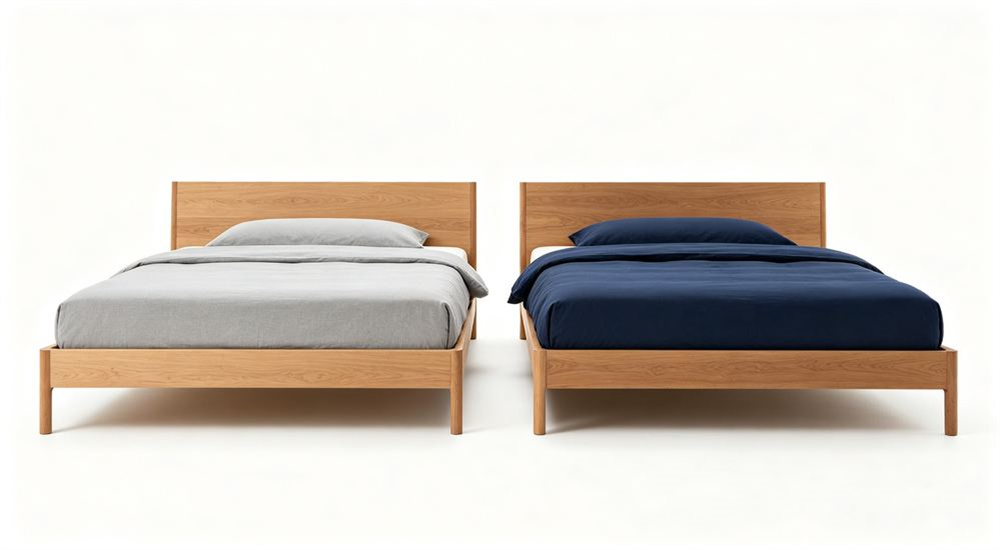
For school dormitory bedding, the cheapest bid is not always the cheapest over time. Lighter linen looks good on day one but may need replacing sooner, while heavier poly-cotton costs more upfront and lasts more academic years. Facilities managers who compare only the sticker price often find themselves rebidding halfway through the budget cycle. The table below gives realistic lifecycle ranges under normal institutional washing, so you can model the real cost of each option. When you compare school dormitory bedding wholesale bids, price per set matters less than price per year of service across your residence halls.

The cost and lifespan table below compares school dormitory bedding wholesale options by price per set and expected years of service, so you can budget the full replacement cycle.
Fabric and GSM
Wash Cycles
Weekly Wash Life
Academic Years
Microfiber 140
150-250
3-4 years
2-3
Poly-Cotton 160
200-300
4-5 years
3-4
Poly-Cotton 180
250-350
5-6 years
4-5
Cotton 180
180-250
3-4 years
2-3
Cotton 200
220-300
4-5 years
3-4
Lifespan figures are estimates based on standard institutional laundry with two-set rotation. Actual results vary with wash frequency, student handling and care. Treat them as planning ranges, not guarantees.
To compare options fairly, divide the cost of a set by how many years it will last. A heavier set that costs a little more today often works out cheaper per year because it survives more washes and stays looking presentable longer. When you evaluate school dormitory bedding bids, ask for the annual cost rather than the sticker price alone, and factor in ironing labor, which cotton needs and poly-cotton almost does not.
The practical triggers for replacement are permanent staining, a fabric that has thinned, loose seams, elastic that has lost its grip on fitted sheets, and fading that makes a set look older than the rest of the room. Budgeting a refresh at renovation time, rather than reacting to individual failures, keeps a residence hall looking consistent across all its floors.
When several suppliers quote, the numbers can look close on the surface but mean very different things. Compare the fabric weight, the set composition, whether inserts are included, the FR treatment, the packing method, and the lead time, not just the price per set. A slightly cheaper quote that excludes inserts or uses a lighter GSM can end up costing more over the life of the linen. Ask each supplier for the same breakdown so the comparison is apples to apples, and confirm which figures are firm and which are estimates subject to order confirmation.
The price of a set is only the first line of the budget. Over its life, the linen also costs money to wash, dry, press and store, and it carries a replacement cost when it wears out. Cheaper microfiber might have a low sticker price, but if it needs replacing every couple of years and a slightly heavier blend lasts twice as long, the heavier choice is usually cheaper over the full cycle. Add the labor saving from a fabric that does not need ironing, and the annual cost picture shifts again. This is why facilities teams that buy on total cost, rather than unit price, tend to end up with happier students and a steadier budget.
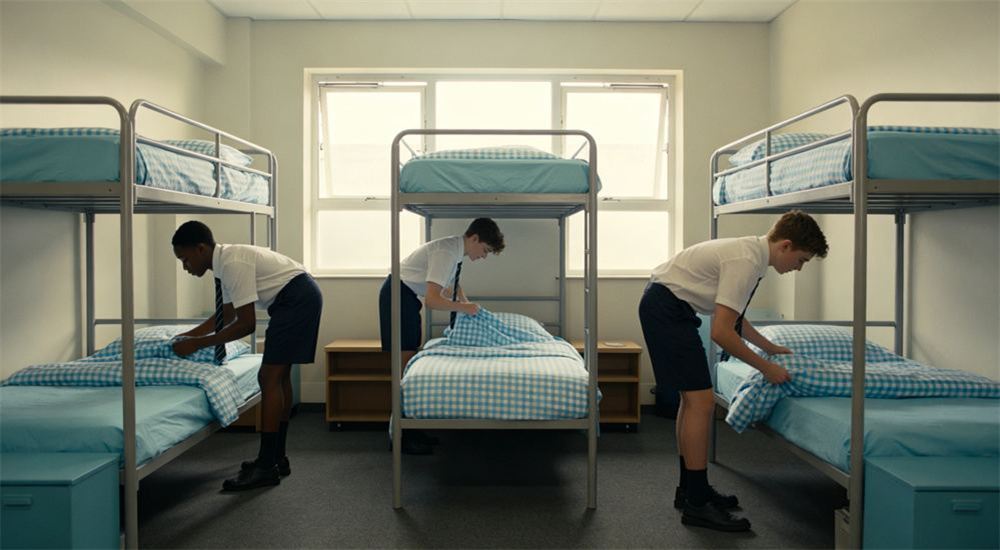
Different educational buildings put different demands on school dormitory bedding. Matching the spec to the setting keeps students comfortable, protects your budget and steers clear of the common mismatch of buying premium cotton for a high-turnover summer hall or microfiber for a flagship residence. Different campus buildings demand different specs, and a school dormitory bedding wholesale program that matches the setting reduces both complaints and waste.
Match the GSM and set composition to how hard each facility is on linen, and reorder against the archived sample so every batch matches.
School linen rarely stands alone. Facilities also order related care setting bedding for health clinics and medical grade bedding for campus infirmaries, so a unified linen standard can run across housing and clinical spaces. For institutions that also stock shelter-grade linen during emergencies, our rapid relief bedding range shares the same fabric quality, which simplifies training for your laundry team.
A boarding school with younger residents needs linen that survives rougher handling and is simple for a student to make alone, which points to durable poly-cotton and fitted sheets. A graduate residence hall, by contrast, houses older students who care more about feel, so a slightly softer fabric earns its place. Reading the room type honestly, rather than buying one spec for the whole campus, is how facilities teams get both comfort and cost right. The same logic applies to climate: a coastal campus in a humid region benefits from quicker-drying blends, while a cold northern campus can lean into warmer, heavier cotton.
Budget and hostel-style student housing has to stretch further because the turnover is high and the budget is tight. For these buildings, 140 GSM microfiber or a light poly-cotton keeps the per-set cost low, and the quick-drying fabric handles rapid turnarounds between groups. Summer and ESL programs are the extreme case: the linen lives for a few weeks at a time, then gets washed, compressed and stored until the next intake. Choosing a fabric that survives that cycle of use and storage, and packing it vacuum, keeps storage costs down and protects the sets from damp over the off-season.

Educational procurement needs paperwork it can verify, and a tender that arrives without the right certificates is easily dismissed. We supply the certifications and test reports that evaluators ask for, and run checks at each stage of production so that a bulk order matches the sample you approved months earlier. Every school dormitory bedding wholesale shipment includes test reports and batch samples so your tender evaluators can verify quality before bulk delivery.
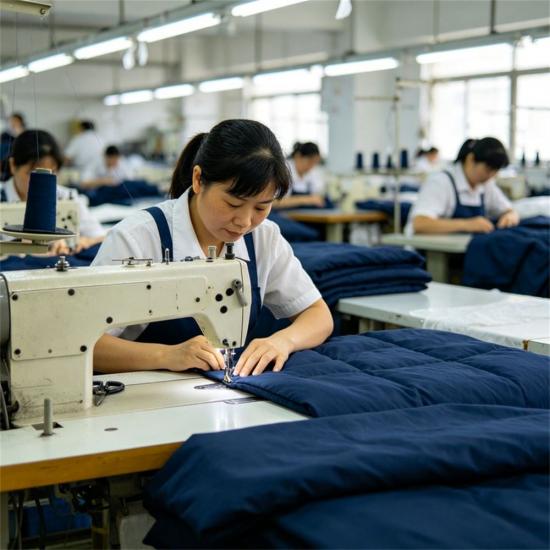
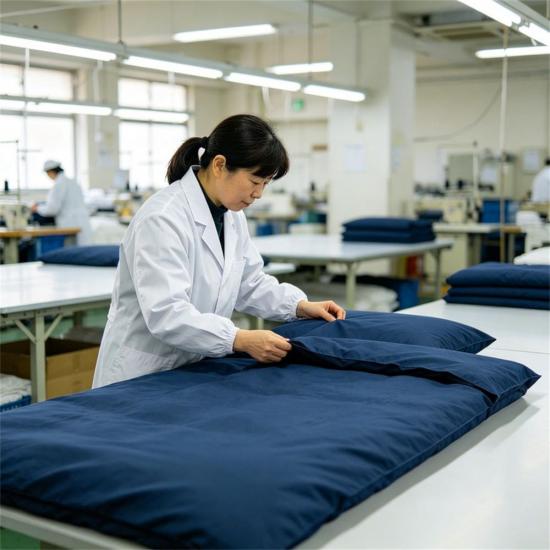
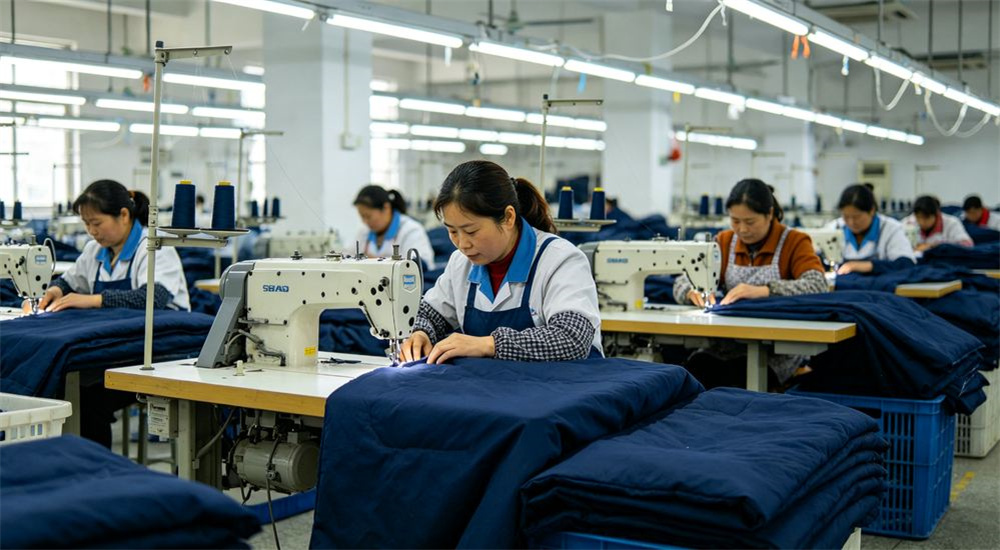
Production is checked from incoming fabric through to the loaded container. Fabric is tested for weight, composition and color before cutting; cut pieces are checked for size and defects; seams are inspected in line for stitch density and reinforcement; finished sets are measured and matched against the approved sample; and a pre-shipment sample is taken before loading. Color consistency against your approved swatch, elastic strength on fitted sheets, and seam strength at stress points get special attention for dormitory orders, because those are the points where a bulk run most often deviates from the sample.
The value of a staged inspection is that issues are caught early. An incorrect color discovered before cutting costs a rematch of dyed fabric, but the same color discovered after sewing means hundreds of sets to remake. Because each stage has its own check, deviations surface while the batch is still small and fixable, rather than in the cargo container on the water. For multi-year reorders, the archived sample also lets a new run be compared directly against the original, so a color drift over time is spotted before it reaches a student's bed.
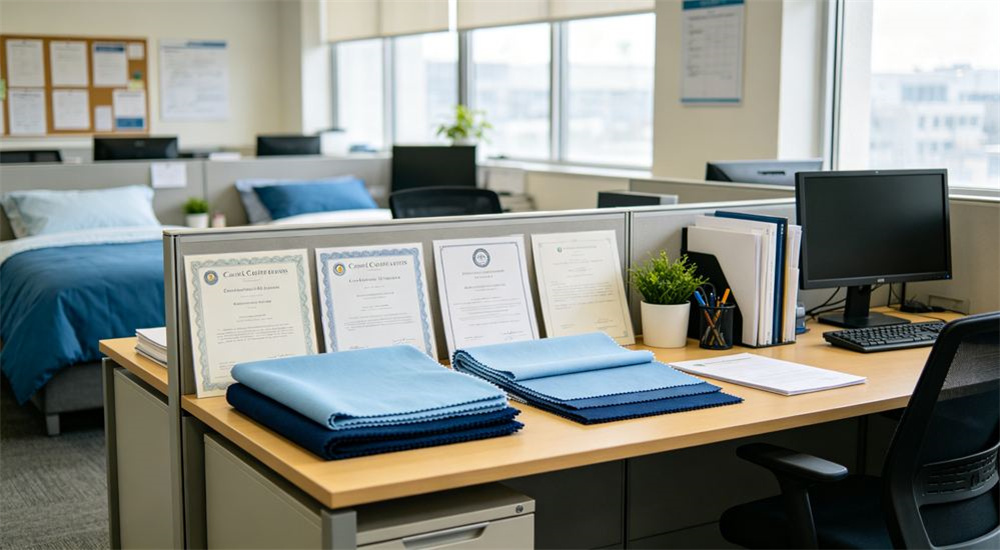
Most school and university purchases go through a formal bid, and a slow or incomplete supplier response can sink an otherwise competitive offer. We prepare the documentation and physical samples that evaluators ask to see, so your submission reads as prepared rather than patched together at the deadline.

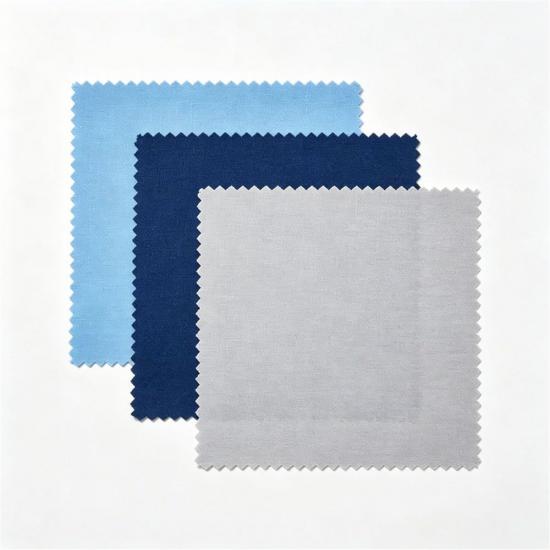
Physical samples are often required in bids. We send fabric swatch cards in your school colors and weight options, finished set samples, and FR-treated samples with their certification attached. Share your tender format, and we will lay the technical data out to match it rather than handing you a generic data sheet. Inquiries are answered promptly, and more detailed technical questions are up with a written response so the bid file is complete rather than relying on verbal promises.
Large educational tenders sometimes ask the buyer to verify the factory before awarding the contract. We support third-party audits by independent inspection firms, live video factory tours that walk through the cutting, sewing and packing lines, and pre-shipment checks on a real sample of your production. Production progress can be shared with photos and updates so the buyer sees the order moving rather than wondering. This level of transparency is designed for public tenders, where the procurement team needs auditable evidence in the file.
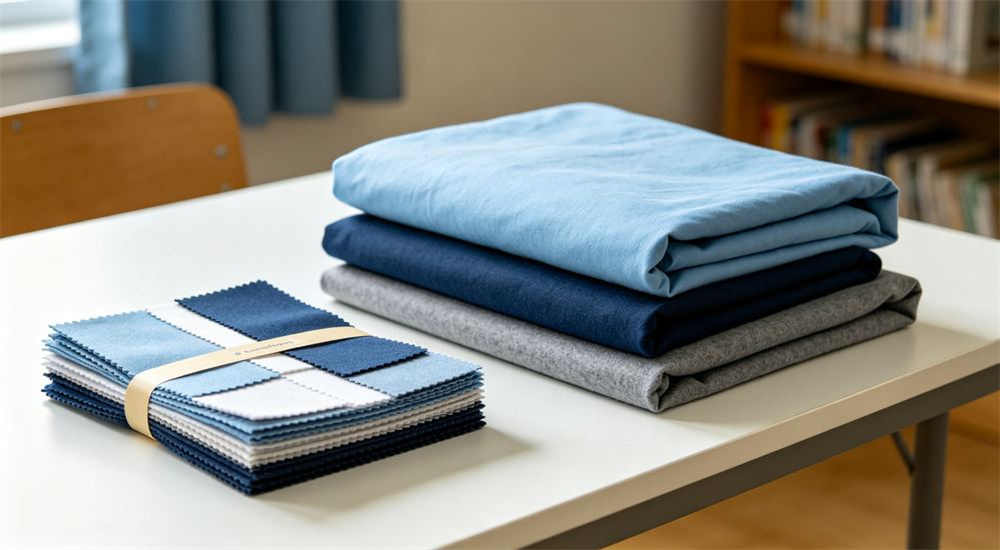
Standard sizes cover most rooms, but schools often want their own identity on the linen or a packing method that fits their move-in process. We adjust color, branding, fabric treatment and packaging to fit the institution rather than forcing a one-size product onto a specific operation. Branding, color and packaging options let you tailor a school dormitory bedding wholesale order to your school identity and move-in process.
Embroidery lasts through the most washes and suits premium housing and boarding schools where a crest matters. Screen printing keeps cost down on very large orders. Color-coded labels for different buildings simplify your inventory team's job, because they can route cartons to the right floor without opening every box. For schools in warmer regions, anti-microbial or moisture-managing finishes can be added to keep linen fresher between washes.
Embroidery and printing each have a place. Embroidery sits on pillowcases and duvet covers, survives hundreds of washes, and reads as a premium touch, which is why boarding schools choose it. Printing is faster and cheaper on large quantities, but it can soften after many washes, so it suits temporary or seasonal branding. If you are unsure, ask for a sample of both techniques on your fabric, because the feel and the durability are easiest to judge side by side. Whatever you choose, keep the logo placement consistent across all sets so the residence looks deliberate rather than improvised.
Not every room fits a standard set exactly. We can add an extra pillowcase to the set for premium rooms, drop the duvet cover in warmer climates where students sleep under sheets, or supply a deeper fitted sheet for a specific mattress height. Custom set composition is where a supplier earns its keep, because a one-size package forces you to buy pieces you do not need or omit pieces you do. Tell us how your rooms are actually made up and we will price the set to match, rather than selling you a retail configuration that does not fit your operation.
The way linen arrives shapes how fast move-in week runs. If staff hand sets directly to students, individually labeled bags save hours at check-in. If housekeeping makes the beds before arrival, bulk cartons are simpler and cheaper. If the linen will sit in storage over a break, vacuum compression protects it and saves shelf space. There is no single best packing method, only the one that matches your distribution process. Describe how you hand out bedding and we will pack accordingly, rather than defaulting to a generic carton that your team then has to repack.
Buying dormitory linen is not the same as shopping for a bed at home. Retail sheets are built for one household washing them by hand, but institutional linen goes through an industrial machine every week for years, and it has to match across hundreds of rooms. That is why the seams are reinforced, why the color is managed to a Pantone reference, and why every order comes with test reports and carton marks. When you treat the purchase as an institutional supply decision rather than a retail one, the spec and the supplier questions line up with what your building actually needs to run smoothly, and you steer clear of the common mismatch of buying home style linen that falls apart inside a single semester.
Right care keeps school dormitory bedding looking presentable and extends its life, and the way a laundry runs the machine changes how long the fabric survives. The temperature you use, how you dry it and whether you overload the drum all affect both appearance and the number of washes a set can take. Laundry routines directly determine how long a school dormitory bedding wholesale program stays presentable, so we ship care labels matched to your wash cycles.
The washing guide below lists school dormitory bedding wholesale care temperatures and cycle settings, so your laundry team keeps fabric looking new for longer.
|
Facility |
Frequency |
Wash Temp |
Drying |
|
University Dorm |
Weekly or bi-weekly |
40-60C |
Machine dry |
|
Boarding School |
Weekly |
60C |
Machine dry |
|
Budget Hostel |
Weekly |
40-60C |
Machine or line |
|
Premium Housing |
Weekly |
40-60C |
Machine dry |
|
Summer Program |
After each group |
40-60C |
Machine dry |
|
School Clinic |
Daily |
60-90C |
Machine dry |
Poly-cotton is the easiest fabric to live with: wash at 40 to 60 degrees, tumble dry medium, and almost no ironing. Cotton can take hotter washes and even chlorine bleach on white, but it benefits from a press if rooms are inspected closely. Microfiber needs cooler washes below 40 degrees and should never be ironed hot. Always follow FR care instructions, because some treatments depend on a specific wash routine to keep their certification valid. Separate dark and light colors to protect the school color standard, and take linen out of the dryer promptly to cut down on wrinkling.
A few simple habits protect the linen and the laundry budget. Do not overload the drum, because overcrowding stops the detergent from working and adds friction that wears fabric faster. Measure detergent rather than guessing, since leftover residue makes sheets feel stiff and dull. Wash lights and darks in separate loads to keep the school color uniform, and inspect each batch for seams coming apart or elastic that has gone slack. A small tear mended early saves a whole set, and removing a set from service once it looks worn keeps the residence looking tidy. Store clean linen in a dry, airy room over the long break, folded and boxed rather than left on open shelves.
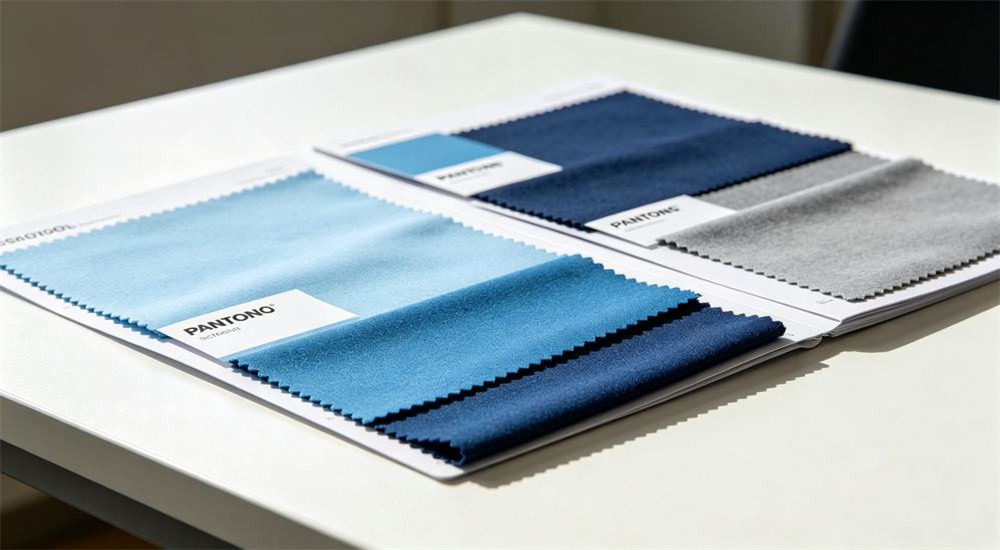
When a school reorders linen over several years, a single mismatched sheet stands out the moment it lands in a room next to last year's stock. We manage color so new batches match the old ones, which matters far more for institutions than for a hotel that replaces everything at once.
Each approved color is tied to a Pantone reference and stored in our system. On a reorder you simply reference your original order, and we pull the archived standard rather than starting the color conversation again. We aim for a close visual match within the same batch and a match that holds across batches when viewed side by side. A small confirmation swatch can be sent before production if you want to check a new run yourself, which removes the risk of receiving thousands of sets that read as a slightly different navy.
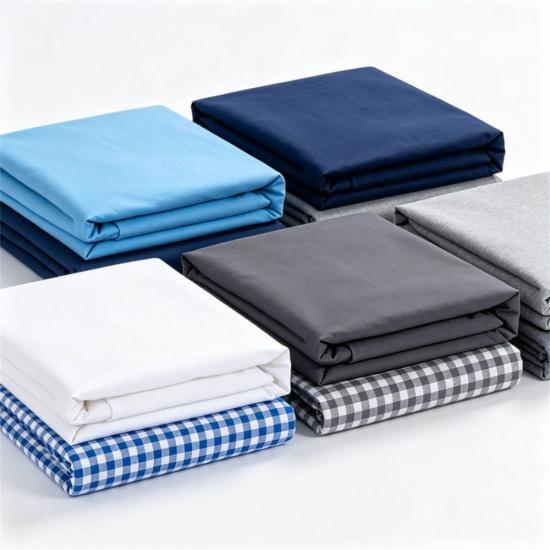
Navy is the default for a reason: it hides wear, reads as professional, and suits almost any room. Grey works as a modern neutral that coordinates with furniture in any tone. Burgundy and green carry a traditional campus feel and are common where the school already uses those colors. White is reserved for clinics and rooms that must look hygienic, because it shows dirt fast and needs more frequent replacement. Where a school does not have a brand color to protect, navy or grey is the low-risk choice that stays looking fresh longest.
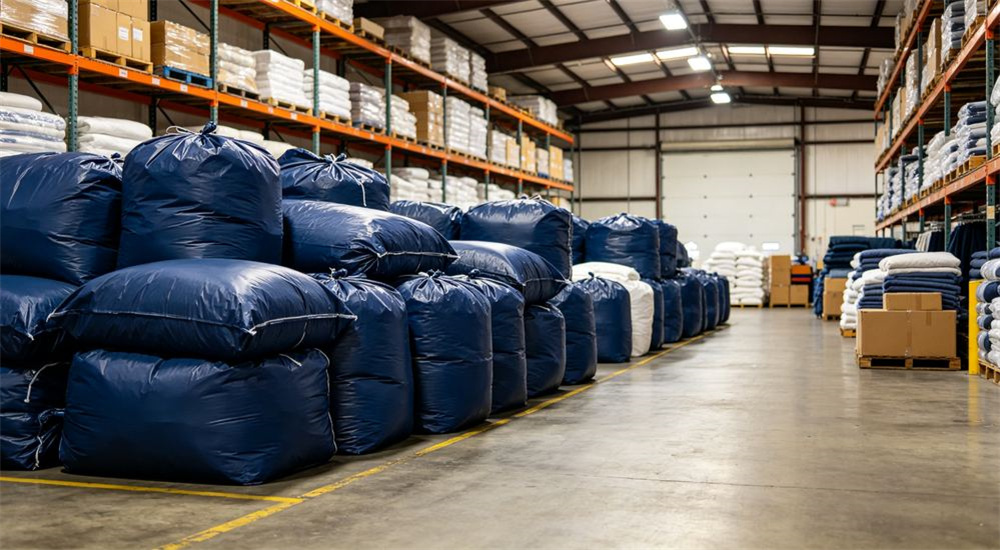
School orders often need to arrive before move-in day and may split across several campus buildings. Packaging and shipping are planned around that deadline, because a late delivery lands on the facilities team at the most challenging moment.
Packaging choice affects move-in speed, storage volume and carton cost, so match it to your distribution method.
Sea freight is the economical choice for large orders, while express courier handles samples and small urgent shipments. Production lead time and shipping days are planned around your semester date, so we recommend booking well ahead of move-in. Vacuum compression is particularly useful for summer programs that store linen between intakes, because it cuts storage volume and protects against dust and damp. Loading quantities per container are estimates confirmed in your quotation, not treated as fixed figures, because they move with the fabric weight and packing method.
Clear paperwork prevents delays at the destination port. We provide a commercial invoice, packing list, bill of lading and certificate of origin for every shipment, and can add destination-specific documents when your customs authority requires them. Carton marks carry the purchase order number, building code and gross weight, so a multi-building delivery can be routed on the dock without opening boxes. Let us know your incoterm preference and any customs forms your country expects, and we will build them into the order rather than discovering them at the last minute.
A campus order rarely goes to a single dock. Sets may need splitting across residence halls, sports campuses and satellite sites, and the receiving staff at each location want cartons they can identify at a glance. We can pack and mark cartons per building, label individual sets for move-in, and arrange split deliveries so each site receives what it needs. This removes the common headache of one delivery point being swamped while another waits, and it lets the facilities team distribute linen logically across the campus rather than moving cartons between buildings after they arrive.

Before a large commitment, most buyers want to feel the fabric and check the color in person rather than trusting a data sheet. Our sample and trial process keeps that risk low, because a set used in one real dormitory for a semester tells you more than any marketing description.
Start with a fabric swatch card in your colors and weights, then move to a finished set sample. For a new specification, a small trial order used in one dormitory for a full semester is the best proof: it tests real washing, student handling and your distribution process. When you evaluate samples, check the color in natural light rather than under fluorescent tubes, measure after a wash to confirm shrinkage, inspect the seams and elastic, and verify FR compliance if it applies.
Sample fees depend on the type and level of customization, and we always confirm the cost before producing, especially for FR-treated samples that carry testing overhead. Any agreed sample credit and trial terms are confirmed in writing rather than assumed. Once the trial batch earns your sign-off, its specification becomes the quality bar for every future reorder, which keeps the supply chain stable year after year.
When the sample arrives, look at it the way your housekeeping and students will. Check the color against your swatch in daylight, run it through a wash cycle and measure it again for shrinkage, run a finger along the seams for loose threads, and pull the elastic corner to feel its grip. Lie it on a real bed to see how the set drapes, and compare it against the room's existing decor if you can. These checks take an afternoon, but they catch the mismatches that would otherwise appear across hundreds of sets after the order is signed.
Once the first order is running, reorders become straightforward. You reference the original order, confirm the quantity and any new buildings, and we produce to the archived specification and color. This avoids the yearly ritual of reselecting fabric, re-matching color and re-explaining the dormitory standard. For institutions that refresh a few buildings each year rather than replacing everything at once, that continuity is the main benefit: the linen in a new wing matches the wing outfitted three years earlier, and the laundry team does not have to relearn care instructions. Over a multi-year program, a stable supplier also means predictable lead times and a single point of contact for documentation.
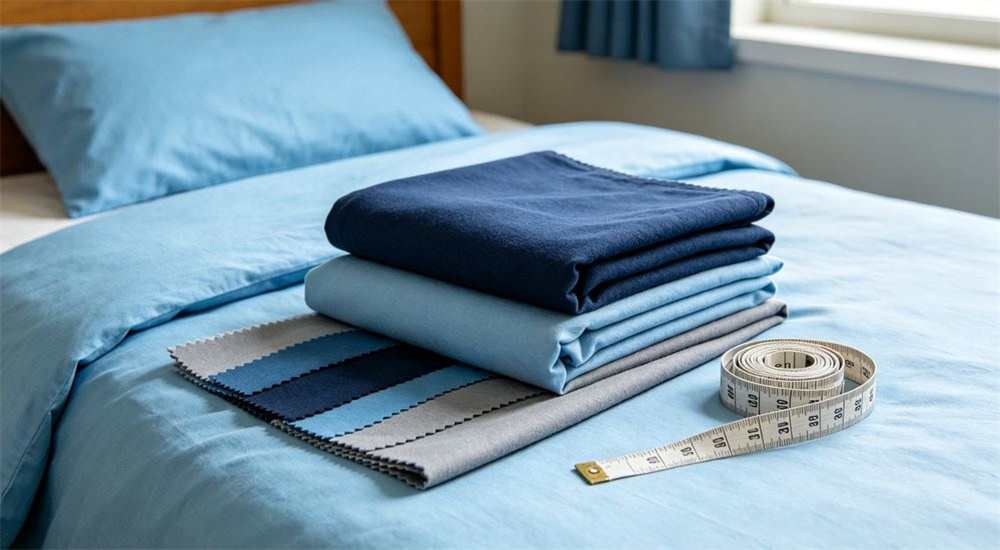
MOQ depends on the fabric, color and customization. Standard colors and sizes usually have a lower minimum, while custom colors, FR treatment or embroidery raise it. The exact figure is confirmed in your quotation and order contract rather than fixed on this page. For a school dormitory bedding wholesale program, standard colors and sizes start at a lower volume, while custom colors or FR treatment raise the minimum.
Requirements vary by country. Some regions mandate FR linen in student housing and others leave it to the institution. Check your local fire code first; we supply FR-treated fabric with test reports where you need it.
Yes. We match to a Pantone number or a physical swatch and send a color sample for your approval before bulk production. The standard is archived so future reorders stay consistent with the original.
It depends on fabric, weight and washing. As a rough guide, 140 GSM microfiber lasts around two to three academic years, 160 GSM poly-cotton three to four, and 180 GSM poly-cotton four to five, with two sets per student in rotation.
Yes. Complete sets can include pillow and duvet filling, which is convenient for move-in packages and new dormitory setup. Fill weights are chosen to suit your local climate.
Yes. Each set can be sealed in a labeled bag with contents, size and care details, so staff can hand them out directly at check-in without repacking. Labels can carry the school name and building code.
We provide company certificates, ISO 9001, OEKO-TEX fabric certification, FR reports, product test data and factory audit support, and can format the technical section to your bid document.
The most common are twin XL around 200 by 90 cm and standard twin around 190 by 90 cm. Send us your measured mattress length, width and height, and we will recommend the right sheet and duvet sizes.
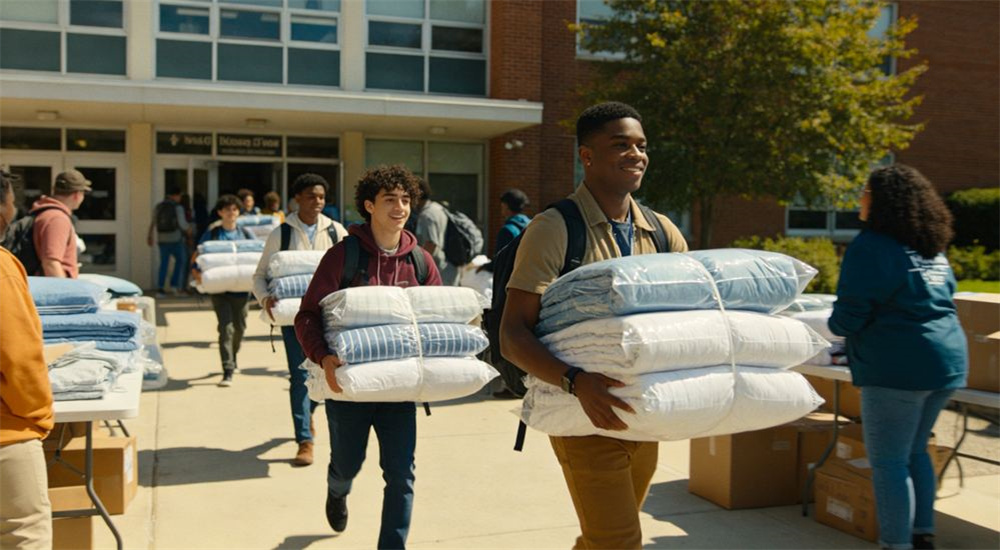
We suggest two sets per student so one is in use while the other is laundered, plus 5 to 10 percent spares. Summer programs usually run one set per participant given the short stay.
Yes. Fitted sheets, flat sheets, pillowcases and duvet covers are available individually for replacements or to top up existing inventory without committing to another full set.
We prioritize orders with move-in deadlines. Plan to book well ahead so production and ocean freight fit your date, and ask about faster freight if the timeline is tight. Feasibility is confirmed against your target date.
You can review the full collection on our institutional bulk bedding overview, covering emergency relief bedding and care settings alongside school linen for a unified procurement view.
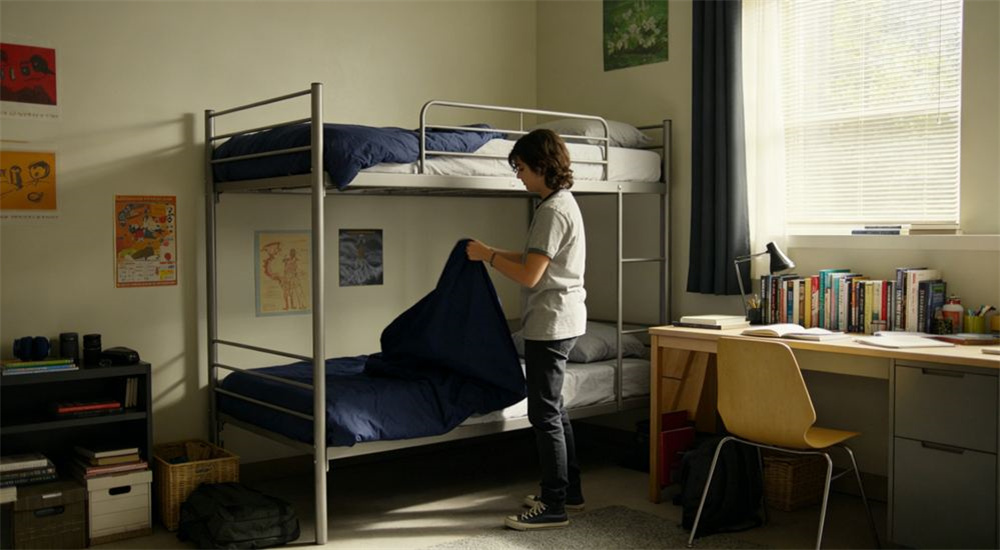
Buying school dormitory bedding wholesale lets you match the exact twin and twin XL sizes your residence hall uses, lock in a school color across hundreds of sets, and budget one poly-cotton spec that survives weekly institutional washing. Wholesale student linen from China keeps the unit price low while FR treatment, Pantone color matching and two-set rotation are built in.
Outfitting a campus is a long-term relationship, not a one-off purchase. Every order is produced to the archived approved sample, checked at each stage of cutting, sewing and packing, and delivered with the paperwork a tender file requires. Whether you are outfitting a new residence hall, refreshing an existing building or setting up a summer program, the same durable fabric, consistent color and tested construction keep rooms looking uniform and students sleeping well through the academic year.
Previous :
Emergency Relief Bedding Wholesale Cot Linen for Shelter CampsNext :
Institutional Bedding Wholesale: Durable Public Bed Linen Supply YRF-Wholesale Vanuatu Extremely absorbent towels,Police Blue blended Wool blanket,Double bed Bedding
Our bedding sets for emergency relief and humanitarian assistance. Military and national defense. Fire department, medical care department. Prison facilities, government agencies and the police. Camping, picnicking and outdoor leisure are proud to provide high-quality bedding solutions. We are committed to bringing innovation and technology to every user to make you have a good dream every day.
 YRF-WholesaleIndonesia High quality Green wash towels,Medical Care Gray Wool blended Blanket,Green Bed Quilt Cover
Our bedding sets for emergency relief and humanitarian assistance. Military and national defense. Fire department, medical care department. Prison facilities, government agencies and the police. Camping, picnicking and outdoor leisure are proud to provide high-quality bedding solutions. We are committed to bringing innovation and technology to every user to make you have a good dream every day.
 YRF-Made in ChinaJordan High quality Green wash towels,Police Blue blended Wool blanket,Maximum comfort Mattress Pad
Our bedding sets for emergency relief and humanitarian assistance. Military and national defense. Fire department, medical care department. Prison facilities, government agencies and the police. Camping, picnicking and outdoor leisure are proud to provide high-quality bedding solutions. We are committed to bringing innovation and technology to every user to make you have a good dream every day.
 YRF-ManufacturerJordan 100% cotton Green hand towels,Police Blue blended Wool blanket,anti-bacterial Quilt
Our bedding sets for emergency relief and humanitarian assistance. Military and national defense. Fire department, medical care department. Prison facilities, government agencies and the police. Camping, picnicking and outdoor leisure are proud to provide high-quality bedding solutions. We are committed to bringing innovation and technology to every user to make you have a good dream every day.
 YRF-Wholesale Georgia Soft cotton Blue Bath towels,Police Blue blended Wool blanket,Cotton Fabric Quilt Cover
Our Military 100% Cotton Bedding Set for emergency relief and humanitarian assistance. Military and national defense. Fire department, medical care department. Prison facilities, government agencies and the police. Camping, picnicking and outdoor leisure are proud to provide high-quality bedding solutions. We are committed to bringing innovation and technology to every user to make you have a good dream every day.
 YRF- Canary Islands Government Agencies blended Wool blanket,Extremely absorbent towels,Beige Quilt,Best Price
Our Encampment 100% Cotton Sets Bedding for emergency relief and humanitarian assistance. Military and national defense. Fire department, medical care department. Prison facilities, government agencies and the police. Camping, picnicking and outdoor leisure are proud to provide high-quality bedding solutions. We are committed to bringing innovation and technology to every user to make you have a good dream every day.
Copyright © Custom Disaster - Relief Bedding: Tents, Sleeping Bags, Blankets All Rights Reserved
the professional team to service !