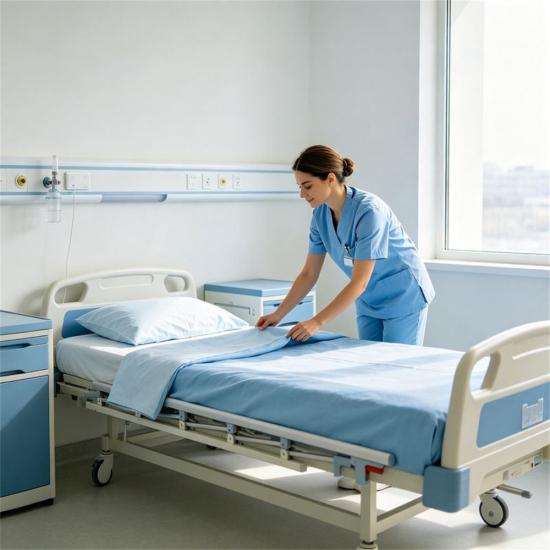
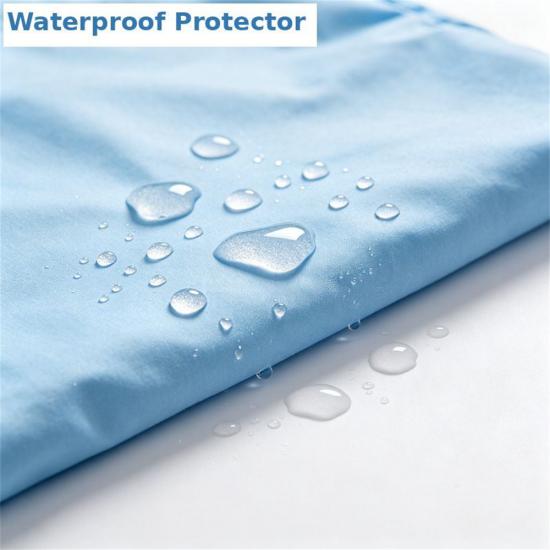
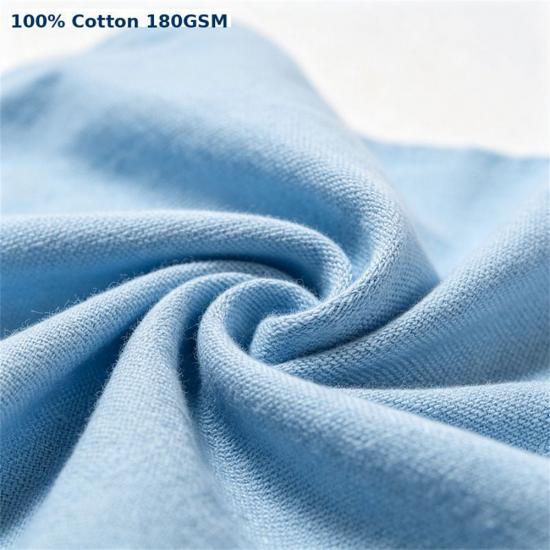


We supply wholesale hospital medical bedding to hospitals, clinics, nursing homes and rehab care centers. Our cotton and poly-cotton bed linen suits high-temperature laundry, infection control and steady bulk supply. We match ward sizes, offer GSM 120 to 250, and provide test reports and tender spec sheets for your next bulk hospital linen order today.
Note: Price for reference only. Exact price based on quantity, size, weight and custom details.
model no. :
SQ-01market price :
$79.8sale price :
$39.9price range :
30-100/$39.9Color :
Multiple Colorsport of dispatch :
Guangdong/GuangzhouPayment :
TT, Paypal, Western Unionmin order :
30original region :
Made in ChinaLead Time :
5-15daysSize :
180*200CM Or customize |

 |

|
Table of Contents
A reliable hospital linen supplier does more than ship sheets. It matches your ward bed sizes, survives hundreds of thermal wash cycles and keeps every batch consistent. We manufacture medical bedding sets in 100% cotton, poly-cotton and polyester, with GSM options from 120 to 250. Each order comes with the documentation procurement teams need, from product test reports to tender-ready spec sheets, so your buying process stays smooth and audit-ready.
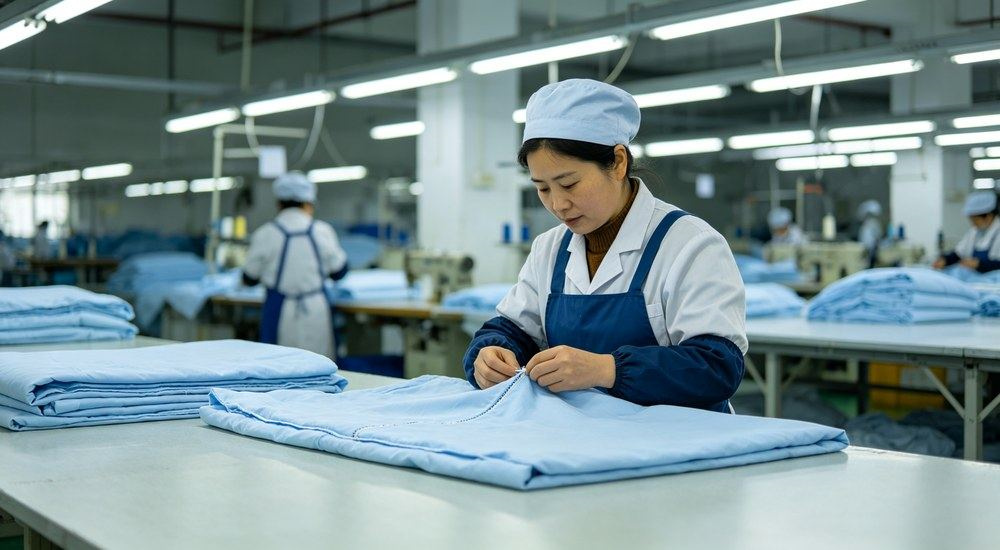
Because we produce the fabric and sew the finished pieces in one facility, bulk hospital bedding orders stay under tight quality control. We check color fastness, stitch strength and shrinkage before cartons leave the floor. This direct production model helps buyers balance patient comfort against laundry cost, which is the real budget pressure in most healthcare procurement. It also means fewer hand-offs between traders, so spec changes reach the cutting table faster.
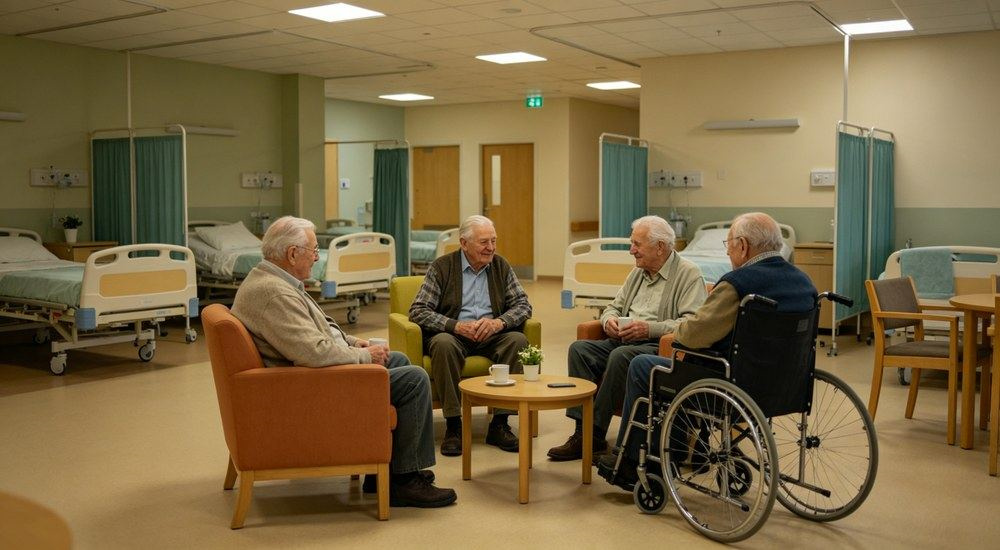
The right medical bed linen touches every patient every day. Soft cotton supports skin comfort during long stays, while durable poly-cotton keeps high-turnover wards looking clean. We help procurement teams choose between these two goals, then deliver matched colors and sizes across a multi-year supply agreement. Consistency matters as much as price, because a ward that mixes two whites from two suppliers looks unfinished on inspection rounds.

From ICU to outpatient clinics, this guide walks through fabric choices, GSM, sizing, infection control and tender support. Use it to short-spec your next purchase, and reach out with your bed dimensions for a matched quotation. The goal is to help you order once, fit the first time, and reduce replacement waste across your facility network.
Hospital beds come in standard sizes, yet many facilities run narrow ward beds, pediatric beds or bariatric beds. Our hospital bed linen wholesale program adapts to any bed dimension, and we quote in both metric and imperial units for international procurement. Getting the size right is the first step to a smooth rollout, and it avoids the most common after-delivery complaint: a sheet that will not tuck or a fitted cover that slips.
Measure each bed type you operate, not just one sample. Mattresses vary by age, brand and refurbishment cycle, so a ward built five years ago may not match a new wing. The table below lists standard reference dimensions for common hospital beds. Confirm your own mattress measurements before ordering, as bedding pieces are measured flat, not stretched on the bed.
|
Bed Type |
Duvet Cover (cm) |
Flat / Fitted Sheet (cm) |
Pillowcase (cm) |
|
Standard Hospital Bed |
200 x 140 |
200 x 110 flat / 190 x 80 fitted |
70 x 50 |
|
Narrow Ward Bed |
190 x 130 |
190 x 100 flat / 190 x 70 fitted |
65 x 45 |
|
Bariatric Bed |
210 x 160 |
210 x 130 flat / 200 x 100 fitted |
75 x 50 |
|
Nursing Home Bed |
200 x 145 |
205 x 115 flat / 195 x 85 fitted |
70 x 50 |
|
Clinic Exam Bed |
180 x 120 |
190 x 90 flat / 180 x 60 fitted |
60 x 40 |
These are reference sizes only. We adjust every dimension to your mattress, and an ill-fitting fitted sheet is the most common cause of complaints after delivery. Measure length, width and height together, because the pocket depth depends entirely on mattress thickness. If you are unsure, flat sheets are the safer first choice since they fit any height.
Many buyers wonder whether to order flat or fitted sheets. Flat sheets tuck under any mattress height and suit traditional bed-making, but they can loosen when patients move or when adjustable beds rise and lower. Fitted sheets grip the mattress and stay neat through patient movement and adjustable-bed repositioning, which saves staff time in high-turnover wards. The choice comes down to your bed type and how much bed-making time your staff can spare.
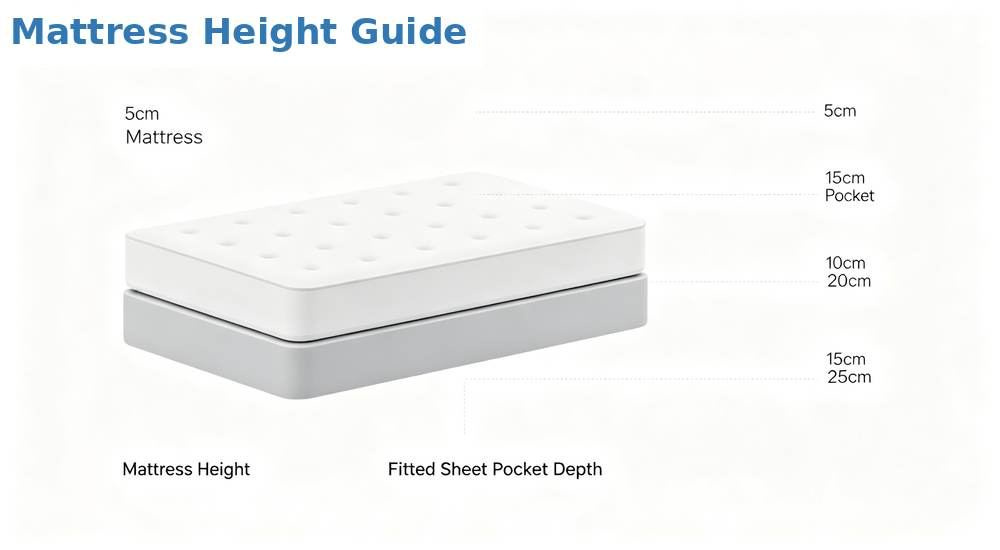
For fitted sheets, send the mattress length, width and height. The height decides the pocket depth: thin temporary mattresses use a shallow pocket, while bariatric and memory-foam mattresses need a deeper pocket to avoid slipping. Without the height dimension, we cannot recommend the correct pocket, and a too-shallow corner will pop off during the night shift.
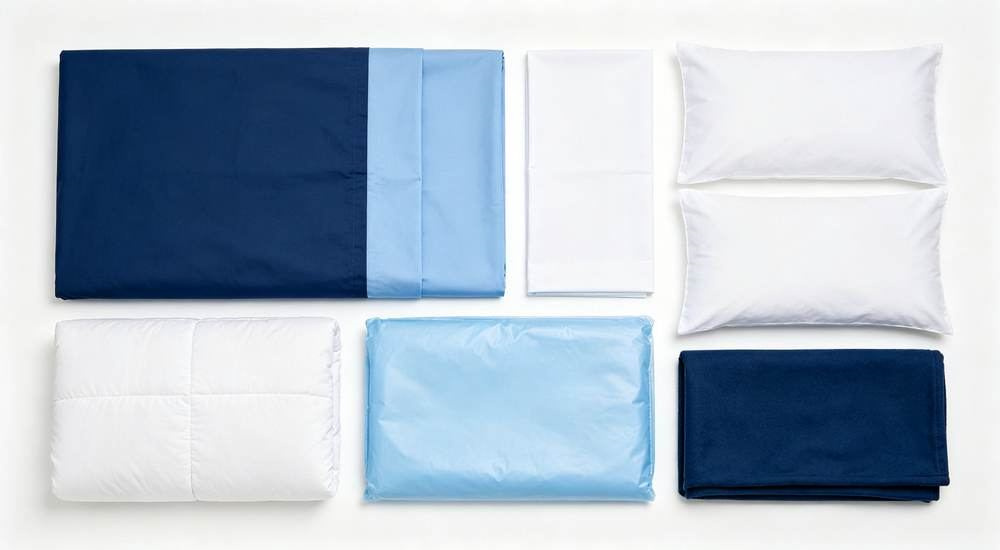
A standard medical bedding set usually includes a duvet cover, a flat or fitted sheet and one or two pillowcases. You can add or remove pieces to match your laundry process. Some hospitals buy three-piece sets for wards and separate pillowcases for spare stock, so worn pieces can be replaced without rebuying the whole bundle.
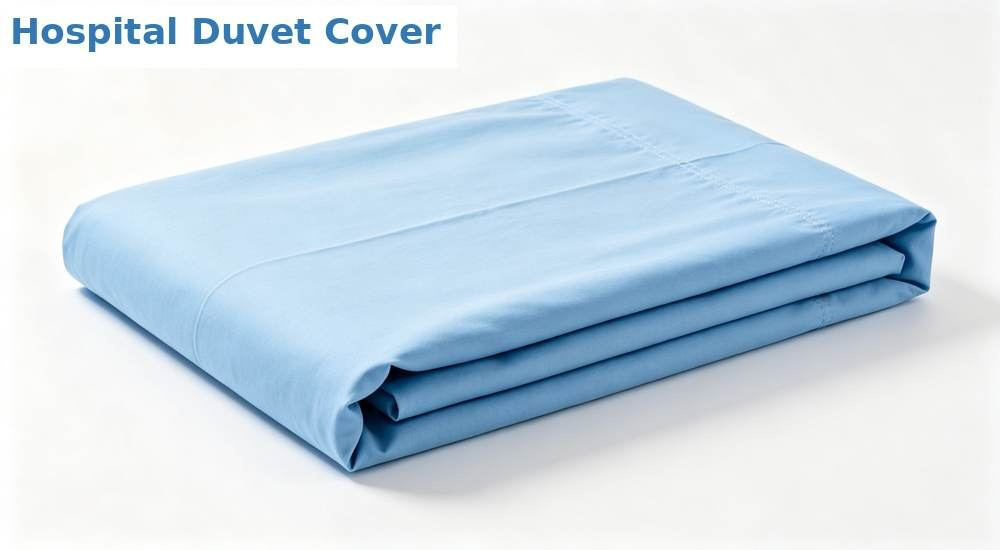
Beyond covers, hospitals need inner pillows and duvets. We supply matching hospital-grade fills so your whole room looks consistent. Pillows use hollow conjugated polyester for resilience and quick drying, while duvets offer fill weights from light summer to extra-warm winter grades. Both are built to survive repeated institutional washing without clumping inside the cover.
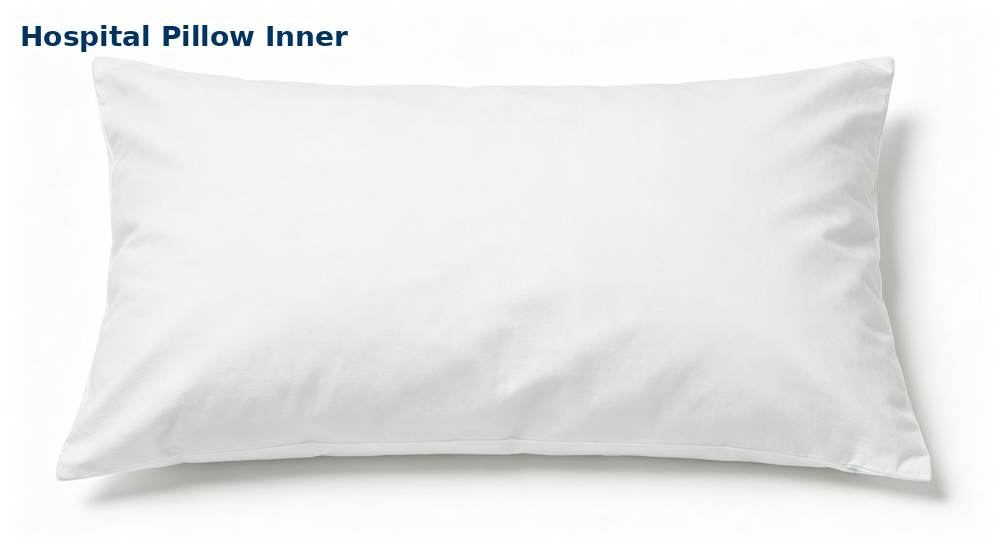
Hospital pillows are built to the same institutional standard as the covers. They use hollow conjugated polyester fill that bounces back after repeated washing, so a pillow does not flatten into a thin pad after a few months. Each pillow is sized to match the pillowcase in the set, and the cover is removable for laundering. We can supply pillows in soft, medium or firm density depending on your patient profile.
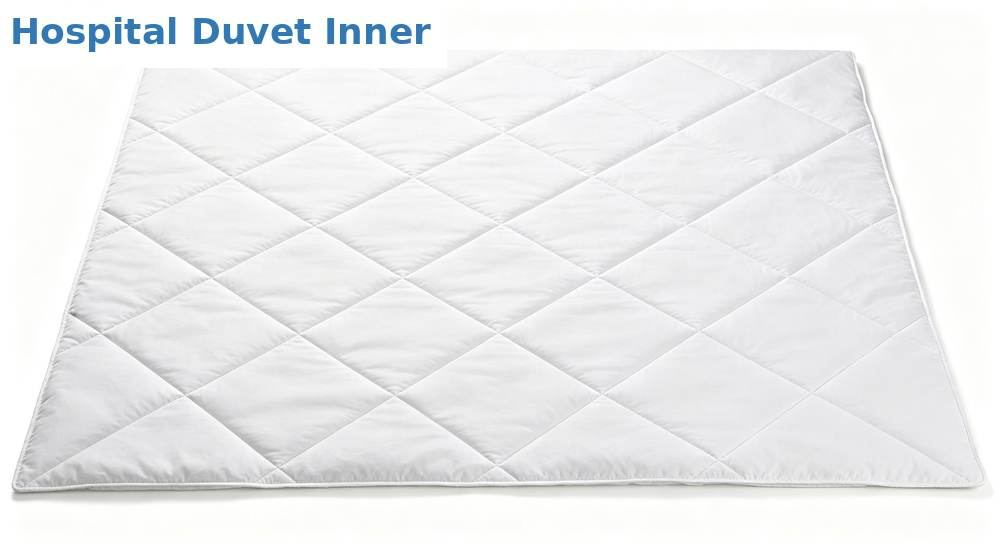
Ordering covers, pillows and duvets from one supplier keeps colors matched and simplifies logistics. A full room bundle removes the risk of mismatched tones between suppliers, and it cuts your receiving, counting and inventory work in half. Tell us your room count and we can quote a bundled per-room price.
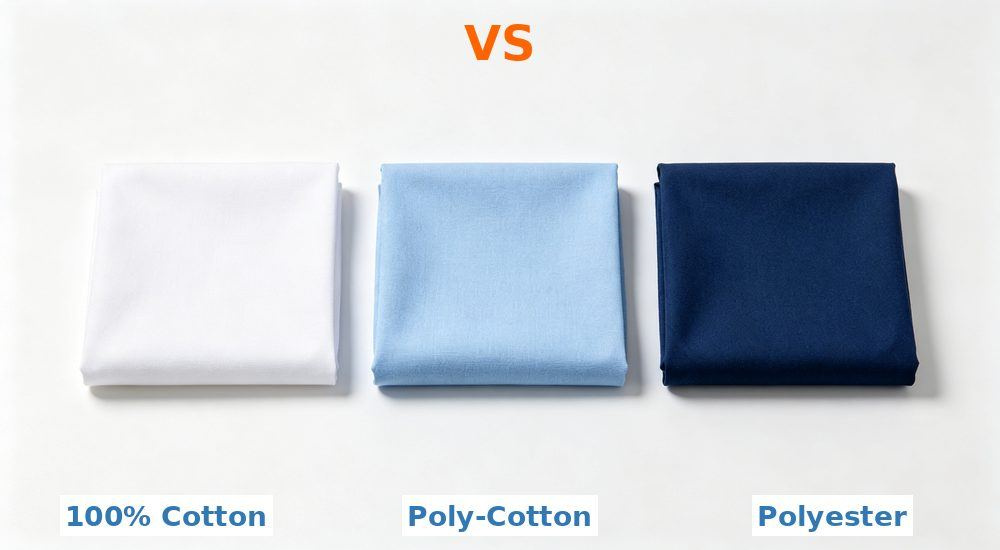
Choosing hospital bedding fabric balances patient comfort, laundry durability, infection control and budget. We offer three fabric families, each suited to a different healthcare setting. Most large hospitals do not use one fabric everywhere; they match the fabric to the department and the turnover rate, which is how they stretch the linen budget furthest.
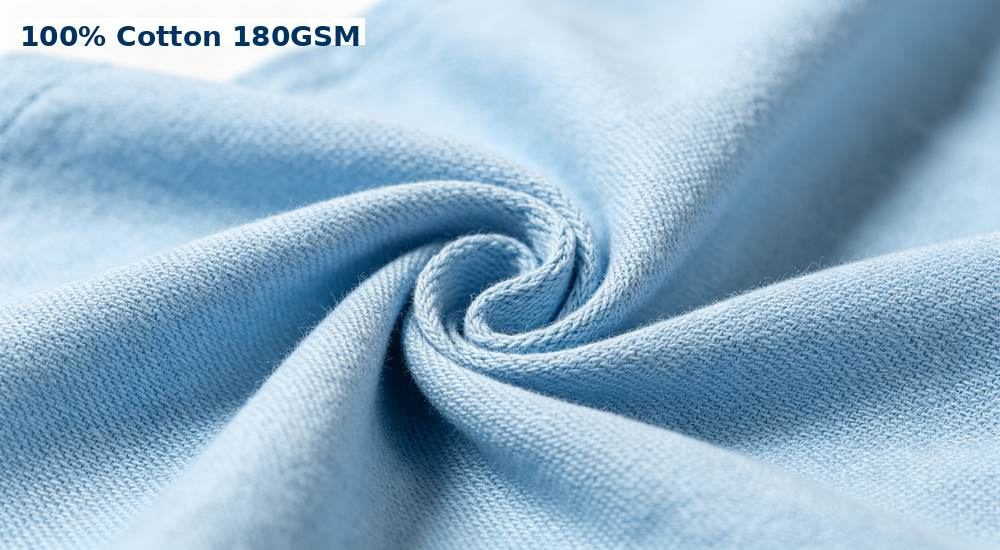
Pure cotton is soft, breathable and absorbent. It tolerates high-temperature washing and chlorine bleaching, which is why it stays the classic choice for patient wards and long-term care where skin contact matters most. Cotton feels cooler against the skin, a real comfort factor for patients who spend days in bed. The trade-off is that it wrinkles more and needs a light press for a crisp clinical look.
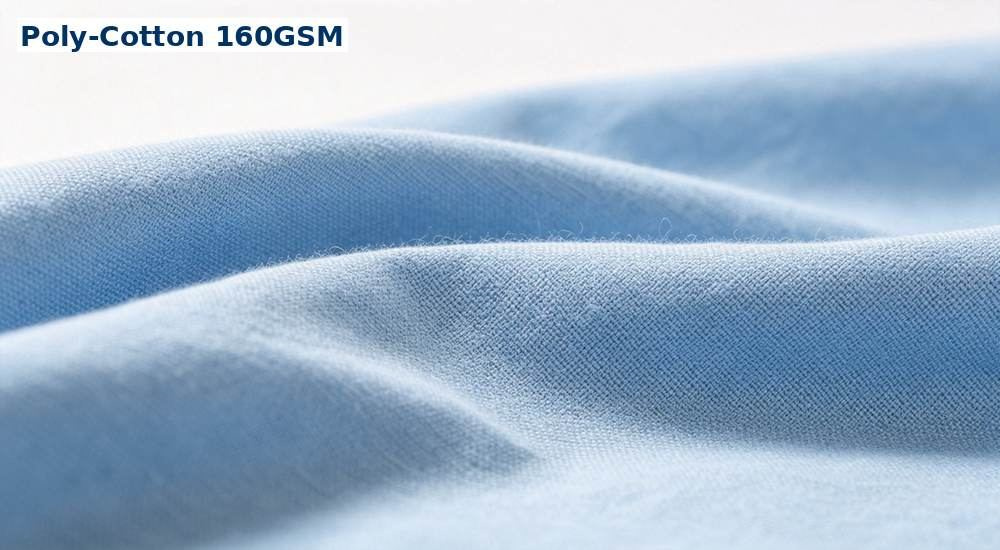
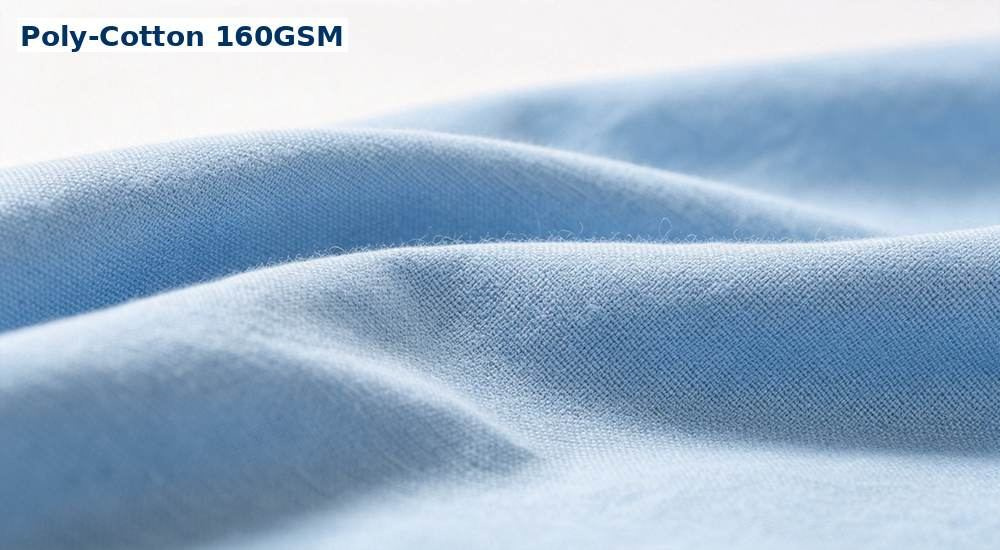
Poly-cotton, usually a 50/50 or 65/35 cotton blend, adds polyester strength and easy care. It wrinkles less, holds color well and costs less than pure cotton. This is the most picked fabric for mid-range and high-volume hospitals because it exits the dryer looking presentable without an iron. It keeps a neat appearance even when laundry turnaround is tight.
Polyester microfiber is the budget option for fast-turnover settings. It is light, quick-drying and stain-resistant, but less breathable, so it fits temporary clinics and emergency use rather than long patient stays. It dries fast in the machine, which cuts laundry energy and gets linen back into circulation quicker during outbreak response.
The comparison table below sums the three fabrics for wholesaleside by side. Most hospitals combine them: cotton for wards, poly-cotton for outpatient areas, polyester for temporary needs. Matching fabric to department avoids overpaying for premium cotton where a durable blend would do.
|
Property |
100% Cotton |
Poly-Cotton |
Polyester Microfiber |
|
Comfort |
Excellent |
Good |
Fair |
|
High-temp wash |
Up to 90 C |
Up to 60 C |
Up to 40 C |
|
Chlorine bleach |
Yes |
Limited |
No |
|
Wrinkle control |
Low |
High |
Very high |
|
Cost level |
High |
Medium |
Low |
|
Best setting |
Wards, ICU |
Wards, clinics |
Temporary, turnover |
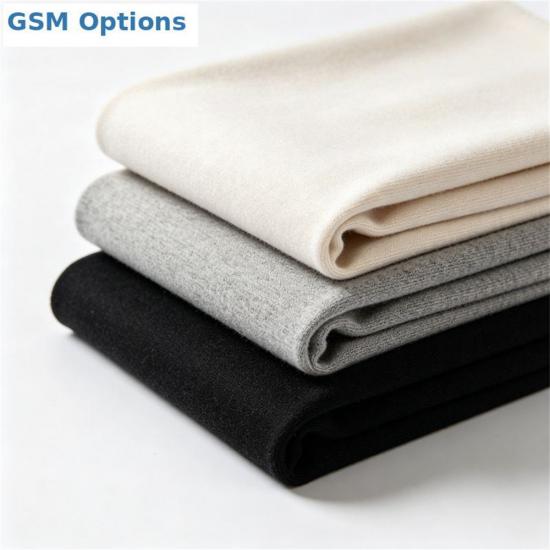
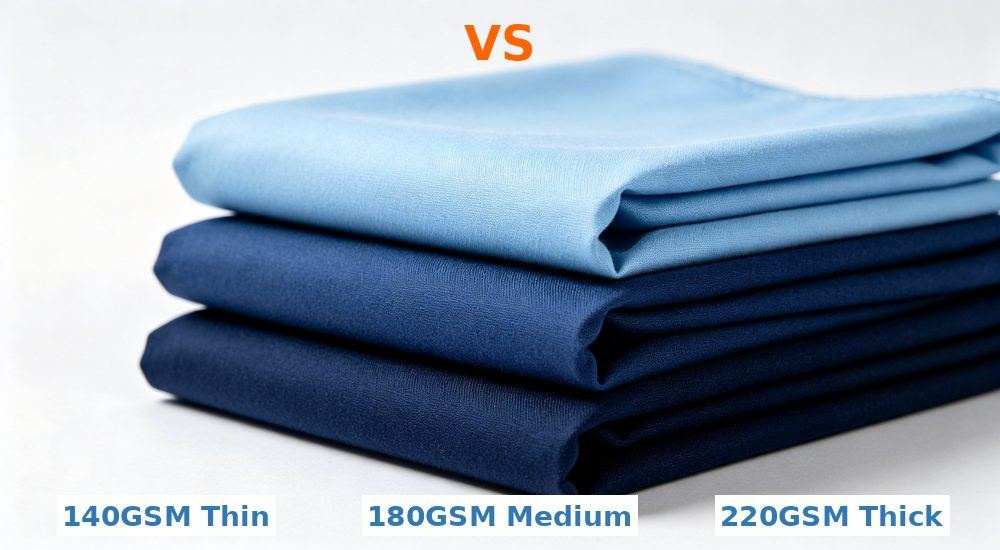
GSM means grams per square meter. It sets the weight, thickness and durability of hospital bed linen. Heavier GSM lasts longer and looks richer, but costs more upfront and dries slower. Pick GSM around your wash frequency and patient turnover, because running a heavy 200 GSM sheet in a low-use clinic wastes money you could spend elsewhere.
The 160 GSM model is the entry level for moderate wash cycles and standard budgets. It suits short-stay patients and outpatient areas where bedding changes often. It feels lighter and dries fast, which helps clinics that turn over many beds per day without a large laundry plant.
The 180 GSM model is our most popular choice for general wards. It balances comfort, durability and cost, and stands up to frequent laundering without quick wear. It drapes well on the bed, feels substantial to the touch and hits the sweet spot where patients notice quality without the premium cotton price tag.
The 200 GSM heavy-duty model is built for daily laundry and long-term care. It stays neat after hundreds of wash cycles and gives the lowest cost per wash over time. The extra weight resists pilling and thinning, so ICU and high-acuity departments keep a professional look even under the toughest wash schedules.
The table matches a recommended GSM to each department. You can also order custom GSM between 120 and 250 for special needs, such as a lighter weight for emergency kits or a heavier grade for VIP suites.
|
Department |
Recommended GSM |
Fabric |
Wash Frequency |
|
ICU / Critical Care |
200 GSM |
100% Cotton |
Daily |
|
General Ward |
180 GSM |
Poly-Cotton or Cotton |
Every 2-3 days |
|
Outpatient Clinic |
160 GSM |
Poly-Cotton |
Weekly |
|
Nursing Home |
180-200 GSM |
100% Cotton |
Weekly |
|
Temporary / Field |
120-160 GSM |
Polyester |
As needed |
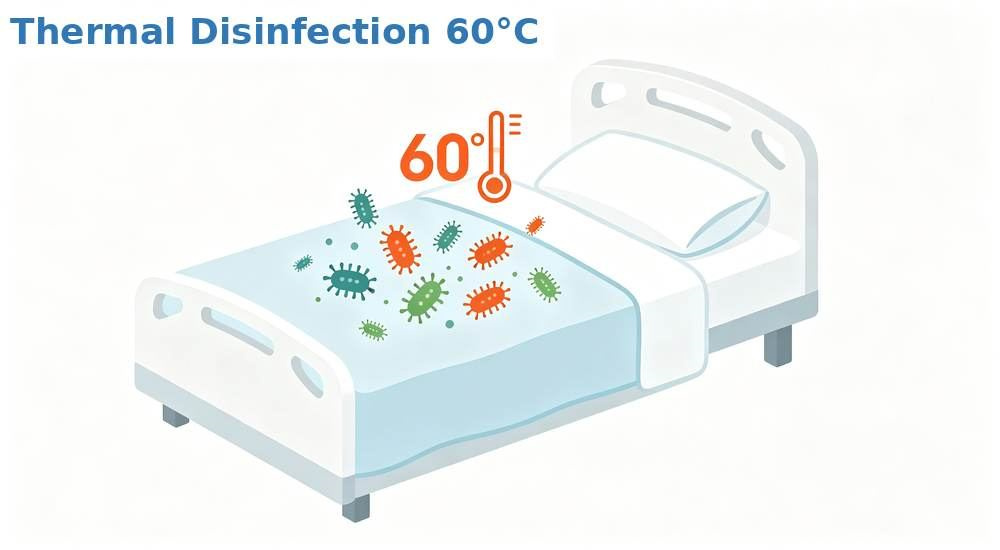
Hospital infection control bedding Hospital infection control bedding is a clinical tool, nal linen is designed to support healthcare-associated infection prevention while keeping patients comfortable. The right fabric and wash protocol reduces cross-contamination between occupants, which protects patients and eases the workload on your infection-control team.

Our cotton and poly-cotton linen withstands regular washing at 60 to 90 C, the standard range for thermal disinfection in healthcare laundries. Hot washing reduces pathogens that build up on bed linen between patient stays. Pair the fabric with a validated wash cycle, and the linen becomes part of your terminal cleaning process rather than a surface that carries residue.
We offer optional silver-ion or zinc antimicrobial treatment, . Test reports come with treated orders so procurement can file them for audit. These treatments are applied without changing the hand feel, so patients still sense a soft, normal sheet against the skin.
Low-noise, low-friction fabrics also help. Smooth weaves reduce rustling noise at night, which matters in shared wards and palliative settings where rest is part of recovery. Confirm your clinical needs with us before production so the right treatment, weight and finish are built in, rather than added as an afterthought.
Use this quick guide to match your setting to the right bedding specification. Most facilities combine two or three configurations across departments rather than forcing one spec everywhere.
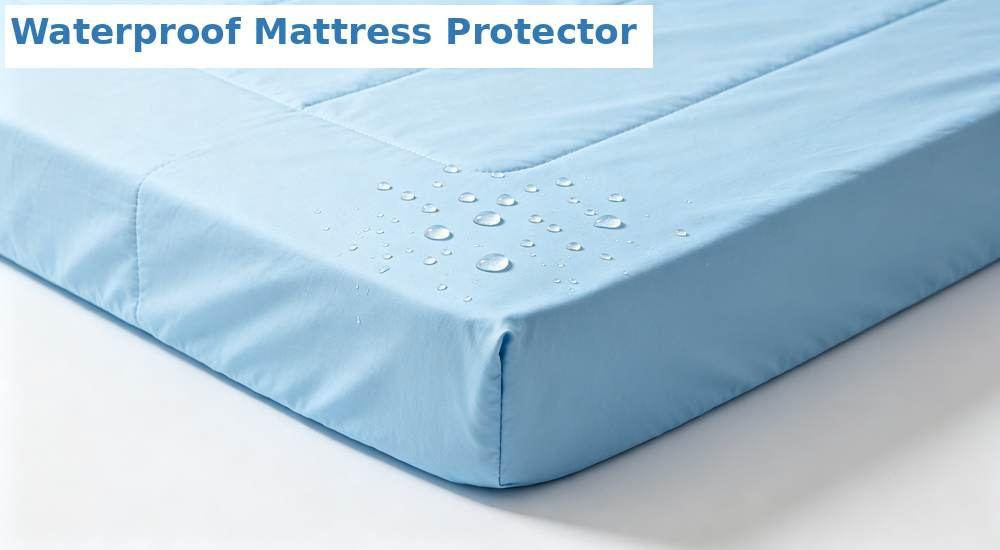
A short decision path saves months of trial and error. Follow these steps to short-spec your bulk hospital bedding order. Buying institutional linen works best when you separate the variables: bed size, wash frequency, budget tier and special needs. Trying to pick a single product for the whole hospital usually ends in compromises that no department is happy with.
Send these four points and we will recommend a fabric and GSM mix, then send samples so your laundry team can test wash cycles before committing. Testing in your own plant is the safest check, because water hardness and dryer settings change how a fabric performs. A sample box lets you judge feel, shrinkage and wrinkle behavior with no risk.
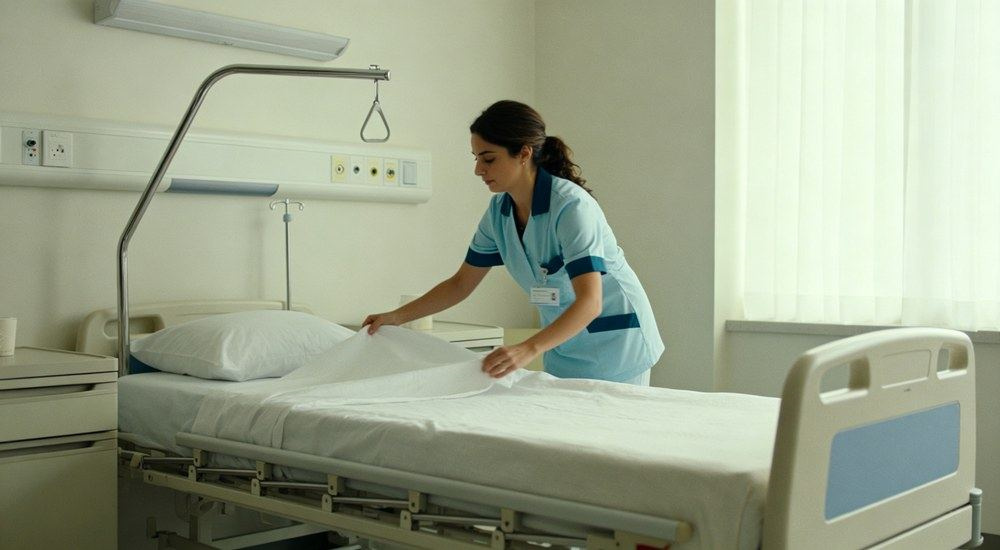
The real cost of hospital linen is price per wash, not price per piece. A slightly heavier cotton sheet that lasts twice as many cycles often beats a cheap polyester one that pills after a few months. When budget is tight, buyers sometimes choose the lowest unit price, then pay again within a year as thin fabric tears or goes sheer. Looking at the full wash cycle gives a truer picture.
As a rough reference, 160 GSM polyester suits around 50 to 80 wash cycles, 180 GSM poly-cotton around 120 to 180 cycles, and 200 GSM cotton around 200 to 300 cycles. Plan replacement cycles around these numbers instead of guessing. Add a buffer stock of ten to fifteen percent above your room count so wards never wait for clean linen during a sudden surge.
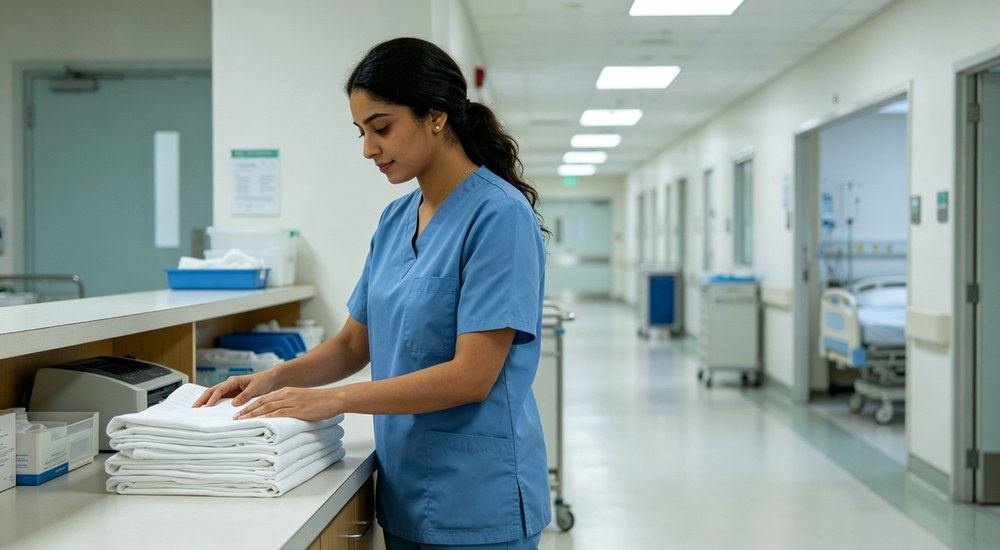
Our medical bedding wholesale range fits many care settings. Each has different comfort and turnover needs, and matching the product to the setting is how a procurement team gets the best value. A ward patient rests for days, so comfort leads; an exam bed sees a new person every hour, so fast turnover and easy washing lead instead.
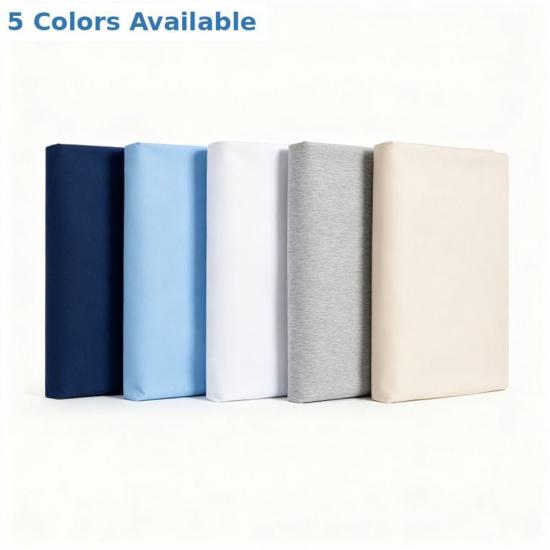
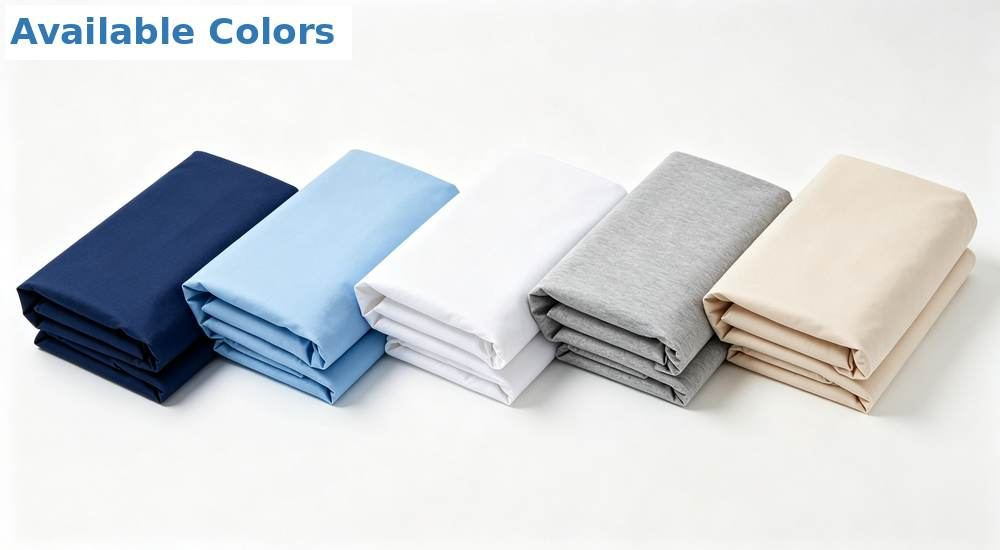
Beyond white, many hospitals choose soft light blue or pale green to reduce the cold clinical feel. These tones calm anxious patients in recovery rooms and palliative areas, while still reading as hygienic under inspection lights. We match the chosen color to a Pantone reference so a new container arrives in the same shade as the existing stock, which keeps the whole ward visually unified across reorders.
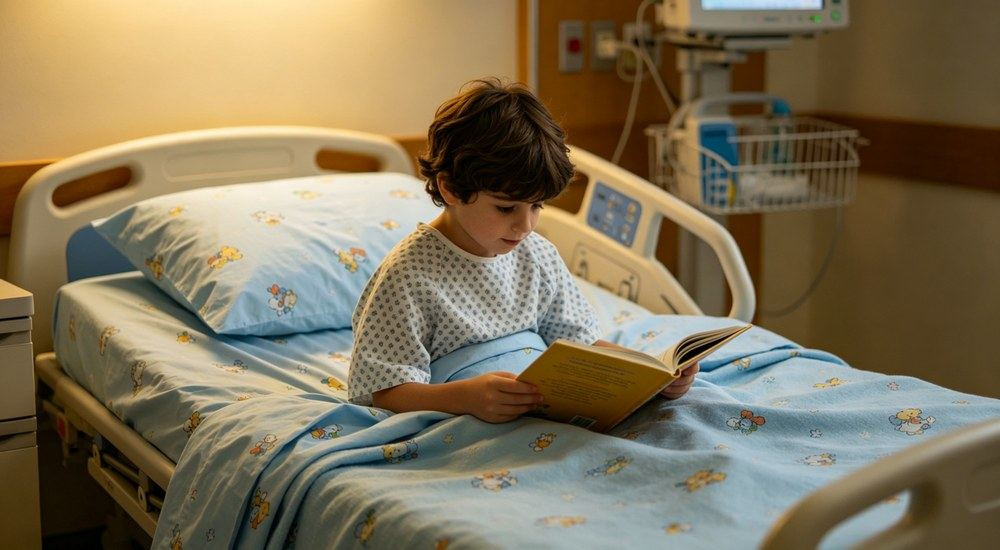
Sourcing from a China hospital bedding manufacturer gives you direct production control instead of trading through layers. We focus on three practical outcomes: consistent batches, honest pricing and reliable timing. Working directly also means your spec changes reach the people who cut and sew the fabric, not a sales desk that retypes them two weeks later.
We can support institutional bulk bedding procurement alongside this hospital range, so buyers covering hospitals and care facilities can consolidate orders. Consolidation simplifies customs, documentation and receiving, and it lets you negotiate better terms on a combined annual volume.
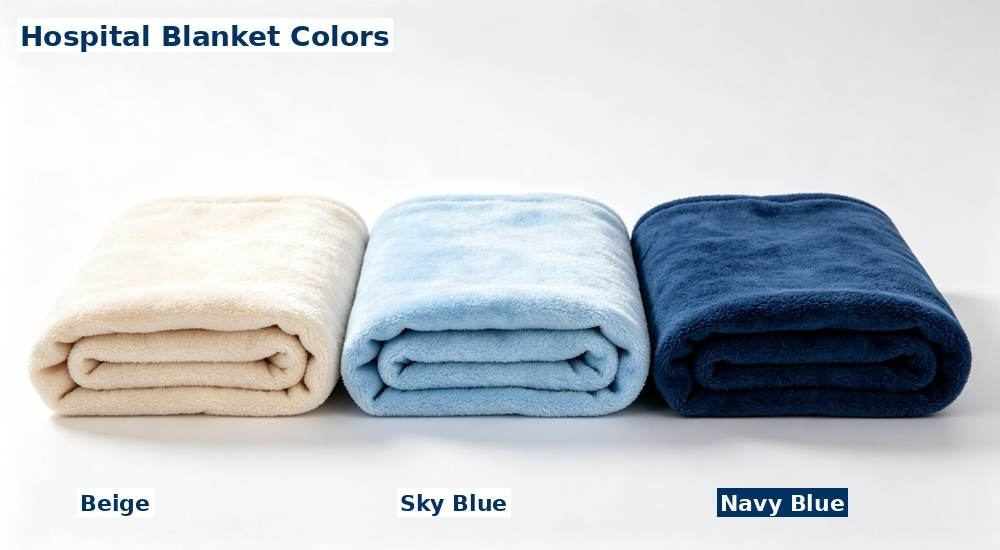
Procurement teams need documented proof. We provide product test reports and factory documentation on request, and every order follows a set quality check before packing. Quality control runs from incoming fabric to finished cartons, so a weak lot is caught before it leaves the floor rather than after it reaches your loading dock.
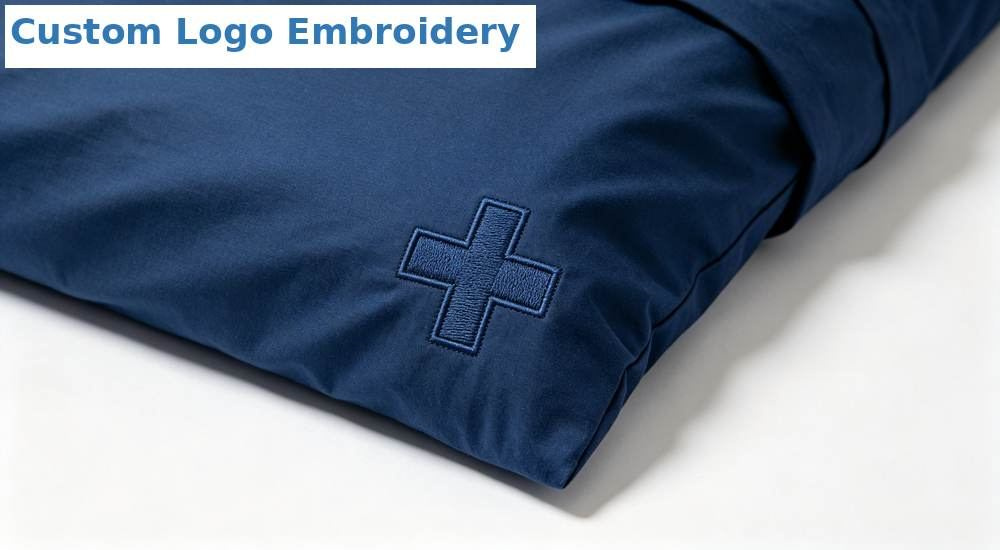
For public tenders, we support spec customization, sample response and document preparation. We also tailor custom hospital bedding to your brand or institution. A responsive tender team can be the difference between a smooth bid and a late submission, so we keep a clear point of contact for spec questions and document requests.
Related care settings often share specs. Buyers also browse nursing home bedding and school dormitory bedding when outfitting larger institutional groups. A shared spec sheet across facilities makes reordering simpler and keeps your whole estate visually consistent.
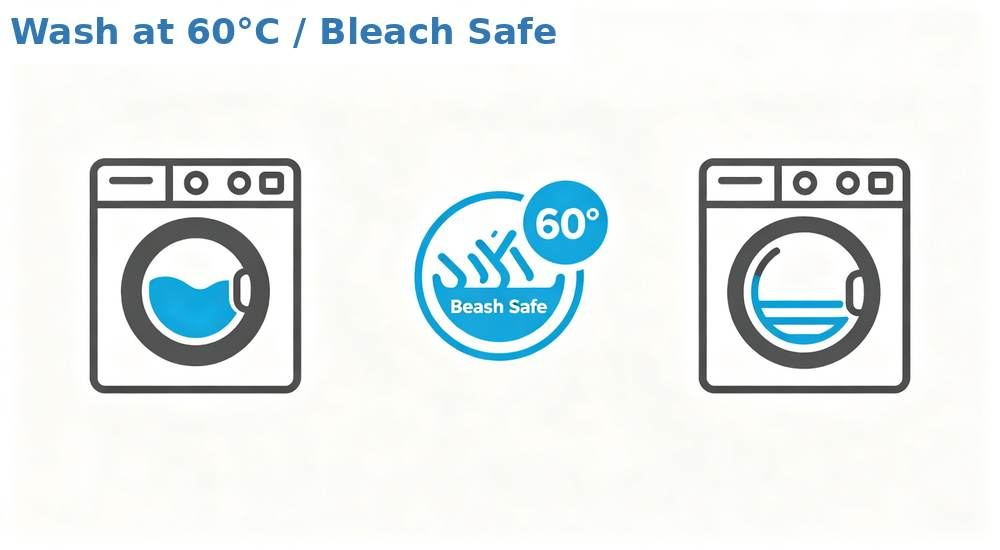
Correct care extends hospital bed linen wholesale life. Cotton and poly-cotton take 60 C base washes, with cotton tolerating hotter thermal cycles. Following the right wash temperature per fabric prevents premature wear and keeps colors true for the full service life.
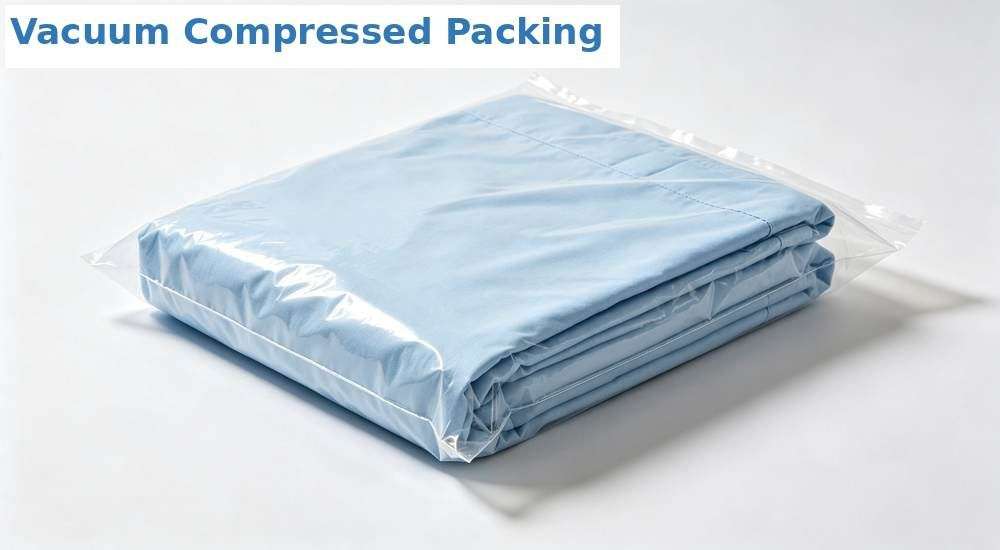
We manage color across repeat orders with Pantone archived standards. Same-batch tone difference is kept tight, and cross-batch differences are controlled so a new container still matches your existing stock. Standard packing is in cartons; vacuum compression is optional to cut shipping volume and lower freight cost per piece.
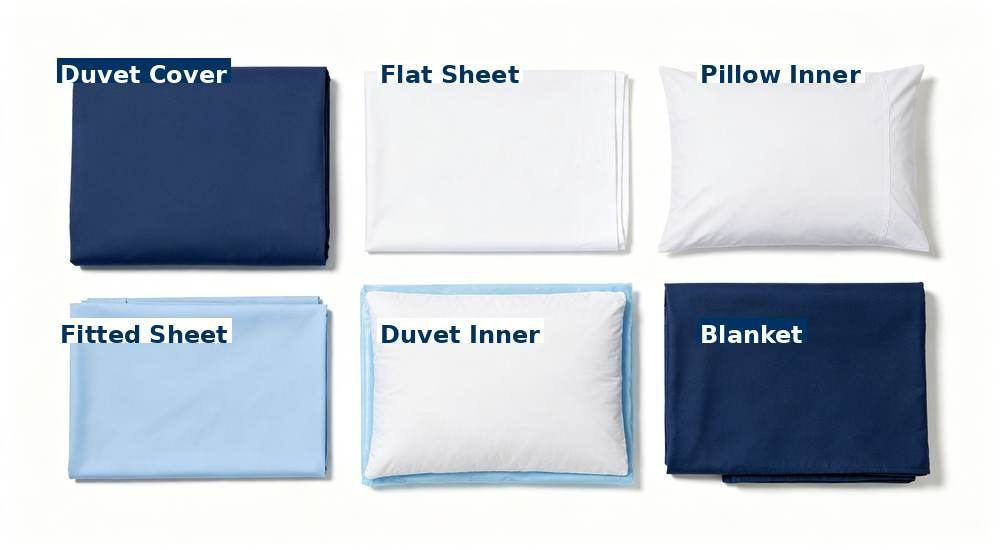
A full hospital bedding program covers more than one piece type. A complete range usually includes duvet covers, flat and fitted sheets, pillowcases, inner pillows and inner duvets, all in matched fabric, weight and color. Buying the full range from one supplier removes the risk of mismatched tones between vendors and simplifies receiving, because every carton arrives against one packing list instead of several.
Buying hospital linen in bulk for an institution is not the same as shopping for a home. A retail customer picks one set once, but a procurement manager plans for hundreds of beds, repeat orders over years and a laundry plant that runs every day. Bulk buying rewards planning: measure every bed type, decide the wash protocol first, then match fabric and GSM to that protocol. Ordering in small fragments across many vendors usually costs more and creates color mismatch between wards.
Think in terms of a three-year supply plan rather than a single purchase. The first order sets the color and size standard. Repeat orders must match that standard exactly, because a new shade of white arriving mid-year makes renovated and older wings look different. Archive the approved swatch and your chosen Pantone code, and reorder against that reference each time so the estate stays visually unified.
How much linen you need depends on your laundry cycle, not just your bed count. A ward that turns over linen every day needs more sets per bed than one that changes weekly. As a working rule, plan for one set on the bed, one in the laundry, and one in the clean cupboard. Add a buffer for unexpected demand, such as a winter surge or an isolation ward that increases wash frequency. Ordering the right load count prevents the common problem of running out of clean sheets mid-week.
This three-set rule keeps operations smooth even when a laundry machine breaks down or delivery is delayed. Under-buying linen leads to staff stretching out wash cycles, which weakens infection control. The small extra investment in a spare set protects the whole care routine.
Small construction details decide how long medical bedding sets last in service. Duvet covers can use a zipper, buttons or an internal corner tie. Zippers save bed-making time but need checking for slider durability. Buttons are gentle on fabric but slower to fasten. Corner ties keep the inner duvet from bunching inside the cover, which matters when staff change covers quickly between patients.
Reinforced stitching at stress points, such as pillowcase corners and duvet cover ends, prevents early tearing after repeated washing. We use bar-tacked seams where the sheet grips the mattress and double-stitches on pillowcase openings. Ask for these details when you spec a heavy-duty program, because they separate a disposable-grade sheet from a multi-year institutional one.
White remains the default clinical color because it shows cleanliness instantly. But soft light blue, pale green or warm beige can calm anxious patients and reduce the cold feeling of an all-white ward. Color choice is also a practical decision: light tones hide minor wear less than dark ones, but they read as hygienic, which matters when patients judge your facility by sight. We match Pantone codes so a light-blue ward stays light-blue across reorders.
A hospital rarely buys all its linen in one shipment. Most programs start with a pilot order for one wing, then roll out to more buildings. When you place repeat orders, send back the original order reference so we match the same fabric lot standard. Consistent reordering is what keeps a large hospital estate looking the same, and it avoids the patchwork effect of mixing purchases from different suppliers.
We archive your approved spec, color and GSM after the first order. On reorder, we compare the incoming production against that archive before packing, so a new container does not drift to a heavier weight or a whiter shade. This record-keeping is especially valuable for multi-year government contracts, where visual consistency is part of the acceptance criteria.
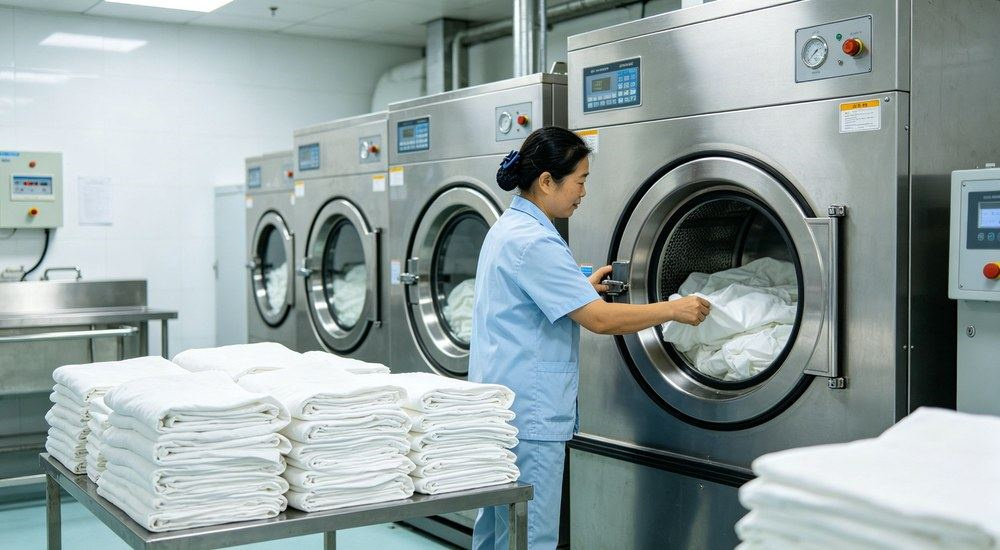
Even the best hospital medical bedding wears out early if the wash protocol is wrong. Hotter is not always better; washing poly-cotton at 90 C when the fabric is rated for 60 C weakens the fibers and fades the color faster. Separate your linen into wash classes: cotton wards take the hot thermal cycle, while poly-cotton outpatient stock takes a milder cycle. Mixing them in one wash room tempts staff to run everything at the hottest setting, which damages the lighter blend.
Train laundry staff on the care labels printed inside each piece. A small investment in training pays back through longer sheet life and fewer complaints about rough or faded linen. When fabric feels stiff, it usually means too much detergent residue, not poor quality. A rinse-only cycle fixes that before the sheet wears out.
Different patients need different linen properties. Long-stay patients benefit from soft, breathable cotton that is gentle on skin. Bariatric beds need wider fitted sheets with strong elastic that holds the extra weight. Pediatric beds use smaller dimensions and cheerful light colors that feel less clinical. Maternity and post-operative areas prefer smooth, cool fabrics that stay comfortable during long hours in bed. Spec each group separately rather than forcing one universal size.
Institutional buyers increasingly look at the environmental side of linen. Choosing a durable fabric that lasts 200 wash cycles replaces less often than a cheap one that wears out in 60 cycles, which cuts waste and disposal load. Vacuum-compressed packing also lowers the freight footprint per piece, because more linen fits in each container. These factors matter for facilities reporting on green procurement, and they usually lower cost at the same time.
When linen finally reaches end of life, worn cotton pieces can be repurposed as cleaning cloths in non-clinical areas, extending useful service before disposal. We can advise on realistic service life by fabric so you plan replacement and retired-stock handling together, instead of finding piles of old sheets with no plan.
Before you request a wholesale hospital medical bedding s to get a fast, accurate reply. The more complete your information, the fewer round trips needed to lock the spec. This checklist is the same one our tender team uses internally, so it maps directly onto the order process.
Send these five points and we will come back with a recommended fabric and GSM mix, a sample plan and an indicative structure. Final pricing and exact lead time are confirmed once the spec is locked, because customization and volume move the number. This approach keeps the conversation focused and avoids quoting a generic price that does not match your real beds.
Once a deposit is received and samples approved, the order moves into production. First, fabric is cut to your sizes. Then pieces are sewn, with the closures and stitches you specified. Finished pieces are washed or finished as agreed, inspected, folded and packed. We share key production updates along the way so you know the order is on track, and the final packing list matches the cartons that ship to your port.
On arrival, check the carton count against the packing list, then open one carton and compare a piece against your approved sample. If weight, color or stitch matches, the rest of the shipment almost always follows. Keep this acceptance step short and consistent, and it becomes a quick routine rather than a stressful inspection.
A few details come up in almost every hospital linen inquiry. Sorting them out early prevents misunderstandings later, and they are worth confirming in writing before production starts. These points are not surprises; they are standard parts of a well-run institutional order.
Confirming these points at the quotation stage means the first production run matches expectations. The orders that go smoothly are usually the ones where the buyer sent a clear spec and tested a sample first. The ones that need rework are often the ones where a single detail, such as pocket depth, was assumed instead of measured.
Healthcare procurement often works under a fixed budget, and there is pressure to buy the cheapest sheet that qualifies. A smarter move is to spend where it matters and save where it does not. Put premium cotton on patient-facing beds where comfort and appearance count, and use durable poly-cotton or polyester in areas that turnover fast. This layered approach gets you more total usable linen for the same budget than buying the cheapest fabric everywhere, then replacing it after a year.
Look beyond the unit price and ask about cost per wash. A sheet that costs a little more but lasts three times as many cycles is cheaper over its life, even if the first invoice looks higher. This is the number that matters to a facilities director, because it shows up in the annual laundry and replacement budget rather than a one-line purchase.
Not every bed needs the top grade. Upgrade to heavier cotton in ICU, pediatric and long-stay wards where patients rest for days and comfort is visible. Stay with standard poly-cotton in outpatient clinics, exam rooms and high-turnover areas where the sheet changes with every visitor. Reserve the heaviest fabric for daily-wash departments that would otherwise replace light linen every few months. Matching grade to need keeps the budget focused on where patients actually feel the difference.
A first order can be perfect, but the real test is whether order number ten matches order number one. We keep quality consistent by fixing the recipe once and repeating it. The fabric weight, weave, stitch count and closure type are locked into your spec after the sample stage. On each repeat production run, we pull that archived spec rather than rebuilding the order from memory, which removes the guesswork that causes drift.
Before a repeat shipment leaves the floor, we compare a finished piece against your approved sample for weight, color and stitching. If anything has slipped, it is corrected before packing rather than discovered at your loading dock. This discipline is what lets large hospital chains place standing orders with confidence, because they know each container will match the last one.
Not every facility receives linen the same way. A central laundry that unloads whole containers wants cartons stacked by piece type for fast sorting. A small clinic that picks up locally prefers smaller, labelled bundles that go straight to the cupboard. We pack to match your receiving flow, because badly labelled cartons create extra work that delays beds being made up. Tell us how your team unpacks, and we structure the packing to save that labor.
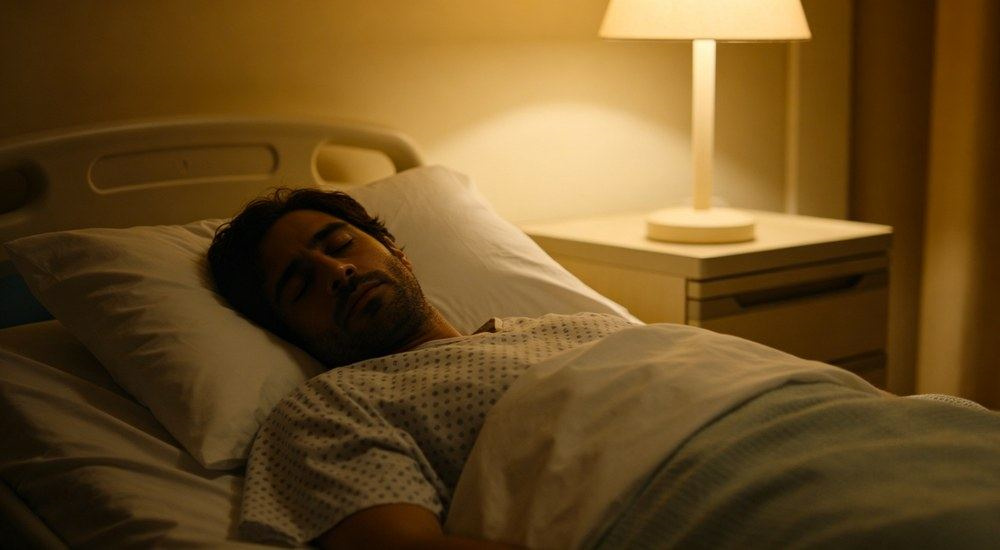
Hospital inspectors and patients judge a room by its first impression. A fitted sheet that is the right size, a duvet cover that matches the pillowcase and a ward where every bed uses the same white all signal a well-run facility. When linen is inconsistent, it shows up as a wrinkled corner, a mismatched shade or a sheet that slips off the mattress. These small points add up in a patient's perception, even when the clinical care is excellent. Buying to one locked spec removes this risk across your whole estate.
Consistency also protects staff time. When every bed takes the same size sheet and every pillowcase fits the same pillow, bed-making becomes a fast routine instead of a puzzle. Fitted sheets in the correct pocket depth mean no staff member is fighting a corner that keeps popping off during the morning change. The right spec quietly saves minutes on every bed, every day.
Most hospitals do not switch all their linen at once. A phased rollout is safer: pilot one ward, test the wash cycle, train staff, then expand wing by wing. We support this by keeping the pilot spec archived so the later rollouts match exactly. Start with a department that has a clear turnover rate, measure how the fabric performs in your laundry, and then scale what works. This de-risks a large spend and gives your team time to adjust the wash protocol before the full order arrives.
If you are stuck between cotton and poly-cotton, the decision usually comes down to comfort versus labor. Cotton feels softer and breathes better, which patients notice after a long night in bed. Poly-cotton comes out of the dryer smoother and needs less ironing, which saves laundry staff time and reduces press labor. Many hospitals solve this by using cotton on overnight ward beds and poly-cotton on beds that turn over fast, getting the best of both without forcing one choice for the whole facility.
Ask your laundry team how much ironing they currently do. If ironing is already a bottleneck, poly-cotton will relieve it quickly. If patient comfort scores are the priority, cotton will move them up. Testing both in a sample box makes this choice clear within a week, instead of guessing on a container order.
Beyond the fabric itself, a reliable bulk supplier should give you three things: clear documentation, honest lead times and consistent repeat quality. Clear documentation means test reports and tender papers arrive on time. Honest lead times mean a realistic date you can plan around, not an optimistic promise that slips. Consistent repeat quality means order ten looks like order one. We measure ourselves on these three points, because they decide whether a first order turns into a multi-year supply relationship.
When you receive a linen quotation, compare more than the unit price. Check whether the price covers the set composition, the chosen GSM, the closure type and any custom color. A low price that excludes a fitted sheet pocket upgrade, or that quotes a lighter GSM than you need, can look cheap on paper but fall short on the bed. Ask the supplier to state exactly what each price line includes, so you compare like for like across vendors. This prevents the common situation where the cheapest quote, once all options are added, becomes the most expensive.
Also check what is excluded, such as freight, vacuum packing or logo embroidery. A clean quotation separates the base price from optional extras, which lets you see where the cost really sits. Build the total landed cost, including shipping and any customization, before you rank suppliers. That full figure is what your budget actually pays, not the per-piece number on the first line.
If this is your first time ordering hospital linen in bulk, start small and learn from the sample. Measure your beds, test a wash cycle and confirm the color before committing to a container. Most first-time buyers find that the small extra effort at the start saves them from a much larger mistake later. Send your bed list and wash plan, and we will guide the spec step by step so the first order works for your real wards.
When evaluating wholesale hospital medical bedding, before a full tender order samples in your chosen fabric and GSM. Test them in your own laundry to confirm wash behavior, feel and fit. This small step prevents a large order mismatch. A trial order lets your team check the real product at a low commitment, and it gives procurement a physical reference for approving future repeat orders without re-sampling every time.
We offer swatch samples for quick fabric comparison, and finished-piece samples for a true feel of the stitched product. Swatches let you compare cotton, poly-cotton and polyester side by side in your own lighting. Finished pieces show the real closure, stitching and weight. Most buyers start with swatches, then order one finished set in the chosen GSM before committing to a full standing order.
Keep the approved sample as a reference for future orders. When a repeat container arrives, compare the first piece against the approved sample for weight, color and stitch. This simple check catches any production drift early and gives your receiving team a clear acceptance standard.
Healthcare buyers often need documents that prove the fabric meets hygiene and safety expectations. We prepare the supporting file set on request, based only on what has actually been tested. Do not assume a certification exists until we confirm it against the test report, because quoting an unproven mark risks a failed bid audit.
Quality control happens at three points. Incoming fabric is checked for weight and color before cutting. Half-sewn pieces are spot-checked for stitch strength and straight seams. Finished, washed pieces are inspected for defects before folding and packing. This staged check means a problem lot is caught at the earliest possible stage, not after the whole order is sewn.
Public hospital procurement often runs through a formal tender. We help by matching your technical specification sheet line by line, preparing the documents your bid requires and timing sample delivery to your submission date. Send us the tender spec table, and we map each requirement to our standard offer so you can see at a glance what matches and what needs custom work.
Bulk hospital bed linen ships by sea in cartons, with vacuum compression available to reduce volume. We pack folded pieces by set or by piece type, depending on how your laundry wants to receive them. Clear carton labels make counting on arrival fast and avoid the sorting pile that delays ward rollout.
Lead times and exact loading quantities are confirmed in your contract, because they depend on order volume, customization and the current production schedule. We plan large orders around your rollout date so the first container lands when your wards are ready to switch over, not months before or after.
Hospital buyers often outfit more than one facility at once. If you also run long-term care, student housing or staff accommodation, the same fabric and color logic applies across settings. Browse the linked pages to compare specs and plan a unified procurement list.
Consolidating related orders into one supplier reduces your administrative load, aligns color standards across sites and gives you a stronger annual volume for negotiation. It also means one point of contact when a replacement or repeat order is needed, instead of managing several vendors during a busy season.

Minimum order quantities depend on the product and customization. Standard colors and sizes have lower minimums, while custom colors or special treatments may need higher quantities. Exact MOQ is confirmed with your quotation and subject to order confirmation, so tell us your target volume early and we will advise what is feasible.
Our 100% cotton bedding is built for regular chlorine bleaching at standard concentrations, common in hospital laundry for infection control. Poly-cotton blends have limited chlorine resistance, and we recommend oxygen-based bleach instead. Always confirm the wash plan with your laundry team, as fabric blends tolerate different chemical levels.
Yes. We offer optional silver-ion or zinc antimicrobial treatment on cotton and poly-cotton fabrics. Test reports are available for treated products. Confirm which treatment your facility requires before production, as the treatment choice affects the final fabric specification.
As a guide: 160 GSM for outpatient and low-use areas, 180 GSM for standard wards, and 200 GSM for ICU and daily-washing departments. Consider your wash frequency, budget and replacement cycle. We can send samples in different GSM so your team can compare weight and feel before placing a standing order.
Yes. We manufacture hospital bedding in any size, including pediatric, bariatric, narrow ward and adjustable split-head beds. Send your mattress dimensions, and we will recommend matching sheet and duvet sizes with correct pocket depth for a snug fit that stays put through the night.
Standard production is around 15 to 25 working days after sample approval and deposit. Lead time varies with order quantity, customization complexity and current schedule. Large tender orders may need extra time. Final delivery dates are confirmed in your contract and planned against your rollout timeline.
Yes. We provide company certificates, fabric certifications, product test reports and commercial documents to support tender submission. Confirm the document list your bid requires, and we prepare the matching file set so your submission package is complete and ready for review.
We use Pantone color management with archived standards for each customer. Same-batch color difference is controlled to a tight tolerance, and cross-batch difference is kept within an acceptable range so repeat containers match your existing stock and your wards look unified year after year.
Lifespan depends on fabric, GSM and wash frequency. As a reference: 160 GSM polyester lasts about 50 to 80 wash cycles, 180 GSM poly-cotton about 120 to 180 cycles, and 200 GSM cotton about 200 to 300 cycles. Use these as planning guides and adjust to your own laundry results.
Yes. We sell duvet covers, flat sheets, fitted sheets and pillowcases separately. This suits replacement orders or topping up existing inventory, and lets facilities mix pieces by wear rate rather than rebuying whole sets when only the pillowcase has worn out.
Yes. We offer embroidery, screen print and woven label options. Embroidery is the most durable for frequent washing. We can add your institution name, department code or logo on pillowcases, duvet covers or sheet corners, and adjust placement to your visual guidelines.
Standard terms are a deposit by bank transfer with balance before shipment. For established customers or large tender orders, alternative terms may be discussed based on your procurement policy and order history. Final terms are confirmed in your contract and aligned with your procurement policy.
© 2026 YRF Textile | info@yrftextile.com
Previous :
Refugee Camp Bedding Wholesale: Durable Shelter Bed Linen SetsNext :
Correctional Facility Bedding Wholesale — Tamper-Resistant Prison & Jail Linen YRF-Wholesale Vanuatu Extremely absorbent towels,Police Blue blended Wool blanket,Double bed Bedding
Our bedding sets for emergency relief and humanitarian assistance. Military and national defense. Fire department, medical care department. Prison facilities, government agencies and the police. Camping, picnicking and outdoor leisure are proud to provide high-quality bedding solutions. We are committed to bringing innovation and technology to every user to make you have a good dream every day.
 YRF-WholesaleIndonesia High quality Green wash towels,Medical Care Gray Wool blended Blanket,Green Bed Quilt Cover
Our bedding sets for emergency relief and humanitarian assistance. Military and national defense. Fire department, medical care department. Prison facilities, government agencies and the police. Camping, picnicking and outdoor leisure are proud to provide high-quality bedding solutions. We are committed to bringing innovation and technology to every user to make you have a good dream every day.
 YRF-Made in ChinaJordan High quality Green wash towels,Police Blue blended Wool blanket,Maximum comfort Mattress Pad
Our bedding sets for emergency relief and humanitarian assistance. Military and national defense. Fire department, medical care department. Prison facilities, government agencies and the police. Camping, picnicking and outdoor leisure are proud to provide high-quality bedding solutions. We are committed to bringing innovation and technology to every user to make you have a good dream every day.
 YRF-ManufacturerJordan 100% cotton Green hand towels,Police Blue blended Wool blanket,anti-bacterial Quilt
Our bedding sets for emergency relief and humanitarian assistance. Military and national defense. Fire department, medical care department. Prison facilities, government agencies and the police. Camping, picnicking and outdoor leisure are proud to provide high-quality bedding solutions. We are committed to bringing innovation and technology to every user to make you have a good dream every day.
 YRF-Wholesale Georgia Soft cotton Blue Bath towels,Police Blue blended Wool blanket,Cotton Fabric Quilt Cover
Our Military 100% Cotton Bedding Set for emergency relief and humanitarian assistance. Military and national defense. Fire department, medical care department. Prison facilities, government agencies and the police. Camping, picnicking and outdoor leisure are proud to provide high-quality bedding solutions. We are committed to bringing innovation and technology to every user to make you have a good dream every day.
 YRF- Canary Islands Government Agencies blended Wool blanket,Extremely absorbent towels,Beige Quilt,Best Price
Our Encampment 100% Cotton Sets Bedding for emergency relief and humanitarian assistance. Military and national defense. Fire department, medical care department. Prison facilities, government agencies and the police. Camping, picnicking and outdoor leisure are proud to provide high-quality bedding solutions. We are committed to bringing innovation and technology to every user to make you have a good dream every day.
Copyright © Custom Disaster - Relief Bedding: Tents, Sleeping Bags, Blankets All Rights Reserved
the professional team to service !