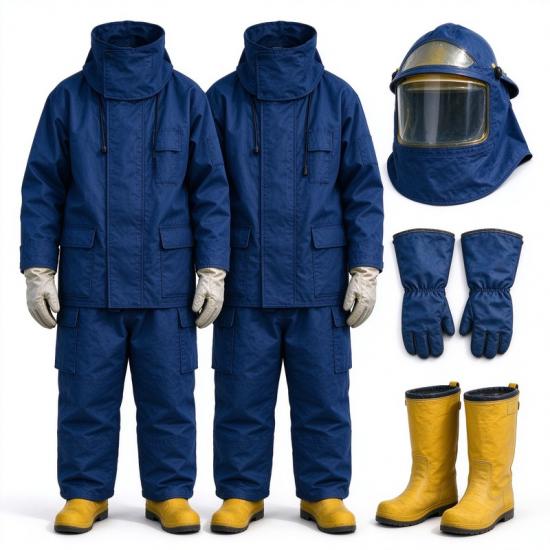
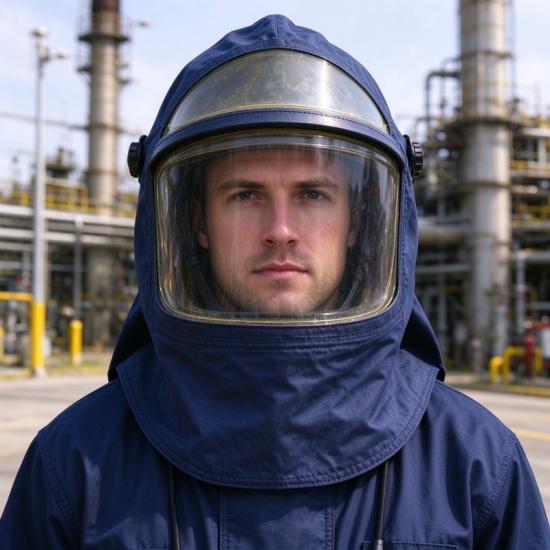
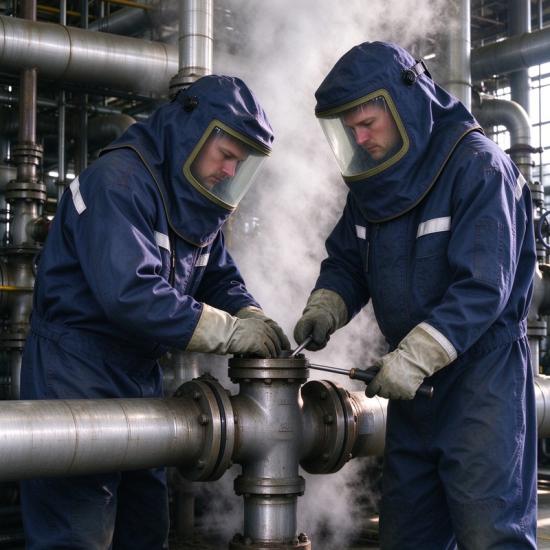
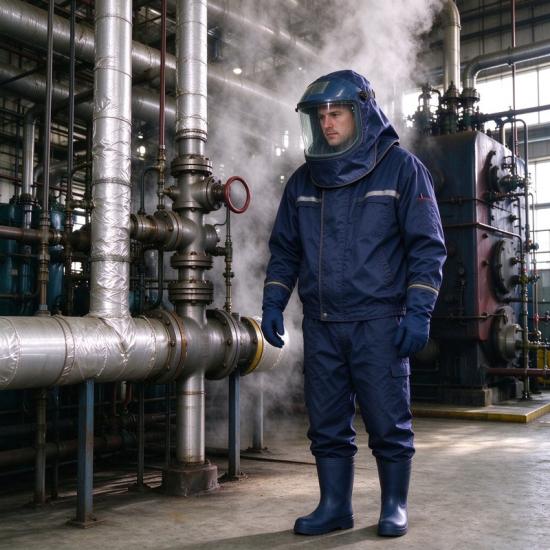
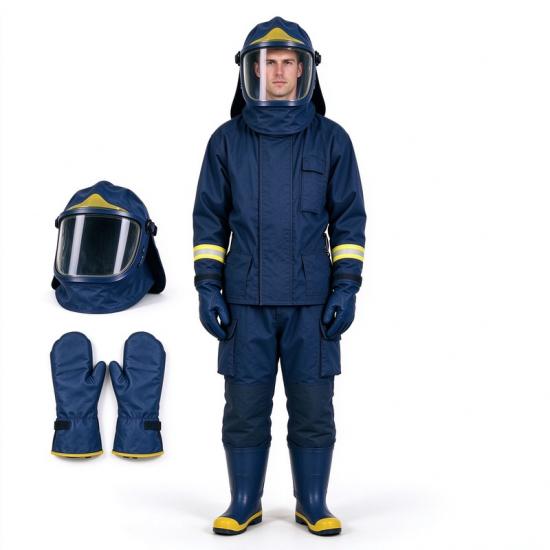
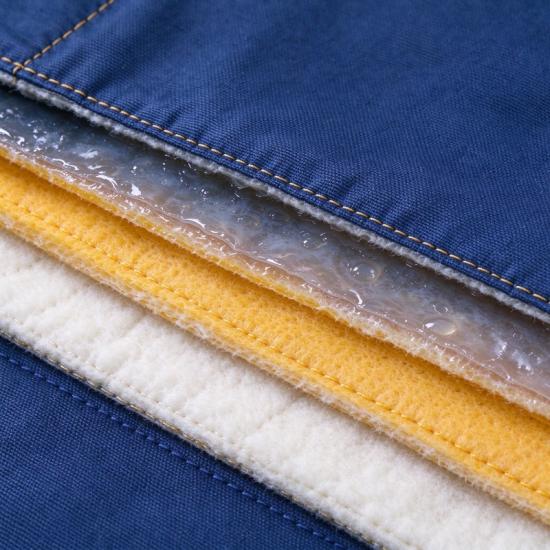

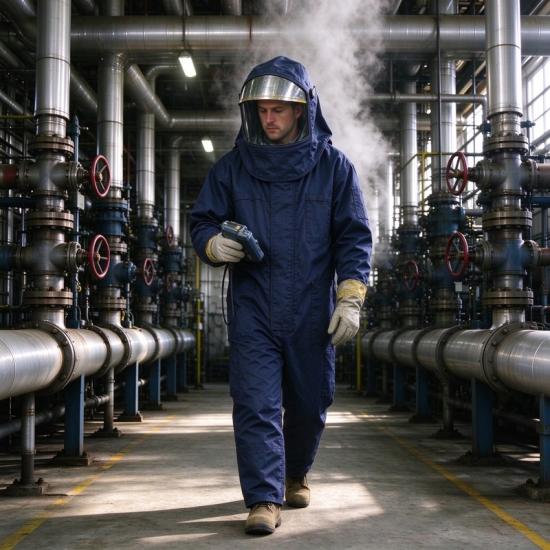
Heavy Duty Steam Protective Suit With Four Layer Composite Fabric Guards Against High Pressure And High Temperature Steam. Equipped With Hood, Gloves, Boots And Anti Fog Visor. Suitable For Boiler Room And Steam Pipeline Maintenance, Available For Wholesale Bulk Procurement.
Note: Price for reference only. Exact price based on quantity, size, weight and custom details.
model no. :
XFF-15Brand:
YRFmarket price :
$119.8sale price :
$59.9price range :
30-100/$59.9Color :
Multiple Colorsport of dispatch :
Guangdong/GuangzhouPayment :
TT, Paypal, Western Unionmin order :
30original region :
Made in ChinaLead Time :
5-15daysSteam Protective Suit | High Temp Steam and Hot Water
Insulation
We supply steam protective suits in bulk from China for steam pipe, boiler, and dyeing plant maintenance workers facing live steam and hot water exposure. This four-layer dark blue insulated suit with sealed seams and waterproof barrier protects against high-temperature steam jets and hot water splash during industrial maintenance operations. Full specs, sizing, certification, and wholesale pricing below.
 |

|
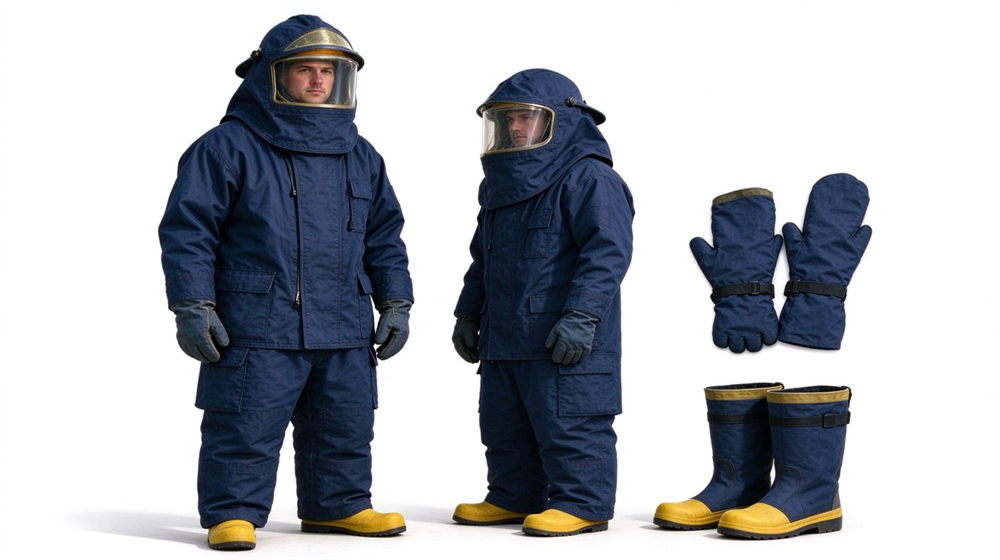
Steam protective suit with four sealed layers blocks live steam and hot water for plant work. Bulk supply from China with batch test reports on every shipment. The same model covers valve work, boiler inspection and finishing lines, so one size run equips the whole crew, the spare parts list matches the kit exactly, and the batch report records the membrane test for every order.
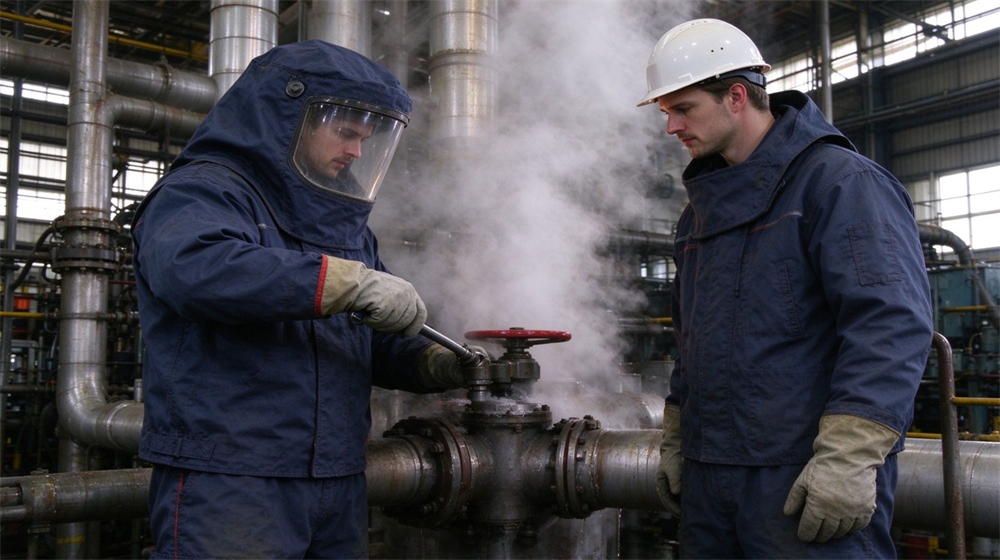
Steam is the invisible hazard in industrial work. A leaking joint, a purged line or an open valve releases steam that can scald through ordinary workwear in seconds. The steam protective suit answers that exposure with sealed seams, a waterproof breathable layer and a heat barrier. Workers step into it before valve work, pipe repair or boiler inspection, and the dark blue shell marks the team in a plant full of pipework. Buyers order it as bulk PPE for plants where steam lines run through daily operations, and the same sealed layer covers valve positions, boiler checks and finishing lines without a second specification. The four-layer stack and the sealed seams are the two details that separate it from a standard work jacket, and both are confirmed in writing before production. A plant that already runs FR coveralls adds the steam suit as the sealed layer for the positions where wet heat is present.
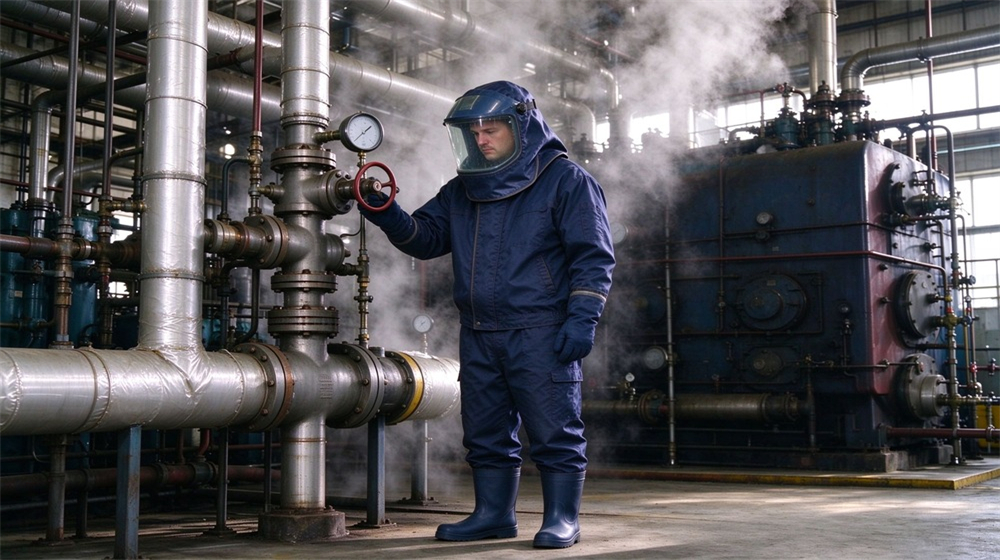
The suit is built around the four-layer stack. The outer flame-retardant shell resists sparks and flash; the waterproof breathable layer seals hot water and steam out while letting body heat escape; the insulation layer slows heat transfer; the comfort layer keeps the wearer moving through a full shift. Seams are heat-sealed rather than sewn, because steam finds the needle holes a stitch leaves behind. That sealed construction is what separates a steam suit from a simple heat jacket, and it is the detail buyers confirm before ordering. The same stack also keeps the suit light enough for a full shift, which is why crews keep it on for rounds that last hours, and why the batch report records the membrane test for every order. The comfort lining also pulls moisture away from the skin, so the wearer finishes the shift dry even in a humid boiler room.
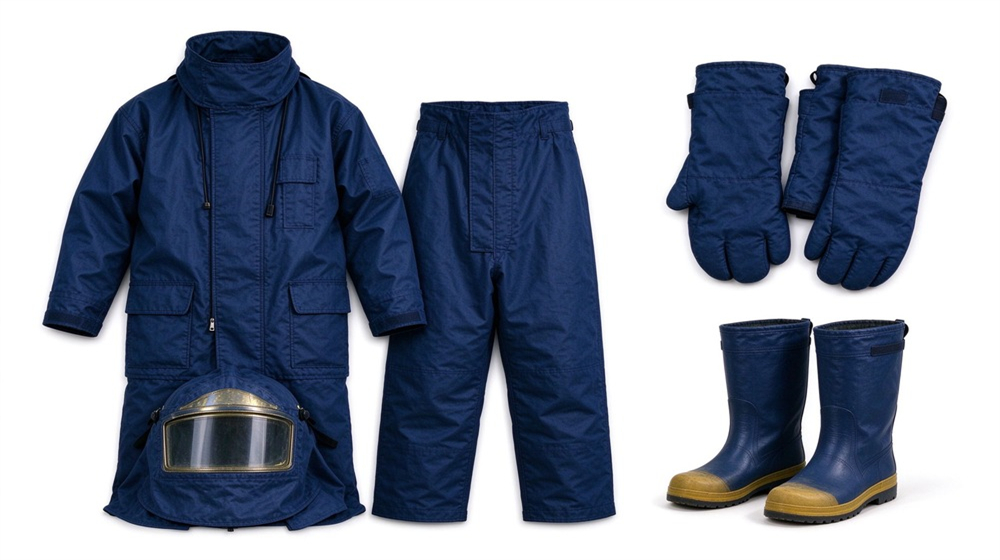
An anti-fog visor is part of the kit, not an option. In a boiler room the air is full of steam and condensation, and a fogged lens hides the pressure gauge and the walkway. The visor keeps vision clear, the hood seals around the head, and the suit vents heat so the wearer stays dry inside. Plants that standardize on the steam protective suit run valve work, boiler checks and pipe repairs with the same garment and the same training brief, so the safety briefing and the size chart are written once and reused for every position. The visor treatment is applied to the inner face during lamination, which is why it survives washing and hard use across the service life, and the hood seal is checked together with the visor at every batch acceptance.
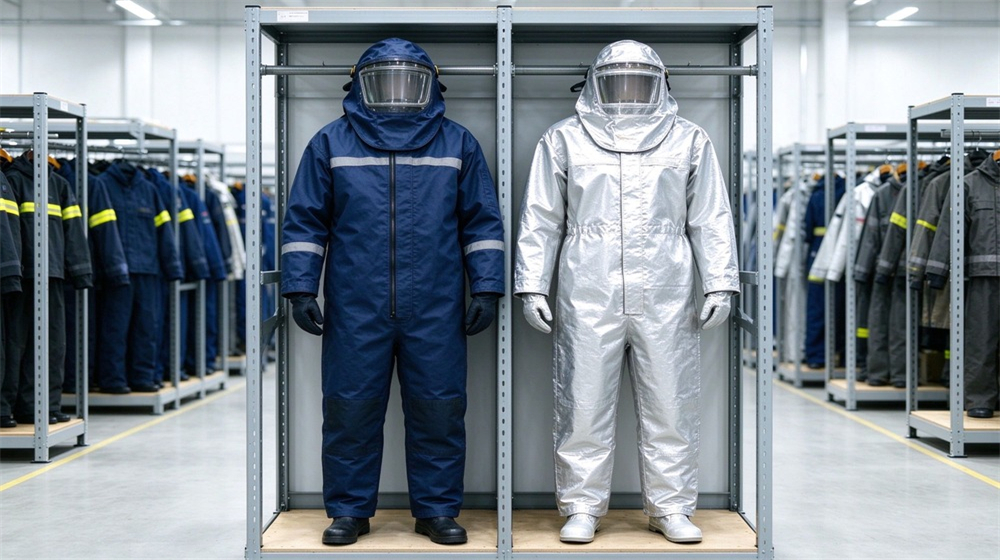
A steam suit and a heat suit protect different hazards. Heat suits reflect radiant heat for furnace work; steam suits seal against hot water and live steam. The choice is made at the risk assessment: radiant heat positions get the aluminized suit, steam and condensate positions get the sealed steam suit. Most plants keep both on the shelf and match the garment to the task, because a steam burn and a heat burn are not the same injury, and the difference shows up in the seams and the layering, not in the colour of the fabric. Confirming both models at quotation keeps the program consistent.
The system extends beyond the suit. Steam-proof gloves, boot covers and a hood complete the kit, each replaceable separately. Distributors stock the kit as one catalog family. A plant orders the full set once, then replaces single items as they wear, keeping the rotation running without a full reorder. Export cartons carry the full kit list, so the receiving team checks one packing document and stocks one catalog family, and the spare-parts list in the quotation matches the kit exactly.
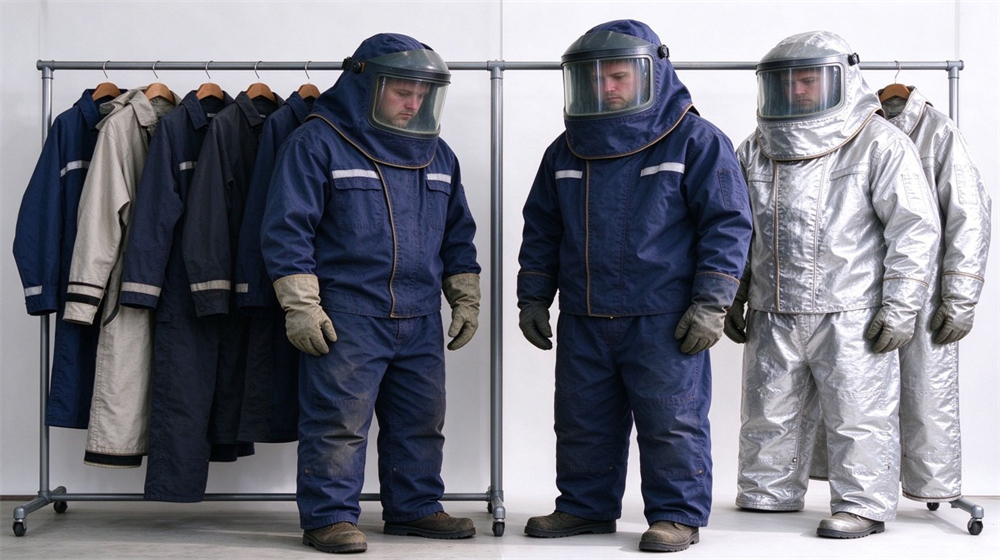
Table of Contents
|
Dangers of Steam & Hot Water Exposure |
Steam Suit vs Heat Suit |
|
4-Layer Steam Protection Structure |
Sourcing, Care & Quality |
|
Steam Pipe & Boiler Applications |
FAQ: Steam Protective Suits |
Steam work needs a layer that seals, breathes and moves. The steam protective suit blocks hot water and live steam with four sealed layers, keeps vision clear with an anti-fog visor, and ships in bulk to power plants, dyeing plants and boiler teams worldwide. One model, one size run and one batch report keep the order simple from quotation to delivery, and the accessory system extends the suit into a complete steam-proof kit for the whole crew. Send the crew sizes, confirm the configuration at quotation, and the sealed line arrives as one order.
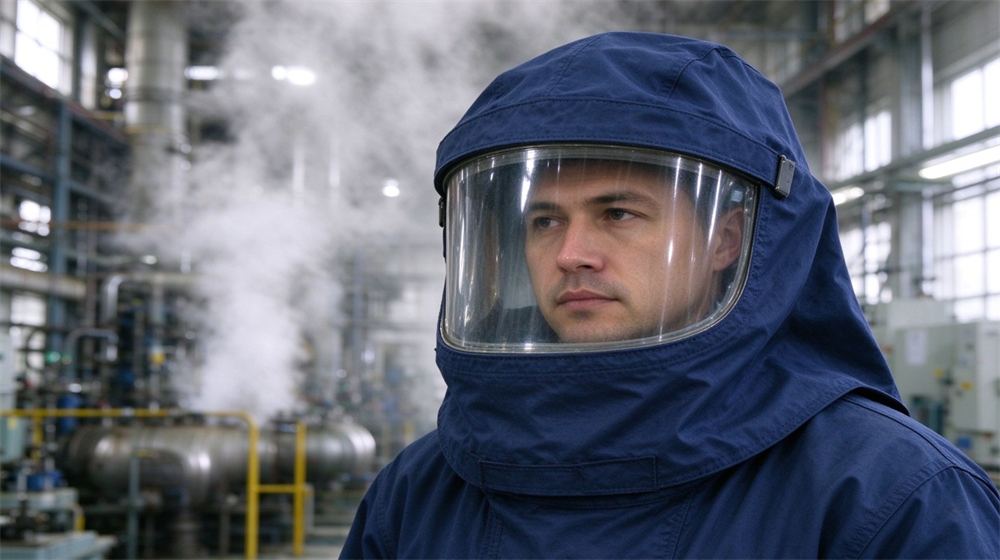
Steam is the hazard you cannot see until it burns. Understanding how live steam and hot water injure, and where the steam suit fits in the PPE system, starts with the physics of the burn.
Steam burns faster than dry heat at the same temperature. When steam condenses on skin it releases its latent heat directly into the tissue, which is why a steam line at 120°C can injure worse than a hot surface at 200°C. The burn happens in the seconds of contact, through gaps a jacket leaves open: at the cuff, the collar and the front opening. The steam protective suit closes those gaps with sealed seams and a full-length front seal.
The injury pattern is different from radiant heat. Radiant heat heats the surface of the skin; steam condenses, turns back to water and transfers its full latent heat into the tissue in one burst. That is why a steam burn feels deeper and heals slower than a contact burn at the same temperature. Plant safety officers plan for it with a sealed garment, not with thicker fabric alone.
The steam protective suit is measured the same way for every buyer: by the pressure and temperature of the line it guards. A plant translates that into positions, and positions translate into quantities. One boiler house may need ten suits for a three-team rotation; a dyeing mill may need twenty for two shifts. The factory sizes every order against the same chart, so planning is repeatable and the quotation always lists the same model code, which keeps the purchasing record clean across seasons.
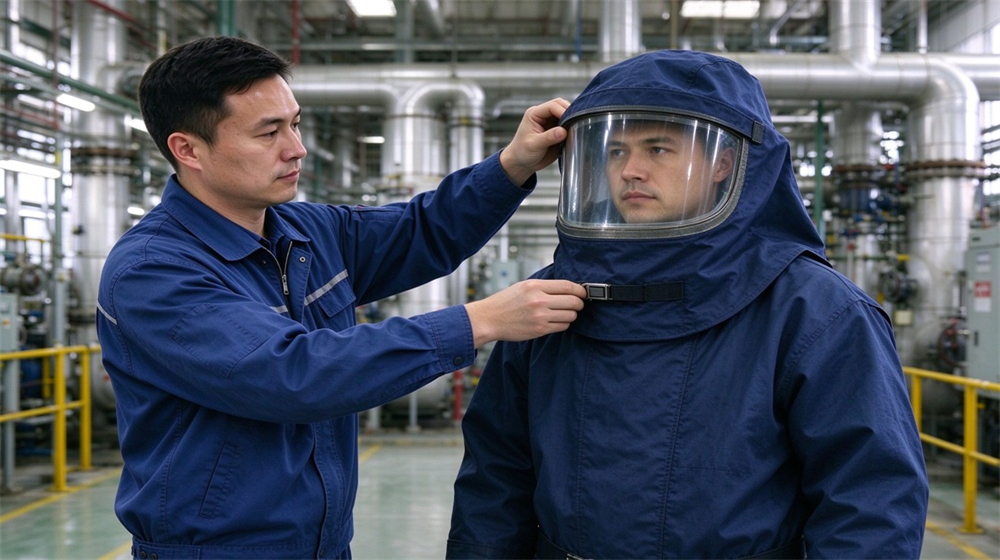
Heat suits are built to reflect radiant heat, not to block steam. A radiant-heat jacket lets moisture in and gives steam a path to the body. Steam work needs a vapour barrier, which is why the suit uses a waterproof breathable layer behind the flame-retardant shell. Buyers who already run aluminized suits for furnace work add the steam suit for the pipe room, the boiler house and the dyeing line.
The difference shows up in the seams. An aluminized suit is stitched for flexibility; a steam suit is heat-sealed for the vapour barrier. That is why a plant keeps both on the shelf instead of asking one garment to cover both hazards.
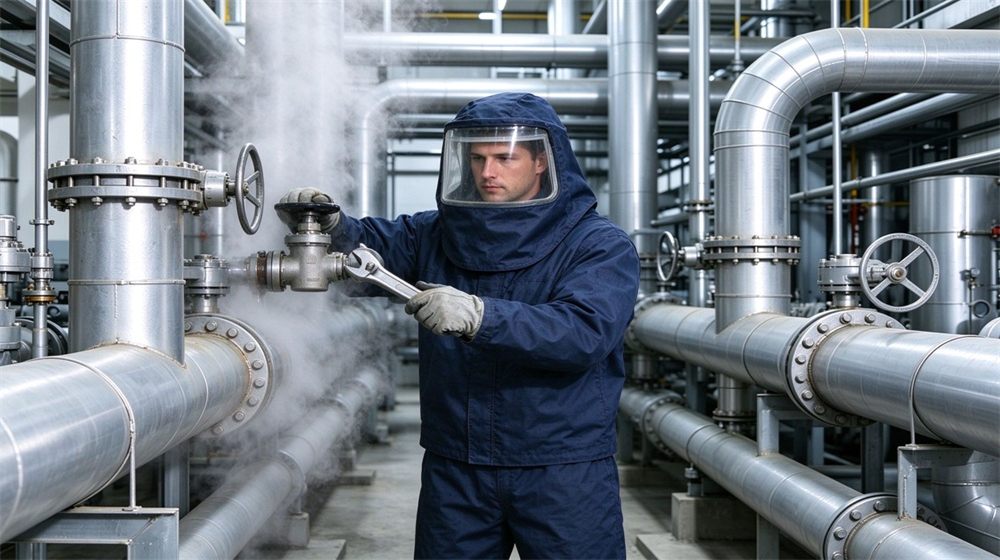
Plants that standardize on the steam suit run one sealed layer across valve work, boiler inspection and pipe repair. New members learn one garment, and the size run covers the whole crew. This cuts inventory complexity and training time compared with managing several specialty garments.
Steam incidents are a standing topic in plant safety reviews. Industry guidance consistently lists live steam and hot water among the leading wet-heat hazards in power, textile and process facilities, and the control measure is the same everywhere: keep a vapour barrier between the worker and the release. The sealed garment is the layer that does that job, and safety programs budget for it the way they budget for hard hats and FR coveralls.
For the buyer, standardization means repeat orders are easy: the same model, the same sizes, the same packing list. The factory keeps the pattern and the fabric specification, so a second order matches the first exactly. That repeatability is why distributors list the steam suit as a standing catalog line rather than a project buy, and why plant buyers reorder without re-engineering the kit each time.
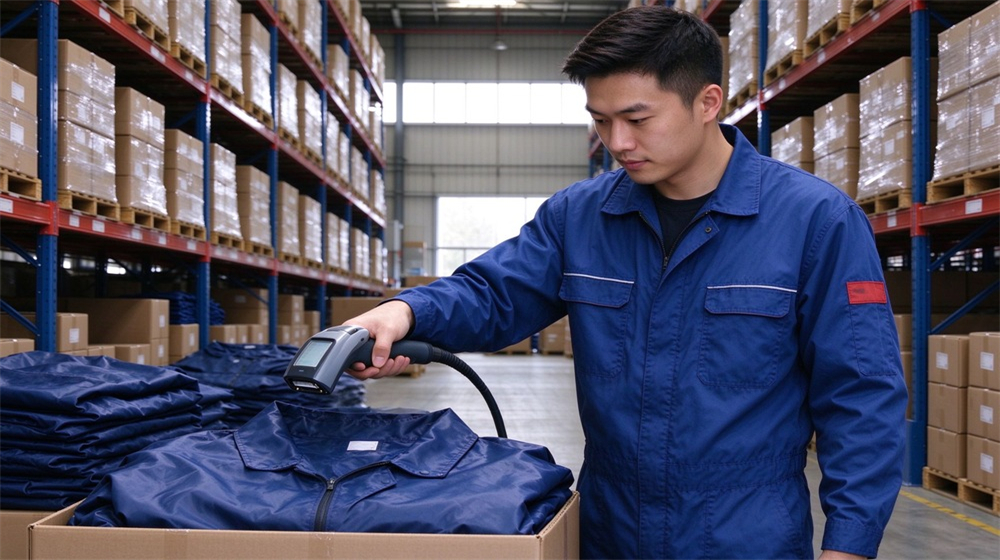
The suit ships as a sealed unit and it arrives as one. The factory packs each size as its own group, counts the cartons twice, and sends the batch report with the consignment. Receiving teams verify against one packing list, so the same discipline that builds the suit carries through to the dock.
Garment Type
Protection Target
Sealing
Anti-Fog Visor
Best For
Steam suit
Live steam & hot water
Sealed seams
Yes
Pipe, boiler & dyeing work
Radiant-heat suit
Radiant heat
Open cut
No
Furnace & smelter work
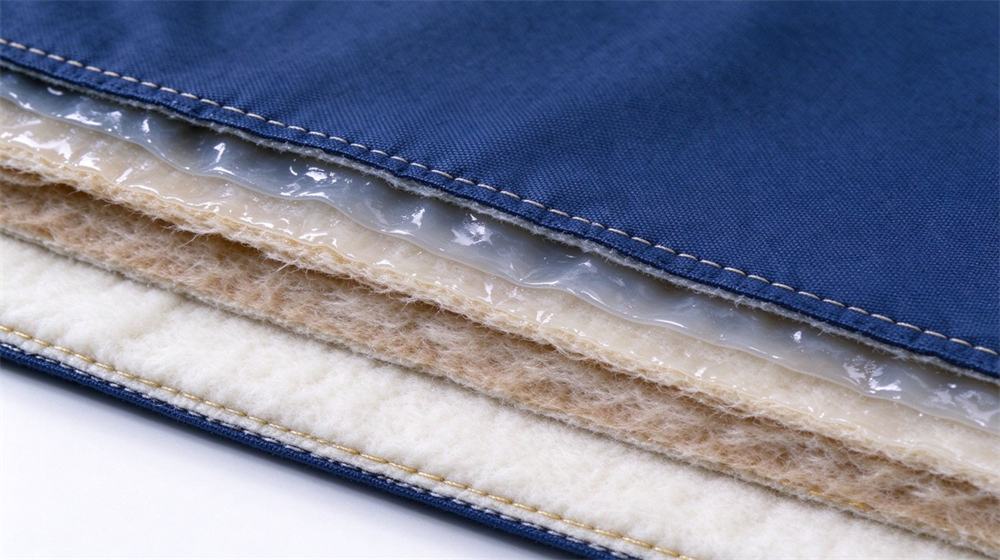
The protection lives in the layer stack. Reading the four layers from outside to inside explains how the suit stops steam and keeps the wearer working.
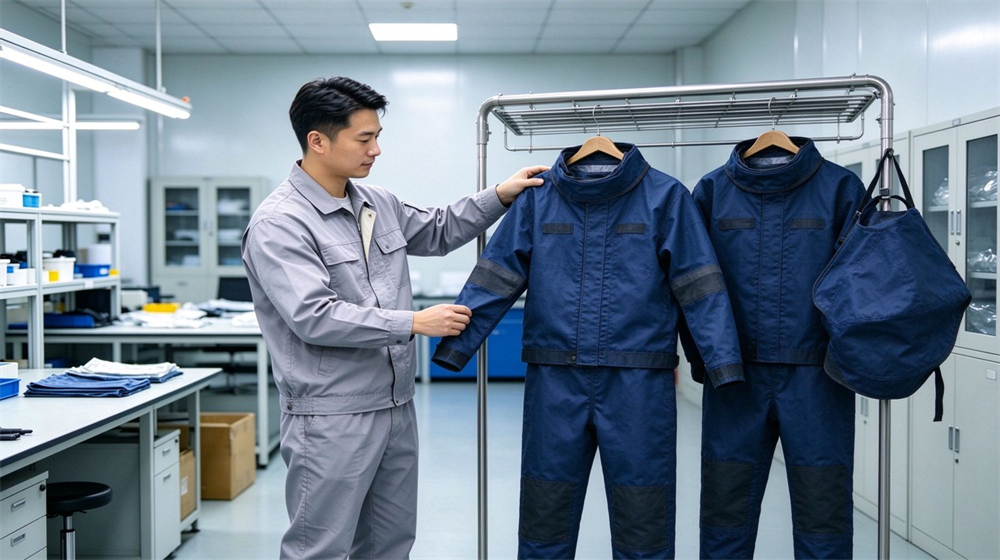
The four layer steam protection structure is the core specification. Layer one is the flame-retardant shell that resists sparks and flash from nearby plant work. Layer two is the waterproof breathable membrane with heat-sealed seams that blocks hot water and live steam while releasing body moisture. Layer three is the insulation that slows heat transfer to the body. Layer four is the comfort lining that keeps the wearer dry and mobile through a full shift. Each layer has one job, and the stack works as one system. The membrane is the layer buyers test first, because it carries the vapour barrier that sewn workwear cannot match.
The high temperature steam suit keeps the layers bonded in one garment, not as separate liners. That single-piece construction is what allows the suit to be washed, folded and reused across a long service life, and it is what keeps the batch quality identical from order to order.
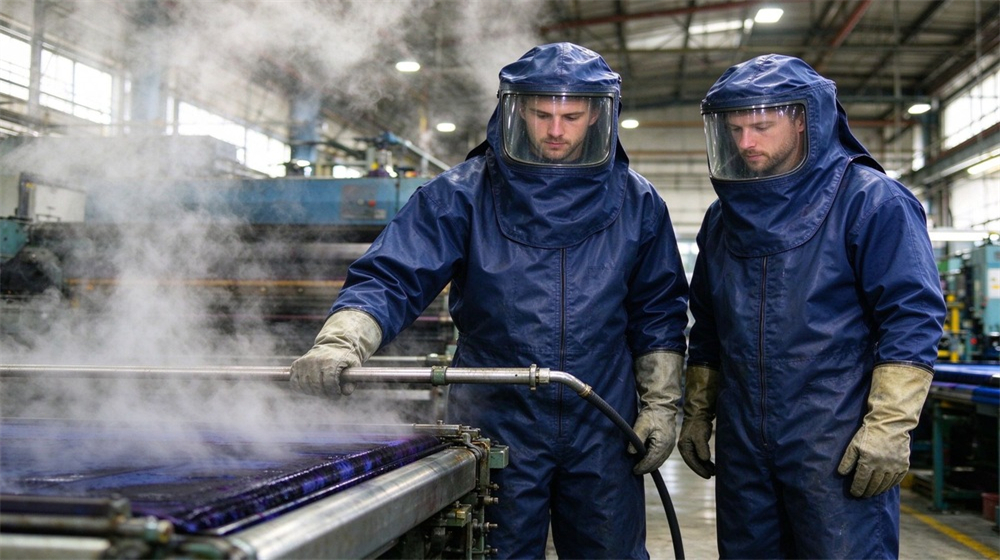
Seams decide whether a steam suit works. Sewn seams leave needle holes that steam finds under pressure, so the suit uses heat-sealed construction on the waterproof layer. The factory welds the membrane at every seam, tests the seal and documents the result in the batch report. Buyers confirm seam sealing at quotation, and the acceptance check on arrival repeats the water test on the sealed seams.
The sealed seam is also the maintenance point. A suit that is stored wet or folded hard at the seams loses its seal faster, so plants rotate two sets per worker and check the seams at the start of each shift. The factory inspects the waterproof membrane per batch and documents the result in the report that travels with the shipment.
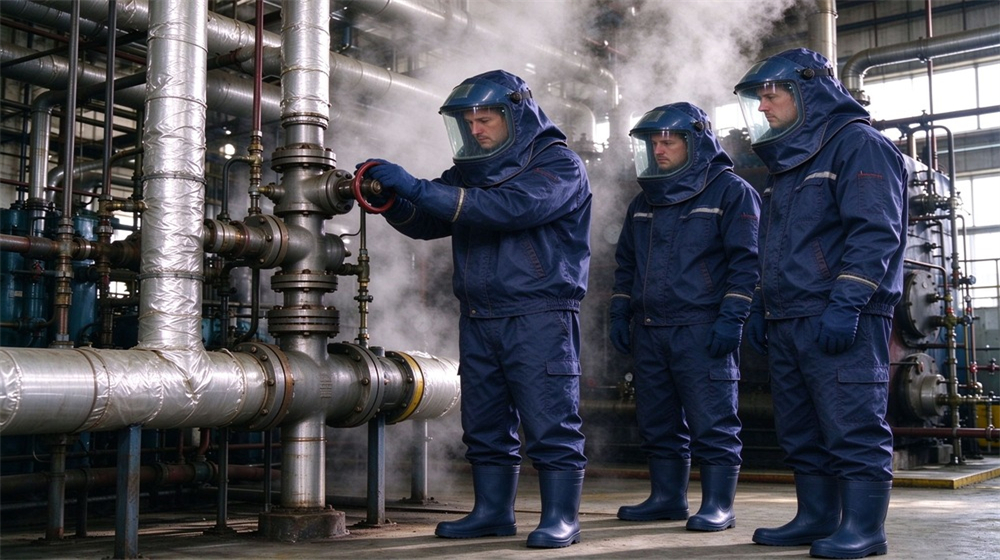
The anti-fog visor is bonded into the hood, not clipped on. In a steam-filled room the visor stays clear, the hood seals around the head, and the suit vents heat so the wearer stays dry inside. The high temperature steam suit keeps vision and mobility together, which is what a pipe repair in live steam conditions demands.
The hood seal is the top of the vapour barrier. If the hood opens at the chin or the visor lifts at the edge, steam finds the gap. The suit therefore closes in a set order—hood, jacket, gloves, boot covers—and the same order is on every shift.
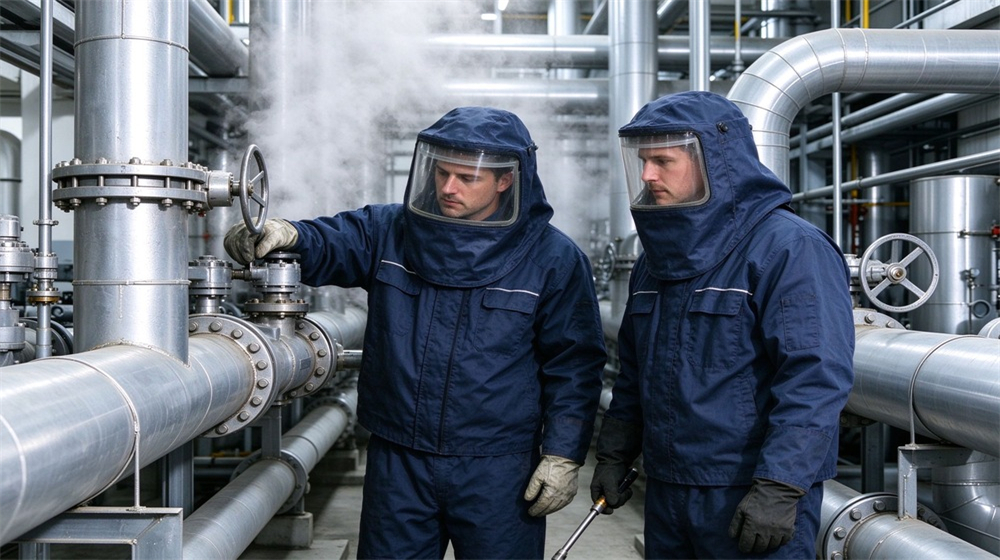
The layer names matter less than the seal between them. When a buyer opens a sample and pulls the layers apart at the seam, the welded membrane should hold without peeling. That hand test is the same one the factory runs before a batch is released, and it is the fastest way for a receiving team to verify the spec on arrival.
The suit is sized to fit over standard FR workwear, which is the base layer of the same PPE program. The sealed shell closes over the top, and the layered fit is confirmed before the order starts.
Fit is confirmed against the wearer’s FR clothing at quotation, so the sealed layer works with the existing station uniform. The hood opening and the visor line are part of the same check, because a sealed suit is only as good as the closure that meets the collar.
The suit earns its place in the rooms where steam is present every shift. Three application families drive most bulk orders: steam pipe maintenance, boiler house inspection and dyeing plant finishing.
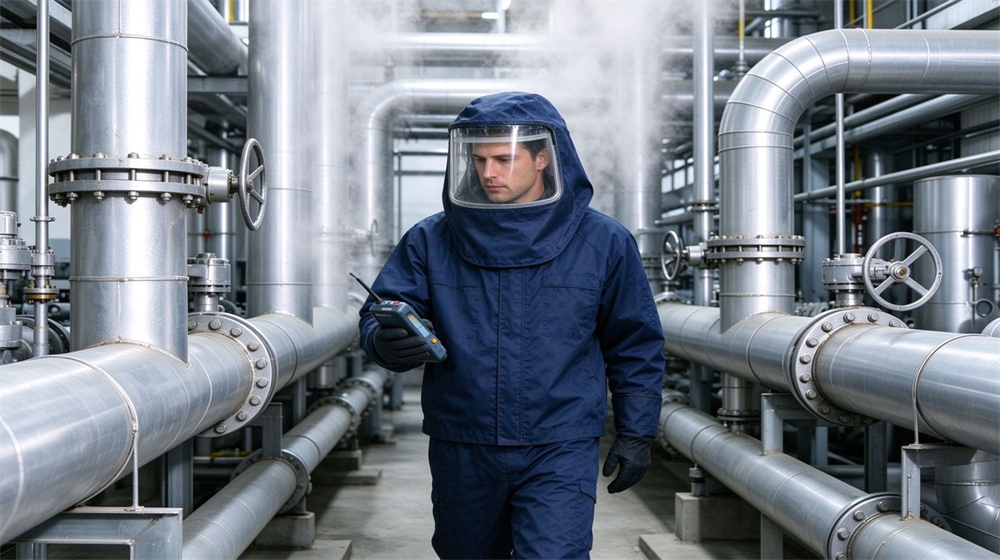
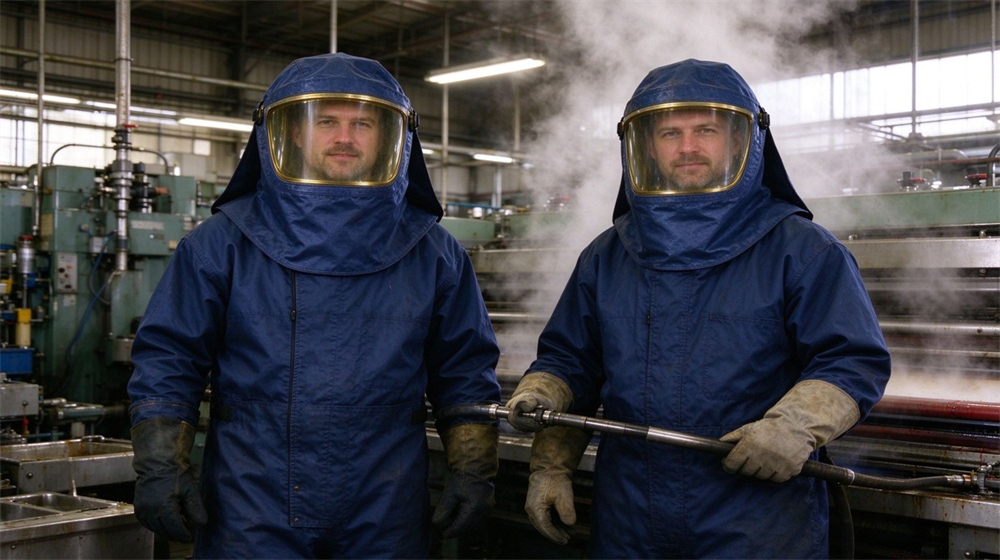
Steam pipe maintenance is the core application. Workers isolate valves, repair joints and purge lines while the system stays live nearby. The steam protective suit covers the body, the hood protects the head, and the gloves and boot covers seal the ends. A pipe crew orders one size run for the whole team, because every member of the rotation works in the same radiant and condensate field.
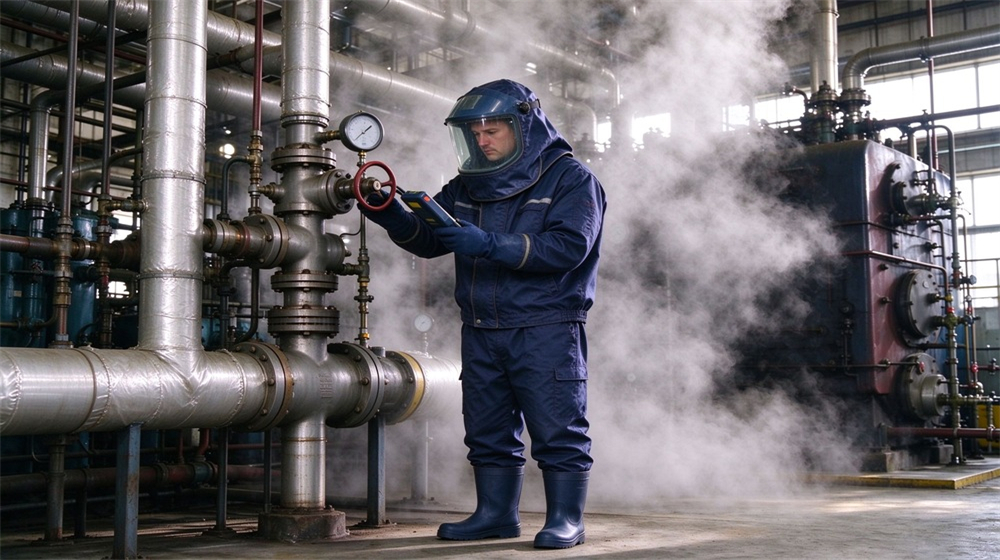
Pipe repair positions are where the sealed seams earn their keep. The crew works close to a line that may still carry pressure, and a burst joint can release steam in any direction. The steam suit answers that unpredictability with full coverage, and the anti-fog visor keeps the repair point visible through the release. The same position is rehearsed in drill so the response is trained before the leak happens.
Emergency drill crews rehearse the same positions in steam suits, so the response is trained before the leak happens. The suit that trains well serves well, and the batch acceptance repeats the drill check on arrival.
Boiler house inspection happens where steam pressure is highest. Operators check gauges, inspect burners and clear soot while steam vents around them. The boiler steam work clothing keeps the team dry and visible in the low light of the plant, and the anti-fog visor keeps the pressure gauge readable through condensation. Plants standardize one suit across the boiler house, so every check uses the same garment and the same acceptance data.
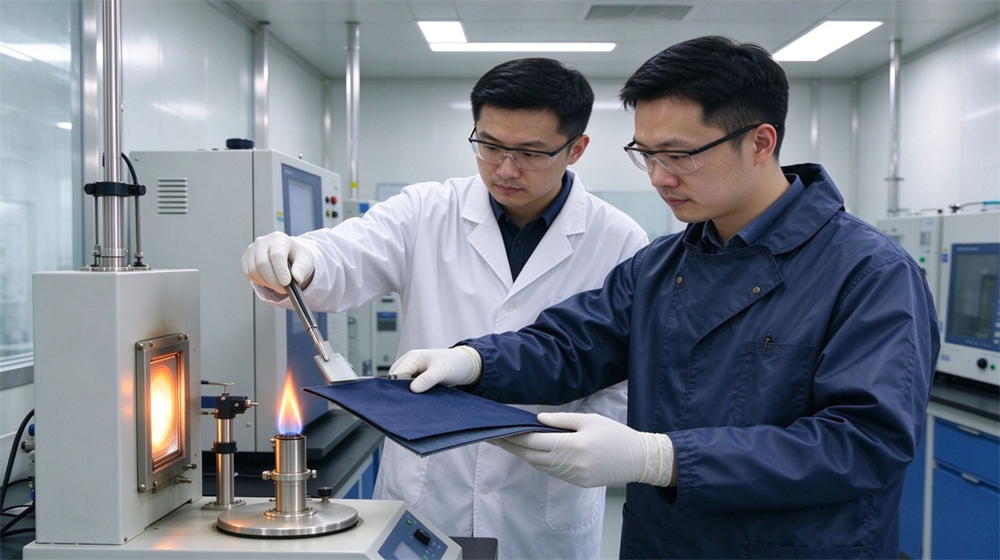
Dyeing and finishing plants add the third application. Steam cylinders, setting frames and wash-off lines release live steam that settles on operators. The steam suit seals the worker, and the breathable layer stops the wet-heat buildup that makes a shift unbearable. Mills that standardize on the suit run the finishing line with fewer burn incidents and shorter PPE training.
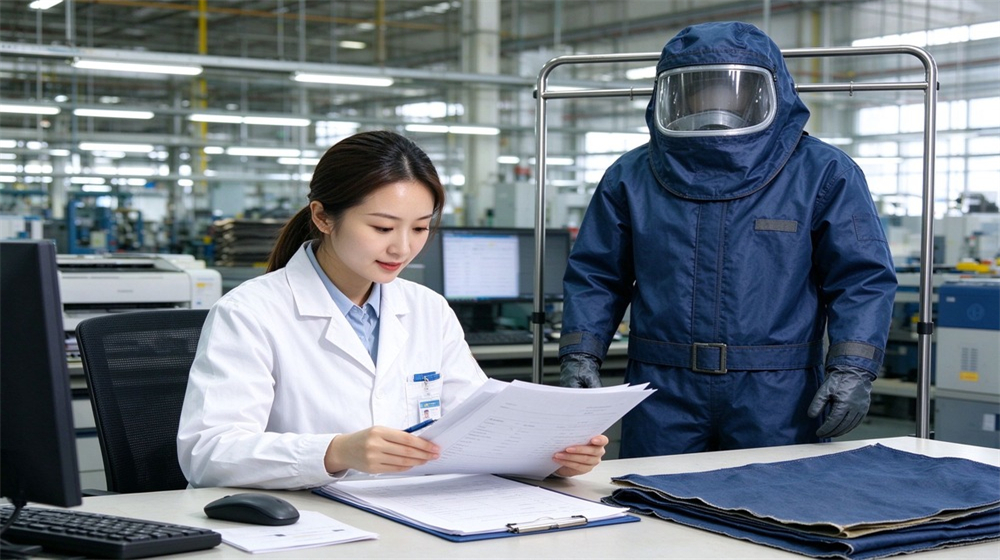
The buyer list is wide but the need is the same. Power plants order it for pipe and boiler positions, dyeing mills order it for finishing lines, food plants order it for retort and sterilizing rooms, and chemical plants order it for steam-cleaning operations. Each buyer receives the same garment and configures the accessories to the job.
Export buyers also value the standard configuration. The model code, the size chart and the packing method stay identical from order to order, which keeps customs paperwork and warehouse receiving predictable. For distributors, that predictability is the reason to list the suit as a standing catalog line. The factory holds the pattern and the fabric reference between orders, so a repeat shipment matches the first exactly.
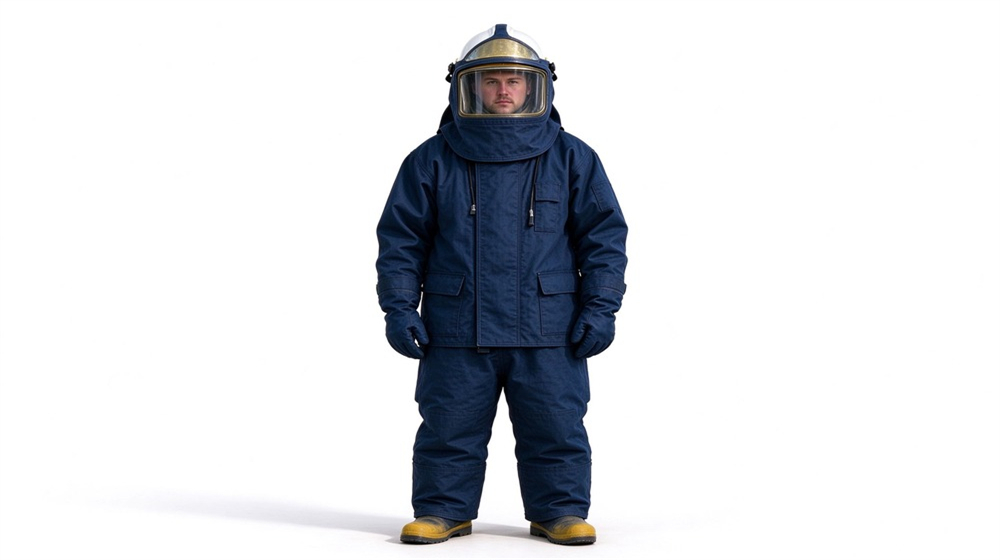
The two suits protect two different injuries. Matching the garment to the hazard decides whether the crew is actually protected.
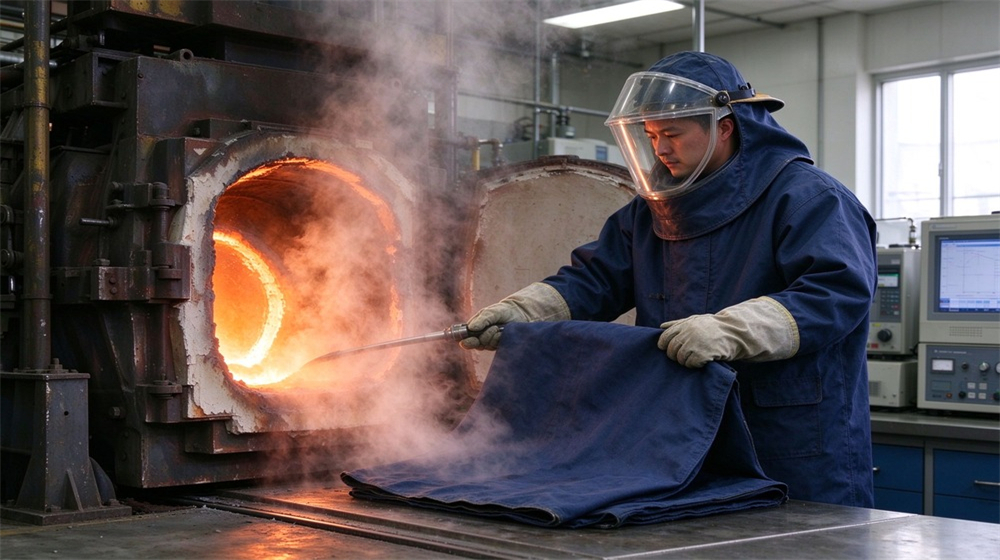
A heat suit reflects radiant heat for furnace and smelter positions. A steam suit seals against live steam and hot water for pipe, boiler and dyeing positions. The burn physics are different: radiant heat heats the surface, steam condenses and transfers its latent heat into tissue. A plant that buys only heat suits leaves its steam positions exposed; a plant that matches both suits covers every wet-heat and radiant-heat job on site. The two garments sit side by side in the locker room and the difference is decided at the risk assessment, not at the sales desk. The same three-question check that guides the plant buyer is the one the factory applies at quotation, so the garment that arrives matches the hazard that was assessed.
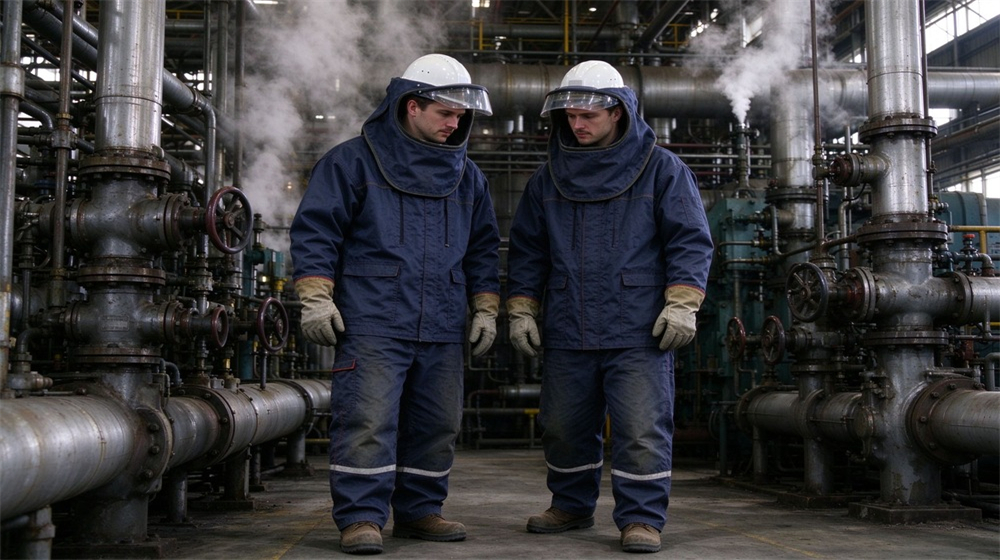
The construction follows the hazard. The heat suit uses an aluminized outer layer to bounce radiant energy; the steam suit uses a flame-retardant shell, a sealed waterproof membrane and an insulation layer. The steam suit closes with sealed seams and a full front seal; the heat suit opens freely for fast donning in hot work. Buyers compare the two at the risk assessment, not at the catalog, and confirm the layering at quotation. The same comparison is repeated on arrival, when the sealed seams and the aluminized layer are checked against the order file.
The seams are the visible difference. An aluminized suit is stitched for flexibility, a steam suit is heat-sealed for the vapour barrier. That is why a plant keeps both on the shelf instead of asking one garment to cover both hazards.
The choice follows three questions: is the hazard radiant heat, live steam, or both? Does the position stay close to the source or move between zones? Does the crew need sealed coverage or fast donning? Radiant positions get the heat suit, steam positions get the steam suit, and mixed plants keep both on the shelf. The steam protective suit answers the wet-heat side of that matrix, and the factory builds it to the same batch discipline as every other garment it ships. The same three-question check is the one the factory uses at quotation, so the garment that arrives matches the hazard that was assessed.
The selection table belongs on the plant wall, not just in the quotation. Safety officers who keep both garments in the program review the matrix once a year and adjust the stock for the work plan. The factory supports that review with the same model codes and the same batch documentation, so the annual check is a formality, not a renegotiation.
In a mixed plant the rotation crosses both hazards. The same crew works furnace positions in the morning and pipe positions in the afternoon, so both suits live in the same locker room and the training brief covers both. Standardizing both suits on one size run keeps the handover seamless.
Rotation also spreads wear across both garments, so the sealed membrane and closures see less continuous pressure than in fixed-position service. The annual stock review simply matches the program to the work plan, and the factory supports it with the same model codes and the same batch documentation.
Buying steam suits follows the system logic: complete kits, clear configurations and terms that match plant purchasing.
Order the complete system: the suit, steam-proof gloves, boot covers and the hood. Each item is available separately, so a plant can equip a crew or replace worn parts without reordering the whole set. Bulk orders confirm sizing against the factory chart at quotation.
The kit is built around the suit. Gloves seal the cuffs, the boot covers close the trouser hem, and the hood completes the vapour barrier from head to foot. Together they extend the suit into a complete steam-proof kit.
Sizing follows chest and height against the factory chart at quotation. Hood opening and visor fit are confirmed for the team standard. Every order is tested per batch, and the batch report travels with the shipment.
Configuration is confirmed in writing before production: the model, the sizes, the hood option, the accessories and the packing method. Nothing moves forward until the buyer confirms the configuration, which keeps the order on one clear track.
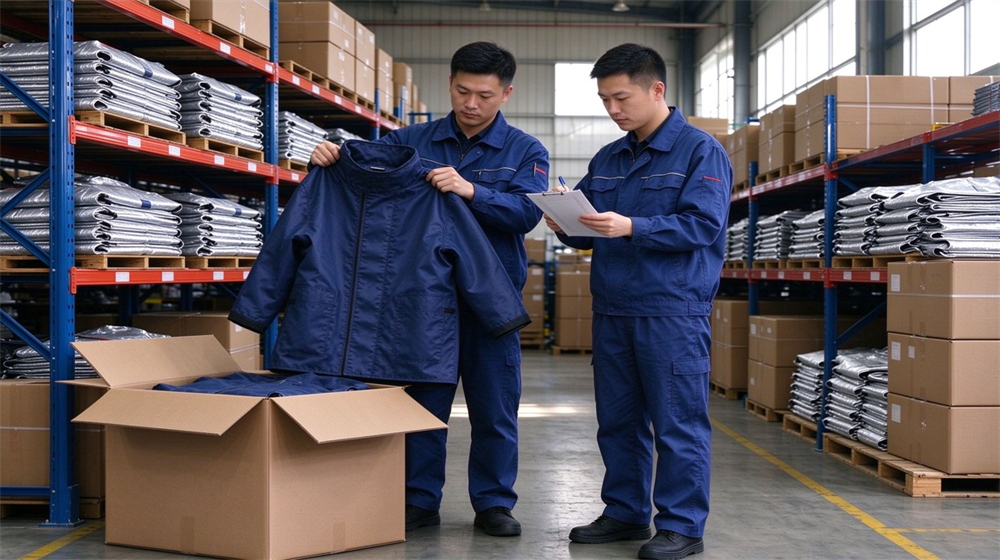
The table below summarizes a team order configuration.
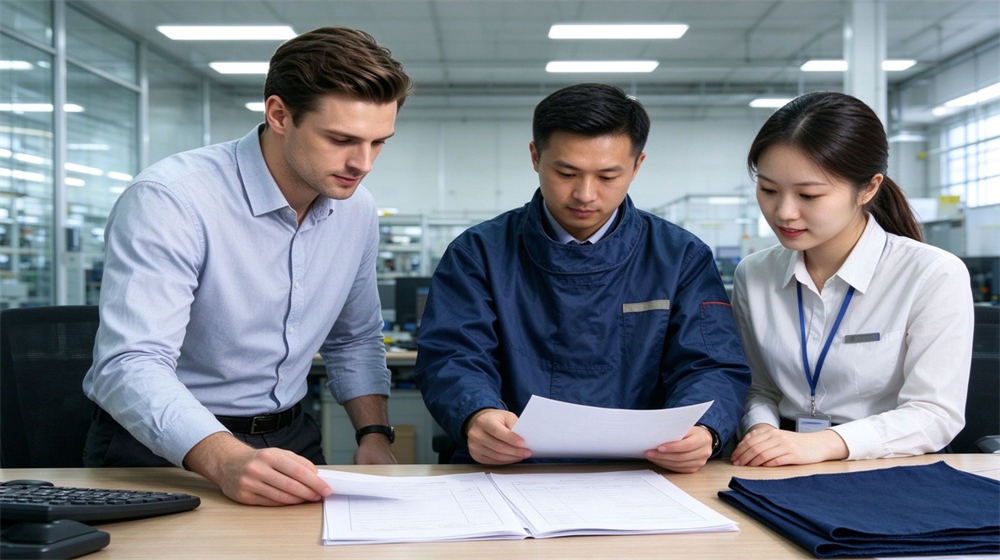
A team order is confirmed in three steps: send the position list, confirm the size distribution, and approve the configuration in writing. That sequence keeps the quotation and the production batch on one line from the first email to the final packing list.
With the configuration confirmed, the order runs as one batch: one fabric lot, one membrane application, one seam sequence, and one test report for the whole team. That is the factory workflow behind every bulk shipment.
Order Item
How to Configure
Notes
Steam suit
Chest & height per chart
Bulk team sizes
Gloves & boot covers
Add per position
Optional
Hood with visor
Add per position
Optional
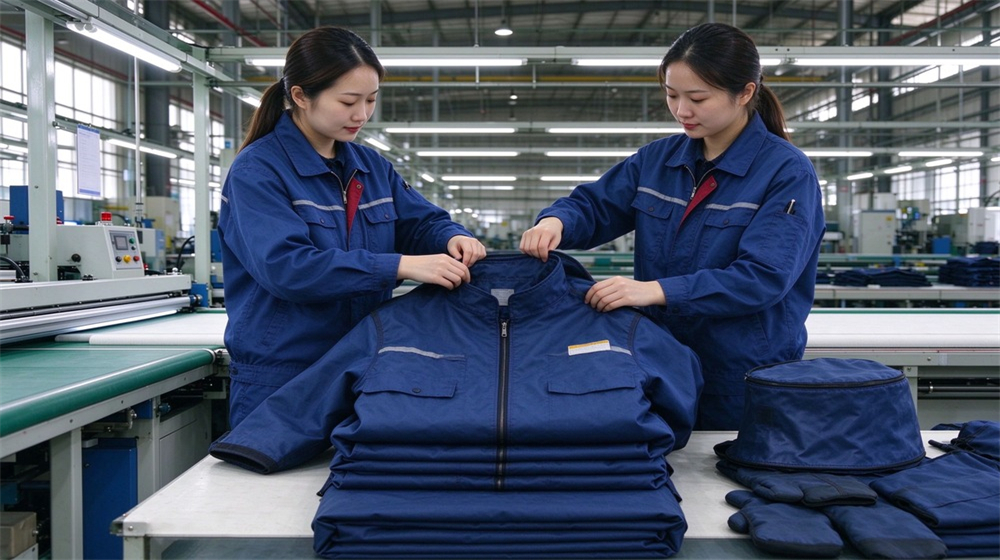
Care follows the sealed construction. The suit is aired after use, checked at the seams and stored dry. The factory inspects the waterproof membrane and the sealed seams per batch, and the test report travels with the shipment.
A steam suit that is stored wet or folded hard at the seams loses its seal faster, so plants rotate two sets per worker and check the seams at the start of each shift. The anti-fog visor is wiped with a soft cloth and kept clear of solvent, and the hood opening is checked against the size chart at each inspection.
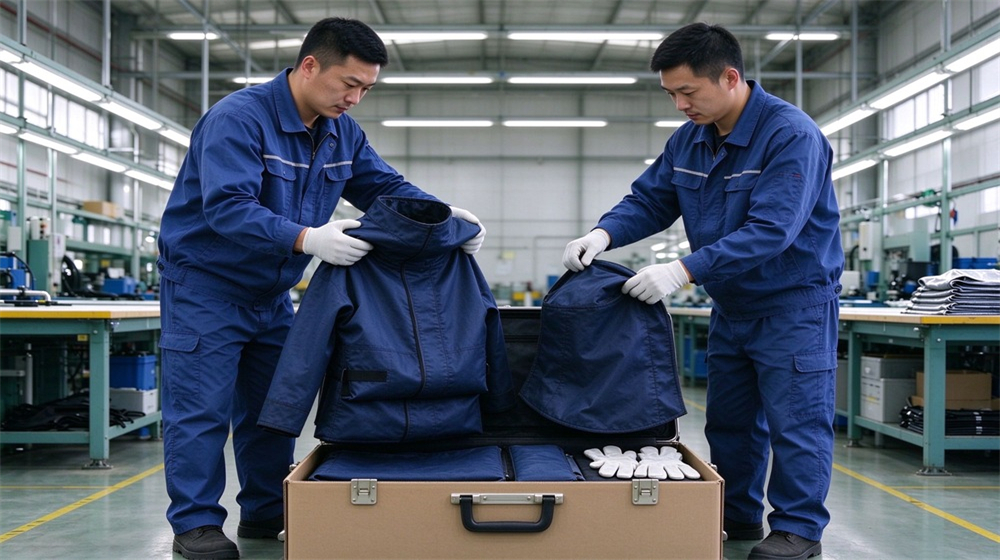
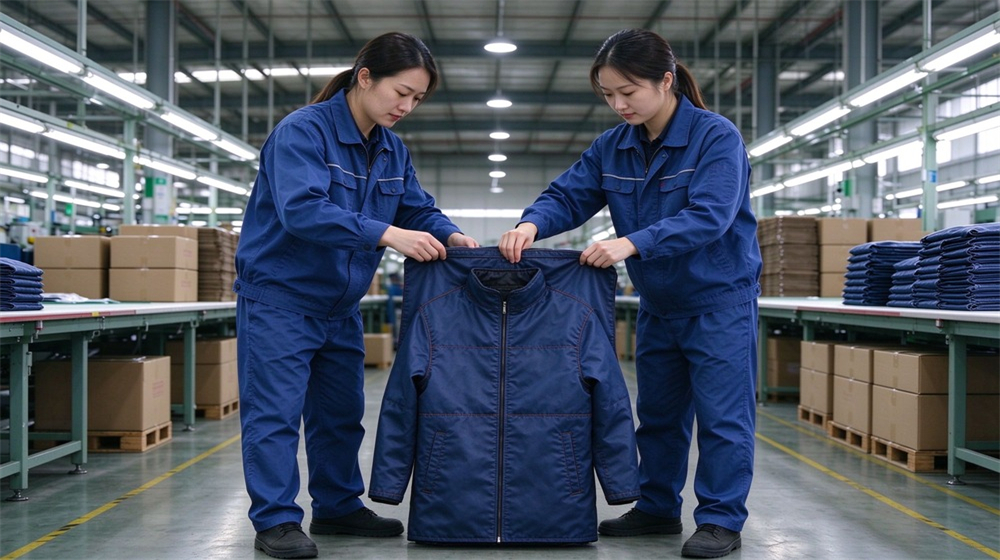
Production follows a controlled line: fabric inspection, membrane lamination, cutting, seam sealing, sewing, finishing, testing, packing. Each stage is checked before the next begins, and export cartons are packed for sea or air freight.
The production line is organized around the sealed construction. Cutting tables handle the full panels, seam-sealing stations weld the membrane, and the finishing area presses and folds the completed suits. One line produces one consistent batch.
Laboratory testing verifies the fabric before and during production. Samples are checked for membrane integrity, seam seal and heat resistance, and the batch report documents the results.
The test record travels with the shipment, so the buyer can verify the batch on arrival. Fabric, membrane and seam samples are retained in the factory for the order lifetime.
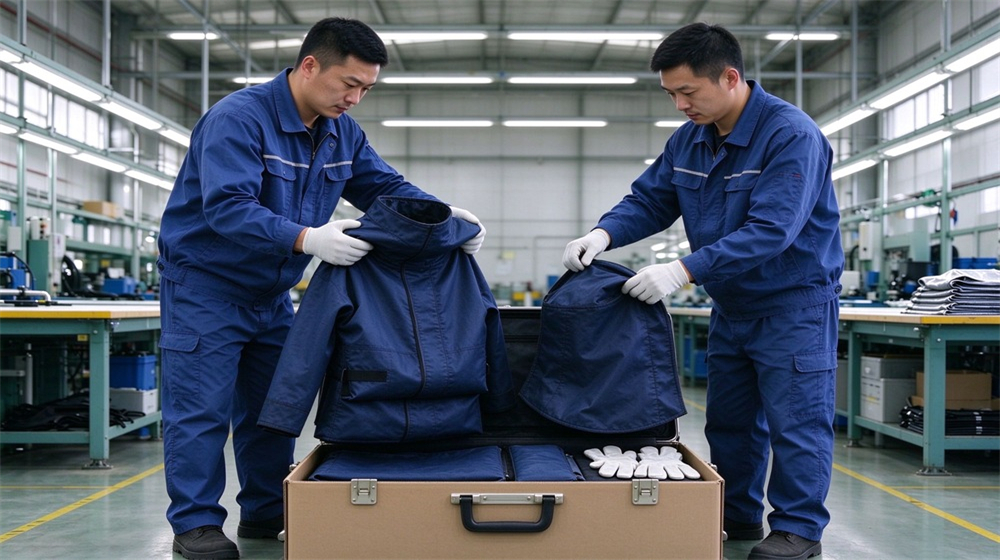
Finished suits are sorted, checked and folded by the finishing team. Export orders are prepared in sets, with each size grouped and counted against the packing list.
Warehouse stock is organized by model and size, so repeat orders ship fast. Inventory checks keep the export pipeline clear and the sizes available.
Loading is coordinated so cartons travel upright and protected. Shipping documents accompany the consignment, and the buyer receives tracking at handover.
Export cartons are packed to the packing list, counted twice and sealed before dispatch.
MOQ and production timeline are confirmed per order based on configura
For guidance on protective clothing selection and use, refer to the OSHA personal protective equipment pages, the NIOSH heat stress guidance, and the ISO 11612 standard for heat and flame protective clothing.
Here are the questions plant safety officers ask most often about the
A four-layer dark blue suit that seals against live steam and hot wate
Heat suits reflect radiant heat for furnace work; steam suits seal wet
Flame-retardant shell, waterproof breathable membrane with heat-sealed
Yes. The anti-fog visor is bonded into the hood and stays clear in ste
The rated performance depends on the specific model and fabric build.
The waterproof membrane uses heat-sealed seams, and the cuffs, collar
Yes. The waterproof membrane and sealed seams stop hot water splash an
The standard kit covers the suit with hood, an anti-fog visor, insulat
Rinse with clean water after each use and wash with mild detergent when needed.
Store in a cool, dry place away from direct sunlight and heat sources.
Sizes follow the standard protective clothing chart from S to 3XL, and
Yes, we offer custom colors and logo printing for bulk orders.
The anti-fog treatment is applied to the inner face of the visor durin Boiler inspection teams wear the same sealed layer as pipe crews, because both positions share the wet-heat exposure.
Heat-sealed seams on the waterproof membrane. Sewn seams leave needle holes that steam finds under pressure, so the factory welds the membrane at every seam and tests the seal per batch.
Steam pipe maintenance, boiler house inspection, dyeing plant finishing and any position where live steam or hot condensate settles on the worker. Power plants, mills and chemical plants standardize on it for wet-heat positions.
Yes. The suit fits over standard FR workwear, with the hood, gloves and boot covers completing the vapour barrier. Buyers confirm the layering details at quotation so the size works with existing gear.
Each batch is tested and the report travels with the shipment. The waterproof membrane and sealed seams are inspected per batch, and samples are retained for the order lifetime. The fabric lot is qualified before cutting, a membrane sample is pulled during seam sealing, and the finished suit is tested after finishing.
Quality control runs at three points: the fabric lot is qualified before cutting, a membrane sample is pulled during seam sealing, and the finished suit is tested after finishing. Catching a deviation early saves the whole batch, and the buyer benefits from that discipline in the report they receive.
MOQ varies by configuration and confirmed at quotation. Bulk team orders are common.
A power plant order typically covers one boiler house or one pipe crew. Because the size distribution and packing method stay identical, buyers can extend the order at any time without restarting the process.
Confirmed per order based on configuration and agreed in writing before production. Timeline covers fabric preparation, membrane lamination and packing.
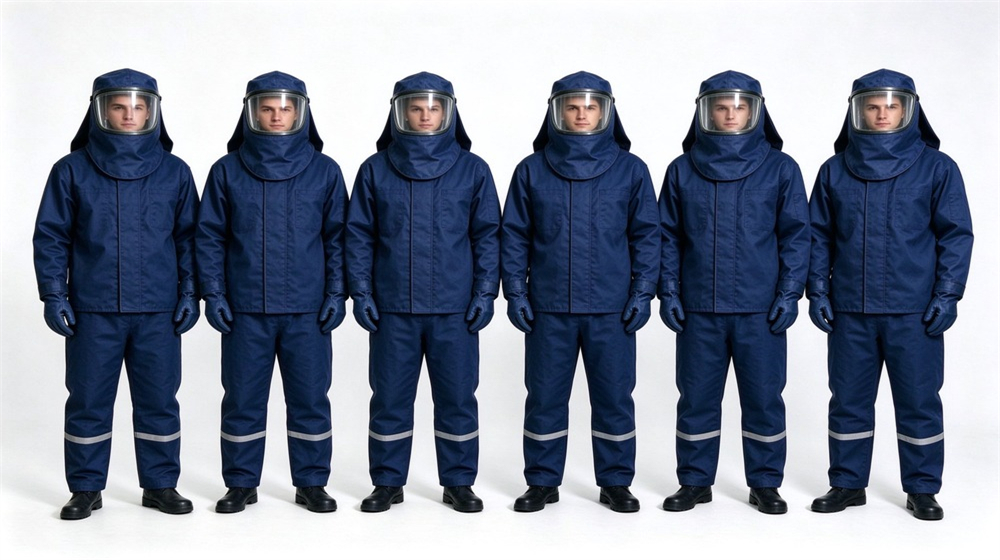
The family lineup shows one sealed model across the range, so buyers standardize one size run for the whole plant.
We accept T/T payment; we do not offer L/C terms. Terms are confirmed in the quotation and the order agreement. A deposit holds the production slot and the balance is settled before dispatch, so both sides work against the same payment schedule from the first email.
Custom options are confirmed at quotation. Artwork placement and colors match your specification, and production samples can be arranged for large orders. The logo panel is applied in the finishing stage, and the approved placement is recorded in the batch file so repeat orders match exactly. Your artwork file is kept on record for the order lifetime.
Yes. The system includes steam-proof gloves and boot covers, each available separately. The kit is built around the suit as the sealed load-bearing layer, and a plant can equip a crew or replace worn parts without reordering the whole set.
Send chest and height for each position. Sizes are confirmed at quotation and one batch covers the crew, with each size grouped and counted against the packing list. The receiving team matches the count position by position against the same document, so the order closes on one check.
Send the position list rather than a single size. The factory groups each position by chest and height, confirms the distribution at quotation, and packs each size as its own group on the packing list, so the receiving team can match the count position by position.
Need Steam Protective Suits for Your Plant?
Send your crew sizes and configuration. We will confirm MOQ, production timeline and price per order. One quotation covers the whole team: the suit, the accessories and the batch test report that travels with the shipment. For urgent needs, message us on WhatsApp and we will reply the same working day. The quotation is prepared against the final configuration, so the price, the size distribution and the accessory list are settled before the first panel is cut. The same model code, size chart and packing method stay on file between orders, so the second shipment matches the first exactly and the receiving team checks one packing document for the whole consignment.
Previous :
Molten Metal Furnace Suit | 1200°C Splash Protection Split DesignNext :
Proximity Fire Coat | 500°C Heat Reflection for Fire Team Use Deep Blue Firefighting Suit Set, Forest Fire Fighting Specialized, Full-body Protection
This Deep Blue firefighting suit set is specially designed for forest fire fighting, using special flame-retardant fabric that can withstand 700°C open flames in the wild, with a thermal protection value (TPP) of 25CAL/AM2. The vivid Deep Blue color combined with enhanced reflective strips enables identification from 500 meters away in forest smoke. The lightweight design of only 4.5KG does not affect mountain action speed, with a waterproof rating >40KPA, adapting to camping fire fighting and long-term field operations. The anti-plant puncture design increases wear resistance by 50%, making it professional equipment for forest firefighting, mountain rescue, and outdoor fire fighting actions, providing all-around body protection for forest firefighters.
 High-temperature Resistant Firefighting Suit Set, Emergency Rescue, Quick-wear
This high-temperature resistant firefighting suit set is made of professional-grade flame-retardant materials, capable of withstanding extreme temperatures up to 750°C, with a thermal protection value (TPP) of 26CAL/AM2, providing reliable protection for emergency rescue. The innovative quick-wear design allows complete dressing in 40 seconds during emergencies, with hydrostatic pressure resistance >45KPA and excellent breathability. Designed according to ergonomic principles, weighing only 4.8KG, it effectively reduces the burden on rescue personnel and is suitable for high-risk scenarios such as building fires, tunnel rescues, and industrial firefighting, making it an ideal equipment choice for professional firefighting teams.
 Professional Firefighting Suit Set, Flame-retardant Protection, Rescue Essential, 14-3C Certified
This professional firefighting suit set is made of high-grade flame-retardant cotton fabric, 14-3C certified, capable of withstanding extreme temperatures up to 800°C, with a thermal protection TPP value of not less than 28CAL/AM2. The three-layer composite protection structure, with waterproof static pressure resistance >50KPA and breathability >5000G/M²·24H, ensures comprehensive safety for rescue personnel in complex environments such as building fires, forest fires, and special chemical plant fires. Available in three models: 97/02/14, meeting different rescue scenario requirements.
 02 Firefighting Suit Multi-layer Composite Material Rescue Protection
This Type 02 firefighting suit is made of professional flame-retardant materials with excellent heat resistance, fire protection grade meeting international rescue standards, and waterproof puncture resistance rate of 98%. The deep blue body is equipped with eye-catching yellow reflective strips, increasing night visibility by 85%. The complete six-piece configuration provides comprehensive protection for firefighting, forest firefighting, earthquake rescue, and other scenarios, providing reliable protection for 300+ professional rescue teams.
 Forest Fire Rescue Service with Heat-Resistant Design
This professional forest fire rescue service uses flame-retardant heat-resistant material, achieving GB8624-A2 fire rating standard with heat resistance up to 800°C, and features high-visibility reflective strips visible from 300 meters away. It's suitable for emergency rescue scenarios such as forest fires, mountain rescues, and industrial disasters, providing comprehensive personal safety protection. Each set has undergone 10,000 abrasion tests and proven its reliability and safety in over 1,500 rescue operations nationwide.
 Fire Rescue Cap, Aramid Flame-Resistant Material, Forest Fire Emergency
This professional-grade forest firefighting vest and hat set is made of polyester/cotton blended flame-retardant fabric, with reflective visibility up to 300 meters, capable of resisting short-term flame contact, improving protection efficiency by 85%. The bright orange design with double-layer reflective strips complies with international rescue standards, ensuring 360° visibility in smoke and low light environments. Suitable for forest fire fighting, wilderness emergency rescue, post-earthquake sites, and other emergency disaster relief scenarios, providing comprehensive protection for rescue personnel.
Copyright © Custom Disaster - Relief Bedding: Tents, Sleeping Bags, Blankets All Rights Reserved
the professional team to service !