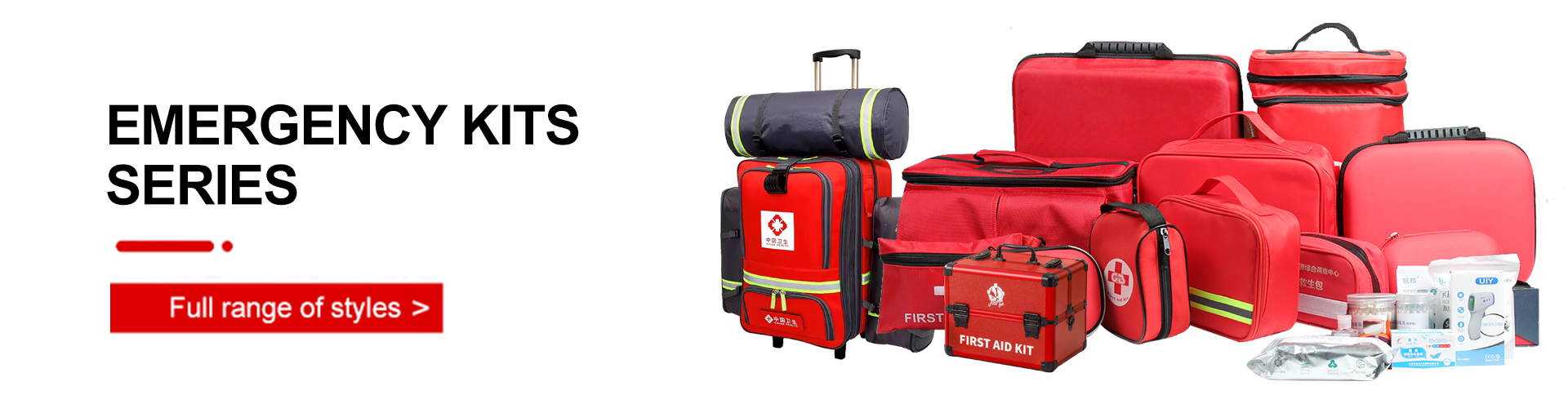
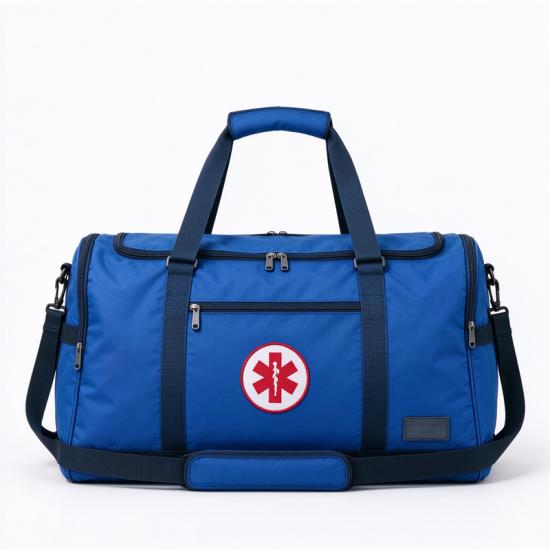
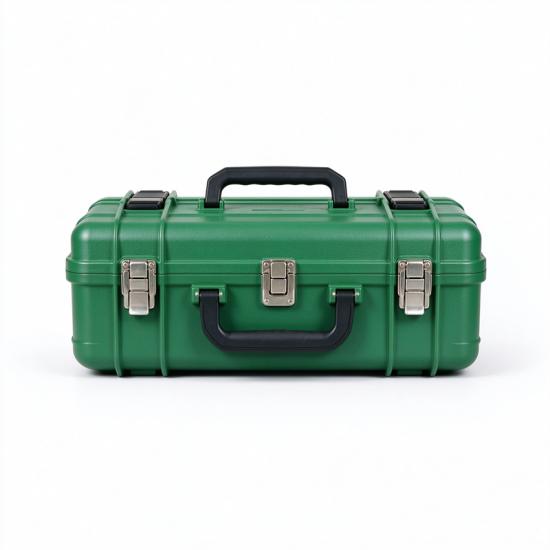
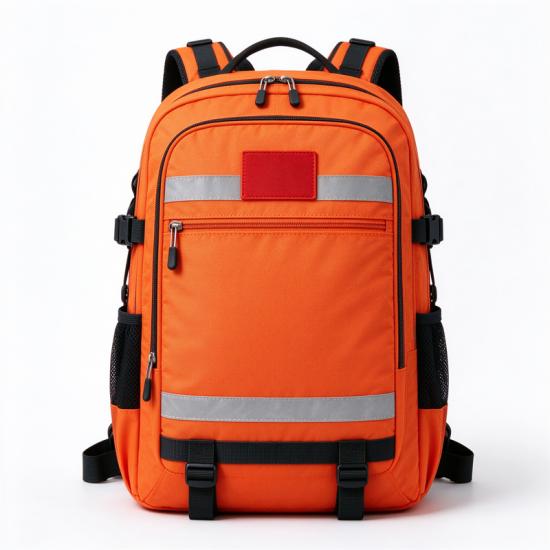
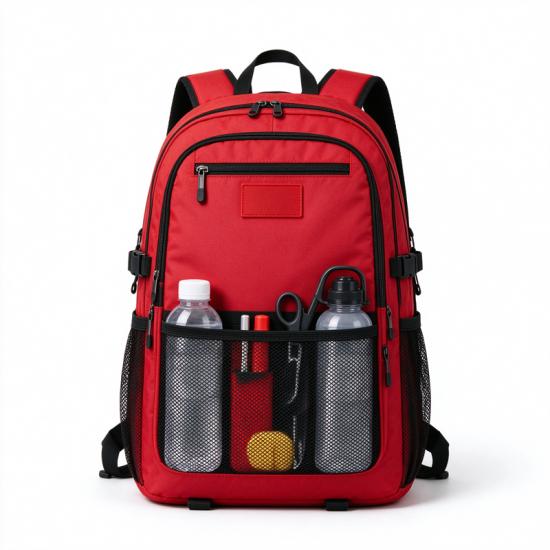
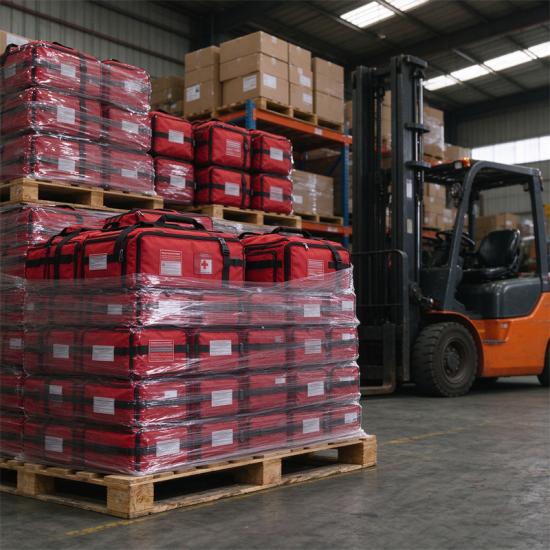
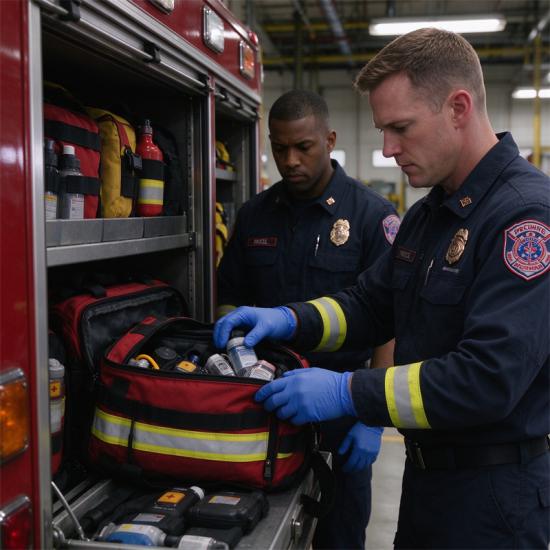
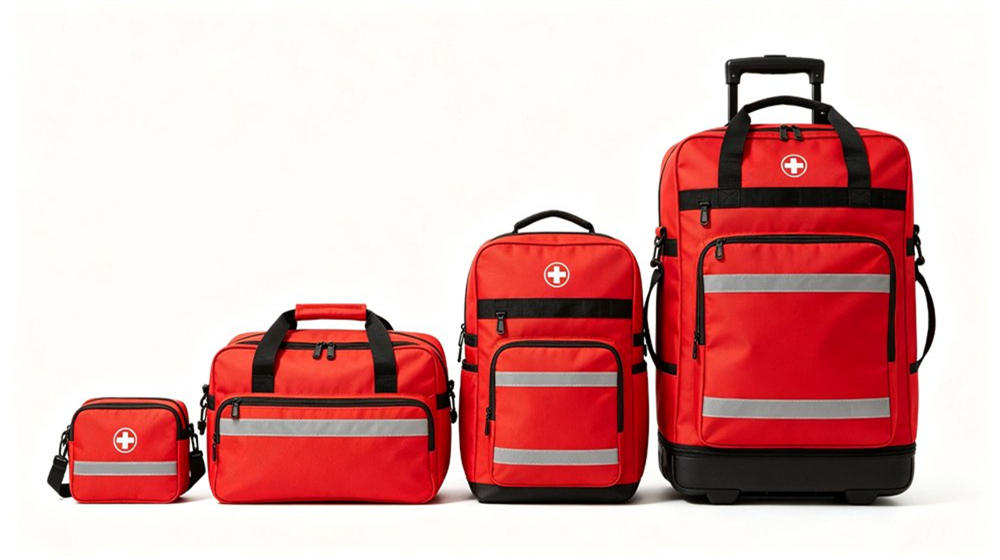
This emergency kit comes in PP hard case, soft backpack and wall-mounted ABS box versions. It has entry, standard and professional tiers to serve different crowd sizes. Equipped with full first aid supplies, IPX4 splash resistance and CE certification. Ideal for office, warehouse, vehicle and evacuation. We support wholesale, mixed orders, custom marking and sample checking for buyers.
Note: Price for reference only. Exact price based on quantity, size, weight and custom details.
model no. :
BB-P1Brand:
YRFmarket price :
$39.8sale price :
$19.9price range :
30-500/$19.9Color :
Multiple Colorsport of dispatch :
Guangdong/GuangzhouPayment :
TT, Paypal, Western Unionmin order :
30original region :
Made in ChinaLead Time :
5-15days
 |

|
A hard case protects contents but weighs more. A soft bag carries easily but offers less protection. A wall box stays visible but cannot move. The right choice depends on where the kit lives, who uses it and what it must survive.
This guide walks through format, size, weight, best use and shipping compliance. By the end you will know which unit fits an office, which fits a home and which fits a response vehicle.
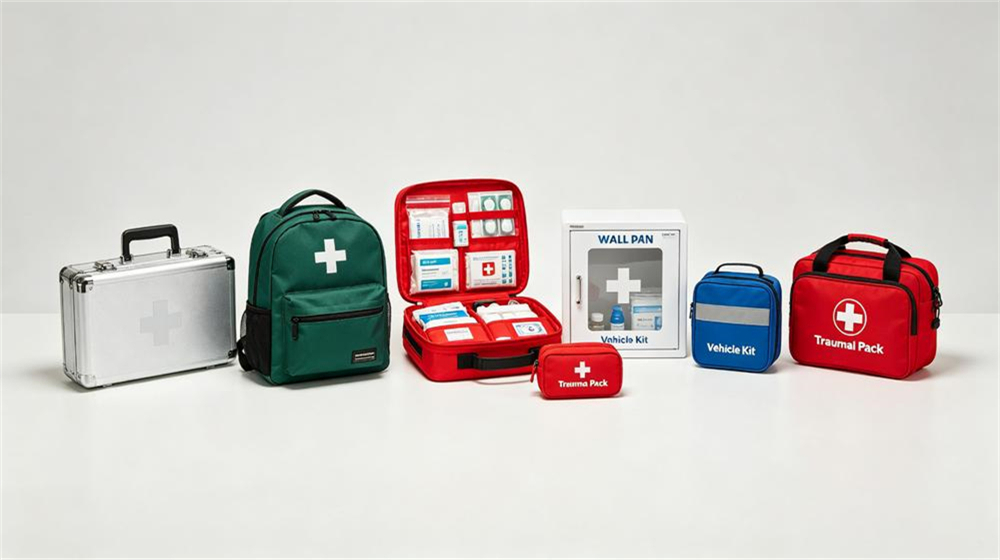
The comparison table below is the core of this guide. It maps all three formats to size, weight, protection level and best use. Use it as a one-page buying sheet before you request a quote.
The format you choose decides how the kit behaves in real use. A hard case on a shelf collects dust. A soft bag in a cabinet gets crumpled. A wall box far from the door never opens.
In this emergency kit comparison guide wholesale guide, we cover hard vs soft emergency kit specifications, soft emergency kit sizing, MOQ tiers and export documentation, so procurement teams can shortlist in one afternoon.
Form factor is not a cosmetic detail. It controls visibility, access time and protection. A buyer who ignores format ends up with a kit that looks good on a shelf but fails when needed.
Bulk orders amplify the cost. One wrong-format kit per site across fifty sites means fifty stations with the wrong tool. That mistake compounds across restock, training and audit.
A simple rule guides the choice. If the kit stays fixed, use a wall box. If it must be carried, use a soft bag. If it protects fragile contents, use a hard case. Most programs need a mix.
Think of format as the housing, not the contents. The same dressings, gloves and blanket can live inside any of the three. The housing decides how quickly a responder reaches them.
That is why this guide compares housing first and contents second. Start with the format, then tailor the items inside. A well-chosen housing makes even a modest contents list perform.
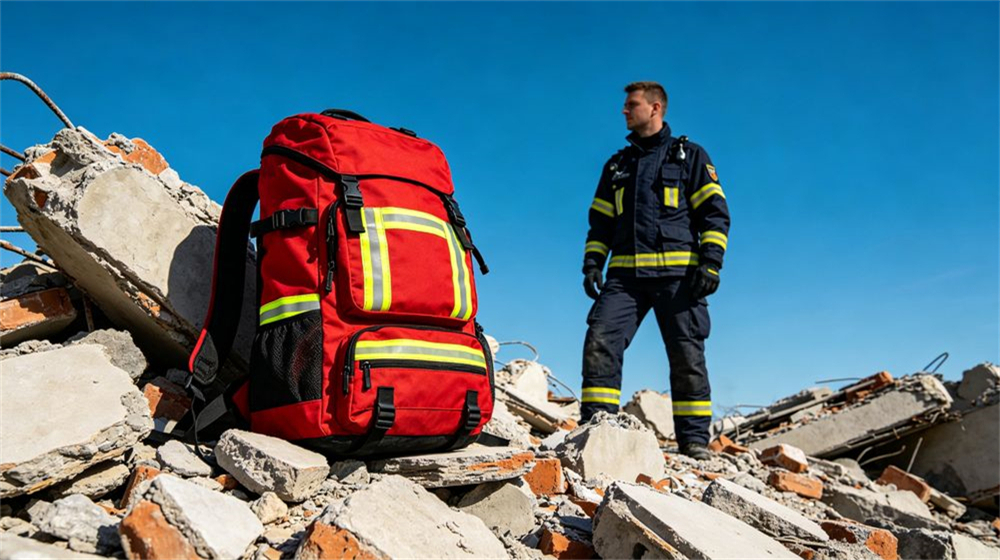
All three tiers ship in the same bag body. You upgrade the contents. Choose by number of people you cover.
Tier A covers up to 4 people for a vehicle or home. Tier B covers 5-20 for an office floor or classroom. Tier C covers 20+ for a warehouse or factory. If your team spans multiple sites, stock Tier B per floor and Tier C per high-risk area.
#
Item (English)
Tier A (Entry, 1-4 pax)
Tier B (Standard, 5-20 pax)
Tier C (Professional, 20+ pax)
1
Adhesive Bandage 72x19mm, latex-free
10 pcs
20 pcs
40 pcs
2
Sterile Gauze Pad 7.5x7.5cm
3 pcs
5 pcs
10 pcs
3
Conforming Bandage 5cm x 4.5m
1 roll
2 rolls
4 rolls
4
CPR Face Shield with One-Way Valve
—
1 pc
2 pcs
5
Tweezers, stainless steel, angled tip
1 pc
1 pc
2 pcs
6
Scissors, medical grade, blunt tip 14cm
1 pc
1 pc
1 pc
7
Thermal Blanket 210x160cm, Mylar
1 pc
2 pcs
4 pcs
8
Whistle, pea-less, orange ABS
1 pc
1 pc
2 pcs
9
Hand-Crank LED Flashlight, 60lm
—
1 pc
2 pcs
10
N95 Particulate Respirator, NIOSH
—
5 pcs
10 pcs
11
Nitrile Exam Gloves, powder-free, L
2 pairs
4 pairs
8 pairs
12
Antiseptic Wipe, 70% isopropyl
5 pcs
10 pcs
20 pcs
13
Emergency Poncho, PE, one size
1 pc
2 pcs
4 pcs
14
Dust Mask, disposable
5 pcs
10 pcs
20 pcs
15
Safety Pins, stainless, assorted
4 pcs
6 pcs
12 pcs
16
Triangle Bandage 96x96x136cm, cotton
1 pc
2 pcs
4 pcs
17
Medical Tape, 2.5cm x 5m, silk
1 roll
1 roll
2 rolls
18
Eye Pad, sterile, oval
—
2 pcs
4 pcs
19
Trauma Pad 20x20cm
—
1 pc
2 pcs
20
Trauma Shears 19cm, titanium-coated
—
1 pc
1 pc
21
LED Headlamp, 3xAAA, 120lm
—
1 pc
2 pcs
22
Multi-Tool Pliers, 9-in-1
—
—
1 pc
23
Wire Saw, 70cm
—
1 pc
1 pc
24
Cable Ties, 200mm, nylon
5 pcs
10 pcs
20 pcs
25
Emergency Sewing Kit
—
1 set
1 set
26
Notebook + Pencil, waterproof
—
1 set
2 sets
27
First Aid Guide Book, English
1 pc
1 pc
2 pcs
28
Sealable Bag, 20x25cm
1 pc
2 pcs
4 pcs
29
Emergency Contact Card
1 pc
1 pc
2 pcs
30
Space Blanket Survival Kit Card
—
1 pc
2 pcs

Every unit ships to the same spec sheet. Buyers audit against this table at goods-in.
Parameter
Value
Open dimensions (L x W x H)
28 x 18 x 12 cm (soft pack) / 30 x 20 x 12 cm (ABS wall box)
Folded / closed dimensions
28 x 18 x 6 cm (packed)
Weight (empty / loaded)
0.35 kg empty / 1.8 kg loaded (standard 30-item kit)
Outer fabric
600D Oxford weave with 210D PU backing, PVC-coated bottom
Zipper
YKK #5 nylon coil, pulls tested to 5,000 open-close cycles
Stitching density
8-10 stitches per inch at load-bearing seams
Color options
Safety Orange / Navy Blue / Rescue Red (Pantone 1655 C / 2945 C / 186 C)
Operating temperature range
-20 C to +50 C (components rated)
Water resistance
IPX4 — splash-proof; inner contents in sealed PE pouches
Battery (in crank light)
No disposable battery; built-in 3.7V Li-ion, charge via hand crank
Shelf life (consumables)
3 years from production date for bandages/wipes/batteries; 5 years for dressings/blankets/respirators
Bag body service life
10+ years under covered storage; UV-rated for vehicle use
Max load-bearing
15 kg on padded shoulder strap
Reflective trim
3M Scotchlite 5510, 12 mm width, sewn on front and sides
Certifications
CE (93/42/EEC medical device), ISO 9001:2015, BSCI audit, REACH, FDA-listed components
Carton info
48 x 38 x 32 cm, 12 pcs/carton, 14 kg gross, 0.058 CBM
MOQ (custom-branded)
500 pcs for woven label / rubber patch; 1,000 pcs for printed outer bag
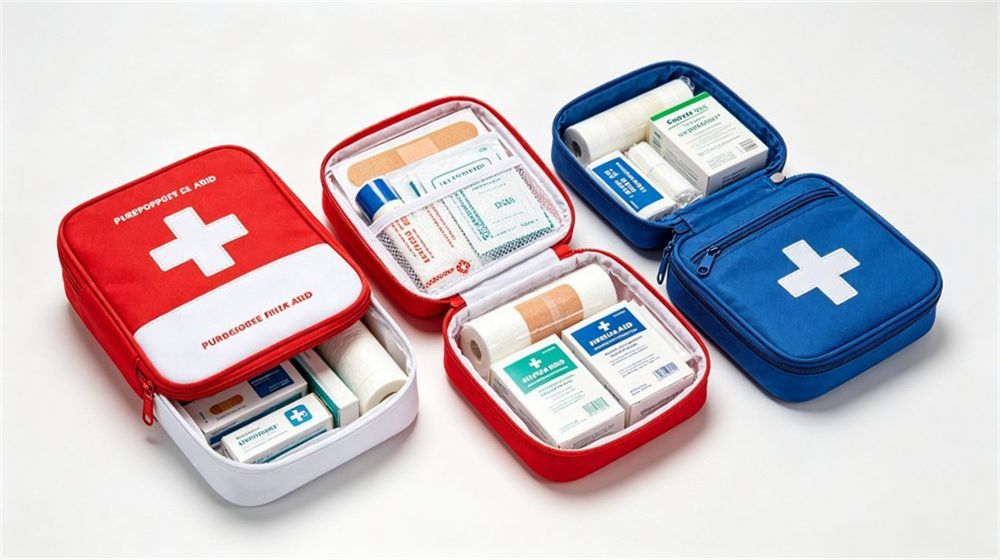
Buyers usually audit dimensions, weight and working temperature at goods-in. The soft pack folds to 28 x 18 x 6 cm. Confirm the bag fabric is UV-treated if your warehouse reaches 40 C in summer.
Three bag bodies cover every deployment. Compare size, weight and material side by side below to match each format to its job.
The PP hard case survives impact on a truck shelf. The soft backpack grabs-and-go by the front door. The wall box mounts fixed in a building. Most buyers mix two formats: wall box for the office, backpack for home evacuation.
Answer three questions and the table picks your format. Start here if you cannot decide between a hard case, backpack or wall box.
Item
PP Hard Case
Soft Backpack
Wall-Mount ABS Box
Model
Tier B Standard Pack
Add-On Upgrade Pouch
Tier C Wall Box
Size
36×21×15 cm
38×26×12 cm
29×20×12 cm
Weight
about 1.2 kg empty
about 0.8 kg empty
about 1.5 kg
Material
PP hard plastic
Orange EVA + nylon
ABS hard case
Best for
Depot / vehicle / rough handling
Home / evacuation / grab-and-go
Office / fixed daily first aid
Colors
Orange
Orange with white cross
White / orange / green
Carry
Shelf or truck bed
Carried by door
Mounted on wall
Protection
High (impact-resistant)
Moderate (soft)
High (rigid shell)
Content focus
Stored tools, dressings
Evacuation gear, fire blanket, rope
25-person station set
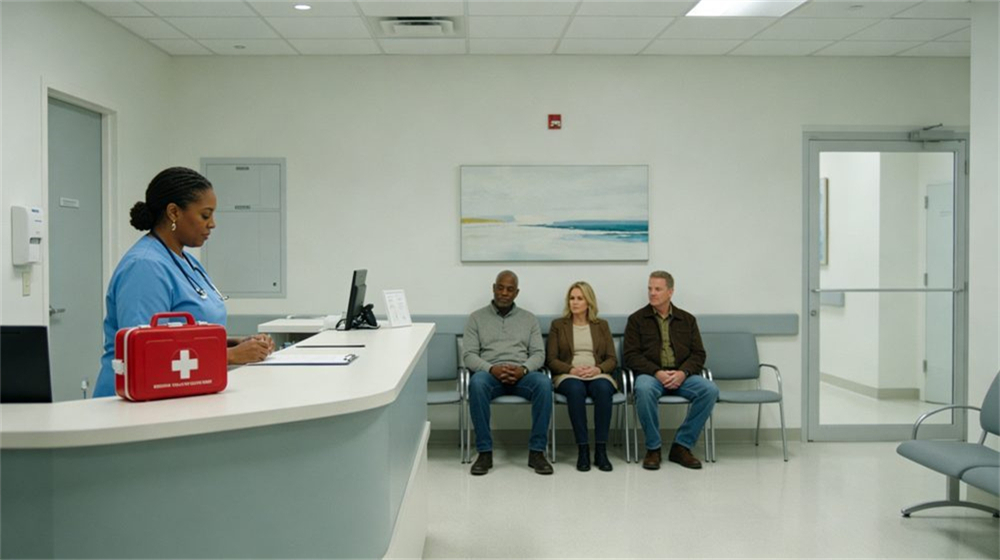
Question
If Yes
Choose
Does the kit stay fixed on a wall?
Daily first aid in a building
Wall-mount ABS box
Must the kit be carried out quickly?
Evacuation / grab-and-go
Soft backpack
Must contents survive impact?
Vehicle / depot / workshop
PP hard case
Need all three?
Multi-site program
Mix all formats
If your answer is "yes" to more than one row, you likely need multiple formats. A warehouse with both office staff and vehicle crews gets a wall box plus a PP case. A home with a car gets a backpack plus a vehicle pouch.
Our range for format comparison rests on three proven housings. The PP hard case serves fixed storage and rough handling. The soft backpack serves grab-and-go evacuation. The wall-mounted ABS box serves daily first aid in a building.
Each emergency kit format solves a different problem, so buyers often order more than one. A clinic uses a wall box. A household uses a soft bag. A vehicle or depot uses a hard case. This layered approach covers both daily life and real emergencies.
Placement matters as much as housing. Mount the wall box where staff already walk. Keep the soft bag by the door. Store the hard case on a shelf where nothing crushes it. Mark each unit with a white cross so everyone reads its purpose.
The contents differ for a reason. A hard case protects dressings and tools from impact. A soft bag adds capacity for evacuation gear. A wall box holds the essentials for a station. Neither replaces the other.
Think of the split as layers in one plan. The wall box answers the first five minutes in a building. The soft bag answers evacuation. The hard case answers long-term storage and vehicle use.
A buyer can start lean and grow. Begin with one wall box per major site. Add a soft bag per household or response point. Add a hard case per vehicle or depot. This modular habit keeps the plan clear and the budget steady.
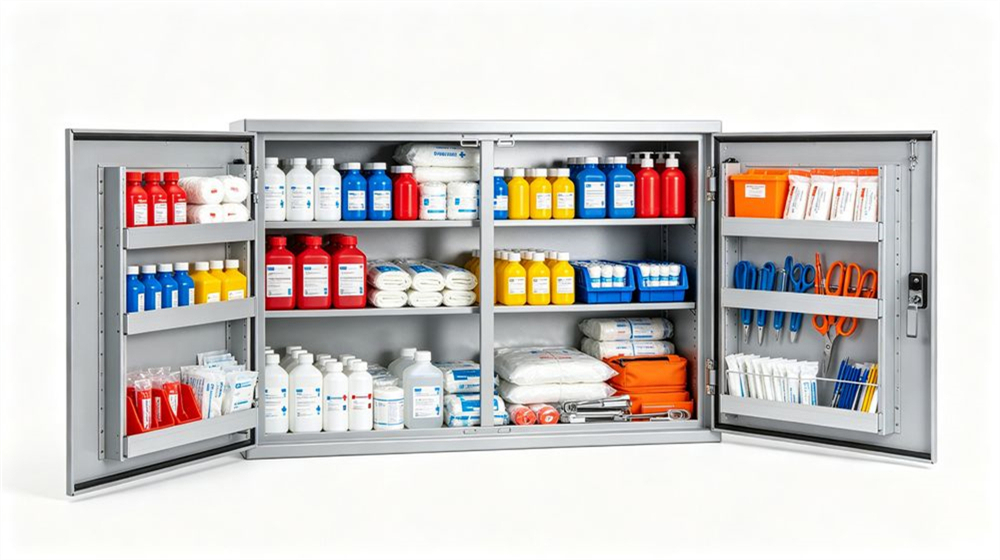
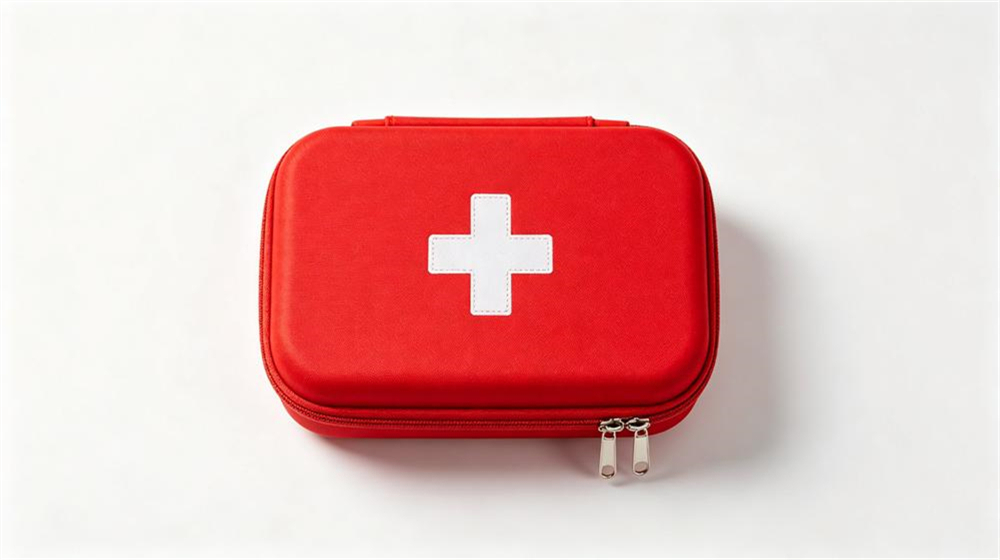
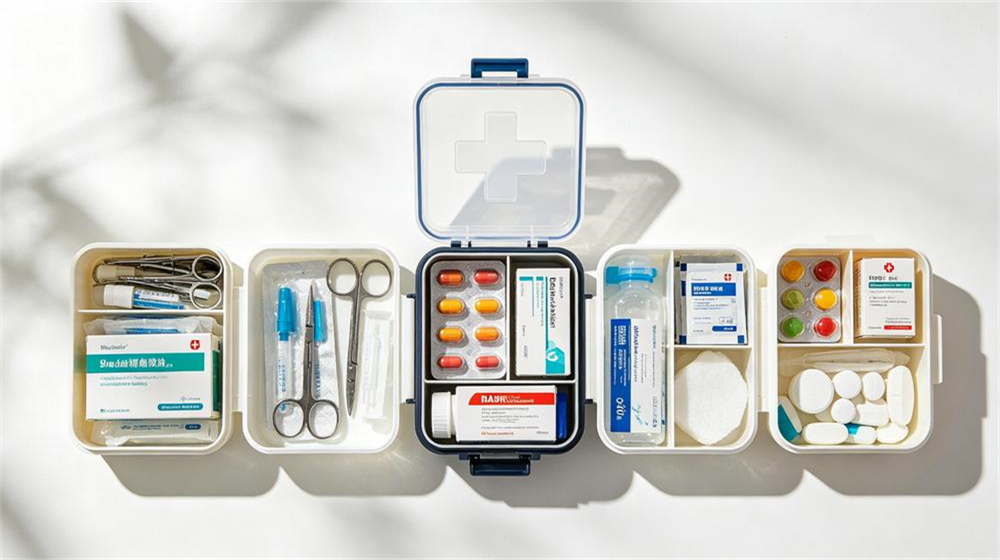
The PP hard case is built for fixed, rough-handling storage. Model Tier B Standard Pack is an orange PP plastic first aid case sized 36 by 21 by 15 cm. It belongs on a shelf, in a vehicle or at a depot where contents must stay protected. This PP hard case first aid unit ships as a complete kit.
PP hard plastic is chosen for a reason. It is rigid, light and easy to wipe clean. It holds its shape and protects the contents behind a hinged latch. That protection matters when a box slides around a vehicle floor. The first aid kit material drives both weight and durability.
The interior uses divided trays, so each category has a home. Dressings sit in one tray, gloves in another. A quick restock check becomes a visual scan rather than a deep dig. That keeps maintenance fast and audits simple.
For buyers who ship by sea, PP cases stack well on pallets. The rigid shell survives normal handling. Cartons of hard cases arrive complete, dry and ready to shelve. That reliability is why depots favor this format. A PP plastic first aid box stacks cleanly on pallets.
Mount the case where nothing crushes it. A shelf, a truck bed or a locked cabinet keeps tools close while keeping untrained hands away. A clear cross and a known spot let the right responder find it fast.
For programs that need impact protection, this is the starting unit. It pairs naturally with a wall box for daily office first aid and a soft bag for evacuation. Ask us for the full contents list matched to your site.
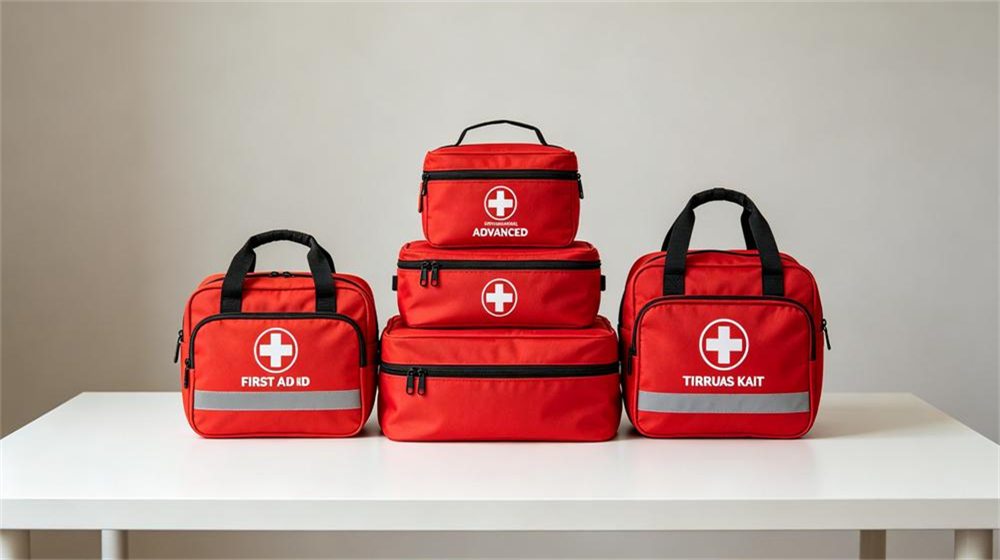
Use this as a starting map. Most buyers start with one wall box per building, then add backpacks for evacuation points. If you are unsure, order a sample of each format before bulk.
Your Situation
Coverage
Format to Choose
Where It Goes
Office / building daily first aid
up to 25 people
1 × wall-mount ABS box
Fixed on wall near door
Home / evacuation grab-and-go
family / response point
1 × soft backpack
By the front door
Depot / vehicle / workshop
stored tools, impact risk
1 × PP hard case
Shelf or truck bed
The overview above skips the detail buyers argue about: shell material, water resistance and temperature rating. The table below fills those gaps.
Pick by where the unit lives, not price. Count people per room, then vehicles leaving the depot, then evacuation points. A wall box for fixed floors, backpack for grab-and-go, PP case for impact zones.
Feature
PP Hard Case
Soft Backpack
Wall-Mount ABS Box
Model
Tier B Standard Pack
Add-On Upgrade Pouch
Tier C Wall Box
Format
PP hard plastic case
Orange EVA + nylon bag
ABS wall box
Coverage
Stored tools, depot
Evacuation, home
25-person station set
Size
36×21×15 cm
38×26×12 cm
29×20×12 cm / 1.5 kg
Best for
Vehicles & depots
Homes & evacuation
Offices & fixed sites
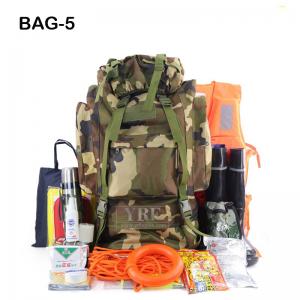
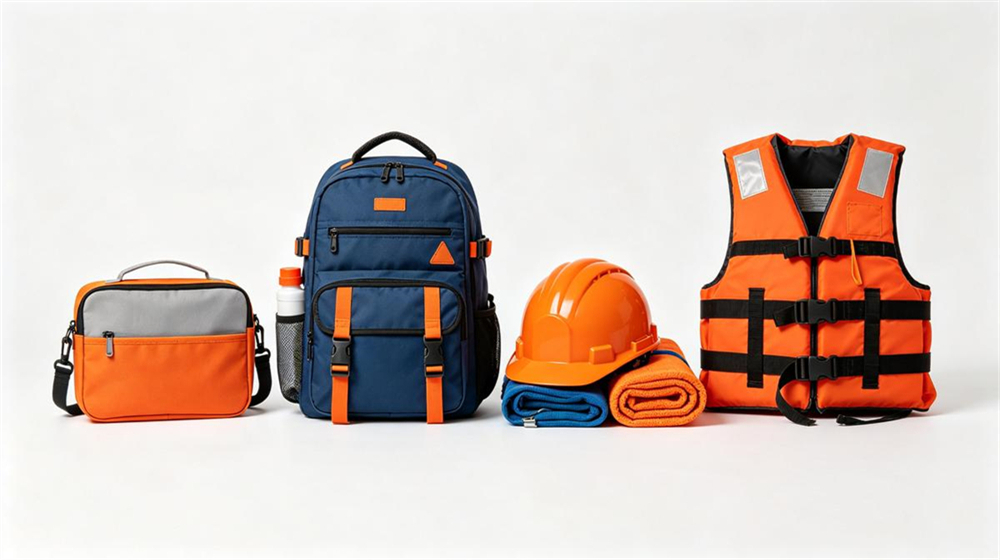
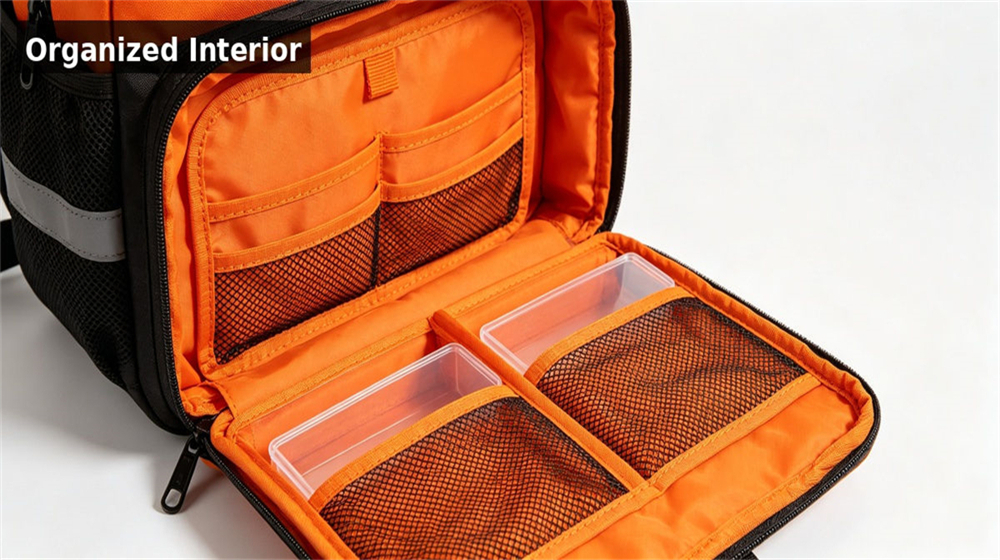
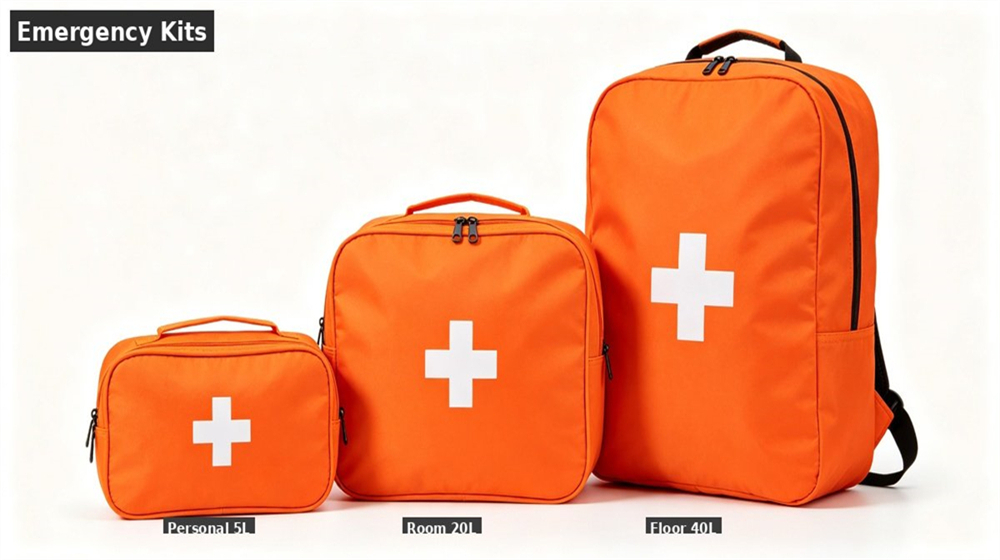
The soft backpack is built for grab-and-go evacuation. Model Add-On Upgrade Pouch is an orange home fire-escape soft bag sized 38 by 26 by 12 cm. It carries evacuation tools rather than clinical supplies. A soft pack first aid kit weighs less and folds flat.
A soft bag solves a different problem than a hard case. The hard case protects. The soft bag moves. That is why it includes evacuation tools rather than only dressings. It is built to leave a building, not to sit on a shelf. The hard case vs soft pack choice comes down to protection versus mobility.
The bag opens wide, so every tool is visible at once. A fire blanket sits in one pocket. An escape rope folds neatly in another. Rain gear and a mask fill the rest. This organized interior lets a responder grab the right item without unpacking the whole bag. A fabric emergency bag breathes and folds for storage.
We keep the contents shipment-safe. The bag holds no liquids, no candles and no hazardous materials. Lithium-powered accessories, where included, ship with UN38.3 and MSDS documentation. That care protects both the cargo and the buyer.
For home and small-business buyers, the soft bag repeats with the same layout at every door. A trained family member knows exactly where the rope and the blanket live. That familiarity matters most in a real event.
The bag's orange body carries a white cross and a clear name mark. We can add an organization name for branded programs. The cross stays the primary safety signal. A restrained mark looks professional and stays legible in low light.
Stage the bag at a grab point, not buried on a shelf. A hook by the door or a marked cabinet keeps it ready to grab and go. Placement is half the value: a soft bag that takes five minutes to find is a bag that fails its purpose.
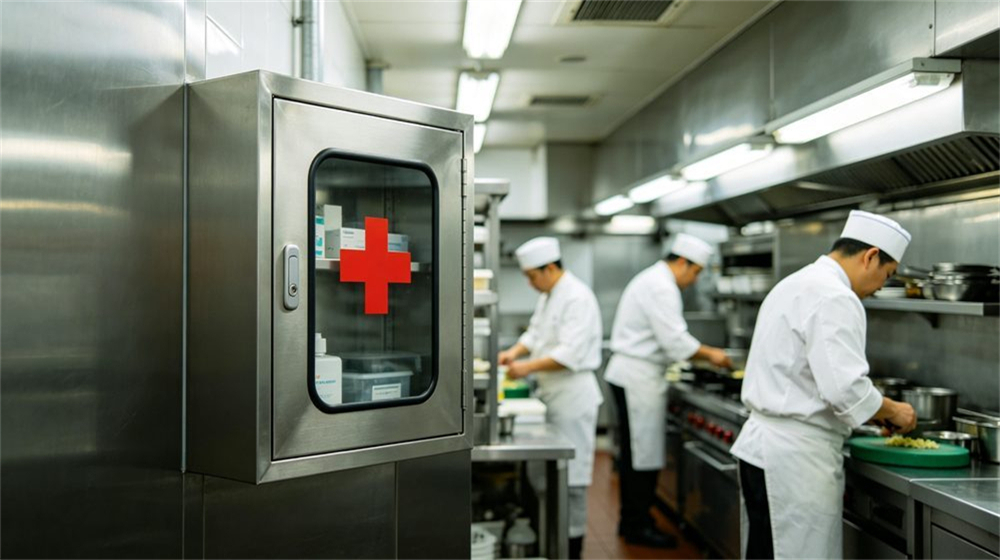
As a fixed first-aid point for a building, the wall-mount ABS box stays visible and reachable. Model Tier C Wall Box is a wall-mountable ABS box for 25 people, sized 29 by 20 by 12 cm and weighing about 1.5 kg. Each wall mountable first aid kit ships with fixing screws.
It ships in white, orange and green, and mounts on a wall where staff already walk. It is the anchor of a station's daily first-aid coverage. The white cross on the door makes the unit readable from across a room. Each wall box emergency kit covers a fixed station.
ABS hard plastic is chosen for a reason. It is rigid, light and easy to wipe clean. It holds its shape on a wall and protects the contents behind a hinged door. That instant recognition is the whole point of a wall box. An ABS emergency kit resists impact and wipes clean.
The interior uses divided trays, so each category has a home. Dressings sit in one tray, gloves in another. A quick restock check becomes a visual scan rather than a deep dig. That keeps maintenance fast and audits simple.
For buyers who need daily first aid across offices, the 25-person box suits smaller stations. Larger sites can add a second box or a medical pack at a second point. We align contents with common first-aid expectations.
Mount the box at reachable height near a door, in clear view. A box mounted too high or tucked in a corner is a box staff will miss. Place it where the routine already moves. That simple rule is the difference between a visible safety system and a hidden cabinet.
The white, orange and green options help buyers code sites by zone. White for general offices, orange for response points, green for medical zones. This color coding turns a row of boxes into an instant map of the building.
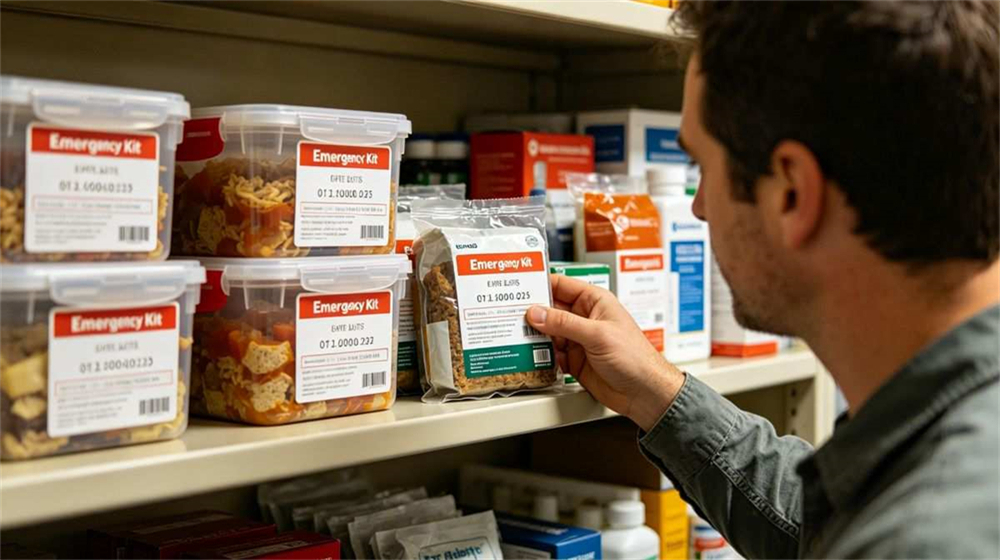
Team size drives both the tier and the bag body. The table below maps headcount to tier, bag size, typical use case and FOB price band.
Number of People
Recommended Tier
Bag Body Size
Typical Use Case
Est. Unit Price (FOB)
1 - 4 people
Tier A — Entry
Soft pack 20x15x8cm
Personal vehicle, home kit, solo hiker
USD 3.20 - 4.10
5 - 20 people
Tier B — Standard
Soft pack 28x18x12cm
Office floor, classroom, small retail shop
USD 5.40 - 6.20
20+ people
Tier C — Professional
Wall box 30x22x12cm
Warehouse, factory floor, construction site
USD 9.80 - 11.50
Most first-time buyers start with Tier B for a single office floor. If your program spans multiple floors or sites, stock Tier B per floor and Tier C per warehouse. Sample orders start at 100 pcs.
Choosing between the three formats starts with three questions. Where does the kit live? Who uses it? What must it survive? Answer those three and the format falls out.
If the kit lives on a wall and serves daily first aid, choose a wall box. If it lives by a door and must be carried out, choose a soft bag. If it lives on a shelf or in a vehicle and must survive impact, choose a hard case.
Most programs need more than one. A school uses a wall box per floor, a soft bag per evacuation team and a hard case per maintenance shed. A home uses a soft bag by the door and a wall box in the kitchen.
The table below turns these questions into a one-page buying sheet. Print it, walk the site and mark the format per location. That short audit replaces hours of guesswork. Use the emergency kit size comparison column to match headcount.
Site type decides the format mix. The table below maps small offices, homes, depots and vehicles to their exact format and placement.
Site Type
People / Use
Recommended Format
Placement
Small office
under 25 staff
1 × wall-mount ABS box
Near office door
Home / household
family evacuation
1 × soft backpack
By the front door
Depot / vehicle
stored tools
1 × PP hard case
Shelf or truck bed
Workshop
mixed use
1 × hard case + 1 wall box
Wall + shelf
Evacuation team
grab-and-go
Add 1 × soft backpack
Response grab point
Use this as a starting site map. If your facility mixes office floors and vehicle crews, carry both a wall box and a PP case. Add an extra pack per high-traffic area rather than per room.
Site type decides the format mix. Count the people who use a space first, then size the kit to match. A small office uses one wall box. A household uses one soft bag. A depot or vehicle uses a hard case.
For a station under twenty-five staff, one wall box covers daily first aid comfortably. For a depot or a vehicle, add a hard case for stored tools. For a family or evacuation point, add a soft bag by the door. The table below turns these rules into a simple sheet.
Beyond the table, keep spares on hand. Order a few extra kits for damaged or expired units. A small buffer stock keeps the program running without a rush order mid-cycle. Most buyers keep one spare per ten sites.
Record the location of every kit. A simple list by site helps a coordinator audit in minutes. It also shows evaluators that the plan is real. A named location beats a vague promise of coverage on paper.
Revisit the count each year. Headcounts shift and buildings change use. A quick update to the list keeps the format mix accurate. This ten-minute habit is the cheapest part of a strong preparedness plan.
Order timing also matters. Buy for the full year in one batch when possible. This cuts repeated handling and keeps one spec across all sites. A single order is easier to track, audit and restock when the cycle ends.
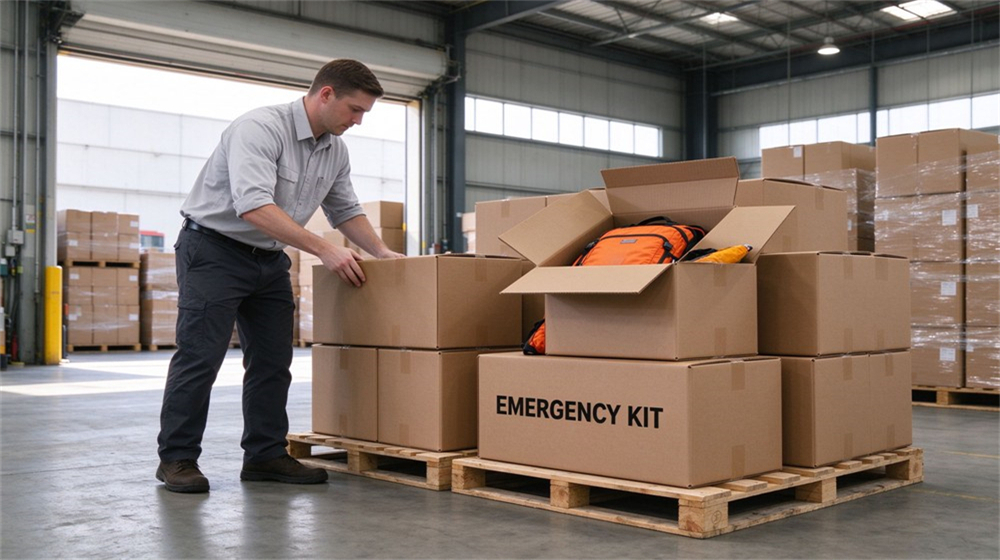
Format choice also affects shipping. Hard cases stack but weigh more. Soft bags ship flat and light. Wall boxes arrive mounted-ready but need careful cartoning. The format you pick changes the freight plan. Pricing for emergency kit comparison guide wholesale is tiered by container volume; as a hard vs soft emergency kit, we quote landed costs that include wall mounted emergency kit consumables, custom packaging and pre-shipment QC.
Bulk orders move on pallets, not in parcel bags. We pack kits by set, label each carton and stack on standard pallets. A clear packing list names each kit and its destination, so unloading takes minutes.
Compliance documents follow the destination market. For Europe, we align with common CE, REACH and RoHS expectations and provide what is on hand. Lithium-powered accessories carry UN38.3 and MSDS.
A written spec also protects the buyer. When a box arrives, the receiver checks it against a clear list. If a product changes later, the written record holds. That clarity is the quiet backbone of a compliant purchase.
We work to your evaluation timeline. Send the specification and we return a matched quote and document pack within the stated window. One contact owns the file end to end. Clear communication keeps a large order from becoming a paperwork headache.
Ask us for a sample pack first. Seeing the actual unit, the compartments and the marking lets a buyer decide with confidence. A trial unit de-risks the bid before a full order. That small step saves time in every later review.
Not every item ages the same, regardless of format. Consumables such as masks, wipes and dressings carry expiry dates. Durable tools and metal parts last for years. A well-stocked kit stays current with a rotation plan.
A rotation schedule keeps the program honest. Mark a fixed check date each year and put it on the calendar. A coordinator walks the list, replaces used and dated items, and signs the log. A scheduled check beats a forgotten one.
Keep a small stock of common spares. Masks, gloves and dressings live on one shelf. When a kit is opened during the year, the restock comes from that shelf. That single buffer solves most mid-cycle needs without a fresh order.
The housing itself should last. ABS boxes and PP cases are built for years of service. Soft bags hold up to regular opening and closing. A well-built outer unit protects the consumables inside. Spending on a durable housing saves money.
Respect expiry on arrival too. When a shipment lands, note the dates on the list. Rotate older stock into earlier service. First-in, first-out keeps the freshest items for last. That simple discipline prevents a drawer of expired supplies.
Train one person to own the rotation. A named coordinator checks kits, replaces spares and reports needs. A single owner keeps the plan alive. Without an owner, even the best kit slowly falls out of date.
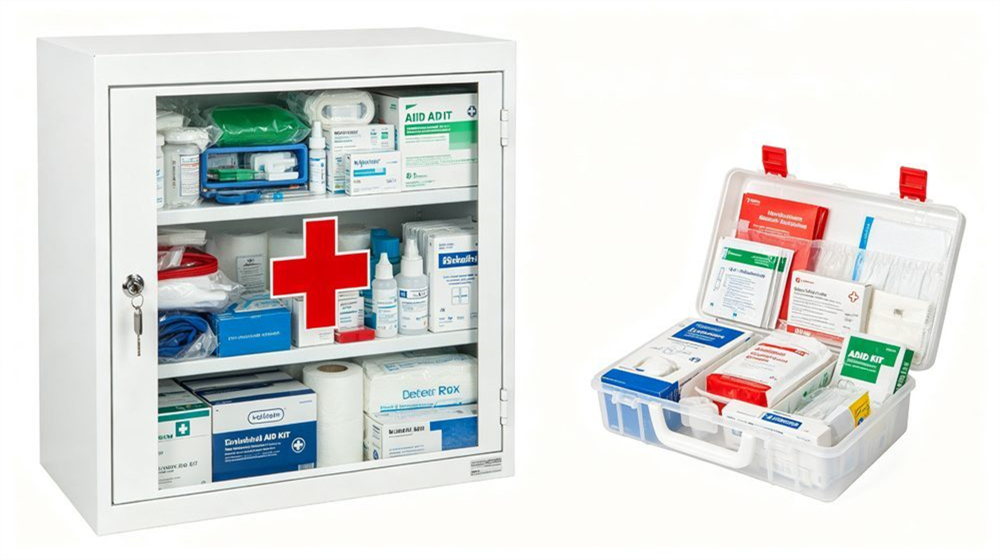
Bulk buyers can brand kits with an organization name and mark. Branded emergency kits keep the same safety layout while carrying your identity. A custom wall box looks owned and cared for, which builds trust with staff and visitors.
For repeat orders, our emergency kit types comparison account team reorders the same wall mounted emergency kit configuration, keeping emergency kit comparison guide wholesale pricing stable across quarters.
We print your text and emblem on the ABS door, the PP case and the soft bag. Custom work keeps the same quality and the same safety layout. Only the surface changes. The white cross stays the primary symbol.
Branding makes the kit a visible part of the organization. A box with your name sits clearly by the door. Staff see a planned safety system, not a random cabinet. That small detail builds real trust over time.
It also aids recognition. Responders find the kit faster when it carries a familiar mark. The cross stays the main signal. A restrained design reads well from across a room. Too many logos dilute the safety signal.
For a whole program, uniform branding unifies the rollout. Every site shares the same look and the same layout. Restock and audits stay simple because one spec covers all. That consistency is the quiet value of a branded run.
Choose a mark that reads from a distance. The white cross leads, the organization name follows. A clean design looks professional and stays legible in low light. A cluttered box helps no one in a real event.
A bulk emergency kit program starts with a simple plan. List every site, count the people and the response teams, and pick a uniform format mix. Then order in one batch so every station matches and restock stays easy.
Planning the order is straightforward. List every building, then every team. Apply the site table to set quantities. Add spares for damaged or expired units. The result is one clean order that covers the full year.
Bulk also means consistent stock. When one batch arrives, every station opens the same kit. Training, inspection and replacement all follow one routine. That uniformity is the quiet strength of an organization-wide program.
For large orders we can brand the full run and pack by site. Delivery can be phased across sites if storage is tight. We adjust the program to the receiver, not the other way around.
A single contact makes the rollout simple. One person owns the order, the specs and the restock cadence. We work with that owner end to end. Clear communication keeps a large order from becoming a headache.
Make delivery day a small plan, not a scramble. Arrange staff to receive, shelve and log the batch. A short checklist turns unloading into a tidy routine. That calm start keeps the whole year's preparedness on track.

Quality control on every emergency kit starts at the production line. Our manufacturing partner runs each order through a set check before packing: contents count, compartment layout, marking and outer-box condition.
Every kit is built to a fixed bill of materials. When a repeat order arrives, it follows the same list as the first. There is no drift between batches. This consistency means a training script written for order one still works for order fifty.
Materials are chosen for real use. ABS boxes must be rigid and cleanable. Soft bags must be durable and easy to open. PP cases must survive stacking. We avoid exotic items that are hard to restock or unsafe to ship.
Consumables carry clear expiry dates. Masks, wipes and dressings are dated for rotation. A coordinator scans dates during the annual check. That habit keeps every kit current and prevents an expired item reaching a real event.
We support sample approval before a full run. A buyer who sees the actual kit, the compartments and the marking can approve with confidence. A trial unit locks the spec before mass production. That prevents a batch that misses the mark.
Factory information stays protected in our work. We present the product and the paperwork, never the factory's identity. This protects both the partner and the buyer's direct channel. One trusted face carries the whole program.
For buyers who want one trusted source, our Emergency Kit Format range is the clear starting point. It pairs a PP hard case with a soft backpack and a wall-mounted ABS box.
Bulk buyers get uniform sites, simple restock and a full preparedness program. Sourcing from one supplier keeps every station consistent. A single order covers offices, homes and vehicles in one compliant batch.
Need a full program or custom branding? We supply every site in one batch, with your name on the box and the bag. Send us your site count, your headcounts and your destination port. We will quote a complete package.
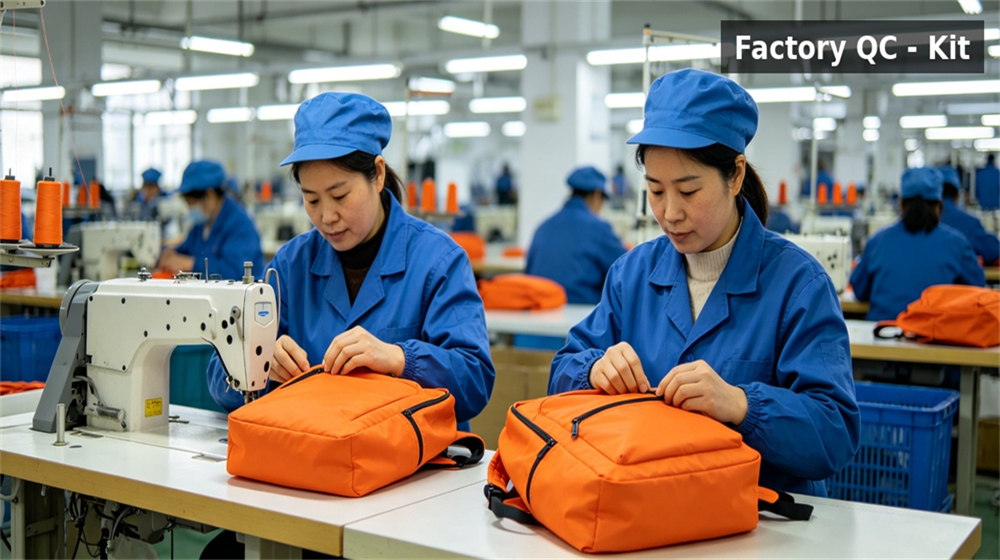
Every unit passes a 25-point QC checklist: fabric thread count verified by gauge, zipper pull tested to 5,000 open-close cycles, stitching density measured at 8-10 stitches per inch, label legibility checked at 30 cm, expiry date stamp verified against production log, weight checked within +/-5% of spec, and carton drop tested per IEC 60068-2-32.
Our production line delivers 100,000 kits per month, exported to 40+ countries over 8+ years. Certifications: CE (93/42/EEC), ISO 9001:2015, BSCI audit, REACH, FDA-listed components. Lifetime technical support for your procurement team.
FAQ — Emergency Kit Formats
How do I choose between Tier A, B, and C?
Count the people you need to cover during a power outage, earthquake, or injury. Tier A covers 1-4 people (a car or a household). Tier B covers 5-20 (an office floor or classroom). Tier C covers 20+ (a warehouse or factory). When in doubt, go one tier up — under-stocking is the #1 regret. In this emergency kit types comparison, Tier A/B/C maps directly to site size.
Can I upgrade Tier A to Tier B later by adding items?
Yes. We sell add-on packs: CPR shield + thermal blanket upgrade (+USD 1.20), N95 + gloves upgrade (+USD 1.80), trauma + eye pad upgrade (+USD 2.10). The bag body has space for 6-8 extra pouches. Buyers often ask us hard vs soft emergency kit for remote sites; the answer depends on whether the site has a wall. Add-on packs ship in 5-7 days. When doing any emergency kit types comparison, always check upgrade path before committing.
What's the difference between Tier B and Tier C for an office?
Tier B has 5 N95 respirators and 1 trauma pad — enough for a 15-person office. Tier C has 10 N95, 2 trauma pads, 2 headlamps, a multi-tool, and 2 guide books — built for 30+ people where multiple injuries may happen at once. This is why every serious emergency kit types comparison puts Tier C above Tier B for warehouses.
How long does each tier last before replacement?
All consumables (bandages, wipes, masks) last 3 years from production date. Dressings, blankets, respirators last 5 years. When weighing hard vs soft emergency kit, note that both use the same 3-year consumables rotation cycle. Tools and bag body last 10+ years. We stamp the production date on every pouch and on the insert card. Shelf-life data is a key column in any emergency kit types comparison you build internally.
Can I mix Tier B and Tier C in one order for different floors?
Yes. Mixed-SKU from 200 pcs per tier. A typical corporate order: 60% Tier B for open-plan floors, 30% Tier C for warehouse, 10% Tier A for executive cars. Our buyers usually resolve hard vs soft emergency kit by format: wall box for fixed sites, soft pack for mobile teams. We label each carton with floor and tier for easy internal distribution. Mixed-SKU ordering is a common outcome of a well-run emergency kit types comparison.
Do the tiers meet OSHA or workplace first aid standards?
Tier B aligns with ANSI/ISEA Z308.1 Class B (2015). Tier C aligns with Class B plus additional respiratory and trauma coverage. We provide a compliance cross-reference sheet on request. The hard vs soft emergency kit trade-off is really about mounting, weight and grab-and-go speed. Not certified as a medical device; intended for layperson first aid. Compliance notes belong in the appendix of any emergency kit types comparison shared with EHS teams.
What if I need to cover people with specific allergies or medical needs?
The baseline kit is latex-free and contains no medications. For special needs (e.g., epinephrine auto-injectors, EpiPens, glucose gels), we recommend a separate personal medication pouch. We can supply a blank pouch with a label for your HR team to fill. Allergy handling is a section many buyers forget in their first emergency kit types comparison.
Is Tier A enough for a family of 4?
Yes for a 2-car household or a small apartment. If you live in a wildfire, hurricane, or earthquake zone, we recommend Tier B — the extra N95 respirators, CPR shield, and second thermal blanket are the items most often missing when a real event hits. On the question of hard vs soft emergency kit, Tier A families usually pick the soft backpack for portability.
Can I see a sample before ordering 500 pcs?
Yes. Sample unit shipped within 3 days, freight collect by DHL/FedEx (typically USD 35-45 to US/EU). Sample price equals unit price in your chosen tier. Sample cost is deducted from yo Before sampling, decide hard vs soft emergency kit for each site: wall-mounted abs box for corridors, soft backpack for vehicles.ur bulk order if you place within 60 days.
What's the minimum order for a mixed-tier order?
Sample: 1 pc per tier. Bulk: 500 pcs total, minimum 200 pcs per tier. For corporate HR orders under 500 pcs, we offer a retail-ready repack program with 4-6 weeks lead time at +10% unit price.
Previous :
Emergency Kit Buying Guide: Avoid These 8 MistakesNext :
Emergency Kits for Government Organizations Procurement Factory Customized Red Cross Disaster relief Med Kit Bag With Multi-purpose compass
GREAT DESIGN - Comfortable design is perfect for all uses and for carrying a wide variety of tools and equipment. You'll find that, whatever you're looking to carry, the YRF Custom Oxford Material Multi Functional Camouflage Tactical Waist Bags is the perfect choice.
 Medical Care Stockpile Metal wire saw Card tool Survival Aid Kit with 16 Pcs Safety Kit
GREAT DESIGN - Comfortable design is perfect for all uses and for carrying a wide variety of tools and equipment. You'll find that, whatever you're looking to carry, the YRF Molle Tactical First Aid Kits Medical Bag Tablets is the perfect choice.
 Outdoor Medical Care Disaster relief First Aid Kit Empty Pouch And Ice Pack Emergency Tool
GREAT DESIGN - Comfortable design is perfect for all uses and for carrying a wide variety of tools and equipment. You'll find that, whatever you're looking to carry, the YRF Mini First Aid Kit Bags And Pouches is the perfect choice.
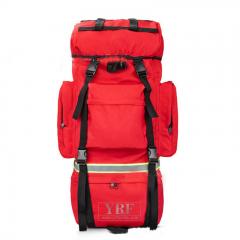
 High Quality Camping Emergency Face Mask Survival First Aid Kit for Institutional Donation
GREAT DESIGN - Comfortable design is perfect for all uses and for carrying a wide variety of tools and equipment. You'll find that, whatever you're looking to carry, the YRF Outdoor Camping Emergency Kits Tactical First Aid is the perfect choice.
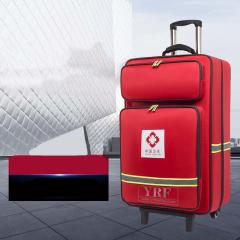
 ICRC Supplies Fluorescent stick first aid medical bags 600d Nylon Emergency Safety Tools Kit
GREAT DESIGN - Comfortable design is perfect for all uses and for carrying a wide variety of tools and equipment. You'll find that, whatever you're looking to carry, the YRF Hunting Survival First Aid Kit Bag Molle Tactical is the perfect choice.
 Hot Selling Governmental Institutions List Descender Firefighting Tools Empty Pull Rod First Aid Kit
GREAT DESIGN - Comfortable design is perfect for all uses and for carrying a wide variety of tools and equipment. You'll find that, whatever you're looking to carry, the YRF Tactical Complete First Aid Kit is the perfect choice.
Copyright © Custom Disaster - Relief Bedding: Tents, Sleeping Bags, Blankets All Rights Reserved
the professional team to service !