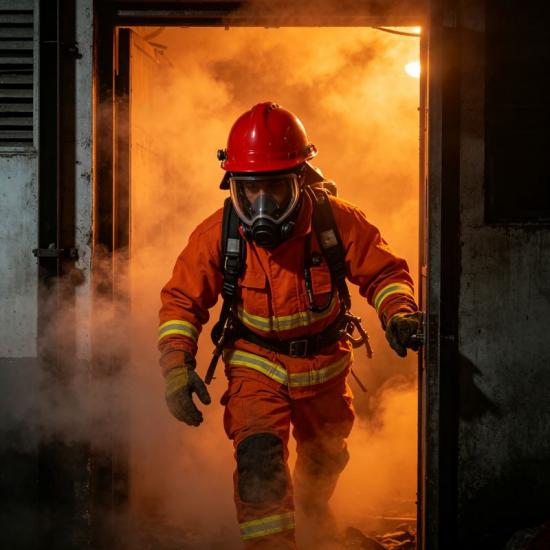
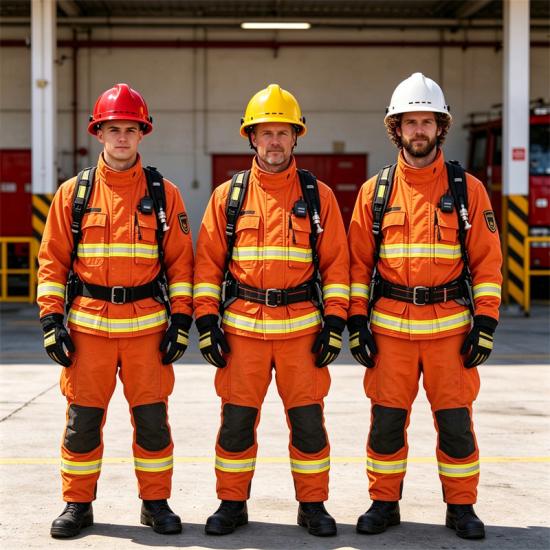
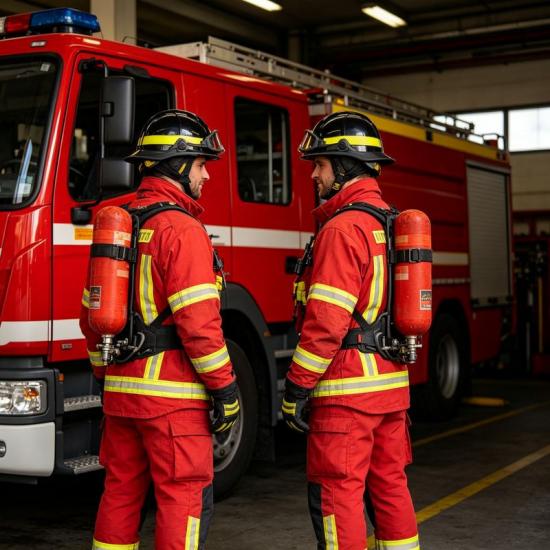
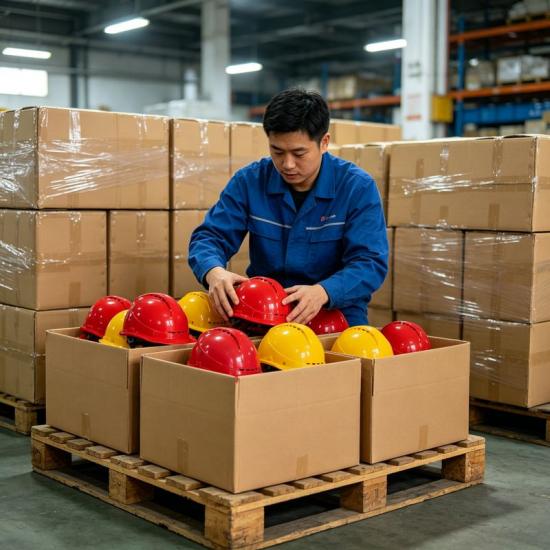
A structural fire helmet is the first defense against falling debris, radiant heat and impact. Each combines a heat-resistant shell, impact liner, polycarbonate face shield and Nomex neck flap for fire departments and wholesale fire helmet buyers.
Note: Price for reference only. Exact price based on quantity, size, weight and custom details.
model no. :
SQ-03Brand:
YRFmarket price :
$130.8sale price :
$78.9price range :
30-100/$48.9 100-500/$30.8Color :
Multiple Colorport of dispatch :
Guangdong/GuangzhouPayment :
TT, Paypal, Western Unionmin order :
30original region :
Made in ChinaLead Time :
5-15daysSize :
standard size |
 |

|
Product Overview
Shell Materials
Impact Protection
Visor & Eye Protection
Neck & Ear Protection
Communication & Mounting
Sizing & Adjustment
Certification Standards
Maintenance & Care
Packaging & Delivery
Government Procurement
Customization Options
Related Products
Frequently Asked Questions
Below we break down shell materials, impact protection, visor options, sizing standards, maintenance and wholesale pricing for municipal departments, training academies and industrial brigades.
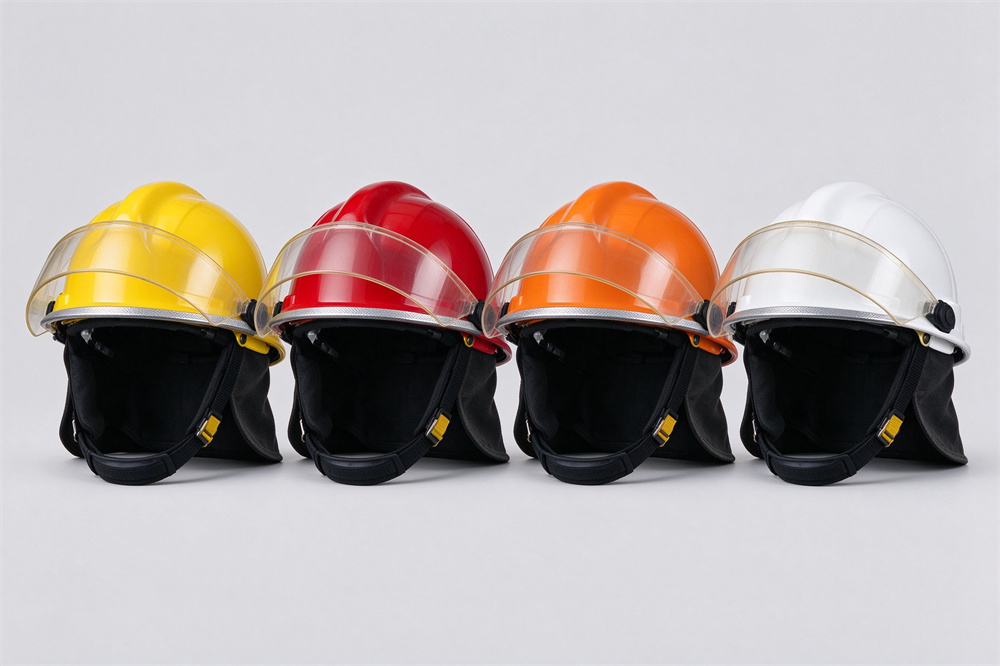
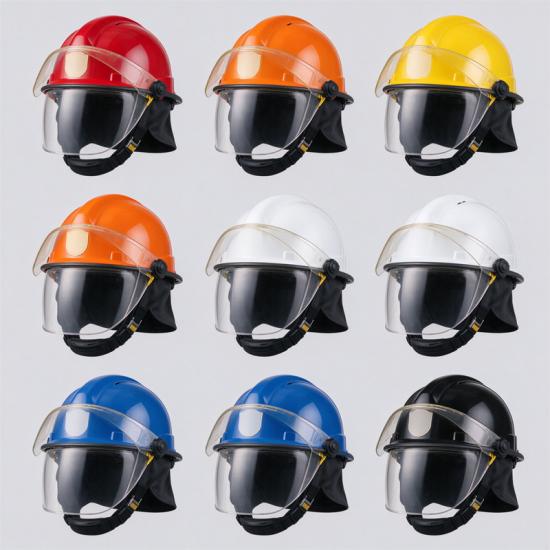
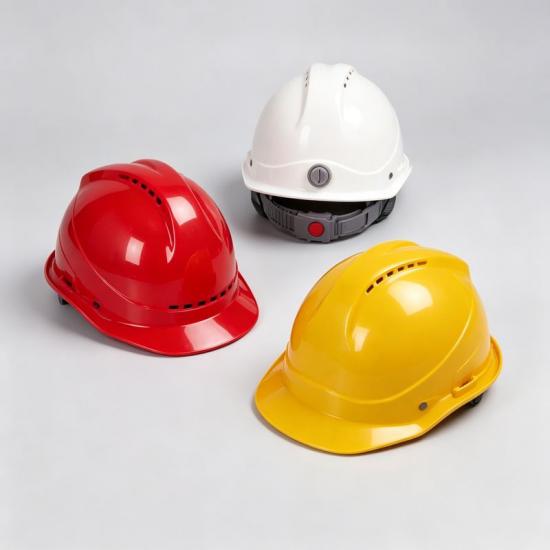
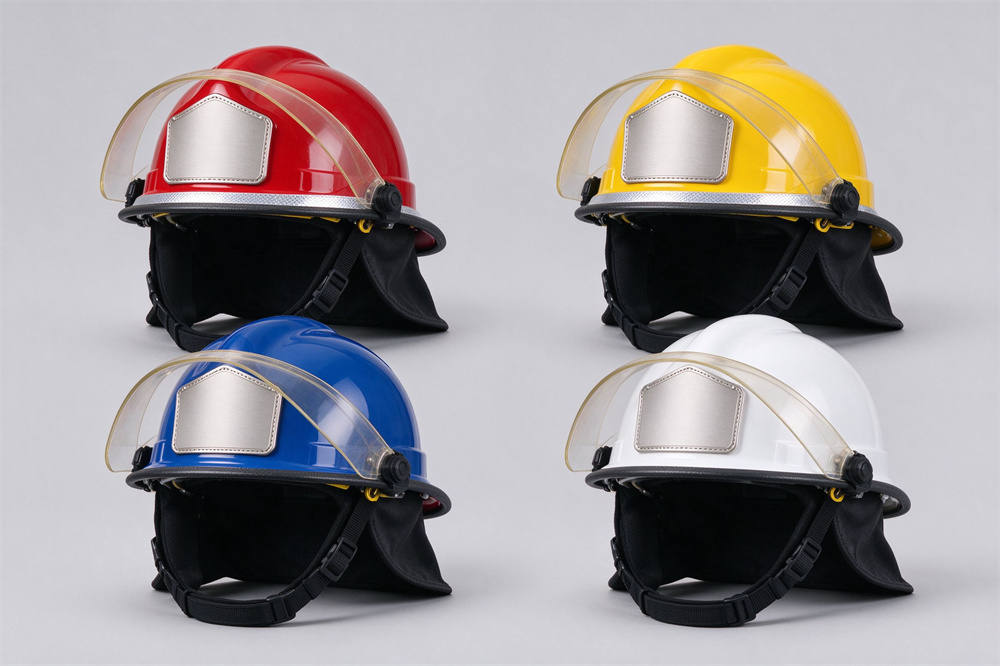
The same shell comes in four stock colors: red, yellow, blue and white. Departments typically choose red for interior attack crews, yellow for command visibility near the apparatus floor, and white for chief officers walking the fireground. Custom logo embroidery, reflective trim and unique shell colors are available on larger volume orders.
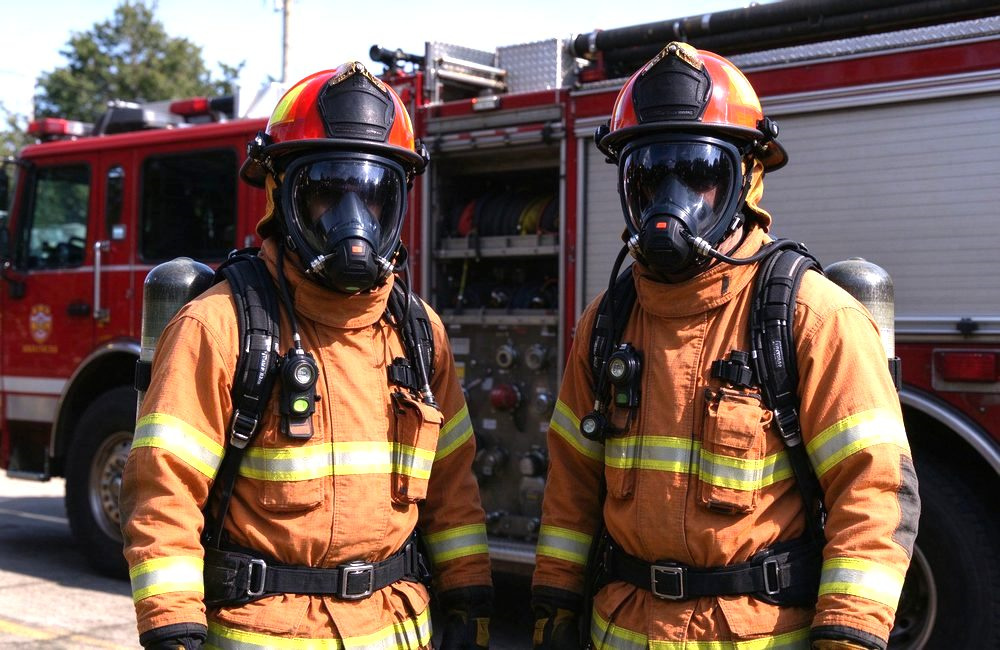
In real service the helmet must stay stable through crawling, ladder climbs and tight confined-space turns. The four-point chin strap holds the shell firmly in place, while the polycarbonate visor shields the eyes from radiant heat, flying sparks and falling plaster during interior structural firefighting. The shell itself stays light enough that crews do not feel neck fatigue after a long two-hour interior attack shift.
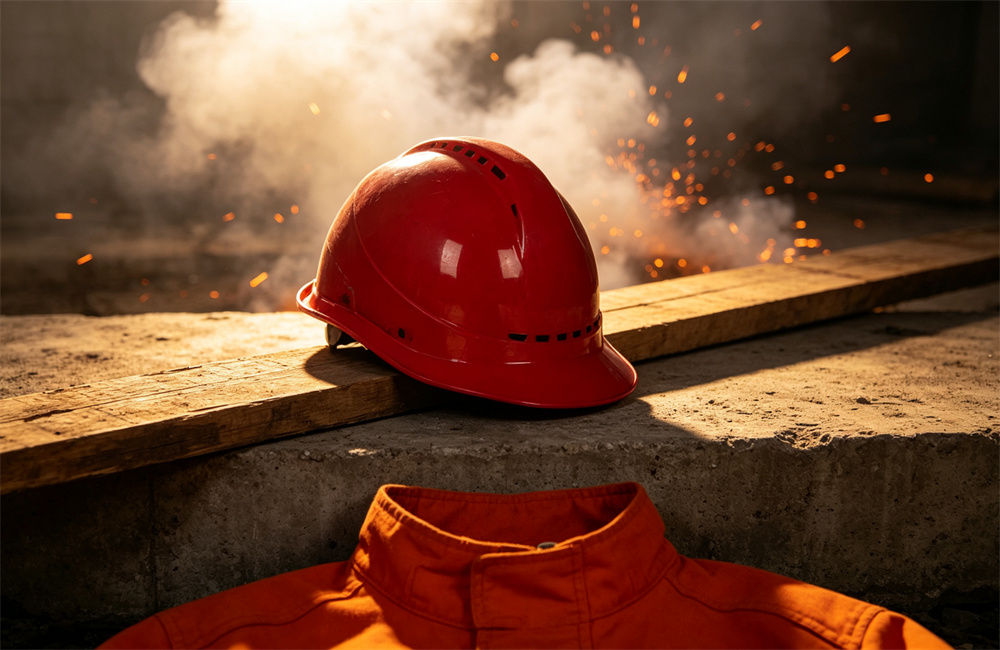
Falling debris ranks among the leading head hazards inside a burning structure. The outer shell spreads the point load across the energy-absorbing liner, which then dissipates the force before it reaches the skull. This is exactly the kind of impact drop test that NFPA 1971 requires every structural fire helmet to pass before issue.
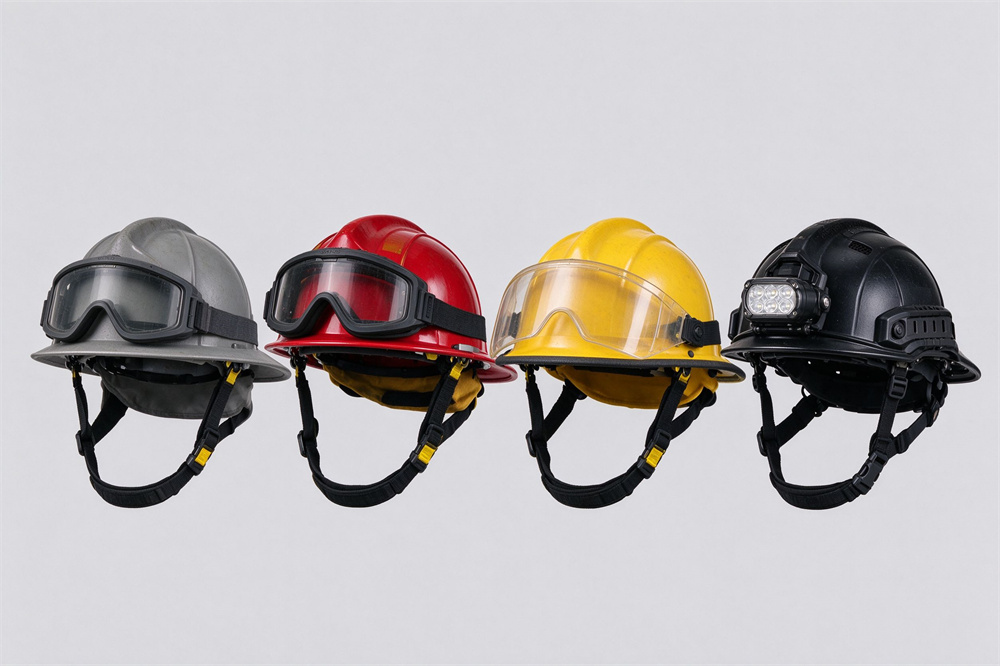
What does a complete structural fire helmet lineup look like? We build four shell families that cover every head-protection task from structural interior attack to wildland brush, technical rope rescue and industrial entry.
Each firefighter safety helmet shares the same rear-knob fit interface, the same Y-shaped chin strap buckle and the same visor pivot, so your spare-parts bin stays simple and training transfers across models.
The rounded ABS shell is the best-seller for municipal interior attack. A wildland fiberglass shell with side airflow channels adds cooling margin for long brush hikes. A compact rescue shell drops the long rear brim so it sits cleanly on a harness. A light enhanced-PP shell sits at the budget end for training academies.
One fit system, four missions. Below, the model matrix maps each shell to its best role so you can spec a mixed fleet without overbuying.
Table T1: Fire Helmet Model Matrix
|
Model |
Shell Material |
Weight |
Suspension |
Best For |
|
TH52 Structural |
ABS |
~415 g |
Four-point |
Interior attack, municipal |
|
WTQ Ribbed |
ABS polymer |
~416 g |
Four-point |
Industrial plant, ship |
|
Y26 Heat-rated |
Fiberglass FRP |
~490 g |
Eight-point |
Wildland, foundry |
|
VQ Enhanced PP |
Reinforced PP |
~310 g |
Four/six-point |
Budget industrial, training |
Most municipal fleets land on the TH52 ABS shell, balancing weight, tested protection and cost. Wildland and foundry crews step up to the fiberglass heat-rated shell. Once your crew trains on one fit system, they can pick up any shell on the truck and adjust it in seconds, which matters during a mutual-aid call when spare helmets get handed out.
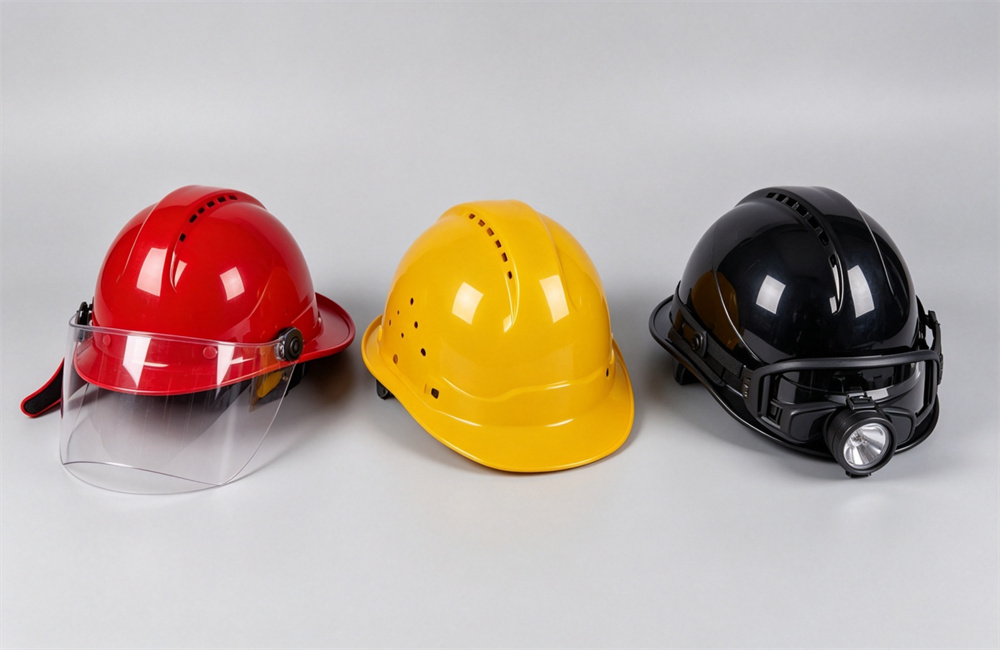
Not every fire wears the same hat. A high-rise interior attack, a brush fire in the forest and a technical rope rescue each stress the helmet differently. The structural shell carries a long rear brim and a full clear face shield for smoke and debris.
The wildland shell adds side vents for airflow during long hikes. The rescue shell runs smaller, with headlamp clips and side rails, and usually skips the long rear brim so it sits well on a harness. Match the shell to the mission before you place the order.
Head injuries remain one of the leading causes of firefighter line-of-duty injury. A beam that swings at chest speed delivers hundreds of joules in a single strike. Without a fire helmet, that energy goes straight to the skull. With a tested shell and liner, most of it is absorbed before it reaches the brain.
Your helmet is the last line of defense between falling debris and a career-ending head injury.
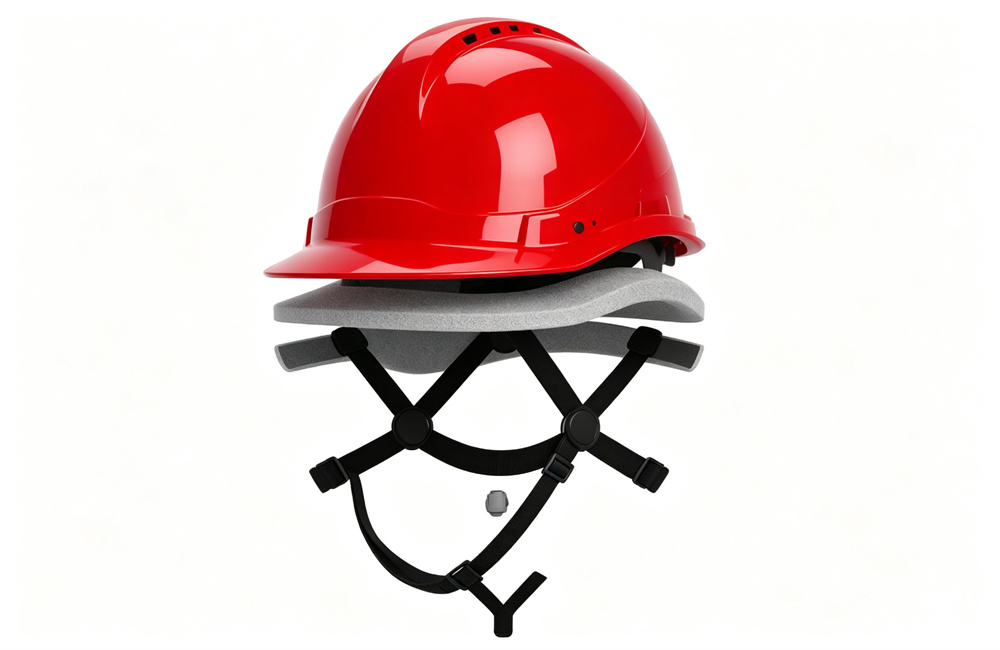
A firefighter safety helmet is not a solid block of plastic. It is a layered energy-dissipating system. The outer shell spreads a point load into a distributed push. The crushable liner converts kinetic energy into heat. The suspension webbing holds the shell off your scalp by roughly 25 mm.
The chin strap keeps the whole assembly on your head through crawling and rolling. Every layer must work together; a cracked shell, a torn strap or a missing liner turns the helmet into a dangerous hat.
Three threats the design blocks at once. First, overhead falling debris such as bricks, plaster and pipes. Second, side impact from swinging doors, rebar and tools. Third, heat and embers from a flashover and flying sparks. General-purpose work-site head protection only addresses the first threat.
A real structural fire helmet addresses all three, plus the chin-strap retention that keeps it on when you move fast.
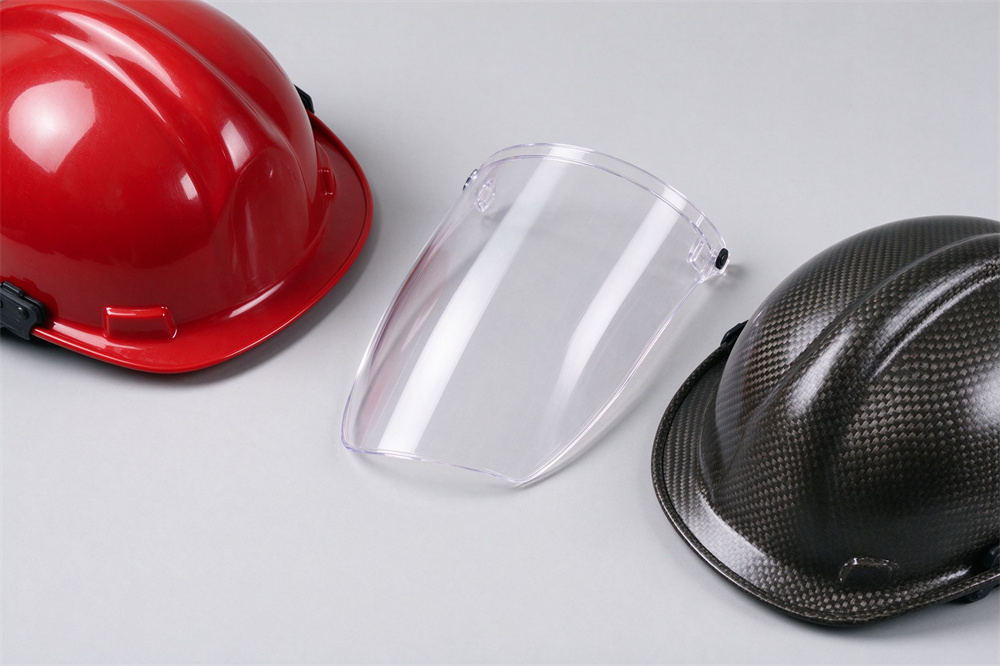
The shell is the hardest-working part of any fire helmet shell material choice. It decides weight, heat tolerance, impact strength and budget. Three families dominate: ABS engineering plastic, a polycarbonate alloy blend, and fiberglass composite. Each has a sweet spot.
Choose the shell by your mission, not by price alone, because the shell is the layer that first meets the strike.
ABS is tough, light and easy to mold. Our ABS fire helmet shells weigh about 393 to 435 grams, resist 2200 V dielectric current and pass lateral-rigidity tests. They are the default shell for municipal interior attack, industrial plants, ship fires and electrical utility work.
A polycarbonate alloy blend sits between ABS and fiberglass, adding heat margin while staying light. A carbon fiber fire helmet style composite shell runs heavier but holds up to 150 C radiant heat and resists molten-metal splash, suiting wildland and foundry crews.
Table T2: Shell Material Comparison
|
Item |
ABS Shell |
PC Alloy Blend |
Fiberglass Composite |
|
Typical weight |
393-435 g |
430-460 g |
485-525 g |
|
Heat resistance |
Up to ~100 C |
Up to ~120 C |
Up to 150 C |
|
Dielectric insulation |
2200 V tested |
2200 V tested |
Depends on resin |
|
Service life |
2.5 years |
2.5 years |
3 years |
|
Best mission |
Structural, industrial |
Combined duty |
Wildland, foundry |
Most buyers start with ABS because it covers the large majority of daily calls at the lowest weight-and-cost balance. Step up to fiberglass only if your crews face sustained radiant heat, wildland flame contact or molten metal. The PC alloy blend is the middle choice for departments that mix structural and industrial duty on one fleet.
When a beam hits the crown, force travels through three layers before it reaches the scalp. Layer one is the outer shell, which spreads the point load over a wider area. Layer two is the crushable impact liner, which compresses and converts energy into heat.
Layer three is the suspension webbing cradle, which holds the shell 25 mm off your skull. Every impact protection helmet we ship is built around this same three-layer logic.
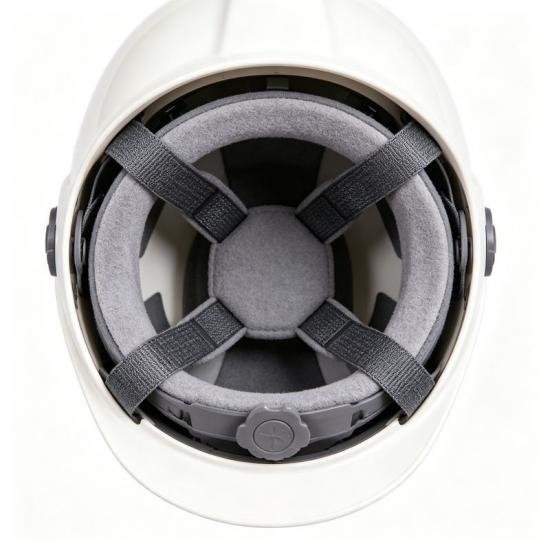
The fire helmet suspension system anchors at four points on the ABS shell and at eight points on the fiberglass shell. Four-point systems spread impact energy across more of the head instead of one spot. Eight-point systems spread it further and are standard on heat-rated wildland shells.
The rear micro-adjustment knob ratchets in 2 mm steps with one gloved hand, so you can set the cradle gap precisely for every head size. The sweat band uses a wicking fabric that pulls moisture away from the scalp during long interior runs.
When you compare shells, look at the gap, not just the outer surface. A thick shell with a missing liner offers almost no protection, because the energy that is not absorbed transfers straight to your cervical spine. Ribs molded into the shell add stiffness without weight.
If the shell shows a crack, it has already spent its energy in a strike; retire it even if it looks fine.
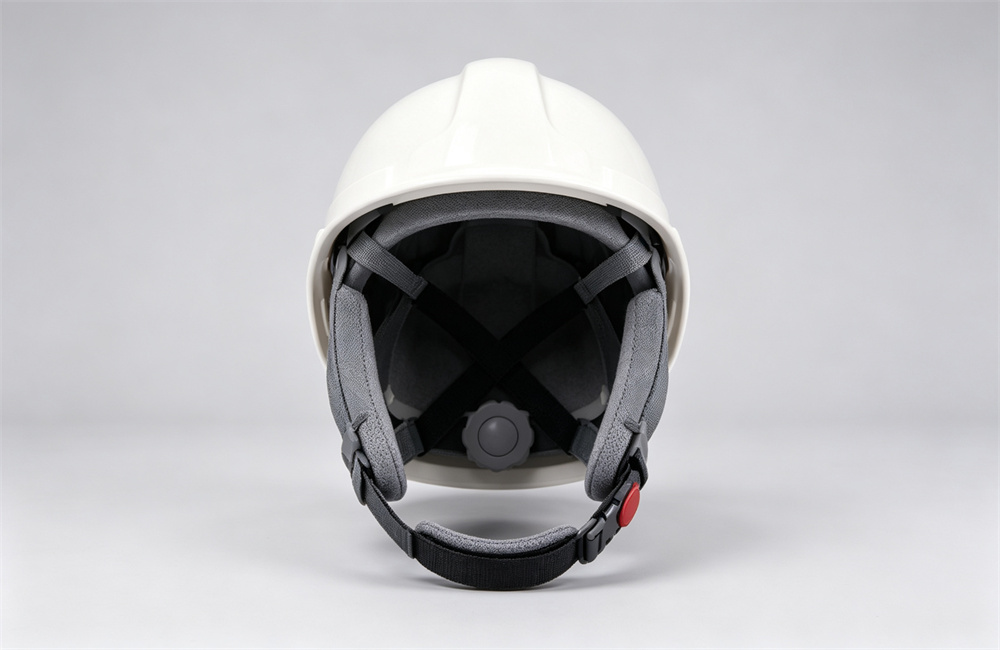
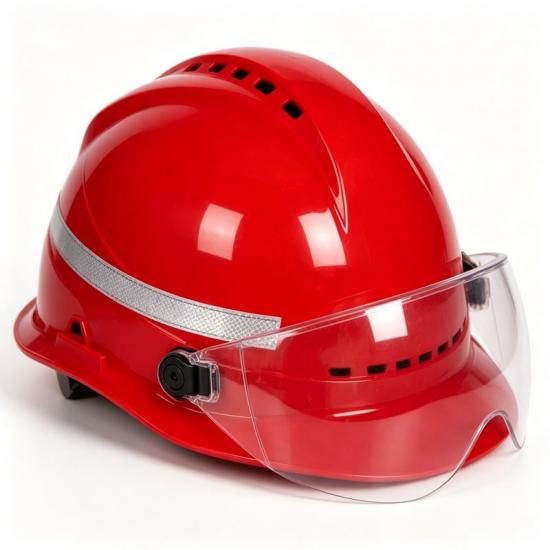
Your eyes close by reflex, but your skin does not. A flying spark lands on a cheek before you can blink. The fire helmet with face shield drops a clear polycarbonate face shield that covers the eyes, nose and upper cheek.
It flips up when you read a gauge or talk on the radio, and down the moment you enter smoke. This helmet visor is standard on every structural helmet we ship.
Polycarbonate is impact-resistant, optically clear and heat-formable. Our visors are tested to radiant heat and penetration per EN 443. They scratch and craze over time, which is why we supply replacement visors as a separate line item.
Once you see haze or fine cracks, swap it; a cloudy visor hides the very hazard you need to see. The two-pivot design lets the visor flip up and down with one gloved hand, and the detents hold it up so it does not fall mid-entry.
Standard visors are clear for night interior attack. Smoke-tinted visors cut glare at daylight exterior fires. Goggle-compatible models use a deeper shell profile so a set of eye goggles fits underneath. Tell us your typical call mix and we quote the right visor option for your rescue helmet fleet.
We ship one spare visor with each order so the shield stays optically clear between full replacements.
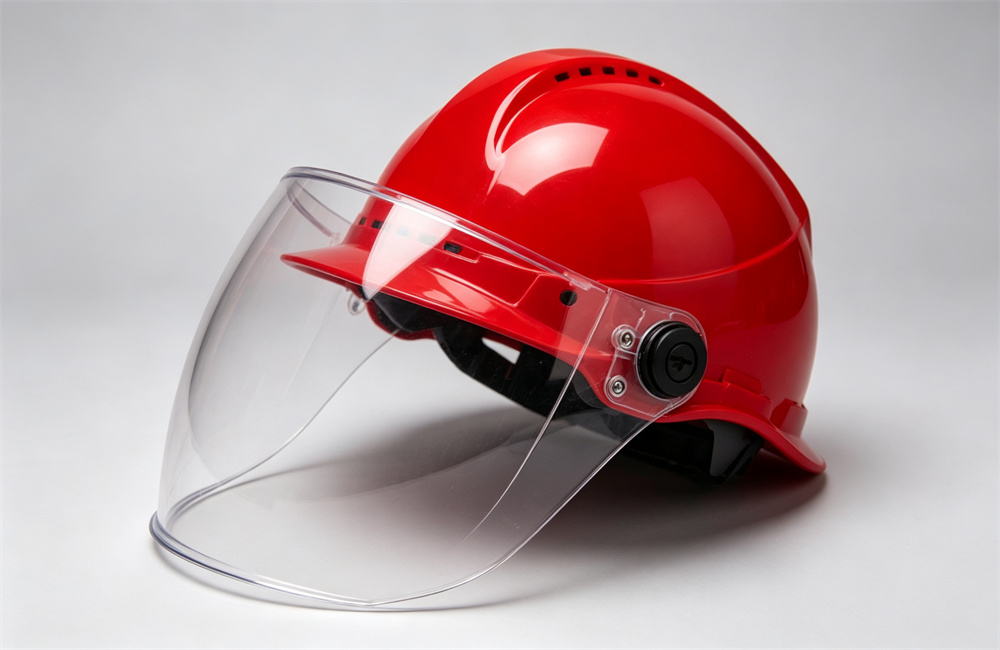
The rear of the neck is an easy gap in turnout gear. Heat rises to ceiling level, and the back of the neck takes the brunt of radiant heat that escapes the collar.
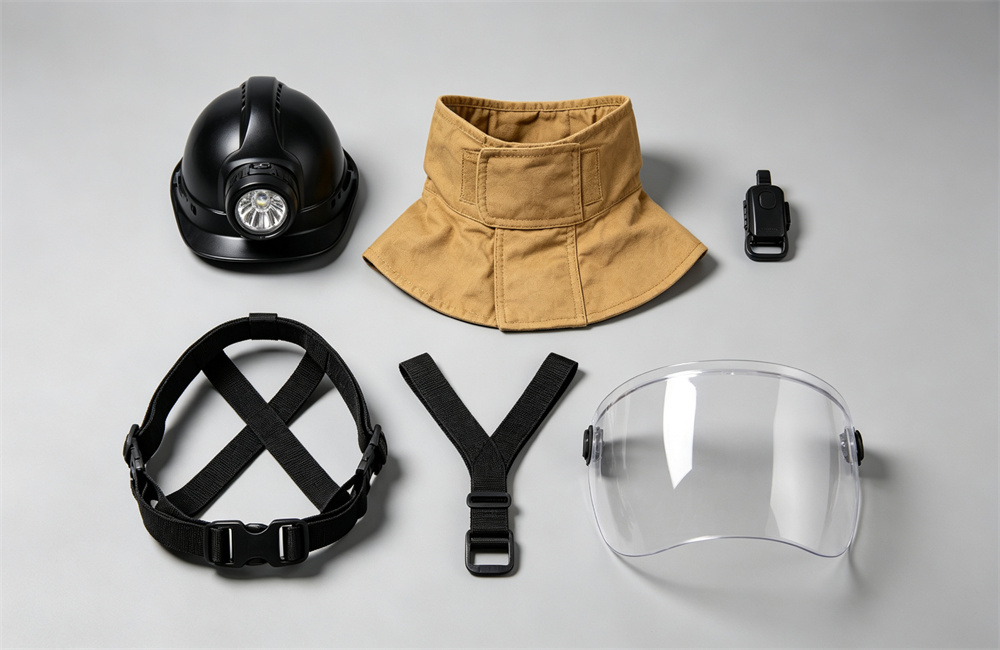
The fire helmet neck protection closes that gap with a Nomex neck flap that drops from the rear brim and shields the neck from radiant heat and flying embers. It sits over the turnout coat collar so there is no exposed strip of skin.
Ear protection completes the kit. Pump operators and crews near noisy engines add an ear-protection clip that holds foam plugs or small muffs, bolted to the same shell anchors as the lamp bracket.
The clip slots on in under a minute and removes just as fast when you move from the apparatus bay back into an interior attack. Together, the Nomex flap and the ear clip treat the neck and ears as protected zones, not afterthoughts.
Both parts are wear items. The Nomex flap yellows and stiffens after a season of heat exposure; the ear foam compresses. Keep a small spares ratio in your storeroom so a worn flap never leaves a crew member exposed.
We hold spares for at least five years after a model is discontinued, so the neck and ear gear stays repairable for the life of the fleet.
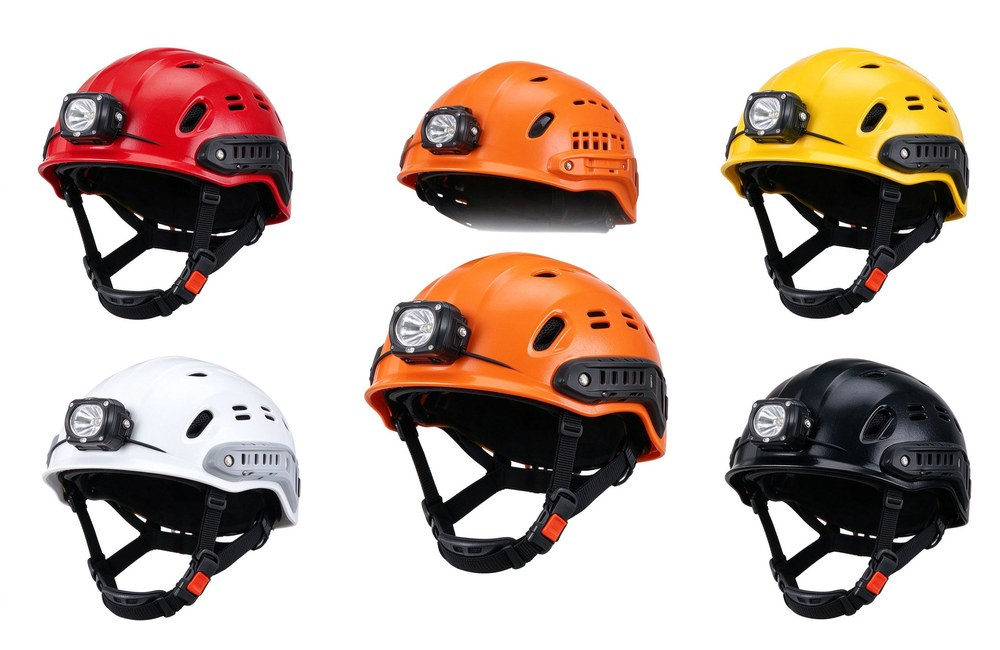
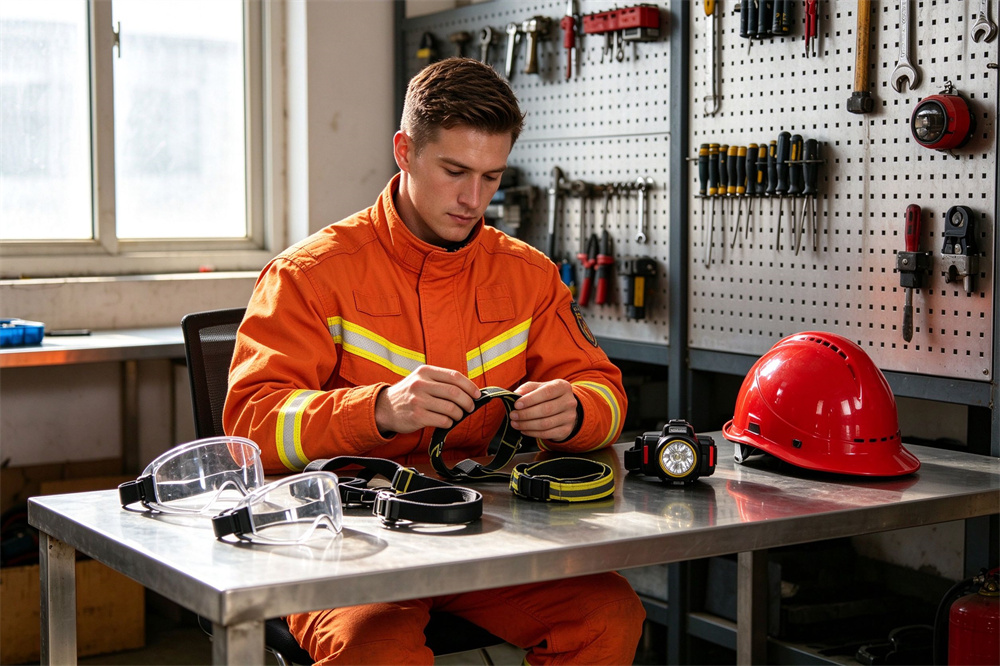
A helmet becomes a working platform once you can mount lights and comms to it. The shell ships with side clips and a front lamp bracket that accept a standard fire-helmet LED headlamp for zero-visibility interiors. Side rails let you clip on a camera or a small light without drilling the shell.
This fire helmet accessories ecosystem turns a plain shell into a configured rescue or command helmet.
For crews that talk constantly inside a building, a bone conduction helmet adapter sends audio through the cheek bone instead of an earpiece that blocks ambient sound. A comms adapter holds a radio earpiece and a microphone boom so a normal speaking voice reaches the pump panel.
All of these bolt onto the same shell anchors as the lamp and the ear clip, and swap in under a minute without tools.
Tell us which mounting options your crews actually use. A structural engine running interior attack mainly needs the lamp bracket and a clear visor. A technical rescue squad adds side rails, a comms adapter and a headlamp.
Spec the mandatory baseline first, then add the optional modules, so you pay only for the mounting points your crews will touch on a real call.
One shell covers nearly every crew member. The rear knob adjusts from 52 to 64 cm in 2 mm steps, so a single molded shell fits small female firefighters and larger male crew alike. Measure once, set the knob once, and the fit stays. This is the fire helmet sizing guide we send to every department ordering a fleet.
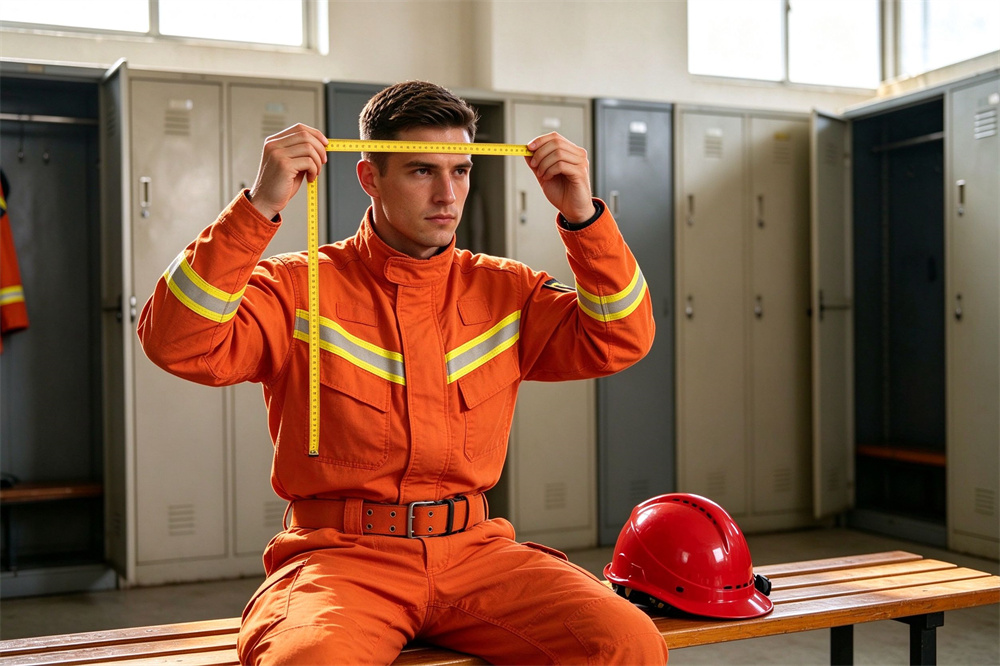
Wrap a soft tape measure around your head 25 mm above the eyebrows, across the widest part of the skull. Most adults land between 54 and 62 cm. Try the helmet on with your hood and SCBA facepiece on, because both add thickness.
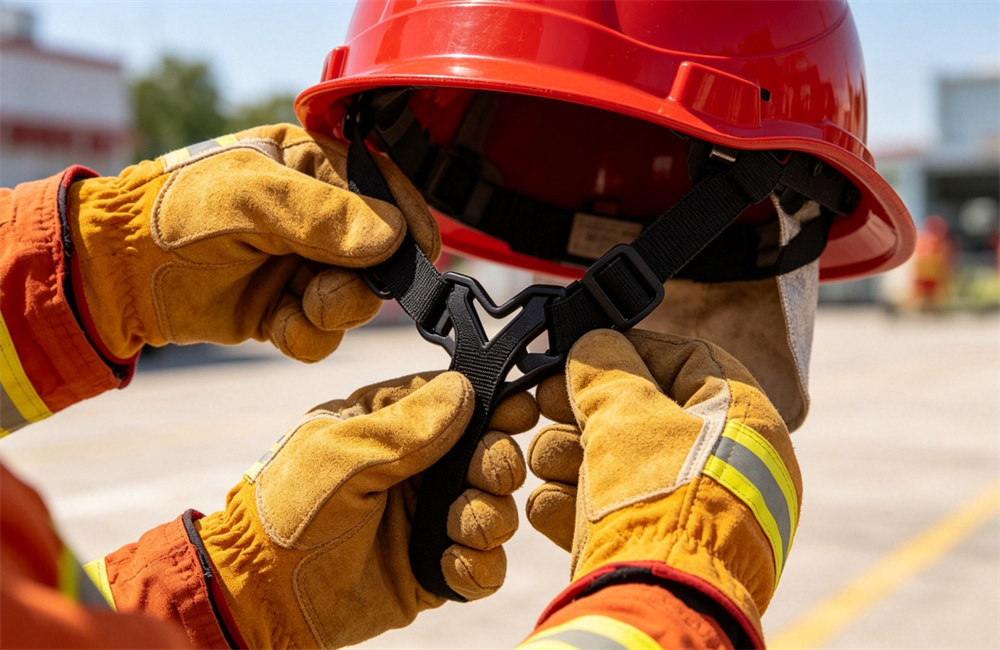
The two-finger chin strap test confirms the lower hold: fasten the Y strap so exactly two fingers fit between the strap and your throat. Three fingers means it is too loose and the helmet will lift on a fall.
Table T3: Sizing Guide
|
Size |
Head Range |
Rear Knob |
Best For |
|
Small |
52-54 cm |
Front detent |
Slender fit, youth academies |
|
Medium |
54-58 cm |
Mid detent |
Most adult firefighters |
|
Large |
58-62 cm |
Rear detent |
Broader head shapes |
|
XL range |
62-64 cm |
Full extension |
Extra-large crews |
Because one shell spans 52 to 64 cm, departments do not need to stock separate S, M and L inventories. That simplifies the tender: order one shell color in your required quantity, and the rear knob handles the spread.
Still, run the two-finger check with full gear on before every shift, because a loose fit is the most common reason a helmet moves during a real call.
Reference standards: NFPA 1971 (structural fire fighting protective ensembles); USFA; NIST impact testing.
Certification is not a sticker you print at home. It is a third-party test record that proves the shell, liner, chin strap and visor survived controlled impact, penetration, flame and heat. We supply the actual test reports so your tender evaluators can read the numbers themselves. Every fire helmet certification packet ships with the unit.
NFPA 1971 helmet is the North American structural ensemble standard. EN 443 is the European firefighting helmet standard. GA 44 is the Chinese firefighting helmet industry standard. We describe every unit as "tested to" these standards and supply third-party reports.
A tested spec records impact attenuation, penetration by a steel cone, chin-strap retention under load, and short-duration flame resistance. If your tender names a specific mark, tell us before quoting so we match the shell and visor combination.
Table T4: Certification Standards
|
Standard |
Region |
Scope |
Key Tests |
|
NFPA 1971 |
North America |
Structural fire ensemble |
Impact, penetration, flame, chin strap |
|
EN 443 |
Europe |
Firefighting helmets |
Impact, heat, penetration, retention |
|
GA 44 |
China |
Fire helmets |
Impact, lateral, flame, visor |
We say "tested to" rather than "certified" because full third-party certification to a specific mark involves a notified body and ongoing factory audit. We supply the test report and describe the unit honestly. If your tender requires a named certificate holder, we address that as a separate arrangement before production so there are no surprises at bid review.
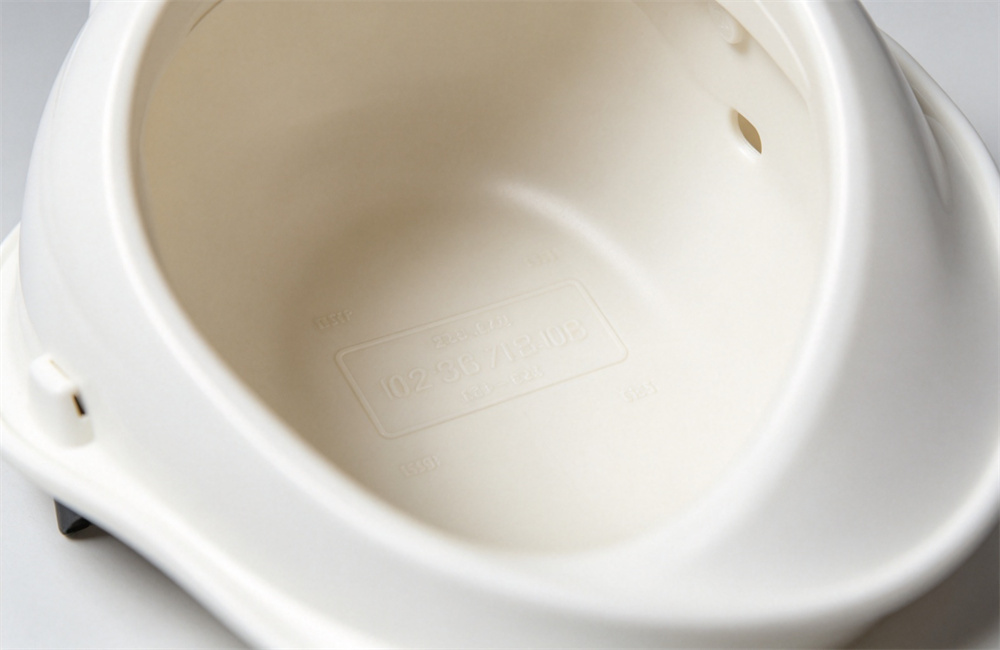
A fire helmet maintenance routine is what turns a used helmet into a defensible piece of gear during an audit. Without it, the shell yellows, the visor crazes and the strap rots long before the retirement date. Ten minutes after each shift buys you a full service life.
This is the cleaning and inspection routine we teach every new crew member.
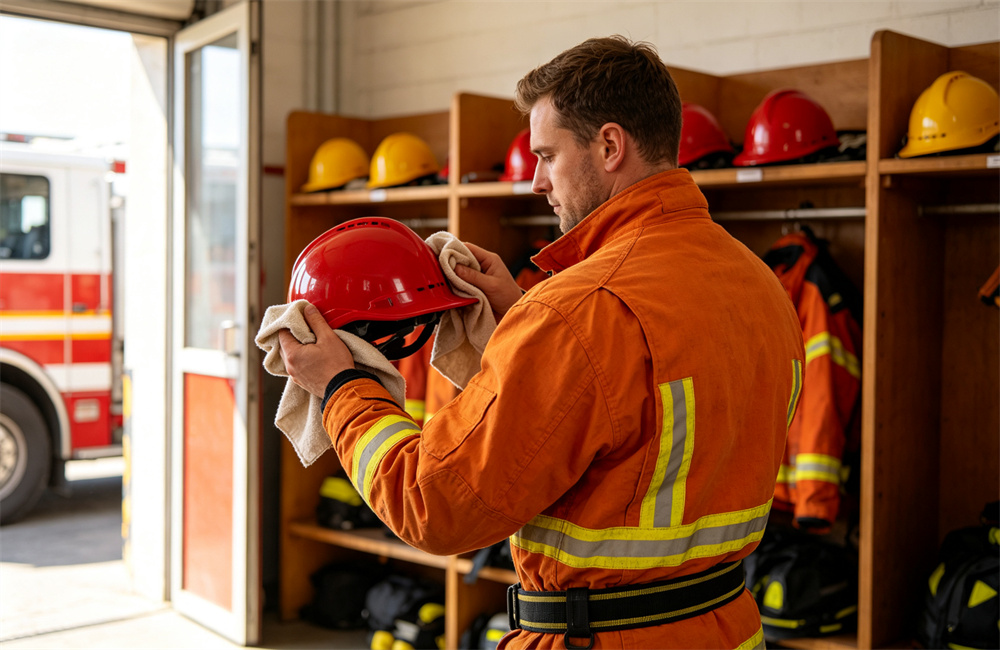
After each call, wipe the shell with mild soap and warm water. Rinse the visor with clean water only. Remove the sweat band and wash it; the wicking liner can go in a mesh bag on a gentle cycle. Never use gasoline, acetone or bleach, which craze the polycarbonate visor and weaken the shell.
Air-dry the helmet in the apparatus bay, never on a radiator or in direct sun. Before entry, inspect shell, visor, suspension and chin strap, then set the rear knob and buckle the Y strap until two fingers fit.
Table T5: Inspection Cycle
|
Item |
Frequency |
Method |
|
Shell & visor |
Before each shift |
Visual for cracks, crazing |
|
Chin strap & buckle |
Monthly |
Pull test, check fraying |
|
Suspension anchors |
Annually |
Replace sweat band, inspect anchors |
|
Helmet retirement |
At date stamp |
2.5 yr ABS / 3 yr fiberglass |
Keep a helmet log card taped inside each cabinet slot. Every time a unit is inspected, write the date and the initials. When a helmet hits its date stamp, pull it from service and replace it, no arguments.
If the helmet took a direct strike in a real incident, retire it immediately even if it looks fine. The log is what protects your department if a failure is ever questioned after an injury.
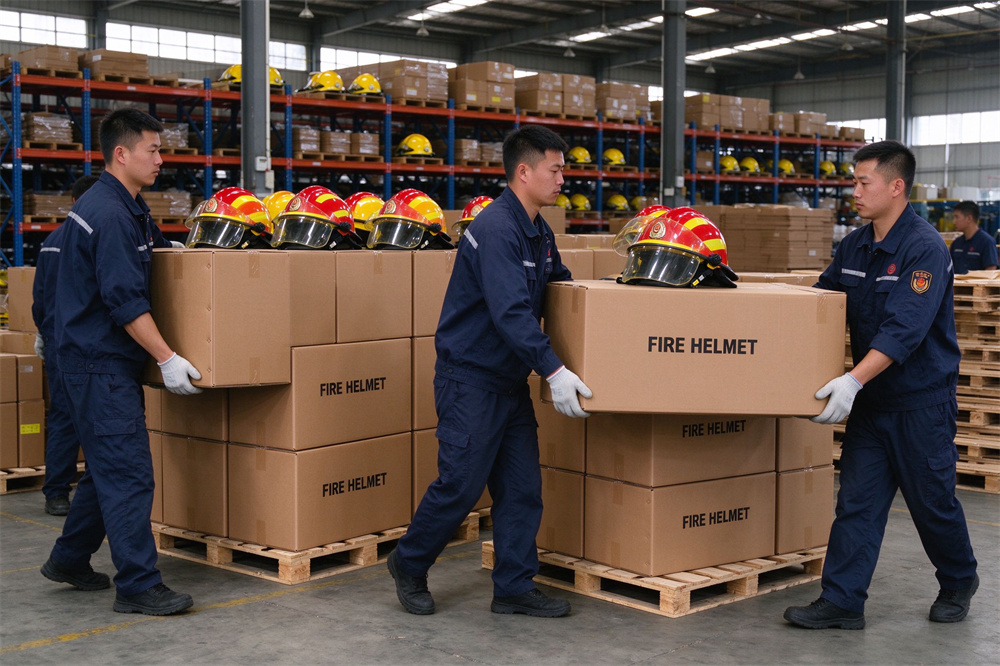
A hard shell scratched in transit arrives as a weakened shell. We pack every helmet in a separate polybag, then stack the units into a double-wall export carton so the visor does not rub against the shell or another helmet during ocean transit.
Cartons are strapped on a fumigated wooden pallet and loaded into a 20GP or 40HQ container for bulk fire helmet supply and fire helmet packaging delivery.
We mark each carton with model, color, quantity and gross weight, so receiving can count units against the delivery note. Each helmet ships with a fresh spare visor in the bag.
We can consolidate mixed shells and colors in one shipment and give you a single packing list, which matters when a tender orders structural, wildland and rescue shells together. FOB China is standard; CIF to your nominated port can be arranged on request.
Stock colors ship within the standard production window after deposit. Custom colors and logo decoration run longer, and the final lead time is locked in your signed sales contract. Bulk orders can also ship by air for urgent projects at the buyer cost. If anything arrives damaged, photograph the carton and the unit on arrival and we arrange replacement parts.
Every shell leaves the molding line and enters a QC cell before it is assembled. We run three gates: visual inspection, sampled impact testing and a final pull test on the chin strap. Units that fail any gate go back, not out.
Each fire helmet factory QC batch is traceable by the date code on the shell, so a manager can sign off each carton before it closes.
On the visual gate, we check for flash, sink marks and color match against the approved swatch. On the impact gate, a falling-weight rig drops a guided weight onto the shell crown on sampled units. On the strap gate, the Y strap must hold rated retention load without slipping.
On fiberglass shells we also inspect the composite weave for uniform resin wet-out. Batch-level random audits run alongside, pulling a few units for a deeper check before the batch ships.
We do not claim zero defects. What we offer is traceability: every shell has a date code, every test has a reading, every claim has a paper trail. If a unit ever fails in service, we trace its batch record back to the production day.
That traceability is what survives a tender audit and an incident review, and it is the difference between QC that looks busy and QC that actually backs the gear in the field.

Municipal fire departments, universities and industrial plants buy helmets by the hundred. Tenders need paperwork, not just product photos. We prepare the fire helmet government procurement dossier so your team can submit on time: a tender authorization letter naming your organization, third-party test reports, an ISO 9001 certificate, and a spec-response table mapping each tender clause to our product fields.
Fire helmet rank colors help command staff identify roles at a glance. Red is the traditional interior-attack color. Yellow is common for wildland and high visibility. White is used by officers. Blue is an industrial-option color. Unit numbers on the front brim and a small national flag decal above the crest are common custom additions.
We never place decals that cover the date stamp or the standard markings, because those are required for inspection.
For volume tenders we can send a demo unit to your training ground before you commit, so your instructors can adjust the fit and compare it against competing shells. We stage production around your required delivery window.
If your tender has a tight deadline, tell us at the enquiry stage so we can reserve shell color stock and schedule the QC batch ahead of the standard queue.
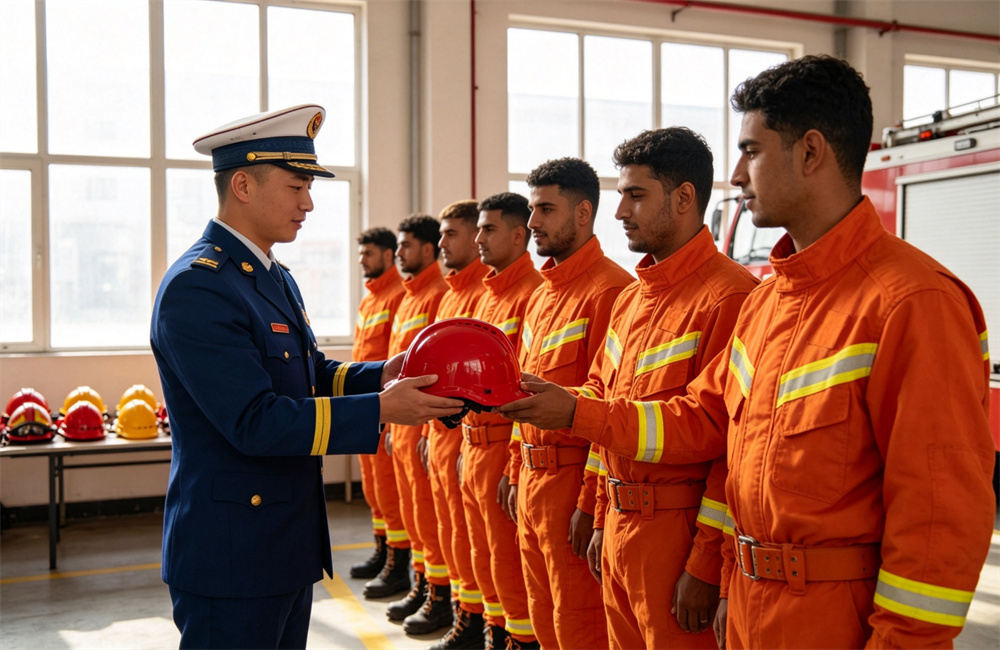
Standard colors cover most fleets, but a department crest, a unit number or a high-visibility strip makes your helmet yours. We offer a clear custom route: silk-screen your department name or crest onto the side shell, sized so it never covers the certification label.
fire helmet custom logo decoration starts after an artwork proof is approved by email before any tooling starts.
fire helmet reflective trim is the most popular upgrade for night road operations. Retroreflective trim around the brim and rear lifts visibility at a roadway or a dusk scene. You can choose a custom shell color, add a unit number on the front brim, and pick the strap form that suits your crews.
We send a layout mock-up so you approve the logo size and position before the first shell is molded.
You can also mix the trim so your units are instantly recognizable on a mutual-aid scene. Tell us which options are mandatory and which are optional, and we price the mandatory baseline first.
Custom work moves the build lead time beyond stock, and the minimum for decoration is set on the artwork approval, so lock your crest early in the procurement cycle.
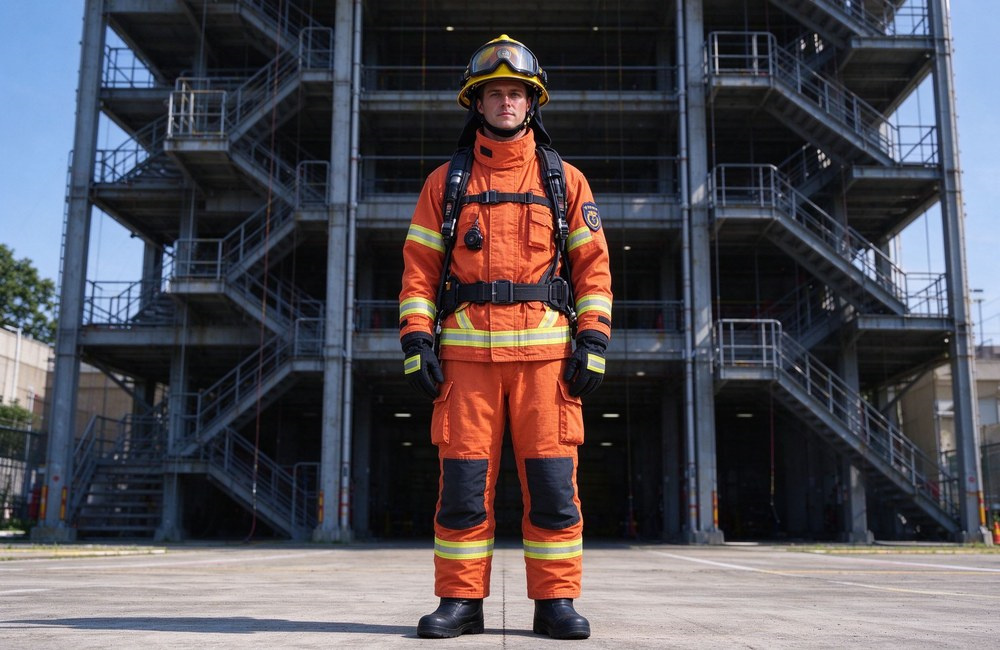
Pair this fire helmet with Nomex IIIA firefighter turnout gear and a positive pressure SCBA for a complete structural fire PPE ensemble. For emergency response kits, add a fiberglass fire blanket.
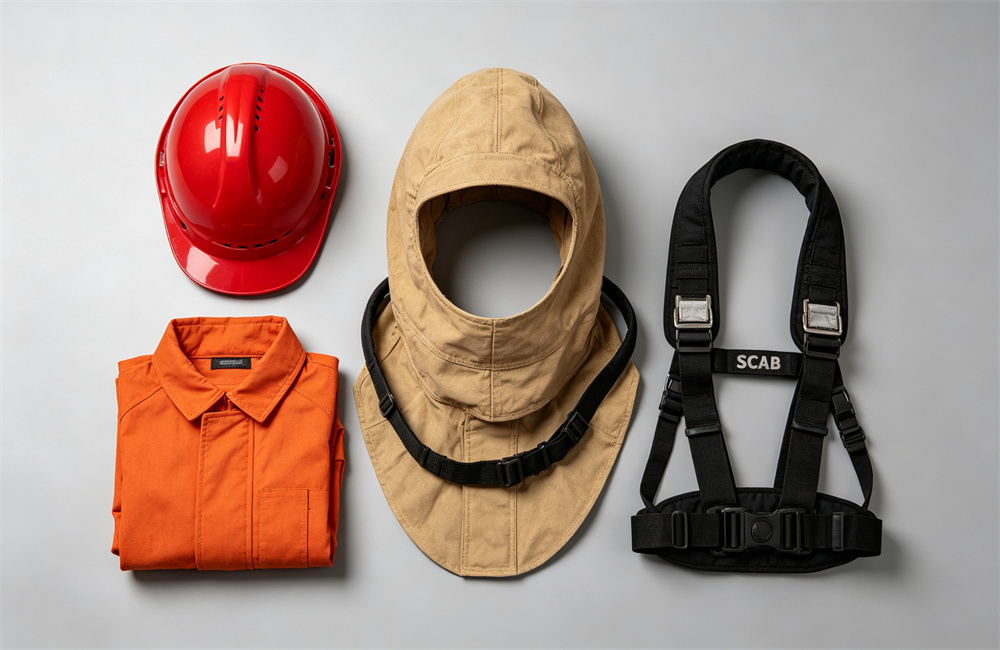
A fire helmet related gear kit never works alone. It sits on top of a Nomex hood, meets the brim of a turnout coat collar, and pairs with the straps of a breathing apparatus. Buy the whole interface together so the pieces fit instead of fighting each other on scene. This is the head-to-toe system the helmet sits inside.
Pair the helmet with a turnout coat and pants so the collar height and the helmet brim leave no exposed neck gap. Pair it with a positive pressure breathing apparatus so the chin strap does not tangle with the regulator harness. Nomex hoods and gloves complete the kit.
When you buy the helmet and the coat from the same supplier, the collar and brim are tuned together; mixing brands can leave the coat collar pushing the helmet up.
We can send a fit sample so you check the collar-to-brim interface before ordering the full fleet. The goal is one trained interface: hood under the collar, collar under the brim, chin strap clear of the harness. That interface is what keeps the neck covered and the helmet seated through a long overhaul.
Below are the questions procurement managers, training officers and wholesale buyers ask most often about structural fire helmets. Each answer covers specification, ordering, maintenance and compatibility so you can compare shells and build your tender number. If your question is not listed here, send the shell model and head size you are considering, and we will reply with a spec sheet and current lead time.
It is a head-protection helmet built for interior firefighting, combining a rigid outer shell, an impact-absorbing liner, a chin strap and a face shield. It protects against falling debris, heat and side impact, unlike ordinary general-purpose work head protection that only shields from overhead drops.
Ordinary work head protection only meets overhead impact standards. A fire helmet adds heat resistance, a longer rear brim for neck protection, a clear face shield, reflective trim and a tested chin strap that stays locked during movement. They are built for different jobs and are not interchangeable.
ABS is lighter, cheaper and good for general structural and industrial use. Fiberglass is heavier but resists radiant heat better, suiting wildland and long-exposure crews. Choose ABS for weight savings, fiberglass for heat. This is the core choice when you select a fire helmet.
Measure your head circumference above the eyebrows. The chart maps 52-54 cm to small, 54-58 cm to medium and 58-62 cm to large. The rear knob adjusts 52-64 cm in 2 mm steps, so one shell covers nearly every crew member. Try it on with your hood and breathing apparatus facepiece on.
Most helmets have a 2.5 to 3 year service life from the manufacture date stamped inside the shell. Replace earlier if the shell is cracked, the face shield is crazed, the suspension is frayed, or the helmet took a direct strike in a real incident.
Yes. The clear polycarbonate visor is a separate part. Once it becomes crazed, scratched or hazy, unclip the side pivots and swap in a new shield. We keep spare visors in stock so your helmet stays optically clear between full replacements.
An ABS structural fire helmet weighs about 415-435 grams including the suspension and chin strap. A fiberglass heat-rated model reaches about 490-525 grams. The light enhanced-PP training shell drops to around 310 grams. The difference shows up after a long climb with full gear on your neck.
Yes. Our ABS shells are tested to 2200 V dielectric insulation, so they are suitable near low-voltage power lines and electrical-utility fires. The rating is not a full arc-flash suit, so always follow your department electrical-hazard SOP.
It means the cradle inside the shell attaches at four anchor points, spreading impact energy across more of the head instead of one spot. Eight-point systems spread it further and are common on fiberglass wildland shells. Both beat a single plastic band.
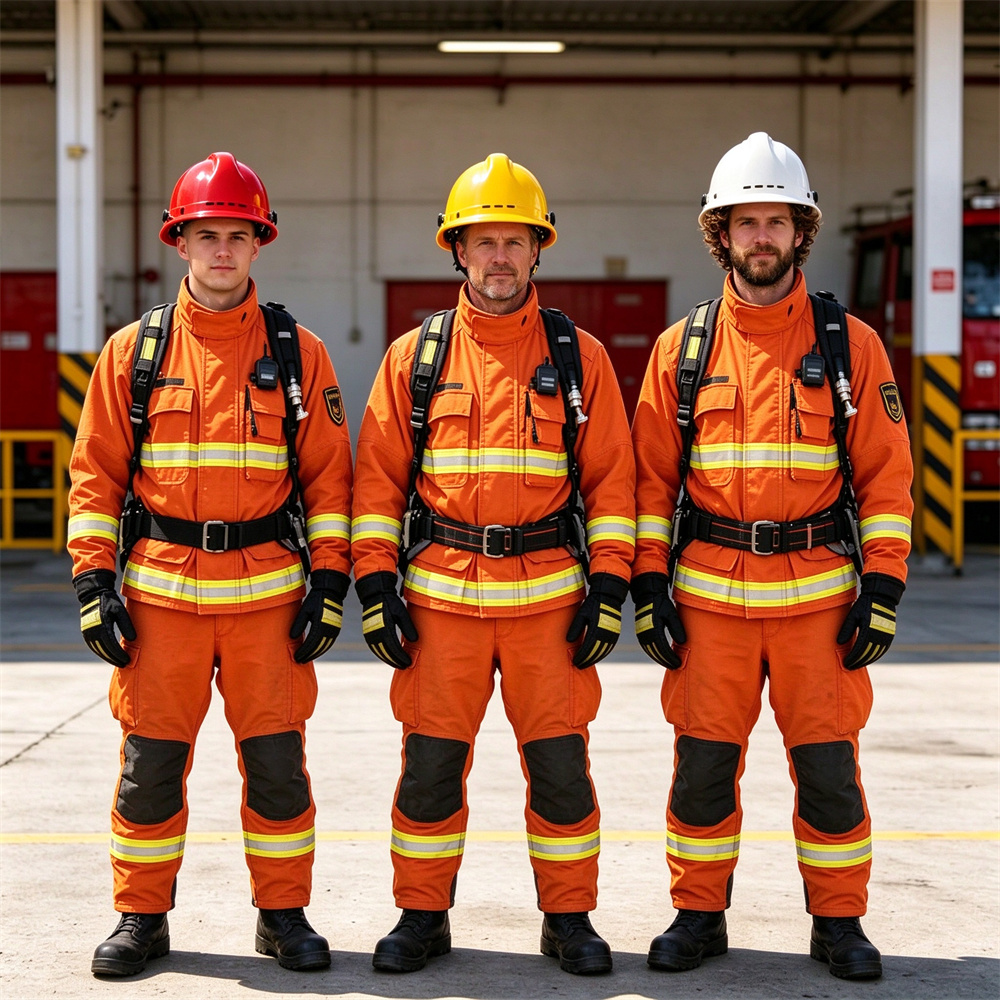
NFPA 1971 is the North American standard for structural and proximity fire-fighting protective ensembles, including helmet shell, impact, penetration, flame and chin-strap retention tests. We supply third-party test reports and describe units as tested to NFPA 1971.
EN 443 is the European standard for fire-fighting helmets. It covers impact, penetration, flame contact, radiant heat and chin strap strength. If your tender lists EN 443, tell us before ordering so we quote the matching shell and visor combination.
Wipe the shell with mild soap and warm water after each shift. Rinse the visor with clean water only. Remove and wash the sweat band. Never use gasoline, acetone or bleach, which craze the polycarbonate visor and weaken the shell. Air-dry away from direct sun.
The shell has side clips and a front lamp bracket that accept a standard fire-helmet LED headlamp. A radio earpiece clip, a comms adapter, ear-protection plugs and a Nomex neck flap are all available. Tell us which you need so we pre-fit them before shipment.
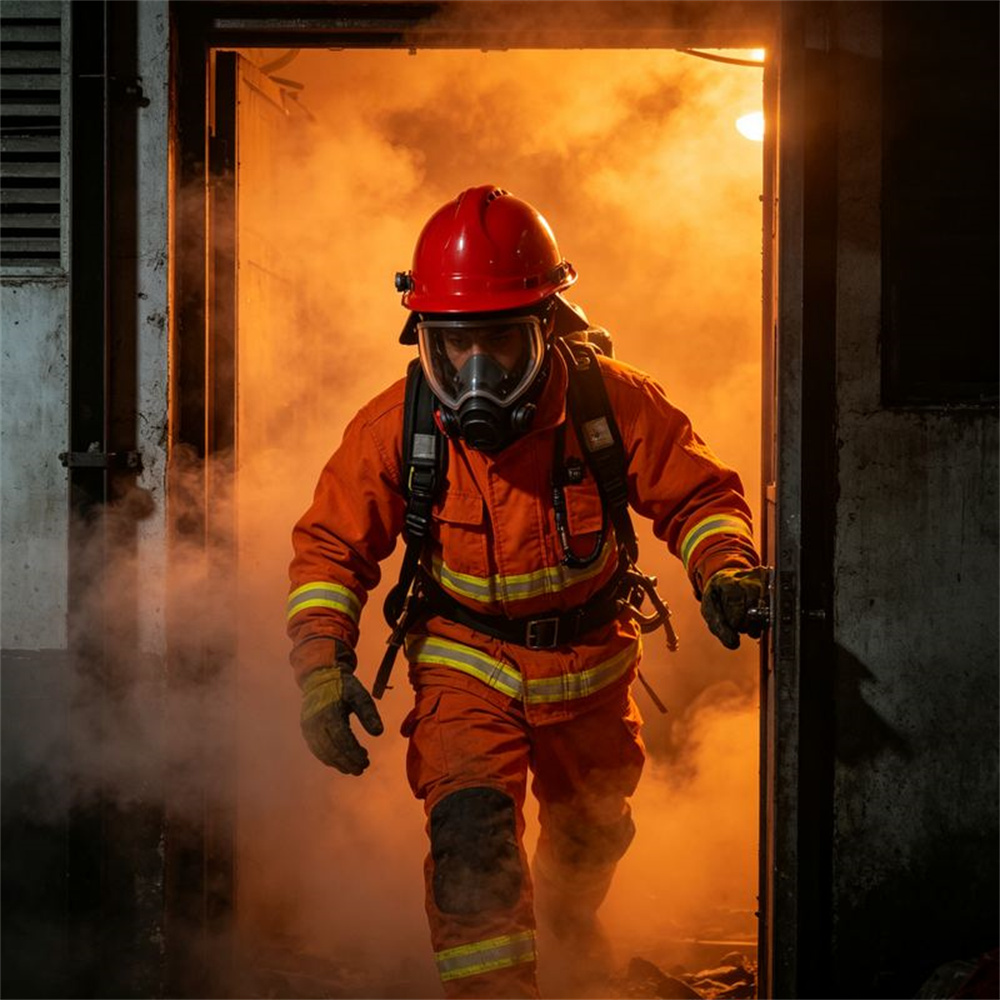
Standard stock colors are red, yellow, blue and white. Red is the traditional interior-attack color. Yellow is common for wildland and visibility. White is used by officers. Blue is an industrial-option color. Custom colors are quoted at volume.
Stock colors start at a sample-friendly wholesale tier. Sample orders of a few units are available at sample price plus freight so you can test fit and weight before a bulk buy. Custom logo decoration starts after the artwork proof is approved.
Yes. We supply third-party reports showing NFPA 1971, EN 443 and GA 44 test results, plus an ISO 9001 certificate. We describe units as tested to these standards. If your tender requires a specific mark, tell us before ordering.
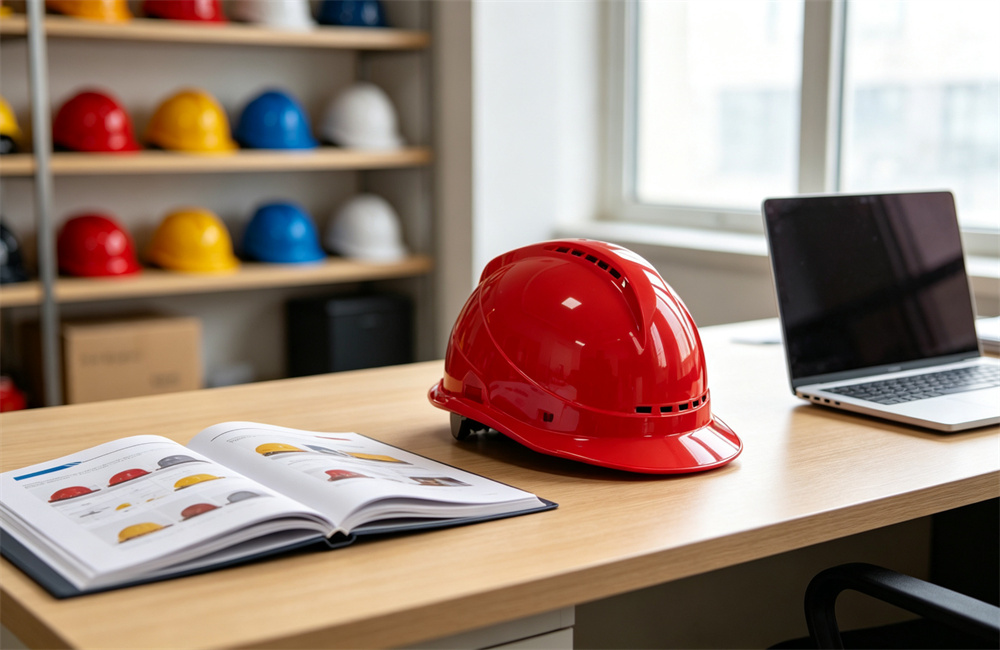
YRF Textile – Fire Safety Equipment – China
Contact: info@yrftextile.com
 High-strength Forest Firefighting Helmet, Integrated Goggles, Protection
This high-strength forest firefighting helmet is made of premium ABS engineering plastic, measuring 23.5×23×18cm, with excellent impact resistance and heat resistance. Its unique feature is the integrated goggles design, which can be quickly deployed to provide comprehensive eye protection against smoke, sparks, and splashes. The helmet has undergone rigorous testing, with impact resistance reaching 140 joules, and can work for short periods in high-temperature environments of 180°C. It is suitable for forest firefighting, mountain fire fighting, emergency rescue, and other high-risk environments, providing dual comprehensive protection for the head and eyes of firefighting and rescue personnel.
 ABS Forest Fire Helmet, Fire and Heat Insulation, Disaster Relief
This ABS forest fire helmet is precisely crafted from high-quality, high-strength ABS engineering plastic, heat-resistant up to 580°C, with impact absorption performance exceeding 500kg. The full helmet design combines a professional protective visor and neck protective shawl, forming a comprehensive head protection system. Multi-point ventilation design increases heat dissipation efficiency by 70%, while the special lining structure enhances fit. Suitable for forest fire fighting, earthquake rescue, flood disaster assistance, and various disaster rescue scenarios, it is professional protective equipment for disaster relief personnel.
 High-Strength Forest Fire Cap, Full Protection, Disaster Relief
This high-strength forest fire cap is specially designed for disaster relief, made of advanced composite materials with excellent impact resistance and heat resistance properties. Having passed strict firefighting standard tests, it provides all-around head protection, adapting to various forest fire rescue environments. It features a built-in precision adjustment system, comfortably fitting various head shapes. Equipped with a high-definition transparent visor and neck protective cape, it provides comprehensive protection for rescue personnel, making it reliable equipment for professional forest firefighting and disaster relief.
 Red Emergency Rescue Helmet, Clear Face Shield, Forest Firefighting
This red emergency rescue helmet is specially designed for forest firefighting, manufactured using aerospace-grade heat-resistant engineering materials, with impact resistance improved by 45%, capable of withstanding 250°C high-temperature environments for 10 minutes without deformation. The high-definition transparent face shield has 98% coverage area and 99% light transmission, with anti-fog treatment ensuring clear vision in various environments. The eye-catching red shell coupled with high-brightness reflective strips provides visibility up to 300 meters. The 8-point fixing system ensures stability in rugged mountain environments, while the internal shock absorption design absorbs 85% of impact forces, comprehensively protecting forest firefighters' head safety in extreme environments.
 Firefighter Forest Firefighting Helmet, With Light Bracket, Integrated Protection
This firefighter forest firefighting helmet is specially designed for frontline firefighting operations, made of military-grade ABS composite material, measuring 23.5×23×18cm, with excellent impact resistance and heat resistance. Its unique feature is the integrated lighting bracket design on the side, which can easily accommodate tactical flashlights, providing a hands-free lighting solution. The helmet has passed rigorous impact tests, able to withstand 150 joules of impact force, suitable for forest fire fighting, mountain rescue, and other complex environments, providing comprehensive head protection and night vision assurance for firefighting and rescue personnel.
 Pro Forest Fire Cap, Flame-Retardant, Impact-Resistant, Mountain Use
This professional forest firefighting cap is specifically designed for mountain fire fighting, made of high-quality flame-retardant materials with excellent impact resistance, certified through professional firefighting safety tests. The cap features a high-visibility design with a built-in precision adjustment system that comfortably fits various head shapes. Equipped with a professional protective visor and flame-retardant neck cape, it provides comprehensive protection for forest firefighters, making it an ideal equipment choice for mountain firefighting, forest rescue, and emergency operations.
Copyright © Custom Disaster - Relief Bedding: Tents, Sleeping Bags, Blankets All Rights Reserved
the professional team to service !