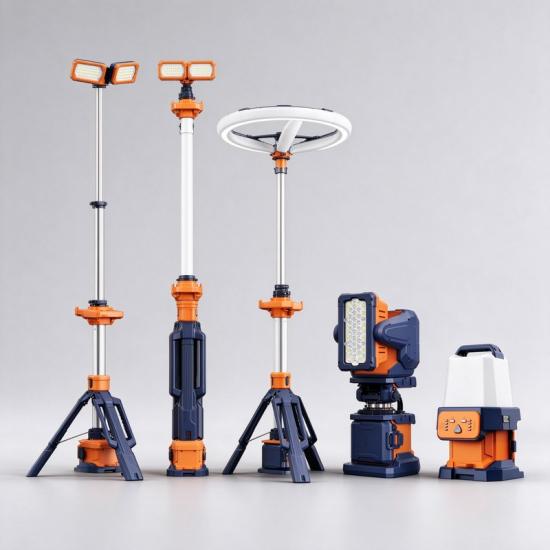
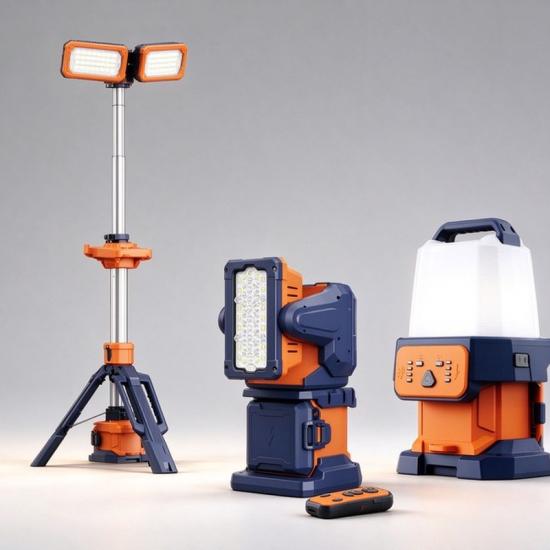
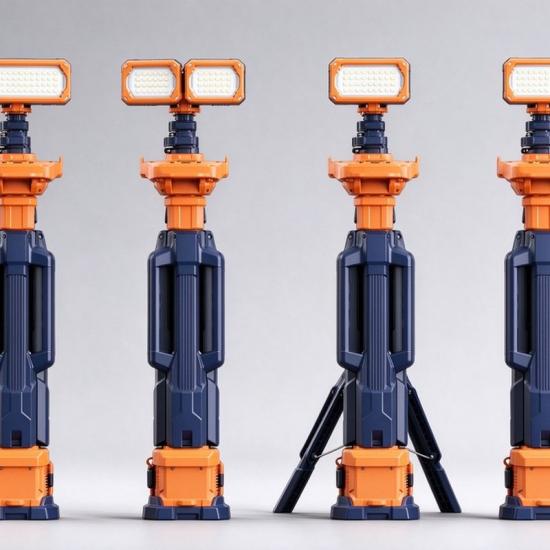
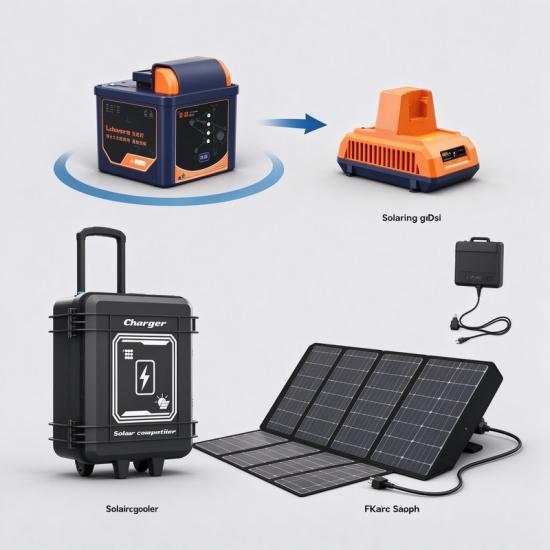
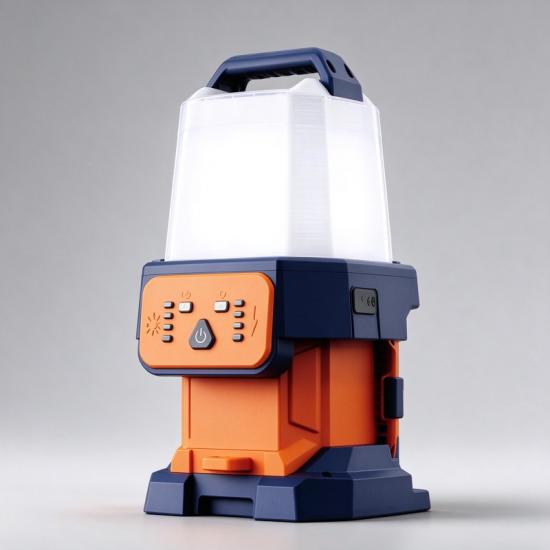
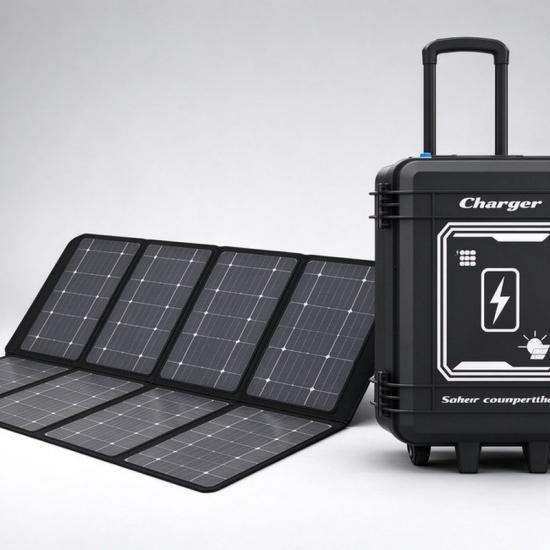
Disaster lighting family includes telescopic mast light, remote searchlight and handheld 360 light. Solar charging support, off-grid available, durable for earthquake rubble, flood rescue, camp lighting and emergency road repair.
Note: Price for reference only. Exact price based on quantity, size, weight and custom details.
model no. :
LT-07Brand:
YRFmarket price :
$5000sale price :
$2500price range :
10-30/$2500Color :
Multiple Colorsport of dispatch :
Guangdong/GuangzhouPayment :
TT, Paypal, Western Unionmin order :
10original region :
Made in ChinaLead Time :
5-15days
Disaster Emergency Lighting for Relief Camps
and Rescue
Disaster emergency lighting layers mobile towers, extendable masts and handheld units over rubble, flood water, relief camps and storm roads, giving rescue teams reliable illumination after earthquakes, floods, hurricanes and blizzards.
When the power fails after an earthquake, a disaster light is the first tool a rescue team carries into the dark.
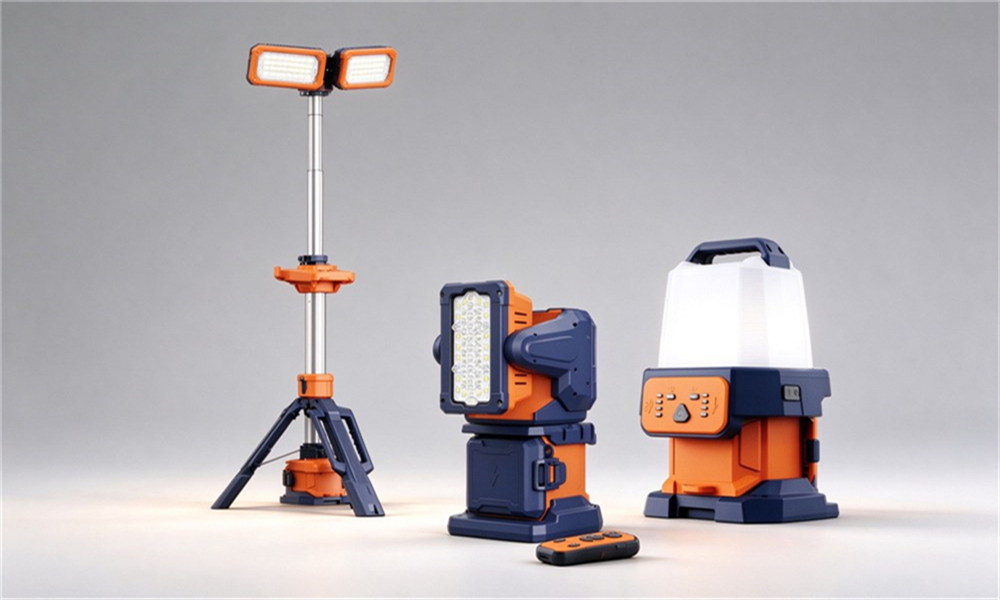


This guide explains how layered emergency lighting for disaster response works across rubble, flood water, camp sites and storm roads, and how to choose the right disaster light kit from China. Good disaster emergency lighting zones the site so medics, search teams and camp management each get enough lux without glare, supporting WHO and IFRC relief standards.
Whether you light a disaster camp, a night shift or a remote checkpoint, the goal is the same: even, glare-controlled light where people work, with quiet operation and zero on-site exhaust.
Every unit in this range is built for outdoor duty: sealed against rain and dust, towable by a single operator, and configured to run overnight without a generator on site.
Specifications below are planning ranges. Exact wattage, lumen output and runtime are confirmed in your contract, so you can plan a tender or a rental fleet without being locked to a single figure.
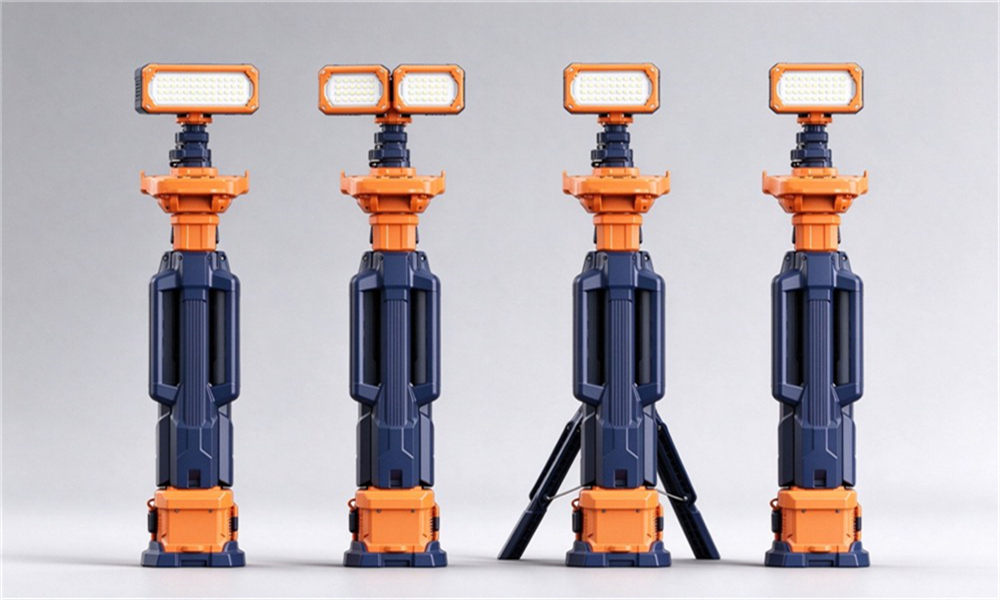
Whether you light a disaster camp, a night shift or a remote checkpoint, the goal is the same: even, glare-controlled light where people work, with quiet operation and zero on-site exhaust.
Compare the configurations below, then send your site dimensions and night-shift hours for a matched model shortlist. Every figure on this page is a planning range, confirmed in your contract.
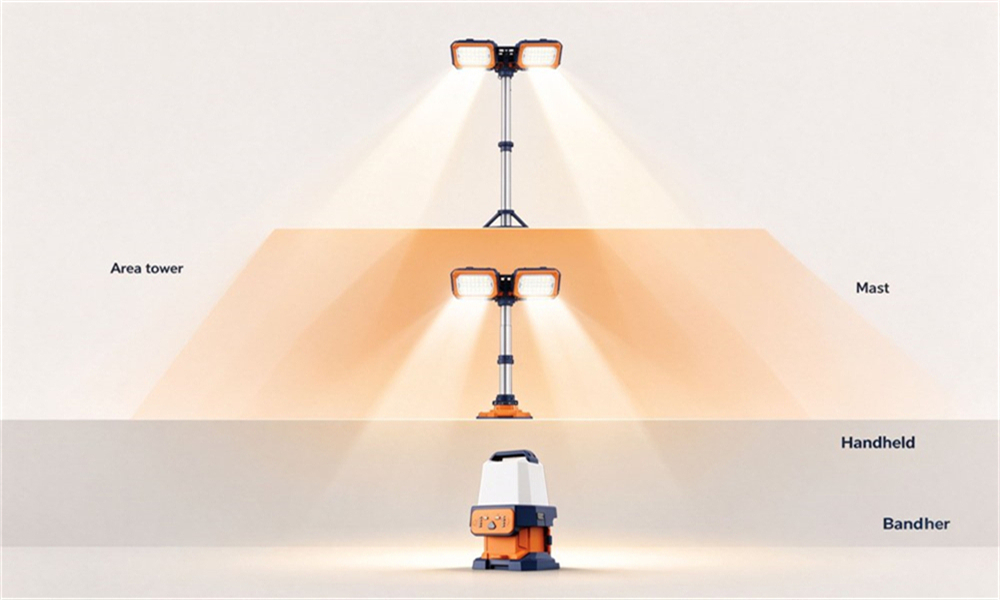
Table of Contents
1.The lighting challenge in emergency rescue scenes
2.Layered lighting solution for disaster response
3.Recommended lighting kit by disaster type
4.Step-by-step deployment in a disaster scene
5. Field scenarios: disaster lighting in action
6.Specifications of recommended disaster lights
7.Disaster light FAQ
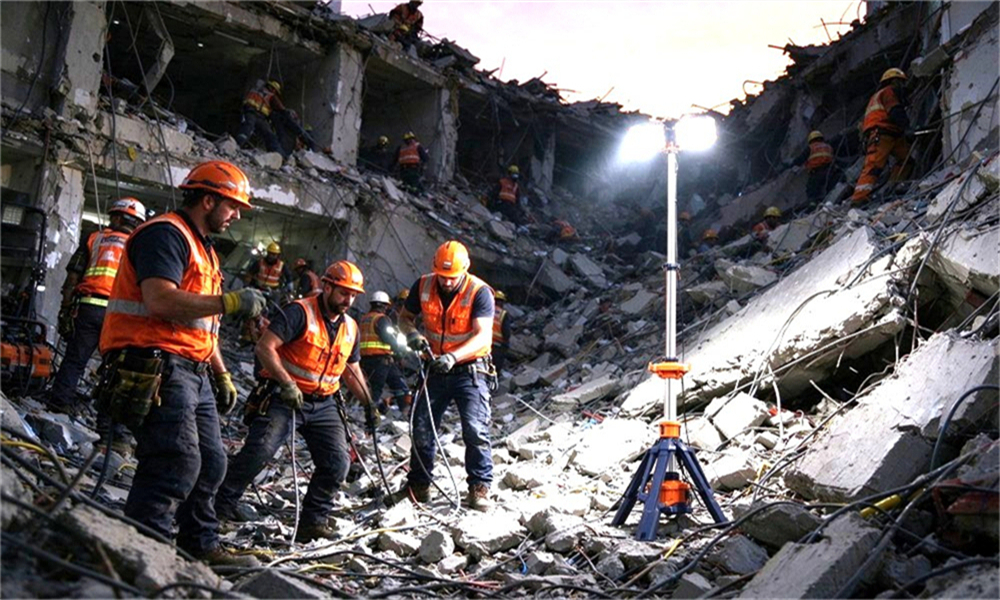
At two in the morning, a collapsed district has no street lamps, no shop signs and no working grid.
A disaster light that fails in the first hour stops the whole search.
This is why emergency response lighting must be battery-backed, fast to raise and bright enough to read a hand gesture from three metres.
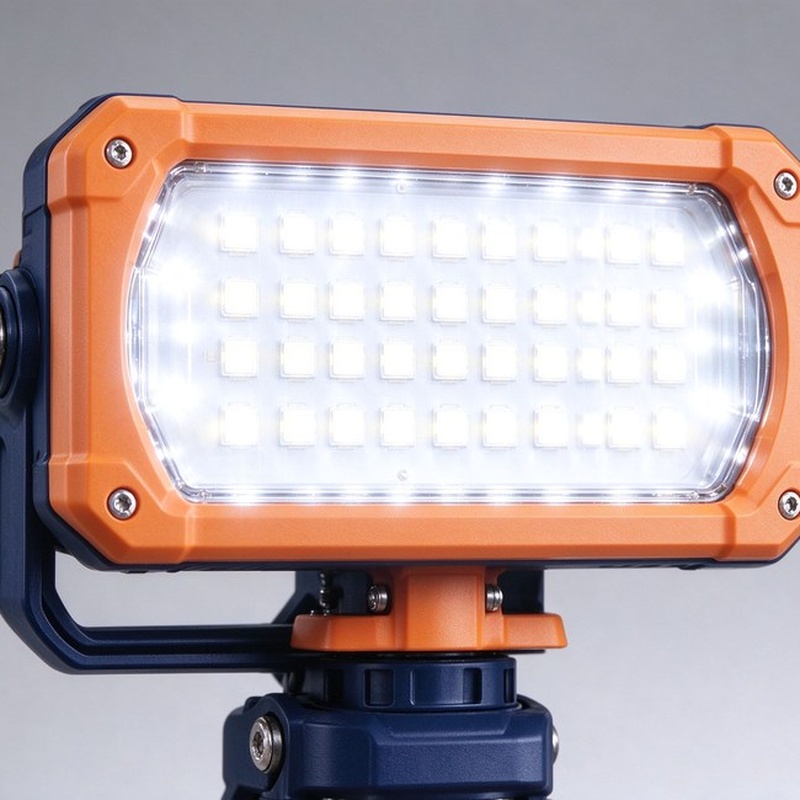
The workhorse of every kit is the telescopic mast disaster light.
The TL-200 rises to 2.3 metres in ten seconds, runs eight hours on one battery pack and weighs only six kilograms.
Its twin LED heads wash a wide apron while a team cuts through concrete.This is the backbone of emergency lighting for disaster response.
No mast covers a tight void.That is where a handheld disaster light steps in: a two-kilogram panoramic lamp clipped to a rescuer's vest, glowing 360 degrees.
Personal emergency portable lights keep every worker visible to the team behind, even when the main mast sits fifty metres away.
The right disaster light plan is a pyramid.A tall tower lights the whole perimeter, a raised mast lights the work face, and a handheld lamp lights each rescuer's hands.
This layered emergency scene lighting removes dark corners instead of chasing them with one bright unit.
The pages below break the disaster light plan into practical steps.
You will see which lamp fits rubble, flood water, a camp or a snowbound road, how to deploy a mast in under a minute, and how to size a kit for a two-person team or a full task force.
Use it as a checklist before your next tender.
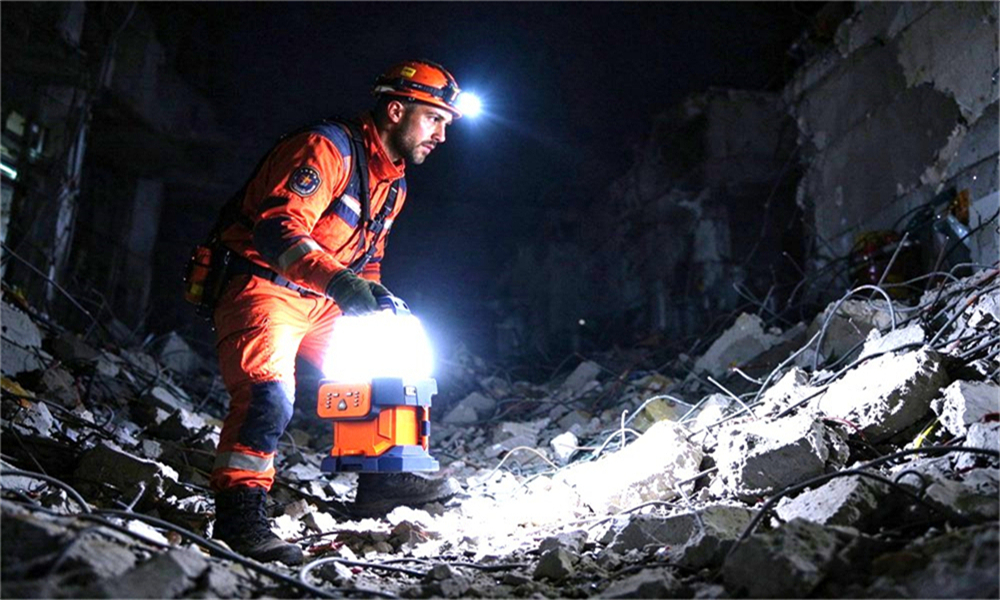
A disaster site at night is not just dim.It is inverted: the grid that normally lights streets is the first system destroyed.
Rubble blocks the moon, dust scatters what little light remains, and rescuers lose depth perception.A disaster light must restore three-metre visibility fast, before cold and disorientation set in.
The cost of poor light is measurable.Rescuers trip over rebar, miss a hand waving under a slab, and step into flooded basements.Good emergency lighting for disaster response cuts these mistakes.
A well-placed disaster light turns a stumbling search into a calm, repeatable grid.
Four dark zones repeat after every major disaster light deployment.The rubble field hides voids between floors.The flooded riverbank hides deep water just below the surface.
The open camp hides fallen wires and uneven ground.The road corridor hides wrecked vehicles.Each zone needs its own emergency response lighting setup.
Rubble is vertical.A flat flood lamp on the ground casts long shadows under slabs, so the light must be raised above the work face.
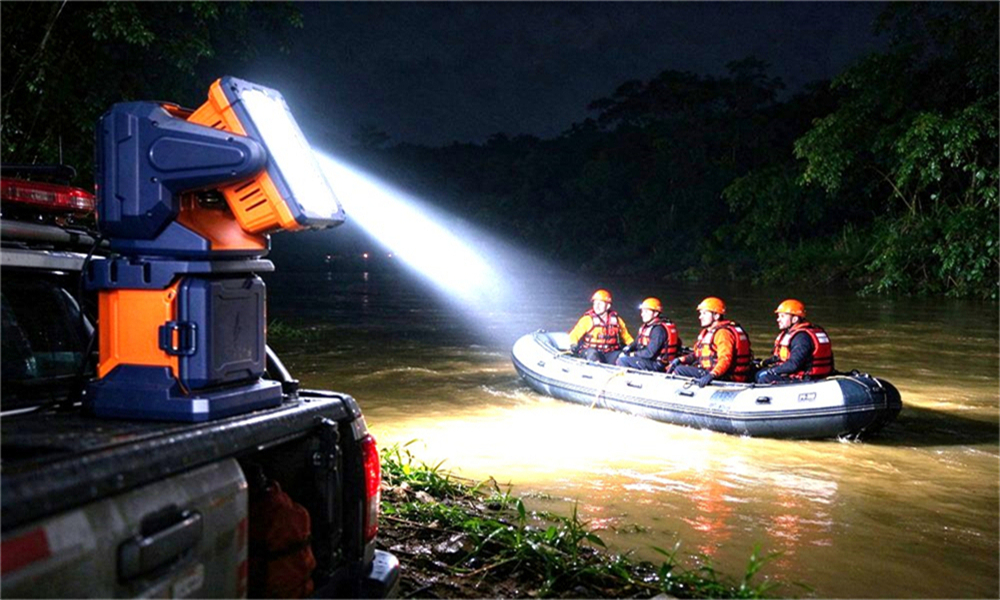
Water is reflective and deceptive; a disaster light aimed too high glares off the surface and blinds the boat crew.Camps need even wash, and roads need long throw.
This is where teams lose hours.They arrive with five identical flood lamps and discover none reach the rubble face.
The fix is planning: map each dark zone before dusk, then assign a disaster light role to each lamp.The FEMA field guidance stresses pre-positioning light sets before nightfall.
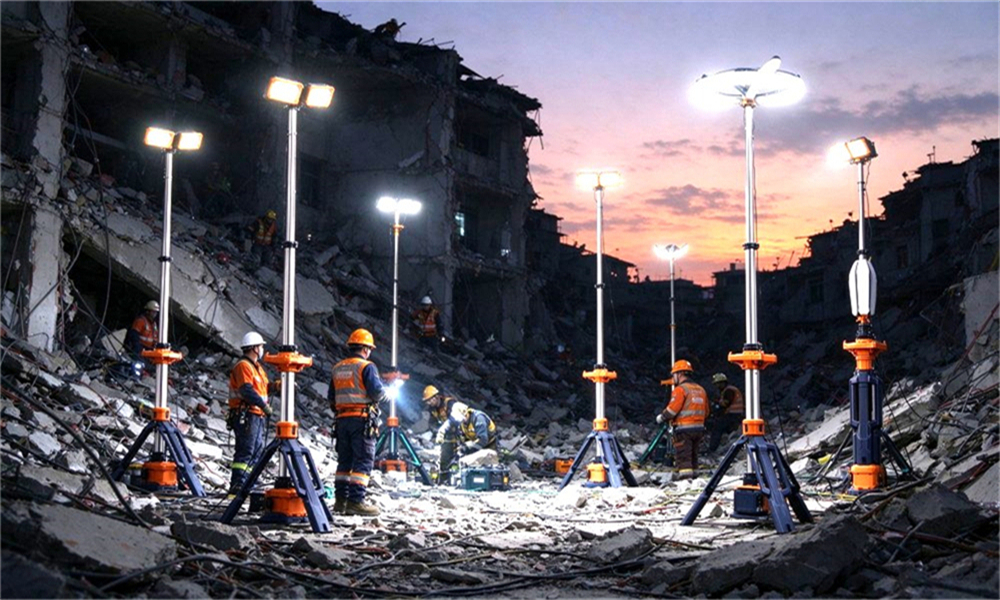
Under-lit rescue is slow rescue.When rescuers cannot see the rubble edge, they pause after every step, and every pause costs a trapped person minutes.
A proper disaster light removes that hesitation by making the ground, the rebar and the voids visible in one sweep.Light is rescue speed.
Bad disaster light also creates false signals.A dim lamp makes a shadow look like an empty gap, so a team walks past a survivor's voice.
Bright, even emergency scene lighting lets rescuers read small movements, a finger, a piece of clothing, which is how they confirm someone is alive under the concrete.
This is the core argument for planning before dusk.
A team that walks into rubble with a printed light plan already knows where each mast stands, who carries the spare battery, and which lamp covers the void.
A team that improvises after dark wastes the first hour just deciding where to stand. Minutes matter, and a disaster light plan buys those minutes back.
Weather compounds the problem.Rain, snow and dust scatter a weak beam into a fog that hides more than it shows.
A quality disaster light with a focused reflector cuts through these particles, while a cheap lamp just glows.In a storm, the difference between usable light and useless glow is survival.
Two more dark zones deserve mention.The collapsed interior of a building has no exit signs, so rescuers need a handheld disaster light to find stairwells.
The open-air assembly area after an evacuation needs even wash so families can locate each other.A single lamp cannot cover both, which is why layered emergency scene lighting wins.
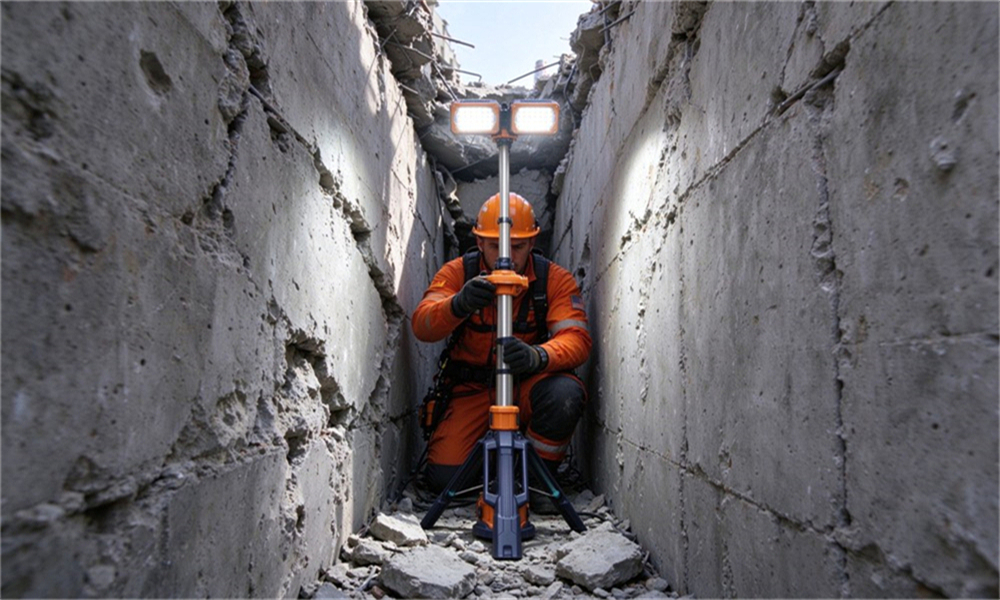
Think of emergency lighting for disaster response as three layers.The base layer is personal: every rescuer carries a handheld disaster light and a headlamp.
The middle layer is area: raised masts wash the work zone.The top layer is command: a tall tower or remote searchlight covers the whole camp and perimeter.
Each layer has a job.Personal emergency portable lights fill the gaps the masts cannot reach.Masts replace the sun over the rubble face.
The top layer guides the whole team and keeps a wide watch.When you buy a disaster light kit, buy all three layers, not just the brightest lamp on the shelf.
Missing one disaster light layer always shows.Without the personal layer, rescuers work in each other's light.Without the mast layer, the work face stays half dark.
Without the command layer, the perimeter goes un-watched.A balanced pyramid has no weak side, which is the whole point of layered emergency response lighting.
Not sure which layer your team is missing? Read our guide on how to choose emergency lighting equipment for bulk buyers, which walks through sizing towers, masts and handheld lamps before you place a tender.
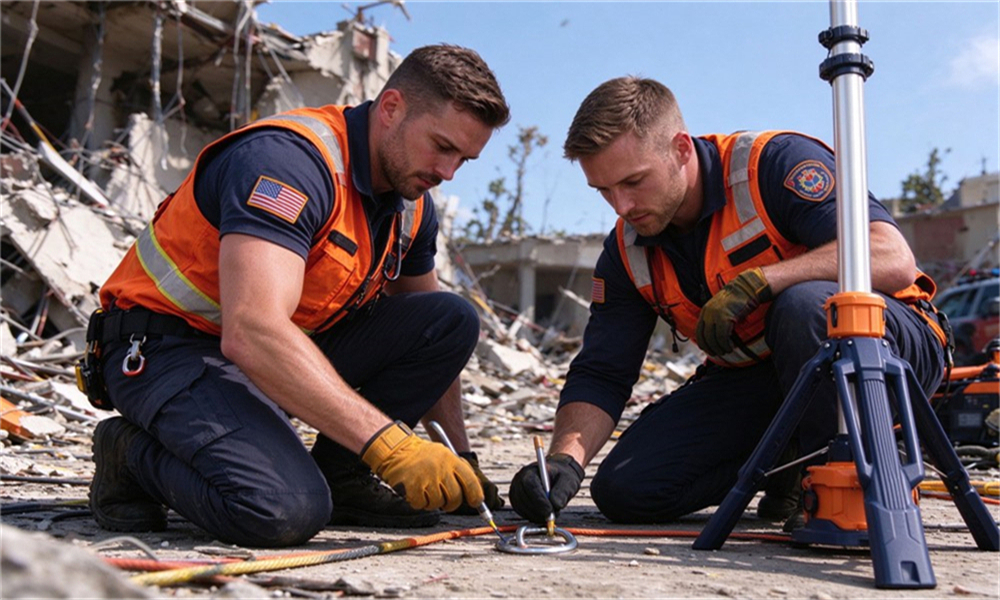
Speed decides whether light arrives before the second wave of victims.A good disaster light raises in seconds, not minutes.
The LED head reaches full brightness the moment you flip the switch; there is no warm-up delay like old halogen.
This instant-on nature matters when a rescuer hears a voice under concrete.
Battery rotation is the second principle.Every emergency response lighting set should arrive with twice the battery count of lamps.
While one disaster light works, its spare pack charges in the rolling case.Teams that forget spares spend the night swapping dead packs instead of searching the rubble.
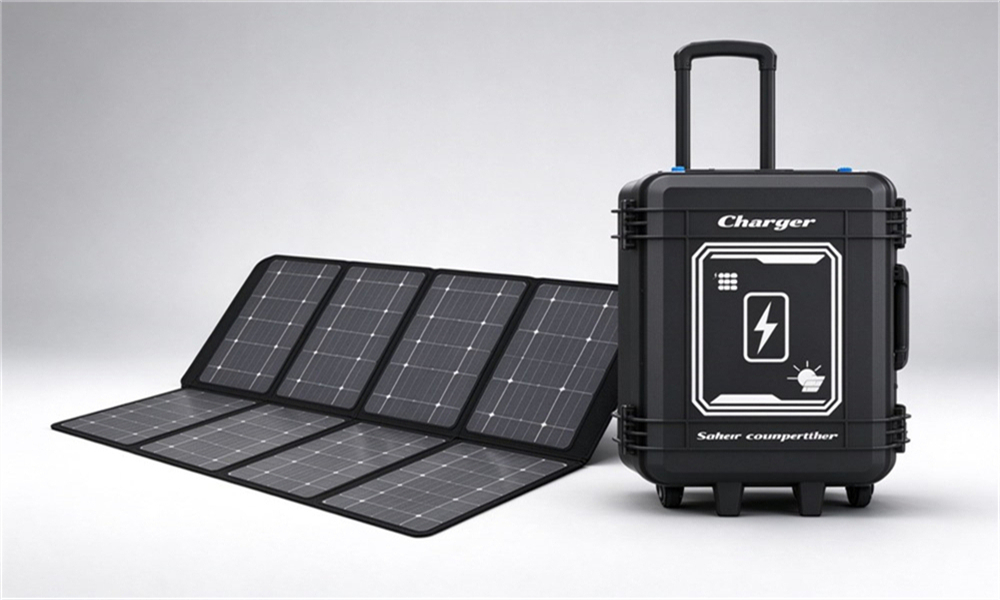
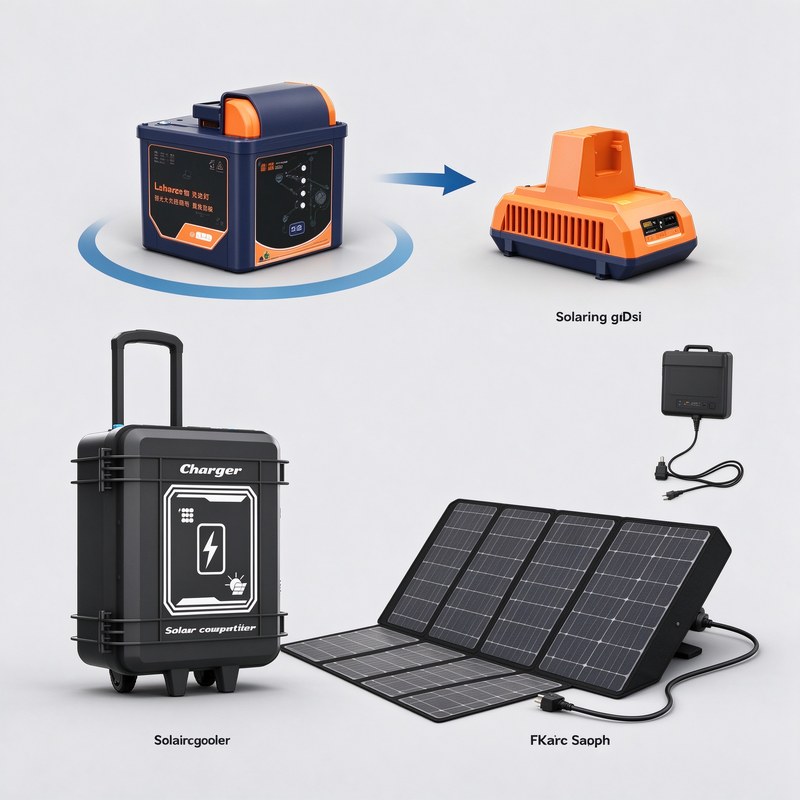
Off-grid charging closes the disaster light loop.A foldable solar panel plus a nine-battery rolling charging case keeps the whole fleet alive with no grid.
This is the standard support gear behind every long-running emergency scene lighting operation.For panel cleaning, tilt angle and battery rotation habits, see our notes on solar emergency light maintenance.
Browse more on rechargeable emergency light batteries and chargers.
The third principle is redundancy.Never leave the whole shift to one lamp.
A disaster light set should have at least one spare mast hidden in a truck, so if a leg snaps or a driver tips a unit over, a backup stands ready within minutes.
Redundancy is cheap insurance against the one night the grid never returns.
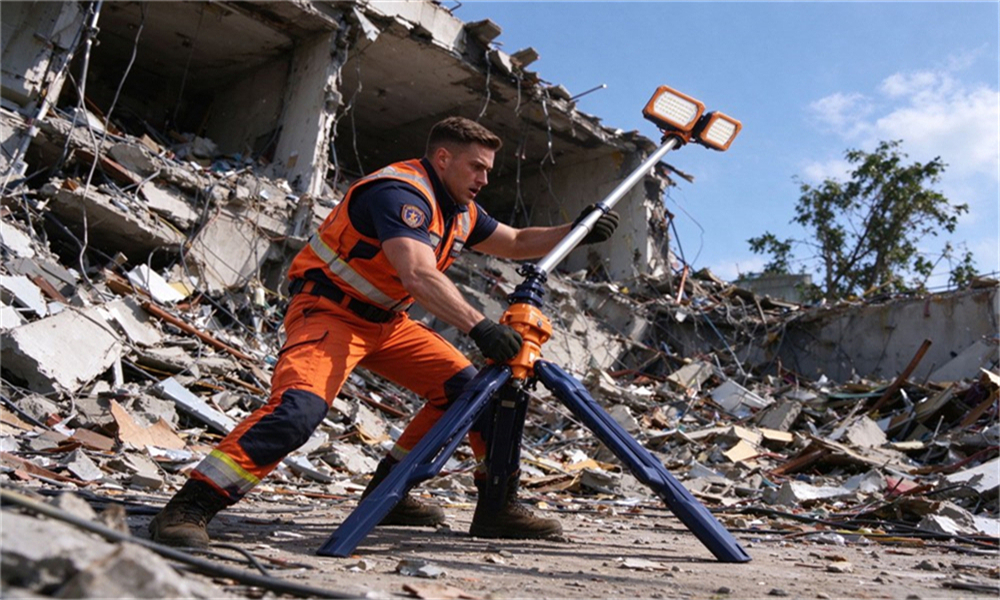
A clean starting kit has three pieces.First, a telescopic mast like the TL-200 for the work face.Second, a remote PT-200 searchlight for the long sweep.
Third, a PS-200 handheld lamp for each rescuer.This trio covers area, distance and personal light in one simple disaster light package.
Many first-time buyers overspend on one giant disaster light and forget the personal layer.The better budget move is a mid mast, two handheld lamps and a charging case.
You can add the remote searchlight later in phase two.The kit that works at every hand is the portable flood light for disaster relief teams on foot.
Keep one battery platform across all three pieces.When the mast, the searchlight and the handheld lamp share the same D24 pack, a single spare set powers any of them.
That shared platform is why this disaster light family is chosen for rapid deployments, where carrying ten different batteries is impossible.
Think of the disaster light pyramid as a budget ladder too.With a small budget, buy the personal layer first, because it protects every rescuer immediately.
Next add one mast for the work face.The top command layer, the remote searchlight, comes last.
This order spends money on the risks people actually face, night after night, on the rubble.
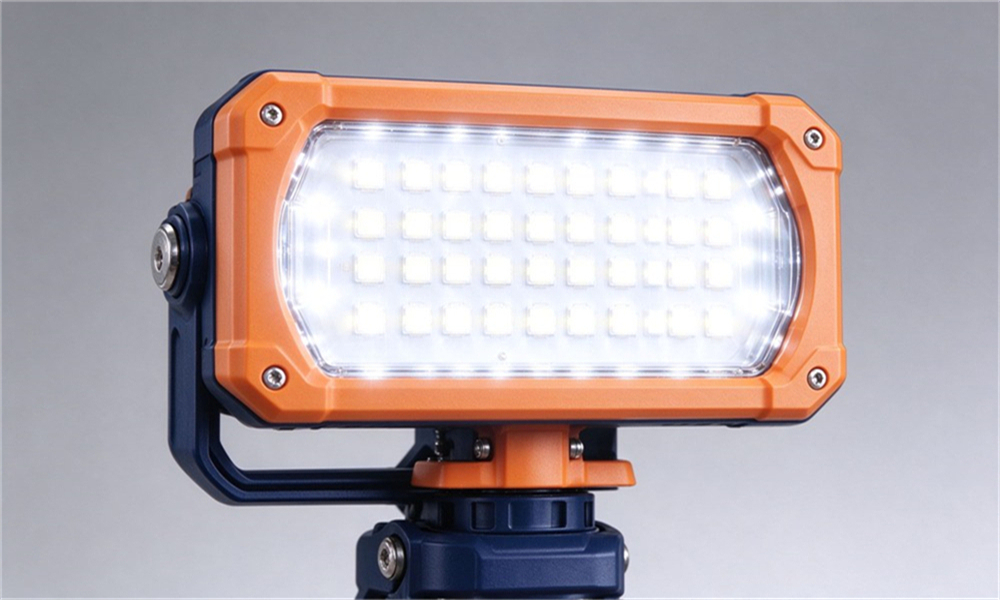
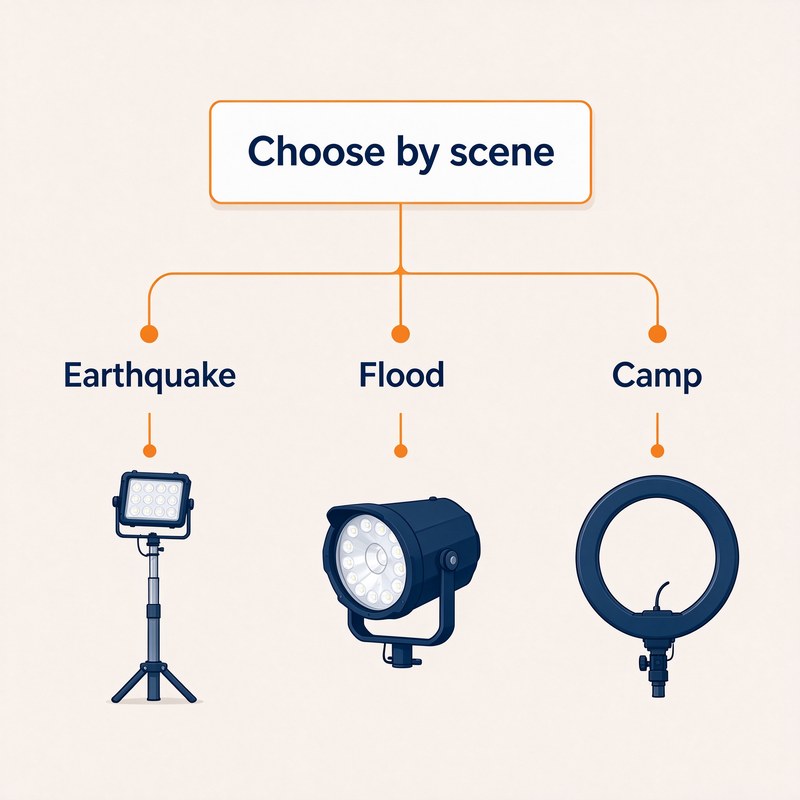
The same lamp rarely fits every disaster.Earthquake rubble needs raised masts that squeeze between fallen walls.Flood search needs a long-throw disaster light mounted on a vehicle.
Hurricane camps need even panoramic wash.Blizzard roads need warm, weather-sealed lamps that resist ice, see industrial fire rescue equipment for hazmat response.
For earthquake rubble, build this disaster light kit: two TL-200 masts per team plus one TL-200P panoramic ring light.
The masts cover the excavation face; the ring light floods the whole working plateau with no dark corner.Add one PT-200 remote rescue light to scan beyond the rubble edge.
This is the core disaster relief lighting bundle.
For flood and water search, mount the PT-200 on a truck roof.Its 360-degree pan-tilt sweeps the beam across the water while the boat crew stays in the lit cone.
Pair it with a handheld disaster light on each rescue boat for close work in the swells.
Water-side disaster relief lights must carry IP66 against splashes, seeflood rescue equipment for professional disaster response.
For hurricane shelters, this disaster light kit starts with the TL-200P ring light.Its 360-degree glow covers tents, a medical point and an assembly area from one pole.
Supplement with one mast per camp quadrant.For blizzard roads, use the long-run TL-400, which holds twenty hours on battery.
Each disaster also changes the personal disaster light layer.In rubble, rescuers need a rugged handheld panoramic lamp that survives drops off a slab.In flood, they need a water-sealed personal light.
In a camp, the handheld lamp doubles as a first-aid light inside a tent.
Match the personal emergency portable lights to the terrain, not just the price. A cheap lamp that dies after one splash costs more than a rated one over a wet rescue season.
Use this branch tree to size your disaster light order.First ask: is the main challenge vertical rubble, open water, a camp, or a road?
Rubble pushes you toward masts and ring lights.Water pushes you toward remote searchlights.Camp pushes you toward panoramic lamps.Road pushes you toward long-run masts.
Next, size the disaster light kit by team.A two-person rapid team needs one mast plus two handheld emergency portable lights.
A ten-person task force needs three masts, one searchlight, a ring light and two charging cases.Budget-led buyers start with masts, then add the remote searchlight in phase two.
Then ask the duty length.A four-hour urban search needs two packs per mast.A twelve-hour flood watch needs four.A multi-day camp needs the solar charging case.
Match battery count to the longest shift, and your disaster light plan holds the whole event without a dead lamp at midnight.
For mixed events, buy a modular disaster light kit.Start with two masts and two handheld lamps, then add the ring light and searchlight once the budget allows.
This staged approach means every dollar buys a working layer today, not a whole kit that sits in a crate.A modular disaster relief lighting plan grows with each mission.
Keep a spare disaster light mast in reserve for every five in service. On a long operation, one unit will take a knock, get knocked over, or develop a battery fault.
The spare means the work face never goes dark while the damaged unit is pulled aside for repair. This reserve rule is what separates a reliable fleet from a fragile one.
|
Team Size |
Mast Lights |
Searchlight |
Handheld Lights |
Charging Cases |
|
2-person rapid |
1 |
0 |
2 |
1 |
|
6-person crew |
2 |
1 |
4 |
1 |
|
10-person task force |
3 |
1 |
6 |
2 |
|
Full camp |
5+ |
2 |
10+ |
3 |
Disaster Type
Primary Lamp
Secondary Lamp
Personal Light
Battery Packs
Earthquake rubble
TL-200 mast
TL-200P ring
PS-200 handheld
4 per team
Flood water search
PT-200 remote searchlight
TL-200 mast
PS-200 handheld
4 per boat
Hurricane camp
TL-200P ring light
TL-200 mast
PS-200 handheld
6 per camp
Blizzard road
TL-400 long-run mast
PT-200 searchlight
T2 headlamp
6 per crew
Power outage road
TL-200 mast
PT-200 searchlight
PS-200 handheld
4 per crew
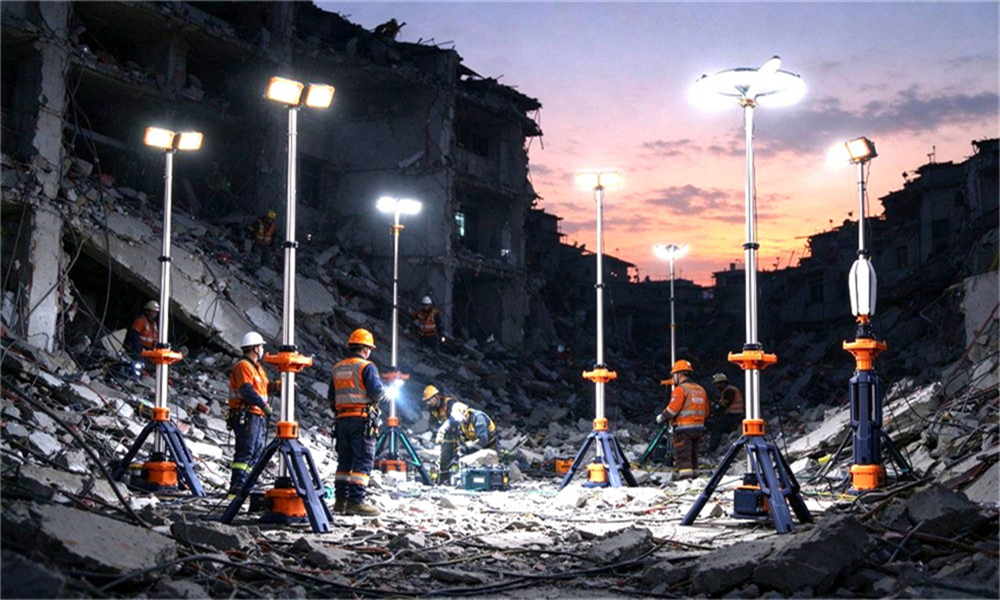
Step one is anchor choice.Walk the site in daylight and mark flat, stable ground away from falling debris.
A good disaster light anchor keeps the mast above eye level but clear of overhead wires.Bad anchors are the main reason masts collapse in wind.
Plan the anchor for each lamp before the sun sets.
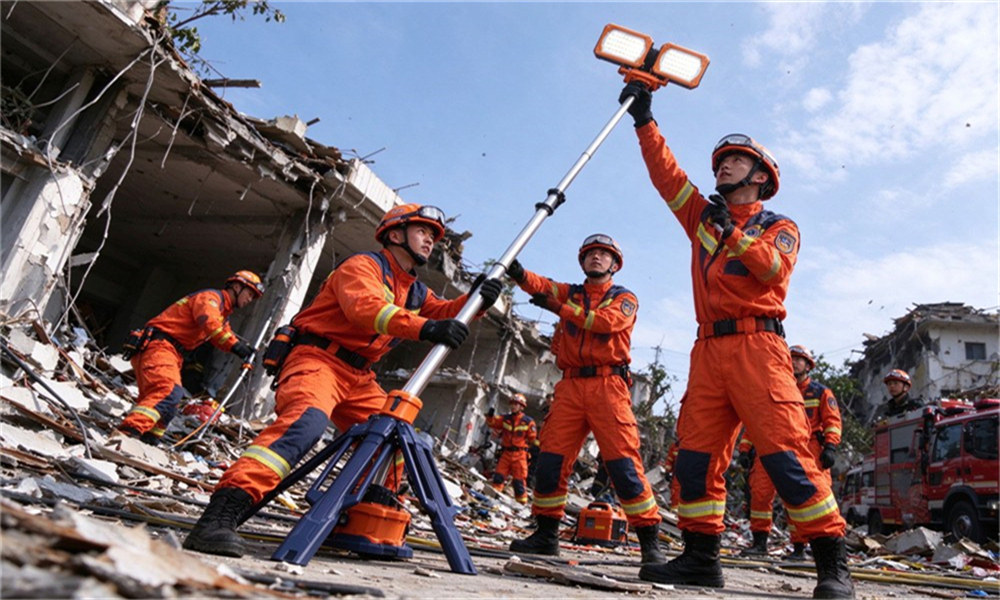
Step two is raising the mast.Extend the silver pole until the LED heads sit above the rubble face, then lock the collar.
A two-person team can stand a disaster light in under a minute.The twin heads should point inward toward the work, not outward into empty sky.This avoids wasted beam and glare.
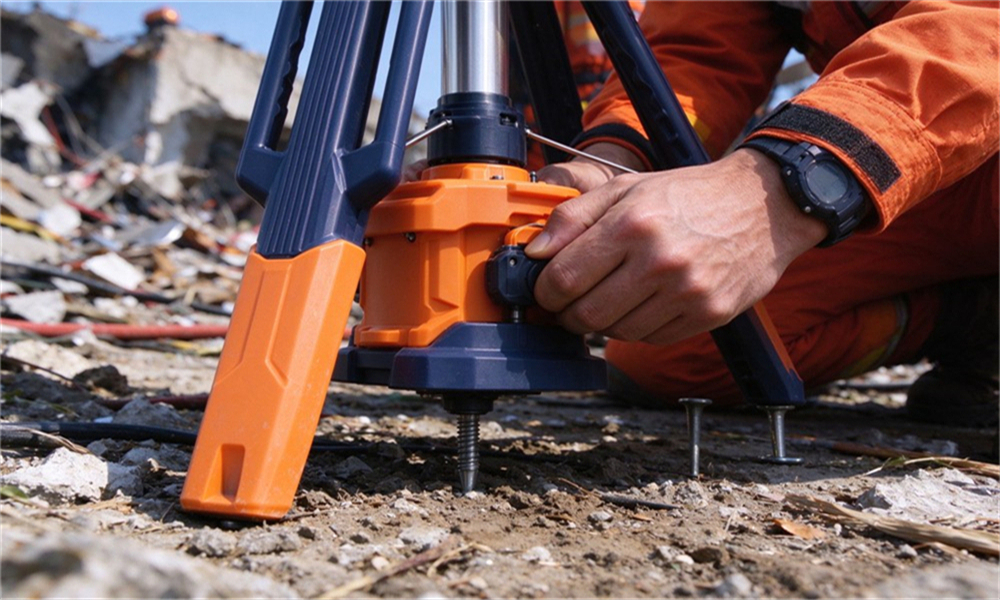
Step three is securing the legs.Splay the navy tripod feet, tighten the leg locks and, in wind, drive a stake through each foot.
A disaster light left on soft ground tips over in the first gust.Check the joint between the pole and the base; this is where vibration loosens the lock.
Step four is aiming at dark zones.Turn on the lamp and walk the perimeter of the lit area.Any wedge of shadow is a missed emergency scene lighting gap.
Move a mast or add a handheld disaster light until the whole work face reads evenly.Then start the watch log, noting battery hours remaining.
Step five is rotation.When a pack drops below half, swap in the spare and send the drained pack to the charging case.
Never run a disaster light to empty; a dead lamp in the middle of the night forces a cold battery swap on rubble.
A clean rotation routine keeps every lamp lit for the full shift.
Assign one person to battery duty each night.That crew member watches the fuel gauge on every mast, swaps packs before they die, and plugs drained units into the TKC-9 case.
Without this role, even a well-planned disaster light fleet fades out by the early morning.Light discipline is a job, not a habit.
Mark each disaster light anchor on a simple site map before you raise the lamps.
When the site changes overnight, the map tells the next shift exactly where a mast stood and why.
This handover step keeps the emergency response lighting consistent across rotating crews, so no zone goes dark because a new team forgot a lamp.
Step
Action
Time
Key Check
1
Mark a flat, stable anchor point
Daylight
Clear of wires and falling debris
2
Raise the mast above the work face
Under 1 min
Heads point inward, not outward
3
Splay and stake the tripod legs
30 sec
Wind fixation on soft ground
4
Walk the perimeter, fill dark gaps
5 min
No shadow wedges on the face
5
Rotate batteries before they drain
Continuous
One person owns battery duty
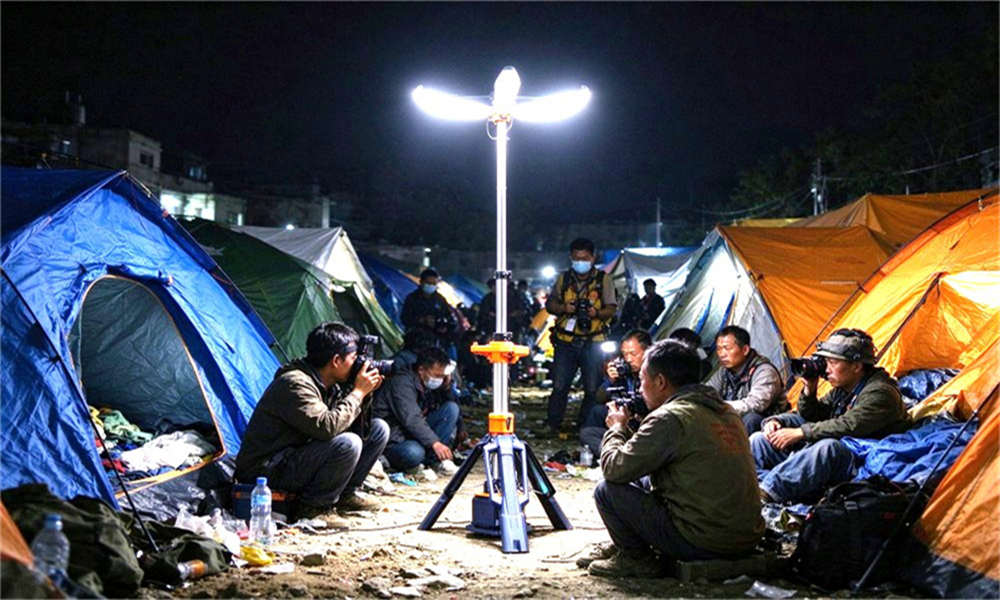
The earthquake shelter camp disaster light runs on one rule: keep it even.
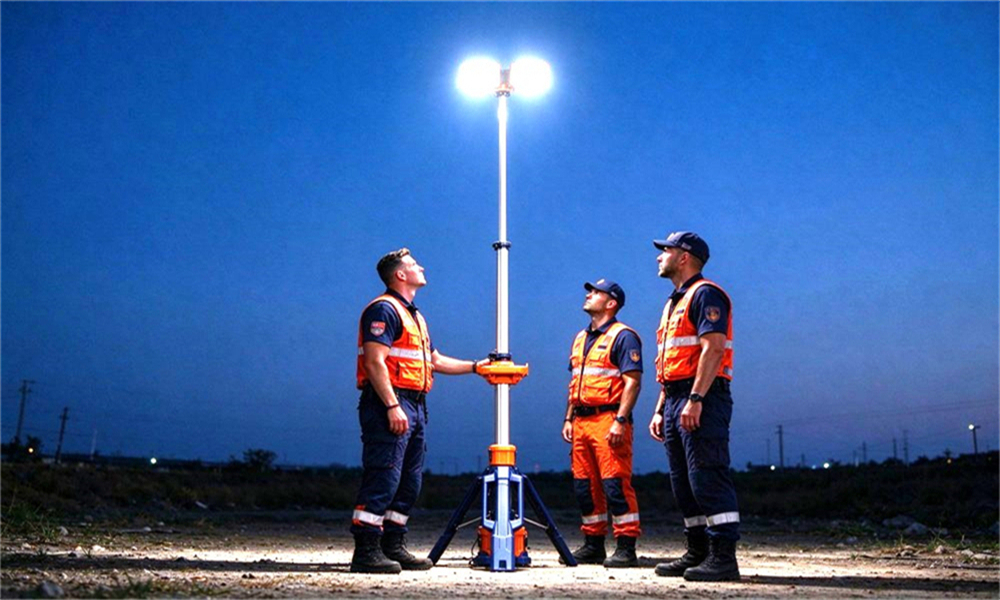
A TL-200P ring light in the centre throws a soft 360-degree glow over tents, a medical point and an assembly lane.Rescuers rest between shifts in the warm spill.
This kind of emergency lighting for disaster response reduces anxiety and keeps the camp safe.
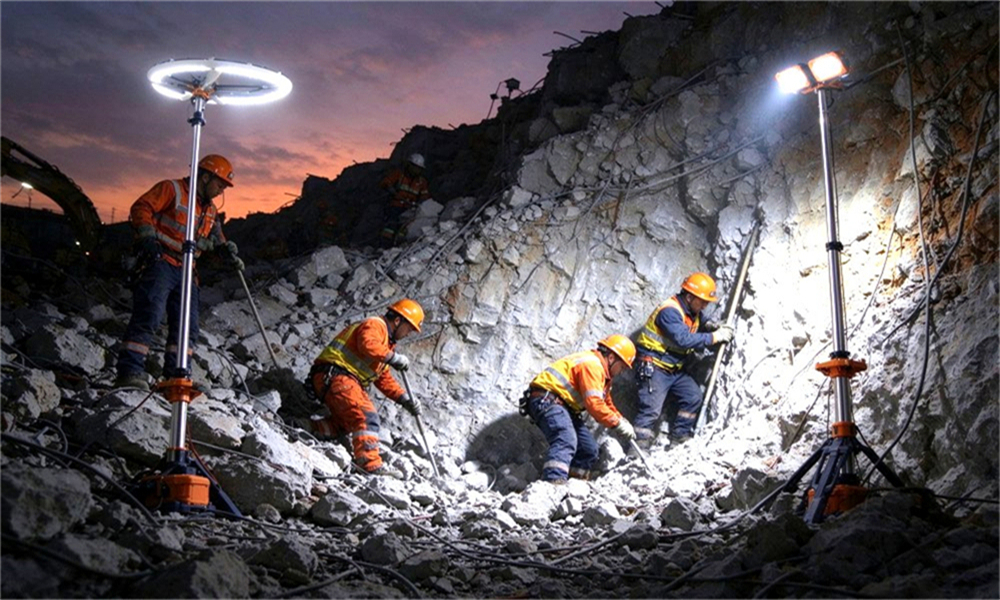
The rubble excavation face needs two angles at once.One mast lights from the left, one ring light from the right, so no slab hides a shadow.
Workers dig with both hands visible.This is where a disaster light earns its cost: it lets the crew work fast without stepping back to reposition a lamp.
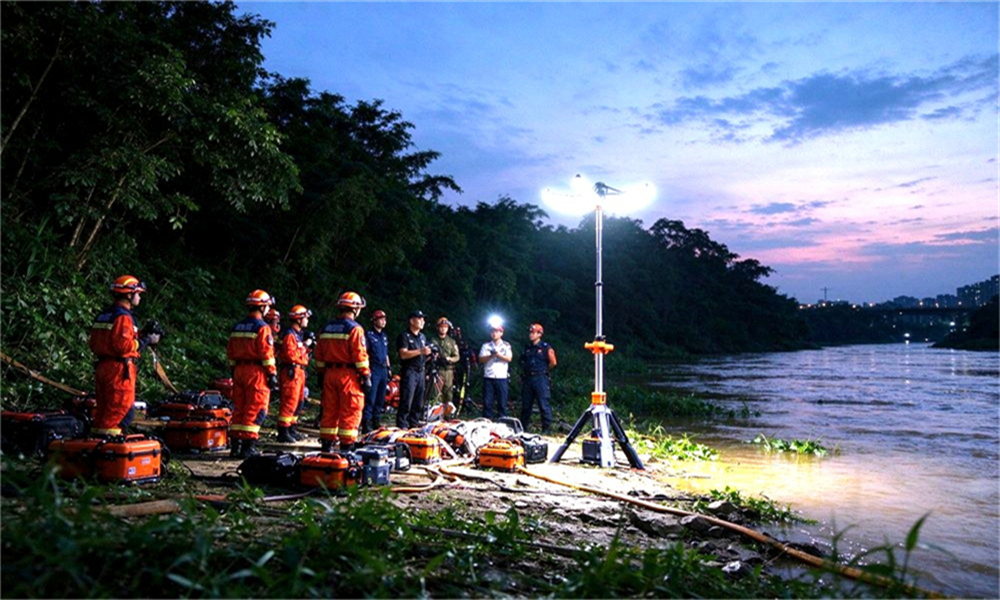
The flood riverbank disaster light staging area needs order.A ring light marks the assembly point where boats launch and gear stacks up.
Rescuers gather under the pool of light before each run, so the duty officer can count heads.
Water-side disaster relief lights also deter rescuers from walking into deep water in the dark, see coastal rescue gear for maritime disaster operations.
The command post needs its own light too. A table with a map, a radio and a clipboard disappears at dusk unless a lamp points at it.
A small handheld panoramic light set on the tabletop keeps the map readable without glare into anyone's eyes.
This detail stops the command layer from going dark even when every mast is out on the rubble.
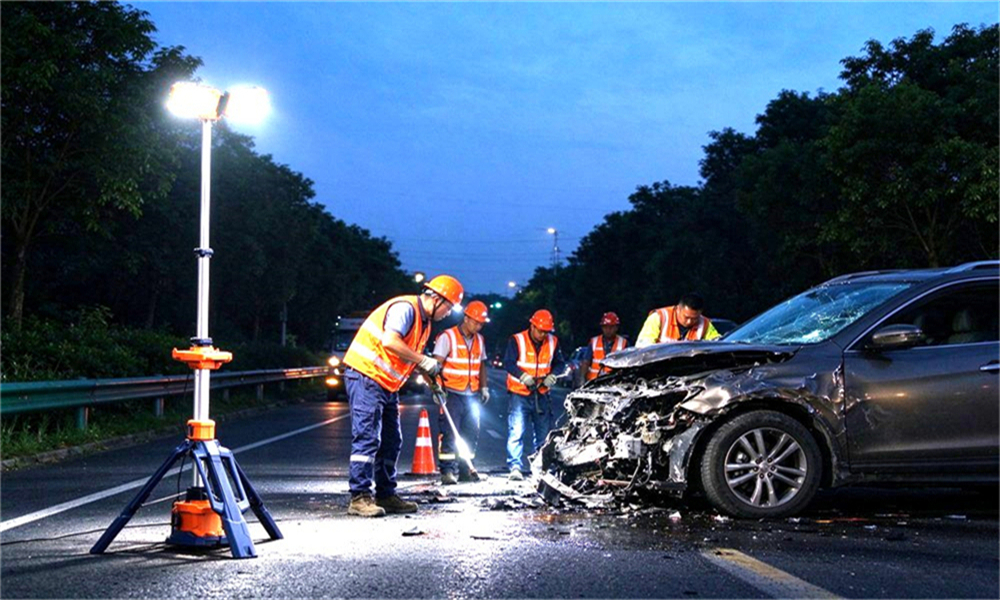
The power-outage road scene is common after storms.A mast light on the shoulder illuminates a crashed car and the cut-power lane while traffic waits.
Workers in orange vests stay visible because the disaster light also acts as a warning beacon.See the full checklist on emergency lights for power outage checklist.
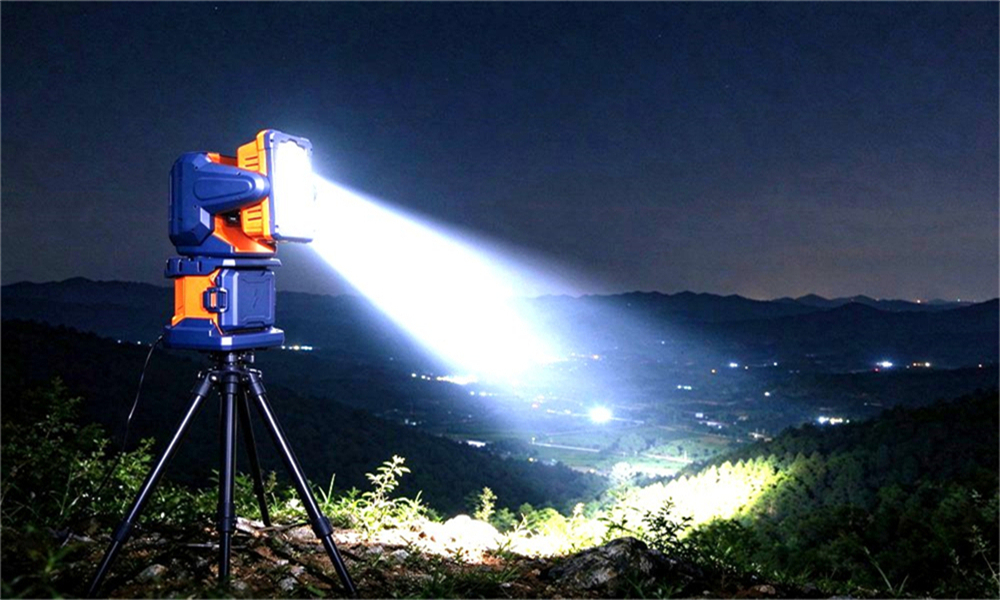
Sometimes the search needs a vantage point.A remote PT-200 set on a hilltop sweeps a wide cone across the valley below, guiding teams toward a missing person's last signal.
This long-throw rescue light covers terrain no mast on the ground can reach.It is the command layer of the disaster light pyramid.
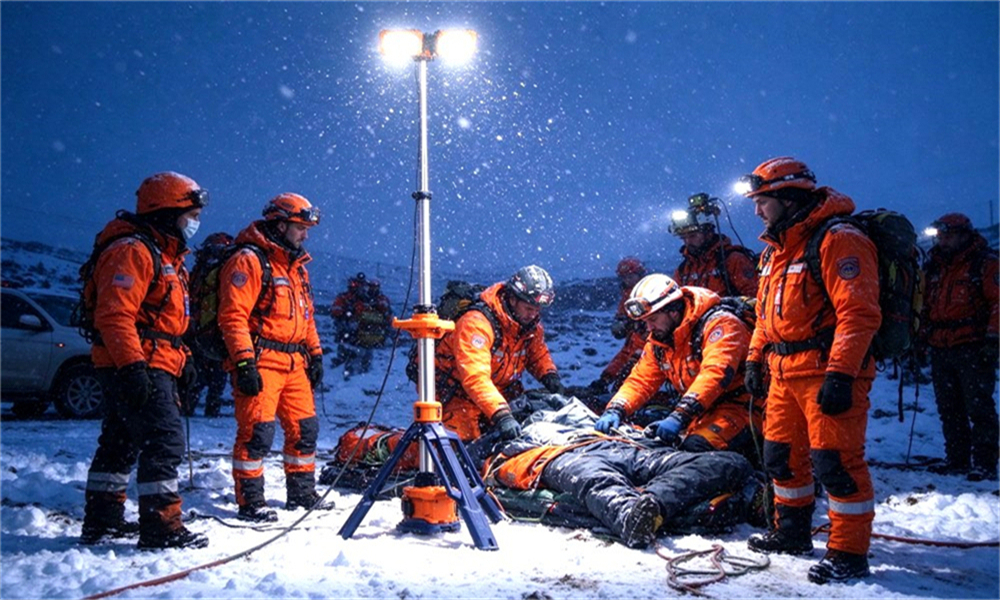
The blizzard road rescue combines cold and dark.Rescuers in heavy orange gear work around a raised mast, its warm LED pool cutting the falling snow.
The long-run battery keeps the disaster light alive for hours while the team stabilises a patient.In storms, weather-sealed emergency portable lights outlast cheap units that freeze shut.
In every scenario, the goal is the same: remove the dark before it removes a victim.
A well-chosen disaster light does not draw attention to itself; it simply lets rescuers work at full pace through the night.
When the sun returns, the team packs the same lamps back into their cases, ready for the next call.
That repeatability is why agencies standardise on one disaster light family.
When every mast, searchlight and handheld lamp looks the same and charges from the same pack, a new recruit is productive on day one.
This shared-platform logic is the quiet reason a layered emergency lighting for disaster response kit outperforms a box of mixed brands.
Across all these scenes, the disaster light never decides the strategy. The strategy decides the lamp.
Whether the challenge is vertical rubble, open water, a tented camp or an ice road, you first map the dark zones, then match a mast, a searchlight and a handheld light to each one.
This page is the short version of that match, ready for your next equipment plan.
The recommended disaster light family shares one battery platform, so spares stay simple.The TL-200 is the standard mast at 2.3 metres and six kilograms.
The TL-400 is the long-run version at 2.2 metres and ten kilograms, built for all-night shifts.The TL-200P adds a 360-degree ring head at 2.5 metres.
On top of the disaster light masts sit the point lights.The PT-200 remote pan-tilt searchlight sweeps beams on command from a magnetic mount.
The PS-200 handheld panoramic lamp weighs two kilograms and clips to a vest.All of these emergency lighting for disaster response units share the same D24 battery pack and MC chargers.
|
Model |
Type |
Max Height |
Weight |
Battery Runtime |
Rating |
|
TL-200 |
Telescopic mast |
2.3 m |
6 kg |
8 h work / 45 h eco |
IP66 IK10 |
|
TL-400 |
Long-run mast |
2.2 m |
10 kg |
20 h work / 100 h eco |
IP65 IK10 |
|
TL-200P |
Panoramic ring mast |
2.5 m |
7 kg |
8 h work / 45 h eco |
IP66 IK10 |
|
PT-200 |
Remote PTZ searchlight |
Mounted |
Subject to contract |
Subject to contract |
IP66 IK10 |
|
PS-200 |
Handheld 360 light |
Handheld |
2 kg |
8 h work / 45 h eco |
IP66 IK10 |
Support gear completes the disaster light kit.The D24 battery pack runs every lamp in the range.The MC-1 and MC-2 chargers top packs between shifts.
The X1-75 power adapter switches to grid when it returns.The FS8-200 foldable solar panel and TKC-9 nine-battery case keep remote camps alive off grid.
Exact beam throw, remote range and rotation speed are confirmed per project in the contract, subject to contract.Lumens and runtimes above are the rated values from the manufacturer datasheet.
Match your layout to these ranges, and ask for tender-ready disaster light specs before you quote.
When you compare two disaster light kits, do not compare peak lumens alone.Compare runtime, weight, deployment time and ingress rating.A heavier mast that needs two people slows the whole crew.
A light that dies in three hours forces constant swaps.A well-balanced emergency response lighting kit combines all four, not just the brightest number on a brochure.
Weight matters on foot.Every kilogram a rescuer carries into rubble is a kilogram less of medical gear.
The six-kilogram TL-200 and two-kilogram PS-200 are chosen because a team can carry several between them without exhaustion.
For rapid walks of a kilometre or more, lighter disaster light units win over heavier bright ones.
Finally, think about disaster light spares.A mast has three wearing parts: the LED head, the pole collar and the battery contacts.
Keep one spare LED head and a set of contacts in the kit bag.
When a lamp cracks on rubble, a ten-minute swap beats waiting a week for a replacement. Small spares are what keep a layered emergency response lighting fleet alive across a long emergency.
The first 72 hours after an earthquake, flood or hurricane decide survival rates. This anchor explains the power-recovery timeline and how many watts of lighting a rescue team actually needs inside that window.
Grid power rarely returns inside 72 hours after a major disaster. It typically takes 3-7 days for feeder restoration and 1-4 weeks for full rebuild. Lighting in the first 72 h must therefore come from battery and solar, not from grid-connected generators.
Inside the 0-72 h window, search-and-rescue crews work rubble piles, first-aid posts and road clearance. Without light, night-time rescue productivity drops by 60-80% per IFRC field data. Lighting is not a comfort item; it doubles rescue hours.
Field benchmarks from Sphere and WHO EMMA set the floor:
A 30-person urban search-and-rescue team therefore needs about 900 W of deployable lighting. That is roughly one solar mobile tower plus six portable masts plus twelve handheld lights.
Humanitarian minimum standards reference Sphere humanitarian standards. Emergency field medical guidance follows WHO EMMA emergency. International rescue coordination follows INSARAG guidelines.
Rubble faces need 20-30 lux to spot a hand or a gap. Camp walkways need 20 lux to avoid trips. Medical posts need 100 lux minimum for wound cleaning. Below 10 lux, rescue becomes dangerous and slow.
Disaster lighting cannot be solved with one product. This anchor explains the three-layer pyramid and the coverage area each layer must deliver.
The top of the pyramid is a solar or diesel mobile light tower. It covers ≥3000 m² at 20-30 lux. One tower lights the rubble face, the triage area and the access road simultaneously. Towers are positioned at the edge of the site so shadows do not fall on the work face.
Solar towers are preferred in the 72-hour window because they run silently and do not need fuel resupply. Diesel towers take over in the 3-7 day window when fuel logistics stabilize.
The middle layer is a battery telescopic mast. It covers ≥300 m² at the work face. Six masts spread around a 30-person operation cover every corner of a damaged building without dark gaps.
Masts are quicker to deploy than towers (2 minutes vs 30 minutes) but do not have the reach. They fill shadows that towers cannot reach because of rubble obstructions.
The bottom layer is a handheld rechargeable work light. It covers ≥30 m² at the personal work face. Every rescuer carries one clipped to a vest. Personal lights are the backup when towers and masts are out of reach inside a collapsed floor.
Layer overlap is deliberate. The pyramid is designed so that even if a tower fails, masts and handheld lights keep the site operational. Relief kit guidance references IFRC shelter kit. Security lighting practice aligns with IES RP-20 security lighting.
A lighting plan on paper is useless without a field SOP. This anchor gives the three-step deployment drill and the battery rotation rule.
Pick anchor points on firm ground or rubble edges, never on unstable debris. Outriggers must extend to full footprint before raising the mast. A tower on loose gravel can slide in 40 km/h wind.
Keep towers 15 m back from the rubble face to avoid falling debris. Keep masts 5 m back. Personal handheld lights go as close as the rescuer can safely work.
Deployment drill for a telescopic mast: legs open (30 s), pump to full height (30 s), aim head at the darkest sector (30 s), verify no dark pockets (30 s). Total under 2 minutes from carry bag to lit work face.
For a mobile tower: unhitch, extend outriggers, raise mast to 7 m, aim head at rubble face. Total about 20 minutes with two crew.
Battery-powered masts and handheld lights need rotation. Rule of thumb: swap batteries every 4 hours. A depleted pack goes to a solar charger while a fresh pack goes into the light. This keeps the site lit through the night without grid power.
Night-time battery swaps must not interrupt lighting. The crew holds a handheld light in one hand while swapping with the other. INSARAG field coordination references INSARAG guidelines. US construction illumination rules align with OSHA 1926.56 illumination.
About 900 W deployable. That is one solar mobile tower (3000 m²) plus six portable masts (300 m² each) plus twelve handheld lights (30 m² each). Plan on battery rotation every 4 hours.
Because diesel needs fuel resupply, and fuel logistics are broken in the first 72 hours. Solar towers run silently and self-charge during the day. Diesel takes over in days 3-7 when tankers can reach the site.
Medical posts need ≥100 lux. Rubble faces need 20-30 lux. Below 20 lux on rubble, rescue becomes slow and dangerous. Portable masts aimed at the triage table deliver this.
How should disaster emergency lighting be stored before a disaster?
Store disaster emergency lighting packs at 50-70% charge in a dry warehouse, and rotate stock every 6 months.
This keeps disaster emergency lighting ready to deploy at once, and it is standard practice for disaster emergency lighting pre-positioning.
How long do batteries last in disaster emergency lighting storage?
Batteries in disaster emergency lighting hold 80% capacity after 2 years on the shelf if kept at 50% charge.
This shelf life makes disaster emergency lighting reliable pre-positioned stock, and disaster emergency lighting packs ship with a charge check date.
Can relief groups order disaster emergency lighting in small trial batches?
Yes, disaster emergency lighting is sold in trial batches of 5-10 kits before a full relief tender.
This lets agencies test disaster emergency lighting in real camps first, then scale disaster emergency lighting to the whole operation.
What should a relief kit include besides the lamp itself in disaster emergency lighting?
A complete disaster emergency lighting kit includes the lamp, spare battery, charger, carry case and a multi-language quick guide.
This full kit lets aid workers deploy disaster emergency lighting immediately, and every disaster emergency lighting set ships with these spares.
How do refugees charge disaster emergency lighting off-grid?
Refugees charge disaster emergency lighting from small solar panels or shared mobile towers, since grid power is absent.
This solar-first charging keeps disaster emergency lighting running for weeks, the standard model for disaster emergency lighting in long camps.
Who supplies disaster emergency lighting after major earthquakes?
Relief agencies buy disaster emergency lighting from certified Chinese manufacturers that ship WHO and UN-compliant kits.
Every disaster emergency lighting pack carries IP65 sealing, and the supplier consolidates disaster emergency lighting into one container.
Should disaster emergency lighting be battery or solar powered?
Battery handheld units deploy instantly, while solar mobile towers run for weeks without fuel, so disaster emergency lighting should mix both.
Battery lights cover the first 72 hours, then solar towers sustain the camp, matching the phases of disaster emergency lighting response.
How do you avoid glare with disaster emergency lighting at a medical tent?
Angle disaster emergency lighting away from patients and hold 50 lux at treatment points rather than flooding the tent.
Shielded heads preserve night vision, a key detail in disaster emergency lighting for medical and triage zones.
What minimum battery backup should disaster emergency lighting carry?
Good disaster emergency lighting carries at least 4 hours of battery backup, and mobile towers offer 8-12 hours.
This keeps lights on after grid failure, the core requirement relief agencies set for disaster emergency lighting.
What lux levels does disaster emergency lighting need at a relief camp?
Disaster emergency lighting at a relief camp targets 20-50 lux across walkways and 50-100 lux at medical and distribution points, following IFRC camp standards.
Layered mobile towers and handheld units avoid dark pockets where injuries happen, which is the core goal of good disaster emergency lighting.
How quickly can disaster emergency lighting be deployed after a storm?
Battery-powered disaster emergency lighting deploys within minutes on tripod or vehicle mounts, ahead of grid restoration.
Mobile towers need a generator or solar charge, but handheld units work immediately, covering rubble and evacuation routes the first night of disaster emergency lighting.
A 6.8 magnitude earthquake levels 300 homes in a mountain district. Grid power goes down at 14:20. This case shows how a disaster relief lighting plan unfolds hour by hour inside the golden 72-hour window.
Local volunteers start digging at 15:00 with handheld lights. By 20:00 four teams work by phone flashlight. At 22:00 two portable telescopic masts arrive from the district store. They light the two worst rubble piles at 20-30 lux. Personal handheld lights clip to rescuers' vests.
At 04:00 the next morning, a solar mobile tower arrives on a 4WD. It is positioned 15 m back from the main rubble face. Outriggers extend, mast rises to 7 m. By 04:30 the entire 3000 m² relief area is lit at 25 lux. Medical triage at the clinic gets a dedicated mast at 100 lux.
Battery packs rotate every 4 hours. The solar tower harvests 4.5 kWh during the day (mountain irradiance). Portable masts recharge from the tower's USB output during daylight. By day 3 the grid is still down but the site runs on a sustainable lighting loop.
Layer
Product
Coverage
Deploy time
Power source
Layer 1 (area)
Solar mobile tower
3000 m² at 25 lux
20 minutes
Solar + battery
Layer 2 (work face)
Portable telescopic mast
300 m² at 30 lux
2 minutes
Battery 57.7 Wh
Layer 3 (personal)
Handheld COB work light
30 m² at 50 lux
Instant
Battery 18.5 Wh
A complete disaster relief lighting kit for a 30-person rescue team is therefore: one tower, six masts, twelve handheld lights, plus 24 spare battery packs. This is the minimum Sphere-compliant configuration for urban search-and-rescue.
Q: How is a disaster light different from a portable flood light?
A flood light washes a wide flat area from one low position.A disaster light plan layers raised masts, remote searchlights and personal lamps to cover three dimensions.
The flood light is one tool in the kit; the disaster light system is the whole layered approach to rescue on the ground.
Q: Can you supply custom disaster light kits for government and NGO projects?
Yes.We build bundled kits per disaster type, team size and budget, and support OEM on housing colour, battery voltage and carry cases.
Provide your scenario list and crew size, and we assemble the mast, searchlight, handheld and charging set.All final specs are subject to contract.
Q: What is the MOQ and lead time for a disaster light order?
MOQ and lead time depend on the model mix and order volume, and are stated per project in the contract.
Standard mast units are stocked; custom OEM colours and large fleet orders need a confirmed production schedule.MOQ and lead time are subject to contract.
Q: How are disaster light units packed and shipped for export?
Lamps are packed in reinforced carry cases and then wooden crates suitable for sea freight.Each mast disassembles into a compact tube, and the charging case rolls like luggage.
Spare batteries ship per lithium transport rules.This keeps a whole disaster light kit easy to deploy on arrival.
Q: How many lights does a first response team actually need?
A standard two-person disaster light team needs one mast light, two handheld panoramic lamps and four battery packs.
Add a second mast and a remote searchlight when the team grows to six or more.
Buy by coverage, not by gadget count: enough units to light every dark zone, with one spare per layer.
Related Guides & Products
Emergency Lighting Supplier——Browse the full emergency lighting equipment range.
Global voltage: 110V / 220V / 240V configurations. Built to IEC standards; CE marking and UL/ETL-ready options on request. Exported to USA, Europe, Middle East and Southeast Asia. Manufactured in China.
Standards referenced on this page: IEC lighting standards · OSHA workplace safety · US Department of Energy · NFPA fire safety codes · CDC emergency preparedness. These are general references only; local codes and your contract govern compliance.
Product range: layered disaster light kits including TL-200 telescopic masts, TL-400 long-run masts, TL-200P panoramic ring lights, PT-200 remote searchlights and PS-200 handheld lights, built in China.
All parameters, runtimes and lead times are planning ranges and are subject to contract.
Previous :
Emergency Lighting Supplier for Wholesale and Relief TendersNext :
Remote Control Searchlight for Ports and Perimeter Security Water Rescue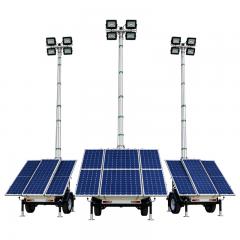 Solar Mobile Light Tower for Disaster Camps and Remote Sites
This trailer-based solar mobile light tower is equipped with high-efficiency monocrystalline solar panels, adjustable LED floodlights and telescopic mast. Powered by gel battery, it offers stable off-grid lighting for construction, disaster relief, remote outposts and emergency rescue tasks. Note: Price for reference only. Exact price based on quantity, size, weight and custom details.
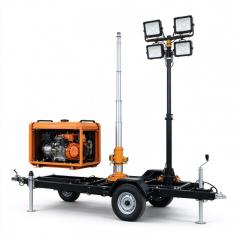 Diesel Light Tower for Night Construction Mining Emergency Repair Sites
This trailer-mounted diesel mobile light tower integrates diesel generator, telescopic mast and multi LED flood heads. It delivers stable high-power lighting without solar reliance, ideal for construction, road repair, disaster recovery and all-night emergency works. Note: Price for reference only. Exact price based on quantity, size, weight and custom details.
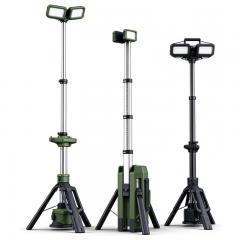 Portable Telescopic Flood Light for Rescue and Road Work
This TL-200 portable flood light adopts telescopic aluminum mast and dual LED heads, powered by lithium battery. It delivers stable bright illumination for fire rescue, roadside emergency, construction and disaster relief, easy to carry and fast setup. Note: Price for reference only. Exact price based on quantity, size, weight and custom details.
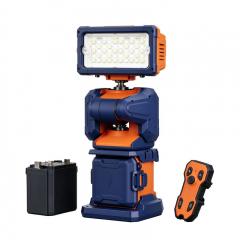 Remote Control Searchlight for Ports and Perimeter Security Water Rescue
Remote pan tilt rescue light with wireless remote, magnetic base and long throw narrow beam. It supports horizontal and vertical rotation, salt spray resistant housing, suitable for water rescue, port, border patrol and industrial perimeter security. Bulk wholesale, OEM custom color and packaging available. Note: Price for reference only. Exact price based on quantity, size, weight and custom details.
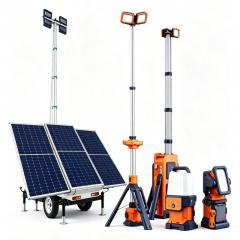 Emergency Lighting Supplier for Wholesale and Relief Tenders
Full emergency lighting lineup includes solar light towers, diesel towers, telescopic lights and handheld rechargeable lights. IP rated, durable for disaster relief, construction, warehouse and night rescue, supports off-grid power supply for long time outdoor illumination. Note: Price for reference only. Exact price based on quantity, size, weight and custom details.
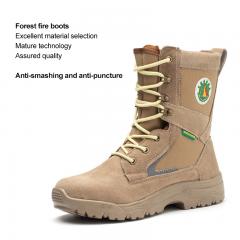 Anti-Smash Puncture Boots, 25CM High, Fire Rescue
These beige anti-smash puncture boots feature military-grade protection technology with impact resistance tested to 210J. The special puncture-resistant plate withstands 1100N of penetration force, providing complete sole protection. The 25CM high-top design wraps the entire ankle, increasing lateral stability by 65%. Innovative quick-dry lining technology improves moisture-wicking speed by 50%, keeping feet dry. Specifically designed for firefighters facing building collapses, industrial accidents, and complex terrain rescue operations, these boots provide comprehensive anti-smash and puncture protection, ensuring rescue personnel can safely and efficiently complete tasks in hazardous environments.
Copyright © Custom Disaster - Relief Bedding: Tents, Sleeping Bags, Blankets All Rights Reserved
the professional team to service !