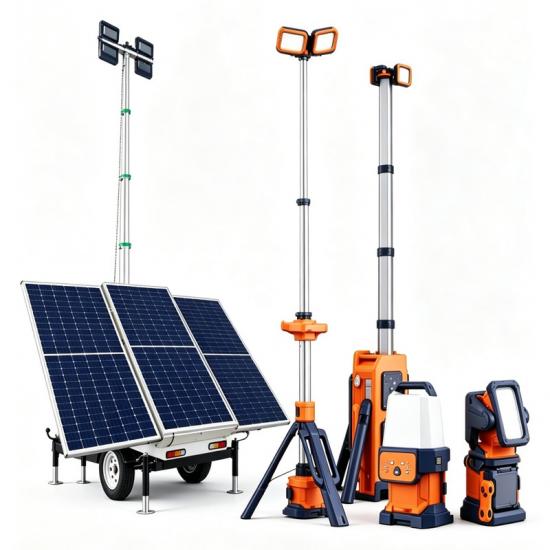
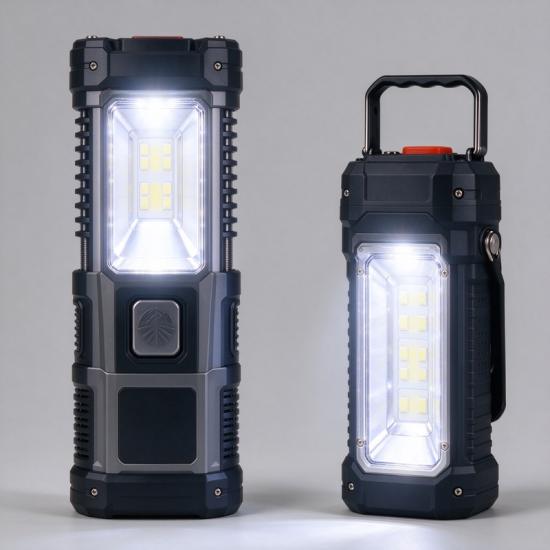
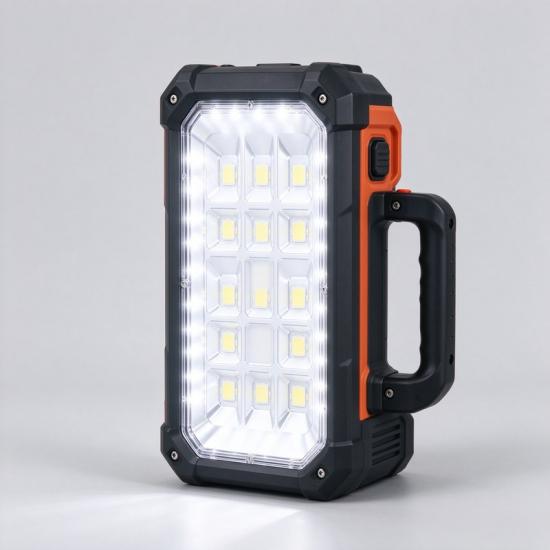
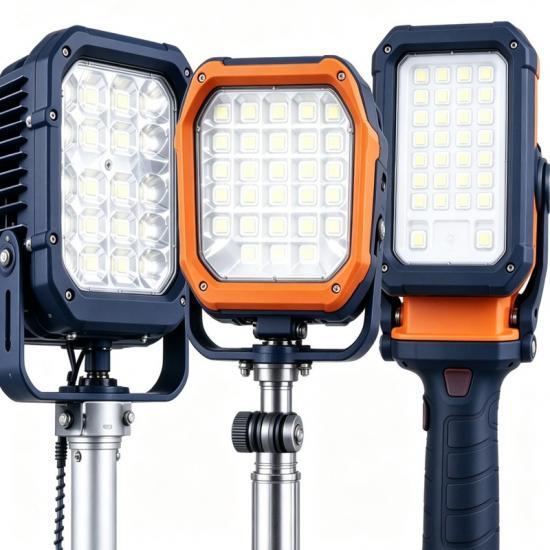
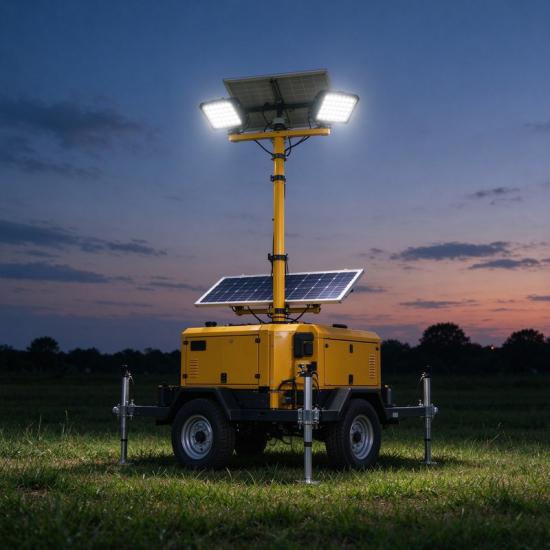
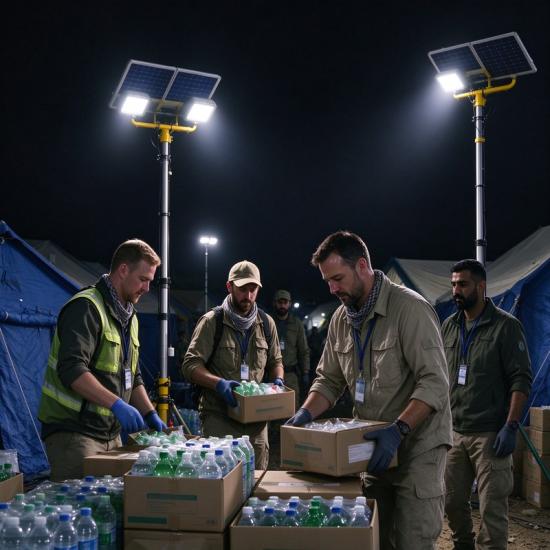
Full emergency lighting lineup includes solar light towers, diesel towers, telescopic lights and handheld rechargeable lights. IP rated, durable for disaster relief, construction, warehouse and night rescue, supports off-grid power supply for long time outdoor illumination.
Note: Price for reference only. Exact price based on quantity, size, weight and custom details.
model no. :
LT-08Brand:
YRFmarket price :
$4200sale price :
$2100price range :
10-30/$2100Color :
Multiple Colorsport of dispatch :
Guangdong/GuangzhouPayment :
TT, Paypal, Western Unionmin order :
10original region :
Made in ChinaLead Time :
5-15days
Emergency Lighting Supplier for Wholesale and Relief
Tenders
As an emergency lighting supplier in China, we wholesale solar and diesel mobile towers, portable mast lights, rechargeable work lights and rescue searchlights for relief agencies, contractors and distributors exporting worldwide.
Looking for a reliable emergency lighting supplier for bulk emergency lighting orders?
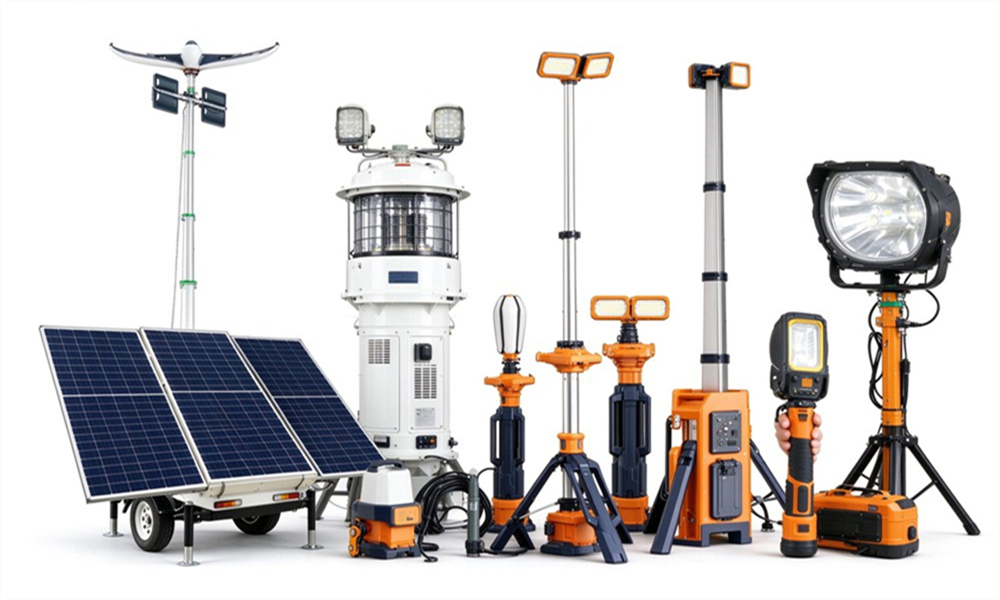


We supply a full range of emergency lighting equipment and emergency lighting systems, from solar mobile lighting rigs and portable flood lights to rechargeable work lights and rescue searchlights. As your emergency lighting supplier we support WHO, UN and government tender packs with CE, ISO and test reports, consolidated containers and factory-direct pricing.
Compare types, applications and selection points below, then review the product range below to find the right mix for your project.
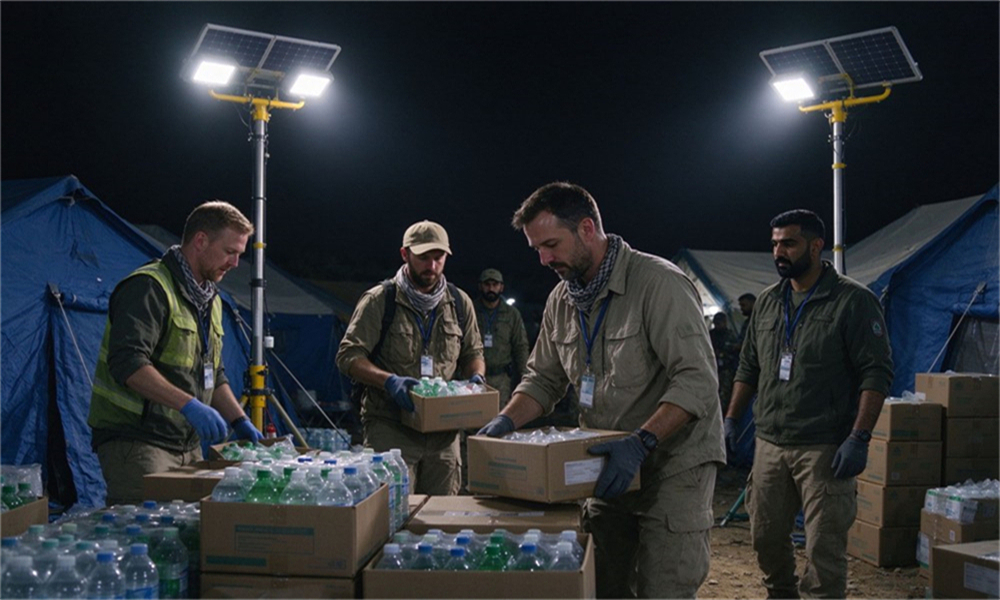
Every unit in this range is built for outdoor duty: sealed against rain and dust, towable by a single operator, and configured to run overnight without a generator on site.
Specifications below are planning ranges. Exact wattage, lumen output and runtime are confirmed in your contract, so you can plan a tender or a rental fleet without being locked to a single figure.
Whether you light a disaster camp, a night shift or a remote checkpoint, the goal is the same: even, glare-controlled light where people work, with quiet operation and zero on-site exhaust.
Compare the configurations below, then send your site dimensions and night-shift hours for a matched model shortlist. Every figure on this page is a planning range, confirmed in your contract.
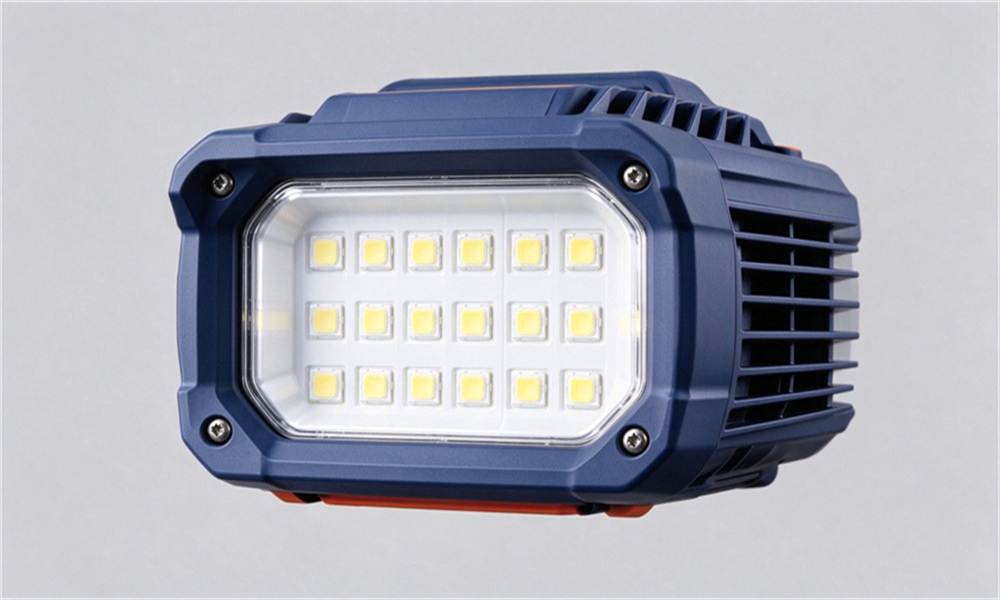
Table of Contents
This guide covers what emergency lighting equipment includes, the main product families, a quick specification comparison, typical deployment sites, and the points that separate a reliable wholesale supplier from a reseller.
Use the contents above to jump to your buying question, or read straight through.
The aim is to help you choose the right equipment from one supplier, with the right accessories, without overbuying or under-buying.
Whether you buy for disaster relief, construction, industrial maintenance or a rental catalog, the sections below narrow the choice to two or three configurations before you request a sample.
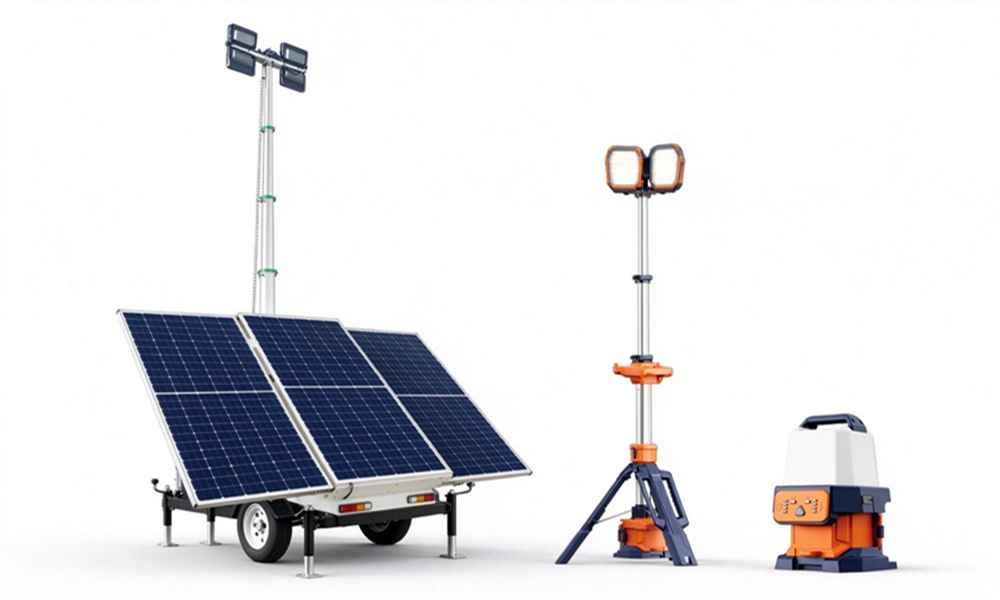
Emergency lighting equipment covers every portable or mobile light source designed to work when the grid goes down, when daylight ends, or when a remote site has no power.
It includes solar mobile lighting rig systems, diesel mobile lighting rigs, telescopic work lights, rechargeable work light units, remote searchlights and the chargers, batteries and mounts that keep them running.
Unlike fixed indoor emergency exit signs, this equipment is built for outdoor duty: waterproof housings, impact-resistant lenses, and batteries that hold charge through long deployments.
Buying emergency lights wholesale from a single emergency light supplier changes the economics of every project.
When you source ten, fifty or five hundred units together, you lock in consistent quality across the fleet, simplify spare-parts stocking, and cut the per-unit logistics cost.
For government procurement, disaster-relief agencies, construction contractors and equipment rental companies, one consolidated order means one customs file, one quality baseline and one support contact instead of juggling five vendors.
The wholesale market matters because emergency lighting is rarely a one-time purchase.Batteries degrade, lenses scratch, and rods bend on active sites.
A serious buyer keeps a rotating stock of spares and replacement sets, and an emergency lighting supplier that can ship repeat orders on the same specification keeps every batch consistent, so you never receive a slightly different model every season.
That consistency is the real value of buying emergency lights wholesale and ordering wholesale emergency lights as one fleet: the next batch behaves exactly like the first.
Modern LED cores have removed the old trade-off between brightness and runtime.
A single rechargeable work light outputs several thousand lumens for hours on a swappable battery, while a solar tower runs nights off stored solar energy without a fuel tank.
This is why the category has expanded from rescue into construction, events, agriculture and remote-site security.Buyers choose the form factor that matches the task.
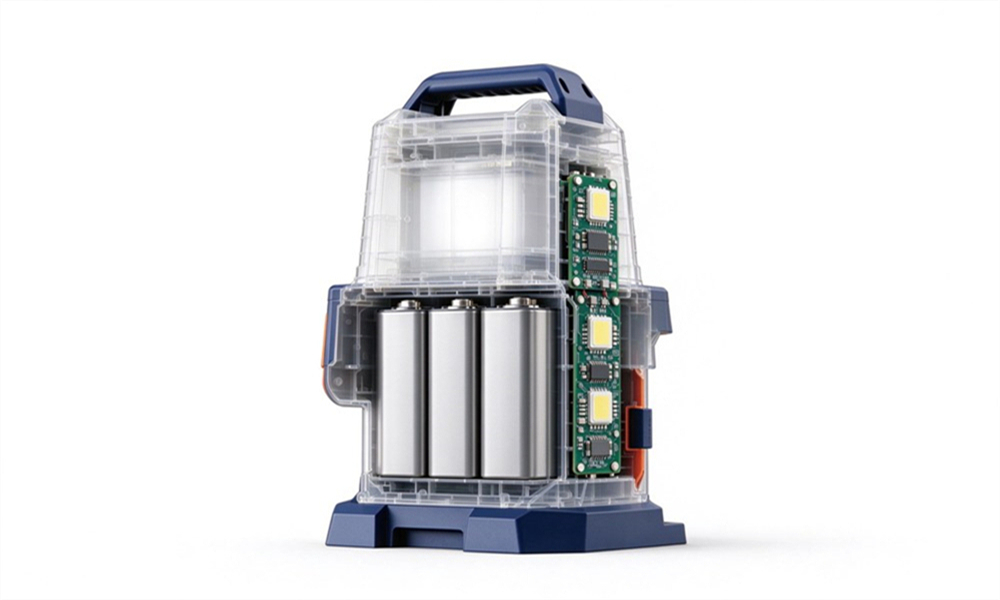
Three practical points reward a bulk buyer on repeat orders:
There is also a compliance dimension.
Workplaces are expected to provide enough light for safe task performance, and buyers who supply contractors, relief agencies or rental fleets need units that meet reasonable outdoor-duty expectations.
Choosing a supplier who can provide test data, rather than generic marketing claims, protects the buyer if a site is ever audited.
Treating specification and material transparency as part of the buying decision, a slightly better-built light pays back quickly through fewer nightly complaints from the crew.
Bulk buyers also benefit from a single point of contact for configuration questions.
Whether you need a different plug type, a longer cable, a custom carrying case, or batteries rated for a colder climate, a supplier who can adjust rather than resell removes friction from every repeat order.
These small customizations rarely add much cost, but they make the difference between a tool that fits your operation and one that works only in the general case.
Finally, bulk purchasing is not just about price per unit.It is about lead time, spare availability and the stability of the supply chain.
A supplier that can commit to a repeat schedule, hold a safety stock of the parts that wear first, and adjust packaging to your destination port removes more hidden cost than a slightly lower-priced unit that arrives late or in the wrong specification.
The sections below help you score a supplier on exactly these practical points.
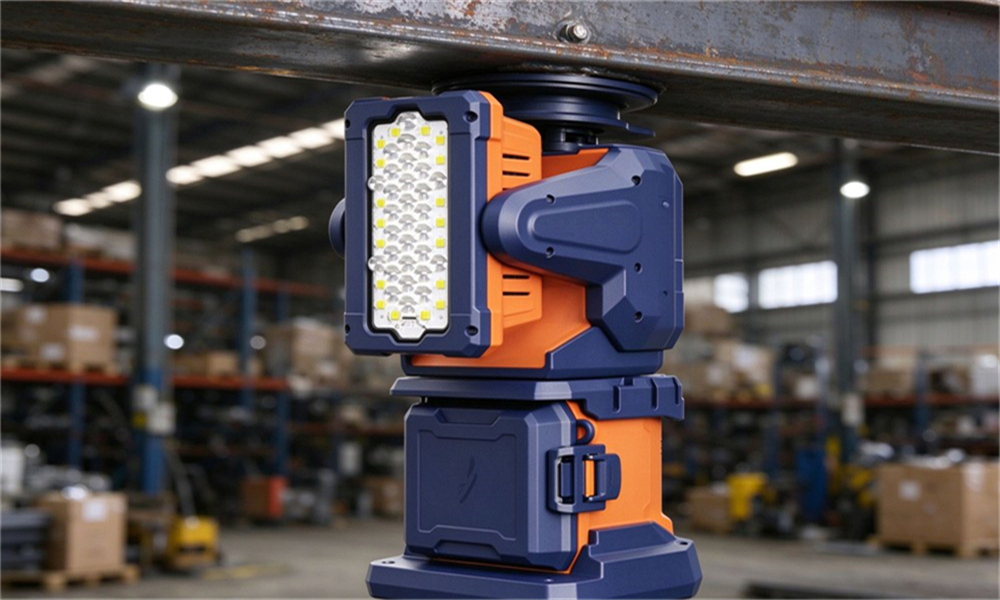
An emergency lighting supplier usually stocks six families of emergency lighting systems, each suited to a different scale of job.
The range below is ordered from the largest, area-covering units down to handheld tools.Follow the links to the dedicated long-form pages for full parameters, configuration options and model lines.
Solar towers combine photovoltaic panels, a battery bank and elevated LED heads on a telescopic mast.
They run silently, need no fuel, and are favored for refugee camps, remote work sites and noise-sensitive areas.
If your site has daylight but no grid, the solar powered emergency mobile lighting rig page covers mast height, panel wattage and runtime options in detail.
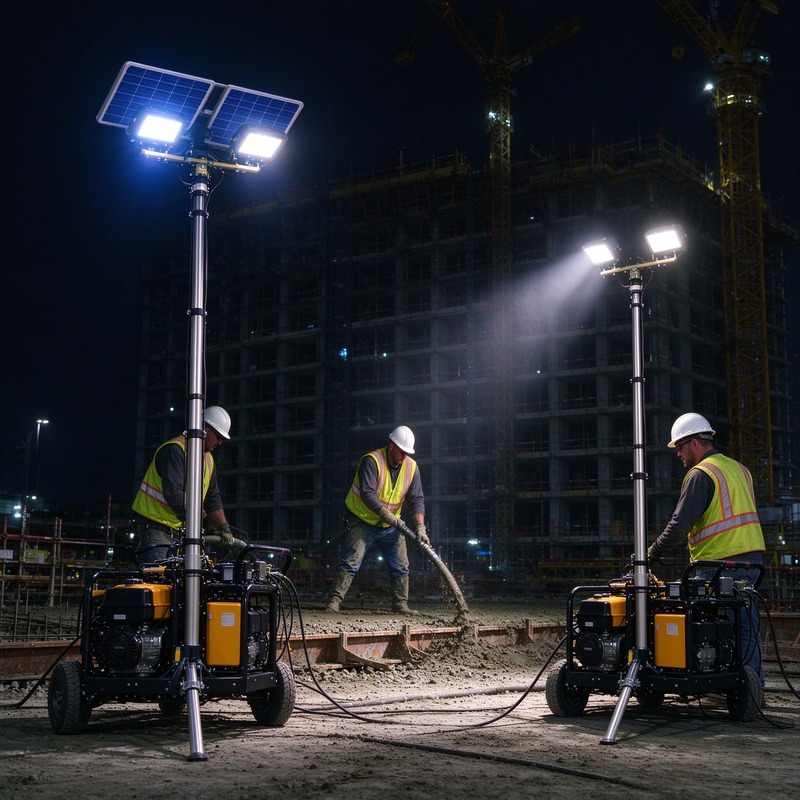
Diesel towers pair a small generator with a tall mast for all-night, high-output coverage where sunlight is unreliable.
They suit large highway projects, mining sites and disaster zones where weather blocks solar input.
These units trade fuel and noise for raw lumens, and are typically rented or purchased by contractors with generator-handling crews.
See the diesel generator mobile lighting rig page for mast heights, generator specs and runtime options.
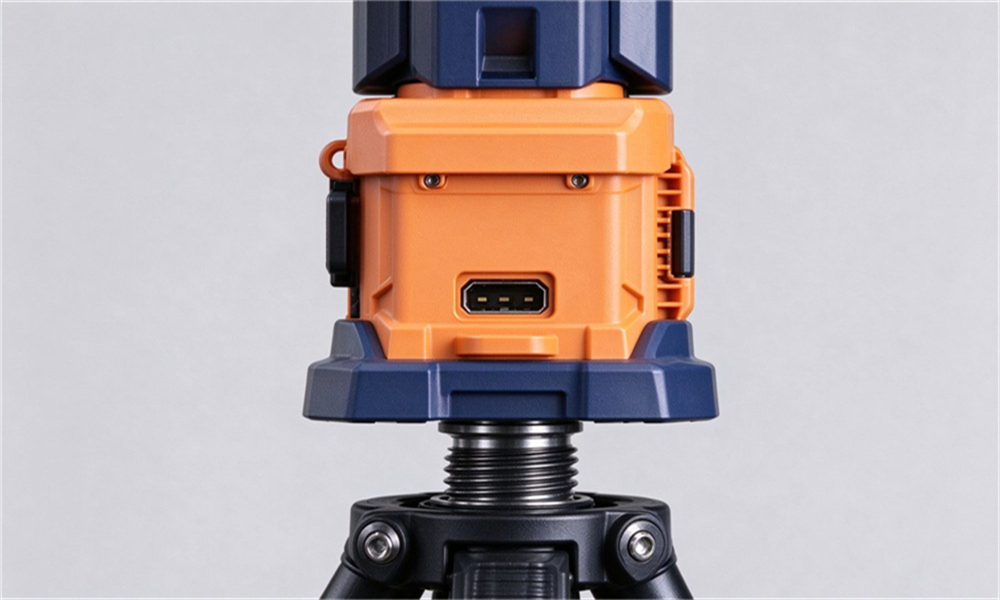
A portable telescopic light folds into a transport case, then extends a pole to raise two or four LED heads over a work area.
It bridges the gap between a fixed tower and a handheld torch: one or two workers carry it, deploy it in minutes, and move it along a trench or floor as work progresses.
See the portable telescopic flood light page for mast lengths, battery runtimes and tripod options.
The rechargeable handheld panoramic work light doubles as a heavy-duty emergency flashlight and is the everyday tool of electricians, mechanics and inspection crews.
It outputs a wide, even flood rather than a narrow beam, often with a magnetic base or hanging hook so both hands stay free.
For buyers sourcing portable torches wholesale, these units sit between a small keychain torch and a fixed flood panel.
Details on battery chemistry, charge time and the accessory ecosystem are covered on the rechargeable 360° work light page.
Where wide flood is not enough, a remote-controlled searchlight throws a narrow beam hundreds of meters for perimeter security, rescue searching and harbor monitoring.
These units pan and tilt by remote, and pair a spotlight with a secondary flood so operators can both scan and light a close work area.
See the remote control rescue searchlight page for pan/tilt angles, remote range and mounting options.
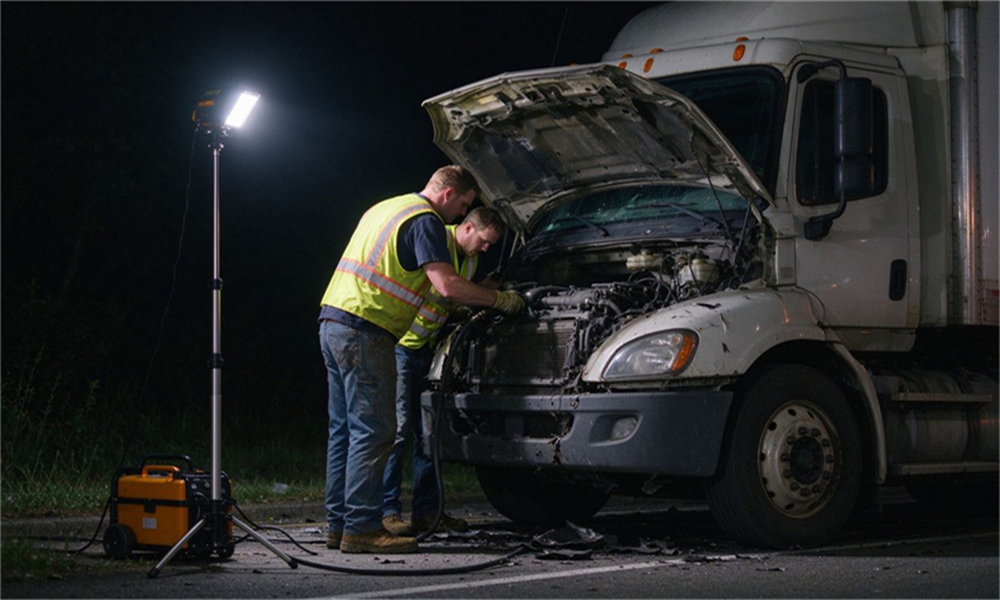
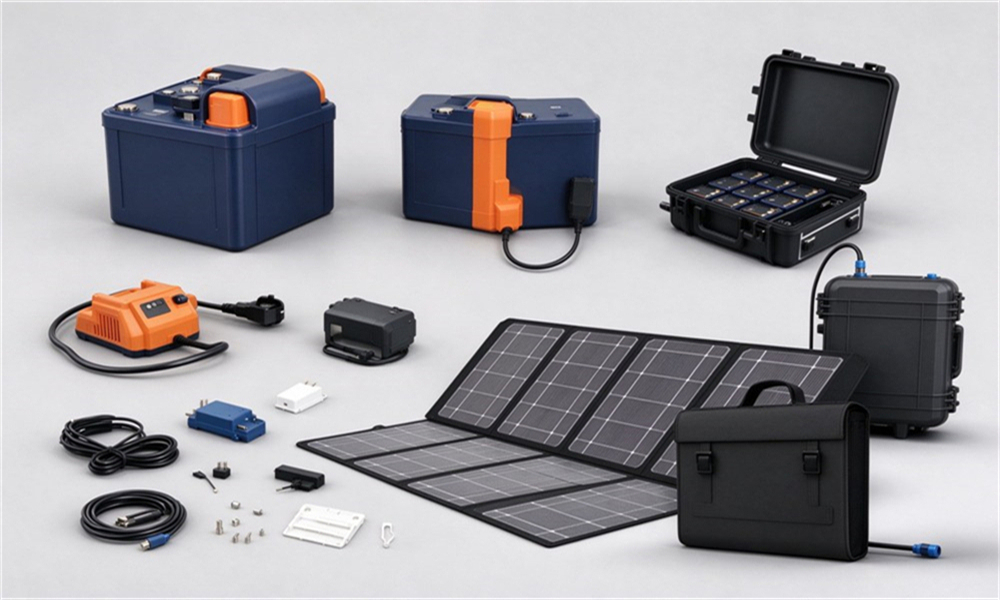
Battery packs, chargers, tripod stands, mounting brackets, spare lenses and carry bags round out a deployable system.
Bulk buyers order accessories at the same ratio as the main units so every light in the field has a backup battery and a mount the moment it ships.
A key point to confirm on every order is the accessory list, because a tower with no spare battery still works on day one but is out of service on day two.
Accessories extend the working life of every unit.USB-C charging, DC inputs and tripod mounts let one platform work across vehicles, workbenches and tripods, so crews carry fewer adapters to site.
Check charging and mounting compatibility across the range before you mix families in one deployment kit, so every battery and bracket fits the lights you already own.
Plan spares in the same ratio as your fleet: one spare battery and one charger for every four to six lights, plus a few spare lenses and mounting clips, since these scratch, crack or go missing first.
Keeping spares with the same supplier means they match your exact model instead of forcing crews to improvise a near-fit substitute.
List spares on the same order so the first maintenance kit travels with the first shipment.
Most buyers end up mixing two or three families rather than buying one type.
A typical relief shipment, for example, combines solar towers for the camp perimeter, portable telescopic lights for the medical tent, and handheld work lights for individual rescue teams.
When you compare families, whether ordering bulk emergency flashlights for crew kits or a tower for the perimeter, think about three numbers: how wide an area must be lit, how many hours each night the light must run, and how many people can carry and set the unit up, see fire fighting equipment wholesale for emergency lighting pairing.
It also helps to picture a typical shift.If the crew works from a fixed point all night, a tower left running is efficient.
If they walk the length of a pipeline or a floor plate, a light that folds into a case and follows them beats leaving a bright tower far away.
If each technician carries their own tools, a handheld on the belt removes the argument over who fetches the shared light.
Buying for the actual movement of the work, rather than for the largest spec sheet, is how buyers end up with equipment that gets used every shift instead of sitting in a storeroom.
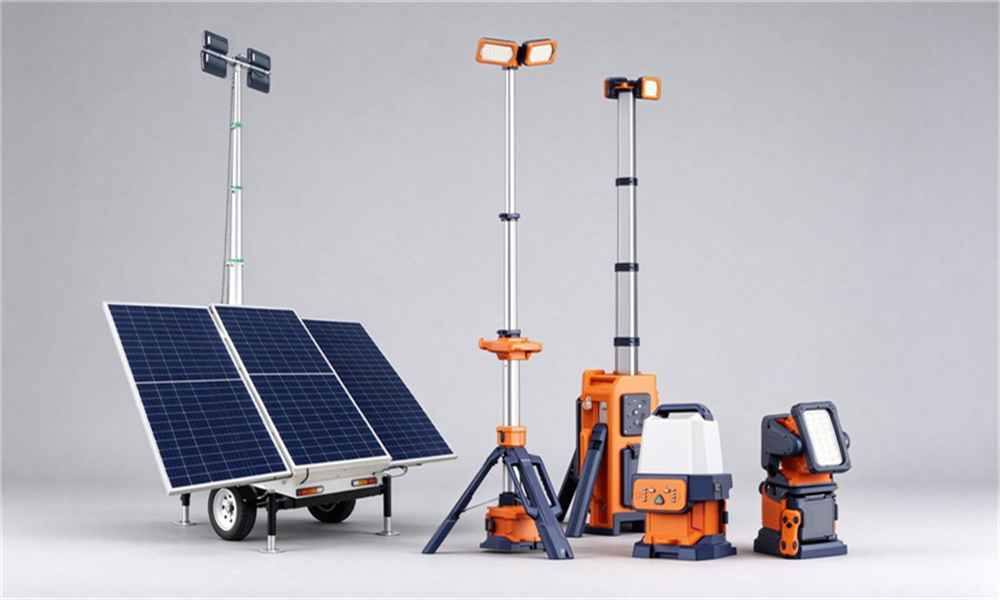
The summary table below gives the headline parameters at a glance for any emergency lights wholesale and bulk emergency lighting shortlist.
Full, model-by-model specifications live on each product page; this table is the starting point for narrowing down which family of emergency lighting equipment matches your duty cycle.
Read it together with the three practical numbers above, area, runtime and portability, and you can usually shortlist one or two families in under a minute before opening any product page.
|
Emergency Light Type |
Typical Output |
Recommended For |
Power Source |
|
Solar mobile lighting rig |
High, area-wide |
Remote camps, no-grid sites |
Solar + battery |
|
Diesel mobile lighting rig |
Very high, all-night |
Large construction, mining |
Diesel generator |
|
Portable telescopic light |
Medium, adjustable height |
Trenches, floors, events |
Rechargeable battery |
|
Handheld work light |
Medium flood, close range |
Inspection, repair, rescue kits |
Rechargeable battery |
|
Remote searchlight |
Long narrow beam |
Perimeter, rescue search |
Battery or mains |
Choose a tower when the job needs to light a whole area for a full night; choose a portable telescopic light when the work moves and one or two people must carry the rig; choose a handheld work light when the task is close, detailed and hands-on.
The trade-off is always between coverage, runtime and portability.
For a deeper breakdown of nighttime construction layouts, crews typically stage towers for the perimeter, portable lights for active trenches and handhelds for finishing crews in the same shift.
As a quick rule of thumb, an open yard or perimeter favors a tower, a moving work face favors a portable telescopic light, and a confined task such as inspecting a machine or wiring a panel favors a handheld.
When the job spans all three, buy them in proportion to the time crews spend at each scale rather than loading up on whichever unit looks least expensive on paper.
The comparison table above is the starting point; the dedicated product pages then narrow the exact model.
When in doubt, order a sample kit first.
A short trial on your actual site reveals whether a beam is wide enough, whether the mount holds up, and whether the battery lasts a full shift before you commit to a bulk order.
Most wholesale suppliers support sample orders before volume, and the cost of one sample is small next to a mis-fleet of fifty units.
Do not optimize on lumens alone.
A brighter light that weighs twice as much or runs half as long may be the wrong choice for a crew that must move it every hour.
Look at the whole duty cycle: how long it runs on a charge, how fast it recharges, how many people it takes to deploy it, and how rugged the housing is against drops and water.
Two lights with the same lumen rating can behave very differently on a real site, which is why hands-on testing matters before a bulk purchase.
Also think about warm-up and dimming behavior.LED lights come to full brightness instantly, which is a safety advantage over fuel lamps that need minutes to stabilize.
Battery-powered units often step down brightness as the charge falls, so a light that starts bright should still leave enough usable light for the last hour of a shift rather than fading out abruptly.
Ask the supplier how the light behaves near the end of a battery cycle; that detail reveals whether the product is tuned for real work or for showroom numbers.
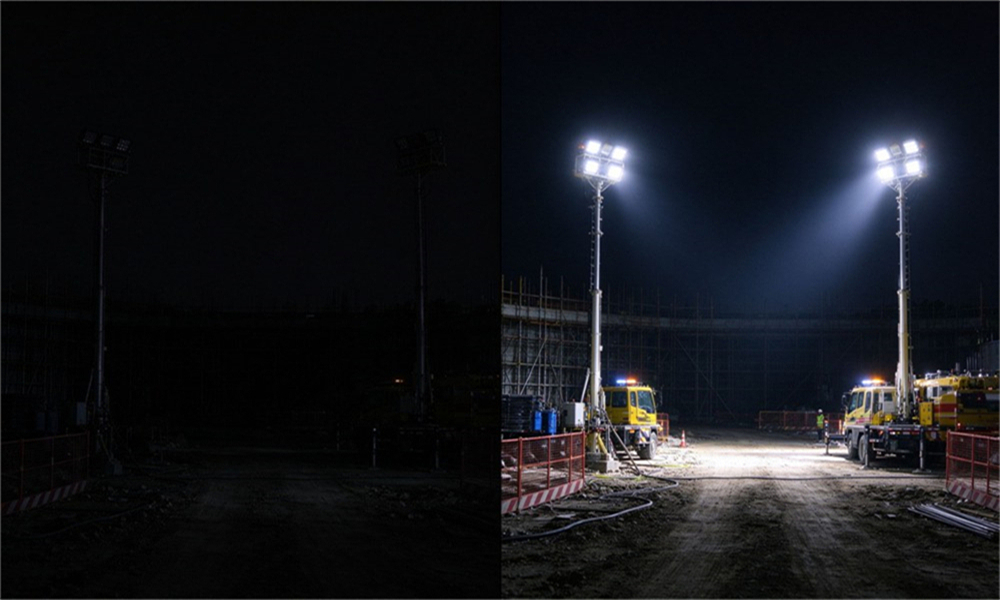
Emergency lighting equipment shows up wherever daylight or grid power cannot be relied on. Frequent bulk-buying scenarios fall into the groups below, and each hints at which product family to start with.
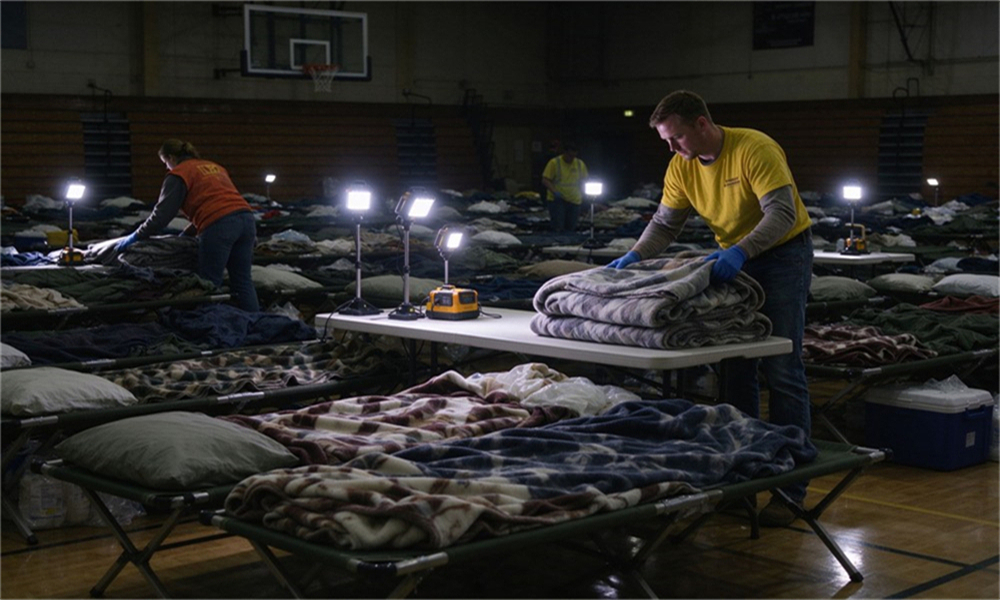
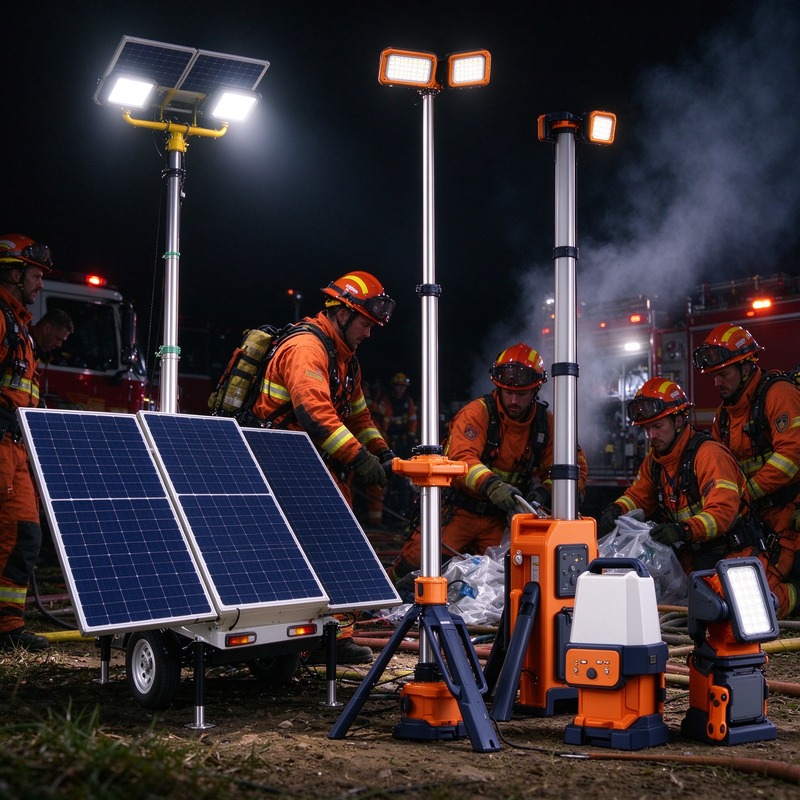
After earthquakes, floods and storms, camps, evacuation centers and search routes need light within hours.
Solar towers power the perimeter and medical zones; portable lights handle interior tents; handheld lights go into individual rescue kits.
Relief agencies buy in bulk because deployments are simultaneous across many teams, and equipment must keep working for weeks without local support, see water rescue equipment wholesale for night operations.
Night shifts, tunnel work and road repairs depend on reliable area light.
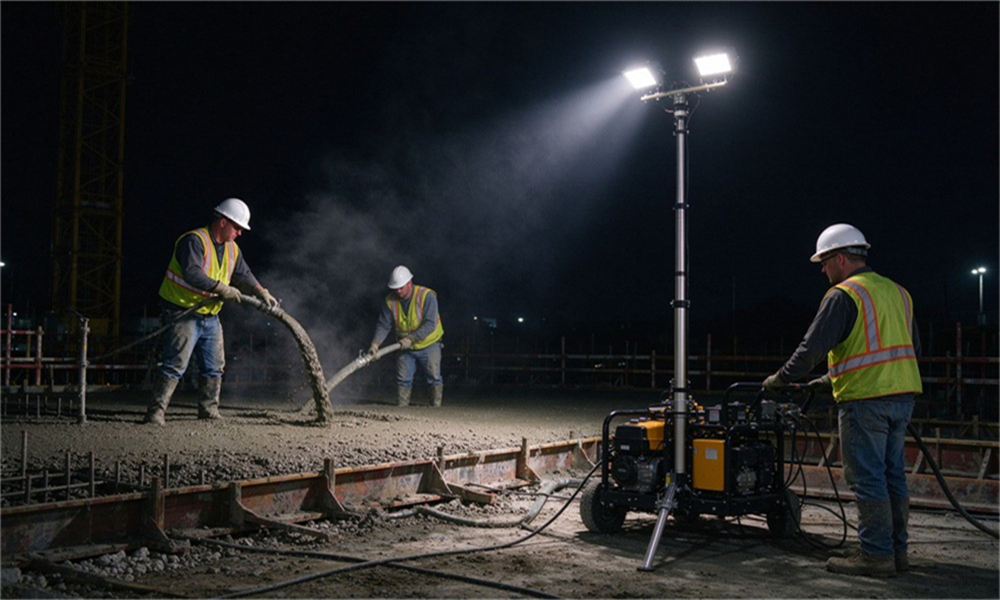
A work light for construction crew might be a diesel tower for the site boundary, a portable flood light on a telescopic mast for the active trench, and handheld emergency flashlights for the electricians finishing inside.
Layering these correctly for safe, even coverage is detailed in our construction night lighting setup guide.
Off-grid farms, telecom shelters, oilfield pads and perimeter fences run solar towers for months between visits.Security teams add remote searchlights for long-range scanning.
These are the longest-duration deployments, so panel size and battery life matter more than lumens alone, and silent fuel-free operation removes the cost of repeated generator refueling runs.
Schools, hospitals and public buildings also keep emergency lighting kits on hand for power outages.
Here the priority is fast setup by non-specialist staff, so lightweight rechargeable lights with simple controls are preferred over heavy towers.
Rental companies stock a mix of all families, including bulk emergency flashlights for crew kits, because their clients range from small event organizers to major contractors, and a versatile inventory wins repeat bookings.
A site that changes layout every day needs portable, fast-deploying lights; a site that stays put for months can justify a fixed tower.
Matching the deployment rhythm to the equipment keeps both over-buying heavy towers and under-buying lights that cannot cover the area in check.
When in doubt, stage a small trial on the real site before committing to a full fleet, because a few days of hands-on use answers questions that no specification table can.
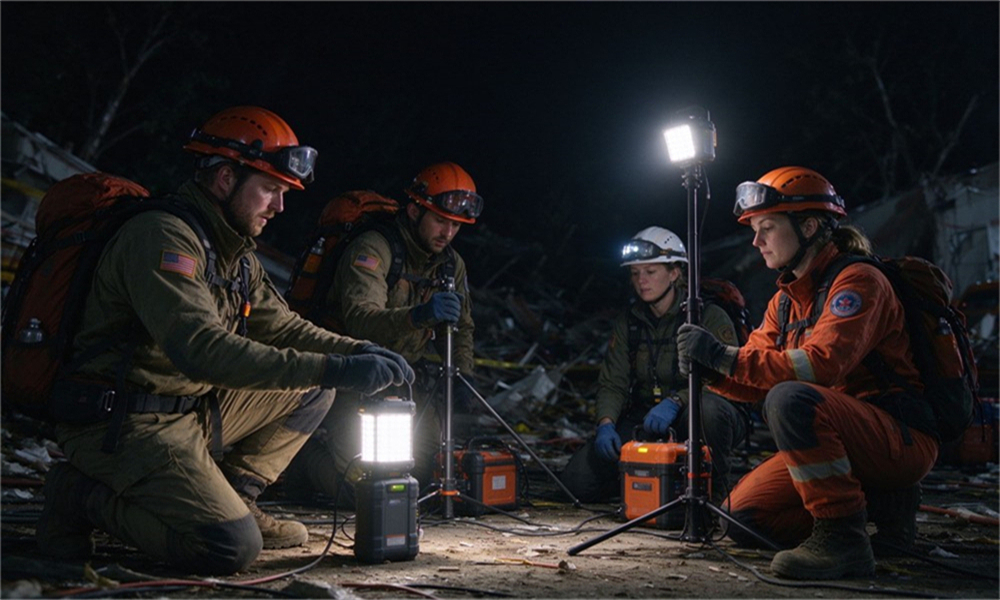
Shutdowns, plant inspections and equipment repairs happen on tight schedules.
Rechargeable handheld lights with magnetic bases let inspectors check vessels, pipes and motors, while portable towers light the lay-down area where crews break down and reassemble parts.
Battery runtime across a full shift is the key spec here.
Outdoor weddings, night markets, film sets and emergency broadcast positions need fast-deploying, quiet light.
Battery-powered portable lights win over diesel because they produce no fumes or noise, and they can be carried through crowds without heavy lifting.
Event organizers often rent rather than buy, which is why rental fleets favor rugged, easy-to-operate units.
Across every application, the pattern is the same: start from the work area size, the available power, and the number of people who must move the gear.
Reference OSHA construction lighting standards for baseline workplace lighting expectations as you plan your fleet.
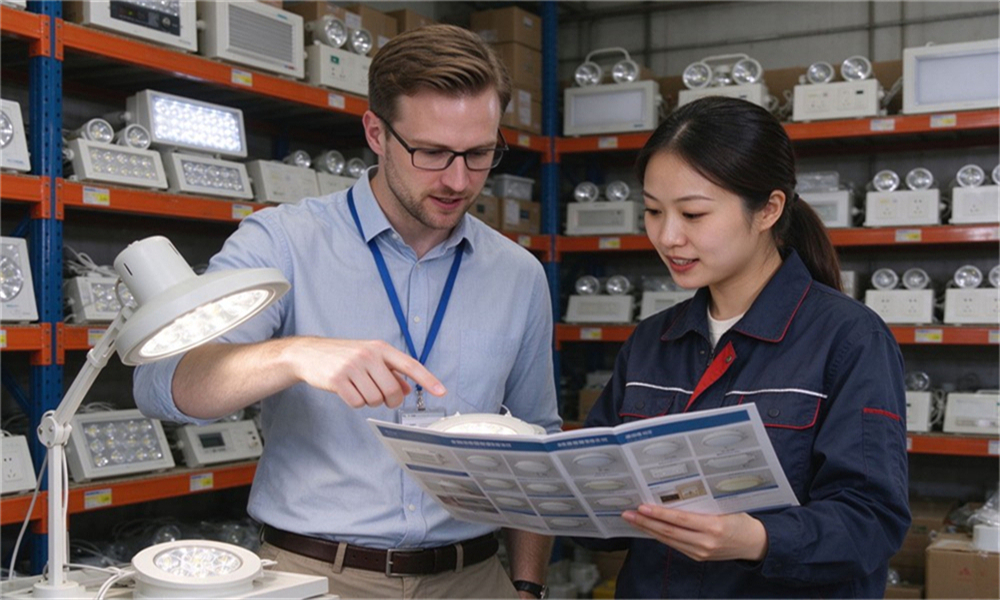
Bulk orders of emergency lighting equipment and bulk emergency lighting programs usually fall into four buyer groups, each with a different starting question.
Government procurement offices and relief agencies contact an emergency light supplier for simultaneous multi-site deployment, consistent specs and documentation that passes customs and audit.
Construction contractors and rental companies focus on runtime, durability and spare-parts availability over a multi-year fleet cycle.
Industrial end-users, such as mines, plants and logistics hubs, order for scheduled shutdowns and night shifts, usually mixing towers with handhelds.
Nonprofit buyers often align field kits with FEMA emergency equipment guidance when standardizing relief shipments.
Match the right equipment category to five real job-site conditions — site size, mobility, power supply, budget and working hours — then confirm the exact configuration with our team, subject to contract.
Pricing is quoted per order, subject to contract.
These categories map to the product types listed under Types of Emergency Lighting Equipment. Once you have matched the right category to your site, use the supplier checklist below to choose a reliable manufacturing partner.
Selecting the right emergency lighting supplier and emergency light supplier partner is as important as selecting the right light.
The following checklist separates a wholesale partner from a reseller who simply passes goods along.Work through these points in writing with each shortlisted company before you place a volume order.
Look for a supplier who can cover towers, portable lights, handhelds and accessories from one order.Consolidating reduces customs complexity and guarantees compatibility across the fleet.
A fragmented supply chain means mismatched chargers and different battery voltages at the least convenient moment.
Ask whether the emergency lighting supplier you are comparing manufactures or simply resells.
Factories that control assembly can honor repeat orders on the same specification, adjust cable lengths or brackets to your request, and hold spares.
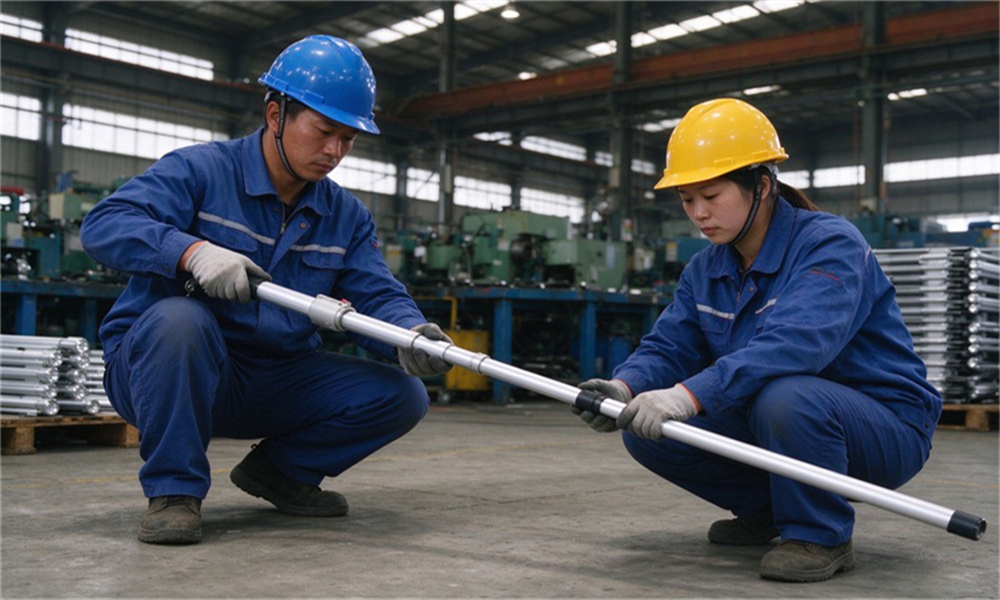
The production-line images on this page show assembly and QC steps that resellers cannot offer directly.
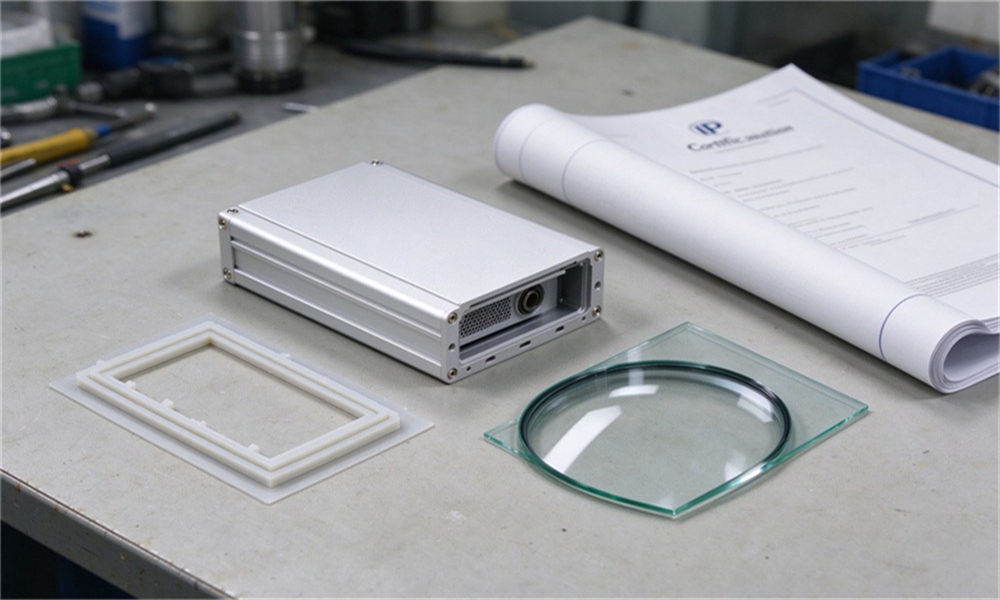
Request the actual test data for waterproof rating, drop test and battery cycle life rather than generic claims.
Confirm what certifications the documentation covers; if a certificate is not on file, do not assume it exists.
Material transparency about housing grade, lens type and battery cell brand is the mark of a serious supplier.
Emergency lighting is a recurring purchase.Confirm the supplier can reproduce your SKU six months or a year later, and that spare batteries, lenses and chargers remain available.
Ask for lead time on repeat orders and whether accessories are stocked alongside main units.Long-term availability is worth more than a small discount on the first order.
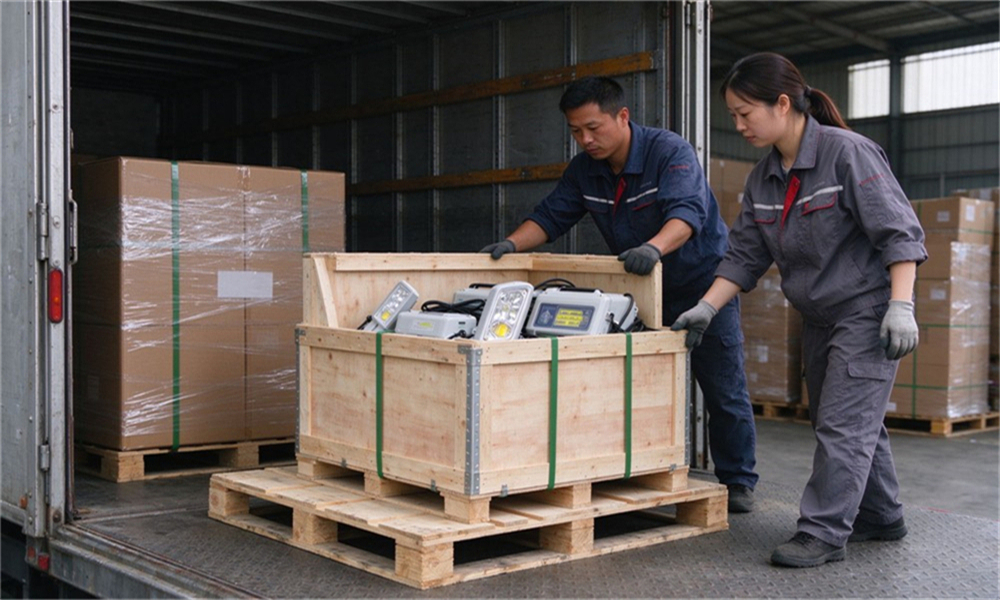
Bulk flashlights, towers and portable flood lights all travel by sea in wooden crates or reinforced cartons.
Check that packaging protects lenses and battery terminals through transshipment, and that labeling supports your destination customs requirements.
Ask the supplier how a sample carton is packed, what cushioning is used, and how many units fit on a pallet, because these details decide whether the lights arrive ready to deploy or arrive as a claims file.
Finally, judge communication speed and clarity.
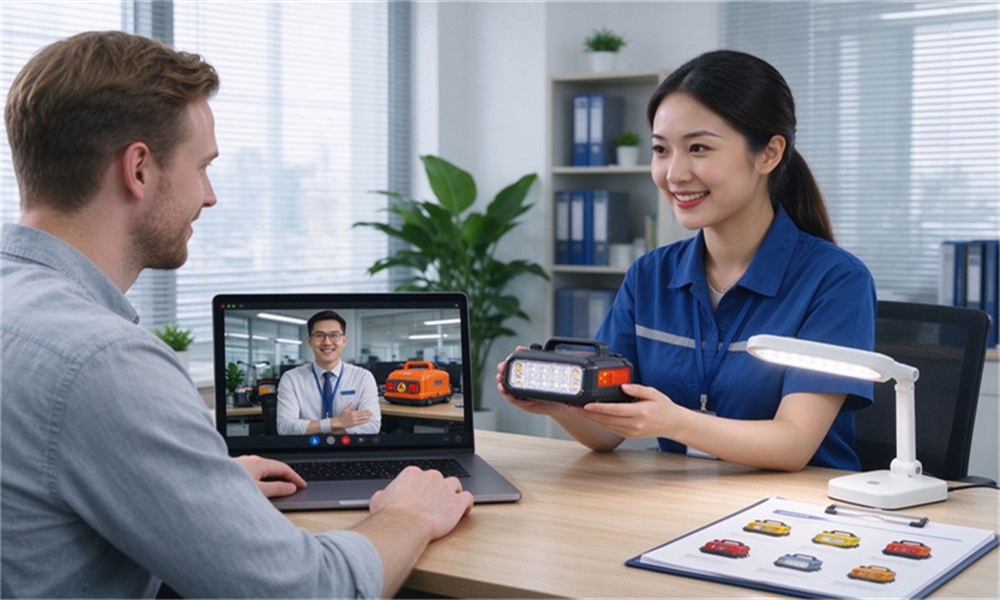
A supplier who answers questions about runtime, battery chemistry and lead time in specific numbers, and puts those answers in writing, is easier to work with than one who returns vague assurances.
When a unit needs attention in the field, a supplier who documents build steps and keeps repeat SKUs stable is the partner that keeps your sites running shift after shift.
That long-term reliability separates a one-off transaction from a wholesale relationship you can plan around.
Approach two or three shortlisted suppliers with the same specification sheet and compare responses.
The quote that answers every question, attaches test data and offers a sample is almost always the partner worth a long emergency lighting wholesale relationship.
Price matters, but on a repeat fleet order the supplier who minimizes delays, inconsistencies and missing spares saves more over the years than the least expensive first quotation.
Instead of comparing spec sheets one by one, start from your job site and answer six simple questions in order, using the emergency lighting types shortlist below.
Each question points to one lighting family.
Walk through all six and you will end up with a shortlist that matches the area, the shift length and the budget, without overbuying or under-lighting.
If you need to light a large outdoor area such as a construction site, airport apron or open parking lot → choose a mobile lighting tower, solar or diesel, that casts a wide even pool over thousands of square meters and runs all night without repositioning.
If you need lights that a two-person crew can carry and switch on within minutes at a traffic accident, repair site or fire scene → choose a portable lifting light on wheels, a rechargeable portable flood light with a telescopic mast that rises by hand or by crank.
If your crew needs a bright, glare-controlled pool right at the workbench, inside a container or along a maintenance line → choose a handheld panoramic work light with a wide diffused face, magnet or hook, and enough battery for a full shift.
If you need a narrow, hard beam that reaches hundreds of meters for search and rescue, border patrol or night security checks → choose a remote-controlled searchlight on a fixed mount or vehicle roof, with zoom lens and 360-degree rotation.
If the lit zone is small, the shift is short and the order must fit a limited budget → choose a basic emergency flashlight or work light with a single LED panel, plug-in or small battery, enough for one room, one gate or one repair pit at a low unit price, a natural starting line for bulk emergency flashlights.
If the light must stay on every night for weeks or months with no staff to refuel or recharge → choose a solar light tower with tilted panels, gel battery and dusk-to-dawn sensor, zero fuel cost and no daily visit.
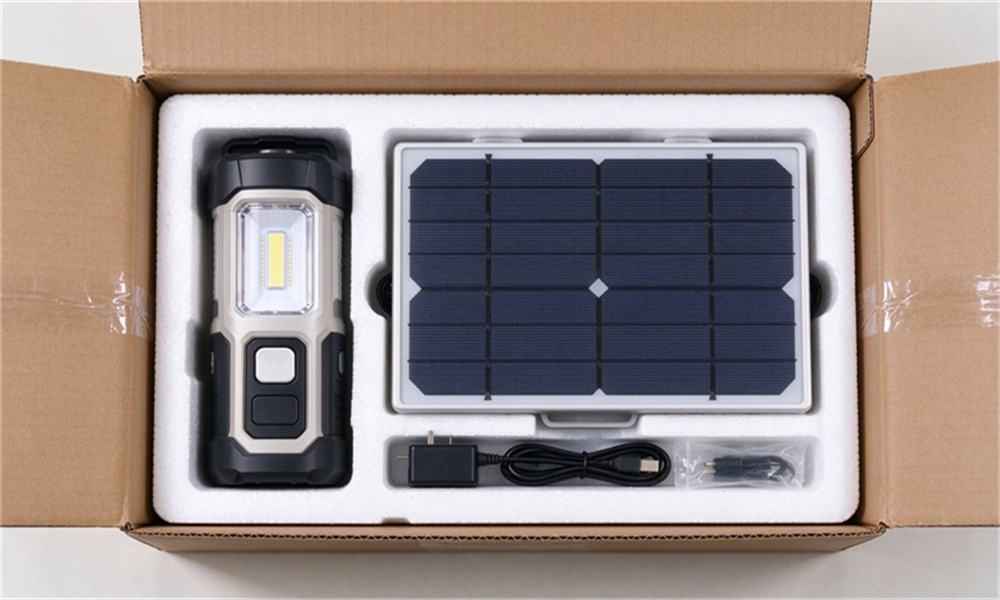
Quality control and export packaging decide whether a fleet arrives ready to work or arrives as a claims file.
A reliable emergency lighting supplier checks each unit before packing and protects lenses, batteries and connectors through sea freight and transshipment.
Before a bulk order ships, confirm these quality and packaging points in writing:
Good export packaging is the difference between a working fleet and a crate of cracked units.
Ask the supplier how a sample carton is packed, what cushioning is used, and how many units fit on a pallet.
Before production, ask for photographs of a packed carton and the inner cushioning layout so you can confirm protection for the lens face, the battery terminals and the telescopic rod, since these are the parts that take the roughest ride in a container.
Reputable partners send these images freely, and the exchange itself is a useful signal of how smoothly the rest of the order will run.
Build a short acceptance walk-through for every container before you sign for it.
On arrival, count units against the packing list, open one carton to confirm the lens face is intact, and test that one light powers up on its own charged battery, so a dead unit is caught at the wharf rather than on the first night.
Photograph any shortage or damage the same day; a supplier who expects documented findings can usually replace affected units on the next shipment.
Treat this walk-through as a normal part of receiving, and it keeps the whole fleet at working strength.
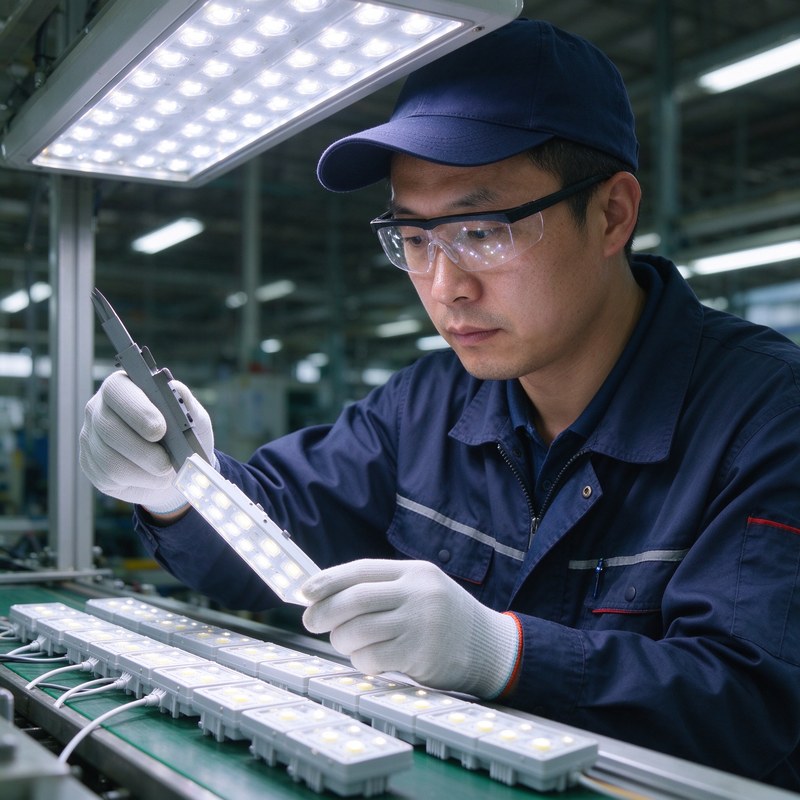
Export-bound emergency lighting equipment should come with documentation that matches the destination market.
Waterproof rating, drop test and battery cycle reports confirm build quality, while the actual certificates on file decide whether your customs clearance goes smoothly.
Ask the supplier to show the original test report rather than a generic copy, and confirm that housing grade, lens type and cell brand are disclosed in writing.
For fire-safety related procurement, buyers often align their spec with NFPA emergency lighting standards.If a certificate is not on file, request the report before production.
The price of emergency lighting equipment in a wholesale order moves with five factors: battery capacity and cell brand, housing material and lens type, included accessories ratio, export packaging level, and order volume per SKU.
Minimum order quantities vary by product line and are subject to contract; sample kits are usually available before volume so you can test on site.
A practical way to compare quotes is to ask each emergency lighting supplier — whether you are buying bulk flashlights or a full tower fleet — for a unit-cost breakdown that separates the light, the spare battery, the charger and the carton, instead of comparing a single all-in price that hides what is included.
When two quotes look similar, the written one wins.
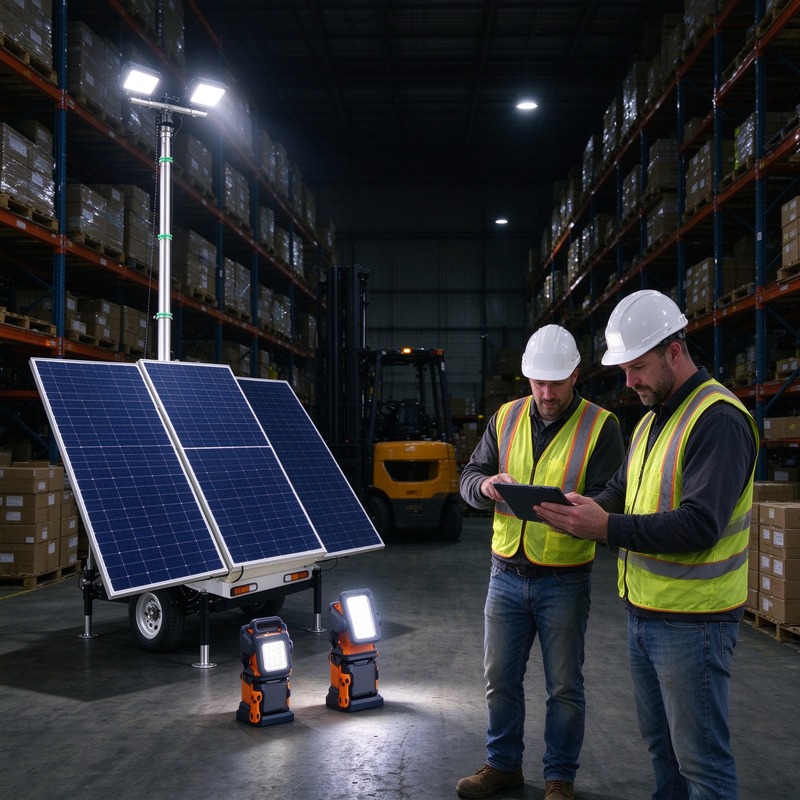
Look for one emergency light supplier covering towers, portable flood lights and handheld emergency flashlights, with repeat-order stability, real test reports and solid export packaging.
Consistency across batches matters more than the lowest unit price, because a fleet that behaves the same every season reduces downtime and spare-parts confusion.
It depends on site area, shift length and the number of work faces.
A typical night site uses one tower for perimeter light, two or three portable telescopic lights for active trenches, and handheld work lights for finishing crews.
Share your site layout and hours for a tailored mix.
Solar towers run silently from panels and batteries, ideal for remote, noise-sensitive sites with good daylight.
Diesel towers produce very high all-night output where sunlight is unreliable, but need fuel and engine maintenance.Choose solar for quiet remote camps and diesel for heavy all-weather sites.
Modern LED work lights output several thousand lumens on swappable batteries, enough for close inspection and small work zones after dark.
For large open areas, pair them with a tower rather than relying on handhelds alone.Check the runtime at each brightness mode before ordering.
Yes.Most bulk buyers mix solar towers, portable telescopic lights and handheld work lights in a single shipment.
Discuss your site layout so the supplier balances the mix instead of over-ordering one type.One consolidated order also simplifies customs and spare-parts stocking.
Whether you order wholesale emergency lights or a single sample kit, minimum quantities vary by product line and are subject to contract.
Sample kits are usually available before volume so you can test on site.Confirm the exact MOQ, lead time and repeat-order terms with the supplier when you send your specification sheet.
Runtime depends on brightness mode and battery capacity, commonly several hours at full power and longer on lower modes.
Ask the supplier for runtime data at each brightness level for the specific model, and keep spare batteries for crews running through a full night shift.
Yes.Outdoor and rescue use requires an IP-rated housing to resist rain, dust and washing down.
Confirm the IP rating on the actual test report rather than assuming it, and check that connectors, switches and cable entry points are sealed as well.
Most wholesale suppliers support sample orders.A short trial on your actual site reveals beam width, mount durability and battery runtime before you commit to a larger quantity.
This small step prevents the far larger cost of receiving a fleet that does not match your real conditions.
Certifications depend on your destination market and should be confirmed from the supplier's actual documentation.If a certificate is not on file, do not assume it exists.
Ask for the specific test report that matches your import requirements.
Choose a work light for construction with enough lumens for close tasks, a rugged impact-resistant housing, and a mount or magnetic base.
For a whole night shift, verify battery runtime and keep spare batteries on hand.Balance brightness against weight.
Bulk orders ship in wooden crates or reinforced cartons that protect lenses and battery terminals through sea freight and transshipment.
Confirm labeling and packaging standards with the supplier before production starts, and ask how spares and accessories are packed.
What products can I order from this emergency lighting supplier?
From this emergency lighting supplier you order solar towers, diesel towers, portable masts, work lights and rescue searchlights in one container.
The emergency lighting supplier stocks all lines, so distributors source disaster emergency lighting from a single emergency lighting supplier.
Do you ship disaster emergency lighting to Africa and the Middle East?
Yes, this emergency lighting supplier ships mobile towers, portable lights and work lights to Africa and the Middle East by sea.
The emergency lighting supplier consolidates orders into one container, so buyers receive disaster emergency lighting without delays.
Can an emergency lighting supplier private-label the units?
Yes, an emergency lighting supplier prints your logo on the head, box and manual for bulk OEM orders.
This private-label service lets distributors sell disaster emergency lighting under their own brand through the emergency lighting supplier.
Which incoterms does an emergency lighting supplier support for export?
An emergency lighting supplier quotes FOB, CIF and DAP for container orders worldwide.
The emergency lighting supplier handles export docs and consolidation, so buyers get a delivered price from one emergency lighting supplier.
Do I get a sample before ordering from an emergency lighting supplier?
Yes, an emergency lighting supplier ships a sample unit first so buyers can test brightness, runtime and build quality.
The sample fee is refundable on the bulk order, and the emergency lighting supplier ships it by express within a week.
What lead time does an emergency lighting supplier quote for a tender?
A regular emergency lighting supplier quotes 25-35 days for stock models and 45-60 days for OEM or custom colours.
For urgent relief, the emergency lighting supplier ships from finished-goods stock within 7 days by sea express.
What certifications does a reliable emergency lighting supplier provide?
A professional emergency lighting supplier ships CE marking, IEC 60598 luminaire test reports and ISO 9001 factory audit.
It also prepares country-specific documents for WHO and UN tenders. Ask the emergency lighting supplier for batch test reports and container consolidation before ordering.
Can an emergency lighting supplier mix product lines in one container?
Yes, an emergency lighting supplier consolidates solar towers, portable mast lights and work lights into one container, cutting freight cost.
MOQ is flexible for sample orders, and the emergency lighting supplier offers OEM branding on bulk shipments to distributors and relief agencies.
Whether you are outfitting a disaster-relief shipment, a night-shift construction fleet, or a rental catalog, the next step is a clear specification sheet.
Tell the supplier your site area, shift length, and how many crews will share the equipment, whether the order is wholesale emergency lights or a single trial unit.
A well-prepared brief gets you a precise quotation and the right product mix faster than a generic inquiry.
A useful brief covers four points:
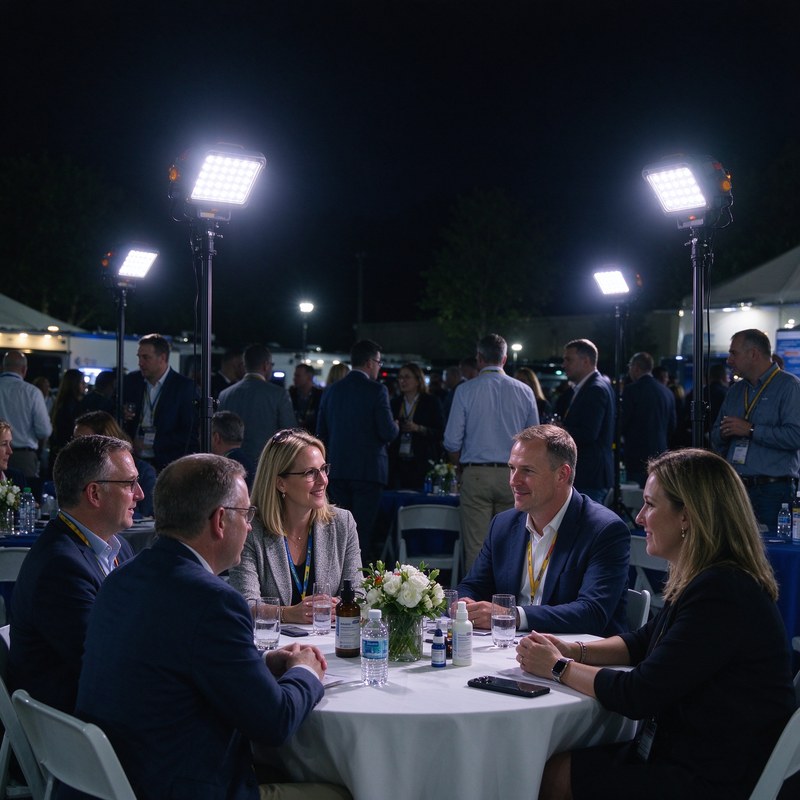
We supply solar powered emergency light tower systems, portable telescopic flood lights, rechargeable handheld panoramic work lights, bulk flashlights for crew kits and the accessories that keep them running, packaged for export from China.
MOQ, lead time and configuration are subject to contract.Send your site area, shift length and quantity, and we will reply with a recommended mix and a quotation.
Whether this is your first bulk order or a repeat replenishment, the same steps apply: define the site, shortlist the product families, request a sample, and confirm the specification in writing before production.
That process helps you avoid the most common procurement gaps, such as buying the wrong form factor or forgetting accessories.
Start with a clear brief, and let the numbers on the quotation do the choosing.
Every quotation is prepared from your actual site requirements, with configuration, packaging, MOQ and lead time confirmed in writing before production begins, so there are no surprises when the order ships.
We look forward to supporting your next emergency lighting procurement as your emergency lighting supplier of record.
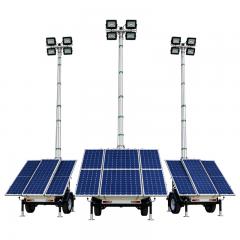 Solar Mobile Light Tower for Disaster Camps and Remote Sites
This trailer-based solar mobile light tower is equipped with high-efficiency monocrystalline solar panels, adjustable LED floodlights and telescopic mast. Powered by gel battery, it offers stable off-grid lighting for construction, disaster relief, remote outposts and emergency rescue tasks. Note: Price for reference only. Exact price based on quantity, size, weight and custom details.
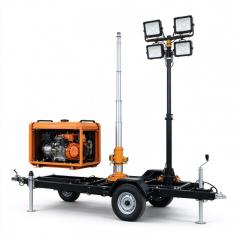 Diesel Light Tower for Night Construction Mining Emergency Repair Sites
This trailer-mounted diesel mobile light tower integrates diesel generator, telescopic mast and multi LED flood heads. It delivers stable high-power lighting without solar reliance, ideal for construction, road repair, disaster recovery and all-night emergency works. Note: Price for reference only. Exact price based on quantity, size, weight and custom details.
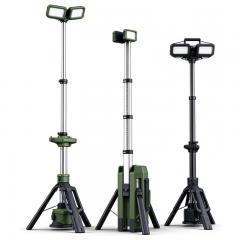 Portable Telescopic Flood Light for Rescue and Road Work
This TL-200 portable flood light adopts telescopic aluminum mast and dual LED heads, powered by lithium battery. It delivers stable bright illumination for fire rescue, roadside emergency, construction and disaster relief, easy to carry and fast setup. Note: Price for reference only. Exact price based on quantity, size, weight and custom details.
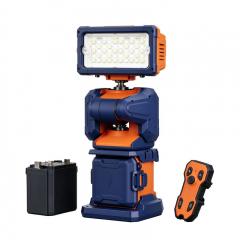 Remote Control Searchlight for Ports and Perimeter Security Water Rescue
Remote pan tilt rescue light with wireless remote, magnetic base and long throw narrow beam. It supports horizontal and vertical rotation, salt spray resistant housing, suitable for water rescue, port, border patrol and industrial perimeter security. Bulk wholesale, OEM custom color and packaging available. Note: Price for reference only. Exact price based on quantity, size, weight and custom details.
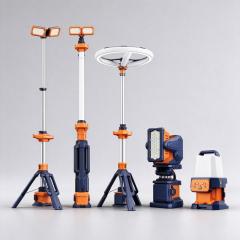 Disaster Emergency Lighting for Relief Camps and Rescue
Disaster lighting family includes telescopic mast light, remote searchlight and handheld 360 light. Solar charging support, off-grid available, durable for earthquake rubble, flood rescue, camp lighting and emergency road repair. Note: Price for reference only. Exact price based on quantity, size, weight and custom details.
 Disaster Area Emergency Medical Pack, Portable Lightweight, Complete First Aid Configuration
This Disaster Area Emergency Medical Pack is made of high-strength lightweight materials, weighing only 460g, measuring 24x20x9cm, with professionally tested pressure and impact resistance of 50kg. It contains 20 disaster area specific first aid items with a configuration coverage rate of 97%, and each medical pack can serve 7-10 disaster area injured people. The special quick-open structure allows rescue personnel to retrieve any item within 5 seconds. Suitable for various disaster scenes such as earthquakes, floods, and landslides, providing comprehensive and reliable medical support for disaster area rescue.
Copyright © Custom Disaster - Relief Bedding: Tents, Sleeping Bags, Blankets All Rights Reserved
the professional team to service !