×
enter your keyword
our storage
Categories
Products

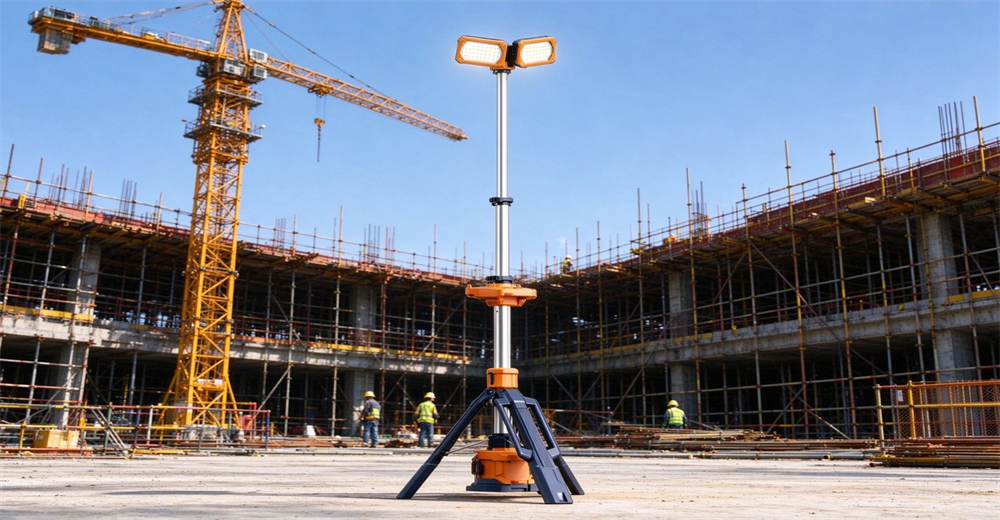
Rechargeable Emergency Work Flood Light
Portable Telescopic Flood Light for Rescue and Road Work Portable Telescopic Flood Light for Rescue and Road Work Portable Telescopic Flood Light for Rescue and Road Work Portable Telescopic Flood Light for Rescue and Road Work Portable Telescopic Flood Light for Rescue and Road Work Portable Telescopic Flood Light for Rescue and Road Work Portable Telescopic Flood Light for Rescue and Road Work Portable Telescopic Flood Light for Rescue and Road Work

Portable Telescopic Flood Light for Rescue and Road Work

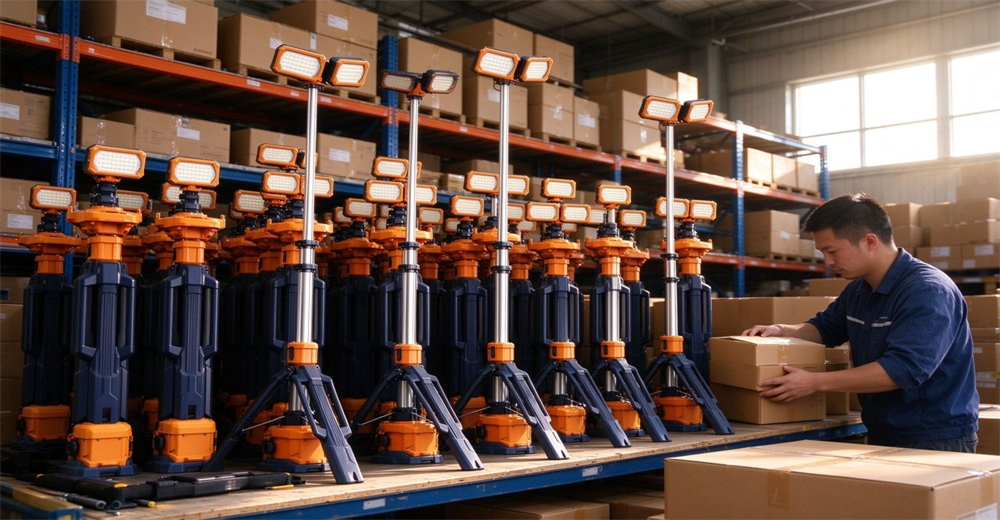
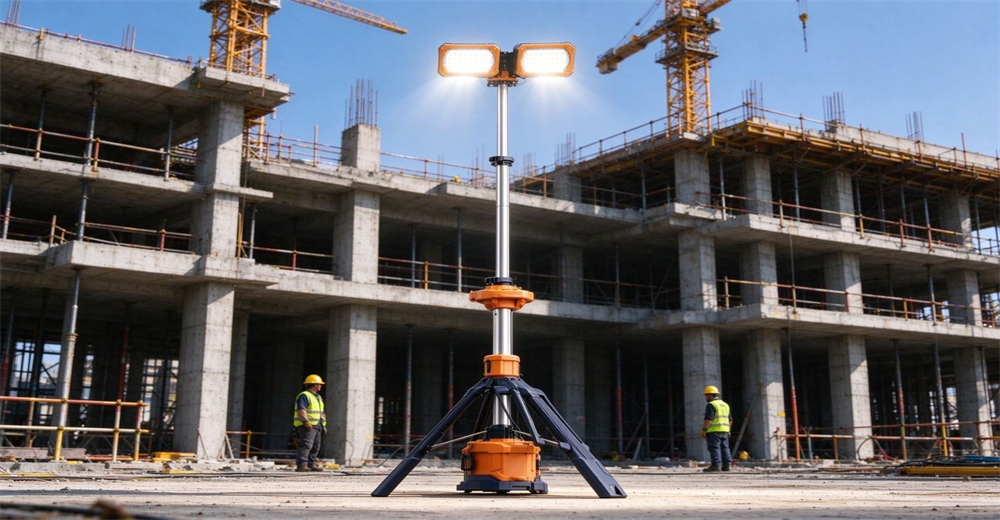
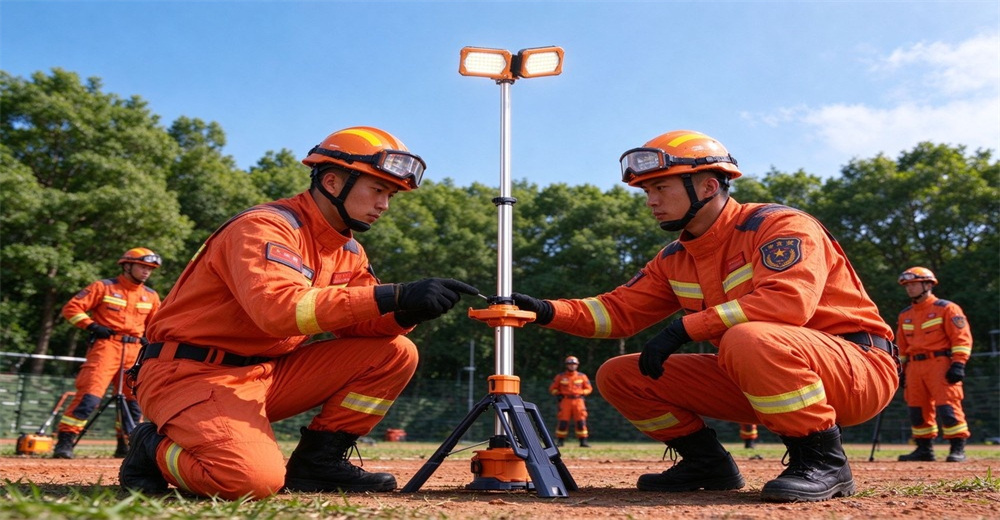
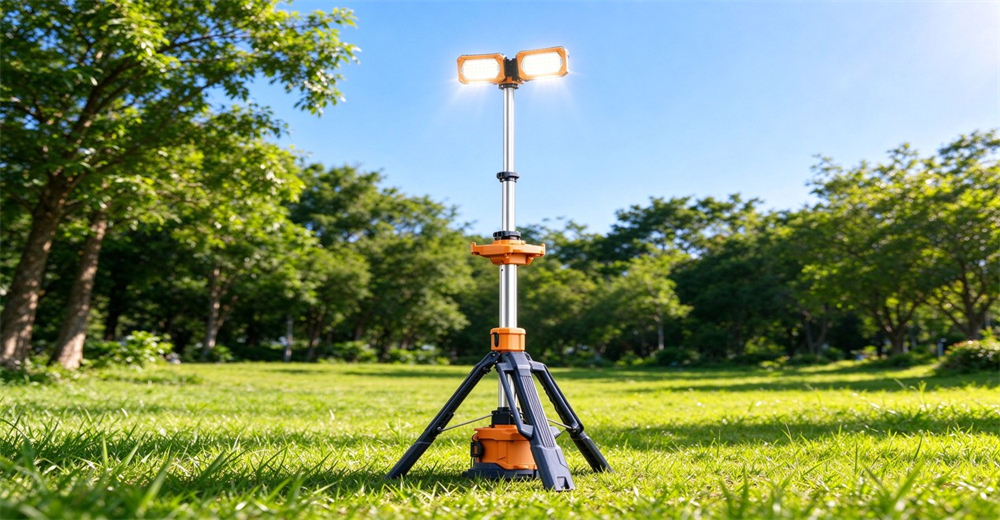
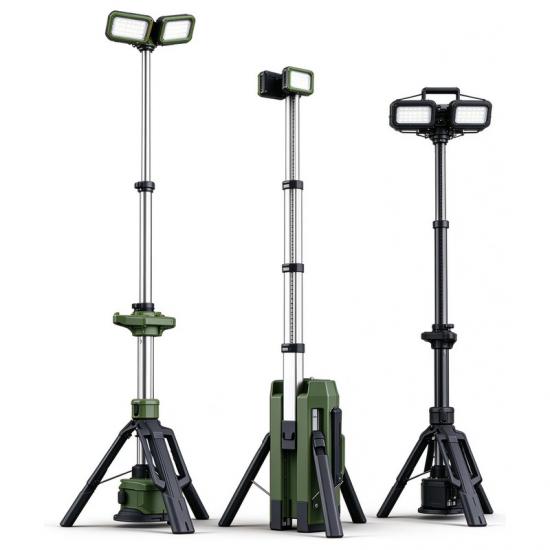
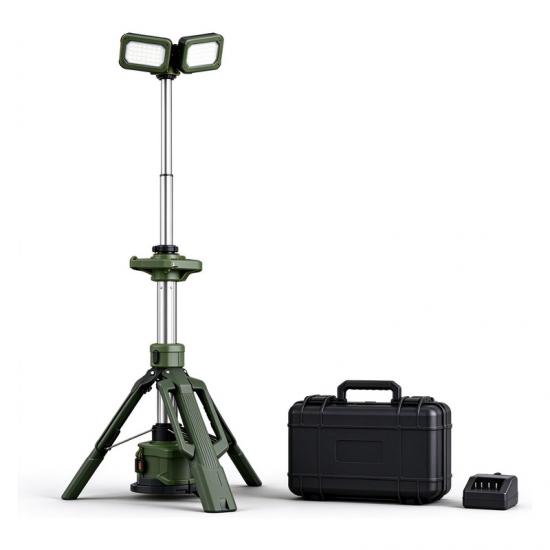
This TL-200 portable flood light adopts telescopic aluminum mast and dual LED heads, powered by lithium battery. It delivers stable bright illumination for fire rescue, roadside emergency, construction and disaster relief, easy to carry and fast setup.


Note: Price for reference only. Exact price based on quantity, size, weight and custom details.


  • model no. :

    LT-03
  • Brand:

    YRF
  • market price :

    $4200
  • sale price :

    $2100
  • price range :

    10-30/$2100
  • Color :

    Multiple Colors
  • port of dispatch :

    Guangdong/Guangzhou
  • Payment :

    TT, Paypal, Western Union
  • min order :

    10
  • original region :

    Made in China
  • Lead Time :

    5-15days
inquiry now
product description


Portable Telescopic Flood Light for Rescue 


and Road Work


A portable flood light that a single worker lifts out of a case, extends a mast and switches on in seconds.


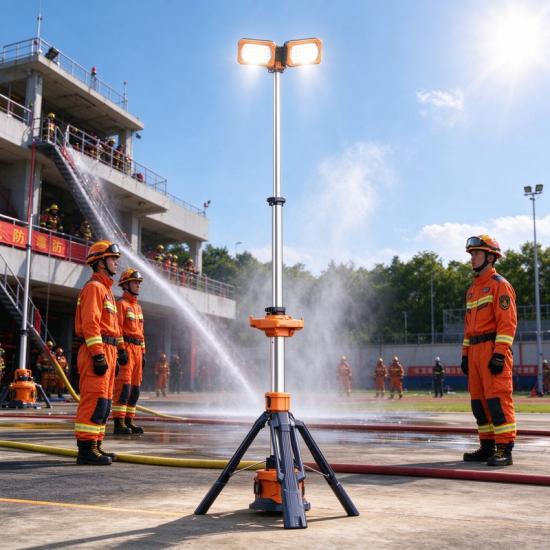
Fireground night scene with TL-200 portable flood light illuminating firefighter rescue operation at building entrance


YRF telescopic work light units run on a lithium battery, spread dual LED heads on a folding tripod and light a whole work face where there is no grid. This portable lighting rig deploys in under a minute, covers trenches, road crashes and rescue scenes, and recharges from solar or mains to keep crews working safely after dark.


This battery powered flood light replaces dragging a generator and a cable to a night scene.
Every unit in this range is built for outdoor duty: sealed against rain and dust, towable by a single operator, and configured to run overnight without a generator on site.
Specifications below are planning ranges. Exact wattage, lumen output and runtime are confirmed in your contract, so you can plan a tender or a rental fleet without being locked to a single figure.


Whether you light a disaster camp, a night shift or a remote checkpoint, the goal is the same: even, glare-controlled light where people work, with quiet operation and zero on-site exhaust.


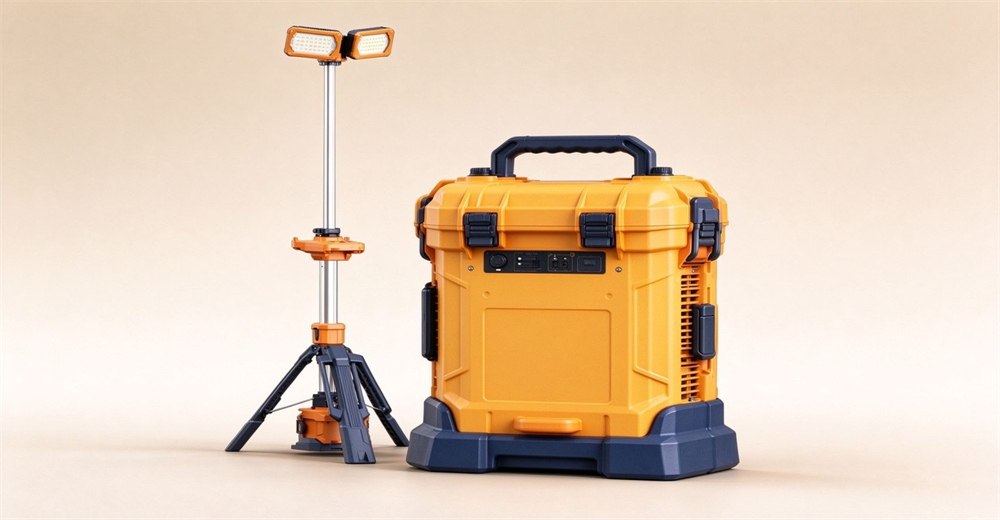
Front angle view of orange and navy TL-200 portable flood light with telescopic mast and dual LED heads on white background


Compare the configurations below, then send your site dimensions and night-shift hours for a matched model shortlist. Every figure on this page is a planning range, confirmed in your contract.
Table of Contents Portable flood light overview Portable flood light specifications Telescopic mast rapid deployment Fire, construction and traffic flood light applications Portable flood light versus tripod and handheld lights Choosing a portable flood light Portable flood light FAQ Quote and OEM information
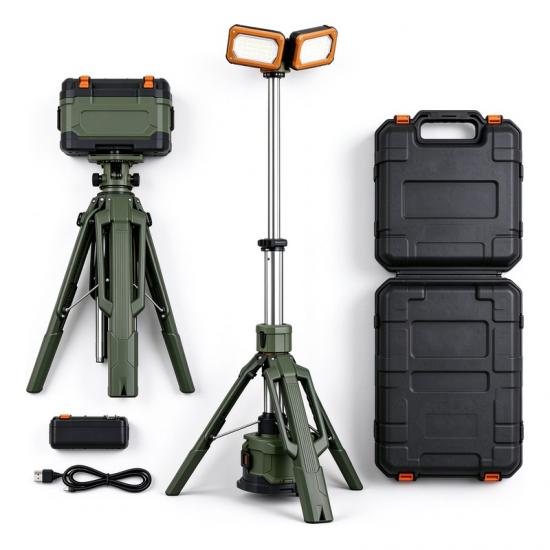
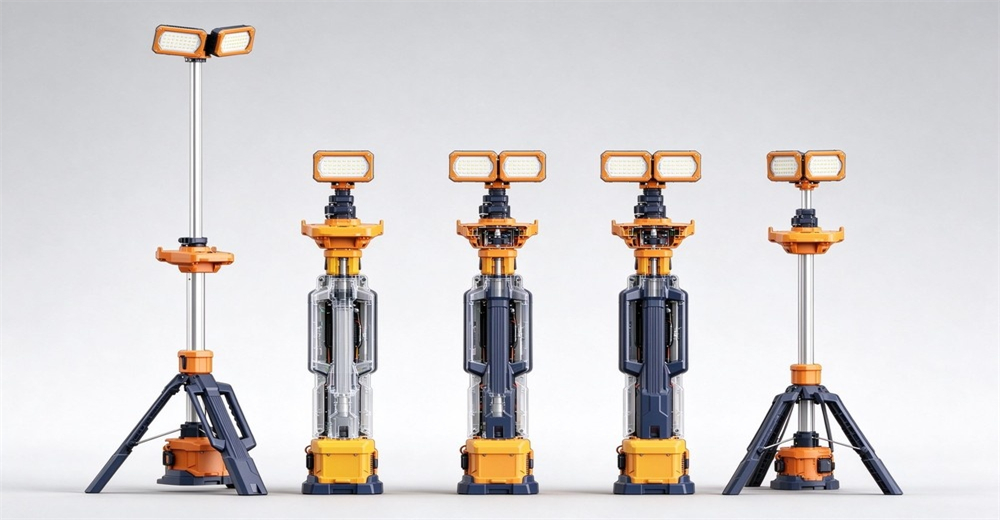
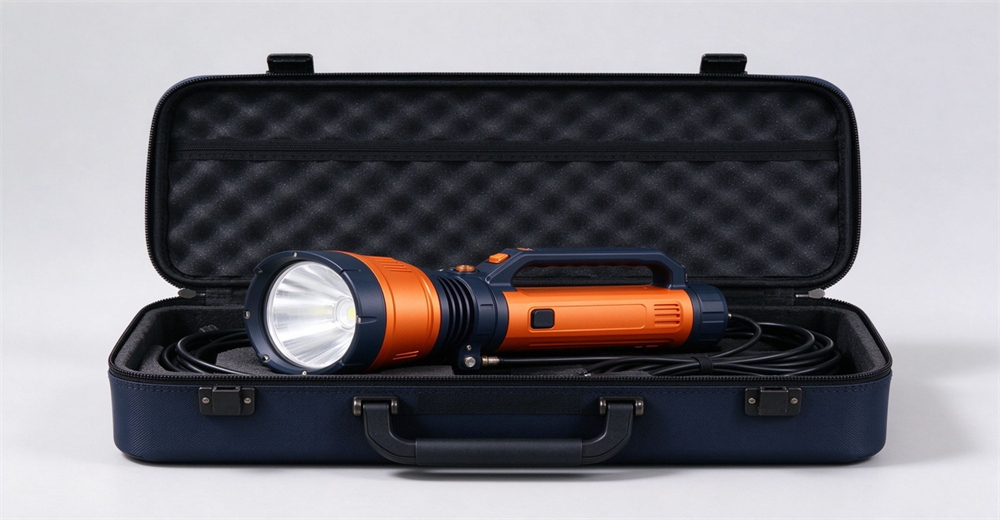
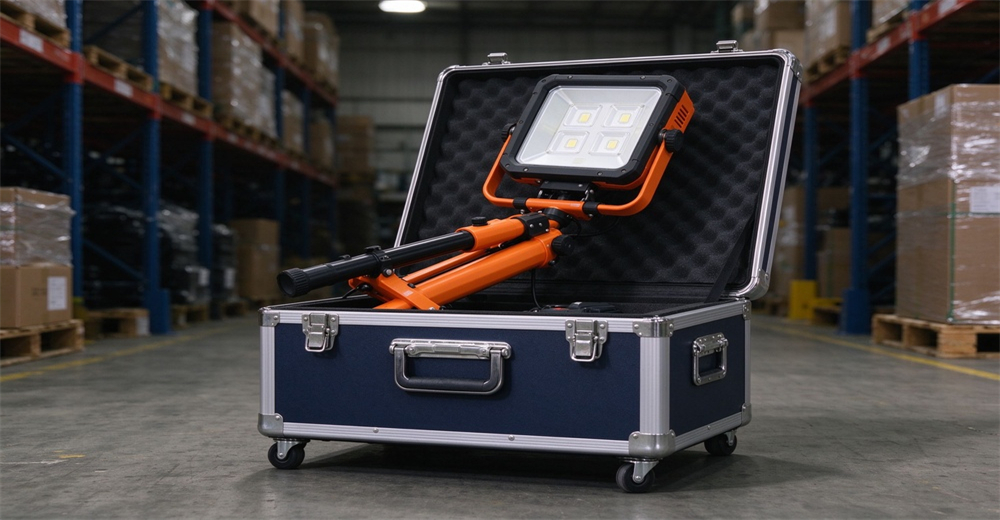
The TL-200 portable flood light platform starts as a compact case on wheels. Inside sits a folding tripod, an aluminum telescopic work light telescopic work light mast and twin LED heads.
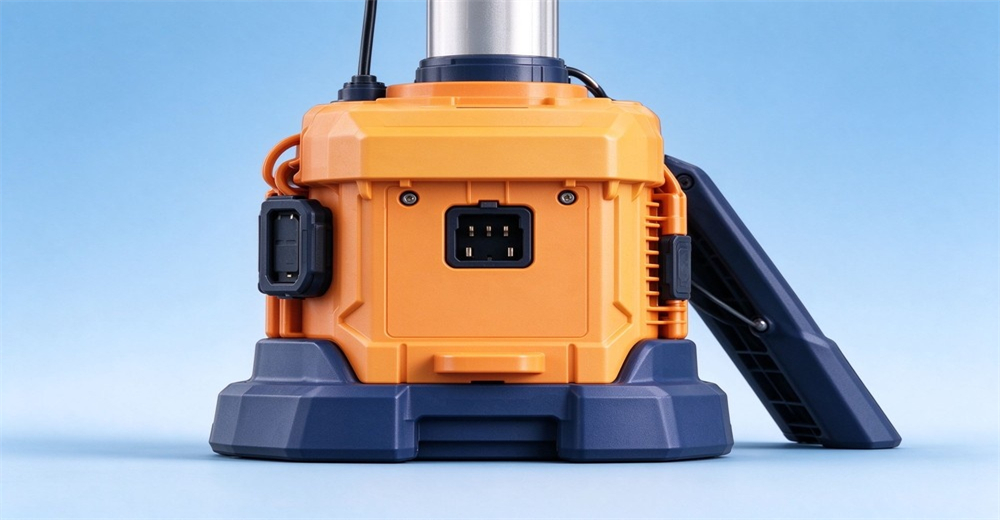
Orange and navy housing carries IP66 and IK10 ratings.The D24-100 lithium pack slides into the base, and a button raises the mast.
A portable flood light that stands itself up beats the old generator-and-cable routine.
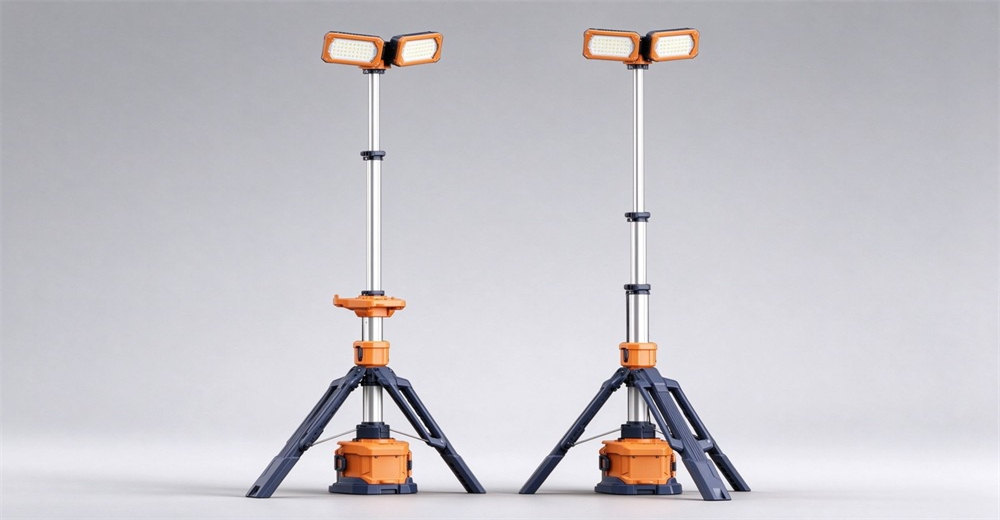
The telescopic work light mast locks at any height, and the battery powered flood light pack swaps in under thirty seconds.
The crew needs light now, not in forty minutes while a generator warms up.
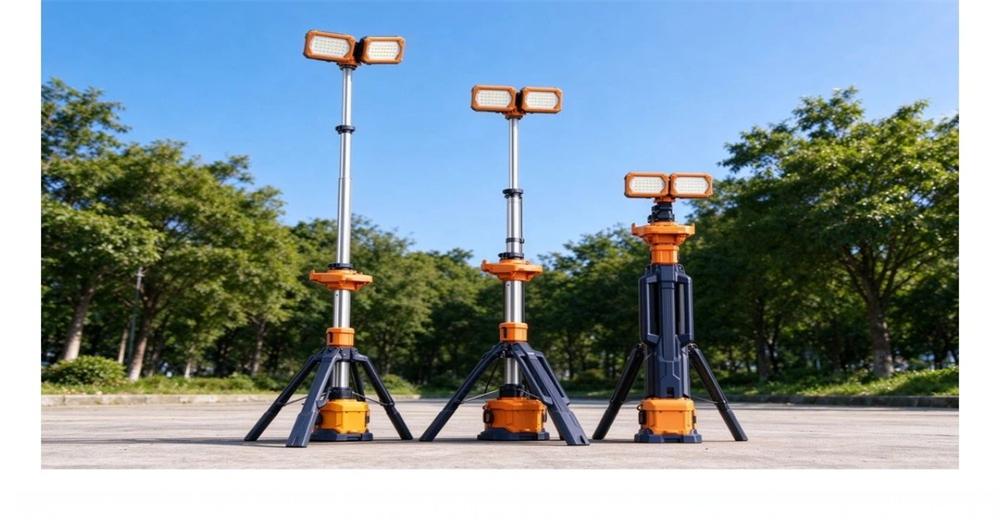
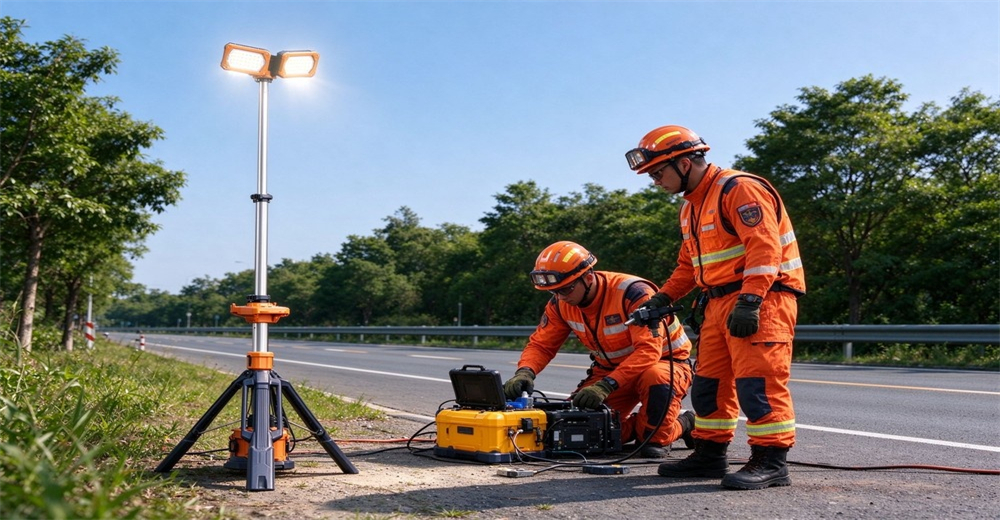
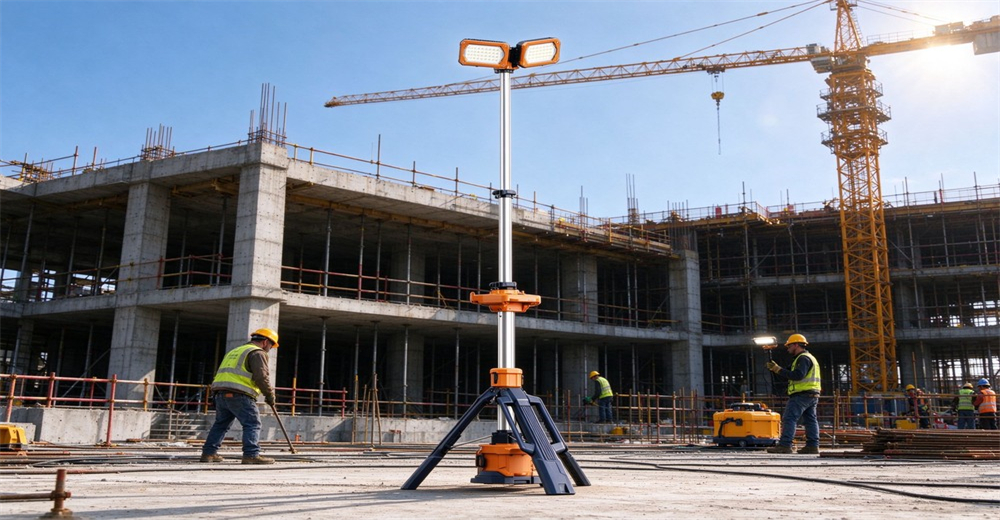
A portable flood light comes out of the vehicle trunk, the tripod opens on asphalt, the mast rises to two-plus meters and the scene is lit.
The crew works under two white LED heads while the generator truck stays parked.
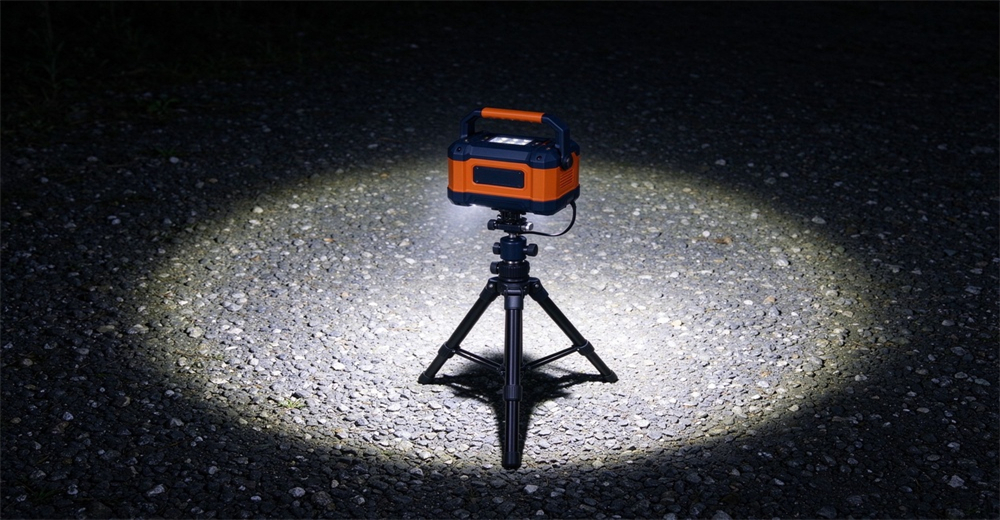
This portable flood light panoramic model spreads 360-degree light over a relief camp or supply line, so the whole team works under one pool instead of chasing shadows.
A handheld torch lights only, a portable flood light lights the whole face what the arm points at. A fixed site lamp cannot follow a moving work face.
That is the gap a telescopic work light closes: raise the portable flood light above head height, step back, and the whole face is washed.
The dual LED heads tilt to aim the pool where the crew needs it.
This class of portable flood light is also called a telescopic work light mast light. The head rides an extendable pole that locks at height.
Dual power means lithium battery when there is no socket, and AC adapter when one is free. One D24-100 pack fits the TL-200, the TL-400 long-run and the TL-200P panoramic family.
A battery powered flood light follows the job: road crash at dusk, trench dig at night, tent camp after dark.
Use it when the face moves and the line does not reach.
Buyers are fire brigades, road crews, contractors, units and emergency teams.The promise is simple: no generator, no cable, one person, under a minute to light.
A well-chosen portable flood light turns a dark shoulder into a lit face fast, and every truck that carries one saves setup time next call.


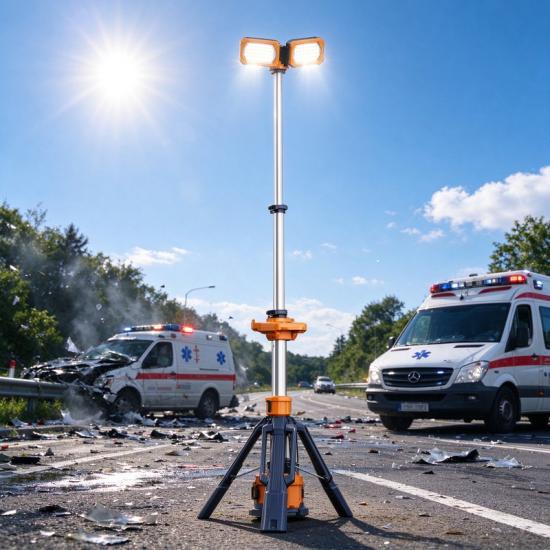
Night road crash scene with TL-200 portable flood light on shoulder illuminating accident site and emergency workers


Portable Lighting Overview: What a Portable Flood Light Is
What a telescopic flood light does
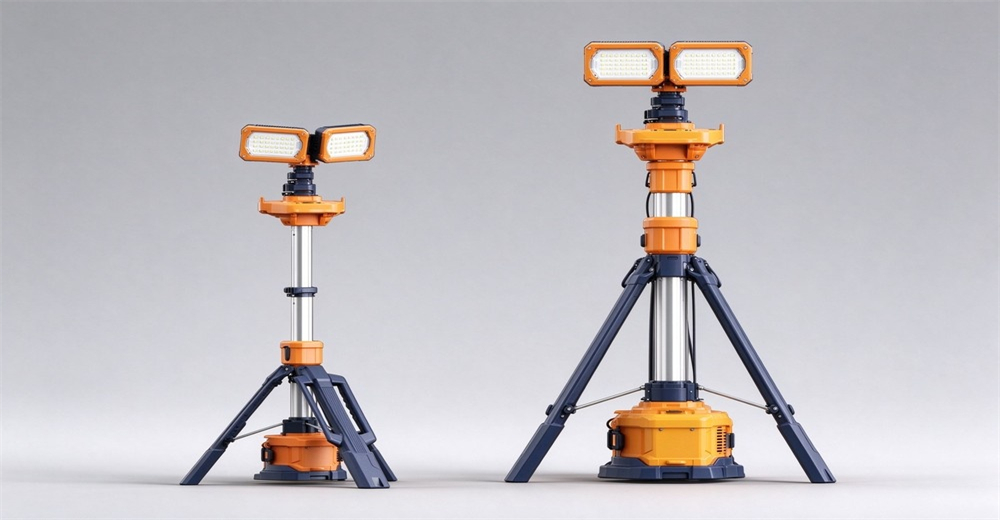
The mechanism is a folding tripod plus an extendable mast.
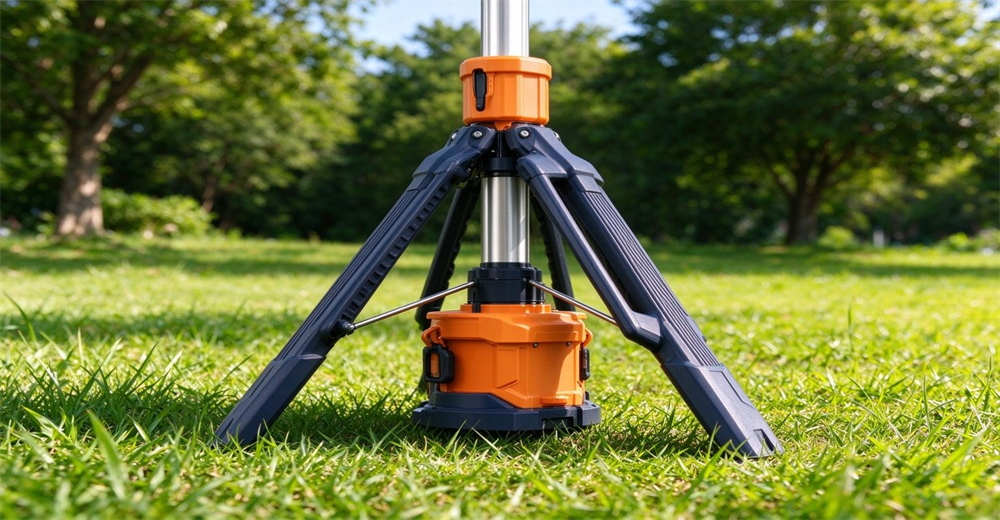
Three legs open and lock to the ground, an aluminum pole rises to working height, and twin LED heads sit on top.
Portable flood lights in this class share one deploy design so crews train once on the fleet.
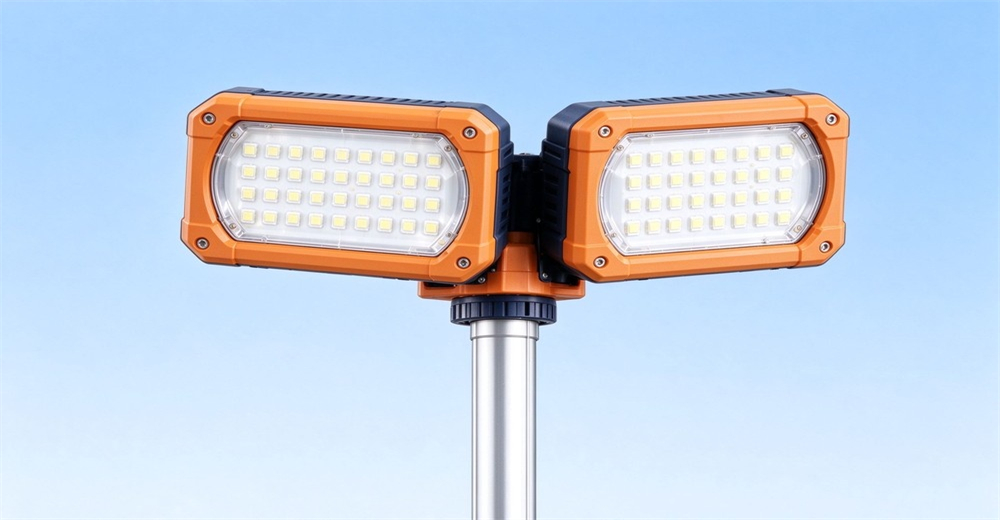
A second design point is the LED head. Each head is a rectangular chip array behind a clear lens.
The heads tilt up and down, and the pair spreads light across the work face.At night that pool covers a crash scene, a trench or a tent row.
This is why a telescopic work light is specified where hands-free light is needed.
The first win is speed.Nobody waits for a generator, lays cable or hunts for a socket.The portable flood light stands itself up in seconds and the crew starts work.
That cuts dead time on night jobs where every minute counts.
The second win is freedom from the grid.A fixed lamp needs a wall outlet and a cable run.
A battery powered flood light lives on a truck and works a site with no power at all.
Fewer cables mean fewer trip hazards on a dark face, worth kitting onto every response vehicle.
Real data points matter.The TL-200 carries IP66 against water and dust, and IK10 impact protection.
Mast height, deploy time, brightness and runtime are confirmed per model in the contract, subject to contract.
A reliable portable flood light is judged on these lines, so ask for the nameplate before you tender.


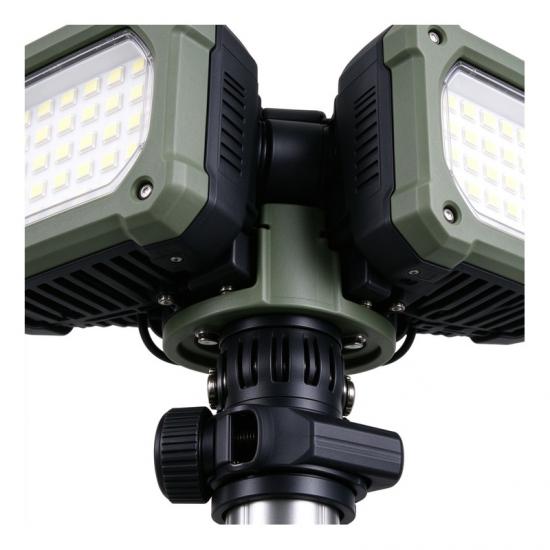
Close-up detail of TL-200 telescopic work light showing twin rectangular LED chip array heads and aluminum mast locking collars


Typical portable flood light users
Three numbers narrow most portable flood light purchases.First is deploy time, which decides how fast a scene is lit.
Second is mast height, which decides whether the portable flood light clears the work face.Third is battery runtime, which decides how long the night shift lasts.
Field buyers read IP66 and IK10 first.IP66 means powerful water jets cannot reach the inner driver.IK10 means a dropped tool will not crack the lens.
These are the rated values on the TL-200 nameplate, ready for your tender sheet.
Compare with a generator tower, a portable flood light wins on noise. A generator lights a big yard but needs fuel, noise and a second person.
Compare with a handheld torch, which lights only a small patch.A portable flood light sits between them: fast as a torch, wide as a small tower.
Most crews end up in that lane, and a portable flood light there pays back on shift one.
Sites that benefit list cleanly: crash scenes on dark roads, trenches on building sites, tent rows at emergency camps, loading bays after hours and repair crews on power lines.
Send us your layout and we match the mast to your face.
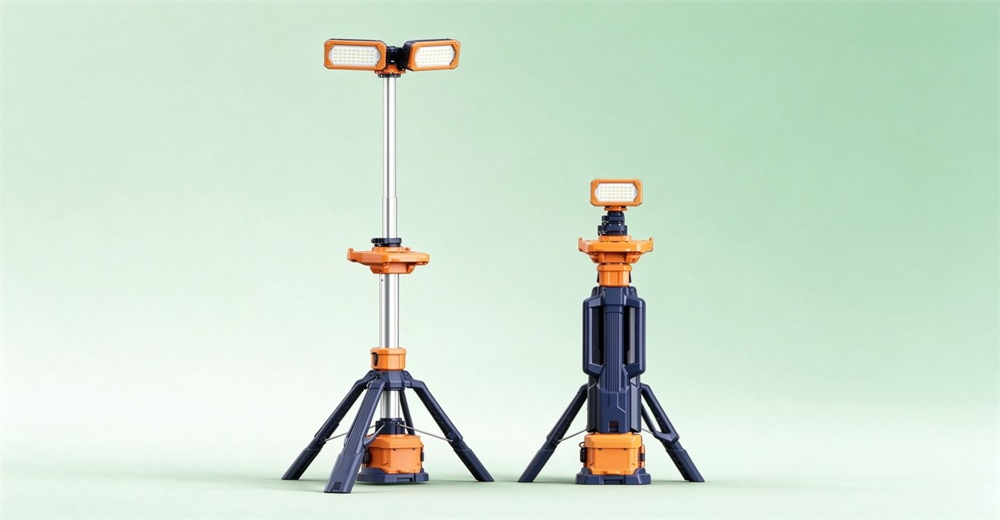
The same TL-200 portable flood light platform ships as the TL-400 long-run version and the TL-200P panoramic lamp. One spec trains across your whole fleet, from the fire truck to the remote road crew.
The D24-100 pack is shared across the family, so spares stay simple and stocking stays cheap. A single portable flood light spec across the fleet means every driver knows it before it leaves the truck.
Key portable flood light performance numbers
Mast height and runtime drive the choice.A low mast leaves shadows behind equipment.A short battery dies mid-shift.
A battery powered flood light on a tall mast with a long pack lights a full night without a swap.
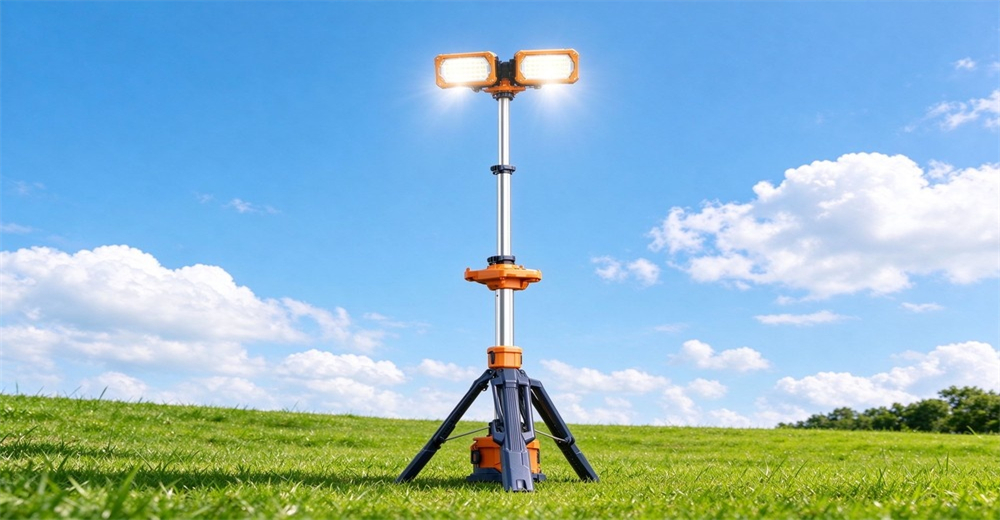


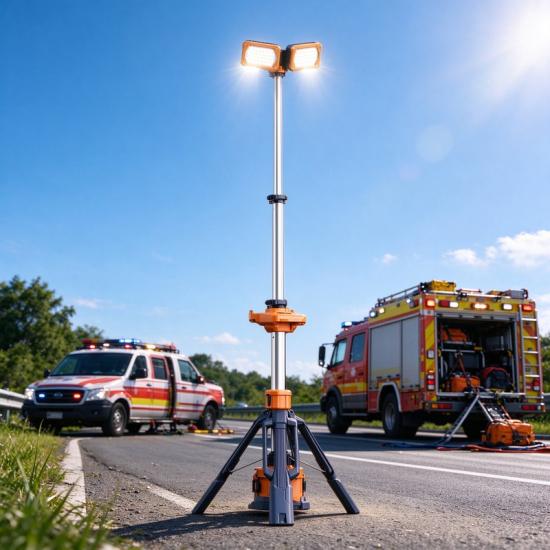
Emergency roadside night repair scene with portable flood light raised mast lighting truck breakdown on dark highway shoulder


Portable Flood Light Specifications
Portable flood light mast height and deploy time

Deploy time is the spec buyers ask about first.A portable flood light at a crash scene must stand up before the crew starts cutting.
The folding tripod opens, the mast rises, the heads switch on.This telescopic work light's deploy time is stated per model, subject to contract.
The mast rises above head height.That matters because light at head height casts shadows from every worker and every tool.
Light raised on a pole throws shadows behind objects, not across the work face.
This is the whole reason a portable flood light sits on a mast instead of standing on the ground.
LED quality matters for night work.White LED renders sharper than old halogen, so a crew reading a wiring diagram or a vehicle plate works faster.The chip array also cools better.
This is why every LED flood light in our range uses the chip-array layout.
Height compares against floor lights like this.A floor lamp lights a small circle.A mast-mounted portable flood light lights a wide pool above the work face.
Most crews run one mast light per face and never a floor lamp again.


Flood Light Model

Mast Height

Deploy Time

Power

Runtime Mode

TL-200

Subject to contract

Subject to contract

Battery or AC

Subject to contract

TL-400 long-run

Subject to contract

Subject to contract

Battery or AC

Subject to contract

TL-200P panoramic

Subject to contract

Subject to contract

Battery or AC

Subject to contract

Custom OEM

Subject to contract

Subject to contract

Your choice

Subject to contract
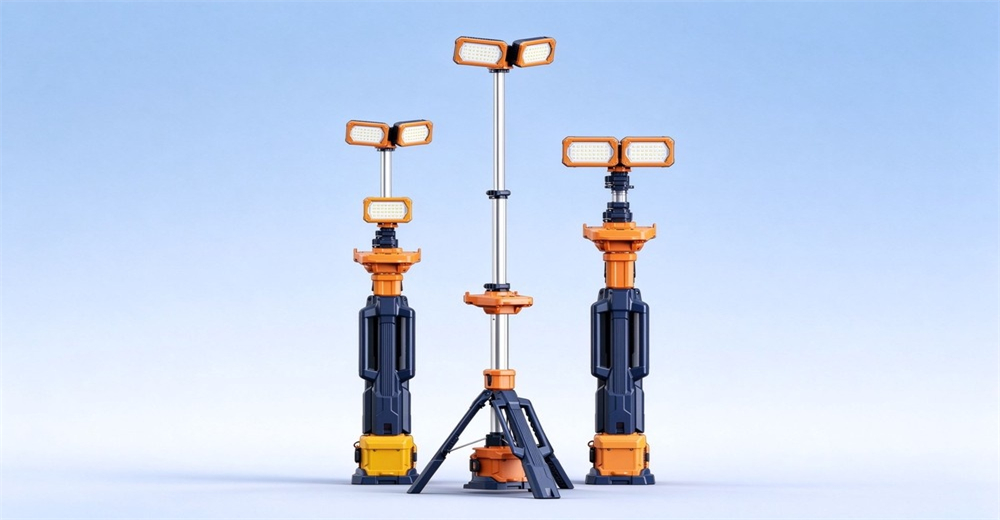


TL-200 portable flood light 45-degree product shot with spec sheet callouts showing mast height LED count and battery location


Portable flood light battery runtime
The battery pack powers the LED heads through the night.The D24-100 lithium pack slides into the base of the portable flood light.Work mode runs bright, eco mode runs long.
Exact runtime per portable flood light model is in the spec sheet, subject to contract.
Runtime is a balance for any portable flood light. Too short and the portable flood light dies mid-trench dig.
Too heavy and the portable flood light stops being portable.The TL-200 is tuned for one-person carry: light enough to lift, strong enough to hold a shift.
Add a spare pack for long nights, because a dead portable flood light at midnight leaves the crew back on torches.
Charging is simple.The MC-1 single or MC-2 dual charger tops up the pack from any socket.The TKC-9 rolling case holds six packs and charges them overnight.
A week-long deployment brings two packs per unit and rotates them.
AC mode means the portable flood light also runs from a wall socket through the X1-75 adapter.
When a socket is free, plug in and run all shift while the pack rests.

Battery for remote sites, AC for permanent corners, and a dual-input portable flood light covers both so the depot stocks one model.
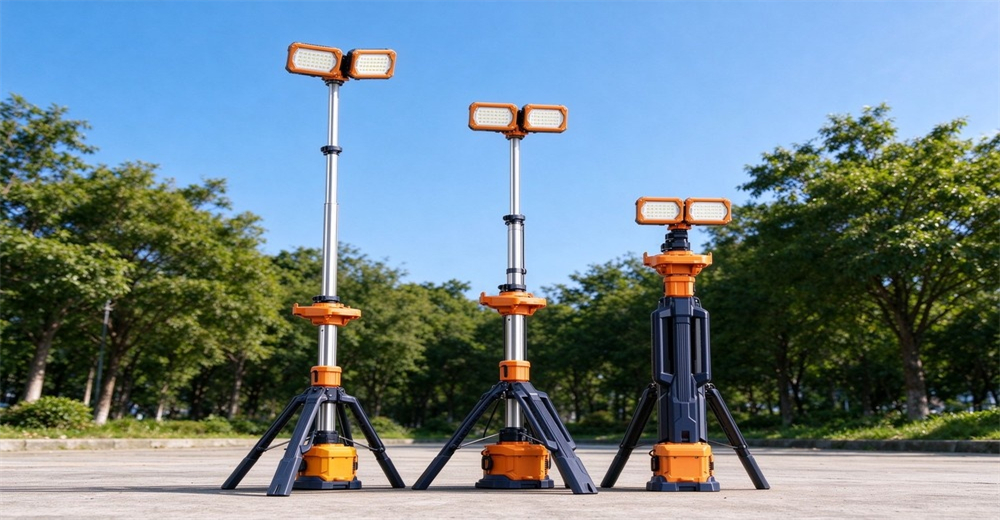


TL-200 portable flood light tripod locking clamp detail showing aluminum leg adjustment mechanism and rubber feet on muddy ground


Portable flood light waterproof and impact rating
Power options decide where the portable flood light can live.The TL-200 runs on the D24-100 lithium pack or the AC adapter.
Battery mode means the flood light lives on a truck with no cable run.AC mode means it lives on a fixed bay.
A portable flood light that switches both gives you a fall-back.
Ingress protection is IP66: dust-tight and jet-water proof (see the IP Code standard).IK10 means a dropped tool will not crack the lens.
For rain-soaked crash scenes and dusty yards, these ratings matter more than peak lumens, because a lamp that fails in the storm is worse than no lamp at all on the truck.
Setup is flexible.The folding tripod opens on asphalt, mud or grass and locks.Carry as a case, open as a light, pack back in ninety seconds.One worker handles the cycle.
No second person, no toolbox.
Specs wrap up: TL-200, IP66, IK10, telescopic mast, battery powered flood light or AC, folding tripod, shared D24-100 pack.Height, runtime and weight are per model in the contract.

Send us your sketch and we return a one-page portable flood light spec sheet.


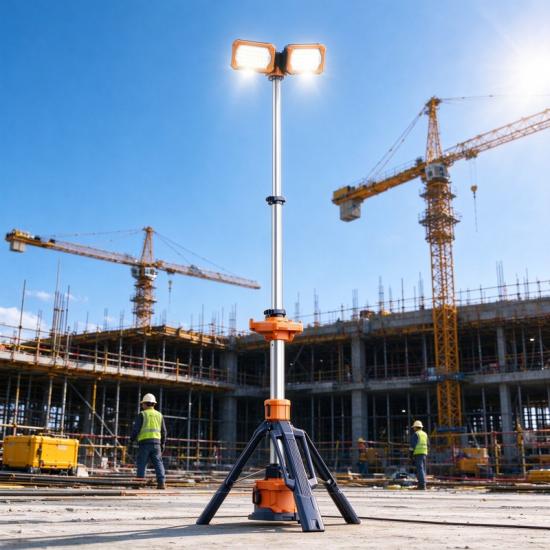
Building construction foundation night pour with TL-200 portable flood light lighting concrete workers and rebar framework


Telescopic Mast Rapid Deployment
One-person portable flood light setup

The headline feature is speed.One worker lifts the case off the truck, opens the tripod, raises the mast and presses on.No second person, no generator, no cable.
It turns a setup chore into a switch-on task.
Operation is four steps.Set the case down and open the legs.Raise the aluminum mast and lock it.Tilt the LED heads to the face.Press power.
A trained crew member lights a scene in under a minute, no pull cord.
Speed gains show in crew reports.Fewer setup minutes mean more working minutes.
Fire and road crews who switch to a portable flood light cut dead time sharply, because the light follows the worker instead of the worker hunting for power.
A portable flood light that stands in under a minute earns its place on every truck.
A second gain is hands-free work.Once the tripod stands and the mast locks, the light holds position.
The crew does not hold a torch, feed a cable or start a generator; both hands go to the job.That beats a handheld dot.
The unit links with truck workflows.Park, open the trunk, roll the case to the scene, set up.A telescopic work light lives on the vehicle and deploys at the roadside.
No extra wiring, no fuel cans.Keep the portable flood light by the trunk door so the responder grabs it and the gear in one trip.

The second feature set is the telescopic pole. A fixed-height light cannot clear tall equipment. The TL-200 pole rises and locks, clearing a crashed vehicle, a trench wall or a tent row.


Side by side comparison of TL-200 portable flood light versus TL-400 long-run model showing battery size and runtime difference


Portable flood light hands-free night lighting
Night work is the bread-and-butter job.A road crew gets a call: a spill on the highway after dark.
The truck arrives, a battery powered flood light opens on the shoulder, the mast rises, and the lane is lit so the crew cleans up without torches.
The raised pool wins here.A handheld torch lights one patch and leaves the rest dark.
A mast-mounted portable flood light puts a wide pool over the whole lane, so a crew member steps to the spill without tripping a cone.
Crew efficiency rises with one-person setup.A two-man setup used to tie up two workers for ten minutes.
Now one worker sets the light while the other stages tools, so the crew clears more scenes per shift.
Light holding is the third benefit.Once the pool lands on the face, it stays there while the crew works.
A telescopic work light holds a steady pool on a trench or crash scene without drifting like a tired hand, so it beats a handheld for a long pour.
Power through a long night comes from the D24-100 pack or AC.On battery the light runs as long as the pack lasts, and a spare swaps in minutes.
Dual-input portable flood lights cover grid-down nights without a generator truck.
The feature set wraps up: one-person setup, telescopic locking mast, wide hands-free pool, battery or AC fall-back.No generator, no cable, no second person.

This battery powered flood light is the base for fast night scenes.


Product lineup of TL-200 TL-400 long-run and TL-200P panoramic portable flood light models arranged on showroom floor


Fire, Construction and Traffic Flood Light Applications
Portable flood light crash scene and fireground lighting

Roads run 24 hours.A telescopic work light covers portable flood light night shift.Crash scenes and spill jobs need light that follows the crew, not a fixed wash on the curb.
A portable flood light on the truck shoulder lets the crew work the lane without blocking traffic for a generator setup.
The pain point is real.Without fast light, a crew hears a crash, sends a truck, and by setup time the scene stays dark.
With a TL-200, they open the case, raise the mast, and the lane is lit before the tools come out.
The TL-200 fits the shoulder.Set the tripod on asphalt or gravel, point the heads at the crash, and the whole scene is washed.
Portable flood lights of this type are standard on fire and rescue trucks from city depots to rural roads, see carbon fiber fire helmets with face shield for rescue teams.
Value shows in response minutes.Faster lighting means faster extrication and faster road reopen.
It also means fewer close calls in traffic, because the crew confirms the lane is lit before stepping into it.
A portable flood light on the shoulder makes that check possible in seconds.
Fireground is a sister use.A crew at a structure fire sets a portable flood light on the apron so the hose team sees the doorway and the gear.
The light searches the face, the crew does the work.Split roles beat one torch in the smoke, see industrial fire rescue equipment for emergency scene lighting.
Construction sites are the next shore.A trench dig runs past sunset.A telescopic work light on the trench edge lights the bottom so workers see the pipes.

No power on site, no generator, just battery light.


One-person setup sequence of TL-200 portable flood light worker opening tripod legs on grass before raising telescopic mast


Portable flood light emergency camp and work face lighting
Construction pain is movement.A building site shifts face by face: foundation today, slab tomorrow, roof next week.Fixed floodlights stay where they were bolted.
A portable flood light rolls to the new face and stands up in seconds.
The site solution: roll the TL-200 to the trench, open the tripod, raise the mast.Run it on battery for the dig, plug to AC when the site power comes on.
The light follows the work instead of the work moving to the light.
Value shows in safety.A lit face deters trips and falls.A self-standing light means the crew keeps both hands on tools.
A battery powered flood light unit means no cable to trip over and no generator fumes.Safety managers who switch report fewer near-misses.
Emergency camps run the same play.A relief tent goes up after a flood.
A TL-200 on the camp edge lights the tent row and the supply table. Emergency scene lighting of this type replaces noisy generators at camps where quiet matters, see flood rescue clothing and gear for night operations.
Power repair is the third shore. A line crew fixes a downed pole with a portable flood light after dark with a battery powered flood light.
A battery powered flood light on the shoulder lights the pole base while the lineman works up high.
No cable across the road, no fuel can on the dirt, and a portable flood light on the tailgate keeps the tools lit while the lineman climbs.
Scenarios wrap up: crash scene on the shoulder, fireground apron, construction trench, relief camp, power repair.
Each asks the light to hold a wide pool on a moving face from a fast one-person setup.

The TL-200 portable flood light does it on battery or AC, tripod on asphalt or mud.


Flood Light Scenario

Setup Position

Qty

Runtime

Note

Crash scene

Road shoulder

1-2 units

Subject to contract

Lane lighting

Fireground

Apron edge

1-2 units

Subject to contract

Doorway, gear

Construction trench

Trench edge

1-2 units

Subject to contract

Night pour

Relief camp

Camp edge

1 unit

Subject to contract

Tent row

Power repair

Pole base

1 unit

Subject to contract

Lineman work


Mast raised height detail of TL-200 portable flood light showing aluminum telescopic tube sections and locking pin mechanism


Portable Flood Light versus Tripod and Handheld Lights
Portable flood light coverage comparison

The comparison buyers ask for most: portable flood light versus ordinary tripod light versus handheld torch.They are not competitors; they are partners on the same scene.
Torches light the close task, flood lights light the whole face.Most crews end up running both.
Coverage is the first dimension.A handheld torch lights a small patch.A floor tripod lamp lights a wider circle but stays low.
A mast-mounted portable flood light raises the pool above head height and washes the face.That height gap is why crews add a telescopic work light to a torch kit.
Beam shape is the second dimension.A torch throws a narrow spot.A flood light throws a wide pool.
Pick a torch for reading a plate, pick a LED flood light for lighting a trench.Neither replaces the other on a real scene.
Setup is the third dimension.A torch needs a hand the whole shift.A fixed lamp needs cable and power.A portable flood light stands itself up and holds position.
Labor drops because the worker frees both hands for the job.
Safety is the fourth dimension.No cable across the floor, no generator fumes, no fuel can on the face.The worker sets the light and steps back.
This is why safety officers look kindly on portable flood light upgrades: fewer trip hazards on dark faces.
Freedom from the grid is the fifth dimension.A fixed lamp needs a socket.A generator tower needs fuel and noise.

A battery powered flood light works a site with no power at all.That is the flood light lane where grid access fails.


Dimension

Portable Flood Light

Handheld Torch

Floor Tripod Lamp

Coverage

Wide raised pool

Small spot

Low circle

Hands

Freed

One hand busy

Freed but low

Power

Battery or AC

Battery

Cable or battery

Setup

Seconds

Instant

Minutes + cable

Ideal fit

Whole face

Close task

Small area


Street deployment of TL-200 portable flood light at nighttime road closure with cones and worker directing traffic around scene


Portable flood light setup speed and labor saving
Cost is the sixth dimension of a portable flood light. A torch is cheap but ties up a hand. A generator tower costs fuel and noise over years.
A portable flood light costs more upfront but saves setup labor over shifts.Add a telescopic work light where generator setup was expensive: remote roads, flooded camps, trench digs.
On a flat wired yard, fixed lamps alone are rational.
The three complement, not compete.Most crews carry torches in the truck and a TL-200 portable flood light on the shoulder.The torch reads the plate; the flood light lights the lane.
Both switch from the base on separate heads.
Compare with the roof searchlight family too.A roof lamp watches a boundary from a fixed point.A telescopic work light follows a moving work face.
Roof lamps suit perimeters that do not move; flood lights suit faces that do.Read our page on remote-control searchlights for fixed boundary watch if your scene stays put.
Selection advice for portable flood light buyers: start with the torches you own.Map the dark patches on your work face.
Add one TL-200 per dark face, then scale to TL-400 for all-night shifts.Buy spare packs before peak season.
Combined portable flood light setups look like this: one torch per worker, one portable flood light per face.
Torches for close reading, flood light for the wide pool.
A telescopic work light rounds out the kit; it does not replace the torch that sees the small detail in the dark, and a spare portable flood light in the trailer keeps a face lit when the first one needs a swap.
The comparison wraps up: flood light for the raised wide pool, torch for the close spot.Pick flood light for whole-face lighting.Pick torch for detail.
Most crews run both, and neither does the other's job after dark.
Choosing Portable Lighting: How to Pick the Right Flood Light
Portable flood light decision tree by runtimeCombined portable flood light setups look like this: one torch per worker, one portable flood light per face.
Torches for close reading, flood light for the wide pool.
A telescopic work light rounds out the kit; it does not replace the torch that sees the small detail in the dark, and a spare portable flood light in the trailer keeps a face lit when the first one needs a swap.
The comparison wraps up: flood light for the raised wide pool, torch for the close spot.Pick flood light for whole-face lighting.Pick torch for detail.

Most crews run both, and neither does the other's job after dark.


D24-100 lithium battery pack charging port detail on TL-200 portable flood light base showing LED indicator and DC input


Choosing Portable Lighting: How to Pick the Right Flood Light
Portable flood light decision tree by runtime

The shortlist starts with one question: how long does your night run?A short roadside fix needs less runtime than an all-night trench dig.Long-run packs weigh more and cost more.
Send us your shift length and we match the pack to your hours.
Branch one: runtime.Short fix, a single D24-100 pack holds the scene.All-night dig, run the TL-400 long-run version with extra packs.
For very long nights, plan two units on spare packs rather than one over-weight light.Exact runtime per portable flood light model is in the spec sheet, subject to contract.
Branch two: height.A low face needs a short mast.A crashed vehicle or a trench wall needs a taller pole.
The TL-200 raises to working height; the TL-200P panoramic spreads 360-degree light for a wide camp.Exact mast height per model is in the spec sheet, subject to contract.
Branch three: power.Socket on site?Run AC and skip battery worries.Remote road with no power?Run the D24-100 pack.Fall-back required?
Carry both the pack and the X1-75 adapter so the light switches when the grid drops.A battery powered flood light on two inputs survives grid-down nights.
Branch four: beam.Work face ahead?The twin-head TL-200 spreads a directed pool.Wide camp all around?The TL-200P panoramic head washes 360 degrees.
Pick the head shape that matches your face: directed for a trench, panoramic for a tent row.
Branch five: carry.Truck-mounted?The wheeled case rolls to the shoulder.Foot-carried remote site?Pick the lighter TL-200.

A portable flood light that a worker can lift beats one that needs two people on a muddy path.


Export packaging of TL-200 portable flood light in wooden crate with foam protection and shipping labels for sea freight


Portable flood light decision tree by beam and carry
Threshold rules help.If your job is a flat wired yard, fixed floodlights alone may cover you.
If your face moves after dark and the grid does not reach, a portable flood light earns its place.Start with one TL-200 and add more as faces show.
Fallback advice: send us a sketch. Hand-drawn on a phone photo works. Mark the truck, the face, the shadows and where the crew stands. We return a one-page portable flood light layout.
Distinguish from roof searchlights.A roof searchlight watches a boundary from a fixed console.A TL-200 works a moving face, hands-on, one person.
Pair a roof searchlight with a portable flood light: searchlight for long-range watch, flood light for close work face.
Ingress choice follows climate.Dry indoor yard?A basic rating suffices.Rain-soaked roads and dusty yards?IP66 standard on the TL-200.
IK10 lens protection is standard across the range. Portable lighting equipment buyers on crash trucks lean on IP66 as a tender line item.
Acceptance checks at delivery: unbox, check orange and navy housing, confirm tripod opens and locks, raise mast and test tilt.Plug in charger and confirm LED turns green.
Charge one cycle before first use.Keep carton for transport.
Selection wraps up: runtime first, then height, then power, then beam, then carry.Start with one TL-200, map the faces, add more.Distinguish from roof searchlights.Match IP rating to climate.

This portable flood light shortlist is built from the TL-200 platform and its siblings.


Flood Light Model

Runtime

Mast

Power

Ideal Fit

TL-200

Subject to contract

Subject to contract

Battery or AC

Crash, fire, road

TL-400 long-run

Subject to contract

Subject to contract

Battery or AC

All-night digs

TL-200P panoramic

Subject to contract

Subject to contract

Battery or AC

Wide camps

Custom OEM flood light

Subject to contract

Subject to contract

Your choice

Special voltage, color


Full model lineup of portable flood light family including TL-200 TL-400 and TL-200P with color options and accessory kits


Pneumatic Mast Deployment Time and Wind Survival Test Method
The portable telescopic light is sold on one promise: one firefighter or traffic officer raises the mast in under 30 seconds. This anchor explains how that number is measured and what wind rating really means in the field.

Single-Person Raise Time ≤ 30 s
The mast is a pneumatic, four-stage aluminum tube. A hand pump or small 12V compressor delivers 8 bar of air pressure. Full raise from 1.2 m stowed to 4.2 m deployed takes ≤30 seconds on a fresh seal tripod.
Three legs of the tripod unfold to a 1.1 m footprint in under 60 seconds. Total site-ready time from truck bed to lit work face is about 90 seconds. This is why fire and traffic crews choose this over a towed tower.

Wind Survival ≥ 6 Beaufort (10.8-13.8 m/s)
With the mast at full 4.2 m and a 30 W flood head, rated survival is Beaufort 6, 10.8-13.8 m/s. At that wind the head deflection at the top stays under 5°. Above 13.8 m/s the crew should stow the mast.
Wind load calculation follows EN 1991-1-4 wind loadISO 14122 machinery safety. Luminaire safety follows IEC 60598-1 luminaire safety.

Locking Collar and Anti-Rattle Mechanism
Each stage locks with a spring-loaded collar at 2, 3, and 4 m. A release valve bleeds air to retract. After 500 raise-lower cycles the seal kit is recommended for replacement. Spare O-rings ship with every unit.

Battery Runtime Curves Across Brightness Modes and Cold Capacity
A portable telescopic light lives or dies on battery runtime. This anchor gives the brightness-mode curve and the -10°C capacity number fire crews should write into spec.

Runtime at 100% / 50% / 25% Brightness
The default pack is 57.7 Wh (21700 Li-ion, 2500 mAh × 8 cells). At 30 W head output:
100% brightness: ~1.9 hours
50% brightness: ~3.8 hours
25% brightness: ~7.6 hours
Eco strobe (5 W): ~11 hours

Fire crews run 50% for the first 90 minutes of a fire, then drop to 25% for scene preservation. Traffic crews run 100% during lane closure, then 25% while waiting for tow.


Night light pool coverage test of TL-200 portable flood light showing even illumination spread across construction work face


-10°C Capacity Retention ≥ 80%
At -10°C the pack still delivers ≥80% of rated Wh at a 1C discharge. At -20°C retention drops to 65%. Below -20°C the BMS cuts output to protect cells. Nordic winter crews carry a second pack in a jacket pocket to keep it warm.
Battery safety follows IEC 62133-2 battery. Pack safety for mobile power banks references UL 2056 battery pack. Shipping compliance is governed by UN 38.3 battery transport test.

USB-C PD Charging Input
The pack charges via USB-C PD at 60 W. Full recharge from 0 to 100% takes 2.5 hours. A 45 W USB-C charger can top up from 20% to 80% in 90 minutes during a lunch break. This matters for shift rotation.
IP65/IP67 and IK08 Impact Rating Test Protocol
A portable telescopic light gets rained on, hosed off, and dropped on asphalt. This anchor explains the IP and IK numbers so buyers can verify test reports.

IP65 Water Jet / IP67 Immersion
The lamp head is rated IP65: protected against water jets from any direction (12.5 L/min at 30 kPa for 3 minutes). The battery pack and control box are rated IP67: temporary immersion up to 1 m depth for 30 minutes.
IP classification follows IEC 60529 IP rating. Cable glands are PG11, IP68 rated. Sealing gaskets are silicone, rated for -20°C to 80°C continuous.

IK08 5J Impact Drop
The housing is rated IK08, equal to 5 joules of impact. That is a 1.75 kg mass dropped from 290 mm. In practice this means the head survives a 1.5 m fall off the tripod onto asphalt without cracking the lens.
IK classification follows IEC 62262 IK impact rating. Tripod legs are fiberglass-reinforced nylon, which does not dent and does not conduct electricity.

Cable Gland and Connector Sealing

The head-to-mast cable uses a connector with two O-rings. Field replacement takes 2 minutes. We recommend checking the gland torque every 6 months; a loose gland is the single most common field failure.


Rescue team night operation with multiple TL-200 portable flood lights lighting extrication scene around damaged vehicle


FAQ: Deep Technical Questions on Portable Telescopic Light
How fast can one firefighter deploy this light at night?

Three legs unfold in 60 s. Pneumatic raise takes 30 s. Power-on and aim takes another 30 s. Total site-ready time is about 2 minutes from truck bed to lit work face.


Will the 4.2 m mast hold up in a coastal storm?

Rated survival is Beaufort 6 (13.8 m/s). Above that, stow the mast. The 1.1 m tripod footprint is too narrow for open exposed coastline in storm winds.


What happens to runtime at -10°C on a winter road accident?

Pack delivers ≥80% of rated Wh. A 57.7 Wh pack therefore runs about 1.5 h at 100% instead of 1.9 h. Carry a second pack in jacket pocket.


What warranty covers portable lighting after a bulk order?
Our portable lighting line carries a 2-year head warranty and 1-year battery warranty, with spares stocked in China.

This backing means portable lighting buyers can order in volume, because portable lighting defects are covered quickly.


Does portable lighting fold small enough for a backpack?
Portable lighting on a folding tripod collapses to under 1 m, so it straps onto a rescue backpack or vehicle rack.

Despite that compact size, portable lighting still floods a 100 sq m work face, which is why portable lighting is favoured by first responders.


What certification marks should portable lighting carry on the label?
Good portable lighting carries CE, IEC 60598 and IP65 marks on the head label.

These marks prove portable lighting meets safety and weather standards, so always ask for them before bulk portable lighting orders.


What battery chemistry is safest for portable lighting in cold rescue work?

For cold rescue, choose LiFePO4 portable lighting, which holds capacity down to -20 C and resists thermal runaway.

This chemistry is the default in our portable lighting line, and it lets portable lighting crews work through winter nights safely.


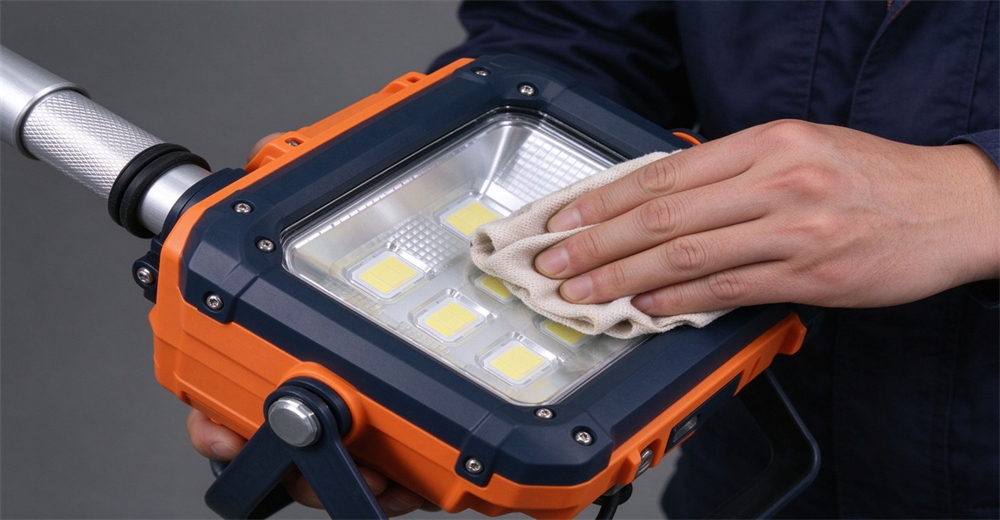
Crew member cleaning TL-200 portable flood light LED lens with microfiber cloth during routine maintenance check at depot


How bright is portable lighting compared with a car headlight?
A single headlight is about 1,000 lumens, while portable lighting delivers 3,000-8,000 lumens across a wide flood.

That is why portable lighting replaces a pair of headlights at a crash scene, lighting a full lane with one portable lighting unit.


Can portable lighting be linked in series for a larger site?
Yes, several portable lighting units stand 10 m apart to overlap pools and cover a long trench or perimeter.

Each portable lighting unit runs independently, so one failing pack does not black out the whole portable lighting setup.


Can portable lighting be recharged from solar panels in the field?
Yes, most portable lighting bases accept an external solar panel, recharging the lithium pack in one sunny day without mains.

This makes portable lighting self-sufficient for remote rescue and off-grid patrol where no power outlet exists.


What tripod weight should portable lighting have for rescue work?
Portable lighting on a folding tripod weighs 5-12 kg so two rescuers carry it, and it deploys in under a minute.

The legs lock on uneven rubble or stairs, a key reason portable lighting is preferred over wired floodlights at emergency scenes.


Are portable lighting units certified for hazardous industrial zones?
Standard portable lighting is IP65 for outdoor rain; for explosive gas zones choose the ATEX-rated version.

Every unit meets IEC 60598 luminaire safety, so portable lighting is safe on most industrial and rescue sites.


What IP rating and battery runtime do portable lighting sets carry?
Modern portable lighting sets carry IP65 on the lamp head and IP54 on the battery base, running 4-8 hours on a single charge.

The lithium pack includes BMS over-discharge and overheat protection. For rainy road work, choose the IP66 head option so portable lighting survives direct hose water.


How high can portable lighting extend and what lux does it deliver?
Portable lighting on a folding tripod extends to 1.8-3.2 m and delivers 1,500-4,000 lux at 3 m, meeting EN 12464-1 task illumination.

Dual LED heads tilt independently, so crews light a trench or crash scene from one compact portable lighting unit without a vehicle or generator.


What is the difference between portable lighting and a fixed floodlight?
Portable lighting is battery-powered and moves with the crew, while a fixed floodlight needs wired mains and stays on one wall.

For emergency response, portable lighting wins because it deploys anywhere in minutes, and it meets IEC 60598 luminaire safety for temporary work sites.


Complete carry case kit of TL-200 portable flood light with all accessories laid out including charger strap and spare bulbs


Field Case: A Portable Telescopic Light in a Motorway Tunnel Accident
A 3-vehicle pile-up in the Gotthard Tunnel blocks both tubes at 22:00. Fire crews roll with four portable telescopic lights to light the crash scene for extrication. This case shows how the deploy-time numbers matter when every second counts.

Deployment Timeline
Engine 1 arrives at 22:08. Crew member 1 opens the tripod legs (30 s), member 2 pumps the mast (30 s), member 3 aims at the wreck (30 s). At 22:10 the scene is lit. Two more units flank the scene by 22:12. The fourth covers the approach road for incoming traffic.

Runtime Through the Night
Extrication runs at 100% brightness for 2 hours. Then scene investigation drops to 50% for 4 hours. Total battery draw is about 75 Wh, well under the 57.7 Wh × 2-pack rotation. The team brought 4 packs and returned with 2 half-depleted.

Why Not a Tow Tower?
A tow tower would take 20 minutes to unhitch, level and raise. In a tunnel, the truck itself blocks traffic. A portable telescopic light goes where the tow truck cannot: 100 m inside the bore, on the lane shoulder, no engine noise.

Comparison Table: Portable Telescopic Light vs Tripod Work Light vs Handheld

The portable telescopic light sits between a fixed tripod and a handheld. It is the fastest way to get light 4 m up without a tow truck.


Parameter

Portable telescopic light

Fixed tripod light

Handheld work light

Deploy time

2 minutes

3 minutes

Instant

Height

4.2 m mast

1.5 m fixed

Hand level

Coverage

300 m²

50 m²

30 m²

Runtime

1.9-7.6 h

4-8 h

4-20 h

Wind survival

Beaufort 6

Beaufort 4

N/A

Best use

Fire / traffic / rescue

Indoor workshop

Confined space


Battery runtime comparison chart showing TL-200 work mode versus eco mode duration across single and dual D24-100 pack setups


Portable Flood Light FAQ
Common portable flood light questions buyers ask

Q: How do I choose the right portable flood light runtime for my shift?
Estimate how long your night face runs. A short roadside fix with a portable telescopic light needs one pack. An all-night trench dig needs the TL-400 long-run version and a spare.
Send a sketch with hours marked and we match battery and pack count. Exact runtime per portable flood light model is in the contract, subject to contract. Start with one TL-200.
Confirm five points for this telescopic work light. First, runtime against your shift length. Second, telescopic work light mast height against your work face.
Third, IP66 and IK10 for rain, dust and drop.Fourth, rechargeable work light battery powered flood light or AC for your site.Fifth, carry weight for how the unit travels.

Portable lighting equipment buyers check all five before tender.


Q: Can emergency response teams use a portable flood light at relief camps?

Yes.A relief tent goes up after a flood.The TL-200P panoramic spreads 360-degree light over the tent row and the supply table.

Run it on battery for quiet where no generator noise is wanted.One unit lights a camp block.Standard portable lighting equipment for disaster response.


Q: Is a battery flood light cheaper than running a generator tower?

Over shifts, yes.A generator needs fuel, noise and a second person.A portable flood light stands itself up and runs on a pack.Fewer setup hands mean the crew clears more scenes.

A battery powered flood light costs more upfront but saves fuel and labor over years on remote roads.


Q: What voltage options are available for the portable flood light and the MOQ subject to contract

Voltage and frequency match your local grid: 50 Hz or 60 Hz, 110 V or 220 V AC through the X1-75 adapter, plus the D24-100 pack for battery mode.

Custom voltage locks at order.MOQ subject to contract


Relief camp at night with TL-200P panoramic portable flood light lighting tent area and distribution center after flood


Quote and OEM Information
Portable flood light bulk pricing for fleets

Bulk orders make sense when a crew has multiple trucks to kit.One TL-200 portable flood light covers one face.
A fire station with four trucks or a contractor with three road crews needs a small fleet.
Bulk orders share one container, one customs file and one spare-parts kit, keeping per-unit logistics cost down.
Pricing is built on three levers: model mix, customization level and order quantity.Three identical TL-200 units cost less per unit than three fully custom units.We do not publish prices online.
Send us your bill of quantities and we return a line-item quote, subject to contract after your choices are locked.
Tender buyers get formal portable flood light spec sheets spec sheets. We align the IP66, IK10, telescopic mast and battery-AC lines to your tender language exactly.
Packing lists and model cross-reference sheets ship with every portable flood light order.
No online discount list; the right portable flood light fleet is priced to your tender, and a consistent portable flood light spec makes the depot order simple the second time around.
OEM customization covers voltage, mounting and branding.Your voltage, your frequency, your local-language label on the case.The orange and navy housing can be repainted to your fleet color.
Your logo prints on the housing, case and nameplate.We send a mocked-up photo for approval before production.
Second OEM lever: color and head.Some fleets want grey housing for a low look on construction yards.Some want brighter orange for roadside visibility at night.
The case can be re-skinned. Portable flood light buyers stamp identity this way, locked at order stage with your artwork.
Certification notes ship per order.We provide IP66 and IK10 test references, nameplate photos and packing lists aligned to tender language.

We do not claim partnerships with rescue agencies or certifications we do not hold.What we provide is the real TL-200 portable flood light spec on the nameplate, verified before crate.


Flood Light Step

Buyer Provides

We Deliver

Timing

Inquiry

Site sketch / qty / voltage

Flood light spec sheet + quote

Subject to contract

Config confirm

Model / power / head choice

Configuration confirmation

Subject to contract

OEM custom

Logo / color / nameplate art

Mock-up photo approval

Subject to contract

Production and ship

Deposit

Finished unit + QC report

Subject to contract


OEM custom color options showing two to three portable flood light units in orange navy and yellow housing with custom branding


Portable flood light custom voltage and head options
Lead time follows a simple rule.Stocked base portable flood light models move faster than custom builds.
A standard TL-200 with no special paint ships on the next production slot after your deposit.A fleet with custom logos and special voltage needs the OEM sample approval step first.
Spare parts ship with every order.Keep a spare D24-100 pack, a spare charger and a head lens kit on the service truck for fast turnaround.
We supply a parts list and maintenance schedule.Spare packs and chargers are available separately if your fleet grows after the first container lands.
Next step is short.Send four lines: site sketch, shift length, voltage, and quantity.We reply with a matched TL-200 or TL-400 configuration, per-unit price and lead time.
Tender spec sheets available on request.All terms subject to contract.

Global voltage: 110V / 220V / 240V configurations. Built to IEC standards; CE marking and UL/ETL-ready options on request. Exported to USA, Europe, Middle East and Southeast Asia. Manufactured in China.
Standards referenced on this page: IEC lighting standards · OSHA workplace safety · US Department of Energy · NFPA fire safety codes · CDC emergency preparedness. These are general references only; local codes and your contract govern compliance.
Product range: portable telescopic flood lights with battery power, folding tripod, extendable mast, twin LED heads, IP66 protection, built in China.
All parameters, runtime, mast height and lead times stated on this page are planning ranges and are subject to contract.Fleet pricing and OEM customization available, subject to contract.
Location: China | OEM and wholesale available


If you have questions or suggestions,please leave us a message,we will reply you as soon as we can!

Related Product
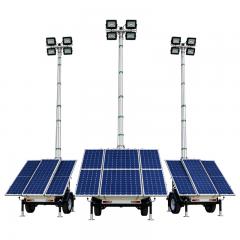
  • Solar Powered Trailer Mounted Mobile Light Tower Solar Mobile Light Tower for Disaster Camps and Remote Sites

    This trailer-based solar mobile light tower is equipped with high-efficiency monocrystalline solar panels, adjustable LED floodlights and telescopic mast. Powered by gel battery, it offers stable off-grid lighting for construction, disaster relief, remote outposts and emergency rescue tasks. Note: Price for reference only. Exact price based on quantity, size, weight and custom details.

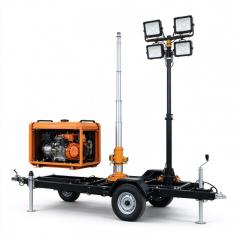
  • Diesel Powered Trailer Mounted Mobile Light Tower Diesel Light Tower for Night Construction Mining Emergency Repair Sites
    This trailer-mounted diesel mobile light tower integrates diesel generator, telescopic mast and multi LED flood heads. It delivers stable high-power lighting without solar reliance, ideal for construction, road repair, disaster recovery and all-night emergency works. Note: Price for reference only. Exact price based on quantity, size, weight and custom details.
  • Wireless Remote Control PTZ Searchlight Remote Control Searchlight for Ports and Perimeter Security Water Rescue

    Remote pan tilt rescue light with wireless remote, magnetic base and long throw narrow beam. It supports horizontal and vertical rotation, salt spray resistant housing, suitable for water rescue, port, border patrol and industrial perimeter security. Bulk wholesale, OEM custom color and packaging available. Note: Price for reference only. Exact price based on quantity, size, weight and custom details.
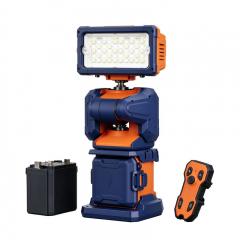
  • Emergency Camp Lighting System Disaster Emergency Lighting for Relief Camps and Rescue

    Disaster lighting family includes telescopic mast light, remote searchlight and handheld 360 light. Solar charging support, off-grid available, durable for earthquake rubble, flood rescue, camp lighting and emergency road repair. Note: Price for reference only. Exact price based on quantity, size, weight and custom details.
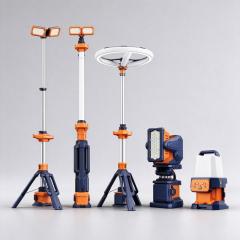
  • Portable Telescopic Emergency Light Emergency Lighting Supplier for Wholesale and Relief Tenders

    Full emergency lighting lineup includes solar light towers, diesel towers, telescopic lights and handheld rechargeable lights. IP rated, durable for disaster relief, construction, warehouse and night rescue, supports off-grid power supply for long time outdoor illumination. Note: Price for reference only. Exact price based on quantity, size, weight and custom details.
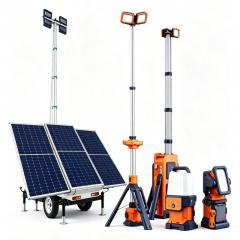
Copyright © Custom Disaster - Relief Bedding: Tents, Sleeping Bags, Blankets All Rights Reserved

Leave a message

    If you have questions or suggestions,please leave us a message,we will reply you as soon as we can!


the professional team to service !