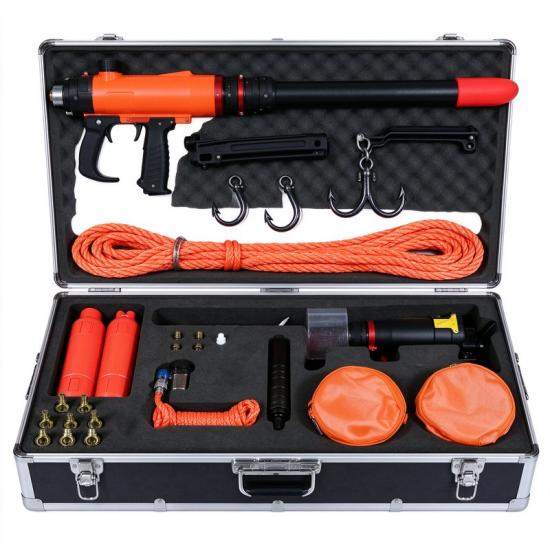
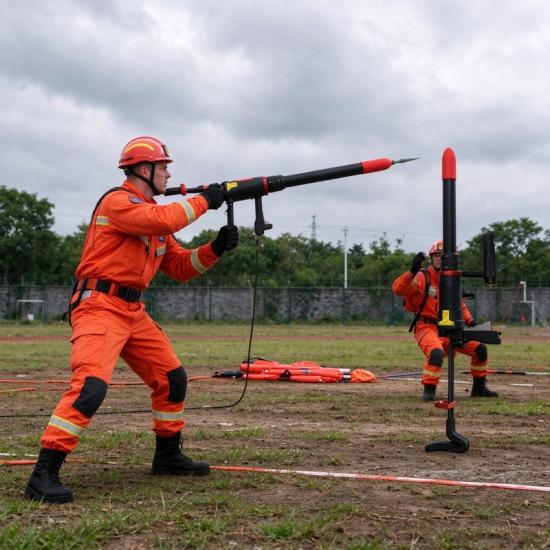
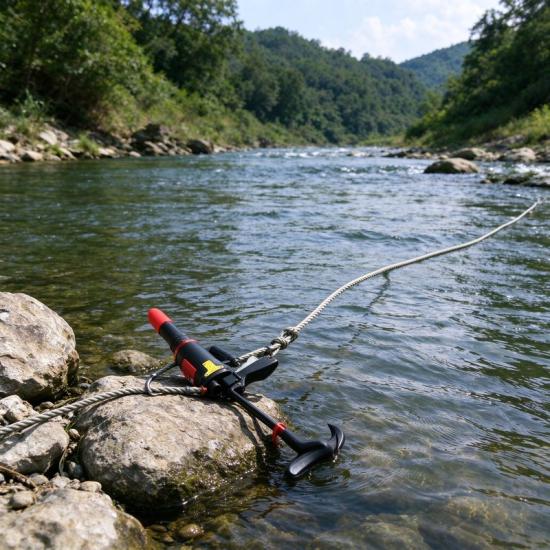
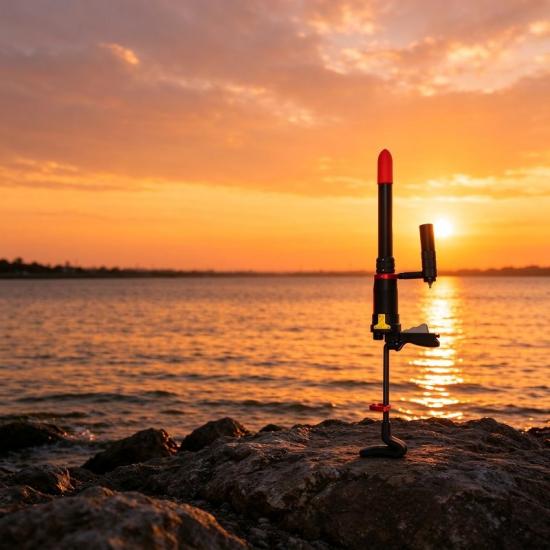
This under 3.2kg dual-purpose pneumatic anchor hook thrower is certified to GB/T 27906-2011. It delivers 185m land range,125m water range and 50m anchor shot. Driven by CO2 cartridges, it quickly switches between cliff anchoring and flood rescue. Compact for hiking, preferred by fire, mountain and industrial rescue teams.
Note: Price for reference only. Exact price based on quantity, size, weight and custom details.
model no. :
LT-05Brand:
YRFmarket price :
$119.8sale price :
$59.9price range :
30-100/$59.9Color :
Multiple Colorsport of dispatch :
Guangdong/GuangzhouPayment :
TT, Paypal, Western Unionmin order :
30original region :
Made in ChinaLead Time :
5-15daysLightweight Pneumatic Line Thrower with Folding Hook
for Fire
A portable anchor rescue thrower like this one is a first choice for swift water rescue teams.
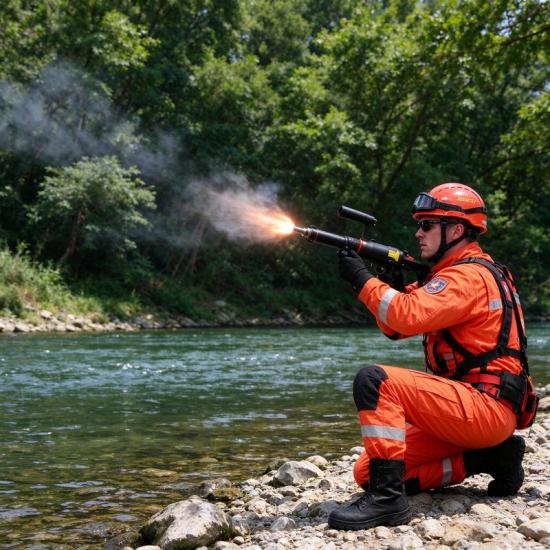
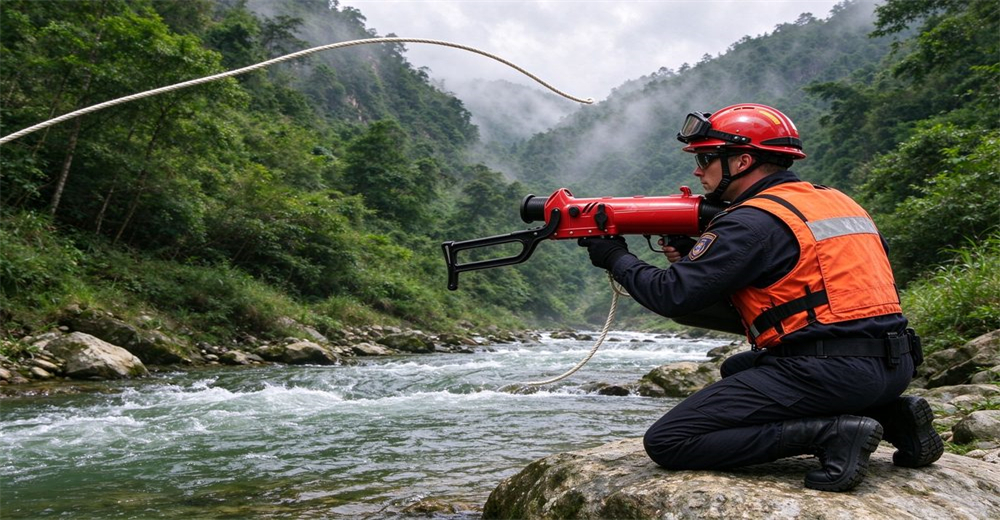
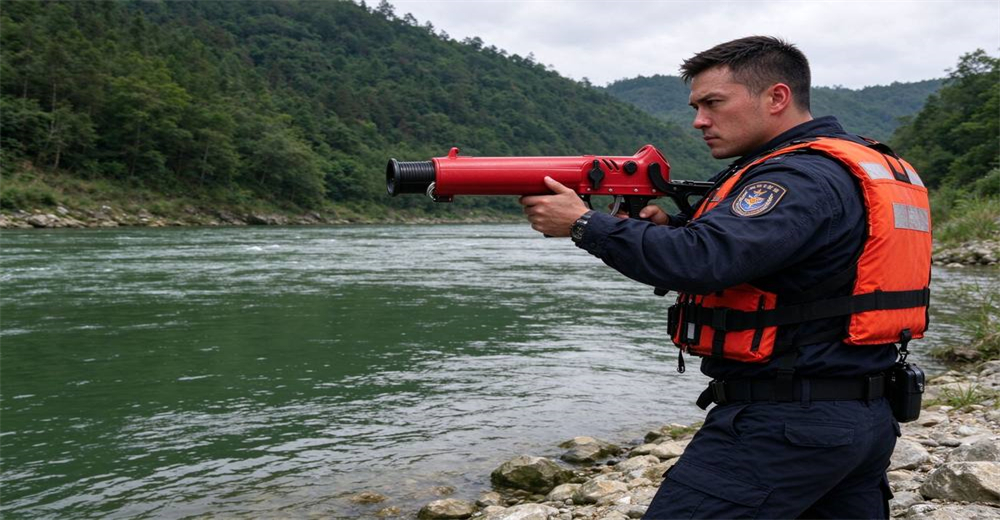
Kneeling on the rock beside the mountain stream, the operator aims this compact pneumatic line thrower across the fast water. The anchor hook kit rides in one backpack, so teams that hike into a valley arrive with the whole system ready to fire. Mountain rescue units choose this size because it crosses gorges that a boat cannot reach, and it packs down small enough for a helicopter drop. The kit also fits a standard rescue backpack for fast airlift drops.
 |

|
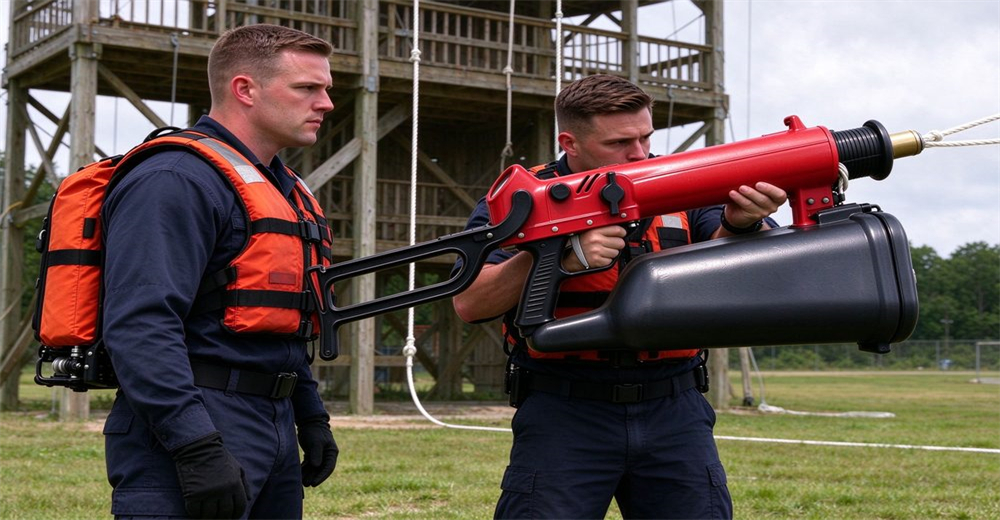
At the rope tower training field, two rescuers rehearse the full anchor hook sequence with the pneumatic line thrower. One fires the line over the tower rail, the other secures the four-claw hook and pulls the rope taut for a high-line transfer. Repeating this drill builds the muscle memory crews need when a real gorge crossing waits on a single good shot. High-line transfers like this are the core drill of gorge teams.
Firing across the green river, the operator shows how this pneumatic line thrower covers a professional flood rescue with one launch. The buoyant cartridge and rope clear the current, and the anchor hook bites into the far bank so the line stays put for the boat crew. Small portable units like this give county rescue teams a full crossing kit without a dedicated launch vehicle. One launch can reach a roof edge or a balcony on a flooded street.
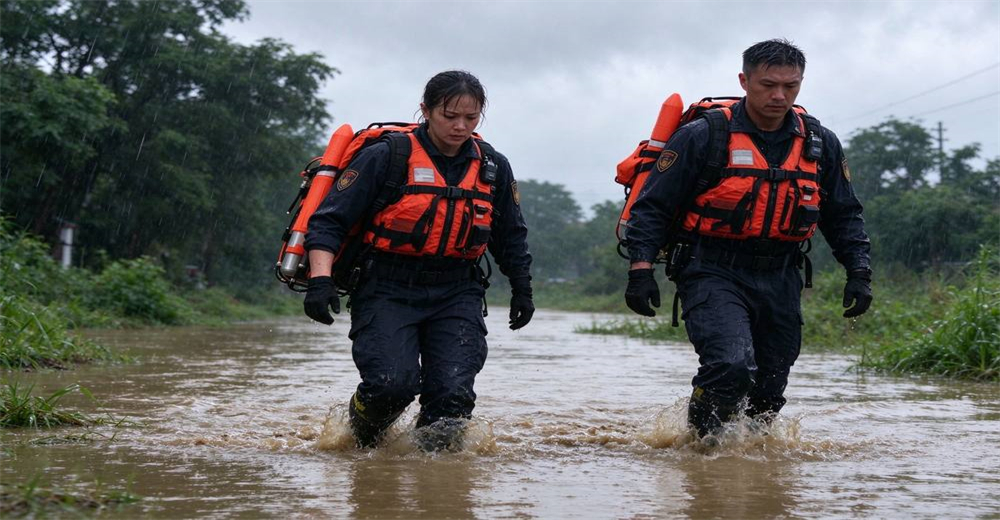
A rescue team deploys the portable pneumatic line thrower in muddy flood water, working down the bank as the rope floats toward the victim. The anchor hook system lets them tie the line to a tree or vehicle once it lands, turning the floating rope into a fixed guide. Government flood-season buyers list this deployment pattern as the main reason they stock portable anchor hook throwers. The anchor hook system is the reason this pattern stays fixed in moving water.
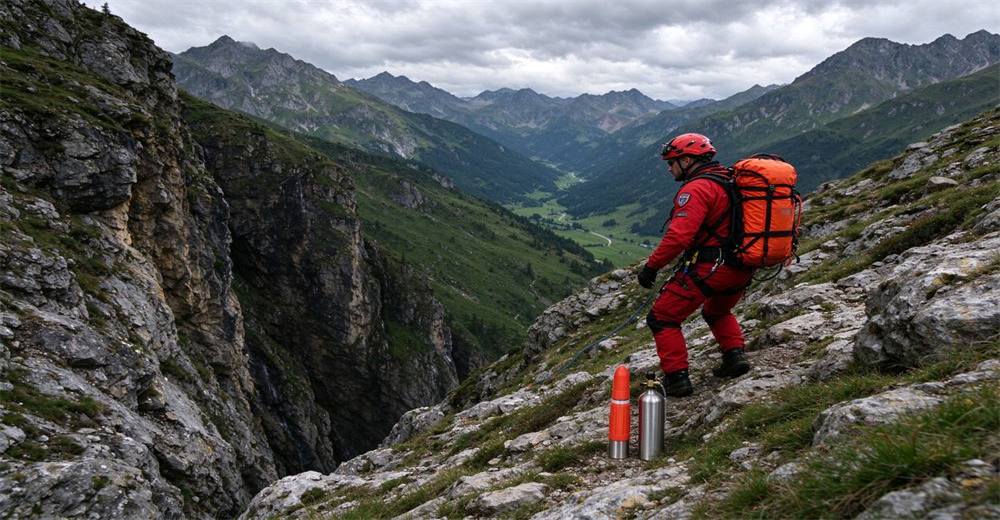
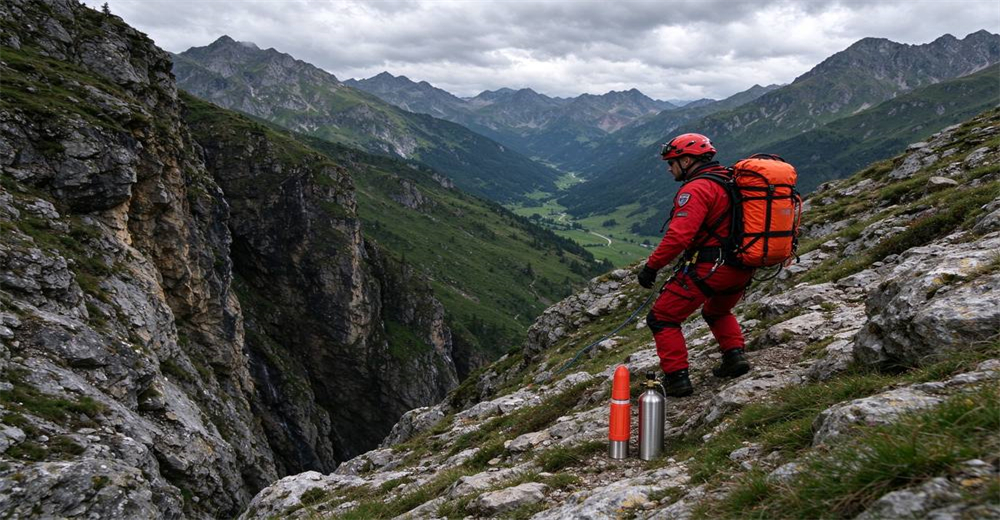
Carrying the kit through a mountain gorge, the rescuer keeps the pneumatic line thrower and the rope pack on his back until the launch point. Because the whole anchor hook set fits one backpack, the team is not tied to a road or a vehicle. That mobility is what makes this unit the practical choice for canyon, gorge and post-storm roads that rescuers must reach on foot. This one-pack design separates portable units from truck-mounted systems.

What Is the Portable Anchor Hook Thrower?
The pneumatic line thrower is a compressed-air rescue device.
This model sits between the simple portable thrower (no anchor hook) and the full anchor hook unit (heavier, 2L carbon cylinder).
It gives you anchor hook capability without the weight of the larger system.
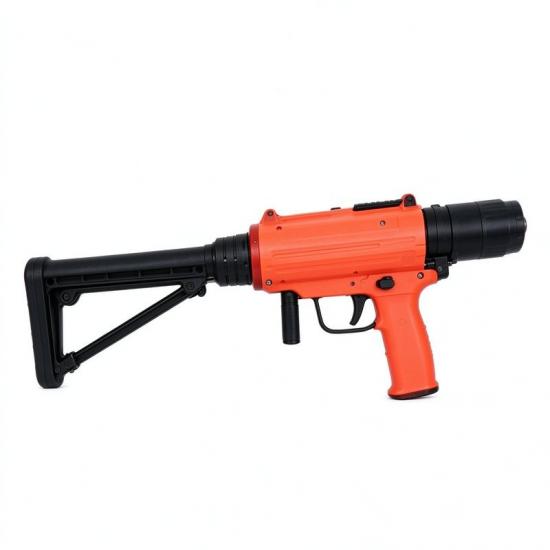
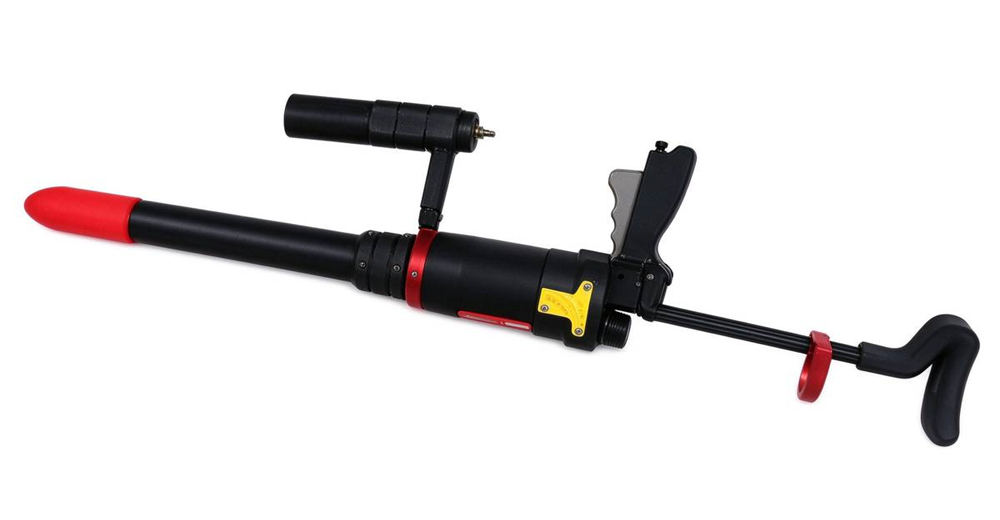
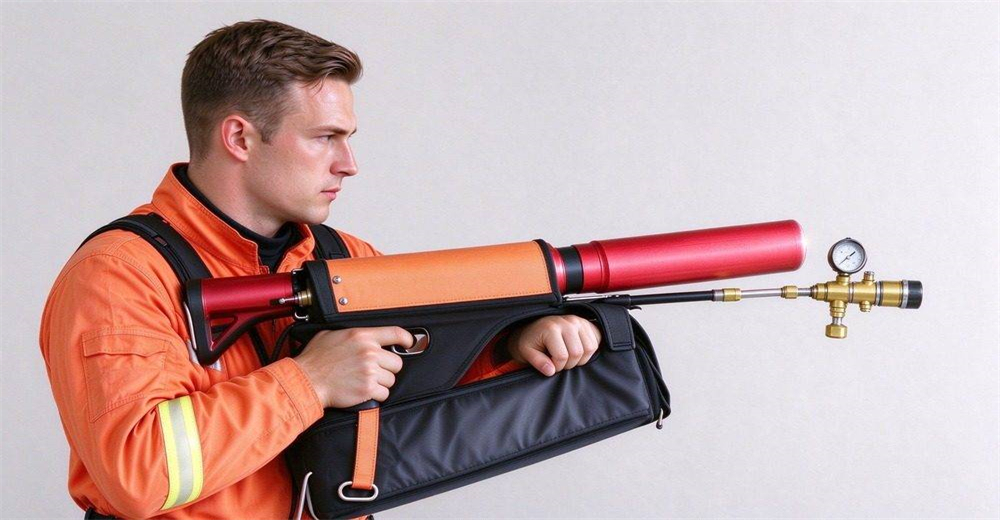
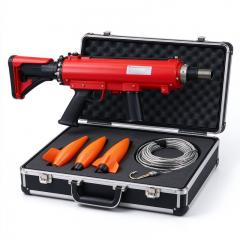
The black gun-style body weighs under 3.2kg.A single operator carries this pneumatic line thrower to the rescue scene on foot , no vehicle, no external air tank.
It fires from a standing position in under 60 seconds.
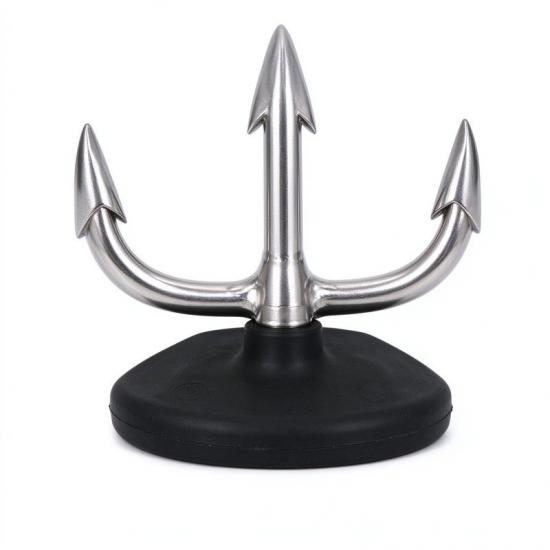
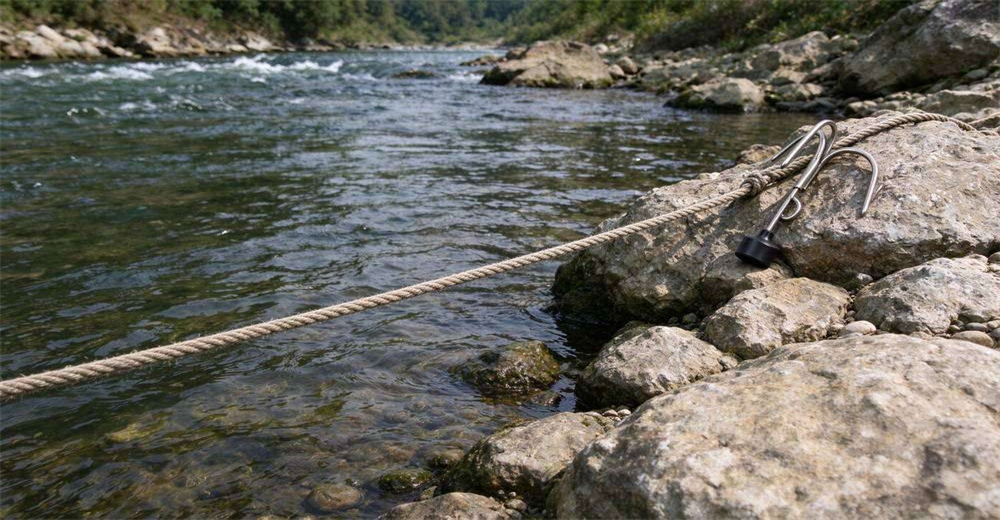
The folding anchor hook attaches to the projectile nose for building and cliff anchor work, and can be removed for plain water rescue shots.
Working pressure is 6.5MPa, lower than the 20MPa Korean backpack but higher than the 7MPa portable CO2 unit.
This balance means longer range than the simple portable, without needing a heavy external cylinder.
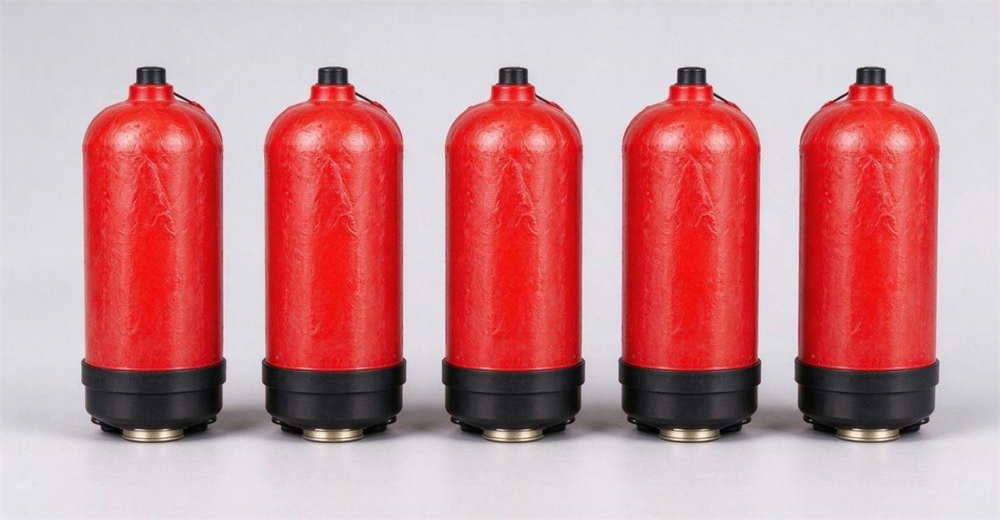
The 45g CO2 cartridges provide the main power, with 16g cartridges as backup for the lifebuoy system.
This is a hybrid tool.
Teams that only do water rescue can use the simpler 170m portable thrower.
Teams that need heavy anchor work on tall structures need the full anchor hook model.
This pneumatic line thrower is for the middle: teams that need occasional anchor capability in a lightweight package.
Parameter
Value
Unit
Note
Model
PTQ6.5-Y180S120Q50
,
Portable anchor hook
Working pressure
≤6.5
MPa
CO2 cartridges
Land range
≥185
meters
Land projectile
Water range
≥125
meters
Water projectile
Anchor hook range
≥50
meters
Hook shot
Net weight
≤3.2
kg
Launcher body
Projectile weight
≥1.8
kg
Each shell
Water rope strength
≥6000
N
Water rescue line
Land rope strength
≥3000
N
Anchor line
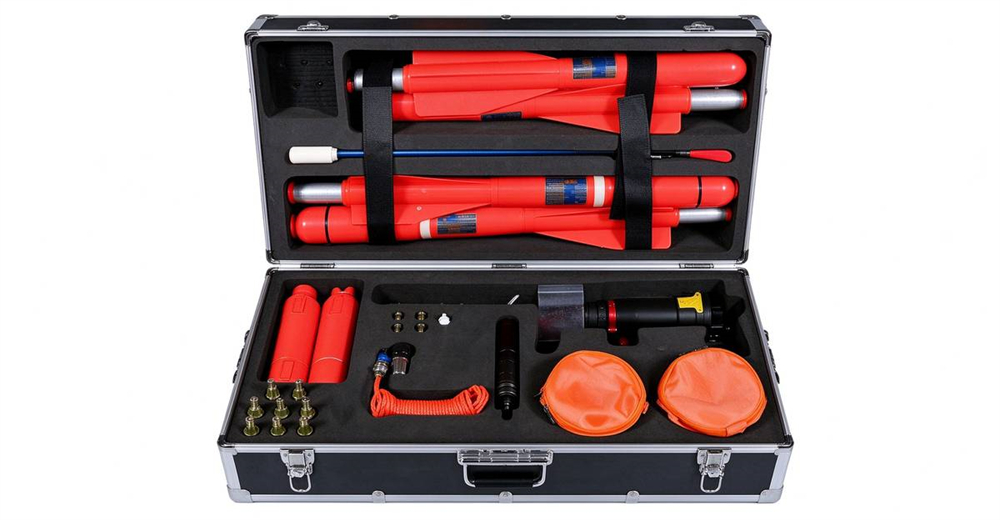
CO2 included
16g×4 + 45g×8
pcs
Extended ops
Standard
GB/T 27906-2011
China national standard
Technical Parameters
|
# |
Item |
Qty |
Purpose |
|
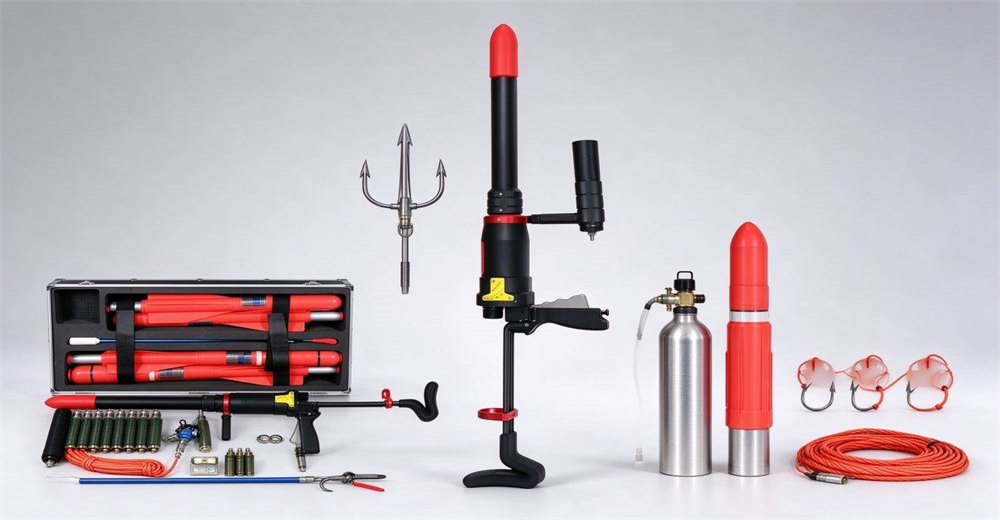
1 |
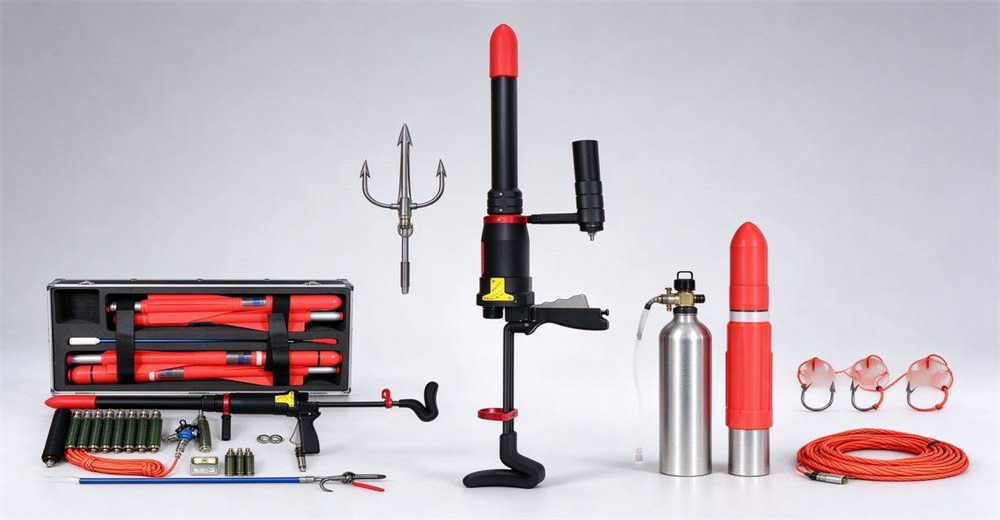
Launcher body (black gun style) |
1 pc |
Main firing device |
|
2 |
Land rescue projectile |
≥2 pcs |
Anchor hook work |
|
3 |
Water rescue projectile |
≥2 pcs |
With auto lifebuoy |
|
4 |
16g CO2 cartridges |
4 pcs |
Lifebuoy inflation |
|
5 |
45g CO2 cartridges |
8 pcs |
Main power gas |
|
6 |
Trigger tablets |
, |
Water activation |
|
7 |
Folding anchor hook |
1 pc |
Building/cliff anchor |
|
8 |
Carry bag |
1 pc |
Storage and transport |
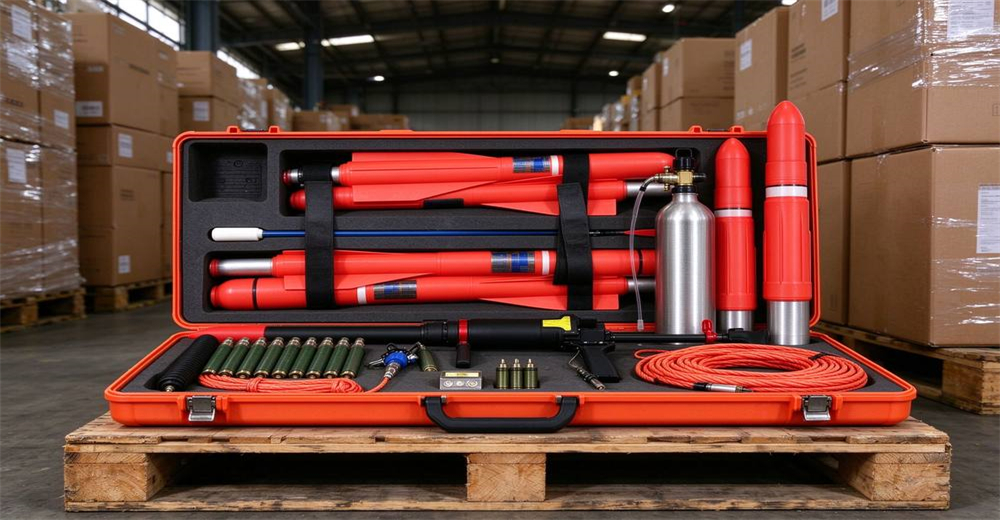
Each item has a specific job.
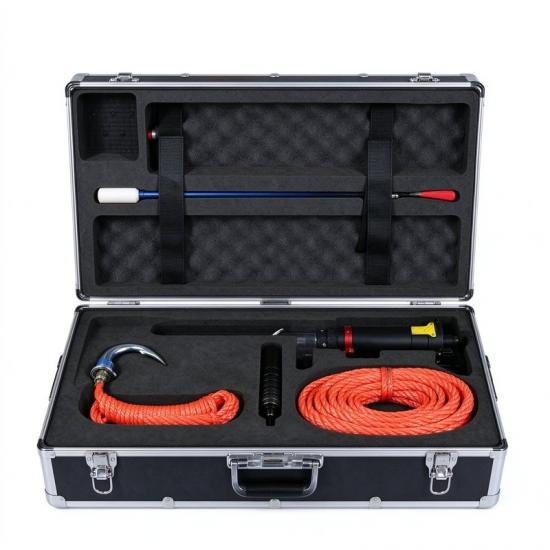
The pneumatic line thrower fits the same gear plan as the boat and rope kits.The pneumatic line thrower gives every crew a fast line across flood water.
Store the hook in its protective slot in the carry bag, not loose in a compartment.
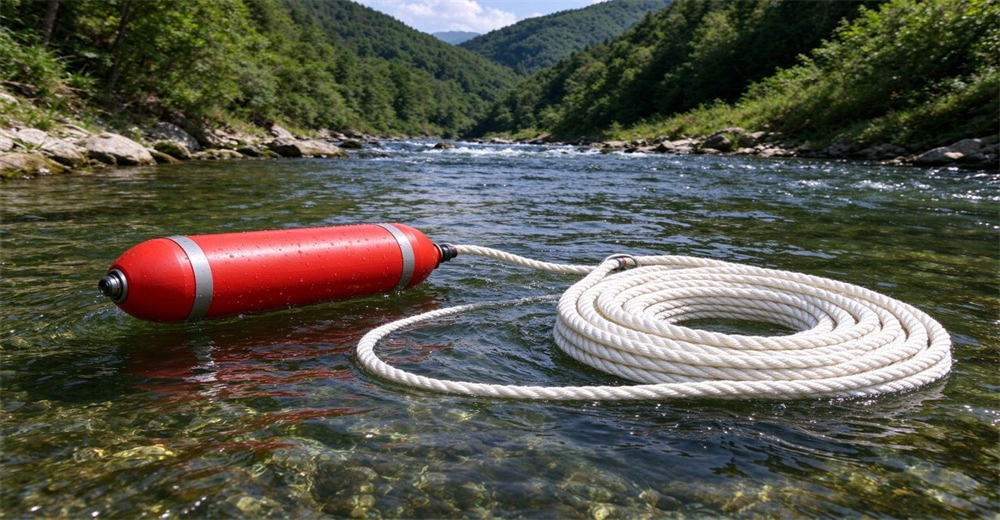
The water rescue rope is rated at 6000N , double the strength, for pulling a person through river current.
A unit without spare rope is not mission-ready. is not mission-ready.
Step 2 Load: For anchor work, attach the folding hook to the land projectile.
For water rescue, use the water projectile with lifebuoy.
Teams that hike to the site favor this pneumatic line thrower because the compact anchor hook kit rides in one backpack.
Load into barrel.
Step 3 Aim and Fire: Shoulder the launcher, aim at target, squeeze trigger.
Never point at people.
Step 4 Secure and Recover: Test anchor by pulling firmly.
After operation, recover rope, replace CO2 and tablets, reset.
Safety Warnings
Never point this pneumatic line thrower at people, animals or property.
Keep safety pin engaged until ready to fire.
Test anchor catch before putting load on rope.
Inspect hook claws before each use.
Do not exceed 6.5MPa working pressure.
Wear eye protection during practice.
Proper rescue training required before live use.
CO2 cartridges are Class 2.2 dangerous goods for shipping.
Do not fire the launcher in a direction where the projectile could hit people, animals, or property beyond the target.
The folding anchor hook has sharp claws , handle with care when loading and unloading.
Do not modify the launcher or use non-standard parts. Only use manufacturer-recommended consumables.
In cold weather, CO2 performance may decrease. Allow extra range margin in low-temperature conditions.
After firing, the launcher body may be warm from the gas expansion. Let it cool before handling the breech area.
Training and Drills
A new operator should not fire this pneumatic line thrower at a real building or cliff without practice.
The three claw hook opens on impact and grips rock, concrete or rebar.
Winter teams store the pneumatic line thrower with dry cartridges.
We advise a structured progression: classroom familiarization with all components, dry runs with zero pressure, low-pressure firing at a safe target, then full-pressure drills at a proper training facility. familiarization with all components, dry runs with zero pressure, low-pressure firing at a safe target, then full-pressure drills at a proper training facility.
For fire department teams, this portable anchor hook thrower typically enters service after operators have completed water rescue certification.
The unit itself is simple to shoot, but the rescue work that follows. fire, but the rescue work that follows.
Anchoring the rope, establishing the high-line, pulling a victim to safety , requires technical rope rescue skills.
This pneumatic line thrower is one tool in a larger rescue system.
Annual recertification covers: equipment inspection, CO2 cartridge check, projectile type selection, live firing at a simulated anchor target, anchor load testing, and emergency troubleshooting (what to do if the hook misses.
What if the rope tangles or the CO2 fails to inflate).
How long does training take?For operators who already have water rescue certification, the thrower-specific training takes about 4-8 hours: classroom familiarization (1-2 hours).
Dry runs with zero pressure (1 hour), low-pressure firing practice (1-2 hours), and full-pressure drills at a training facility (1-2 hours).
New operators without prior rescue training need more time , the thrower is just one tool in a rescue system, and the rope work that follows requires technical skill.
What does a typical drill look like?Scenario: a training dummy is in the water 50 meters out, and a building edge 30 meters up is a potential anchor point.
The team practices: load the water projectile, fire to the dummy, confirm the lifebuoy inflates, then switch to the land projectile with anchor hook, fire to the building edge, test the anchor.
This progression builds the muscle memory for switching between water rescue and anchor work.
Key points to confirm before the first shot: remove the safety pin before firing, aim correctly for close targets, check the hook claws before firing, and keep the rope spool clean during flight.
And letting the rope spool tangle during flight.
Training should explicitly cover these error modes , what to look for, how to correct them, and how to recover if a shot goes wrong.
Which Model to Choose?
|
Item |
This: Portable Anchor 185m |
Portable 170m (no hook) |
Anchor Hook 165m (full) |
|
Weight |
≤3.2kg |
<3kg |
~8kg with carbon cylinder |
|
Anchor hook |
50m folding |
No |
60m folding |
|
Land range |
185m |
170m |
165m |
|
Water range |
125m |
120m |
110m |
|
Best for |
Mixed rescue, lightweight |
Water only, portable |
Heavy anchor work |
The pneumatic line thrower fires clean after months in storage.
Pricing and lead time for bulk orders per contract.
Pricing depends on configuration and quantity.
Typical operations need 2-5 shots, so the included cartridges cover most missions.
This means a technical rescue team carries one launcher for both rope-access and water incidents.
Product spec sheets supplied for your tender file.
Designed for on-foot portability , one person can carry it to the rescue scene.
Plan for the lower number in windy conditions.
We can ship them with the order per regulation, or you can source them locally.
Pantone color matching available.
The folding hook is designed for repeated use.
The trade-off: the simpler unit has no hook and is slightly cheaper.
Buy this one if your team faces both cliff/building anchor work and water rescue; buy the simpler one if water-only.
We include a familiarization session on delivery.
The 16g cartridges are used for the water projectile , carry 4 of those as well.
The launcher body works fine in cold; it is the gas output that drops.
This pneumatic line thrower handles mixed rescue scenarios in a lightweight package. For 200m+ range see the 230m long range series. For heavy anchor work see the full anchor hook model.
Previous :
Long Range Pneumatic Line Thrower 230m Land / 210m Water Rescue DeviceNext :
170m Portable Pneumatic Line Thrower for Flood Rescue Professional Rescue Launcher, Aluminum Alloy, Fire Fighting Essential
This orange-yellow professional rescue launcher is made of aviation-grade aluminum alloy, with maximum working pressure of 200bar, throwing distance of 150-230 meters on land and 80-210 meters on water. Certified by the National Fire Equipment Quality Standard, it reaches maximum initial velocity of 60m/s. It provides efficient solutions for fire teams, flood control, and water rescue operations, saving lives in critical moments as essential equipment for all rescue teams.
 Customized Life-saving Thrower, High Strength, Long-range Rescue
This professional life-saving thrower is made of high-strength composite materials, with a throwing distance of 50 meters and a load-bearing capacity of 150kg, achieving a 99% rescue success rate. Its orange-yellow design ensures high visibility on water, equipped with non-slip handle and high-strength rescue rope. Specifically designed for flood control, water rescue and emergency disaster relief, it is essential equipment for fire departments, maritime rescue units, water rescue teams and flood control forces, participating in over 200 flood rescue missions annually.
 High-Pressure Pneumatic Rope Launcher, Rescue Special, 120m Range
This high-pressure pneumatic rope launcher uses compressed air as power source, with projection distance ≥80 meters on water and ≥110 meters on land, equipped with 120-meter high-strength rescue rope. The main body weighs less than 3.5kg, offers simple and quick operation, and features a spark-free design ensuring safe use in flammable environments. The accompanying auto-inflating life ring inflates within 5 seconds with buoyancy >8kg. Ideal for flood disaster relief, water rescue, maritime rescue and other complex scenarios, it's essential equipment for emergency rescue departments.
 Wholesale Pneumatic Line Thrower: 100m–640m Rescue Rope Launcher
This pneumatic line thrower delivers reliable long‑distance rope deployment for swift‑water, flood, maritime and ice rescue scenarios. Multiple configurations cover short, long and ultra‑long throwing distances. Complete kits include launcher, projectiles, rescue ropes, CO2 cylinders and protective carry case. Quick setup, simple operation for fire, coast guard and emergency rescue teams worldwide. Note: Price for reference only. Exact price based on quantity, size, weight and custom details.
 Korean Style Pneumatic Rescue Thrower PTQ20-Y100S70 | 20 MPa ≥100 m Land / ≥70 m Water
Korean Style Pneumatic Rescue Thrower PTQ20-Y100S70, 20 MPa shoulder-fired launcher. ≥100m land range and ≥70m water range, equipped with auto inflating lifebuoy head and 2000N high tensile rope. Complies with GB/T 27906-2011. Complete aluminum hard case kit. Support bulk wholesale, OEM custom logo for fire, coast guard and flood rescue teams. Note: Price for reference only. Exact price based on quantity, size, weight and custom details.
 American Style Anchor Hook Rescue Thrower | PTQ20-Y125S100 & PTQ7-Y150S110Q55
American Style Anchor Hook Pneumatic Rescue Thrower, frame-mounted design with recoil buffer. Equipped with heavy-duty anchor claw for high-rise, cliff and maritime rescue. Delivers long-distance rope deployment for swiftwater, urban flood and offshore emergency rescue. Complete kit with launcher, projectiles, rope and protective case. Support bulk wholesale and OEM customization for fire and coast guard teams. Note: Price for reference only. Exact price based on quantity, size, weight and custom details.
Copyright © Custom Disaster - Relief Bedding: Tents, Sleeping Bags, Blankets All Rights Reserved
the professional team to service !