×
enter your keyword
our storage
Categories
Products

Portable Pneumatic Water Rescue Rope Thrower
Water Rescue Rope Thrower | 75m Water, 120m Land, Portable Oxford Bag Water Rescue Rope Thrower | 75m Water, 120m Land, Portable Oxford Bag Water Rescue Rope Thrower | 75m Water, 120m Land, Portable Oxford Bag Water Rescue Rope Thrower | 75m Water, 120m Land, Portable Oxford Bag Water Rescue Rope Thrower | 75m Water, 120m Land, Portable Oxford Bag Water Rescue Rope Thrower | 75m Water, 120m Land, Portable Oxford Bag Water Rescue Rope Thrower | 75m Water, 120m Land, Portable Oxford Bag

Water Rescue Rope Thrower | 75m Water, 120m Land, Portable Oxford Bag

Professional handheld pneumatic water rescue rope thrower powered by compressed gas. Delivers long-distance safety rope delivery for maritime, swiftwater and urban flood rescue. Complete kit includes launcher, projectiles, rope and gas cylinder. Lightweight and simple for single rescuer operation. Bulk wholesale and OEM available for fire, coast guard and emergency response teams.


Note: Price for reference only. Exact price based on quantity, size, weight and custom details.

  • model no. :

    DP6-A
  • Brand:

    YRF
  • market price :

    $150.9
  • sale price :

    $112.9
  • price range :

    30-100/$112.9
  • Color :

    Orange
  • port of dispatch :

    Guangdong/Guangzhou
  • Payment :

    TT, Paypal, Western Union
  • min order :

    30
  • original region :

    Made in China
  • Lead Time :

    5-15days
inquiry now
product description

Water Rescue Rope Thrower | 75m Water, 120m Land, Portable Oxford Bag


The water rescue rope thrower is a budget-friendly portable pneumatic line thrower designed for everyday flood calls, inland water rescue, and lifeguard operations where a 500-metre unit is overkill. With an engineering plastic body weighing under 4 kg, this water rescue rope thrower fires a closed-cell foam float 75 metres across water and 120 metres over land, operating reliably from -20°C to +55°C.
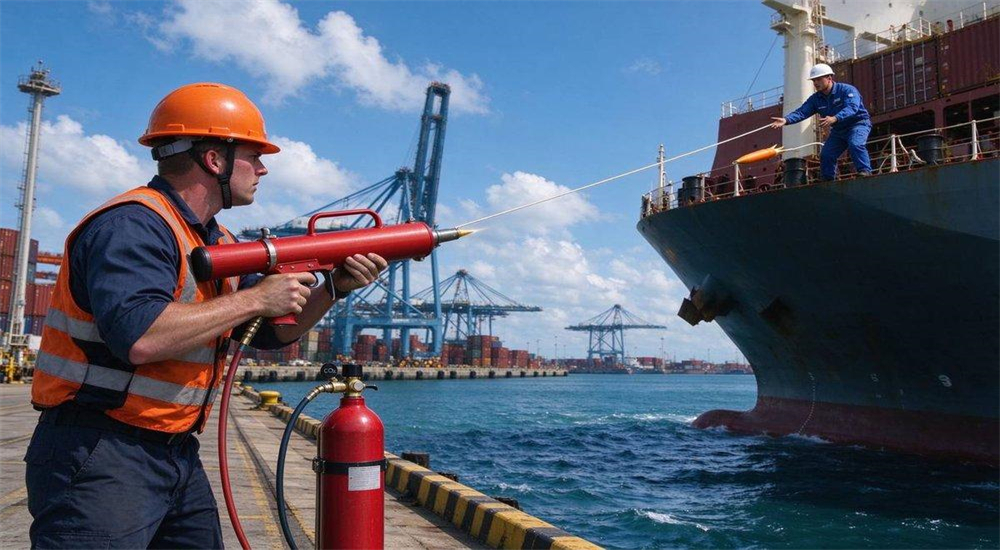


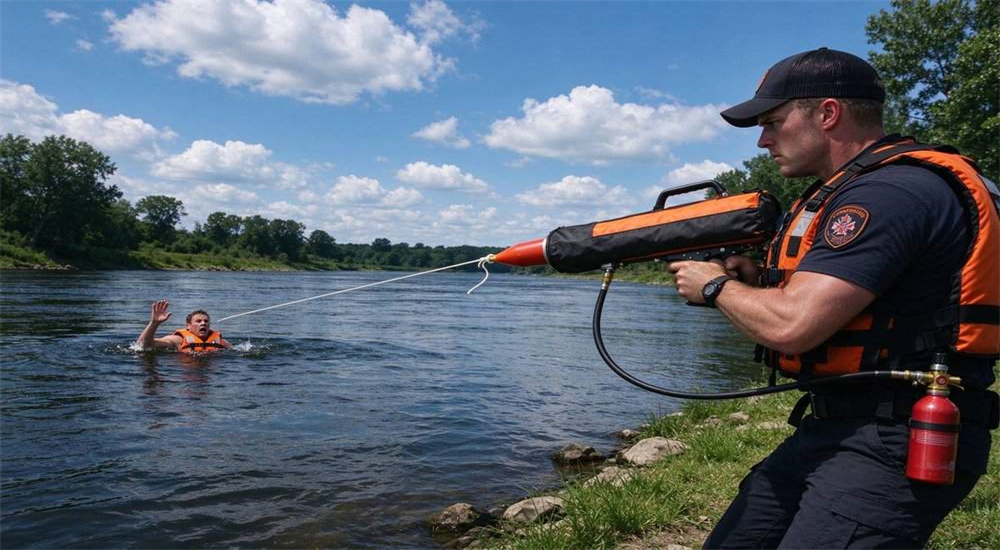
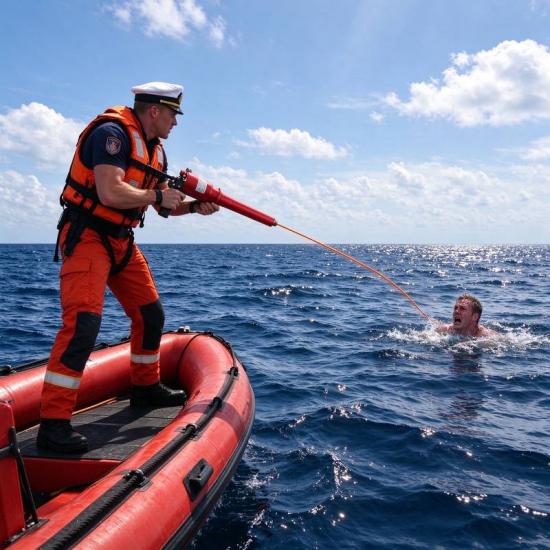
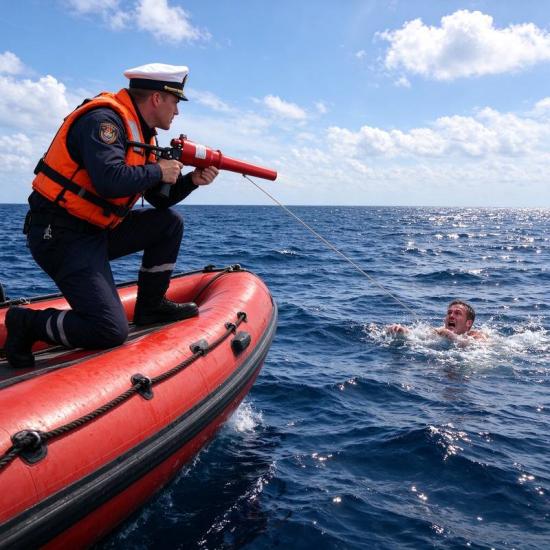
Professional Water Rescue Rope Thrower pneumatic line thrower in real water rescue application scenario, open sea maritime rescue operation with long-range pneumatic line thrower, coast guard team delivering rope to vessel in distress


The 120-metre water rope and 80-metre land rope, plus 86% parts commonality across the range, make this portable rescue thrower the smart choice for township flood teams, scenic lake lifeguards, and volunteer rescue units that need dependable performance without the heavy-duty price tag.
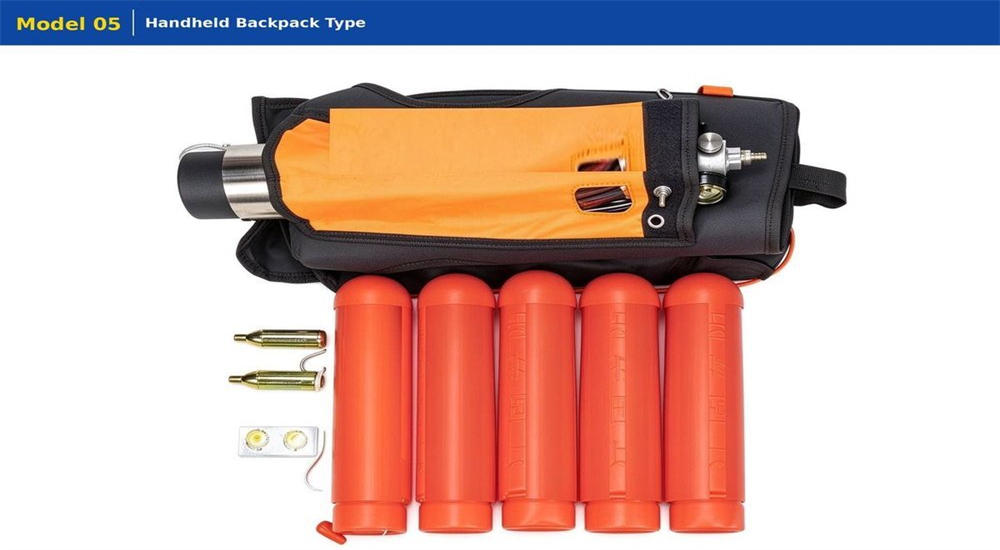


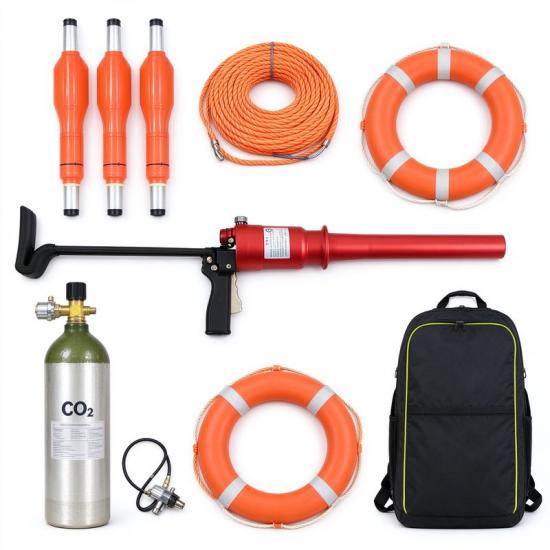
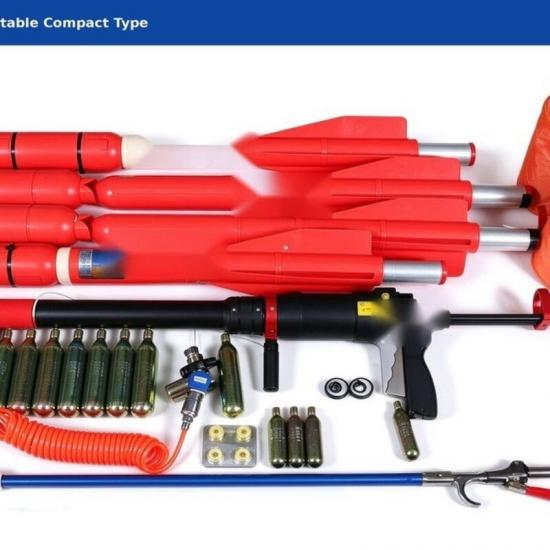
Professional product photo of Water Rescue Rope Thrower pneumatic line thrower, clean white background studio shot showing complete rescue kit with launcher, projectiles and accessories, professional water rescue equipment


A water rescue rope thrower built for these jobs does not need a laser rangefinder, a folding metal base, or a 17 kg hard case. This rescue thrower needs to be light enough for a volunteer to sling over one shoulder, tough enough to live in the back of a pickup for a year. The rope thrower needs to be simple enough that someone trained in under 0.3 hours can operate it correctly when the pager goes off.
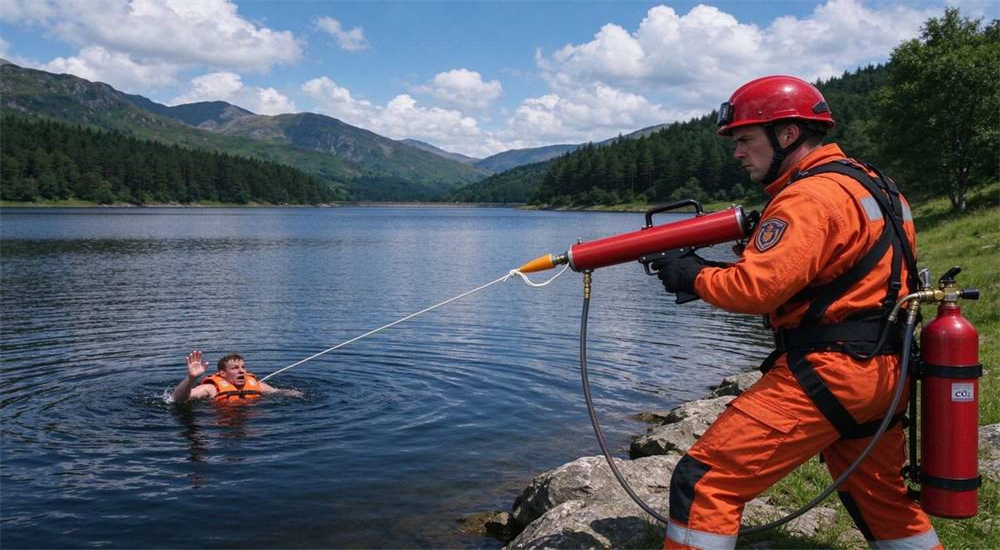


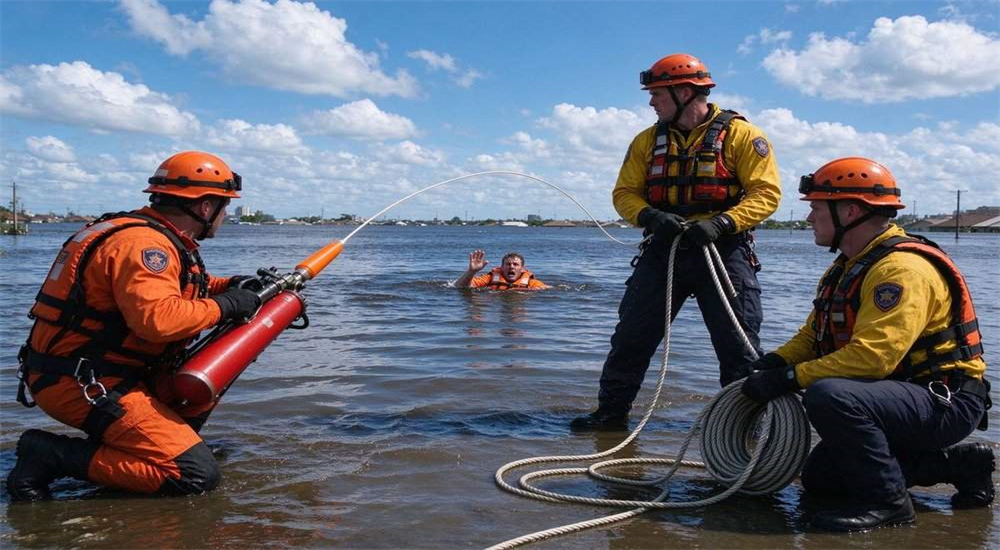
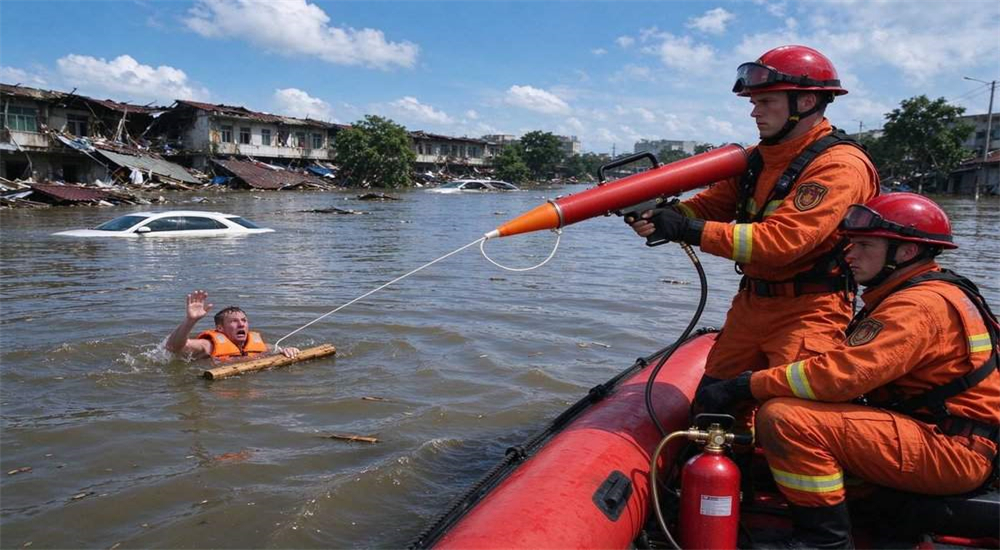
Professional Water Rescue Rope Thrower pneumatic line thrower in real water rescue application scenario, professional rescue team deploying pneumatic line thrower to deliver safety rope to victim in water, emergency lifesaving equipment


Many grassroots rescue teams think they need to spend big on a 600-metre specialist system, but the truth is that most flood and water rescue calls only demand 75 to 120 metres of reach. The F4-LS01 water rescue rope thrower is a backpack-style pneumatic (compressed-air) line thrower.
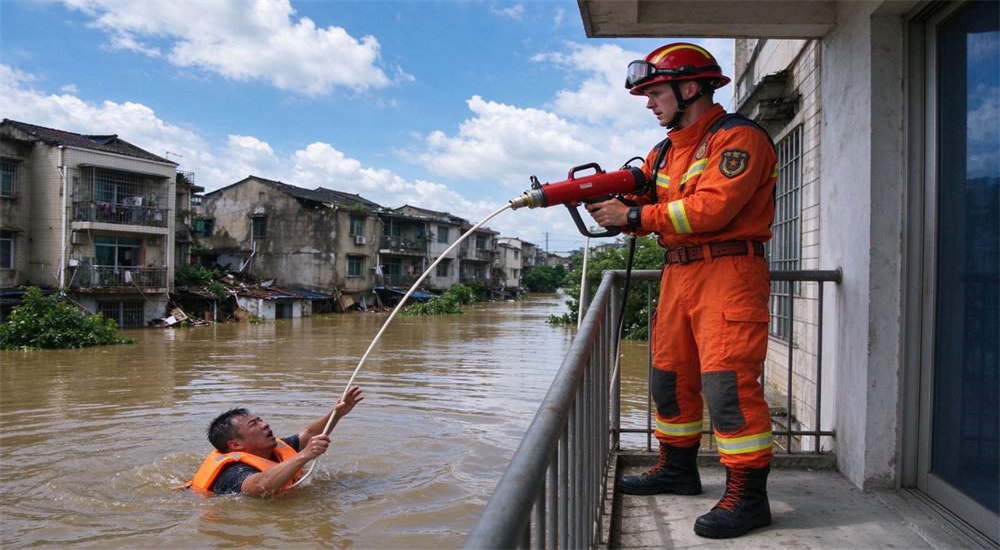


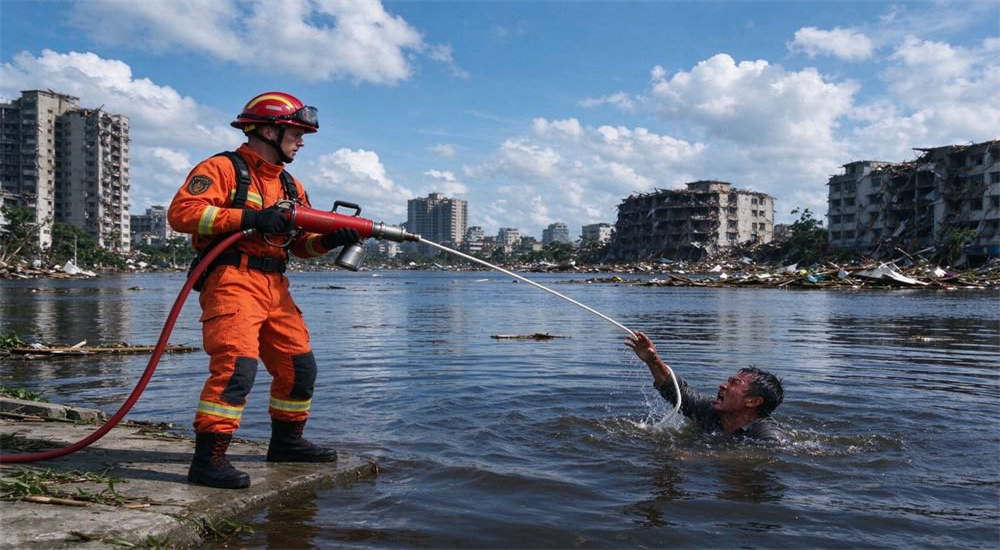
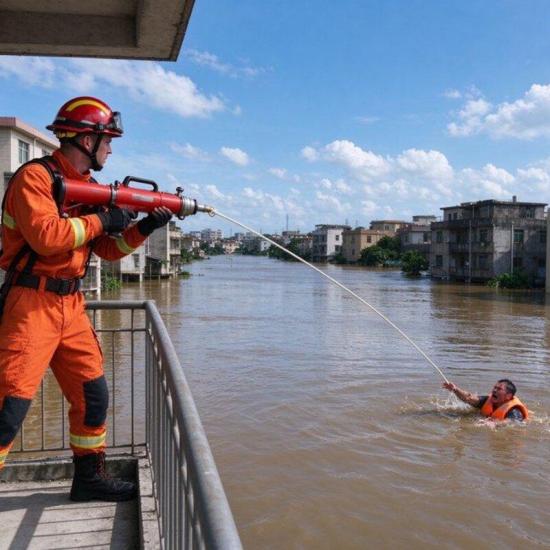
Professional Water Rescue Rope Thrower pneumatic line thrower in real water rescue application scenario, rescuer deploying device to drowning victim during severe urban flood disaster, deep water rescue operation with long-distance rope delivery


We supply budget-friendly water rescue rope throwers to grassroots rescue teams, lifeguard operations, and community emergency response groups worldwide. Community and lifeguard buyers receive custom bag printing, private-label oxford packs, and OEM colour-matching support. Reach out for wholesale pricing, a simple product catalog, and a low-cost team kit quote.
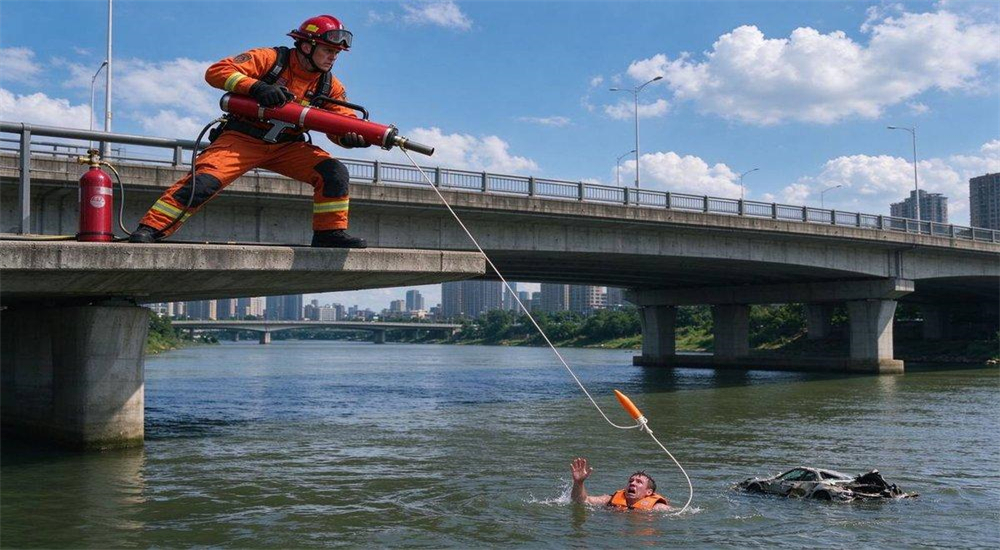


Professional Water Rescue Rope Thrower pneumatic line thrower in real water rescue application scenario, rescuer deploying device to drowning victim during severe urban flood disaster, deep water rescue operation with long-distance rope delivery


Table of Contents

Product Introduction: The Backpack Pneumatic Water Rescue Rope Thrower

Many grassroots rescue teams think they need to spend big on a 600-metre specialist system, but the truth is that most flood and water rescue calls only demand 75 to 120 metres of reach. The F4-LS01 water rescue rope thrower is a backpack-style pneumatic (compressed-air) line thrower.


It delivers exactly that range — 75 metres over water and 120 metres on land — in a tough engineering-plastic body with a padded oxford carry bag. It is built for township flood teams, scenic-lake lifeguards, and community emergency units on a tight budget that still need a reliable, simple-to-operate rescue tool.


This pneumatic thrower fires a closed-cell float that drags a line out to a swimmer, and the float itself doubles as a handhold and a buoyant lifebuoy once it lands. Below we break down why this backpack rescue thrower costs a fraction of a hard-case specialist unit.


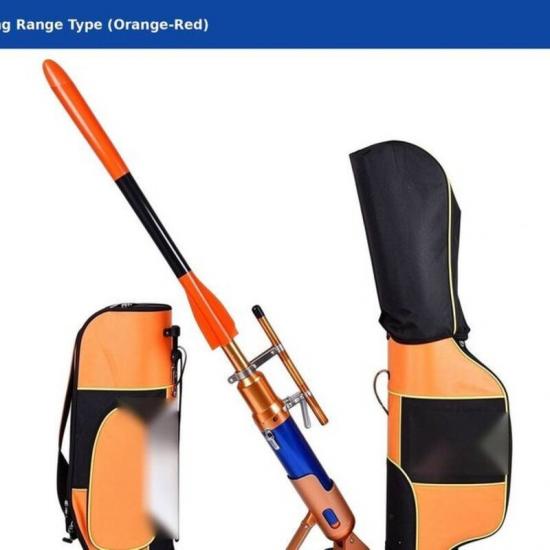
The kit splits into five modular parts: the launcher body, the high-pressure cylinder, the rescue float projectile (the payload that carries the rope), the hauling ropes, and the oxford carry bag. The pneumatic launch runs on sealed compressed air. There is no gunpowder, no open flame, and no pyrotechnic licence required.


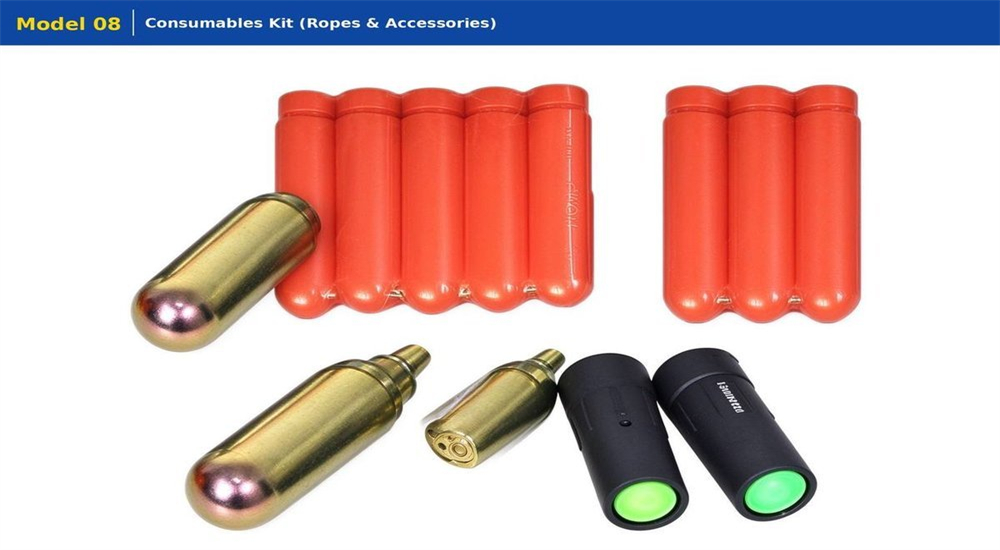
The float projectile is filled solid with closed-cell buoyancy foam — the ability to float — so it stays on the surface after landing and acts as a small lifebuoy for the victim to hold onto while the team pulls the line in.
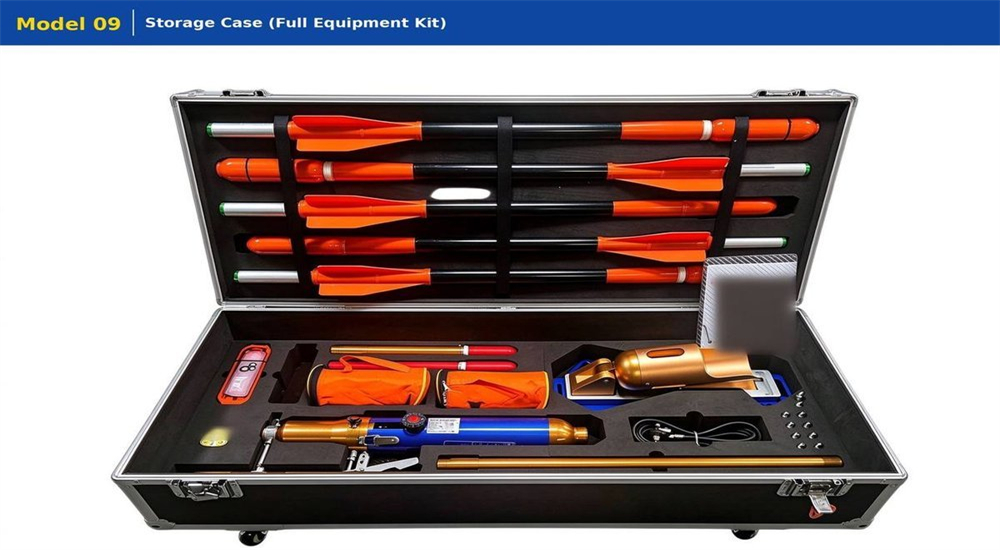


Professional product photo of Water Rescue Rope Thrower pneumatic line thrower, clean white background studio shot showing complete rescue kit with launcher, projectiles and accessories, professional water rescue equipment


Why This Water Rescue Rope Thrower Is a Budget Portable, Not a Specialist Unit

Walk into any rescue equipment catalog and you will see pneumatic throwers that weigh 17 kg, run at 13 MPa, and ship in aluminium flight cases with laser rangefinders.

  • They are real tools, and they are the right tool for a coast guard boat crossing a 600-metre harbour.
  • But they are the wrong tool for the job 80 percent of teams actually have, which is exactly where this water rescue rope thrower fits.


A township flood team in southern China does not cross 600 metres. They cross 40 metres of flooded village lane to get an elderly resident out of a doorway, and they need a rescue thrower that comes out in 30 seconds.

  • A scenic lake lifeguard does not need an anemometer; they need to put a floating projectile 75 metres out to a tired swimmer with this rope thrower.
  • An inland barge captain does not need a folding tripod; they need a kit that lives behind the pilot seat. This water rescue thrower is built for that middle 80 percent.


The engineering plastic body of this rescue thrower is the first deliberate choice. Titanium and alloy look impressive and save a few hundred grams, but they dent, scratch, and cost two or three times as much.

  • Modified engineering plastic shrugs off the knocks a volunteer team actually gives this rope thrower.
  • If the body gets scuffed against a gunwale, that is a scuff, not a dent. If it gets dropped on a concrete bank, it does not crack.


The oxford carry bag is the second deliberate choice. An aluminium flight case protects the instrument pack on a long-range unit, but on a 75-metre water rescue rope thrower there is no instrument pack to protect.

  • The heavy-duty oxford bag is padded, divided, rain-shedding, and rated for 540 days of open-air storage.
  • It weighs about a tenth of a flight case and slings over one shoulder. It is the right bag for a rescue thrower that gets walked to the water, not driven to a range.


The third deliberate choice is the training time. A full-spec 13 MPa pneumatic rescue thrower needs a three-person crew, a leveled base, and a half-day of supervised range time.
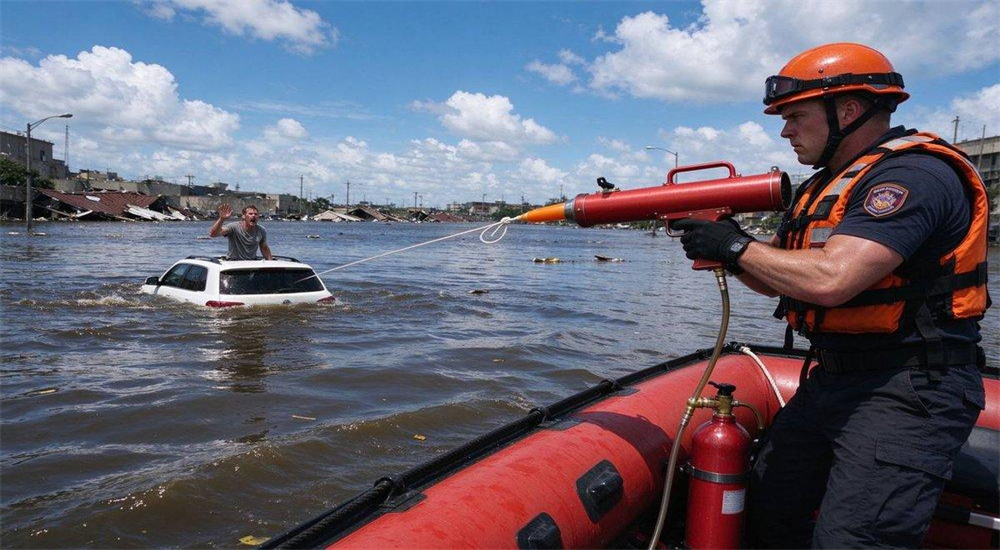
  • This water rescue rope thrower trains a complete operator in under 0.3 hours, about 18 minutes. Load the projectile, check the gauge, close the safety lock, aim, fire.
  • That matters enormously when you are outfitting 30 township volunteers who may only fire the thing once a year. Short training means they remember it when they need it.


Professional Water Rescue Rope Thrower pneumatic line thrower in real water rescue application scenario, rescuer deploying device to drowning victim during severe urban flood disaster, deep water rescue operation with long-distance rope delivery


Key Specifications: Water Rescue Rope Thrower Parameters and Tables

Below are the numbers that define this class of pneumatic water rescue rope thrower. Every figure is taken from the product specification sheet, not from marketing copy. The pneumatic launch system runs off a sealed high-pressure cylinder, so compare these numbers against your actual water width before you buy this rescue thrower.

  • Water range: a minimum of 75 metres when firing the floating line and foam projectile.
  • Land range: at least 120 metres with the land rope.
  • Trajectory deviation: within 1 degree, so the landing point stays predictable at the rated range of this rope thrower.
  • Operating temperature: minus 20 degrees to plus 55 degrees Celsius.
  • Projectile: bright orange-red impact-modified plastic shell, solid closed-cell buoyancy foam core.
  • Body: integrally moulded high-strength engineering plastic body, rounded and deburred grip edges.
  • Safety: mechanical safety lock; the rescue thrower cannot fire unless the catch is closed.
  • Dimension tolerance: held to plus-or-minus 3 mm across the range for interchangeable spares.
  • Wear-parts interchangeability: over 86 percent shared across the rescue thrower family.

The combined parameter table below pulls every specification of this water rescue rope thrower onto one page, so you can spec the kit for a tender, a warehouse stocking list, or a distributor comparison. Read row by row, and confirm the water and land numbers against your real duty before ordering.


One thing to be clear about. This water rescue rope thrower is a 75-metre water / 120-metre land tool. It is not a 600-metre specialist system.

  • If your rescue water is genuinely wider than 75 metres on a regular basis, step up to a long-range or portable rescue thrower class.
  • But if your gaps are narrow rivers, township floods, scenic lakes, and small harbour pickups, this rescue thrower covers the real job at a fraction of the cost and weight of a hard-case metal unit.


Item

Specification

Product type

Pneumatic land-and-water rescue rope thrower

Model

F4-LS01

Body material

High-strength modified engineering plastic, integrally moulded

Colour scheme

Orange and black launcher, bright orange-red float, two-tone oxford bag

Water range

Minimum 75 m

Land range

Minimum 120 m

Trajectory deviation

Within 1 degree

Operating temperature

-20 C to +55 C

Water rope

120 m, floating, stays on the surface

Land rope

80 m, low drag for far-bank traverses

Projectile

Impact plastic shell, solid closed-cell buoyancy foam fill

Gas cylinder

Seamless alloy steel, snap-lock chamber, tool-free change

Carry bag

Thick oxford cloth, divided pockets, 540-day open-air anti-aging

Safety device

Mechanical safety lock; trigger stays dead until the catch is shut

Wear-parts interchangeability

Over 86% shared across the rescue thrower family

Standard kit contents

Launcher, cylinder, float, water rope, land rope, bag, English manual
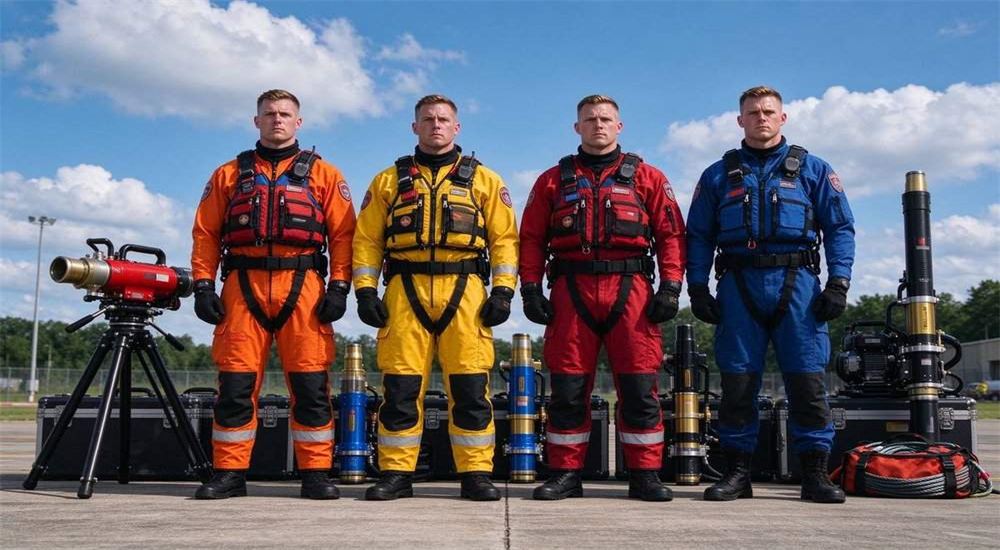


Professional product photo of Water Rescue Rope Thrower pneumatic line thrower, clean white background studio shot showing complete rescue kit with launcher, projectiles and accessories, professional water rescue equipment


What's in the Box: Your F4-LS01 Rescue Thrower Package Contents

Unlike the alloy long-range units that ship in aluminium flight cases, this water rescue rope thrower lives in a padded heavy-duty oxford backpack. The bag is not just a carrying shell; it is divided so the launcher, cylinder, ropes, and small parts each have their own pocket.


When the pager goes off, you open the bag and grab the module you need instead of digging through a pile. That matters on a flood call where every second counts.


Backpack Layout: How the Rescue Thrower Backpack Organises Four Compartments

The oxford bag is split into four zoned pockets. Each zone is sized and padded for one module, so parts do not grind against each other on the walk to the water.

  • Launcher compartment: a padded sleeve that holds the plastic launcher body horizontally. The barrel is protected from knocks, and the grip sits against a soft liner instead of the cylinder.
  • Cylinder compartment: a stiff, upright sleeve for the high-pressure gas bottle. The cylinder rides upright so it does not roll around inside the bag, and the pocket is closed with a webbing strap so the bottle cannot shift while you walk.
  • Rope compartment: a long flat pocket for the 120 m floating water rope and the 80 m land rope. The ropes are rolled separately so they do not twist together on the shelf.
  • Tool and accessory compartment: a small zipped pouch for the O-ring kit, a small cleaning cloth, the English manual, and any spare seals. This is where the wear parts live so they are not lost.


Five-Module Rescue Thrower Kit Breakdown

Here is what each of the five modules in the F4-LS01 kit actually is, what it is made of, and what it does. Dimensions and weights are reference figures; exact values are subject to contract and confirmed on the specification sheet.


Module

Material

Reference Size / Weight

What It Does

Launcher body

Modified engineering plastic, integrally moulded

Hand-held size; reference weight light, one-hand carry

Holds the cylinder, barrel, and trigger; houses the safety lock

High-pressure cylinder

Seamless alloy steel, sealed

Reference bottle size; stored in the upright sleeve

Stores compressed gas that drives each shot; tool-free snap swap

Float projectile

Impact-modified plastic shell, solid closed-cell foam fill

Bright orange-red; reference weight per unit

Flies to the target, floats on the surface, drags the rope behind it

Rescue ropes

Floating water line + low-drag land line

Water rope 120 m; land rope 80 m

Carries the line across the gap; water rope stays on the surface

Oxford carry bag

heavy-duty oxford cloth, padded, divided

Backpack form; four compartments

Carries and protects all five modules; 540-day open-air anti-aging


Professional Water Rescue Rope Thrower pneumatic line thrower in real water rescue application scenario, professional rescue team deploying pneumatic line thrower to deliver safety rope to victim in water, emergency lifesaving equipment


Standard Contents, Optional Spares, and Wear-Part Cycle

Every rescue thrower set ships with the standard items below. Optional spares are available on request so a station can stock a buffer without over-buying.

  • Standard in every box: launcher body, one cylinder (charged or empty, your choice at order), one float projectile, 120 m floating water rope, 80 m land rope, oxford backpack, English manual.
  • Optional spares: spare pre-charged cylinder, spare float projectile, spare O-ring and seal kit, second 120 m water rope, spare trigger spring. These are ordered separately and the lead time is subject to contract.
  • Wear parts and suggested check cycle: inspect the O-rings and seals annually; roll the rope out once a season to look for fuzzing or cuts; replace the float shell if it shows deep cracks. The closed-cell foam core itself does not need a scheduled replacement under normal duty.


Backpack Design: Why the Rescue Thrower Bag Matters as Much as the Launcher

The oxford backpack on this rescue thrower is a deliberate part of the design, not an afterthought. It carries the kit to the water in a way a hard case cannot.
  • Shoulder carry system: padded shoulder straps let one person sling the whole kit over one shoulder and walk to the bank, up a flooded lane, or down a rocky shore. There is no case to set down and open.
  • Weight distribution: the heavy cylinder sits in the upright sleeve near the wearer's back, while the lighter ropes and float sit in the outer pockets. That keeps the load balanced instead of pulling the walker backward.
  • Water shedding: the heavy-duty oxford cloth shrugs off light rain and splashes. It is not a diving dry bag, but it keeps the kit dry through a flooded walk to the bank.
  • Storage rating: the bag is rated for 540 days of open-air storage, so it can live on a warehouse hook or a park shed wall between calls without cracking or powdering.

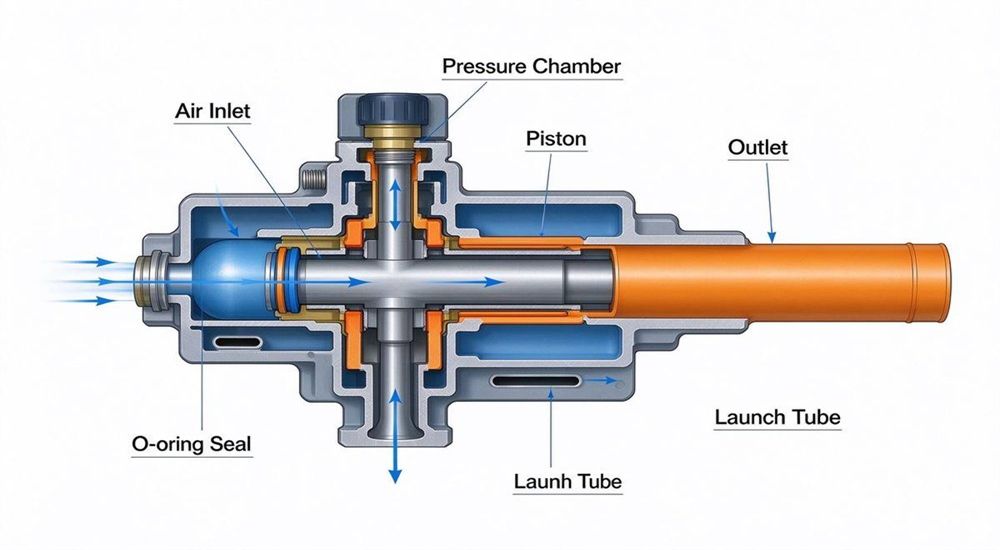
Informational diagram of Water Rescue Rope Thrower pneumatic line thrower, technical cutaway diagram showing valve chamber and CO2 gas flow mechanism, professional pneumatic line thrower internal structure for water rescue


Applications: Who Carries the Water Rescue Rope Thrower Kit

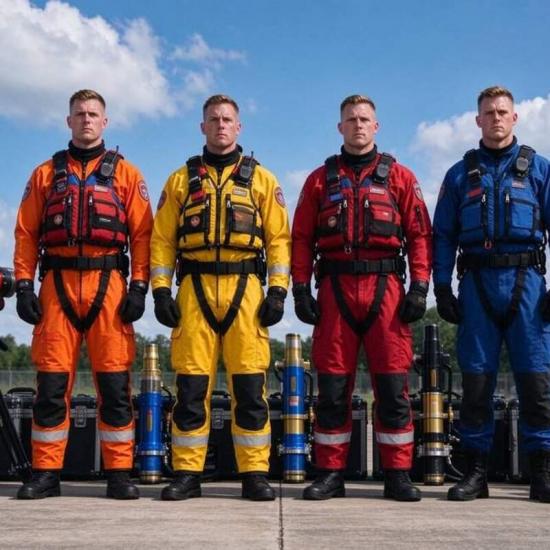
The F4-LS01 is the water rescue rope thrower that lives where a specialist 600-metre pneumatic system would just collect dust. Below are the duty profiles this pneumatic thrower is built for, with the kind of call each one actually looks like. It is widely used by coast guard rescue shore teams, fire department water rescue township units, and emergency water rescue volunteers needing basic swift water rescue capability and affordable flood rescue equipment.


Grassroots Flood Control and Township Rescue Teams

Flood season on small inland rivers throws up rescues 30 to 80 metres across a village lane or a submerged road. These teams are often volunteers with day jobs, not professional rescuers, and they need a rescue thrower that works on the first try.

  • They need a kit that sits in a township warehouse all year, comes out when the water rises, and fires this rope thrower correctly under pressure.
  • The oxford bag shrugs off a concrete storeroom, the plastic body survives being hauled out by people in a hurry, and under-0.3-hour training means a volunteer who fired it at a spring drill can fire it again in autumn.


A typical call for this team: after a heavy rain night, a narrow village lane is under chest-high water and an elderly resident cannot wade out. The team slings the oxford bag, walks to the near bank, and fires the float with the 120 m water line across the 40 m gap.

The resident grabs the orange float — which doubles as a small lifebuoy — and the team pulls them hand over hand. The whole exchange takes under two minutes from bag open to line on the victim.


Scenic Lake and Park Security

A public lake, a reservoir park, a riverfront boardwalk, or a beach at a tourist town: these places have lifeguards and security staff who are not full-time water rescue technicians, and who count on this rope thrower as a first-response line.

  • They need a floating line that reaches a swimmer in trouble 70 metres out, not a full rope-rescue system. The bright orange float is easy for the tired swimmer to spot.
  • The safety lock means a summer student guard cannot accidentally fire this rescue thrower during a drill. The oxford bag hangs on a hook in the park shed all winter.


A typical call: on a busy holiday afternoon, a swimmer drifts past the marked swimming area and goes quiet 60 metres from the dock. The lifeguard grabs the bag, fires the float on the first shot, and the swimmer hooks the line before the rescue boat even finishes starting.


The orange float is visible on the choppy water where a thin rope alone would be hard to spot, and it gives the tired swimmer something buoyant to hold onto.
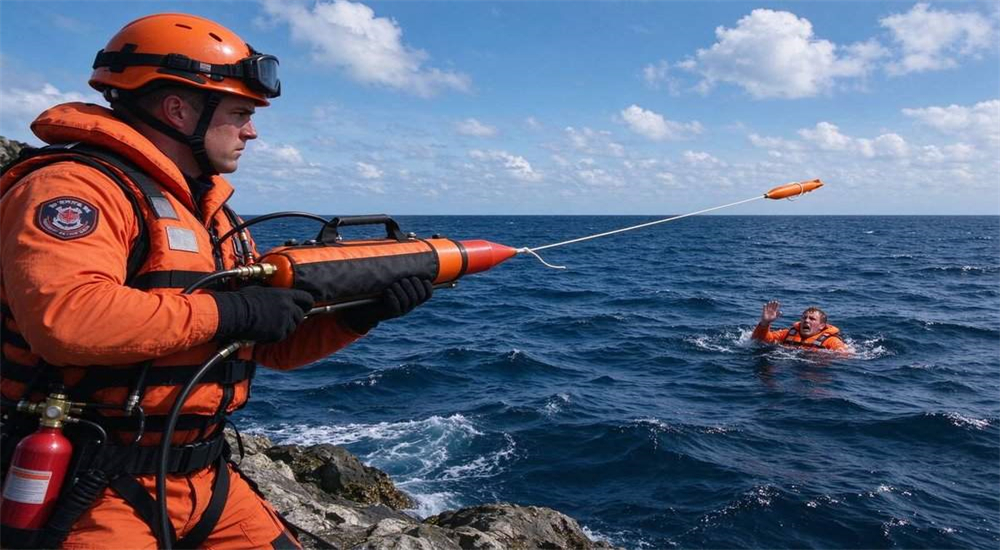


Professional Water Rescue Rope Thrower pneumatic line thrower in real water rescue application scenario, swiftwater river rescue team using pneumatic thrower to deliver safety rope across fast current, professional water rescue equipment


Inland Work Boats and Small Vessels

A barge, a tour boat, a small dredger on an inland canal: the crew keeps this water rescue rope thrower stowed behind the pilot seat.

  • Someone goes over the side 75 metres off the bank, and in the 30 seconds it would take to start the engine and turn, the floating projectile from this rescue thrower is already in the water next to them.
  • No open flame on deck near fuel, no pyrotechnic licence, no hard case clattering around the wheelhouse. The plastic body is unaffected by the damp and the knocks of boat life.


A typical call: a deckhand slips while working alongside a lock wall and is swept away from the hull by the current. The helmsman does not try to spin the barge around in the narrow channel; instead they grab the bag from behind the seat, fire the float across the current, and the deckhand catches it as it drifts past.

The boat then pulls the person back to the hull on the floating line. The float acts as a handhold and a small lifebuoy while the deckhand is in the water.


Emergency Reserve and Stockpile Programs

Municipal emergency bureaus, international relief organisations, and NGO flood programs stock these water rescue rope thrower kits ahead of flood season.

  • The oxford bag tolerates 540 days of open-air storage in a warehouse yard, and the sealed cylinder keeps its pressure.
  • High spares commonality across the range means one spare O-ring kit and one spare cylinder cover a whole station of rescue throwers. The kit is pneumatic, so there is no gunpowder to regulate in storage.


A typical stockpile use: a district pre-positions 15 of these bags at 15 town storage points ahead of monsoon season. Each point does a gauge check in spring and fires a drill shot at the annual flood drill.


When a storm actually hits, the bags are already in the villages, not sitting on a depot shelf two hours away. For official flood-safety guidance on when to evacuate and when to shelter in place, see the NOAA flood safety page.
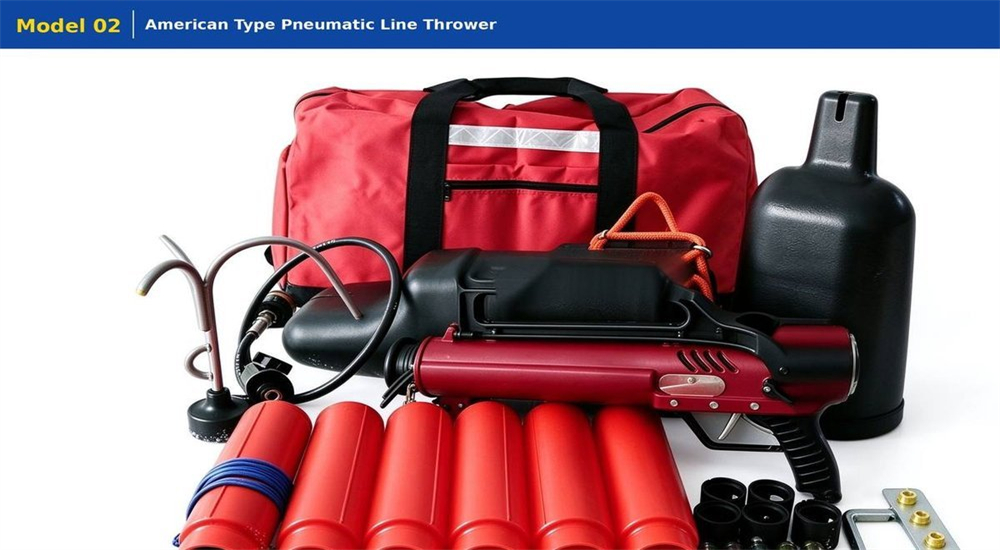


Professional product photo of Water Rescue Rope Thrower pneumatic line thrower, clean white background studio shot showing complete rescue kit with launcher, projectiles and accessories, professional water rescue equipment


Related Water Rescue Equipment and Lifesaving Gear

The water rescue rope thrower is an entry-level water rescue equipment option within a catalogue that includes lifesaving equipment, swiftwater rescue gear, and emergency rescue equipment for everyday calls. We supply marine rescue equipment, search and rescue equipment, and first responder equipment to lifeguard teams and municipal procurement. As a wholesale rescue equipment supplier, we provide OEM pricing for water safety equipment, water rescue rope thrower kits, and CO2 powered rescue thrower systems for budget-conscious buyers.


Safety and Operating Guidelines for Your Pneumatic Rescue Thrower

Treat this as a pressure tool, not a toy. The rules below keep the operator, the bystanders, and the person in the water safe. For broader emergency-action planning, see the OSHA emergency action plans guide.


This water rescue rope thrower is a pneumatic system, not pyrotechnic, but it still stores compressed gas and fires a weighted projectile across open ground. The pneumatic launch chamber sits behind the cylinder.


The guidelines below are the minimum every operator should read before they load the kit. They are written for the F4-LS01 class; longer-range units add extra rules that do not apply at 75 metres.
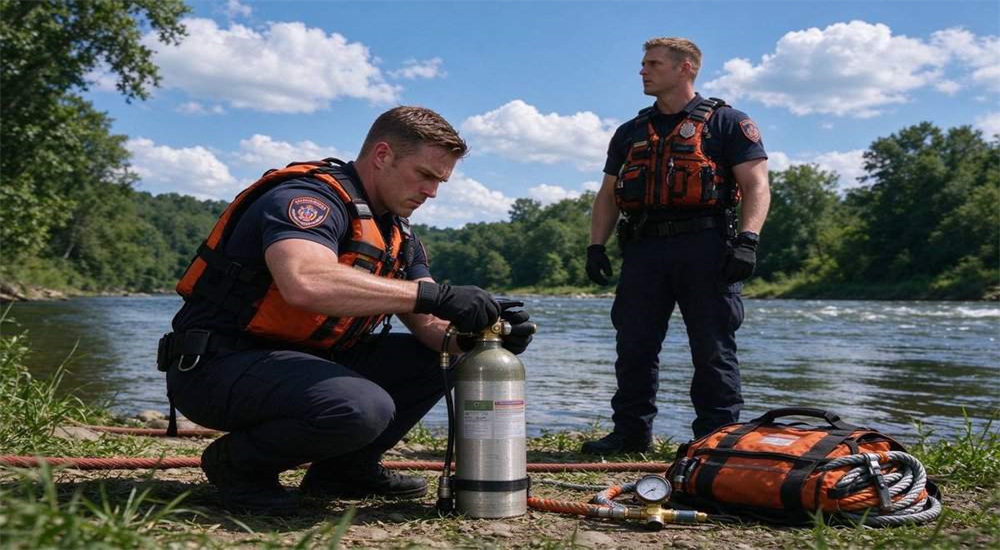

Informational diagram of Water Rescue Rope Thrower pneumatic line thrower, professional maintenance service for pneumatic line thrower in workshop, technician servicing water rescue equipment to ensure reliable emergency performance


High-Pressure Cylinder Safety for the Pneumatic Launcher

  • Do not expose a charged cylinder to direct sunlight inside a closed vehicle or a hot storeroom. The design range is -20 C to +55 C; above that the pressure can rise beyond the controlled band.
  • Do not over-fill the cylinder. Fill to the rated working pressure on the gauge, not past it. A gauge that reads beyond the green band should be checked before use.
  • Do not disassemble, modify, or strike the cylinder. It is a sealed high-pressure vessel; any dent, rust pocket, or valve damage takes the cylinder out of service.
  • When you swap a cylinder in the snap-lock chamber, seat it fully before closing the lock. A half-seated bottle can leak gas on firing.


Firing Direction and Personnel Clearance

  • Never point the rescue thrower at a person, a boat, a vehicle, or an animal, even if you think the safety lock is on.
  • Before you fire, scan the landing zone and the flight path. The float projectile travels in a straight line for up to 75 m over water and 120 m on land; anything in that path is in the way.
  • Keep at least 5 metres clear to the sides and rear of the operator. The back pressure on this class is modest, but a bystander standing behind the shooter can be clipped by the barrel or the swinging rope.
  • Confirm the target person is ready to grab the line before you fire; a 75 m float arrives fast and a startled swimmer may not be watching for it.


The Safety Lock Is the Primary Guard

  • The mechanical safety lock is what stops the rope thrower firing during loading, transport, and drill handling. Keep it in the safe position until you are actually on target.
  • Do not tape down, wedge open, or defeat the lock. If the lock feels stiff, loose, or clicks halfway, take the unit out of service and check it; do not fire around a faulty safety.
  • Only close the lock when the barrel is pointed at the landing zone. Closing it early invites a negligent discharge if the trigger gets bumped.


Backpack Handling: Cylinder and Bag Safety

  • When you pick up the oxford bag, lift it by the padded handles or shoulder straps, not by the cylinder sleeve or the barrel. The cylinder rides inside its own pocket; swinging the bag by the barrel can knock the bottle loose.
  • Set the bag down upright on flat ground when you unpack. Do not drop it off a truck tailgate onto a concrete yard; the cylinder takes the shock even though the plastic launcher does not.
  • When you stow the kit back in the bag, the cylinder goes into its upright sleeve and the safety lock goes to safe before you zip the tool pocket shut.


Weather and Environmental Limits

  • Do not fire in strong crosswind, heavy driving rain, or thunder and lightning. At 75 m a hard gust pulls the float off line, and lightning near open water is its own hazard.
  • The rescue thrower works down to -20 C, but at that temperature cylinder pressure sits at the low end of the band and range drops slightly. Check the gauge before a cold-weather shot and expect a little less distance than a summer afternoon.
  • Do not fire across a busy road, a power line, or a crowd on the near bank. The 1-degree trajectory is predictable on open ground, not over an obstacle course.


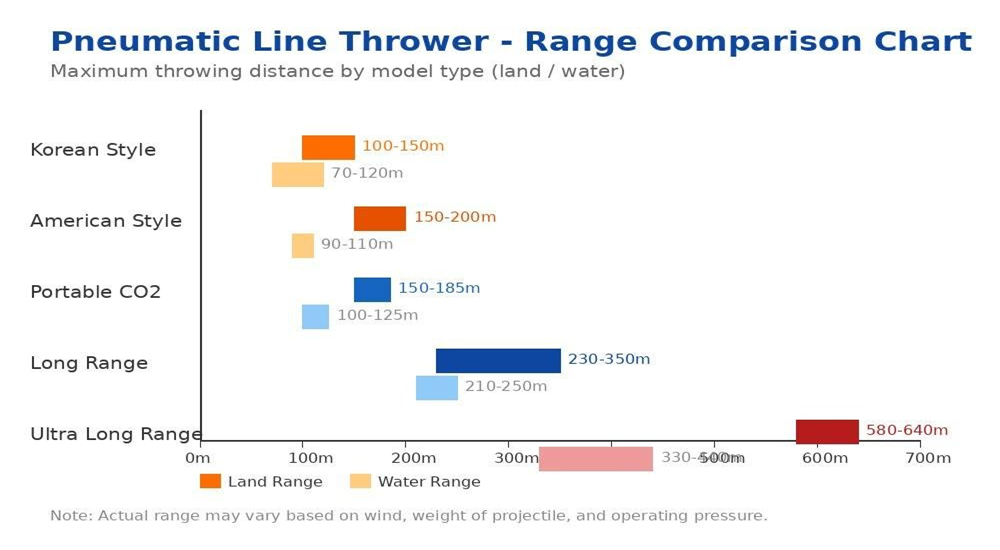
Informational diagram of Water Rescue Rope Thrower pneumatic line thrower, range matching chart comparing different pneumatic line thrower models and throwing distances, professional water rescue equipment selection guide


Storage Environment for the Oxford Bag

  • Store the kit in a dry, ventilated storeroom or shed, away from heat sources, solvents, and direct exhaust. The oxford bag tolerates open air for 540 days, but it lasts longer off a damp concrete floor.
  • Keep charged cylinders in a cool, locked area out of children's reach. There is no gunpowder to regulate, but a high-pressure bottle is still a pressure vessel.
  • Before flood season, read the cylinder gauge and test the safety lock action. A unit that has sat for six months should get one drill shot before it is trusted on a real call.


Untrained Operators: Rescue Thrower Safety and Training Requirements

  • This rescue thrower gets a new crew member fully up to speed in well under an hour, but that training has to happen. Do not hand the loaded kit to a bystander on scene and ask them to fire.
  • We supply the English manual with every set, and for mid-to-bulk orders we walk your lead instructors through the five-step cycle. One supervised live drill beats reading the manual twice.


Low Maintenance Water Rescue Rope Thrower: Fast Training, Common Pneumatic Spares

Two numbers on this water rescue rope thrower matter more than the range. The first is under 0.3 hours to train a complete operator. The second is the high spares commonality across the pneumatic thrower family, which keeps stocking simple for a budget station.

  • Together they are why this rescue thrower is a kit a budget team can actually run, instead of a tool that needs an armourer.


Training the rope thrower operator is the five-block cycle already covered in the introduction: safety check, loading, aiming, firing, and stowing the pneumatic launcher. Each block is about three to four minutes on a training field.

  • That is the whole skill set. An 18-minute session, with one dry run and one live shot, is enough for this water rescue thrower.
  • There is no level to set, no wind to calculate, no tripod to level, because at 75 metres the errors that need instruments at 600 metres have not shown up yet.


Maintenance of this rescue thrower is deliberately simple. After a water rescue, rinse the barrel and the float with fresh water, dry them, and roll them back into the bag. The pneumatic valve needs no lubrication in the field.

  • The float is closed-cell float foam, so it does not absorb water and gain weight between calls. The bag itself is rated for 540 days of open-air storage.
  • Monthly, read the cylinder gauge. Annually, check the seals and the safety lock action on this rope thrower. That is the whole routine.


Spare parts are where the real long-term saving shows up across this water rescue rope thrower family. The large majority of consumable items — seals, snaps, and safety components — fit every pneumatic model in the range.

  • A station stocking one O-ring kit, one spare seal set, and a couple of extra float projectiles covers every rescue thrower it owns. You do not keep a different spare drawer for every model.
  • Standardised fitting dimensions also match common thrower accessories on the market, so later replenishment is easy and does not lock you into one supplier.

The quick maintenance schedule below covers the water rescue rope thrower from after-use rinsing to annual seal checks, plus the cold-weather checks that matter on a frozen river edge.


Interval

Task

After Every Use

Rinse barrel and float with fresh water, dry, inspect the float shell for cracks and the rope for fuzzing

Monthly

Read cylinder gauge, confirm pressure in the operating range; wipe down the oxford bag if it got muddy

Seasonal (Before Flood Season)

Roll out both ropes and check for cuts; test the safety lock open-close action; fire one drill shot on open ground

Annually

Replace O-rings and seals as a set; inspect the cylinder valve; check the backpack webbing and zippers

Winter Use (-20 C)

Check the gauge before the shot; pressure sits at the low end and range drops slightly. Do not store a charged cylinder in a freezing unheated shed if avoidable; bring it indoors the night before a cold call.

Long Storage (Over 6 Months)

Relieve cylinder pressure before long layup; store the bag dry and off the floor; recharge and re-gauge before the next season

Spare Stocking

One O-ring kit + two spare floats per ten rescue thrower units; keep one spare cylinder per ten units for active teams


Professional Water Rescue Rope Thrower pneumatic line thrower in real water rescue application scenario, rescuer deploying device to drowning victim during severe urban flood disaster, deep water rescue operation with long-distance rope delivery


Troubleshooting Your Rescue Thrower: Common Issues and Fixes

Most problems that stop a water rescue rope thrower on the bank are not deep mechanical failures in the pneumatic valve. They are a low gauge, a kinked rope, a speck of grit in the seal, or a safety lock that was not fully closed. Work down the table below before you ship a unit back for service.


Symptom

Likely Cause

What to Do

Range is noticeably short

Low cylinder pressure; rope tangled on the reel; flat firing angle; strong crosswind

Read the gauge and swap to a fresh cylinder; unroll and re-roll the rope to free kinks; raise the barrel angle slightly; wait out or reposition on a windy day

Cylinder will not take air when filling

Dirty fill valve; O-ring out of place; fill adapter not seated

Wipe the valve face; check the O-ring is in its groove; seat the adapter squarely and hand-tighten; do not force it

Trigger feels stiff or stuck

Grit or mud in the trigger seam; dry mechanism; small debris under the catch

Rinse the trigger area with fresh water and let it dry; do not oil the plastic trigger; if it still sticks, open the tool pouch and blow out the seam with low-pressure air

Rope tangles or pays out slowly

Rope rolled too tight; rope twisted against itself in the pocket; float catch snagging the line

Unroll the rope fully and re-roll it loose in loops, not a tight ball; check the projectile trail is clipped so the line runs free

Hissing leak from the cylinder chamber

Seal not seated; O-ring pinched; snap-lock not fully closed

Relieve pressure, open the snap-lock, check the O-ring for pinch or cut, re-seat the cylinder, and click the lock shut firmly

Gauge reading looks off or jumps

Gauge knocked out of calibration; air bubble in the line; damp inside the gauge

Compare against a known-good cylinder; if the gauge disagrees, take the unit out of service and replace the gauge; do not fire on an untrusted gauge

Projectile detaches early on firing

Barrel catch worn; projectile not seated; trail clip on too tight

Seat the float fully into the barrel; check the catch spring; if the catch is worn, fit a spare projectile and inspect the barrel lip

Safety lock will not close or clicks halfway

Grit in the lock; spring displaced; lock not aligned with the barrel

Rinse and dry the lock seam; cycle the lock a few times; if it still will not seat, tag the unit out of service and fit a spare lock from the O-ring kit

Float sits low in the water or loses buoyancy

Foam core waterlogged from a cracked shell; shell split on a rock impact

Inspect the float shell for cracks; a split shell lets water into the closed-cell foam and the float will ride low. Replace the projectile; the foam itself does not age out under normal use


Professional Water Rescue Rope Thrower pneumatic line thrower in real water rescue application scenario, swiftwater river rescue team using pneumatic thrower to deliver safety rope across fast current, professional water rescue equipment


Troubleshooting Steps: Fixes for the Most Common Rescue Thrower Faults

The table above gives you the quick reference. Below are the step-by-step fixes for the faults that stop a rescue on the bank, including two issues specific to the oxford backpack carry system.
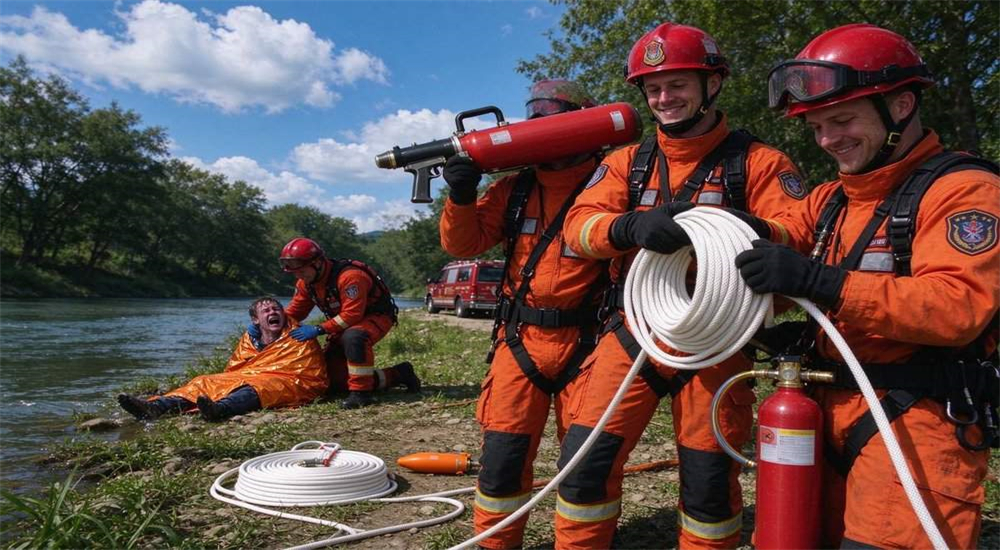

1. Range Is Noticeably Short

  • Symptom: The projectile lands 20 to 40 metres short of the target, even on a calm day.
  • Possible causes: cylinder running low on gas, line kinked on the reel, barrel held too flat, or a gust pushing the float off line.
  • Fix:
    1. Read the cylinder gauge. If the needle is below the green band, swap to a fresh cylinder using the snap-lock chamber.
    2. Unroll the rope fully and re-roll it in loose loops, not a tight ball, to free hidden kinks.
    3. Raise the barrel angle slightly — at 75 metres a few degrees of elevation makes a visible difference.
    4. If a crosswind is blowing, reposition on the bank or wait it out; the float is light and drifts.
  • Prevention: Check the gauge at every pre-shot safety check, not just at the start of the shift.


2. Cylinder Will Not Take Air When Filling

  • Symptom: The fill adapter spins but no pressure builds, or air hisses out around the valve.
  • Possible causes: Dirty fill valve; O-ring out of its groove; fill adapter not seated squarely.
  • Fix:
    1. Wipe the valve face with a clean cloth to remove grit or silt.
    2. Remove the fill adapter and check the O-ring is seated in its groove, not pinched or rolled.
    3. Re-seat the adapter squarely and hand-tighten; do not use tools or force it.
    4. If it still will not seal, replace the O-ring from the spare seal kit.
  • Prevention: Keep the fill valve capped when not in use, and rinse the cylinder after saltwater or flood use.


3. Trigger Feels Stiff or Stuck

  • Symptom: The trigger will not squeeze, or it clicks halfway and stops.
  • Possible causes: sand or silt in the trigger gap, a dry plastic mechanism, or a small pebble wedged under the catch.
  • Fix:
    1. Flush the trigger housing with clean water and leave it out to air-dry.
    2. Do not oil the plastic trigger — oil attracts more dust and makes it worse.
    3. If the jam persists, open the tool pouch and blow low-pressure air through the gap.
    4. Cycle the trigger a dozen times once dry to work loose any remaining grit.
  • Prevention: Rinse the launcher after every flood call, not just when it looks dirty.


4. Rope Tangles or Pays Out Slowly

  • Symptom: The projectile leaves the barrel but the rope bunches up and stops paying out, dropping the shot short.
  • Possible causes: line wound too tight in the pocket, the rope twisted back on itself, or the trail clip catching the line as it pays out.
  • Fix:
    1. Unroll the entire rope and lay it straight on the ground to release twists.
    2. Re-roll it in loose figure-eight loops, not a tight ball, so it pays out freely.
    3. Check the projectile trail clip is clipped loosely enough that the line runs free without catching.
  • Prevention: Re-roll the rope after every use, not at the end of the week.


5. Hissing Leak from the Cylinder Chamber

  • Symptom: A steady hiss comes from the snap-lock chamber after the cylinder is seated.
  • Possible causes: the cylinder seal not seated square, the O-ring rolled over, or the snap-lock only half-closed.
  • Fix:
    1. Relieve pressure by firing into a safe area or venting per the manual.
    2. Open the snap-lock and remove the cylinder.
    3. Inspect the O-ring for pinch marks, cuts, or flattening; replace it if damaged.
    4. Re-seat the cylinder squarely and click the snap-lock shut firmly until it latches.
  • Prevention: Seat the cylinder straight, never at an angle, and confirm the lock clicks home.


6. Oxford Backpack Zipper Jams or Breaks

  • Symptom: The backpack zipper will not close, or the pull tab snaps off mid-pack.
  • Possible causes: Grit or sand in the zipper teeth; overstuffed bag; zipper pull worn after heavy use.
  • Fix:
    1. Brush grit out of the zipper teeth with a dry toothbrush.
    2. Do not force a stuck zipper — overstuffing is the most common cause; remove an item and try again.
    3. If the pull tab breaks, use a small split ring or a paperclip through the slider as a field fix.
    4. Order a replacement zipper from the spare-parts list; the bag is a serviceable item, not disposable.
  • Prevention: Close the zipper gently after each call, and keep the bag free of mud in the field.


7. Oxford Bag Lets Water In

  • Symptom: After rain or a river crossing, the launcher inside the bag feels damp or the rope pocket is wet.
  • Possible causes: Bag fabric saturated after long exposure; zipper not fully closed; seam tape worn.
  • Fix:
    1. Open the bag and let everything air-dry completely before repacking.
    2. Wipe the launcher and ropes dry; do not pack a wet unit into the bag.
    3. Check the zipper is fully closed along its entire length, not just halfway.
    4. If water seeps through the seam tape, the bag has reached end of life — order a replacement bag; the launcher itself is unaffected.
  • Prevention: The bag sheds rain but is not submersible; do not leave it sitting in standing water.


8. Projectile Detaches Early on Firing

  • Symptom: The float drops out of the barrel a few metres in front of the operator instead of flying to target.
  • Possible causes: the float not pushed fully home in the muzzle, a worn barrel catch, or the trail clip biting too tight against the projectile.
  • Fix:
    1. Seat the float fully into the barrel until it clicks against the catch.
    2. Check the trail clip is not pinching the projectile against the barrel lip.
    3. If the catch spring feels weak, swap in a spare float and run a finger along the muzzle rim for burrs.
  • Prevention: Seat the projectile with a firm push, not a drop-in.


Professional Water Rescue Rope Thrower pneumatic line thrower in real water rescue application scenario, rescue team training drill practicing pneumatic line thrower deployment, three-person crew coordinating rope rescue procedure


Safety Check: Key Points to Confirm Before You Fire the Rescue Thrower

A small mismatch between what the operator thinks they loaded and what is actually in the barrel causes most on-bank failures. Run through this short list before every shot.

  • Gauge in the green? A low cylinder reads fine to a glance but will not reach the far bank. Read the actual number, not the colour.
  • Rope fully unspooled? A rope still coiled tight in the pocket pays out half-way and stops the projectile dead. Roll it loose in loops before the call, not while the victim is drifting.
  • Safety lock fully closed? A half-click lock feels closed but will not fire, which makes the operator think the trigger is broken. Push it until you hear the click.
  • Float seated all the way? A projectile sitting half out of the barrel can detach early. Drop it in until it rests on the barrel seat.
  • Flight path clear? A branch, a power line, or a bystander on the near bank turns a 75 m rescue shot into a hazard of its own. Scan once before you close the lock.


How the Water Rescue Rope Thrower Compares with Hard-Case Metal Throwers and Hand Throw Bags

If you have looked at the alloy-body, hard-case throwers in the range, the table below puts this water rescue rope thrower — a compact pneumatic launcher — next to them. The point is not that one is better than the other. The point is they do different jobs at different price and weight levels.


Feature

This Model (F4-LS01)

Hard-Case Metal Long-Range

Body

Engineering plastic

Machined alloy / titanium

Carry system

Padded oxford backpack

Hard aluminium flight case

Water range

At least 75 m

210-440 m by class

Land range

At least 120 m

250-640 m by class

Instruments

None needed at this range

Laser rangefinder, anemometer

Weight

Light, backpack carry

7.5-17 kg, base-mounted

Training time

Under 0.3 hours

Half day plus range time

Best fit

Township floods, scenic lakes, small boats

Professional fire, coast guard, wide rivers


Beyond the table, here is how the two classes break down on the practical decisions a procurement team actually makes.
  • Price: the engineering plastic rescue thrower is materially cheaper than the machined alloy equivalent, which is why it is the realistic choice for a budget-conscious township or park program. The metal hard-case system costs several times more and earns that cost only on wide-water calls.
  • Weight and carry: this rope thrower slings over one shoulder and walks to the bank. The metal long-range unit is base-mounted and weighs 7.5 to 17 kg, so it stays on a truck or a boat rather than being hiked in.
  • Maintenance: the plastic body does not corrode and needs no anti-rust treatment between calls. The alloy hardware on a metal thrower, especially after saltwater work, needs periodic rinsing, drying, and surface protection to stay serviceable.
  • Service life: a well-built metal thrower will outlast a plastic-body unit under very high professional cycle rates. The plastic rescue thrower is built for mid-to-low frequency duty — a few calls a season plus annual drills — which is exactly the duty cycle most grassroots teams actually run.
  • When to pick which: choose this water rescue rope thrower for narrow rivers, village floods, scenic lakes, small vessels, and volunteer teams. Choose the hard-case metal class when your real water width is over 200 metres, your crews train regularly, and the gap you must bridge justifies the extra price, weight, and maintenance.


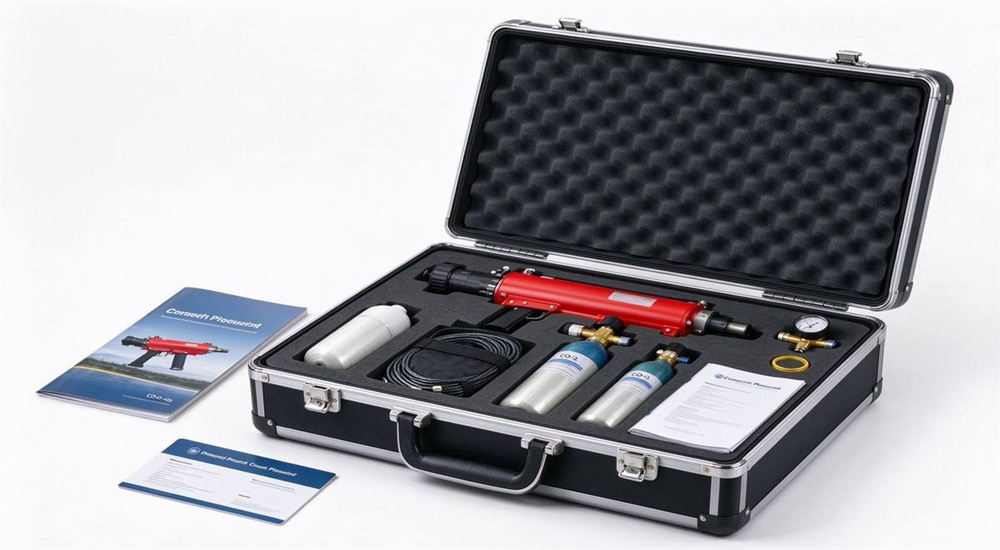
Professional product photo of Water Rescue Rope Thrower pneumatic line thrower, complete rescue kit display showing launcher, projectiles, rope and CO2 cylinder, professional pneumatic line thrower system for water rescue


Versus a Traditional Hand-Thrown Rope Bag

Many grassroots teams already own a hand-thrown throw bag: a buoyant rope in a nylon sack that a rescuer heaves by hand. It is cheap and it works, up to the limit of a human throw. The table below puts this pneumatic rescue thrower next to a hand throw bag on the numbers that matter.


Factor

Hand-Thrown Rope Bag

F4-LS01 Pneumatic Rescue Thrower

Typical reach

15-25 m with a strong adult throw

At least 75 m over water, 120 m on land

Accuracy at range

Depends on the thrower's arm and adrenaline; drops fast past 20 m

Trajectory within 1 degree; lands near the aiming point at rated range

Typical unit cost

Low, a simple filled sack

Mid-range; pneumatic system with cylinder and backpack

Learning curve

Easy to pick up, hard to throw far under stress

Under 0.3 hours structured training; consistent shot every time

Effort on scene

Full body throw, one or two good heaves max

Aim and squeeze; the operator stays behind cover

Maintenance cost

Rope and sack only; rinse and dry

Plus cylinder pressure, seals, and annual gauge checks

Best use

Close-quarters reach, shoreline work under 20 m

Crossing gaps of 30-75 m where a hand throw falls short


Read that table honestly. A hand throw bag is not a bad tool. It is the right tool when the victim is 15 metres off the bank and you can wade most of the way.

  • The moment the gap is 40, 60, or 75 metres — across a flooded lane, a fast river, or a choppy lake — a hand throw bag runs out of arm about halfway. That is the gap this rescue thrower closes.
  • Many teams keep both: a hand throw bag for close shore work and one of these pneumatic kits for the wider gap. They are not either-or; they cover different distances on the same call.
  • If your budget only stretches to one tool and your typical gap is under 25 m, a throw bag is the honest first buy. If your gaps are 40 m and up, the hand bag will leave you watching the victim drift while the rope lands short.


Read this comparison honestly. If your team is a coast guard unit on a 400-metre harbour, do not buy this backpack rescue thrower because it is cheaper; it will not reach.
  • If your team is a township volunteer corps on a 50-metre village lane, do not buy a 600-metre hard-case system because it looks impressive; it will never leave the truck.
  • Match the rescue thrower to the gap you actually have to cross. The oxford bag and plastic body are not compromises; they are the right design for the 75-metre, one-shoulder, volunteer-run job.


Professional Water Rescue Rope Thrower pneumatic line thrower in real water rescue application scenario, rescuer deploying device to drowning victim during severe urban flood disaster, deep water rescue operation with long-distance rope delivery


Wholesale Water Rescue Rope Throwers: OEM and Supply

This is the volume SKU for grassroots flood programs, scenic-area safety procurement, and inland marine supply looking to buy a wholesale rescue thrower — a backpack pneumatic line launcher — at scale. Exact MOQ, pricing, and lead time are subject to contract.
  • They depend on order quantity, certification requirements, and shipping lane.
  • We support single-set sample orders, small batch LCL shipment, and full-container annual framework agreements for regional stockpile programs of water rescue rope throwers.


Sample Policy and Trial Orders

  • We accept single-set sample orders so you can test the F4-LS01 on your own range before committing to volume. Sample pricing is higher than wholesale but lower than retail, and the sample fee is credited against your first bulk rescue thrower order.
  • Sample lead time is shorter than bulk production, subject to stock and your destination. Tell us at RFQ stage whether you need a charged or empty cylinder, because that changes the shipping lane.
  • A trial order of a few sets is a normal way for a new distributor to start; we will pack them the same way as bulk so you can inspect the oxford bag, the five-module layout, and the manual.


Lead Time and Peak Season

  • Standard production lead time for a rescue thrower order is typically a few weeks from confirmed order, subject to contract and current workload.
  • Peak season runs May through September, which is flood-prep and monsoon ordering across most of the markets we serve. Lead times can lengthen in those months, so place stockpile orders early if you are aiming to have bags in place before the rains.
  • Rush orders are negotiable on a case-by-case basis. If you have a fixed drill date or a government tender deadline, tell us the date at RFQ and we will tell you honestly whether it is reachable.


MOQ, Payment, and Packaging

  • MOQ is flexible and reference-based: a single sample set starts the conversation, small-batch LCL works for a pilot program, and full-container framework agreements suit regional stockpiles. Exact numbers are set in the contract.
  • Payment terms are typically a deposit against order confirmation and a balance before shipment, with T/T the standard route; larger framework orders can discuss other arrangements. Details are subject to contract.
  • Packaging: each rescue thrower set goes into its oxford backpack, then into a dust-proof inner film, then an export carton. Carton dimensions and gross/net weight are reference figures provided on the spec sheet; tell us your pallet or container loading needs at RFQ.


Customization, OEM/ODM, and Regional Protection

  • OEM covers the launcher body, the oxford bag, and the projectile. The barrel and bag take pad-printed department or organisation logo marking, which is cost-effective at volume.
  • The standard colour is high-visibility orange and black. Bulk rescue thrower orders can discuss custom colours on the bag and launcher. Private-label packaging, manual, and warranty card are supported on mid-to-bulk orders; tooling and artwork fees apply per order.
  • The customization flow runs: RFQ and spec confirmation, sample approval, bulk production, final inspection, and shipment. We send production updates at each milestone so there are no surprises on lead time.
  • For active distributors who commit to a standing volume, we discuss regional protection arrangements. The scope, exclusivity terms, and annual commitment are negotiated per territory and written into the agreement.


Professional product photo of Water Rescue Rope Thrower pneumatic line thrower, clean white background studio shot showing complete rescue kit with launcher, projectiles and accessories, professional water rescue equipment


Rescue Thrower FAQ: Frequently Asked Questions

Below are the questions grassroots flood teams, scenic-area buyers, and inland vessel crews ask us most about this water rescue rope thrower. Every answer is written out in full.


What is the actual range of this water rescue rope thrower?

Over water this pneumatic rescue thrower reaches at least 75 metres with the floating line and closed-cell foam projectile. On land it goes out to at least 120 metres with the land rope. The trajectory is held within 1 degree, so the float lands close to where you aim.

If your real water width is under 75 metres, this kit covers it with margin. If it is wider, step up to a longer-range class.


Why is the body made of engineering plastic instead of metal?

Because the job is a 75-metre, one-shoulder, volunteer-run rescue, not a 600-metre base-mounted shot. The modified plastic shell survives drops on rocks and concrete banks without cracking, works from -20 C to +55 C, and will not dent or rattle in the back of a pickup.

It is a deliberate choice for rough everyday field use at a lower price and weight than alloy. The pneumatic internals are sealed inside the plastic shell, so the body material does not affect how the thrower fires.


Why does it come in an oxford cloth bag instead of a hard case?

Because there is no instrument pack to protect on a 75-metre rope thrower, a hard aluminium case is the wrong carry choice. The thick oxford backpack is padded, divided, sheds rain, and is built to age well through years of outdoor storage.

It weighs a fraction of an aluminium flight case and slings over one shoulder to the bank. A hard case is for a specialist range unit; this is a walk-to-the-water pneumatic thrower.


What temperature range does it work in?

The F4-LS01 is rated from -20 C to +55 C. That covers winter ice-edge standby in northern provinces and summer flood season in the south. Never leave a pressurised bottle sitting in a closed vehicle on a hot day, where cabin temperature can climb past the rated ceiling. The oxford bag and plastic body handle the full range without brittleness or softening.


How do I know the cylinder is charged enough before a call?

Read the cylinder gauge during the pre-shot safety check. The gauge sits on the cylinder assembly and shows remaining pneumatic pressure. If the needle sits in the green operating band, the shot will reach rated range. If it reads low, swap in a fresh cylinder. The snap-lock cylinder chamber makes a bottle change a tool-free, few-seconds job on the bank.


Can the projectile be recovered and reused?

Yes. The orange-red float projectile is designed to be recovered, rinsed, and fired again on this pneumatic thrower. After each shot, inspect the shell for cracks, wipe off mud and silt, and check that the rope trail is undamaged. The closed-cell foam core does not need re-inflation. Spare projectiles are stocked as consumables for heavy-use teams.


What ropes come with the kit?

The kit includes a 120-metre water rope for floating work and an 80-metre land rope for dry gaps. The water rope floats on the surface so the person in the water can grab it; the land rope is a low-drag braided line for crossing dry ground.

Do not mix the two — the land rope is not rated to float and will sink if used over water. The water line pairs with the float projectile, which acts as a handhold and lifebuoy on the surface.


Is it safe to use around people?

Yes, when operated per the manual. It fires a soft foam projectile, not a metal bolt or a pyrotechnic line. There is no gunpowder and no open flame. The launcher has a safety lock that must be engaged before the trigger will fire.

Never point the barrel at people, animals, or overhead power lines, and keep the downrange area clear before each shot. The pneumatic launch is quiet and low-recoil compared with an explosive line thrower.
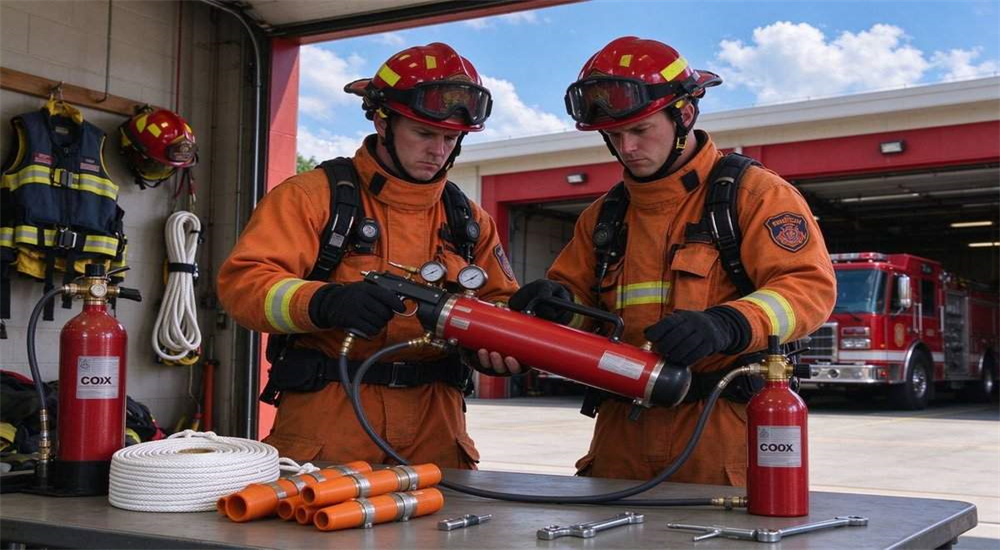


Informational diagram of Water Rescue Rope Thrower pneumatic line thrower, rescue operator performing pre-launch safety inspection of pneumatic line thrower, checking rope and pressure gauge before water rescue deployment


How do I clean and store it after a flood call?

Rinse the launcher, projectile, and ropes with fresh water to wash off mud, silt, and flood chemicals. Wipe the barrel dry, let the ropes air-dry before rolling them back into the bag, and set the safety lock to safe.

Store the kit in the oxford bag in a cool, dry place. The bag is built to age well through long outdoor storage, but a warehouse shelf extends seal life on the pneumatic cylinder valve. The safety lock stays on safe while the kit is stowed.


What spare parts do we need to stock?

Because spares are highly interchangeable across the pneumatic thrower range, one O-ring and seal kit covers every unit in your station. Stock spare float projectiles, a spare 120 m water rope, and a spare 80 m land rope per ten units. The cylinder itself is a long-life pressure vessel; do not disassemble it in the field.


What is the MOQ and lead time?

We start with a single trial set if you want to test on your own range, move to consolidated LCL freight for a pilot buy, and scale up to container-sized annual calls for district stockpiles. Exact MOQ and lead time depend on the model and certification status — contact us for your configuration.

Settlement is typically a deposit on confirmation and the balance before dispatch, with T/T the usual route.


Can we put our department logo on it?

Yes. The launcher shell and the oxford pack can take a pad-printed unit badge, which keeps unit-markup costs down at volume. Base finish is high-visibility orange with black trim; on larger buys we can match a different bag and launcher colour to your fleet.

Private-label cartons, manuals, and guarantee cards are available on mid-to-bulk orders, and one-off tooling or artwork charges are quoted per job.


How is the high-pressure cylinder shipped internationally?

We recommend shipping the pneumatic thrower with an empty cylinder, so it clears customs as ordinary equipment and avoids dangerous-goods documentation. Your local filling station charges the bottle on arrival.

If you need a pre-charged cylinder, we arrange the corresponding dangerous-goods paperwork on approved shipping routes. Tell us your destination country at RFQ so the declaration and packaging are prepared correctly.


When is this backpack thrower overkill for our team?

If every rescue call you run is a 15-metre hand-throw across a drainage ditch, a traditional throw bag is the right tool and this is overkill. If your gaps top out at 40 metres and you already have a throw bag, the F4-LS01 is a step up in reach and reliability but not a necessity.

Buy this pneumatic thrower when your real gaps run 50 to 120 metres and a hand throw will not reach. It is the middle ground between a throw bag and a 600-metre specialist system.


Get Your Quote: Ready to Issue Your Team?

If your team faces narrow rivers, township floods, scenic lakes, or small-vessel standby, this water rescue rope thrower is the kit that matches the real job at a price and weight a grassroots budget can carry. Tell us how many sets, your typical water width, and whether you need a printed unit mark on the bag.

We will come back with an honest package and price range, no pushy talk. The pneumatic system ships empty by default to keep freight simple.


What other names is a water rescue rope thrower known by?

This budget-friendly unit is also called a line throwing device, line throwing apparatus, or rescue line gun for everyday water calls. Lifeguards may refer to it as a pneumatic line launcher or remote rescue thrower. In scenic areas, it is sometimes called a rescue buoy launcher or lake rescue rope thrower.
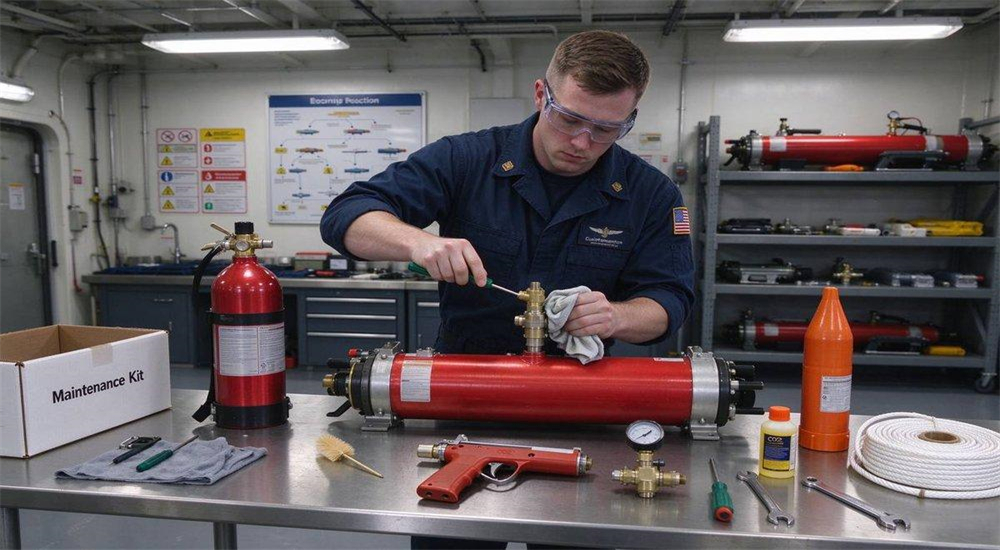


Informational diagram of Water Rescue Rope Thrower pneumatic line thrower, professional maintenance service for pneumatic line thrower in workshop, technician servicing water rescue equipment to ensure reliable emergency performance


About Us: Your Water Rescue Rope Thrower Supplier

We are a rescue equipment supplier based in China, focused on pneumatic water rescue tools that work for the teams that actually show up to the call. Our range spans pneumatic line throwers from this 75-metre backpack water rescue rope thrower up to 600-metre ultra-long-range systems, plus floating ropes, throw bags, and related water rescue gear.


We supply distributors, municipal flood programs, scenic-area safety teams, inland marine operators, and training centres. Every pneumatic thrower we ship is pressure-tested and function-checked before it leaves us.


How We Build and Check Every Rescue Thrower

Each water rescue rope thrower goes through the same quality flow before it leaves us, regardless of order size.
  • Incoming material check: the engineering plastic pellets, the seamless alloy steel cylinder blanks, the oxford fabric, and the foam cores are inspected on arrival before they go into production.
  • Process check: launcher moulding, cylinder assembly, and bag sewing are checked at the point of manufacture, not only at the end.
  • Finished-unit test: every assembled rescue thrower goes through a pressure and seal check, a function test of the safety lock, a visual inspection of the shell and bag, and a range check on the test line before packing.
  • Packing check: the five modules are counted against the packing list, the manual is in the pouch, and the carton is sealed before it goes to the warehouse.


Professional Water Rescue Rope Thrower pneumatic line thrower in real water rescue application scenario, professional rescue team deploying pneumatic line thrower to deliver safety rope to victim in water, emergency lifesaving equipment


Pneumatic Thrower Testing, Standards, and After-Sales Support

  • Units are tested against applicable safety standards for pneumatic line throwers before shipment; the exact test reports are available on request for qualified buyers.
  • Every rescue thrower carries a workmanship warranty covering manufacturing defects. Wear parts such as O-rings, seals, and the rope are normal consumables and are covered by the spare-parts programme rather than the warranty.
  • We keep wear parts in stock so a station can reorder O-rings, seals, and float projectiles without a long wait. Because consumables fit across the range, one drawer covers every rescue thrower you own, not just the F4-LS01.
  • After-sales support starts the moment you receive the kit: the English manual is in the pouch, and on mid-to-bulk buys we run a remote walk-through of the shot cycle with your lead trainers. If a unit arrives damaged or fails in service, tell us the symptoms and we will work through the troubleshooting table with you before deciding whether a return is needed.

When you source from us, you get honest specification and no overpromising. If your water hazard is 75 m instead of 600, we will not upsell you into a hard-case pneumatic system you do not need. We would rather sell you the right water rescue rope thrower once and have you come back for spares next year.


This backpack water rescue rope thrower pairs with other line-throwing tools from the same family. Most teams do not need one unit; they need the right unit for the gap they actually bridge, and often a second one for a different distance. Below is what sits around the F4-LS01 in the range and why you might add it.

Portable Rescue Thrower (150-185 m Class)

This is the step-up when your gaps run longer than 120 m on land but you still want a hand-carried, backpack-style kit rather than a base-mounted system.

  • It shares the same pneumatic principle, the same snap-lock cylinder logic, and the same short-training approach as the F4-LS01, so your team already knows how to use it.
  • Why pair it: if your district has both 40 m village lanes and 150 m river crossings, keep the F4-LS01 in the township bags and station one of these longer-range units at the county response point. You cover both distances without buying a 600 m specialist system for the occasional wide call


Korean-Style Handheld Rescue Thrower (100-125 m Class)

This is the lightest one-hand line throw in the family, for jobs where even the oxford backpack feels like too much kit.

  • It is a shoulder-fired, single-unit design that fits in a small bag or a boat locker, and it lands in the 100-125 m range on land.
  • Why pair it: an inland work boat that already carries the F4-LS01 behind the pilot seat can add one of these as a fast-reach backup in the wheelhouse for very close man-overboard work. A scenic park can keep one handheld unit at the dock and the backpack kit at the storage shed for longer shots. They share the same operating logic, so the same volunteers can run both.


Throw Bags, Floating Ropes, and Spare Floats

Beyond the thrower units themselves, the small gear that keeps a rescue thrower fleet running matters just as much on a long shift.

  • A traditional hand throw bag covers the 15-25 m close work where a pneumatic shot is overkill; keep one on the near bank for quick reaches.
  • Spare 120 m floating water ropes and spare float projectiles are the consumables that get replaced after a hard season; stock them per ten units of rescue throwers so you never run out mid-flood.
  • Because most consumables fit across the range, a single O-ring and seal pack services every thrower in your station, not just the F4-LS01.


If you have questions or suggestions,please leave us a message,we will reply you as soon as we can!

Related Product
  • Professional Rescue Launcher Aluminum Alloy Professional Rescue Launcher, Aluminum Alloy, Fire Fighting Essential

    This orange-yellow professional rescue launcher is made of aviation-grade aluminum alloy, with maximum working pressure of 200bar, throwing distance of 150-230 meters on land and 80-210 meters on water. Certified by the National Fire Equipment Quality Standard, it reaches maximum initial velocity of 60m/s. It provides efficient solutions for fire teams, flood control, and water rescue operations, saving lives in critical moments as essential equipment for all rescue teams.

  • Life-saving Thrower 50m Range Customized Life-saving Thrower, High Strength, Long-range Rescue

    This professional life-saving thrower is made of high-strength composite materials, with a throwing distance of 50 meters and a load-bearing capacity of 150kg, achieving a 99% rescue success rate. Its orange-yellow design ensures high visibility on water, equipped with non-slip handle and high-strength rescue rope. Specifically designed for flood control, water rescue and emergency disaster relief, it is essential equipment for fire departments, maritime rescue units, water rescue teams and flood control forces, participating in over 200 flood rescue missions annually.

  • Pneumatic Rope Launcher 120m Rescue Rope High-Pressure Pneumatic Rope Launcher, Rescue Special, 120m Range

    This high-pressure pneumatic rope launcher uses compressed air as power source, with projection distance ≥80 meters on water and ≥110 meters on land, equipped with 120-meter high-strength rescue rope. The main body weighs less than 3.5kg, offers simple and quick operation, and features a spark-free design ensuring safe use in flammable environments. The accompanying auto-inflating life ring inflates within 5 seconds with buoyancy >8kg. Ideal for flood disaster relief, water rescue, maritime rescue and other complex scenarios, it's essential equipment for emergency rescue departments.
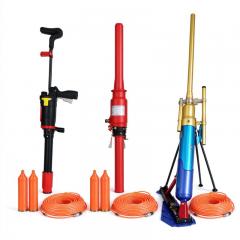
  • Pneumatic line thrower for swift water flood rescue Wholesale Pneumatic Line Thrower: 100m–640m Rescue Rope Launcher

    This pneumatic line thrower delivers reliable long‑distance rope deployment for swift‑water, flood, maritime and ice rescue scenarios. Multiple configurations cover short, long and ultra‑long throwing distances. Complete kits include launcher, projectiles, rescue ropes, CO2 cylinders and protective carry case. Quick setup, simple operation for fire, coast guard and emergency rescue teams worldwide. Note: Price for reference only. Exact price based on quantity, size, weight and custom details.
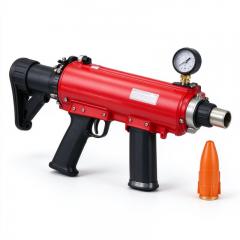
  • 20 MPa Shoulder Fired Water Rescue Line Thrower Korean Style Pneumatic Rescue Thrower PTQ20-Y100S70 | 20 MPa ≥100 m Land / ≥70 m Water

    Korean Style Pneumatic Rescue Thrower PTQ20-Y100S70, 20 MPa shoulder-fired launcher. ≥100m land range and ≥70m water range, equipped with auto inflating lifebuoy head and 2000N high tensile rope. Complies with GB/T 27906-2011. Complete aluminum hard case kit. Support bulk wholesale, OEM custom logo for fire, coast guard and flood rescue teams. Note: Price for reference only. Exact price based on quantity, size, weight and custom details.
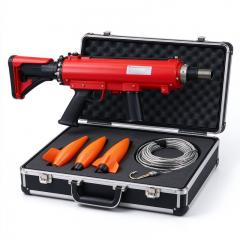
  • American Style Anchor Hook Pneumatic Rescue Thrower American Style Anchor Hook Rescue Thrower | PTQ20-Y125S100 & PTQ7-Y150S110Q55

    American Style Anchor Hook Pneumatic Rescue Thrower, frame-mounted design with recoil buffer. Equipped with heavy-duty anchor claw for high-rise, cliff and maritime rescue. Delivers long-distance rope deployment for swiftwater, urban flood and offshore emergency rescue. Complete kit with launcher, projectiles, rope and protective case. Support bulk wholesale and OEM customization for fire and coast guard teams. Note: Price for reference only. Exact price based on quantity, size, weight and custom details.

Copyright © Custom Disaster - Relief Bedding: Tents, Sleeping Bags, Blankets All Rights Reserved

Leave a message

    If you have questions or suggestions,please leave us a message,we will reply you as soon as we can!


the professional team to service !