×
enter your keyword
our storage
Categories
Products

Ultra Long Range Pneumatic Rescue Thrower
Ultra Long Range Rescue Thrower | ≥640m Land, ≥440m Water Ultra Long Range Rescue Thrower | ≥640m Land, ≥440m Water Ultra Long Range Rescue Thrower | ≥640m Land, ≥440m Water Ultra Long Range Rescue Thrower | ≥640m Land, ≥440m Water Ultra Long Range Rescue Thrower | ≥640m Land, ≥440m Water Ultra Long Range Rescue Thrower | ≥640m Land, ≥440m Water

Ultra Long Range Rescue Thrower | ≥640m Land, ≥440m Water


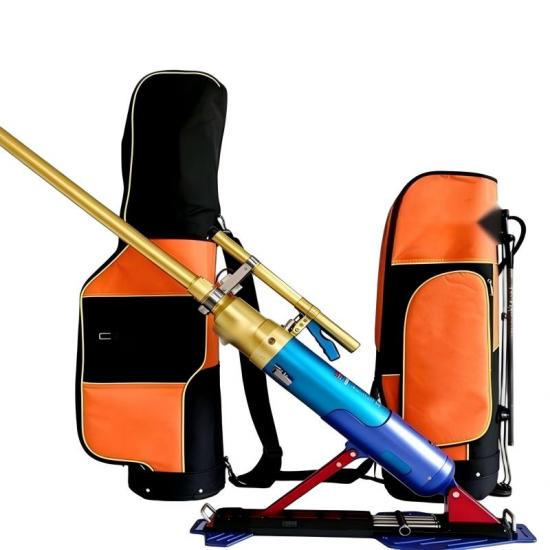
Our ultra long range pneumatic rescue thrower reaches ≥640m on land and ≥440m over water with 13MPa working pressure. Equipped with folding metal base with 5 adjustable angles. Three interchangeable projectiles for land, water and anchor hook use. Ideal for coast guard, fire and large flood rescue teams. OEM and bulk supply available.


Note: Price for reference only. Exact price based on quantity, size, weight and custom details.


  • model no. :

    DP5-A
  • Brand:

    YRF
  • market price :

    $35.6
  • sale price :

    $17.8
  • price range :

    30-500/$17.8 501-1000/$16.8
  • Color :

    Multiple Colors
  • port of dispatch :

    Guangdong/Guangzhou
  • Payment :

    TT, Paypal, Western Union
  • min order :

    30
  • original region :

    Made in China
  • Lead Time :

    5-15days
inquiry now
product description

Ultra Long Range Rescue Thrower | ≥640m Land, ≥440m Water


The ultra long-range rescue thrower is a compressed-air pneumatic line thrower engineered for gaps measured in hundreds of metres — wide flood channels, reservoir crossings, and open-water vessel rescue where no handheld unit can bridge.


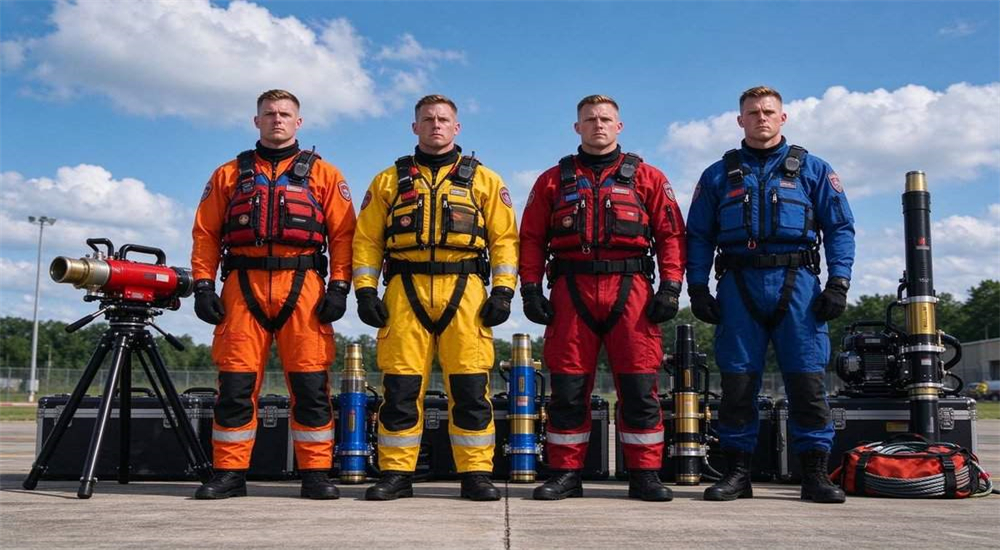
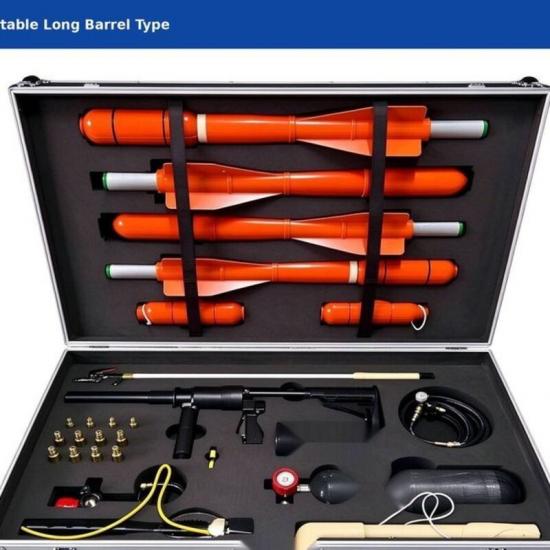
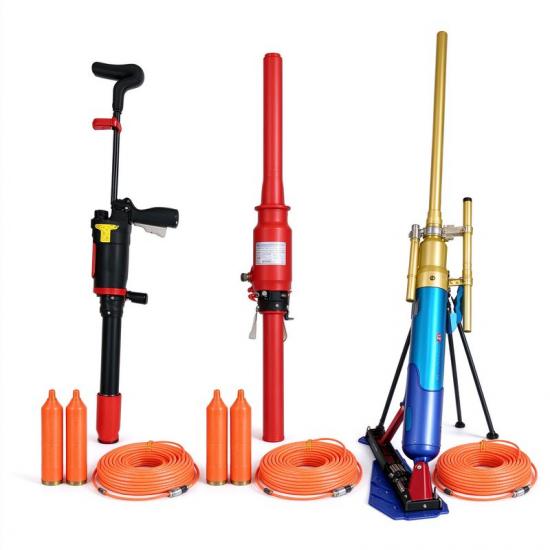
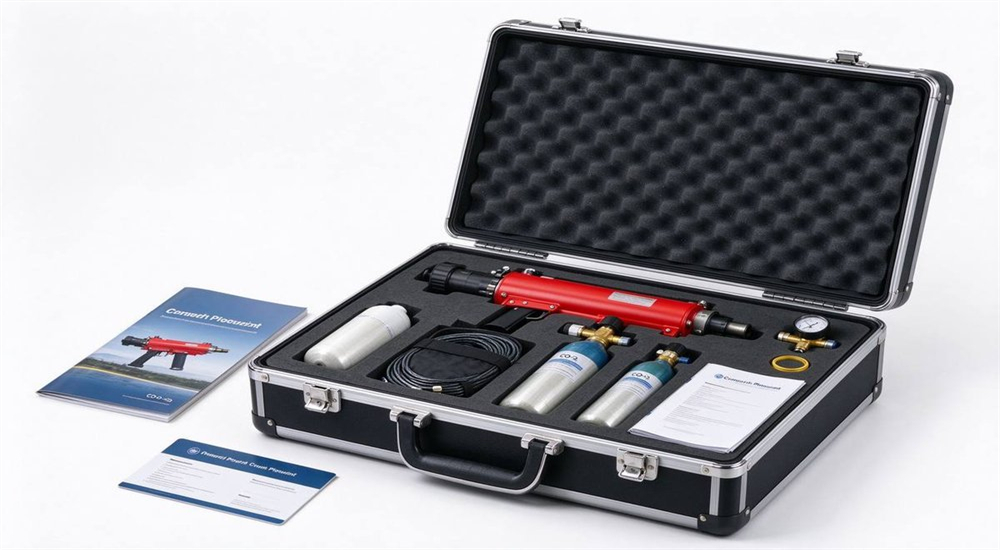
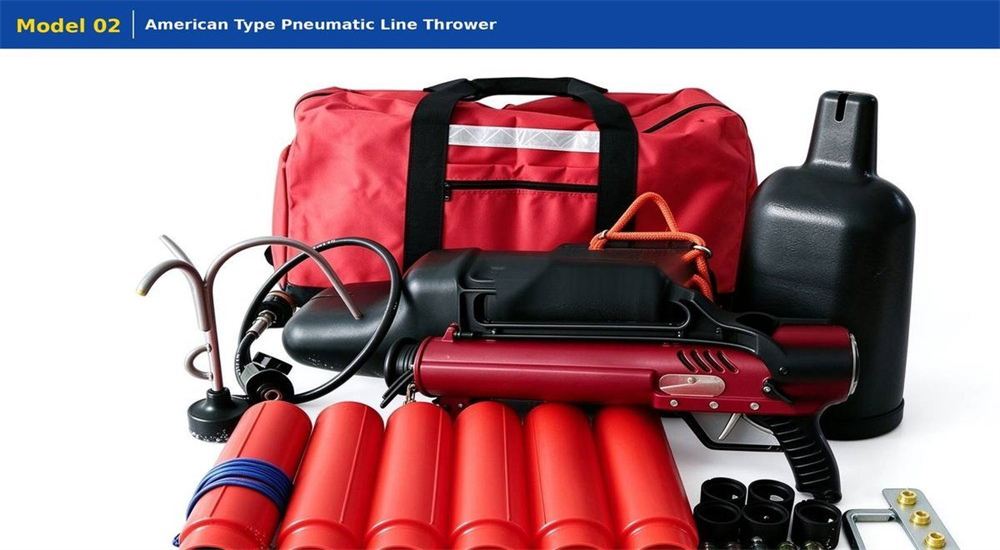
Professional product photo of Ultra Long-Range Rescue Thrower pneumatic line thrower, clean white background studio shot showing complete rescue kit with launcher, projectiles and accessories, professional water rescue equipment


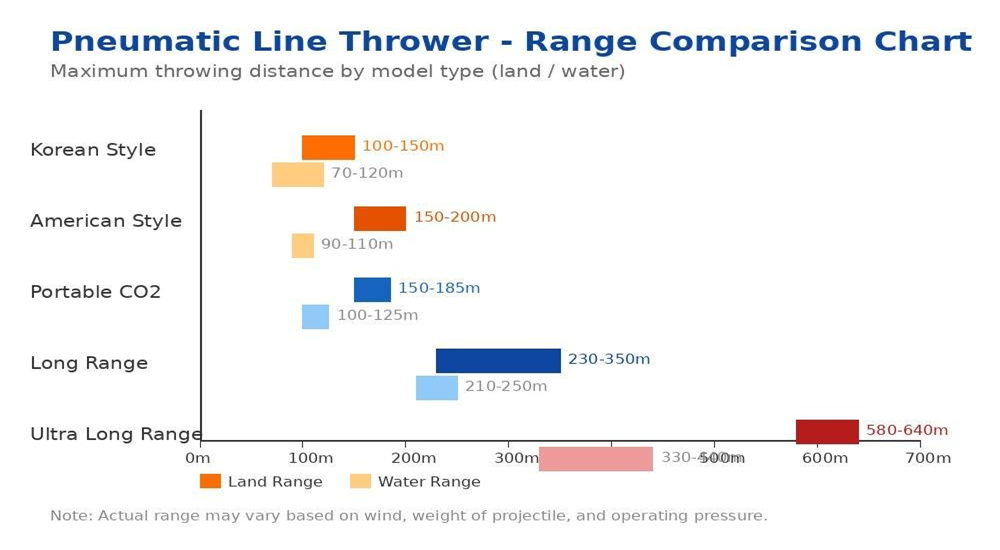
Operating at 12-13 MPa with a muzzle velocity of 100 metres per second, this ultra long-range rescue thrower fires a 1.8 kg projectile 580-640 metres over land and 330-440 metres across water, with an 180-metre anchor hook option. The 2.5 kg gun body on a folding metal base with 5-angle elevation makes this water rescue thrower the ultimate long-distance solution for professional fire departments, coast guard maritime units, and ocean-going vessel safety teams.


It leaves the barrel at roughly 100 metres per second and throws a 1.8 kg projectile that carries the rescue rope across the gap. It sits on a multi-function metal base with five preset angle positions (30° / 45° / 55° / 65° / 75°), not on a plastic mount. This is not the tool for a 30-metre pond. It is for gaps too wide for anything below it.


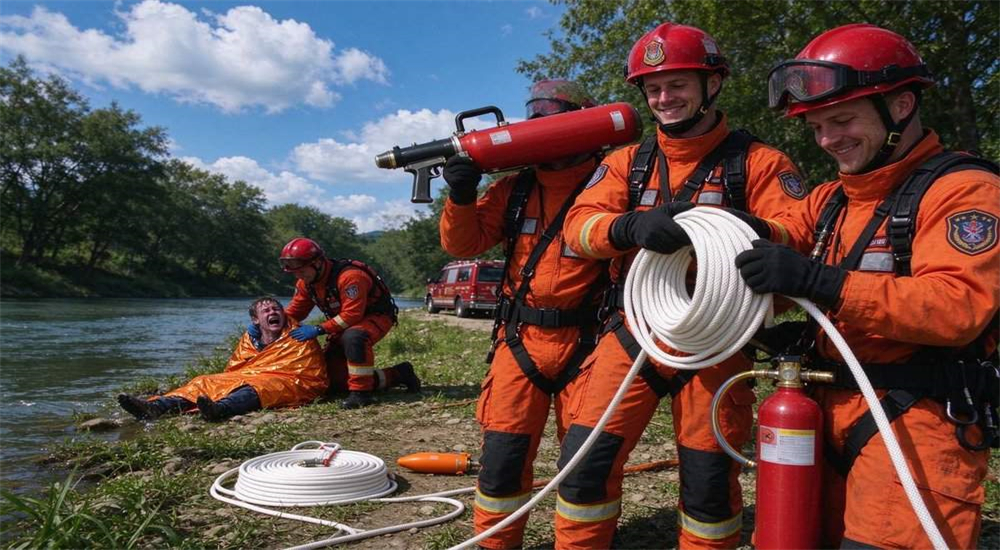
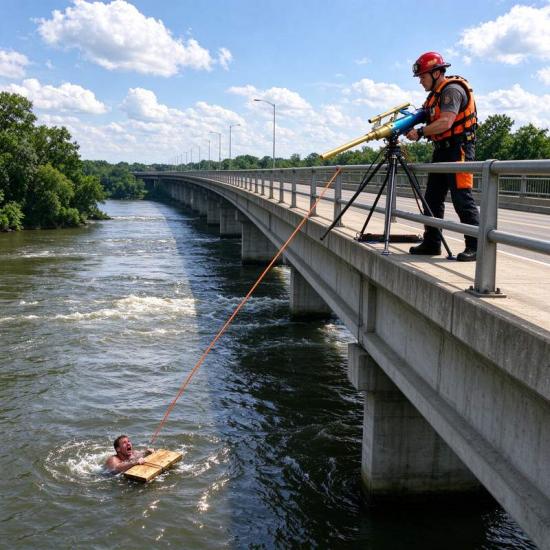
Professional Ultra Long-Range Rescue Thrower pneumatic line thrower in real water rescue application scenario, swiftwater river rescue team using pneumatic thrower to deliver safety rope across fast current, professional water rescue equipment


What does 640 metres actually mean on a rescue scene? It is more than six football pitches laid end to end — the distance this ultra long range rescue thrower can put a floating rope into a stranded person's hands on the far bank.


We supply ultra long-range rescue throwers to cross-reservoir rescue teams, open-water rescue units, and large-scale flood response organisations worldwide. Large-scale buyers get custom receiver branding, private-label hard cases, and OEM projectile-rope configuration support. Request wholesale pricing, a full technical catalog, and a regional fleet quote.


Informational diagram of Ultra Long-Range Rescue Thrower pneumatic line thrower, professional packaging and shipping for wholesale pneumatic line thrower orders, export crating for bulk water rescue equipment procurement


Table of Contents

Product Introduction: What Is An Ultra Long Range Rescue Thrower?

What does 640 metres actually mean on a rescue scene? It is more than six football pitches laid end to end — the distance this ultra long range rescue thrower can put a floating rope into a stranded person's hands on the far bank. It is a base-mounted, pneumatic compressed-air line thrower built for long-range deployment.


It reaches ≥640 metres on land and ≥440 metres over water, with three interchangeable heads and the five-angle multi-function metal base. It exists for wide rivers, flood channels, and harbour mouths where a hand-thrown bag or a 120-metre handheld unit cannot bridge the gap.


This is the daily tool of fire department water-rescue teams, coast guard crews, and maritime units that need a measured, repeatable long shot. The water head carries an auto-inflating lifebuoy that lands next to the victim and stays on the surface.


Below we break down how the 13 MPa pressure, the 1.8 kg projectile, the five-angle base, and the three-head system make this pneumatic rescue thrower's rated range hold up on a windy day.

This is the top of the pneumatic rescue thrower range, sitting above the mid-range long-range class. The assembly splits into the launcher body, the high-pressure compressed-air cylinder, the multi-function metal base, three interchangeable heads, and the rope set it trails.


The single configuration is the PTQ13-Y640S440Q180; the model code encodes the 13 MPa working pressure, the ≥640 m land range, the ≥440 m water range, and the ≥180 m anchor-hook reach. If your widest water crossing is under 300 m, this class is overkill. If it is 400 m or more, this is the ceiling of what a pneumatic rescue thrower delivers today.


Professional Ultra Long-Range Rescue Thrower pneumatic line thrower in real water rescue application scenario, professional rescue team deploying pneumatic line thrower to deliver safety rope to victim in water, emergency lifesaving equipment


Why Long-Range Accuracy and Base Angle Matter on an Ultra Long Range Rescue Thrower

Here is the number that explains this whole product. At 600 m, one degree of aiming error equals several metres of lateral offset by the time the projectile lands.

  • A five-metre-per-second crosswind pushes the light projectile and its trailing rope several metres off line.
  • Hand-aiming from the hip does not work at these distances. You need to size up the gap and pick the right elevation before you fire this rescue thrower.


Long-range accuracy on this class does not come from guessing — it comes from matching the gap to one of the five detented angles on the metal base. The base clicks into 30°, 45°, 55°, 65°, or 75°, so the elevation you set is the elevation you get, shot after shot.

  • Estimate the gap to the victim, the far bank, or the vessel you are throwing to. Add a rough margin for wind and current.
  • Cross-reference that gap against the angle chart in the manual: flatter angles carry further on open ground; steeper angles clear near-bank obstacles.
  • Set the base to the detent that matches, confirm the breech is seated, and only then open the air valve.
  • That process is the difference between a shot that lands next to the victim and one that lands well short.


Wind assessment on scene is a crew job, not an onboard read. Where you stand to judge the wind matters as much as how you read it.

  • Judge the wind where the launcher actually sits: watch the ripple on open water, the bend of near-bank vegetation, and the smoke from any nearby source.
  • Wind over open water or a wide flood plain is not the same wind you felt on the riverbank five minutes ago. Wait a few seconds for a steady read before you commit to a lead.
  • A headwind cuts range; a tailwind adds it; a crosswind pushes the line sideways. Read both speed and direction before you choose the angle.
  • For a rough wind hold-off: the stronger the crosswind and the longer the flight time, the more sideways lead you need. Correct after the first shot rather than guessing on the first.


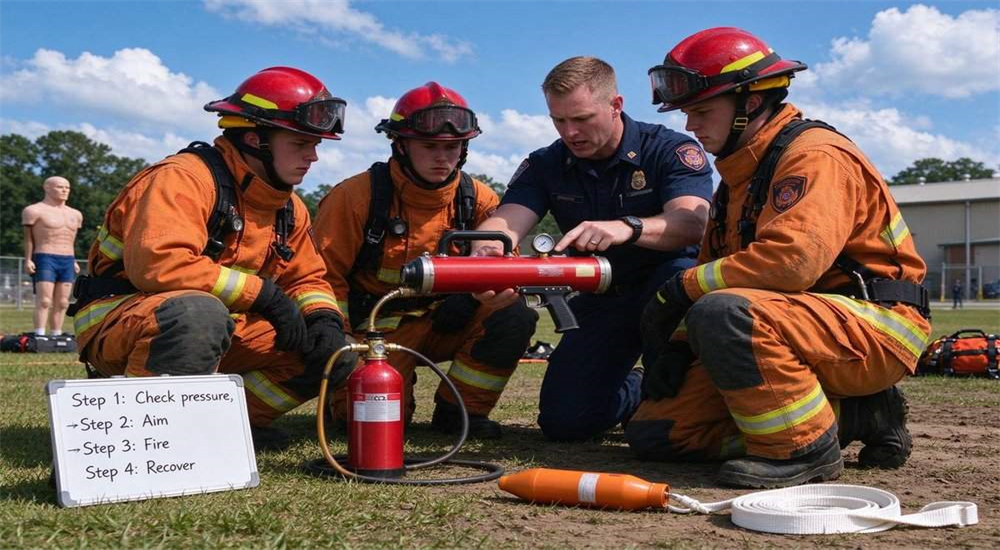
Put together, gap estimation, wind reading, and the five-angle base run a four-step shot cycle on every ultra long range rescue thrower. Walk the cycle before every shot, not just the first one of the day.

  1. Step 1 — Size up the gap: estimate the distance to the victim, the far bank, or the target vessel by eye, using known landmarks if any. That estimate is the baseline range for the angle chart.
  2. Step 2 — Read the wind: stand where the launcher actually sits, watch the water surface and vegetation, and note wind speed and direction. A headwind means a slightly higher angle; a crosswind means aim upwind by a rough lead.
  3. Step 3 — Set the angle: select the base detent (30/45/55/65/75) that matches the gap and the obstacles in front of you. Confirm the breech is loaded and the rope feeds free before you call ready.
  4. Step 4 — Fire and confirm: after the shot, watch where the line actually lands relative to the target. Feed that offset back into the next shot — a lower angle if it flew long, a higher one if it fell short.


The multi-function metal base is the detail people forget. Because it clicks into firm detents rather than wobbling on a plastic tripod, the angle you set is the angle the barrel actually fires at.

  • Set the legs on firm, level ground and select one of the five detents; the barrel then holds that elevation through recoil.
  • Now your 45° setting means 45 degrees. On a flat range this is a detail; on a rocky riverbank at dusk it is the difference between a hit and a miss.


You do not need this class of fixed-base accuracy on a 120-metre thrower because the errors are small enough to absorb. At 600 m, every small error magnifies on an ultra long range rescue thrower.
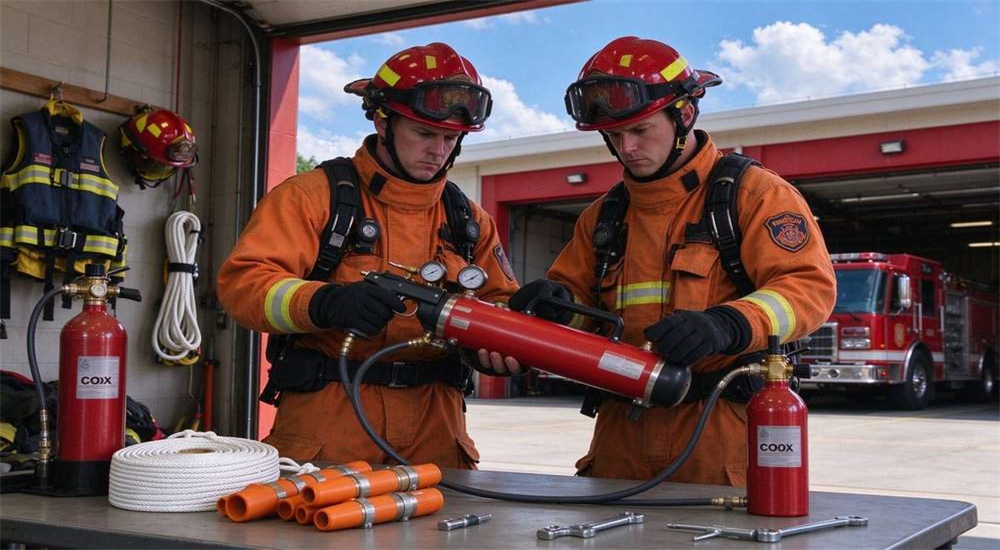
  • That is why the gun body still weighs only 2.5 kg — the engineering went into the 13 MPa breech and the long barrel, not into carrying dead weight.
  • The five-angle base, the quick-connect high-pressure system, and the three-head exchange are why this rescue thrower's rated range is real on a windy day.


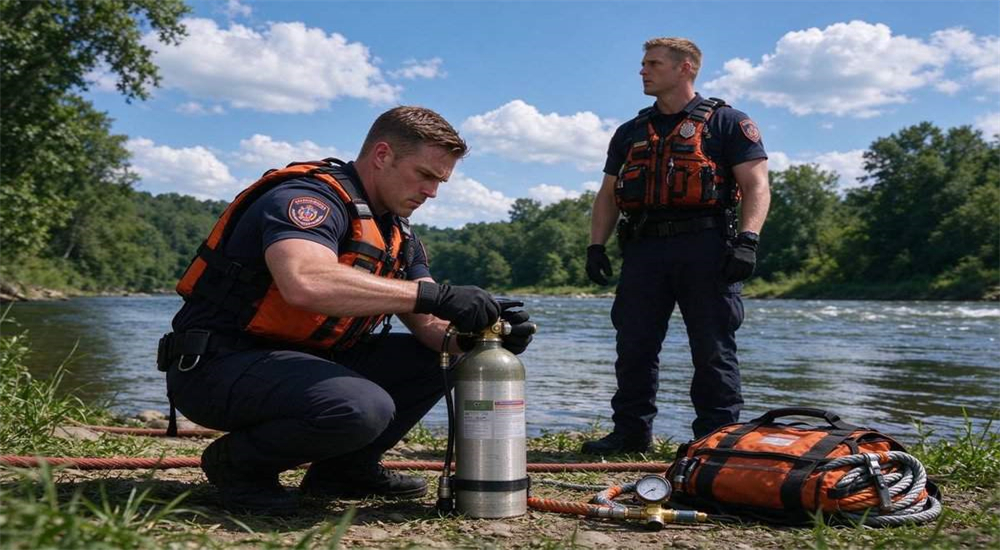
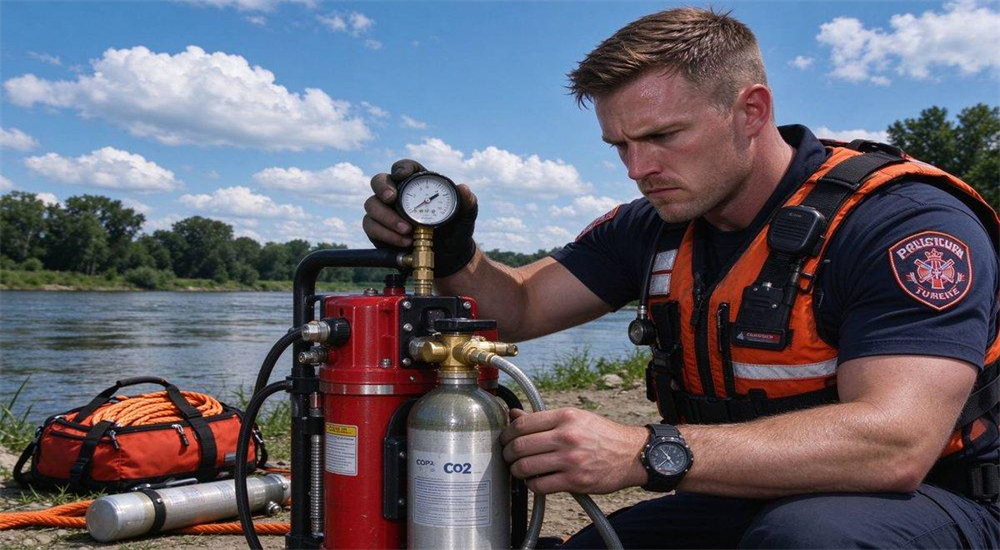
Informational diagram of Ultra Long-Range Rescue Thrower pneumatic line thrower, rescue operator performing pre-launch safety inspection of pneumatic line thrower, checking rope and pressure gauge before water rescue deployment


Key Specifications: Ultra Long Range Pneumatic Rescue Thrower

The numbers below are the engineering backbone of this pneumatic rescue thrower. Working pressure, muzzle velocity, projectile mass, weight, and the base separate this family from every shorter-range rope launcher. Each line below is not just a number; it is an engineering choice with a trade-off behind it. It is the ultimate tool for coast guard rescue maritime units, fire department water rescue specialist teams, and professional water rescue organizations requiring swift water rescue over hundreds of metres and flood rescue equipment for wide flood channels.


What 13 MPa Working Pressure Means

Pressure is force per unit area. At 13 MPa, every square centimetre of the pneumatic breech, the valve, and the high-pressure cylinder carries real stored energy. This is why the pneumatic thrower uses reinforced breech components rather than the lighter parts found on the shorter-range class.

  • That is why the breech body is reinforced rather than reused from the portable class, and why the high-pressure cylinder wall is built to the rated working pressure.
  • Seals take a hard beating, which is why O-ring replacement is on the annual service list and why the quick connect carries a check valve.
  • 13 MPa is what turns a mid-range shot into a 600 m shot. It also means more recoil, stricter inspection, and a bigger safety zone on scene.


Muzzle Velocity and Ballistics Basics

The projectile leaves the barrel at approximately 100 m/s, about 360 km/h, driven by the compressed-air launch gas. Once it leaves the muzzle, two forces act on it: gravity pulling down at 9.8 m/s², and air drag plus the rope pulling back.

  • In still air and no rope, a 100 m/s projectile fired at 45 degrees would travel around 1000 m in a vacuum-style arc. The trailing rope and drag cut that figure down to the rated ≥640 m land range.
  • The flight path is a parabola: you select a steeper angle so the projectile arcs up, travels out, and comes down on the far bank. The farther the target, the higher the angle you detent on the base.
  • On this rescue thrower, a small drop in cylinder pressure costs range fast. That is why running the cylinder near the green gauge zone matters: low pressure means low speed, and low speed means a short, floppy shot that lands in the water short of the victim.


Barrel Length and Why It Is Over Two Metres

Compressed air keeps pushing on the projectile for the whole time it is inside the barrel. A short barrel lets most of the launch gas blow out the muzzle unused.
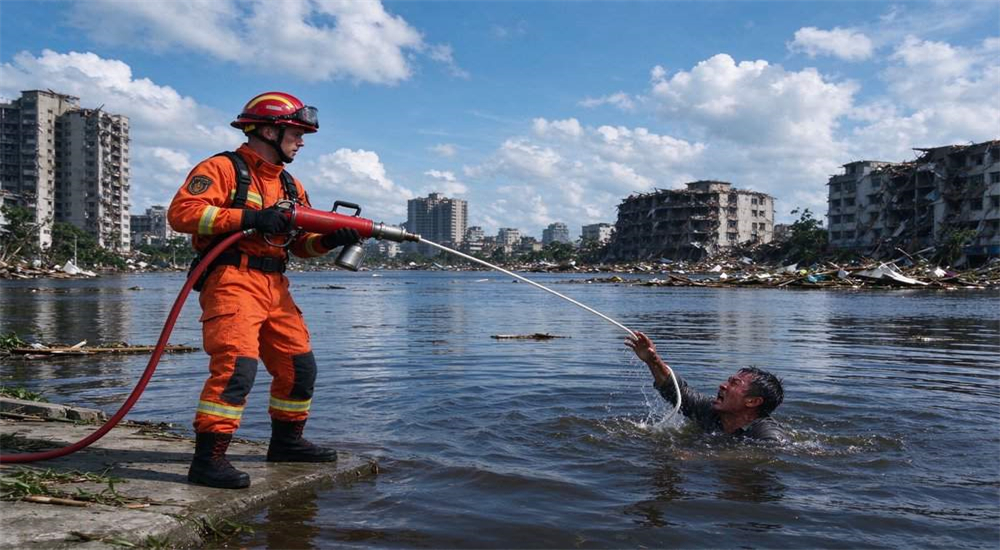
  • An over-two-metre barrel gives the expanding gas room to accelerate the 1.8 kg head all the way to the muzzle, which is how a 13 MPa cylinder becomes roughly 100 m/s instead of being wasted as a loud whoosh.
  • A barrel that is too long would start losing speed to friction and weight; this family is tuned so the projectile leaves the muzzle at the sweet spot.
  • The long barrel is also why this rescue thrower needs the multi-function metal base. Hand-holding a two-metre tube firing at 13 MPa is not realistic at 600 m.


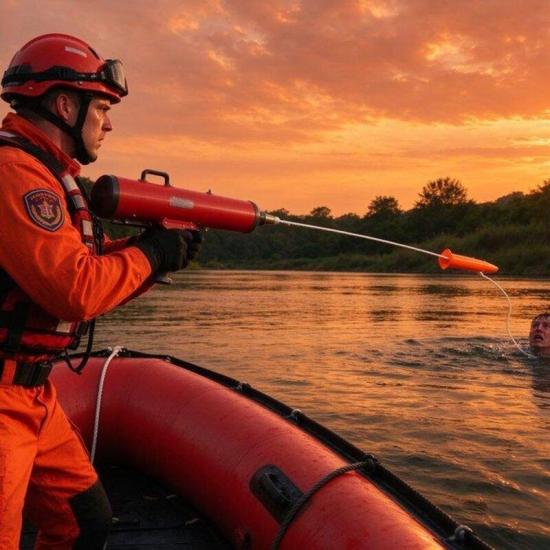
Professional Ultra Long-Range Rescue Thrower pneumatic line thrower in real water rescue application scenario, professional rescue team deploying pneumatic line thrower to deliver safety rope to victim in water, emergency lifesaving equipment


Parameter Table and Notes

The specification table below lists every key parameter of this ultra long range rescue thrower in one place. Start with the land and water range rows — they tell you whether ≥640 m on land and ≥440 m on water cover your widest gap. The weight and projectile rows then confirm how the kit deploys on the bank.


Parameter

Ultra Class Value

What It Means in Practice

Model

PTQ13-Y640S440Q180

Single flagship configuration; the code encodes 13 MPa pressure, ≥640 m land, ≥440 m water, ≥180 m hook.

Working pressure

13 MPa

Fed from a high-pressure compressed-air cylinder via quick-connect; the pressure that justifies the reinforced breech and thick cylinder.

Working medium

Compressed air

No pyrotechnic charge, no open flame on deck — the launch gas is ordinary compressed air.

Gun body weight

2.5 kg

The launcher body itself; the base, cylinder, heads, and flight case add to the full-kit weight.

Projectile mass

1.8 kg

The payload that carries the rope; three interchangeable head types share this mass class.

Muzzle velocity

Approx. 100 m/s

About 360 km/h at the muzzle; the baseline speed that makes 600 m-class land shots physically possible.

Land range

≥640 m

Measured in calm, low-wind conditions with the thin land line.

Water range

≥440 m

Always lower than land range because the auto-inflating ring drags through air and water.

Anchor-hook range

≥180 m

With the shaped high-strength metal claw head; shorter because the hook and its abrasion line weigh more.

Barrel length

Over 2 m

Tuned for sustained acceleration; too short wastes gas, too long adds friction loss.

Base

Multi-function metal base, 5 angles

Detents at 30° / 45° / 55° / 65° / 75°; pick the angle that matches the gap and obstacles.

Heads

Three interchangeable

Auto-inflating water ring, solid land projectile, high-strength metal anchor hook.

Rope set

Φ3 mm land line 640 m / ≥2000 N; Φ3 mm floating water line 380 m / ≥6000 N

Both land and water lines are 3 mm diameter; the floating water line carries a higher breaking strength for the life-ring drag.


A note on water versus land range. On a land shot the projectile drags a thin line behind it, almost invisible to the air.
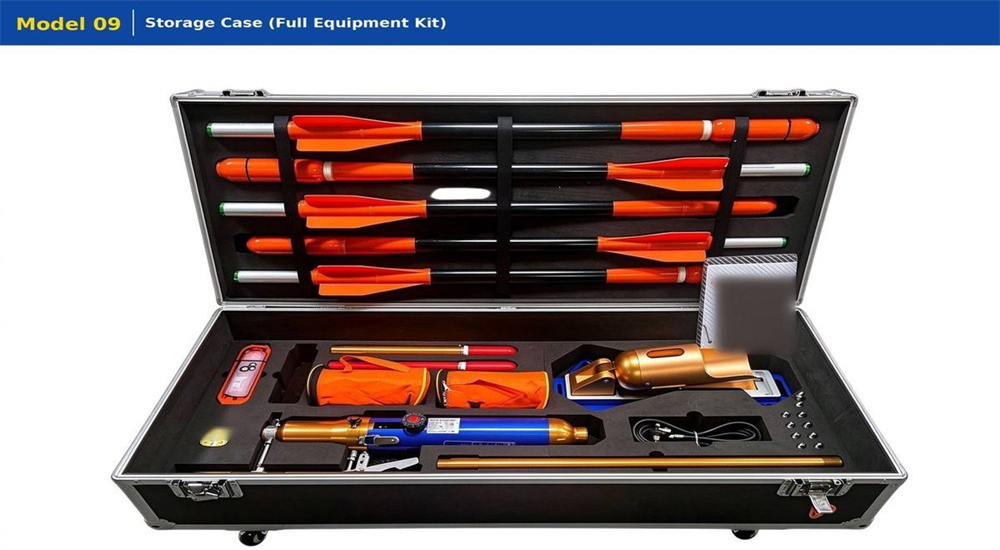
  • On a water shot it pulls an auto-inflating life ring that opens into a half-metre-wide chamber the moment it hits the surface.
  • That big, light object catches air and water drag like a brake. Compare water range to a water target, not to a land target. If your job is open-water rescue, spec the ≥440 m water number, not the ≥640 m land number.


Professional product photo of Ultra Long-Range Rescue Thrower pneumatic line thrower, clean white background studio shot showing complete rescue kit with launcher, projectiles and accessories, professional water rescue equipment


What's in the Box: Ultra Long Range Rescue Thrower Package Contents

Opening the rescue thrower flight case for the first time, you should see the items below laid out to fit. The standard package is built so a trained team can deploy the rescue thrower on scene without chasing missing parts.


Standard Package List

The package table below lists every item that ships as standard with this ultra long range rescue thrower, from the launcher body to the flight case. Run through it before you quote so you know exactly what arrives in the case — and which consumables, like spare cylinders and ropes, you should budget for separately.


Item

Qty

What It Does

Launcher body with barrel

1

The over-two-metre tube and breech that fires the 1.8 kg head; gun body weight 2.5 kg.

Multi-function metal base

1

Folding stand with five preset angle detents: 30° / 45° / 55° / 65° / 75°.

High-pressure cylinder

1-2

Compressed-air supply at 13 MPa via quick connect; spares recommended for multi-victim calls.

Rope set

1 set

Φ3 mm land line (640 m, ≥2000 N), Φ3 mm floating water line (380 m, ≥6000 N), and abrasion-resistant hook line.

Water head (auto-inflating ring)

1

Floats and inflates on water impact for open-water rescue.

Land head (solid projectile)

1

Low-drag solid 1.8 kg head for dry far-bank line work.

Anchor-hook head (metal claw)

1

Shaped high-strength metal claw for bridge beams, cliff edges, and railings.

Tool kit

1

Spanner, O-ring kit, sealing discs, and basic field spares.

Aluminium flight case

1

Hard case with foam cut-outs for transport and storage.


Recommended Optional Spares

Buying spares for this rescue thrower with the first order saves a second trip later. The items below wear out or break in service and are cheap to carry in the kit.

  • Spare high-pressure cylinders, so a long rescue with multiple victims does not stop at the first empty bottle.
  • Spare rope lengths for the head you use most; UV and abrasion are the main killers of rescue rope.
  • Spare O-ring kits and sealing discs; they are the first thing to check if pressure drops.
  • Spare projectiles and a spare anchor-hook head, in case a head is lost on a shot across deep water.


Wear Parts and Suggested Replacement Timing

Not everything in the rescue thrower case lasts forever. Treat the items below as scheduled consumables and budget for them.
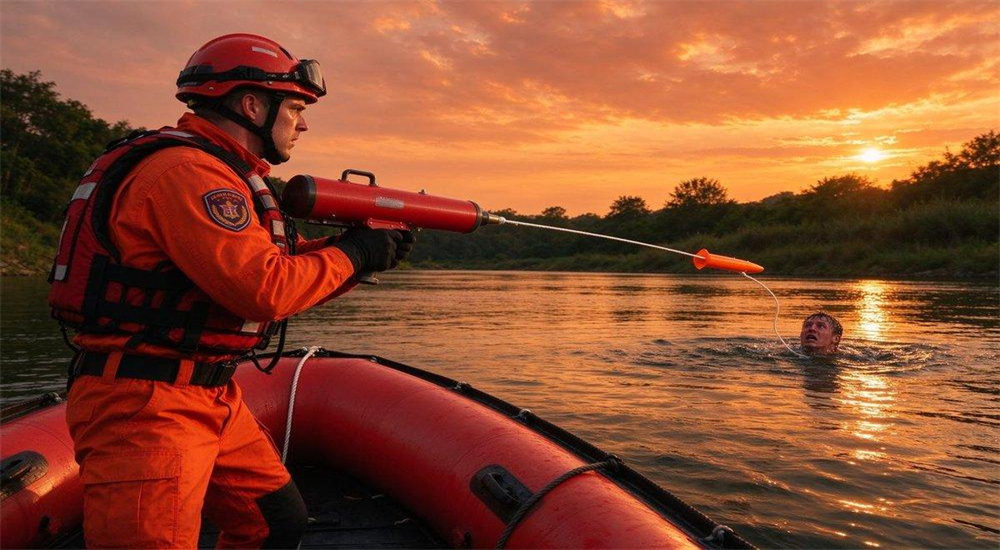
  • O-rings and sealing discs: replace at annual service, or sooner if you spot a pressure drop.
  • Auto-inflating life-ring bladder: test for slow leaks monthly; retire on schedule per your local inspection rules.
  • Rope: retire when UV browns it, when the sheath fuzzes up, or after a hard load edge cut.
  • Projectile heads: reusable, but retire if the nose cracks, the tail fins bend, or the rubber seal hardens.


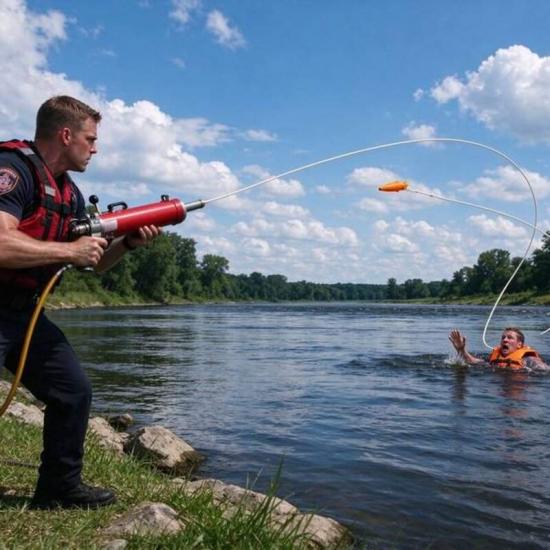
Professional Ultra Long-Range Rescue Thrower pneumatic line thrower in real water rescue application scenario, open sea maritime rescue operation with long-range pneumatic line thrower, coast guard team delivering rope to vessel in distress


PTQ13-Y640S440Q180: The Single Ultra-Class Model, Decoded

The ultra long range family ships as one configuration, the PTQ13-Y640S440Q180, built on the 13 MPa compressed-air platform. There is no shorter or lighter sibling in this class — choosing this product is a gap-size and logistics decision, not a choice between two performance tiers.


Model Code Segment

What It Encodes

Value

PTQ13

Series and working pressure

13 MPa compressed-air pneumatic thrower

Y640

Land range

≥640 m on land, with the thin land line

S440

Water range

≥440 m over water, with the auto-inflating ring

Q180

Anchor-hook reach

≥180 m with the metal claw head

Gun body

Weight of the launcher itself

2.5 kg

Projectile

Mass of the thrown head

1.8 kg

Base angles

Preset elevation detents

30° / 45° / 55° / 65° / 75°


How to Decide: A Simple Selection Flow

Work through the questions below in order. The first one that points clearly at an answer usually settles the choice.

  1. What is the widest water gap you actually have to bridge? Add about 30 percent for wind and current. If that number approaches 400 m or more, this is the class that has margin left.
  2. How is the kit moved on scene? The 2.5 kg gun body is light to handle; the full kit with cylinder, base, heads, and flight case is carted or vehicle-carried on most calls.
  3. Is most work open water or dry-side traverse? Open water at 400 m and over pushes you toward the ≥440 m water rating. Dry far-bank shots land in the ≥640 m land rating.
  4. Do you need the anchor hook at its longest? Bridge work, ship-to-ship, and cliff-edge anchors that need the ≥180 m hook reach are exactly what this head is for.


Typical Scenarios This Model Is Built For

The PTQ13-Y640S440Q180 is the spec for open water where the gap is genuinely several hundred metres wide.

  • Coast guard and harbour-mouth crews chasing a person overboard from a vessel a long way off the wall.
  • Wide-harbour ship-to-ship line transfer where a ≥440 m water shot still leaves margin.
  • Flood channels and wide dam-surge crossings where the far bank simply will not come to a shorter-range gun.


What Changes From Call to Call Is the Angle, Not the Model

Because there is only one model, crews swap between five base angles and three heads rather than between two guns. That keeps training and spares simple.
  • 30° for a flat, long, unobstructed harbour or flood-channel shot; 45° as the general default; 55° and 65° to lift over a near-bank lip; 75° for a steep lob into a narrow gap.
  • Heads, ropes, O-ring kits, and spare cylinders all stay interchangeable across every call a single truck runs.
  • When in doubt, start at 45°, watch the first shot, and walk the angle up or down by one detent to bring the line onto the target.


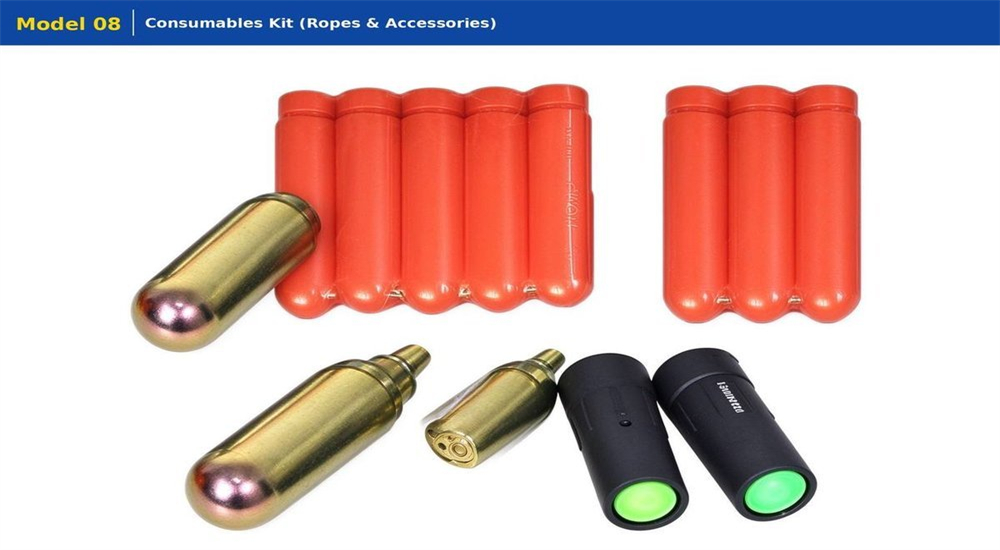
Professional product photo of Ultra Long-Range Rescue Thrower pneumatic line thrower, complete rescue kit display showing launcher, projectiles, rope and CO2 cylinder, professional pneumatic line thrower system for water rescue


Three Heads for the Ultra Long Range Pneumatic Rescue Thrower: Three Rescue Jobs

The same pneumatic rescue thrower body swaps between three heads to cover open-water rescue, far-bank traverses, and heavy line transfer. Swap the head in under a minute once the pneumatic cylinder is depressurised. Each head carries its own matched rope; do not mix ropes between heads.


Head Type

Body Material

What It Carries

Best Use

Water Head

High-density polyethylene, orange, floats

Auto-inflating life ring and Φ3 mm floating line (380 m, ≥6000 N)

Open-water rescue, overboard victim

Land Head

High-density polyethylene, orange, low-drag shape

Solid 1.8 kg projectile and Φ3 mm low-drag line (640 m, ≥2000 N)

Far-bank traverse, dry-side targets

Anchor-Hook Head

Shaped high-strength metal claw

Abrasion-resistant braided line

Bridge beams, cliff edges, ship railings


How to Swap a Head in Under a Minute

Changing heads on this rescue thrower is a field job and needs no tools, but it must be done with the system depressurised. Follow the order below every time.

  1. Release the air supply and confirm the gauge reads zero before touching the breech.
  2. Unlock the current head from the muzzle lock and lift it straight out.
  3. Feed the matched rope for the new head through the rope guide, checking for tangles as it goes.
  4. Seat the new head fully into the muzzle lock until it clicks home. A half-seated head is a head that comes off mid-flight.
  5. Re-pressurise, do a low-pressure confirm shot if your SOP allows, and you are ready.


When to Pick Which Head

The water head is the default for anything that ends on water. It floats, it inflates on impact, and the floating line stays on the surface for the victim to grab.

  • Typical case: a person overboard in a harbour or reservoir a few hundred metres out. Put the ring within arm's reach and the victim can hold on while the boat turns around.
  • Do not use the water head for dry land shots; the inflated ring drags hard and wastes range.


The land head is the default for dry-side line transfer. It is a low-drag 1.8 kg solid shape trailing a thin braid, which is what gets the thin line out to ≥640 m.

  • Typical case: a flooded house on the far side of a wide flood plain. You put the thin line on the bank, then pull a heavier rescue line across behind it.
  • Do not fire the land head into open water; it sinks and gives the victim nothing to hold.


The anchor-hook head is for setting a fixed high point. The shaped high-strength metal claw catches on bridge beams, railings, cliff edges, and ship structures.
  • Typical case: a tyrolean traverse across a flooded street. You hook a bridge beam out to ≥180 m, then set the line for a haul.
  • Inspect the claw for bending after every shot. A bent hook is a retired hook; it will not hold reliably.


Head Handling Points to Confirm

  • Always match the head to its own rope. The water line floats, the land line is thin and low-drag, the hook line is abrasion-resistant. Swapping them costs range or cuts the line.
  • Inspect the nose, tail fins, and rubber seal after every shot. Cracked plastic or hardened seal means the head comes out of service.
  • The orange water and land heads are reusable; rinse them and check them, then reuse. The life-ring bladder is a scheduled consumable.


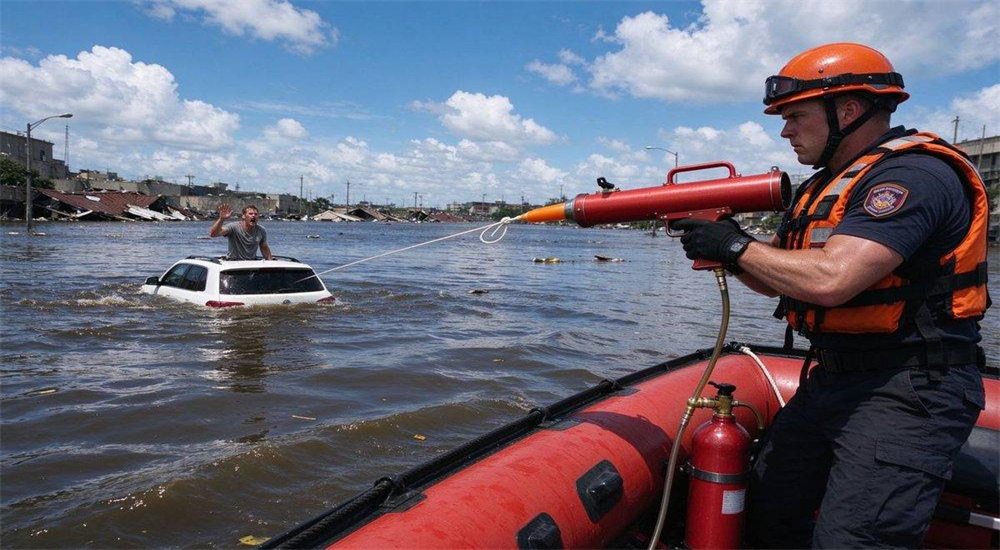
Professional Ultra Long-Range Rescue Thrower pneumatic line thrower in real water rescue application scenario, rescuer deploying device to drowning victim during severe urban flood disaster, deep water rescue operation with long-distance rope delivery


Applications: Who Buys an Ultra Long Range Pneumatic Rescue Thrower?

Nobody buys this pneumatic class for a backyard pond. The buyers are agencies and crews that regularly face a gap no shorter rescue thrower can close.


Professional Fire Department Water-Rescue Units

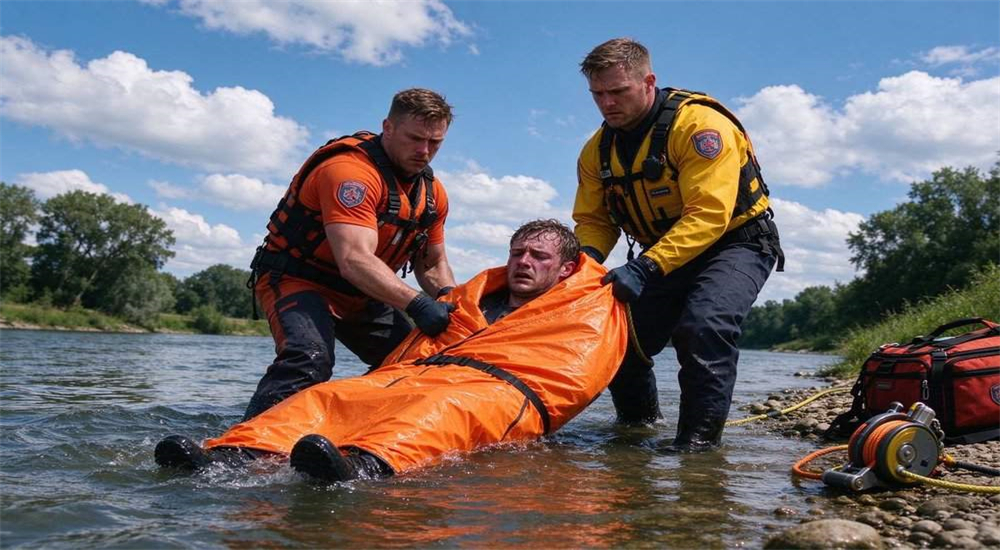
Urban flood rescue sometimes throws up a gap a boat cannot reach quickly: a wide overpass crossing, a swollen river, or a multi-lane underpass full of dark water.

  • A 600-metre-class rescue thrower on a department trailer lets a crew put a line across before a boat can launch.
  • The five-angle base is used on every shot because street-width guesses at dusk are wrong.
  • The anchor-hook head lets the crew set a high point on a bridge beam for a tyrolean traverse across the flooded street.


A generic field example: after sustained heavy rain, a rescue crew faces a swollen channel several hundred metres wide with a stranded person on the far bank. A boat launch point is a long drive away.


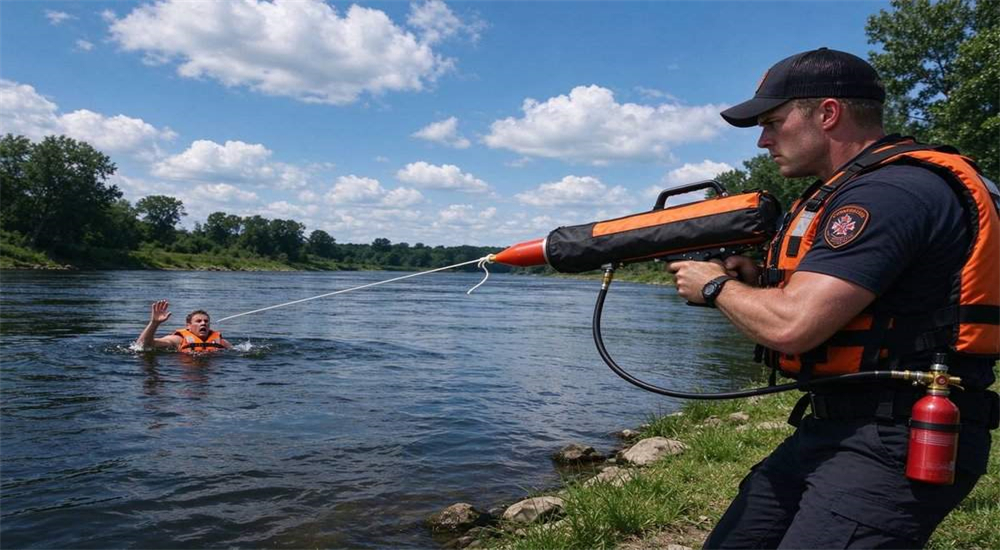
The crew sets the multi-function base on the near bank, selects the right angle detent, reads the wind off the water, and puts a floating line within reach on the first or second shot. The auto-inflating lifebuoy head lands next to the victim and buys time until the boat arrives. For broader flood safety guidance, see NOAA flood safety.
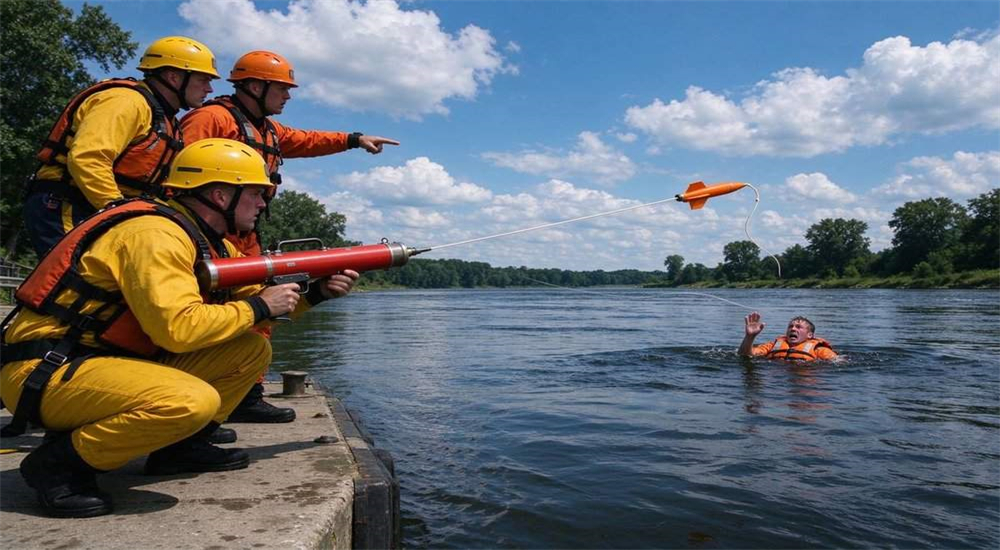


Professional Ultra Long-Range Rescue Thrower pneumatic line thrower in real water rescue application scenario, rescue team training drill practicing pneumatic line thrower deployment, three-person crew coordinating rope rescue procedure


Coast Guard And Maritime Safety Teams

Open water does not come with a near bank. A person overboard from a vessel hundreds of metres off a harbour wall needs a line and a lifebuoy float before a boat can turn around. This pneumatic thrower puts that line on them.

  • The ultra class puts an auto-inflating ring within reach across that gap.
  • Wind reading matters at sea because wind over water is almost always stronger than on the pier — take the read from the launcher's actual position.
  • Salt air is hard on gear, so after every harbour operation the kit is rinsed with fresh water and stowed back in its flight case.


Ocean-Going Vessels And Wide Harbour Transfers

When two ships cannot come alongside in a swell, hand-thrown heaving lines fall short and are unreliable in wind. A pneumatic rescue thrower bridges the gap in seconds.

  • The crew then pulls the heavier tow line across. The ultra class is the spec for large harbours and offshore anchorages.
  • It covers ship-to-ship fuel or hose transfer where the gap exceeds what a shorter unit can handle.
  • No open flame on deck near fuel tanks is part of why compressed-air pneumatic beats pyrotechnic line throwers on merchant ships.


Open Water And Reservoir Rescue

Reservoirs, wide lakes, and dam-surge channels give swimmers no shore to run to. A recreational boat swamped far from the dam wall needs a rescue rope that actually reaches.

  • The floating head keeps the line on the surface instead of sinking.
  • The anchor-hook head lets a shore team secure a fixed point to pull a raft across.
  • This is the water rescue thrower for wide, slow, cold-water calls where a hand throw simply will not get there. Teams stock these pneumatic launchers alongside their standard water-safety training materials for full crew readiness.


Night and Low-Visibility Shots

Water rescue calls do not stop at sunset. A 600 m rescue thrower shot in low light is a measured shot, not a silhouette guess.
  • Judge the gap carefully at dusk: the eye overestimates distances in fading light, so err on the side of a higher angle and walk the correction in after the first shot.
  • Keep the launch corridor and the near bank lit by a crew-held torch; the victim only needs to know the line is coming, not to be blinded.
  • Stop and reassess if wind, rain, or spray makes the target hard to identify. A 600 m shot you cannot positively identify is a shot you do not take.


Informational diagram of Ultra Long-Range Rescue Thrower pneumatic line thrower, professional maintenance service for pneumatic line thrower in workshop, technician servicing water rescue equipment to ensure reliable emergency performance


Related Water Rescue Equipment and Lifesaving Gear

The ultra long range rescue thrower is the flagship of our water rescue equipment line, which also includes lifesaving equipment, swiftwater rescue gear, and emergency rescue equipment for extreme-distance scenarios. We supply marine rescue equipment, search and rescue equipment, and first responder equipment to government agencies and professional teams. As a wholesale rescue equipment supplier, we offer OEM and bulk pricing for water safety equipment, long distance rescue thrower systems, and CO2 powered rescue thrower platforms for hundreds-of-metre rescue gaps.


Safety and Operating Guidelines for the Ultra Long Range Pneumatic Rescue Thrower

The ultra class fires at 13 MPa and sends a 1.8 kg projectile (the payload that carries the rope) out to 600 m-class distances. That is more energy and more distance than a handheld pneumatic thrower, so the safety zone around the launcher is bigger, not smaller.


Read this section before the first shot of the day with your ultra long range rescue thrower. For broader rescue safety standards, refer to OSHA emergency action planning.
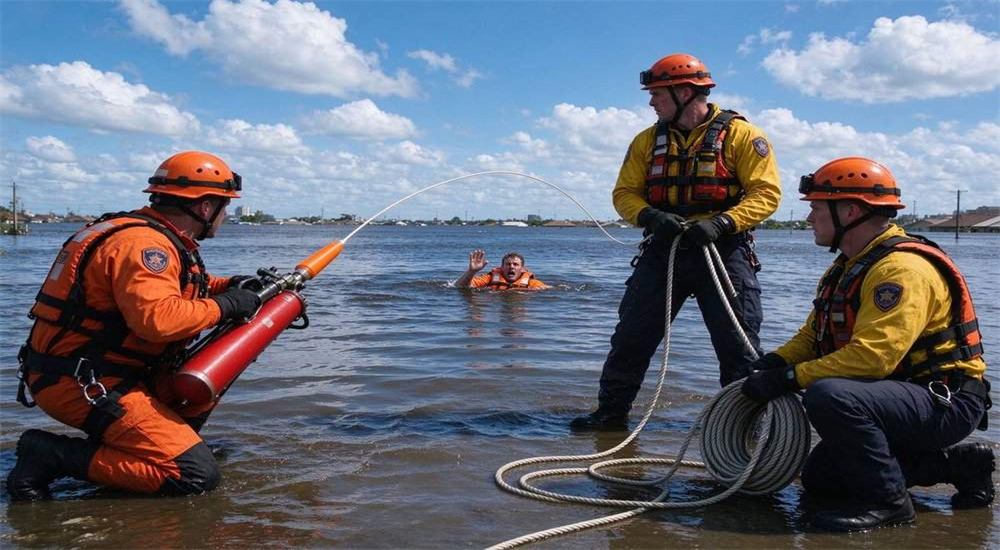


Professional Ultra Long-Range Rescue Thrower pneumatic line thrower in real water rescue application scenario, rescuer deploying device to drowning victim during severe urban flood disaster, deep water rescue operation with long-distance rope delivery


High-Pressure Cylinder Safety on the Pneumatic Launcher

  • Never expose a charged cylinder to direct sun, a closed hot vehicle, or a heat source. Pressure rises with temperature and the gauge is not meant to read past the working range.
  • Never exceed the rated 13 MPa working pressure on the cylinder label. Fill to the marked green zone, not beyond.
  • Never disassemble the cylinder valve, the quick connect, or the breech yourself. If a fitting misbehaves, take it out of service and talk to the supplier.
  • The quick connect has a check valve; still treat a connected hose on this rescue thrower as live pressure until the gauge reads zero.


Firing Direction and Safety Zone

  • Never point this rescue thrower at a person, animal, vehicle, or property, whether or not it is loaded.
  • Before every shot, confirm the launch corridor ahead is clear of bystanders, wires, and overhead structures. The rope travels hundreds of metres and can snag power lines.
  • Because this rescue thrower reaches 600 m, the danger zone ahead is far longer than on a handheld unit. Treat the whole flight path as live until the rope lands.
  • Keep at least five metres clear behind and to the sides of this rescue thrower during firing. Recoil on a 13 MPa shot is noticeable; the operator should be braced on the seated base, not leaning over the barrel.


Angle Base Safety

  • Set the multi-function metal base on firm, level ground before selecting an angle detent; a leg sinking mid-shot changes the elevation you planned for.
  • Confirm the detent is fully clicked into one of the five positions (30/45/55/65/75) before loading the head. A half-seated angle lock can shift under recoil.
  • If a base leg is bent or a detent will not hold, take the base out of service rather than firing off an unverified angle.


Three-Person Crew Positioning

This rescue thrower is not a solo tool. On scene, three positions are filled, and the safety officer owns the stop call.
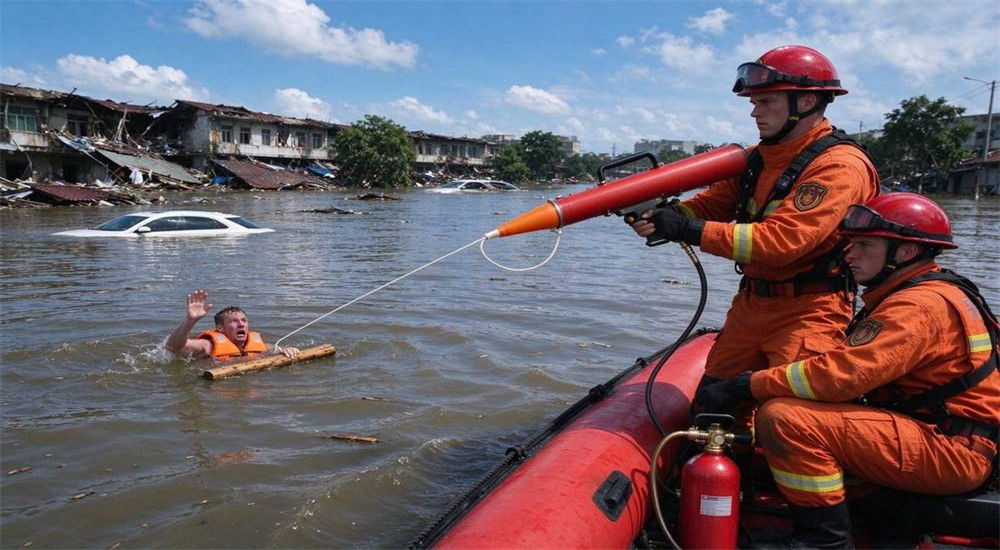
  • Launcher operator: sits or stands behind the seated base, selects the angle and the air valve, fires only on the safety officer's go.
  • Range/wind reader: sizes up the gap, watches the wind on the water and vegetation, calls the estimated distance, wind direction, and suggested angle out loud to the operator.
  • Safety officer: watches the victim, the flight path, and the bystanders. The safety officer can call stop at any time and overrides the operator.
  • Rope handler: feeds the line out from a clear spot to the side, never behind the muzzle. Rope tangles, not aim, are the most common way a shot is lost.


Weather and Storage Limits

  • Do not fire in gale-force wind, heavy rain, or thunderstorm conditions. At 600 m, wind and spray turn a controlled shot into an unguided one.
  • Store the rescue thrower flight case in a cool, dry, ventilated place, away from direct sun, chemicals, and where children cannot reach it.
  • Only trained crews who have run supervised range practice should operate this rescue thrower. It is not a hire-and-hope tool.


Professional Ultra Long-Range Rescue Thrower pneumatic line thrower in real water rescue application scenario, rescuer deploying device to drowning victim during severe urban flood disaster, deep water rescue operation with long-distance rope delivery


How the Ultra Long Range Pneumatic Rescue Thrower Works and Maintenance Schedule

Buying the rescue thrower is half the job. The ultra class needs a minimum three-person team to run safely. On a quiet range the roles can rotate; on a real rescue each person owns one job.


Three-Person Crew: Who Does What

  • Launcher operator: sets the base, selects the angle detent, loads the chosen head, reads the gauge, and fires only when the safety officer calls go. The operator never also watches the victim.
  • Safety officer: owns the scene. Watches the victim, the bystanders, and the flight corridor. Calls stop for any reason, at any time, and that call is final.
  • Rope handler: stands to the side, feeds the line out cleanly, and flags tangles before they reach the muzzle. Most failed long shots are rope tangles, not bad aim.


The workflow for this rescue thrower is the same whether you are on a riverbank, a harbour wall, or a ship deck.

  1. Size up the scene: water depth, current, victim position, wind speed and direction, and the widest gap you have to bridge.
  2. Choose the head: auto-inflating ring for open water, solid land projectile for far-bank traverse, metal anchor hook for overhead anchor.
  3. Set up: deploy the multi-function metal base on firm ground, select the angle detent that matches the gap, feed the rope, and aim upwind by a rough lead.
  4. Fire: on the safety officer's call, the operator opens the air valve. The 1.8 kg head leaves the muzzle at about 100 m/s.
  5. Confirm and haul: once the line lands and the ring inflates, the rope handler and the victim side pull the line in. Inspect the rope and head before the next shot.


The high-pressure quick connect is what makes repeated shots practical on this rescue thrower. When a cylinder runs low, the check valve seals the hose as you break the coupling.
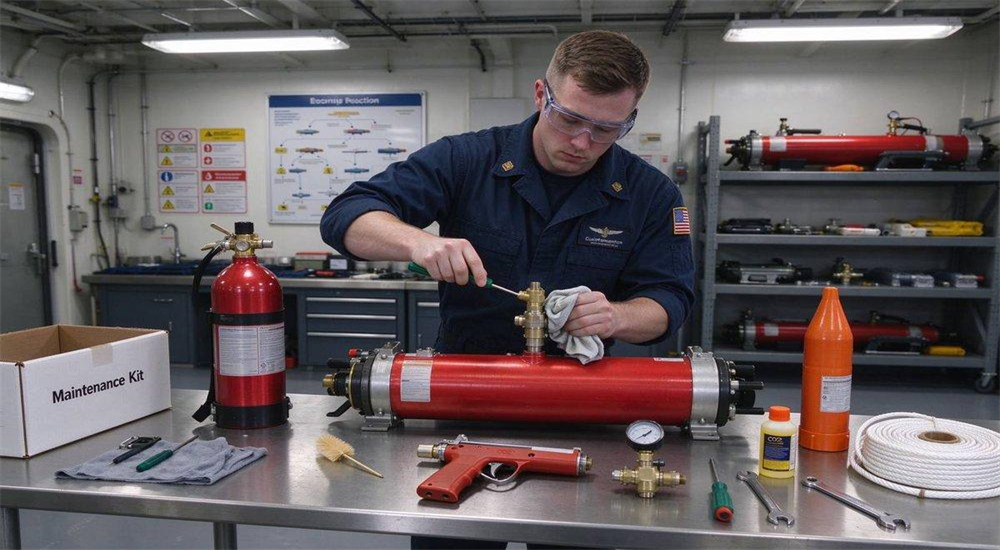
  • You do not dump the tank or spray oil all over the deck. Swap in a fresh bottle, click the coupling home, and you are ready in seconds.
  • On a long rescue call with multiple victims, that cylinder-swap speed is what lets the crew take several shots instead of one.


Informational diagram of Ultra Long-Range Rescue Thrower pneumatic line thrower, professional maintenance service for pneumatic line thrower in workshop, technician servicing water rescue equipment to ensure reliable emergency performance


Calibration: First Use and Periodic Check

The five-angle base and the pressure gauge are what turn a 600 m shot from a guess into a repeatable procedure, so they stay honest only if you check them.

  • First use: check the rescue thrower on the day the kit is issued with a known-distance range. Set up on a measured range, fire at a marked target at each of the five detents, and note where the shot lands. That offset becomes your team's starting correction.
  • Angle detents: before every setup, confirm the base clicks firmly into 30/45/55/65/75. If a detent slips under recoil on flat ground, the base comes out of service.
  • Pressure gauge: treat the gauge as a calibrated instrument. If it reads inconsistently across two known cylinders, send it for service rather than trusting it on scene.


After the call, the rescue thrower kit comes apart for transport and cleaning. Routine upkeep keeps the water rescue equipment reliable across years of field duty, and the schedule below covers the basics so you can budget consumables and plan inspections.

  • Rinse salt and mud off the barrel, the base, and the heads with fresh water. Dry everything before it goes back into the flight case.
  • Inspect the projectile nose, tail fins, and rubber seals. The orange heads are reusable as long as no crack shows.
  • The life-ring bladder is treated as a scheduled consumable and tested for slow leaks at every monthly inspection.


Interval

Task

After Every Use

Rinse salt and mud with fresh water, dry, inspect heads and rope, check for visible cracks or bent hook claws.

Monthly

Read the gauge, check O-rings, inflate life ring and check for slow leaks, confirm the five angle detents still click home firmly.

Quarterly

Full rope inspection, lubricate moving joints, walk the base across all five detents on flat ground, and re-tighten leg locks.

Annually

Replace O-rings, retire UV-damaged rope, service the gauge, inspect cylinder per local pressure-vessel rules.


Professional Ultra Long-Range Rescue Thrower pneumatic line thrower in real water rescue application scenario, rescue team training drill practicing pneumatic line thrower deployment, three-person crew coordinating rope rescue procedure


Troubleshooting Your Ultra Long Range Pneumatic Rescue Thrower: Common Issues and Fixes

Most field problems on this pneumatic rescue thrower come down to pressure, seals, rope, or angle selection. Work down the faults below before you call a rescue thrower shot a bad miss. If the fix involves opening a pressure fitting, release the air and let the gauge read zero first.
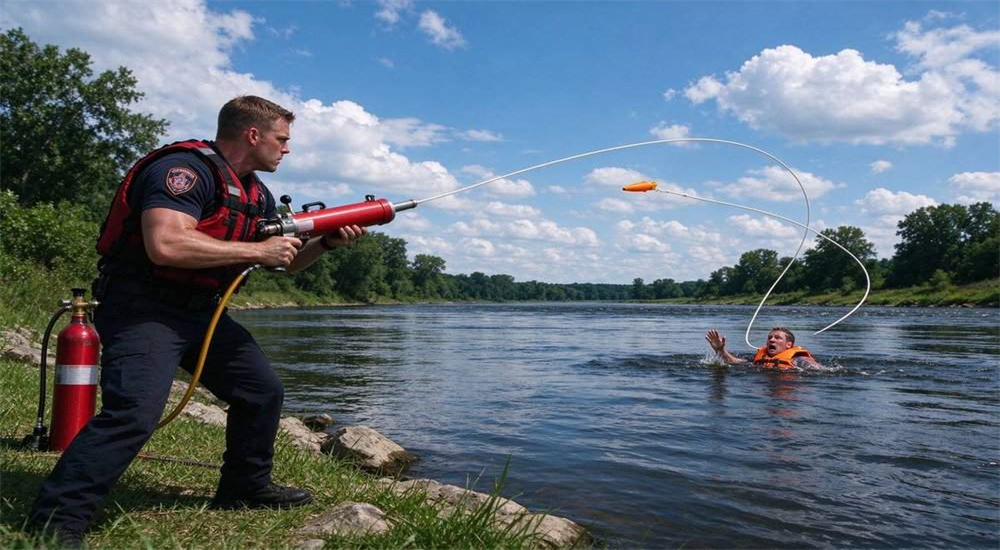

1. Range Too Short — Shot Lands Well Short of Target

  • Possible causes: low cylinder pressure (gauge in the lower green zone), tangled rope paying out partially, wrong angle detent for the gap, or a strong headwind you did not compensate for.
  • Fix steps:
    1. Read the gauge. If it sits in the lower quarter of the green zone, swap to a fresh cylinder before the next shot.
    2. Unroll and re-feed the rope in loose, clean bights. A half-fed rope stops the projectile dead well short of the target.
    3. Cross-check the angle detent against the gap. If you aimed for a 400 m shot but the victim is much farther out, you are on too flat a detent — step up one angle.
    4. Read the wind. A headwind of 5 m/s cuts range noticeably; raise the angle slightly and add a little hold-off.
  • Prevention: check the gauge before every setup, not just before the first shot.


2. Cylinder Will Not Take Air When Filling

  • Possible causes: cylinder valve closed, filler O-ring dirty or out of its groove, or mismatched fill coupling.
  • Fix steps:
    1. Confirm the cylinder valve is fully open.
    2. Wipe the filler face and inspect the O-ring. If it is pinched or rolled out of its groove, seat it back with a finger.
    3. Use the matching fill coupling. Never force a mismatched fitting — you will damage the seal.
  • Prevention: keep the filler cap on when not connected; rinse after salt-air use.


3. Rope Tangles Mid-Flight

  • Possible causes: rope rolled too tight in its bag, kinked from a previous shot, or wrong rope matched to the head.
  • Fix steps:
    1. Unroll the entire rope and re-roll it in loose loops, not a tight ball.
    2. Run your hand along the line feeling for kinks or fuzzing. Retire any section that feels hard or brittle.
    3. Confirm the water line is on the water head, the thin land line on the land head, and the abrasion line on the anchor hook.
  • Prevention: roll ropes loose after every use; never mix ropes between heads.


Comparison chart showing hand-thrown rope bag versus professional pneumatic line thrower, distance and accuracy comparison for water rescue equipment selection, emergency lifesaving gear comparison guide


4. Hissing Air — Pressure Drops Fast

  • Possible causes: worn O-ring at the breech, pinched sealing disc, or quick-connect not fully seated.
  • Fix steps:
    1. Shut off the gas and watch the pressure gauge drop to 0 before you touch any fitting.
    2. Replace the O-ring kit and check the sealing disc for cuts.
    3. Re-seat the quick connect until it clicks home. Retest pressure before firing.
  • Prevention: carry a spare O-ring kit in the flight case; inspect seals at every monthly check.


5. Angle Detent Will Not Hold Under Recoil

  • Possible causes: detent not fully clicked in, detent spring worn, or grit jammed in the angle lock.
  • Fix steps:
    1. Release pressure, cycle the base through all five detents (30/45/55/65/75), and feel for a firm click at each.
    2. Brush grit out of the angle-lock joint and lightly lubricate per the manual.
    3. If one detent slips consistently, retire the base rather than firing at an unverified angle.
  • Prevention: set the angle before loading the head; never load first and try to change angle afterward.


6. Shot Lands Off to the Side

  • Possible causes: crosswind you did not lead for, base not sitting level on sloped ground, or a twisted rope pay-out.
  • Fix steps:
    1. Re-level the base legs on the ground; a sideways slope tilts the barrel even when the angle detent is correct.
    2. Watch the wind on the water and aim upwind by a rough lead on the next shot.
    3. Re-feed the rope so it pays out straight, not twisted around the rope guide.
  • Prevention: read the wind right at the firing position, not where you were standing earlier on the bank.


7. Head Detaches Before Expected Range

  • Possible causes: head not pushed fully into the muzzle catch, detent spring worn weak, or trail clip biting too hard.
  • Fix steps:
    1. Drop the head into the barrel until it rests on the seat. Push it in until the lock clicks.
    2. Inspect the muzzle lock detent. If the spring feels weak, fit a spare lock from the tool kit.
    3. Check the rope trail clip. It should hold the line, not pinch it.
  • Prevention: do a low-pressure confirm shot after every head swap when your SOP allows.

The table below condenses the most common field faults into a quick lookup. Work symptom by symptom rather than guessing; most short shots trace back to pressure, rope feed, or angle, not a deep internal failure. Whenever you open a pressure fitting, shut off the gas and watch the needle fall to 0 first.


Professional product photo of Ultra Long-Range Rescue Thrower pneumatic line thrower, clean white background studio shot showing complete rescue kit with launcher, projectiles and accessories, professional water rescue equipment


Symptom

Likely Cause

What to Check / Fix

Range too short, shot lands well short

Low cylinder pressure, tangled rope, wrong angle detent, strong headwind

Check the gauge is in the green zone; re-feed the rope free of tangles; step up one angle detent for a far gap; read the wind and add range for headwind.

Cylinder will not take air

Valve closed, dirty O-ring, mismatched filler

Confirm the valve is fully open; inspect and clean the filler O-ring; use the matching fill coupling; never force the fitting.

Trigger or air valve feels stiff

Dirt, dried grease, grit in the mechanism

Release pressure, clean and lightly lubricate moving parts per the manual; check for grit around the seal.

Rope tangles mid-flight

Poorly fed line, kinked rope, wrong rope for the head

Re-feed the line in clean bights; retire kinked or UV-fuzzed rope; confirm you are using the line matched to the head.

Hiss of air, pressure drops fast

Worn O-ring or sealing disc

Release and depressurise; replace the O-ring kit; check the sealing disc; retest pressure before the next shot.

Gauge reads odd

Gauge knocked, internal blockage, or pressure leak elsewhere

Compare against a second known cylinder; if it still disagrees, take the gauge out of service and service it.

Angle detent will not hold

Not fully clicked in, worn detent spring, grit in lock

Cycle through all five detents; brush the lock clean; retire the base if one detent slips under recoil.

Shot lands off to the side

Crosswind, sloped ground, twisted rope

Re-level the base legs; aim upwind by a rough lead; re-feed the rope straight from the guide.

Head detaches before expected range

Head not seated in the muzzle lock, worn lock detent

Re-seat the head until it clicks; inspect the muzzle lock detent; retire the lock if it will not hold.


How the Ultra Long Range Pneumatic Rescue Thrower Compares With Other Rescue Thrower Classes

If you have already looked at shorter-range units, the table below places the ultra family in context. It shows why you would step up to the 13 MPa, ≥640 m class, and why you would not. Read the table as a ladder: each rung adds range, pressure, weight, and cost.


Class

Pressure

Land Range Class

Deployment

Typical Buyer

Korean-style Handheld

Compressed air

Short (under ~125 m)

Hand-held, no base

Narrow rivers, dock pickups, small stations

Portable Folding Stock

Compressed air

Short (around 150-185 m)

Foot-carried, folding stock

Foot-carried quick-response teams

Long-Range Base Unit

13 MPa class

Mid-range

Base-mounted

Mid-range water rescue, base-mounted crews

Ultra Long-Range (This Page)

13 MPa

≥640 m land / ≥440 m water

2.5 kg gun body, 5-angle metal base

Wide harbours, flood channels, coast guard


Professional product photo of Ultra Long-Range Rescue Thrower pneumatic line thrower, clean white background studio shot showing complete rescue kit with launcher, projectiles and accessories, professional water rescue equipment


How to Read the Ladder

The common mistake is buying too much rescue thrower for the gap. A 600-metre-class rescue thrower on a truck that only ever covers a 40-metre canal sits unused, and the team never trains enough to fire it well when a real wide-gap call comes.

  • Conversely, a shorter unit that tries to cover a several-hundred-metre harbour gap will land short every time, and the boat still has to make the whole run.
  • Measure the widest gap you actually have to bridge, add 30 percent for wind and current, and let that number pick the class.
  • More pressure is not always better: higher pressure means thicker cylinders, heavier breeches, stricter test intervals, and a bigger safety zone on scene.


Simple Selection Rule

  • Widest gap under 150 m: a handheld or portable class covers it, at a fraction of the weight and cost.
  • Widest gap in the mid-range band: the long-range base unit is the sweet spot.
  • Widest gap 400 m or more: this is the top end of what a pneumatic line thrower can reach. If even this is short, you are talking boat work, not line thrower work.
  • If you are borderline between two rungs, size up one class rather than buy the one that lands short on a windy day.


Wholesale Ultra Long Range Pneumatic Rescue Throwers: OEM and Supply

Whether you are outfitting one rescue thrower for a single specialist unit or building a multi-stock wholesale program, the procurement path is the same. Exact MOQ, pricing, and lead time are subject to contract and depend on the configuration and shipping lane.


Sample, MOQ, and Lead Time

  • Samples are available on request; the sample fee can be credited against a later bulk order.
  • Trial orders start small, mid-volume orders price per unit, and annual framework agreements price per call-off. Contact us for MOQ and lead time for your configuration.
  • Standard lead time is typically a few weeks for stock SKUs; peak flood season can extend it.


Payment, Packaging, and Shipping

  • Payment terms are discussed per order, commonly starting with a deposit and balance before shipment.
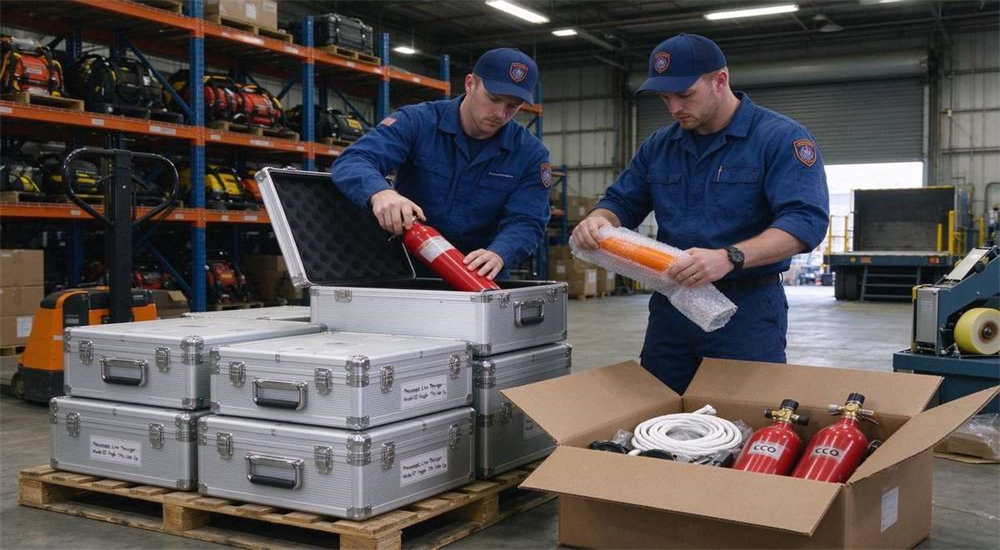
  • The ultra class ships in a hard aluminium flight case because the long barrel, multi-function base, and heads need protection in transit.
  • We routinely ship units with empty cylinders by sea and air, and you fill locally on arrival. If you need pre-charged cylinders, tell us the destination country at RFQ stage so the correct dangerous-goods paperwork is in place.


OEM, ODM, and Regional Protection

Private-label (OEM) and custom-design (ODM) options cover the launcher body, the base, and the accessories on every ultra long range rescue thrower we supply. This pneumatic thrower can be rebranded to your unit.

  • Logo application is by engraving on metal surfaces, which is permanent and professional on department issue kits.
  • Colour options on the flight case and base bag are high-visibility orange or tactical black. Private-label packaging, manual, and warranty card are supported on mid-to-bulk orders.
  • For serious distributors we discuss regional territory protection, with scope and exclusivity agreed in the distribution agreement.

Every unit ships with an English manual. Spare parts we stock include O-ring kits, sealing discs, pressure gauge accessories, spare projectiles, and replacement anchor-hook heads.

Informational diagram of Ultra Long-Range Rescue Thrower pneumatic line thrower, range matching chart comparing different pneumatic line thrower models and throwing distances, professional water rescue equipment selection guide


Pneumatic Rescue Thrower FAQ: Frequently Asked Questions

Below are the questions buyers ask us most about the ultra long range rescue thrower. Every answer is written out in full.


What Is The Actual Range Of An Ultra Long Range Rescue Thrower?

The PTQ13-Y640S440Q180 reaches ≥640 metres on land and ≥440 metres over water, where the auto-inflating lifebuoy head drags through air and water. The anchor-hook head reaches ≥180 metres. Always spec the water number if your job is open-water rescue.


Why Does Angle Selection Matter At This Range?

Because at 600 metres, a small aim error and a crosswind both push the shot well off line on this pneumatic thrower. The five detented angles on the metal base (30/45/55/65/75) let the crew match the trajectory to the gap and the obstacles: flatter for long open shots, steeper to clear a near-bank lip. Pick the angle, watch the first shot, and walk the correction in rather than guessing on every round.


How Is This Different From The Mid-Range Long-Range Thrower?

The mid-range long-range class covers narrower gaps on a fixed base. The ultra class steps up to the ≥640 m land / ≥440 m water rating on the 13 MPa platform, adds the five-angle multi-function metal base, and throws a 1.8 kg projectile. Buy the mid-range class unless your real gap is over 400 metres.


Do I Really Need The Multi-Function Metal Base With Five Angles?

Yes for this class. At 600 metres, a sideways tilt or a wrong angle walks the shot several metres before the rope lands. The five detented positions (30°/45°/55°/65°/75°) let you set the elevation deliberately on uneven ground, so the angle on the base actually means what it says. A plastic base that flexes under recoil will not hold that accuracy on a pneumatic thrower at 13 MPa.


Is There More Than One Model In This Ultra Class?

No. The ultra long range family ships as the single PTQ13-Y640S440Q180 configuration: 13 MPa, ≥640 m land, ≥440 m water, ≥180 m hook, 2.5 kg gun body, 1.8 kg projectile. The choices on scene are the three heads and the five base angles, not between two guns. Spec this model for coast guard, wide-harbour, and flood-channel work where 400 m-plus gaps are real.


How Many People Does It Take To Operate Safely?

Minimum three: the launcher operator, the safety officer who watches the victim and the launch corridor, and the rope handler who feeds the line out. Never run this class solo on a rescue scene. The safety zone behind the launcher is at least five metres clear, and the line ahead must be free of bystanders, wires, and property.


How Long Does It Take To Swap An Empty Gas Cylinder?

Seconds. The high-pressure quick connect has an internal check valve that seals the hose the moment you disconnect. Break the coupling, pull the empty bottle, seat a fresh one, and click the coupling home. No tools, no draining the line, no fumbling with threaded fittings under field pressure on this pneumatic thrower.


Can The Projectile Be Reused?

Yes. The orange high-density polyethylene heads float and are designed to be retrieved and reused after inspection. Check the nose, the tail fins, and the rubber seals after every shot; rinse off mud and salt.The metal anchor-hook head is also reusable as long as the claw is not bent. The auto-inflating lifebuoy bladder inside the water head is classed as a routine wear item.


What Rope Types Come With The System?

Three rope families for three heads. The land line is Φ3 mm, 640 m long, with a breaking strength of at least 2000 N, built for long-range low-drag line work. The water line is also Φ3 mm, 380 m long, with a breaking strength of at least 6000 N, and floats on the surface so the victim can grab it. The anchor-hook line is an abrasion-resistant braid built to take the hook load without cutting on rock edges. Do not mix them between heads.


Informational diagram of Ultra Long-Range Rescue Thrower pneumatic line thrower, rescue operator performing pre-launch safety inspection of pneumatic line thrower, checking rope and pressure gauge before water rescue deployment


What Is The Operating And Storage Temperature Range?

The system is designed for professional field duty across the working range stated on the unit label. Never leave a charged cylinder in a closed sun-baked vehicle, where interior temperature can exceed safe limits. Store the flight case in a cool, dry place away from direct sun and chemicals.


Is It Safe? Could The Cylinder Fail?

Yes, it is safe when used as directed. It fires a pneumatic shot on compressed air, not gunpowder, so there is no pyrotechnic explosion. The high-pressure system carries a safety lock, and the cylinder is a tested pressure vessel rated to the 13 MPa working pressure.Treat it like a regulated pneumatic pressure device: follow pre-use inspection and never point it at a person.


How Do I Train A Crew On A 600-Metre Thrower?

Basic operation is a cycle: set up the base on firm ground, select the angle detent, load the head, check the gauge, read the wind, fire. A new operator becomes comfortable with supervised range time on this pneumatic thrower.We supply an English manual with every unit, and for mid-to-bulk orders we include a remote walk-through with your lead instructors.


What Certification Should I Expect For A Tender?

This unit is built to comply with relevant water rescue apparatus safety standards, and available test report pages can be shared on request for the specific SKU you are bidding. Tell us your tender's reference requirements at RFQ stage and we will answer plainly which supporting documents we hold, rather than overclaiming.


Can You Put Our Department Logo On It?

Yes. Logo application on the metal barrel is by engraving, which is permanent and reads as professional on issue kits for this pneumatic thrower. Colour customization on the flight case and base bag is available on mid-to-bulk orders, most commonly high-visibility orange or tactical black.Tooling and artwork fees apply per order. Full OEM/ODM details are covered in the wholesale section above.


What Is The MOQ And Lead Time?

Trial orders start small, and annual framework agreements are welcome. Exact MOQ, pricing, and lead time are set in the contract and vary by configuration and shipping lane. Contact us for current numbers for your specific configuration.For a first order, tell us how many stations, widest water gap, and your reference needs. This pneumatic thrower ships empty by default to keep freight simple.


How Do You Ship High-Pressure Cylinders Internationally?

We recommend shipping the pneumatic thrower empty and filling the cylinder locally at a gas supplier on arrival, which avoids dangerous-goods paperwork and cuts freight. If you need pre-charged cylinders, we handle the relevant dangerous-goods paperwork on approved lanes. Name the destination country when you send the RFQ and we will have the correct declaration and packing ready.


When Is This Class Overkill For My Department?

If your widest rescue gap is under 300 metres of water, the mid-range long-range class does the job at lower cost. If your calls are narrow rivers and dock pickups under 150 metres, a Korean-style or portable unit covers it.The ultra pneumatic class is overkill until you genuinely have a several-hundred-metre gap. Measure first, then size up one class if you are close to the limit.


Get Your Quote: Ready To Spec The Ultra Class?

If you have read this far, you know whether your team faces a several-hundred-metre gap or a small pond. Tell us your real water width, your typical scenario, and your reference requirements. We will come back with the correct PTQ13-Y640S440Q180 package and an honest price range.


What other names is an ultra long-range rescue thrower known by?

This compressed-air unit is also called a line throwing device, line throwing apparatus, or rescue line gun for extreme-distance operations. Maritime teams may refer to it as a pneumatic line launcher or remote rescue thrower. Its 600-metre range earns it names like long-distance rescue buoy launcher or ocean-going line thrower.


Informational diagram of Ultra Long-Range Rescue Thrower pneumatic line thrower, training instruction session for pneumatic line thrower operation, instructor teaching rescue team proper deployment of water rescue equipment


About Us: Ultra Long Range Pneumatic Rescue Thrower Supplier Based in China

We are a rescue equipment supplier based in China, focused on pneumatic water rescue tools that hold up under repeated field use. Our pneumatic thrower line spans from handheld to ultra-long-range classes.

  • Our range spans pneumatic rescue throwers across every class from handheld to ultra long range, plus floating rescue ropes, throw bags, and auto-inflating life rings.
  • We work with distributors, fire departments, maritime safety teams, municipal flood control programs, and training centres.


Quality Control and Pre-Delivery Testing

Every rescue thrower that leaves us passes the same basic QC path. We would rather hold a unit for a re-test than ship a questionable one.

  • Incoming inspection: cylinders, seals, and components are checked against the spec before they enter the build.
  • Production inspection: barrel, breech, and base assembly are checked at key steps, not just at the end.
  • 100% outlet test: every completed unit gets a pressure test, a sealing check, and a function/range check before packing. The gauge, the quick connect, and the angle base are part of that check.
  • Packing inspection: the flight case is closed only after the packing list, heads, rope set, tool kit, and manual are all counted.


Certifications and Test Reports

  • Units are produced to comply with relevant water rescue apparatus safety standards, and the matching test report pages can be sent through for the SKU you specify. We will tell you plainly which reference documents we hold rather than overclaiming.
  • Tell us your tender's reference requirements at RFQ stage, and we will answer honestly whether matching paperwork exists for that SKU.


Packaging, Logistics, and After-Sales

  • The ultra class packs into a hard aluminium flight case; empty-cylinder sea and air freight is routine, and pre-charged cylinders move only on approved lanes with the right paperwork.
  • Every unit carries a workmanship warranty, and stocked spares (O-ring kits, sealing discs, gauges, projectiles, anchor-hook heads) are available after the sale.
  • We respond to technical questions by email, and on mid-to-bulk buys we run a remote training session with your lead instructors so your team is not left reading the manual alone.

When you source from us, you get straightforward communication, honest specification, and a supplier that tells you which SKUs carry which test reports instead of overpromising. If your industry has a wide-water hazard on site, we will point you to the pneumatic rescue thrower class that matches the gap you actually have to bridge.
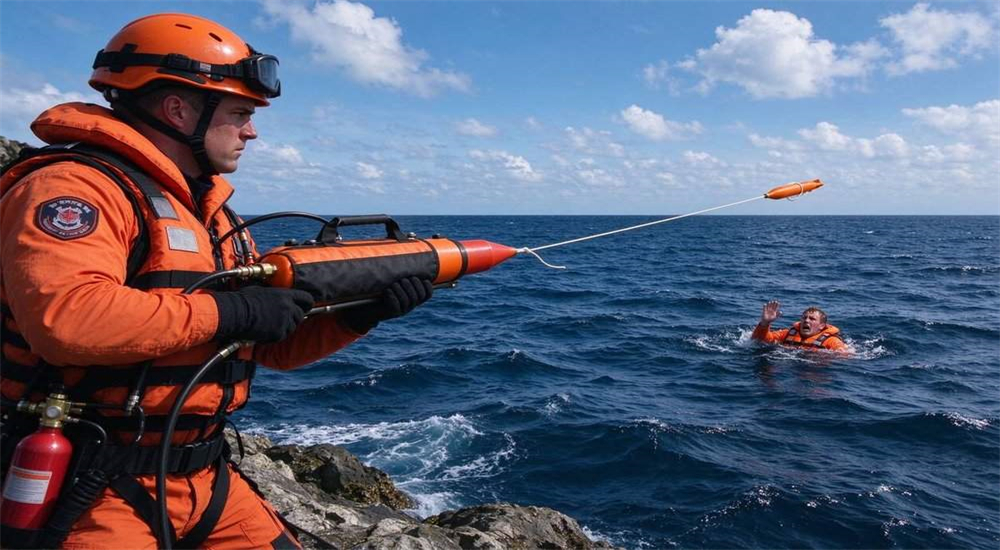


Professional Ultra Long-Range Rescue Thrower pneumatic line thrower in real water rescue application scenario, swiftwater river rescue team using pneumatic thrower to deliver safety rope across fast current, professional water rescue equipment


The ultra pneumatic rescue thrower works best as part of a matched kit. Pair it with the gear below from the same supplier base so your team trains on one family of tools. Spare lifebuoy heads, floating ropes, and throw bags round out the water-rescue kit.

  • Long-Range Rescue Thrower — The 13 MPa base unit covers narrower gaps where this ultra class is overkill. Many departments run both: the long-range unit on the first truck for everyday river calls, and the ultra class on the heavy rescue for wide-harbour or flood-channel jobs. Ropes, heads, and O-ring kits share the same spare-parts shelf.
  • Portable Rescue Thrower — The folding-stock unit for teams that walk to the bank. It is not a replacement for the 600 m gun; it is the close-in tool you can carry into a ravine or down a trail where the two-metre barrel will not go.
  • Pair it as the second-shot option when the ultra class cannot get set up on the bank.


Running more than one class from the same supplier base has practical benefits beyond the price.

  • The O-ring kits, sealing discs, and field spanner tools are shared across the family, so one spare drawer covers three trucks.
  • Your instructors teach one operating philosophy: size up the gap, set the angle, read the wind, then fire. Crews transfer between models without retraining from scratch.
  • If a fleet already owns the long-range class, adding one ultra-class unit for wide-gap calls is a smaller jump than buying from a second brand.


If you have questions or suggestions,please leave us a message,we will reply you as soon as we can!

Related Product
  • Professional Rescue Launcher Aluminum Alloy Professional Rescue Launcher, Aluminum Alloy, Fire Fighting Essential

    This orange-yellow professional rescue launcher is made of aviation-grade aluminum alloy, with maximum working pressure of 200bar, throwing distance of 150-230 meters on land and 80-210 meters on water. Certified by the National Fire Equipment Quality Standard, it reaches maximum initial velocity of 60m/s. It provides efficient solutions for fire teams, flood control, and water rescue operations, saving lives in critical moments as essential equipment for all rescue teams.

  • Life-saving Thrower 50m Range Customized Life-saving Thrower, High Strength, Long-range Rescue

    This professional life-saving thrower is made of high-strength composite materials, with a throwing distance of 50 meters and a load-bearing capacity of 150kg, achieving a 99% rescue success rate. Its orange-yellow design ensures high visibility on water, equipped with non-slip handle and high-strength rescue rope. Specifically designed for flood control, water rescue and emergency disaster relief, it is essential equipment for fire departments, maritime rescue units, water rescue teams and flood control forces, participating in over 200 flood rescue missions annually.

  • Pneumatic Rope Launcher 120m Rescue Rope High-Pressure Pneumatic Rope Launcher, Rescue Special, 120m Range

    This high-pressure pneumatic rope launcher uses compressed air as power source, with projection distance ≥80 meters on water and ≥110 meters on land, equipped with 120-meter high-strength rescue rope. The main body weighs less than 3.5kg, offers simple and quick operation, and features a spark-free design ensuring safe use in flammable environments. The accompanying auto-inflating life ring inflates within 5 seconds with buoyancy >8kg. Ideal for flood disaster relief, water rescue, maritime rescue and other complex scenarios, it's essential equipment for emergency rescue departments.
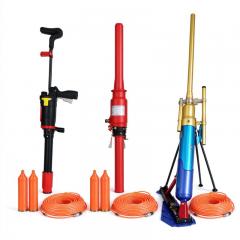
  • Pneumatic line thrower for swift water flood rescue Wholesale Pneumatic Line Thrower: 100m–640m Rescue Rope Launcher

    This pneumatic line thrower delivers reliable long‑distance rope deployment for swift‑water, flood, maritime and ice rescue scenarios. Multiple configurations cover short, long and ultra‑long throwing distances. Complete kits include launcher, projectiles, rescue ropes, CO2 cylinders and protective carry case. Quick setup, simple operation for fire, coast guard and emergency rescue teams worldwide. Note: Price for reference only. Exact price based on quantity, size, weight and custom details.
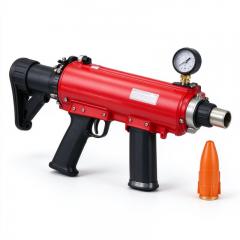
  • 20 MPa Shoulder Fired Water Rescue Line Thrower Korean Style Pneumatic Rescue Thrower PTQ20-Y100S70 | 20 MPa ≥100 m Land / ≥70 m Water

    Korean Style Pneumatic Rescue Thrower PTQ20-Y100S70, 20 MPa shoulder-fired launcher. ≥100m land range and ≥70m water range, equipped with auto inflating lifebuoy head and 2000N high tensile rope. Complies with GB/T 27906-2011. Complete aluminum hard case kit. Support bulk wholesale, OEM custom logo for fire, coast guard and flood rescue teams. Note: Price for reference only. Exact price based on quantity, size, weight and custom details.
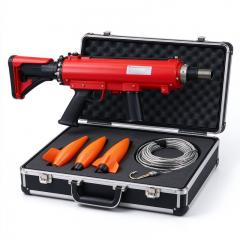
  • American Style Anchor Hook Pneumatic Rescue Thrower American Style Anchor Hook Rescue Thrower | PTQ20-Y125S100 & PTQ7-Y150S110Q55

    American Style Anchor Hook Pneumatic Rescue Thrower, frame-mounted design with recoil buffer. Equipped with heavy-duty anchor claw for high-rise, cliff and maritime rescue. Delivers long-distance rope deployment for swiftwater, urban flood and offshore emergency rescue. Complete kit with launcher, projectiles, rope and protective case. Support bulk wholesale and OEM customization for fire and coast guard teams. Note: Price for reference only. Exact price based on quantity, size, weight and custom details.

Copyright © Custom Disaster - Relief Bedding: Tents, Sleeping Bags, Blankets All Rights Reserved

Leave a message

    If you have questions or suggestions,please leave us a message,we will reply you as soon as we can!


the professional team to service !