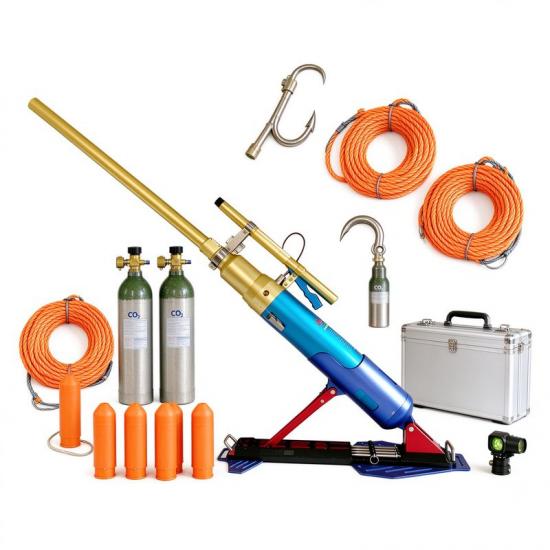
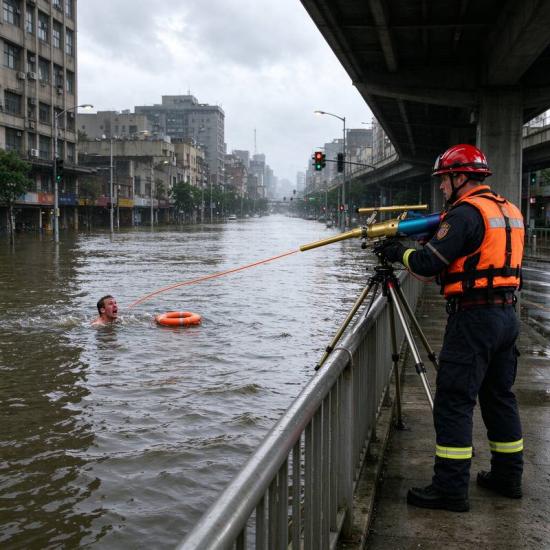
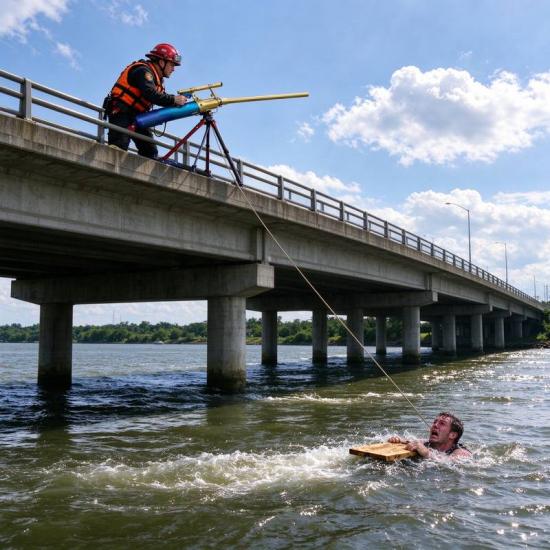
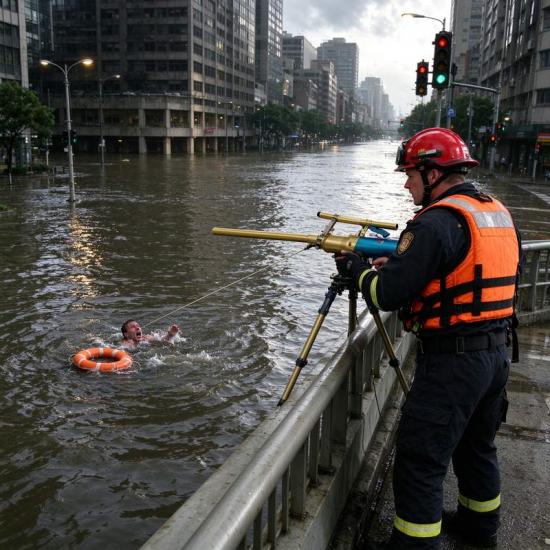
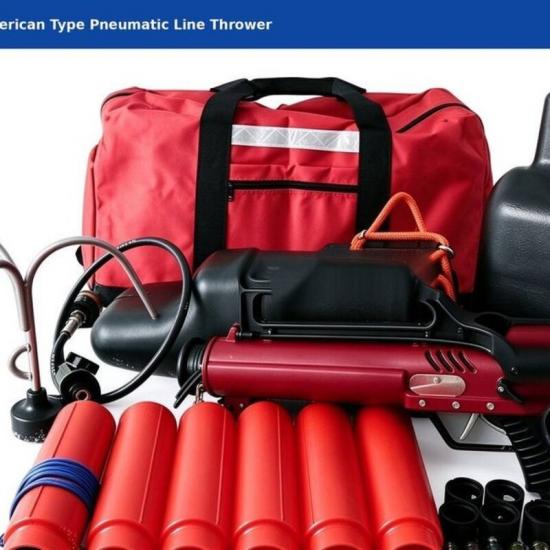
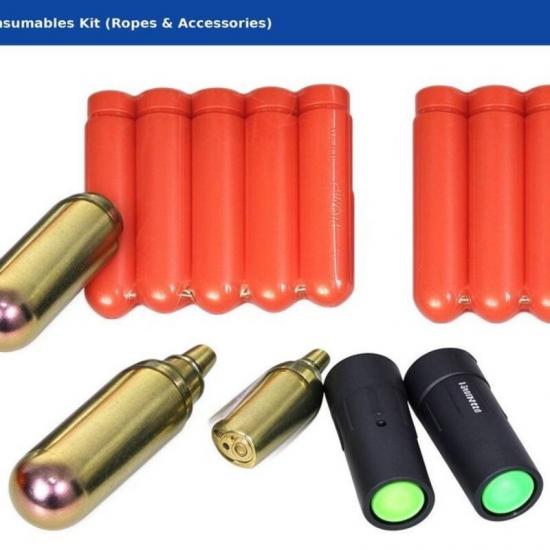
Our base mounted pneumatic rescue thrower reaches ≥185m on land and ≥125m over water, working at 6.5-8.5MPa. Equipped with rigid recoil base, inline pressure gauge and built-in winch. Interchangeable projectiles for land, water and anchor hook use. Ideal for fire, coast guard and port rescue teams. OEM and bulk supply available.
Note: Price for reference only. Exact price based on quantity, size, weight and custom details.
model no. :
DP4-ABrand:
YRFmarket price :
$35.6sale price :
$17.8price range :
30-500/$17.8 501-1000/$16.8Color :
Multiple Colorsport of dispatch :
Guangdong/GuangzhouPayment :
TT, Paypal, Western Unionmin order :
30original region :
Made in ChinaLead Time :
5-15days
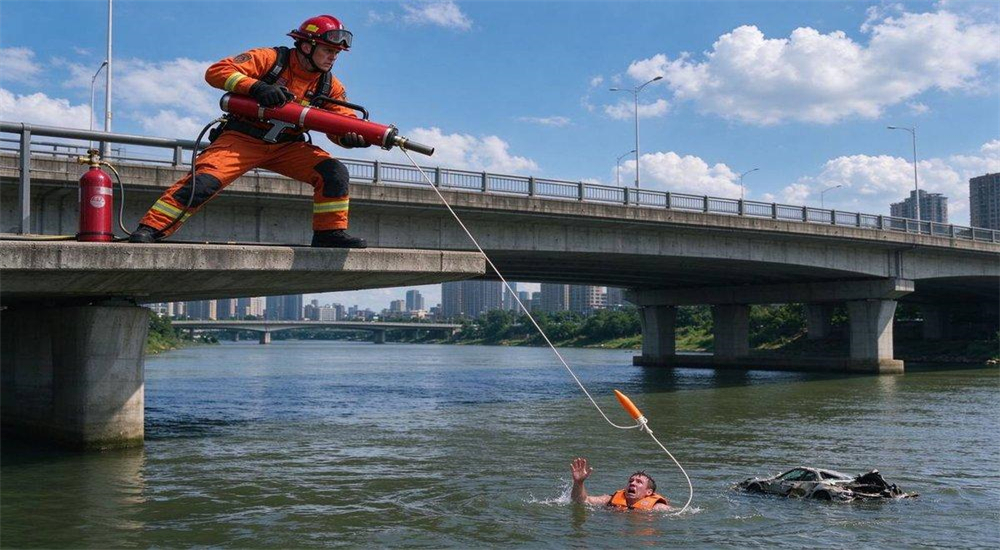
The long-range base-mounted rescue thrower is a precision pneumatic water rescue line thrower built for wide rivers, harbours, and long-distance flood channels where shoulder-fired units cannot reach. Operating at 6.5-8.5 MPa on a rigid recoil-absorbing base, this long-range rescue thrower delivers a floating projectile 185-300 metres over land and 125-210 metres across water with consistent shot-to-shot accuracy.
 |

|
The inline pressure gauge, built-in winch, and 5-angle elevation adjustment make this pneumatic rescue thrower the professional choice for fire departments on wide rivers, coast guard units on open water, and port operators handling vessel-to-shore transfers.
The rigid recoil-absorbing base holds the receiver steady shot after shot, while the inline pressure gauge shows actual chamber pressure in real time and the built-in winch retrieves the line without hand-over-hand hauling. Repeatability is the point: every shot lands where the trained operator points.
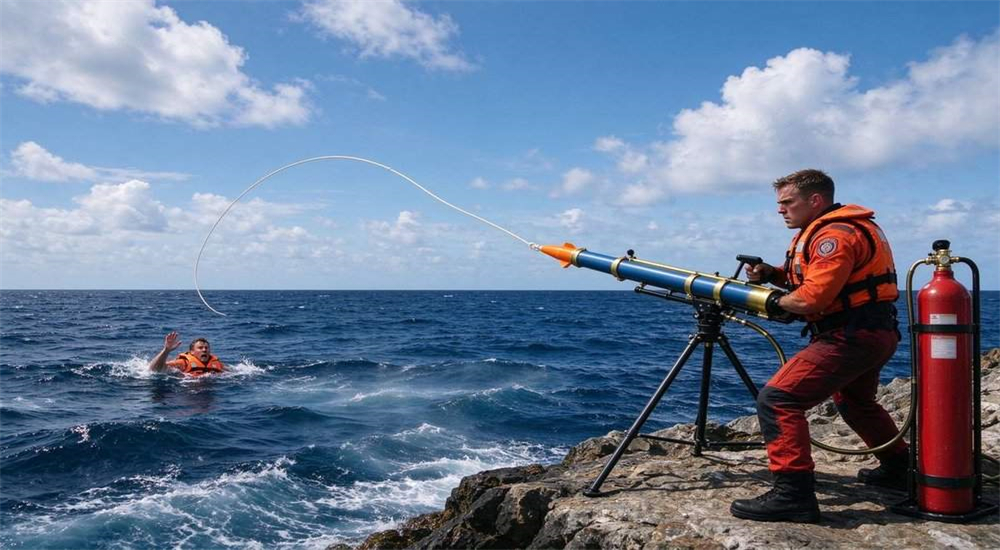
A shoulder-fired rescue thrower is useful inside about 100 meters, but once a flooded river stretches past 150 meters bank to bank, that shoulder gun lands short. This base-mounted long-range rescue thrower is built for that wider gap.
We supply base-mounted long-range rescue throwers to wide-river rescue teams, harbour authorities, and port operators worldwide. Harbour and port fleet buyers receive custom gauge-face branding, private-label transport cases, and OEM base-plate configuration support. Contact us for wholesale pricing, a technical catalog, and a multi-station quote.
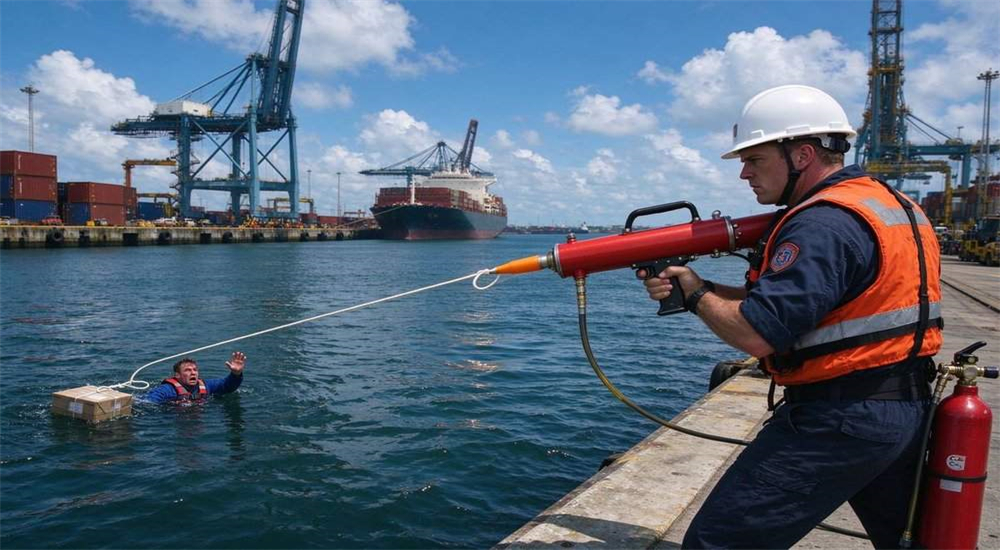
Table of Contents
Long-Range Pneumatic Thrower Introduction
Rescue Applications
Why a Base-Mounted Pneumatic Thrower
Pneumatic Safety Guidelines
Pneumatic Model Comparison
Pneumatic Maintenance
Pneumatic System Specifications
Pneumatic Troubleshooting
Package Contents
Rescue Thrower FAQ
Base, Angle and Pressure Gauge
Wholesale and OEM
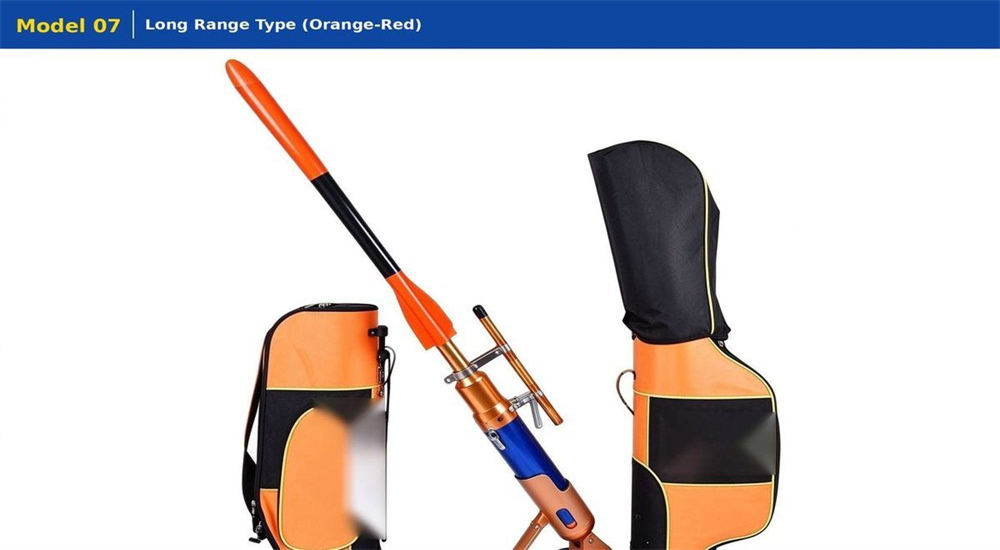
A shoulder-fired rescue thrower is useful inside about 100 meters, but once a flooded river stretches past 150 meters bank to bank, that shoulder gun lands short. This base-mounted long-range rescue thrower is built for that wider gap.
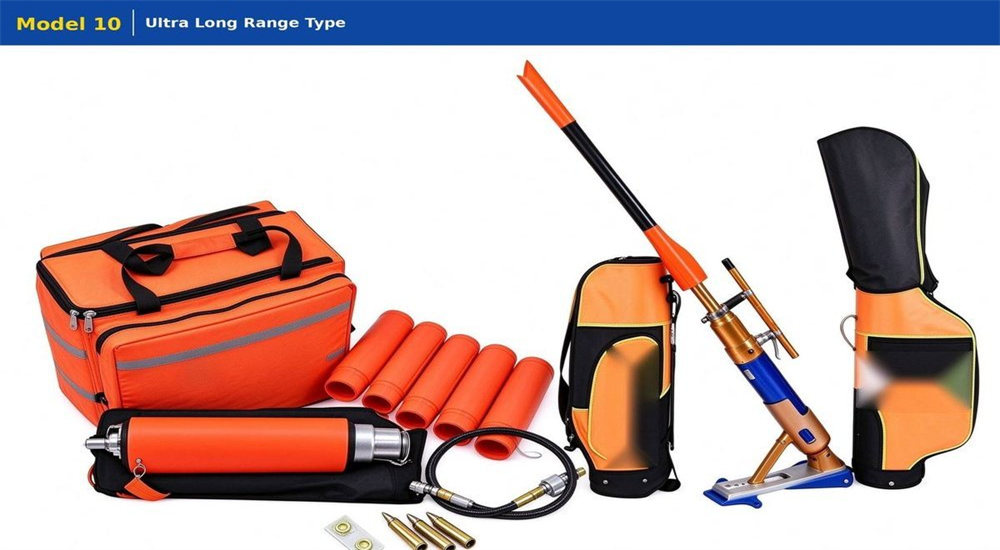
It sits on a rigid base, reads real chamber pressure on an inline gauge, and reaches at least 185 meters on land and at least 125 meters over water at a minimum working pressure of 6.5 MPa. The lightweight titanium alloy body keeps the rig manageable while the thickened pressure-resistant metal transit case protects it on the truck and on the levee.
It fires a land line, an inflating water lifebuoy float, and a 50 meter anchor hook. It is the tool for fire departments, coast guard units, reservoir bureaus, and port teams that need a repeatable shot across a gap too wide for a shoulder gun.
The rest of this page walks through how this thrower reaches those distances and how to set it up.
The design logic is repeatability, not portability. You set the base, load, pressurize, and fire — the recoil never rests on your shoulder. The system runs at a minimum working pressure of 6.5 MPa, which is enough to lob a line across a wide flood channel without recoil knocking the operator off their feet.
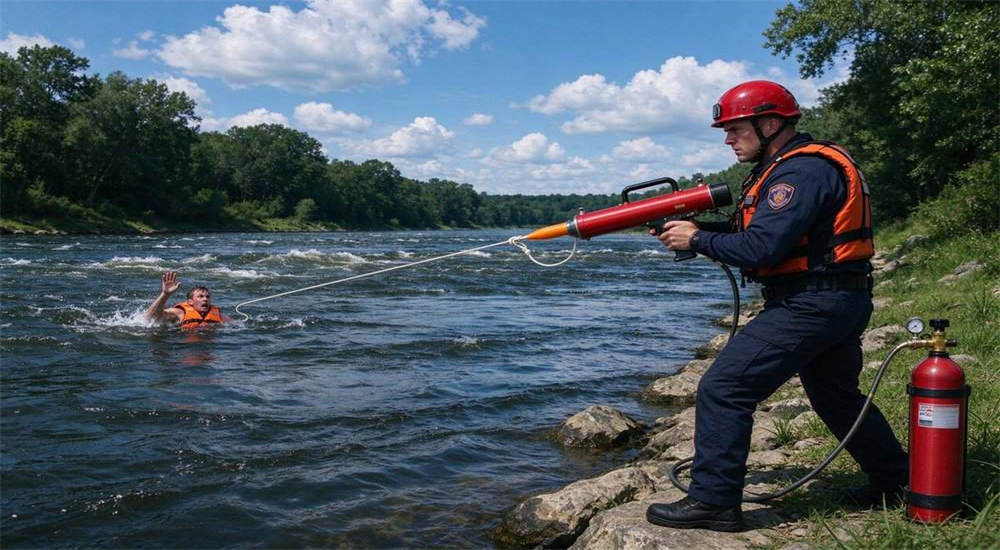
Shoulder-firing at 6.5 MPa on a pitching deck knocks you off balance. The rigid base is the point of this whole rope launcher: it turns a one-shot shoulder cannon into a repeatable long-range thrower by absorbing recoil into its own feet instead of your body.
The base also holds the barrel steady while you read the gauge and work the winch. That geometry is what makes the second shot land close to the first, rather than drifting across the river.
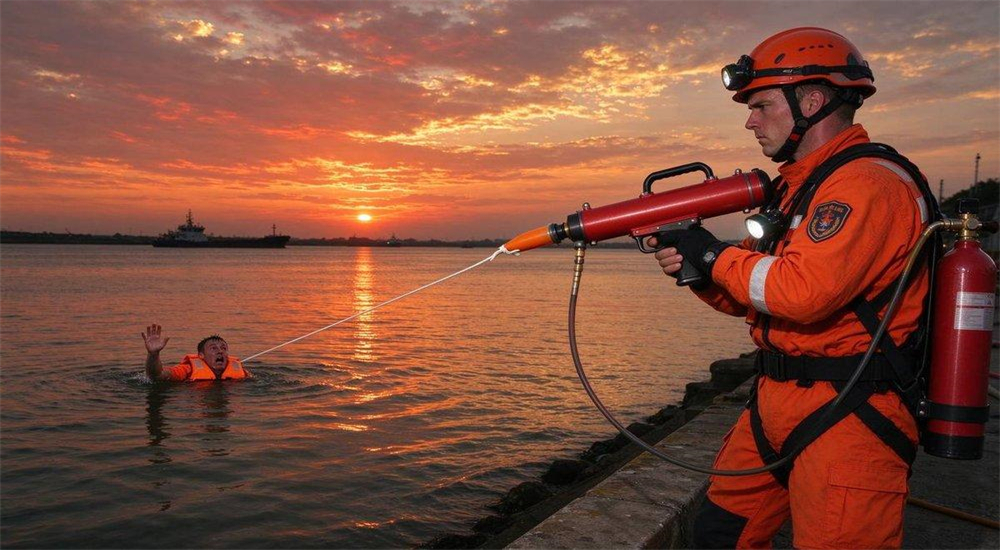
The long-range base-mounted thrower runs on a ≥6.5 MPa pneumatic platform with an inline gauge, a titanium alloy receiver, and a thickened pressure-resistant metal transit case. It fires three interchangeable heads — land line, water float, and anchor hook — from one receiver. The decision comes down to one question: do you need the anchor-hook head included in your base kit, or are you ordering land and water heads only?
The comparison table below places the land-and-water kit and the anchor-hook-equipped kit side by side. Start at the head-configuration row — that is the buying difference.
The base, pressure, gauge, receiver, and range rows are identical across both kits, so you only need to decide whether you need to land a hook on a far-deck bollard or structure.
|
Parameter |
Standard Kit (Land + Water Heads) |
Anchor-Hook Kit (Adds Hook Head) |
|
Working pressure |
≥6.5 MPa |
≥6.5 MPa |
|
Land range |
≥185 m |
≥185 m |
|
Water range |
≥125 m |
≥125 m |
|
Anchor-hook range |
Available as add-on head |
50 m, included |
|
Body material |
Light titanium alloy receiver |
Light titanium alloy receiver |
|
Transit case |
Thickened pressure-resistant metal plate, black |
Thickened pressure-resistant metal plate, black |
|
Pressure readout |
Inline gauge on the tube, silver metal |
Inline gauge on the tube, silver metal |
|
Projectiles |
High-strength impact-resistant composite, bright red |
High-strength impact-resistant composite, bright red |
|
Rope recovery |
Built-in winch in the cradle |
Built-in winch in the cradle |
|
Safety |
Auto valve, manual release screw |
Auto valve, manual release screw |
Read the difference this way. The standard land-and-water kit covers most wide urban rivers, reservoir crossings, and flooded avenues where you only need to put a floating lifebuoy across the gap. The anchor-hook kit adds the 50 m hook head that lets you send a load line to a bollard on the far vessel, not just a floating lifebuoy.
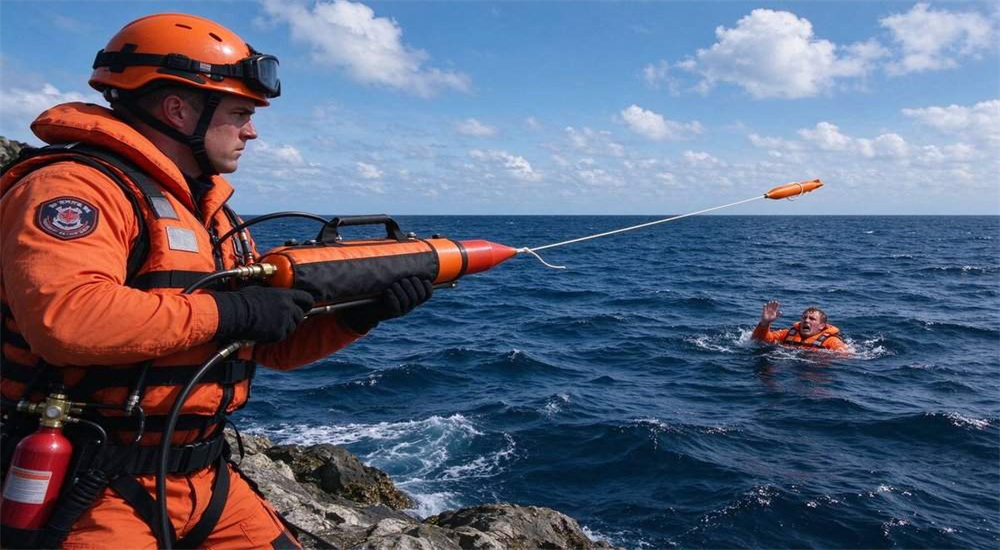
Run through these three steps before you sign the order. They keep you from over-buying range you will not use, and they take about two minutes once you have your width measurement.
A spec table is a wall of numbers. This section explains what each one means so you can judge whether this long-range rescue thrower matches your measured gap. We split the numbers into a performance table and a build-and-safety table so you do not have to scroll one long column.
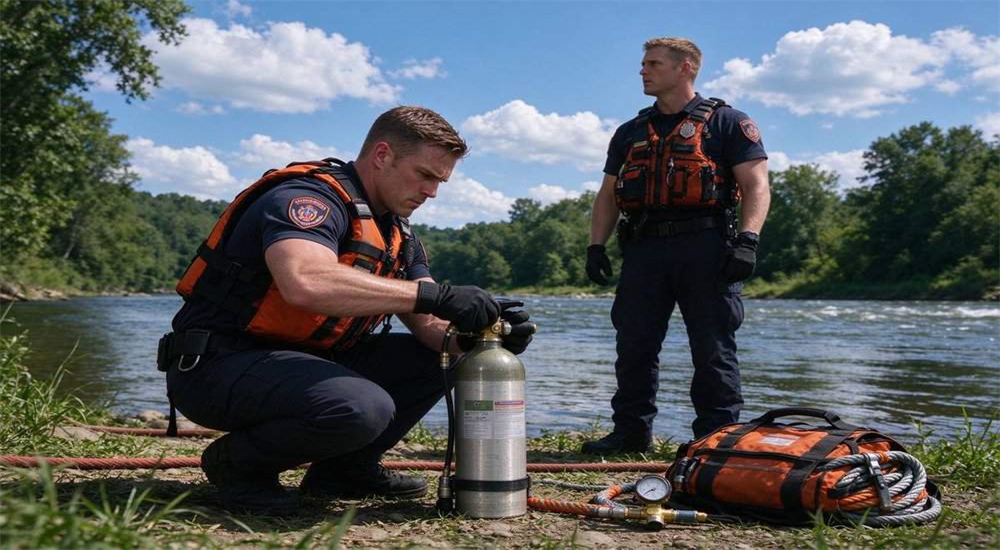
This performance table is the first place to check. Compare the land and water range rows against your measured gap plus 30 percent wind margin. The pressure row tells you whether this thrower slots into the 6.5 MPa class between portable and ultra-long-range units.
|
Parameter |
Value |
|
Product class |
Base-mounted long-range rescue thrower |
|
Working pressure |
≥6.5 MPa — a unit of pressure |
|
Land range |
At least 185 m |
|
Water range |
At least 125 m |
|
Anchor-hook range |
50 m |
|
Trajectory deviation |
≤1° |
This build table covers the mechanical parts that make the long pneumatic shot repeatable. The receiver-material row explains what the body is made of, and the case row tells you how the rig is transported. Read the safety row last — it defines what protects the operator between shots and how the system vents if pressure spikes.
|
Parameter |
Value |
|
Body material |
Lightweight titanium alloy receiver, die-cast |
|
Transit case |
Thickened pressure-resistant metal plate, black metal |
|
Projectile material |
High-strength impact-resistant composite, bright red |
|
Buoyancy parts |
Orange float components for water rescue |
|
Pressure readout |
Inline gauge on the tube, silver metal, real chamber pressure |
|
Color scheme |
Red-black receiver, bright red heads, black case, orange float parts |
|
Rope recovery |
Winch built into the cylinder cradle |
|
Safety valve |
Auto vent on overheat, manual pressure release screw |
|
Projectiles |
Land rope head, water inflating lifebuoy head, anchor head |
|
Land rope strength |
≥2500 N, braided synthetic |
|
Water rope strength |
≥7000 N, floating braided line |
A note on water versus land range: on every water rescue thrower, water range is shorter because the floating head and the thick buoyant rope drag through the air and the water. Plan a river crossing around the water number, not the land number, and add 30 percent for wind and current before you choose a pneumatic model.
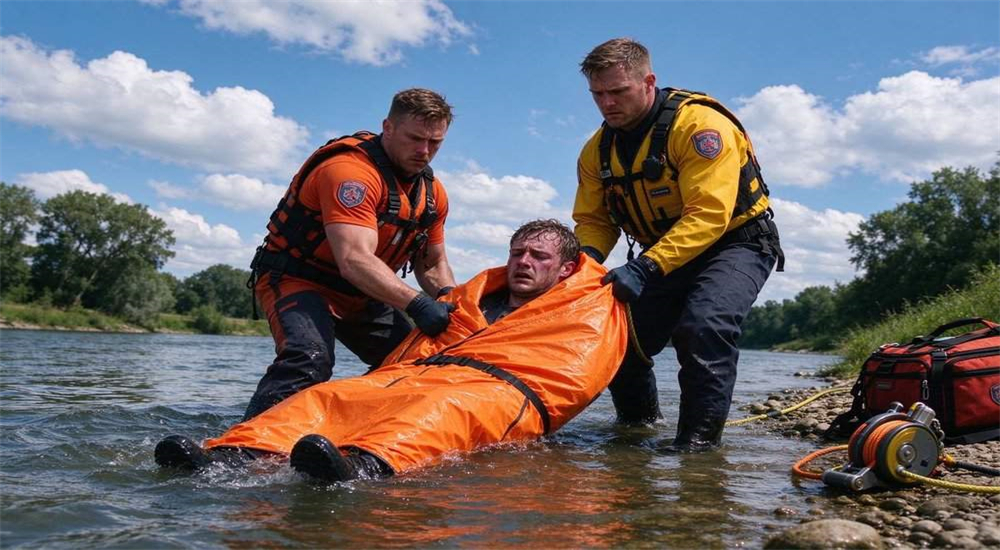
This long-range thrower ships as a base-and-case system. Below is the standard kit list, the optional extras, the wear parts to budget for, and how it is packed. Exact head count per SKU is settled on the order sheet.
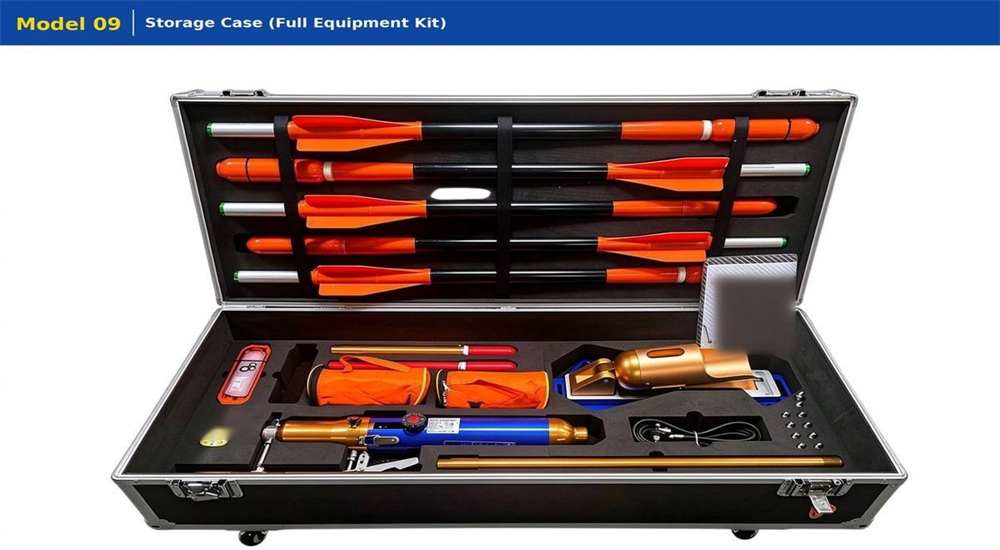
This is the full parts list for the standard base-and-case system. The quantities column shows what the transit case holds; the notes column lists each part's clear role. Anything not listed here is an optional extra ordered separately. Pay attention to the receiver and gauge rows — those are the pneumatic heart of the system.
|
Item |
Qty |
What it does |
|
Barrel / tube assembly (titanium alloy) |
1 |
The firing tube with inline pneumatic gauge, silver metal |
|
Rigid base |
1 |
Stable mounting with anti-slip feet |
|
Pressure cylinder |
1 |
Standard connector, swaps in seconds, feeds system |
|
Inline pressure gauge |
1 |
Reads real chamber pressure on the tube |
|
Rope recovery winch |
1 |
Built into the cylinder cradle |
|
Land projectiles |
Per order |
Bright red composite heads, thin 2500 N line |
|
Water projectiles |
Per order |
Auto-inflating orange lifebuoy float heads, 7000 N floating rope |
|
Anchor-hook projectile |
Available as add-on |
50 m hook shot for bollard and rail work |
|
Transport case |
1 |
Thickened pressure-resistant black metal case, holds base, tube, cylinder, and consumables |
|
Repair consumables |
1 set |
Spare seals, tools, release hardware |
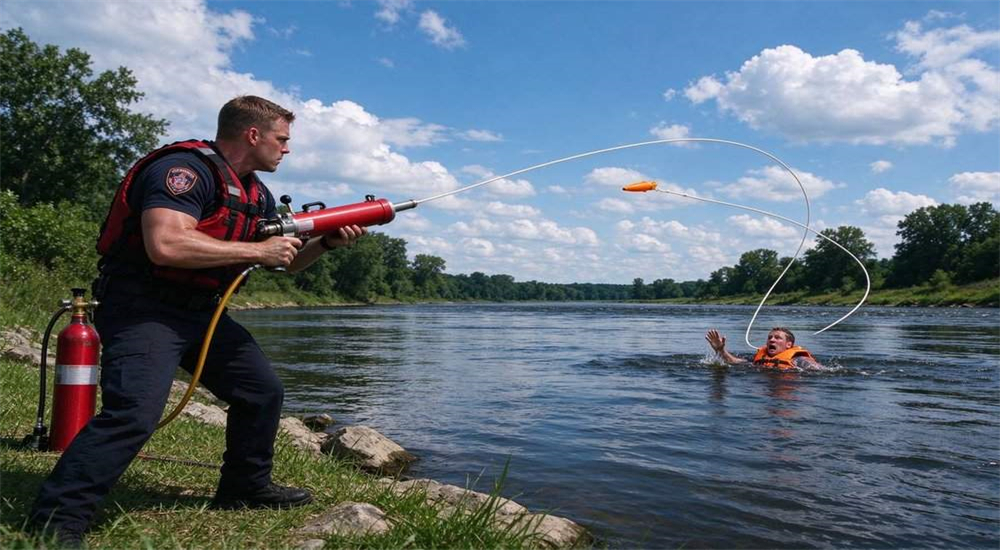
This wear-parts table covers the consumables and base parts that age over years of pneumatic service. Read the "why it wears" column to predict which part fails in your climate, then match it to the suggested cycle so spares are on the shelf before a failure on call.
|
Part |
Why it wears |
Suggested cycle |
|
Pneumatic seals and O-rings |
Pressure side, dries out over time |
Inspect after each training cycle; replace per inspection |
|
Projectile shells |
Composite cracks on hard impacts |
Replace immediately if cracked |
|
Rope |
Abrasion on concrete, rock, and debris |
Inspect after each call; retire on visible fraying |
|
Rubber foot pads |
Compress and harden on wet decks |
Annual check; replace if they no longer grip |
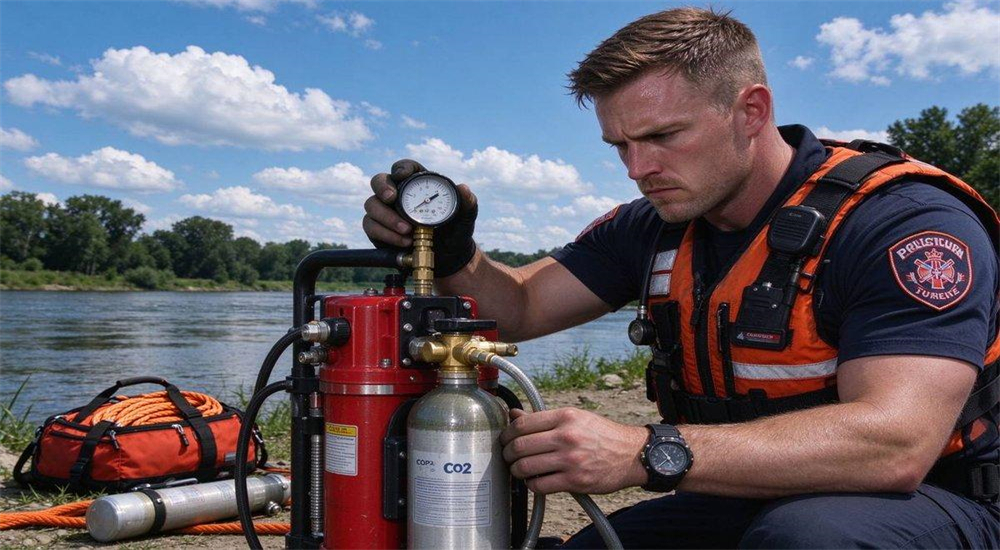
A long-range base-mounted thrower is not a handheld cannon you point by eye. It is a base instrument. This section explains how the rigid base, the barrel lock, and the gauge earn their place, plus the setup steps and windage correction.
The rigid base takes the 6.5 MPa recoil into its own feet, not your body. On wet rock, a ship deck, or a muddy levee, the anti-slip pads bite, and the wide stance spreads the load so the stand does not sink in soft mud. The titanium alloy receiver stays light enough to carry from vehicle to bank, while the thickened pressure-resistant metal transit case protects the rig on the ride.
The barrel seats into the cradle and locks with steel pins. Unlike a shoulder-fired unit that wobbles under recoil, the base-locked tube holds its position shot after shot, so the second round lands close to the first. Trajectory deviation is held within 1 degree, which is tight enough for field rescue line placement. The pneumatic valve opens fast and consistently, so the point of impact does not wander between shots.
The inline pressure gauge on the side of the tube shows real chamber pressure at a glance, so before you pull the trigger you know whether the pneumatic shot will reach 185 m land or 125 m water or fall short. The silver metal gauge housing matches the titanium receiver's red-black scheme.
After a shot, the winch built into the cradle takes the spent rope back onto the drum without tangles. An automatic safety valve vents excess pressure if the cylinder overheats, and a manual release screw is opened by hand after the mission before you break any fitting.
This quick-reference table pairs each projectile head with its rated range and a typical job. The numbers are rated values; actual range depends on pressure, head type, and wind. Pick the row that matches your gap before you drive to the bank.
|
Head type |
Land range |
Water range |
Best use |
|
Land rope head |
≥185 m |
— |
Crossing dry ground, ravines, building gaps |
|
Water float head |
— |
≥125 m |
River and flood rescue, floating lifebuoy delivery |
|
Anchor-hook head |
50 m |
50 m |
Bollard, rail, rock crack, bridge lip line placement |
Run the same six steps every time so the pneumatic base stays repeatable on recoil. Skipping a step is how the base walks on the first shot of a long shift.
At 185 m land range, crosswind pushes the whole rope sideways. Aim upwind of the target, not at it. Watch where the first pneumatic shot lands and correct left or right; above a moderate wind speed, stop and wait. The trajectory deviation is held within 1 degree, but wind and current still pull the floating rope off line, so always plan water shots around the 125 m water number.
The ≥6.5 MPa base-mounted thrower is equipment for professional teams that measure their gaps before they buy. It doubles as a water rescue thrower for channels and a rope thrower for ship-to-ship line transfer. For flood safety principles, the NOAA flood safety page covers why moving water needs a deliberate shot rather than a long throw bag. It is deployed by coast guard rescue vessels, fire department water rescue marine units, and marine safety equipment providers for swift water rescue on wide rivers and flood rescue equipment in long-distance channels.
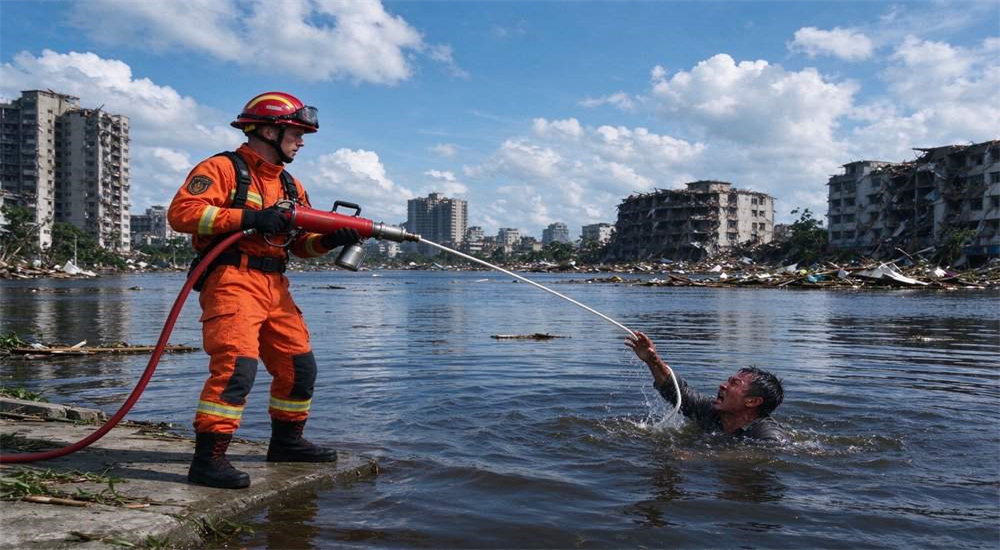
When a city river floods and the gap between banks stretches beyond what a shoulder thrower can reach, the long-range unit drives to the levee, sets on its base, and puts an orange floating lifebuoy across the current in one shot.
The stable base lets the crew repeat the shot from the same position, so a second round goes out close to the first if the first line drifts.
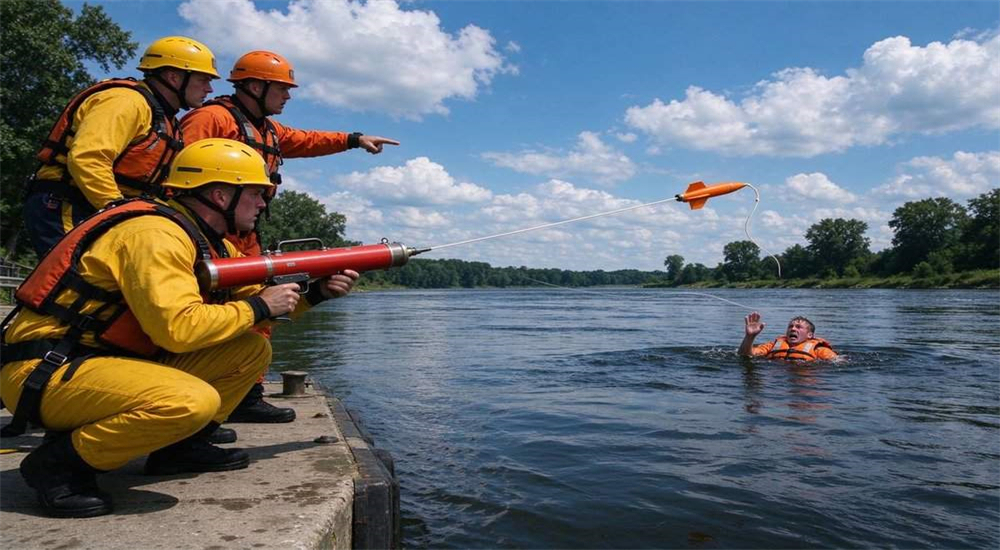
Coast guard detachments use this class to pass a line between a patrol boat and a vessel in distress, or to reach a person in the water across a harbor channel. The ≥125 m water range covers most working channels.
The anchor-hook head (50 m) is the common pick when a mooring line has to go across to a bollard or rail.
Reservoir bureaus cover water widths a small boat cannot cross fast; the thrower sits at the dam crest and a ≥185 m land shot reaches an island or far-bank point.
Port operators use the anchor-hook head to land a hook 50 m onto a far-deck bollard and haul a heavier mooring line through behind it without launching a small boat. Standard wide-gap emergency response drills practiced by port and river teams underpin these deployments.
This selection table matches your measured gap to the right configuration. If your water width is under 100 m, the portable class with a folding stock covers it lighter and faster from a hike-in position.
Scenario
Recommended Configuration
Why
Wide river, up to 125 m water
Standard kit (land + water heads)
≥125 m water / ≥185 m land covers most urban flood crossings
Harbor channel, bollard transfer
Anchor-hook kit
50 m anchor hook for bollard and rail line placement
Ship-to-ship mooring line
Anchor-hook kit
Hook lands on far-deck rail, haul mooring line through behind
Hike-in mountain rescue
Portable class (DP3)
Folding stock, backpack carry, 185 m land
The long-range rescue thrower class sits within a full water rescue equipment catalogue covering lifesaving equipment, swiftwater rescue gear, and emergency rescue equipment. We supply marine rescue equipment, search and rescue equipment, and first responder equipment to professional teams and government procurement. As a wholesale rescue equipment supplier, we provide OEM pricing for water safety equipment, long distance rescue thrower platforms, and CO2 powered rescue thrower systems for wide-river and harbour rescue.
A base-mounted long-range thrower fires harder than a shoulder unit. At ≥6.5 MPa and up to 185 m of shot, the safety rules are not optional. For worksite rescue expectations, OSHA emergency preparedness guidance sets the broader training baseline.
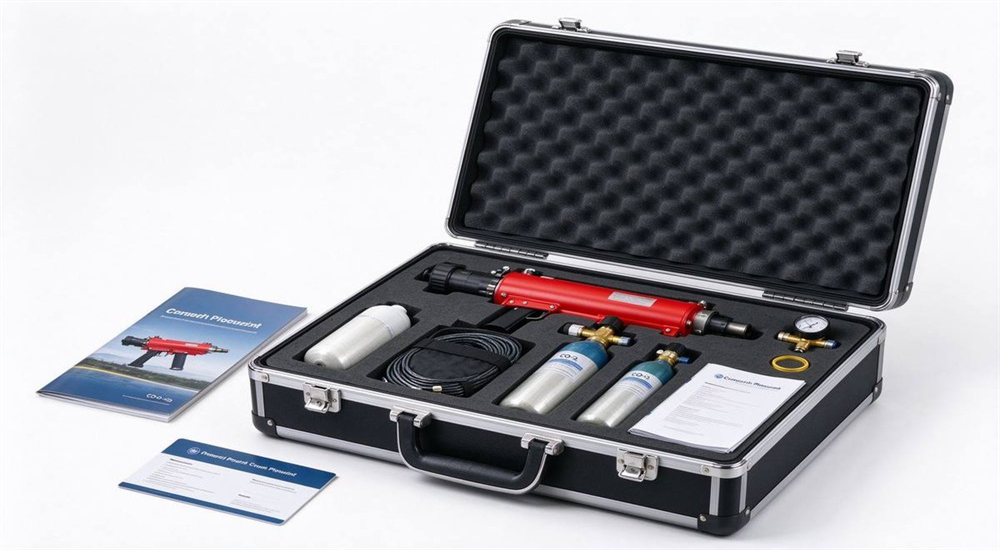
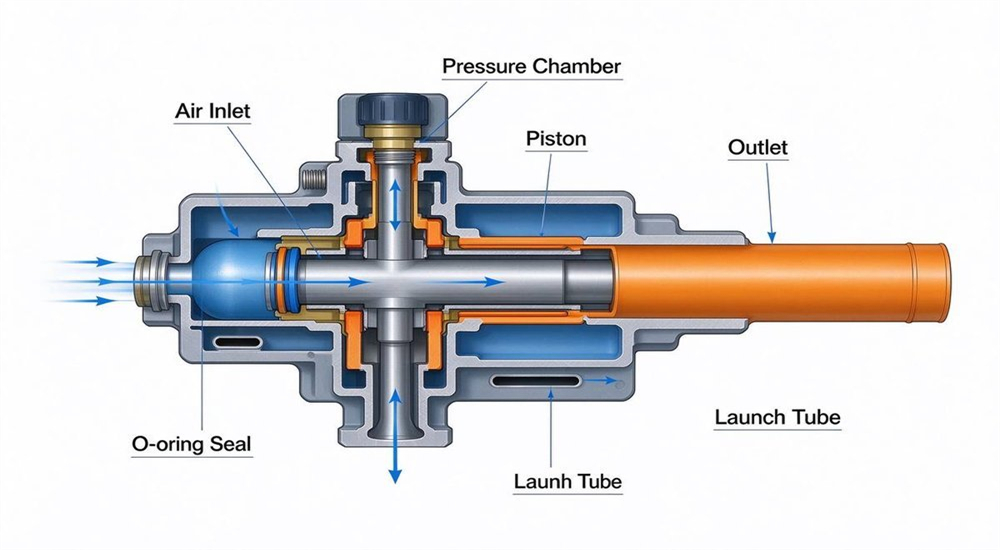
A base-mounted rig sits idle in its transit case for weeks between deployments, yet it must fire cleanly on the opening shot of a wide river crossing. A disciplined maintenance routine is what delivers that reliability. The three pillars are post-deployment flushing, a standing monthly inspection, and dry storage between calls.
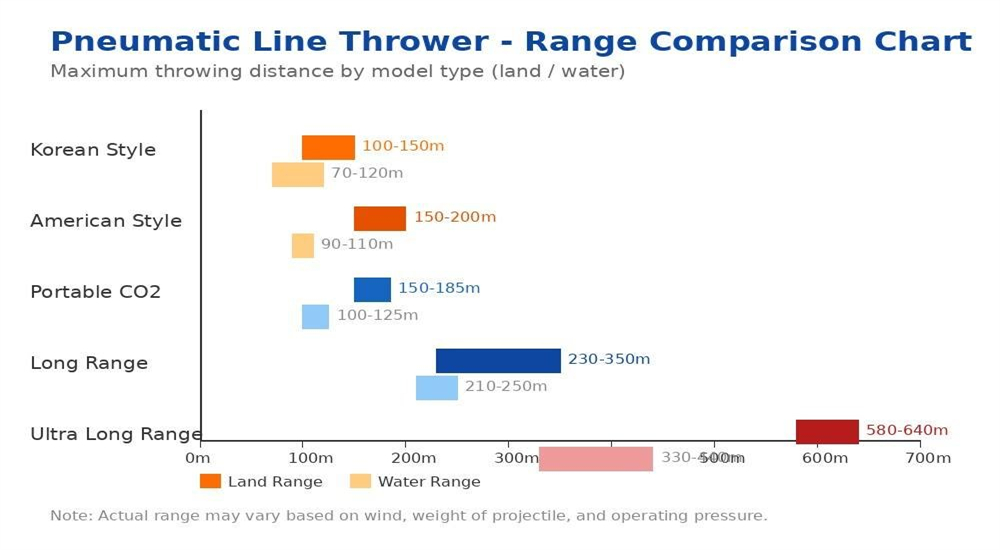
When a long-range thrower misbehaves, the fault almost always traces back to one of four culprits: low cylinder pressure, a tangled winch line, a loose base, or a tired seal.
Work through the nine checks below before picking up the phone for service. If you swap a seal and the system still bleeds air, stop there and ship the unit in.
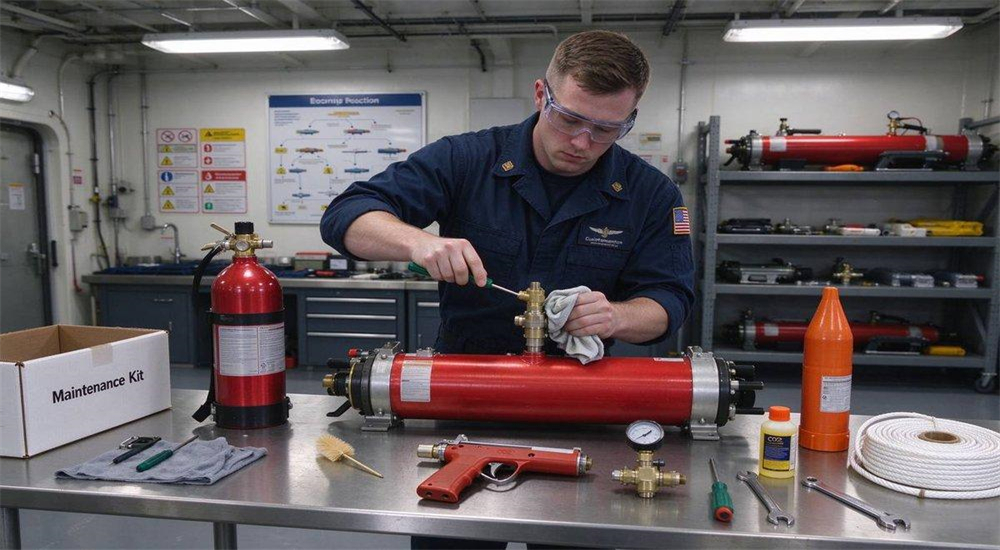
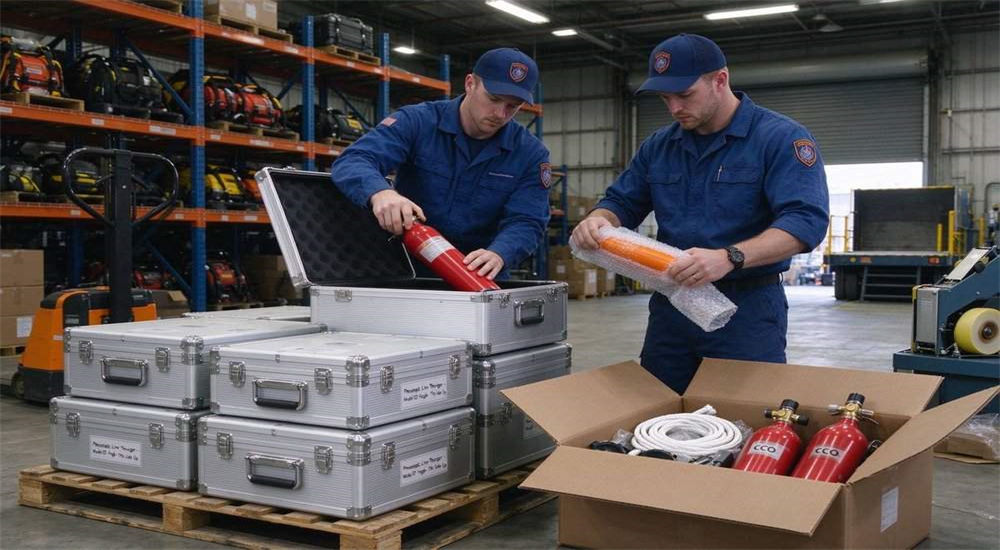
Worked through all nine checks and the rig still bleeds pressure, will not fire, or walks on its feet? Do not keep taking it apart in the field. Box it up and ship it to a qualified service shop. Once you go past a simple gasket swap on pressurized gear, that is when someone gets hurt.
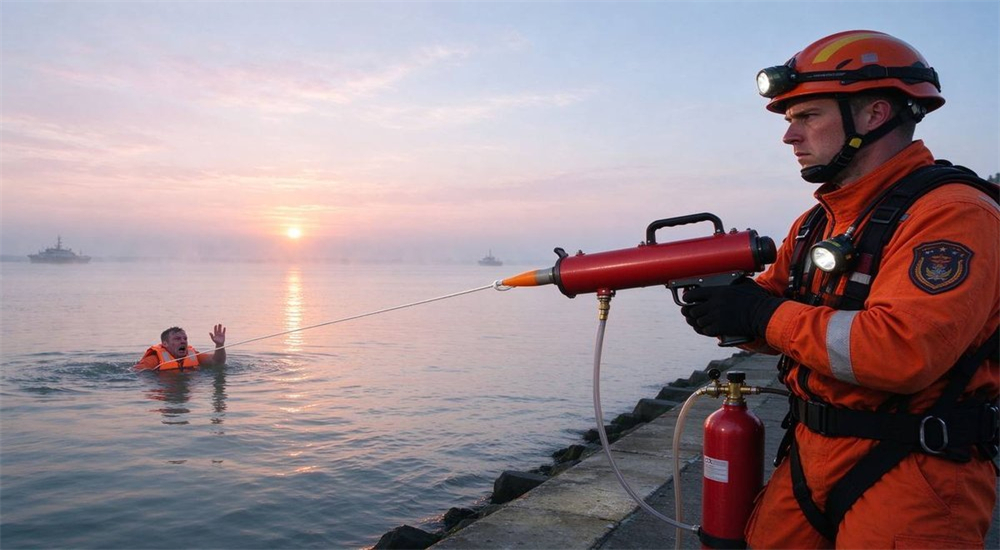
Land effective range is at least 185 m. Water effective range is at least 125 m. The anchor-hook head reaches 50 m. Water range is shorter because the inflatable lifebuoy nose and thick flotation rope pull more than the thin land line. Always plan water shots around the water number.
At ≥6.5 MPa, recoil on a pitching deck would knock a shoulder shooter off balance. The rigid base takes the recoil into its own feet, holds the barrel steady, and lets one operator work the gauge and winch without bracing the gun.
The receiver is a lightweight titanium alloy die casting, sealed at every seam so chamber pressure does not weep out. The transit case is a thickened pressure-resistant metal plate in black. The projectiles are high-strength impact-resistant composite in bright red. The titanium body does not rust in salt shore spray.
See the What's in the Box section above for the full parts list. In short: titanium alloy barrel assembly, rigid base, pressure cylinder, inline gauge, built-in winch, land and water projectiles, and the black metal transit case. The anchor-hook head is available as an add-on. The precise count of head allocation per kit is settled on your purchase order.
It is fully pneumatic. Stored compressed air pushes the round through a quick-release port, so this long-range rescue thrower carries no ignition source at the muzzle. There is no gunpowder, no rocket motor, and no flame.
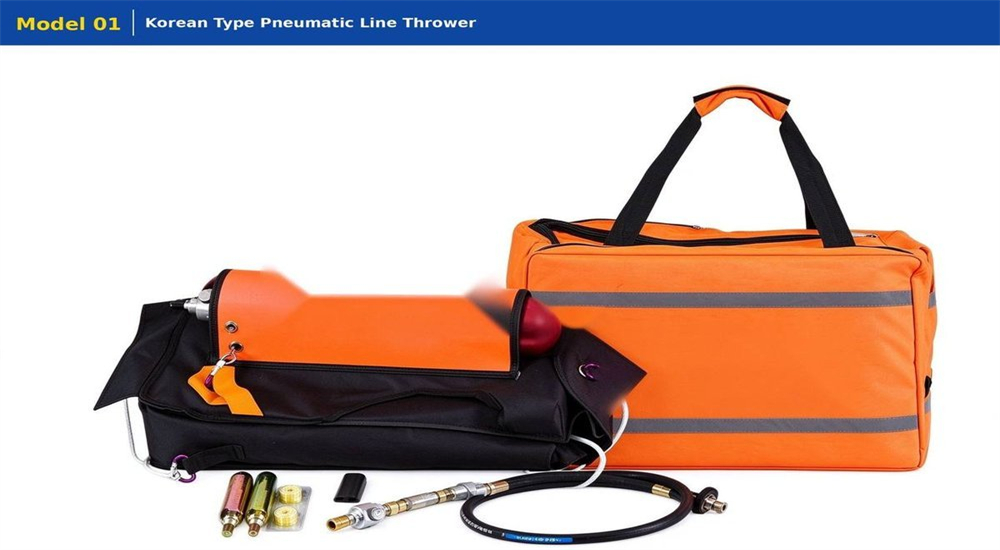
Factory performance inspection records are provided with each unit. Bid documentation can be assembled on request. Confirm the exact documentation package per configuration before procurement.
Exact pricing, MOQ, and lead time are subject to contract. Tell us your measured water width, your typical scenario, and whether you need the anchor-hook head, and we will come back with a shortlist and an honest price range.
This base-mounted unit is also called a line throwing device, line throwing apparatus, or rescue line gun for long-distance applications. Port operators may call it a pneumatic line launcher or remote rescue thrower. In vessel-to-shore transfers, it is sometimes referred to as a rescue buoy launcher or ship-to-shore line thrower.
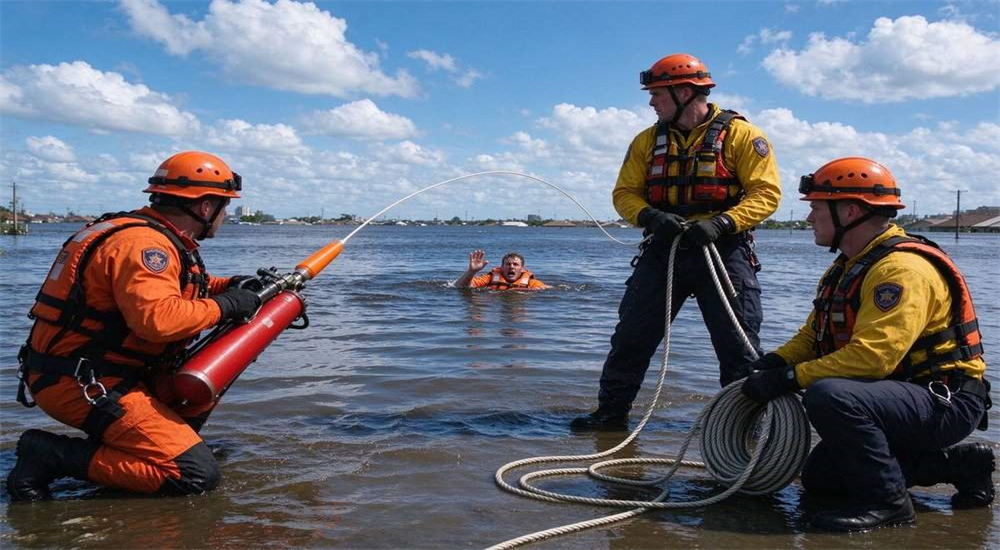
Wholesale Long-Range Pneumatic Rescue Throwers: OEM and Bulk Supply
We operate as a China-based water rescue equipment supplier and wholesaler; we are not the factory itself. Our customers span fire service departments, coast guard detachments, wide-river management bureaus, port terminal operators, and resellers.
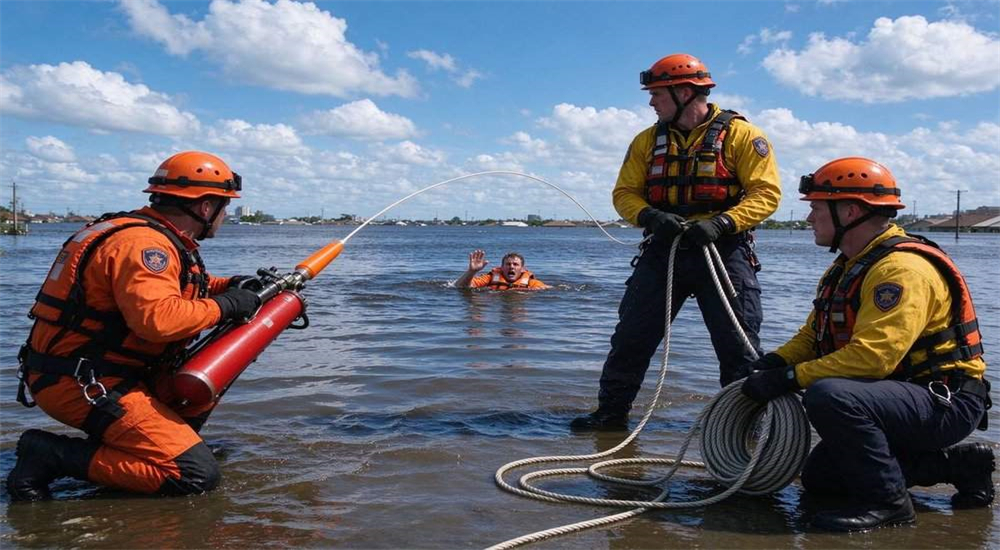
The ≥6.5 MPa long-range line is specified by programs that measure their water width before issuing a purchase order.
Volume tier pricing, private labeling on the black metal transit case, and OEM configuration are all available for program contracts. If you need an ODM-level change such as a different cylinder setup or a longer line, we scope it project by project.
For MOQ and lead time, reach out directly; those figures are fixed on the contract. Standard trade terms are T/T (deposit up front, balance before shipment), with L/C open for larger programs.
Evaluation samples are available, and the sample charge is commonly credited against a later bulk PO. Tell us which configuration you need, how many heads per kit, and what documentation your tender expects, and we will build the system spec and quote a realistic delivery window.
Resellers benefit from our stocked inventory of bases, spares, gaskets, and cylinders — repeat orders ship in days, not weeks. For government and port bids, we package the thrower, consumables, training line, and the factory performance inspection records your procurement office requires into one quotation, so you are not chasing three vendors to fill a single tender.
If your measured water width actually falls inside the portable class, we will tell you straight rather than upsell you to the long-range rig. Send us your measured width, target price band, and whether you want the anchor-hook head, and we will reply with the configuration that genuinely fits.
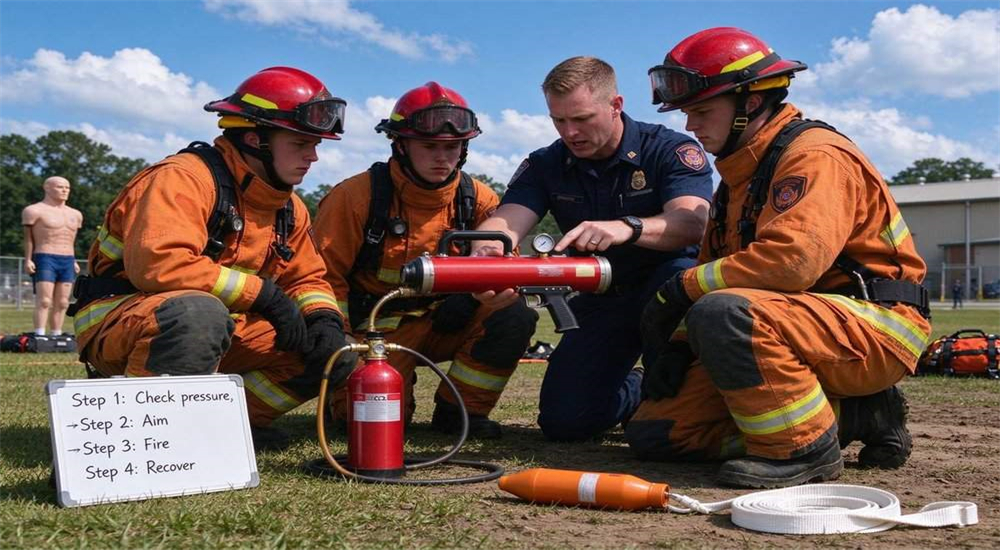
We are a China-based supplier and wholesaler of water rescue gear, built around tools that survive repeated field abuse. Our catalog spans rescue throwers in both the portable and extended-range families, along with floating rescue lines, throw bags, and auto-inflating rescue buoys that work with the float round.
We work alongside resellers, fire services, maritime crews, coast guard units, emergency management bureaus, and training academies. What we actually do on your behalf: consolidate a tested thrower procurement into a single PO, keep your spare-parts inventory lean, and back every unit with a printed manual and a fast technical reply.
Each outgoing rig passes incoming material inspection, in-process checks, a 100 percent outlet pressure and range test, and a final packing audit against your PO line items.
Why does this matter on your end? Instead of juggling three vendors for a base, a cylinder, and gaskets, you talk to one partner who already knows the parts mate up. Instead of crossing your fingers that a base rig survived the truck ride, you read the pressure and range test report before signing off.
Instead of waiting weeks for a replacement cylinder mid-flood season, you pull from our stocked shelf. We contract with vetted factories that build to agreed drawings, and we re-inspect every incoming batch before it leaves our hands.
We do not lead with vanity metrics. If your gaps exceed 200 m, move up to the ultra long-range rescue thrower family. If your measured width lands within the 185 m land / 125 m water band and you drive to the water, this base-mounted thrower is the right starting point.
Pace out your widest crossing, add 30 percent, and send us the number. Bid documentation is available on request for tender submissions.
Previous :
Ultra Long Range Rescue Thrower | ≥640m Land, ≥440m WaterNext :
Portable Rescue Thrower | Folding Stock Pneumatic Line Thrower for Flood and Swift Water Professional Rescue Launcher, Aluminum Alloy, Fire Fighting Essential
This orange-yellow professional rescue launcher is made of aviation-grade aluminum alloy, with maximum working pressure of 200bar, throwing distance of 150-230 meters on land and 80-210 meters on water. Certified by the National Fire Equipment Quality Standard, it reaches maximum initial velocity of 60m/s. It provides efficient solutions for fire teams, flood control, and water rescue operations, saving lives in critical moments as essential equipment for all rescue teams.
 Customized Life-saving Thrower, High Strength, Long-range Rescue
This professional life-saving thrower is made of high-strength composite materials, with a throwing distance of 50 meters and a load-bearing capacity of 150kg, achieving a 99% rescue success rate. Its orange-yellow design ensures high visibility on water, equipped with non-slip handle and high-strength rescue rope. Specifically designed for flood control, water rescue and emergency disaster relief, it is essential equipment for fire departments, maritime rescue units, water rescue teams and flood control forces, participating in over 200 flood rescue missions annually.
 High-Pressure Pneumatic Rope Launcher, Rescue Special, 120m Range
This high-pressure pneumatic rope launcher uses compressed air as power source, with projection distance ≥80 meters on water and ≥110 meters on land, equipped with 120-meter high-strength rescue rope. The main body weighs less than 3.5kg, offers simple and quick operation, and features a spark-free design ensuring safe use in flammable environments. The accompanying auto-inflating life ring inflates within 5 seconds with buoyancy >8kg. Ideal for flood disaster relief, water rescue, maritime rescue and other complex scenarios, it's essential equipment for emergency rescue departments.
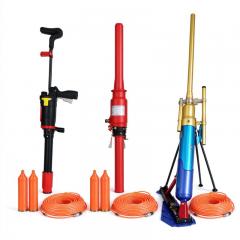 Wholesale Pneumatic Line Thrower: 100m–640m Rescue Rope Launcher
This pneumatic line thrower delivers reliable long‑distance rope deployment for swift‑water, flood, maritime and ice rescue scenarios. Multiple configurations cover short, long and ultra‑long throwing distances. Complete kits include launcher, projectiles, rescue ropes, CO2 cylinders and protective carry case. Quick setup, simple operation for fire, coast guard and emergency rescue teams worldwide. Note: Price for reference only. Exact price based on quantity, size, weight and custom details.
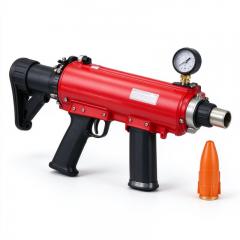 Korean Style Pneumatic Rescue Thrower PTQ20-Y100S70 | 20 MPa ≥100 m Land / ≥70 m Water
Korean Style Pneumatic Rescue Thrower PTQ20-Y100S70, 20 MPa shoulder-fired launcher. ≥100m land range and ≥70m water range, equipped with auto inflating lifebuoy head and 2000N high tensile rope. Complies with GB/T 27906-2011. Complete aluminum hard case kit. Support bulk wholesale, OEM custom logo for fire, coast guard and flood rescue teams. Note: Price for reference only. Exact price based on quantity, size, weight and custom details.
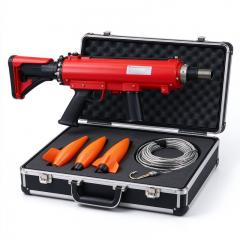 American Style Anchor Hook Rescue Thrower | PTQ20-Y125S100 & PTQ7-Y150S110Q55
American Style Anchor Hook Pneumatic Rescue Thrower, frame-mounted design with recoil buffer. Equipped with heavy-duty anchor claw for high-rise, cliff and maritime rescue. Delivers long-distance rope deployment for swiftwater, urban flood and offshore emergency rescue. Complete kit with launcher, projectiles, rope and protective case. Support bulk wholesale and OEM customization for fire and coast guard teams. Note: Price for reference only. Exact price based on quantity, size, weight and custom details.
Copyright © Custom Disaster - Relief Bedding: Tents, Sleeping Bags, Blankets All Rights Reserved
the professional team to service !