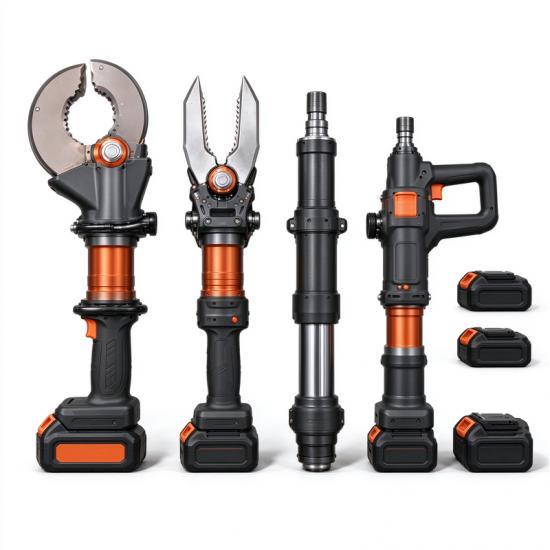
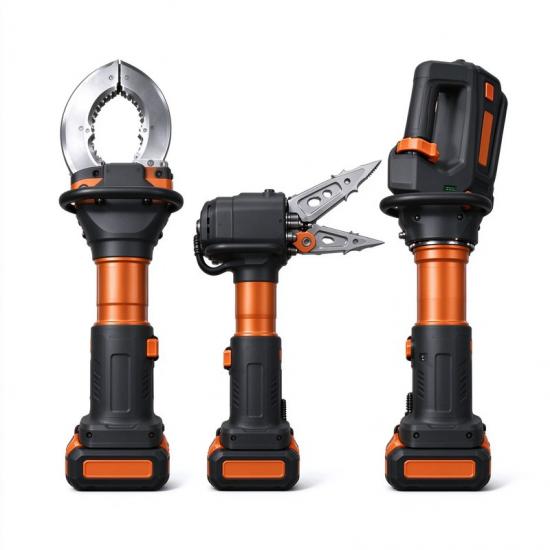
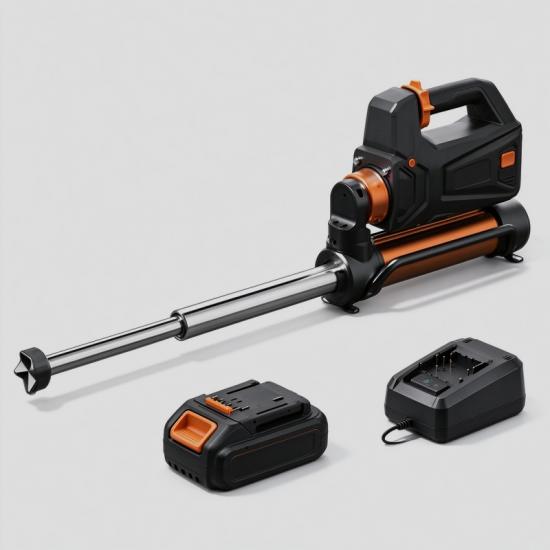
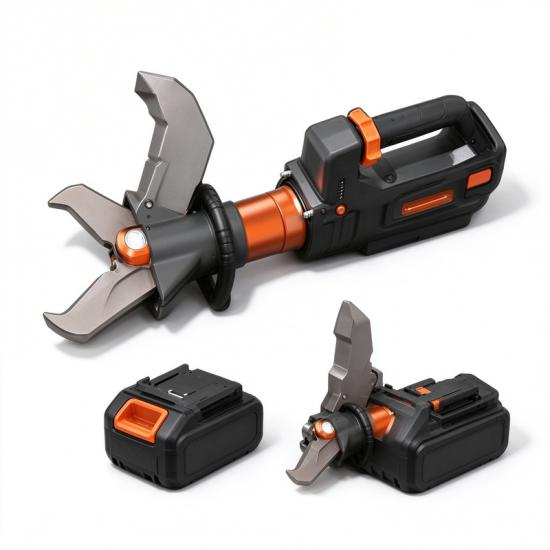
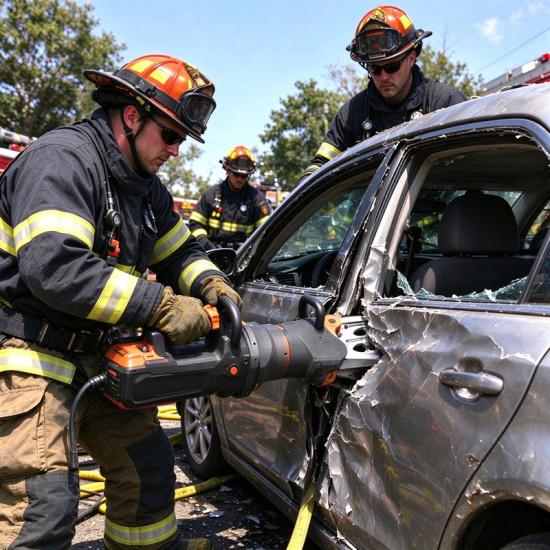
Cordless battery hydraulic rescue tools for vehicle extrication and confined space rescue. Cutter, spreader, ram and combi tool available. Powered by 24V lithium batteries, silent and hose-free. High output force, easy for high-rise and remote emergency rescue.
Note: Price for reference only. Exact price based on quantity, size, weight and custom details.
model no. :
H-07Brand:
YRFmarket price :
$3600sale price :
$1800price range :
10-30/$1800Color :
Multiple Colorsport of dispatch :
Guangdong/GuangzhouPayment :
TT, Paypal, Western Unionmin order :
10original region :
Made in ChinaLead Time :
5-15days
Electric Hydraulic Rescue Tools – Battery Cutter
Supplier China
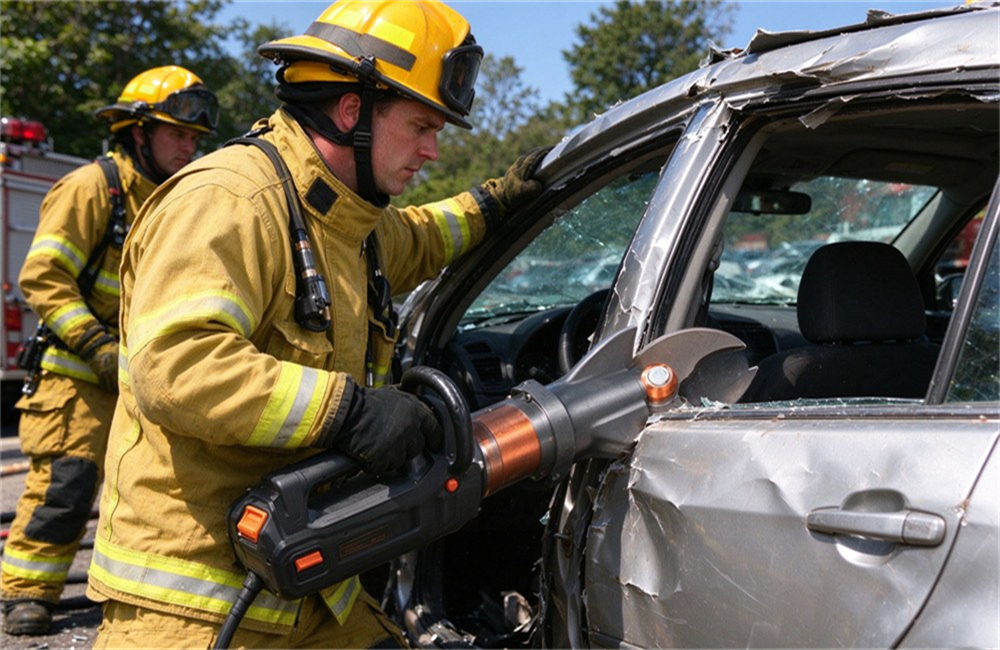
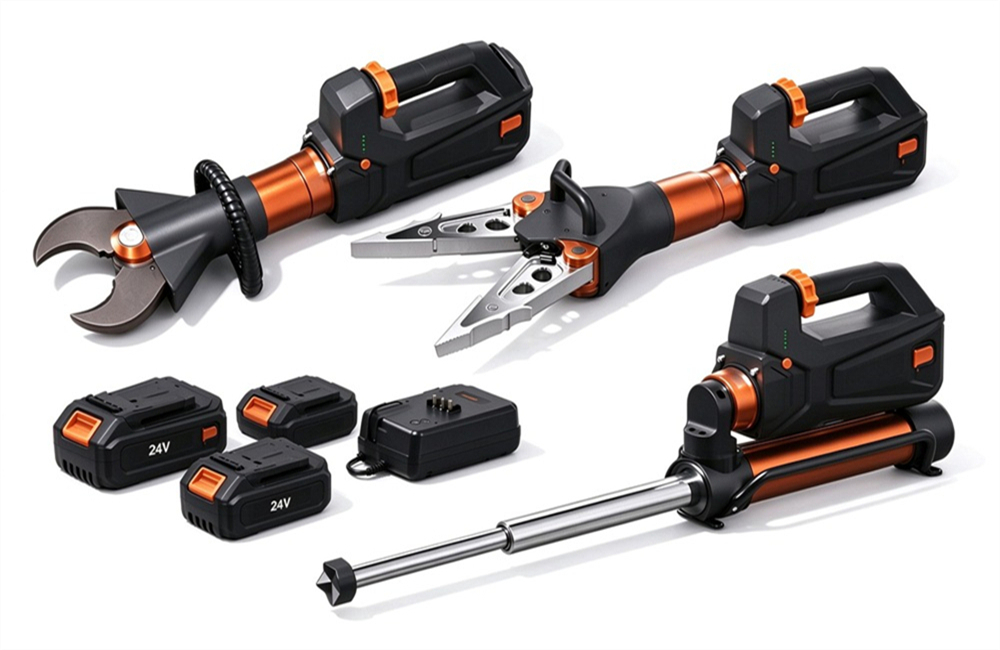
Electric hydraulic rescue tools cut vehicle pillars, spread jammed doors and lift heavy debris without a separate pump, hose or engine. Our battery powered cutter delivers 560 kN at 720 bar from a 24 V pack in seconds.
Compare the battery hydraulic cutter, electric hydraulic spreader and cordless ram families of electric hydraulic rescue tools to match your team's rescue tools to call volume and budget.
Modern fire stations standardize on electric hydraulic rescue tools for their first-response kit.
 |

|
Contents
Electric Hydraulic Rescue Tools Overview
Battery Hydraulic Series
Battery vs Engine-Driven Systems
Applications of Cordless Rescue Tools
Key Specifications
Customization Options
Quality & Testing
Packaging & Delivery
Order Process
FAQ
Cutter vs Spreader vs Ram - Which to Buy First
Use this electric hydraulic rescue tools selection table to match the first battery hydraulic tool to your most common call type.
|
Key Specifications for Battery Hydraulic Tools. |
Model. |
Cutting Force. |
Jaw Opening. |
Weight. |
|
Battery hydraulic cutter LDJQ70-155. |
560 kN. |
155 mm. |
19.5 kg. |
720 bar. |
|
Battery hydraulic spreader. |
—. |
520 mm opening. |
19.2 kg. |
720 bar. |
|
Battery hydraulic ram 24 V. |
227 kN first stage. |
1082 mm stroke. |
—. |
720 bar. |
|
Battery pack. |
24 V / 5 Ah. |
—. |
—. |
—. |
|
Cutter vs Spreader vs Ram Selection. |
Task. |
Recommended Tool. |
|
Cut vehicle pillars. |
Battery hydraulic cutter. |
560 kN. |
|
Pry doors and windows. |
Battery hydraulic spreader. |
—. |
|
Lift slab or push dashboard. |
Battery hydraulic ram. |
227 kN. |
|
Combined extrication set. |
Cutter + spreader + ram. |
Full set. |
Carrying a full hydraulic system no longer means hauling a 90 kg engine pump.
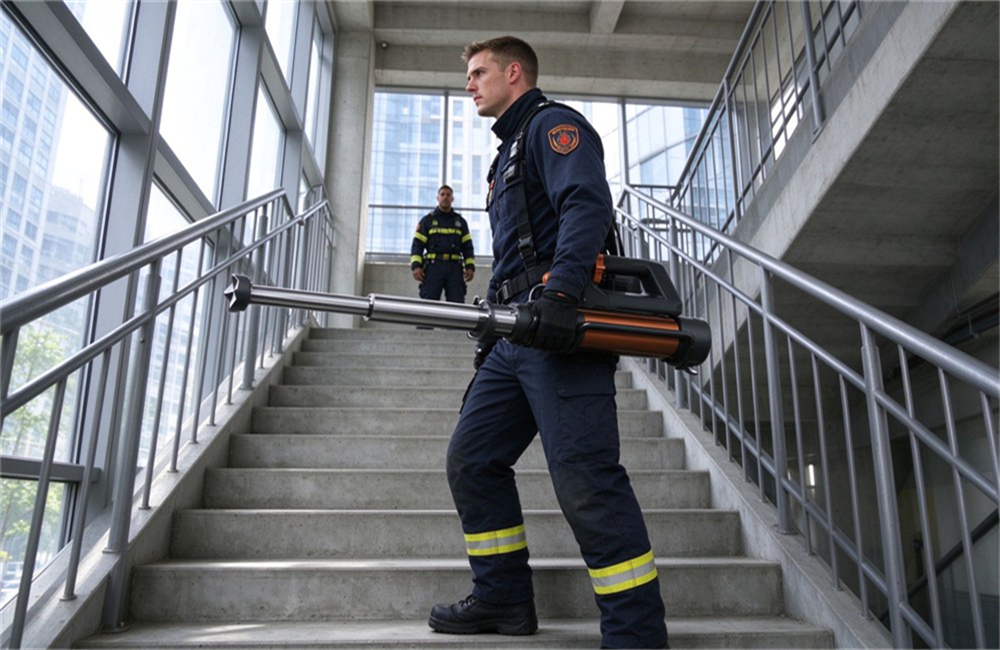
The newest battery powered rescue tools weigh less than 25 kg per tool, run on one rechargeable pack, and deliver the same force class as hose-fed tools.
For departments that fight parking-lot extrications, high-rise stairwells and remote rural calls, this family removes the two biggest obstacles to fast rescue: setup time and engine noise.
A battery pack rated at 24 V and 5 Ah drives roughly 60 full cutting cycles on a single charge, which covers the typical extrication call from stabilization to patient removal.
Spare packs swap in under ten seconds, so the tool stays in the operator's hands while the empty pack recharges in the case.
This operating rhythm is why rescue teams that buy electric hydraulic rescue tools keep the same model as their primary and backup unit.
A single 24 V battery hydraulic ram extends to 1082 mm and lifts with 227 kN on its first stage. It is enough to raise a collapsed concrete slab or push a dashboard off a trapped driver.
Because there is no hose to lay and no engine to start, the tool is ready the moment the operator pulls the trigger. This is why electric hydraulic rescue tools win on short calls.
Quiet operation also lets the crew hear the victim, which is impossible beside a running pump.
The five sections that follow walk through the battery series model by model, compare cordless operation with engine-driven systems, list full specifications, explain customization and quality control, and end with the practical questions procurement teams ask before placing an order. Read through to the FAQ if you want the short answer on runtime, force and charging.
Electric hydraulic rescue tools combine a high-pressure hydraulic pump, a rechargeable battery and a rescue tool into one self-contained unit.
The integrated pump builds up to 720 bar of working pressure, the battery supplies the energy, and the tool head does the cutting, spreading or lifting.
Removing the separate power unit and hoses is the defining difference from traditional systems.
According to NFPA 1936, the standard for powered rescue tools, an electric hydraulic rescue tool must perform predictably under extreme load and repeated cycling.
Our battery series meets this by using a two-stage hydraulic system that switches from high-flow to high-force automatically, so the blades travel fast at first and then bite into high-strength steel.
The result is a cut that behaves like a hose-fed tool without the support equipment.
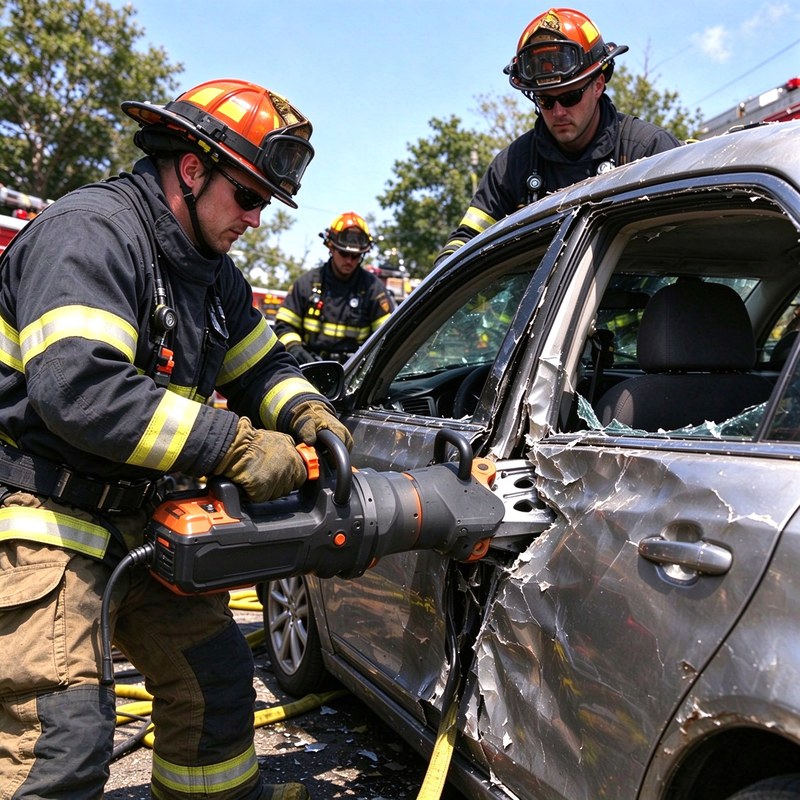
A complete cordless set of electric hydraulic rescue tools covers the same jobs as an engine-driven system: a battery hydraulic cutter opens vehicle pillars.
, a battery hydraulic cutter opens vehicle pillars, a cordless spreader pries doors and windows, and a battery powered ram lifts or pushes heavy sections.
Because every tool carries its own power source, teams can split up and work on two vehicles at once — something a single pump cannot do.
Buyers today choose cordless rescue tools for three reasons: storage space, noise and deployment speed.
A lithium set fits in the rear compartment of a rescue truck, produces no exhaust in enclosed parking garages, and deploys in under ten seconds from case to first cut.
For municipal fire departments, industrial rescue brigades and search teams, these three factors decide the purchase.
Rescue work is moving indoors as much as it is moving remote.
Parking structures, tunnels, railway platforms and factory floors all host accidents that need quick, quiet tools, which makes cordless operation a confined space rescue advantage.
In this confined space rescue setting, no exhaust and no hose are the deciding factors.ck cutting and spreading, and none of them tolerate a running engine.
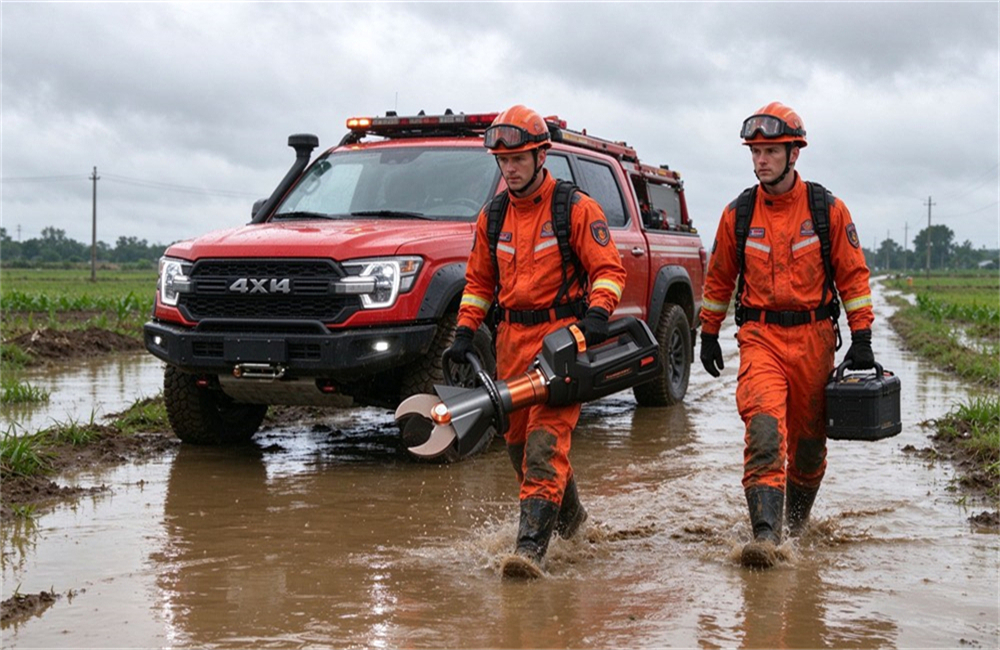
The same set that works in a high-rise garage also works on a flooded rural road, because the only energy it needs travels in the tool case.
Government procurement for electric hydraulic rescue tools increasingly lists cordless options alongside traditional systems
. For the scene side of the same rescue, see our vehicle extrication rescue tools. page, which covers the full extrication workflow around these cutters and spreaders.
When tenders specify electric hydraulic rescue tools or battery powered cutters, the evaluation covers force, runtime, weight and total cost of ownership. Our electric hydraulic rescue tools are documented for this process: every model has a specification sheet, a pressure test record and a runtime test record ready for submission.
What a battery system cannot replace is the unlimited runtime of a fixed pump station, so the two families complement rather than compete.
The standard modern fleet layout puts battery hydraulic cutters and spreaders in every engine, keeps one engine-driven pump for large incidents, and stores the combo tool in the rescue truck for multi-task calls.
This layout is what we help departments plan during the inquiry.
The electric hydraulic rescue tools series is built around one battery platform so every tool shares the same 24 V / 5 Ah pack, charger and control handle.
A department buys one spare-pack kit and it fits the cutter, the spreader, the ram and the combo tool.
This common-platform design cuts spare parts inventory and training time, which is the first thing procurement teams ask about.
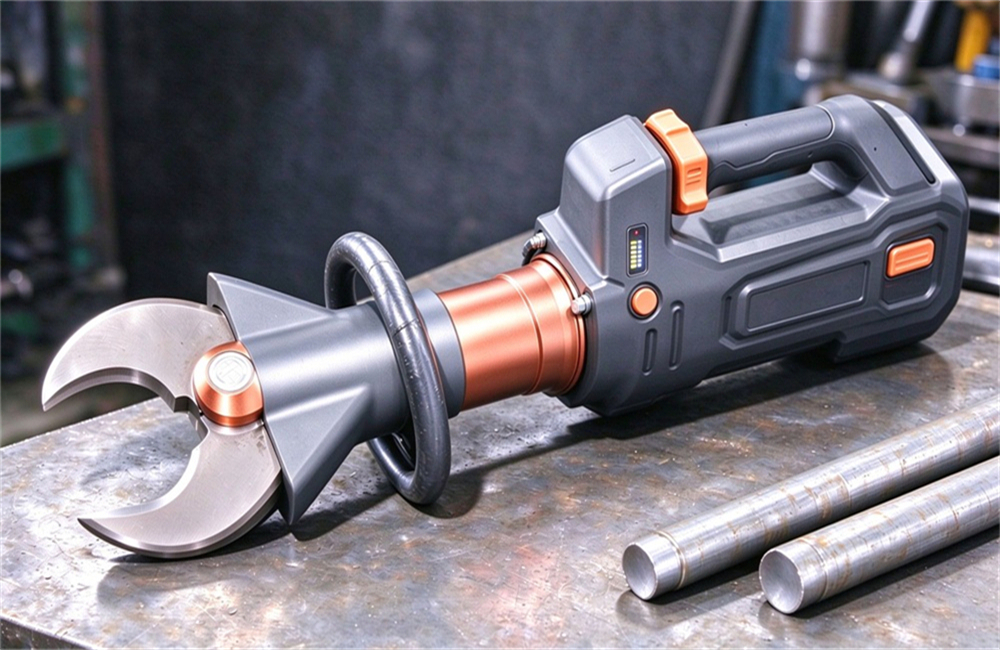
The battery hydraulic cutter family has two opening sizes. Model LDJQ70-155 delivers 560 kN cutting force with a 155 mm jaw opening, weighs 19.5 kg, and cuts Q235 round steel up to 35 mm in diameter.
Model LDJQ70-258 keeps the same 560 kN force with a 258 mm opening for larger pillars, at 21.5 kg. Both run at 720 bar and are powered by two 24 V / 5 Ah packs with a charger.
Both battery hydraulic cutter models use hardened steel blades that shear modern vehicle pillars in a single squeeze. The 155 mm version suits door pillars and thin sections; the 258 mm version handles B-pillars, roof rails and rolled-over frames.
Operators pick the opening size by their most common call type, not by the heaviest theoretical job.
Each battery hydraulic cutter carries an integrated LED work light and an LED battery gauge on the handle, so the operator sees remaining charge without taking the tool out of the cut. The three-stage control handle gives a fine, medium and full-speed setting — fine for precision work near the victim, full speed when time is critical.
Blade geometry follows the same design logic as hose-fed cutters, the battery hydraulic cutter uses a straight shear edge that bites progressively so the blade does not slip off round steel or vehicle sheet metal.
The hardened blade material and the two-stage pump combine to cut Q235 round steel up to 35 mm in diameter, which covers door pillars, roof rails, steering columns and most structural sections a rescue team meets.
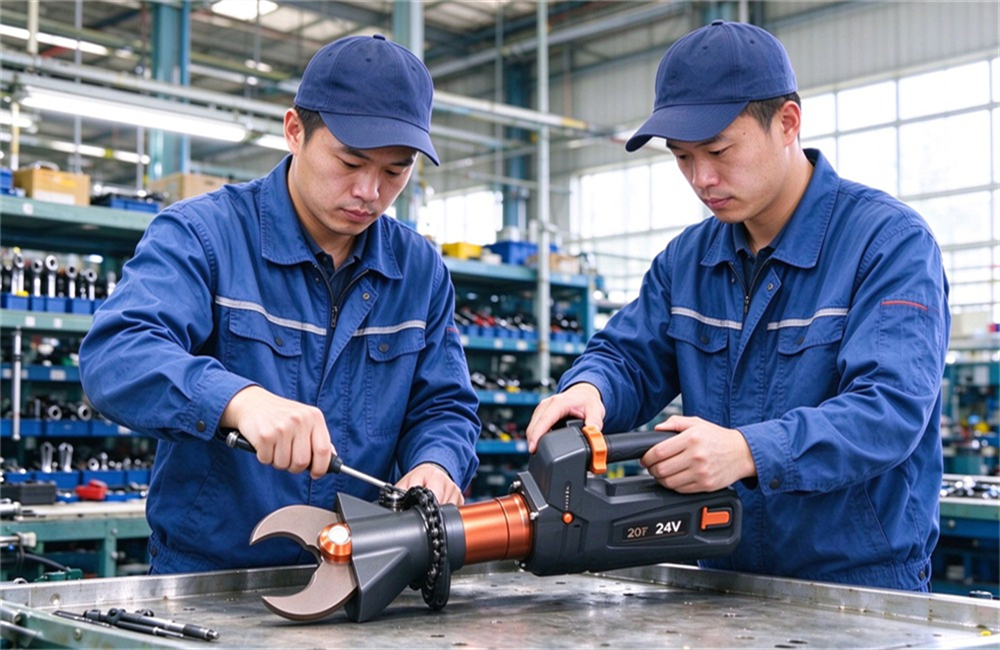
Spare blades, seals and the battery pack are all operator-serviceable items. A department that stocks one blade set and one pack per two tools keeps the fleet running without factory support, and the same spares fit the spreader and ram because the hydraulic cartridges share the platform.
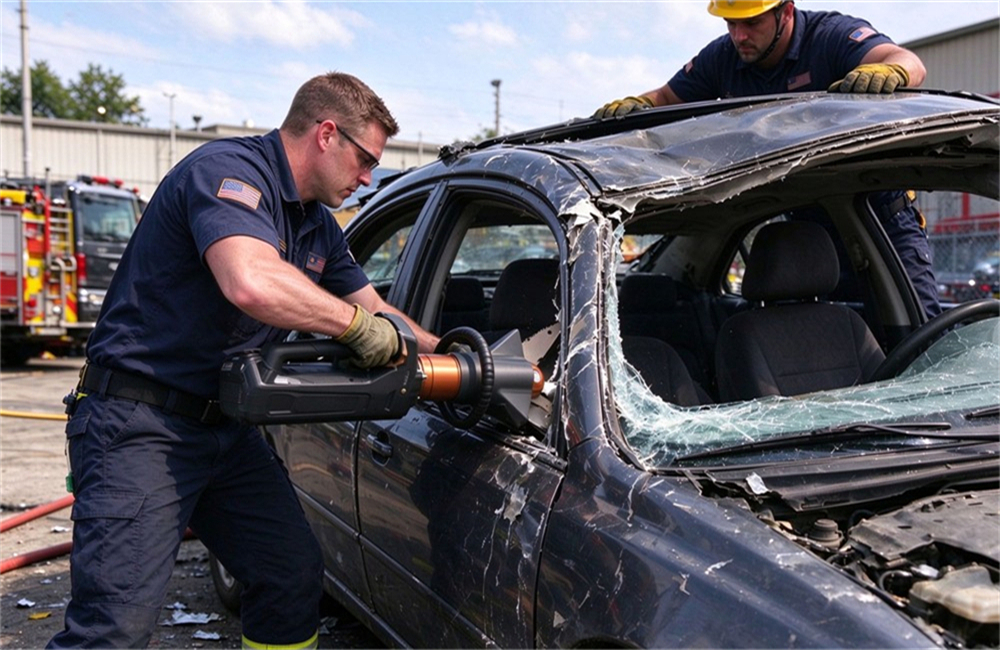
The electric hydraulic rescue tools spreader LDKZ70-720 opens 720 mm with 397 kN spreading force and 80 kN pulling force, at 22 kg. The tips are designed to grip door seams, window frames and vehicle pinch points without slipping, and the tool pulls chains for dashboard lifts and trunk openings.
The battery powered ram LDCD70-310/300S works in two stages. Stage one extends 310 mm with 227 kN of pushing force; stage two adds 296 mm with 102 kN, giving a total extension of 1082 mm from a 476 mm retracted length.
Weighing 19.5 kg, it lifts collapsed concrete, pushes dashboards and stabilizes unstable vehicle sections during patient removal.
Both tools share the same handle, battery and control logic as the cutters. In practice this means one operator can switch from spreading to lifting in seconds, and the department carries fewer spare parts across the whole tool family.
The spreader tips are replaceable and come in standard and serrated versions. Serrated tips grip painted and slippery surfaces better, while standard tips suit clean pinch points. For pulling work, the chain set connects to the tool base and gives the 80 kN pulling force used to open trunks, shift seats and roll vehicle sections.
The ram's two-stage design deserves a closer look.
The first stage extends fast to close the gap between the tool and the load, then the second stage applies the higher push force as the load resists.
This staged behavior is what lets a 19.5 kg tool lift a collapsed slab that a single-stage ram of the same weight cannot move.
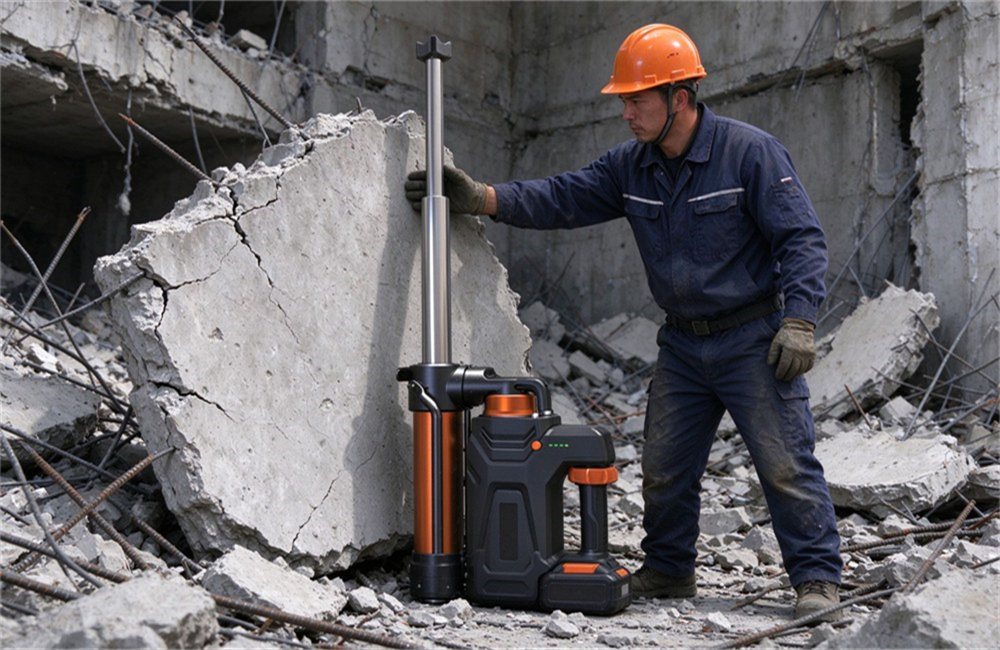
The in-line electric series adds the LDJK70-350 combi tool, which cuts and spreads in one unit. It opens 345 mm, spreads with 220 kN and cuts with 430 kN, handling round steel to 35 mm and plate to 16 mm.
At 24 kg it replaces two separate tools on the truck, which is why rescue teams with limited storage start with this model.
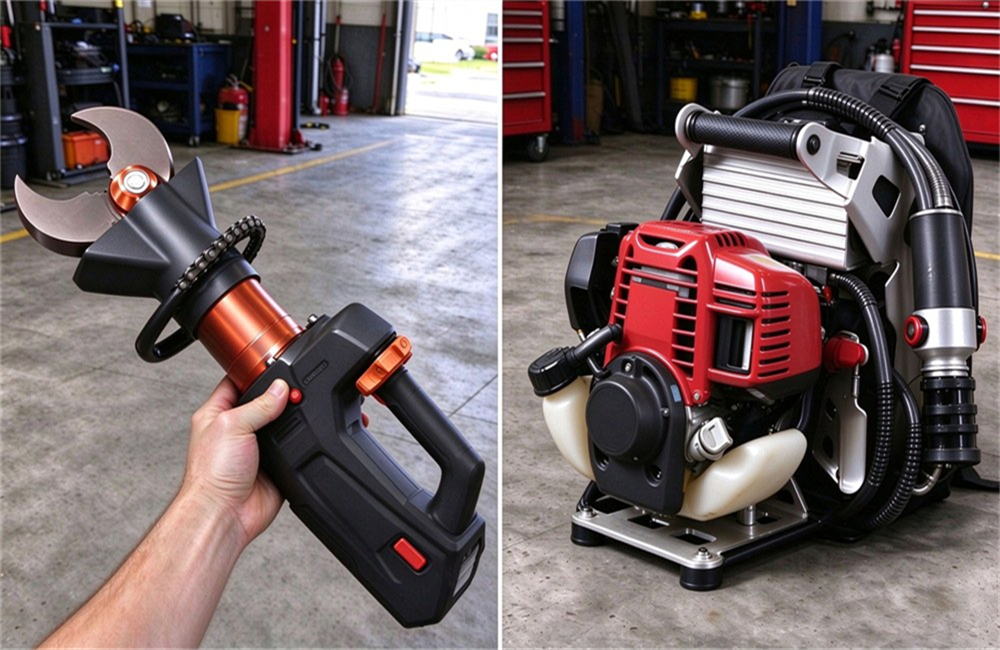
The same battery platform also powers the EHK-5D backpack unit — a one-hand operated electric hydraulic power source worn on the back — plus the BC-16 cordless rebar cutter and the HS-12 electric lock breaker. For technical rescue squads, the backpack unit powers standard hose-fed tool heads while the battery tools cover quick work.
When teams mix the combo and single-function tools, they keep one battery platform and gain both speed and flexibility across the whole electric hydraulic rescue tools line across the electric hydraulic rescue tools range.
: the combo handles multi-task scenes, while the dedicated cutter and spreader stay ready for heavy, repeated work.
Our engineers map this mix during the inquiry based on your call statistics.
The BC-16 cordless rebar cutter and HS-12 electric lock breaker cover the small jobs that often delay a rescue. A battery lock breaker opens padlocks, gate chains and cabinet locks in seconds, while the rebar cutter handles reinforcement bars that block access.
Both tools run on the same 24 V platform, so no second charger or battery type enters the fleet.
For technical rescue teams that need hose-fed force but have no engine, the EHK-5D backpack unit is the bridge between cordless rescue tools and engine-driven systems.
It generates hydraulic pressure from its own battery, weighs little enough to carry on the back, and powers standard tool heads through short hoses.
This configuration keeps the strongest tools available in stairwells and on roofs where a pump cannot travel.
Runtime on the job is a planning number, not a fixed one.
A fresh 5 Ah pair runs a cutter through most single-vehicle extrications, and the second pair covers the follow-up spreader work on the same call.
Departments that run back-to-back calls keep two charged pairs in the cabinet, which is why the pack ships with two batteries and one charger as standard.
With five models on the same platform, the first purchase decision is the one that shapes the fleet. Use this decision path instead of comparing every specification:
This path is the one our wholesale buyers of electric hydraulic rescue tools follow when they build the first order.
, and it is the same logic the engineers use to propose a configuration on a new inquiry.
The battery vs engine driven systems comparison below covers weight, runtime, noise and deployment speed for modern rescue fleets.
Comparing battery vs engine rescue tools on five factors keeps the choice objective: weight on scene, runtime, noise, maintenance and the scenes each system suits best.
Battery vs Engine Hydraulic Systems.
Battery Powered Cutter Set.
Engine-Driven Hydraulic System.
Weight on scene.
19.5 kg per tool, no pump or hose.
60–205 kg pump plus hoses.
Runtime.
60+ cutting cycles per 5 Ah pack.
Hours on fuel tank.
Noise.
Very low, indoor safe.
Engine noise, exhaust risk.
Maintenance.
No engine, no fuel, no hydraulic hose service.
Engine oil, filters and fuel care.
Best scene.
High-rise, garage, remote and confined space rescue.
Long-duration dewatering and multi-tool sites.
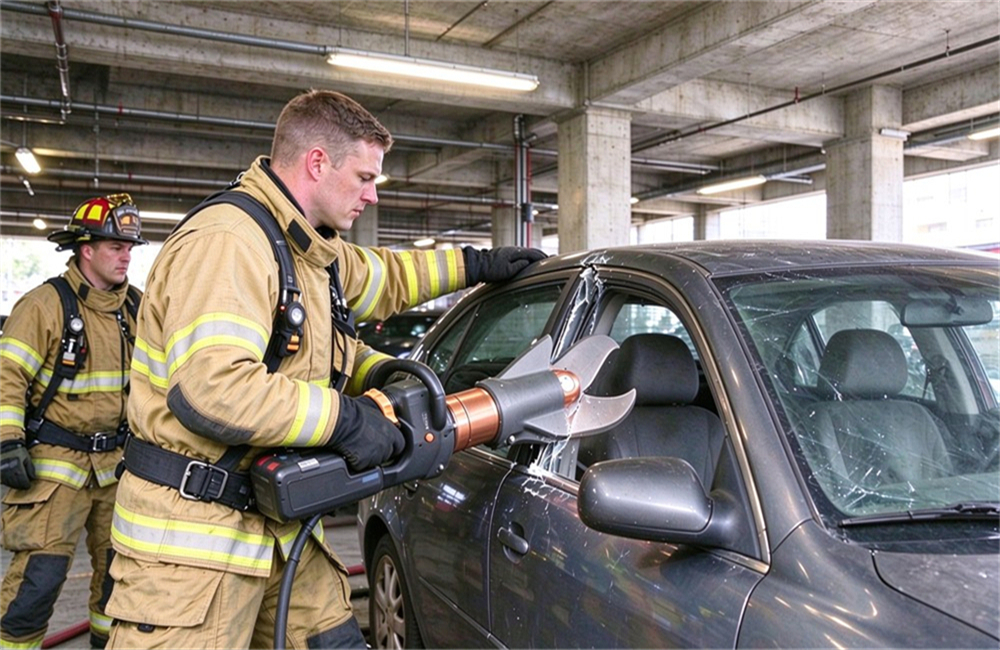
The battery system wins where the scene is indoors, in a garage, on a floor above street level, or in a remote area where fuel is hard to get.
The engine-driven system still wins where the operation runs for hours, such as long dewatering or multi-vehicle pileups with many tools running at once.
Most modern fleets buy both: battery tools for first response, an engine pump for extended operations.
Total cost matters too. A battery cutter has no engine to service, no fuel to store and no hose to replace, so annual maintenance cost is a fraction of an engine system's. Against that, battery packs have a finite cycle life, and the department should budget replacement packs after several years of heavy use.
Runtime is the question procurement teams ask first: battery runtime depends on duty, and the honest answer is that it varies with the job.
A cutter working continuously at full speed draws more energy than one working in short bursts, so our 60-cycle figure assumes realistic rescue operation, not continuous cutting.
When the operation runs long, the second pack or a charging rack in the truck extends the shift without stopping the work.
Deployment speed is where the gap is widest. An engine-driven system needs the pump lifted, hoses connected, fuel checked and the engine started — commonly one to three minutes before the first cut.
A battery tool cuts the moment the operator squeezes the handle.
In extrication, that head start often decides whether the victim is removed before the fire spreads or the car settles.
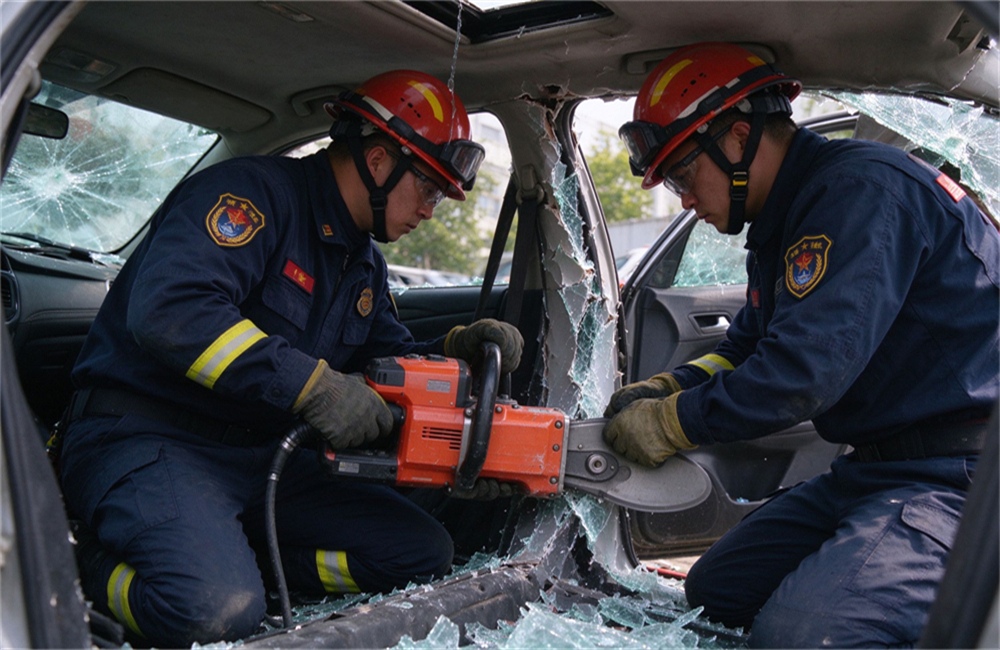
The applications of cordless rescue tools now span high-rise, rural, confined-space and flood response where no cable or exhaust is allowed.
The battery powered cutter and its companion tools fit any scene where a hose-fed system is impractical. The three application groups below cover the calls that drive most cordless rescue tool purchases. Each group has different duty cycles, so match the tool count to the workload.
In high-rise buildings and underground garages, carrying a pump up stairs is slow and running an engine indoors is dangerous, so confined space rescue crews choose battery power first.
A battery powered ram or cutter rides in an elevator with the crew and works in seconds.
This is the fastest-growing application for electric hydraulic rescue tools in dense city fire departments.
For collapse scenes where the same electric hydraulic rescue tool family clears debris, our earthquake search rescue tools. page covers the clearing priorities.
Elevator rescues are a common indoor call, and confined space rescue teams use the same battery spreader when a car stops between floors with a trapped passenger. A cordless spreader opens elevator doors without noise, and the same tool then pries the outer landing doors. Because there is no hose, the tool moves freely in the narrow shaft space.
Rural rescue teams respond to highway accidents kilometers from the station, sometimes on soft ground where a heavy pump sinks.
, which is exactly where electric hydraulic rescue tools earn their place among today's rescue equipment.
Cordless rescue tools travel in the truck cab, deploy anywhere, and need no generator or fuel supply at the scene.
For storm, flood and off-road incidents this independence is the decisive advantage.
Winter road accidents add another reason for battery power: a cold engine pump may struggle to start, while an electric hydraulic rescue tool holds its charge and works at sub-zero temperatures. The two-stage hydraulic system keeps force stable in cold weather, and the LED work light helps crews operating at night along unlit highways.
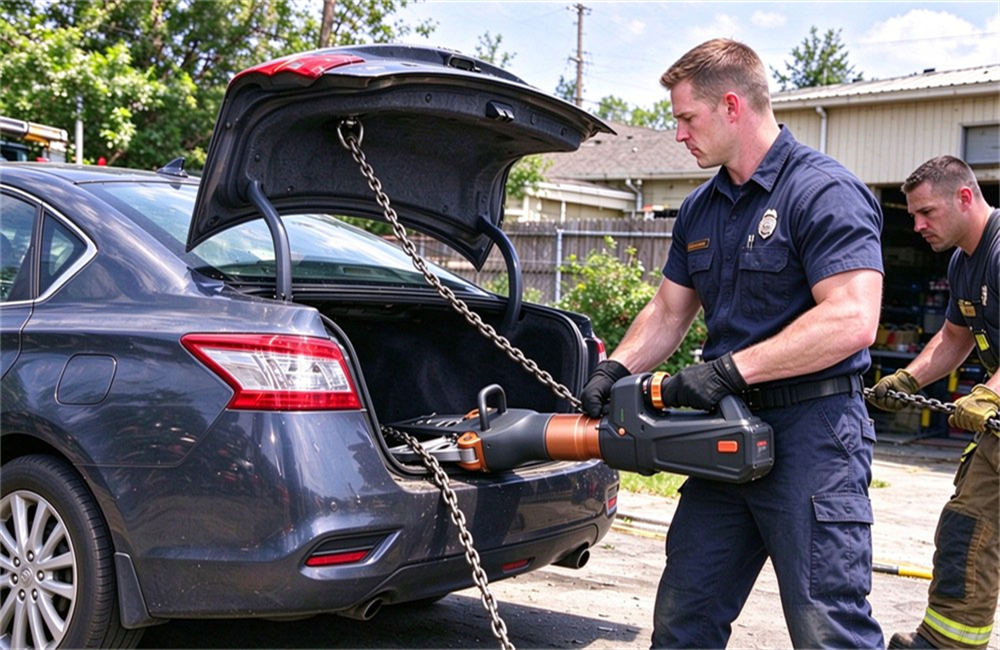
Customization options include tool color, logo, battery pack count and charging rack layout for large fire station orders.
Battery hydraulic tools are customized to the buyer's fleet, and most orders include at least one of the options below. Logo, handle color and case branding are the common requests; battery capacity and voltage are engineered options that change the runtime and charging setup.
Custom configuration does not change the core force values because the hydraulic unit and blade design stay the same. What changes is how long the tool runs, how the crew identifies it, and how the case travels. Confirm the customization list at the inquiry stage so production starts on the agreed configuration.
For large fleet orders, we also customize the charging setup: a station charging rack that holds multiple packs.
, a vehicle charger that recharges packs from the truck's 12 V system, and a battery management record sheet for the equipment officer.
These options keep every pack charged and tracked between shifts, which is how departments avoid finding a dead pack at the scene.
Customization Option for Battery Hydraulic Tools.
What Changes.
Typical Choice.
Battery capacity.
Runtime per charge.
5Ah standard, larger on request.
Voltage class.
Force and pack weight.
24V standard.
Handle color.
Department identification.
Red, yellow, black.
Case branding.
Tool case logo and text.
Department name and logo.
Spare pack quantity.
Continuous operation.
2 packs per tool typical.
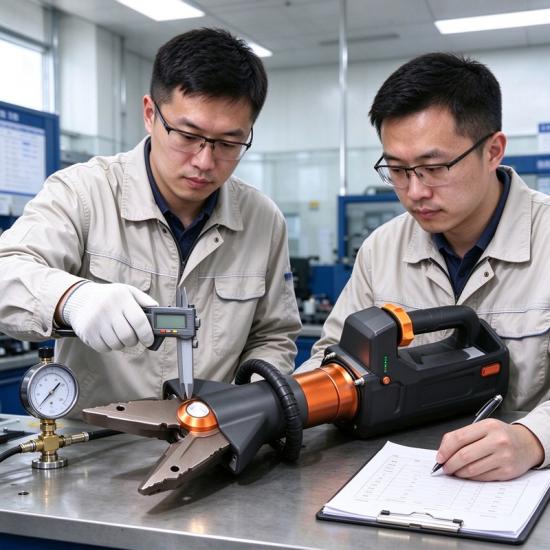
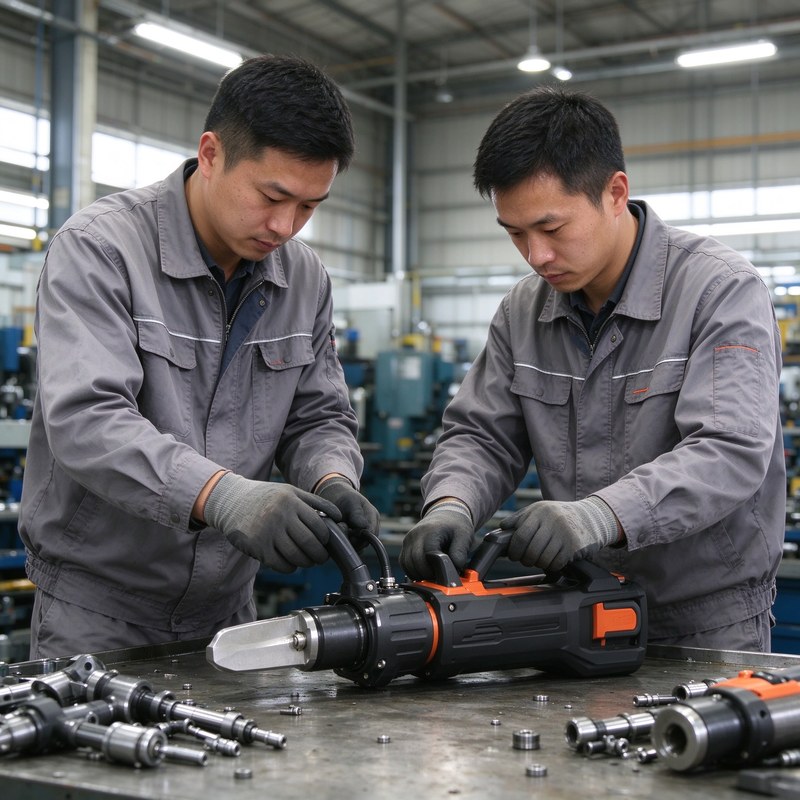
Every battery hydraulic tool passes a runtime test and a pressure test before packing. In the runtime test the tool cycles continuously on a charged pack and the recorded cycle count must match the specification; in the pressure test the tool holds rated pressure without leakage.
Both results are printed on the test record that ships with each unit.
Blades are checked for hardness and edge condition, and the battery management system is verified for overcharge and over-discharge protection. NFPA 1670.. Performance follows NFPA 1936. for electric rescue tools and EN 13204. for hydraulic tool force ratings.
, the standard for technical rescue operations, is the framework our quality team uses when documenting test procedures for government and institutional buyers.
When a scene needs unlimited runtime instead of a battery, the hydraulic power unit. range keeps the pump-fed tools working for hours.
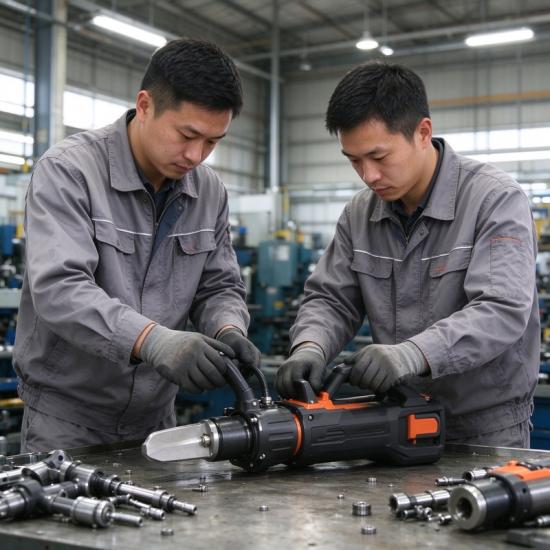
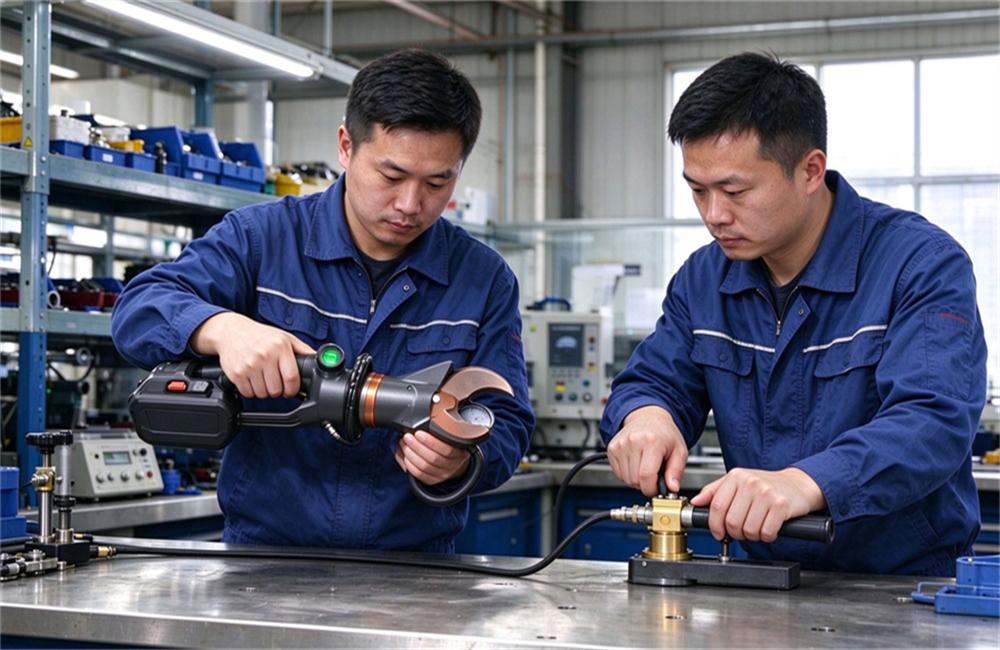
Production and quality control are performed by trained workshop staff using standard inspection tools in a bright, clean facility.
Every unit is photographed with its serial number before packing, and the photos are kept on file for traceability if a customer needs to review the specific unit delivered.
The runtime test uses a fresh, fully charged pack and records the cycle count until the battery warning light comes on.
The pressure test holds the tool at rated pressure for a set period and checks every seal and coupling for leakage.
Both tests are repeatable and documented, so a buyer can request the test records for any batch before shipment.
Blade hardness on the battery hydraulic cutter is verified on the same standard used across the rescue tool industry, and the battery management system is checked for balanced cell charging.
Any unit that fails a check leaves the line for rework before packing; no defective unit is shipped onward to save time.
This is the same discipline applied to every hydraulic rescue tool we produce.
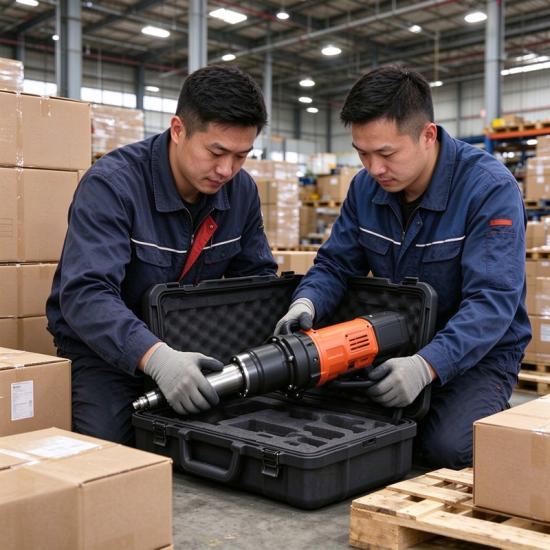
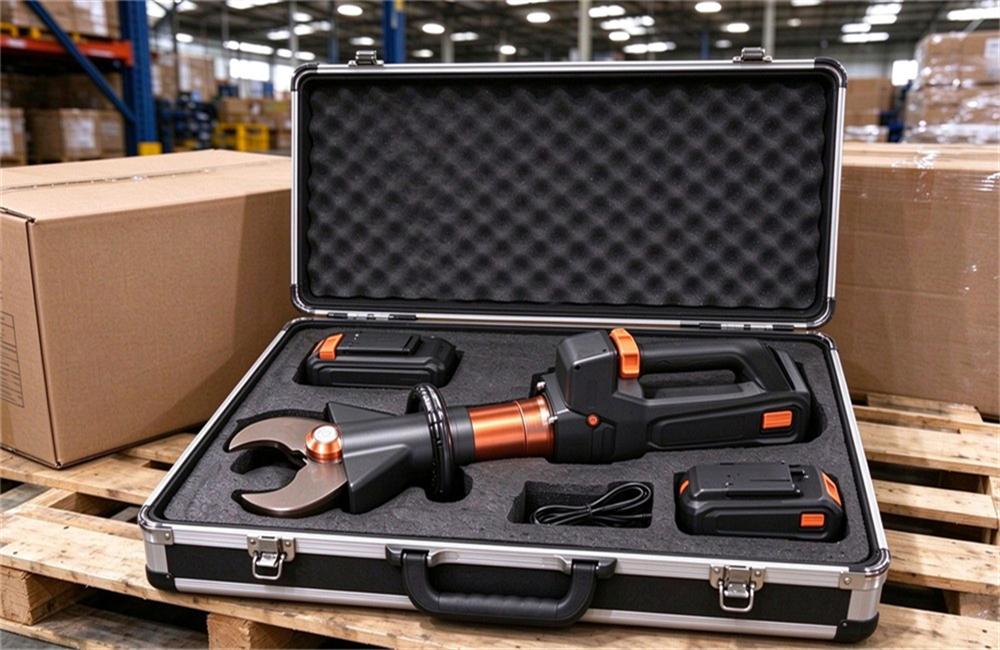
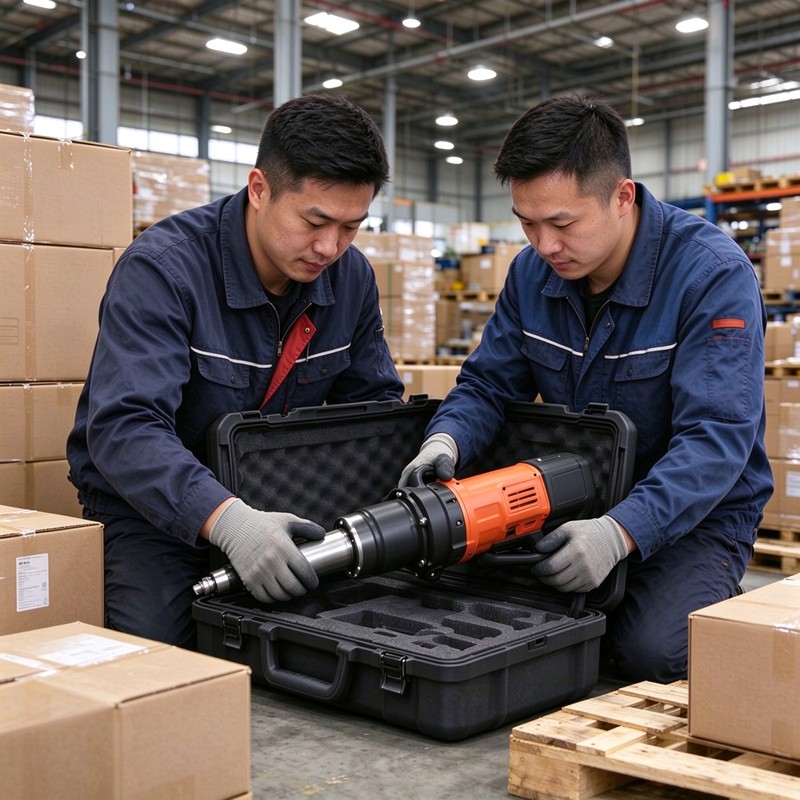
Battery hydraulic tools ship in shockproof molded cases with foam cutouts for the tool, two battery packs, the charger and spare blades. Each case is labeled with the model, serial number and battery warning symbols required for air and sea freight.
The case protects the tool during international transit and doubles as the storage box in the rescue truck.
For sea freight, the complete set is packed into an outer carton with the case inside, and palletized for container loading. Battery packs are shipped per IATA/IMDG lithium battery regulations, so our export documentation includes the required declaration forms. Delivery time and packing method are confirmed in the quotation for your destination port.
Wholesale customers usually order the electric hydraulic rescue tools with spare packs, spare blades and a charging rack for the station. These accessories are packed separately or inside the same carton depending on quantity, and the packing list states every item so the receiving team can verify the delivery.
Delivery lead time for battery hydraulic cutter orders is confirmed in the quotation and depends on the customization level. Standard models with standard branding ship fastest; logo printing, case customization and special battery configurations add production time.
We publish the lead time per configuration at the quote stage so the receiving team can plan the station rollout.
Each cordless tool ships in its own foam-cut aluminum case with the battery packs, charger and spare blades or tips in the same box, so the complete kit arrives as one unit.
The case doubles as the station storage box, and the foam layout doubles as a checklist — missing tools are visible the moment the lid opens.
Export cartons carry the model list and handling marks for quick receiving checks.
Ordering the battery series follows five clear steps.
A typical first inquiry includes one battery hydraulic cutter, one cordless spreader and two spare battery packs. We respond with a matched configuration and a quotation within one working day. Samples are available for evaluation before volume production, and the sample unit is tested under the same conditions as production units.
For quiet manual back-up breaching, the forcible entry tools. range works without any power source, and the hydraulic rescue tools. catalog ties the whole matrix together.
Every order is through the five steps with a named contact: the inquiry, the specification confirmation, the production schedule, the quality records and the shipping documents.
Government and institutional buyers receive the test certificates, packing list and export documents in one handover folder, so the receiving team has everything it needs for acceptance inspection.
For institutional buyers the order file matters as much as the tool: the hardness records.
, pressure test values and battery test reports follow each shipment, and the same documents are what the receiving team checks against the packing list.
This is why the order process ends with a named contact who can re-issue any document for customs or tender review.
Battery powered hydraulic rescue tools now cover the same cutting, spreading and lifting duties as engine-driven units, with cleaner operation and lower training time for a station crew.
An electric hydraulic spreader moves door frames and dashboards in the same way as a cordless spreader, while a battery hydraulic cutter handles roof posts and side pillars without a towed pump.
Teams that compare battery vs engine options on weight, sound and fuel cost usually keep one petrol unit for sustained jobs and add cordless rescue tools for first response speed.
Battery runtime planning follows the call sheet: a 24 V pack sustains roughly one full extrication, and a spare battery doubles the working window for multi-vehicle incidents.
Confined space rescue crews favor compact cordless tools because the pump and hose are replaced by a self-contained unit that fits through narrow openings.
Departments standardize on one battery powered cutter model so spare packs, blades and training stay interchangeable across every truck.
For tender documents, list the cutting force, spread width and battery runtime of each cordless tool, and attach the IP rating for outdoor use.
A station that keeps electric hydraulic rescue tools ready on the appliance can start cutting within seconds of arrival, which shortens the overall extrication window.
Ordering a complete cordless rescue tools set with two batteries per tool keeps every appliance ready through the shift.
Battery powered hydraulic rescue tools make the station safer to maintain and faster to deploy.
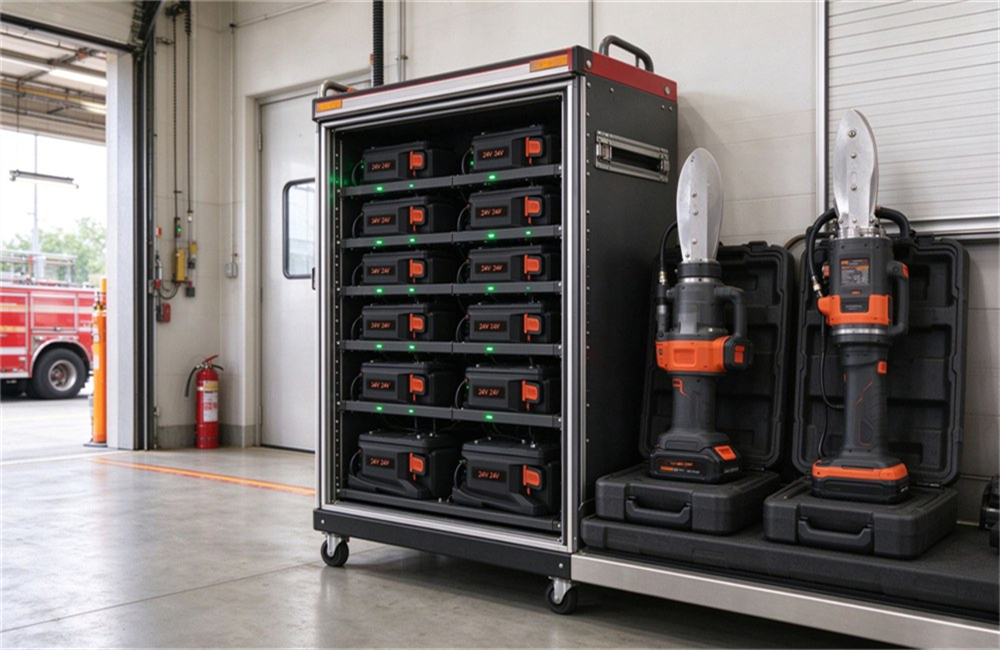
Every set of electric hydraulic rescue tools ships charged and ready for station duty. Our electric hydraulic rescue tools cover cutting, spreading and ramming from one cordless family.
Fire brigades choose electric hydraulic rescue tools where exhaust or hoses are unsafe. The electric hydraulic rescue tools range now supports mixed fleets of cutters, spreaders and rams.
Each pack of electric hydraulic rescue tools includes battery packs, a charger and a molded case. Teams deploy electric hydraulic rescue tools in seconds on any rescue scene.
Each tool passes quality and testing before dispatch. The battery vs engine driven systems choice comes down to noise, exhaust and runtime.
Wholesale buyers source electric hydraulic rescue tools for fire stations, industrial safety teams and municipal departments. Every order of electric hydraulic rescue tools comes with a parameter sheet and CE or 3C options.
Our electric hydraulic rescue tools reduce on-scene setup time. Procure electric hydraulic rescue tools as a matched kit for faster extrication calls.
Stock electric hydraulic rescue tools for mixed fire and industrial contracts. Our electric hydraulic rescue tools are the cordless first choice for modern rescue teams.
Every kit of electric hydraulic rescue tools is tested to rated force before export. Replace older hose-driven gear with electric hydraulic rescue tools for faster callouts.
Compare electric hydraulic rescue tools against any petrol-powered set before your next procurement. The electric hydraulic rescue tools fleet ships complete with batteries and charging racks.
Deploy electric hydraulic rescue tools where exhaust is forbidden. The latest electric hydraulic rescue tools deliver petrol-class force from a battery pack.
Ship electric hydraulic rescue tools as a complete cordless kit for fast station readiness.
FAQ
What is the runtime of battery vs engine hydraulic rescue tools?
A battery hydraulic cutter runs roughly 60 cutting cycles on one 24 V / 5 Ah pack, while an engine-driven pump runs for hours on a tank of fuel. Battery tools swap packs in seconds for continuous work; engine systems refuel on site. For typical extrication calls, the battery runtime covers the whole operation, and spare packs extend it indefinitely.
How long does a battery hydraulic cutter work on one charge?
One 24 V / 5 Ah pack delivers about 60 full cutting cycles, which covers the average vehicle extrication from stabilization to patient removal. With two packs carried, the tool works continuously while one pack recharges. We recommend two packs per cutter for departments that run back-to-back calls.
How much spreading force can a cordless spreader deliver?
The cordless spreader LDKZ70-720 delivers 397 kN of spreading force with a 720 mm opening and 80 kN pulling force. That is enough to pry jammed doors, windows and vehicle pinch points. The force class matches hose-fed spreaders, so teams switching from engine systems keep the same operating power.
Can battery powered rescue tools be used in rain and wet conditions?
Yes. Electric hydraulic rescue tools are designed for outdoor rescue duty, with sealed hydraulic units and protected battery compartments. The tools keep working in rain and cold, which is a requirement for flood and storm response
What maintenance do cordless rescue tools need?
Maintenance is limited to three items: keep the blades clean and sharp, check the battery gauge before each shift, and store the tool in its case at normal temperature. There is no engine oil, fuel filter or hose to service. A simple seal kit and blade set keeps the tool in service for years, which lowers total ownership cost.
Can a battery powered hydraulic tool run with an engine-driven power unit?
No — a battery powered hydraulic rescue tool is self-contained and has no hose connection. If your fleet already runs an engine-driven pump, keep it for extended operations and use the battery tools for first response and indoor scenes.
How long does it take to charge the battery pack?
A 24 V / 5 Ah pack charges from empty to full in roughly one hour with the standard charger. The charger has overcharge protection and an LED indicator, so the pack can be left connected until the station needs it. Charging racks for multiple packs are available for fire stations with several tools.
What is the service life of a lithium battery in rescue tools?
A lithium battery pack in rescue service typically lasts several years or around 500 charge cycles before capacity drops. Because packs are swappable, you replace only the pack, not the tool. We recommend recording the charge cycle count and budgeting replacement packs after heavy years of service.
What cutting force can a battery hydraulic cutter deliver?
The LDJQ70-155 and LDJQ70-258 cutters deliver 560 kN of cutting force at a rated pressure of 720 bar, which covers car pillars, door posts and window frames in standard vehicle extrication. The combi tool LDJK70-350 cuts at 430 kN with a 220 kN spreading force in the same head.
How wide is the blade opening on the battery cutter?
The LDJQ70-155 opens to 155 mm and the LDJQ70-258 opens to 258 mm, which matches the profile of most car pillars and door frames. The spreader LDKZ70-720 opens to 720 mm and pulls with 80 kN of traction, so the pair covers both cutting and prying on one call.
Can a cordless rescue tool be operated one-handed?
Yes. The two-stage pump keeps force available at the tip even when the operator works one-handed in a tight opening, which is the common position in vehicle interiors and elevator shafts. The three-position handle and integrated LED light support this working posture.
What does the wholesale pack include with each tool?
Each cordless tool ships with two 24 V / 5 Ah battery packs, one charger, spare blades or tips and the aluminum tool case. The complete kit arrives as one unit, and the foam layout doubles as the station checklist.
Whether you equip a single fire station or tender a full municipal fleet, send us your tool list and flow requirements. We quote the power unit, twin hose set and matched rescue tools together for batch purchase and OEM orders.
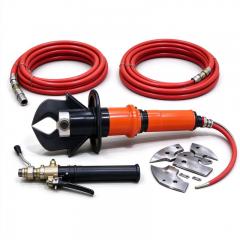 Hydraulic Cutter for Rescue Wholesale Cutting Tool Sets and Spare Blades
Our hydraulic cutter delivers 420kN cutting force for fast vehicle extrication and structural collapse rescue. Compatible with manual, motor and battery power units. Equipped with interchangeable blades, tested strictly, ideal for fire departments, government stock and Red Cross procurement. Note: Price for reference only. Exact price based on quantity, size, weight and custom details.
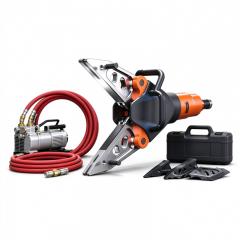 Hydraulic Spreader for Rescue – 42-62kN Vehicle Extrication Tool
Hydraulic spreader for fire rescue and vehicle extrication. Electric and manual types available, fitted with replaceable tips and pulling chain set. It is used for accident rescue, collapse rescue and regular rescue training. Note: Price for reference only. Exact price based on quantity, size, weight and custom details.
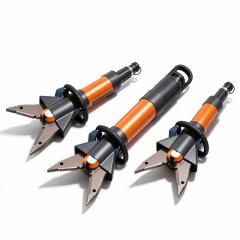 Hydraulic Combi Tool for Rescue – Cut and Spread Supplier
Hydraulic combi rescue tool for vehicle extrication and collapse rescue. Electric, manual and portable versions available. It can cut and spread metal structures, widely used for fire rescue and emergency extrication work. Note: Price for reference only. Exact price based on quantity, size, weight and custom details.
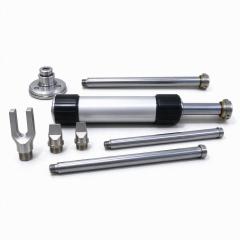 Hydraulic Rescue Ram | GYCD-120/450-750 Lifting & Stabilization
Hydraulic rescue ram delivers stable high pushing force for vehicle extrication, earthquake collapse shoring and road accident rescue. Widely used by fire departments, emergency teams and disaster relief organizations. Compact, durable and easy to operate in tight rescue spaces. Note: Price for reference only. Exact price based on quantity, size, weight and custom details.
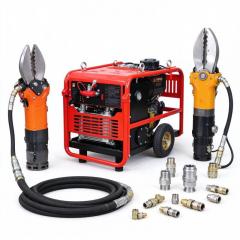 Hydraulic Power Unit for Rescue Tools – 63MPa Pump Supplier
This 63MPa hydraulic power unit supplies stable high pressure power for cutters, spreaders and rams. Multiple types including petrol, diesel, electric, manual and backpack versions. Dual outlet design supports synchronous operation of rescue tools for road accident and collapse rescue. Note: Price for reference only. Exact price based on quantity, size, weight and custom details.
 Military 60% Wool Blanket, Army green 94x94in for Police - YRF
Meticulously crafted for military and police mission scenarios, this 60% wool blanket measures 94×94 inches, offering generous coverage. The 60% wool content endows it with good warmth - retention and a soft touch. The unique moisture - control technology can quickly regulate moisture, keeping users dry. The tactical Army green design enables seamless integration into various environments, facilitating mission execution. It is an ideal choice for both police field operations and military training.
Copyright © Custom Disaster - Relief Bedding: Tents, Sleeping Bags, Blankets All Rights Reserved
the professional team to service !