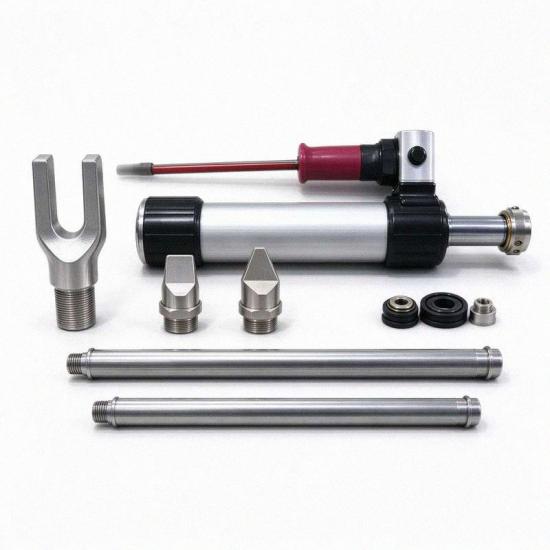
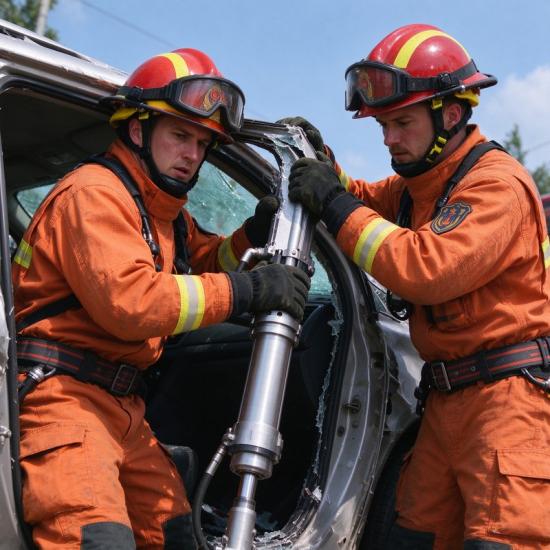
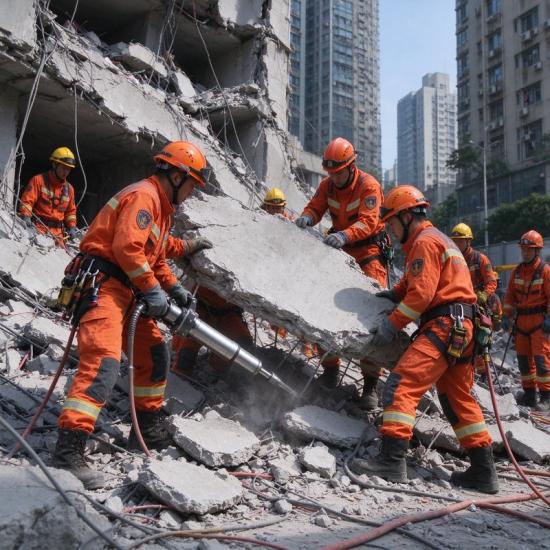
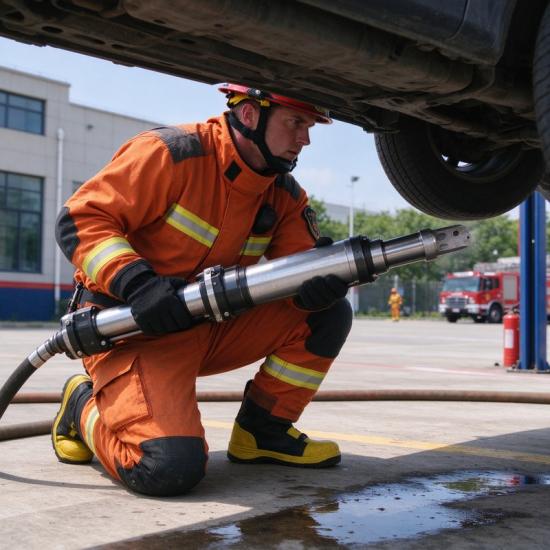
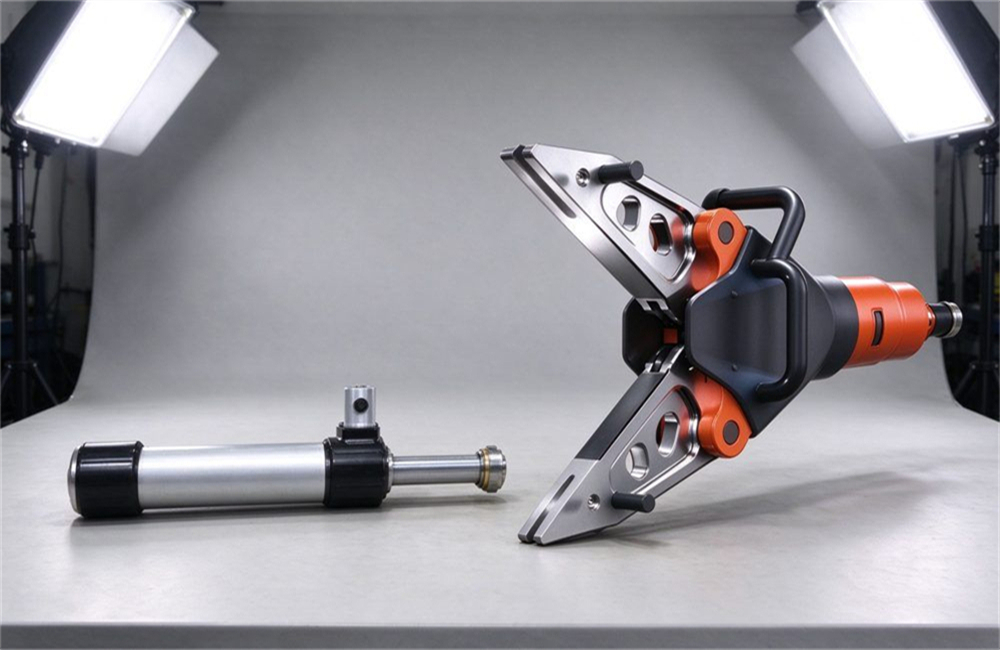
Hydraulic rescue ram delivers stable high pushing force for vehicle extrication, earthquake collapse shoring and road accident rescue. Widely used by fire departments, emergency teams and disaster relief organizations. Compact, durable and easy to operate in tight rescue spaces.
Note: Price for reference only. Exact price based on quantity, size, weight and custom details.
model no. :
H-05Brand:
YRFmarket price :
$3600sale price :
$1800price range :
10-30/$1800Color :
Multiple Colorsport of dispatch :
Guangdong/GuangzhouPayment :
TT, Paypal, Western Unionmin order :
10original region :
Made in ChinaLead Time :
5-15days
Hydraulic Rescue Ram | GYCD-120/450-750 Lifting
& Stabilization
A hydraulic rescue ram lifts crushed vehicles, supports collapsing structures and holds heavy loads in place while crews work. YRF supplies the GYCD-120/450-750 ram at 63MPa with 120kN ram force and a 450-750mm working range for fire, rescue and government buyers.
 |

|
What Is a Hydraulic Rescue Ram?.
Single Stage vs Two Stage Rams.
Single-Stage GYCD-120/450-750.
Two-Stage Rams.
Heavy-Duty Rams R410.
Key Specifications.
Applications.
Customization Options.
Quality & Testing.
Packaging & Delivery.
Order Process.
Maintenance & Spare Parts.
Safe Operation.
Training & Field Support.
Choosing the Right Ram.
Ram vs Spreader.
FAQ.
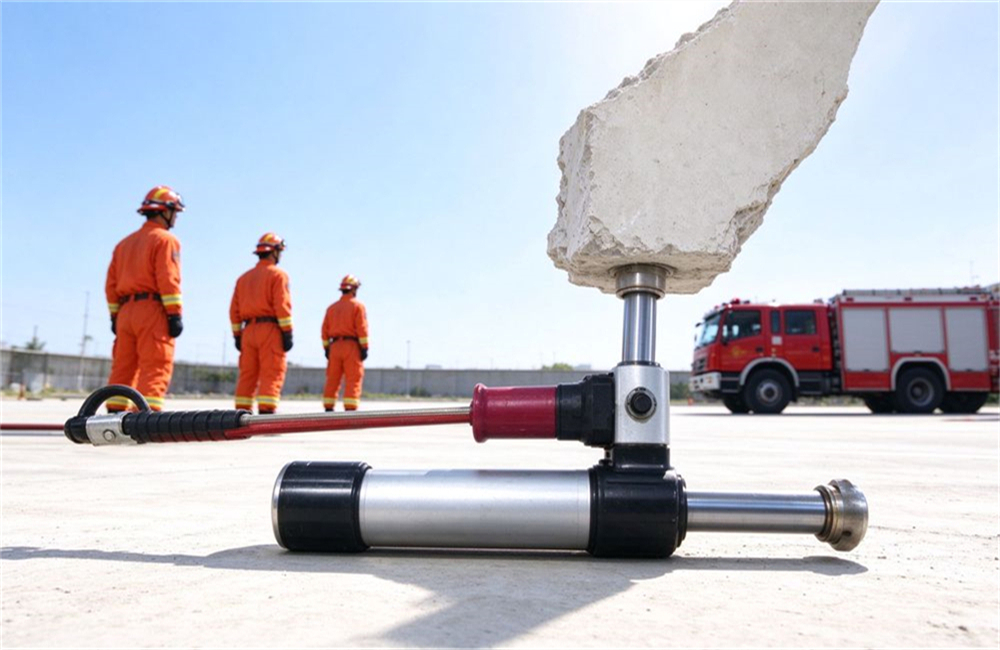
A rescue ram is a single-cylinder tool that pushes, lifts or holds a load along a straight line. Unlike a cutter or a spreader, which work by squeezing or prying, a hydraulic rescue ram uses the piston rod itself to create distance.
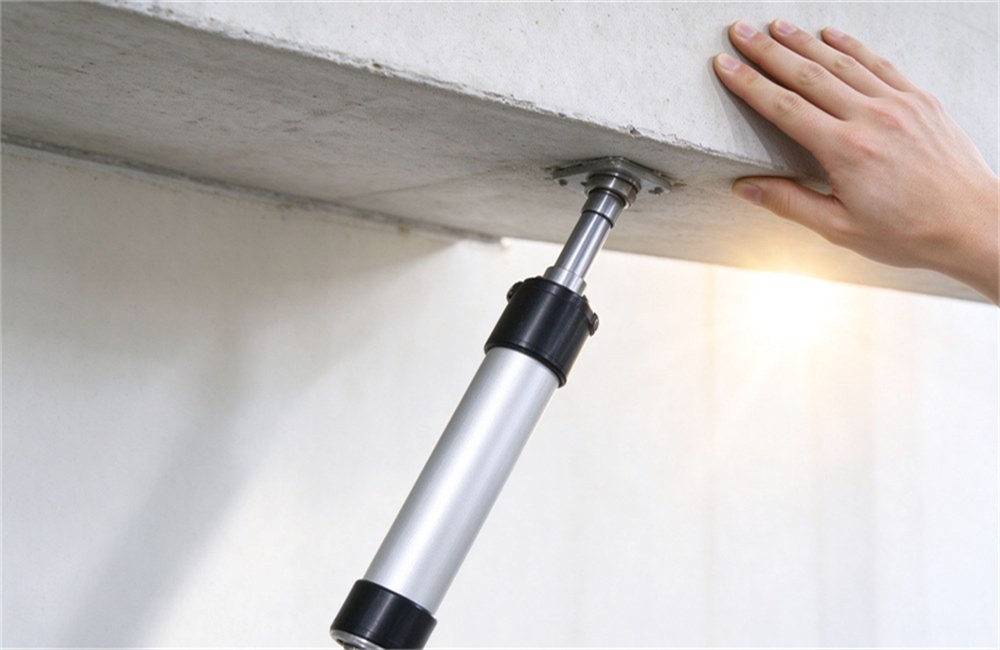
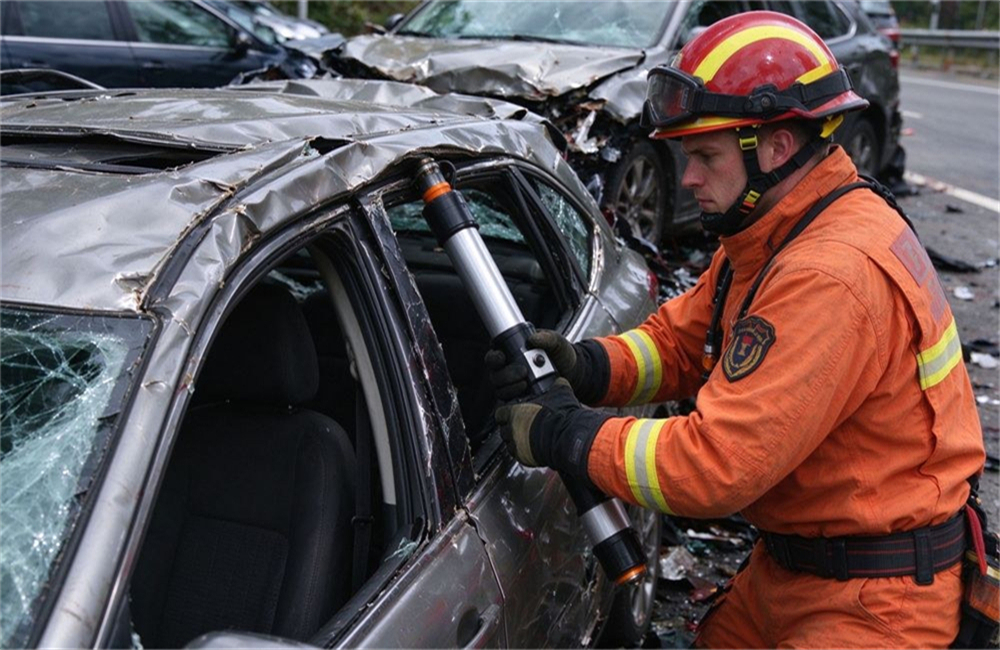
Which hydraulic ram for lifting depends on the scene. It pushes a crushed dashboard off a trapped driver, lifts the edge of a fallen slab, or holds a sagging roof beam in place while search crews move underneath.
The working principle is straightforward. High-pressure oil from a manual, motor or battery pump enters the cylinder at up to 63-72MPa and drives the piston forward.
The piston rod extends against the load, pushing it a fixed distance per stroke. When the pressure is released, the rod returns to the closed position and the hydraulic rescue ram is ready for the next placement.
A hydraulic rescue ram differs from a jack in one important way: it is designed for speed and positioning, not for long travel.
The rescue crew places the heavy duty rescue ram into a gap, extends the rod against the load, and holds it there while other tools do the cutting and spreading.
This holding function is why rescue teams describe the hydraulic rescue ram as the tool that "buys room" at an extrication scene.
The hydraulic rescue ram is part of a complete rescue tool family that also includes cutters, spreaders and combination tools. On the rescue truck, the hydraulic rescue ram handles the lifting role while the cutter severs steel and the spreader opens gaps.
Together, the three tools cover almost every extrication sequence, and they all run from the same hydraulic power unit.
A rescue ram is also the first tool deployed at most extrication scenes. Hydraulic rescue rams have been part of fire service equipment for decades because lifting is the first step of almost every rescue.
Before a door can be cut during single stage vs two stage ram planning, the vehicle must be stabilized. Before a slab can be moved, it must be lifted.
The hydraulic rescue ram performs this first, most critical step, and its simple design means it fails less often than complex tools under heavy use.
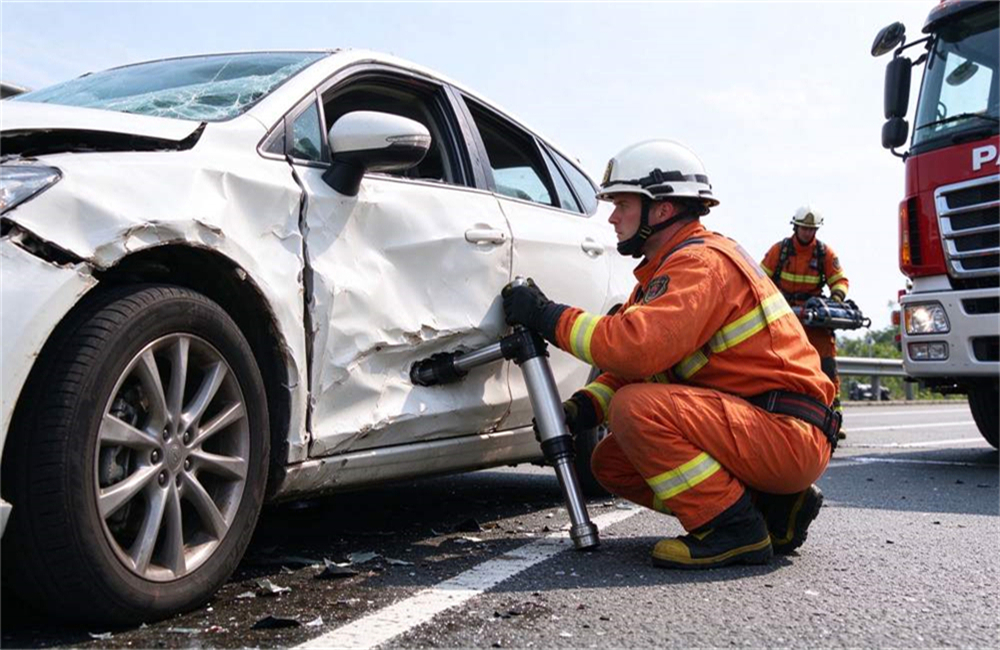
The heavy duty rescue ram works with a cutter and spreader at the same scene. The first benefit of a hydraulic rescue ram is controlled lifting force.
The GYCD-120/450-750 delivers at least 120kN of ram force, enough to lift a car body, push a dashboard or raise a fallen door frame.
The force is applied smoothly and holds steadily, which is critical when a victim is trapped between two crushed surfaces.
The second benefit is the adjustable working range. The hydraulic rescue ram opens from 450mm to 750mm, and with optional extension rods the reach grows much further. This single tool therefore covers shallow gaps and deep offsets without carrying several fixed-length cylinders.
The third benefit is stability. Once the rod is extended and the pressure is held, the hydraulic rescue ram stays locked in position.
It does not creep or sink, so crews can rely on it as a temporary support while cutting work proceeds.
This makes the hydraulic rescue ram the natural partner for cutters and spreaders on every rescue truck.
The fourth benefit is maintenance. A single cylinder with one set of seals is simple to service, and the tool body has no blades to sharpen and no jaw mechanism to wear.
Workshop time stays short, which matters for departments that run their rescue tools every day.
Beyond these four benefits, the hydraulic rescue ram is also the easiest rescue tool to train on. A new operator can learn correct placement and lifting technique in one session, because the tool has a single motion and no blades.
This lowers training cost for volunteer units and busy career departments alike.
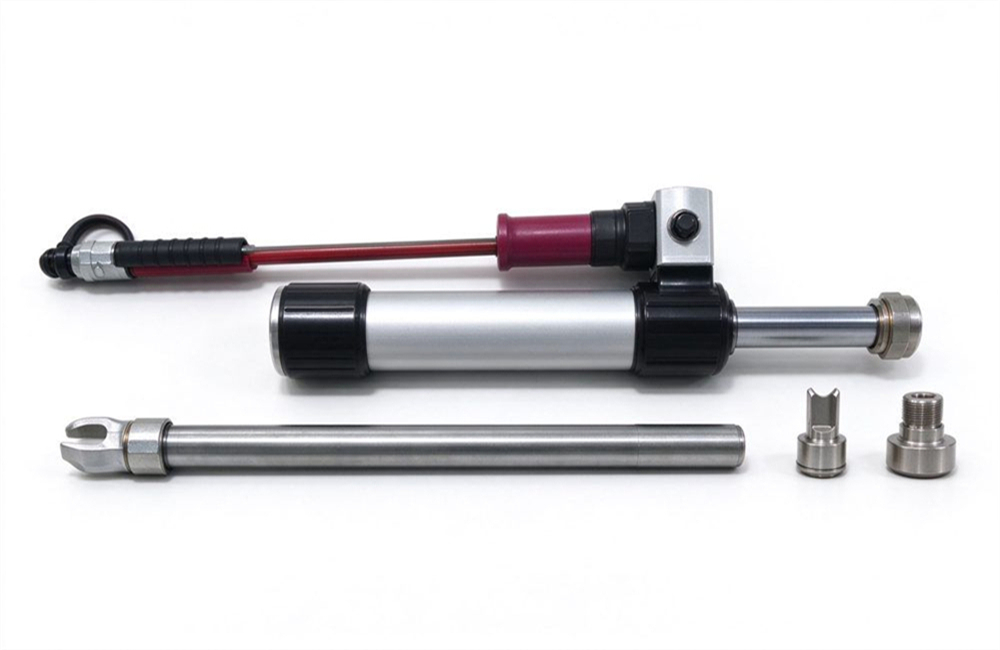
The table below compares our single stage vs two stage ram models. A single stage ram delivers one force over one stroke, while a two stage ram extends in two steps and combines high initial force with a longer reach. Choose by stroke length and the load you must move.
Factor.
Single-Stage GYCD-120/450-750.
Two-Stage GYCD-220/775.
Lifting force (ram force).
≥120 kN.
102-221.8 kN.
Stroke.
300 mm.
315-605 mm.
Working range.
450-750 mm.
460-1065 mm.
Rated pressure.
≥63 MPa.
70 MPa.
Weight.
≤12 kg.
≤13.5 kg.
Best for.
Standard lifting and stabilization.
Long-stroke heavy lifting.
Most rescue teams start with a single-stage hydraulic rescue ram because it covers the majority of vehicle extrication and stabilization jobs. The GYCD-120/450-750 is light enough for one operator to position, and its 300mm stroke handles typical crushed-vehicle gaps.
Two stage ram models such as the GYCD-220/775 give crews a longer reach for heavier loads. The first stage extends with high force to move the load, and the second stage pushes further once resistance drops.
This two-step motion suits truck cabs, collapsed industrial structures and rescue operations where the initial gap is too deep for a single-stage rod.
A single stage vs two stage ram comparison: the single stage gives one constant push over its stroke, which is enough for most passenger cars.
A two stage ram trades some early force for a longer total stroke. Which hydraulic ram for lifting works best when the gap is deep and the load is heavy, such as a crushed truck cab.
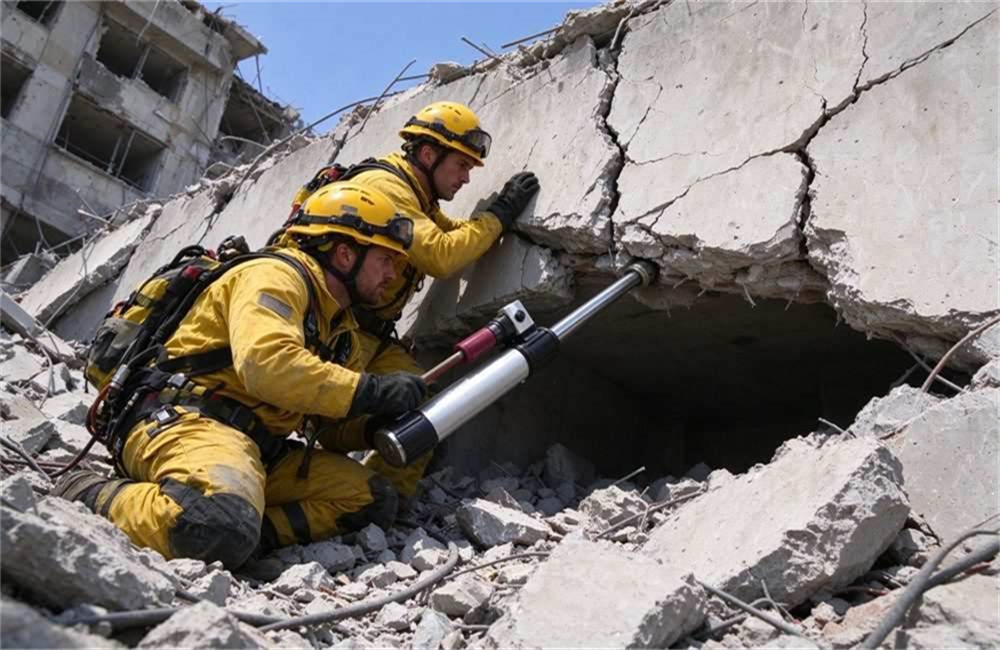
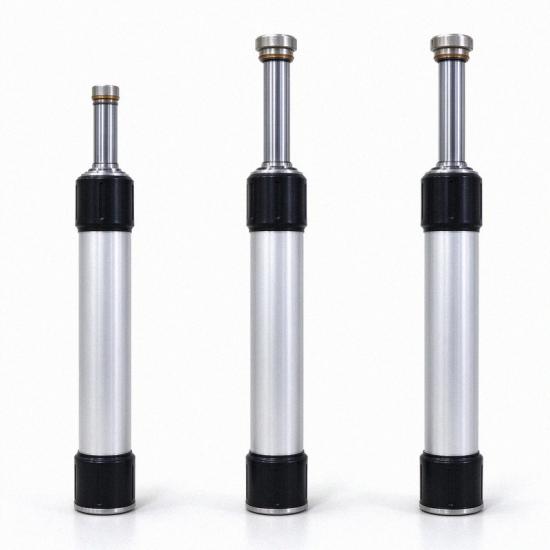
The GYCD-120/450-750 is our standard single-stage hydraulic rescue ram. It runs at a rated pressure of at least 63MPa and delivers at least 120kN of ram force.
The working range covers 450-750mm with a 300mm stroke, and the whole tool weighs no more than 12kg.
The body measures 450×90×170mm, and the compact size lets crews place it into gaps that larger tools cannot reach. The tool uses standard hydraulic fittings, so it connects to most rescue pumps and hose sets already in service.
This model is the workhorse of vehicle extrication: it lifts dashboards, raises door frames and stabilizes wheels before cutting work begins. Its light weight also makes it practical for rescue teams that carry tools by hand to remote accident sites.
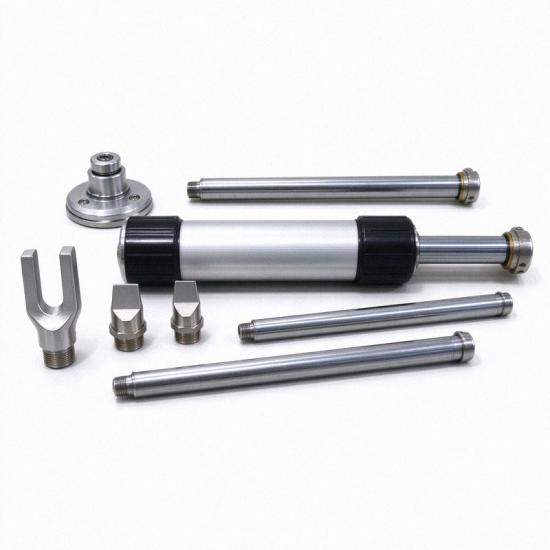
The GYCD-120/450-750 accepts extension rods of 100mm, 175mm and 275mm, which extend the working range to deeper gaps without carrying a second cylinder.
The optional swivel base lets crews place the ram at an angle on uneven ground, and the replaceable tips protect both the load surface and the tool.
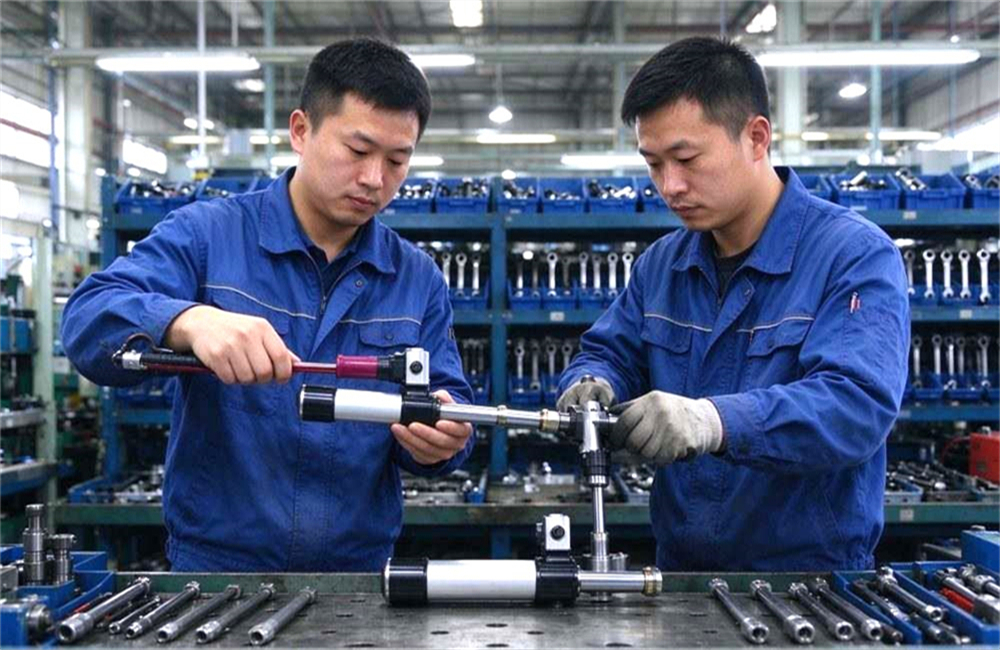
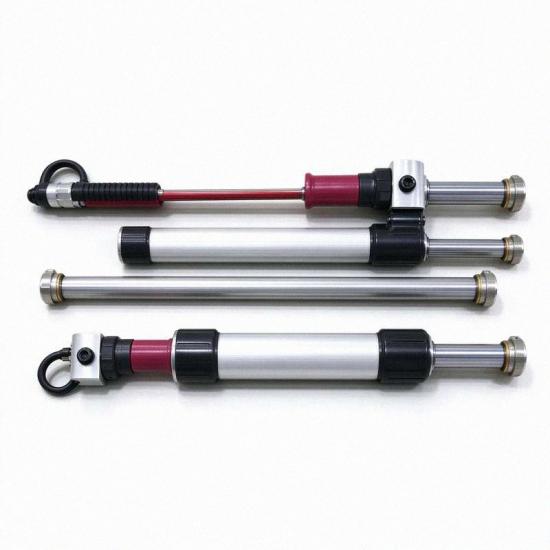
Our two stage ram range adds reach without sacrificing force. The GYCD-220/775 operates at 70MPa, delivers 102-221.8kN of ram force and extends from 460mm to 1065mm.
It is the tool of choice when a crushed cab or fallen structure sits beyond the reach of a single-stage rod.
The GYCD72-310/300S two stage ram works at 720bar with a 227kN first-stage force and 102kN second-stage force, extending from 476mm to 1082mm.
The retracted length stays short enough to carry into rubble voids, and the extended reach covers deep lifting jobs in collapsed buildings.
Two stage ram models are used in pairs on heavy jobs: one hydraulic rescue ram lifts while the second holds, then both lock in place to create a stable working lane.
This two-ram method is standard practice in structural collapse rescue and trench support.
A two stage ram also works well for roof lifting in structural collapse. The first stage pushes the slab up, and the second stage extends further to create clearance for cribbing or a second hydraulic rescue ram.
This staged motion gives the operator fine control over the lifting height.
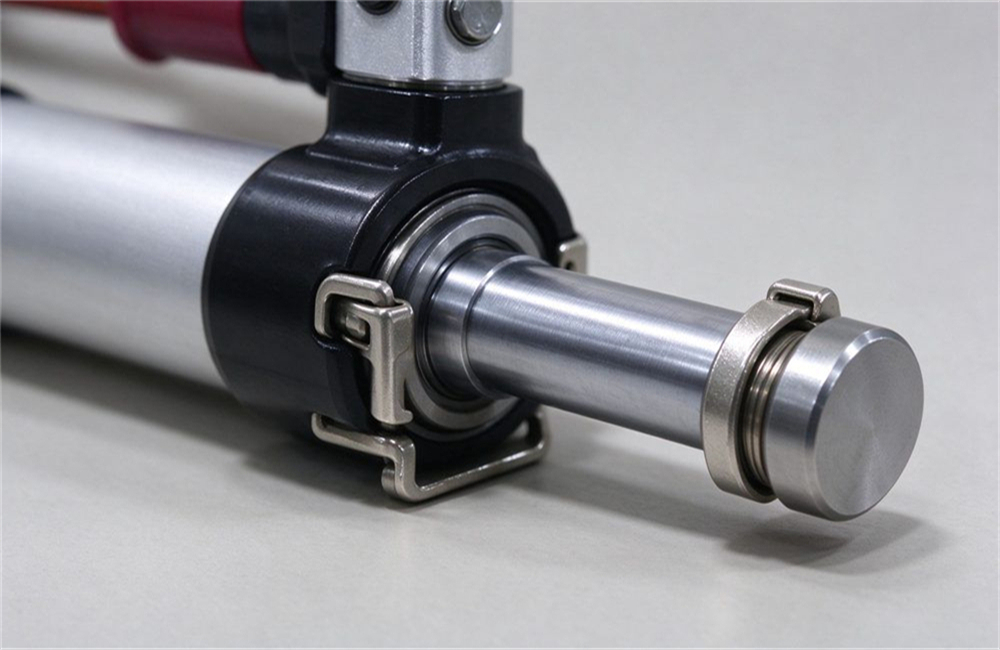
For rail, truck and industrial rescue, the R410 heavy duty rescue ram runs at 700bar with 110kN of ram force. It extends from 460mm to 760mm with a 300mm stroke and weighs 14kg.
The reinforced body handles repeated heavy pushes without flex.
The R410 keeps the same compact cylinder design, so heavy-rescue crews still position it by hand. It pairs with a high-flow motor pump to keep cycle time short under load.
This heavy duty rescue ram is a common choice for rescue trucks that respond to both road accidents and industrial incidents.
The heavy duty rescue ram accepts swivel bases and replaceable tips, which spread the load across uneven surfaces. A fork tip hooks onto a vehicle sill, while a flat tip presses evenly against a concrete slab.
Swapping the tip takes seconds and does not change the tested core cylinder.
All models in this range share the same service routine: check the oil, inspect the hoses and wipe the rod after each call. Standardization on one cylinder family keeps spare parts simple across a whole fleet.
The heavy duty rescue ram R410 is often specified for rescue trucks that respond to industrial incidents as well as road accidents.
Its 700bar rating matches high-flow motor pumps, and the reinforced body absorbs repeated shock loads from heavy structural work, with spare tips and seal kits stocked for long service life.
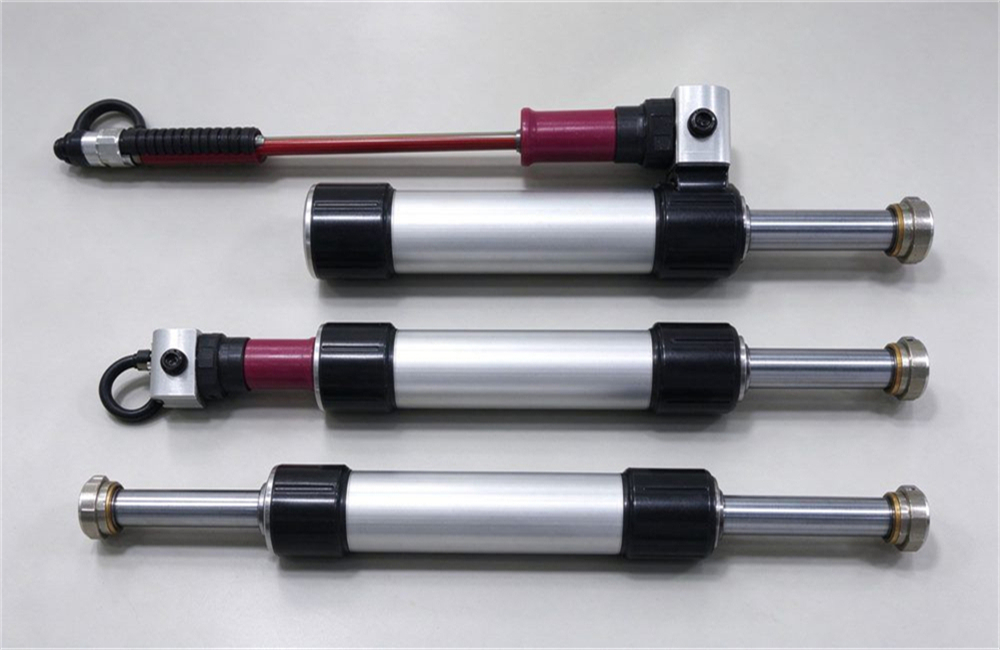
The table below compares the hydraulic rescue ram models we supply. All are pressure-tested before shipment and can be matched with manual, motor or battery power sources. Choose by ram force, working range and weight.
Model.
Rated Pressure.
Ram Force.
Working Range.
Stroke.
Weight.
GYCD-120/450-750.
≥63 MPa.
≥120 kN.
450-750 mm.
300 mm.
≤12 kg.
GYCD-135/750.
70 MPa.
137.9 kN.
450-1300 mm.
300 mm.
≤10.8 kg.
GYCD-220/775.
70 MPa.
102-221.8 kN.
460-1065 mm.
315-605 mm.
≤13.5 kg.
R410.
700 bar.
110 kN.
460-760 mm.
300 mm.
14 kg.
GYCDD-124/950.
72 MPa.
127 kN.
550-1480 mm.
380 mm.
18.6 kg.
When selecting a hydraulic rescue ram, match the working range to the vehicles and structures in your response area.
The 450-750mm range of the GYCD-120/450-750 covers most passenger car gaps, while the 460-1065mm range of the two stage ram models reaches truck cabs and bus structures.
The working range is the distance between the closed and fully extended positions. A longer range means the hydraulic rescue ram can start from a smaller gap and still reach a deep offset.
For narrow rubble voids, a compact ram with a short closed length is easier to place than a long-body cylinder.
A practical way to choose a hydraulic rescue ram or a two stage ram is to measure the deepest gap you meet in a typical call. Then pick a model whose working range covers it with one extension.
Also compare the closed length: a shorter closed ram fits into tighter voids, which is why the GYCD-120/450-750 with its 450mm closed length is popular with urban search teams.
For buyers that standardize on one model, the GYCD-220/775 offers the widest single working range in the range.
The R410 heavy duty rescue ram suits stations that already run 700bar pumps and want one spare part system across cutters, spreaders and rams.
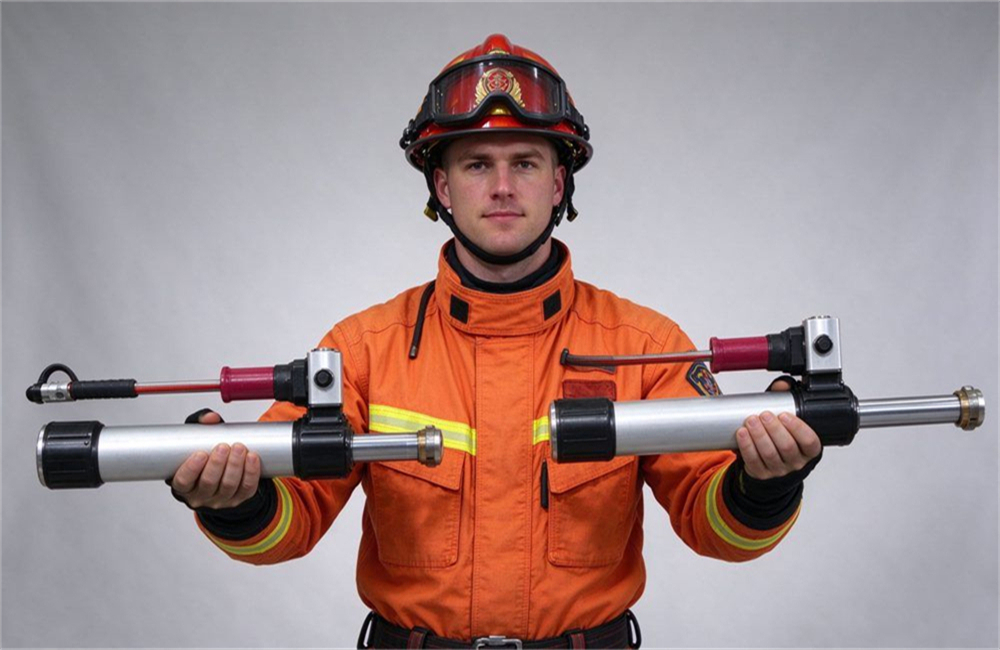
A hydraulic rescue ram is the lifting and holding tool of vehicle extrication, structural collapse and industrial rescue. Its straight-line push covers the hydraulic rescue ram applications listed below, and the same ram body moves between tasks without changing tools.
The holding function is especially valuable when cutting work is underway. The ram lifts the load, locks in position, and holds it steady while cutters and spreaders free the victim.
One ram supports the whole operation, which is why rescue crews carry at least one on every truck.
In confined-space rescue, the battery-powered GYCDD-124/950 brings the same lifting capability into basements, tunnels and narrow shafts where a motor pump cannot run.
The integrated battery and one-piece body remove the hose line, so the operator carries the complete lifting system in one hand.
Scenario.
Ram Operation.
Typical Model.
Vehicle extrication.
Lift dashboard, raise door frame, stabilize vehicle.
GYCD-120/450-750.
Structural collapse.
Lift concrete slab, shore cracked wall, hold debris.
GYCD-220/775.
Heavy industrial rescue.
Push truck cab, lift machinery, support structure.
R410.
Confined space.
Lift in narrow voids with battery power.
GYCDD-124/950.
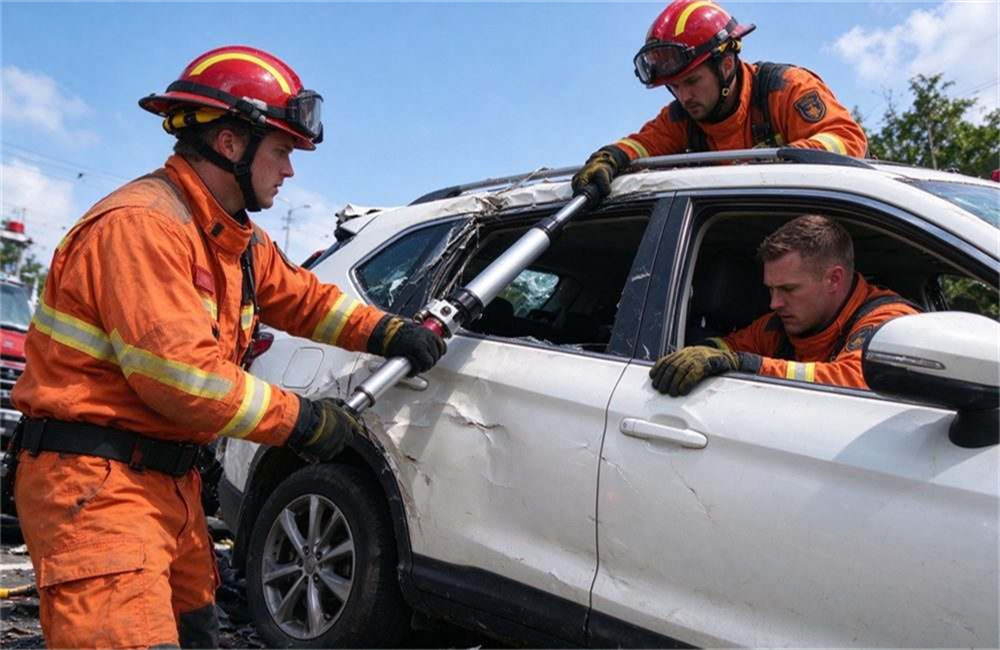
In a vehicle accident, the ram pushes the dashboard away from a trapped driver in one smooth motion.
The rod extends against the dash, lifts it clear of the victim's legs, and holds it there while the door is cut away.
Extrication crews report faster victim access when the ram handles the lifting and the cutter handles the steel.
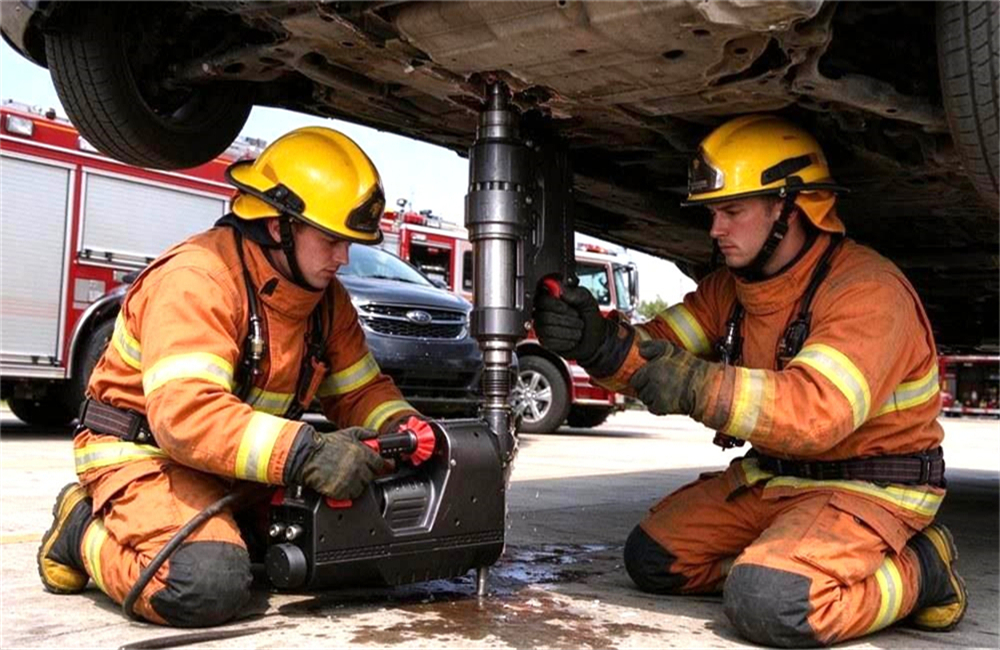
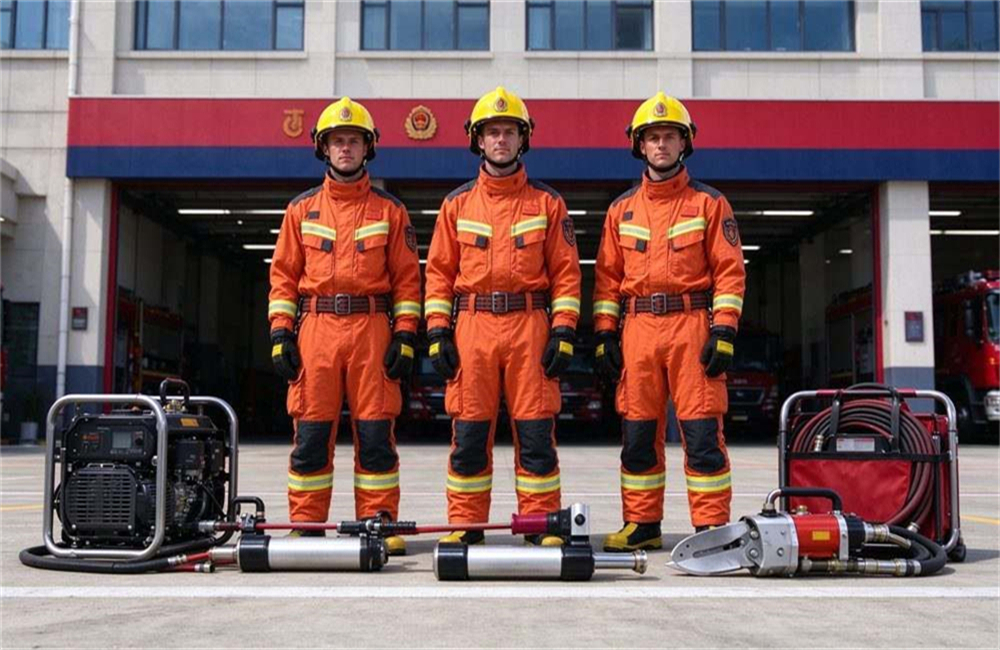
Two firefighters at a road accident can work as a pair: one operates the pump and manages the hose, while the second positions the ram and guides the lift.
This two-person workflow keeps the extrication moving and matches the staffing of most rescue vehicles.
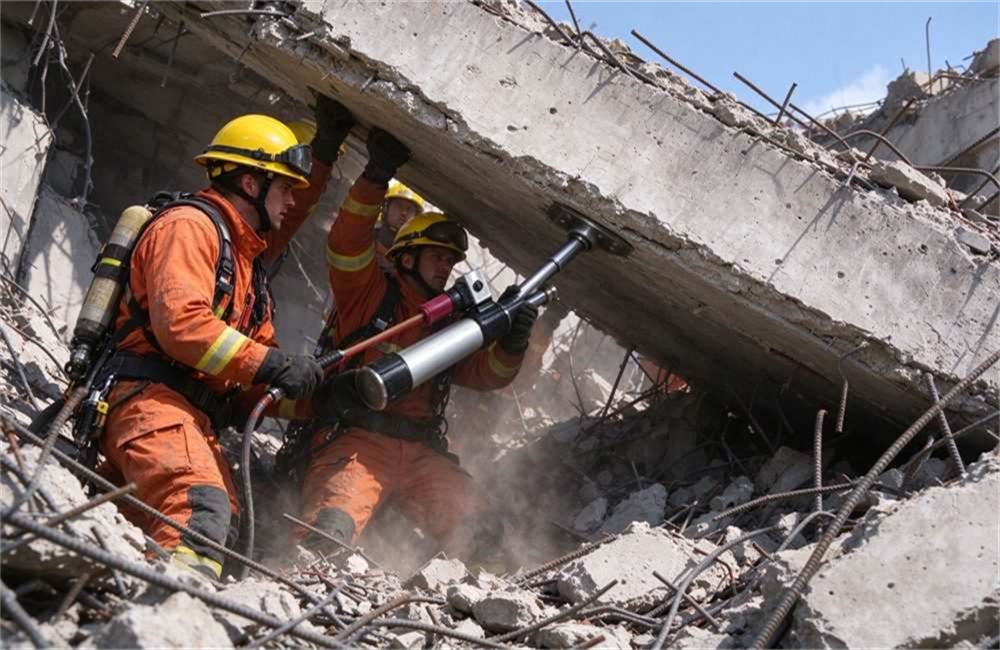
At a structural collapse, two rams work as a lifting pair: one lifts the slab while the second slides in as a permanent support, then both lock.
This method creates a stable access lane for search teams without waiting for timber cribbing.
Urban search and rescue crews follow the load-shoring discipline described by FEMA in heavy rescue operations.
For multi-casualty incidents, crews often use two hydraulic rescue ram units at once. One lifts the first vehicle while the second stabilizes a second car, and both are powered from a single pump with a twin-line hose kit.
This doubles the extrication capacity without doubling the equipment budget.
In industrial rescue, a hydraulic rescue ram lifts heavy machine components, stabilizes collapsed racking, and holds steel sections while workers clear the area.
The R410 heavy duty rescue ram and other reinforced-body models handle repeated heavy loads without flex, which makes them a common choice for rescue trucks that respond to both road accidents and industrial incidents.
For flood response and amphibious operations, the GYCD72-240/650-90/860M two stage ram operates at 72 MPa with a combined 240 kN of lifting force while staying watertight and compact.
It suits marine rescue teams and flood-relief units that need one tool for vehicle gaps and collapsed structures.
Battery-powered models such as the R415E and the GYCDD-124/950 keep the same lifting range without a hose run. This is valuable on tall bridges, rail lines and other remote scenes where a pump truck cannot reach.
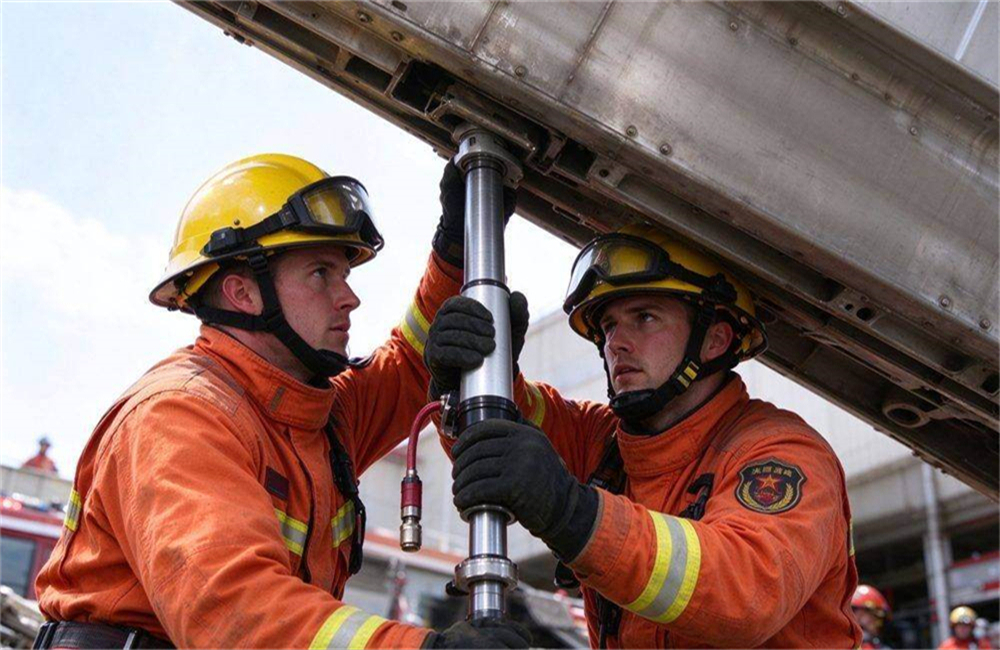
We customize the hydraulic rescue ram to match your department's inventory. Standard options include tool body color, tip style, extension rod length and hose length. Swivel bases and fork tips are offered in hardened steel grades for longer service life.
The power source is the first choice to make, because each style fits a different operating environment.
Customization does not change the tested core design. The cylinder, seals and pressure rating stay identical so that every customized hydraulic rescue ram still passes the same factory pressure test.
Only surface options such as color, tips and extension length are adjusted to your preference.
For tender buyers, we can mark the ram with your department code and supply a complete spare parts list with part numbers.
The tool body color can match your existing rescue tool fleet, so the new ram looks consistent in the truck compartment and in training photos.
Beyond the cylinder itself, buyers can specify a carry bag with the model number printed on the front, a full spare-tip set, and extension rods in 100mm, 175mm and 275mm lengths.
For fleet standardization, we also offer matched sets of cutters, spreaders and rams with one coupling standard, so one pump and one spare-parts box serve the whole kit.
Custom paint and engraved serial numbers are available on request, which helps stations track each tool through its service record.
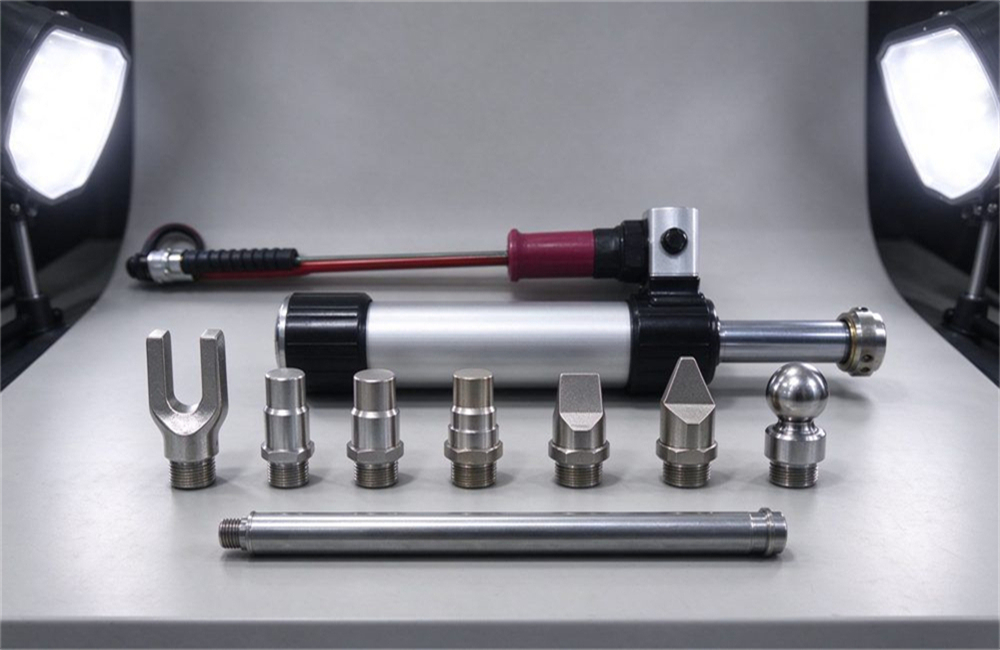
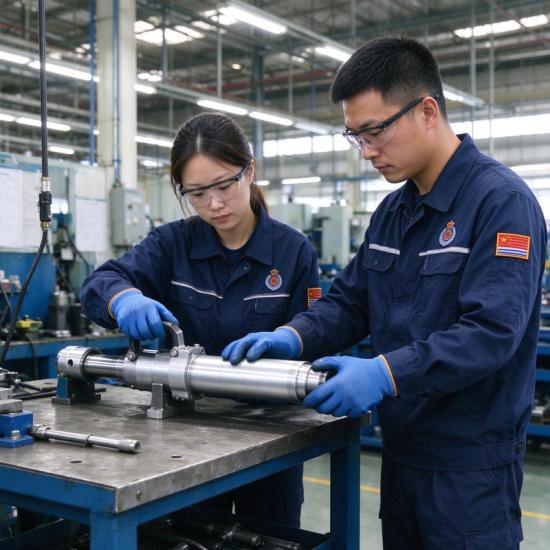
Every hydraulic rescue ram is pressure-tested at the rated working pressure before shipment.
The cylinder, seals and valves are checked on the test bench, and each unit is extended and retracted several times to confirm smooth movement and a full seal.
The piston rod is inspected for surface finish and straightness, and the seals are verified under pressure. Test records are kept per batch, and we can provide a test certificate on request.
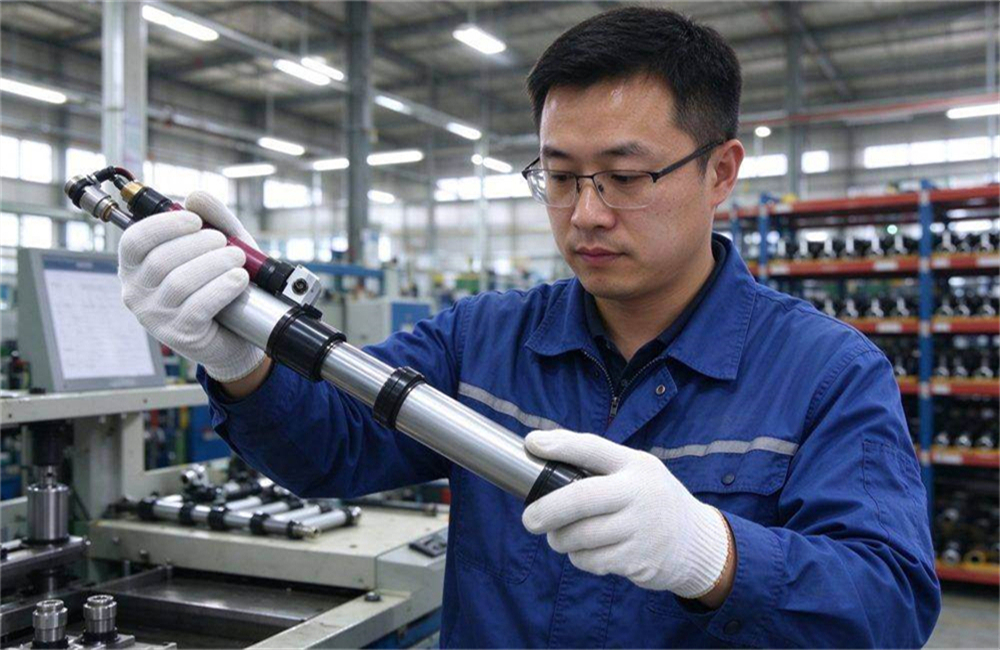
The factory follows quality procedures aligned with the NFPA 1936 rescue tool standard for hydraulic rescue equipment.
Before each shipment, our inspectors check the hydraulic fittings for leaks, confirm the quick couplings match your pump, and run a final extension and retraction cycle.
The tool is cleaned, oiled and wrapped with protective film before it enters the packing case.
We welcome third-party inspection. If your department or government buyer requires a pre-shipment inspection by an independent agency, we arrange the factory visit and provide the test bench data on site.
The test bench data for each batch is kept in the factory quality file and can be shared with the buyer before shipment.
This transparency helps government procurement teams verify that the delivered rams meet the tender specification without a separate lab visit.
Every ram is tested at 1.5 times its rated pressure before shipment, and the test certificate travels with the tool.
The cylinder body is anodized against corrosion, the piston rod is hard-chromed for wear resistance, and all seals are rated for the full working pressure range.
Samples and small orders follow the same test line, so a pilot batch matches the production standard.
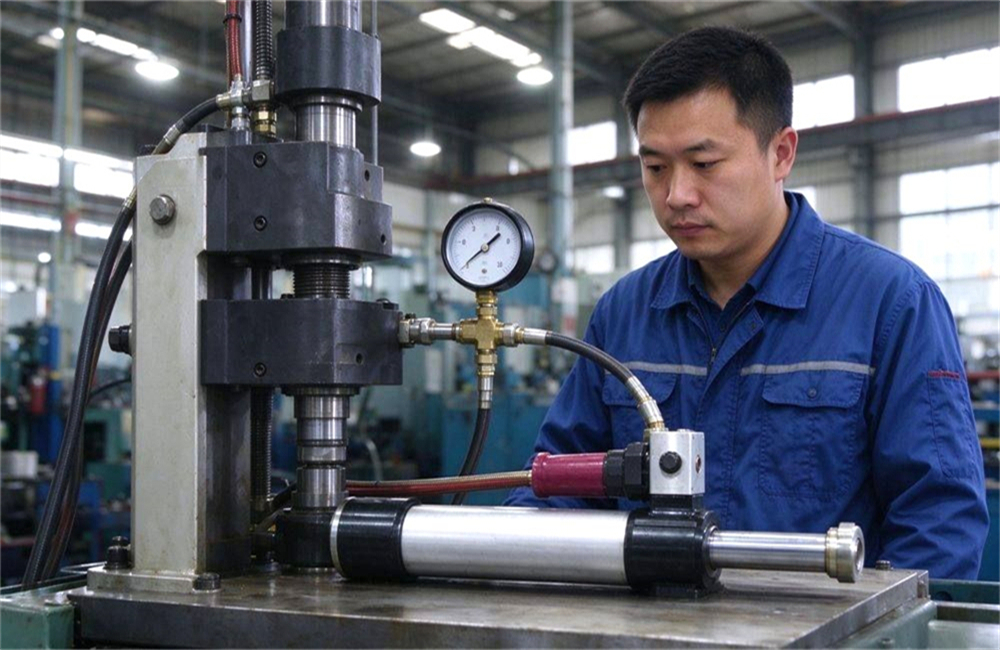
Standard delivery terms are confirmed per contract from China. We confirm packaging dimensions and gross weight with each order, and lead time depends on the power kit selected.
Export documentation, including packing list and commercial invoice, is prepared for customs clearance.
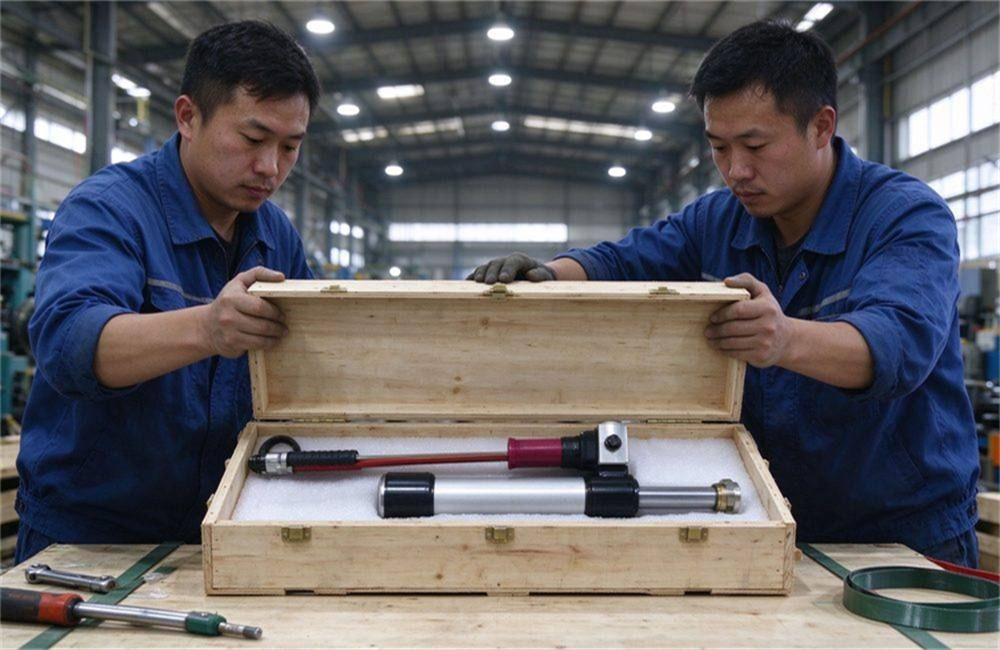
Each ram ships in a foam-lined plywood case with the cylinder, hoses and tips in fitted slots.
The case is marked with the model, quantity and gross weight on the outside, and the inner layout is numbered so warehouse staff can verify the contents against the packing list in minutes.
For fleet orders, rams can be packed with the complete hose and pump kit in one export case, so the station receives a ready-to-run system.
Cases can be palletized for container shipment, and the packing list marks each case with the ram model and serial range.
Long-run orders are packed in wooden cases with foam inserts, and each case carries the model list and serial numbers.
For air-freight samples, we use a double-wall carton with the ram and its tips separated by foam so the cylinder is never dropped during transit.
Delivery time and freight terms follow the contract, and the packing list is confirmed before dispatch.
Ordering a hydraulic rescue ram from YRF follows a simple process. Send us your requirement, and we confirm the model, power source and customization within one working day.
We reply to every inquiry within one working day with a clear quotation.
If the ram you need is outside this range, tell us the required ram force and working range, and we will match a model from our wider hydraulic rescue equipment program.
Sample orders are welcome before bulk purchase. We can ship a single GYCD-120/450-750 with a manual pump so your crew can test the ram force and working range in real training before you commit to a fleet order.
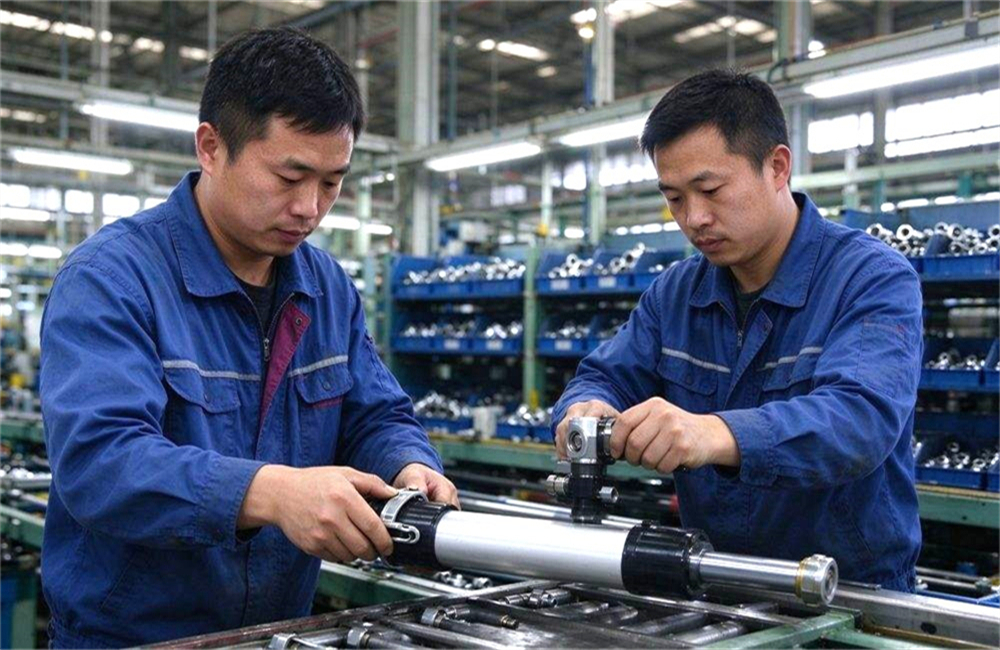
A hydraulic rescue ram is a precision tool, and a simple maintenance routine keeps it ready for every call.
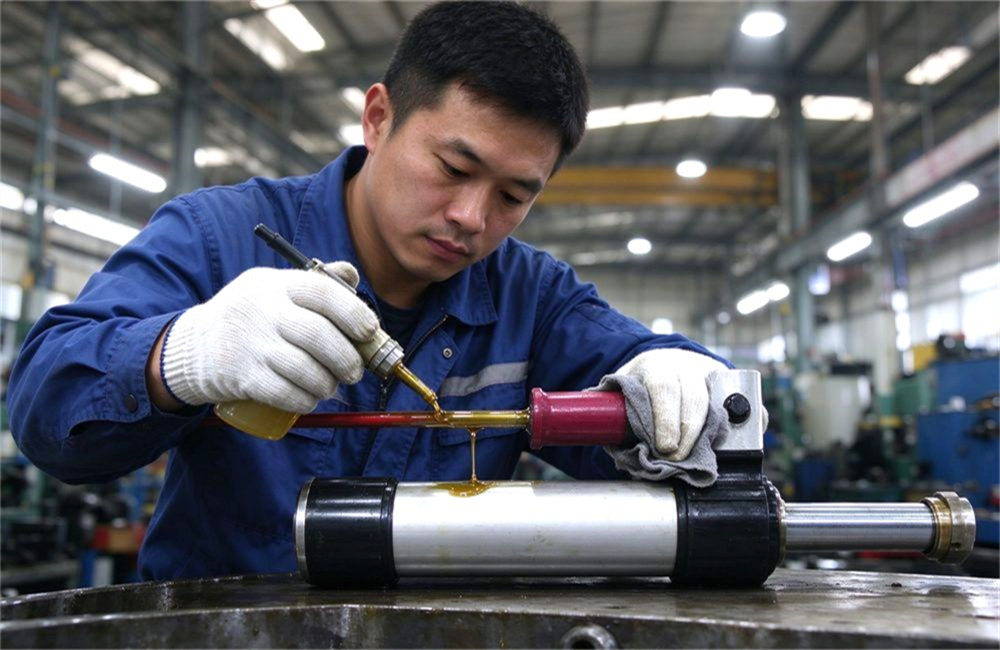
After each operation, wipe the piston rod, check the hoses for cuts or blisters, and confirm the quick couplings are clean and free of grit.
Check the hydraulic oil level and condition monthly. Cloudy or dark oil should be replaced, and the oil type is stated in the manual that ships with each tool.
Store the ram with the rod lightly oiled and the pressure released to protect the seals.
Between calls, keep the ram in its foam case to protect the rod from dirt and impacts, and cap the quick couplings whenever the hoses are disconnected.
We stock spare tips, seal kits, hoses and extension rods for every model in this range. Order spares together with the tool so your workshop has replacements from the first day.
A full service kit per year of use is available on request.
A simple monthly checklist takes about ten minutes: wipe the rod, check the oil level, inspect both hose connections and retract the ram fully.
The manual includes a fault table for common issues such as slow extension, oil leaks and loose fittings.
Rescue teams that standardize on one coupling and one pressure rating can share pumps, hoses and spare tips across the whole tool family.
A station carrying a cutter, a spreader and two rams with the same fittings needs one motor pump and one spare-parts box.
This keeps training simple, cuts spare-part stock, and lets any operator switch tools on scene without checking compatibility.
Safe operation of hydraulic rescue rams depends on clean contact surfaces, stable footing and keeping bystanders clear of the load path.
A hydraulic rescue ram develops enough force to move structural steel, so operating discipline matters more than tool capability. Crews that follow the same pre-use and in-use checks get consistent results across cutters, spreaders and rams.
Inspect the cylinder body for dents or scratches, check both hydraulic hoses for wear, and confirm the couplings seat fully. Cycle the ram once without load to purge air and verify the piston returns completely.
A ram that drifts under load should be taken out of service immediately.
Work crews should follow general site safety rules such as those outlined by OSHA when stabilizing lifted loads.
Place the ram on the strongest point of the vehicle or structure, use the swivel base on uneven ground, and keep hands clear of the piston path.
Insert cribbing or a stabilization block as soon as the load lifts, so the ram works against a supported load rather than carrying it alone.
Never stand in line with the piston tip.
Retract the piston fully, wipe the rod clean and protect the tip with a cap or rubber boot. Record any fluid leaks or slow return times in the maintenance log.
A rescue ram that passes these checks at the end of every call stays reliable for years.
For stations running multiple hydraulic tools, we recommend one service schedule for the whole family. Change hydraulic oil once a year or every 500 cycles, inspect hoses at every service, and keep a spare seal kit on the truck.
Logging each test and repair keeps the fleet audit-ready for safety inspections and helps crews spot a slow leak before it becomes a failure on scene.
Delivering a reliable hydraulic rescue ram is only half of the job; the other half is making sure the crew can use it safely.
Each ram ships with a printed operation manual in English that covers setup, lifting technique, stabilization and maintenance.
For fleet orders, we can also supply a digital training deck that your instructors can project during station training.
After-sales support is handled by our export team by message. We answer technical questions about fittings, oil and spare parts, and we keep a record of every order so that repeat buyers get consistent service.
For stations that run multi-brand fleets, our team can compare the ram specification against your existing rescue tools and advise on which jobs each machine should cover.
For departments that train new operators, we can provide a one-page quick-reference card showing the correct placement of the ram, the safe stand-off distance and the hand positions.
This card can be laminated and kept in the truck compartment for on-scene reference.
Choosing the right hydraulic rescue ram starts around three numbers: ram force, working range and closed length.
Ram force decides whether the tool can move the load; working range decides how far the piston can reach; closed length decides whether the tool fits into the gap at all.
Light vehicle extrication typically needs 100-140 kN of ram force, which covers doors, dashboards and stabilizer points.
Heavy rail, truck and industrial rescue moves into the 200 kN range, where a heavy duty rescue ram such as the GYCD-220/775 and the GYCD72-310/300S two stage ram are specified.
When in doubt, choose the higher-force model and control it with the pump throttle rather than pushing the tool to its limit.
Measure the gap you meet most often in your response area. A 450-750mm range suits standard passenger cars; a 460-1065mm range reaches truck cabs and collapsed industrial structures.
A two stage ram extends in two steps, so it carries a long total stroke without a long closed body.
For urban search teams that carry tools by hand, a compact ram with a short closed length such as the GYCD-120/450-750 is easier to position inside rubble voids.
The same ram body connects to manual pumps, motor pumps or battery power units through standard hydraulic fittings. Battery-electric rams such as the GYCDD-124/950 and the R415E remove the hose run entirely, which suits rapid-deployment teams.
If your station already runs one pump family, pick a ram with the same fittings so spare parts and couplings stay interchangeable across cutters, spreaders and rams.
Training programs usually combine classroom theory with live drills: crew members practice placing the ram in a crushed door frame, then move to a collapsed-structure prop to rehearse shoring sequences.
A structured drill schedule keeps the whole team ready for both vehicle extrication and structural collapse response.
Many teams ask whether they need a hydraulic rescue ram when they already own a spreader. The answer is that the two tools do different jobs.
A spreader opens gaps by prying two surfaces apart, while a ram pushes one surface away along a straight line.
A ram is the tool for lifting a dashboard, holding a roof beam or stabilizing a vehicle before cutting begins.
On a typical extrication scene, the crew uses the ram to create room and the spreader to widen the opening. The ram lifts the load and holds it, the cutter severs the hinges, and the spreader pries the door clear.
Departments that buy the ram and spreader together cover the full extrication sequence with one power unit.
Budget-wise, a ram costs a fraction of a cutter or spreader, yet it solves the most dangerous part of extrication: freeing space around a trapped victim.
Most departments add a ram to their existing tool set before expanding any other capability.
For procurement teams, we provide the test certificate, a one-page specification sheet and photos of the actual model in the order confirmation.
OEM and private-label requests are handled separately so the factory name never appears on the tool or the box.
If a specification must change after the order, the confirmation is updated before production starts.
We provide training and field support for every ram order. Our team walks new crews through setup, lifting limits and daily checks.
Build a complete rescue system with the rest of the hydraulic rescue tool matrix.
Hydraulic Rescue Tools Hub. · Hydraulic Cutter for Rescue. · Hydraulic Spreader for Rescue.
Hydraulic Combi Tool Rescue. · Hydraulic Power Unit Rescue. · Hydraulic vs Manual Rescue Tools. · How to Choose Hydraulic Rescue Tools.
1. How much lifting force does the GYCD-120/450-750 provide?
The GYCD-120/450-750 delivers at least 120kN of ram force at a rated pressure of 63MPa. It lifts dashboards, door frames and vehicle bodies in standard extrication work.
2. What is the difference between a single stage vs two stage ram?
This single stage vs two stage ram comparison comes down to stroke. A single stage ram delivers one force over one stroke, while a two stage ram extends in two steps and combines high initial force with a longer reach. Two stage ram models suit deep gaps and heavier loads.
3. Which hydraulic ram is best for lifting?
The GYCD-120/450-750 is our standard lifting choice with 120kN ram force and a 450-750mm range. For heavier lifting, the GYCD-220/775 delivers up to 221.8kN with a 460-1065mm range.
4. What is the working range of the GYCD-120/450-750?
The working range covers 450-750mm with a 300mm stroke. Optional extension rods from 100mm to 275mm extend the reach for deeper lifting jobs.
5. Can a hydraulic rescue ram replace a jack?
A ram is built for speed and positioning rather than long travel, so it is not a direct replacement for a workshop jack. It lifts and holds during rescue operations; a jack is for full lifting in static work.
6. How heavy is a hydraulic rescue ram?
The GYCD-120/450-750 weighs no more than 12kg. A two stage ram such as the GYCD-220/775 weighs about 13.5kg, the R410 heavy duty rescue ram weighs 14kg, and battery models such as the GYCDD-124/950 weigh 18.6kg.
7. Can I customize the ram tips or working length?
Yes. We supply fork, flat, wedge and ball tips plus extension rods from 100mm to 275mm. Customization keeps the tested core design unchanged, so every unit passes the same factory pressure test.
8. What is the MOQ and lead time?
MOQ and lead time are confirmed per contract. Single-unit sample orders are welcome, and production lead time depends on the power kit and customization selected.
9. How often should a hydraulic rescue ram be pressure tested?
A hydraulic rescue ram should be pressure tested at least once a year, and again after any heavy impact or visible cylinder damage. Most manufacturers specify a test at 1.5 times the rated pressure, and the test record should be kept with the tool. Between tests, crews verify full piston extension and return on every call.
10. Can the same ram be used with manual, motor and battery pumps?
Yes, when the ram and the pump share the same hydraulic fittings and pressure rating. A manual pump suits slow precise lifts, a motor pump gives the fastest cycle, and a battery-electric pump removes the hose run for remote scenes. Pick one coupling standard for your whole cutter, spreader and ram set so spare parts stay interchangeable.
11. What ram force do I need for vehicle extrication versus structural collapse?
Passenger vehicle extrication typically needs 100-140kN of ram force, which covers doors, dashboards and stabilizer points. Structural collapse and truck cab work move into the 200kN range, where a two stage ram such as the GYCD-220/775 is specified. When in doubt, choose the higher-force model and control it with the pump throttle.
12. When should I choose a heavy duty rescue ram over a standard model?
Choose a heavy duty rescue ram such as the R410 when you respond to rail, truck or industrial incidents with repeated heavy pushes. A standard single stage ram covers most passenger car work, while a heavy duty rescue ram adds a reinforced body for 700bar service machines and shock loads.
Whether you need a single ram for your station or a fleet package for a government tender, send the model, power preference and quantity. We will return a factory quotation with the full parameter sheet.
Previous :
Hydraulic Power Unit for Rescue Tools – 63MPa Pump SupplierNext :
Hydraulic Combi Tool for Rescue – Cut and Spread Supplier Hydraulic Cutter for Rescue Wholesale Cutting Tool Sets and Spare Blades
Our hydraulic cutter delivers 420kN cutting force for fast vehicle extrication and structural collapse rescue. Compatible with manual, motor and battery power units. Equipped with interchangeable blades, tested strictly, ideal for fire departments, government stock and Red Cross procurement. Note: Price for reference only. Exact price based on quantity, size, weight and custom details.
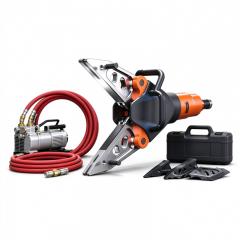 Hydraulic Spreader for Rescue – 42-62kN Vehicle Extrication Tool
Hydraulic spreader for fire rescue and vehicle extrication. Electric and manual types available, fitted with replaceable tips and pulling chain set. It is used for accident rescue, collapse rescue and regular rescue training. Note: Price for reference only. Exact price based on quantity, size, weight and custom details.
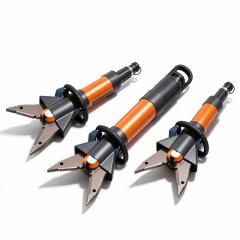 Hydraulic Combi Tool for Rescue – Cut and Spread Supplier
Hydraulic combi rescue tool for vehicle extrication and collapse rescue. Electric, manual and portable versions available. It can cut and spread metal structures, widely used for fire rescue and emergency extrication work. Note: Price for reference only. Exact price based on quantity, size, weight and custom details.
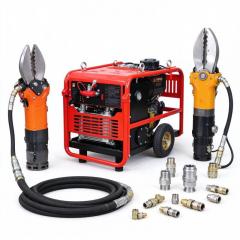 Hydraulic Power Unit for Rescue Tools – 63MPa Pump Supplier
This 63MPa hydraulic power unit supplies stable high pressure power for cutters, spreaders and rams. Multiple types including petrol, diesel, electric, manual and backpack versions. Dual outlet design supports synchronous operation of rescue tools for road accident and collapse rescue. Note: Price for reference only. Exact price based on quantity, size, weight and custom details.
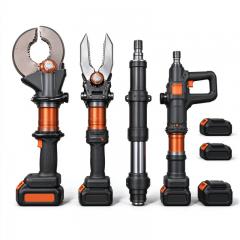 Electric Hydraulic Rescue Tools – Battery Cutter Supplier China
Cordless battery hydraulic rescue tools for vehicle extrication and confined space rescue. Cutter, spreader, ram and combi tool available. Powered by 24V lithium batteries, silent and hose-free. High output force, easy for high-rise and remote emergency rescue. Note: Price for reference only. Exact price based on quantity, size, weight and custom details.
 Customized Logo Leather Hotel Guest Amenities Bathroom Set
Our company manages all sorts of leather products, emphasize to will contemporary vogue and traditional classic photograph are united in wedlock, permeate thick gentleman flavour, make a person pleasing to the eye.
Copyright © Custom Disaster - Relief Bedding: Tents, Sleeping Bags, Blankets All Rights Reserved
the professional team to service !