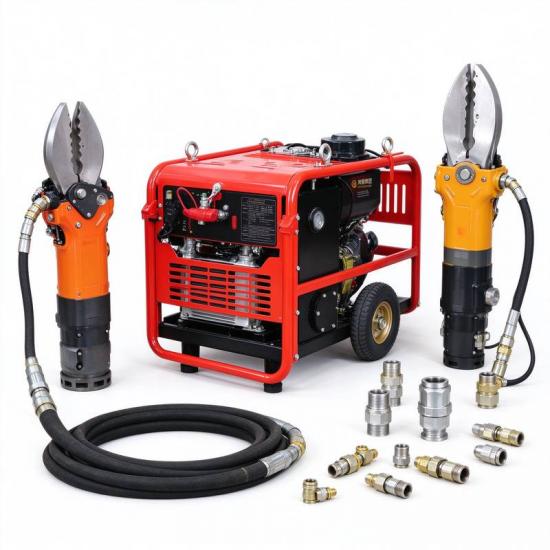
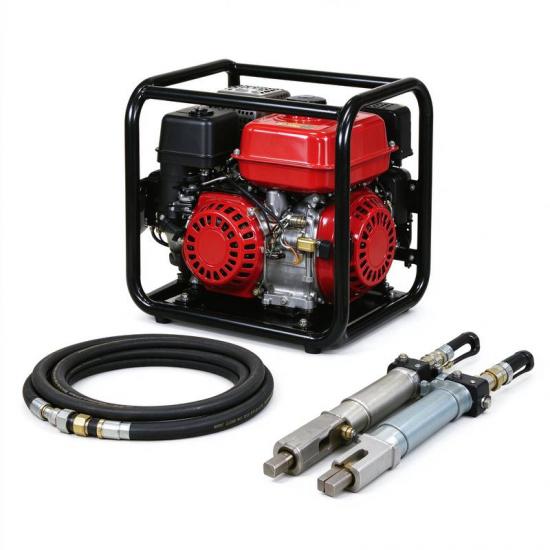
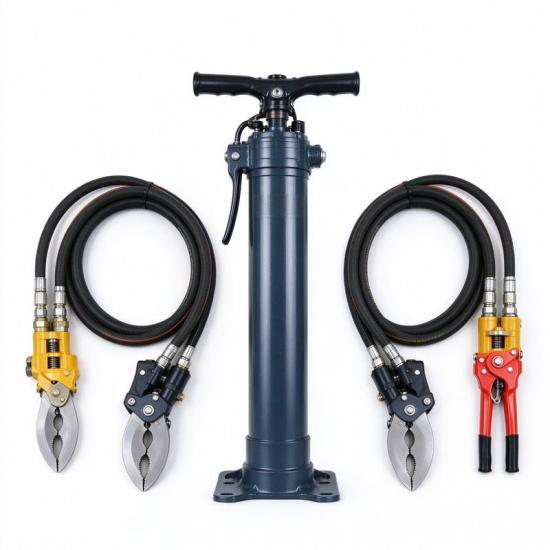
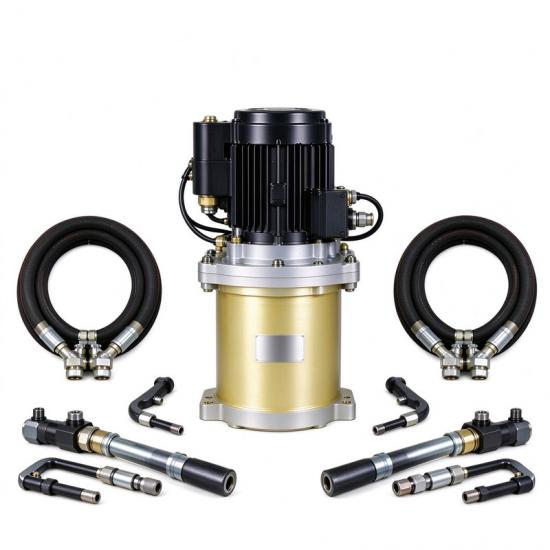
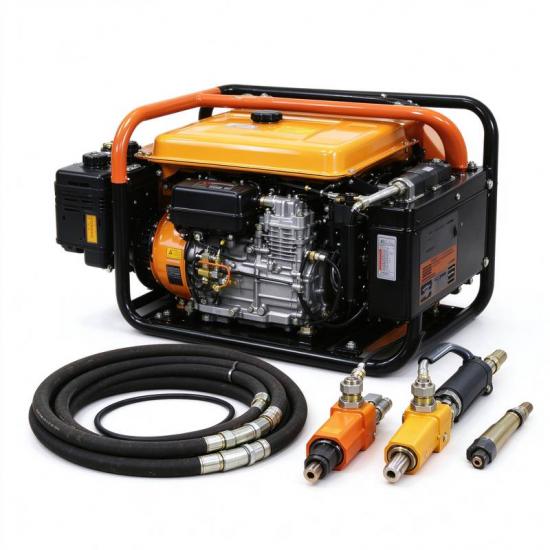
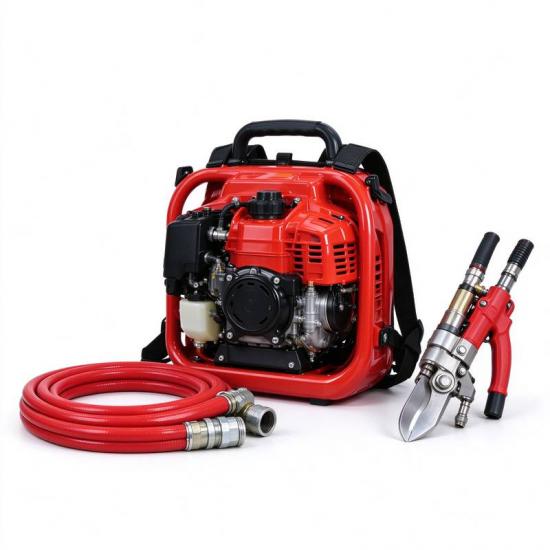
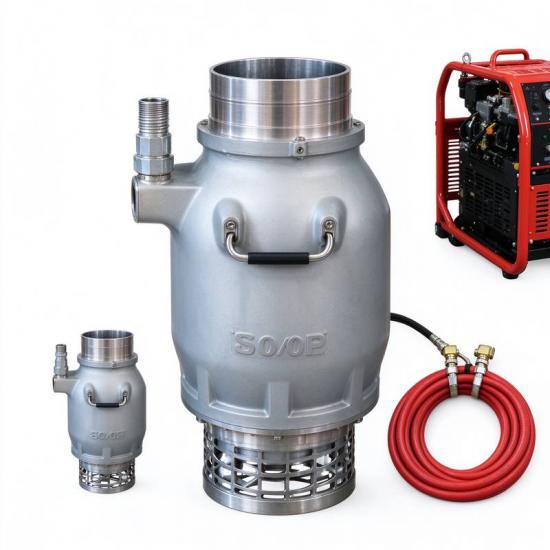
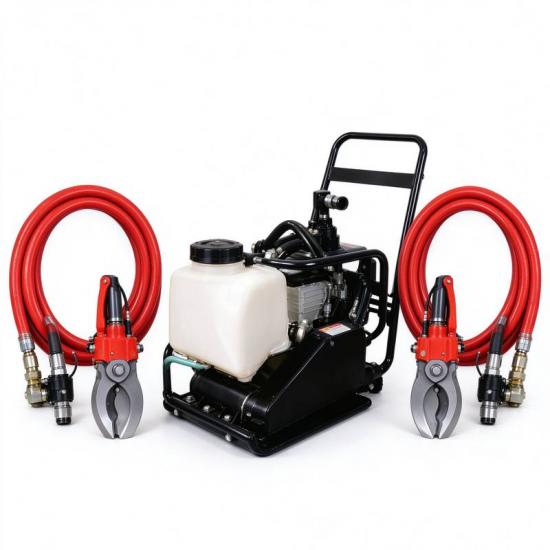
This 63MPa hydraulic power unit supplies stable high pressure power for cutters, spreaders and rams. Multiple types including petrol, diesel, electric, manual and backpack versions. Dual outlet design supports synchronous operation of rescue tools for road accident and collapse rescue.
Note: Price for reference only. Exact price based on quantity, size, weight and custom details.
model no. :
H-06Brand:
YRFmarket price :
$3600sale price :
$1800price range :
10-30/$1800Color :
Multiple Colorsport of dispatch :
Guangdong/GuangzhouPayment :
TT, Paypal, Western Unionmin order :
10original region :
Made in ChinaLead Time :
5-15days
Hydraulic Power Unit for Rescue Tools – 63MPa
Pump Supplier
A twin hose power unit feeds the cutter and spreader together. Wholesale hydraulic power units for rescue tool systems: 63 MPa engine-driven, diesel, manual and electric pumps with twin hose output, built for fire rescue, earthquake search and municipal dewatering.
Custom OEM configurations are available for relief organizations and government procurement.
Browse the technical data below, compare models with the specification table, and send us your tool list for a matched quotation.
 |

|
Contents
Hydraulic Power Unit Overview.
Types of Power Units.
Key Specifications.
Hoses & Connections.
Choosing the Right Power Unit.
Quality & Testing.
Packaging & Delivery.
Order Process.
FAQ.
A hydraulic power unit is the heart of every hydraulic rescue tool system; how to choose hydraulic power unit starts with the job.
It converts engine power into high-pressure oil flow, and that oil flow drives cutters, spreaders, rams and combo tools.
In a portable hydraulic pump, the engine, the oil tank, the control valve and the hose ports are engineered as one matched unit.
Without a reliable power source, even the strongest rescue tool is useless at the scene.
Our 63MPa pump lineup is built around one goal: how to choose hydraulic power unit that delivers stable, repeatable power wherever the rescue team works.
Hydraulic rescue systems are widely used because they outperform mechanical and electrical alternatives in real rescue conditions. Hydraulic drives need less maintenance than mechanical systems, they produce very low noise so victims and responders can communicate, and they keep working in rain, cold and flooded environments.
According to the National Fire Protection Association standards for power rescue tools, hydraulic rescue equipment must deliver predictable performance under extreme load, which is exactly what a properly sized twin hose power unit provides.
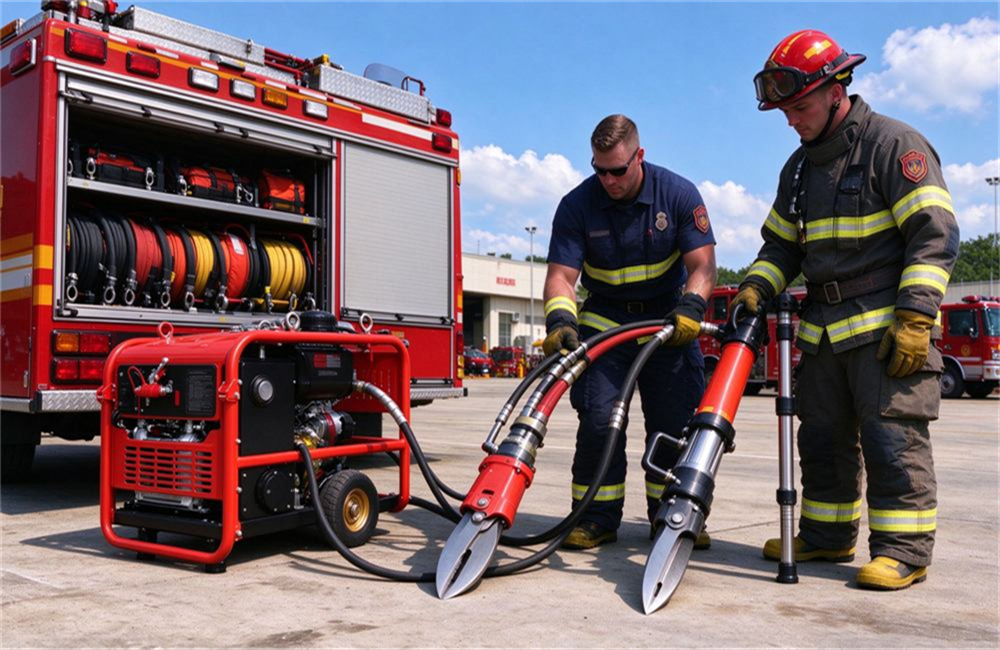
A complete hydraulic rescue system has four parts: the twin hose power unit, the hoses, the tool and the pump oil; how to choose hydraulic power unit starts here. The twin hose power unit builds pressure, the twin hoses carry it, the tool converts it into cutting or spreading force, and the oil keeps everything lubricated and cool.
When these four parts are matched correctly, the system performs like one machine. When they are mismatched, even the best tool struggles. This is why procurement teams should always specify the power unit and the tools as one package; how to choose hydraulic power unit means matching the set.
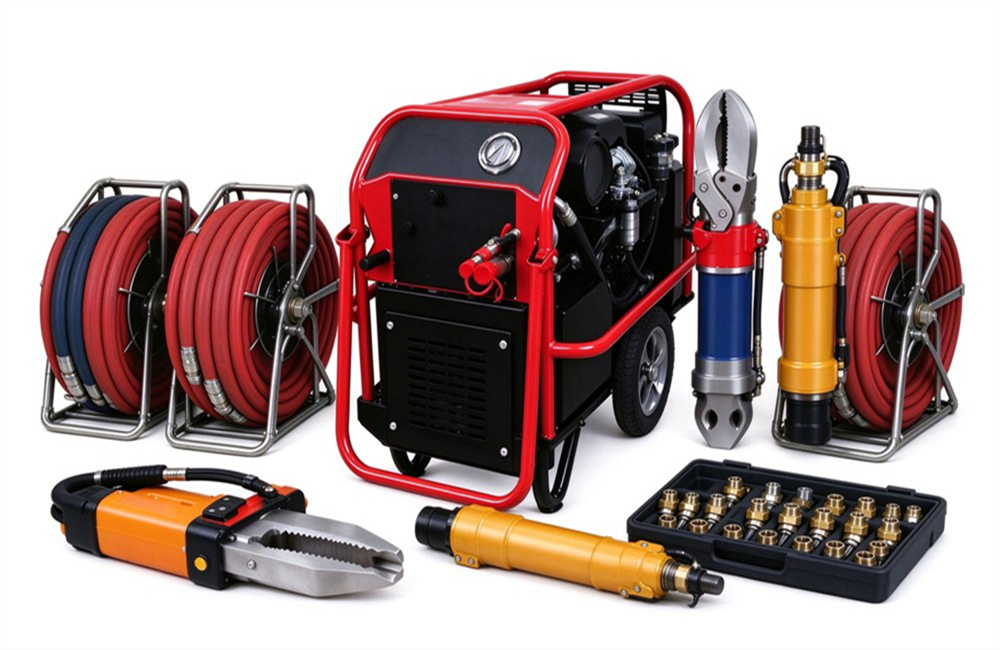
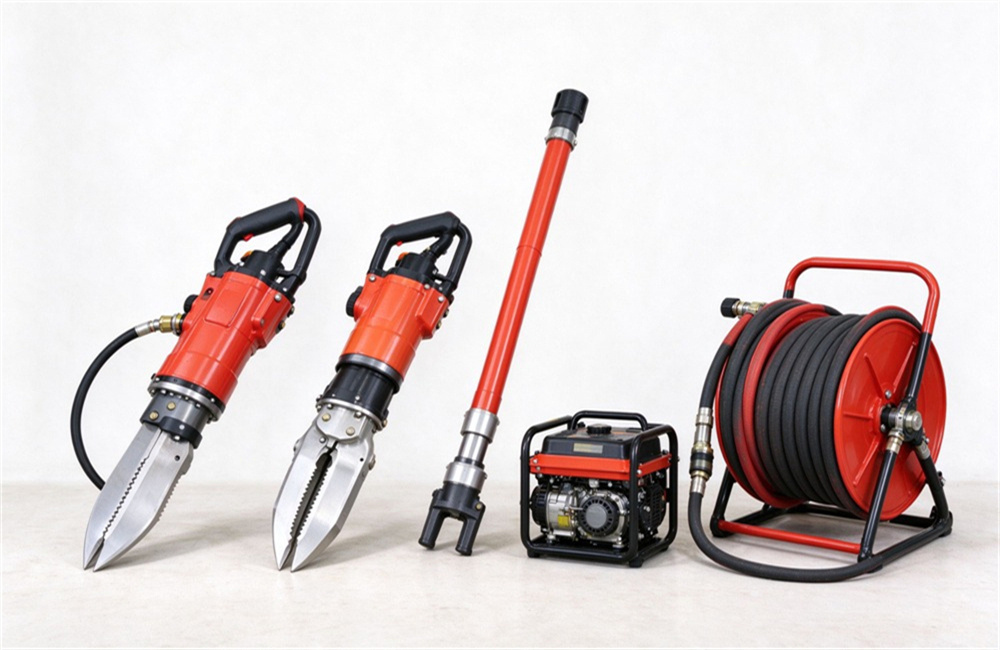
The complete system matters as much as the pump itself. A standard deployment links one twin hose power unit to a cutter, a spreader and a ram, so a single engine keeps every tool ready during the operation
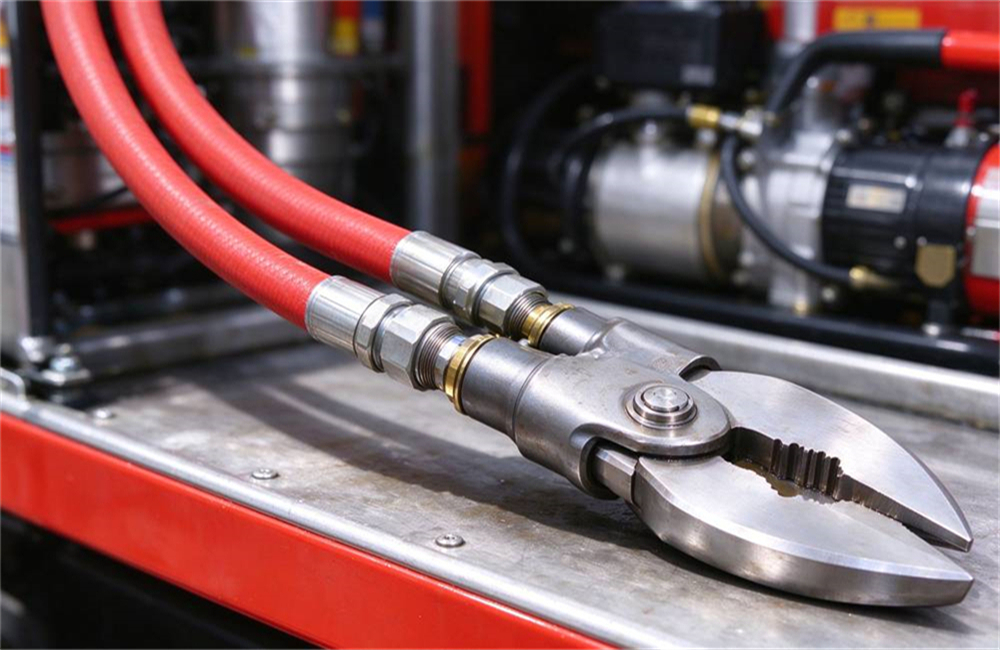
The twin hose power unit is our most popular configuration.
Twin hose power unit output means two independent high-pressure hoses feed the tool simultaneously, giving the operator better control and faster cycle speed.
For rescue teams that carry one pump and switch tools at the scene, a portable hydraulic pump with dual output is the practical choice.
It keeps the truck lighter, cuts setup time, and still runs the full family of cutters and spreaders.
Our power units serve rescue operations across several sectors: fire departments responding to vehicle accidents, urban search and rescue teams working after earthquakes, municipal crews clearing flooded roads, and industrial teams maintaining heavy machinery.
Each sector has different duty cycles, and the right power unit for one team may be wrong for another.
The sections below explain each type so you can match the machine to your operation.
Why 63MPa matters deserves a short explanation. Most rescue tools on the market are rated for either 63MPa or 175bar class operation.
The 63MPa class delivers higher force per square centimeter, which helps when cutting modern vehicle pillars made of ultra-high-strength steel.
Our 63MPa portable hydraulic pump range serves this high-force segment, while the 175bar stations serve the broader tool market.
Matching the pressure class to your tool ratings avoids both under-powering and over-speccing.
When building a rescue system, most departments start with one cutter, one spreader and one twin hose power unit.
This starter set covers the majority of vehicle extrication calls.
As the team grows, the same dual output pump powers a second tool through the dual output port, so the fleet expands without replacing the pump.
Our engineers help you plan this roadmap during the inquiry, so the first order already fits the second-year expansion.
The main types of power units differ by drive source, and each one fits a different rescue deployment scenario.
Different rescue scenarios demand different power sources. Some teams work from a truck with a generator, others walk into collapsed buildings, and some operate at remote flood sites with no electricity at all.
That is why we manufacture four main families of hydraulic power units: engine-driven, diesel, manual and backpack pump units.
From a single truck you can deploy the full set: a petrol engine pump for road incidents, a diesel station for long dewatering shifts, an electric pump for indoor rescue, and a manual pump for backup.
This overview layout is how many government rescue fleets standardize their hydraulic power unit procurement.
The engine-driven hydraulic pump is the workhorse of fire rescue fleets. This rescue pump family is designed for one job: powering cutters, spreaders and rams at a live scene.
Our petrol pump model BJQ-63/0.4S runs on a petrol engine and delivers up to 63MPa working pressure with a single push-button start. It is mounted on a rugged steel frame with wheels, so two crew members can move it from the truck to the operation point in seconds.
The SAG35-80 petrol pump station takes this concept further. It uses a 35HP twin-cylinder petrol engine, delivers 1×80 or 2×40 lpm oil flow at 175bar, and carries a 33L hydraulic oil tank plus a 33L fuel tank for long operation. With the optional dual output pump layout it can power two rescue tools at the same time, which cuts total rescue time dramatically.
Engine-driven petrol pumps are also the easiest rescue pumps to refuel on scene. A spare fuel can in the truck extends the mission from minutes to hours, and this petrol pump design is simple enough for any trained operator to maintain in the field.
For departments that rotate rescue pump crews across stations, the same engine-driven unit keeps every crew familiar with one operating procedure.
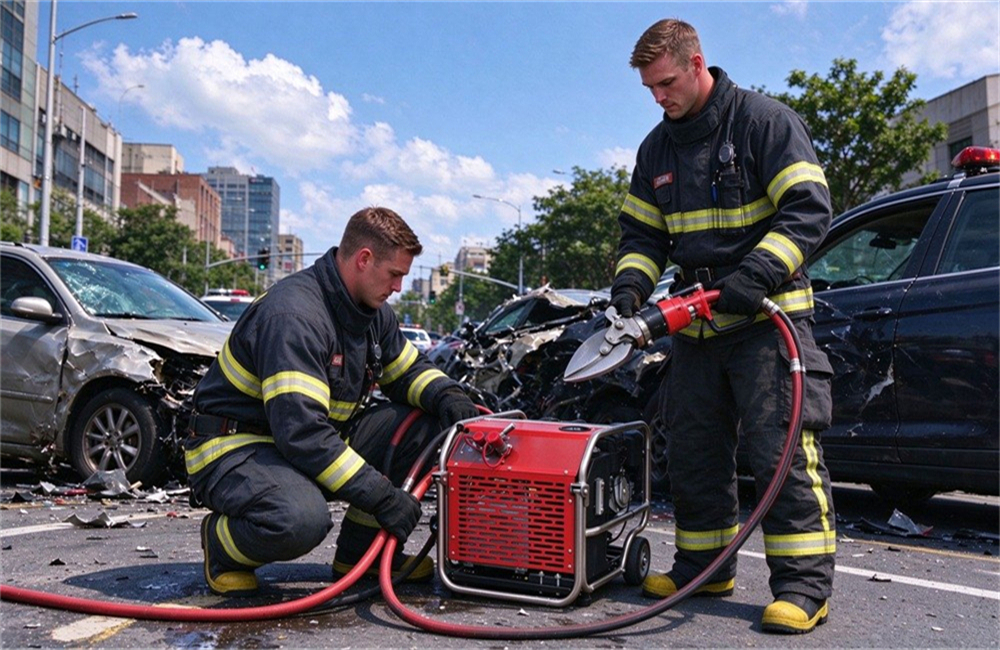
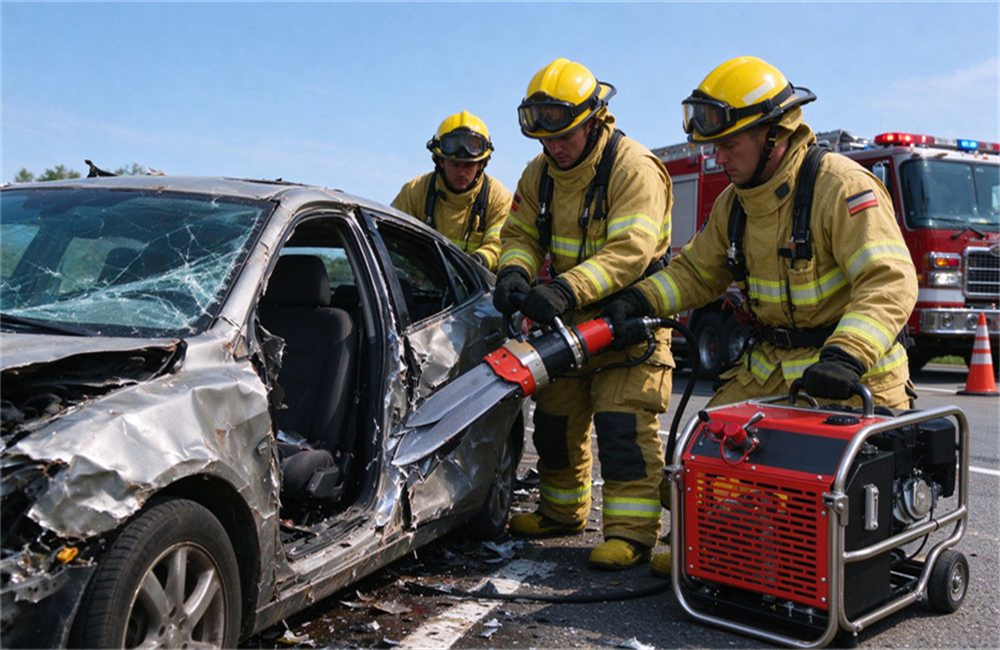
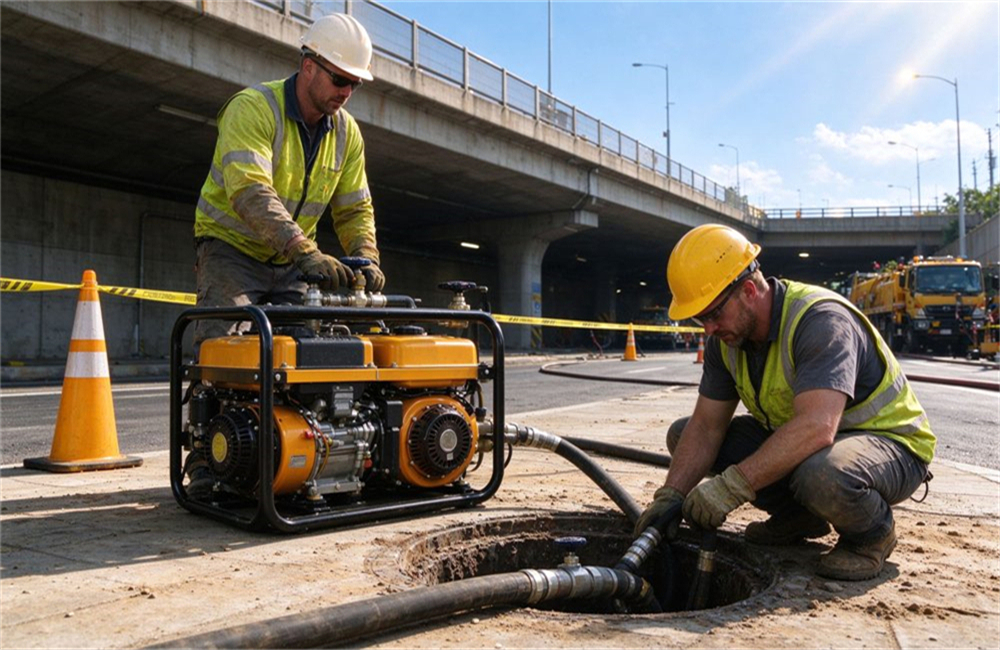
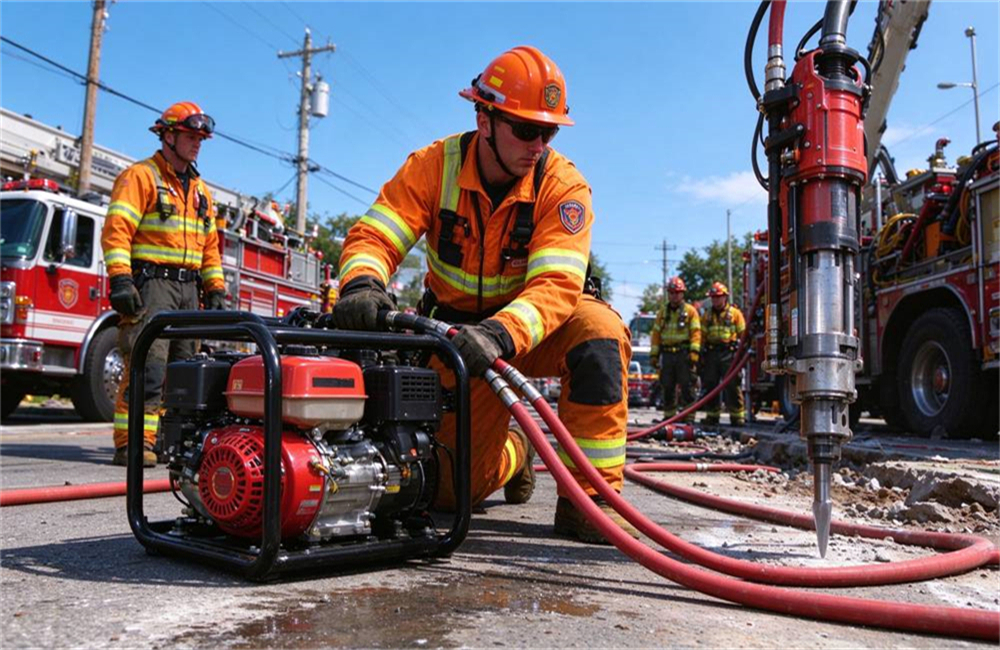
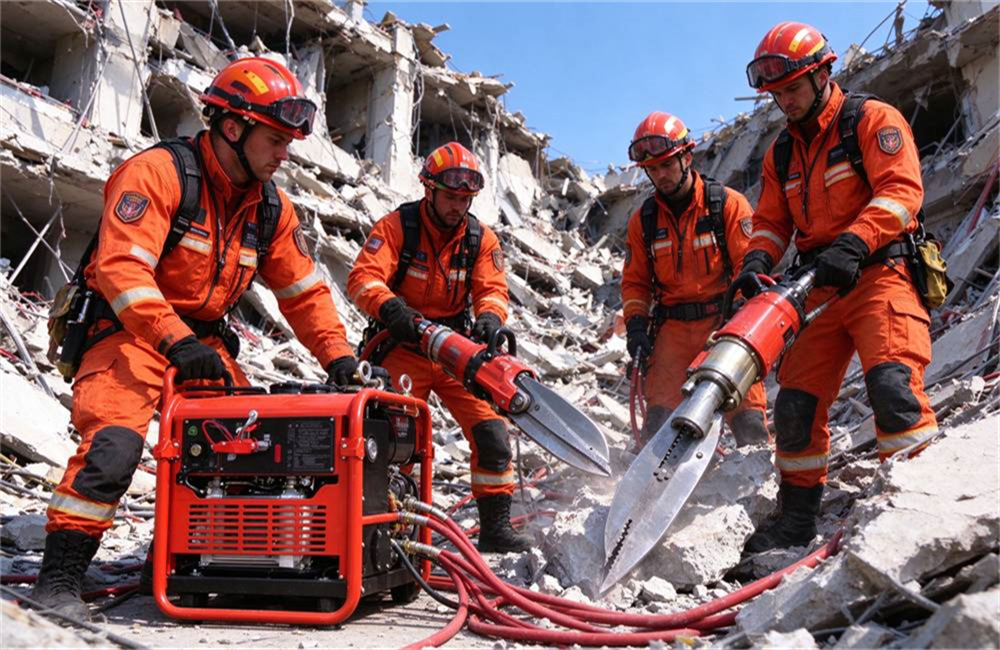
On a busy highway, seconds decide the outcome. The engine-driven unit sits beside the damaged vehicle while firefighters operate the cutter on the door — one crew member keeps the engine driven hydraulic pump running, the others focus on the trapped driver. This split of roles is exactly what a rescue power unit is designed for.
Engine-driven units are also the easiest to standardize across a fleet. One spare parts kit covers every engine-driven pump, one training program qualifies every operator, and one maintenance schedule keeps the whole fleet in service. Departments that mix engine-driven and diesel units keep two spare kits, which is why many teams standardize on one family.
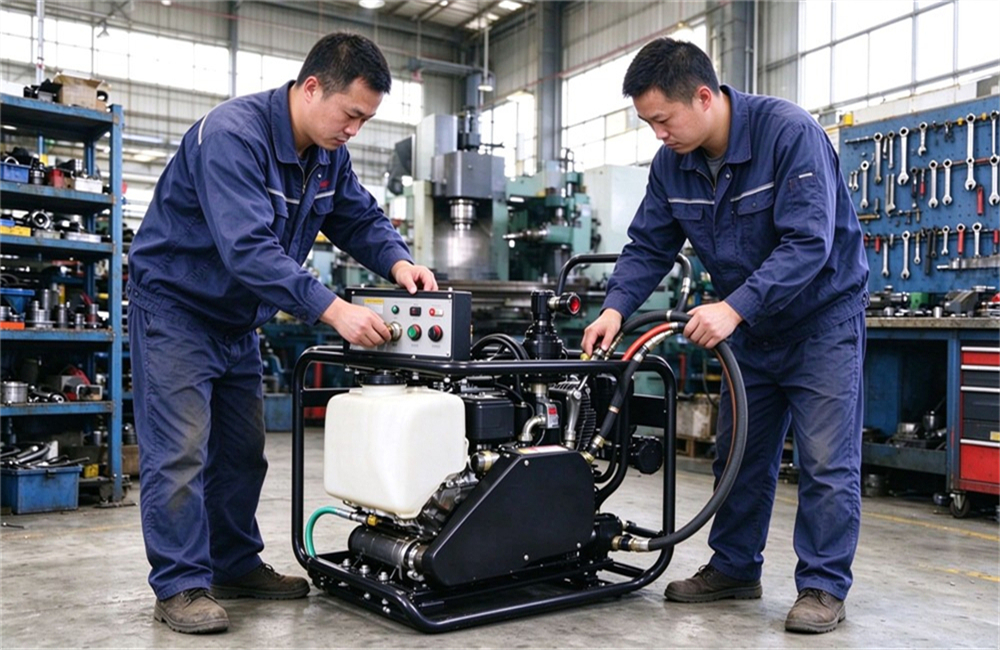
A diesel hydraulic power station is the right choice when a rescue operation runs for hours or even days, such as urban search after an earthquake or long dewatering work. Diesel pumps burn fuel more economically at continuous load, and diesel fuel is easier to store and transport for long rescue pump missionssport on site.
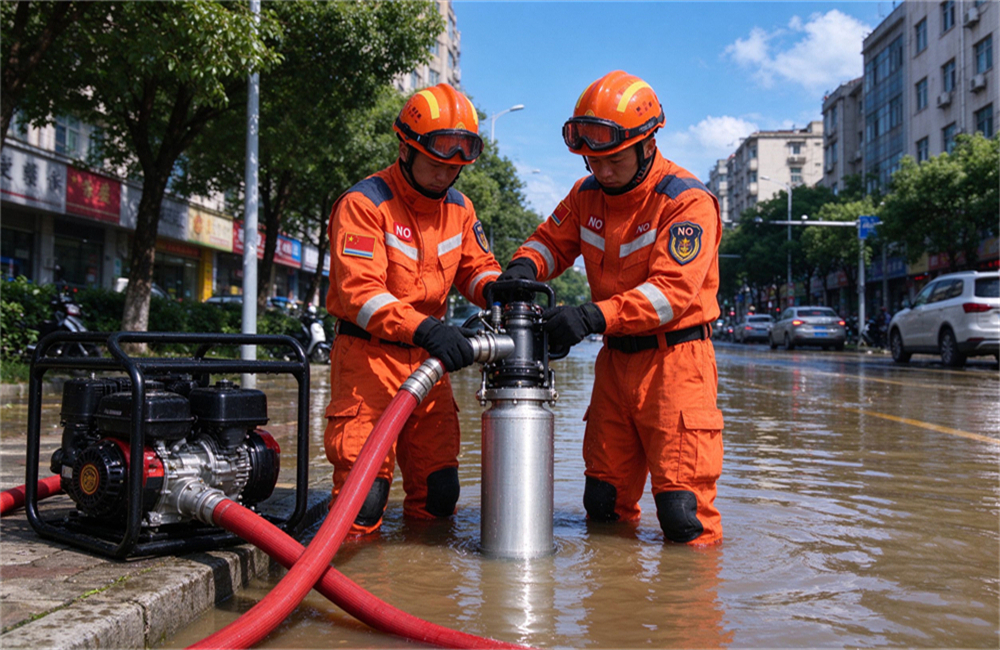
In city infrastructure repair, the diesel pump often runs a full shift without stopping. Municipal crews connect the twin hose output to a submersible pump or a pipe jack, and the diesel hydraulic power station keeps delivering steady oil flow from morning to evening on one fuel load.
Our SYZ-80C diesel pump uses a Changchai ZN390Q 38HP diesel engine, reaches 195bar working pressure, and delivers 2×40 or 1×80 lpm flow.
It is equipped with a double hydraulic circuit so one station can run a cutter and a spreader simultaneously.
The 27L hydraulic oil tank supports extended duty cycles, and the total weight of 460kg is balanced on a reinforced frame for stable operation.
Dewatering is a diesel station specialty. The same hydraulic circuit that powers rescue tools can drive hydraulic submersible pumps, and one SYZ-80C can power a high-flow water pump that moves hundreds of cubic meters per hour. Municipal flood teams therefore buy diesel stations for dual duty: rescue tools in the morning and dewatering pumps in the afternoon.
Diesel stations are the standard choice for dewatering fleets that operate around the clock.
When a flood response lasts several days, the cost difference between petrol and diesel fuel becomes significant, and the diesel engine's lower consumption at sustained load pays back quickly.
Municipal rescue teams that already stock diesel for their trucks find that one fuel covers both vehicles and pumps.
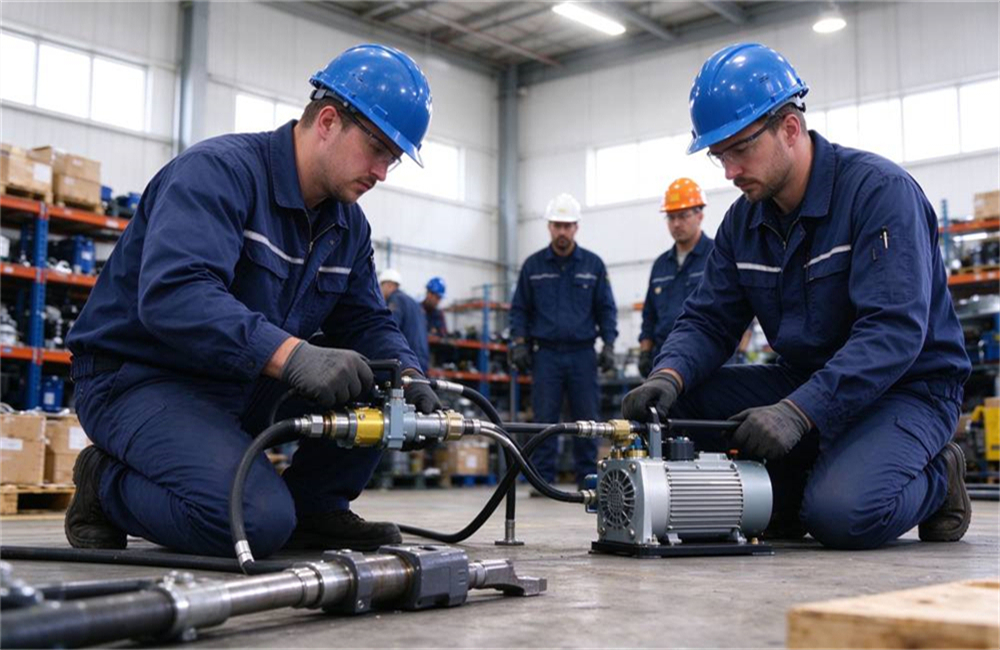
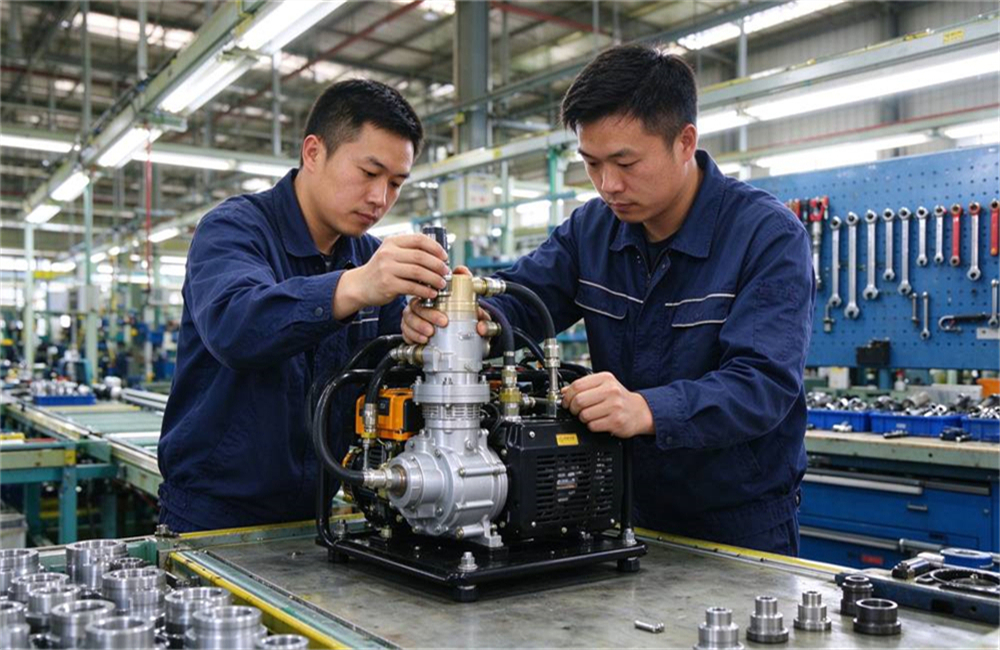
Inside our workshop, every diesel station gets the same attention before it leaves the line. Operators check the engine oil circuit, the radiator and the twin hose reels, then run the station under load so the delivery pressure matches the specification sheet.
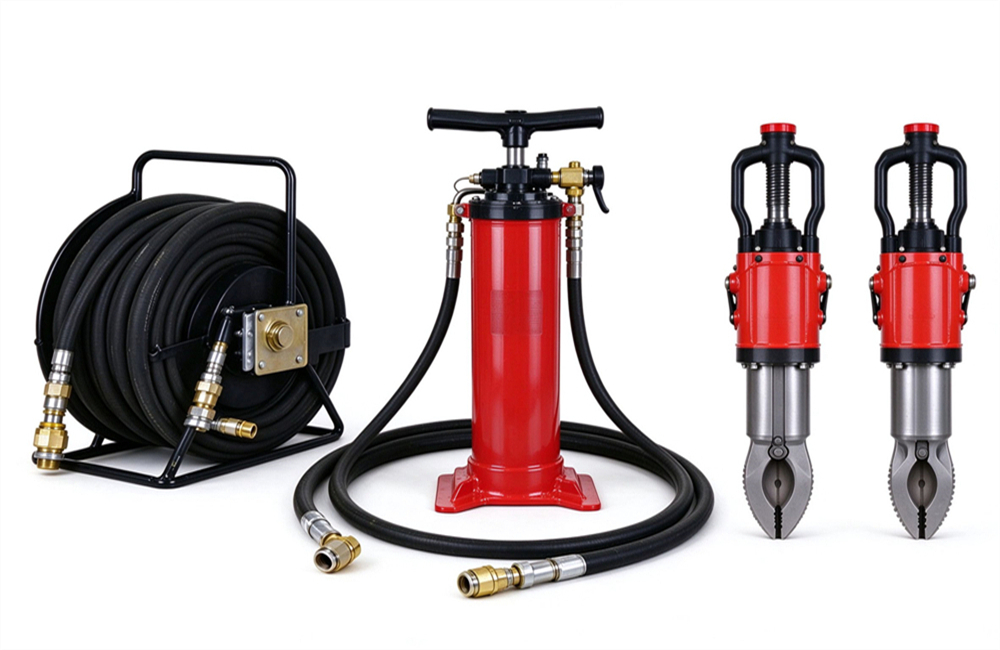
The manual hydraulic pump is the most portable power unit in the range, and a backpack pump covers the same role.
It needs no fuel tank, no battery and no extension cable, which makes it the first power source a team can put on scene.
Model BS-63/0.7 is a hand-operated pump that generates up to 63MPa with simple lever strokes, and it never depends on fuel or electricity.
It is the standard backup for rescue teams that carry it inside the truck cab for quick first response.
Because a manual pump is powered by the operator, it is quieter than any engine-driven unit. This matters in vehicle extrication, where the victim may be trapped inside a car that has spilled fuel. A manual pump keeps the ignition risk lower and lets the team work in complete silence when needed.
Manual pumps also play a defined role in vehicle extrication.
A portable hydraulic pump covers fieldwork without a truck. When a car sits on its roof with a leaking fuel tank, the first crew member reaches the victim with the portable power unit already connected.
The cutter opens the pillar slowly but surely, and because the pump is silent, the crew hears the victim's voice and the vehicle's creaks.
That situational awareness is impossible with a running engine.
Manual pumps also serve training programs well. New operators can learn the pressure feel and tool response at low speed before they move to engine-driven units. The same manual unit stays in service for years because it has almost nothing to break, and a simple seal kit keeps it running through a long service life.
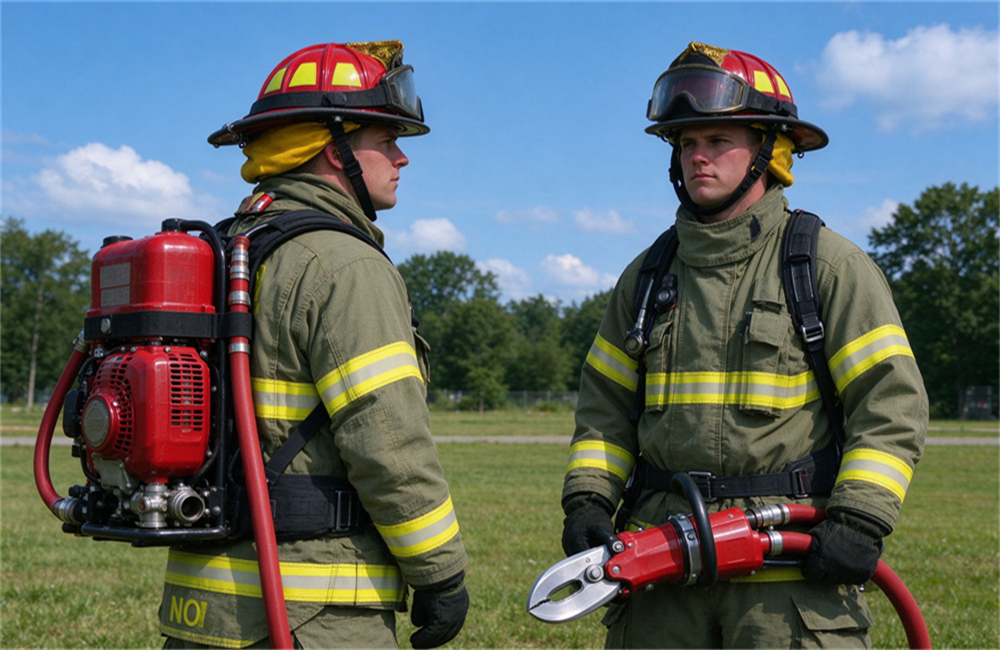
The backpack pump solves the hardest problem in rescue logistics: reaching the victim.
When a building collapses and vehicles cannot approach, a firefighter carries this portable power unit on his back, walks to the operation point, and powers the cutter on the spot.
It is the lightest engine-driven configuration we make, and it still runs the full range of hydraulic rescue tools.
All our dual output rescue pump configurations share one design principle: two working ports on the same pump, so two tools or two hose lines stay live without changing connections. Fire departments that standardize on dual output report simpler scene setup and fewer operator errors under stress.
Backpack units change the training syllabus, too. Crews that train with a backpack rescue pump build the muscle memory of moving with a loaded frame, managing the hose while walking, and setting up the tool at the victim's side.
When a real collapse happens, these movements are already automatic.
The lower engine weight also means a wider range of crew members can carry the unit, which improves staffing flexibility for small stations.
The backpack frame is designed for balance: the engine sits low and close to the operator's spine, and the hose outlet faces forward so the hose does not tangle with the body. Padded shoulder straps and a waist belt distribute the load, and the frame accepts standard tool boxes for spare hoses and couplings.
The table below compares our main hydraulic power unit models. Pressure, flow, tank size and weight determine which unit fits your fleet and your procurement budget.
Note: All specifications are based on our standard production configs and may be customized per contract. MOQ and lead time are confirmed in the purchase agreement.
Hydraulic Power Unit Model.
Engine / Power.
Flow (lpm).
Pressure (bar).
Oil Tank / Fuel (L).
Weight (kg).
Best For.
BJQ-63/0.4S.
Petrol.
0.4–2.4.
63.
—.
—.
Portable rescue pump.
SAG35-80.
35HP Twin Petrol.
1×80 / 2×40.
175.
33 / 33.
205.
Heavy rescue & dewatering.
SYZ-80Q.
Briggs 27HP.
2×20 / 2×30.
175.
18 / 24.
168.
Twin tool operations.
SYZ-60Q.
18–23HP.
20–45.
155.
13 / 20.
160.
Standard rescue.
SYZ-40Q.
23HP.
40.
155.
16 / 21.
160.
Mid-size rescue teams.
SYZ-80C.
Diesel 38HP.
2×40 / 1×80.
195.
27.
460.
Long-duration operations.
SYZ-40C (Diesel).
Diesel 20.5HP.
20–45.
155.
13 / 20.
180.
Diesel economy class.
SYZ-40C (Electric).
13.5HP Motor.
36.
175.
—.
73.
Indoor & warehouse use.
SA13-30.
Honda 13HP.
20–30.
160.
13 / 6.
109.
Light portable duty.
SD13-30 (Electric).
7.5kW.
20–30.
155.
13.
110.
Low-noise indoor duty.
BS-63/0.7.
Manual.
Hand lever.
63.
—.
—.
Backup & first response.
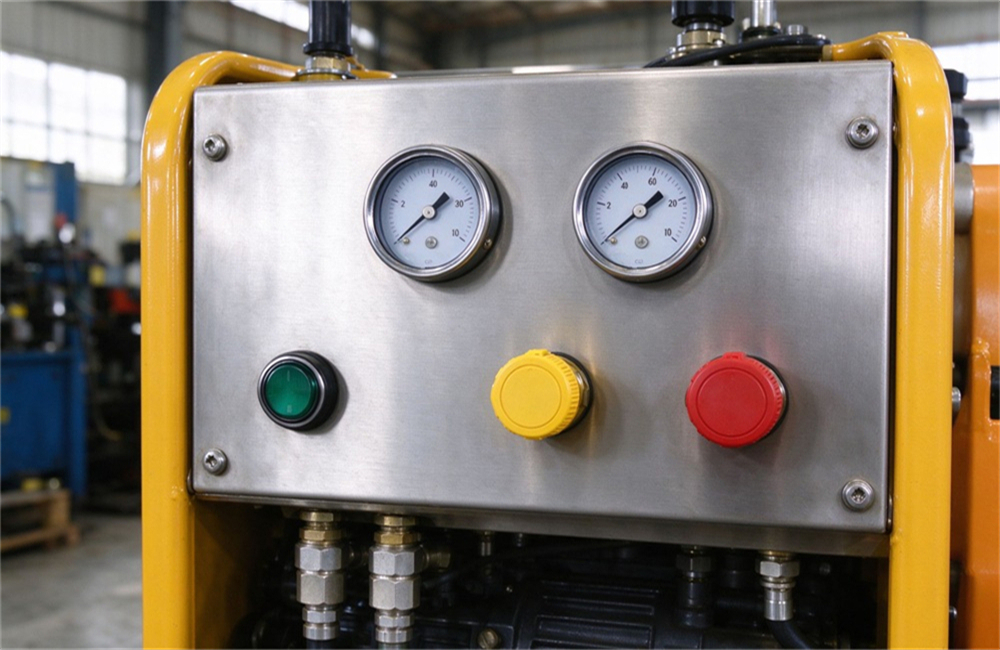
The control panel is where your operator meets the machine every shift. Pressure gauges, start switch and dual outlet valves are laid out so a gloved hand can reach everything without stretching, and each control is colour-coded for fast recognition under stress.
When reading the table, pay attention to the relationship between pressure and flow.
Pressure is the force available to the tool; flow is the speed at which the tool moves.
A cutter needs high pressure to close on hard steel, and it needs adequate flow to close quickly.
Our heavy rescue stations balance both, while the 63MPa portable units maximize pressure for high-force tools in a compact frame.
Electric versions deserve special attention for indoor operations. The SYZ-40C electric rescue pump runs on a 13.5HP motor, delivers 36 lpm at 175bar and weighs only 73kg, which makes it easy to move around a warehouse or a maintenance hall.
The SD13-30 electric rescue pump is even quieter at 52 dB, close to normal conversation level, so it can operate where noise limits apply.
For procurement teams, we recommend a three-point check when comparing portable hydraulic pump datasheets.
First, verify the pressure at the tool port, not only the pump rating, because hose resistance and fittings reduce the delivered pressure.
Second, check the flow at the rated pressure, because flow drops as pressure rises.
Third, compare the oil tank size against your shift pattern, so the unit does not run dry mid-operation.
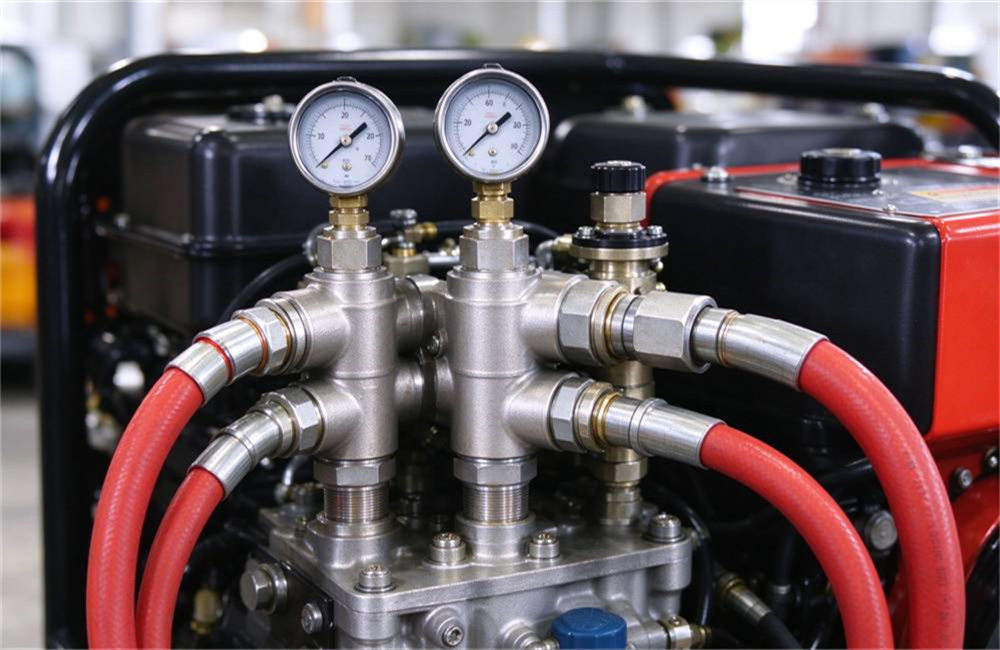
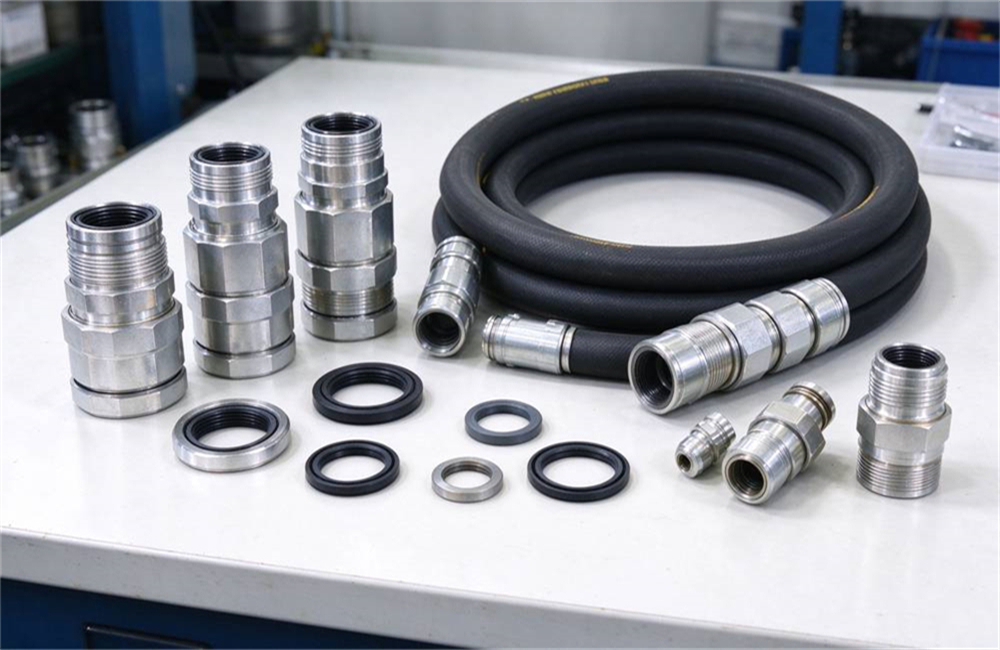
Hoses and connections decide how much pressure actually reaches the tool, so teams keep reels, couplings and seals in the same inspection cycle.
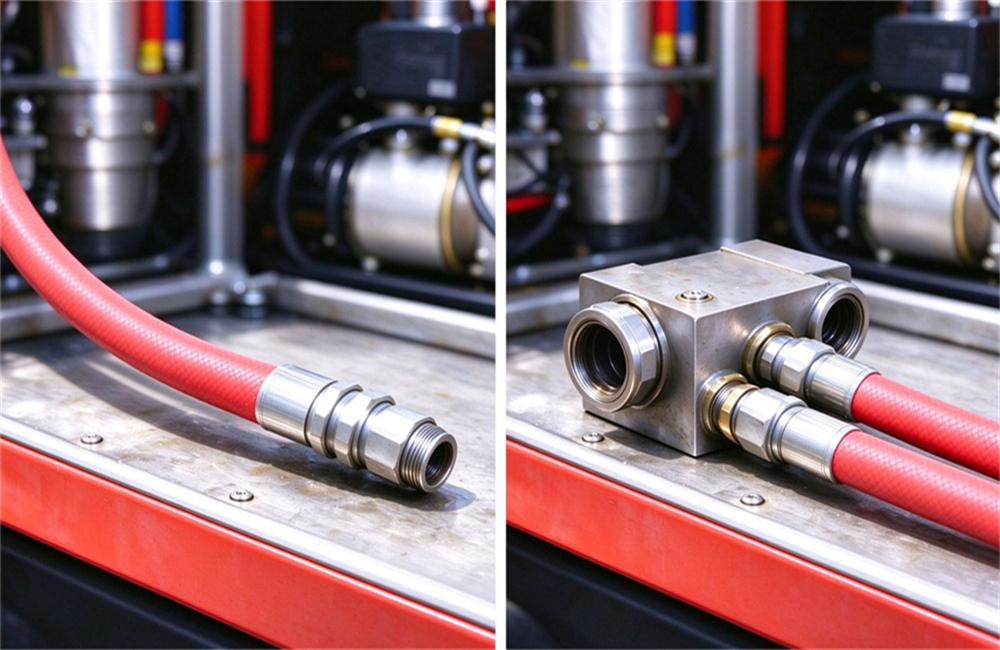
The high pressure hose is the pipeline between your rescue pump and your rescue tool. A weak hose wastes the pressure your rescue pump works hard to create.er unit and your rescue tool. We supply complete hose sets with the rescue pump, pre-fitted with quick couplings that match our cutter, spreader and ram connectors.
Twin hose sets are the industry standard for rescue tools because one hose carries pressure oil to the tool and the second returns oil to the tank. This closed loop gives the tool instant response and precise control. Our standard hose lengths are listed below, and custom lengths are available for
special vehicle layouts.
Hose length, fitting standard and pressure rating can be aligned with your existing tool brands. Tell us your connector type and we will match it.
High Pressure Hose Spec.
Inner Diameter.
Working Pressure.
Standard Length.
Fitting.
Single hose set.
6.3 mm.
63 MPa.
10 m.
Quick coupling.
Twin hose set.
6.3 mm ×2.
63 MPa.
10 m.
Quick coupling.
Twin hose set long.
6.3 mm ×2.
63 MPa.
15 m.
Quick coupling.
Extension hose.
6.3 mm.
63 MPa.
5 m / 10 m.
Quick coupling.
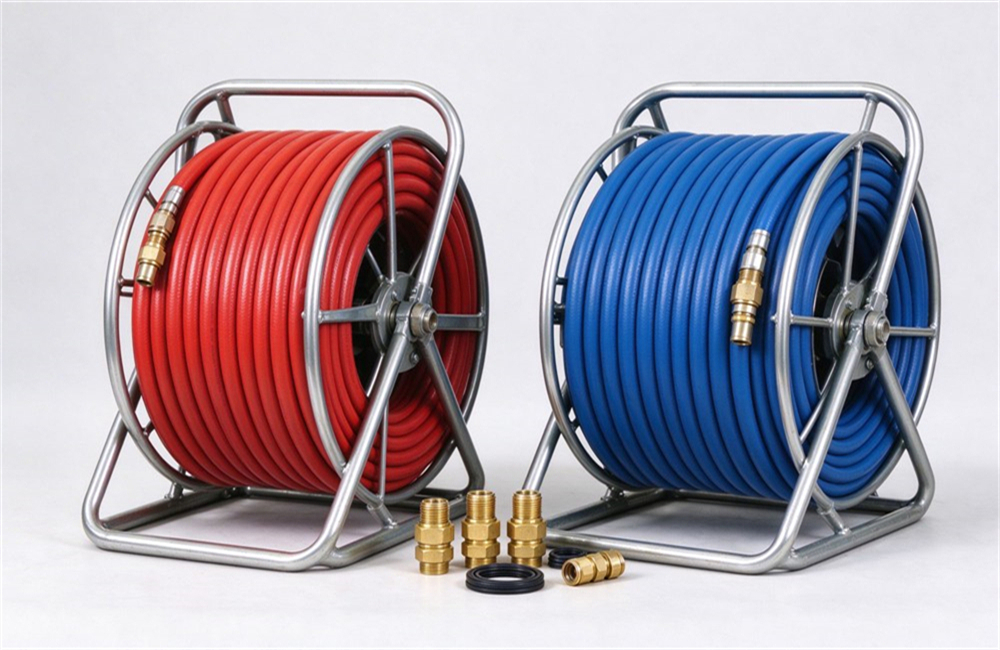
Hose management decides how fast your crew can set up. Our hose reels hold the full working length on a steel frame.
, so two people can lay out 30 meters of twin hose in under a minute, and the quick couplings on each end are protected when not in use.
Hose maintenance follows a simple rhythm. After each deployment, wipe the couplings clean and check the seals.
Once a month, inspect the full length of every hose for cover cuts, kinks and coupling looseness.
Once a year, replace the coupling seals and pressure-test each hose at rated pressure.
This routine catches wear before it becomes a failure, and it extends the service life of a quality hose set by years.
Hose handling is a skill in itself. A coiled hose on the ground becomes a trip hazard at night, and a hose dragged over sharp metal will eventually wear through the cover.
We recommend storing hoses on the reel provided with each power unit, and inspecting the couplings after every deployment.
A quick visual check takes seconds and prevents most connection failures.
Quick couplings are designed to connect under pressure, but the safest habit is to release pressure at the tool valve before uncoupling. This reduces wear on the coupling seals and makes reconnection easier in the dark
. Each power unit ships with a short operating card covering these steps, and your crew can laminate it and keep it in the truck.
The coupling standard is worth confirming before purchase. Common rescue tool brands use slightly different quick coupling profiles, and an adapter adds length and a potential leak point. When you send us your tool list, we confirm whether standard couplings match or adapters are needed, and we pre-fit the correct end on every hose in the order.
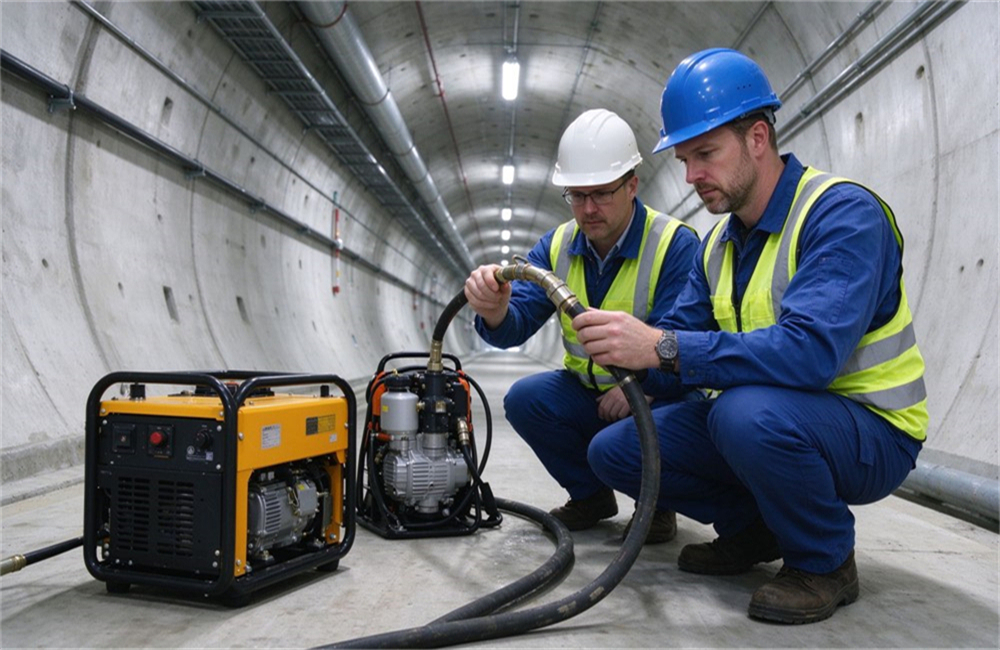
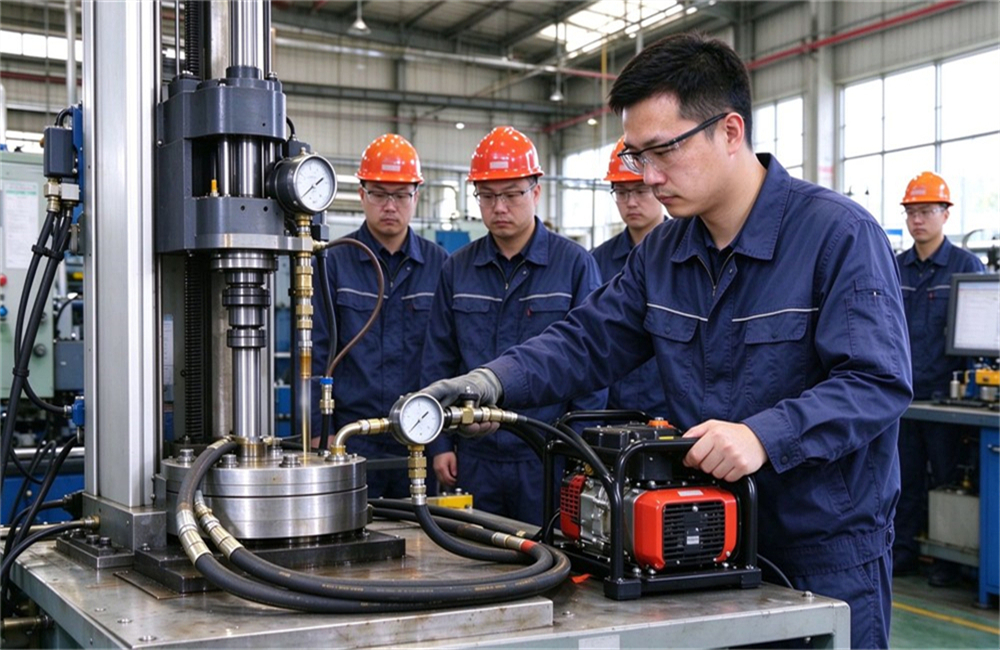
Underground and confined-space crews face the same coupling reliability questions. In a bright tunnel maintenance bay, engineers check every quick coupling and hose end before lowering equipment into service, confirming pressure ratings and seal condition on the spot.
This section walks teams through choosing the right power unit for their fleet, matching flow, pressure and runtime to the tools already on the truck.
Choosing the right hydraulic power unit is a procurement decision that affects your rescue capability for years. Work through the decision tree below, then confirm the shortlist with the comparison table.
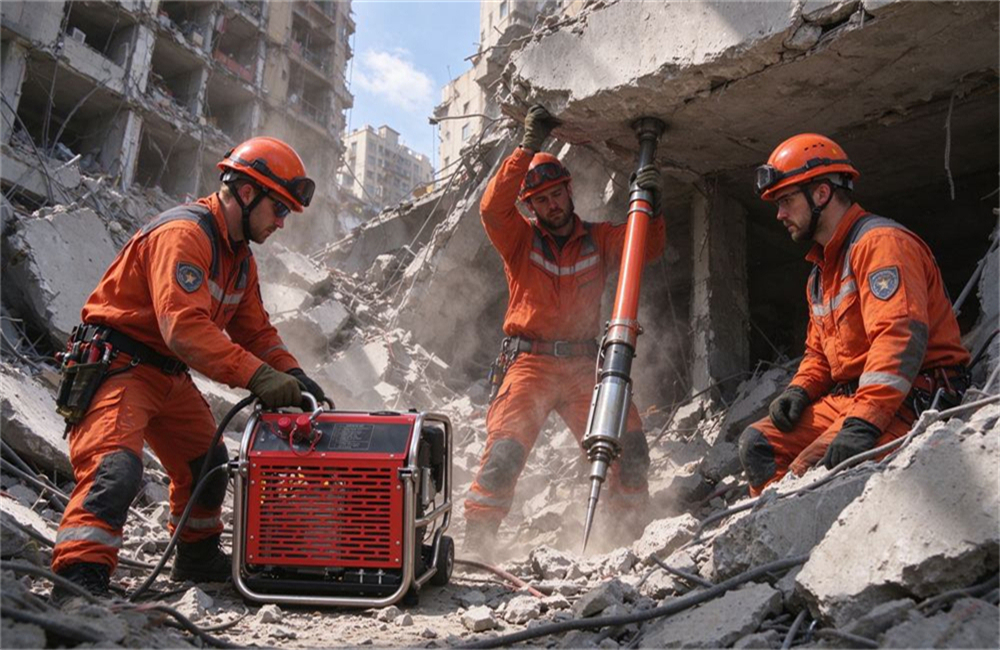
After an earthquake, the power source decides how fast teams can reach trapped survivors. Rescue crews position the hydraulic power unit on stable ground, run hoses into the rubble, and drive a spreader or ram from a safe distance — keeping operators away from unstable walls.
Hydraulic Power Unit Selection Decision Tree
Step 1 – Is electricity available at the scene? Yes → electric pump (SYZ-40C Electric or SD13-30) for silent indoor use; No → continue to Step 2.
Step 2 – Will the operation run longer than 2 hours continuously? Yes → diesel power station (SYZ-80C) for fuel economy; No → continue to Step 3.
Step 3 – Must the pump be carried to the victim? Yes → backpack pump for walk-in access; No → continue to Step 4.
Step 4 – Do you need two tools working at once? Yes → dual output engine pump (SAG35-80 or SYZ-80Q); No → single output portable pump (SYZ-40Q or SA13-30).
Step 5 – Do you need a silent, fuel-free backup? Yes → add manual pump BS-63/0.7 to the order.
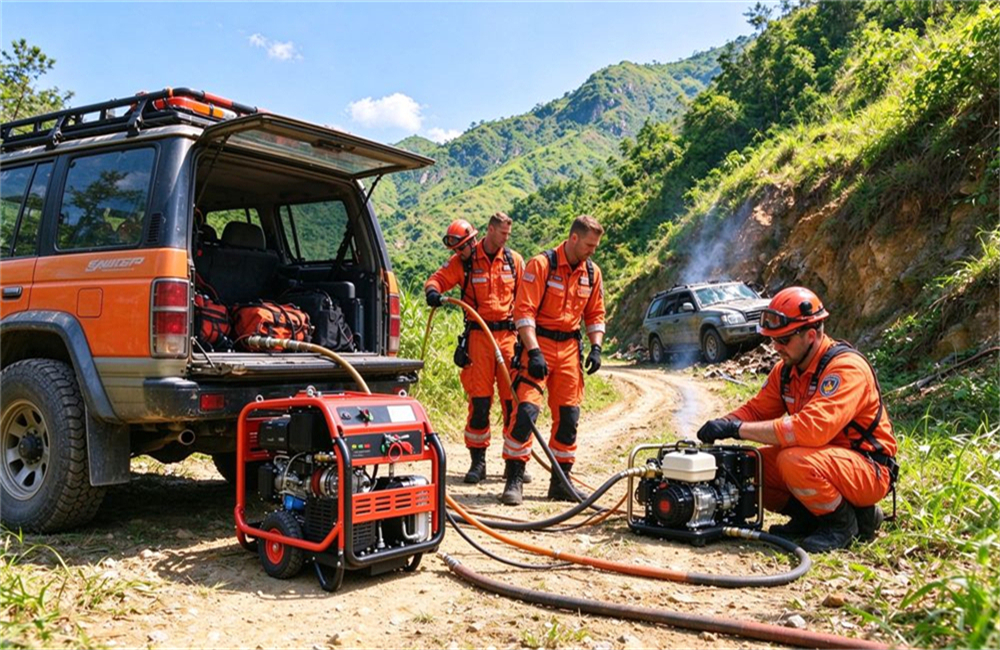
Remote and mountain operations prove the value of a self-contained backpack pump. Carried by off-road vehicles, the petrol engine power unit reaches sites with no electricity, no workshop and no second truck — and still delivers full rescue pressure for extrication and lifting.
The decision tree assumes your tools are already in service.
If you are building a rescue system from scratch, start from the tools first, then select the power unit.
Most teams choose cutters and spreaders first because they define the rescue capability, and the portable hydraulic pump follows the tool requirements.
|
Power Unit Type. |
Power Source. |
Max Pressure. |
Runtime. |
Noise. |
Best Scenario. |
|
Engine-driven pump. |
Petrol engine. |
63 MPa. |
Fuel-limited. |
Medium. |
Rapid road & structure rescue. |
|
Diesel power station. |
Diesel engine. |
195 bar. |
Very long. |
Medium. |
Earthquake search & extended dewatering. |
|
Manual pump. |
Operator lever. |
63 MPa. |
Unlimited. |
Silent. |
Backup, first response, fuel-free zones. |
|
Backpack pump. |
Small petrol engine. |
63 MPa. |
Fuel-limited. |
Low. |
Walk-in access to trapped victims. |
Compare against the NFPA 1936 standard for power rescue tools when defining your procurement specification, and review OSHA guidance for hydraulic equipment safety at work.
If you are building a rescue system from scratch, start from the tools first, then select the power unit. Most teams choose cutters and spreaders first, add a ram for lifting, and then match a pump that drives all of them at working pressure.
Redundancy deserves a place in the buying plan. A fleet with two vehicles and one power unit has no backup when that unit goes for maintenance.
Departments that can afford a second unit usually place it on the second vehicle, and stations that cannot still keep a manual pump as the minimum backup.
Our engineers can help you define the right redundancy level for your call volume and fleet size.
One practical buying tip: plan for growth. A department that buys a single output pump today may add a second tool next year; the dual output pump covers that path.
A dual output pump costs little more at purchase time but saves a second pump later.
Similarly, if your fleet already runs a mix of cutter brands, confirm the coupling standard during the inquiry so the hoses arrive ready to connect.
Budget is not the only factor. Storage, crew training and fuel logistics all affect the total cost of ownership.
Diesel stations need a diesel supply chain; electric units need a reliable power outlet; manual pumps need no fuel at all.
Walk through your real operating environment before finalizing the order, and ask our engineers for a sizing sheet matched to your tools.
Many relief organizations order a standard rescue package: one SAG35-80 power station, one cutter, one spreader, one ram and two twin hose sets. This package equips one rescue vehicle completely, and it is the configuration we quote most often for government tenders. We can also split the package into separate line items for your budget system.
Every hydraulic power unit we ship passes a documented inspection sequence. Quality is not a marketing word in this industry; it is the difference between a tool that works at the moment of rescue and a tool that fails under load.
Rescue power units sit idle for days, then run at full load for hours.
That duty cycle punishes small faults.
A loose seal leaks slowly during storage and fails completely at the rescue scene.
A marginal engine tune loses power exactly when the cutter meets high-strength steel.
Our test sequence is designed around this real duty cycle, not around cosmetic inspection.
Our inspection line covers five stations.
Inspection records accompany every shipment.
Every unit leaves the line with its inspection sheet signed. Pressure, flow, oil level and hose torque are recorded on the same form, so the receiving team can compare the numbers with the unit manual the day the equipment arrives.
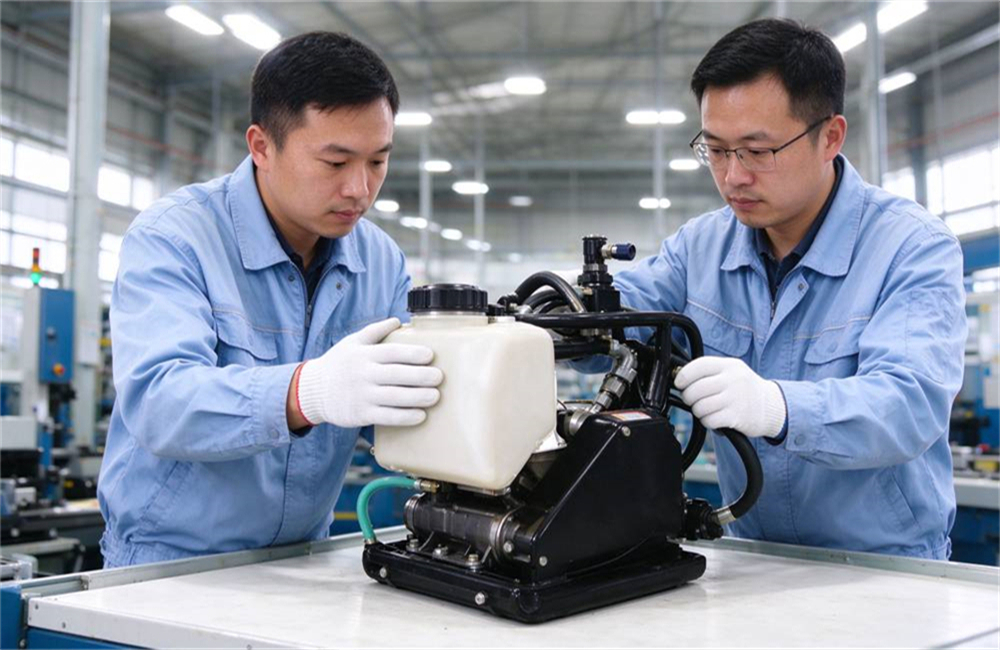
The pressure test bench is the most important station. Each rescue pump is connected to a calibrated gauge loop, brought up to rated pressure, and held there while the operator watches for any drop.
The test takes only a few minutes per unit, but it catches seal faults, valve seating problems and assembly errors that no visual check can find. Units that fail the test are returned to the line, reworked and tested again before they are allowed into packing.
We also test the engine separately before the unit is assembled. A new engine is run through a break-in cycle, the oil is changed, and the flow output is verified against the specification. This two-stage testing, engine first and complete unit second, is why our power units arrive ready to run rather than needing adjustment on arrival.
Each shipment includes a test report with the serial number, the pressure test result, the flow reading and the inspector's signature. This report is your evidence that the unit passed the documented sequence, and it supports your own acceptance inspection when the unit arrives. Keep the report with the unit manual for the full service life.
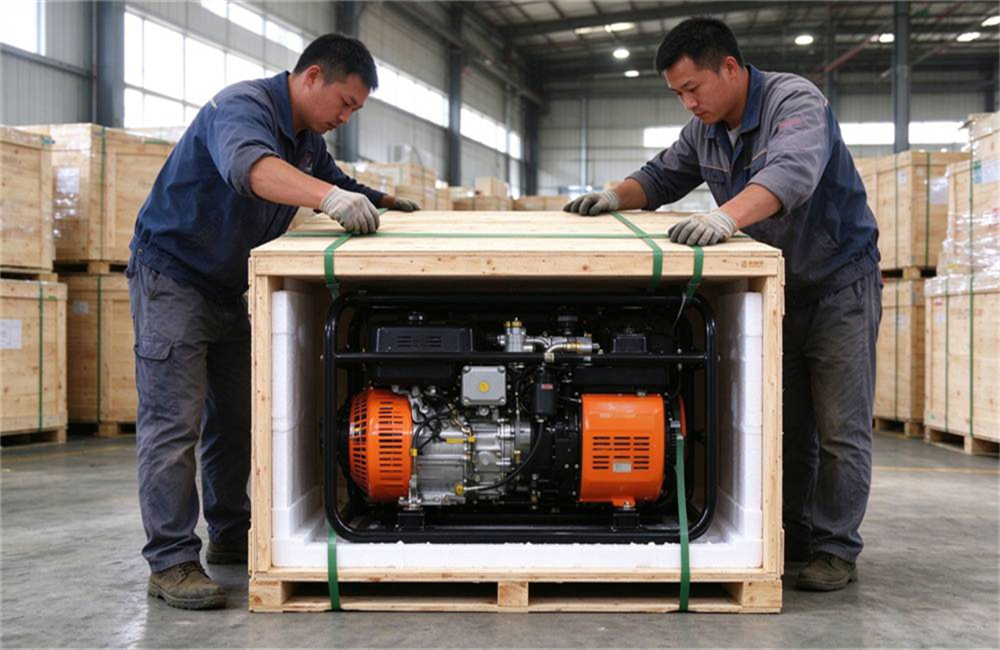
Rescue equipment travels across borders and through rough logistics. Our standard export packing protects the hydraulic power unit in a plywood case with foam inserts, secured by steel strapping. For sea freight, each unit is shrink-wrapped against moisture before the case is closed.
We coordinate delivery with your freight forwarder or arrange shipping under standard export terms. Every case is marked with the rescue pump model, serial number and handling instructions so your warehouse team can verify the shipment on arrival. Spare parts such as hoses and couplings can be packed inside the same case or shipped separately, according to your contract.
Export documents are prepared by our shipping team and reviewed before dispatch. A standard shipment includes the commercial invoice, packing list, bill of lading, certificate of origin and the inspection records for each unit. For government procurement, we can add the specific documents your tender requires.
Lead time depends on the model and quantity. Standard models ship from our assembly line within the period confirmed in the contract, and OEM units with custom colors or logos follow the production schedule agreed at order confirmation. We send progress photos at the assembly and testing stations so you can track your order.
For full container loads, we plan the case layout to maximize container utilization and minimize freight cost. Each case dimension is recorded on the packing list, so your forwarder can calculate the volume and weight before booking. Partial loads ship as less-than-container cargo with the same case protection.
Most of our shipments go to rescue departments, relief organizations and government agencies across Asia, the Middle East, Africa and Latin America. We understand export paperwork, container booking and local acceptance procedures, and our team handles the documentation side so your logistics staff can focus on the equipment. If your tender requires local agent support, we coordinate with your representative.
Ordering a hydraulic power unit from our factory is a five-step process designed for government and institutional buyers. The same rescue pump ordering route applies to fire departments, ministries and disaster agencies:
For government buyers, we also prepare bidding documents. A typical tender package includes the technical datasheet, the inspection procedure description, the packing specification and the delivery terms. Tell us which format your procurement system uses, and we will structure the documents accordingly.
Payment terms follow standard export practice and are confirmed in the contract. We recommend the sample-first route for new customers: test one rescue pump in your own operation, verify it against your tools, and then place the fleet order with confidence.
After delivery, our support team stays available by email and WhatsApp. We answer operating questions, help troubleshoot starting issues, and arrange spare parts shipments. Every unit is covered by the standard factory warranty stated in the contract, and extended coverage is available for fleet orders.
Every hydraulic power unit in our range meets the same pressure and flow standards. A matched hydraulic power unit keeps every cutter and spreader working at full rated force.
Choose a hydraulic power unit by tool count, runtime and deployment site. Each hydraulic power unit ships with a test report and inlet hose set.
Every pump passes quality and testing before shipment. Rigid wooden cases ensure packaging and delivery safe for sea freight.
Our hydraulic power unit line covers petrol, diesel, manual and electric models. Specify your tool list and we match the right hydraulic power unit for each rescue pump station.
Order a hydraulic power unit with hoses and tools in one shipment. The right hydraulic power unit protects every downstream tool from pressure loss.
Related Hydraulic Rescue Tool Guides
Build a complete rescue system with the rest of the hydraulic rescue tool matrix.
Hydraulic Rescue Tools Hub. · Hydraulic Cutter for Rescue. · Hydraulic Spreader for Rescue.
Hydraulic Combi Tool Rescue. · Battery vs Engine Hydraulic Pump. · Hydraulic Rescue Tool Maintenance. · How to Choose Hydraulic Rescue Tools.
FAQ
1. How to choose a hydraulic power unit for rescue tools?
Match the portable hydraulic pump to your tools, not the other way around.
Check the tool working pressure and required flow, then select a unit that delivers at least that pressure with margin.
Our SAG35-80 at 175bar covers standard cutter and spreader sets, while 63MPa portable pumps suit high-pressure rescue tools.
The decision tree in this article walks you through the full selection logic.
2. What is the difference between twin hose and single hose rescue pumps?
A twin hose unit feeds pressure oil to the tool through one hose and returns it through the second hose, forming a closed loop for faster response and better control. Single hose units are simpler and lighter but slower in cycle speed. Most rescue cutters and spreaders perform best with the twin hose configuration.
3. Can your hydraulic power unit drive our existing rescue tools?
Yes, in most cases. Our standard quick couplings match common rescue tool connector types, and we can fit adapters to your existing cutter, spreader or ram brand. Send us your connector photos or drawings during the inquiry and we will confirm compatibility before you order.
4. Which hydraulic power unit is best for earthquake search and rescue?
For extended earthquake operations, we recommend the diesel power station SYZ-80C because of its long runtime and fuel economy, paired with the backpack pump for walk-in access into collapsed structures. This combination covers both sustained and mobile operation.
5. What working pressure do your engine-driven pumps reach?
Our portable engine-driven pumps such as BJQ-63/0.4S reach 63MPa, while the heavy rescue power stations SAG35-80 and SYZ-80Q work at 175bar. The diesel SYZ-80C reaches 195bar. Choose the pressure class according to your tool requirements.
6. How long can a diesel hydraulic power station run continuously?
The runtime is limited by the fuel tank and engine consumption. The SYZ-80C carries a 27L hydraulic oil tank and a diesel engine sized for continuous duty, so it supports multi-hour operations. Exact runtime depends on load and ambient conditions, and we confirm it in the technical datasheet per contract.
7. Is a manual hydraulic pump reliable enough for primary rescue use?
A manual pump is reliable, but its flow is limited by the operator, so it is slower than engine-driven units. We recommend it as a backup or first-response tool, especially in fuel-spill scenes where a silent, spark-free power source reduces ignition risk.
8. Can you customize the hydraulic power unit with our logo and colors?
Yes. We offer OEM customization including body color, logo marking, decal layout, hose length and connector type. Custom specifications are confirmed in the contract, and the MOQ is discussed at the inquiry stage.
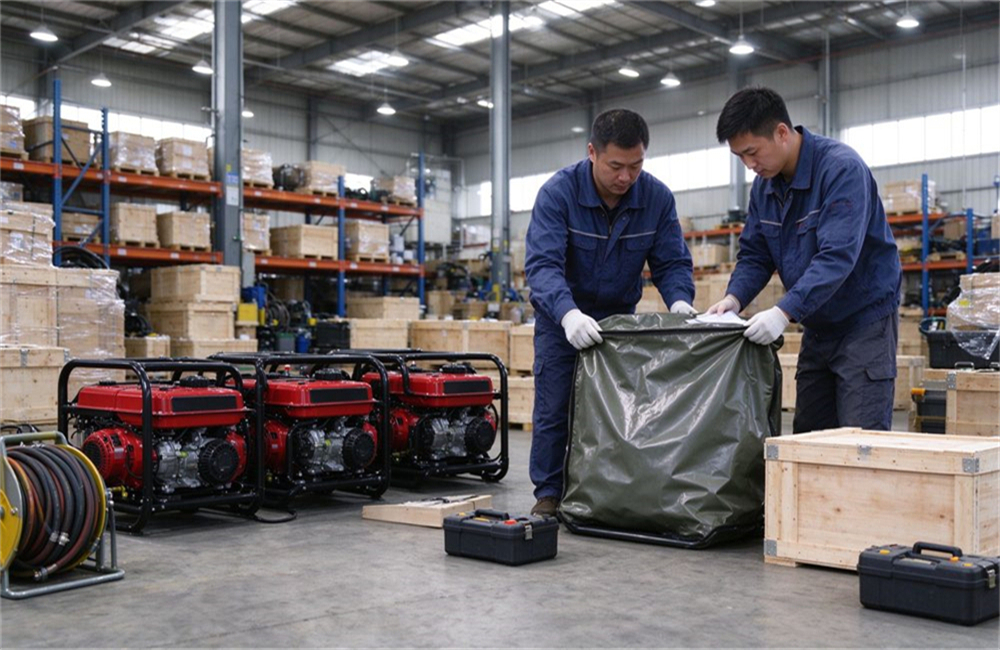
For government and institutional buyers, our warehouse keeps standard models ready for inspection and shipment. Units are stored in waterproof covers, matched with hose reels and tool boxes, and can be packed into export wooden cases within days of order confirmation.
9. What tests does each hydraulic power unit pass before shipment?
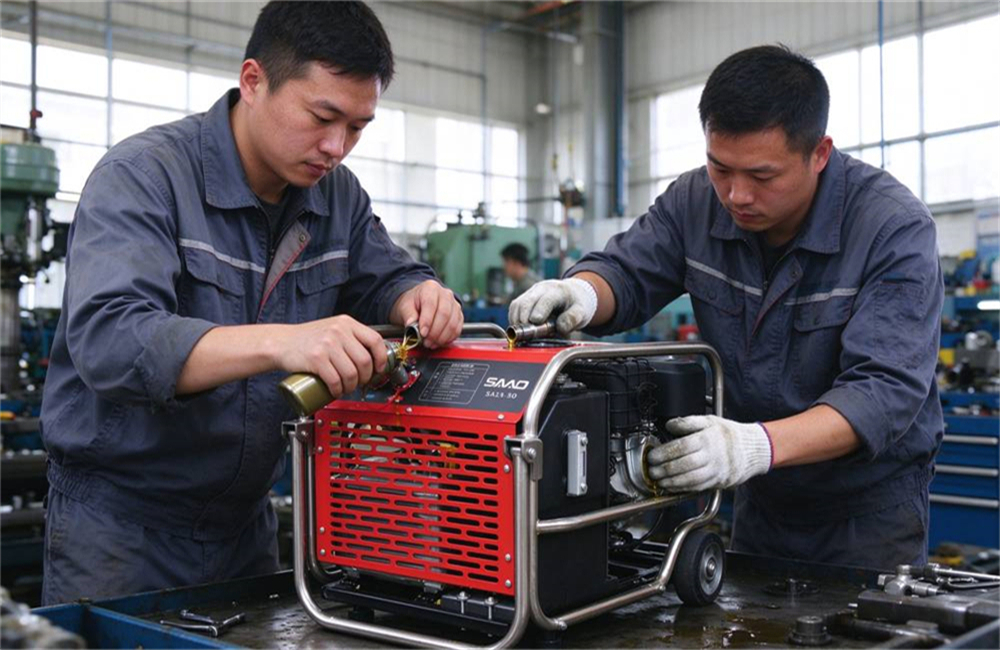
Every unit passes visual inspection of the pump body, hand-torque verification of hydraulic connections.
A pressure test bench run at rated pressure, engine warm-up with stable flow verification, and final seal and packing preparation. Inspection records are included in the shipment documents.
10. Do you supply spare parts for hydraulic power units?
Yes. We supply high pressure hoses, quick couplings, seals, valves and engine parts as spares. Standard parts are stocked, and custom parts are produced to order. Include a spare parts list in your inquiry so we can quote them together.
11. How do you pack hydraulic power units for export?
Each unit is packed in a plywood case with foam inserts and steel strapping, with shrink-wrap moisture protection for sea freight. Cases are marked with model, serial number and handling instructions for easy warehouse verification on arrival.
12. What is the minimum order quantity for OEM hydraulic power units?
The MOQ depends on the model and customization level. Standard models are available in small quantities, while OEM versions with custom colors or logos follow the contract terms. Please contact us with your quantity and we will confirm the terms.
13. How do I get a quotation for hydraulic rescue pumps?
Send your model preference, quantity and destination port by email or WhatsApp. We will reply within one business day with pricing, technical datasheet and packing details. For government tenders we can prepare full bidding documents.
14. Can you supply high pressure hoses longer than 15 meters?
Yes. Custom hose lengths are available, and we can match the fitting standard of your existing tools. Longer hoses reduce pressure slightly due to line resistance, so we confirm the length with your operation layout before production.
15. Do you support government and institutional procurement?
Yes. We regularly supply relief organizations and government agencies worldwide through standard procurement processes. We provide datasheets, inspection records, packing lists and customs documents, and we work with your freight forwarder for delivery.
16. Where can I learn more about rescue tool safety standards?
The National Fire Protection Association publishes the standard for power rescue tools at NFPA 1936, and the Federal Emergency Management Agency provides response guidance at FEMA. These are good references when writing your procurement specification.
Common pump-selection mistake: buyers match pressure but overlook flow. Low flow slows the tool cycle and slows the whole extrication.
Hose layout keeps lines clear of traffic, fittings tightened, and protects against pressure drop and leaks on scene.
Ready to equip your fleet? Send your tool list and quantity, and our team will confirm the model, hose configuration and delivery schedule within one business day.
How to choose a hydraulic power unit for a cutter and spreader?
Match the flow class to the tool pair. A twin hose power unit at 63 MPa runs a cutter and spreader together, while a portable hydraulic pump suits single-tool work.
Does a backpack pump power two tools at once?
A backpack pump with dual output ports powers two tools in sequence. It is the lightest portable hydraulic pump for high-rise and confined space rescue teams.
How to choose a hydraulic power unit for a cutter and a spreader?
How to choose hydraulic power unit for a cutter and a spreader: match the flow rate to the tool cycle time. A portable hydraulic pump with twin hose power unit output runs both tools at the same speed.
What is a twin hose power unit for rescue work?
A twin hose power unit feeds the cutter and spreader at the same time. This portable hydraulic pump reduces changeover time, and how to choose hydraulic power unit depends on the number of tools in the rescue kit.
Whether you equip a single fire station or tender a full municipal fleet, send us your tool list and flow requirements. We quote the power unit, twin hose set and matched rescue tools together for batch purchase and OEM orders.
Previous :
Electric Hydraulic Rescue Tools – Battery Cutter Supplier ChinaNext :
Hydraulic Rescue Ram | GYCD-120/450-750 Lifting & Stabilization Hydraulic Cutter for Rescue Wholesale Cutting Tool Sets and Spare Blades
Our hydraulic cutter delivers 420kN cutting force for fast vehicle extrication and structural collapse rescue. Compatible with manual, motor and battery power units. Equipped with interchangeable blades, tested strictly, ideal for fire departments, government stock and Red Cross procurement. Note: Price for reference only. Exact price based on quantity, size, weight and custom details.
 Hydraulic Spreader for Rescue – 42-62kN Vehicle Extrication Tool
Hydraulic spreader for fire rescue and vehicle extrication. Electric and manual types available, fitted with replaceable tips and pulling chain set. It is used for accident rescue, collapse rescue and regular rescue training. Note: Price for reference only. Exact price based on quantity, size, weight and custom details.
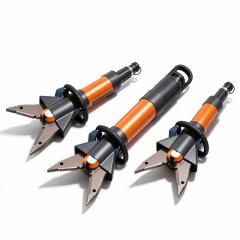 Hydraulic Combi Tool for Rescue – Cut and Spread Supplier
Hydraulic combi rescue tool for vehicle extrication and collapse rescue. Electric, manual and portable versions available. It can cut and spread metal structures, widely used for fire rescue and emergency extrication work. Note: Price for reference only. Exact price based on quantity, size, weight and custom details.
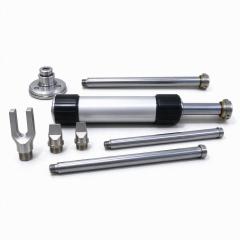 Hydraulic Rescue Ram | GYCD-120/450-750 Lifting & Stabilization
Hydraulic rescue ram delivers stable high pushing force for vehicle extrication, earthquake collapse shoring and road accident rescue. Widely used by fire departments, emergency teams and disaster relief organizations. Compact, durable and easy to operate in tight rescue spaces. Note: Price for reference only. Exact price based on quantity, size, weight and custom details.
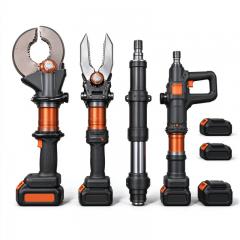 Electric Hydraulic Rescue Tools – Battery Cutter Supplier China
Cordless battery hydraulic rescue tools for vehicle extrication and confined space rescue. Cutter, spreader, ram and combi tool available. Powered by 24V lithium batteries, silent and hose-free. High output force, easy for high-rise and remote emergency rescue. Note: Price for reference only. Exact price based on quantity, size, weight and custom details.
 University Dorm Mattress Pad Thick 10cm Roll Foldable Warm Latex Layer Single XL
Mattress Pad Warm Latex Layer. Delicate And Soft,Moisture Absorption And Perspiration,6 Cm and 10 Cm thickness. Fit Human Body Structure Curve, Japanese Floor Bed Tatami Design, Soft And Comfortable, Warm And flexible.
Copyright © Custom Disaster - Relief Bedding: Tents, Sleeping Bags, Blankets All Rights Reserved
the professional team to service !