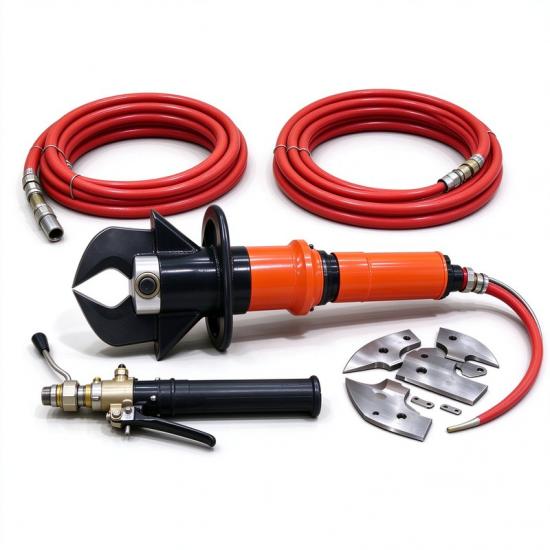
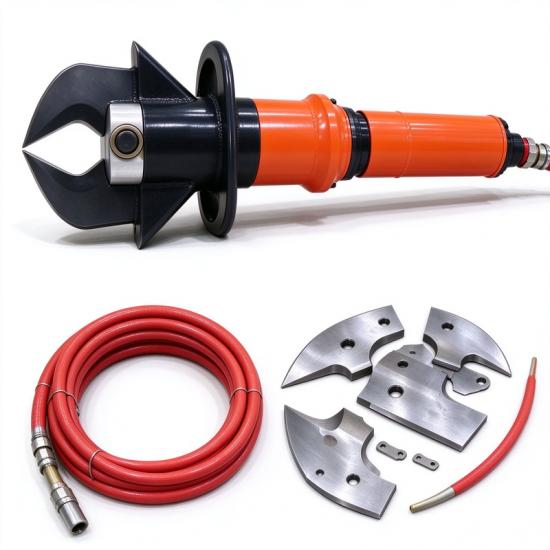
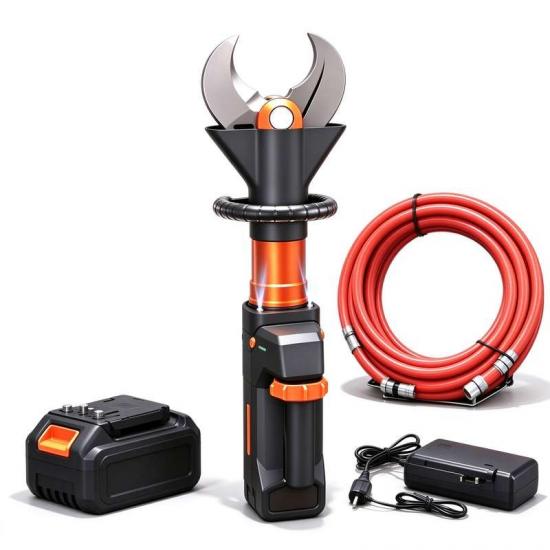
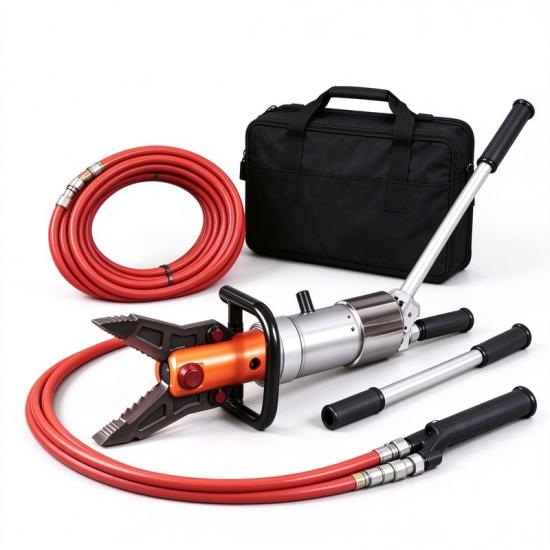
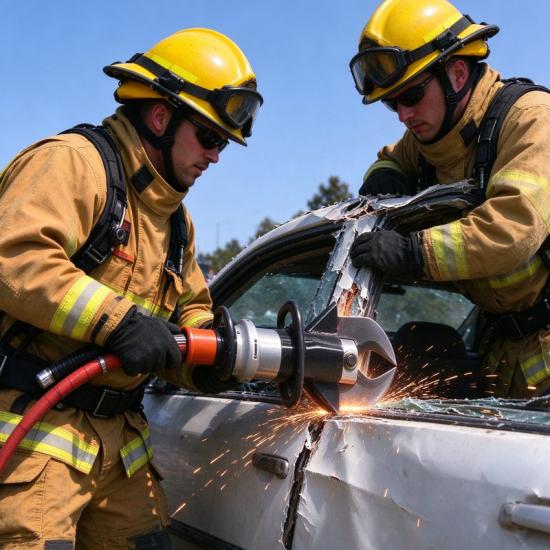
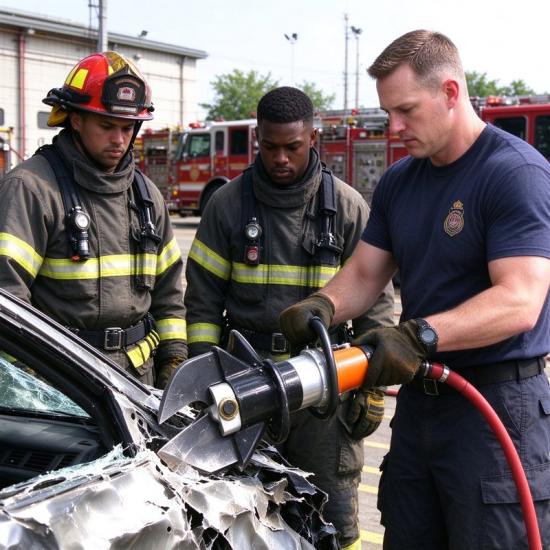
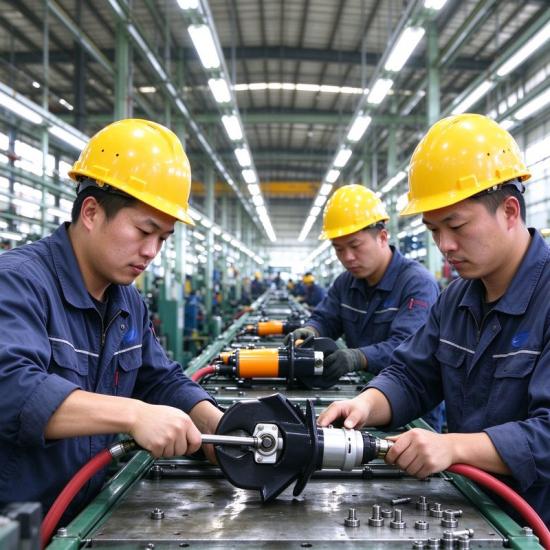
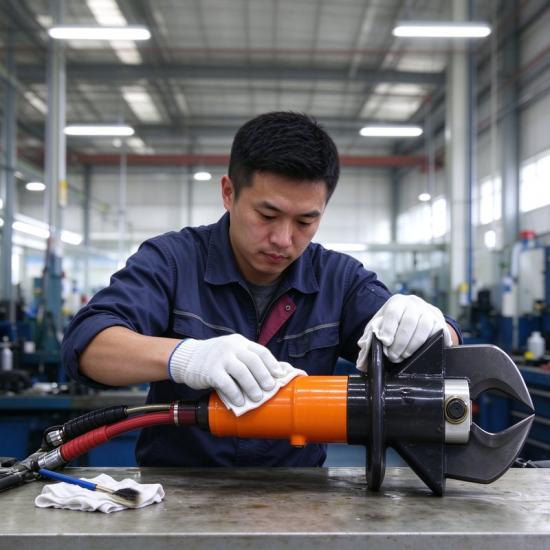
Our hydraulic cutter delivers 420kN cutting force for fast vehicle extrication and structural collapse rescue. Compatible with manual, motor and battery power units. Equipped with interchangeable blades, tested strictly, ideal for fire departments, government stock and Red Cross procurement.
Note: Price for reference only. Exact price based on quantity, size, weight and custom details.
model no. :
H-02Brand:
YRFmarket price :
$3600sale price :
$1800price range :
10-30/$1800Color :
Multiple Colorsport of dispatch :
Guangdong/GuangzhouPayment :
TT, Paypal, Western Unionmin order :
10original region :
Made in ChinaLead Time :
5-15days
Hydraulic Cutter for Rescue Wholesale Cutting Tool
Sets and Spare Blades
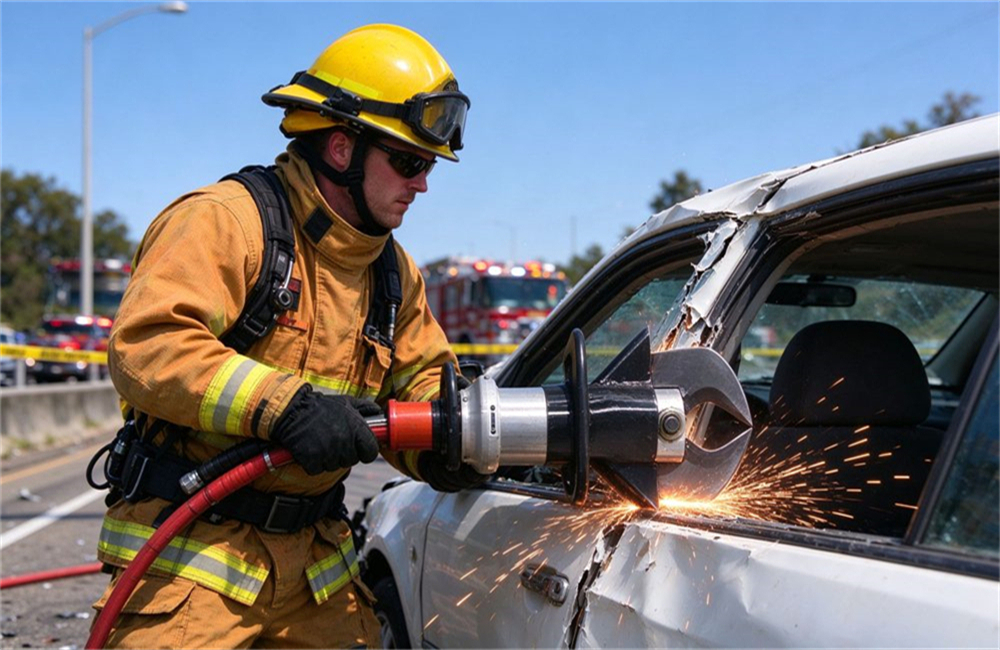
A hydraulic cutter is a high-force rescue tool powered by a hydraulic pump, built to shear vehicle pillars, rebar and steel frames in seconds. YRF supplies hydraulic cutter for rescue models with 420kN cutting force, so your team finishes a cut before a manual tool even starts.
 |

|
Hydraulic Cutter Overview
Cutter Key Specs
Cutter Single vs Twin Hose
Cutter Selection
Cutter Applications
Cutter Quality & Testing
Cutter Packaging & Delivery
Cutter Order & Spare Parts
Cutter Power Source
Cutter FAQ
Hydraulic Cutter: What Is It and How It Works
A hydraulic cutter converts hydraulic pressure into mechanical cutting force through two scissor-action blades. Our GYJQ-28-10/125 hydraulic cutter for rescue runs at 63MPa and delivers at least 420kN, enough to shear a hardened vehicle B-pillar in one stroke.
The working principle is simple. A pump pushes hydraulic oil through the hose into the cylinder. The cylinder drives a piston forward, and the piston closes the two blades like scissors.
The hydraulic cutter multiplies pump pressure at the blade tip, so a compact body delivers force that a manual tool cannot match.
Compared with pry bars and bolt cutters, a hydraulic cutter for rescue finishes the same cut in seconds instead of minutes. Rescue teams save critical time at the scene.
The operator needs far less effort because the cylinder does the heavy work.
The body is built from hardened alloy steel. The blade pair opens to 130mm and is fully replaceable. The scissor action concentrates force at the cutting point, which prevents slipping on round rebar.
This is why the hydraulic cutter handles smooth round stock that manual shears cannot grip.
This hydraulic cutter for rescue is the core of a hydraulic rescue tool set. It connects to a manual pump, a motor pump or a battery unit through high-pressure hoses.
The same cutting head works with any of those power sources, so a fleet can standardize on one tool body.
Safety is built in. An automatic relief valve releases excess force if the tool overloads. The grip handle shapes to stay in hand during kickback. The all-steel body has no exposed wiring, which simplifies field service.
Because the hydraulic cutter produces no sparks and no heat, it is safe beside fuel tanks and dust. Operators should follow OSHA workplace rescue safety guidance on protective equipment during breaking operations.
The physics behind it is Pascal's law. Pump pressure applied to a small piston area is transmitted equally through the hydraulic oil. The larger cylinder area multiplies that force at the blade tip.
A hand pump that an operator works with 30kg of lever effort can therefore produce 420kN at the blade. This force multiplication is why a compact hydraulic cutter for rescue outperforms tools ten times its size.
The blade geometry matters as much as the force. Our blades are induction-hardened alloy steel with a polished cutting edge. The scissor action means the edge slices through material rather than crushing it.
This reduces the force needed for each cut and extends blade life. A worn or chipped blade drops cutting efficiency fast, which is why we ship a spare pair with every unit.
Rescue teams choose this tool for time-critical barriers. A car pillar, a rebar cage or a steel door frame stops a manual tool in minutes. The same member falls in seconds with a hydraulic cutter.
That gap between minutes and seconds is the reason fire and rescue services standardize on hydraulic equipment for forcible entry and extrication.
The tool is compact enough to carry by one operator yet powerful enough for hardened steel. This balance comes from the hydraulic force multiplier, not from a heavy body.
A 14kg tool can sit on an appliance bay shelf for months and be ready to work the day it is called.
That reliability is what procurement officers look for when they specify a hydraulic cutter for rescue for fleet-wide rollout.
This table compares the hydraulic cutter for rescue models we supply. All run at 63MPa, are tested before shipment, and match manual, motor or battery power. Choose by cutting force, opening and power style.
Model
Cutting Force of Hydraulic Cutter
Blade Opening
Weight
Power Source
GYJQ-28-10/125.
≥420 kN.
130 mm.
≤14 kg.
Manual / Motor pump.
GYJQD-33/160 (Electric).
≥420 kN.
160 mm.
Compact.
Battery, 1-second start.
GYJKB-6325/160 (Portable).
Cut & Spread.
160 mm.
Lightweight.
Integrated hand pump.
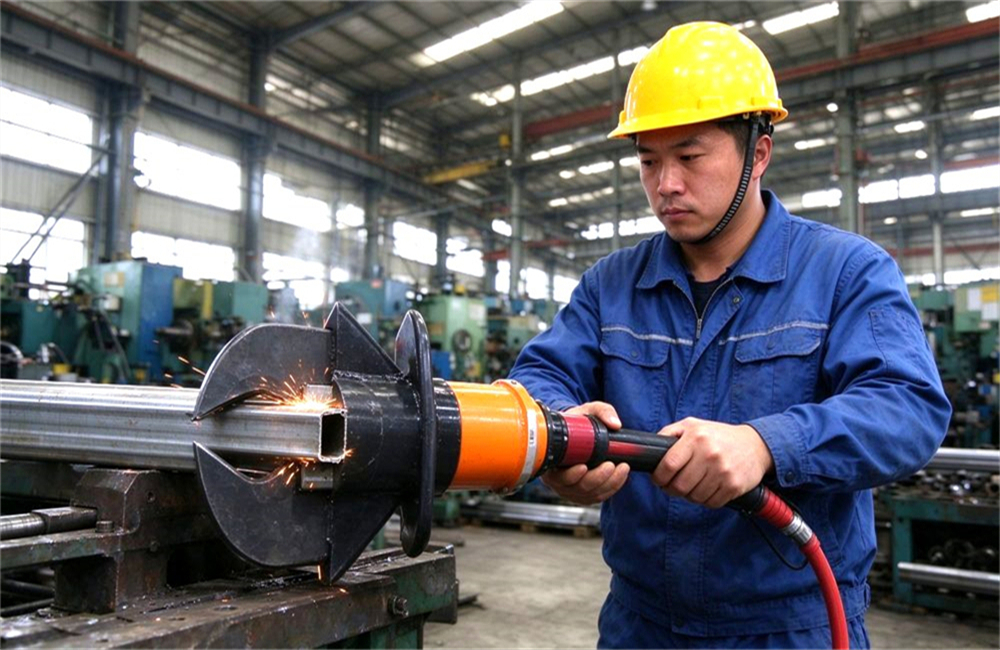
The detailed spec sheet below lists the standard GYJQ-28-10/125 hydraulic cutter. Values are measured on the production line and confirmed per unit before packing.
Parameter for Hydraulic Cutter
Specification
Model.
GYJQ-28-10/125.
Rated working pressure.
63 MPa.
Cutting force.
≥420 kN.
Blade opening.
130 mm.
Cutting capacity.
Q235 rebar φ28 mm, steel plate 10 mm.
Open-close cycle.
6-8 seconds.
Weight.
≤14 kg.
Dimensions.
670 × 190 × 180 mm.
The cutting capacity covers Q235 rebar up to 28mm and steel plates up to 10mm. The blades close and open in 6 to 8 seconds per cycle. The overall body is 670×190×180mm.
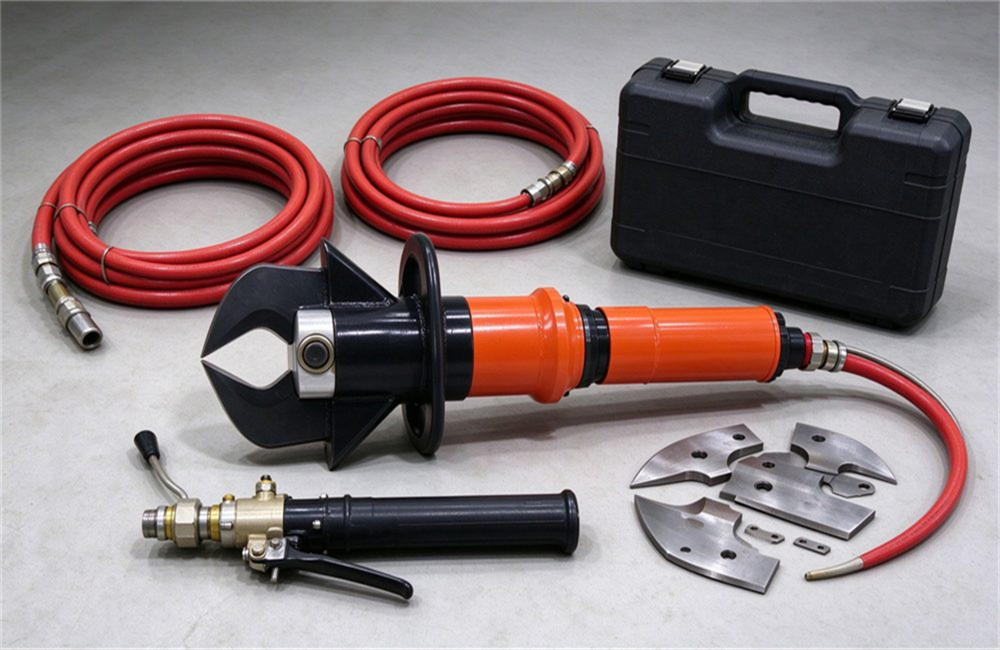
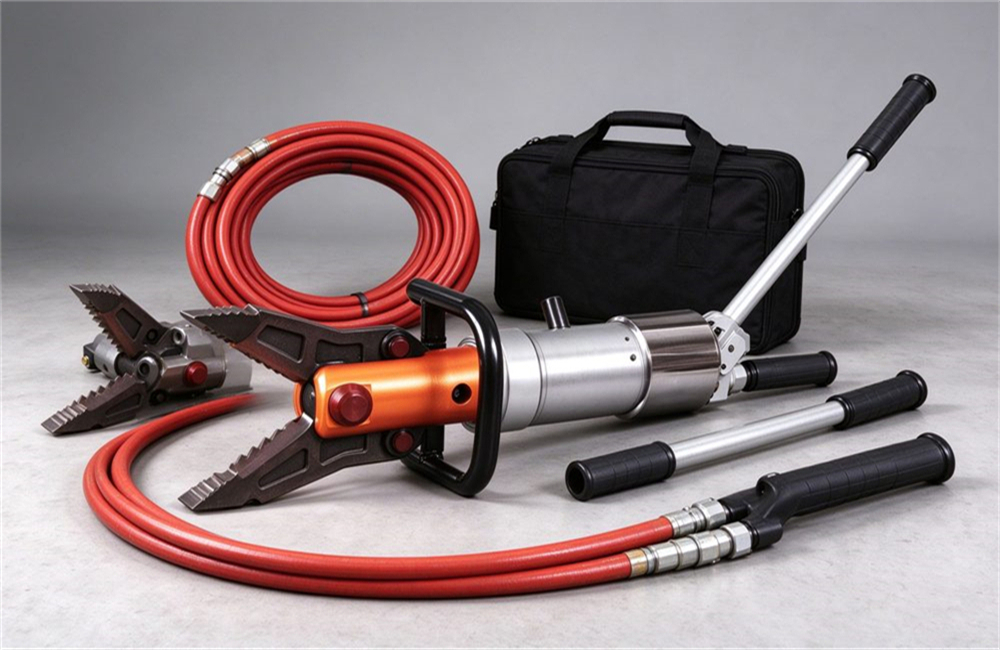
Every hydraulic cutter ships with two hardened blades, one hose set and a carrying case.
Pump matching follows one rule. The pump must reach 63MPa to drive the hydraulic cutter, and its flow rate decides how fast the blades close. A manual pump is enough for occasional cuts.
A motor pump with higher flow speeds the cycle for continuous operations.
Quick couplers on our hose sets match standard rescue pump brands. We confirm the coupling type before shipment, so your existing pump fleet can drive this hydraulic cutter for rescue without adapters.
This matters when you add one tool to an existing hydraulic rescue tool set.
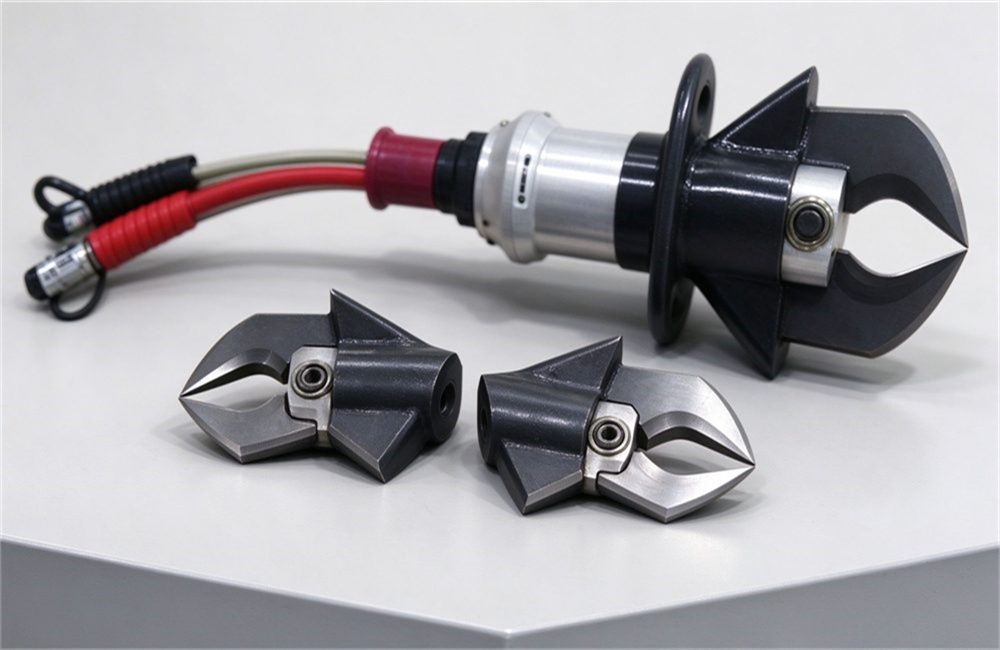
Blade choice changes the grip. A standard V-shaped blade suits flat steel and vehicle pillars. A double tooth cutter blade adds extra teeth that lock round and bundled material in place before the main blades close.
Demolition crews often order a double tooth cutter blade set alongside the standard pair.
For teams that need more power, the GYJQD-33/160 electric version starts in one second with no separate pump. For remote sites, the GYJKB-6325/160 portable combi tool integrates a hand pump.
Both are covered in the power source section later in this page.
Cutting capacity is stated in both material and shape. Q235 rebar up to 28mm diameter means a standard construction steel bar. A 10mm steel plate means flat stock, not round bar.
The 130mm opening measures the gap between blade tips when fully open.
That opening decides the thickest member that fits. We can test cut your sample material before bulk order if you send a section.
The 63MPa pressure class is the industry standard for rescue tools. It means the hose, cylinder and couplers are all rated to that pressure.
Mixing a 63MPa hydraulic cutter with a pump that only reaches 50MPa leaves force on the table.
We confirm the pump pressure class when we quote your hydraulic rescue tool set.
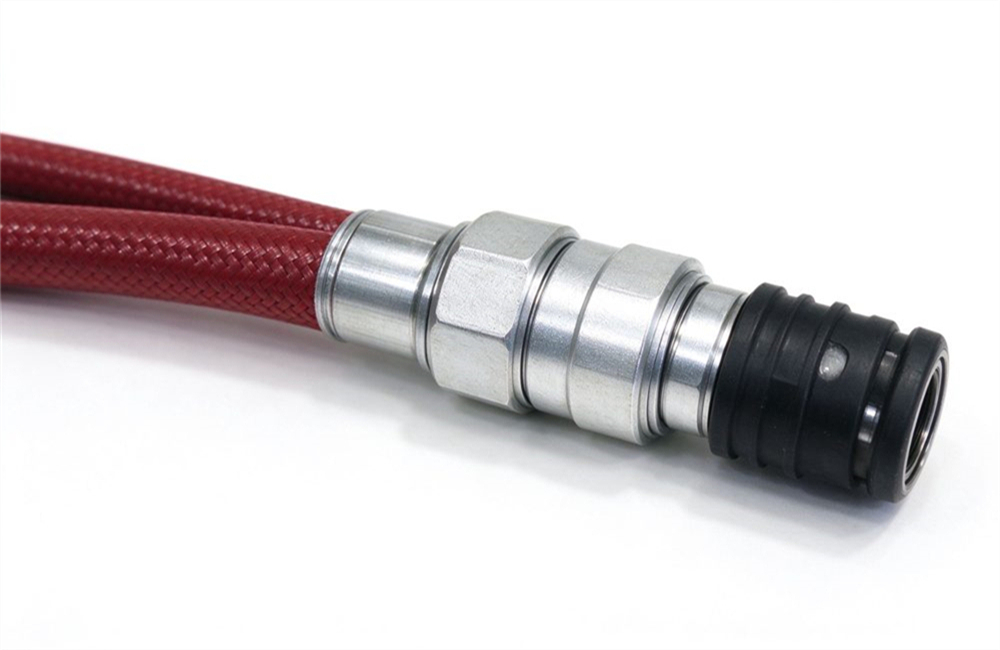
The single hose vs twin hose hydraulic cutter choice comes down to setup speed versus multi-tool stability.
Both hose styles work with the same hydraulic cutter body, but they suit different scenes. The table below summarizes the difference so your team picks the right setup.
Feature of Single vs Twin Hose Cutter
Single-Hose Hydraulic Cutter
Twin-Hose Hydraulic Cutter
Hose quantity.
1 hose.
2 hoses.
Setup speed.
Faster connection.
Slightly slower.
Power stability.
Good for one tool.
Stable for multiple tools.
Best for.
Rapid single-tool rescue.
Multi-tool operation.
A single-hose hydraulic cutter for rescue connects in one clip, which matters in the first minutes of a crash. The operator clips one coupling and the tool is live. This suits fast vehicle extrication where every second counts.
A twin-hose system delivers steadier oil flow when several tools run from one pump. A spreader, a ram and a hydraulic cutter can share the same power source without pressure drops.
That is why twin-hose remains the standard choice for a full hydraulic rescue tool set; the single hose vs twin hose hydraulic cutter trade-off is always setup speed versus multi-tool stability.
We configure either option to your operating habits. Tell us whether your team runs one tool per pump or a multi-tool system. We match the hose set to the pump outlet you already have.
Hose length affects cycle speed. Every extra meter of hose adds oil volume to move, which slows the blade by a fraction of a second. Standard rescue hoses are 3 meters long.
For multi-story or large warehouse scenes, we supply 5-meter hoses.
Quick couplers are spring-loaded and self-sealing, so they do not leak when disconnected under pressure.
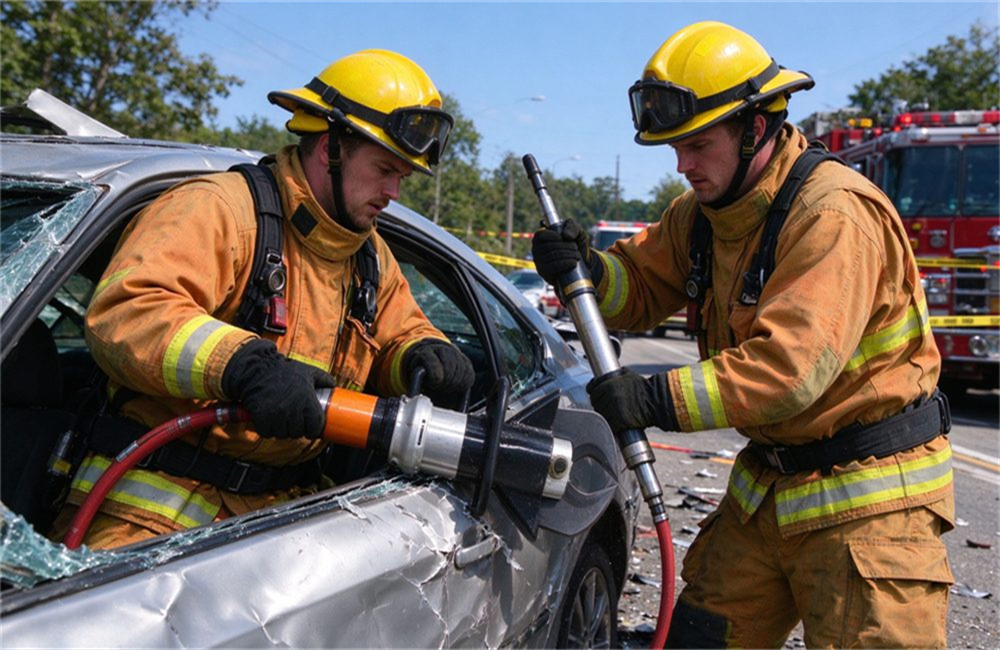
Cutter selection for rescue teams starts from your most frequent call type.
Choosing a hydraulic cutter for rescue — the core cutter selection for rescue teams step — starts with the scene your team faces most. The question of which hydraulic cutter for car rescue — that is, which hydraulic cutter for car rescue workstations should stock — usually points to this class: a cutter built for vehicle extrication needs a wide opening and high force on hardened pillars.
A cutter for collapse work needs a compact body that fits narrow rubble gaps.
Force, opening and weight are the three numbers to compare first. Cutting force decides whether the hydraulic cutter can shear your typical materials. The opening decides what member fits between the blades.
Weight decides how many operators carry and position the tool.
The table below maps each primary scene to a recommended configuration. Use it as a starting point for cutter selection for rescue teams, then tell us your typical workflow for a tailored recommendation.
Rescue Scene for Cutter Selection
Recommended Cutter Configuration
Key Parameter Focus
Vehicle extrication.
GYJQ-28-10/125, 420kN.
Opening 130mm, fast cycle.
Collapse, confined space.
Compact body, rotating head.
Weight below 14kg.
Remote sites, no power.
GYJKB-6325/160 portable.
Integrated hand pump.
First response speed.
GYJQD-33/160 electric.
One-second start, self-contained.
When buyers ask about a hydraulic cutter vs spreader, the answer is about the job, not the quality of the tool.
A hydraulic cutter vs spreader comparison comes down to function: the cutter shears material, while the spreader pries and widens gaps.
Most rescue teams carry both, plus a ram, to cover the full extrication sequence.
A hydraulic cutter vs spreader choice is therefore not an either-or. If your budget allows one cutting tool and one spreading tool, you cover roof removal, door popping and steel cutting.
If you must pick one for a tight kit, choose the hydraulic cutter for rescue when your main barrier is metal.
Spare parts and training belong in the choice too. A hydraulic rescue tool set with spare blades, hose sets and seal kits stays available in busy seasons. Basic operator training shortens the learning curve for new crews.
We include a recommended spare parts list with every fleet quote.
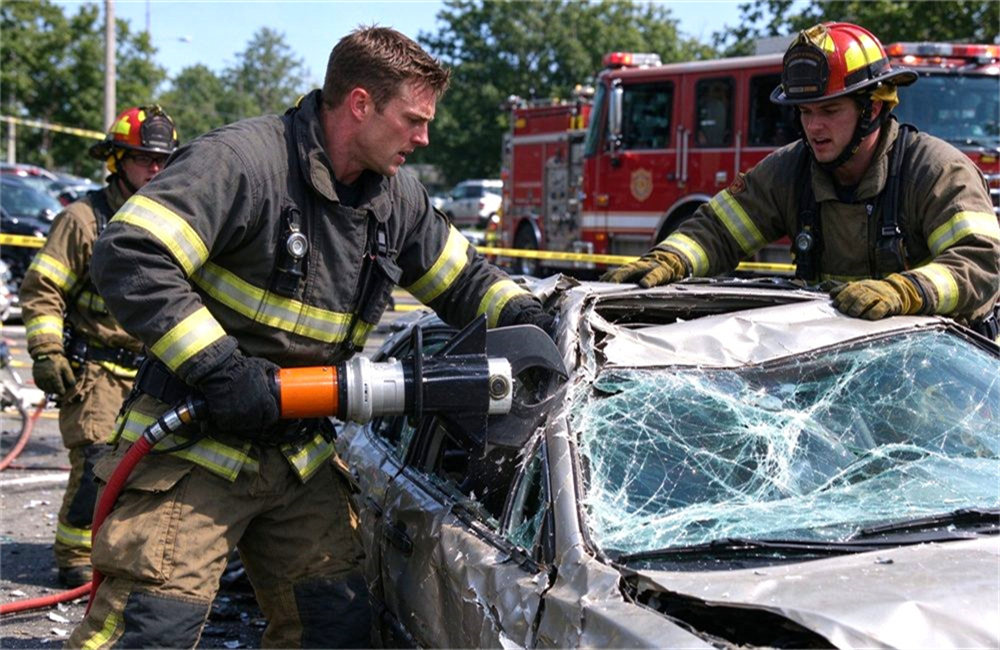
The applications of the hydraulic cutter span vehicle extrication, collapse rescue and on-site steel cutting.
In car accidents, the cabin can trap occupants in seconds. This is one of the applications of the hydraulic cutter in car rescue. A hydraulic cutter shears A-pillars, B-pillars and door hinges to open the cabin. It pairs with spreaders and rams for a complete rescue workflow.
Teams typically cut the roof pillars first, then roll back the roof to expose the patient area. The 130mm opening reaches into tight spaces between the roof panel and body frame.
The 420kN force cuts hardened steel without damaging the occupant space.
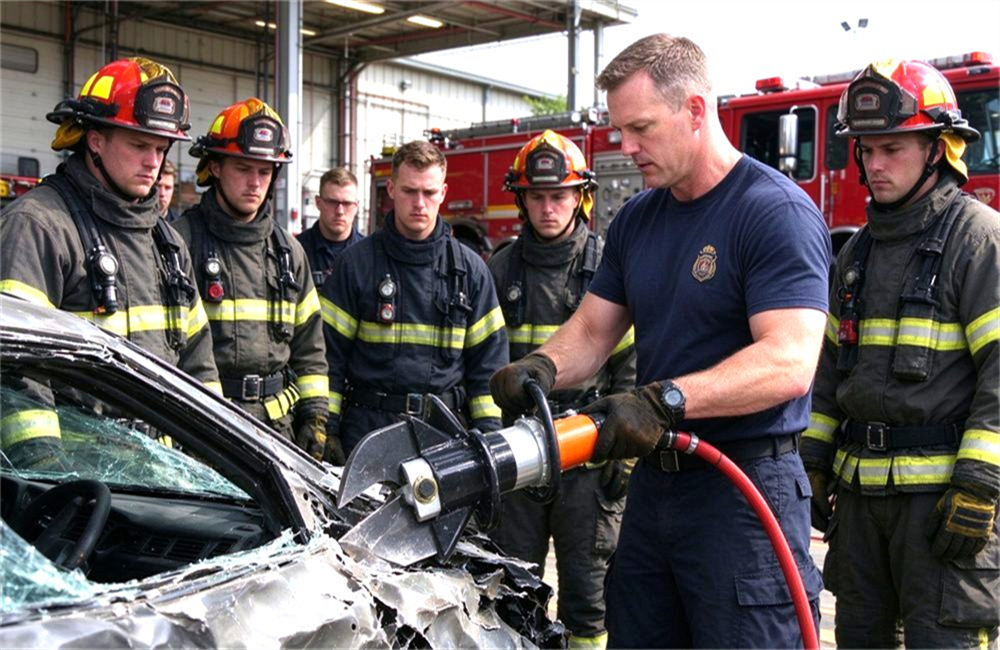
The standard extrication sequence uses three tools. A hydraulic cutter for rescue removes the pillars, a spreader opens the door gap, and a ram holds the dashboard off the patient.
Buying these three tools as one hydraulic rescue tool set ensures they share one pump and one hose system.
This is the most common configuration for municipal fire brigades, and one of the daily applications of the hydraulic cutter.
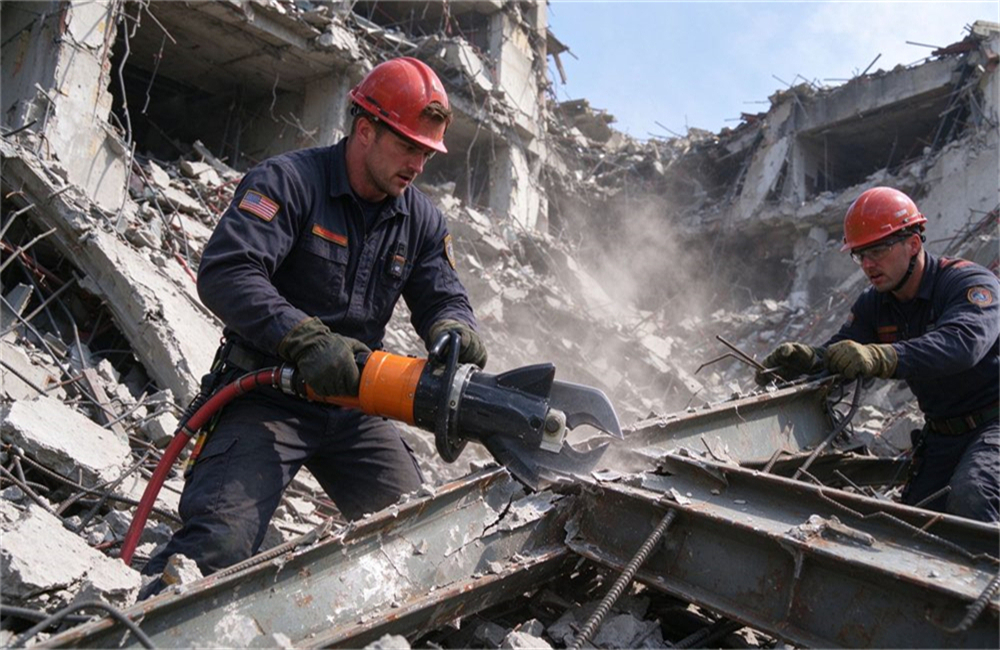
After an earthquake or building collapse, twisted steel frames block access to trapped people. The hydraulic cutter for rescue slices through deformed beams and rebar, creating a path for teams to reach survivors.
It produces no flame and no heat build-up, which matters near dust and gas lines.
In confined rubble, a compact hydraulic cutter is easier to maneuver than a grinder or a torch. It stays safe near fuel residues common at collapse sites.
This is why urban search and rescue teams list it as a primary breaking tool.
Teams should align their tool selection with FEMA emergency response guidance for collapsed structure operations.
After an earthquake, steel reinforcement in collapsed concrete often blocks egress paths. A hydraulic cutter for rescue slices those bars one at a time to widen a crawl space.
The tool works in silence compared with a breaker, which keeps communications clear and prevents further collapse from vibration.
Fire departments use the hydraulic cutter as part of their forcible entry kit when steel doors, security shutters and window grilles block access. The 420kN force shears heavy hinges and locking bars in one pass.
An axe or pry bar would take several minutes and exhaust the crew.
In a forcible entry comparison, the hydraulic cutter for rescue is chosen when the barrier is metal and the scene is time-critical.
It works without flame or sparks, so it stays safe near gas meters and fuel lines behind locked commercial doors.
This is why many brigades carry a battery hydraulic cutter on the first-arriving truck.
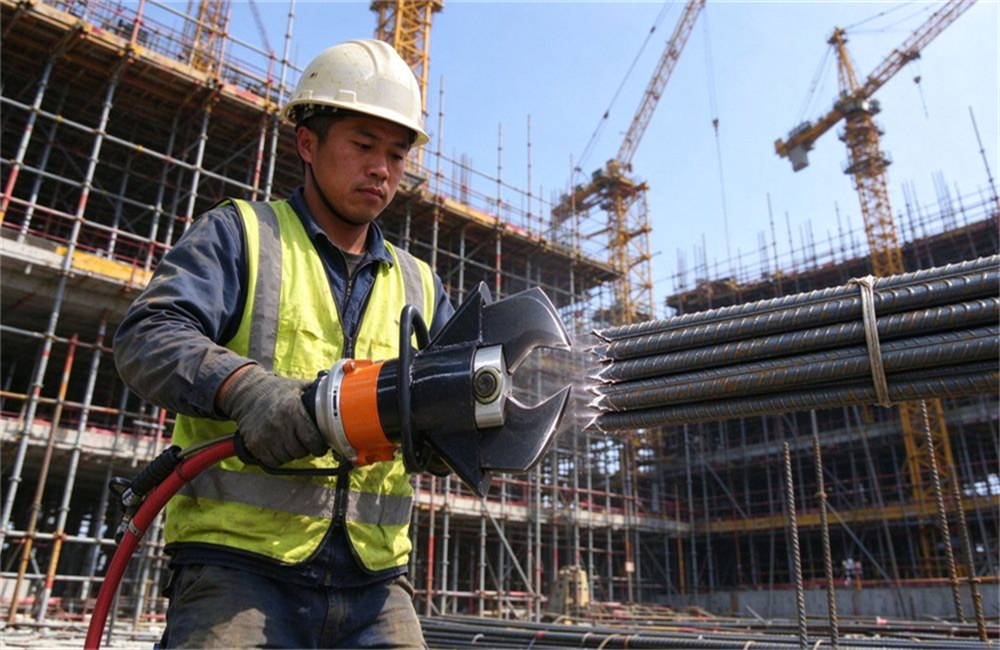
Heavy applications of the hydraulic cutter include construction rebar cages and steel door frames on industrial fences.
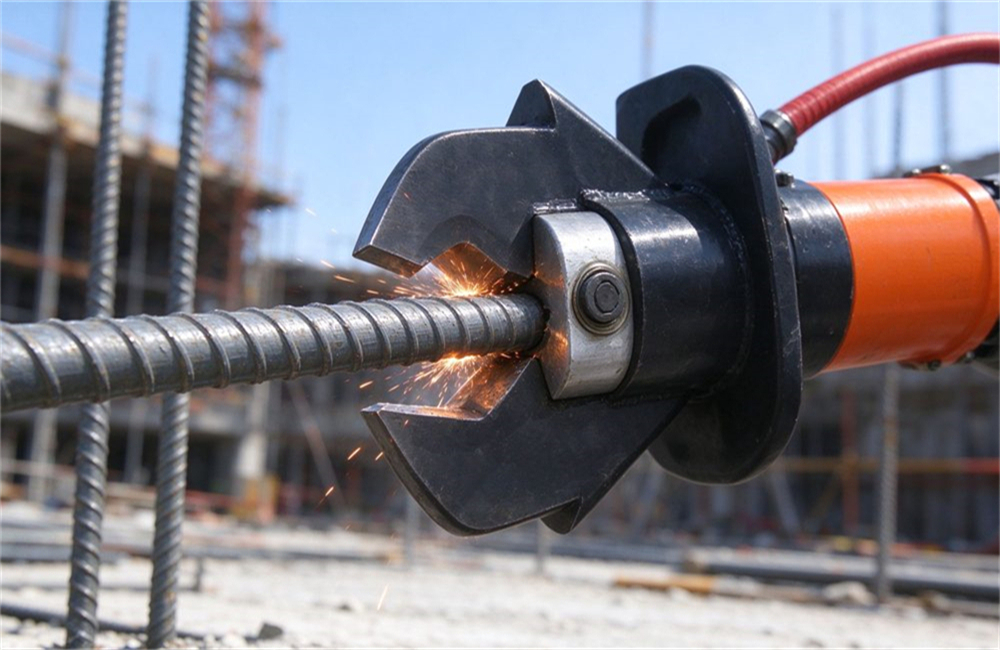
On construction sites and industrial plants, workers use the hydraulic cutter to cut rebar bundles and steel profiles fast. It replaces grinding wheels and oxy-fuel torches where sparks and heat must be controlled.
A double tooth cutter blade improves grip on bundled rebar. The extra teeth lock the bars before the main blades close. This reduces vibration and extends blade life on repetitive cuts.
Many demolition crews choose the double tooth cutter option for daily production work.
In dismantling, the hydraulic cutter for rescue breaks down steel frames and pipe racks without torches. Teams pair it with a spreader to cut members and pry them apart. That covers the full sequence of taking a structure down safely.
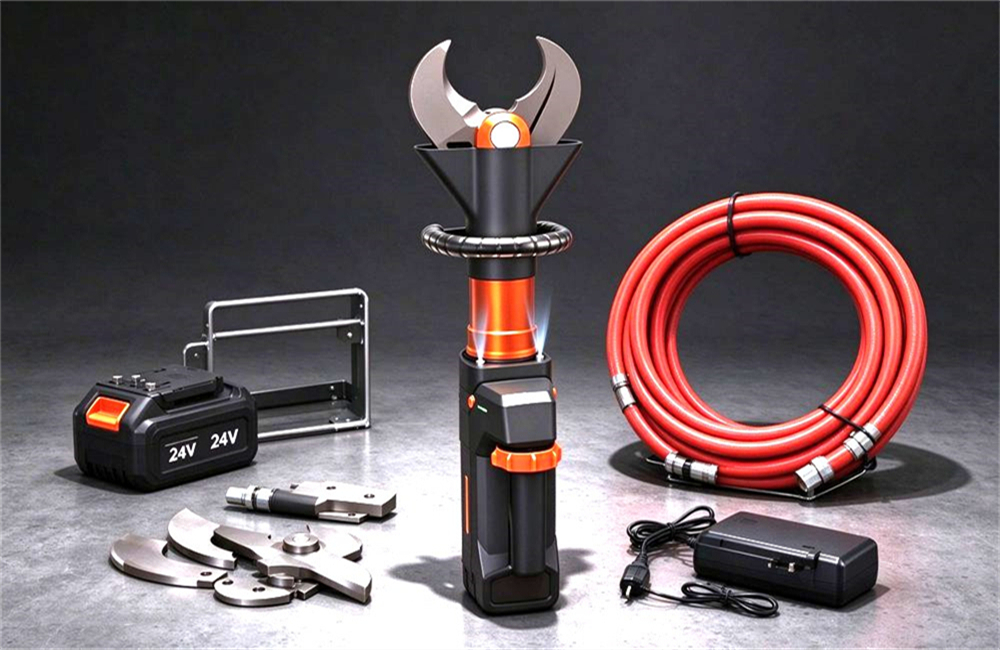
The GYJQD-33/160 battery hydraulic cutter starts in one second, so crews begin cutting before a pump is set up. The integrated battery and motor keep the tool self-contained for rapid first response. It suits one-person operations and quiet scenes.
The 24V battery pack is removable and swappable. A fully charged battery delivers roughly 80 to 120 cuts depending on material hardness, which is enough for a single incident. Teams that work all day carry two spare batteries per tool.
The charger runs on standard 110V or 220V, so the tool recharges at any station.
For training centers, the electric version is ideal because it runs indoors without fumes or noise. A portable hydraulic cutter with a hand pump is also popular for training, because trainees can build pressure themselves and feel the force build.
We can supply a trainer kit with a practice bar and spare blades for school use worldwide.
The GYJKB-6325/160 portable combi tool cuts and spreads with an integrated hand pump. It suits remote sites without power. The rotating head reaches angles that a fixed-head cutter cannot.
Both battery and hand-pump versions remove the need for a separate pump unit.
Quality control starts with incoming material. The alloy steel for the hydraulic cutter for rescue body and blades is checked against the mill certificate. Seals and hoses are inspected on delivery, so defects stop before assembly.
Every unit goes through a 63MPa pressure test before leaving the factory. Blades are hardness-checked. Hydraulic seals are inspected for leaks under working pressure. This ensures consistent cutting force and safe operation in the field.
Our test procedures follow NFPA 1936 rescue tool standard testing guidance for power-driven rescue equipment.
We also run a full-cycle test that opens and closes the blades repeatedly to confirm smooth movement. A sample record accompanies each batch so you can verify the test results before shipment.
The inspection process covers four checkpoints: blade hardness, seal integrity, hose coupling fit and paint finish.
Any unit that fails a checkpoint is reworked and retested, never shipped as-is. The body and blade pair use hardened alloy steel with a corrosion-resistant coating, selected for wet rescue conditions.
This is the standard process for every hydraulic cutter we export worldwide.
Our inspection paperwork includes a pressure test curve, a blade hardness reading and a visual check sheet. Buyers for government tenders often request these records before shipment.
We pack the test report in the wooden case and also email a PDF copy.
Your receiving inspector has the data on arrival. This is part of the wholesale hydraulic rescue tool set service we provide for institutional buyers.
We run a sample batch check for every production order. Five units out of a batch are pulled for a full load cycle, cutting test pieces of known steel grade.
If any sample drops below 420kN, the whole batch is held. This statistical check is why our customers report consistent force across years of reorders.
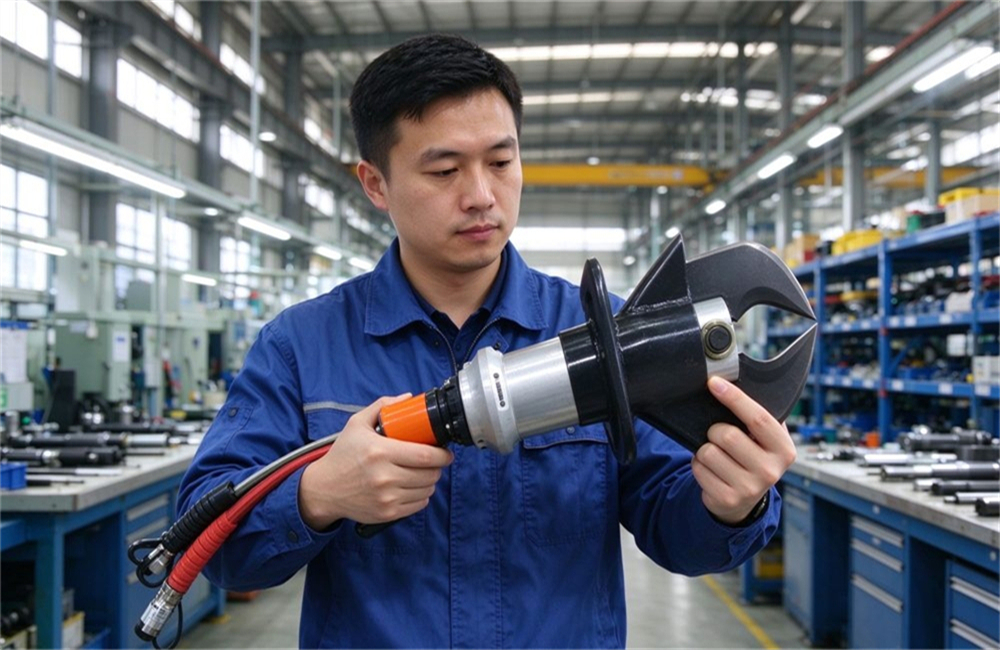
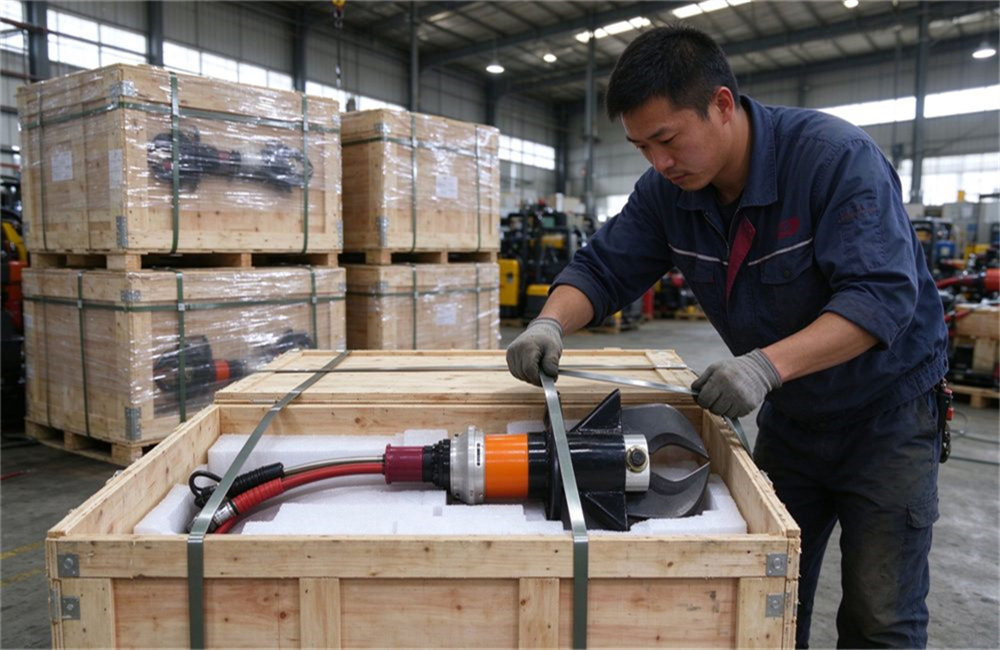
Each hydraulic cutter for rescue is packed in a reinforced wooden case with foam positioning. The foam protects the blades and body during sea freight. Spare blades and hoses are wrapped separately.
MOQ, lead time and payment terms are confirmed per contract.
For sea shipment, wooden cases are stacked with interlocking corners and strapped to pallets. For air freight, we use lighter plywood cases with extra foam. Export documents are prepared to your destination customs requirements.
The case label carries the model, serial number, gross weight and handling marks. The batch is traceable from our warehouse to your site.
We keep a packing photo of every case in the shipment record, which is useful if a claim or customs check needs evidence of the as-loaded condition.
Sea freight usually ships in 20-foot or 40-foot containers. A full hydraulic cutter for rescue order with pump sets, hoses and spare parts is packed to fill container space efficiently. We work with your forwarder or recommend one.
For air freight, weight matters, so we quote the chargeable weight before booking.
Lead time and freight terms are confirmed per contract.
We can also arrange door-to-door delivery for small orders by express. Wholesale and bulk orders normally move by sea. Tell us your destination port and we will suggest the most cost-effective route for your hydraulic rescue tool set.
We share the shipping schedule so you can plan your equipment rollout without unnecessary delays.
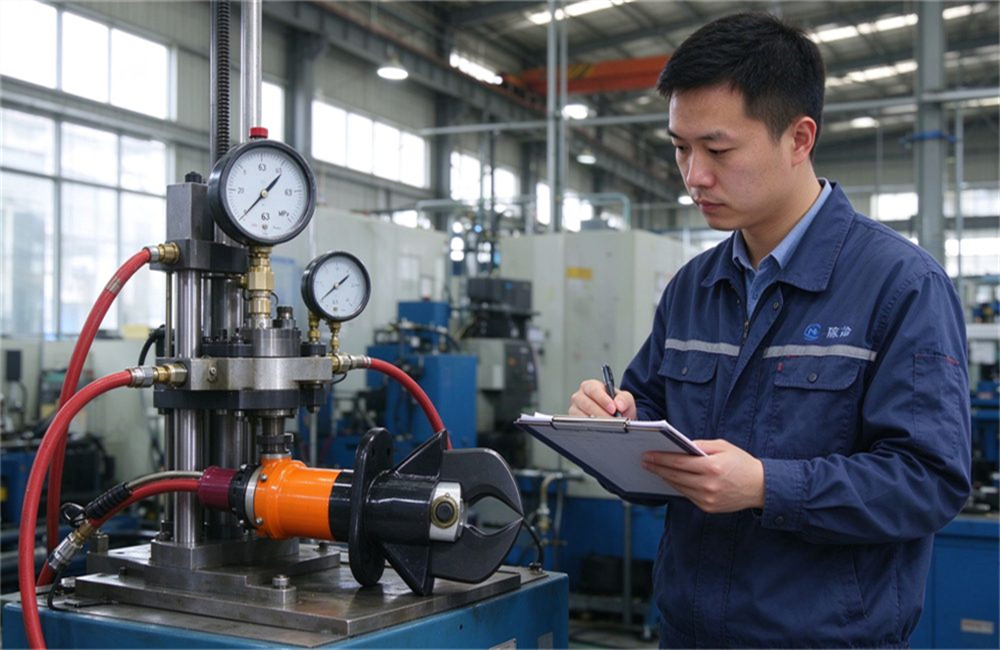
Ordering is straightforward. Tell us the hydraulic cutter model and quantity you need. Our team handles specification confirmation, production, inspection and shipment. The whole process runs on a clear schedule so you always know the status.
For government agencies, distributors and training centers buying in bulk, we supply wholesale hydraulic rescue tool set packages with consistent batch quality. Each shipment comes with documented test records and spare parts support.
We accept OEM branding on the body, case and export documents.
Customization options include blade type, hose length, body color and logo placement. If your brigade uses a specific color code, we can paint the body to match.
If you need longer hoses for multi-story buildings, we supply 5-meter or 10-meter hose sets. Every custom detail is confirmed in a written specification sheet before production.
Export documents include the commercial invoice, packing list, certificate of origin and batch test records. For tenders that require conformity paperwork, we provide available documentation per contract.
We do not list certificates we cannot produce, so you can rely on the paperwork matching the actual tools.
This honesty is why institutional buyers return for repeat hydraulic cutter for rescue orders.
The table below lists the routine checks that keep a hydraulic cutter for rescue ready for every call. Follow this schedule and the blade pair and seals last through years of service.
|
Maintenance Check Point for Hydraulic Cutter |
Frequency |
Action |
|
Blade edges. |
Before each use. |
Visual check for nicks; replace worn blades. |
|
Hose couplings. |
Before each use. |
Leak check under pressure; tighten seals. |
|
Hydraulic oil level. |
Monthly. |
Top up with the specified oil grade. |
|
Seals and O-rings. |
Yearly or 500 cycles. |
Full seal service by trained technicians. |
|
Pump connection. |
Every deployment. |
Confirm quick couplers engage fully. |
Keep the hydraulic cutter blades clean and lubricated. Check hose couplings for leaks before each use. Store the tool in its case. After heavy use, inspect blade edges for nicks and check the oil level in the pump.
Replace blades when edges show visible wear.
Common faults are usually simple to solve. If cutting force drops, check oil level and pump pressure first. If blades close unevenly, inspect the blade pin and cylinder seals.
If oil leaks from hose ends, replace the seals and re-torque the couplings. These checks belong in the monthly routine and prevent most field failures.
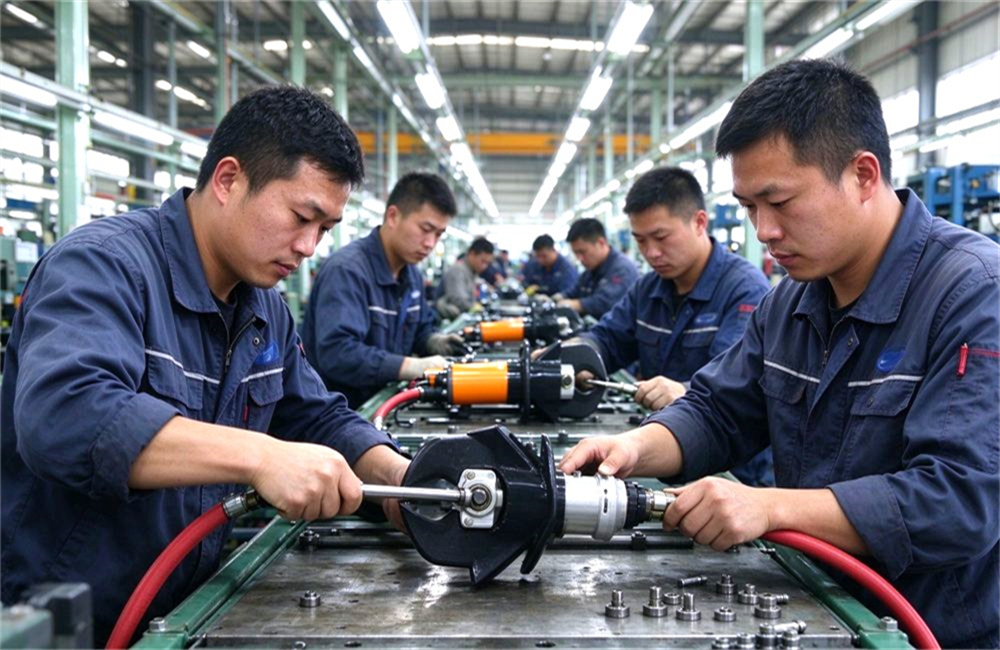
We provide operating instructions and online guidance so your team practices cutting techniques safely. Training covers connection, operation and daily checks before deployment.
A simple drill for a new crew takes one day, half on connection and safety, half on cutting practice with scrap steel.
After-sales support covers spare blades, hose sets, seal service kits and technical answers for the hydraulic cutter for rescue.
Send us your fleet size and usage pattern, and we assemble a spare parts package with a maintenance schedule that fits your operation.
Blade life depends on the material cut. Hardened vehicle pillars wear blades faster than mild rebar. A typical blade pair lasts 200 to 400 cuts before the edge dulls.
When cuts start to leave burrs or require extra force, it is time to swap blades.
We ship replacement blades in sets of two, matched to the same pin size, so the swap takes minutes.
Keeping a spare blade pair on every truck is a simple field rule. A dull blade slows the team at the worst possible moment. We recommend one spare pair per cutter, plus a seal kit, stored in the same case.
This small inventory prevents downtime during a long incident.
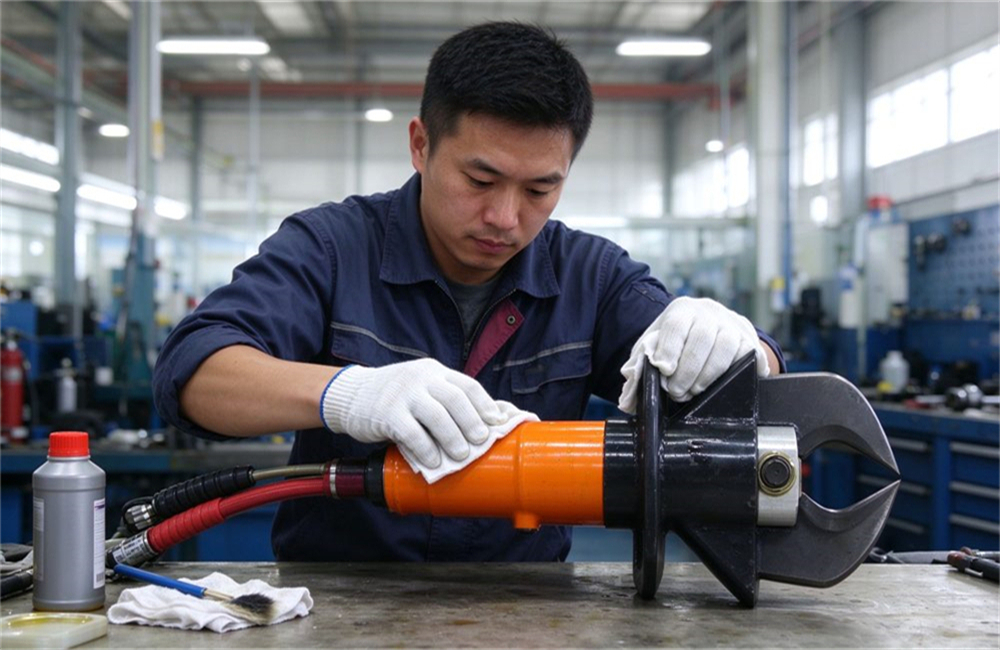
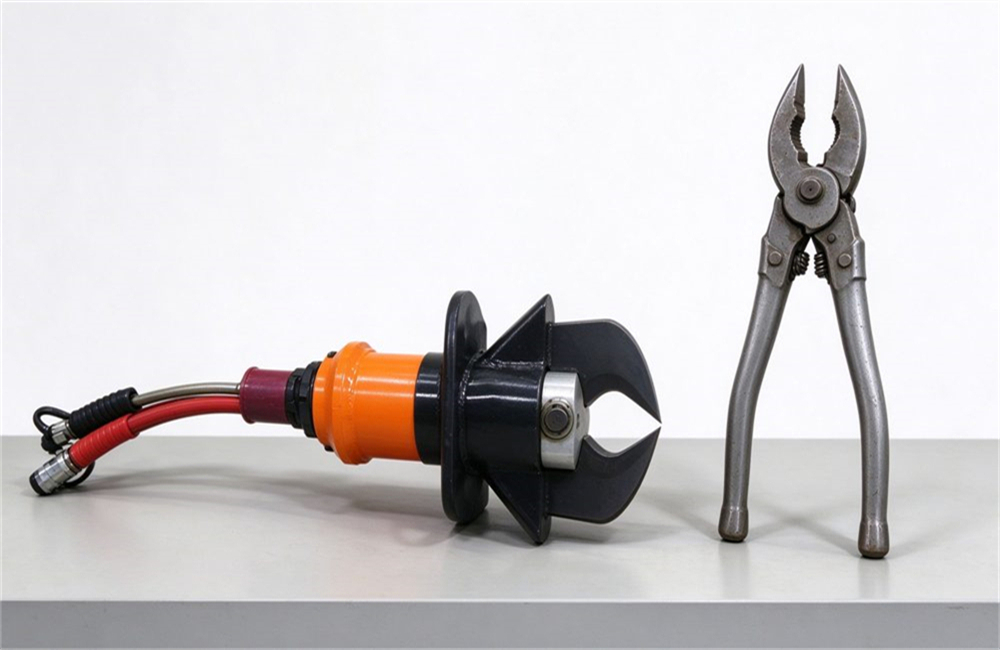
For force and speed, a hydraulic cutter outperforms manual pry bars and bolt cutters on hardened steel. Manual tools remain useful for small tasks.
When teams review a hydraulic cutter vs spreader or a hydraulic vs manual comparison, the hydraulic option is faster at major incidents.
The hydraulic cutter vs spreader distinction matters here. The cutter shears, the spreader pries. A double tooth cutter blade adds grip for round stock, while a spreader does the opposite work.
Carrying both gives a complete hydraulic rescue tool set.
When buyers ask how a hydraulic cutter vs spreader works together, the answer is the extrication sequence. First the cutter removes the roof pillars. Then the spreader opens the door gap and creates space.
Finally the ram holds the dashboard off the patient.
Each tool does one job well, and a double tooth cutter blade on the cutter ensures round steel bars do not slip during the first cut.
We stock spare blades, hose sets, couplings and seals to keep your hydraulic rescue tool set complete.
Standard spare kits include one pair of main blades, one pair of double tooth cutter blades, two hose sets and a seal service kit. Keeping spare blades on hand avoids downtime during busy rescue seasons.
Ask us for the recommended spare parts list for your fleet size. We send a tailored quote with lead times confirmed per contract. Custom blade configuration or hose length is confirmed in writing before production starts.
Blade selection guide: use the standard V-shaped blade for vehicle pillars, flat steel and general rescue. Use the double tooth cutter blade for bundled rebar, pipe and round stock where grip matters.
If your team cuts both types often, order one standard pair and one double tooth cutter pair in the initial kit. Both blades fit the same pin, so the swap takes under two minutes in the field.
Power source matching for your hydraulic cutter decides whether one pump, one battery or a hand lever does the work.
A hydraulic cutter for rescue is a cutting head; power source matching for your hydraulic cutter is what turns it into a working tool. It needs a power source to push oil through the hose and close the blades.
Three power options cover every team, and power source matching for your hydraulic cutter follows your call type; the model you choose decides what arrives with the cutter.
Standard GYJQ-28-10/125 (separate pump required). This hydraulic cutter works with an external pump, a manual pump, a motor-driven pump or an electric pump, connected by two high-pressure hoses.
On site, the pump sits beside the team and supplies 63MPa flow while the operator holds only the cutter head.
Electric GYJQD-33/160 (battery, no pump needed). The battery, motor and micro pump are built into the tool body. Charge the battery, press the trigger and the cutter starts in about one second.
This suits teams that need one-person operation and quiet, clean work without an engine.
Portable GYJKB-6325/160 (integrated hand pump). A hand pump is built into the tool, so the operator builds pressure by working the handle. No external pump and no battery are needed.
This is the lightest setup for remote sites and short cutting jobs.
Manual pumps suit teams that store equipment for emergency response. They need no fuel, no battery charging and no engine maintenance. The trade-off is slower cycle time because the operator supplies the effort.
Motor pumps suit continuous work and multi-tool operation. Battery units suit speed and one-person use.
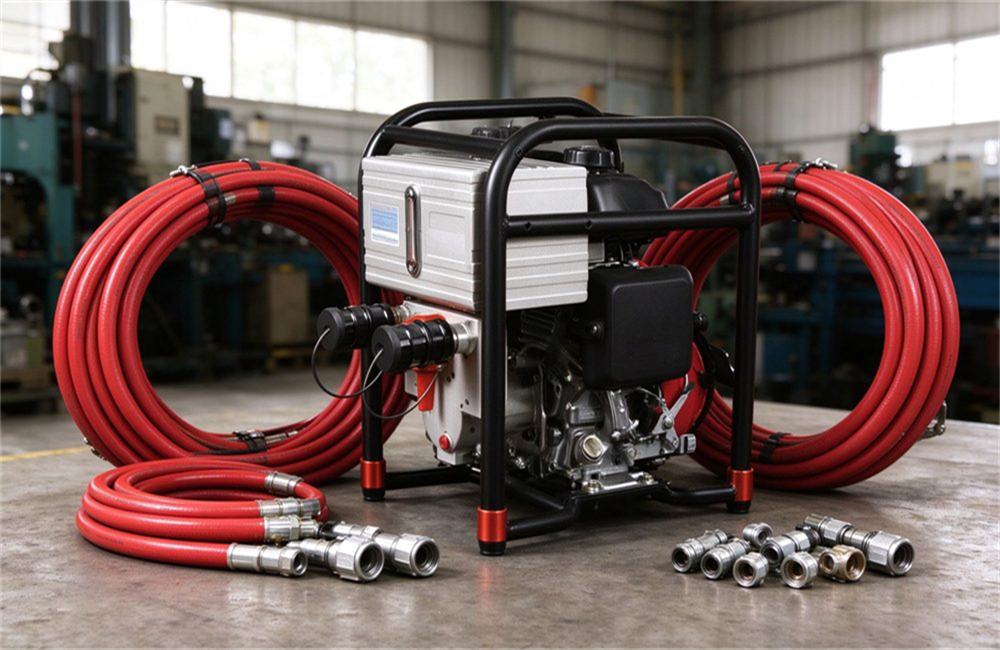
The dual-output motor pump set pictured above is one example of a matched power source. It runs two hoses at once, which lets a hydraulic cutter and a spreader work from one engine.
When you build a full hydraulic rescue tool set, we match the pump flow to the total number of tools you plan to run simultaneously.
Pump flow, not pressure, decides cycle speed. A high-flow motor pump closes the blades in 6 seconds. A low-flow manual pump takes 10 to 12 seconds for the same stroke.
If your team performs many cuts per shift, the extra flow is worth the cost.
If you store the tool for rare emergency use, a manual pump is lighter and cheaper to carry.
One buying note for the standard model. The GYJQ-28-10/125 needs a separate pump and hose set to run. We supply the complete kit, cutter, twin hoses and the pump type you choose.
Quick couplers match standard rescue pump brands, with the coupling type confirmed before shipment.
Storage conditions matter for hydraulic equipment. Keep the hydraulic cutter in its wooden case in a dry, heated room.
Long-term storage below freezing thickens the hydraulic oil, so winter brigades either keep the tool in a heated appliance bay or run a monthly cycle to warm the oil.
Seal kits should be stored sealed in their bags until use.
Whether you equip a single engine or a full rescue station, the hydraulic cutter for rescue is the tool that turns an extrication from minutes into seconds.
We supply wholesale units worldwide to fire brigades, government procurement, training centers and industrial safety teams.
Tell us your scene, your pump fleet and your budget range, and we match the right hydraulic rescue tool set to your workflow today and now.
Build a complete rescue system with the rest of the hydraulic rescue tool matrix.
Hydraulic Rescue Tools Hub · Hydraulic Combi Tool Rescue · Hydraulic Spreader for Rescue
Hydraulic Rescue Ram · Hydraulic Power Unit Rescue · Hydraulic vs Manual Rescue Tools · How to Choose Hydraulic Rescue Tools
1. How much cutting force does the GYJQ-28-10/125 hydraulic cutter provide?
It delivers at least 420kN at a rated pressure of 63MPa. That is enough to shear hardened vehicle pillars and 28mm rebar in one stroke. The force is tested on a bench before every unit ships.
2. What is the opening distance of this hydraulic cutter?
The standard GYJQ-28-10/125 has a 130mm opening. The electric GYJQD-33/160 and portable GYJKB-6325/160 offer a 160mm opening for thicker material. Choose opening based on the thickest member you expect to cut.
3. Which hydraulic cutter for rescue is better, single-hose or twin-hose?
When asked which hydraulic cutter for car rescue suits one-tool work, our answer is single-hose: it connects faster. Twin-hose gives more stable flow when several tools run from one pump. We supply both configurations and match them to your existing pump outlets.
4. Can this hydraulic cutter cut rebar and vehicle pillars?
Yes. It cuts Q235 rebar up to 28mm, steel plates up to 10mm and vehicle A or B pillars in normal rescue work. A double tooth cutter blade adds grip on bundled round rebar.
5. What is the weight of the hydraulic cutter?
The standard model weighs no more than 14kg with dimensions of 670 by 190 by 180mm. Two operators can carry and position it in tight rescue spaces. The battery and portable versions are lighter still.
6. Do you offer different blade options for the hydraulic cutter?
Yes. Standard V-shaped blades and double tooth cutter blades are available for replacement. We can discuss blade configuration for different cutting tasks and confirm it in writing before production.
7. Is training needed to operate this hydraulic cutter?
Basic instruction is recommended. We provide operating guides and online training so teams practice connection, operation and daily checks safely. Most new crews are independent after one day of practice.
8. What maintenance does a hydraulic cutter for rescue require?
Keep blades clean and lubricated, check hose couplings before each use, and store the tool in its case. Service seals once a year or after 500 working cycles. Follow the maintenance table in this page.
9. Do you support OEM customization or private label?
Yes. We can print your brand on the tool body, carrying case and export documents. We can also adjust blade configuration or hose length to match local operating habits. Configuration is confirmed in writing.
10. What documents come with a hydraulic cutter shipment?
Each shipment includes commercial invoice, packing list, certificate of origin and batch test records. Additional certificates are confirmed per contract and only listed when available for the specific model.
11. Can the electric hydraulic cutter replace a motor pump?
For single-tool operations, the GYJQD-33/160 electric hydraulic cutter replaces a motor pump completely. It starts in one second and runs on its 24V battery, which suits first-response scenes where pump setup would delay cutting.
12. What is the lead time for a wholesale hydraulic cutter order?
Lead time is confirmed per contract after specification confirmation. Standard models schedule faster than customized configurations. We share a production schedule so you always know the shipment date. Bulk and wholesale orders are prioritized.
Need a hydraulic cutter for rescue for your team? Send us your requirements and get a free quote, with model, price and delivery details in one reply.
YRF Rescue Equipment · China · Hydraulic Cutter for Rescue Operations
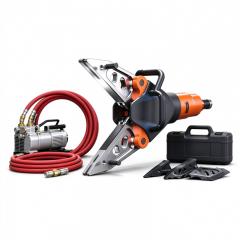 Hydraulic Spreader for Rescue – 42-62kN Vehicle Extrication Tool
Hydraulic spreader for fire rescue and vehicle extrication. Electric and manual types available, fitted with replaceable tips and pulling chain set. It is used for accident rescue, collapse rescue and regular rescue training. Note: Price for reference only. Exact price based on quantity, size, weight and custom details.
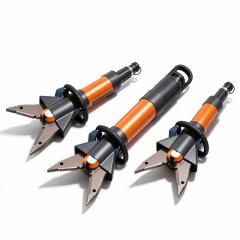 Hydraulic Combi Tool for Rescue – Cut and Spread Supplier
Hydraulic combi rescue tool for vehicle extrication and collapse rescue. Electric, manual and portable versions available. It can cut and spread metal structures, widely used for fire rescue and emergency extrication work. Note: Price for reference only. Exact price based on quantity, size, weight and custom details.
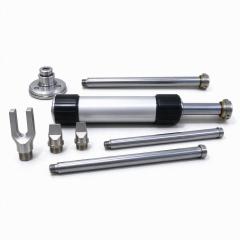 Hydraulic Rescue Ram | GYCD-120/450-750 Lifting & Stabilization
Hydraulic rescue ram delivers stable high pushing force for vehicle extrication, earthquake collapse shoring and road accident rescue. Widely used by fire departments, emergency teams and disaster relief organizations. Compact, durable and easy to operate in tight rescue spaces. Note: Price for reference only. Exact price based on quantity, size, weight and custom details.
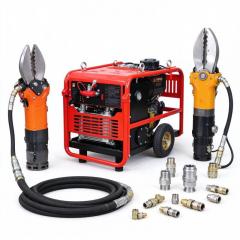 Hydraulic Power Unit for Rescue Tools – 63MPa Pump Supplier
This 63MPa hydraulic power unit supplies stable high pressure power for cutters, spreaders and rams. Multiple types including petrol, diesel, electric, manual and backpack versions. Dual outlet design supports synchronous operation of rescue tools for road accident and collapse rescue. Note: Price for reference only. Exact price based on quantity, size, weight and custom details.
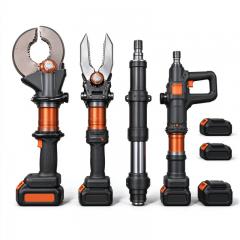 Electric Hydraulic Rescue Tools – Battery Cutter Supplier China
Cordless battery hydraulic rescue tools for vehicle extrication and confined space rescue. Cutter, spreader, ram and combi tool available. Powered by 24V lithium batteries, silent and hose-free. High output force, easy for high-rise and remote emergency rescue. Note: Price for reference only. Exact price based on quantity, size, weight and custom details.
 Factory Price Dorm Room Bedding For YRF
Our bedding set is made from the finest cotton yarn, made from 300 stitches and finished with excellent softness, whiteness, weight and durability.
Copyright © Custom Disaster - Relief Bedding: Tents, Sleeping Bags, Blankets All Rights Reserved
the professional team to service !