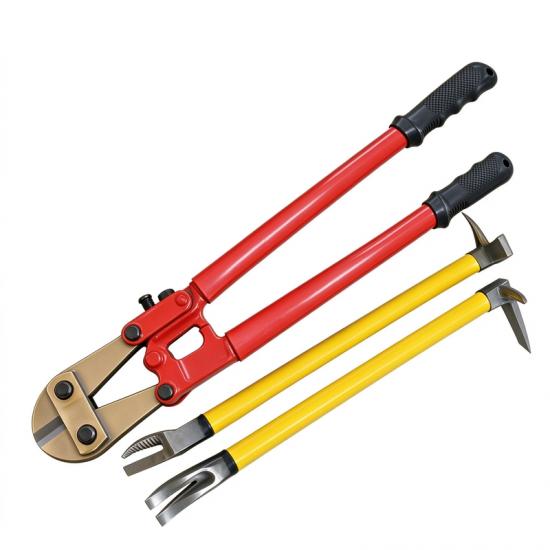
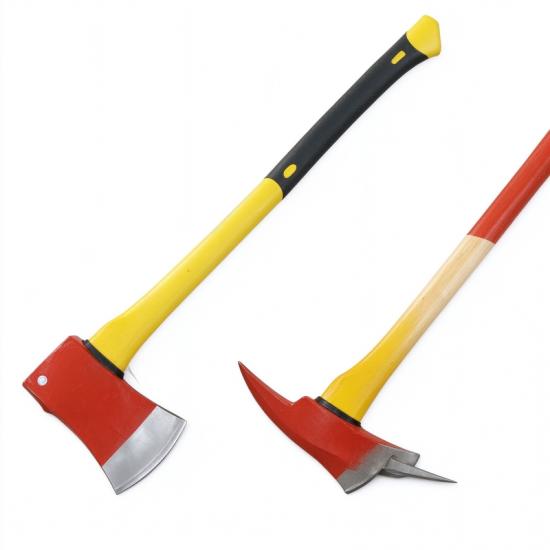
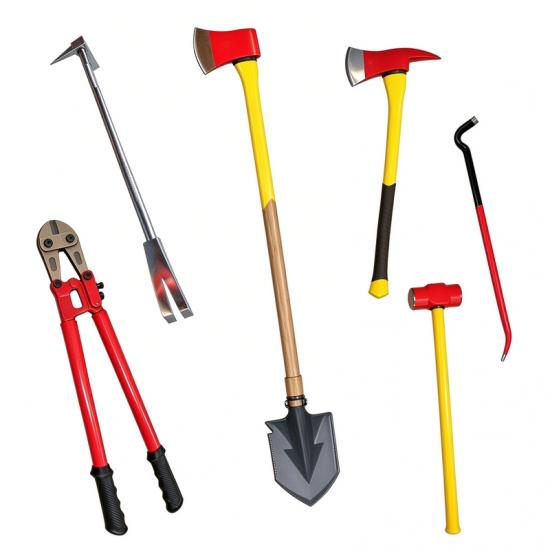
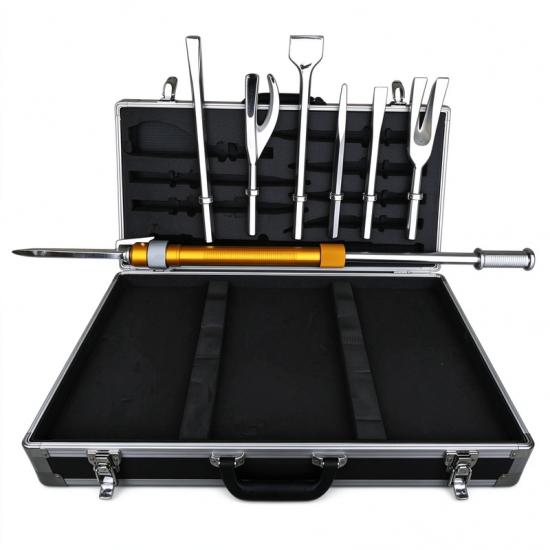
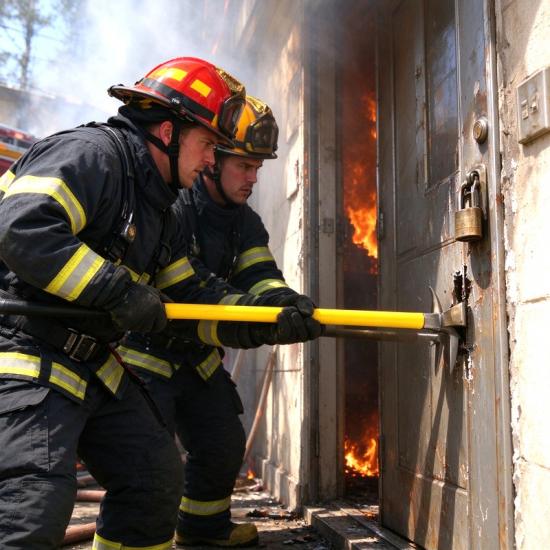
These heavy-duty manual forcible entry tools include fire axe, hooligan tool, pry bar, wrecking bar and bolt cutter. Made of high carbon steel with HRC 48-55 hardness, rated up to 29400N pull strength. Ideal for fire rescue, earthquake debris removal and door breaching. Compact aluminum case for easy transport and storage for fire departments and rescue teams.
Note: Price for reference only. Exact price based on quantity, size, weight and custom details.
model no. :
H-08Brand:
YRFmarket price :
$3600sale price :
$1800price range :
10-30/$1800Color :
Multiple Colorsport of dispatch :
Guangdong/GuangzhouPayment :
TT, Paypal, Western Unionmin order :
10original region :
Made in ChinaLead Time :
5-15days
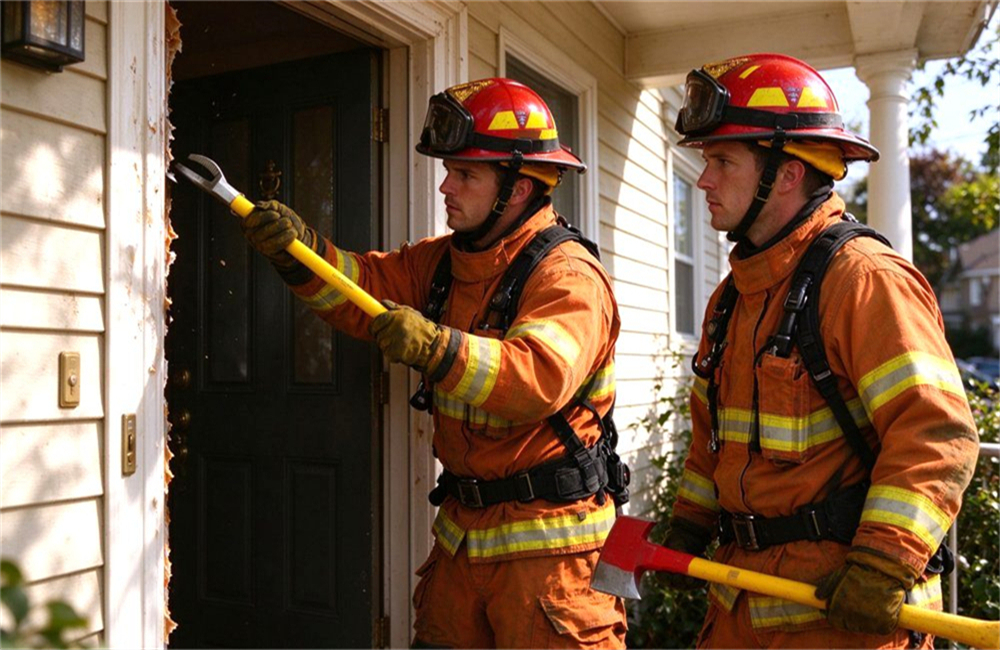
Forcible Entry Tools for Firefighters – Fire Axes
& Pry Bars
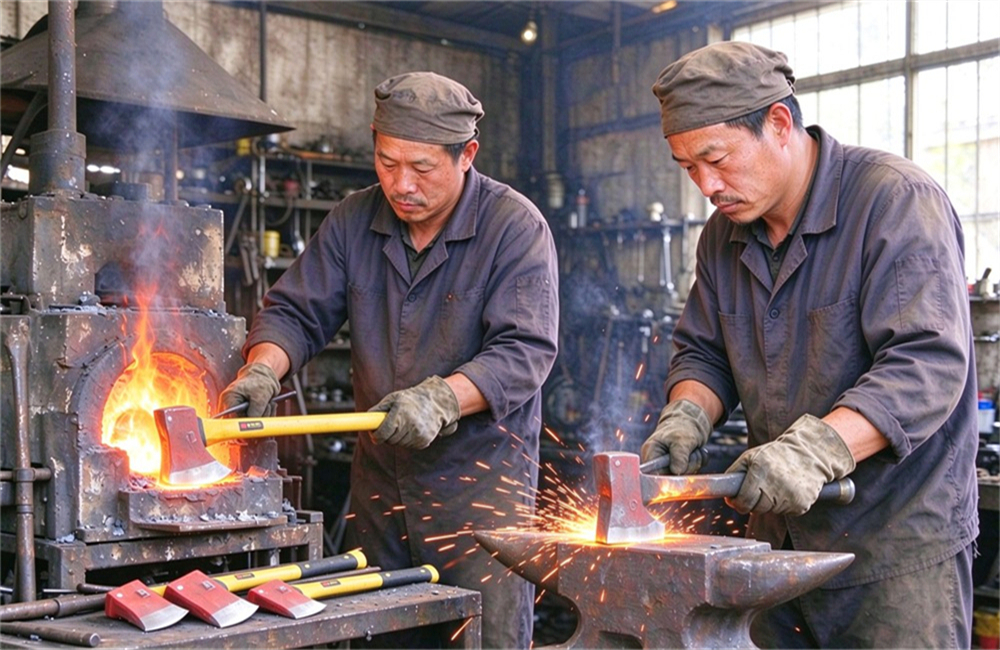
Forcible entry tools let firefighters open locked doors, cut padlocks and pry windows. Power is dead — our fire axe cuts 12 mm round steel in one swing and our hooligan set withstands a 9-ton pull.
A pneumatic breaker speeds demolition work on concrete and masonry. Every kit page lists pneumatic breaker weight, chisel length and air consumption side by side. Compare fire axes, pry bars, hooligan tools and demolition kits to kit your engine with quiet, dependable manual breaching gear. These core forcible entry tools are the standard manual backup every engine carries.
 |

|
Contents
Forcible Entry Tools Overview.
Core Forcible Entry Tools.
Tools Key Specs.
Fire Axes.
Pry Bars & Hooligan Tools.
Demolition & Cutting.
Customization & OEM.
Quality & Testing.
Packaging & Delivery.
Order Process.
FAQ.
For the powered half of the same rescue, our electric hydraulic rescue tools page covers battery cutters and spreaders.
Manual breaching with core forcible entry tools is the last line of defense in rescue. When the power supply is cut after a collapse, when a fire vehicle cannot reach the building.
Or when silence is needed around a trapped victim, manual forcible entry tools such as a fire axe and a pry bar still open the way.
Every engine in a modern fleet carries at least one axe as part of its core forcible entry tools loadout, one prying tool and one cutting tool. Forcible entry tools are the manual backup when hydraulic equipment cannot do every job.
The forcible entry tools in this range are forged from high-carbon steel and heat treated to HRC 48-55, the hardness band that keeps an axe edge sharp while letting it survive heavy prying.
Handles combine TPR, PVC and a fiberglass core so they stay light, resist water and chemicals, and do not break in cold weather.
These material choices are what separate professional forcible entry tools from a hardware-store axe.
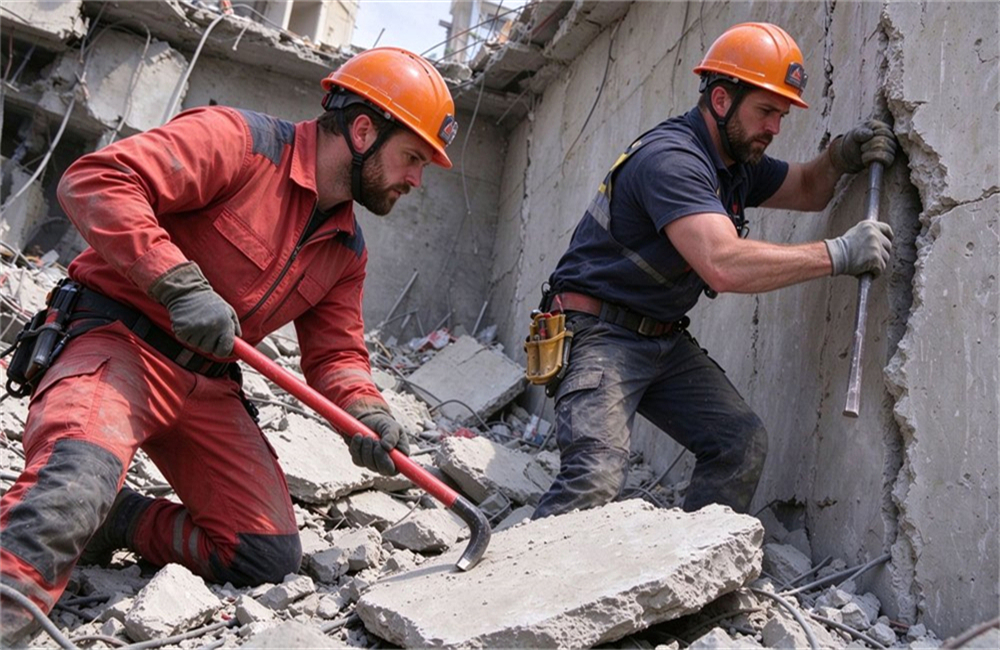
A full forcible entry set with case stays under 18 kg, which means two crew members carry the whole breaching capability to any floor.
The same forcible entry tools work on doors, windows, padlocks, vehicle roofs and collapsed concrete, so the truck carries one box instead of a rack of single-purpose tools.
The sections below cover the core forcible entry tools families one by one, compare fire axes with pry bars and hooligan tools.
The following sections list exact specifications and hardness numbers, explain OEM customization and quality control, and finish with the questions procurement teams ask before ordering.
The FAQ gives the short answers on forcible entry tools, material hardness, weight and kit selection.
Forcible Entry Tools Overview
Forcible entry tools are the manual breaching family every rescue team keeps on board: axes for cutting, pry bars and hooligan tools for prying, bolt cutters for locks and chains, and sledgehammers for heavy demolition.
These manual power equipment tools need no power, no fuel and no setup, which is why they remain the standard backup to hydraulic rescue equipment in every fire department.
According to NFPA 1006, the standard for rescue technician qualifications, quality control testing forcible entry tools records follow every batch. Every rescuer must master forcible entry tools and force entry with hand tools as part of core operations.
The same standard governs the training that keeps crews proficient with axes, bars and hooligan tools. Manual tools are not a fallback from the past; they are a tested, documented part of rescue procedure.
A well-kitted engine carries one flat axe, one pick axe, one hooligan set, one pry bar, one bolt cutter and one sledgehammer, and that forcible entry tools kit is the manual breaching core.
From this core, teams add specialized kits: the security-door kit for apartment break-ins, the manual rescue tool set for earthquake clearing, and the tripod system for confined-space entry.
The 8-piece manual rescue tool set JFSDPCGJ-0055 bundles an extending strike pry bar of 650 mm, a lock puller of 320 mm. A metal cutter of 310 mm and five chisels from 285 to 395 mm are packed in one aluminum case.
It is the kit that fits under the seat of a rescue vehicle and covers most door and panel work without carrying the full truck rack.
Training for these tools follows the manual and practical curricula of IFSTA, the fire training publisher used by departments worldwide.
Buyers choose forcible entry tools for three reasons: reliability, silence and cost. A forged steel axe works after years in the rack with nothing but a sharpening pass.
; it makes no noise that would alert or distress a trapped person; and the whole kit costs a fraction of one hydraulic tool.
These three factors keep forcible entry tools and manual breaching in every budget.
The same forcible entry tools that force doors in a structure fire clear debris after an earthquake, break windows for vehicle access, and open padlocks on factory gates during industrial rescue.
Because the range shares one handle material and one hardness standard, crews train on one feel and use any tool in the kit without re-learning.
This consistency is why departments standardize on a single manual tool supplier.
Inspection is part of the purchase too. Rescue standards expect tools to be inspected after every major use, and forged steel heads with replaceable handles make that inspection simple: check the edge, check the handle seat, return the tool to the case.
Our wholesale documentation includes a maintenance sheet per kit that stations use as their inspection log.
Export buyers also value the paperwork that ships with each order. Every kit carries the hardness test record, the pull rating record and the packing list, which together satisfy acceptance inspection for government and institutional tenders. The same documentation discipline applies whether the order is ten tools or ten thousand.
Rescue tool standards also expect regular inspection and replacement of worn tools, and forged steel with replaceable handles keeps that cost low.
A station replaces a handle instead of the whole axe, swaps bolt-cutter jaws instead of the frame, and returns chisels for re-hardening. The wholesale range is designed around that repair cycle.
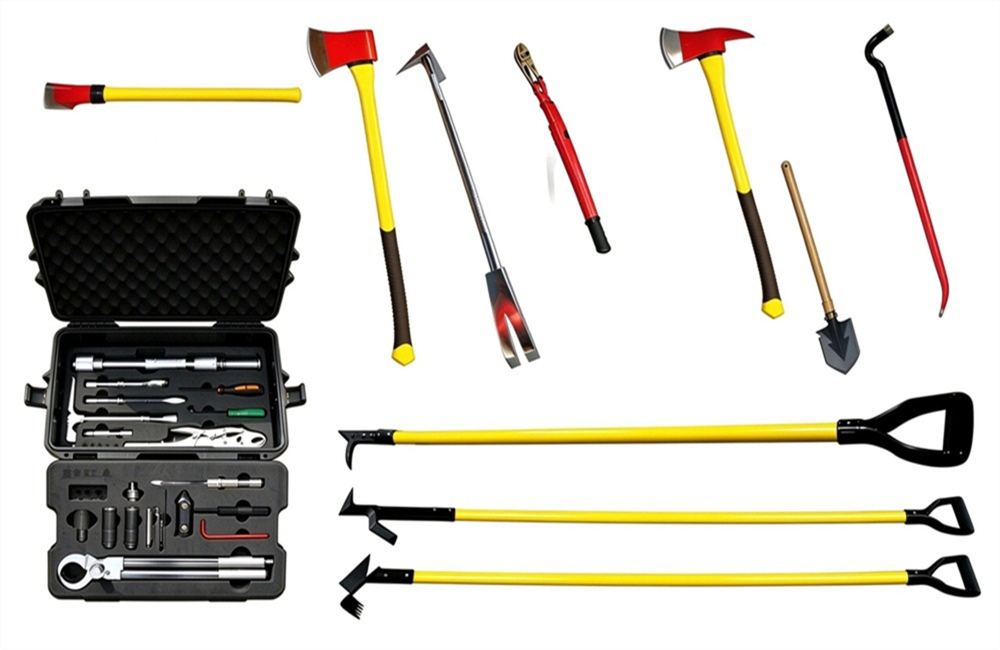
The core family splits into three groups that match the three jobs at a breaching scene: cutting, prying and demolition. Each group has dedicated tools with different blade and head geometry, and the specification table later in this page lists them with material and hardness numbers.
Every engine carries at least one flat axe, one prying tool and one cutting tool. The axe cuts wooden doors and roof sections; the pry bar or hooligan tool works the lock mechanism; the bolt cutter shears padlocks and chains.
Together these three cover the first minute of almost every forcible entry, which is the minute that decides the rescue.
Choosing between the three families is straightforward once the scene is defined. The table below matches each forcible entry tool to the job it does best, so a procurement team buys the right tool rather than a generic one.
Most rescue scenes need two of the three families, which is why the standard kits bundle them as forcible entry toolshem.
The 8-piece manual rescue tool set pairs bars with chisels; the 11-piece fire truck kit adds forcible entry tools such asds the axe. Pike pole; the 21-piece security-door kit covers lock work end to end.
Buy by kit when the station budget allows, and by single tool when adding to an existing set.
Fire Axe vs Pry Bar vs Hooligan Tool Selection
Best For
Key Advantage
Fire axe (flat).
Wood doors, roofs, panels.
Fastest cutting of large surfaces.
Fire axe (pick).
Locks, hinges, hard panels.
Point force for single targets.
Pry bar / wrecking bar.
Lock mechanisms, frames.
Works on the lock, not the door.
Hooligan tool set.
Residential and commercial doors.
Pry + punch + pull in one head.
Bolt cutter.
Padlocks, chains, rebar.
Cuts 8-12mm steel in one bite.
Sledgehammer.
Masonry, concrete, jammed panels.
Heavy impact for demolition.
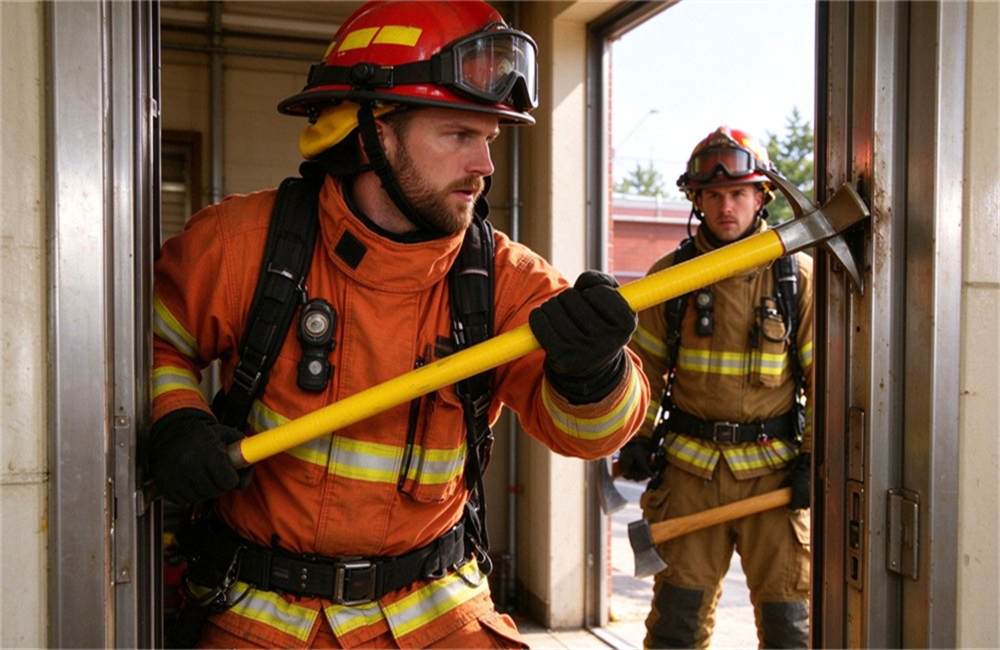
With six tool families and four kit sizes, the first purchase follows the door types a department most often meets. Use this decision path instead of comparing every model:
This path matches the call mix, not the catalog. Wholesale buyers follow it to build the first order, and the engineers use the same logic to propose a configuration on a new inquiry.
The specification table below lists each forcible entry tool with its material, hardness, size and weight so procurement teams can match the tool to the door, lock or structure they most often meet.
All hardness values for forcible entry tools are measured at the factory on a calibrated tester and recorded per batch.
Forcible entry tools are tested to the 29,400 N pull standard, meaning the head will not separate from the handle under extreme leverage.
Bolt cutter jaws are hardened separately from the handles, so forcible entry tools stay sharp at the cutting edge for longer while the handles flex under load. These tested numbers are what our wholesale buyers verify before placing repeat orders.
|
Forcible Entry Tool & Model |
Material / Hardness |
Size & Weight |
Key Number |
|
Fire flat axe GFP810/910. |
High-carbon steel, HRC 48-55. |
Handle ≤816mm / ≤3.1kg. |
Cuts 12mm round steel. |
|
Fire pick axe GFJ815. |
High-carbon steel, HRC 48-55. |
3.1-4kg / 900mm handle. |
29,400N pull rating. |
|
Hooligan set JFXWBHLG-0049. |
45# carbon steel, HRC 48-55. |
Fiberglass handle set. |
88,200N (9-ton) pull. |
|
Wrecking bar JFXFTT. |
High-carbon hexagonal steel, HRC 48-55. |
0.7-1.3m, 12-36in. |
Six-sided forged bar. |
|
Bolt cutter JFPCQXW-0026/27. |
Alloy steel jaws. |
600-900mm / ≤5.4kg. |
Cuts rebar 8-12mm. |
|
Rescue chisels JFXFZ-0039. |
Alloy steel forged + hardened. |
250-350mm, 18mm dia. |
6 pcs flat + tip. |
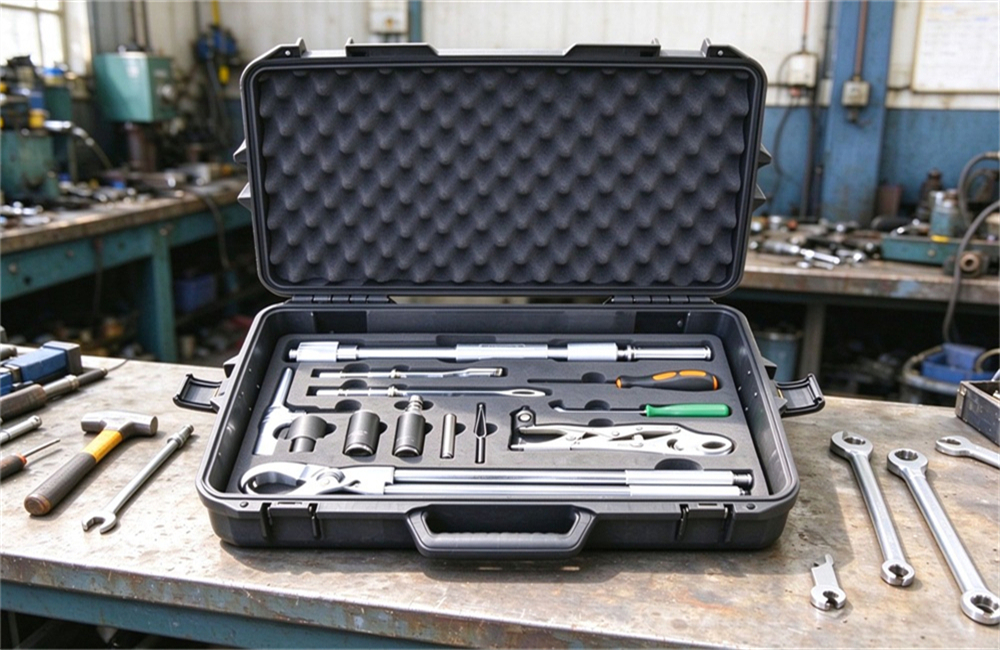
02Documentation and Repeat Orders
Repeat orders are the strongest signal in this range: stations that standardized on one kit list reorder the same tools, and the spares follow the same part numbers.
The wholesale pack records each buyer’s forcible entry tools configuration's kit configuration, so a reorder is a one-line message instead of a new specification cycle.
The manual range of forcible entry tools is documented the same way as the powered range in this catalog: model, specification, test record and packaging standard for every tool.
That documentation is what lets a procurement team compare suppliers on paper, not just on price, before the tools ever reach the station.
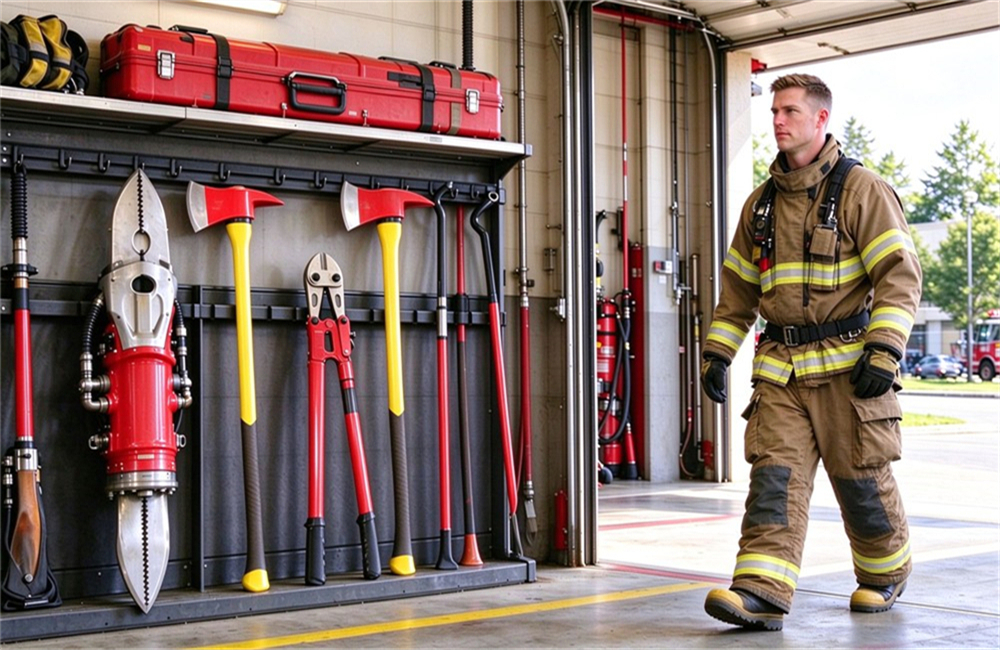
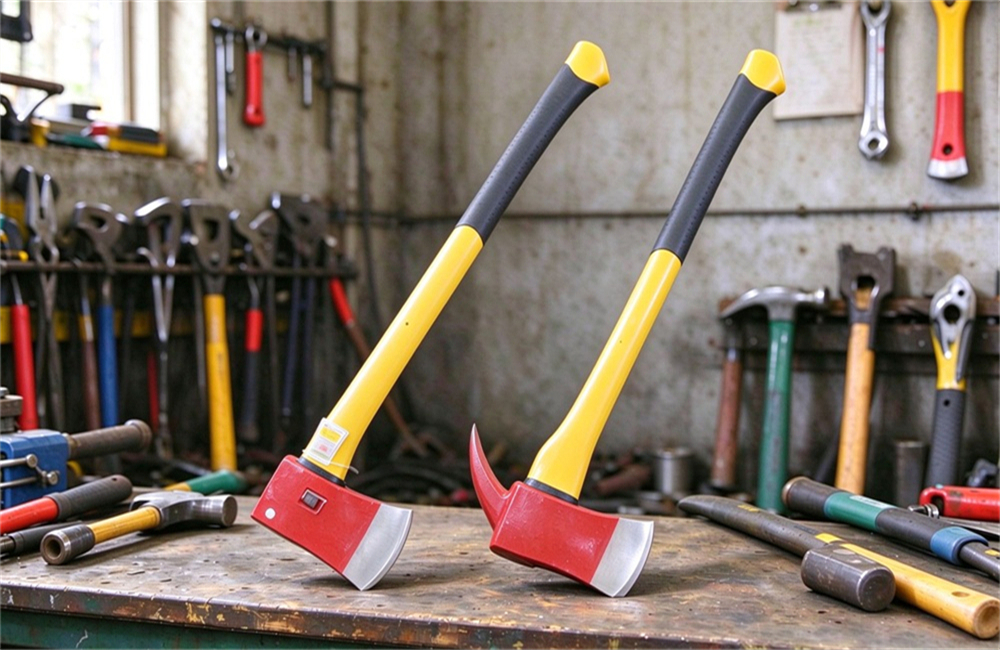
Fire axes come in flat and pick versions because the two heads of forcible entry tools solve different problems. The flat axe chops large surfaces; the pick axe drives into a single point.
Departments stock both, and the pick axe also doubles as a pry point for seams and hinges, saving room in the forcible entry tools cases.
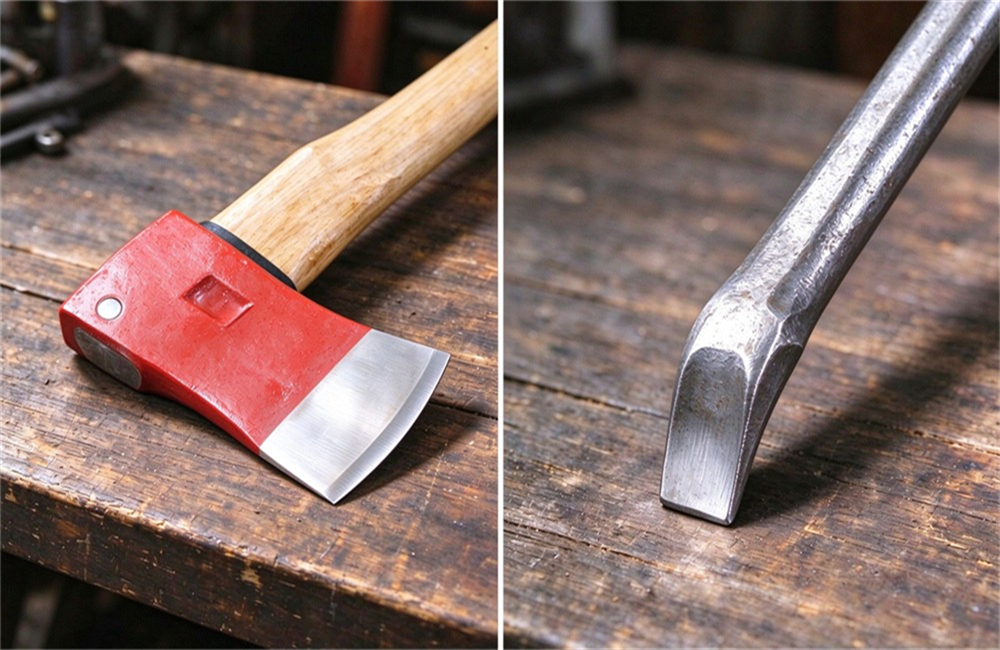
Head geometry is the difference that matters with forcible entry tools. A flat axe edge spreads the impact across the cut, which suits wood and sheet materials.
A pick axe point concentrates the whole swing on a lock cylinder or a hinge pin, a task forcible entry tools handle bestwhy it punches through steel that a flat edge would bounce off.
Both are rated for the same 29,400 N pull, so the choice is about the target, not the quality.
The flat fire axe is available with a wood handle up to 816 mm or a PVC insulated handle of 910 mm, both under 3.1 kg.
The high-carbon steel head is heat treated to HRC 48-55 and can cut through 12 mm Q235A round steel in one swing.
The PVC handle option adds electrical insulation for work near live wiring, a common ask for forcible entry tools buyersmon request from urban departments.
The flat axe is also the roof tool: it chops roof sheathing for ventilation, cuts through partition walls for access, and opens wooden crates and shutters during industrial rescue.
Because the head is forged in one piece with the eye, a bent or split handle on these forcible entry tools is a fifteen-minute field swap with a spare from the kit case.
Pick Axe GFJ815
The pick axe concentrates cutting force on a pointed head for locks, hinges, hardened panels and roof sections.
The large version weighs 3.1-4 kg with a 900 mm handle; the small version stays above 2 kg, a weight band most forcible entry tool buyers prefer for confined swings.
Both use the same TPR-PVC-fiberglass handle construction, so they stay non-slip in rain and keep working in cold weather.
The pick head also works as a controlled strike tool in confined vehicle work, where forcible entry tools save time.
: a short swing drives the point through a windshield corner or a dash panel, then the claw end of the handle pulls the material away.
Crews trained on this double use carry one pick axe instead of a separate breaker bar, trimming the forcible entry tools load by nearly a thirdd hook.
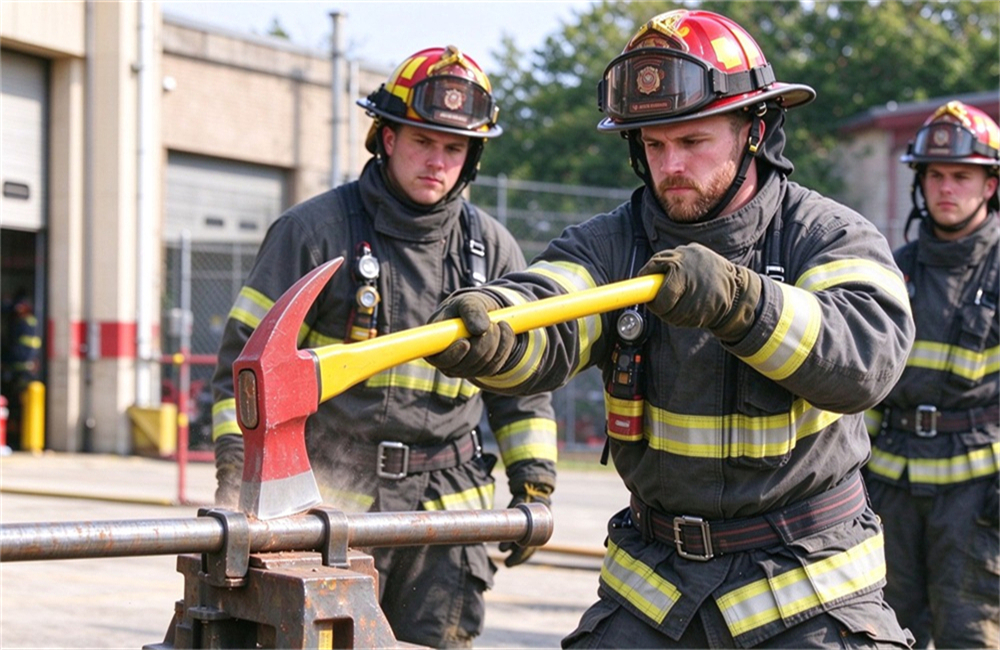
Prying is the fastest way through most locked doors, because forcible entry tools work on the lock mechanism itself instead of cutting the whole door.
The forcible entry tools in this family turn the lock, pull the hinge pins or rip the door frame until the opening is big enough for the crew.
A single crew member with forcible entry tools can open a standard residential door in under a minute, and two members with a hooligan tool clear a commercial steel door in about the same time.
This speed is why manual prying is trained before powered entry: forcible entry tools keep the crew effective even when the hydraulic tools stay on the truck.
The hooligan tool set combines the three working ends — claw, pick and flat fork — on one forged head.
The fiberglass handle version adds a 0.3 mm anti-corrosion coating, resists static discharge and extends forcible entry tools life outdoorsge and is heat-fitted with a safety pin so the head cannot detach under load.
It is rated for a 9-ton pull, which covers door frames, window bars and heavy vehicle sections that forcible entry tools must defeations.
Training videos in our wholesale pack show how forcible entry tools handle the hooligan sequence on wood, steel and vehicle doors, so a new team learns the same method the experienced crews use.
Bar selection in forcible entry tools follows the scene: the 18-inch bar lives on the engine for vehicle windows and tight panels.
The 36-inch bar stays in the rescue truck for structure work, where forcible entry tools face the heaviest steel. The extra-heavy series sits in the heavy rescue unit for collapsed beams.
Because all bars share the same hexagonal forging and hardness, a crew member who has trained on one size picks up any other size with the same technique.
The fire wrecking bar is forged from high-carbon hexagonal steel at HRC 48-55.
It comes in A-type lengths of 18, 24 and 36 inches and B-type lengths of 12, 18, 24 and 36 inches, with an extra-heavy series from 0.7 to 1.3 m.
The six-sided forging resists bending under heavy leverage, and the claw end pulls nails, hinges and locking plates.
The extra-heavy series bar is the preferred tool for pulling a collapsed section off a victim.
: the long lever and the six-sided body spread the load so the bar does not twist in the hand. For vehicle work, the 18-inch bar fits into window gaps and dash areas where the longer bars will not reach.
The sledgehammer adds controlled heavy impact for masonry, concrete, jammed panels and door frames that resist prying. Heads are forged and heat treated to the same HRC range as the rest of the demolition tools, and the handle length is chosen so one operator can swing it accurately inside a stairwell.
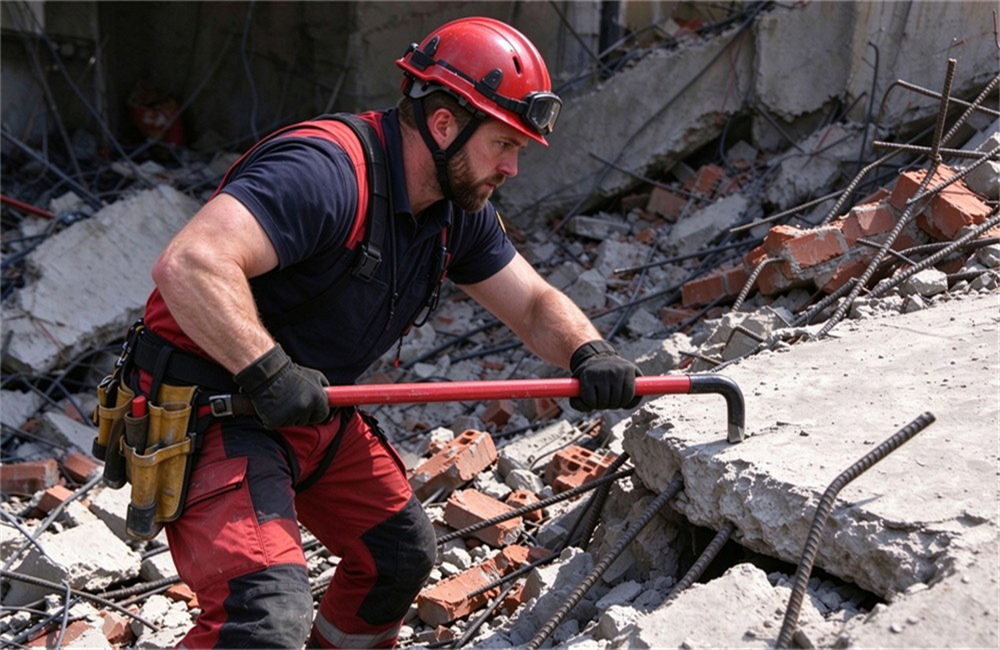
When a door or lock will not yield to prying, demolition tools break it apart, and cutting tools shear the metal that resists. This group also covers the debris tasks after an earthquake, where concrete, rebar and jammed panels must be cleared before victims can be reached.
For the clearing priorities after a collapse, our earthquake search rescue tools page matches manual bars to each task.
The two families work as a sequence: the sledgehammer or demolition hammer breaks the masonry shell, the bolt cutter shears the rebar inside it, and the pry bar or chisel opens the final panel.
Teams trained on this sequence clear a collapsed entryway in minutes instead of fighting the structure with one tool.
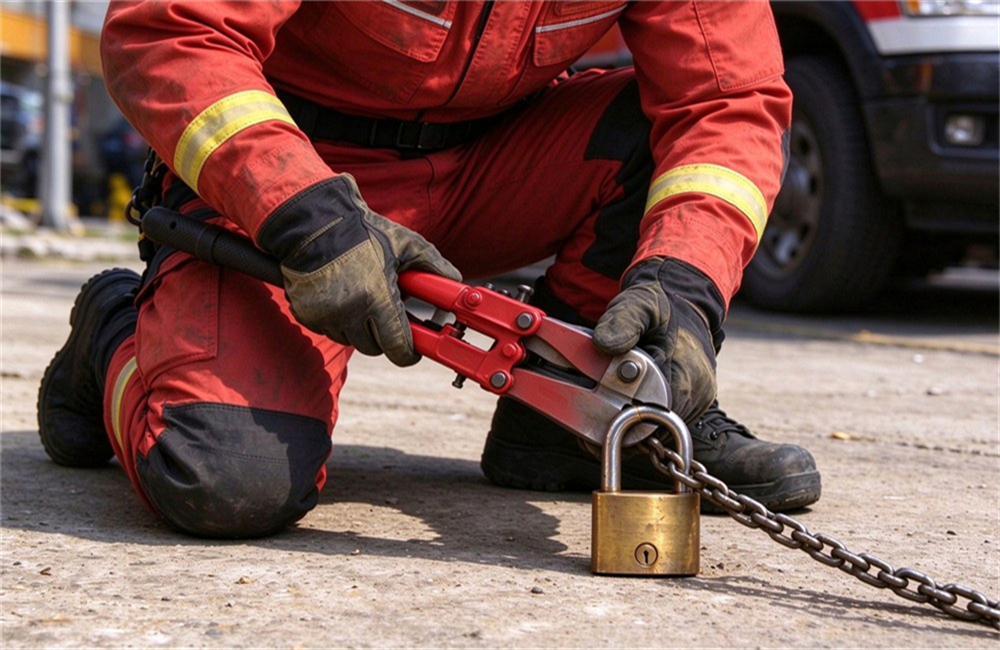
Bolt cutters and rescue chisels cover the cutting half of manual breaching: bolt cutters shear padlocks, chains and 8–12 mm rebar in one bite. Chisels break hinge pins and rivets that block a door leaf.
Bolt cutters open the padlocked gates that block industrial rescue: factory yards, construction sites and storage compounds. The long handles multiply grip force so a single crew member cuts 12 mm rebar, and the replaceable jaw set means the tool is never retired for a dull edge. This is the quietest way through a steel lock on the truck.
For the access half of the kit, the confined space rescue tools page covers tripod and entry gear.
Pike poles and hooks pull down ceilings and pull debris away from victims during structure fires and collapses.
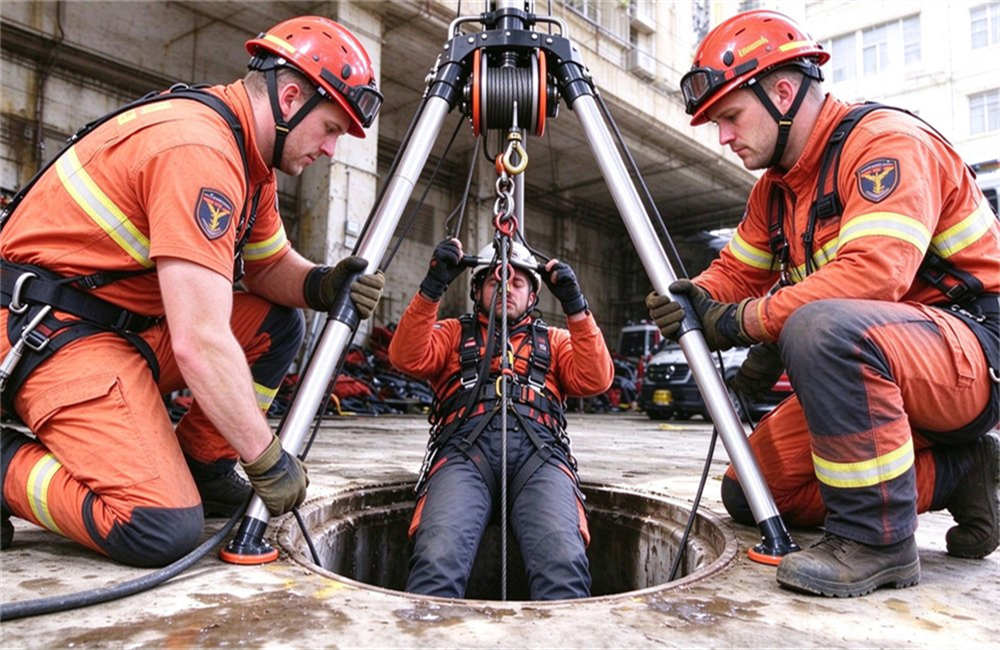
For confined-space entry, the rescue tripod system with a winch raises and lowers rescuers into shafts and trenches.
Together these complete the manual breaching and access capability of a modern rescue company.
The tripod system covers the access half of manual rescue: after entry, teams need to raise and lower rescuers into shafts, trenches and elevator pits. A tripod with winch and harness completes the kit, and it stows in the same storage bay as the breaching case.
Power tools are not always an option. After a quake cuts the mains, in a gas-leak zone where sparks are banned, or around a victim who needs silence, these manual tools are the only answer that still works.
That is the role of the whole manual family: it never needs a battery, a pump or a spark, so it never fails when everything else has stopped.
The comparison above explains the standard fleet layout: powered hydraulic tools do the heavy vehicle work, and the manual family stays on every engine as the quiet, independent breaching answer. The two ranges do not compete; they cover different minutes of the same incident.
Procurement teams plan the mix by call volume: stations with frequent structure fires stock more axes and pike poles. Stations with heavy vehicle rescue stock more hooligan tools and pry bars. Every station keeps the 21-piece security-door kit for apartment and office lock work.
The wholesale pack includes a suggested mix by station type, which buyers use as the starting point for their own order.
Manual vs Power Forcible Entry Tools Comparison
Manual Breaching Tools
Powered Rescue Tools
Power source.
None — crew muscle.
Battery, engine or pump.
Deployment time.
Instant, no setup.
Seconds to minutes.
Noise at scene.
Silent.
Engine or pump noise.
Best for.
Locks, doors, wood, light steel.
Vehicles, heavy steel, concrete.
Fleet cost.
Fraction of one power tool.
High per tool.
Failure mode.
Sharpening, spare handle.
Battery, hose, engine service.
Forcible entry tools are customized around the buyer's fleet, and the most common requests are department logo, handle color and kit composition. OEM orders can change blade length, head weight and case layout, while the material and hardness stay at the tested standard.
OEM customization never lowers the tested hardness or the pull rating, because those numbers are the safety envelope for the tool. What changes is the ergonomics, the identification and the case layout. Confirm the customization list at the inquiry stage so production starts on the agreed configuration.
Customization for Forcible Entry Tools
What Changes
Typical Choice
Department logo.
Head and handle marking.
Name + shield emblem.
Handle color.
Identification and visibility.
Red, black, yellow.
Kit composition.
Tools inside the case.
5, 8, 10, 11 or 21 pcs.
Blade length / head weight.
Swing and force balance.
Per department SOP.
Case branding.
Tool box logo and text.
Station name and logo.
Large fleet orders usually add color coding by station or by truck: red handles for the first engine, black for the rescue company, yellow for the chief vehicle.
This simple marking lets officers see at a glance which truck is short a tool, and it makes the inspection log easier to keep. Kit labels can carry the same coding.
For OEM buyers, we also adjust the case layout to hold their existing tools alongside ours, so one box carries the whole breaching set instead of two.
The aluminum case foam is cut to the agreed layout and marked per pocket, which turns a generic tool box into a station-standard kit.
Every batch is traceable: the heat number, the hardness values and the pull-test records are filed under the batch number, and any shipment can be traced back to those records within minutes.
This is the same file discipline that governs the powered rescue tool family in the same catalog, so a department that buys both families keeps one set of receiving documents.
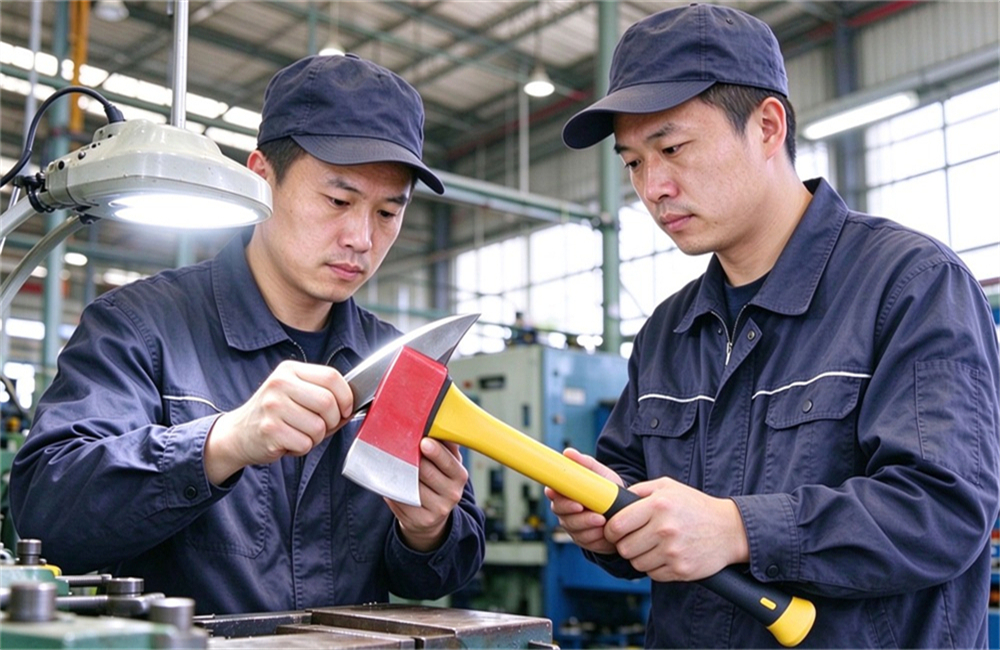
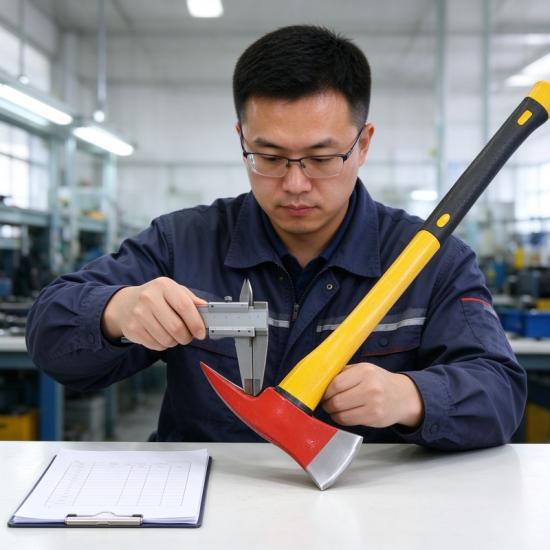
Every axe, bar and cutter passes a hardness test and a weight check before packing. This quality control testing forcible entry tools batch record is available on request.
Hardness is verified on the HRC scale at the blade edge and the head body, and the pull test confirms the head stays fixed to the handle under extreme leverage. Both results are recorded per batch and available to the buyer.
Handles are checked for surface finish, coating thickness and fit, and bolt cutter jaws are verified against the cutting standard for round steel and rebar.
NFPA 1936 governs the powered rescue tool family in the same catalog, and our quality records follow the same documentation discipline for the manual range.
Coating checks matter more than they look: the 0.3 mm anti-corrosion layer on the fiberglass hooligan handle keeps the grip intact after years of water, foam and chemical exposure.
The TPR over-mold stays non-slip when wet. These are the details a station discovers in month six, not at delivery, which is why we test them before packing.
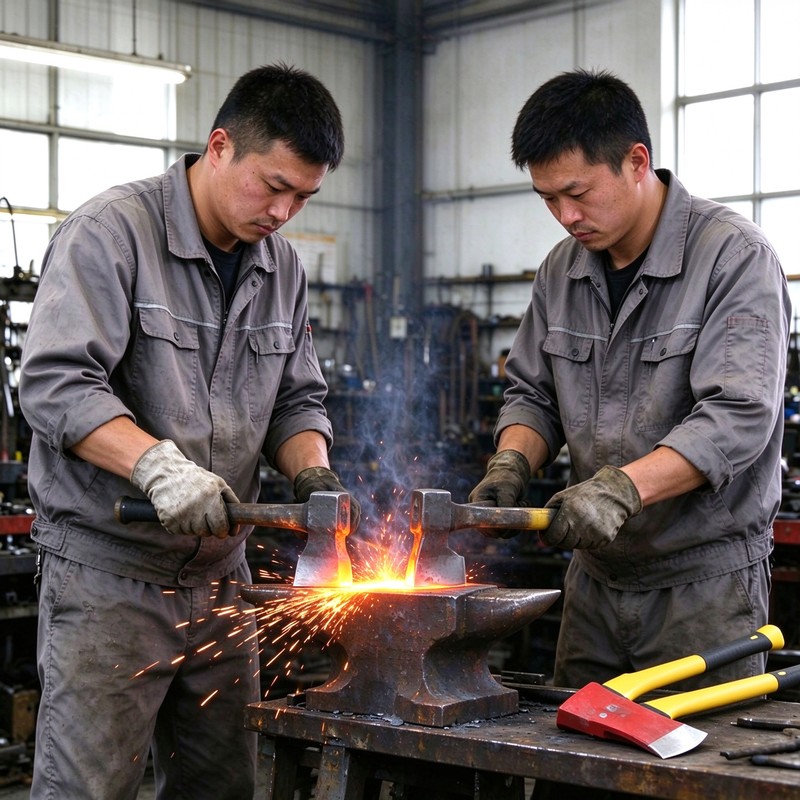
Production and inspection are done by trained workshop staff in a bright, clean facility, with the head hardness, handle assembly and final weight checked on every unit. Each tool is photographed with its batch number before packing for traceability.
Inspection follows a fixed sequence: edge check, handle seat check, coating check, final weight. Each step is signed on the batch record, and the records are kept on file so a buyer can trace any batch back to its test numbers. This is the same documentation discipline the powered tool family follows in this catalog.
Wholesale buyers typically order the manual family together with spare blades, spare handles and a complete case per station. Spare parts are boxed by quantity separately or into the same carton.
Export documents cover the whole shipment for customs clearance, so one purchase order yields one delivery, one packing list and one set of documents.
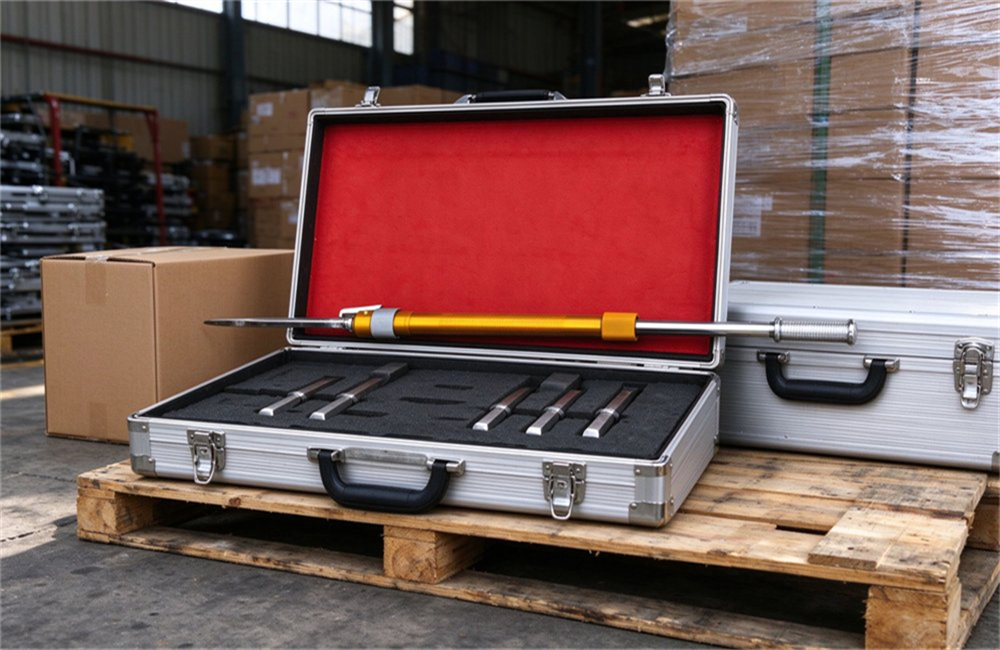
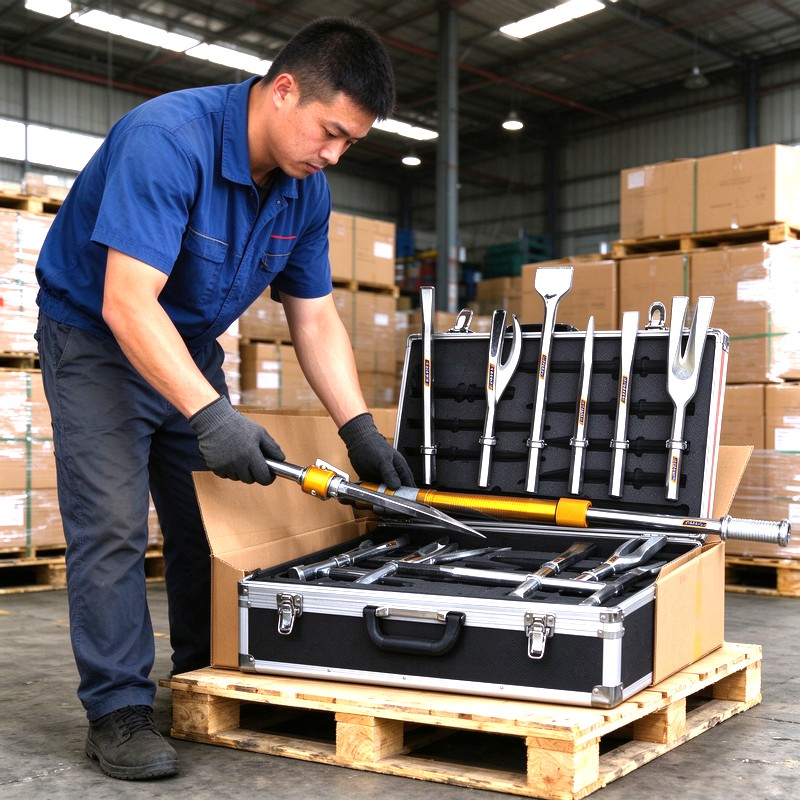
Manual forcible entry tools ship in tool-box packaging that protects the heads and keeps the set organized.
Single tools ship with blade guards and padded wrapping; kits ship in aluminum cases with foam cutouts, labeled with the model and kit list. The case doubles as the storage box on the rescue truck.
For sea freight, kits are packed into outer cartons and palletized for container loading. The packing list states every tool and its quantity, so the receiving team can verify the delivery against the order. Delivery time is confirmed in the quotation by destination port and customization level.
Because manual tools contain no batteries and no pressure vessels, they clear customs without the special declarations that powered equipment needs.
This shortens the shipping window and simplifies the documentation, which is a quiet advantage buyers notice when they compare total lead times between the manual and powered orders.
Wholesale buyers usually order the manual range with spare blades, replacement handles and a complete kit case for each station. These spares are packed separately or in the same carton by quantity, and our export documentation covers the full shipment for customs clearance.
Tool kits are boxed with the foam cut out to each tool's shape, so nothing moves in transit and the case stays organized on the truck.
Single tools get blade guards and padded wrap. All export cartons carry the model, kit list and handling marks, which keeps the receiving check fast and clean.
The same case layout becomes the station's daily checklist: every pocket holds one tool, so a missing axe or bar is visible the moment the box opens.
Officers inspect the kit against the case at shift change, and the foam layout doubles as the inventory sheet printed on the lid.
The order file for the manual family matches the tools themselves: simple, complete and repeatable. A buyer who has ordered the 11-piece kit once can reorder by kit number only, and the same number covers the replacement blades and handles in the follow-up order.
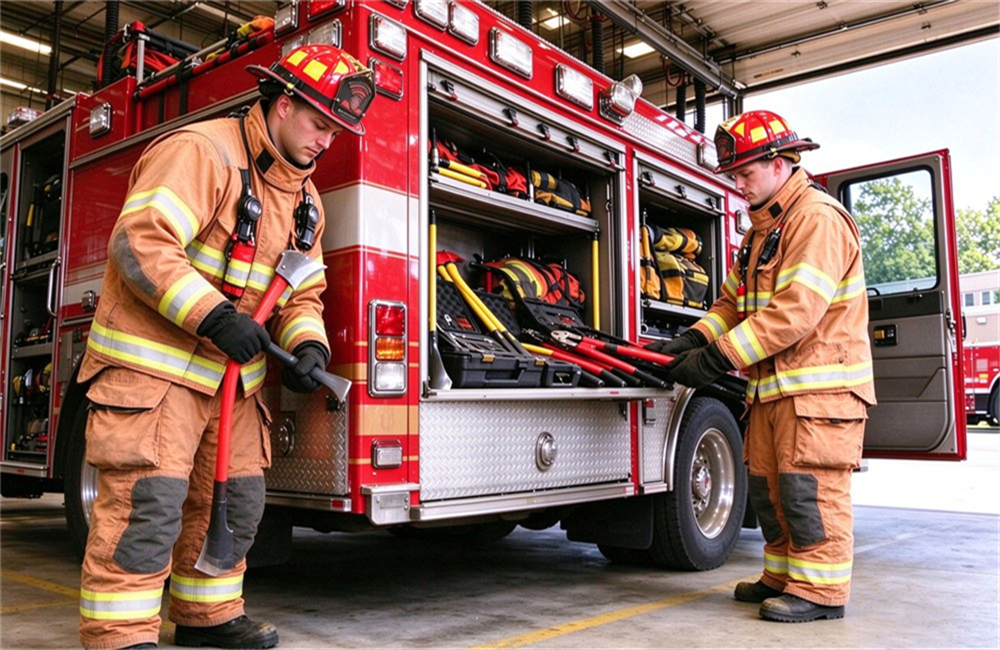
Ordering forcible entry tools follows five clear steps.
Bulk buyers also ask for the spare-parts kit that keeps the forcible entry tools fleet running between orders. The kit contains spare handles, spare blades, spare bolt-cutter jaws and a sharpening guide.
Each spare is cross-listed to the tools it fits, so the station officer can reorder by part number without calling the factory.
The hydraulic rescue tools catalog ties the whole rescue tool matrix together. A typical first order is the 11-piece fire truck kit, which covers axe, hooligan, pry bar, bolt cutter, sledgehammer and pike pole in one case.
We respond with a matched kit list and quotation within one working day, and samples are available for evaluation before volume production.
Volume orders follow the same five steps with a named contact from inquiry to shipping documents. Government and institutional buyers receive the hardness records, pull rating records, packing list and export documents in one handover folder, so the receiving team completes acceptance inspection without chasing papers.
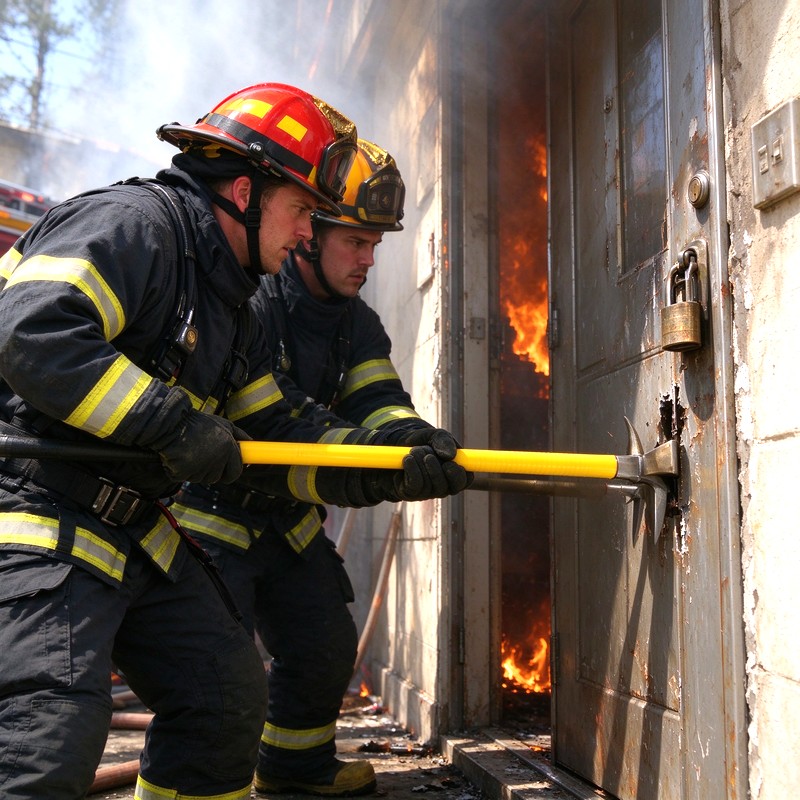
Single tools range from 2 kg for a small pick axe to 5.4 kg for a 36-inch bolt cutter. Two crew members carry the full breaching capability to any floor without power equipment.
Spare axe blades, spare handles, spare cutter jaws and a sharpening guide are stocked for every model. Each spare part is cross-listed with the tool it fits, so station managers reorder by part number without calling the factory.
 Hydraulic Cutter for Rescue Wholesale Cutting Tool Sets and Spare Blades
Our hydraulic cutter delivers 420kN cutting force for fast vehicle extrication and structural collapse rescue. Compatible with manual, motor and battery power units. Equipped with interchangeable blades, tested strictly, ideal for fire departments, government stock and Red Cross procurement. Note: Price for reference only. Exact price based on quantity, size, weight and custom details.
 Hydraulic Spreader for Rescue – 42-62kN Vehicle Extrication Tool
Hydraulic spreader for fire rescue and vehicle extrication. Electric and manual types available, fitted with replaceable tips and pulling chain set. It is used for accident rescue, collapse rescue and regular rescue training. Note: Price for reference only. Exact price based on quantity, size, weight and custom details.
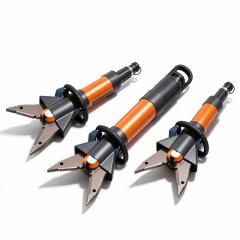 Hydraulic Combi Tool for Rescue – Cut and Spread Supplier
Hydraulic combi rescue tool for vehicle extrication and collapse rescue. Electric, manual and portable versions available. It can cut and spread metal structures, widely used for fire rescue and emergency extrication work. Note: Price for reference only. Exact price based on quantity, size, weight and custom details.
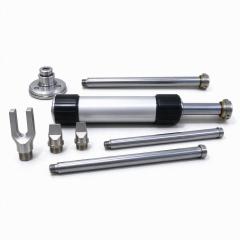 Hydraulic Rescue Ram | GYCD-120/450-750 Lifting & Stabilization
Hydraulic rescue ram delivers stable high pushing force for vehicle extrication, earthquake collapse shoring and road accident rescue. Widely used by fire departments, emergency teams and disaster relief organizations. Compact, durable and easy to operate in tight rescue spaces. Note: Price for reference only. Exact price based on quantity, size, weight and custom details.
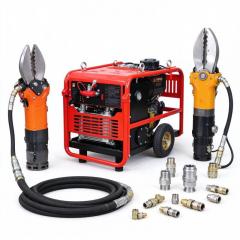 Hydraulic Power Unit for Rescue Tools – 63MPa Pump Supplier
This 63MPa hydraulic power unit supplies stable high pressure power for cutters, spreaders and rams. Multiple types including petrol, diesel, electric, manual and backpack versions. Dual outlet design supports synchronous operation of rescue tools for road accident and collapse rescue. Note: Price for reference only. Exact price based on quantity, size, weight and custom details.
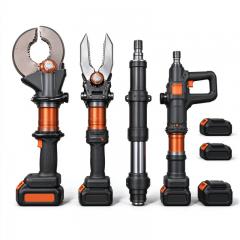 Electric Hydraulic Rescue Tools – Battery Cutter Supplier China
Cordless battery hydraulic rescue tools for vehicle extrication and confined space rescue. Cutter, spreader, ram and combi tool available. Powered by 24V lithium batteries, silent and hose-free. High output force, easy for high-rise and remote emergency rescue. Note: Price for reference only. Exact price based on quantity, size, weight and custom details.
Copyright © Custom Disaster - Relief Bedding: Tents, Sleeping Bags, Blankets All Rights Reserved
the professional team to service !